

The Badhwar‐O'Neill 2020 GCR Model
Open accessThe DOI matches its Crossref record; 51 of the 52 references it cites were found in a registry or an index.
Abstract
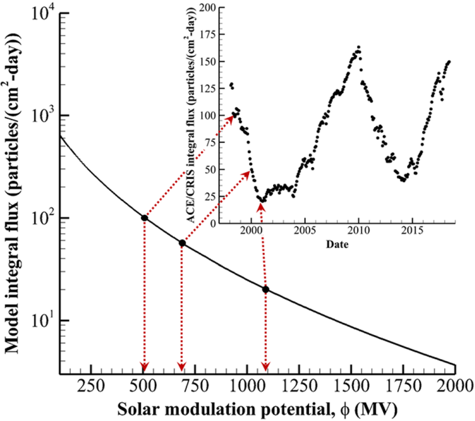
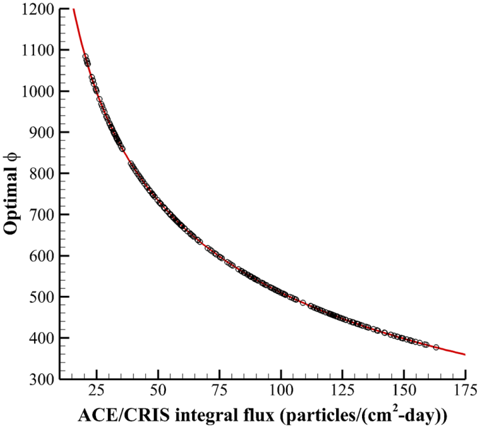
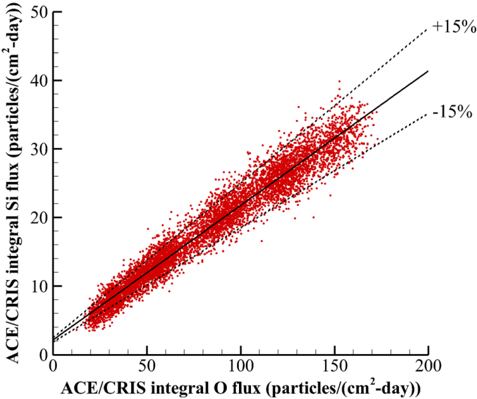
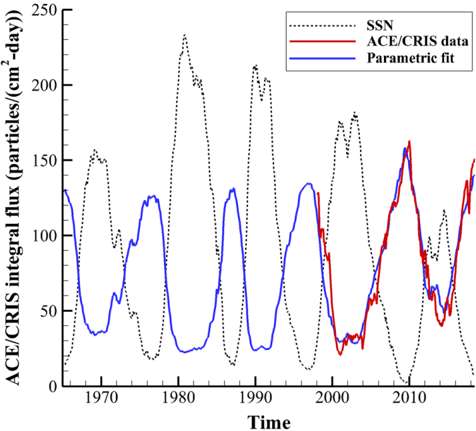
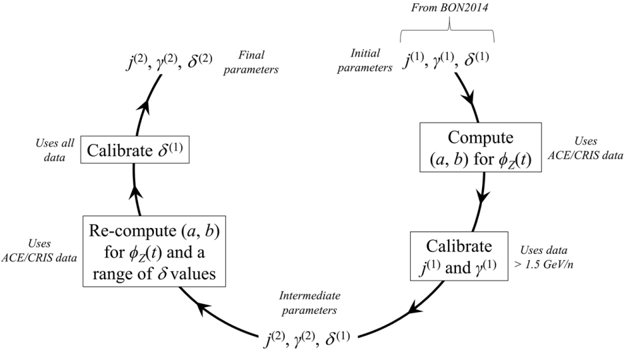
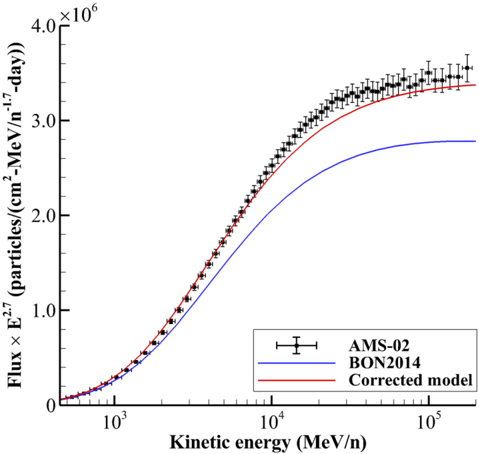
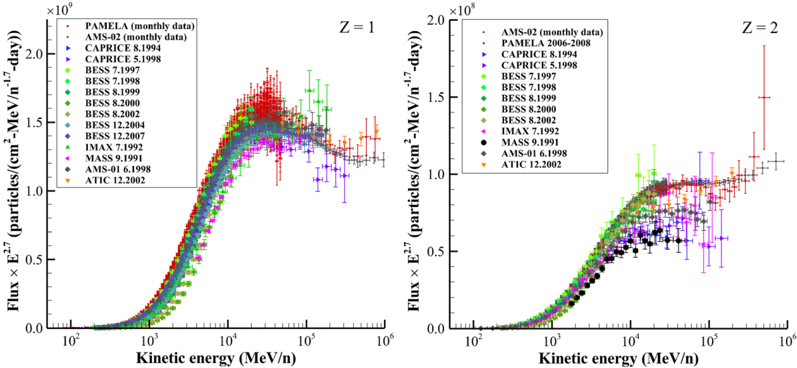
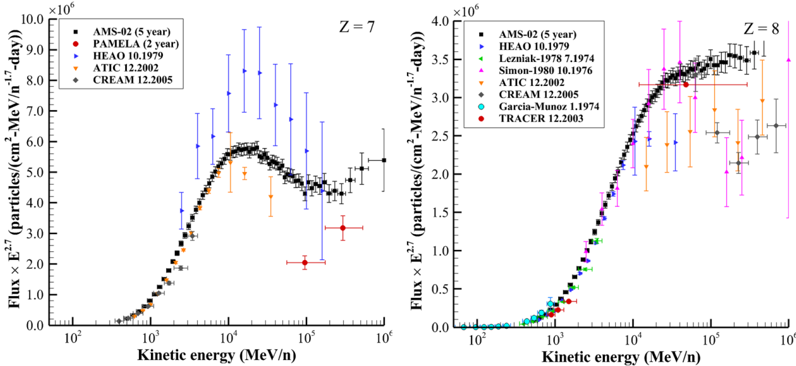
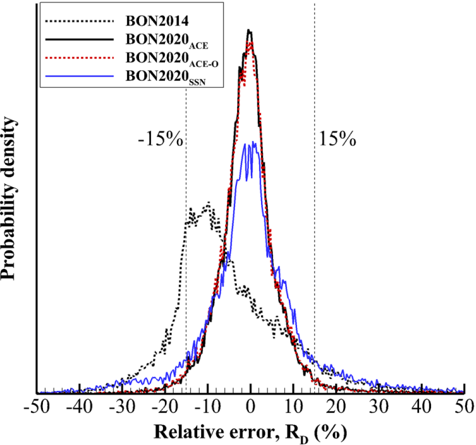
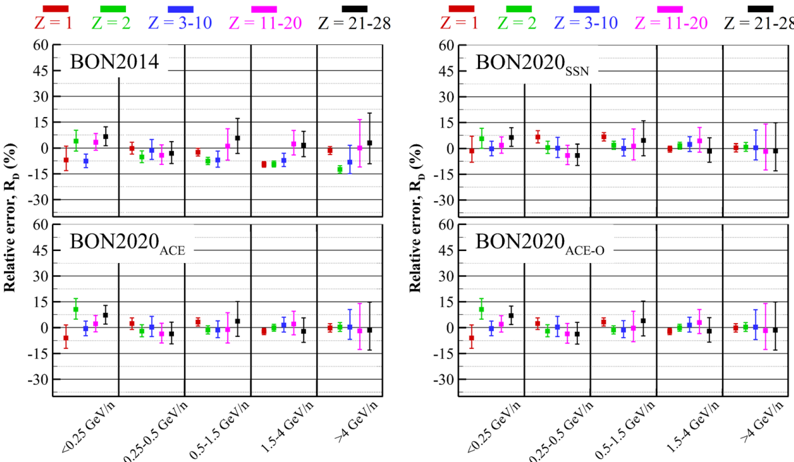
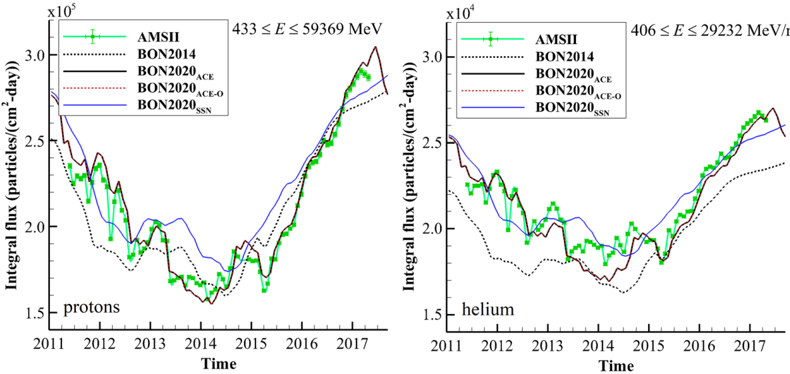
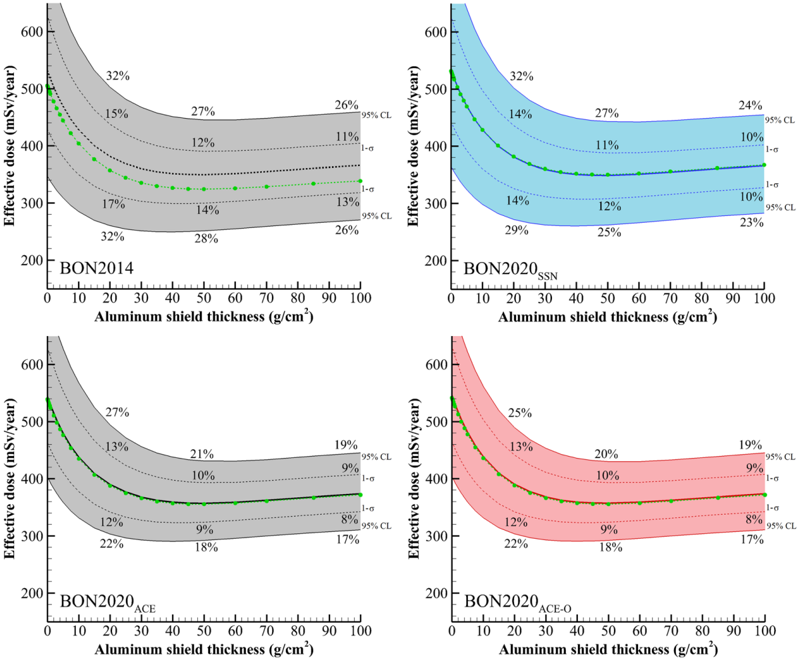
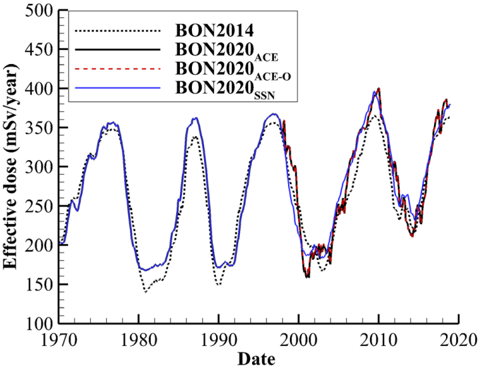
The Badhwar‐O'Neill (BON) model has been used for some time to describe the galactic cosmic ray (GCR) environment encountered in deep space by astronauts and sensitive electronics. The most recent version of the model, BON2014, was calibrated to available measurements to reduce model errors for particles and energies of significance to astronaut exposure. Although subsequent studies showed the model to be reasonably accurate for such applications, modifications to the sunspot number (SSN) classification system and a large number of new high‐precision measurements suggested the need to develop an improved and more capable model. In this work, the BON2020 model is described. The new model relies on daily integral flux from the Advanced Composition Explorer Cosmic Ray Isotope Spectrometer (ACE/CRIS) to describe solar activity. For time periods not covered by ACE/CRIS, the updated international SSN database is used. Parameters in the new model are calibrated to available data, which include the new Alpha Magnetic Spectrometer (AMS‐02) and Payload for Antimatter Matter Exploration and Light‐nuclei Astrophysics (PAMELA) high‐precision measurements. It is found that the BON2020 model is a significant improvement over BON2014. Systematic bias associated with BON2014 has been removed. The average relative error of the BON2020 model compared to all available measurements is found to be <1%, and BON2020 is found to be within ±15% of a large fraction of the available measurements (26,269 of 27,646 → 95%).
Overview
The claims and statistics of this paper haven’t been checked yet.
Free: it reads the open-access text and checks the first 5 claims that cite a source we can check. Create a free account to check every claim.
Integrity signals
Registry
Cites
Statistics
Figures







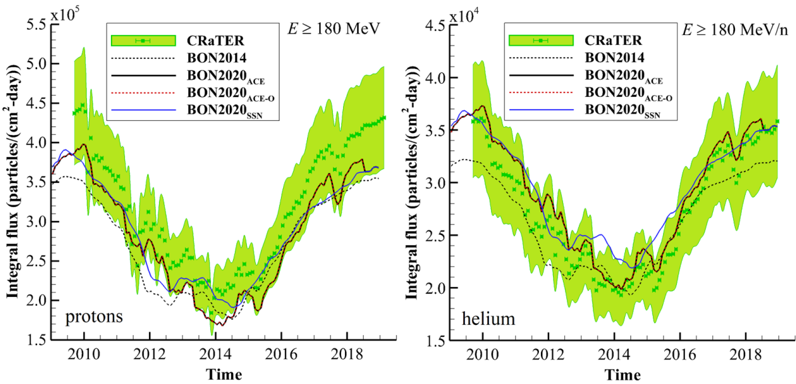

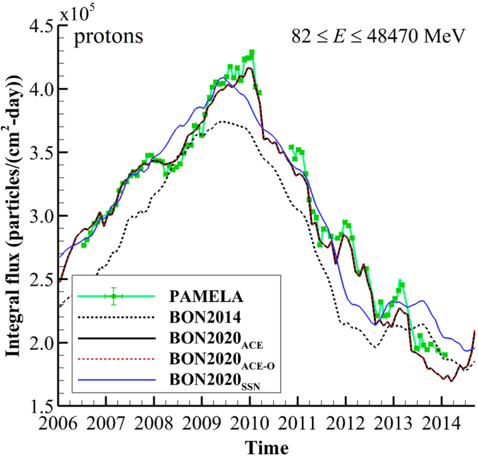

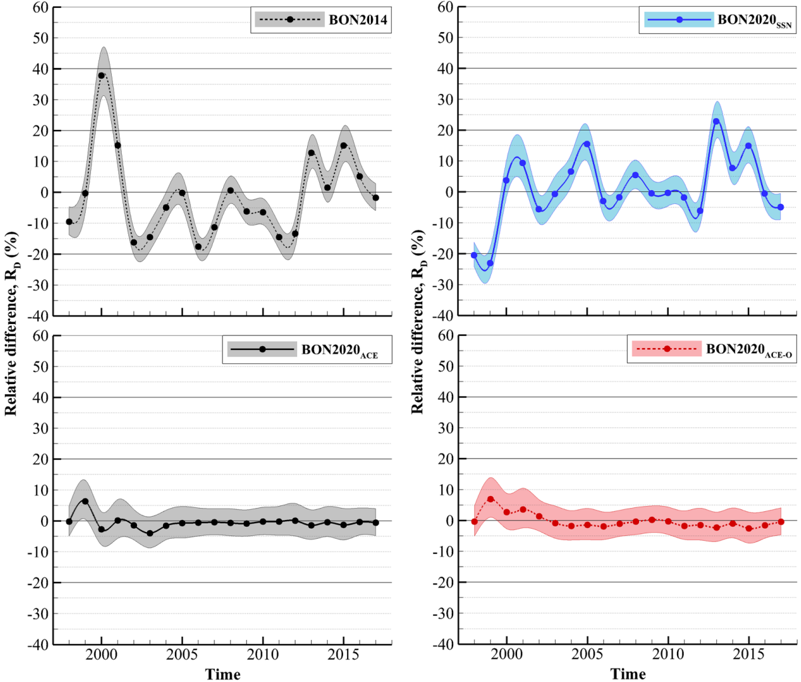
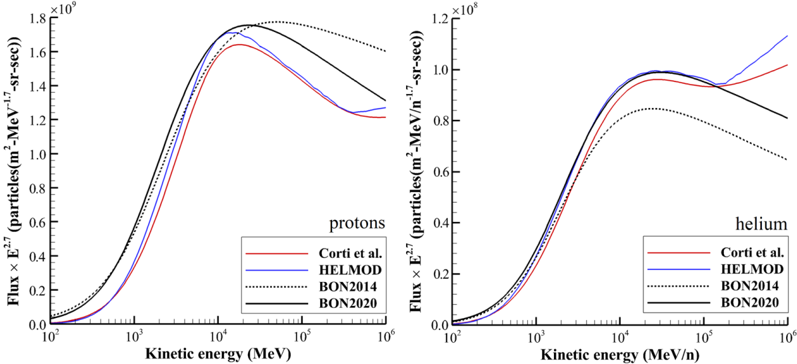

Verification
Claims the paper makes
The claims and statistics of this paper haven’t been checked yet.
Free: it reads the open-access text and checks the first 5 claims that cite a source we can check. Create a free account to check every claim.
Claims other papers make about this one
Each is checked against this paper’s own text: does it say what the citing paper says it does?
The source backs part of the claim, not all of it — or backs it for a different population, condition or comparison.
In the citing paper
“which can be scaled to effective dose rates of ∼2.01 mSv/day during solar minimum and ∼0.615 mSv/day during solar maximum using the Badhwar-O’Neill 2020 GCR flux model (52, 53).”
From First evaluation of wearable radiation protection for human deep space exploration, as flown on Artemis I (2026) · cites this paper as [53]
Experimental — accuracy not yet measuredThe cited source says what the claim attributes to it.
In the citing paper
“We compared Artemis I measurements with four different modelling solutions using the HZETRN28–31 and the Geant4 (ref. 32) transport codes that transported the Badhwar-O’Neill model33 of GCR flux through shielding and show broad agreement with experimental data (Extended Data Fig. 7).”
From Space radiation measurements during the Artemis I lunar mission (2024) · cites this paper as [33]
Self-check
Percentages, sums and reported differences re-computed from the paper’s own numbers.
The self-check needs the paper’s full text.
Citations
Cites
The passage of energetic charged particles through interplanetary space
Parker, E. N. (1965) · Planetary and Space Science · doi:10.1016/0032-0633(65)90131-5 · Cited by 1,607 · cited 1×
“This spectrum is transported to 1 AU according to the particle transport equation, first proposed by Parker (1965) and written by Fisk (1970) in the form of a Fokker‐Planck equation, given by 1 r2 ∂ ∂r r2VswU − 1 3r2 ∂ ∂r r2Vsw ∂ ∂T αTUð Þ ¼ 1 r2 ∂ ∂r r2κ ∂U ∂r ; (3) where r is the distance from…”
The Advanced Composition Explorer
Stone, E. C., Frandsen, A. M., Mewaldt, R. A., Christian, E. R., Margolies, D., Ormes, J. F., & Snow, F. (1998) · Space Science Reviews · doi:10.1023/a:1005082526237 · Cited by 1,042
Aguilar, M., Aisa, D., Alpat, B., Alvino, A., Ambrosi, G., Andeen, K., Arruda, L., Attig, N., Azzarello, P., Bachlechner, A., et al. (2015) · Physical Review Letters · doi:10.1103/physrevlett.114.171103 · Cited by 974
PAMELA Measurements of Cosmic-Ray Proton and Helium Spectra
Adriani, O., Barbarino, G. C., Bazilevskaya, G. A., Bellotti, R., Boezio, M., Bogomolov, E. A., Bonechi, L., Bongi, M., Bonvicini, V., Borisov, S., et al. (2011) · Science · doi:10.1126/science.1199172 · Cited by 894 · cited 13×
“The updated model has been calibrated to available measurement data, including the high precision measurements from AMS‐02 and PAMELA.”
BackgroundMethodInfluentialAguilar, M., Aisa, D., Alpat, B., Alvino, A., Ambrosi, G., Andeen, K., Arruda, L., Attig, N., Azzarello, P., Bachlechner, A., et al. (2015) · Physical Review Letters · doi:10.1103/physrevlett.115.211101 · Cited by 511 · cited 16×
“The updated model has been calibrated to available measurement data, including the high precision measurements from AMS‐02 and PAMELA.”
MethodPanov, A. D., Adams, J. H., Ahn, H. S., Bashinzhagyan, G. L., Watts, J. W., Wefel, J. P., Wu, J., Ganel, O., Guzik, T. G., Zatsepin, V. I., et al. (2009) · Bulletin of the Russian Academy of Sciences: Physics · doi:10.3103/s1062873809050098 · Cited by 339
Aguilar, M., Ali Cavasonza, L., Alpat, B., Ambrosi, G., Arruda, L., Attig, N., Aupetit, S., Azzarello, P., Bachlechner, A., Barao, F., et al. (2017) · Physical Review Letters · doi:10.1103/physrevlett.119.251101 · Cited by 293 · cited 17×
“The updated model has been calibrated to available measurement data, including the high precision measurements from AMS‐02 and PAMELA.”
MethodAdriani, O., Barbarino, G. C., Bazilevskaya, G. A., Bellotti, R., Boezio, M., Bogomolov, E. A., Bongi, M., Bonvicini, V., Borisov, S., Bottai, S., et al. (2013) · The Astrophysical Journal · doi:10.1088/0004-637x/765/2/91 · Cited by 284
Aguilar, M., Ali Cavasonza, L., Ambrosi, G., Arruda, L., Attig, N., Aupetit, S., Azzarello, P., Bachlechner, A., Barao, F., Barrau, A., et al. (2018) · Physical Review Letters · doi:10.1103/physrevlett.120.021101 · Cited by 264 · cited 5×
“The AMS‐02 collaboration released monthly proton and helium data from May 2011 to May 2017 (Aguilar et al., 2018c), and the PAMELA group released monthly proton data from October 2006 to January 2014 (Adriani et al., 2013; Martucci et al., 2018).”
BackgroundMethodAlcaraz, J., Alpat, B., Ambrosi, G., Anderhub, H., Ao, L., Arefiev, A., Azzarello, P., Babucci, E., Baldini, L., Basile, M., et al. (2000) · Physics Letters B · doi:10.1016/s0370-2693(00)00970-9 · Cited by 264
Research works printed but not linked: 1
- 25. Garcia-Munoz, M., Mason, G.M., Simpson, J.A., Wefel, J.P., Charge and energy spectra of heavy cosmic rays at intermediate energies. 15 th International Cosmic Ray Conference, Plovdiv, Bulgaria; 1977.
Cited by
Recent Advances and Challenges in Polymer-Based Materials for Space Radiation Shielding
Toto, E., Lambertini, L., Laurenzi, S., & Santonicola, M. G. (2024) · Polymers · doi:10.3390/polym16030382 · Cited by 120
“The NUClear FRaGmentation (NUCFRG) model evaluated fragmentation cross-section products from nucleus–nucleus collisions, while the Relativistic Abrasion-Ablation FRaGmentation (RAADFRG) model predicted pre-fragment cross-sections [59,64,65].”
MethodVariations of the Galactic Cosmic Rays in the Recent Solar Cycles
Fu, S., Zhang, X., Zhao, L., & Li, Y. (2021) · The Astrophysical Journal Supplement Series · doi:10.3847/1538-4365/abf936 · Cited by 59
Jun, I., Garrett, H. B., Kim, W., Zheng, Y., Fung, S. F., Corti, C., Ganushkina, N., & Guo, J. (2024) · Advances in Space Research · doi:10.1016/j.asr.2024.03.079 · Cited by 52
Space radiation measurements during the Artemis I lunar mission
George, S. P., Gaza, R., Matthiä, D., Laramore, D., Lehti, J., Campbell-Ricketts, T., Kroupa, M., Stoffle, N., Marsalek, K., Przybyla, B., et al. (2024) · Nature · doi:10.1038/s41586-024-07927-7 · Cited by 47
“32) transport codes that transported the Badhwar-O’Neill model 33 of GCR flux through shielding and show broad agreement with experimental data (Extended Data Fig.”
Self-citationHorst, F., Boscolo, D., Durante, M., Luoni, F., Schuy, C., & Weber, U. A. (2022) · Life Sciences in Space Research · doi:10.1016/j.lssr.2022.03.003 · Cited by 44
Poly(vinyl alcohol) gels cross-linked by boric acid for radiation protection of astronauts
Lambertini, L., Coccarelli, G., Toto, E., Santonicola, M. G., & Laurenzi, S. (2024) · Acta Astronautica · doi:10.1016/j.actaastro.2024.05.020 · Cited by 41
Improving astronaut cancer risk assessment from space radiation with an ensemble model framework
Simonsen, L. C., & Slaba, T. C. (2021) · Life Sciences in Space Research · doi:10.1016/j.lssr.2021.07.002 · Cited by 36
Self-citationPapadopoulos, A., Kyriakou, I., Incerti, S., Santin, G., Nieminen, P. J., Daglis, I. A., Li, W. B., & Emfietzoglou, D. (2023) · Radiation and Environmental Biophysics · doi:10.1007/s00411-023-01023-6 · Cited by 35
“The GCR spectrum in an extended energy range of 1 MeV/amu- 1 GeV/amu has been calculated in this work using the Badhwar-O’Neill 2020 model (Slaba and Whitman 2020) (incorporated to OLTARIS), using 1977 Solar Minimum conditions.”
MethodCha, J., Jang, W.-H., Noh, J.-E., Choi, W., & Kim, C. (2022) · Composites Science and Technology · doi:10.1016/j.compscitech.2022.109711 · Cited by 31
Updated deterministic radiation transport for future deep space missions
Slaba, T. C., Wilson, J. W., Werneth, C. M., & Whitman, K. (2020) · Life Sciences in Space Research · doi:10.1016/j.lssr.2020.06.004 · Cited by 30
Self-citationSpace radiation protection in the modern era: New approaches to familiar challenges
Bahadori, A. A. (2024) · Radiation Physics and Chemistry · doi:10.1016/j.radphyschem.2024.111764 · Cited by 27
Liu, W. M., Guo, J., Wang, Y., & Slaba, T. C. (2024) · The Astrophysical Journal Supplement Series · doi:10.3847/1538-4365/ad18ad · Cited by 26
Self-citationZheng, Y., Jun, I., Tu, W., Shprits, Y., Kim, W., Matthiä, D., Meier, M. M., Tobiska, W. K., Miyoshi, Y., Jordanova, V. K., et al. (2024) · Advances in Space Research · doi:10.1016/j.asr.2024.05.017 · Cited by 26
Zaman, M. A. A., & Monira, N. J. (2022) · Radiation Physics and Chemistry · doi:10.1016/j.radphyschem.2022.110706 · Cited by 24
Astronaut Radiation Dose Calculation With a New Galactic Cosmic Ray Model and the AMS‐02 Data
Chen, X., Xu, S., Song, X., Huo, R., & Luo, X. (2023) · Space Weather · doi:10.1029/2022sw003285 · Cited by 24
Temporal evolution and rigidity dependence of the solar modulation lag of Galactic cosmic rays
Tomassetti, N., Bertucci, B., & Fiandrini, E. (2022) · Physical review. D/Physical review. D. · doi:10.1103/physrevd.106.103022 · Cited by 23
Guidelines for radiation-safe human activities on the Moon
Dobynde, M. I., & Guo, J. (2024) · Nature Astronomy · doi:10.1038/s41550-024-02287-8 · Cited by 22
“The impinging GCRs were described by the Badhwar–O’Neill 2020 (BON2020) GCR model 36 .”
Solar Modulation of Galactic Cosmic-Ray Protons Based on a Modified Force-field Approach
Shen, Z., Yang, H., Zuo, P., Qin, G., Wei, F., Xu, X., & Xie, Y. (2021) · The Astrophysical Journal · doi:10.3847/1538-4357/ac1fe8 · Cited by 22
Zaman, M. A. A., & Kunja, L. A. (2023) · AIP Advances · doi:10.1063/5.0163306 · Cited by 18
Radium deposition in human brain tissue: A Geant4-DNA Monte Carlo toolkit study
Mortazavi, S. M. J., Rafiepour, P., Mortazavi, S. A., Toosi, S. M. T. R., Shomal, P. R., & Sihver, L. (2023) · Zeitschrift für Medizinische Physik · doi:10.1016/j.zemedi.2023.09.004 · Cited by 18
“Manyattempts have been made to model the GCR spectrum [16 – 18].”
BackgroundMethodRegolith-based lunar habitat for astronaut radiation protection and organ dose assessment
Blunier, S., Athanasopoulos, D., Dittmar, C., Thoresen, F., Cowley, A., & Fogtman, A. (2025) · Planetary and Space Science · doi:10.1016/j.pss.2025.106116 · Cited by 16
Boschini, M., Torre, S. D., Gervasi, M., Vacca, G. L., & Rancoita, P. G. (2022) · Advances in Space Research · doi:10.1016/j.asr.2022.03.026 · Cited by 16
Mitigating space radiation using magnesium(-lithium) and boron carbide composites
O’Connor, A., Park, C., Baciak, J. E., & Manuel, M. V. (2023) · Acta Astronautica · doi:10.1016/j.actaastro.2023.12.013 · Cited by 13
Validated space radiation exposure predictions from Earth to Mars during Artemis-I
Slaba, T. C., Rahmanian, S., George, S., Laramore, D., Norbury, J. W., Werneth, C. M., & Zeitlin, C. (2025) · npj Microgravity · doi:10.1038/s41526-025-00459-y · Cited by 11
Self-citationGalactic cosmic ray environment predictions for the NASA BioSentinel mission
Rahmanian, S., Slaba, T. C., Braby, L. A., Maria, S. R. S., Bhattacharya, S., & Straume, T. (2023) · Life Sciences in Space Research · doi:10.1016/j.lssr.2023.05.001 · Cited by 11
Self-citationSimulation for the test mass charging rate in the Tianqin orbit
Lei, C., Su, W., Hong, W., Li, H., Zhao, M., Chen, B., Chu, L., Li, Q., Bai, Y., & Zhou, Z. (2023) · Classical and Quantum Gravity · doi:10.1088/1361-6382/ad105a · Cited by 11
Rahmanian, S., Slaba, T. C., George, S., Braby, L. A., Bhattacharya, S., Straume, T., & Maria, S. R. S. (2024) · Life Sciences in Space Research · doi:10.1016/j.lssr.2024.10.006 · Cited by 10
Self-citationRadiation risk mitigation in human space exploration: a primer, a vision, and the state of the art
Narici, L., Baiocco, G., Cenci, G., Micco, V. D., Fraboni, B., Tessa, C. L., Ottolenghi, A., Vincenzo, P., Pugliese, M., Rea, G., et al. (2026) · The European Physical Journal Plus · doi:10.1140/epjp/s13360-025-07199-8 · Cited by 9
“• The Badhwar O’Neill (BON), recently updated to the BON2020 issue [26], is a galactic cosmic ray model used at NASA as input into radiation transport codes for vehicle design, mission analysis, astronaut risk analysis.”
Atri, D., Kamenetskiy, M., May, M., Kalra, A., Castelblanco, A., & Quiñones-Camacho, A. (2025) · International Journal of Astrobiology · doi:10.1017/s1473550425100025 · Cited by 9
Regolith and Radiation: The Cosmic Battle
Akisheva, Y., Gourinat, Y., Foray, N., & Cowley, A. (2022) · IntechOpen eBooks · doi:10.5772/intechopen.101437 · Cited by 9
Proton Spectra for the Interplanetary Space Derived From Different Environmental Models
Klein, E. M., Sznajder, M., & Seefeldt, P. (2022) · Frontiers in Space Technologies · doi:10.3389/frspt.2022.933340 · Cited by 9
Comparison of dose and risk estimates between ISS Partner Agencies for a 30-day lunar mission
Shavers, M. R., Semones, E., Shurshakov, V., Dobynde, M. I., Sato, T., Komiyama, T., Tomi, L., Chen, J., El-Jaby, S., Straube, U., et al. (2023) · Zeitschrift für Medizinische Physik · doi:10.1016/j.zemedi.2023.10.005 · Cited by 9
“The GCR environment was described by NASA with the most recent version of the Badhwar-O ’ Neill model [29].”
MethodZaman, M. A. A., Islam, M. R., Maruf, H. M. A. R., & Nizam, Q. M. R. (2022) · Radiation Physics and Chemistry · doi:10.1016/j.radphyschem.2022.110483 · Cited by 9
Galactic Cosmic Rays and Solar Energetic Particles in Cis-Lunar Space
Corti, C., Whitman, K., Desai, R., Rankin, J. S., Strauss, D. T., Nitta, N., Turner, D. L., & Chen, T. Y. (2023) · doi:10.3847/25c2cfeb.2b22d58b · Cited by 7
“Space weather packages will be mounted on the exterior (HERMES from NASA, ERSA from ESA) of the Gateway as well as dosimeters throughout the interior (IDA).”
MethodInfluentialSelf-citationARAMIS: a Martian radiative environment model built from GEANT4 simulations
Charpentier, G., Ruffenach, M., Benacquista, R., Ecoffet, R., Cappe, A., Dossat, C., Varotsou, A., Cintas, H., Paillet, A., Boyer, L., et al. (2024) · Journal of Space Weather and Space Climate · doi:10.1051/swsc/2024032 · Cited by 8
“Therefore, the model used for the results presented in this document is BON20, over 2 time periods: from 19 August 2012 to 17 February 2013 and from 15 November 2015 to 15 January 2016 with respective averaged solar modulation potential U of 599 and 590 MV.”
BackgroundMethodInfluentialLong‐Term Variation of the Galactic Cosmic Ray Radiation Dose Rates
Lyu, D., Qin, G., & Shen, Z. (2024) · Space Weather · doi:10.1029/2023sw003804 · Cited by 6
“Figure 2.2 in ICRP 123 (Dietze et al., 2013) shows the relative contributions of different GCR elements in flux, absorbed dose, and dose equivalent, calculated with the HZETRN transport code (Tweed et al., 2004; Wilson et al., 1993, 1995, 2004) and the BON GCR model (Badhwar & O’Neill, 1994; O’Neill, 2010).”
BackgroundMethodInfluentialRahmanifard, F., MacLeod, M. L., de Wet, W. C., Jordan, A. P., Wilson, J. K., Spence, H. E., & Schwadron, N. A. (2024) · Advances in Space Research · doi:10.1016/j.asr.2024.06.044 · Cited by 6
A background suppression detector array for fast neutron measurement in space science study
Han, C., Wang, S., Shi, Q., Degeling, A. W., Wang, E., Jia, X., Hasebe, N., & Zong, Q. (2024) · Measurement · doi:10.1016/j.measurement.2024.114479 · Cited by 6
The ionizing radiation environment and shielding in pit craters and cave skylights on Mars
Millán, A. V., & Viúdez‐Moreiras, D. (2026) · Life Sciences in Space Research · doi:10.1016/j.lssr.2026.02.002 · Cited by 5
Shen, Z., 李, C. 彩. L., Zuo, P., Qin, G., & Xu, X. (2025) · The Astrophysical Journal · doi:10.3847/1538-4357/ade71b · Cited by 4
Zaman, M. A. A., Roy, S., Sarker, S., Azad, M. M. U., Akib, A. A., & Haque, M. M. (2023) · Materials Research Express · doi:10.1088/2053-1591/ad05f1 · Cited by 4
Historical Reconstruction of Astronaut Cancer Risk: Context for Recent Solar Minima
Slaba, T. C. (2021) · Space Weather · doi:10.1029/2021sw002851 · Cited by 4
Self-citationIn-flight calibration of RADEM, the JUICE mission radiation monitor
Pinto, M., Santos, F., Gomes, A., Gonçalves, T. M., Arruda, L., Gonçalves, P., Rodríguez‐García, L., Vainio, R., Witasse, O. G., & Altobelli, N. (2026) · Astronomy and Astrophysics · doi:10.1051/0004-6361/202558601 · Cited by 3
Ye, Z., Liu, B., Dobynde, M. I., Guo, J., & Xu, X. G. (2026) · Life Sciences in Space Research · doi:10.1016/j.lssr.2026.06.006 · Cited by 3
Sensitivity of leakage neutrons to the abundance and depth distribution of lunar subsurface water
Kusano, H., Nagaoka, H., Enoto, T., Yamashita, N., Karouji, Y., Hoshino, T., Ueno, M., & Hareyama, M. (2024) · Planetary and Space Science · doi:10.1016/j.pss.2024.105968 · Cited by 3
Energetic charged particle dose rates in water ice on the Moon
Jordan, A. P., Wilson, J. K., & Spence, H. E. (2023) · Icarus · doi:10.1016/j.icarus.2023.115477 · Cited by 3
The Lunar Radiation Environment: Comparisons between PHITS, HETC-HEDS, and the CRaTER Instrument
Zaman, F. A., Townsend, L. W., de Wet, W. C., & Burahmah, N. T. (2021) · Aerospace · doi:10.3390/aerospace8070182 · Cited by 3
Optical-fiber-based distributed dosimetry for space applications
Meyer, A. (2023) · theses.fr (ABES) · doi:10.70675/4c66f8c0zb65az4509z8e29z80e6d43f1ba5 · Cited by 3
Houri, J. M., Berger, T., Gaza, R., Hussein, H., Schwarz, S., Waterman, G., Matthiä, D., Marsalek, K., Przybyla, B., Aeckerlein, J., et al. (2026) · Science Advances · doi:10.1126/sciadv.adz1892 · Cited by 2
Kim, S. W., & Kim, K. J. (2025) · Advances in Space Research · doi:10.1016/j.asr.2025.10.091 · Cited by 2
Wang, Y., Guo, J., Corti, C., Wang, Y., Liu, W., & Wimmer-Schweingruber, R. F. (2025) · Astronomy and Astrophysics · doi:10.1051/0004-6361/202557157 · Cited by 2
The Constraint of Crewed Mars Missions Based on Current Radiation Dose Measurements
Zhang, C., Liu, W. M., Guo, J., Dobynde, M. I., & Wimmer-Schweingruber, R. F. (2026) · Space Weather · doi:10.1029/2025sw004724 · Cited by 3
“We next use the Badhwar–O’Neill GCR model (Slaba & Whitman, 2020) to calculate the time‐dependent dose equivalent, effective dose, and their scaling factor under different shielding conditions over 1964–2025.”
New model for long-term forecasting of galactic cosmic rays
Pelosi, D., Barão, F., Bertucci, B., Fiandrini, E., Orcinha, M. R., & Tomassetti, N. (2026) · Physical review. D/Physical review. D. · doi:10.1103/npfk-lwy9 · Cited by 2
New insights from cross-correlation studies between Solar activity and Cosmic-ray fluxes
Tomassetti, N., Bertucci, B., & Fiandrini, E. (2021) · International Cosmic Ray Conference · doi:10.22323/1.395.1324 · Cited by 2
Unagar, V., Makwana, R., Barala, S. S., & Gohel, A. (2025) · Advances in Space Research · doi:10.1016/j.asr.2025.06.078 · Cited by 2
NASA’s Galactic Cosmic Ray Simulator - Studying the Effects of Space Radiation on Earth
Simonsen, L. C., & Slaba, T. (2024) · Frontiers for Young Minds · doi:10.3389/frym.2024.1327936 · Cited by 1
“Hydrogen alone accounts for % of the GCR particles; helium accounts for %, and all particles heavier than helium (called heavy ions ) account for the remaining 1% [2].”
BackgroundSelf-citationComputer modeling of a new type galactic cosmic rays simulator
Gordeev, I. S., & Bugay, A. N. (2024) · Computer Physics Communications · doi:10.1016/j.cpc.2024.109346 · Cited by 1
“These can be either particle fluences obtained directly from the primary GCR models, for example, as in [18, 19], or fluences of the spacecraft’s internal solar activity, as was done in [5, 20].”
MethodHays, Z. B., Chandra, S., Erickson, P. A., & Whittle, R. S. (2025) · AIAA SciTech Forum · doi:10.2514/6.2025-0912 · Cited by 1
Study of shielding effectiveness of novel MOF and MH materials in GCR environments
Gohel, A., Makwana, R., Unagar, V., & Singala, P. (2025) · The European Physical Journal Plus · doi:10.1140/epjp/s13360-025-06739-6 · Cited by 1
Zhou, J., Zhou, W., Fu, Y., Xian, F., Wang, D., Yang, X., Dong, G., Zhang, L., Tang, L., Zhao, G., et al. (2025) · Science China Earth Sciences · doi:10.1007/s11430-025-1731-y · Cited by 1
“…models have been developed to describe this modulation for GCRs at 1 AU, including CRÈME 2009, DLR, BON20, HelMOD, SDEMMA, etc (Tylka et al., 1997; Adams et al., 2012; Matthiä et al., 2013; Boschini et al., 2019; Slaba and Whitman, 2020; Song et al., 2021; Chen et al., 2023; Liu W H et al., 2024).”
Design of Experiments Applied to the Single-Event Upset-Rate Equation
Hansen, D. L., Kimbrell, B., Pownell, C., Manich, T., & Zavatkay, I. (2025) · IEEE Transactions on Nuclear Science · doi:10.1109/tns.2025.3609632 · Cited by 1
“These include the CREME96 and CREME2009 environments [7], [8], the Adams 90% and Badhwar-O’Neill 2020 [45] available as a part of SIRE2 [10], the ISO15390 environment available in the OMERE tool [11], and the CREME86 and Nymmik models available in the SPENVIS tool [9].”
Flexible PVA/BA gel for passive radiation shielding in spacesuit applications beyond LEO
Lambertini, L., Santonicola, M. G., & Laurenzi, S. (2026) · Acta Astronautica · doi:10.1016/j.actaastro.2026.01.066 · Cited by 1
Xu, Z., Wimmer-Schweingruber, R. F., Berger, L., Kühl, P., Kollhoff, A., Heber, B., Böttcher, S. I., Yang, L., Heidrich-Meisner, V., Strauss, R. D. T., et al. (2026) · Astronomy and Astrophysics · doi:10.1051/0004-6361/202558218 · Cited by 1
Influence of Mars Topography on Neutral Surface Radiation: Modeling and MSL/RAD Observations
Charpentier, G., Ehresmann, B., Guo, J., Khaksarighiri, S., Benacquista, R., Malapert, J.-C., Ecoffet, R., Mekki, J., Paillet, A., Löffler, S., et al. (2026) · Journal of Geophysical Research Planets · doi:10.1029/2025je009336 · Cited by 1
“Boundary GCR spectra have been computed with the Badhwar O’Neil 2020 model (Slaba & Whitman, 2020), for all ions up to Z = 28, although intermediate results are displayed only for H and He ions, as they represent ∼ 99 % of GCRs abundance.”
AMS-02 Through a Research-Infrastructure Lens for Space Radiobiology Translation
Bartoloni, A. (2026) · EPJ Research Infrastructures · doi:10.1007/s41781-026-00161-y · Cited by 1
A review of lunar regolith radiation shielding using in situ resource utilisation
He, E. (2026) · Journal of Radiological Protection · doi:10.1088/1361-6498/ae7d37 · Cited by 1
“BON2020 has improved agreement in this range matching 95% of available measurements within ± 15% [61].”
The use and validation of the Convection-Diffusion approximation in cosmic-rays modulation studies
Mosotho, M. G., & Strauss, D. T. (2021) · Advances in Space Research · doi:10.1016/j.asr.2021.06.001 · Cited by 1
Mookerjee, T., Halder, S., & Sharma, S. (2023) · International Journal of convergence in healthcare · doi:10.55487/9q149026 · Cited by 1
Tomassetti, N., Pelosi, D., Barão, F., Bertucci, B., Faldi, F., Fiandrini, E., Orcinha, M. R., Conde, A. R., & Venterea, R. C. (2025) · International Cosmic Ray Conference · doi:10.22323/1.501.1371 · Cited by 1
Liu, W., Dobynde, M. I., Guo, J., Semkova, J., & Krastev, K. (2025) · arXiv (Cornell University) · doi:10.48550/arxiv.2511.09040 · Cited by 1
“As inputs to our radiation calculations, we adopt the GCR particle spectra provided by the BON20 model (Slaba and Whitman, 2020).”
Moshovelis, L. D., Iles, G. N., & Franich, R. D. (2023) · Radiation Research · doi:10.1667/rade-23-00027.1
“The GCR spectrum (solar minimum 2010) has been generated by the BON2020 model and has been used for the radiation input for all the simulations ( 33 ).”
BackgroundMethodStudy The Effective Dose Equivalent, Flux And LET Spectra On The Surface Of Mars.
Lalwani, K. (2024) · Revista Electronica de Veterinaria · doi:10.69980/redvet.v25i1.776
Assessment of Background Radiation Levels on the Lunar Surface and Mapping the Lunar Albedos
Halder, S., Kulkarni, A., & Thakur, A. (2024) · American Journal of Astronomy and Astrophysics · doi:10.11648/j.ajaa.20241103.11
L2-Charged Particle Environment (L2-CPE) Low Energy Radiation Fluence Model
Minow, J. I., Diekmann, A., Willis, E. M., & Coffey, V. N. (2023) · European Conference on Radiation and Its Effects on Components and Systems · doi:10.1109/radecs59069.2023.10766995
“…Proton and Heavy Ion Radiation Environment (SAPPHIRE) [17], Cosmic Ray Effects on Microelectronics (CREME) 1996 galactic cosmic ray model [18], and the Badhwar-O’Neil G CR models [19,20] since the energetic particles have essentially free access to all regions of the Earth’s distant magnetotail.”
Comparison of Solar Energetic Particle Flux Measurements by CRaTER and GOES
Zeitlin, C. J., Johnson, A. S., Schwadron, N. A., Spence, H. E., Wilson, J. K., Case, A. W., Lee, K. T., Looper, M. D., & Mazur, J. E. (2025) · Space Weather · doi:10.1029/2025sw004367
“These results were used as part of the validation of NASA's updated Badhwar‐O’Neill GCR model (Slaba & Whitman, 2020).”
Influential周, 杰., 周, 卫., Fu, Y., Xian, F., Wang, D., 杨, 宪., 董, 国., Zhang, L., 唐, 玲., 赵, 国., et al. (2025) · SCIENTIA SINICA Terrae · doi:10.1360/sste-2025-0111
Charpentier, G., Dossat, C., Galy, L., Cappe, A., Benacquista, R., Chatry, N., Mekki, J., Ecoffet, R., Valet, P., & Gourinat, Y. (2024) · HAL
Unfolding the Galactic Cosmic Ray Induced Neutron Environment at the Surface of Mars
Sierra, L. M. M. (2023) · OakTrust (Texas A&M University Libraries)
Empirical modelling of solar energetic particles
Raukunen, O. (2021) · UTUPub (University of Turku)
Comparison of different quality factor models for space radiation protection
Papadopoulos, A., Kyriakou, I., Santin, G., Nieminen, P. J., Pang, D., Li, W. B., Daglis, I. A., Incerti, S., & Emfietzoglou, D. (2026) · Radiation and Environmental Biophysics · doi:10.1007/s00411-025-01186-4
Protective Use of Regolith for Planetary and Lunar Exploration (PURPLE)
Akisheva, Y. (2023) · theses.fr (ABES) · doi:10.70675/3608e477z18b3z4eeaz94c6z8512e5f8badf
Puzantian, B., Beaton-Green, L. A., Grzegorcyk, P., Lai, V., Daoust, V. C., Tomi, L., Wu, H., & Wilkins, R. C. (2026) · Life Sciences in Space Research · doi:10.1016/j.lssr.2026.04.011
Radiometric Level Measurement (RLM)
Flynn, M., Jang, J., & Rodríguez-Rolón, A. S. (2024) · International Conference on Environmental Systems (ICES) · doi:10.32865/2346/99047
Sustainable Hydrogen-Rich Polymer Blends for Advanced Space Radiation Shielding
Toto, E. (2026) · Materials research proceedings · doi:10.21741/9781644904251-110
Selvam, T. P., & Selvam, T. P. (2026) · Journal of Radiological Protection · doi:10.1088/1361-6498/ae8910
An Accurate and Computationally Efficient Heavy Ion Isotope Grid for HZETRN
Slaba, T. C. (2026) · doi:10.64631/sulv3220
Self-citationAbba, A. M. (2026) · RESEARCH JOURNAL OF PURE SCIENCE AND TECHNOLOGY · doi:10.56201/rjpst.vol.9.no8.2026.pg57.68
Blunier, S., Archer, N., Winters, M., Jugowicz, A., & Cowley, A. (2026) · Space Weather · doi:10.1029/2026sw005103
“We modeled the GCR spectrum using the Badhwar‐O’Neill 2020 (BON2020) model (Slaba & Whitman, 2020).”
Kerremans, S., Dobney, W., Miranda, S. F. D. S., Manon, J., Cinelli, I., Parisi, A., Hoey, O. V., & Baatout, S. (2026) · Frontiers in Space Technologies · doi:10.3389/frspt.2026.1741121
Klein, E. M., Sznajder, M., & Seefeldt, P. (2022) · doi:10.3389/frspt.2022.933340.s002
Metadata
- Authors
- Slaba, T. C., & Whitman, K.
- Affiliations
- Langley Research Center (US)
- University of Houston (US)
- Corresponding author
- Slaba, T. C.
- Venue
- Space Weather
- Publisher
- American Geophysical Union (AGU)
- Published
- 2020-06
- Volume
- 18
- Issue
- 6
- ISSN
- 1542-7390 (ISSN-L)
- OpenAlex
- W3016501053
- Semantic Scholar
- dcbbd10b282908f4e99015e9b1044485495ad994
- Cited by
- 78
- References
- 52
- Citations by year
- 2026: 15 · 2025: 13 · 2024: 17 · 2023: 16 · 2022: 8 · 2021: 8 · 2020: 1
- FWCI
- 3.70
- Type
- journal article
- Language
- en
- Open access
- gold
- doi.org
- Licence
- Locations
- Space Weather (publishedVersion, cc-by)
- DOAJ (DOAJ: Directory of Open Access Journals) (submittedVersion)
- Funders
- National Aeronautics and Space Administration (NNJ15HK11B)
- Topics
- Physical Sciences › Physics and Astronomy › Astronomy and Astrophysics › Solar and Space Plasma Dynamics
- Physical Sciences › Physics and Astronomy › Nuclear and High Energy Physics › Astrophysics and Cosmic Phenomena
- Physical Sciences › Earth and Planetary Sciences › Space and Planetary Science › Ionosphere and magnetosphere dynamics
- Keywords
- galactic cosmic rays, solar activity, sunspot number, AMS-02, PAMELA, astronaut radiation exposure, cosmic ray intensity, systematic bias
About these checks
Registry, retraction, Cites and statistics results are computed, not judged, with one exception: a printed reference that no index lists is read once by a model before it counts as a citation error. Claims are extracted by a model and kept only when their quote appears verbatim in the text; each cited source is then checked, with a model’s help, for whether it says what the claim relies on. Those verdicts can be wrong — read the claim’s quote and the cited source before relying on one.
Statistics and arithmetic are recomputed, not judged.
Confidence bands are shown only for fields calibrated on our annotated test set. None is calibrated yet, so no band is shown.
What counts as a claim ›How we measure confidence ›How we check this ›
Are you an author, or do you see a problem with this page? Request a review
Data sources
Bibliographic data: Semantic Scholar, OpenAlex, Crossref.
Contains information from the Semantic Scholar Academic Graph Datasets, made available under the ODC Attribution License (ODC-BY 1.0).
Semantic Scholar’s data is described in: Kinney, R., et al. (2023). The Semantic Scholar Open Data Platform. arXiv:2301.10140.
