

The DOI matches its Crossref record; 1 of the 1 references it cites were found in a registry or an index.
The colchicine derivative CT20126 shows a novel microtubule-modulating activity with apoptosis
Overview
The claims and statistics of this paper haven’t been checked yet.
Run the check — free, no account needed. It reads the open-access text and checks the sources it cites.
Integrity signals
Registry
Cites
Statistics
Figures
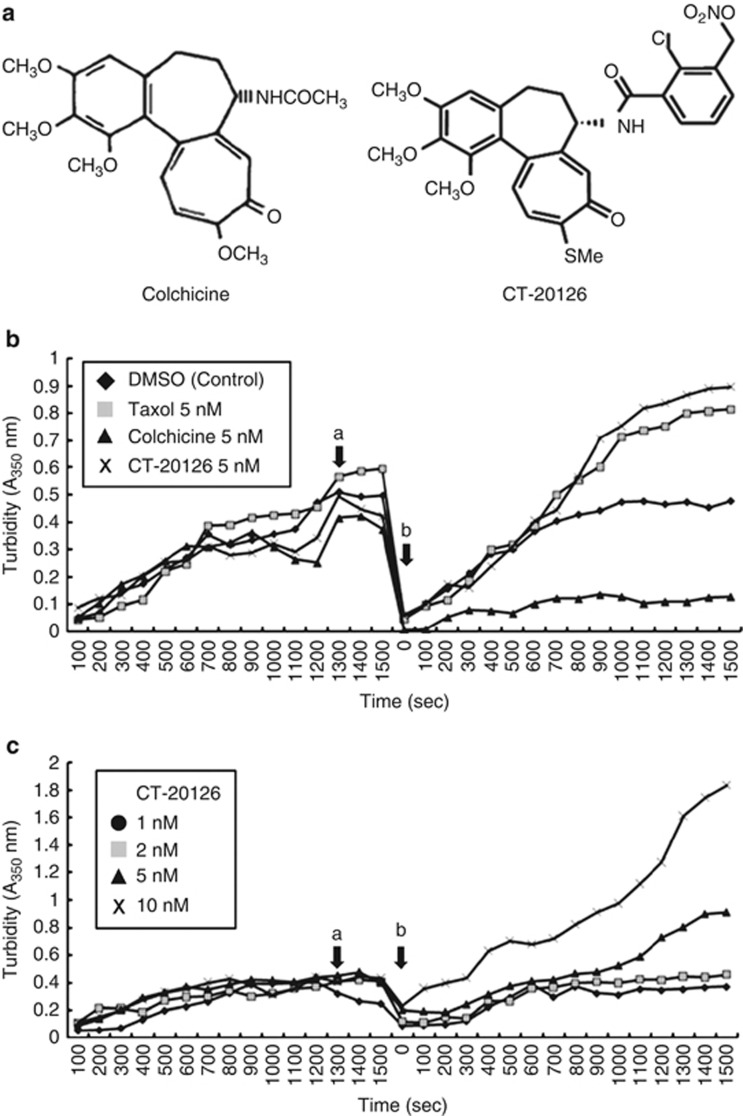
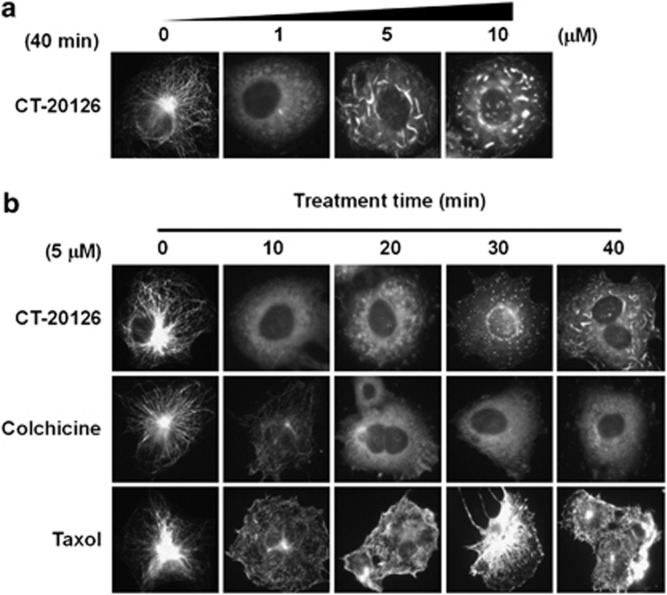
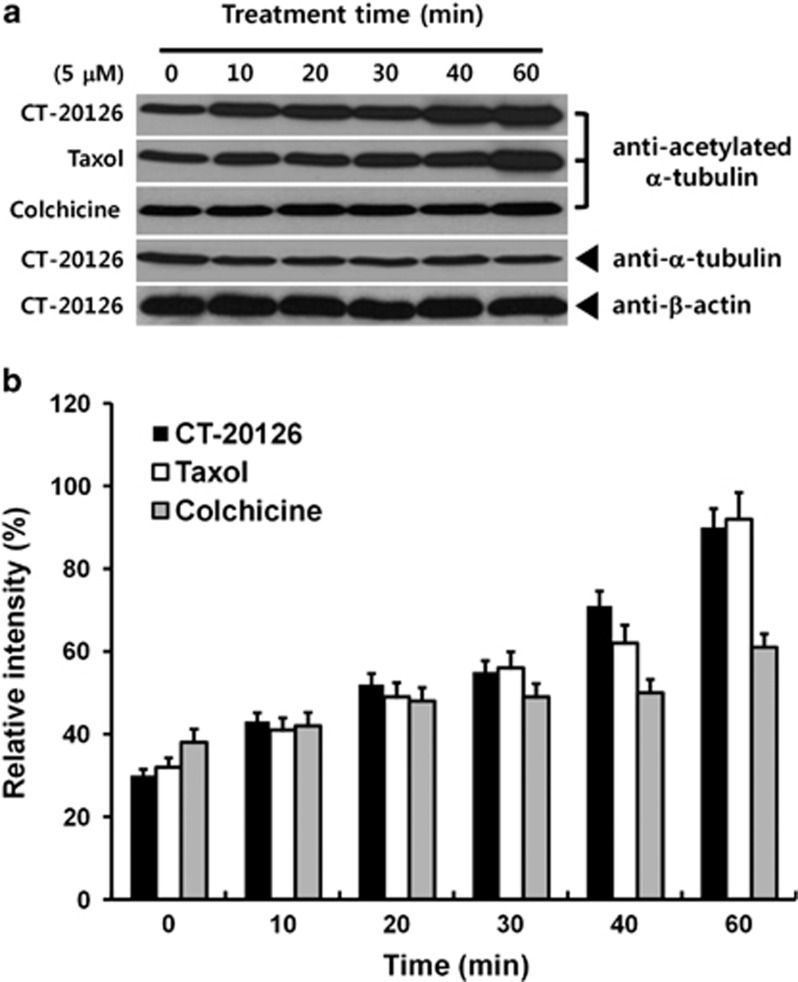
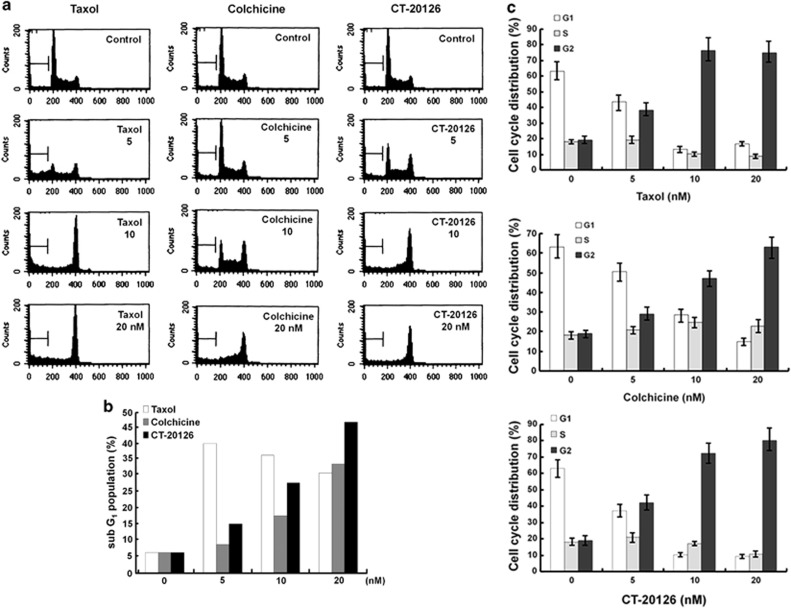
Verification
Claims the paper makes
The claims and statistics of this paper haven’t been checked yet.
Run the check — free, no account needed. It reads the open-access text and checks the sources it cites.
Claims other papers make about this one
Each is checked against this paper’s own text: does it say what the citing paper says it does?
In the citing paper
“Several reports have demonstrated that COL can arrest at G2/M in different cancer cells [7,56].”
From Targeted Nano-Drug Delivery of Colchicine against Colon Cancer Cells by Means of Mesoporous Silica Nanoparticles (2020) · cites this paper as [56]
Self-check
Percentages, sums and reported differences re-computed from the paper’s own numbers.
The self-check needs the paper’s full text.
Citations
Cites
Microtubules containing acetylated alpha-tubulin in mammalian cells in culture.
Piperno, G., LeDizet, M., & Chang, X. J. (1987) · The Journal of cell biology · doi:10.1083/jcb.104.2.289 · Cited by 873
Research works printed but not linked: 33
- Jordan MA, Wilson L . Microtubules as a target for anticancer drugs. Nat Rev Cancer 2004; 4: 253–265. · DOI · Paper page
- Hadfield JA, Ducki S, Hirst N, McGown AT . Tubulin and microtubules as targets for anticancer drugs. Prog Cell Cycle Res 2003; 5: 309–325.
- Tian W, Qin L, Song Q, He L, Ai M, Jin Y et al. A novel synthetic analog of 5, 8-disubstituted quinazolines blocks mitosis and induces apoptosis of tumor cells by inhibiting microtubule polymerization. PLoS One 2010; 5: e10499. · DOI
- Mohan R, Panda D . Kinetic stabilization of microtubule dynamics by estramustine is associated with tubulin acetylation, spindle abnormalities, and mitotic arrest. Cancer Res 2008; 68: 6181–6189. · DOI
- Gajate C, Barasoain I, Andreu JM, Mollinedo F . Induction of apoptosis in leukemic cells by the reversible microtubule-disrupting agent 2-methoxy-5-(2′,3′,4′-trimethoxyphenyl)-2,4,6-cycloheptatrien-1-one: protection by Bcl-2 and Bcl-X(L) and cell cycle arrest. Cancer Res 2000; 60: 2651–2659.
- Andreu JM, Perez-Ramirez B, Gorbunoff MJ, Ayala D, Timasheff SN . Role of the colchicine ring A and its methoxy groups in the binding to tubulin and microtubule inhibition. Biochemistry 1998; 37: 8356–8368. · DOI · Paper page
- Abdullah NM, Rosania GR, Shedden K . Selective targeting of tumorigenic cancer cell lines by microtubule inhibitors. PLoS One 2009; 4: e4470. · DOI
- Rowinsky EK, Donehower RC . Paclitaxel (taxol). N Engl J Med 1995; 332: 1004–1014. · DOI · Paper page
- Bonfoco E, Ceccatelli S, Manzo L, Nicotera P . Colchicine induces apoptosis in cerebellar granule cells. Exp Cell Res 1995; 218: 189–200. · DOI
- Martin SJ, Cotter TG . Disruption of microtubules induces an endogenous suicide pathway in human leukaemia HL-60 cells. Cell Tissue Kinet 1990; 23: 545–559.
- Green LS, Donoso JA, Heller-Bettinger IE, Samson FE . Axonal transport disturbances in the vincristine-induced peripheral neuropathy. Trans Am Neurol Assoc 1975; 100: 195–196.
- Kuncl RW, Duncan G, Watson D, Alderson K, Rogawski MA, Peper M . Colchicine myopathy and neuropathy. N Engl J Med 1987; 316: 1562–1568. · DOI
- Zemer D, Revach M, Pras M, Modan B, Schor S, Sohar E et al. A controlled trial of colchicine in preventing attacks of familial Mediterranean fever. N Engl J Med 1974; 291: 932–934. · DOI
- Ben-Zvi I, Danilesko I, Yahalom G, Kukuy O, Rahamimov R, Liveneh A et al. Risk factors for amyloidosis and impact of kidney transplantation on the course of familial Mediterranean fever. Isr Med Assoc J 2012; 14: 221–224.
- Lee SJ, Namkoong S, Ha KS, Nam WD, Kwon YG, Lee H et al. Colchicine-derived compound CT20126 promotes skin allograft survival by regulating the balance of Th1 and Th2 cytokine production. Exp Mol Med 2007; 39: 230–238. · DOI
- Lee SJ, Nam WD, Na HJ, Cho YL, Ha KS, Hwang JY et al. CT20126, a novel immunosuppressant, prevents collagen-induced arthritis through the down-regulation of inflammatory gene expression by inhibiting NF-kappaB activation. Biochem Pharmacol 2008; 76: 79–90. · DOI
- Chang JS, Kim SK, Kwon TK, Bae SS, Min DS, Lee YH et al. Pleckstrin homology domains of phospholipase C-gamma1 directly interact with beta-tubulin for activation of phospholipase C-gamma1 and reciprocal modulation of beta-tubulin function in microtubule assembly. J Biol Chem 2005; 280: 6897–6905. · DOI
- Oh JH, Lee JT, Yang ES, Chang JS, Lee DS, Kim SH et al. The coffee diterpene Kahweol induces apoptosis in human leukemia U937 cells through down-regulation of Akt phosphorylation and activation of JNK. Apoptosis 2009; 14: 1378–1386. · DOI
- Westermann S, Weber K . Post-translational modifications regulate microtubule function. Nat Rev Mol Cell Biol 2003; 4: 938–947. · DOI
- Tokési N, Lehotzky A, Horváth I, Szabó B, Oláh J, Lau P et al. TPPP/p25 promotes tubulin acetylation by inhibiting histone deacetylase 6. J Biol Chem 2010; 285: 17896–17906. · DOI
- Valenzuela-Fernández A, Cabrero JR, Serrador JM, Sánchez-Madrid F . HDAC6: a key regulator of cytoskeleton, cell migration and cell-cell interactions. Trends Cell Biol 2008; 18: 291–297. · DOI
- Bae SS, Perry DK, Oh YS, Choi JH, Galadari SH, Ghayur T et al. Proteolytic cleavage of phospholipase C-gamma1 during apoptosis in Molt-4 cells. FASEB J 2000; 14: 1083–1092. · DOI
- Andreu JM, Timasheff SN . Tubulin bound to colchicine forms polymers different from microtubules. Proc Natl Acad Sci USA 1982; 79: 6753–6756. · DOI
- de Ines C, Leynadier D, Barasoain I, Peyrot V, Garcia P, Briand C et al. Inhibition of microtubules and cell cycle arrest by a new 1-deaza-7,8-dihydropteridine antitumor drug, CI 980, and by its chiral isomer, NSC 613863. Cancer Res 1994; 54: 75–84.
- Iliev AI, Djannatian JR, Opazo F, Gerber J, Nau R, Mitchell TJ et al. Rapid microtubule bundling and stabilization by the Streptococcus pneumoniae neurotoxin pneumolysin in a cholesterol-dependent, non-lytic and Src-kinase dependent manner inhibits intracellular trafficking. Mol Microbiol 2009; 71: 461–477. · DOI
- LeDizet M, Piperno G . Cytoplasmic microtubules containing acetylated alpha-tubulin in Chlamydomonas reinhardtii: spatial arrangement and properties. J Cell Biol 1986; 103: 13–22. · DOI
- Blagosklonny MV, Robey R, Sackett DL, Du L, Traganos F, Darzynkiewicz Z et al. Histone deacetylase inhibitors all induce p21 but differentially cause tubulin acetylation, mitotic arrest, and cytotoxicity. Mol Cancer Ther 2002; 1: 937–941.
- Medina V, Edmonds B, Young GP, James R, Appleton S, Zalewski PD . Induction of caspase-3 protease activity and apoptosis by butyrate and trichostatin A (inhibitors of histone deacetylase): dependence on protein synthesis and synergy with a mitochondrial/cytochrome c-dependent pathway. Cancer Res 1997; 57: 3697–3707.
- Qu X, Du J, Zhang C, Fu W, Xi H, Zou J et al. Arsenic trioxide exerts antimyeloma effects by inhibiting activity in the cytoplasmic substrates of histone deacetylase 6. PLoS One 2012; 7: e32215. · DOI
- Yang H, Ganguly A, Cabral F . Inhibition of cell migration and cell division correlates with distinct effects of microtubule inhibiting drugs. J Biol Chem 2010; 285: 32242–32250. · DOI
- Jordan MA, Wilson L . Microtubules as a target for anticancer drugs. Nature Rev Cancer 2004; 4: 253–265. · DOI · Paper page
- Decker P, Muller S . Modulating poly (ADP-ribose) polymerase activity: potential for the prevention and therapy of pathogenic situations involving DNA damage and oxidative stress. Curr Pharm Biotechnol 2002; 3: 275–283. · DOI
- Rosen A, Casciola-Rosen L . Macromolecular substrates for the ICE-like proteases during apoptosis. J Biol Chem 1997; 64: 50–54.
Cited by
Sorted by citations
AbouAitah, K., Hassan, H. A., Swiderska-Sroda, A., Gohar, L., Shaker, O. G., Wojnarowicz, J., Opalinska, A., Smalc-Koziorowska, J., Gierlotka, S., & Lojkowski, W. (2020) · Cancers · doi:10.3390/cancers12010144 · Cited by 105
Metadata
- Authors
- Kim, S.-K., Cho, S.-M., Kim, H., Seok, H., Kim, S.-O., Kyu Kwon, T., & Chang, J.-S.
- Venue
- Experimental & Molecular Medicine
- Published
- 2013-04-19
- Volume
- 45
- Issue
- 4
- Pages
- e19-e19
- ISSN
- 2092-6413
- PMC
- PMC3641401
- Cited by
- 37
- References
- 1
- Language
- en
About these checks
Registry, retraction, Cites and statistics results are computed, not judged, with one exception: a printed reference that no index lists is read once by a model before it counts as a citation error. Claims are extracted by a model and kept only when their quote appears verbatim in the text; each cited source is then checked, with a model’s help, for whether it says what the claim relies on. Those verdicts can be wrong — read the claim’s quote and the cited source before relying on one.
Statistics and arithmetic are recomputed, not judged.
Confidence bands are shown only for fields calibrated on our annotated test set. None is calibrated yet, so no band is shown.
What counts as a claim ›How we measure confidence ›How we check this ›
Are you an author, or do you see a problem with this page? Request a review
