

A two decade dementia incidence comparison from the Cognitive Function and Ageing Studies I and II
Open accessThe DOI matches its Crossref record; 41 of the 41 references it cites were found in a registry or an index.
Abstract
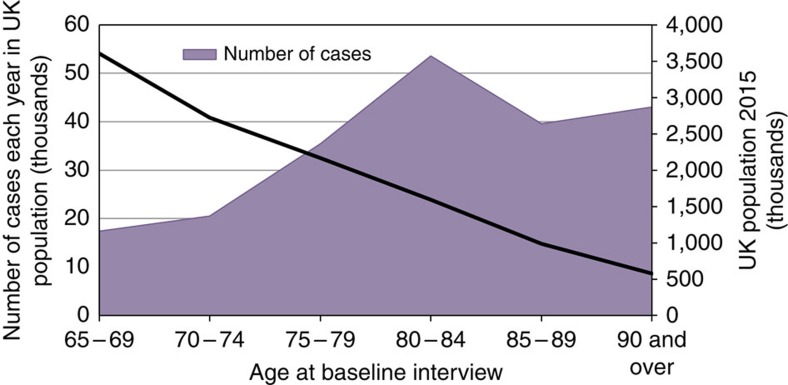
Dramatic global increases in future numbers of people with dementia have been predicted. No multicentre population-based study powered to detect changes over time has reported dementia incidence. MRC Cognitive Function and Ageing Study (CFAS) undertook baseline interviews in populations aged 65+ years in England and Wales (1989–1994). Three areas (CFAS I) were selected for new sampling two decades later (2008–2011) with same geographical boundaries, sampling and approach methods (CFAS II). At 2 years CFAS I interviewed 5,156 (76% response) with 5,288 interviewed in CFAS II (74% response). Here we report a 20% drop in incidence (95% CI: 0–40%), driven by a reduction in men across all ages above 65. In the UK we estimate 209,600 new dementia cases per year. This study was uniquely designed to test for differences across geography and time. A reduction of age-specific incidence means that the numbers of people estimated to develop dementia in any year has remained relatively stable.
Overview
The claims and statistics of this paper haven’t been checked yet.
Free: it reads the open-access text and checks the first 5 claims that cite a source we can check. Create a free account to check every claim.
Integrity signals
Registry
Cites
Statistics
Figures


Verification
Claims the paper makes
The claims and statistics of this paper haven’t been checked yet.
Free: it reads the open-access text and checks the first 5 claims that cite a source we can check. Create a free account to check every claim.
Claims other papers make about this one
Each is checked against this paper’s own text: does it say what the citing paper says it does?
The source backs part of the claim, not all of it — or backs it for a different population, condition or comparison.
In the citing paper
“one study from the United Kingdom reported higher incidence among men.268”
From 2023 Alzheimer's disease facts and figures (2023) · cites this paper as [268]
Experimental — accuracy not yet measuredThe source backs part of the claim, not all of it — or backs it for a different population, condition or comparison.
In the citing paper
“The Lancet Commission on Dementia Prevention, Intervention, and Care suggested that lifestyle modifications may already have an influence on dementia risk decades before the onset of dementia.3-8”
From Awareness of dementia risk reduction among current and future healthcare professionals: A survey study (2021) · cites this paper as [4]
Experimental — accuracy not yet measuredThe source backs part of the claim, not all of it — or backs it for a different population, condition or comparison.
In the citing paper
“which would equate, for example, to around 20 000 of the 209 600 new cases of dementia per year in the United Kingdom.32”
From Anticholinergic Drug Exposure and the Risk of Dementia: A Nested Case-Control Study (2019) · cites this paper as [32]
Experimental — accuracy not yet measured
Self-check
Percentages, sums and reported differences re-computed from the paper’s own numbers.
The self-check needs the paper’s full text.
Citations
Cites
Diagnostic and Statistical Manual of Mental Disorders
American Psychiatric Association (2013) · doi:10.1176/appi.books.9780890425596 · Cited by 116,369
Folstein, M. F., Folstein, S. E., & McHugh, P. R. (1975) · Journal of Psychiatric Research · doi:10.1016/0022-3956(75)90026-6 · Cited by 88,282
Hirono, N., Mori, E., Ikejiri, Y., Imamura, T., Shimomura, T., Hashimoto, M., Yamashita, H., & Ikeda, M. (1997) · Brain and nerve · Cited by 21,038
Kok, J. S., Berg, I. J., & Scherder, E. J. A. (2013) · Dementia and Geriatric Cognitive Disorders Extra · doi:10.1159/000353441 · Cited by 20,589
Older Adults' Reasons for Using Technology while Aging in Place
Peek, S. T. M., Luijkx, K. G., Rijnaard, M. D., Nieboer, M. E., van der Voort, C. S., Aarts, S., van Hoof, J., Vrijhoef, H. J. M., & Wouters, E. J. M. (2016) · Gerontology · doi:10.1159/000430949 · Cited by 19,690
Sensitivity and False Alarm Rate of a Fall Sensor in Long-Term Fall Detection in the Elderly
Kangas, M., Korpelainen, R., Vikman, I., Nyberg, L., & Jämsä, T. (2015) · Gerontology · doi:10.1159/000362720 · Cited by 18,909
General methods for monitoring convergence of iterative simulations
Brooks, S. P., & Gelman, A. (1998) · Journal of Computational and Graphical Statistics · doi:10.1080/10618600.1998.10474787 · Cited by 6,045
WinBUGS - A Bayesian modelling framework: Concepts, structure, and extensibility
Lunn, D. J., Thomas, A., Best, N., & Spiegelhalter, D. (2000) · Statistics and Computing · doi:10.1023/a:1008929526011 · Cited by 5,368
The global prevalence of dementia: a systematic review and metaanalysis.
Prince, M., Bryce, R., Albanese, E., Wimo, A., Ribeiro, W., & Ferri, C. P. (2013) · Alzheimer's & Dementia · doi:10.1016/j.jalz.2012.11.007 · Cited by 4,941
Multiple imputation after 18+ years
Rubin, D. B. (1996) · Journal of the American Statistical Association · doi:10.1080/01621459.1996.10476908 · Cited by 4,072
Research works printed but not linked: 4
- Prince, M. et al. Dementia UK: Update Second Edition. http://www.alzheimers.org.uk/site/scripts/download_info.php?fileID=2323 (2014).
- Salthouse, T. Book review (K Warner Schaie, Developmental Influences on adult intelligence: The Seattle Longitudinal Study, New York.). Intelligence 33, 551–554 (2005). · doi:10.1016/j.intell.2005.05.007
- Spiegelhalter, D., Thomas, A., Best, N. & Lunn, D. WinBUGS. Stat. Comput. 10, 325–337 (2007).
- Matthews, F. E. Doctor of Philosophy, University of Cambridge (2005).
Cited by
Items 101–200 of 457
Two-decade change in prevalence of cognitive impairment in the UK
Richardson, C. D., Stephan, B. C. M., Robinson, L. A., Brayne, C., & Matthews, F. E. (2019) · European Journal of Epidemiology · doi:10.1007/s10654-019-00554-x · Cited by 69
“Information on the CFAS I and II study designs has been published in detail previously [21, 22].”
MethodSelf-citation“Our biggest killer”: multimodal discourse representations of dementia in the British press
Brookes, G., Harvey, K., Chadborn, N., & Dening, T. (2018) · Social Semiotics · doi:10.1080/10350330.2017.1345111 · Cited by 62
Self-citationWaller, M., Mishra, G. D., & Dobson, A. J. (2017) · Emerging Themes in Epidemiology · doi:10.1186/s12982-017-0057-3 · Cited by 62
Time, Sex, Gender, History, and Dementia
Rocca, W. A. (2017) · Alzheimer Disease & Associated Disorders · doi:10.1097/wad.0000000000000187 · Cited by 61
“21 At the risk of some oversimplification, we can group the neurological diseases discussed above in 3 groups: (1) diseases that involve neurovascular mechanisms (eg, large strokes, small strokes, white matter lesions) such as stroke and vascular dementia or mixed dementia; (2) diseases that involve degenerative mecha…”
Declining incidence of dementia: A national registry‐based study over 20 years
Taudorf, L., Nørgaard, A., Islamoska, S., Jørgensen, K., Laursen, T. M., & Waldemar, G. (2019) · Alzheimer s & Dementia · doi:10.1016/j.jalz.2019.07.006 · Cited by 61
Si, G., & Álvarez, A. (2020) · Medicinal Research Reviews · doi:10.1002/med.21722 · Cited by 65
Wesnes, K. A., Brooker, H., Ballard, C., McCambridge, L., Stenton, R., & Corbett, A. (2017) · International Journal of Geriatric Psychiatry · doi:10.1002/gps.4659 · Cited by 58
Online assessment of risk factors for dementia and cognitive function in healthy adults
Huntley, J., Corbett, A., Wesnes, K., Brooker, H., Stenton, R., Hampshire, A., & Ballard, C. (2018) · International Journal of Geriatric Psychiatry · doi:10.1002/gps.4790 · Cited by 58
Population Neuroscience: Dementia Epidemiology Serving Precision Medicine and Population Health
Ganguli, M., Albanese, E., Seshadri, S. S., Bennett, D. A., Lyketsos, C. G., Kukull, W. A., Skoog, I. G., & Hendrie, H. C. (2018) · Alzheimer Disease & Associated Disorders · doi:10.1097/wad.0000000000000237 · Cited by 57
McGuinness, L. A., Warren‐Gash, C., Moorhouse, L. R., & Thomas, S. L. (2019) · Pharmacoepidemiology and Drug Safety · doi:10.1002/pds.4669 · Cited by 51
“The burden of dementia and its associated health and societal costs are projected to have major global impact as populations continue to age over the next few decades, despite the recent decline in age‐ specific dementia incidence.(1) With only one‐third of cases being due to potentially modifiable risk factors and in…”
BackgroundMichalowsky, B., Hoffmann, W., & Kostev, K. (2019) · Frontiers in Aging Neuroscience · doi:10.3389/fnagi.2019.00363 · Cited by 55
Altomare, D., Molinuevo, J. L., Ritchie, C. W., Ribaldi, F., Carrera, E., Dubois, B., Jessen, F., McWhirter, L., Scheltens, P., van Duijn, C. M., et al. (2021) · Alzheimer s Research & Therapy · doi:10.1186/s13195-021-00827-2 · Cited by 60
Self-citationBennett, H. Q., Norton, S., Bunn, F., Robinson, L., Rait, G., Goodman, C., Brayne, C., & Matthews, F. E. (2018) · BMC Medicine · doi:10.1186/s12916-018-1105-8 · Cited by 55
“CFAS I and CFAS II are UK-based, multi-centre, longitudinal population studies using near identical designs with the primary aim to estimate the prevalence and incidence of dementia and cognitive impairment [10, 11].”
BackgroundSelf-citationCrivelli, L., Calandri, I. L., Suemoto, C. K., Salinas, R. M., Velilla, L. M., Yassuda, M. S., Caramelli, P., Lopera, F., Nitrini, R., Sevlever, G. E., et al. (2023) · Alzheimer's & Dementia · doi:10.1002/alz.13101 · Cited by 55
The prevalence of dementia in a Portuguese community sample: a 10/66 Dementia Research Group study
Gonçalves-Pereira, M., Cardoso, A., Verdelho, A., Alves da Silva, J., Caldas de Almeida, M., Fernandes, A., Raminhos, C., Ferri, C. P., Prina, A. M., Prince, M., et al. (2017) · BMC Geriatrics · doi:10.1186/s12877-017-0647-5 · Cited by 41
“Only reliable and cross-culturally comparable information about the epidemiology and patterns of care of these conditions may guide adequate disease management [31]: as recently pointed out [7], using a fixed methodology has potential benefits to estimate changes in dementia prevalence [3] or incidence [38] in defined…”
BackgroundEmrani, S., & Sundermann, E. E. (2025) · Frontiers in Neuroendocrinology · doi:10.1016/j.yfrne.2025.101184 · Cited by 55
Villarejo‐Galende, A., Ortiz, M. E., Velasco, S. L., Luque, M. L., de Miguel, C. L. D. S., & Jurczynska, C. P. (2019) · Neurología (English Edition) · doi:10.1016/j.nrleng.2017.10.004 · Cited by 66
d’Orsi, E., Xavier, A. J., Rafnsson, S. B., Steptoe, A., Hogervorst, E., & Orrell, M. W. (2017) · Aging & Mental Health · doi:10.1080/13607863.2017.1360840 · Cited by 57
“Dementia prevalence in the UK may also be decreasing, possibly due to the better primary prevention efforts, like improving physical activity, controlling cardiovascular diseases and better educational attainment (Matthews et al., 2016; Wu et al., 2016).”
BackgroundDecline in Search Speed and Verbal Memory Over 26 Years of Midlife in a British Birth Cohort
Davis, D. H. J., Bendayan, R., Terrera, G. M., Hardy, R., Richards, M., & Kuh, D. J. (2017) · Neuroepidemiology · doi:10.1159/000481136 · Cited by 54
Resveratrol as a Therapeutic Agent in Alzheimer’s Disease: Evidence from Clinical Studies
Puranik, N., Kumari, M., Tiwari, S., Dhakal, T., & Song, M. (2025) · Nutrients · doi:10.3390/nu17152557 · Cited by 55
“Recently, F. E. Matthews et al. performed a two-decade comparison of dementia incidence in the Cognitive Function and Ageing Studies I and II, showing that age-specific incidence has declined, indicating that the annual number of new dementia cases has remained relatively constant [8].”
Memantine in neurological disorders – schizophrenia and depression
Czarnecka, K., Chuchmacz, J., Wójtowicz, P., & Szymański, P. (2021) · Journal of Molecular Medicine · doi:10.1007/s00109-020-01982-z · Cited by 49
Hendrie, H. C., Smith-Gamble, V., Lane, K. A., Purnell, C., Clark, D. O., & Gao, S. (2018) · The Journals of Gerontology: Series B · doi:10.1093/geronb/gbx143 · Cited by 46
The diagnosis, burden and prognosis of dementia: A record-linkage cohort study in England
Pujades-Rodriguez, M., Assi, V., Gonzalez-Izquierdo, A., Wilkinson, T., Schnier, C., Sudlow, C., Hemingway, H., & Whiteley, W. N. (2018) · PLOS ONE · doi:10.1371/journal.pone.0199026 · Cited by 43
Thirty-year trends in dementia: a nationwide population study of Swedish inpatient records
Šeblová, D., Quiroga, M. L., Fors, S., Johnell, K., Lövdén, M., de León, A. P., Svensson, A. C., Wicks, S., & Lager, A. (2018) · Clinical Epidemiology · doi:10.2147/clep.s178955 · Cited by 48
Tang, A. S., Oskotsky, T., Havaldar, S., Mantyh, W. G., Bicak, M., Solsberg, C. W., Woldemariam, S., Zeng, B., Hu, Z., Oskotsky, B., et al. (2022) · Nature Communications · doi:10.1038/s41467-022-28273-0 · Cited by 45
Tracing temporal trends in dementia incidence over 25 years in central Stockholm, Sweden
Ding, M., Qiu, C., Rizzuto, D., Grande, G., & Fratiglioni, L. (2020) · Alzheimer's & Dementia · doi:10.1002/alz.12073 · Cited by 44
Our ageing population: how ageing affects health and care need in England
Raymond, A., Bazeer, N., Barclay, C., Krelle, H., Idriss, O., Tallack, C., & Kelly, E. A. (2021) · doi:10.37829/hf-2021-rc16 · Cited by 57
On behalf of the MODEM Project group, Comas-Herrera, A., Knapp, M., Wittenberg, R., Banerjee, S., Bowling, A., Grundy, E., Jagger, C., Farina, N., Lombard, D., et al. (2017) · BMC Health Services Research · doi:10.1186/s12913-016-1945-x · Cited by 41
“Even if prevalence rates are declining slightly, as some recent studies suggest [3, 4] the numbers of people living with dementia will still increase nationally and globally, where it is projected that the number will grow from 46.”
BackgroundSelf-citationRicci, G. (2019) · Behavioural Neurology · doi:10.1155/2019/8720904 · Cited by 46
Mechanistic and therapeutic role of Drp1 in the pathogenesis of Alzheimer's disease
Bera, A., Lavanya, G., Reshmi, R., Dev, K., & Kumar, R. K. (2022) · European Journal of Neuroscience · doi:10.1111/ejn.15611 · Cited by 44
“Learning and cognitive impairment are recognized as the primary manifestation of AD; however, neuropsychiatric complications and impairment of daily activities have emerged as significant symptoms (McKhann et al., 2011).”
BackgroundOsler, M., Christensen, G. T., Garde, E., Mortensen, E. L., & Christensen, K. (2017) · Alzheimer's & Dementia · doi:10.1016/j.jalz.2017.04.003 · Cited by 40
Artificial intelligence for dementia prevention
Newby, D., Orgeta, V., Marshall, C. R., Lourida, I., Albertyn, C. P., Tamburin, S., Raymont, V., Veldsman, M., Koychev, I., Bauermeister, S., et al. (2023) · Alzheimer's & Dementia · doi:10.1002/alz.13463 · Cited by 42
Strand, B. H., Bergland, A., Jørgensen, L., Schirmer, H., Emaus, N., & Cooper, R. (2018) · The Journals of Gerontology Series A · doi:10.1093/gerona/gly234 · Cited by 42
Iwashita, H., Matsumoto, Y., Maruyama, Y., Watanabe, K., Chiba, A., & Hattori, A. (2020) · Journal of Pineal Research · doi:10.1111/jpi.12703 · Cited by 45
Ding, D., Zhao, Q., Wu, W., Xiao, Z., Liang, X., Luo, J., & Hong, Z. (2020) · Alzheimer's & Dementia · doi:10.1002/alz.12159 · Cited by 41
Anstey, K. J., Peters, R., Zheng, L., Barnes, D. E., Brayne, C., Brodaty, H., Chalmers, J., Clare, L., Dixon, R. A., Dodge, H., et al. (2020) · Journal of Alzheimer's Disease · doi:10.3233/jad-200674 · Cited by 40
Self-citationChung, S., Providencia, R. A., Sofat, R., Pujades‐Rodríguez, M., Torralbo, A., Fatemifar, G., Fitzpatrick, N. K., Taylor, J., Li, K., Dale, C. E., et al. (2022) · Alzheimer s & Dementia · doi:10.1002/alz.12635 · Cited by 44
Trends in Prevalence of Dementia in French Farmers from Two Epidemiological Cohorts
Pérès, K., Brayne, C., Matharan, F., Grasset, L., Helmer, C., Letenneur, L., Foubert‐Samier, A., Baldi, I., Tison, F., Amieva, H., et al. (2017) · Journal of the American Geriatrics Society · doi:10.1111/jgs.14575 · Cited by 36
Self-citationDeclining Incident Dementia Rates Across Four Population-Based Birth Cohorts
Sullivan, K. J., Dodge, H. H., Hughes, T. F., Chang, C.-C. H., Zhu, X., Liu, A., & Ganguli, M. (2019) · The Journals of Gerontology: Series A · doi:10.1093/gerona/gly236 · Cited by 36
Lesuis, S. L., Kaplick, P. M., Lucassen, P. J., & Krugers, H. J. (2019) · Neuropharmacology · doi:10.1016/j.neuropharm.2019.02.023 · Cited by 41
“Various recent lines of evidence suggest that environmental factors play a role in AD risk (Baumgart et al., 2015; Herbert and Lucassen, 2016; Matthews et al., 2016; Xu et al., 2015).”
BackgroundDementia prevention and reserve against neurodegenerative disease
Perneczky, R. (2019) · Phlebolymphology · doi:10.31887/dcns.2019.21.1/rperneczky2 · Cited by 45
Bermejo‐Pareja, F., & del Ser, T. (2024) · Journal of Clinical Medicine · doi:10.3390/jcm13020536 · Cited by 42
Gu, X., Zhou, Y., Zhang, Y., Wang, L., Gao, W., Luo, K., Sun, B., Li, T., Wang, H., Si, N., et al. (2024) · Alzheimer s Research & Therapy · doi:10.1186/s13195-024-01587-5 · Cited by 41
The impact of risk factors for dementia in China
Liu, Y., Zhang, S., Tomata, Y., Nurrika, D., Sugawara, Y., & Tsuji, I. (2020) · Age and Ageing · doi:10.1093/ageing/afaa048 · Cited by 39
“Indeed, a decline in the age-specific incidence or prevalence of dementia has been reported in those areas with improvements in the above risk factors [8,9].”
BackgroundPrevalence and Incidence of Dementia in People with Diabetes Mellitus
Alsharif, A. A., Wei, L., Ma, T., Man, K. K. C., Lau, W. C. Y., Brauer, R., AlMetwazi, M. S., Howard, R. J., & Wong, I. C. K. (2020) · Journal of Alzheimer s Disease · doi:10.3233/jad-191115 · Cited by 40
Green, I., Stow, D., Matthews, F. E., & Hanratty, B. (2017) · Age and Ageing · doi:10.1093/ageing/afx046 · Cited by 38
Self-citationChen, C., Ding, L., Fu, F., & Xiao, J. (2023) · CNS Neuroscience & Therapeutics · doi:10.1111/cns.14195 · Cited by 37
Generational Differences in the 5-Year Incidence of Age-Related Macular Degeneration
Cruickshanks, K. J., Nondahl, D. M., Johnson, L. J., Dalton, D. S., Fisher, M. E. K., Huang, G., Klein, R., Klein, R., & Schubert, C. R. (2017) · JAMA Ophthalmology · doi:10.1001/jamaophthalmol.2017.5001 · Cited by 41
A New Look at Cohort Trend and Underlying Mechanisms in Cognitive Functioning
Zheng, H. (2021) · The Journals of Gerontology: Series B · doi:10.1093/geronb/gbaa107 · Cited by 36
Antihypertensive withdrawal for the prevention of cognitive decline
Jongstra, S., Harrison, J. K., Quinn, T. J., & Richard, E. (2016) · Cochrane Database of Systematic Reviews · doi:10.1002/14651858.cd011971.pub2 · Cited by 42
Zhou, S., & Wang, K. (2021) · The Journal of Prevention of Alzheimer s Disease · doi:10.14283/jpad.2021.10 · Cited by 39
“ementia is a common neurodegenerative disease, and it is estimated that the number of cases will reach approximately 81.1 million by with a complicated etiology underpinned by genetic and environmental components (1-3).”
InfluentialDoborjeh, M., Doborjeh, Z., Merkin, A., Bahrami, H., Sumich, A. L., Krishnamurthi, R., Medvedev, O. N., Crook‐Rumsey, M., Morgan, C., Kirk, I. J., et al. (2021) · Neural Networks · doi:10.1016/j.neunet.2021.09.013 · Cited by 37
Anstey, K. J., Peters, R., Clare, L., Lautenschlager, N. T., Dodge, H. H., Barnes, D. E., Shahar, S., Brodaty, H., & Rees, G. (2017) · International Psychogeriatrics · doi:10.1017/s1041610217001685 · Cited by 36
New horizons in the compression of functional decline
Gore, P., Kingston, A., Johnson, G. R., Kirkwood, T. B. L., & Jagger, C. (2018) · Age and Ageing · doi:10.1093/ageing/afy145 · Cited by 34
“Nevertheless, population ageing does not necessarily result in greater prevalence of all diseases, and there is evidence from a number of countries that the prevalence and incidence of dementia and the years spent with cognitive impairment have reduced in the recent past, even though absolute numbers with these condit…”
BackgroundSelf-citationKnapp, M. R. J., Bauer, A., Wittenberg, R., Comas‐Herrera, A., Cyhlarova, E., Hu, B., Jagger, C., Kingston, A., Patel, A. K., Spector, A. E., et al. (2021) · International Journal of Geriatric Psychiatry · doi:10.1002/gps.5633 · Cited by 35
Self-citationHow the evidence stacks up for preventing Alzheimer’s disease
Sohn, E. (2018) · Nature · doi:10.1038/d41586-018-05724-7 · Cited by 33
Schoeni, R. F., Freedman, V. A., & Langa, K. M. (2018) · The Journals of Gerontology Series B · doi:10.1093/geronb/gby007 · Cited by 33
Inflammation as a risk factor for the development of frailty in the Lothian Birth Cohort 1936
Welstead, M., Terrera, G. M., Russ, T. C., Corley, J., Taylor, A. M., Galé, C. R., & Luciano, M. (2020) · Experimental Gerontology · doi:10.1016/j.exger.2020.111055 · Cited by 33
“…technique where no established cut-offs available (Theou et al., 2015) Townsend Disability Scale (Townsend, 1979) 11–18 (1), 0–10 (0) Previous literature (Matthews et al., 2016) Peak Expiratory Flow rate (stratified by sex) Bottom 5th percentile (1), 5th–20th percentile (0.5), Above 20th…”
BackgroundInfluentialContador, I., Buch-Vicente, B., del Ser, T., Velasco, S. L., Villarejo‐Galende, A., Benito‐León, J., & Bermejo‐Pareja, F. (2024) · Journal of Clinical Medicine · doi:10.3390/jcm13144100 · Cited by 32
Ford, E. M., Sheppard, J., Oliver, S., Rooney, P., Banerjee, S., & Cassell, J. (2021) · BMJ Open · doi:10.1136/bmjopen-2020-039248 · Cited by 33
Trends in the incidence of dementia: design and methods in the Alzheimer Cohorts Consortium
Chibnik, L. B., Wolters, F. J., Bäckman, K., Beiser, A., Berr, C., Bis, J. C., Boerwinkle, E., Bos, D., Brayne, C., Dartigues, J., et al. (2017) · European Journal of Epidemiology · doi:10.1007/s10654-017-0320-5 · Cited by 36
Self-citationDavis, G., Baboolal, N. S., Rae, A. M., & Stewart, R. J. (2018) · BMJ Open · doi:10.1136/bmjopen-2017-018288 · Cited by 30
Doney, A. S. F., Bonney, W., Jefferson, E., Walesby, K. E., Bittern, R., Trucco, E., Connelly, P., McCrimmon, R. J., & Palmer, C. N. A. (2019) · Diabetes Care · doi:10.2337/dc19-0380 · Cited by 30
Estimates of the prevalence, incidence and severity of dementia in Ireland
Pierse, T., Shea, E. O., & Carney, P. (2018) · Irish Journal of Psychological Medicine · doi:10.1017/ipm.2018.31 · Cited by 38
“a Cognitive, Functioning and Aging Study, wave I and wave II (Matthews et al. 2016b).”
Lifestyle intervention to prevent Alzheimer’s disease
Ko, Y., & Chye, S. M. (2020) · Reviews in the Neurosciences · doi:10.1515/revneuro-2020-0072 · Cited by 29
“Studies also found that AD patients with higher educational level seem to copewith the disease better and have lesser clinical symptoms (Matthews et al. 2016).”
ResultRecognition and assessment of dementia in primary care
Dening, K. H. (2019) · British Journal of Community Nursing · doi:10.12968/bjcn.2019.24.8.383 · Cited by 28
New cases of dementia are rising in elderly populations in Wales, UK
Stevenson‐Hoare, J. O., Schalkamp, A., Sandor, C., Hardy, J., & Escott‐Price, V. (2023) · Journal of the Neurological Sciences · doi:10.1016/j.jns.2023.120715 · Cited by 30
Hwangbo, S., Lee, J., Han, G., Chun, M. Y., Jang, H., Seo, S. W., Na, D. L., Won, S., Kim, H. J., & Lim, D. H. (2023) · Frontiers in Aging Neuroscience · doi:10.3389/fnagi.2023.1126587 · Cited by 30
“…United States, the UK, Sweden, Netherlands, Canada, and France during the 2000s and the early 2010s (Manton et al., 2005; Schrijvers et al., 2012; Matthews et al., 2013, 2016; Qiu et al., 2013; Satizabal et al., 2016; Derby et al., 2017; Wu et al., 2017; Stephan et al., 2018; Livingston et al.,…”
BackgroundHachinski, V., Einhäupl, K. M., Ganten, D., Alladi, S., Brayne, C., Stephan, B. C. M., Sweeney, M. D., Zloković, B. V., Iturria‐Medina, Y., Iadecola, C., et al. (2019) · International Journal of Stroke · doi:10.1177/1747493019871915 · Cited by 30
Self-citationColl‐Padrós, N., León, M., Valech, N., Ros, E., Vidal, J., Estruch, R., Fitó, M., Salas‐Salvadó, J., Corella, D., Molinuevo, J. L., et al. (2019) · European Review of Aging and Physical Activity · doi:10.1186/s11556-019-0229-y · Cited by 29
“8% in dementia prevalence [52] and a 20% drop in dementia incidence in the population aged 65 and above over two decades [53], thus suggesting that dementia prevalence will not increase and will remain relatively stable.”
BackgroundInsights into the pathological basis of dementia from population‐based neuropathology studies
Wharton, S. B., Simpson, J. E., Ince, P. G., Richardson, C. D., Merrick, R. L., Matthews, F. E., Brayne, C., & CFAS (2023) · Neuropathology and Applied Neurobiology · doi:10.1111/nan.12923 · Cited by 28
“A further study, CFAS II, based in three of the same geographic areas but with an interval of two decades from the original CFAS cohort, showed lower agespecific prevalence and incidence rates for dementia.(12,13) Whether”
BackgroundResultSelf-citationTrends in the prevalence of cognitive impairment at old age in China, 2002–2018
Chen, H., Ye, K. X., Feng, Q., Cao, K., Yu, J., Li, C., Zhang, C. M., Yu, L., Maier, A. B., Langa, K. M., et al. (2023) · Alzheimer s & Dementia · doi:10.1002/alz.13545 · Cited by 28
Lenox‐Smith, A., Reed, C. C., Lebrec, J., Belger, M. A., & Jones, R. W. (2018) · BMC Geriatrics · doi:10.1186/s12877-018-0748-9 · Cited by 27
Derby, C. A. (2020) · Current Epidemiology Reports · doi:10.1007/s40471-020-00231-8 · Cited by 30
Role of microbial dysbiosis in the pathogenesis of Alzheimer's disease
Susmitha, G., & Kumar, R. K. (2023) · Neuropharmacology · doi:10.1016/j.neuropharm.2023.109478 · Cited by 28
Time Trend in Persistent Cognitive Decline: Results From the Longitudinal Aging Study Amsterdam
van den Kommer, T. N., Deeg, D. J. H., van der Flier, W. M., & Comijs, H. C. (2018) · The Journals of Gerontology: Series B · doi:10.1093/geronb/gbx151 · Cited by 26
Robinson, L., Dickinson, C., Magklara, E., Newton, L., Prato, L., & Bamford, C. (2018) · BMJ Open · doi:10.1136/bmjopen-2017-018677 · Cited by 26
Self-citationModelling the central nervous system: tissue engineering of the cellular microenvironment
Walczak, P. A., Esteban, P. P., Bassett, D. C., & Hill, E. J. (2021) · Emerging Topics in Life Sciences · doi:10.1042/etls20210245 · Cited by 27
Irfan, M., Shahrestani, S. A., & Elkhodr, M. (2022) · IEEE Engineering Management Review · doi:10.1109/emr.2022.3230820 · Cited by 30
“In addition, the age-standardized mortality rate (AMSR) for deaths because of the dementia and AD in England and Wales in 2019 was 115.1 per 100 000 people, which was statistically signi fi cantly lower than ASMR in 2018 — 123.8 per 100 000 people (69 478 deaths) [7].”
BackgroundInfluentialTrends in Intracranial and Cerebral Volumes of Framingham Heart Study Participants Born 1930 to 1970
DeCarli, C. S., Maillard, P., Pase, M. P., Beiser, A., Kojis, D. J., Satizábal, C. L., Himali, J. J., Aparicio, H. J., Fletcher, E. M., & Seshadri, S. S. (2024) · JAMA Neurology · doi:10.1001/jamaneurol.2024.0469 · Cited by 30
Chen, S., Chen, X., Hou, X., Fang, H., Liu, G. G., & Yan, L. L. (2024) · The Lancet Regional Health - Western Pacific · doi:10.1016/j.lanwpc.2024.101106 · Cited by 35
“This is in line with the observed trend of declining dementia incidence in several countries, 67,68 despite the ageing population.”
ResultInfluential“Exceptional brain aging” without Alzheimer’s disease: triggers, accelerators, and the net sum game
Vemuri, P. (2018) · Alzheimer s Research & Therapy · doi:10.1186/s13195-018-0373-z · Cited by 26
“Recent evidence of age-specific decline in both incidence of dementia [14, 15] and amyloid levels [16] in aging brains provides compelling evidence for the possibility of aging without AD pathologies.”
BackgroundOne-Carbon Metabolism Biomarkers and Cognitive Decline in the Very Old: The Newcastle 85+ Study
Mendonça, N., Granic, A., Mathers, J. C., Martin-Ruiz, C. M., Wesnes, K. A., Seal, C. J., Jagger, C., & Hill, T. R. (2017) · Journal of the American Medical Directors Association · doi:10.1016/j.jamda.2017.05.008 · Cited by 30
Self-citationDementia severity at death: a register-based cohort study
Aworinde, J., Werbeloff, N., Lewis, G., Livingston, G., & Sommerlad, A. (2018) · BMC Psychiatry · doi:10.1186/s12888-018-1930-5 · Cited by 29
Mukadam, N., Anderson, R., Walsh, S., Wittenberg, R., Knapp, M., Brayne, C., & Livingston, G. (2024) · The Lancet Healthy Longevity · doi:10.1016/s2666-7568(24)00117-x · Cited by 24
Self-citationRogojin, A., Gorbet, D. J., Hawkins, K. M., & Sergio, L. E. (2019) · Journal of Alzheimer s Disease · doi:10.3233/jad-190403 · Cited by 25
“While [36,37],othersreportnodifferencebysex orhigherincidenceinmen[38,39].”
Daly, T. P. (2023) · Cerebral Circulation - Cognition and Behavior · doi:10.1016/j.cccb.2023.100193 · Cited by 28
“Other metaphors about dementia have included a “ tsunami ” [46] of dementia risk, and also from gardening, where individuals are understood as plants growing in soil, with the latter being a metaphor for living and working conditions as a reference to social and structural determinants of brain…”
BackgroundA simulation of dementia epidemiology and resource use in Australia
Standfield, L., Comans, T. A., & Scuffham, P. (2017) · Australian and New Zealand Journal of Public Health · doi:10.1111/1753-6405.12700 · Cited by 24
“8,14 This research is not without its limitations.”
BackgroundMistridis, P., Mata, J., Neuner‐Jehle, S., Annoni, J., Biedermann, A., Bopp-Kistler, I., Brand, D., Guevara, A. B., Wick, H. D., Démonet, J., et al. (2017) · Swiss Medical Weekly · doi:10.4414/smw.2017.14407 · Cited by 29
Binder, N., Balmford, J., & Schumacher, M. C. (2019) · European Journal of Epidemiology · doi:10.1007/s10654-019-00567-6 · Cited by 23
Zhou, H., Yu, Z., Luo, L., Xie, F., Wang, Y., & Wan, Z. (2021) · Psychogeriatrics · doi:10.1111/psyg.12768 · Cited by 25
Kim, W. J., Sung, J. M., Sung, D., Chae, M.-H., An, S. K., Namkoong, K., Lee, E. M., & Chang, H. (2019) · JMIR Medical Informatics · doi:10.2196/13139 · Cited by 25
“In the United Kingdom, the incidence of dementia is actually lower than previously predicted [41], suggesting that epidemiological investigations alone cannot accurately predict or respond to dementia.”
BackgroundIncidence of Young Onset Dementia in Central Norway: A Population-Based Study
Kvello-Alme, M., Bråthen, G., White, L. R., & Sando, S. B. (2020) · Journal of Alzheimer s Disease · doi:10.3233/jad-191307 · Cited by 24
Biological markers of aging and mental health: A seed and soil model of neurocognitive disorders
McDonough, I. M., & Allen, R. S. (2018) · Aging & Mental Health · doi:10.1080/13607863.2018.1531383 · Cited by 23
“Even though the exact causes of these reductions are not known, researchers have speculated that they could be due to the general improvement in health and lifestyle factors, including greater average levels of education, physical activity, better control over cardiovascular diseases, and cognitively stimulating leisu…”
BackgroundKhalifa, K., Bergland, A., Soennesyn, H., Oppedal, K., Oesterhus, R., Dalen, I., Larsen, A., Fladby, T., Brooker, H., Wesnes, K., et al. (2020) · Frontiers in Neurology · doi:10.3389/fneur.2020.00916 · Cited by 19
Muirhead, K., Macaden, L., Smyth, K., Chandler, C., Clarke, C. L., Polson, R., & O’Malley, C. (2022) · Systematic Reviews · doi:10.1186/s13643-021-01866-4 · Cited by 25
“Despite reports of a decrease in age-specific incidence [5, 6], dementia remains a global public health priority [7].”
BackgroundTao, Y., Lei, B., Zhu, Y., Fang, X., Liao, L., Chen, D., & Gao, C. (2022) · Journal of Integrative Neuroscience · doi:10.31083/j.jin2105140 · Cited by 22
Almeida, O. P., Hankey, G. J., Yeap, B. B., Chubb, S. A. P., Gollege, J., & Flicker, L. A. (2017) · Molecular Psychiatry · doi:10.1038/mp.2017.152 · Cited by 22
“The longitudinal design of the study may have contributed to mitigate the impact of such a bias on the calculation of incidence rates (as cases are eventually recorded over time as the disease progresses), and, indeed, the incidence rates that we observed are consistent with those reported by others using different me…”
ResultPark, J. E., Kim, B., Kim, K. W., Hahm, B., Sohn, J. H., Suk, H. W., Lee, J., & Cho, M. J. (2019) · Journal of Korean Medical Science · doi:10.3346/jkms.2019.34.e293 · Cited by 22
Dufouil, C., Beiser, A., Chêne, G., & Seshadri, S. S. (2018) · The Journals of Gerontology Series B · doi:10.1093/geronb/gby001 · Cited by 24
Metadata
- Authors
- Matthews, F. E., Stephan, B. C. M., Robinson, L., Jagger, C., Barnes, L. E., Arthur, A., Brayne, C., Cognitive Function and Ageing Studies (CFAS) Collaboration, Comas-Herrera, A., Wittenberg, R., Dening, T., McCracken, C. F. M., Moody, C., Parry, B., Green, E., Barnes, R., Warwick, J., Gao, L., Mattison, A., Baldwin, C., Harrison, S., Woods, B., McKeith, I. G., Ince, P. G., Wharton, S. B., & Forster, G.
- Affiliations
- MRC Biostatistics Unit (GB)
- Newcastle University (GB)
- University of Cambridge (GB)
- University of East Anglia (GB)
- London School of Economics and Political Science (GB)
- University of Nottingham (GB)
- University of Liverpool (GB)
- Medical Research Council (GB)
- King's College London (GB)
- Alzheimer's Society (GB)
- Royal Devon and Exeter Hospital (GB)
- Bangor University (GB)
- University of Sheffield (GB)
- Corresponding author
- Brayne, C.
- ORCID
- Venue
- Nature Communications
- Published
- 2016-04-19
- Volume
- 7
- Issue
- 1
- Pages
- 11398-11398
- ISSN
- 2041-1723 (ISSN-L)
- PMC
- PMC4838896
- OpenAlex
- W2341343123
- Cited by
- 426
- References
- 41
- Citations by year
- 2026: 20 · 2025: 32 · 2024: 35 · 2023: 38 · 2022: 33 · 2021: 41 · 2020: 56 · 2019: 60 · 2018: 48 · 2017: 47 · 2016: 15
- FWCI
- 50.63
- Type
- journal article
- Language
- en
- Open access
- gold
- doi.org
- Licence
- cc-by
- creativecommons.org/licenses/by/4.0 (tdm)
- creativecommons.org/licenses/by/4.0 (vor)
- Locations
- Nature Communications (publishedVersion, cc-by)
- PubMed Central (publishedVersion, cc-by)
- PubMed (publishedVersion)
- Repository@Nottingham (University of Nottingham) (publishedVersion, cc-by)
- London School of Economics and Political Science Research Online (London School of Economics and Political Science) (acceptedVersion, cc-by)
- White Rose Research Online (University of Leeds, The University of Sheffield, University of York) (acceptedVersion)
- London School of Economics and Political Science Theses Online (London School of Economics and Political Science) (acceptedVersion, cc-by)
- UEA Digital Repository (University of East Anglia) (acceptedVersion, cc-by)
- Warwick Research Archive Portal (University of Warwick) (acceptedVersion)
- Repository@Nottingham (University of Nottingham) (submittedVersion, cc-by)
- Research Portal (King's College London) (submittedVersion, cc-by)
- Apollo (University of Cambridge) (submittedVersion, cc-by)
- RePEc: Research Papers in Economics (submittedVersion)
- DOAJ (DOAJ: Directory of Open Access Journals) (submittedVersion, cc-by-sa)
- Repository@Hull (Worktribe) (University of Hull) (submittedVersion)
- ANU Open Research (Australian National University) (submittedVersion)
- Apollo (cc-by)
- Funders
- National Institute for Health and Care Research (NF-SI-0611-10084, G9901400)
- Medical Research Council (G06010220, G9901400, U105292687, MR/J004308/1)
- Topics
- Health Sciences › Medicine › Psychiatry and Mental health › Dementia and Cognitive Impairment Research
- Social Sciences › Psychology › Experimental and Cognitive Psychology › Cognitive Abilities and Testing
- Social Sciences › Demography › Insurance, Mortality, Demography, Risk Management
- Keywords
- dementia incidence, temporal trends, age-specific incidence, older adults, men, population-based cohort, sex differences
- MeSH terms
- Age Factors, Aged, Aged, 80 and over, Aging, Cognition, Dementia, England, Female, Health Surveys, Humans, Male, Surveys and Questionnaires, Sex Factors, Wales, Incidence, Sample Size
About these checks
Registry, retraction, Cites and statistics results are computed, not judged, with one exception: a printed reference that no index lists is read once by a model before it counts as a citation error. Claims are extracted by a model and kept only when their quote appears verbatim in the text; each cited source is then checked, with a model’s help, for whether it says what the claim relies on. Those verdicts can be wrong — read the claim’s quote and the cited source before relying on one.
Statistics and arithmetic are recomputed, not judged.
Confidence bands are shown only for fields calibrated on our annotated test set. None is calibrated yet, so no band is shown.
What counts as a claim ›How we measure confidence ›How we check this ›
Are you an author, or do you see a problem with this page? Request a review
Data sources
Bibliographic data: Semantic Scholar, OpenAlex, Crossref.
Contains information from the Semantic Scholar Academic Graph Datasets, made available under the ODC Attribution License (ODC-BY 1.0).
Semantic Scholar’s data is described in: Kinney, R., et al. (2023). The Semantic Scholar Open Data Platform. arXiv:2301.10140.
