

The DOI matches its Crossref record; 53 of the 53 references it cites were found in a registry or an index.
Senescent tumor cells lead the collective invasion in thyroid cancer
Open accessAbstract
Cellular senescence has been perceived as a barrier against carcinogenesis. However, the senescence-associated secretory phenotype (SASP) of senescent cells can promote tumorigenesis. Here, we show senescent tumour cells are frequently present in the front region of collective invasion of papillary thyroid carcinoma (PTC), as well as lymphatic channels and metastatic foci of lymph nodes. In in vitro invasion analysis, senescent tumour cells exhibit high invasion ability as compared with non-senescent tumour cells through SASP expression. Collective invasion in PTC is led by senescent tumour cells characterized by generation of a C-X-C-motif ligand (CXCL)12 chemokine gradient in the front region. Furthermore, senescent cells increase the survival of cancer cells via CXCL12/CXCR4 signalling. An orthotopic xenograft in vivo model also shows higher lymphatic vessels involvement in the group co-transplanted with senescent cells and cancer cells. These findings suggest that senescent cells are actively involved in the collective invasion and metastasis of PTC.
Overview
The claims and statistics of this paper haven’t been checked yet.
Run the check — free, no account needed. It reads the open-access text and checks the sources it cites.
Integrity signals
Registry
Cites
Statistics
Figures
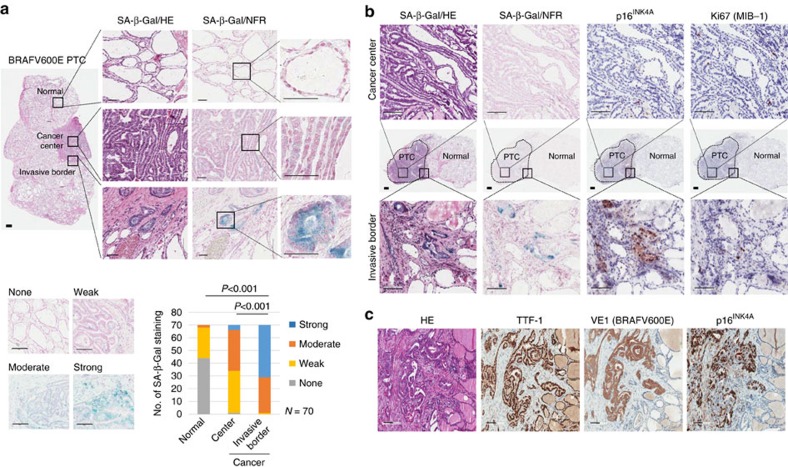
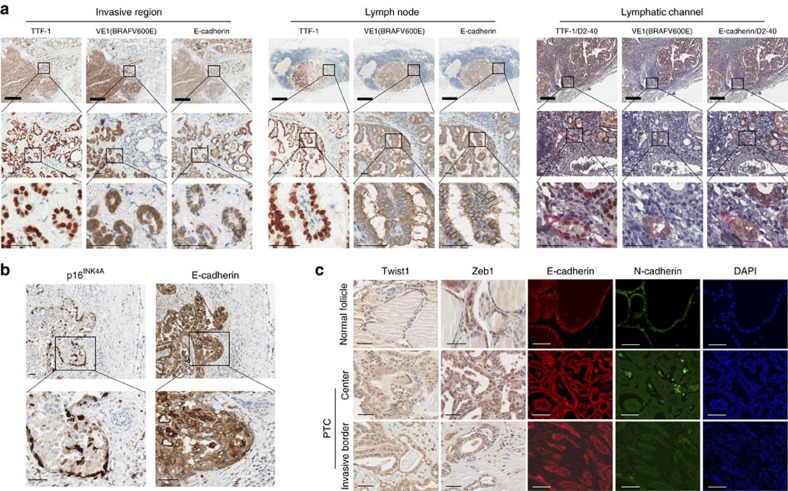
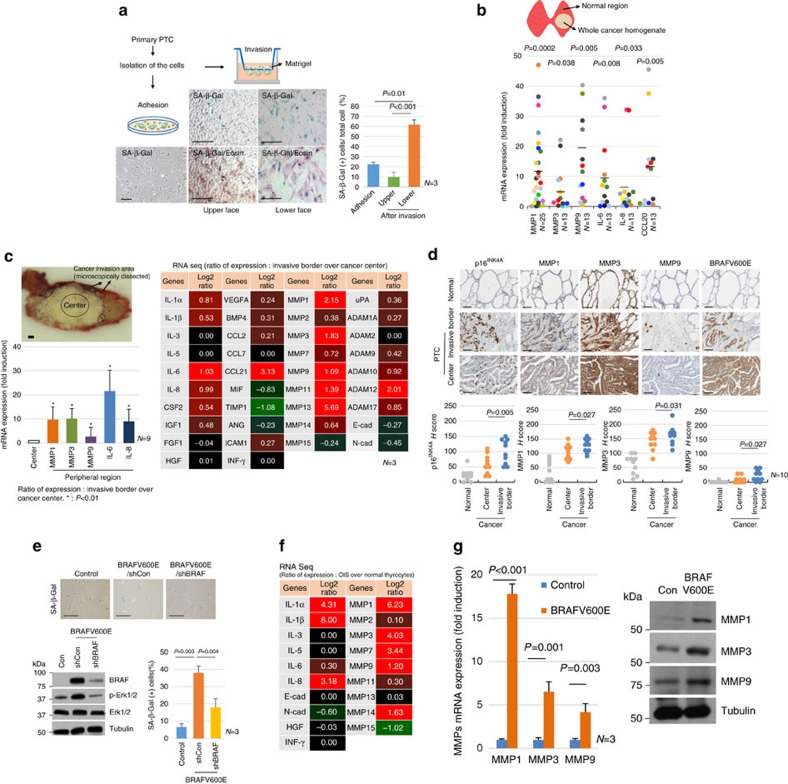
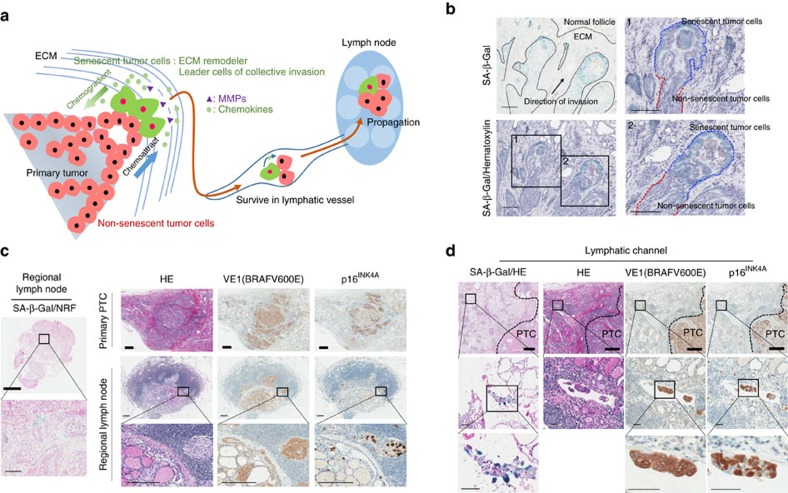
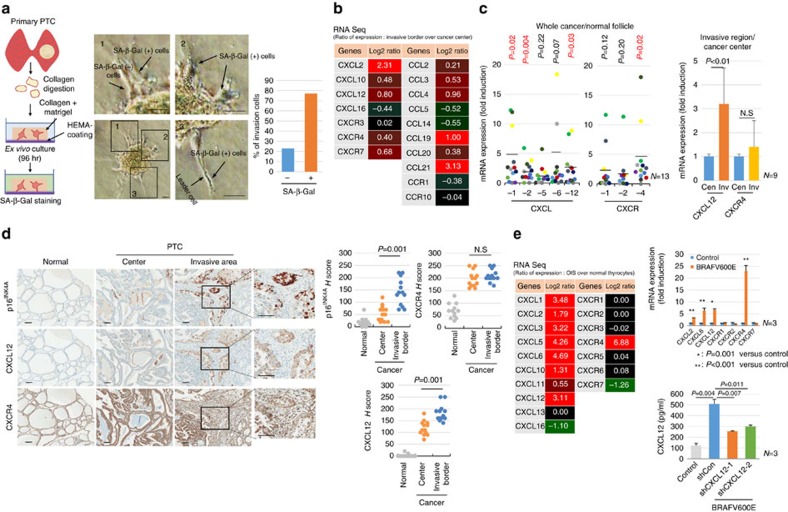
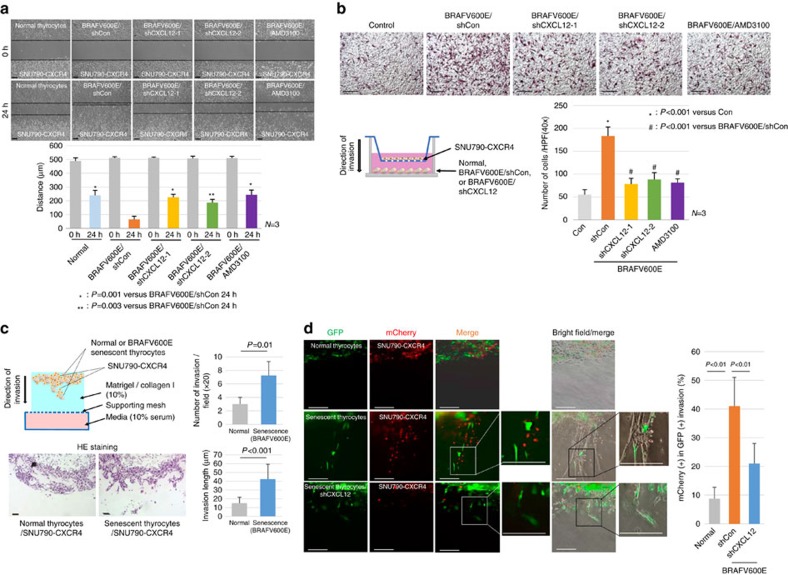
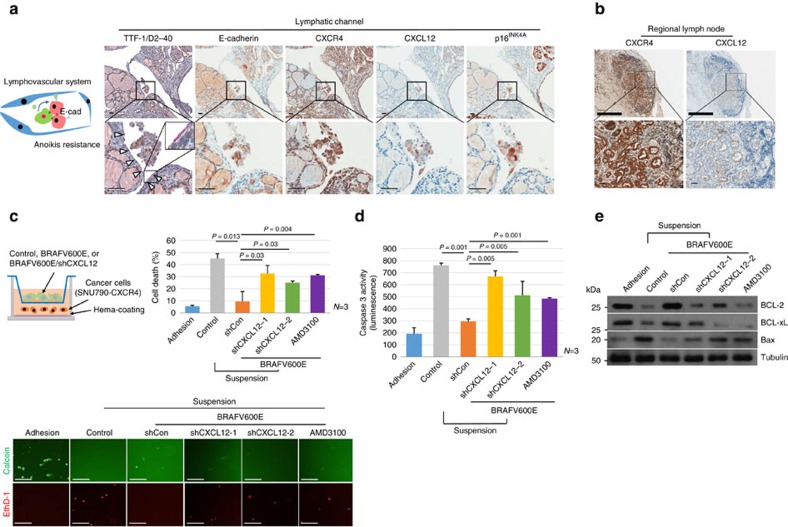
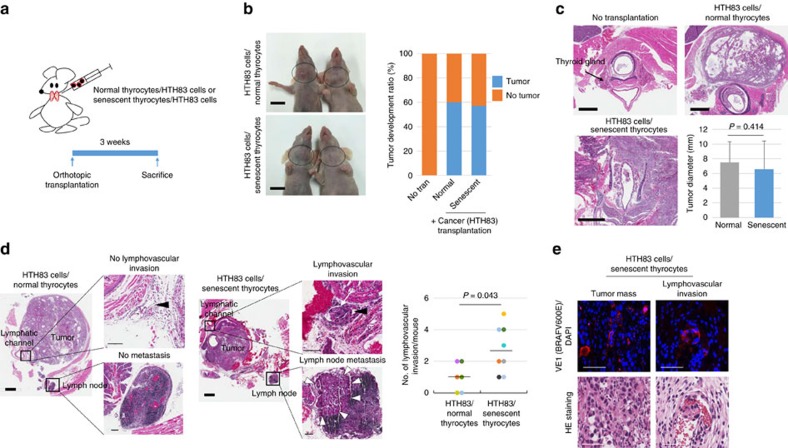
Verification
Claims the paper makes
The claims and statistics of this paper haven’t been checked yet.
Run the check — free, no account needed. It reads the open-access text and checks the sources it cites.
Claims other papers make about this one
Each is checked against this paper’s own text: does it say what the citing paper says it does?
The cited source says what the claim attributes to it.
In the citing paper
“Recent studies revealed that besides cancer cells (7), other cells in the tumor microenvironment (TME), such as fibroblasts (8–11) and endothelial cells (12–14), undergo cellular senescence or display senescence-like phenotypic alterations that promote cancer progression.”
From Chromatin conformational changes at human satellite II contribute to the senescence phenotype in the tumor microenvironment (2023) · cites this paper as [7]
The cited source says what the claim attributes to it.
In the citing paper
“we and other groups have reported that cancer cells exhibit senescence-like phenotypes (7, 42).”
From Chromatin conformational changes at human satellite II contribute to the senescence phenotype in the tumor microenvironment (2023) · cites this paper as [7]
The cited source says what the claim attributes to it.
In the citing paper
“However, OIS cells reportedly can also associate with nonsenescent cancer cells during metastasis to assist in cancer cell survival and invasion through SASP factors [42].”
From The role of cellular senescence and SASP in tumour microenvironment (2023) · cites this paper as [42]
In the citing paper
“In a murine model of papillary thyroid carcinoma, senescent cancer cells located in the front region of collective invasion site and lymph nodes generate a CXCL12 gradient propaedeutic for cancer invasion.197”
From Meta-hallmarks of aging and cancer (2023) · cites this paper as [197]
Self-check
Percentages, sums and reported differences re-computed from the paper’s own numbers.
The self-check needs the paper’s full text.
Citations
Cites
Hallmarks of Cancer: The Next Generation
Hanahan, D., & Weinberg, R. A. (2011) · Cell · doi:10.1016/j.cell.2011.02.013 · Cited by 66,590
Oncogenic ras provokes premature cell senescence associated with accumulation of p53 and p16INK4a
Serrano, M., Lin, A. W., McCurrach, M. E., Beach, D., & Lowe, S. W. (1997) · Cell · doi:10.1016/s0092-8674(00)81902-9 · Cited by 5,218
The senescence-associated secretory phenotype: the dark side of tumor suppression
Coppé, J.-P., Desprez, P.-Y., Krtolica, A., & Campisi, J. (2010) · Annual Review of Pathology: Mechanisms of Disease · doi:10.1146/annurev-pathol-121808-102144 · Cited by 5,206
BRAFE600-associated senescence-like cell cycle arrest of human naevi
Michaloglou, C., Vredeveld, L. C. W., Soengas, M. S., Denoyelle, C., Kuilman, T., van der Horst, C. M. A. M., Majoor, D. M., Shay, J. W., Mooi, W. J., & Peeper, D. S. (2005) · Nature · doi:10.1038/nature03890 · Cited by 2,160
The lymphocyte chemoattractant SDF-1 is a ligand for LESTR/fusin and blocks HIV-1 entry
Bleul, C. C., Farzan, M., Choe, H., Parolin, C., Clark‐Lewis, I., Sodroski, J., & Springer, T. A. (1996) · Nature · doi:10.1038/382829a0 · Cited by 1,953
Metastasis: a question of life or death
Mehlen, P., & Puisieux, A. (2006) · Nature reviews. Cancer · doi:10.1038/nrc1886 · Cited by 1,919
Cellular senescence and the senescent secretory phenotype: therapeutic opportunities
Tchkonia, T., Zhu, Y., van Deursen, J., Campisi, J., & Kirkland, J. L. (2013) · Journal of Clinical Investigation · doi:10.1172/jci64098 · Cited by 1,774
Senescence surveillance of pre-malignant hepatocytes limits liver cancer development
Kang, T.-W., Yevsa, T., Woller, N., Hoenicke, L., Wuestefeld, T., Dauch, D., Hohmeyer, A., Gereke, M., Rudalska, R., Potapova, A., et al. (2011) · Nature · doi:10.1038/nature10599 · Cited by 1,621
Senescence in premalignant tumours
Collado, M., Gil, J., Efeyan, A., Guerra, C., Schuhmacher, A. J., Barradas, M., Benguría, A., Zaballos, A., Flores, J. M., Barbacid, M., et al. (2005) · Nature · doi:10.1038/436642a · Cited by 1,482
CXCL12 (SDF-1)/CXCR4 Pathway in Cancer
Teicher, B. A., & Fricker, S. P. (2010) · Clinical Cancer Research · doi:10.1158/1078-0432.ccr-09-2329 · Cited by 1,453
Cell adhesion and signalling by cadherins and Ig-CAMs in cancer
Cavallaro, U., & Christofori, G. (2004) · Nature reviews. Cancer · doi:10.1038/nrc1276 · Cited by 1,314
Oncogene-induced senescence as an initial barrier in lymphoma development
Braig, M., Lee, S., Loddenkemper, C., Rudolph, C., Peters, A. H. F. M., Schlegelberger, B., Stein, H., Dörken, B., Jenuwein, T., & Schmitt, C. A. (2005) · Nature · doi:10.1038/nature03841 · Cited by 1,220
Frisch, S. M., & Ruoslahti, E. I. (1997) · Current Opinion in Cell Biology · doi:10.1016/s0955-0674(97)80124-x · Cited by 1,159
Anchorage dependence, integrins, and apoptosis
Ruoslahti, E. I., & Reed, J. C. (1994) · Cell · doi:10.1016/0092-8674(94)90209-7 · Cited by 1,001
Xing, M. (2007) · Endocrine Reviews · doi:10.1210/er.2007-0007 · Cited by 996
BRAF Mutation Predicts a Poorer Clinical Prognosis for Papillary Thyroid Cancer
Xing, M., Westra, W. H., Tufano, R. P., Cohen, Y., Rosenbaum, E., Rhoden, K. J., Carson, K. A., Vasko, V. V., Ларін, О. С., Tallini, G., et al. (2005) · The Journal of Clinical Endocrinology & Metabolism · doi:10.1210/jc.2005-0987 · Cited by 992
Classifying collective cancer cell invasion
Friedl, P., Locker, J. D., Sahai, E. A., & Segall, J. E. (2012) · Nature Cell Biology · doi:10.1038/ncb2548 · Cited by 966
Collective Invasion in Breast Cancer Requires a Conserved Basal Epithelial Program
Cheung, K. J., Gabrielson, E. W., Werb, Z., & Ewald, A. J. (2013) · Cell · doi:10.1016/j.cell.2013.11.029 · Cited by 859
Lymph Node Metastasis From 259 Papillary Thyroid Microcarcinomas
Wada, N., Duh, Q., Sugino, K., Iwasaki, H., Kameyama, K., Mimura, T., Ito, K., Takami, H. E., & Takanashi, Y. (2003) · Annals of Surgery · doi:10.1097/01.sla.0000055273.58908.19 · Cited by 810
CXCL12 / CXCR4 / CXCR7 chemokine axis and cancer progression
Sun, X., Cheng, G., Hao, M., Zheng, J., Zhou, X., Zhang, J., Taichman, R. S., Pienta, K. J., & Wang, J. (2010) · Cancer and Metastasis Reviews · doi:10.1007/s10555-010-9256-x · Cited by 729
T-helper-1-cell cytokines drive cancer into senescence
Braumüller, H., Wieder, T., Brenner, E., Aßmann, S., Hahn, M., Alkhaled, M., Schilbach, K., Essmann, F., Kneilling, M., Griessinger, C., et al. (2013) · Nature · doi:10.1038/nature11824 · Cited by 720
Oxidative DNA damage and senescence of human diploid fibroblast cells.
Chen, Q., Fischer, A., Reagan, J. D., Yan, L. J., & Ames, B. N. (1995) · Proceedings of the National Academy of Sciences · doi:10.1073/pnas.92.10.4337 · Cited by 720
Involvement of Members of the Cadherin Superfamily in CancerPreprint
Berx, G., & Roy, F. M. V. (2009) · Cold Spring Harbor Perspectives in Biology · doi:10.1101/cshperspect.a003129 · Cited by 706
(2002) · PubMed · Cited by 640
The biology of replicative senescence
Campisi, J. (1997) · European Journal of Cancer · doi:10.1016/s0959-8049(96)00058-5 · Cited by 538
Cellular Heterogeneity and Molecular Evolution in Cancer
Almendro, V., Marusyk, A., & Polyák, K. (2012) · Annual Review of Pathology Mechanisms of Disease · doi:10.1146/annurev-pathol-020712-163923 · Cited by 502
Dankort, D. L., Filenova, E., Collado, M., Serrano, M., Jones, K. D., & McMahon, M. (2007) · Genes & Development · doi:10.1101/gad.1516407 · Cited by 492
Capper, D., Preusser, M., Habel, A., Sahm, F., Ackermann, U., Schindler, G., Pusch, S., Mechtersheimer, G., Zentgraf, H., & von Deimling, A. (2011) · Acta Neuropathologica · doi:10.1007/s00401-011-0841-z · Cited by 469
Collective cell migration: guidance principles and hierarchies
Haeger, A., Wolf, K., Zegers, M. M., & Friedl, P. (2015) · Trends in Cell Biology · doi:10.1016/j.tcb.2015.06.003 · Cited by 431
Roberson, R. S., Kussick, S. J., Vallieres, E., Chen, S.-Y. J., & Wu, D. Y. (2005) · Cancer Research · doi:10.1158/0008-5472.can-04-1270 · Cited by 428
Cancer CXC chemokine networks and tumour angiogenesis
Strieter, R. M., Burdick, M. D., Mestas, J., Gomperts, B. N., Keane, M. P., & Belperio, J. A. (2006) · European Journal of Cancer · doi:10.1016/j.ejca.2006.01.006 · Cited by 419
Kim, T. H., Park, Y. J., Lim, J., Ahn, H. Y., Lee, E. K., Lee, Y. J., Kim, K. W., Hahn, S., Youn, Y., Kim, K. H., et al. (2011) · Cancer · doi:10.1002/cncr.26500 · Cited by 401
Coppé, J.-P., Patil, C. K., Rodier, F., Sun, Y., Muñoz, D. P., Goldstein, J., Nelson, P. S., Desprez, P.-Y., & Campisi, J. (2008) · PLoS Biology · doi:10.1371/journal.pbio.0060301 · Cited by 302
Oncogene-Induced Senescence: Putting the Brakes on Tumor Development
Braig, M., & Schmitt, C. A. (2006) · Cancer Research · doi:10.1158/0008-5472.can-05-4006 · Cited by 274
Vaziri, H., & Benchimol, S. (1996) · Experimental Gerontology · doi:10.1016/0531-5565(95)02025-x · Cited by 209
Inflammation-mediated promotion of invasion and metastasis
Solinas, G., Marchesi, F., Garlanda, C., Mantovani, A., & Allavena, P. (2010) · Cancer and Metastasis Reviews · doi:10.1007/s10555-010-9227-2 · Cited by 205
Bennecke, M., Kriegl, L., Bajbouj, M., Retzlaff, K., Robine, S., Jung, A., Arkan, M. C., Kirchner, T., & Greten, F. R. (2010) · Cancer Cell · doi:10.1016/j.ccr.2010.06.013 · Cited by 186
Tumor Stroma-Derived TGF-β Limits Myc-Driven Lymphomagenesis via Suv39h1-Dependent Senescence
Reimann, M., Lee, S., Loddenkemper, C., Dörr, J. R., Tabor, V., Aichele, P., Stein, H., Dörken, B., Jenuwein, T., & Schmitt, C. A. (2010) · Cancer Cell · doi:10.1016/j.ccr.2009.12.043 · Cited by 184
An epigenetically distinct breast cancer cell subpopulation promotes collective invasion
Westcott, J. M., Prechtl, A. M., Maine, E. A., Dang, T. T., Esparza, M. A., Sun, H., Zhou, Y., Xie, Y., & Pearson, G. W. (2015) · Journal of Clinical Investigation · doi:10.1172/jci77767 · Cited by 176
Milde‐Langosch, K., Bamberger, A., Rieck, G., Kelp, B., & Löning, T. (2001) · Breast Cancer Research and Treatment · doi:10.1023/a:1010623308275 · Cited by 159
Central lymph node metastases in unilateral papillary thyroid microcarcinoma
Lim, Y. C., Choi, E. C., Yoon, Y.-H., Kim, E.-H., & Koo, B. S. (2009) · British journal of surgery · doi:10.1002/bjs.6484 · Cited by 135
Evidence for Nonautonomous Effect of p53 Tumor Suppressor in Carcinogenesis
Kiaris, H., Chatzistamou, I., Trimis, G., Frangou-Plemmenou, M., Pafiti-Kondi, A., & Kalofoutis, A. (2005) · Cancer Research · doi:10.1158/0008-5472.can-04-3791 · Cited by 128
Leboeuf, R., Baumgartner, J. E., Benezra, M., Malaguarnera, R., Solit, D. B., Pratilas, C. A., Rosen, N. X., Knauf, J. A., & Fagin, J. A. (2008) · The Journal of Clinical Endocrinology & Metabolism · doi:10.1210/jc.2007-2825 · Cited by 127
Cellular senescence predicts treatment outcome in metastasised colorectal cancer
Haugstetter, A. M., Loddenkemper, C., Lenze, D., Gröne, J., Standfuß, C., Petersen, I., Dörken, B., & Schmitt, C. A. (2010) · British Journal of Cancer · doi:10.1038/sj.bjc.6605784 · Cited by 117
Chemokine receptors CXCR4 and CCR7 promote metastasis by preventing anoikis in cancer cells
Kochetkova, M., Kumar, S., & McColl, S. R. (2009) · Cell Death and Differentiation · doi:10.1038/cdd.2008.190 · Cited by 100
Non-Cell-Autonomous Regulation of Cellular Senescence in Cancer
Mitri, D. D., & Alimonti, A. (2015) · Trends in Cell Biology · doi:10.1016/j.tcb.2015.10.005 · Cited by 92
Li, J., Yu, L., Shen, Y., Zhou, L.-S., Wang, Y., & Zhang, J. (2008) · World Journal of Gastroenterology · doi:10.3748/wjg.14.2308 · Cited by 80
Drury, L. J., Wendt, M. K., & Dwinell, M. B. (2010) · PLoS ONE · doi:10.1371/journal.pone.0012895 · Cited by 49
Kim, Y. H., Choi, Y. W., Han, J. H., Lee, J., Soh, E. Y., Park, S. H., Kim, J., & Park, T. J. (2014) · Neoplasia · doi:10.1016/j.neo.2014.10.005 · Cited by 48
Self-citationEvidence of oncogene-induced senescence in thyroid carcinogenesis
Vizioli, M. G., Possik, P. A., Tarantino, E., Meissl, K., Borrello, M. G., Miranda, C., Anania, M. C., Pagliardini, S., Seregni, E., Pierotti, M. A., et al. (2011) · Endocrine-Related Cancer · doi:10.1530/erc-11-0240 · Cited by 47
An Orthotopic Model of Papillary Thyroid Carcinoma in Athymic Nude Mice
Ahn, S., Henderson, Y. C., Kang, Y., Chattopadhyay, C., Holton, P., Wang, M. X., Briggs, K. L., & Clayman, G. L. (2008) · Archives of Otolaryngology - Head and Neck Surgery · doi:10.1001/archoto.2007.36 · Cited by 46
Ho, I. A. W., Yulyana, Y., Sia, K. C., Newman, J. P. A., Guo, C. M., Hui, K. M., & Lam, P. Y. P. (2014) · The FASEB Journal · doi:10.1096/fj.14-252551 · Cited by 38
Senescence in intraductal papillary mucinous neoplasm of the pancreas
Miyasaka, Y., Nagai, E., Ohuchida, K., Fujita, H., Nakata, K., Hayashi, A., Mizumoto, K., Tsuneyoshi, M., & Tanaka, M. (2011) · Human Pathology · doi:10.1016/j.humpath.2011.03.007 · Cited by 16
Cited by
Sorted by citations
Mechanisms of Cellular Senescence: Cell Cycle Arrest and Senescence Associated Secretory Phenotype
Kumari, R., & Jat, P. (2021) · Frontiers in Cell and Developmental Biology · doi:10.3389/fcell.2021.645593 · Cited by 1,622
The senescence-associated secretory phenotype and its physiological and pathological implications
Wang, B., Han, J., Elisseeff, J. H., & Demaria, M. (2024) · Nature Reviews Molecular Cell Biology · doi:10.1038/s41580-024-00727-x · Cited by 948
Unmasking senescence: context-dependent effects of SASP in cancer
Faget, D. V., Ren, Q., & Stewart, S. A. (2019) · Nature Reviews Cancer · doi:10.1038/s41568-019-0156-2 · Cited by 863
Senescence and cancer — role and therapeutic opportunities
Schmitt, C. A., Wang, B., & Demaria, M. (2022) · Nature Reviews Clinical Oncology · doi:10.1038/s41571-022-00668-4 · Cited by 794
Meta-hallmarks of aging and cancer
López-Otín, C., Pietrocola, F., Roiz-Valle, D., Galluzzi, L., & Kroemer, G. (2023) · Cell Metabolism · doi:10.1016/j.cmet.2022.11.001 · Cited by 529
Metadata
- Authors
- Kim, Y. H., Choi, Y. W., Lee, J., Soh, E. Y., Kim, J.-H., & Park, T. J.
- Affiliations
- Ajou University (KR)
- Corresponding author
- Kim, Jang-Hee
- Park, Tae Jun
- Venue
- Nature Communications
- Published
- 2017-05-10
- Volume
- 8
- Issue
- 1
- Pages
- 15208-15208
- ISSN
- 2041-1723 (ISSN-L)
- PMC
- PMC5436223
- OpenAlex
- W2612090342
- Cited by
- 253
- References
- 53
- Citations by year
- 2026: 22 · 2025: 27 · 2024: 39 · 2023: 42 · 2022: 27 · 2021: 37 · 2020: 33 · 2019: 12 · 2018: 13 · 2017: 1
- FWCI
- 12.14
- Type
- journal article
- Language
- en
- Open access
- gold
- doi.org
- Locations
- Nature Communications (publishedVersion, cc-by)
- Europe PMC (PubMed Central) (publishedVersion, cc-by)
- PubMed Central (publishedVersion, cc-by)
- PubMed (publishedVersion)
- RePEc: Research Papers in Economics (submittedVersion)
- DOAJ (DOAJ: Directory of Open Access Journals) (submittedVersion, cc-by-sa)
- AJOU Open Repository (Ajou University) (submittedVersion)
- Funders
- Clinical Trial Center, China Medical University Hospital
- National Research Foundation
- Ajou University
- National Research Foundation of Korea (NRF-2016R1D1A1B02010452, 2016R1D1A1B02010452)
- Topics
- Life Sciences › Biochemistry, Genetics and Molecular Biology › Cell Biology › Telomeres, Telomerase, and Senescence
- Health Sciences › Medicine › Endocrinology, Diabetes and Metabolism › Thyroid Cancer Diagnosis and Treatment
- Health Sciences › Medicine › Oncology › Cancer Cells and Metastasis
- Keywords
- cellular senescence, senescence-associated secretory phenotype, papillary thyroid carcinoma, collective invasion, lymph node metastasis, chemokine gradients, tumor cell survival, lymphatic vessel invasion, tumor microenvironment
- MeSH terms
- Thyroid Epithelial Cells, Animals, Carcinoma, Papillary, Cell Movement, Cells, Cultured, Female, Humans, Lymphatic Metastasis, Mice, Inbred BALB C, Mice, Nude, Neoplasm Invasiveness, Thyroid Neoplasms, Transplantation, Heterologous, Cellular Senescence, Receptors, CXCR4, Gene Expression Profiling, Cell Line, Tumor, Chemokine CXCL12
About these checks
Registry, retraction, Cites and statistics results are computed, not judged, with one exception: a printed reference that no index lists is read once by a model before it counts as a citation error. Claims are extracted by a model and kept only when their quote appears verbatim in the text; each cited source is then checked, with a model’s help, for whether it says what the claim relies on. Those verdicts can be wrong — read the claim’s quote and the cited source before relying on one.
Statistics and arithmetic are recomputed, not judged.
Confidence bands are shown only for fields calibrated on our annotated test set. None is calibrated yet, so no band is shown.
What counts as a claim ›How we measure confidence ›How we check this ›
Are you an author, or do you see a problem with this page? Request a review
