

Molecular targeted therapy for anticancer treatment
Open accessThe DOI matches its Crossref record; 257 of the 257 references it cites were found in a registry or an index.
Abstract
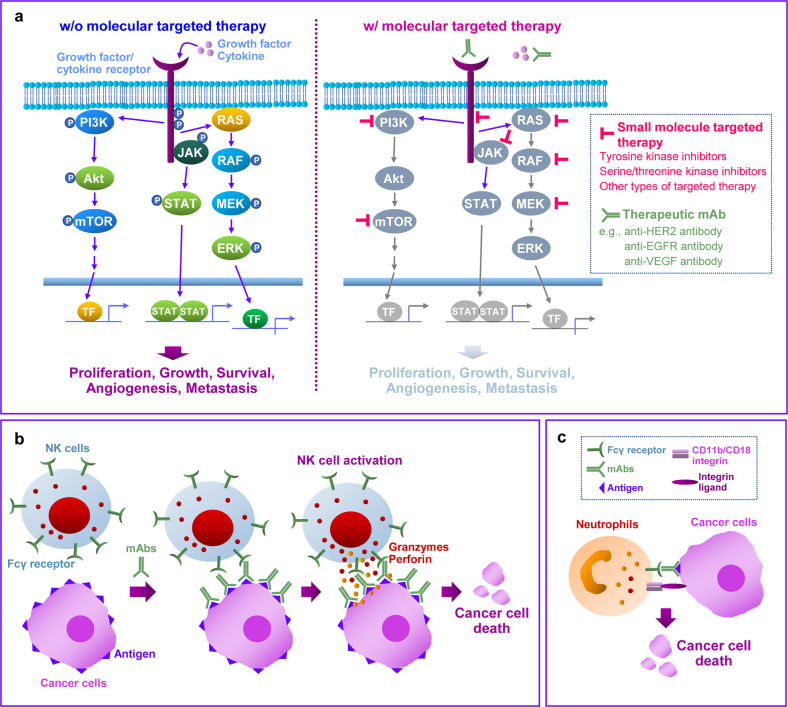
Since the initial clinical approval in the late 1990s and remarkable anticancer effects for certain types of cancer, molecular targeted therapy utilizing small molecule agents or therapeutic monoclonal antibodies acting as signal transduction inhibitors has served as a fundamental backbone in precision medicine for cancer treatment. These approaches are now used clinically as first-line therapy for various types of human cancers. Compared to conventional chemotherapy, targeted therapeutic agents have efficient anticancer effects with fewer side effects. However, the emergence of drug resistance is a major drawback of molecular targeted therapy, and several strategies have been attempted to improve therapeutic efficacy by overcoming such resistance. Herein, we summarize current knowledge regarding several targeted therapeutic agents, including classification, a brief biology of target kinases, mechanisms of action, examples of clinically used targeted therapy, and perspectives for future development.
Overview
The claims and statistics of this paper haven’t been checked yet.
Free: it reads the open-access text and checks the first 5 claims that cite a source we can check. Create a free account to check every claim.
Integrity signals
Registry
Cites
Statistics
Figures

Verification
Claims the paper makes
The claims and statistics of this paper haven’t been checked yet.
Free: it reads the open-access text and checks the first 5 claims that cite a source we can check. Create a free account to check every claim.
Self-check
Percentages, sums and reported differences re-computed from the paper’s own numbers.
The self-check needs the paper’s full text.
Citations
Cites
Sung, H., Ferlay, J., Siegel, R. L., Laversanne, M., Soerjomataram, I., Jemal, A., & Bray, F. (2021) · CA: A Cancer Journal for Clinicians · doi:10.3322/caac.21660 · Cited by 108,699
Hallmarks of Cancer: The Next Generation
Hanahan, D., & Weinberg, R. A. (2011) · Cell · doi:10.1016/j.cell.2011.02.013 · Cited by 66,590
Cell Signaling by Receptor Tyrosine Kinases
Lemmon, M. A., & Schlessinger, J. (2010) · Cell · doi:10.1016/j.cell.2010.06.011 · Cited by 7,929
mTOR Signaling in Growth, Metabolism, and Disease
Saxton, R. A., & Sabatini, D. M. (2017) · Cell · doi:10.1016/j.cell.2017.02.004 · Cited by 7,555
Gut microbiome modulates response to anti-PD-1 immunotherapy in melanoma patients
Gopalakrishnan, V., Spencer, C. N., Nezi, L., Reuben, A., Andrews, M. C., Karpinets, T. V., Prieto, P. A., Vicente, D., Hoffman, K., Wei, S. C., et al. (2018) · Science · doi:10.1126/science.aan4236 · Cited by 4,812
A guide to cancer immunotherapy: from T cell basic science to clinical practice
Waldman, A. D., Fritz, J. M., & Lenardo, M. J. (2020) · Nature Reviews Immunology · doi:10.1038/s41577-020-0306-5 · Cited by 4,154
Genotypic and Histological Evolution of Lung Cancers Acquiring Resistance to EGFR Inhibitors
Sequist, L. V., Waltman, B. A., Dias-Santagata, D., Digumarthy, S., Turke, A. B., Fidias, P., Bergethon, K., Shaw, A. T., Gettinger, S., Cosper, A. K., et al. (2011) · Science Translational Medicine · doi:10.1126/scitranslmed.3002003 · Cited by 3,499
PROTAC targeted protein degraders: the past is prologue
Békés, M., Langley, D. R., & Crews, C. M. (2022) · Nature Reviews Drug Discovery · doi:10.1038/s41573-021-00371-6 · Cited by 3,395
VEGFR1-positive haematopoietic bone marrow progenitors initiate the pre-metastatic niche
Kaplan, R. N., Riba, R. D., Zacharoulis, S., Bramley, A. H., Vincent, L., Costa, C., MacDonald, D. D., Jin, D. K., Shido, K., Kerns, S. A., et al. (2005) · Nature · doi:10.1038/nature04186 · Cited by 3,288
Epidermal growth factor receptor mutations in lung cancer
Sharma, S. V., Bell, D. W., Settleman, J., & Haber, D. A. (2007) · Nature Reviews Cancer · doi:10.1038/nrc2088 · Cited by 3,170
Research works printed but not linked: 1
- 83. Tsang, R. Y., Sadeghi, S. & Finn, R. S. Lapatinib, a dual-targeted small molecule inhibitor of EGFR and HER2, in HER2-amplified breast cancer: from bench to bedside. Clin. Med. Insights: Ther. 3, CMT.S3783 (2011).
Cited by
Items 401–500 of 684
Qiu, G., Zhao, X., Long, Y., & Wang, L. (2026) · Journal of Molecular Structure · doi:10.1016/j.molstruc.2026.145824 · Cited by 1
Non-Coding RNA: Architects of Cellular Complexity and Agents of Malignancy
Shah, A. (2026) · Genes · doi:10.3390/genes17030304 · Cited by 1
“Cytotoxic chemotherapy was introduced in the 1940s on the assumption that the mitotic cycle is perturbed in cancer cells, and, in the late 1990s, the discovery of disrupted oncogenic signaling pathways guided the design of molecularly targeted therapy [121,122].”
Al‐Rooqi, M. M., Samman, S. S., Ahmed, S. A., Omeman, A., Abdo, A. M., & Rizk, S. A. (2026) · Polycyclic aromatic compounds · doi:10.1080/10406638.2026.2624576 · Cited by 1
Chu, T., Lim, Y., Sun, Y., Wu, F., Castillo, C., Hanna, E. A., Wirtz, D., & Wu, P.-H. (2026) · Science Advances · doi:10.1126/sciadv.aea1492 · Cited by 1
Kim, S., Ha, D., Nam, A.-R., Cheong, S., Lee, J., Kim, S., & Park, S. (2026) · Cell Reports Methods · doi:10.1016/j.crmeth.2026.101411 · Cited by 1
Mahitha, P. M., Suresh, A., Jincy, J., Roby, N., Singh, B. N., Al-Otaibi, J. S., Mary, Y. S., Patil, A., & Kulkarni, N. V. (2026) · Discover Applied Sciences · doi:10.1007/s42452-026-08751-6 · Cited by 1
Pouresmaeili, A., & Kajani, A. A. (2026) · Journal of Pharmaceutical Sciences · doi:10.1016/j.xphs.2026.104402 · Cited by 1
Kim, K., Byeon, Y., Lee, C., Lee, W. S., Hwang, K., Dho, Y., Sung, K. S., Roh, T. H., Chong, K., Park, K.-S., et al. (2026) · Journal of Korean Neurosurgical Society · doi:10.3340/jkns.2026.0113 · Cited by 1
Rapid assessment of target-binding fractions in molecular imaging agents using size-exclusion HPLC
McAdoo, A., Jouad, K., Rosenthal, E. L., & Rosenberg, A. J. (2026) · EJNMMI Radiopharmacy and Chemistry · doi:10.1186/s41181-026-00469-5 · Cited by 1
In situ self-assembly of PROTACs for precision cancer therapy
Liang, P., Ren, Y., Bian, Y., & Su, D. (2026) · Chemical Communications · doi:10.1039/d6cc03311c · Cited by 1
BERBER, N. (2026) · Journal of Innovative Engineering and Natural Science · doi:10.61112/jiens.1851347 · Cited by 1
Drosos, C., Kapsi, A., Nikolaidou, A., & Giakountis, A. (2026) · Cancers · doi:10.3390/cancers18152497 · Cited by 1
Юрьевич, А. А., Hamama, R., Petrson, E. V., & Maximov, P. Y. (2026) · Frontiers in Oncology · doi:10.3389/fonc.2026.1855542 · Cited by 1
“Small-molecule kinase inhibitors, inhibitors of hormone-biosynthetic enzymes, targeted protein de-graders, and antibody-based agents now form the backbone of precision oncology across many tumor types (4, 5).”
Chemoinformatics Study of Dimedone‐Derived Compounds as Inhibitors of Human Colon Cancer HT‐29
Allouche, Y. E., Diane, A., Marjany, S. E., Naanaai, L., Aissouq, A. E., Zaitan, H., & Khalil, F. (2026) · ChemistrySelect · doi:10.1002/slct.74177 · Cited by 1
ANTITUMOR ANTI-EGFR ACTION OF A NEW DERIVATIVE OF 9-DIHYDROACRIDONE
Bagdasaryan, A. A., Блинова, Е. В., Kutorkina, E. A., Пакина, В. А., Epishkina, A. A., Тумутолова, О. М., Bogoslovskaya, E. V., Семелева, Е. В., Федосейкин, И. В., & Блинов, Д. С. (2023) · Acta medica Eurasica · doi:10.47026/2413-4864-2023-3-50-57 · Cited by 1
Research Advances of Small Molecule EGFR-TKIs in NSCLC
胡, 亚. (2024) · Pharmacy Information · doi:10.12677/pi.2024.131001 · Cited by 1
Research Progress of Nano-Drugs Remodeling TAMs for Enhancing Cancer Immunotherapy
刘, 湘. (2024) · Advances in Clinical Medicine · doi:10.12677/acm.2024.1451389 · Cited by 1
Design, Synthesis, and Anticancer Activity Evaluation of Novel Betulin Derivatives
Bu, M., Zhang, Y., Pan, S., Zhang, M., Guo, X. W., & Wang, J. (2024) · Russian Journal of General Chemistry · doi:10.1134/s1070363224110185 · Cited by 1
Implications of noncoding RNAs for cancer therapy: Are we aiming at the right targets?
Shah, A. (2025) · Exploration of Targeted Anti-tumor Therapy · doi:10.37349/etat.2025.1002286 · Cited by 1
HNF1A-AS1 promotes oral squamous cell carcinoma progression via regulating miR-138/CDK6 pathway
Mei, B., Zeng, Z., Xia, Q., Liu, M., & Li, L. (2025) · Odontology · doi:10.1007/s10266-025-01057-w · Cited by 1
Innovations in Cancer Therapy: Pioneering Precision Medicine and Cutting-Edge Technologies
Singh, S. K., Ahuja, A., & Goswami, N. (2026) · Current pharmacogenomics and personalized medicine (Online)/Current pharmacogenomics and personalized medicine · doi:10.2174/0118756921437845260116093316 · Cited by 1
Cardio-Oncology: Risk Assessment and Management
Reilly, C. M. (2024) · Springer eBooks · doi:10.1007/978-3-031-53705-9_17 · Cited by 1
Molecular oncobiology and cancer chemotherapeutics
Bhat, S. S., Thanmaya, M., Jahagirdar, S., Akshatha, C. R., Prasad, S. K., & Sindhu, R. (2024) · Elsevier eBooks · doi:10.1016/b978-0-443-16013-4.00020-8 · Cited by 1
Nanoparticles in metastatic cancer treatment
Manu, K. R., Kar, A., Gopinath, P., Gupta, G., Sahebkar, A., Kesharwani, P., & Dandela, R. (2024) · Elsevier eBooks · doi:10.1016/b978-0-443-13209-4.00013-1 · Cited by 1
Kerna, N. A., Flores, J. V., Pruitt, K. D., Carsrud, N. D. V., Ngwu, D. C., Rodriguez, D., Holets, H. M., Nwokorie, U., Jomsky, B. M., Senat, A. J. B., et al. (2024) · European Journal of Medical and Health Research · doi:10.59324/ejmhr.2024.2(5).03 · Cited by 1
Ngo, H., Oh, E., Li, C., & Yu, J. (2024) · Clinical Therapeutics · doi:10.1016/j.clinthera.2024.08.020 · Cited by 1
Discovery of lead compounds from pseudo-natural macrocycles enabled by modular biomimetic strategy
Song, B., Hou, K., & Yang, W. (2024) · Elsevier eBooks · doi:10.1016/b978-0-443-23932-8.00004-2 · Cited by 1
[Predictive markers in gynaecological, prostate, and breast cancers].
Rókusz, A., Melegh, Z., Vereczkey, I., Papp, E., Madaras, L., & Tóth, E. (2024) · PubMed Central · Cited by 1
Abordagens e estratégias para a Saúde Pública e Saúde Coletiva 4
Almeida‐Bezerra, J. W., da Silva, L. Y. S., & de Sousa, S. D. G. (2025) · doi:10.22533/at.ed.381251601 · Cited by 1
dos Santos, H. F., Soutilha, A. D. S., Jorge, N. G., Botelho, W. H., Alves, M. H. F., Oliveira, A. S., Baldivia, D. D. S., Leite, D. F., da Rocha, P. D. S., Campos, J. F., et al. (2025) · doi:10.22533/at.ed.3812516018 · Cited by 1
Breast cancer stroma and its components: Implication in diagnostic and therapeutic
Sharma, R., Kumar, P., Kumar, V., Singh, S. P., Garg, V. K., Okpala, C. O. R., Thakur, S., Singh, H., Nim, D. K., Buttar, H. S., et al. (2025) · Elsevier eBooks · doi:10.1016/b978-0-443-24838-2.00004-5 · Cited by 1
Rawat, R. N., Singh, S., Gupta, N., Upadhyay, M., Shrivastava, S., & Jain, B. (2025) · Current Cancer Drug Targets · doi:10.2174/0115680096337123241217070834 · Cited by 2
Abdelrahman, I. Y., El-Khalek, A. M. A., Rafei, M. K. A., Askar, M. A., Soliman, M. S., & Fares, N. H. (2025) · Arab Journal of Nuclear Sciences and Applications · doi:10.21608/ajnsa.2025.339343.1866 · Cited by 1
ROS and Precision Medicine in Lifestyle Diseases: Personalized Approaches
Gupta, P. K., Chaudhari, Y., Joseph, A., Sinha, S., Rashid, A., & Prabhakar, P. K. (2025) · Advances in medical diagnosis, treatment, and care (AMDTC) book series · doi:10.4018/979-8-3693-7919-6.ch013 · Cited by 1
Optimal targeted therapy for multiple cancers based on contrastive Notch signaling networks
Wakamoto, T., & Seirin‐Lee, S. (2025) · Journal of Theoretical Biology · doi:10.1016/j.jtbi.2025.112143 · Cited by 1
Carrano, R., Zucca, C., Cristina, N., Grande, M., Maggio, E. L., Bei, R., Infante, A., Focaccetti, C., Lucarini, V., Cifaldi, L., et al. (2025) · Oncology Research Featuring Preclinical and Clinical Cancer Therapeutics · doi:10.32604/or.2025.066708 · Cited by 1
“…treatments use small molecule inhibitors or mAbs to specifically target proteins, including receptors, growth factors or signal transducers, with the purpose of blocking pathways involved in processes such as cell cycle progression, cell survival, angiogenesis and metastasis formation [54,55].”
Arora, P. K., Riya, Chawla, V., Chawla, P. A., Singla, R., & Goel, H. (2025) · Current Pharmaceutical Design · doi:10.2174/0113816128373247250529114324 · Cited by 1
Omer, S., Mambili‐Mamboundou, H., & Ouifki, R. (2025) · Mathematical Methods in the Applied Sciences · doi:10.1002/mma.70085 · Cited by 1
Photoresponsive polymer–quantum dot nanocomposites for targeted therapy
Dastjerdi, M. B., dadi, R. K., & Hosseinzadeh, J. (2025) · Journal of Composites and Compounds · doi:10.66224/jcc.7.2.7 · Cited by 1
PD-L1, a Master Regulator of Immunity 2.0
Kochan, G. T. (2023) · International Journal of Molecular Sciences · doi:10.3390/ijms24054385 · Cited by 1
“Despite their fewer side effects and higher efficacies, the development of drug resistance is a major drawback [2].”
BackgroundThe promoter mutation paucity as part of the dark matter of the cancer genomePreprint
Abad, N. A. B., Glas, I., Hong, C., Small, A., Pageaud, Y., Maia, A. R. R., Weichenhan, D., Plass, C., Hutter, B., Brors, B., et al. (2024) · bioRxiv (Cold Spring Harbor Laboratory) · doi:10.1101/2024.06.03.597231 · Cited by 1
Akkız, H., Şinşek, H., Balcı, D., Ülger, Y., Onan, E., Ozturk, N. A., & Delik, A. (2024) · Preprints.org · doi:10.20944/preprints202410.1660.v1 · Cited by 1
Recent Advances in Anti-Cancer Drugs
Neophytou, C. M. (2025) · International Journal of Molecular Sciences · doi:10.3390/ijms26178446 · Cited by 1
Sesia, D., Hatos, A., Nittis, P. D., & Ciriello, G. (2026) · bioRxiv (Cold Spring Harbor Laboratory) · doi:10.64898/2026.01.20.700339 · Cited by 1
“The identification of oncogene dependencies has provided the rationale for the development of several targeted therapies 18 and, thus, it has been the main focus of functional genetic screenings 19,20 .”
Protein Structure Tokenization: Benchmarking and New Recipe
Yuan, X., Wang, Z., Collins, M., & Rangwala, H. (2025) · arXiv · doi:10.48550/arxiv.2503.00089
“This is crucial for understanding protein functions and interactions within the cell, and it helps the development of targeted drug design and therapy (Min & Lee, 2022).”
Tolba, E. A.-E. H. T., & Amer, H. Z. A. (2023) · Biotechnology(Faisalabad) · doi:10.3923/biotech.2023.18.27
AVANÇOS NA TERAPIA MOLECULAR-ALVO PARA O TRATAMENTO DO CÂNCER DE PULMÃO
Medeiros, J. V. T. (2023) · Revista Contemporânea · doi:10.56083/rcv3n11-218
SEARCH FOR MOLECULAR TARGETS OF A NOVEL 9-DIHYDROACRIDONE COMPOUND
Bagdosaryan, A. A., Kutorkina, E. A., Пакина, В. А., Bogoslovskaya, E. V., Блинов, Д. С., Tolstov, M., Semeleva, E. V., & Е.В., B. (2023) · Bulletin Biomedicine and sociology · doi:10.26787/nydha-2618-8783-2023-8-3-48-53
Епишкина, А. А., Богословская, Е. В., Пакина, В. А., Osipyants, A. I., Kutorkina, E. A., Литвин, Е. А., Тумутолова, О. М., Блинов, К. Д., Скачилова, С. Я., Семелева, Е. В., et al. (2024) · Химико-фармацевтический журнал · doi:10.30906/0023-1134-2023-57-12-17-21
Fungal Enzyme Inhibitors: Potent Repository of Lead Compounds to Curb Cancer
Gambhir, L., & Kapoor, N. (2024) · Springer eBooks · doi:10.1007/978-981-99-5696-8_13
What is Next in Cancer Care? Ten Years' Predictions from Now
de Melo, A. C. (2024) · Revista Brasileira de Cancerologia · doi:10.32635/2176-9745.rbc.2024v70n1.4628
Epishkina, A. A., Bogoslovskaya, E. V., Pakina, V. A., Osipiantz, A. I., Kutorkina, E. A., Livin, E. A., Тумутолова, О. М., Skachilova, S. Y., Blinov, K. D., Семелева, Е. В., et al. (2024) · Pharmaceutical Chemistry Journal · doi:10.1007/s11094-024-03092-3
Nath, V., Bhatnagar, A., Kumar, H., Chandravanshi, A. K., Sharma, A., Mandal, C. C., & Kumar, V. (2024) · Journal of Computational Biophysics and Chemistry · doi:10.1142/s2737416524500145
Bersano, J. (2024) · Journal of Science Humanities and Arts - JOSHA · doi:10.17160/josha.11.3.991
“…factors, such as Bevacizumab (monoclonal antibody against VEGF), Cetuximab and Panitumumab (monoclonal antibodies against EGFR), Trastuzumab and Pertuzumab (monoclonal antibodies against HER2), have been approved against different type of cancers (breast, colon and lung) during the years [25,57].”
BackgroundAdvancements in Cancer Immunotherapy: Exploring Treatment OptionsPreprint
Ahuja, S., Aden, D., Zaheer, S., Sureka, N., & Zaheer, S. (2024) · SSRN Electronic Journal · doi:10.2139/ssrn.4893598
Overview of Gastrointestinal Tumors and Therapeutic Advances in East Asia
Li, Z. (2024) · Highlights in Science Engineering and Technology · doi:10.54097/s6bhwe03 · Cited by 1
“HC infection enhances the development of cancer stem cell-like traits in hepatocellular carcinoma and speeds up the advancement of malignancy [6].”
BackgroundRecent Progress of Pre-targeting Methods in the Fight Against Breast Cancer
Sun, Z., Song, Y.-C., Li, Z., & Zhang, Z. (2024) · International Journal of Innovative Research in Medical Science · doi:10.23958/ijirms/vol09-i09/1947
Hochgradig cytotoxische Cryptophycine mit modifiziertem Fragment D zur Konjugation
Dessin, C., Schachtsiek, T., Voss, J., Abel, A., Neumann, B., Stammler, H.-G., Prota, A. E., & Sewald, N. (2024) · Angewandte Chemie · doi:10.1002/ange.202416210
Advances in immunotherapy for hepatitis B virus associated hepatocellular carcinoma patients
Cao, W.-H., Zhang, Y., Li, X.-X., Zhang, Z., & Li, M. (2024) · World Journal of Hepatology · doi:10.4254/wjh.v16.i10.1338
WŁAŚCIWOŚCI KATALITYCZNE I BIOMEDYCZNE ZWIĄZKÓW ZAWIERAJĄCYCH JONY RUTENU(II) ORAZ RUTENU(III)
Pobłocki, K., Pawlak, M., Walczak, J. M., Drzeżdżon, J., & Jacewicz, D. (2023) · Wiadomości Chemiczne · doi:10.53584/wiadchem.2023.05.8
Chaves, Y. C., & Júnior, H. S. D. F. (2025) · doi:10.22533/at.ed.38125160114
PANORAMA DOS FATORES RELACIONADOS À OCORRÊNCIA DO ÓBITO FETAL: REVISÃO INTEGRATIVA
Gasparin, V. A., Duffeck, V. B., Miranda, M. L. F., Carvalho, H., & Ferraz, L. (2025) · doi:10.22533/at.ed.3812516012
ENFERMAGEM E O ENFOQUE NA SEGURANÇA DO PACIENTE
Figueiredo, A., do Nascimento, D. A., Araújo, P., & de Souza, M. C. (2025) · doi:10.22533/at.ed.3812516013
Silveira, E. C. D. S., Müller, E. B., Cezar, V. D. S., Fritsch, F. A. F., Zamora, C. R., Silveira, C. A. A., de Morais, R. M., & Barizon, M. (2025) · doi:10.22533/at.ed.38125160119
A GESTÃO PÚBLICA DOS SERVIÇOS DE SAÚDE E SUA RELAÇÃO COM UM HOSPITAL FILANTRÓPICO
Smiderle, F. R. N., Coutinho, B. P. N. C., Gonçalves, J. M. S., Silva, C. V. D., & Ramos, L. (2025) · doi:10.22533/at.ed.3812516011
Amorim, F. C., Barbosa, G. F., & Silva, D. P. D. E. (2025) · doi:10.22533/at.ed.38125160117
ASPECTOS CLÍNICOS DA TROMBOFILIA NA GESTAÇÃO
dos Santos, F. R. R., Santos, A. L. R., do Nascimento, J. O., Ribeiro, W. A., Melo, E. D. S., de Negreiros, F. M., dos Santos, M. A. F., Almeida‐Bezerra, J. W., de Lima, L. F., Cavalcante, F. N. L., et al. (2025) · doi:10.22533/at.ed.38125160116
Zielgerichtete Therapie mit allosterischen Inhibitoren
Ruess, D. A., & Hantschel, O. D. (2025) · Die Onkologie · doi:10.1007/s00761-024-01663-3
Alipour, A., Farhadi, P., Mobaraki, K., Mardaneh, P., Mohammadi, S., Khoshneviszadeh, M., Pirhadi, S., Poustforoosh, A., Saso, L., Edraki, N., et al. (2025) · Journal of Molecular Structure · doi:10.1016/j.molstruc.2025.141576
New Serious Safety Warnings for Targeted Anticancer Agents After Their Initial FDA Approval
Stefanovski, D., Manevski, D., Ribnikar, D., & Šeruga, B. (2025) · Cancers · doi:10.3390/cancers17040584
“Unlike chemotherapy (ChT), TAAs specifically interfere with different molecular pathways involved in the growth and progression of malignant cells and are generally considered to be less toxic than ChT [1].”
Anti-Cancerous Potential of Medicinal Plants and Constitutes
Prakash, D., & Bisht, D. (2024) · Springer eBooks · doi:10.1007/978-981-97-8005-1_4
Retinal Toxicity of Anticancer Drugs: A Case Series
Bartolomeo, N., Déglise, A., Schuetz, Y. B., Castro, D. G., Nascimbeni, A. C., & Ambresin, A. (2025) · Klinische Monatsblätter für Augenheilkunde · doi:10.1055/a-2521-4104
Molecular Mechanisms in Physiology: Insights from Medicinal Chemistry
Khadhim, H. H., Wthej, M. F. M., Kazim, R. R. H., & Abis, F. A. K. K. (2025) · Bright Sky Publications eBooks · doi:10.62906/bs.book.282
Barauskaitė, N., Novickij, V., Šatkauskas, S., & Ruzgys, P. (2025) · International Journal of Molecular Sciences · doi:10.3390/ijms26052297
“Conventional cancer treatment methods, such as surgery, chemotherapy, and radiotherapy, while effective, lack the precision to selectively target cancer cells, resulting in the unintended disruption of healthy cells and undesirable side effects for patients [1].”
Hawthorne, S. (2025) · Women in engineering and science · doi:10.1007/978-3-031-80348-2_1
Längeres Überleben durch Präzisionsmedizin bei Krebspatienten im Spätstadium
Höffken, K. (2025) · Die Onkologie · doi:10.1007/s00761-025-01712-5
Jung, S. H., Roy, R., Zhao, Y. Q., O’Connell, T. M., Wohlford, R. K., Kim, D.-H., Hao, C., & Bellail, A. C. (2025) · bioRxiv (Cold Spring Harbor Laboratory) · doi:10.1101/2025.04.08.647644
“Over the past few years, attention has been raised to the strategy that involves the incorporation of conventional chemotherapy in combination with molecules that have a selective affinity to specific molecular targets believed to influence tumor cell survival and resistance 9,10 .”
New mechanism of miR-34a-5p in regulating the biological behavior of osteosarcoma by targeting FoxM1
Shen, W., Liu, X., Wang, S., Du, S., Cong, L., Ma, Y., & Ye, K. (2025) · Cytotechnology · doi:10.1007/s10616-025-00758-y
“Molecular targeted therapy, with the advantages of high specificity and low toxicity, has achieved good efficacy in the clinical treatment of some tumors and has great anti-tumor potential (Min et al. 2022).”
A comprehensive review of anticancer drug therapy: Advances and challenges
Mohammed, S. A., Kadhim, A. J., & Hussein, M. S. (2025) · International Journal of Pharmaceutical and Clinical Research · doi:10.33545/26647591.2024.v6.i2a.115
Cancer Therapies: Cellular and Molecular MechanismsPreprint
Rao, Y. T., & Rao, G. H. R. (2025) · Preprints.org · doi:10.20944/preprints202505.0689.v1
Voogd, D. W. M., Lucassen, M. J. J., van der Noll, R., Zielhuis, S. W. J., Boss, D. S., Beijnen, J. H., Rosing, H., Tibben, M. M., Huitema, A. D. R., Schellens, J. H. M., et al. (2025) · Oncology and Therapy · doi:10.1007/s40487-025-00340-8
“This is achieved by addressing the heterogeneity of tumors, thereby overcoming the limitations of single-agent modalities [6, 7].”
Azam, F. (2025) · Cellular and Molecular Biology · doi:10.14715/cmb/2025.71.5.14
Design, Synthesis, and Biological Evaluations of a Novel Resveratrol-Type Analogue Against VEGF
Lin, S., Guo, M. S., Tang, R. W.-L., Ye, Y., Wu, J., Ho, Y. M., Duan, R., Leung, K. W., Dong, T. T.-X., & Tsim, K. W. K. (2025) · Molecules · doi:10.3390/molecules30112345
“Since then, the concept has been applied to tackle infectious diseases and cancer through agents such as trastuzumab and imatinib, which target HER2-mediated breast cancer and chronic myelogenous leukemia, respectively [9–11].”
Bhat, A. A., Afzal, M., Thapa, R., Hussain, M. S., Singla, N., Rawat, S., Khan, A., Tazneem, B., Roshan, S., Singh, S. K., et al. (2025) · Elsevier eBooks · doi:10.1016/b978-0-443-30120-9.00009-x
Deciphering Novel Molecular Targets in Neuro-Oncology: An Update
Raja, K. A., Sakthivel, K. M., Prabhu, V. V., Muthukrishnan, S., Sundaram, P., Saravanan, M., & Rasmi, R. R. (2025) · Journal of Environmental Pathology Toxicology and Oncology · doi:10.1615/jenvironpatholtoxicoloncol.2025059098
Peptides and Small Radiopharmaceuticals for Molecular Targeting
Shukla, J. (2025) · Royal Society of Chemistry eBooks · doi:10.1039/9781837677139-00238
Novel Antibody-Drug Conjugate to Inhibit Glioblastoma Multiforme ProgressionPreprint
Kedambadi, S. (2025) · doi:10.58445/rars.2654
VEGF/VEGFR: A Novel Therapy Target in Cancer
Wanode, D. M., Nandurkar, D., Palekar, R., Bhendarkar, K. P., & Khedekar, P. B. (2025) · Current Cancer Therapy Reviews · doi:10.2174/0115733947341681241209082508
Maciel, D., Cope, S. F., Bouwmeester, W., Qian, C., Korytowsky, B., & Jansen, J. P. (2025) · Statistical Methods in Medical Research · doi:10.1177/09622802251354922
“…are modified by patient characteristics, and the model provides informative parameter estimates in this regard, the model also can predict relative treatment effects for different target populations of interest, as defined by the parameters included in the model, as illustrated with example Model 4.”
Smart Magnetic Nanoparticle-Polymer Systems for Targeted Cancer Therapy: a Review
Sanjay, G., Radhakrishnan, K., Dinesh, A., Mohanavel, V., Manikandan, A., Patil, R. S., Santhamoorthy, M., Jaganathan, S. K., Santhoshkumar, S., Khan, A., et al. (2025) · Semiconductors · doi:10.1134/s1063782624602206
Choudhary, R., Das, N., Nayak, B., Tiwari, R., Malekar, A., & Sahare, V. (2025) · Current Drug Discovery Technologies · doi:10.2174/0115701638365059250707070424
Vaparanta, K. M., Song, Z., Farahani, I. K., Jokilammi, A., Merilahti, J. A. M., Örling, J., Virtanen, N., Haapaniemi, P., Sahlgren, C., Elenius, K., et al. (2025) · FEBS Journal · doi:10.1111/febs.70197
“The ErbB/Her receptor tyrosine kinases were among the first signaling molecules to be targeted for cancer therapy [1].”
Liu, T. F. D., Kazmi, F., Barry, C., Mishra, S. R., Dahal, P. K., Katyal, R., & Shrestha, N. (2025) · Research Square · doi:10.21203/rs.3.rs-7091849/v1
Principles of targeted and biological therapies
(2025) · Oxford University Press eBooks · doi:10.1093/med/9780198847168.003.0011
A Comprehensive Review of Targeted Therapies for Skin Cancer
Agrahari, K. A., Barewar, S. S., Bakal, R. L., & Hatwar, P. R. (2025) · International Journal of Pharmaceutical Sciences Review and Research · doi:10.47583/ijpsrr.2025.v85i7.006
Simone, P. D., Peritore, D., Campani, D., Kauffmann, E. F., Ducci, J., Ginesini, M., Donadio, R., Ripolli, A., & Lai, Q. (2025) · European Journal of Transplantation · doi:10.57603/ejt-1546
Fighting Cancer Metastasis by Natural Killer Cells: Mechanistic Insights and Therapeutic Innovations
Yarahmadi, M., Alavi-Moghadam, S., Bahrami-Vahdat, E., Keshtkari, S., Karimi, M., Namazi, N., Rezaei–Tavirani, M., Hojjat-Assari, S., Jahangiri, M., Nejati-Niyaki, S. M., et al. (2025) · Regenerative Engineering and Translational Medicine · doi:10.1007/s40883-025-00483-0
Metadata
- Authors
- Min, H.-Y., & Lee, H.-Y.
- Affiliations
- Seoul National University (KR)
- Corresponding author
- Lee, Ho-Young
- Venue
- Experimental & Molecular Medicine
- Published
- 2022-10-12
- Volume
- 54
- Issue
- 10
- Pages
- 1670-1694
- ISSN
- 1226-3613 (ISSN-L)
- 2092-6413
- PMC
- PMC9636149
- OpenAlex
- W4304695118
- Semantic Scholar
- cc7b2fbb2d10d511c18e03b0ceb912e399f39617
- Cited by
- 569
- References
- 257
- Citations by year
- 2026: 153 · 2025: 223 · 2024: 151 · 2023: 41 · 2022: 1
- FWCI
- 18.01
- Type
- journal article
- Language
- en
- Open access
- gold
- doi.org
- Licence
- cc-by
- creativecommons.org/licenses/by/4.0 (tdm)
- creativecommons.org/licenses/by/4.0 (vor)
- Locations
- Experimental & Molecular Medicine (publishedVersion, cc-by)
- PubMed Central (publishedVersion, cc-by)
- PubMed (publishedVersion)
- Seoul National University Open Repository (Seoul National University) (submittedVersion)
- Funders
- National Research Foundation of Korea (NRF-2016R1A3B1908631)
- Topics
- Health Sciences › Medicine › Pulmonary and Respiratory Medicine › Lung Cancer Treatments and Mutations
- Life Sciences › Biochemistry, Genetics and Molecular Biology › Cancer Research › Cancer Mechanisms and Therapy
- Life Sciences › Biochemistry, Genetics and Molecular Biology › Molecular Biology › PI3K/AKT/mTOR signaling in cancer
- Keywords
- targeted therapy, anticancer agents, small-molecule kinase inhibitors, monoclonal antibodies, signal transduction inhibitors, precision medicine, drug resistance, mechanism of action
- MeSH terms
- Antibodies, Monoclonal, Antineoplastic Agents, Humans, Neoplasms, Drug Resistance, Neoplasm, Precision Medicine, Molecular Targeted Therapy
About these checks
Registry, retraction, Cites and statistics results are computed, not judged, with one exception: a printed reference that no index lists is read once by a model before it counts as a citation error. Claims are extracted by a model and kept only when their quote appears verbatim in the text; each cited source is then checked, with a model’s help, for whether it says what the claim relies on. Those verdicts can be wrong — read the claim’s quote and the cited source before relying on one.
Statistics and arithmetic are recomputed, not judged.
Confidence bands are shown only for fields calibrated on our annotated test set. None is calibrated yet, so no band is shown.
What counts as a claim ›How we measure confidence ›How we check this ›
Are you an author, or do you see a problem with this page? Request a review
Data sources
Bibliographic data: Semantic Scholar, OpenAlex, Crossref.
Contains information from the Semantic Scholar Academic Graph Datasets, made available under the ODC Attribution License (ODC-BY 1.0).
Semantic Scholar’s data is described in: Kinney, R., et al. (2023). The Semantic Scholar Open Data Platform. arXiv:2301.10140.
