

Selective insulin resistance with differential expressions of IRS-1 and IRS-2 in human NAFLD livers
Open accessThe DOI matches its Crossref record; 50 of the 50 references it cites were found in a registry or an index.
Abstract
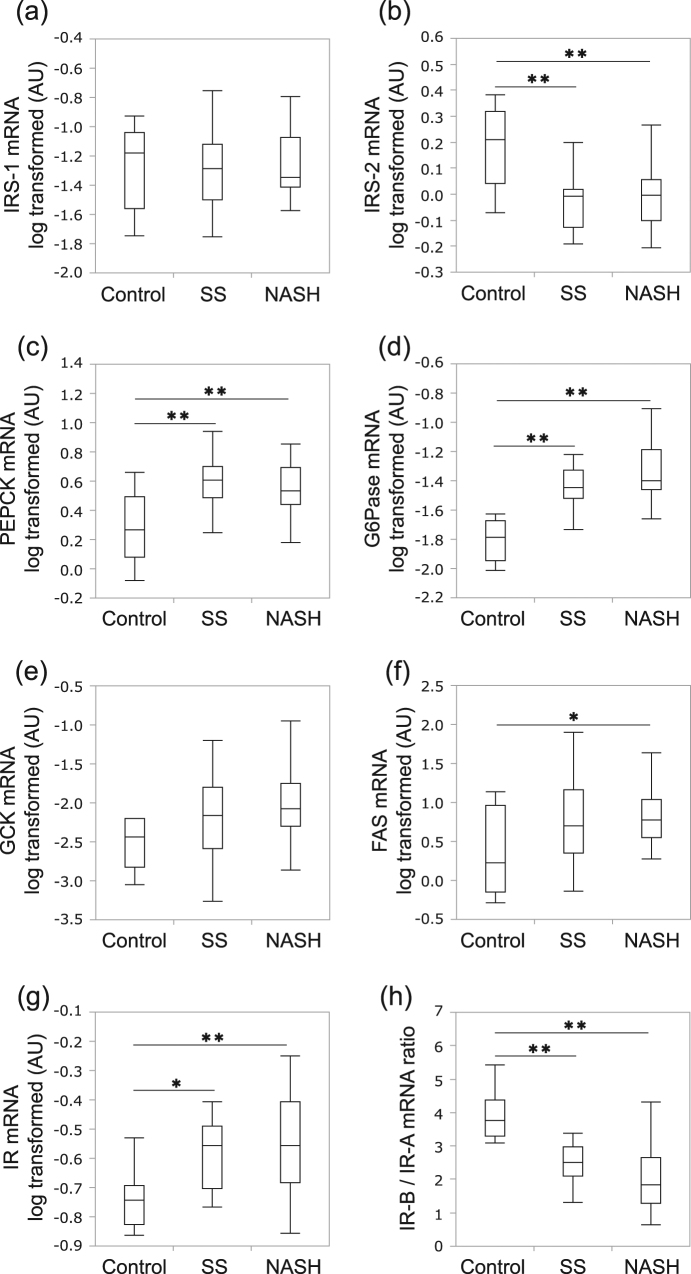
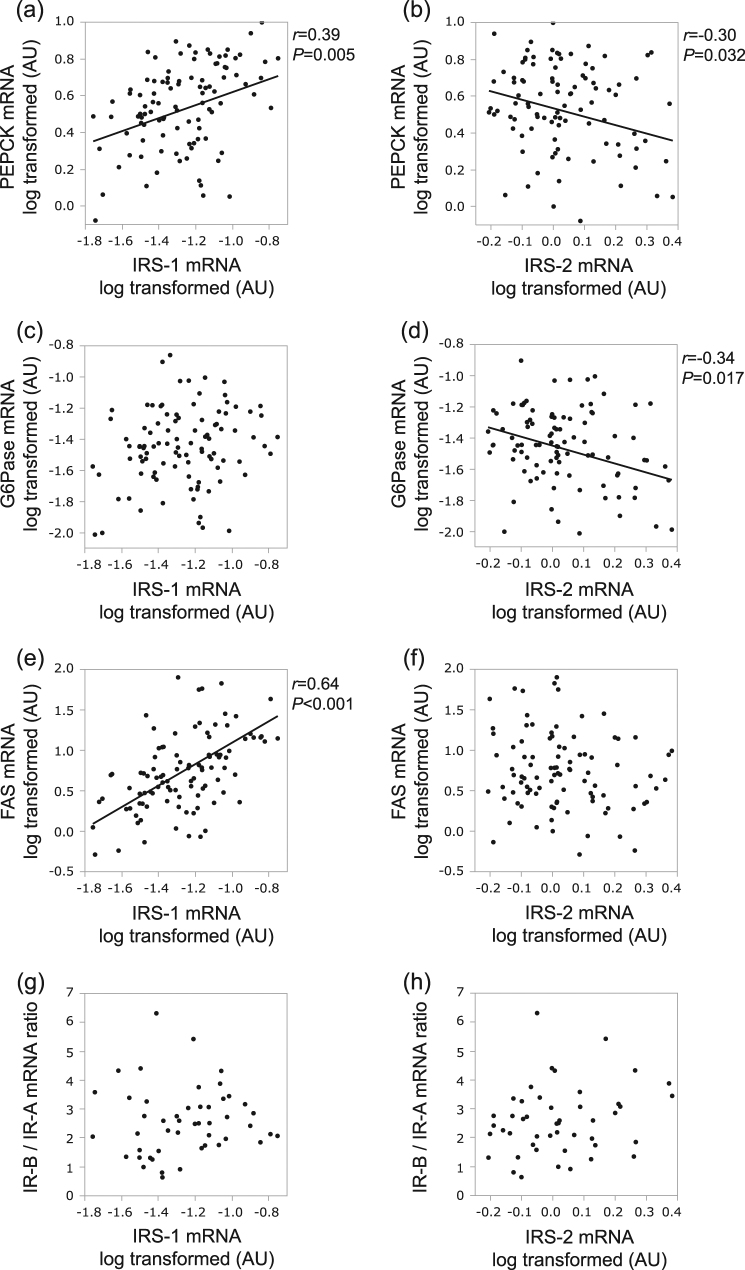
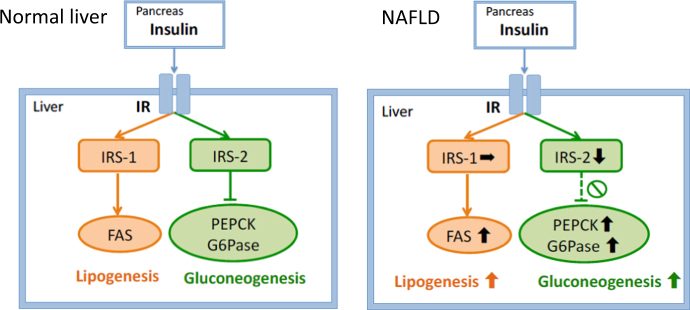
BACKGROUND/OBJECTIVE: Insulin signals, via the regulation of key enzyme expression, both suppress gluconeogenesis and enhance lipid synthesis in the liver. Animal studies have revealed insulin signaling favoring gluconeogenesis suppression to be selectively impaired in steatotic livers. However, whether, and if so how, such selective insulin resistance occurs in human steatotic livers remains unknown. Our aim was to investigate selective insulin resistance in human livers with non-alcoholic fatty liver disease (NAFLD). SUBJECTS/METHODS: We examined mRNA expressions of key molecules for insulin signaling, gluconeogenesis and lipogenesis in human liver biopsy samples obtained from 51 non-diabetic subjects: 9 healthy controls and 42 NAFLD patients, and analyzed associations of these molecules with each other and with detailed pathological and clinical biochemistry data. RESULTS: In NAFLD patients, insulin receptor substrate (IRS)-2 expression was decreased, while those of key enzymes for gluconeogenesis were increased. These alterations of IRS-2 and gluconeogenesis enzymes were induced both in simple steatosis (SS) and non-alcoholic steatohepatitis (NASH), while these expression levels did not differ between SS and NASH. Furthermore, alterations in the expressions of IRS-2 and gluconeogenesis enzymes showed strong negative correlations and were concurrently induced in the early histological stage of NAFLD. In contrast, fatty acid synthase (FAS) expression was not decreased in NAFLD, despite IRS-2 downregulation, but correlated strongly with IRS-1 expression. Furthermore, no histological scores were associated with these molecules. Thus, IRS-1 signaling, which is not impaired in NAFLD, appears to modulate FAS expression. CONCLUSION: These analyses revealed that selective insulin resistance is present in human NAFLD livers and occurs in its early phases. The effect of insulin, during the IRS step, on gene expressions for lipogenesis and gluconeogenesis are apparently distinct and preferential downregulation of IRS-2 may contribute to selective resistance to the suppressive effects of insulin on gluconeogenesis.
Overview
The claims and statistics of this paper haven’t been checked yet.
Free: it reads the open-access text and checks the first 5 claims that cite a source we can check. Create a free account to check every claim.
Integrity signals
Registry
Cites
Statistics
Figures
Verification
Claims the paper makes
The claims and statistics of this paper haven’t been checked yet.
Free: it reads the open-access text and checks the first 5 claims that cite a source we can check. Create a free account to check every claim.
Claims other papers make about this one
Each is checked against this paper’s own text: does it say what the citing paper says it does?
The source backs part of the claim, not all of it — or backs it for a different population, condition or comparison.
In the citing paper
“Studies suggest that IRS1 and IRS2 have distinct roles in regulating hepatic lipid metabolism [20,30,97].”
From Hepatic Insulin Resistance and Steatosis in Metabolic Dysfunction-Associated Steatotic Liver Disease: New Insights into Mechanisms and Clinical Implications (2025) · cites this paper as [97]
Experimental — accuracy not yet measuredIn the citing paper
“Decreased IRS2 expression but preserved IRS1 levels in the liver under hyperinsulinemia, HFD conditions, or in human MASLD [20,97], is associated with increased hepatic SREBP1c and DNL, whereas IRS1 deletion reduces DNL and TG content without altering SREBP1c levels.”
From Hepatic Insulin Resistance and Steatosis in Metabolic Dysfunction-Associated Steatotic Liver Disease: New Insights into Mechanisms and Clinical Implications (2025) · cites this paper as [97]
In the citing paper
“In humans with MASLD, hepatic IRS2 expression is significantly reduced and correlates with elevated expression of gluconeogenic enzymes, while lipogenic genes such as FASN remain highly expressed and positively correlate with IRS1 levels [97,104].”
From Hepatic Insulin Resistance and Steatosis in Metabolic Dysfunction-Associated Steatotic Liver Disease: New Insights into Mechanisms and Clinical Implications (2025) · cites this paper as [97]
Self-check
Percentages, sums and reported differences re-computed from the paper’s own numbers.
The self-check needs the paper’s full text.
Citations
Cites
Diagnosis and Classification of Diabetes Mellitus
American Diabetes Association (2011) · Diabetes Care · doi:10.2337/dc11-s062 · Cited by 13,988
Design and validation of a histological scoring system for nonalcoholic fatty liver disease†
Kleiner, D. E., Brunt, E. M., Van Natta, M., Behling, C., Contos, M. J., Cummings, O. W., Ferrell, L. D., Liu, Y., Torbenson, M. S., Unalp‐Arida, A., et al. (2005) · Hepatology · doi:10.1002/hep.20701 · Cited by 10,791
Insulin signalling and the regulation of glucose and lipid metabolism
Saltiel, A. R., & Kahn, C. R. (2001) · Nature · doi:10.1038/414799a · Cited by 5,326 · cited 2×
“Akt-dependent phosphorylation and nuclear exclusion of forkhead boxcontaining protein O subfamily-1 suppress expressions of glucose-6-phosphatase (G6Pase) and phosphoenolpyruvate carboxykinase (PEPCK), resulting in the inhibition of hepatic glucose output [6].”
BackgroundNonalcoholic Steatohepatitis: A Proposal for Grading and Staging The Histological Lesions
Brunt, E. M., Janney, C. G., Di Bisceglie, A. M., Neuschwander-Tetri, B. A., & Bacon, B. R. (1999) · American Journal of Gastroenterology · doi:10.1111/j.1572-0241.1999.01377.x · Cited by 3,907 · cited 3×
“The histological features of the liver biopsy samples were semi-quantitatively scored according to the Kleiner’s scoring system [22] and Brunt’s staging classification [23] (Table 2).”
BackgroundMethodNonalcoholic fatty liver disease: a spectrum of clinical and pathological severity.
MATTEONI, C., YOUNOSSI, Z., GRAMLICH, T., BOPARAI, N., LIU, Y., & MCCULLOUGH, A. (1999) · Gastroenterology · doi:10.1016/s0016-5085(99)70506-8 · Cited by 3,345 · cited 3×
“The results were quite similar to those obtained using the classification system developed by Matteoni et al. [21] (Fig.”
MethodInfluentialObesity and nonalcoholic fatty liver disease: biochemical, metabolic, and clinical implications
Fabbrini, E., Sullivan, S., & Klein, S. (2010) · Hepatology · doi:10.1002/hep.23280 · Cited by 2,100 · cited 1×
“resistance, which increases the risk of developing type 2 diabetes [3].”
BackgroundDiagnosis and Classification of Diabetes Mellitus
American Diabetes Association (2012) · Diabetes Care · doi:10.2337/dc12-s064 · Cited by 1,491
on behalf of The Japanese Society of Hypertension Committee for Guidelines for the Management of Hypertension, Ogihara, T., Kikuchi, K., Matsuoka, H., Fujita, T., Higaki, J., Horiuchi, M., Imai, Y., Imaizumi, T., Ito, S., et al. (2014) · Hypertension Research · doi:10.1038/hr.2014.68 · Cited by 1,385 · cited 1×
“The prevalence of hypertension, defined as systolic blood pressure ≥ 140 mmHg and/or diastolic blood pressure ≥ 90 mmHg [29], or taking antihypertensive drugs, also rose with progression of NAFLD (Table 1).”
BackgroundThe Japanese Society of Hypertension Guidelines for the Management of Hypertension (JSH 2014)
(2014) · Hypertension Research · doi:10.1038/hr.2014.20 · Cited by 1,049
Belfiore, A., Frasca, F., Pandini, G., Sciacca, L., & Vigneri, R. (2009) · Endocrine Reviews · doi:10.1210/er.2008-0047 · Cited by 1,033 · cited 4×
“isoform in the human liver [46] but IR-A/IR-A [45] and the”
BackgroundInfluential
Cited by
Role of Insulin Resistance in MAFLD
Sakurai, Y., Kubota, N., Yamauchi, T., & Kadowaki, T. (2021) · International Journal of Molecular Sciences · doi:10.3390/ijms22084156 · Cited by 448
The Role of Insulin Resistance and Diabetes in Nonalcoholic Fatty Liver Disease
Fujii, H., Kawada, N., & Japan Study Group of NAFLD (JSG-NAFLD) (2020) · International Journal of Molecular Sciences · doi:10.3390/ijms21113863 · Cited by 299
“examined mRNA expression i 51 human liver biopsy samples obtained from nondiabetic subjects [26].”
BackgroundInfluentialFructose and hepatic insulin resistance
Softic, S., Stanhope, K. L., Boucher, J., Divanovic, S., Lanaspa, M. A., Johnson, R. J., & Kahn, C. R. (2020) · Critical Reviews in Clinical Laboratory Sciences · doi:10.1080/10408363.2019.1711360 · Cited by 251
“Obesity increases the risk of developing a myriad of negative health outcomes, including dyslipidemia, hypertension, insulin resistance, type 2 diabetes (T2D) and nonalcoholic fatty liver disease (NAFLD).”
BackgroundInfluentialHepatic lipid droplet homeostasis and fatty liver disease
Seebacher, F., Zeigerer, A., Kory, N., & Krahmer, N. (2020) · Seminars in Cell & Developmental Biology · doi:10.1016/j.semcdb.2020.04.011 · Cited by 190
Besse-Patin, A., Jeromson, S., Levesque-Damphousse, P., Secco, B., Laplante, M., & Estall, J. L. (2019) · Proceedings of the National Academy of Sciences · doi:10.1073/pnas.1815150116 · Cited by 124
“Livers of type 2 diabetic and NAFLD patients are shown to have decreased PGC1A (8–10), correlating with low IRS2 and high IRS1 expression (22, 38).”
BackgroundTruong, X. T., & Lee, D. H. (2025) · Diabetes & Metabolism Journal · doi:10.4093/dmj.2025.0644 · Cited by 84
“Decreased IRS2 expression but preserved IRS1 levels in the liver under hyper-insulinemia, HFD conditions, or in human MASLD [20,97], is associated with increased hepatic SREBP1c and DNL, whereas IRS1 deletion reduces DNL and TG content without altering SREBP1c levels.”
Dysregulation of Lipid and Glucose Metabolism in Nonalcoholic Fatty Liver Disease
Bhat, N., & Mani, A. (2023) · Nutrients · doi:10.3390/nu15102323 · Cited by 92
“Hyperinsulinemia may desensitize the insulin receptor to suppress glycogenolysis and gluconeogenesis but not DNL. Alternatively, hyperinsulinemia [20,63,120–122] may differentially activate insulin receptor substrate-1 (IRS-1) versus IRS-2 in NAFLD [123,124].”
BackgroundEvaluating causality of cellular senescence in non-alcoholic fatty liver disease
Meijnikman, A. S., Herrema, H., Scheithauer, T. P. M., Kroon, J., Nieuwdorp, M., & Groen, A. K. (2021) · JHEP Reports · doi:10.1016/j.jhepr.2021.100301 · Cited by 75
Li, Y., Li, J., Su, Q., & Liu, Y. (2019) · Food & Function · doi:10.1039/c9fo00195f · Cited by 85
Excessive Gluconeogenesis Causes the Hepatic Insulin Resistance Paradox and Its Sequelae
Onyango, A. N. (2022) · Heliyon · doi:10.1016/j.heliyon.2022.e12294 · Cited by 93
Krause, C., Geißler, C., Tackenberg, H., Gammal, A. T. E., Wolter, S., Spranger, J., Mann, O., Lehnert, H., & Kirchner, H. (2020) · Diabetologia · doi:10.1007/s00125-020-05212-6 · Cited by 75
Cai, H., Jiang, Z., Yang, X., Lin, J., Cai, Q., & Li, X. (2019) · Endocrine Journal · doi:10.1507/endocrj.ej19-0271 · Cited by 71
“After proteolytic cleavage, the mature N-terminal SREBP-1c translocates into the nucleus, where it binds to serum response elements (SREs) of the FAS promoter.”
BackgroundInfluentialJian, T., Ding, X., Wu, Y., Ren, B., Li, W., Lv, H., & Chen, J. (2018) · International Journal of Molecular Sciences · doi:10.3390/ijms19103005 · Cited by 72
“Several studies have suggested that lipid metabolism is regulated mainly by the insulin signaling pathway [31,32], and hepatic lipid accumulation is strongly associated with insulin resistance (IR) [15].”
BackgroundDysregulation of hepatic metabolism with obesity: factors influencing glucose and lipid metabolism
Nagarajan, S. R., Cross, E., Sanna, F., & Hodson, L. (2021) · Proceedings of The Nutrition Society · doi:10.1017/s0029665121003761 · Cited by 71
“Although these findings suggest that the dichotomy in selective IR occurs distal to the insulin receptor, evidence from human genetic((82,83)) and knockout rodent studies on multiple isoforms of insulin receptor substrates((84,85)) and Akt 87) are inconclusive.”
Epigenetics of Hepatic Insulin Resistance
Maude, H., Sanchez-Cabanillas, C., & Cebola, I. (2021) · Frontiers in Endocrinology · doi:10.3389/fendo.2021.681356 · Cited by 69
“encodes a core mediator of insulin signalling in the liver, is differentially methylated in the livers of T2D patients (41).”
BackgroundInfluentialCao, X., Lu, X.-M., Tuo, X., Liu, J.-Y., Zhang, Y.-C., Song, L., Cheng, Z., Yang, J., & Zhong, X. (2019) · Lipids in Health and Disease · doi:10.1186/s12944-019-1145-x · Cited by 54
“Serine hyperphosphorylation of IRS-1 is a marker of IR in peripheral tissues, which leads to subsequent activation of PI3K pathway [29] .”
The Role of Hepatic Fat Accumulation in Glucose and Insulin Homeostasis—Dysregulation by the Liver
London, A., Lundsgaard, A., Kiens, B., & Bojsen-Møller, K. N. (2021) · Journal of Clinical Medicine · doi:10.3390/jcm10030390 · Cited by 49
NIRANJAN, S., Phillips, B. E., & Giannoukakis, N. (2023) · Frontiers in Endocrinology · doi:10.3389/fendo.2023.1193373 · Cited by 51
“This is possibly a consequence of hyperinsulinemia-induced downregulation of IRS-2 facilitating hepatic IR (32, 33).”
BackgroundVEGFB ameliorates insulin resistance in NAFLD via the PI3K/AKT signal pathway
Li, Y., Li, W., Zhu, X., Xu, N., Meng, Q., Jiang, W., Zhang, L., Yang, M., Xu, F., & Li, Y. (2024) · Journal of Translational Medicine · doi:10.1186/s12967-024-05621-w · Cited by 42
“The abnormal decomposition, phosphorylation, and distribution of IRS protein is one of major mechanisms leading to trigger the impairment of insulin signal transduction and insulin resistance in cells [31, 32].”
BackgroundChen, C., Zhang, X., Deng, Y., Cui, Q., Zhu, J., Ren, H., Liu, Y., Hu, X., Zuo, J., & Peng, Y. (2020) · FEBS Journal · doi:10.1111/febs.15525 · Cited by 41
Circular RNAs in metabolism and metabolic disorders
Zeng, Y.-Z., Zheng, Z., Liu, F., & Yi, G. (2021) · Obesity Reviews · doi:10.1111/obr.13220 · Cited by 41
“Moreover, FOXO1 targets genes linked to lipogenesis, such as fatty acid synthase (FAS) and sterol-regulatory element-binding protein 1c (SREBP-1c).(40,41)”
BackgroundNew Perspectives on Genetic Prediction for Pediatric Metabolic Associated Fatty Liver Disease
Lin, Y., Wu, C.-C., & Ni, Y. (2020) · Frontiers in Pediatrics · doi:10.3389/fped.2020.603654 · Cited by 43
Li, M., Cui, M., Li, G., Liu, Y., Xu, Y., Eftekhar, S. P., & Ala, M. (2024) · Hormone and Metabolic Research · doi:10.1055/a-2266-1503 · Cited by 37
“Insulin receptor substrate 2 (IRS-2) is downregulated in the liver of patients with NAFLD/NASH [35].”
Matsumoto, M., Yashiro, H., Ogino, H., Aoyama, K., Nambu, T., Nakamura, S., Nishida, M., Wang, X., Erion, D. M., & Kaneko, M. (2020) · PLoS ONE · doi:10.1371/journal.pone.0228212 · Cited by 38
“Furthermore, it was reported that the activation of lipogenesis, which is the physiological action of insulin in the liver, remains in animal models fed high fat diets [51] and in NAFLD patients [52] despite systemic insulin resistance.”
BackgroundLi, D., Zhang, S., Yang, C. L., Li, Q., Wang, S., Xu, X., Hao, J., & Li, C. (2021) · International Journal of Molecular Sciences · doi:10.3390/ijms222312693 · Cited by 37
Buckley, A. J., Thomas, E. L., Lessan, N. G., Trovato, F. M., Trovato, G. M., & Taylor-Robinson, S. D. (2018) · Diabetes Research and Clinical Practice · doi:10.1016/j.diabres.2018.08.011 · Cited by 36
“Hepatic insulin signaling is essential to maintain the carbohydrate and lipid homeostasis [3].”
BackgroundLiver insulinization as a driver of triglyceride dysmetabolism
Cook, J. R., Hawkins, M. A., & Pajvani, U. B. (2023) · Nature Metabolism · doi:10.1038/s42255-023-00843-6 · Cited by 35
Sabatini, S., Sen, P., Carli, F., Pezzica, S., Rosso, C., Lembo, E., Verrastro, O., Daly, A. K., Govaere, O., Cockell, S., et al. (2024) · Cell Reports Medicine · doi:10.1016/j.xcrm.2024.101820 · Cited by 45
“31,50,52 The expression of these genes was inversely associated with the estimated intracellular glucose fluxes (Figure 4D).”
Spatial regulation of glucose and lipid metabolism by hepatic insulin signaling
He, B., Copps, K. D., Stöhr, O., Liu, B., Hu, S., Joshi, S., Haigis, M. C., White, M. F., Zhu, H., & Tao, R. (2025) · Cell Metabolism · doi:10.1016/j.cmet.2025.03.015 · Cited by 31
Circular RNAs; powerful microRNA sponges to overcome diabetic nephropathy
Mafi, A., Yadegar, N., Salami, M., Salami, R., Vakili, O., & Aghadavod, E. (2021) · Pathology - Research and Practice · doi:10.1016/j.prp.2021.153618 · Cited by 30
Jian, T., Chen, Y., Ding, X., Jian, C., Li, J., Zuo, Y., Ren, B., Lv, H., & Li, W. (2019) · Journal of Oleo Science · doi:10.5650/jos.ess19018 · Cited by 28
Kakazu, E., Sano, A., Morosawa, T., Inoue, J., Ninomiya, M., Iwata, T., Nakamura, T., Takai, S., Sawada, S., Katagiri, H., et al. (2019) · Hepatology Research · doi:10.1111/hepr.13346 · Cited by 27
Self-citationUchida, D., Takaki, A., Adachi, T., & Okada, H. (2018) · Nutrients · doi:10.3390/nu10080977 · Cited by 25
“Many experimental studies recommend antioxidant agents be administered for patients with NAFL and NASH.”
BackgroundInfluentialTeixeira, L. D. L., Pilon, G., Coutinho, C. P., Dudonné, S., Dubé, P., Houde, V. P., Desjardins, Y., Lajolo, F. M., Marette, A., & Hassimotto, N. M. A. (2021) · Food & Function · doi:10.1039/d0fo03245j · Cited by 26
Kakazu, E., Mino, M., & Kanto, T. (2025) · Clinical and Molecular Hepatology · doi:10.3350/cmh.2025.0048 · Cited by 28
Self-citationFujiwara, S., Izawa, T., Mori, M., Atarashi, M., Yamate, J., & Kuwamura, M. (2022) · Scientific Reports · doi:10.1038/s41598-022-25838-3 · Cited by 26
Singh, P., Garg, R., Goand, U. K., Riyazuddin, M., Reza, M. I., Ahmed, S. A., Gupta, A. P., Husain, A., & Gayen, J. R. (2020) · Heliyon · doi:10.1016/j.heliyon.2020.e05133 · Cited by 22
“It must be considered here that we found increased gluconeogenesis and lipogenesis in the HFD group, which would be a reasonable indication of IR due to which insulin promotes lipogenesis and loses its control over gluconeogenesis (Brown and Goldstein, 2008; Honma et al., 2018).”
BackgroundNoh, J.-W., Kwon, O.-J., & Lee, B.-C. (2021) · Evidence-based Complementary and Alternative Medicine · doi:10.1155/2021/5531367 · Cited by 23
“In obesity, IR is demonstrated by the downregulation of IRS2 and persistent expression of IRS1, and inflammatory cytokines including TNF-α downregulate IRS2 mRNA expression [33, 34].”
BackgroundSolares, I., Izquierdo‐Sánchez, L., Morales‐Conejo, M., Jericó, D., Castelbón, F. J., Córdoba, K. M., Sampedro, A., Lumbreras, C., Moreno-Aliaga, M. J., de Salamanca, R. E., et al. (2021) · Biomedicines · doi:10.3390/biomedicines9030255 · Cited by 21
“In the fasted state, the liver is a primary energy source and secretes glucose through both the breakdown of glycogen (glycogenolysis) and de novo glucose synthesis (gluconeogenesis) [47,48].”
BackgroundPerry, A., Hadad, N., Chatterjee, E., Ramos, M. J., Farber‐Eger, E. H., Roshani, R., Stolze, L. K., Betti, M. J., Zhao, S., Huang, S., et al. (2024) · Cell Reports Medicine · doi:10.1016/j.xcrm.2024.101871 · Cited by 23
Physiological and pathophysiological actions of insulin in the liver
Kubota, N., Kubota, T., & Kadowaki, T. (2025) · Endocrine Journal · doi:10.1507/endocrj.ej24-0192 · Cited by 19
“Conversely, FAS expression did not decrease in cases of MASLD despite the downregulation of IRS-2; rather, it showed a strong correlation with the IRS-1 expression [117].”
HepaRG Maturation in Silk Fibroin Scaffolds: Toward Developing a 3D In Vitro Liver Model
Abbott, A., & Coburn, J. M. (2021) · ACS Biomaterials Science & Engineering · doi:10.1021/acsbiomaterials.0c01584 · Cited by 20
Luo, Q., Wei, Y., Lv, X., Chen, W., Yang, D., & Tuo, Q. (2024) · Molecules · doi:10.3390/molecules29040758 · Cited by 22
“IRS signaling is a common pathological mechanism of insulin resistance [150]; OA alleviated insulin resistance by increasing the level of IRS-1, which was achieved by PI3K/Akt [97].”
BackgroundInsulin Hypersecretion as Promoter of Body Fat Gain and Hyperglycemia
Mittendorfer, B., Johnson, J. D., Solinas, G., & Jansson, P. (2024) · Diabetes · doi:10.2337/dbi23-0035 · Cited by 23
Rabbani, N., & Thornalley, P. J. (2025) · Clinical Science · doi:10.1042/cs20257727 · Cited by 17
“In patients with MASLD and MASH, hepatic expression of IRS-1 was maintained, whereas expression of IRS-2 was decreased and correlated negatively with expression of PCK1 and G6PC [68].”
Baraskar, K., Thakur, P., Shrivastava, R., & Shrivastava, V. K. (2023) · Journal of Diabetes & Metabolic Disorders · doi:10.1007/s40200-023-01194-5 · Cited by 17
“GLUT-4, which is specifically distributed on the cell membrane of adipose cells, is majorly responsible for basal glucose transport and regulates the transport of insulin and glucose through translocation and activation, facilitated by the PI3K/phosphorylated protein kinase B (p-Akt) pathway [44].”
BackgroundInfluentialSong, X., Sun, J., Yue, Y., Li, D., & Chen, F. (2024) · Food Research International · doi:10.1016/j.foodres.2024.115123 · Cited by 16
Lima, E. N., Lamas, C. D. A., Baseggio, A. M., do Vale, J. S. F., Maróstica, M. R., & Cagnon, V. H. A. (2019) · Nutrition and Cancer · doi:10.1080/01635581.2019.1684526 · Cited by 16
MiR-542-5p Inhibits Hyperglycemia and Hyperlipoidemia by Targeting FOXO1 in the Liver
Tian, F., Ying, H., Wang, Y.-Y., Cheng, B.-N., & Chen, J. (2020) · Yonsei Medical Journal · doi:10.3349/ymj.2020.61.9.780 · Cited by 15
Corral‐Jara, K. F., Cantini, L., Poupin, N., Ye, T., Rigaudière, J., Vincent, S. D. S., Pinel, A., Morio, B., & Capel, F. (2020) · Nutrients · doi:10.3390/nu12123864 · Cited by 17
Herrera-Ojeda, J. L., Blanco-Palma, R. S., Chávez-Tapia, N. C., Uribe, M., Montalvo-Jave, E. E., & Nuño‐Lámbarri, N. (2025) · Journal of Endocrinological Investigation · doi:10.1007/s40618-025-02621-5 · Cited by 16
“[18, 23] (Fig.”
Lee, Y., Kang, Y.-R., Chang, Y., Kim, J., & Sung, M. (2025) · Obesity Reviews · doi:10.1111/obr.70026 · Cited by 14
Aleman, J., Ravikumar, K., Wiegand, C., Schurdak, M. E., Vernetti, L. A., Gavlock, D. C., Reese, C. E., DeBiasio, R., LaRocca, G., Angarita, Y. D., et al. (2024) · Communications Biology · doi:10.1038/s42003-024-07006-7 · Cited by 14
“In the Results section we now highlighted these comparisons.”
Kim, W. J., Ryu, R., Doo, E., Choi, Y., Kim, K., Kim, B. K., Kim, H., Kim, M., & Huh, C. S. (2023) · Probiotics and Antimicrobial Proteins · doi:10.1007/s12602-023-10156-5 · Cited by 14
“A decrease in IRS-2 has been notably associated with impaired insulin signaling, contributing to hepatic steatosis and insulin resistance [55].”
Lequoy, M., Gigante, E., Couty, J., & Desbois‐Mouthon, C. (2020) · Hormone Molecular Biology and Clinical Investigation · doi:10.1515/hmbci-2019-0044 · Cited by 13
“Interestingly, perturbation of IR-A/IR-B expression ratio has been recently reported in livers from patients with NAFLD [73] as well as in experimental murine models of NAFLD [79].”
BackgroundRencüzoğulları, Ö., Yerlikaya, P. O., Gürkan, A. Ç., Arısan, E. D., & Telci, D. (2021) · Biotechnology and Applied Biochemistry · doi:10.1002/bab.2113 · Cited by 12
“Furthermore, FAs synthesis and SREBP activities strongly correlated with IRS-1 expression [42].”
BackgroundRNA-binding proteins in metabolic-associated fatty liver disease (MAFLD): From mechanism to therapy
Xu, J., Liu, X., Shu-qin, W., Zhang, D., Liu, X., Xia, P., Ling, J., Zheng, K., Xu, M., Shen, Y., et al. (2023) · BioScience Trends · doi:10.5582/bst.2022.01473 · Cited by 12
Liu, W., Sun, M. J., Zhang, H., Wang, W., Song, J., Wang, M.-Y., Wang, C., & Sun, H.-M. (2025) · International Journal of Biological Macromolecules · doi:10.1016/j.ijbiomac.2025.141660 · Cited by 15
Liu, X., Liang, Z., Duan, H., Yu, J., Qin, Z., Li, J., Li, Z., Wu, Q., Xiao, W., Shen, C., et al. (2022) · Biochimica et Biophysica Acta (BBA) - Molecular Basis of Disease · doi:10.1016/j.bbadis.2022.166472 · Cited by 10
Hayashi, H., Sawada, K., Tanaka, H., Muro, K., Hasebe, T., Nakajima, S., Okumura, T., & Fujiya, M. (2023) · Journal of Gastroenterology and Hepatology · doi:10.1111/jgh.16337 · Cited by 10
“20,21,23,26 This differential expression of IRS-1 and IRS-2 can induce selective hepatic insulin resistance.”
BackgroundNakakaawa, L., Gbala, I., Bargul, J. L., Cheseto, X., & Wesonga, J. M. (2025) · Food Science & Nutrition · doi:10.1002/fsn3.4635 · Cited by 9
Fructose and follistatin potentiate acute MASLD during complete hepatic insulin resistance
Tao, R., Stöhr, O., Tok, O., Andrés-Hernando, A., Qiu, W., He, B., Wang, C., Grøntved, L., Burant, C., Hui, S. T., et al. (2025) · Nature Communications · doi:10.1038/s41467-025-66296-5 · Cited by 7
“Some investigators have invoked pathway-selective hepatic IR as the root cause of MASLD ’ s close association with IR 27,33,34 ; however, as MASLD progresses to MASH and toxic diacylglycerol and ceramide intermediates accumulate 91,92 , proximal insulin signaling might approach a state of…”
Mechanism Underlying the Formation of a Cluster of Metabolic Syndrome
Ксенева, С. И., Бородулина, Е. В., Удут, В. В., & Фисенко, В. П. (2019) · Endocrine Metabolic & Immune Disorders - Drug Targets · doi:10.2174/1871530319666191007115214 · Cited by 6
Cai, M., Lai, W., Chen, H., Cao, D., Zhang, B., Wang, F., Xian, M., & Wang, S. (2025) · Pharmaceuticals · doi:10.3390/ph18030398 · Cited by 6
The 2039 A/G FSH receptor gene polymorphism influences glucose metabolism in healthy men
Cannarella, R., Musso, N., Condorelli, R. A., Musmeci, M., Stefani, S., Aversa, A., Vignera, S. L., & Calogero, A. E. (2020) · Endocrine · doi:10.1007/s12020-020-02420-3 · Cited by 6
Cannarella, R., Andaloro, A., Caruso, M. A., Musso, N., Barbagallo, F., Condorelli, R. A., Vignera, S. L., & Calogero, A. E. (2024) · Minerva Endocrinology · doi:10.23736/s2724-6507.24.04177-0 · Cited by 5
Talebi, G., Saffarian, P., Hakemi-Vala, M., Sadeghi, A., & Yadegar, A. (2024) · Archives of Physiology and Biochemistry · doi:10.1080/13813455.2024.2418494 · Cited by 7
“IRS1 is one of the key insulin signalling molecules that is extensively expressed in the liver (Honma et al. 2018).”
Quercetin and d-chiro-inositol combined alleviate hepatic insulin resistance
Cheng, F., Ge, X., Zhang, Y., Li, J., Yan, S., Li, Y., & Wang, M. (2021) · Food Bioscience · doi:10.1016/j.fbio.2021.101255 · Cited by 5
Eruptive xanthomas in a patient with soft-drink diabetic ketosis and apolipoprotein E4/2
Tsuchiya, S., Sawada, S., Takeda, K., Takahashi, K. A., Nakajima, T., Kohata, M., Kurosawa, S., Satake, C., Imai, J., Kikuchi, K., et al. (2018) · Endocrine Journal · doi:10.1507/endocrj.ej18-0356 · Cited by 7
Self-citationLiver gene regulatory networks: Contributing factors to nonalcoholic fatty liver disease
Cebola, I. (2020) · WIREs Systems Biology and Medicine · doi:10.1002/wsbm.1480 · Cited by 5
“Moreover, expression of the insulin receptor substrate (IRS)-2 was found decreased in livers from NAFLD patients (Honma et al., 2018).”
BackgroundKang, D., Yang, Y., Zhang, Y., Zhang, J., He, Q., Luo, Z., Hong, A., Wang, Y., Liang, X., Chen, J., et al. (2024) · Journal of Functional Foods · doi:10.1016/j.jff.2024.106373 · Cited by 4
Yue, H., & Yin, L. (2021) · Revista Brasileira de Medicina do Esporte · doi:10.1590/1517-8692202127012020_0094 · Cited by 4
Nutritional Intake and the Risk for Non-alcoholic Fatty Liver Disease (NAFLD)
Bergheim, I., & Schattenberg, J. M. (2019) · MDPI eBooks · doi:10.3390/books978-3-03897-599-1 · Cited by 6
Chen, Y. Q., Zhao, X., Luo, X. M., Zeng, X., Qin, L., Tan, P., He, Q., & Xie, J. (2022) · International Journal of Molecular Sciences · doi:10.3390/ijms24076437 · Cited by 4
Narimatsu, Y., Kato, M., Ukena, K., Furumitsu, M., & Ukena, K. (2025) · Peptides · doi:10.1016/j.peptides.2025.171376 · Cited by 5
Zhou, Z., Zhao, X., Chen, L., Li, Y., Zhao, C., Wang, Y., Zhou, Z., & Chu, X. (2020) · Nutrition & Metabolism · doi:10.1186/s12986-020-00467-7 · Cited by 3
Sánchez, V., Brandt, A., Jin, C. J., Rajcic, D., Engstler, A. J., Jung, F., Nier, A., Baumann, A., & Bergheim, I. (2021) · Nutrients · doi:10.3390/nu13030959 · Cited by 3
“Markers of insulin signaling such as Ir and Irs-2, shown to be altered in livers of humans and rodents of NAFLD [40,41], were also significantly lower in the livers of FFC-fed mice when compared to FFC + S–fed animals.”
ResultPotential role of microRNAs in selective hepatic insulin resistance: From paradox to the paradigm
Palihaderu, P. A. D. S., Mendis, B. I. L. M., Premarathne, J. M. K. J. K., Dias, W. K. R. R., Yeap, S. K., Ho, W. Y., Dissanayake, A. S., Rajapakse, I. H., Karunanayake, P., Senarath, U., et al. (2022) · Frontiers in Endocrinology · doi:10.3389/fendo.2022.1028846 · Cited by 3
“In contrast, the mRNA of IRS-2 inversely correlated with PEPCK and G6Pase mRNAs but not with FAS in human steatosis livers (15).”
BackgroundForst, T. M. (2022) · Current Research in Diabetes & Obesity Journal · doi:10.19080/crdoj.2022.15.555914 · Cited by 3
Wang, J.-X., Liu, X., Guo, Z., Zhang, H., Li, Q., Liu, J., Liu, P., Xie, G., & Wang, X. (2025) · Biological Procedures Online · doi:10.1186/s12575-025-00276-3 · Cited by 2
“The liver plays a key role in maintaining systemic carbohydrate and lipid homeostasis [14].”
Dağdeviren, S., Hoang, M. F., Wang, J., Goldberger, T., Yu, A., Blair, S. J., Benoit, J. C., Ricci-Blair, E. M., Melnik, V. Y., Kim, B., et al. (2025) · Journal of Biological Chemistry · doi:10.1016/j.jbc.2025.110214 · Cited by 2
“This fi nding agreed with selective downregulation of IRS2 during insulin resistance in metabolic dysfunction – associated steatotic liver diseases (38).”
The Effect of Tff3 Deficiency on the Liver of Mice Exposed to a High-Fat Diet
Bazina, I., Šešelja, K., Pirman, T., Horvatić, A., Erman, A., Mihalj, M., & Lončar, M. B. (2025) · Biomedicines · doi:10.3390/biomedicines13051024 · Cited by 2
The Effect of Probiotic Supplementation as Alternative Therapy for NAFLD: A Literature Review
Adnan, M. L. (2021) · European Journal of Translational and Clinical Medicine · doi:10.31373/ejtcm/136328 · Cited by 2
“through stimulation of lipolysis and an increase in triglycerides [18-20].”
BackgroundLiang, J., & Gu, A. (2022) · Chinese Science Bulletin (Chinese Version) · doi:10.1360/tb-2022-0696 · Cited by 1
Абатуров, А. Е., Березенко, В. С., & Нікуліна, А. О. (2025) · INTERNATIONAL JOURNAL OF ENDOCRINOLOGY (Ukraine) · doi:10.22141/2224-0721.21.2.2025.1522 · Cited by 2
Joubert, M. B. V., Oliva, M. E., Ingaramo, P. I., & D’Alessandro, M. E. (2025) · Molecular and Cellular Endocrinology · doi:10.1016/j.mce.2025.112643 · Cited by 2
Aleman, J., Vernetti, L. A., Schurdak, M. E., DeBiasio, R., LaRocca, G., Yechoor, V. K., Taylor, D. L., Stern, A. M., & Miedel, M. T. (2026) · BMC Biotechnology · doi:10.1186/s12896-026-01158-6 · Cited by 1
“[90, 91] Previously we have reported a significant decrease in the total IRS-2 signal in the vLAMPS under EMS.”
Osan, J. K., Rakoczy, S. G., Pecoraro, H. L., & Brown‐Borg, H. M. (2025) · GeroScience · doi:10.1007/s11357-025-02017-6 · Cited by 1
“Downregulation of lipogenic genes [34, 43, 68, 69]( Scd1, Scd2, Acaca ) and signaling components [70, 71] ( Irs2, Ugt1a5 ) further supports a metabolic state resistant to steatosis.”
Cordeiro, M. M., Lucredi, N. C., Pateis, V. D. O., de Souza, G. H., Duarte, A. L. R., Scomparin, D. X., Natali, M. R. M., de Sá‐Nakanishi, A. B., Bracht, L., Bracht, A., et al. (2026) · The Journal of Nutritional Biochemistry · doi:10.1016/j.jnutbio.2026.110450 · Cited by 2
Xu, F., Wang, L., Chen, L., Zhang, Q., & Na, L. (2020) · bioRxiv (Cold Spring Harbor Laboratory) · doi:10.1101/2020.02.15.951095 · Cited by 1
NAFLD and Cardiovascular and Cardiac Disease: Clinical Implications
Scorletti, E., & Byrne, C. D. (2020) · Springer eBooks · doi:10.1007/978-3-319-95828-6_9
Vily‐Petit, J. (2020) · theses.fr (ABES) · doi:10.70675/aaa9ce42z5f23z4953z8620z47e74ff7a235 · Cited by 1
Khan, I., Kumar, R., Prasad, M., Srivastav, R. K., Vishwakarma, V. K., Akhtar, J., & Badruddeen (2022) · Drug Research · doi:10.1055/a-1806-1366 · Cited by 1
Porras, D. (2021) · Buleria (Universidad de León) · doi:10.18002/10612/13641
Anthony, M. J. A. (2022) · RiuNet (Universitat Politècnica de València) · doi:10.4995/thesis/10251/188913
Edaes, F. S. (2023) · Digital Library of Theses and Dissertations (Universidade de São Paulo) · doi:10.11606/d.17.2023.tde-17102023-093911
Zhou, Z., Zhao, X., Chen, L., Li, Y., Chen, Z., Wang, Y., Zhou, Z., & Chu, X. (2020) · Figshare · doi:10.6084/m9.figshare.12511466
Metadata
- Authors
- Honma, M., Sawada, S., Ueno, Y., Murakami, K., Yamada, T., Gao, J., Kodama, S., Izumi, T., Takahashi, K., Tsukita, S., Uno, K., Imai, J., Kakazu, E., Kondo, Y., Mizuno, K., Kawagishi, N., Shimosegawa, T., & Katagiri, H.
- Affiliations
- Tohoku University (JP)
- Yamagata University (JP)
- Tohoku University Hospital (JP)
- Corresponding author
- Sawada, Shojiro
- Katagiri, Hideki
- ORCID
- Venue
- International Journal of Obesity
- Published
- 2018-05-01
- Volume
- 42
- Issue
- 9
- Pages
- 1544-1555
- ISSN
- 0307-0565 (ISSN-L)
- 1476-5497
- PMC
- PMC6160396
- OpenAlex
- W2802224281
- Cited by
- 108
- References
- 50
- Citations by year
- 2026: 5 · 2025: 20 · 2024: 14 · 2023: 10 · 2022: 8 · 2021: 19 · 2020: 19 · 2019: 9 · 2018: 4
- FWCI
- 10.52
- Type
- journal article
- Language
- en
- Open access
- hybrid
- doi.org
- Licence
- cc-by
- creativecommons.org/licenses/by/4.0 (tdm)
- Locations
- International Journal of Obesity (publishedVersion, cc-by)
- Europe PMC (PubMed Central) (publishedVersion, other-oa)
- PubMed Central (publishedVersion, cc-by)
- PubMed (publishedVersion)
- Institutional Repositories DataBase (IRDB) (submittedVersion, cc-by-nc-nd)
- Funders
- Japan Society for the Promotion of Science (16K09773, 18H02858, 25253067, 18K16221, 17K09816)
- Topics
- Health Sciences › Medicine › Hepatology › Liver Disease Diagnosis and Treatment
- Health Sciences › Medicine › Hepatology › Liver physiology and pathology
- Health Sciences › Medicine › Endocrinology, Diabetes and Metabolism › Diet, Metabolism, and Disease
- Keywords
- non-alcoholic fatty liver disease, IRS-1, insulin receptor substrate 2, gluconeogenesis, lipogenesis, fatty acid synthase, hepatic steatosis, nonalcoholic steatohepatitis, liver biopsy, gene expression
- MeSH terms
- Adult, Biopsy, Female, Humans, Insulin Resistance, Liver, Male, Middle Aged, Case-Control Studies, Insulin Receptor Substrate Proteins, Non-alcoholic Fatty Liver Disease
About these checks
Registry, retraction, Cites and statistics results are computed, not judged, with one exception: a printed reference that no index lists is read once by a model before it counts as a citation error. Claims are extracted by a model and kept only when their quote appears verbatim in the text; each cited source is then checked, with a model’s help, for whether it says what the claim relies on. Those verdicts can be wrong — read the claim’s quote and the cited source before relying on one.
Statistics and arithmetic are recomputed, not judged.
Confidence bands are shown only for fields calibrated on our annotated test set. None is calibrated yet, so no band is shown.
What counts as a claim ›How we measure confidence ›How we check this ›
Are you an author, or do you see a problem with this page? Request a review
Data sources
Bibliographic data: Semantic Scholar, OpenAlex, Crossref.
Contains information from the Semantic Scholar Academic Graph Datasets, made available under the ODC Attribution License (ODC-BY 1.0).
Semantic Scholar’s data is described in: Kinney, R., et al. (2023). The Semantic Scholar Open Data Platform. arXiv:2301.10140.
