

Selective insulin resistance with differential expressions of IRS-1 and IRS-2 in human NAFLD livers
Open accessThe DOI matches its Crossref record; 50 of the 50 references it cites were found in a registry or an index.
Abstract
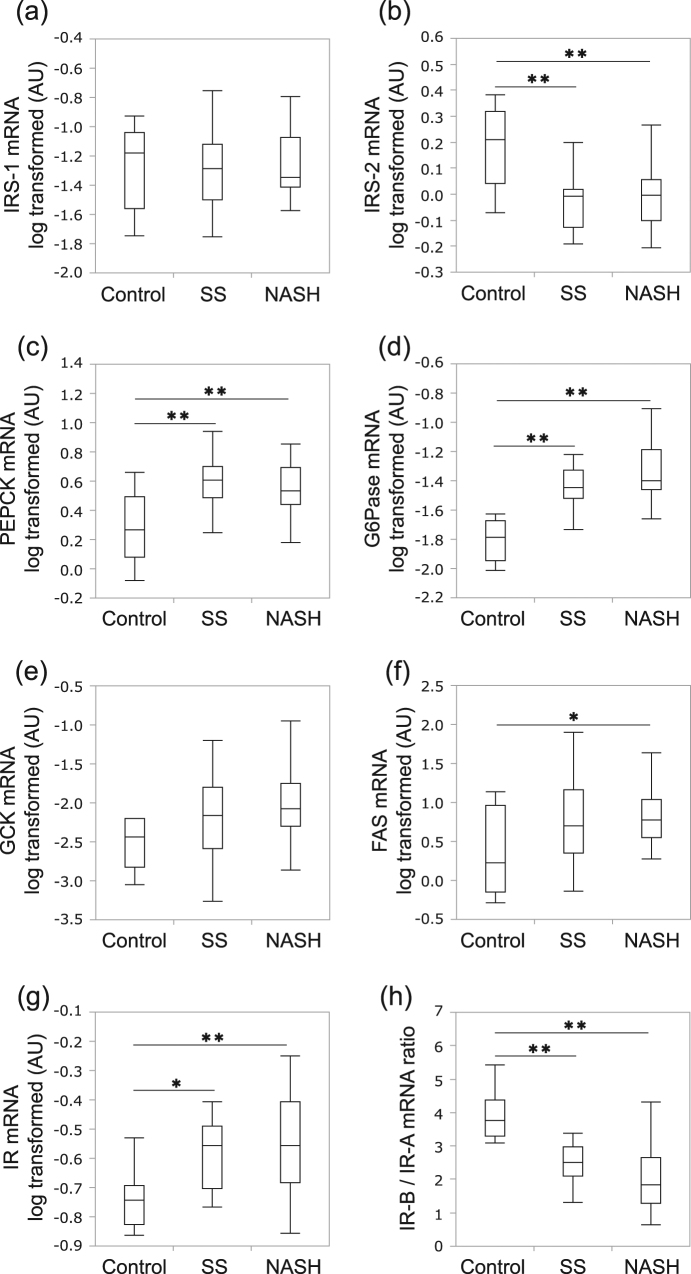
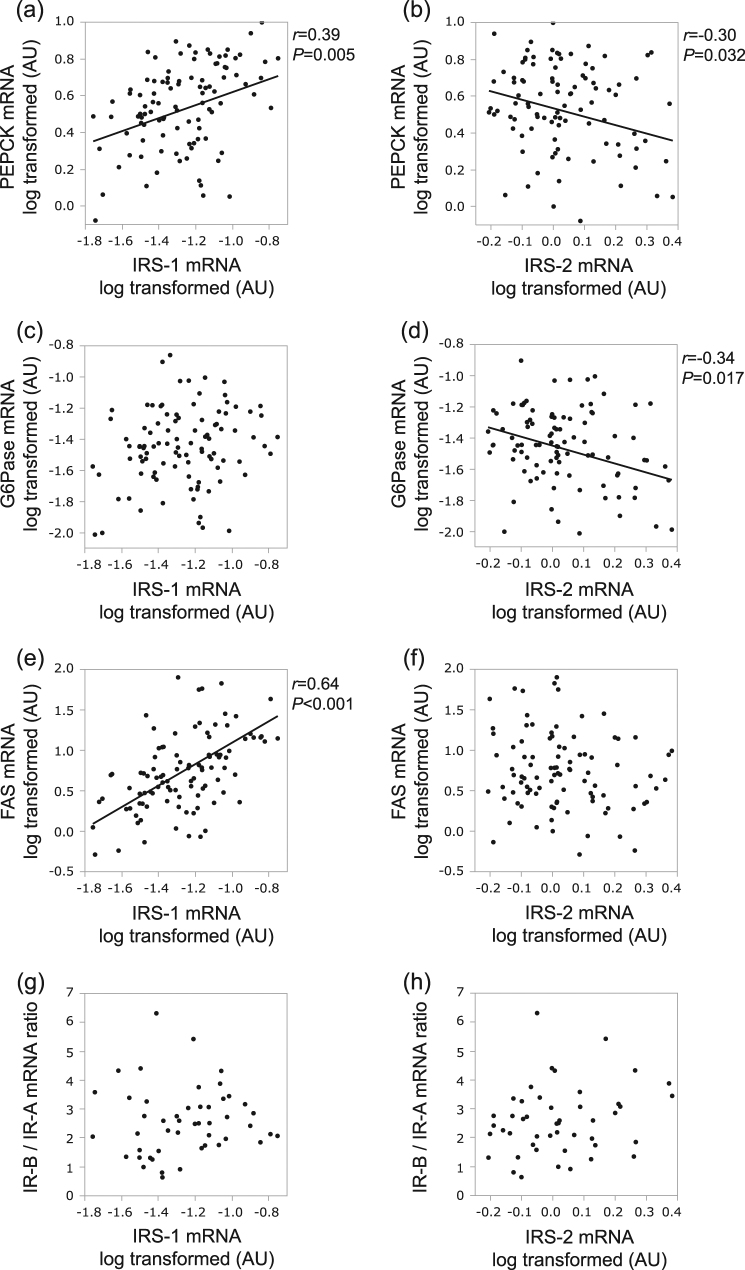
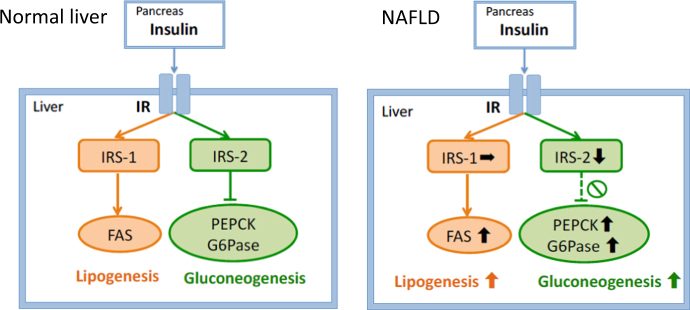
BACKGROUND/OBJECTIVE: Insulin signals, via the regulation of key enzyme expression, both suppress gluconeogenesis and enhance lipid synthesis in the liver. Animal studies have revealed insulin signaling favoring gluconeogenesis suppression to be selectively impaired in steatotic livers. However, whether, and if so how, such selective insulin resistance occurs in human steatotic livers remains unknown. Our aim was to investigate selective insulin resistance in human livers with non-alcoholic fatty liver disease (NAFLD). SUBJECTS/METHODS: We examined mRNA expressions of key molecules for insulin signaling, gluconeogenesis and lipogenesis in human liver biopsy samples obtained from 51 non-diabetic subjects: 9 healthy controls and 42 NAFLD patients, and analyzed associations of these molecules with each other and with detailed pathological and clinical biochemistry data. RESULTS: In NAFLD patients, insulin receptor substrate (IRS)-2 expression was decreased, while those of key enzymes for gluconeogenesis were increased. These alterations of IRS-2 and gluconeogenesis enzymes were induced both in simple steatosis (SS) and non-alcoholic steatohepatitis (NASH), while these expression levels did not differ between SS and NASH. Furthermore, alterations in the expressions of IRS-2 and gluconeogenesis enzymes showed strong negative correlations and were concurrently induced in the early histological stage of NAFLD. In contrast, fatty acid synthase (FAS) expression was not decreased in NAFLD, despite IRS-2 downregulation, but correlated strongly with IRS-1 expression. Furthermore, no histological scores were associated with these molecules. Thus, IRS-1 signaling, which is not impaired in NAFLD, appears to modulate FAS expression. CONCLUSION: These analyses revealed that selective insulin resistance is present in human NAFLD livers and occurs in its early phases. The effect of insulin, during the IRS step, on gene expressions for lipogenesis and gluconeogenesis are apparently distinct and preferential downregulation of IRS-2 may contribute to selective resistance to the suppressive effects of insulin on gluconeogenesis.
Overview
The claims and statistics of this paper haven’t been checked yet.
Free: it reads the open-access text and checks the first 5 claims that cite a source we can check. Create a free account to check every claim.
Integrity signals
Registry
Cites
Statistics
Figures
Verification
Claims the paper makes
The claims and statistics of this paper haven’t been checked yet.
Free: it reads the open-access text and checks the first 5 claims that cite a source we can check. Create a free account to check every claim.
Claims other papers make about this one
Each is checked against this paper’s own text: does it say what the citing paper says it does?
The source backs part of the claim, not all of it — or backs it for a different population, condition or comparison.
In the citing paper
“Studies suggest that IRS1 and IRS2 have distinct roles in regulating hepatic lipid metabolism [20,30,97].”
From Hepatic Insulin Resistance and Steatosis in Metabolic Dysfunction-Associated Steatotic Liver Disease: New Insights into Mechanisms and Clinical Implications (2025) · cites this paper as [97]
Experimental — accuracy not yet measuredIn the citing paper
“Decreased IRS2 expression but preserved IRS1 levels in the liver under hyperinsulinemia, HFD conditions, or in human MASLD [20,97], is associated with increased hepatic SREBP1c and DNL, whereas IRS1 deletion reduces DNL and TG content without altering SREBP1c levels.”
From Hepatic Insulin Resistance and Steatosis in Metabolic Dysfunction-Associated Steatotic Liver Disease: New Insights into Mechanisms and Clinical Implications (2025) · cites this paper as [97]
In the citing paper
“In humans with MASLD, hepatic IRS2 expression is significantly reduced and correlates with elevated expression of gluconeogenic enzymes, while lipogenic genes such as FASN remain highly expressed and positively correlate with IRS1 levels [97,104].”
From Hepatic Insulin Resistance and Steatosis in Metabolic Dysfunction-Associated Steatotic Liver Disease: New Insights into Mechanisms and Clinical Implications (2025) · cites this paper as [97]
Self-check
Percentages, sums and reported differences re-computed from the paper’s own numbers.
The self-check needs the paper’s full text.
Citations
Cites
Diagnosis and Classification of Diabetes Mellitus
American Diabetes Association (2011) · Diabetes Care · doi:10.2337/dc11-s062 · Cited by 13,988
Design and validation of a histological scoring system for nonalcoholic fatty liver disease†
Kleiner, D. E., Brunt, E. M., Van Natta, M., Behling, C., Contos, M. J., Cummings, O. W., Ferrell, L. D., Liu, Y., Torbenson, M. S., Unalp‐Arida, A., et al. (2005) · Hepatology · doi:10.1002/hep.20701 · Cited by 10,791
Insulin signalling and the regulation of glucose and lipid metabolism
Saltiel, A. R., & Kahn, C. R. (2001) · Nature · doi:10.1038/414799a · Cited by 5,326 · cited 2×
“Akt-dependent phosphorylation and nuclear exclusion of forkhead boxcontaining protein O subfamily-1 suppress expressions of glucose-6-phosphatase (G6Pase) and phosphoenolpyruvate carboxykinase (PEPCK), resulting in the inhibition of hepatic glucose output [6].”
BackgroundNonalcoholic Steatohepatitis: A Proposal for Grading and Staging The Histological Lesions
Brunt, E. M., Janney, C. G., Di Bisceglie, A. M., Neuschwander-Tetri, B. A., & Bacon, B. R. (1999) · American Journal of Gastroenterology · doi:10.1111/j.1572-0241.1999.01377.x · Cited by 3,907 · cited 3×
“The histological features of the liver biopsy samples were semi-quantitatively scored according to the Kleiner’s scoring system [22] and Brunt’s staging classification [23] (Table 2).”
BackgroundMethodNonalcoholic fatty liver disease: a spectrum of clinical and pathological severity.
MATTEONI, C., YOUNOSSI, Z., GRAMLICH, T., BOPARAI, N., LIU, Y., & MCCULLOUGH, A. (1999) · Gastroenterology · doi:10.1016/s0016-5085(99)70506-8 · Cited by 3,345 · cited 3×
“The results were quite similar to those obtained using the classification system developed by Matteoni et al. [21] (Fig.”
MethodInfluentialObesity and nonalcoholic fatty liver disease: biochemical, metabolic, and clinical implications
Fabbrini, E., Sullivan, S., & Klein, S. (2010) · Hepatology · doi:10.1002/hep.23280 · Cited by 2,100 · cited 1×
“resistance, which increases the risk of developing type 2 diabetes [3].”
BackgroundDiagnosis and Classification of Diabetes Mellitus
American Diabetes Association (2012) · Diabetes Care · doi:10.2337/dc12-s064 · Cited by 1,491
on behalf of The Japanese Society of Hypertension Committee for Guidelines for the Management of Hypertension, Ogihara, T., Kikuchi, K., Matsuoka, H., Fujita, T., Higaki, J., Horiuchi, M., Imai, Y., Imaizumi, T., Ito, S., et al. (2014) · Hypertension Research · doi:10.1038/hr.2014.68 · Cited by 1,385 · cited 1×
“The prevalence of hypertension, defined as systolic blood pressure ≥ 140 mmHg and/or diastolic blood pressure ≥ 90 mmHg [29], or taking antihypertensive drugs, also rose with progression of NAFLD (Table 1).”
BackgroundThe Japanese Society of Hypertension Guidelines for the Management of Hypertension (JSH 2014)
(2014) · Hypertension Research · doi:10.1038/hr.2014.20 · Cited by 1,049
Belfiore, A., Frasca, F., Pandini, G., Sciacca, L., & Vigneri, R. (2009) · Endocrine Reviews · doi:10.1210/er.2008-0047 · Cited by 1,033 · cited 4×
“isoform in the human liver [46] but IR-A/IR-A [45] and the”
BackgroundInfluentialSelective versus Total Insulin Resistance: A Pathogenic Paradox
Brown, M. S., & Goldstein, J. L. (2008) · Cell Metabolism · doi:10.1016/j.cmet.2007.12.009 · Cited by 965
SHIMOMURA, I. (2000) · Molecular Cell · doi:10.1016/s1097-2765(00)00009-5 · Cited by 855 · cited 3×
“In animal studies using obese models such as mice fed a high-fat diet [9, 11, 35], ob/ob mice [7, 36] and Zucker fatty rats [30], levels of IRS-2 mRNA were shown to be decreased in contrast to those of IRS-1.”
BackgroundTranscriptional regulation of hepatic lipogenesis
Wang, Y., Viscarra, J., Kim, S.-J., & Sul, H. S. (2015) · Nature Reviews Molecular Cell Biology · doi:10.1038/nrm4074 · Cited by 646
Measurement of Gene Expression in Archival Paraffin-Embedded Tissues
Cronin, M., Pho, M., Dutta, D., Stephans, J. C., Shak, S., Kiefer, M. C., Esteban, J. M., & Baker, J. B. (2004) · The American Journal of Pathology · doi:10.1016/s0002-9440(10)63093-3 · Cited by 551 · cited 1×
“suitable for real-time RT-PCR analysis, based on past reports [25, 26].”
MethodCrucial role of a long-chain fatty acid elongase, Elovl6, in obesity-induced insulin resistance
Matsuzaka, T., Shimano, H., Yahagi, N., Kato, T., Atsumi, A., Yamamoto, T., Inoue, N., Ishikawa, M., Okada, S., Ishigaki, N., et al. (2007) · Nature Medicine · doi:10.1038/nm1662 · Cited by 542 · cited 1×
“In animal studies using obese models such as mice fed a high-fat diet [9, 11, 35], ob/ob mice [7, 36] and Zucker fatty rats [30], levels of IRS-2 mRNA were shown to be decreased in contrast to those of IRS-1.”
BackgroundTissue-specific insulin resistance in mice with mutations in the insulin receptor, IRS-1, and IRS-2
Kido, Y., Burks, D. J., Withers, D., Bruning, J. C., Kahn, C. R., White, M. F., & Accili, D. (2000) · Journal of Clinical Investigation · doi:10.1172/jci7917 · Cited by 492 · cited 1×
“This led to speculation that the decreased IRS-2 in hepatic steatosis is the main contributor to impairment of the insulin signaling that governs the suppression of hepatic glucose production [40].”
BackgroundSpecht, K., Richter, T., Müller, U., Walch, A., Werner, M., & Höfler, H. (2001) · The American Journal of Pathology · doi:10.1016/s0002-9440(10)63985-5 · Cited by 485 · cited 1×
“suitable for real-time RT-PCR analysis, based on past reports [25, 26].”
MethodLong–Term Outcomes of Cirrhosis in Nonalcoholic Steatohepatitis Compared With Hepatitis C
Hui, J. M., Kench, J. G., Chitturi, S., Sud, A., Farrell, G. C., Byth, K., Hall, P., Khan, M., & George, J. (2003) · Hepatology · doi:10.1053/jhep.2003.50320 · Cited by 437
Polyunsaturated fatty acids ameliorate hepatic steatosis in obese mice by SREBP-1 suppression
Sekiya, M., Yahagi, N., Matsuzaka, T., Najima, Y., Nakakuki, M., Nagai, R., Ishibashi, S., Osuga, J.-I., Yamada, N., & Shimano, H. (2003) · Hepatology · doi:10.1016/j.hep.2003.09.028 · Cited by 415 · cited 1×
“Two patients who had been taking eicosapentaenoic acid (EPA) were also excluded from the analysis, because EPA reportedly exerts beneficial effects on hepatic steatosis [18] and steatohepatitis [19] by reducing the expression of sterol responsive element binding protein-1c (SREBP-1c) [20].”
BackgroundFatty acid synthase and liver triglyceride metabolism: Housekeeper or messenger?
Jensen-Urstad, A. P. L., & Semenkovich, C. F. (2012) · Biochimica et Biophysica Acta (BBA) - Molecular and Cell Biology of Lipids · doi:10.1016/j.bbalip.2011.09.017 · Cited by 406 · cited 2×
“However, mRNA expression the levels of these key molecules, including IRS-1 [30], IRS-2 [30], PEPCK [31], G6Pase [32], GCK [33] and FAS [34], reportedly reflect their functions.”
BackgroundKohjima, M., Higuchi, N., Kato, M., Kotoh, K., Yoshimoto, T., Fujino, T., Yada, M., Yada, R., Harada, N., Enjoji, M., et al. (2008) · International Journal of Molecular Medicine · doi:10.3892/ijmm.21.4.507 · Cited by 365 · cited 2×
“For instance, IRS-2 mRNA expression in liver biopsy samples from NAFLD [9, 12] and NASH [13] subjects were reported to be lower than in those from subjects with normal livers, while there is a report indicating that IRS-2 mRNA”
BackgroundMolecular Physiology of Mammalian Glucokinase
Iynedjian, P. B. (2009) · Cellular and Molecular Life Sciences · doi:10.1007/s00018-008-8322-9 · Cited by 365
WHO reassesses appropriate body-mass index for Asian populations
Choo, V. (2002) · The Lancet · doi:10.1016/s0140-6736(02)09512-0 · Cited by 336 · cited 1×
“According to the guidelines proposed by the International Obesity Task Force of the World Health Organization (IOTF-WHO), individuals with BMI ≥ 25 in Asian populations are obese [28].”
MethodKerouz, N. J., Hörsch, D., Pons, S., & Kahn, C. R. (1997) · Journal of Clinical Investigation · doi:10.1172/jci119872 · Cited by 302 · cited 1×
“In animal studies using obese models such as mice fed a high-fat diet [9, 11, 35], ob/ob mice [7, 36] and Zucker fatty rats [30], levels of IRS-2 mRNA were shown to be decreased in contrast to those of IRS-1.”
BackgroundHiguchi, N., Kato, M., Shundo, Y., Tajiri, H., Tanaka, M., Yamashita, N., Kohjima, M., Kotoh, K., Nakamuta, M., Takayanagi, R., et al. (2008) · Hepatology Research · doi:10.1111/j.1872-034x.2008.00382.x · Cited by 286 · cited 1×
“expression, as well as, that of SREBP-1c is reportedly increased in subjects with NAFLD [42].”
BackgroundKubota, N., Kubota, T., Itoh, S., Kumagai, H., Kozono, H., Takamoto, I., Mineyama, T., Ogata, H., Tokuyama, K., Ohsugi, M., et al. (2008) · Cell Metabolism · doi:10.1016/j.cmet.2008.05.007 · Cited by 244 · cited 1×
“Taken together with the report indicating the role of IRS-1 as the inducer of GCK and SREBP-1c, shown in rat hepatocytes [43] and liver-specific IRS-1 knockout mice [44], persistent expression of IRS-1 and hyperinsulinemia in NAFLD may enhance FAS upregulation in the steatotic liver.”
BackgroundThe role of FOXO in the regulation of metabolism
Gross, D. N., Wan, M., & Birnbaum, M. J. (2009) · Current Diabetes Reports · doi:10.1007/s11892-009-0034-5 · Cited by 240
Shimamoto, K., Hasebe, N., Ito, S., Kario, K., Kimura, K., Dohi, Y., Kawano, Y., Rakugi, H., Horiuchi, M., Imaizumi, T., et al. (2014) · Hypertension Research · doi:10.1038/hr.2013.80 · Cited by 238
Inhibition of Foxo1 function is associated with improved fasting glycemia in diabetic mice
Altomonte, J., Richter, A., Harbaran, S., Suriawinata, J., Nakae, J., Thung, S. N., Meseck, M., Accili, D., & Dong, H. (2003) · American Journal of Physiology-Endocrinology and Metabolism · doi:10.1152/ajpendo.00156.2003 · Cited by 227 · cited 1×
“PEPCK and G6Pase mRNA levels in liver are reportedly increased in insulin-resistant animal models [38, 39].”
BackgroundHepatic steatosis, low-grade chronic inflammation and hormone/growth factor/adipokine imbalance
Tarantino, G. (2010) · World Journal of Gastroenterology · doi:10.3748/wjg.v16.i38.4773 · Cited by 225
The Problem of Establishing Relationships between Hepatic Steatosis and Hepatic Insulin Resistance
Farese, R. V., Zechner, R., Newgard, C. B., & Walther, T. C. (2012) · Cell Metabolism · doi:10.1016/j.cmet.2012.03.004 · Cited by 209 · cited 1×
“Insulin secreted in the fed state promotes glycogen synthesis and lipogenesis but suppresses hepatic glucose production by inhibiting gluconeogenesis and glycogenolysis [4].”
BackgroundElovl6 promotes nonalcoholic steatohepatitis: Hepatology
Matsuzaka, T., Atsumi, A., Matsumori, R., Nie, T., Shinozaki, H., Suzuki-Kemuriyama, N., Kuba, M., Nakagawa, Y., Ishii, K., Shimada, M., et al. (2012) · Hepatology · doi:10.1002/hep.25932 · Cited by 194 · cited 1×
“For instance, IRS-2 mRNA expression in liver biopsy samples from NAFLD [9, 12] and NASH [13] subjects were reported to be lower than in those from subjects with normal livers, while there is a report indicating that IRS-2 mRNA”
BackgroundPhosphoenolpyruvate Carboxykinase (GTP): the Gene and the Enzyme
Hanson, R. W., & Patel, Y. M. (1994) · Advances in enzymology and related areas of molecular biology/Advances in enzymology and related subjects · doi:10.1002/9780470123157.ch6 · Cited by 192 · cited 2×
“However, mRNA expression the levels of these key molecules, including IRS-1 [30], IRS-2 [30], PEPCK [31], G6Pase [32], GCK [33] and FAS [34], reportedly reflect their functions.”
BackgroundIncreased Expression and Activity of the Transcription Factor FOXO1 in Nonalcoholic Steatohepatitis
Valenti, L., Rametta, R., Dongiovanni, P., Maggioni, M., Ludovica Fracanzani, A., Zappa, M., Lattuada, E., Roviaro, G., & Fargion, S. (2008) · Diabetes · doi:10.2337/db07-0714 · Cited by 187 · cited 2×
“gluconeogenic enzymes [15, 16], in patients with NAFLD are scarce and controversial.”
BackgroundLessons from Mouse Models of High-Fat Diet-Induced NAFLD
Nakamura, A., & Terauchi, Y. (2013) · International Journal of Molecular Sciences · doi:10.3390/ijms141121240 · Cited by 186 · cited 2×
“In animal studies using obese models such as mice fed a high-fat diet [9, 11, 35], ob/ob mice [7, 36] and Zucker fatty rats [30], levels of IRS-2 mRNA were shown to be decreased in contrast to those of IRS-1.”
BackgroundAnai, M., Funaki, M., Ogihara, T., Terasaki, J., Inukai, K., Katagiri, H., Fukushima, Y., Yazaki, Y., Kikuchi, M., Oka, Y., et al. (1998) · Diabetes · doi:10.2337/diab.47.1.13 · Cited by 181 · cited 3×
“In animal studies using obese models such as mice fed a high-fat diet [9, 11, 35], ob/ob mice [7, 36] and Zucker fatty rats [30], levels of IRS-2 mRNA were shown to be decreased in contrast to those of IRS-1.”
BackgroundSelf-citationArgaud, D., Zhang, Q., Pan, W., Maitra, S., Pilkis, S. J., & Lange, A. J. (1996) · Diabetes · doi:10.2337/diab.45.11.1563 · Cited by 168
Kubota, N., Kubota, T., Kajiwara, E., Iwamura, T., Kumagai, H., Watanabe, T., Inoue, M., Takamoto, I., Sasako, T., Kumagai, K., et al. (2016) · Nature Communications · doi:10.1038/ncomms12977 · Cited by 143 · cited 4×
“In animal studies using obese models such as mice fed a high-fat diet [9, 11, 35], ob/ob mice [7, 36] and Zucker fatty rats [30], levels of IRS-2 mRNA were shown to be decreased in contrast to those of IRS-1.”
BackgroundInfluentialMatsumoto, M., Ogawa, W., Teshigawara, K., Inoue, H., Miyake, K., Sakaue, H., & Kasuga, M. (2002) · Diabetes · doi:10.2337/diabetes.51.6.1672 · Cited by 138 · cited 1×
“Taken together with the report indicating the role of IRS-1 as the inducer of GCK and SREBP-1c, shown in rat hepatocytes [43] and liver-specific IRS-1 knockout mice [44], persistent expression of IRS-1 and hyperinsulinemia in NAFLD may enhance FAS upregulation in the steatotic liver.”
BackgroundHormonal regulation of gluconeogenic gene transcription in the liver
Yabaluri, N., & Bashyam, M. D. (2010) · Journal of Biosciences · doi:10.1007/s12038-010-0052-0 · Cited by 128 · cited 1×
“PEPCK and G6Pase are two critical rate-limiting gluconeogenic enzymes, the expressions of which are suppressed by insulin at the transcriptional level [37], but”
BackgroundBenecke, H., Flier, J. S., & Moller, D. E. (1992) · Journal of Clinical Investigation · doi:10.1172/jci115819 · Cited by 125 · cited 1×
“isoform in the human liver [46] but IR-A/IR-A [45] and the”
BackgroundTeran-Garcia, M., Adamson, A. W., Yu, G., Rufo, C., Suchankova, G., Dreesen, T. D., Tekle, M., Clarke, S. D., & Gettys, T. W. (2007) · Biochemical Journal · doi:10.1042/bj20061722 · Cited by 104 · cited 1×
“Two patients who had been taking eicosapentaenoic acid (EPA) were also excluded from the analysis, because EPA reportedly exerts beneficial effects on hepatic steatosis [18] and steatohepatitis [19] by reducing the expression of sterol responsive element binding protein-1c (SREBP-1c) [20].”
BackgroundTsukita, S., Yamada, T., Uno, K., Takahashi, K., Kaneko, K., Ishigaki, Y., Imai, J., Hasegawa, Y., Sawada, S., Ishihara, H., et al. (2012) · Cell Metabolism · doi:10.1016/j.cmet.2012.11.006 · Cited by 98 · cited 1×
“Moreover, insulin stimulates the pathway through the upregulation of fatty acid synthase (FAS) [7] as well as upregulating glucokinase (GCK), which catalyzes the first and rate-limiting step of glycolysis, thereby increasing hepatic lipogenesis [8] (Supplementary Figure 1).”
BackgroundSelf-citationIshii, H., Horie, Y., Ohshima, S., Anezaki, Y., Kinoshita, N., Dohmen, T., Kataoka, E., Sato, W., Goto, T., Sasaki, J., et al. (2008) · Journal of Hepatology · doi:10.1016/j.jhep.2008.10.031 · Cited by 94 · cited 1×
“Two patients who had been taking eicosapentaenoic acid (EPA) were also excluded from the analysis, because EPA reportedly exerts beneficial effects on hepatic steatosis [18] and steatohepatitis [19] by reducing the expression of sterol responsive element binding protein-1c (SREBP-1c) [20].”
BackgroundCharacterization of IRA/IRB hybrid insulin receptors using bioluminescence resonance energy transfer
Blanquart, C., Achi, J., & Issad, T. (2008) · Biochemical Pharmacology · doi:10.1016/j.bcp.2008.07.027 · Cited by 68
Asai, Y., Yamada, T., Tsukita, S., Takahashi, K., Maekawa, M., Honma, M., Ikeda, M., Murakami, K., Munakata, Y., Shirai, Y., et al. (2017) · Gastroenterology · doi:10.1053/j.gastro.2017.01.001 · Cited by 65 · cited 2×
“ΔCt refers to the cycle number at which the transcripts were detectable (Ct) normalized to the cycle number of CDKN1B [27]”
MethodSelf-citationNerurkar, P. V., Nishioka, A., Eck, P., Johns, L. M., Volper, E. M., & Nerurkar, V. R. (2011) · British Journal Of Nutrition · doi:10.1017/s0007114511005563 · Cited by 51 · cited 1×
“PEPCK and G6Pase mRNA levels in liver are reportedly increased in insulin-resistant animal models [38, 39].”
BackgroundRametta, R., Mozzi, E., Dongiovanni, P., Motta, B. M., Milano, M., Roviaro, G., Fargion, S. R., & Valenti, L. V. C. (2012) · International Journal of Obesity · doi:10.1038/ijo.2012.181 · Cited by 44 · cited 2×
“In previous studies, the controls were morbidly obese subjects [14] and patients with elevated liver enzymes [16].”
BackgroundYamada, C., Moriyama, K., & Takahashi, E. (2012) · Journal of Diabetes Investigation · doi:10.1111/j.2040-1124.2012.00194.x · Cited by 41
Downregulation of Hepatic Glucose‐6‐Phosphatase‐α in Patients With Hepatic Steatosis
Kotsias-Konopelska, S., Kienitz, T., & Quinkler, M. O. (2011) · Obesity · doi:10.1038/oby.2011.118 · Cited by 8 · cited 3×
“In previous studies, the controls were morbidly obese subjects [14] and patients with elevated liver enzymes [16].”
Background
Cited by
Role of Insulin Resistance in MAFLD
Sakurai, Y., Kubota, N., Yamauchi, T., & Kadowaki, T. (2021) · International Journal of Molecular Sciences · doi:10.3390/ijms22084156 · Cited by 448
The Role of Insulin Resistance and Diabetes in Nonalcoholic Fatty Liver Disease
Fujii, H., Kawada, N., & Japan Study Group of NAFLD (JSG-NAFLD) (2020) · International Journal of Molecular Sciences · doi:10.3390/ijms21113863 · Cited by 299
“examined mRNA expression i 51 human liver biopsy samples obtained from nondiabetic subjects [26].”
BackgroundInfluentialFructose and hepatic insulin resistance
Softic, S., Stanhope, K. L., Boucher, J., Divanovic, S., Lanaspa, M. A., Johnson, R. J., & Kahn, C. R. (2020) · Critical Reviews in Clinical Laboratory Sciences · doi:10.1080/10408363.2019.1711360 · Cited by 251
“Obesity increases the risk of developing a myriad of negative health outcomes, including dyslipidemia, hypertension, insulin resistance, type 2 diabetes (T2D) and nonalcoholic fatty liver disease (NAFLD).”
BackgroundInfluentialHepatic lipid droplet homeostasis and fatty liver disease
Seebacher, F., Zeigerer, A., Kory, N., & Krahmer, N. (2020) · Seminars in Cell & Developmental Biology · doi:10.1016/j.semcdb.2020.04.011 · Cited by 190
Besse-Patin, A., Jeromson, S., Levesque-Damphousse, P., Secco, B., Laplante, M., & Estall, J. L. (2019) · Proceedings of the National Academy of Sciences · doi:10.1073/pnas.1815150116 · Cited by 124
“Livers of type 2 diabetic and NAFLD patients are shown to have decreased PGC1A (8–10), correlating with low IRS2 and high IRS1 expression (22, 38).”
Background
Metadata
- Authors
- Honma, M., Sawada, S., Ueno, Y., Murakami, K., Yamada, T., Gao, J., Kodama, S., Izumi, T., Takahashi, K., Tsukita, S., Uno, K., Imai, J., Kakazu, E., Kondo, Y., Mizuno, K., Kawagishi, N., Shimosegawa, T., & Katagiri, H.
- Affiliations
- Tohoku University (JP)
- Yamagata University (JP)
- Tohoku University Hospital (JP)
- Corresponding author
- Sawada, Shojiro
- Katagiri, Hideki
- ORCID
- Venue
- International Journal of Obesity
- Published
- 2018-05-01
- Volume
- 42
- Issue
- 9
- Pages
- 1544-1555
- ISSN
- 0307-0565 (ISSN-L)
- 1476-5497
- PMC
- PMC6160396
- OpenAlex
- W2802224281
- Cited by
- 108
- References
- 50
- Citations by year
- 2026: 5 · 2025: 20 · 2024: 14 · 2023: 10 · 2022: 8 · 2021: 19 · 2020: 19 · 2019: 9 · 2018: 4
- FWCI
- 10.52
- Type
- journal article
- Language
- en
- Open access
- hybrid
- doi.org
- Licence
- cc-by
- creativecommons.org/licenses/by/4.0 (tdm)
- Locations
- International Journal of Obesity (publishedVersion, cc-by)
- Europe PMC (PubMed Central) (publishedVersion, other-oa)
- PubMed Central (publishedVersion, cc-by)
- PubMed (publishedVersion)
- Institutional Repositories DataBase (IRDB) (submittedVersion, cc-by-nc-nd)
- Funders
- Japan Society for the Promotion of Science (16K09773, 18H02858, 25253067, 18K16221, 17K09816)
- Topics
- Health Sciences › Medicine › Hepatology › Liver Disease Diagnosis and Treatment
- Health Sciences › Medicine › Hepatology › Liver physiology and pathology
- Health Sciences › Medicine › Endocrinology, Diabetes and Metabolism › Diet, Metabolism, and Disease
- Keywords
- non-alcoholic fatty liver disease, IRS-1, insulin receptor substrate 2, gluconeogenesis, lipogenesis, fatty acid synthase, hepatic steatosis, nonalcoholic steatohepatitis, liver biopsy, gene expression
- MeSH terms
- Adult, Biopsy, Female, Humans, Insulin Resistance, Liver, Male, Middle Aged, Case-Control Studies, Insulin Receptor Substrate Proteins, Non-alcoholic Fatty Liver Disease
About these checks
Registry, retraction, Cites and statistics results are computed, not judged, with one exception: a printed reference that no index lists is read once by a model before it counts as a citation error. Claims are extracted by a model and kept only when their quote appears verbatim in the text; each cited source is then checked, with a model’s help, for whether it says what the claim relies on. Those verdicts can be wrong — read the claim’s quote and the cited source before relying on one.
Statistics and arithmetic are recomputed, not judged.
Confidence bands are shown only for fields calibrated on our annotated test set. None is calibrated yet, so no band is shown.
What counts as a claim ›How we measure confidence ›How we check this ›
Are you an author, or do you see a problem with this page? Request a review
Data sources
Bibliographic data: Semantic Scholar, OpenAlex, Crossref.
Contains information from the Semantic Scholar Academic Graph Datasets, made available under the ODC Attribution License (ODC-BY 1.0).
Semantic Scholar’s data is described in: Kinney, R., et al. (2023). The Semantic Scholar Open Data Platform. arXiv:2301.10140.
