

The DOI matches its Crossref record; 120 of the 120 references it cites were found in a registry or an index.
ChatGPT for shaping the future of dentistry: the potential of multi-modal large language model
Open accessAbstract
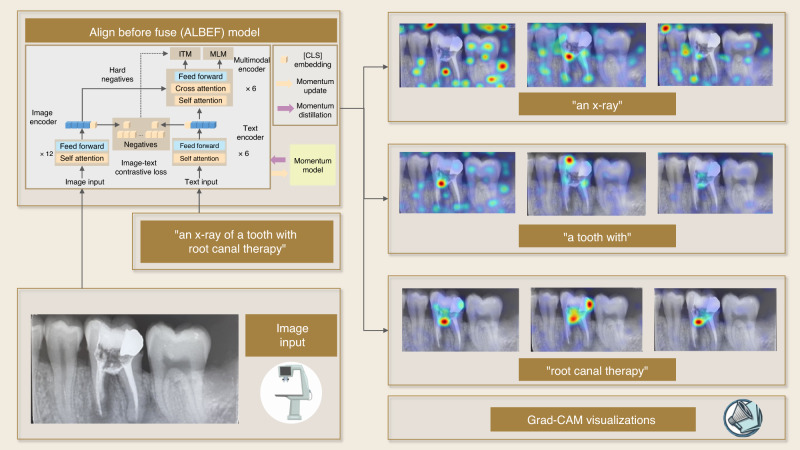
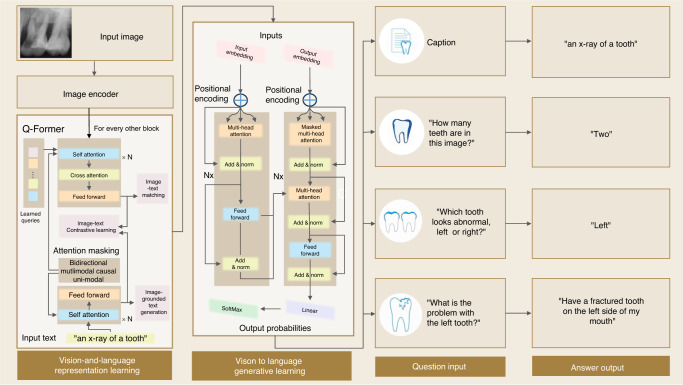
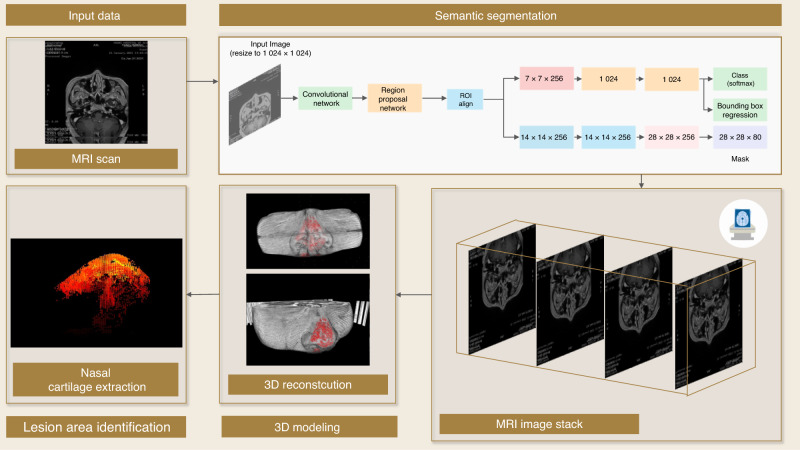
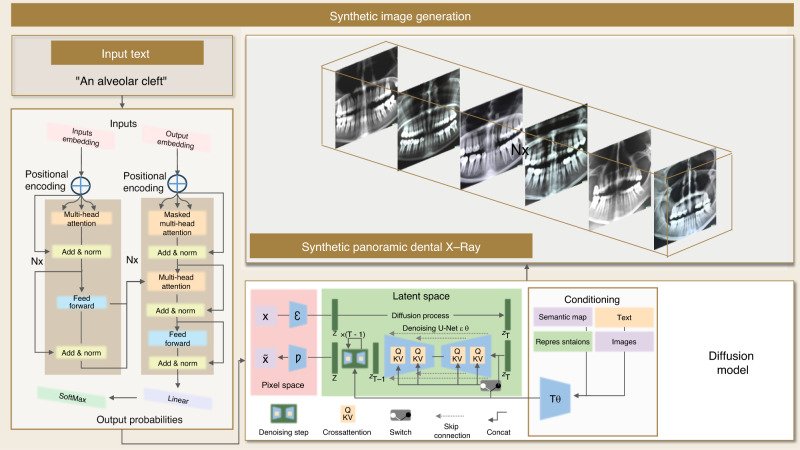
The ChatGPT, a lite and conversational variant of Generative Pretrained Transformer 4 (GPT-4) developed by OpenAI, is one of the milestone Large Language Models (LLMs) with billions of parameters. LLMs have stirred up much interest among researchers and practitioners in their impressive skills in natural language processing tasks, which profoundly impact various fields. This paper mainly discusses the future applications of LLMs in dentistry. We introduce two primary LLM deployment methods in dentistry, including automated dental diagnosis and cross-modal dental diagnosis, and examine their potential applications. Especially, equipped with a cross-modal encoder, a single LLM can manage multi-source data and conduct advanced natural language reasoning to perform complex clinical operations. We also present cases to demonstrate the potential of a fully automatic Multi-Modal LLM AI system for dentistry clinical application. While LLMs offer significant potential benefits, the challenges, such as data privacy, data quality, and model bias, need further study. Overall, LLMs have the potential to revolutionize dental diagnosis and treatment, which indicates a promising avenue for clinical application and research in dentistry.
Overview
The claims and statistics of this paper haven’t been checked yet.
Run the check — free, no account needed. It reads the open-access text and checks the sources it cites.
Integrity signals
Registry
Cites
Statistics
Figures
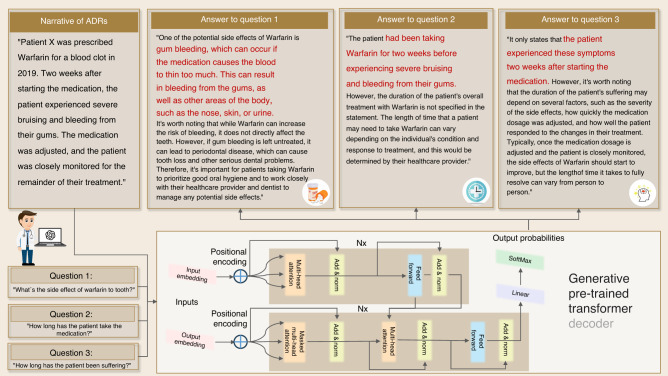
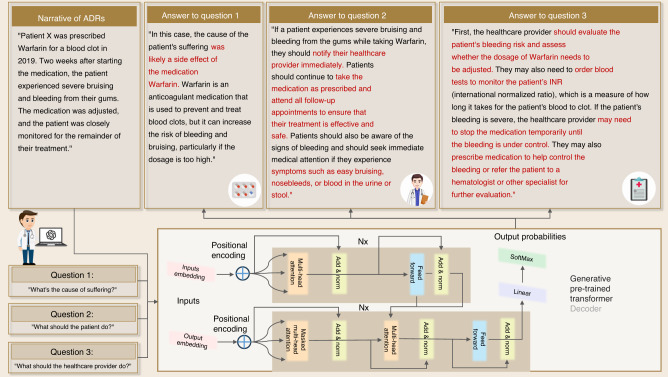
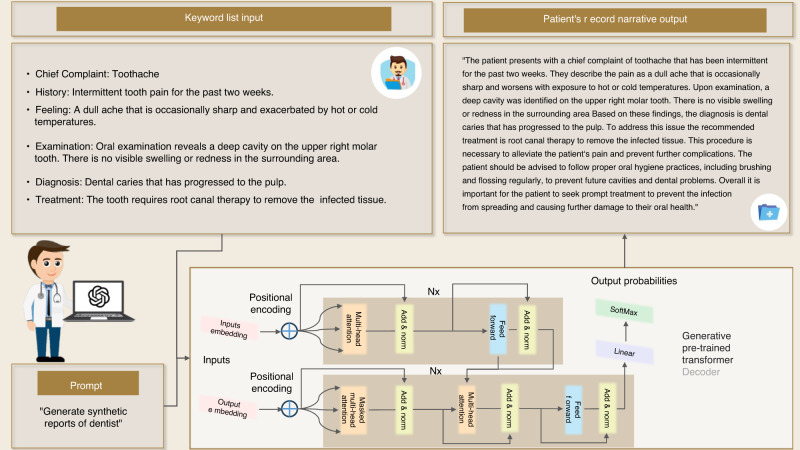
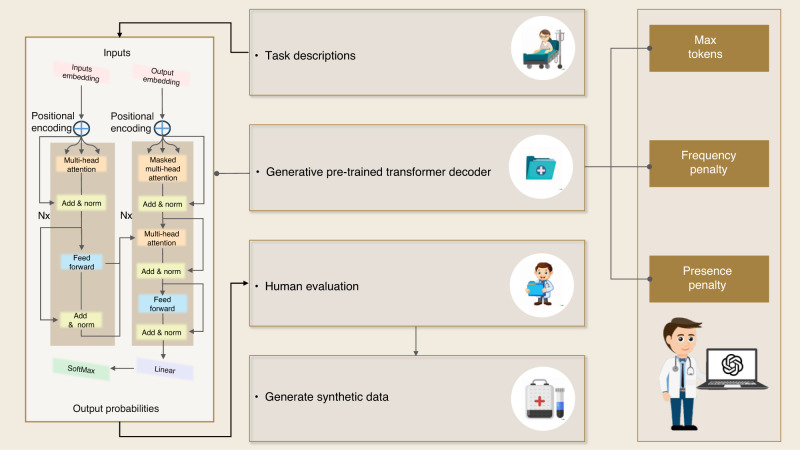
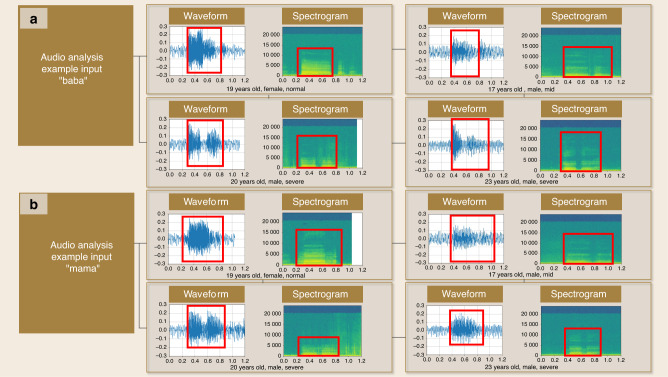
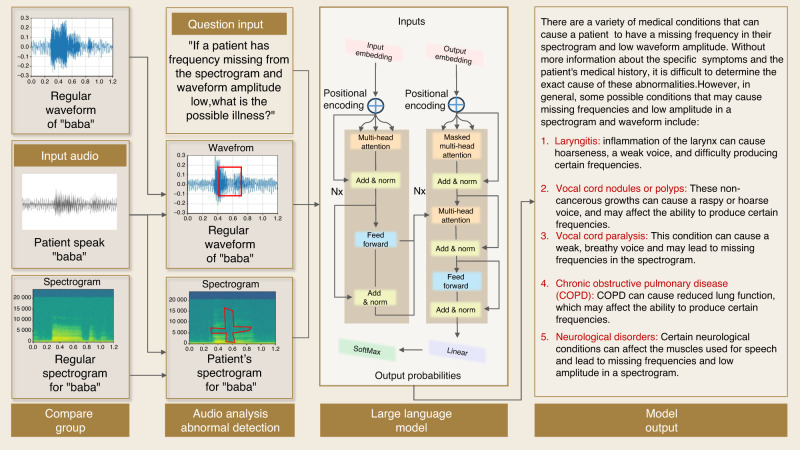
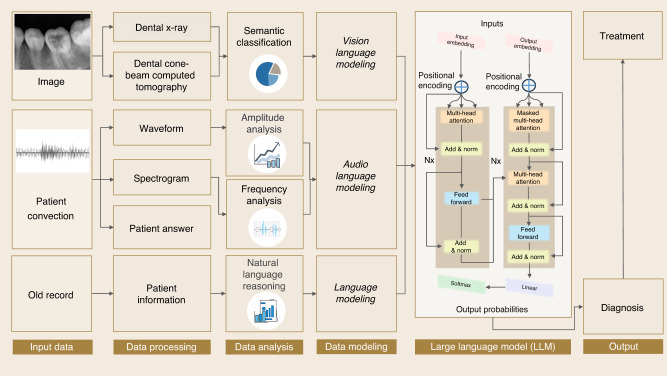
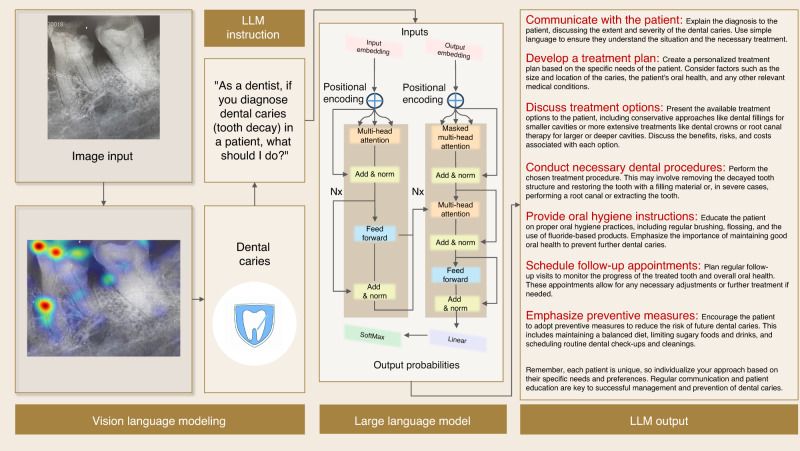
Verification
Claims the paper makes
The claims and statistics of this paper haven’t been checked yet.
Run the check — free, no account needed. It reads the open-access text and checks the sources it cites.
Claims other papers make about this one
Each is checked against this paper’s own text: does it say what the citing paper says it does?
The cited source doesn’t support the claim as written.
In the citing paper
“Third, although the challenges of integrating diverse data types into M-LLMs are recognized, there is limited exploration of possible solutions or ongoing research aimed at overcoming these technical barriers [38,39].”
From Multimodal Large Language Models in Health Care: Applications, Challenges, and Future Outlook. (2024) · cites this paper as [39]
Checked by a reasoning model — may be wrong.
Experimental — accuracy not yet measuredThe source backs part of the claim, not all of it — or backs it for a different population, condition or comparison.
In the citing paper
“First, the range of data modalities examined is often restricted to text, images, videos, and audio [38], with some studies focusing narrowly on a limited number of clinical applications [39].”
From Multimodal Large Language Models in Health Care: Applications, Challenges, and Future Outlook. (2024) · cites this paper as [39]
Experimental — accuracy not yet measured
Self-check
Percentages, sums and reported differences re-computed from the paper’s own numbers.
The self-check needs the paper’s full text.
Citations
Cites
BERT: Pre-training of Deep Bidirectional Transformers for Language Understanding
Devlin, J., Chang, M.-W., Lee, K., & Toutanova, K. (2018) · arXiv · doi:10.48550/arxiv.1810.04805 · Cited by 73,173
Highly accurate protein structure prediction with AlphaFold
Jumper, J., Evans, R., Pritzel, A., Green, T., Figurnov, M., Ronneberger, O., Tunyasuvunakool, K., Bates, R., Žídek, A., Potapenko, A., et al. (2021) · Nature · doi:10.1038/s41586-021-03819-2 · Cited by 43,764
High-Resolution Image Synthesis with Latent Diffusion Models
Rombach, R., Blattmann, A., Lorenz, D., Esser, P., & Ommer, B. (2022) · 2022 IEEE/CVF Conference on Computer Vision and Pattern Recognition (CVPR) · doi:10.1109/cvpr52688.2022.01042 · Cited by 20,302
Exploring the Limits of Transfer Learning with a Unified Text-to-Text Transformer
Raffel, C., Shazeer, N., Roberts, A., Lee, K., Narang, S., Matena, M., Zhou, Y., Li, W., & Liu, P. J. (2019) · arXiv · doi:10.48550/arxiv.1910.10683 · Cited by 10,929
BioBERT: a pre-trained biomedical language representation model for biomedical text mining
Lee, J., Yoon, W., Kim, S., Kim, D., Kim, S., So, C. H., & Kang, J. (2020) · Bioinformatics · doi:10.1093/bioinformatics/btz682 · Cited by 7,218
Training language models to follow instructions with human feedback
Ouyang, L., Wu, J., Jiang, X., Almeida, D., Wainwright, C. L., Mishkin, P., Zhang, C., Agarwal, S., Slama, K., Ray, A., et al. (2022) · arXiv · doi:10.48550/arxiv.2203.02155 · Cited by 4,208
Kung, T. H., Cheatham, M., Medenilla, A., Sillos, C., De Leon, L., Elepaño, C., Madriaga, M., Aggabao, R., Diaz-Candido, G., Maningo, J., et al. (2023) · PLOS Digital Health · doi:10.1371/journal.pdig.0000198 · Cited by 4,115
SciBERT: A Pretrained Language Model for Scientific Text
Beltagy, I., Lo, K., & Cohan, A. (2019) · Proceedings of the 2019 Conference on Empirical Methods in Natural Language Processing and the 9th International Joint Conference on Natural Language Processing (EMNLP-IJCNLP) · doi:10.18653/v1/d19-1371 · Cited by 3,218
Scalable and accurate deep learning with electronic health records
Rajkomar, A., Oren, E., Chen, K., Dai, A. M., Hajaj, N., Hardt, M., Liu, P. J., Liu, X., Marcus, J., Sun, M., et al. (2018) · npj Digital Medicine · doi:10.1038/s41746-018-0029-1 · Cited by 2,648
Self-citationPhotorealistic Text-to-Image Diffusion Models with Deep Language Understanding
Saharia, C., Chan, W., Saxena, S., Li, L., Whang, J., Denton, E., Ghasemipour, S. K. S., Ayan, B. K., Mahdavi, S. S., Lopes, R. G., et al. (2022) · arXiv · doi:10.48550/arxiv.2205.11487 · Cited by 2,528
Research works printed but not linked: 3
- Choi, E., Xiao, C., Stewart, W. & Sun, J. MiME: multilevel medical embedding of electronic health records for predictive healthcare. Adv. Neural Inf. Process. Syst. 31, 19 (2018).
- Ramesh, A., Pavlov, M., Goh, G., Gray, S., Voss, C., Radford, A. & Sutskever, I. Zero-shot text-to-image generation. In International Conference on Machine Learning, pp. 8821–8831 (PMLR, 2021).
- Gurram, S., Chan, D., Fang, A., & Canny, J. LAVA: Language Audio Vision Alignment for Data-Efficient Video Pre-Training. In First Workshop on Pre-training: Perspectives, Pitfalls, and Paths Forward at ICML (2023).
Cited by
Sorted by citations
Items 101–200 of 324
Li, X., Li, H., Sun, C., Fan, Q., Han, Z., & Leung, V. C. M. (2025) · IEEE Communications Surveys & Tutorials · doi:10.1109/comst.2025.3587225 · Cited by 13
Toward equitable, transparent, and collaborative human mobility computing for smart cities
Chen, Y., Chen, X. M., & Gao, Z. (2024) · The Innovation · doi:10.1016/j.xinn.2024.100672 · Cited by 11
Evaluation of the ability of large language models to self-diagnose oral diseases
Zhuang, S., Zeng, Y., Lin, S., Chen, X., Xin, Y., Li, H., Lin, Y., Zhang, C., & Lin, Y. (2024) · iScience · doi:10.1016/j.isci.2024.111495 · Cited by 11
Artificial Intelligence in Medical Metaverse: Applications, Challenges, and Future Prospects
Yang, J., Chen, B., Li, R., Huang, B.-Q., Zhao, M.-H., Liu, P., Zhang, J., & Ye, Z. (2024) · Current Medical Science · doi:10.1007/s11596-024-2960-5 · Cited by 11
Wan, Z., Guo, Y., Bao, S., Wang, Q., & Malin, B. (2025) · Health Data Science · doi:10.34133/hds.0256 · Cited by 12
Özkan, H. B., Çankaya, T. D., & Kölüş, T. (2025) · Healthcare · doi:10.3390/healthcare13101190 · Cited by 20
Dadu-Corki: Algorithm-Architecture Co-Design for Embodied AI-powered Robotic Manipulation
Huang, Y., Hao, Y., Bo, Y., Yan, F., Yang, Y., Feng, M., Han, Y., Ma, L., Liu, S., Liu, Q., et al. (2025) · Proceedings - International Symposium on Computer Architecture/Proceedings · doi:10.1145/3695053.3731099 · Cited by 27
Wafaie, K., Basyouni, M. E., Bhattacharjee, T., Prasad, S., Daraqel, B., & Mohammed, H. (2025) · BMC Oral Health · doi:10.1186/s12903-025-06960-w · Cited by 13
Generative Artificial Intelligence: Applications and Future Prospects in Dentistry
Ma, Z., Du, C., Lao, Q., & Xie, X. (2025) · International Dental Journal · doi:10.1016/j.identj.2025.108276 · Cited by 14
Kang, S., & Odom, W. (2024) · CHI Conference Extended Abstracts on Human Factors in Computing Systems (CHI EA) · doi:10.1145/3613905.3650909 · Cited by 10
ChatGPT in orthodontics: limitations and possibilities
Lima, N. G. M., Costa, L., & dos Santos, P. B. D. (2024) · Australasian Orthodontic Journal · doi:10.2478/aoj-2024-0018 · Cited by 10
Large Language Models for Transforming Healthcare: A Perspective on DeepSeek‐R1
Zhou, J., Cheng, Y., He, S., Chen, Y.-C., & Chen, H. (2025) · MedComm – Future Medicine · doi:10.1002/mef2.70021 · Cited by 10
A Review of the Role of ChatGPT for Clinical Decision Support Systems
Fawzi, S. A. (2023) · Novel Intelligent and Leading Emerging Sciences Conference (NILES) · doi:10.1109/niles59815.2023.10296668 · Cited by 12
Zhou, X., Chen, Y., Abdulghani, E. A., Zhang, X., Zheng, W., & Li, Y. (2025) · Journal of the World Federation of Orthodontists · doi:10.1016/j.ejwf.2025.02.001 · Cited by 9
Ullah, R., Shaikh, M. S., Shahani, N., Lone, M. A., Fareed, M. A., & Zafar, M. S. (2025) · European Journal of Dentistry · doi:10.1055/s-0045-1808254 · Cited by 9
Embracing large language model (LLM) technologies in hydrology research
Ma, Z., Peng, B., Yue, Z., Zeng, H., Pan, M., Wu, X., Yang, J., Mai, L., & Guan, K. (2025) · Environmental Research Water · doi:10.1088/3033-4942/addd43 · Cited by 12
A Survey on lightweight technology of neural networks for medical image segmentation
Zhu, Z., Wang, H., Qi, G., Li, Y., Mazur, N., Liu, Y., Li, H., Cong, B., & Bai, L. (2026) · Pattern Recognition · doi:10.1016/j.patcog.2026.113870 · Cited by 9
Designing Incremental Knowledge Enrichment in Generative Pre-trained TransformersPreprint
Kowalczyk, E. A., Nowakowski, M., & Brzezińska, Z. (2024) · Research Square · doi:10.21203/rs.3.rs-4191646/v1 · Cited by 9
Machine learning in dentistry and oral surgery: charting the course with bibliometric insights
Liu, S., Hao, Y., Zhu, S., Wan, L., Yi, Z., & Zhang, Z. (2025) · Head & Face Medicine · doi:10.1186/s13005-025-00521-w · Cited by 8
Barbosa, I. A., Alves, M. S. A., de Almeida, P. R. Z., Rodrigues, P. D. A., de Oliveira, R. P., de Menezes, S. A. F., de Moura, J. D. M., & Fonseca, R. R. D. S. (2025) · Journal of Dentistry · doi:10.1016/j.jdent.2025.106091 · Cited by 8
VL-CLIP: Enhancing Multimodal Recommendations via Visual Grounding and LLM-Augmented CLIP Embeddings
Giahi, R., Yao, K., Kollipara, S., Zhao, K., Mirjalili, V., Xu, J., Biswas, T., Körpeoğlu, E., & Achan, K. (2025) · ACM Conference on Recommender Systems (RecSys) · doi:10.1145/3705328.3748064 · Cited by 8
Sezer, B., & Okutan, A. E. (2025) · BMC Oral Health · doi:10.1186/s12903-025-06791-9 · Cited by 8
Haberal, M., & Hançerlioğulları, D. (2026) · BMC Oral Health · doi:10.1186/s12903-025-07612-9 · Cited by 9
Artificial Intelligence Plant Doctor: Plant Disease Diagnosis Using GPT4-vision
Hue, Y., Kim, J. H., Lee, G., Choi, B., Sim, H., Jeon, J., Ahn, M.-I., Han, Y. K., & Kim, K. (2024) · Research in Plant Disease · doi:10.5423/rpd.2024.30.1.99 · Cited by 8
A clinician's guide to large language models
Briganti, G. (2023) · Future Medicine AI · doi:10.2217/fmai-2023-0003 · Cited by 15
Performance of ChatGPT in Dentistry: Multi-specialty and multi-centric studyPreprint
Sybil, D., Shrivastava, P. K., Rai, A., Injety, R. J., Singh, S., Jain, A., Mahuli, A. V., Parushetti, A. D., Sharma, A., Sivakumar, A., et al. (2023) · Research Square · doi:10.21203/rs.3.rs-3247663/v1 · Cited by 8
Safety Evaluation of Toll Plaza Diverging Area Considering Different Vehicles’ Toll Collection Types
Xing, L., Zou, D., Fei, Y., Long, K., & Wang, J. (2023) · Applied Sciences · doi:10.3390/app13159005 · Cited by 7
Sampaio, S. D. S., Lima, M. H. T. D. F., Rodrigues, E., Meireles, M. A. C., Pessoa, M., & Conte, T. U. (2024) · Brazilian Symposium on Software Quality (SBQS) · doi:10.1145/3701625.3701687 · Cited by 11
Lee, J. K., Choi, S., Park, S., Hwang, S., & Cho, D. (2025) · Annals of Laboratory Medicine · doi:10.3343/alm.2024.0588 · Cited by 7
Kim, K. H., Mun, S. B., Kim, B.-C., Kim, K. G., & Kim, K. G. (2025) · PLoS ONE · doi:10.1371/journal.pone.0322529 · Cited by 7
Accuracy and reliability of Manus, ChatGPT, and Claude in case-based dental diagnosis
Madfa, A. A., Alshammari, A. F., Anazi, B. A., Alenezi, Y. E., & Alkurdi, K. A. (2026) · Frontiers in Oral Health · doi:10.3389/froh.2025.1686090 · Cited by 7
Managing Metaverse Data Tsunami: Actionable Insights
Zhang, B., Chen, G., Ooi, B. C., Shou, M. Z., Tan, K., Tung, A. K. H., Xiao, X., Yip, J. W. L., & Zhang, M. (2024) · IEEE Transactions on Knowledge and Data Engineering · doi:10.1109/tkde.2024.3354960 · Cited by 8
Testing Learning-Enabled Cyber-Physical Systems with Large-Language Models: A Formal Approach
Zheng, X., Mok, A. K., Piskač, R., Lee, Y. J., Krishnamachari, B., Zhu, D. K., Sokolsky, O. V., & Lee, I. (2024) · ACM Joint European Software Engineering Conference and Symposium on the Foundations of Software Engineering (ESEC/FSE) · doi:10.1145/3663529.3663779 · Cited by 7
Evaluating Large Language Models for Burning Mouth Syndrome Diagnosis
Suga, T., Uehara, O., Abiko, Y., & Toyofuku, A. (2025) · Journal of Pain Research · doi:10.2147/jpr.s509845 · Cited by 7
The future of oral cancer care: Integrating ChatGPT into clinical practice
Ahmed, S. K. (2024) · Oral Oncology Reports · doi:10.1016/j.oor.2024.100317 · Cited by 7
Assessing ChatGPT's Potential in Endodontics: Preliminary Findings from A Diagnostic Accuracy StudyPreprint
Bragazzi, N. L., Szarpak, Ł., & Piccotti, F. (2023) · SSRN Electronic Journal · doi:10.2139/ssrn.4631017 · Cited by 7
Pham, T. D. (2025) · medRxiv · doi:10.1101/2025.01.30.25321418 · Cited by 7
Trillo, J. R., Cabrerizo, F. J., Pérez, I. J., Morente-Molinera, J. A., & Herrera‐Viedma, E. (2024) · IEEE Conference on Evolving and Adaptive Intelligent Systems (EAIS) · doi:10.1109/eais58494.2024.10570029 · Cited by 6
Modeling of Bowing Behaviors in Apology Based on Severity
Shiomi, M., Hirayama, T., Kimoto, M., Iio, T., & Shimohara, K. (2024) · IEEE Robotics and Automation Letters · doi:10.1109/lra.2024.3469810 · Cited by 6
Nadeem, M., Sohail, S. S., Madsen, D. Ø., Alzahrani, A. I., Ser, J. D., & Muhammad, K. (2025) · IEEE Transactions on Big Data · doi:10.1109/tbdata.2025.3536937 · Cited by 7
ChatIOS: Improving automatic 3-dimensional tooth segmentation via GPT-4V and multimodal pre-training
Wu, Y., Zhang, Y., Wu, Y., Zheng, Q., Li, X., & Chen, X. (2025) · Journal of Dentistry · doi:10.1016/j.jdent.2025.105755 · Cited by 8
Self-citationClinical pathway-aware large language models for reliable and transparent medical dialogue
Wu, J., Wu, X., Zheng, Y., & Yang, J. (2025) · Journal of Biomedical Informatics · doi:10.1016/j.jbi.2025.104942 · Cited by 10
Huang, S., Yang, Q., Sun, Y., Chen, S., & Gu, L. (2025) · BMC Medical Education · doi:10.1186/s12909-025-08420-z · Cited by 7
Advancing SDG 9 through digital technologies in dentistry
Dorri, M., & Mehrabanian, M. (2023) · BDJ · doi:10.1038/s41415-023-6519-9 · Cited by 6
ChatGPT utilization within the building blocks of the healthcare services: A mixed-methods study
Shojaei, P., Khosravi, M., Jafari, Y., Mahmoudi, A. H., & Hassanipourmahani, H. (2024) · Digital Health · doi:10.1177/20552076241297059 · Cited by 7
Mijwil, M. M., Naji, A. S., Doshi, R., Hiran, K. K., Bala, I., & Ali, G. (2024) · Advances in medical education, research, and ethics (AMERE) book series · doi:10.4018/979-8-3693-5493-3.ch005 · Cited by 6
Das, A., Bhattacharya, M., Abdelhameed, A. S., Lee, S., & Chakraborty, C. (2025) · Molecular Therapy — Nucleic Acids · doi:10.1016/j.omtn.2025.102546 · Cited by 5
Anchor Attention, Small Cache: Code Generation With Large Language Models
Zhang, X., Zhou, Y., Yang, G., Gall, H. C., & Chen, T. (2025) · IEEE Transactions on Software Engineering · doi:10.1109/tse.2025.3570680 · Cited by 6
Large Language Model based Personalized Learning Assistant for Career-Oriented Skills
Hemalatha, K. P. J., Deepika, V., Mallika, R., & Babu, K. M. (2024) · International Conference on Signal Processing, Communication, Power and Embedded System (SCOPES) · doi:10.1109/scopes64467.2024.10990788 · Cited by 5
A Survey of Large-Scale Deep Learning Models in Medicine and Healthcare
Chen, Z., Liu, R., Huang, S., Guo, Y., & Ren, Y. (2025) · Computer Modeling in Engineering & Sciences · doi:10.32604/cmes.2025.067809 · Cited by 6
Erkal, D., Felek, T., Butean, O.-P., & Er, K. (2025) · BMC Oral Health · doi:10.1186/s12903-025-06987-z · Cited by 5
Asif, S., Hadi, F., Ain, Q. U., Yan, Y., Wang, V. Y., & Xu, D. (2025) · Computer Science Review · doi:10.1016/j.cosrev.2025.100847 · Cited by 5
A deep learning vision–language model for diagnosing pediatric dental diseases
Pham, T. D. (2026) · Intelligence-Based Medicine · doi:10.1016/j.ibmed.2026.100364 · Cited by 5
Towards a foundational platform for generative agents in simulated city environment
Xu, F., Zhang, J., Gao, C., Liu, P., Feng, J., & Li, Y. (2026) · PLOS complex systems. · doi:10.1371/journal.pcsy.0000093 · Cited by 5
Advancements in AI-Driven Dentistry: Tooth GenAI’s Impact on Dental Diagnosis and Treatment Planning
Shankar, A., R, M. T., Kumar, S. S., Anurag, A., Narayan, A., & P, J. A. (2024) · International Conference on Networking, Embedded and Wireless Systems (ICNEWS) · doi:10.1109/icnews60873.2024.10731122 · Cited by 5
Lee, J.-K., Kim, Y., Shin, E., Choo, S., & Cha, S. H. (2024) · Architectural Science Review · doi:10.1080/00038628.2024.2445049 · Cited by 7
Multimodal Language Model for Jaw Osteonecrosis Diagnosis and Treatment
Gao, X., Zhao, L., Zhang, Q., Guo, Z., Hu, W., Tang, W., Han, C., Wang, X., Gong, P., & Long, J. (2025) · Journal of Dental Research · doi:10.1177/00220345251334575 · Cited by 4
Chen, J., Yang, R., Yin, J., Shi, B., & Huang, H. (2023) · Frontiers in Cell and Developmental Biology · doi:10.3389/fcell.2023.1271014 · Cited by 5
Self-citationChatGPT: A game-changer in oral and maxillofacial surgery
Abdalla, A. Q., & Aziz, T. A. (2024) · Journal of Medicine Surgery and Public Health · doi:10.1016/j.glmedi.2024.100078 · Cited by 5
The First Drilling Dedicated Artificial Intelligence ChatGPT Pilot
Alfarisi, O., Singh, R., Singhal, R., Alzarooni, R. M., Fernandes, S., Ayvaz, Y., Vijayan, M., & Mohamed, J. (2024) · SPE Gulf Oil and Gas Technology Conference (GOTECH) · doi:10.2118/219337-ms · Cited by 5
Zhao, B., Liu, H., Liu, Q., Qi, W., Zhang, W., Du, J., Jin, Y., & Weng, X. (2024) · The Journal of Infectious Diseases · doi:10.1093/infdis/jiae403 · Cited by 5
ChatGPT to enhance learning in dental education at a historically black medical collegePreprint
Rahad, K., Martin, K., Amugo, I., Ferguson, S., Curtis, A., Davis, A., Gangula, P. R., & Wang, Q. (2023) · Research Square · doi:10.21203/rs.3.rs-3546693/v2 · Cited by 5
Song, E. S., Kim, G. H., & Lee, S. (2025) · Journal of Dental Sciences · doi:10.1016/j.jds.2025.07.020 · Cited by 5
On-chip input-hidden-layer-degenerate optical diffractive nonlinear neural network
Xu, W., Wu, B., Zhang, S., Zhou, H., Wang, Y., Dong, J., & Zhang, X. (2025) · Optica · doi:10.1364/optica.578963 · Cited by 4
Industrial Value Symbiont in the context of Industrial Symbiosis: Retrospect and prospect
Sha, W., Ming, X., Chen, Z., Zhang, X., & You, J. (2025) · Journal of Manufacturing Systems · doi:10.1016/j.jmsy.2025.12.003 · Cited by 4
Adopting Generative AI with Precaution in Dentistry: A Review and Reflection
Xu, M., Ye, C., Zeng, Z., Chang, C., Qi, S., Wu, Y., Yang, H., Chen, Y., Huang, H., Liu, L., et al. (2024) · IEEE International Conference on Digital Health (ICDH) · doi:10.1109/icdh62654.2024.00047 · Cited by 5
Self-citationChatGPT in Oral Pathology: Bright Promise or Diagnostic Mirage
Suárez, A., Freire, Y., García, V. D., Santamaría-Laorden, A., Pérez, J. O., Ajuria, M. S., Algar, J., & Carreras‐Presas, C. M. (2025) · Medicina · doi:10.3390/medicina61101744 · Cited by 5
Multimodal Behavioral Patterns Analysis with Eye-Tracking and LLM-Based Reasoning
Guo, D., Abdrabou, Y., Thaqi, E., & Kasneci, E. (2025) · INTERNATIONAL CONFERENCE ON MULTIMODAL INTERACTION · doi:10.1145/3716553.3750787 · Cited by 4
Ghaffar, R. S. A., Malik, R., Amjad, M., Nadeem, R., Admani, M. S., Sanaullah, A., Altamash, S., Ahmed, N., Heboyan, A., & Jouhar, R. (2025) · Scientific Reports · doi:10.1038/s41598-025-33704-1 · Cited by 4
Alqahtani, H. (2025) · BMC Oral Health · doi:10.1186/s12903-025-07573-z · Cited by 4
Technical roadmap towards trustworthy large-scale models in medicine
Yang, J., Ding, Q., Tian, J., & Lai, P. (2024) · The Innovation Medicine · doi:10.59717/j.xinn-med.2024.100058 · Cited by 4
Towards Citizen-Centric Multiagent Systems Based on Large Language Models
Li, Z., Yazdanpanah, V., Sarkadi, Ş., He, Y., Shafipour, E., & Stein, S. (2024) · International Conference on Information Technology for Social Good (GoodIT) · doi:10.1145/3677525.3678636 · Cited by 4
Hong, Y., Pan, T., Zhu, S., Hu, M., Zhou, Z., & Xu, T. (2025) · Scientific Reports · doi:10.1038/s41598-025-01733-5 · Cited by 4
Guo, Y., Mousavi, S. S., Ge, Y., Baskaran, M., Sameni, R., & Sarker, A. (2025) · Computers in Biology and Medicine · doi:10.1016/j.compbiomed.2025.111128 · Cited by 3
Rane, N., Choudhary, S., & Rane, J. (2024) · SSRN Electronic Journal · doi:10.2139/ssrn.4681731 · Cited by 4
ChatGPT’s risk of misinformation in dentistry
Danesh, A., Danesh, A., & Danesh, A. (2024) · The Journal of the American Dental Association · doi:10.1016/j.adaj.2024.05.003 · Cited by 4
Farje-Gallardo, C. A., Salazar, O. P., & Coronel-Zubiate, F. T. (2025) · BMC Oral Health · doi:10.1186/s12903-025-05711-1 · Cited by 3
Performance of ChatGPT in dentistry
Shrivastava, P. K., Rai, A., Injety, R. J., Singh, S., Jain, A. R., Mahuli, A. V., Parushetti, A. D., Sharma, A., Sivakumar, A., Narang, B., et al. (2025) · Brazilian journal of oral sciences/Brazilian Journal of Oral Sciences · doi:10.20396/bjos.v24i00.8674954 · Cited by 3
A bibliometric analysis of large language model-based AI chatbots in surgery
Wang, Z., Zhou, H., & Song, T. (2025) · Annals of Medicine and Surgery · doi:10.1097/ms9.0000000000003234 · Cited by 3
Self-citationBenjdira, B., Ali, A. M., Boulila, W., & Koubâa, A. (2025) · Computer Science Review · doi:10.1016/j.cosrev.2025.100881 · Cited by 3
Mine, Y., Taji, T., Takeda, S., Okazaki, S., Peng, T., Kakimoto, N., & MURAYAMA, T. (2026) · Journal of Dentistry · doi:10.1016/j.jdent.2026.106580 · Cited by 3
Pham, T. D., & Alhebshi, S. A. (2026) · Frontiers in Artificial Intelligence · doi:10.3389/frai.2026.1754498 · Cited by 10
AI in Oral Health Surveillance: Critical Review
Chen, Z., Liu, P., Han, K., Liao, P., Yang, Y., Wong, M., Yiu, C. K. Y., & Lo, E. C. M. (2026) · Journal of Dental Research · doi:10.1177/00220345261434568 · Cited by 4
Sears, L. M., Köseoğlu, M., Antonopoulou, S., Lee, S. K. Y., Kase, M. T., Colebeck, A. C., Lin, Y. (., Huber, H. M., Krzesinski, M., Wee, A. G., et al. (2026) · Journal of Prosthodontics · doi:10.1111/jopr.70136 · Cited by 3
Chen, K., Zhang, A., Xie, X., & Bai, Y. (2026) · International Dental Journal · doi:10.1016/j.identj.2026.109817 · Cited by 3
Chhabra, D., Dhingra, A. K., Kaushik, A., Dhingra, S., Sahdev, R. K., & Dhingra, S. (2024) · International Conference on Computational Modelling, Simulation and Optimization (ICCMSO) · doi:10.1109/iccmso61761.2024.00045 · Cited by 3
A Comprehensive Examination of ChatGPT's Contribution to the Healthcare Sector and Hepatology
Kumari, K., Pahuja, S. K., & Kumar, K. S. (2024) · Digestive Diseases and Sciences · doi:10.1007/s10620-024-08659-4 · Cited by 3
Zheng, D., Xiang, S., Zhang, Y., Guo, X., Shi, Y., & Hao, Y. (2025) · ACS Photonics · doi:10.1021/acsphotonics.5c00415 · Cited by 3
A First Look at AI Trends in Value-Aligned Software Engineering Publications: Human-LLM Insights
Mougouei, D., Azarnik, A., Fahmideh, M., Mougouei, E., Dam, H. K., Khan, A. A., Rafi, S., Khan, J. A., & Ahmad, A. (2025) · IEEE/ACM International Conference on Software Engineering: Software Engineering in Society (ICSE-SEIS) · doi:10.1109/icse-seis66351.2025.00014 · Cited by 3
Exploring the Frontier of Generative AI: Evolution, Applications, and Future Trends
Sun, X., & He, W. (2025) · International Journal of Crowd Science · doi:10.26599/ijcs.2024.9100032 · Cited by 3
Zhang, J., Ubuzima, P., Huang, G., Lee, E.-H., Wang, Y., Xu, H., Xia, L., & Wu, T. (2025) · BMC Oral Health · doi:10.1186/s12903-025-07540-8 · Cited by 3
Pesqueira, A. M., Sousa, M. J., Machado, A. D. B., Bolog, S., Vieira, L., & Bolog, I. (2024) · Advances in business information systems and analytics book series · doi:10.4018/979-8-3693-1210-0.ch008 · Cited by 3
Alijoyo, F. A., Sri, S. S. S., Alapati, P. R., Yuldashev, D., & Ponni Valavan, M. (2024) · International Conference on Intelligent Communication Technologies and Virtual Mobile Networks (ICICV) · doi:10.1109/icicv62344.2024.00069 · Cited by 3
Artificial intelligence in dentistry. Part one.
Makeev, V., & Shcherba, P. (2024) · SUCHASNA STOMATOLOHIYA · doi:10.33295/1992-576x-2024-3-95 · Cited by 3
Jeon, E.-Y., Ahn, H.-N., & Lee, J.-H. (2024) · Journal of dental hygiene science · doi:10.17135/jdhs.2024.24.4.309 · Cited by 3
Leveraging Graph-RAG for Enhanced Diagnostic and Treatment Strategies in Dentistry
Sophaken, C., Vongpanich, K., Intaphan, W., Utasri, T., Deepho, C., & Takhom, A. (2024) · doi:10.1109/incit63192.2024.10810521 · Cited by 4
ChatGPT to enhance learning in dental education at a historically black medical collegePreprint
Rahad, K., Martin, K., Amugo, I., Ferguson, S., Curtis, A., Davis, A., Gangula, P. R., & Wang, Q. (2023) · Research Square · doi:10.21203/rs.3.rs-3546693/v1 · Cited by 3
Liang, P., Chen, J., Gong, X., Huang, H., & Pu, B. (2025) · SSRN Electronic Journal · doi:10.2139/ssrn.5394129 · Cited by 3
Self-citationAdvancing dental diagnostics with OpenAI's o1-preview
Danesh, A., Danesh, F., & Danesh, F. (2025) · The Journal of the American Dental Association · doi:10.1016/j.adaj.2025.04.003 · Cited by 2
Transformative Impact of AI on Pharmaceutical Supply Chain Management
Pesqueira, A. M., & Machado, A. D. B. (2025) · Advances in computational intelligence and robotics book series · doi:10.4018/979-8-3373-0923-1.ch001 · Cited by 3
Metadata
- Authors
- Huang, H., Zheng, O., Wang, D., Yin, J., Wang, Z., Ding, S., Yin, H., Xu, C., Yang, R., Zheng, Q., & Shi, B.
- Affiliations
- Sichuan University (CN)
- University of Central Florida (US)
- Southwest Jiaotong University (CN)
- Corresponding author
- Huang, Hanyao
- Zheng, Ou
- ORCID
- Venue
- International Journal of Oral Science
- Published
- 2023-07-28
- Volume
- 15
- Issue
- 1
- Pages
- 29-29
- ISSN
- 1674-2818 (ISSN-L)
- 2049-3169
- PMC
- PMC10382494
- OpenAlex
- W4385346108
- Cited by
- 324
- References
- 97
- Citations by year
- 2026: 68 · 2025: 119 · 2024: 107 · 2023: 30
- FWCI
- 3.81
- Type
- journal article
- Language
- en
- Open access
- gold
- doi.org
- Locations
- International Journal of Oral Science (publishedVersion, cc-by)
- PubMed Central (publishedVersion, cc-by)
- PubMed (publishedVersion)
- arXiv (Cornell University) (submittedVersion, cc-by)
- DOAJ (DOAJ: Directory of Open Access Journals) (submittedVersion, cc-by-sa)
- arXiv (Cornell University) (cc-by)
- Funders
- Sichuan Provincial Postdoctoral Science Foundation (TB2022005)
- Sichuan University (RD-02-202107)
- Sichuan Province Science and Technology Support Program (2022NSFSC0743)
- West China Hospital, Sichuan University
- Topics
- Health Sciences › Medicine › Health Informatics › Artificial Intelligence in Healthcare and Education
- Physical Sciences › Computer Science › Computer Vision and Pattern Recognition › Multimodal Machine Learning Applications
- Health Sciences › Dentistry › Oral Surgery › Dental Radiography and Imaging
- Keywords
- ChatGPT, large language models, multimodal large language models, dental diagnosis, automated diagnosis, natural language reasoning, clinical decision support, data privacy, model bias, data quality
- MeSH terms
- Artificial Intelligence, Dentistry
About these checks
Registry, retraction, Cites and statistics results are computed, not judged, with one exception: a printed reference that no index lists is read once by a model before it counts as a citation error. Claims are extracted by a model and kept only when their quote appears verbatim in the text; each cited source is then checked, with a model’s help, for whether it says what the claim relies on. Those verdicts can be wrong — read the claim’s quote and the cited source before relying on one.
Statistics and arithmetic are recomputed, not judged.
Confidence bands are shown only for fields calibrated on our annotated test set. None is calibrated yet, so no band is shown.
What counts as a claim ›How we measure confidence ›How we check this ›
Are you an author, or do you see a problem with this page? Request a review
