

Genome-wide significant regions in 43 Utah high-risk families implicate multiple genes involved in risk for completed suicide
Open accessThe DOI matches its Crossref record; 79 of the 79 references it cites were found in a registry or an index.
Abstract
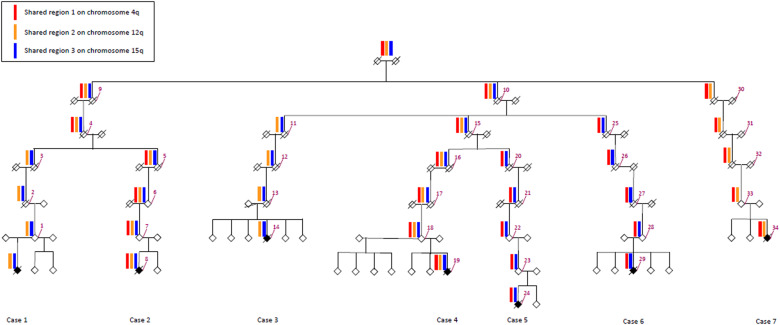
Suicide is the 10th leading cause of death in the United States. Although environment has undeniable impact, evidence suggests that genetic factors play a significant role in completed suicide. We linked a resource of ~ 4500 DNA samples from completed suicides obtained from the Utah Medical Examiner to genealogical records and medical records data available on over eight million individuals. This linking has resulted in the identification of high-risk extended families (7–9 generations) with significant familial risk of completed suicide. Familial aggregation across distant relatives minimizes effects of shared environment, provides more genetically homogeneous risk groups, and magnifies genetic risks through familial repetition. We analyzed Illumina PsychArray genotypes from suicide cases in 43 high-risk families, identifying 30 distinct shared genomic segments with genome-wide evidence (p = 2.02E-07–1.30E-18) of segregation with completed suicide. The 207 genes implicated by the shared regions provide a focused set of genes for further study; 18 have been previously associated with suicide risk. Although PsychArray variants do not represent exhaustive variation within the 207 genes, we investigated these for specific segregation within the high-risk families, and for association of variants with predicted functional impact in ~ 1300 additional Utah suicides unrelated to the discovery families. None of the limited PsychArray variants explained the high-risk family segregation; sequencing of these regions will be needed to discover segregating risk variants, which may be rarer or regulatory. However, additional association tests yielded four significant PsychArray variants (SP110, rs181058279; AGBL2, rs76215382; SUCLA2, rs121908538; APH1B, rs745918508), raising the likelihood that these genes confer risk of completed suicide.
Overview
The claims and statistics of this paper haven’t been checked yet.
Free: it reads the open-access text and checks the first 5 claims that cite a source we can check. Create a free account to check every claim.
Integrity signals
Registry
Cites
Statistics
Figures
Verification
Claims the paper makes
The claims and statistics of this paper haven’t been checked yet.
Free: it reads the open-access text and checks the first 5 claims that cite a source we can check. Create a free account to check every claim.
Claims other papers make about this one
Each is checked against this paper’s own text: does it say what the citing paper says it does?
The source backs part of the claim, not all of it — or backs it for a different population, condition or comparison.
In the citing paper
“overall, candidate-gene-based studies 44,45 and GWAS 30,40,46-49 have not produced consistent results, with genes of interest frequently failing to pass rigorous reproducibility and significance testing.”
From Suicide and suicide risk (2019) · cites this paper as [40]
Experimental — accuracy not yet measuredThe source backs part of the claim, not all of it — or backs it for a different population, condition or comparison.
In the citing paper
“Of note, only a handful of GWAS have included suicide as a primary phenotype 40-42 .”
From Suicide and suicide risk (2019) · cites this paper as [40]
Experimental — accuracy not yet measuredThe cited source says what the claim attributes to it.
In the citing paper
“Suicide deaths are a rare event and, therefore, genome-wide studies (GWAS) generally investigate non-fatal suicidal behaviour; the findings of GWAS have been compiled and published elsewhere 30,40 .”
From Suicide and suicide risk (2019) · cites this paper as [40]
Self-check
Percentages, sums and reported differences re-computed from the paper’s own numbers.
The self-check needs the paper’s full text.
Citations
Cites
Ror2 signaling regulates Golgi structure and transport through IFT20 for tumor invasiveness
Nishita, M., Park, S.-Y., Nishio, T., Kamizaki, K., Wang, Z., Tamada, K., Takumi, T., Hashimoto, R., Otani, H., Pazour, G. J., et al. (2017) · Scientific Reports · doi:10.1038/s41598-016-0028-x · Cited by 15,947
A method and server for predicting damaging missense mutations.
Adzhubei, I. A., Schmidt, S., Peshkin, L., Ramensky, V. E., Gerasimova, A., Bork, P., Kondrashov, A. S., & Sunyaev, S. R. (2010) · Nature Methods · doi:10.1038/nmeth0410-248 · Cited by 13,194 · cited 2×
“To this end, we used the following criteria to select variants: 1) in coding sequence of genes identified by the significant SGS regions, 2) nonsynonymous and predicted to be damaging from either PolyPhen27 or Sift,28 3) minor allele frequency 20% in ExAC European, non-Finnish data.”
Second-generation PLINK: rising to the challenge of larger and richer datasets
Chang, C. C., Chow, C. C., Tellier, L. C., Vattikuti, S., Purcell, S. M., & Lee, J. J. (2015) · Gigascience · doi:10.1186/s13742-015-0047-8 · Cited by 12,709 · cited 5×
“Using PLINK,17 we also removed 17,058 variants with >5% missing calls and 176 variants that failed Hardy-Weinberg equilibrium (p<0.001).”
InfluentialStatistical Methods for Research Workers
(1945) · American Journal of Clinical Pathology · doi:10.1093/ajcp/15.11.552b · Cited by 10,880
Kumar, P., Henikoff, S., & Ng, P. C. (2009) · Nature Protocols · doi:10.1038/nprot.2009.86 · Cited by 6,521 · cited 2×
“To this end, we used the following criteria to select variants: 1) in coding sequence of genes identified by the significant SGS regions, 2) nonsynonymous and predicted to be damaging from either PolyPhen27 or Sift,28 3) minor allele frequency 20% in ExAC European, non-Finnish data.”
GREAT improves functional interpretation of cis-regulatory regions
McLean, C. Y., Bristor, D., Hiller, M., Clarke, S. L., Schaar, B. T., Lowe, C. B., Wenger, A. M., & Bejerano, G. (2010) · Nature Biotechnology · doi:10.1038/nbt.1630 · Cited by 4,502 · cited 2×
“Genes were considered within significant segments for follow-up if coding or regulatory sequence (defined using Genomic Regions Enrichment of Annotations Tool [21]) fell within the shared segment.”
An Expanded View of Complex Traits: From Polygenic to Omnigenic
Boyle, E. A., Li, Y. I., & Pritchard, J. K. (2017) · Cell · doi:10.1016/j.cell.2017.05.038 · Cited by 2,851 · cited 1×
“immediate, potentially interpretable screen of our results in lieu of large-scale sequencing data [26].”
Identification and characterization of the familial adenomatous polyposis coli gene
Groden, J., Thliveris, A., Samowitz, W., Carlson, M., Gelbert, L., Albertsen, H., Joslyn, G., Stevens, J., Spirio, L., Robertson, M., et al. (1991) · Cell · doi:10.1016/0092-8674(81)90021-0 · Cited by 2,796 · cited 1×
“, colon cancer [6], breast cancer [7], and cardiac arrhythmia [8]).”
Piñero, J., Bravo, À., Queralt-Rosinach, N., Gutiérrez-Sacristán, A., Deu-Pons, J., Centeno, E., García-García, J., Sanz, F., & Furlong, L. I. (2017) · Nucleic Acids Research · doi:10.1093/nar/gkw943 · Cited by 2,680 · cited 2×
“As secondary information about the suicide-related genes, we also queried DisGeNET [23, 24] for gene associations or involvement with neuropsychiatric disorders and inflammation owing to their known association with suicide risk [9, 10, 25].”
Limb proportions show developmental plasticity in response to embryo movement
Pollard, A. S., Charlton, B. G., Hutchinson, J. R., Gustafsson, T., McGonnell, I. M., Timmons, J. A., & Pitsillides, A. A. (2017) · Scientific Reports · doi:10.1038/srep41926 · Cited by 2,364
Cited by
Turecki, G., Brent, D. A., Gunnell, D., O’Connor, R. C., Oquendo, M. A., Pirkis, J., & Stanley, B. H. (2019) · Nature Reviews Disease Primers · doi:10.1038/s41572-019-0121-0 · Cited by 1,074
A brain-centric model of suicidal behavior
Mann, J. J., & Rizk, M. M. (2020) · American Journal of Psychiatry · doi:10.1176/appi.ajp.2020.20081224 · Cited by 214
“Combining GWASs with transcriptome data indicates that suicide-related genes are associated with inflammation, the hypothalamic-pituitary-adrenal (HPA) axis, γ-aminobutyric acid (GABA) and glutamate neurotransmission, and neurogenesis (51-56).”
BackgroundSuicide Risk Assessment and Prevention: Challenges and Opportunities
Ryan, E. P., & Oquendo, M. A. (2020) · Focus · doi:10.1176/appi.focus.20200011 · Cited by 133
Genome-Wide Association Study of Suicide Death and Polygenic Prediction of Clinical Antecedents
Docherty, A. R., Shabalin, A. A., DiBlasi, E., Monson, E., Mullins, N., Adkins, D. E., Bacanu, S.-A., Bakian, A. V., Crowell, S., Chen, D., et al. (2020) · American Journal of Psychiatry · doi:10.1176/appi.ajp.2020.19101025 · Cited by 124
Self-citationStrawbridge, R. J., Ward, J., Ferguson, A., Graham, N., Shaw, R. J., Cullen, B., Pearsall, R., Lyall, L. M., Johnston, K. J. A., Niedzwiedz, C. L., et al. (2019) · EBioMedicine · doi:10.1016/j.ebiom.2019.02.005 · Cited by 112
Genome-wide association study meta-analysis of suicide death and suicidal behavior
Li, Q. S., Shabalin, A. A., DiBlasi, E., Gopal, S., Canuso, C. M., FinnGen, I. S. G. C., Palotie, A., Drevets, W. C., Docherty, A. R., & Coon, H. (2023) · Molecular Psychiatry · doi:10.1038/s41380-022-01828-9 · Cited by 68
“Neurexin 1 variants were previously implicated as risk factors for SD [67, 68].”
BackgroundSelf-citationIdentification of potential blood biomarkers associated with suicide in major depressive disorder
Mamdani, F., Weber, M. D., Bunney, B. G., Burke, K. A., Cartagena, P. M., Walsh, D. M. A., Lee, F. S., Barchas, J. D., Schatzberg, A. F., Myers, R., et al. (2022) · Translational Psychiatry · doi:10.1038/s41398-022-01918-w · Cited by 56
“However, the association of the HTR2A (5-Hydroxytryptamine Receptor 2A) gene with death by suicide identified by Coon and colleagues [63] is corroborated by our observation of decreased HTR2A expression in MDD-S blood when compared to controls (Supplementary Table 6).”
ResultOtsuka, I., Akiyama, M., Shirakawa, O., Okazaki, S., Momozawa, Y., Kamatani, Y., Izumi, T., Numata, S., Takahashi, M., Boku, S., et al. (2019) · Neuropsychopharmacology · doi:10.1038/s41386-019-0506-5 · Cited by 47
Glăvan, D., Gheorman, V., Greșiță, A., Hermann, D. M., Udriștoiu, I., & Popa‐Wagner, A. (2021) · Scientific Reports · doi:10.1038/s41598-021-98210-6 · Cited by 52
Genetics and Brain Transcriptomics of Completed Suicide
Punzi, G., Ursini, G., Chen, Q., Radulescu, E., Tao, R., Huuki-Myers, L. A., Carlo, P. D., Collado‐Torres, L., Shin, J. H., Catanesi, R., et al. (2022) · American Journal of Psychiatry · doi:10.1176/appi.ajp.2021.21030299 · Cited by 48
Suicide epigenetics, a review of recent progress
Cheung, S., Woo, J., Maes, M. S., & Zai, C. C. H. (2020) · Journal of Affective Disorders · doi:10.1016/j.jad.2020.01.040 · Cited by 46
Meta-analysis of epigenome-wide association studies of major depressive disorder
Li, Q. S., Morrison, R. L., Turecki, G., & Drevets, W. C. (2022) · Scientific Reports · doi:10.1038/s41598-022-22744-6 · Cited by 44
Self-citationMirza, S. A., Docherty, A. R., Bakian, A. V., Coon, H. H., Soares, J. C., Walss‐Bass, C., & Fries, G. R. (2022) · American Journal of Medical Genetics Part B Neuropsychiatric Genetics · doi:10.1002/ajmg.b.32917 · Cited by 40
Self-citationSokolowski, M., & Wasserman, D. (2020) · European Neuropsychopharmacology · doi:10.1016/j.euroneuro.2020.06.002 · Cited by 29
González‐Castro, T. B., Tovilla‐Zárate, C. A., Mendoza, A. D. G., Juárez‐Rojop, I. E., Nicolini, H., López‐Narváez, M. L., & Martínez‐Magaña, J. J. (2019) · American Journal of Medical Genetics Part B Neuropsychiatric Genetics · doi:10.1002/ajmg.b.32731 · Cited by 29
“Concerning this, the genes selected derived from 18 reports (BaniFatemi et al., 2016; Coon et al., 2018; Erlangsen et al., 2018; Galfalvy et al., 2013, 2015; Gross et al., 2015; Kimbrel et al., 2018; Levey et al., 2019; Mullins et al., 2014; Perlis et al., 2010; Pulay & Rethelyi, 2016; Schosser et al., 2011; Sokolowsk…”
BackgroundMethodAssociation of Comorbid Behavioral and Medical Conditions With Cannabis Use Disorder in Pregnancy
Meinhofer, A., Hinde, J. M., Keyes, K. M., & Lugo-Candelas, C. I. (2021) · JAMA Psychiatry · doi:10.1001/jamapsychiatry.2021.3193 · Cited by 28
Vasupanrajit, A., Maes, M. H. J., Jirakran, K., & Tunvirachaisakul, C. (2024) · Psychology Research and Behavior Management · doi:10.2147/prbm.s458257 · Cited by 24
“63 Therefore, it is probable that the existence of mental disorders, regardless of their genetic predisposition, contributed to domestic violence and parental divorce, as well as to the exacerbation of depression symptoms such as suicidal ideation, brooding, insomnia, and overall severity of the…”
Familial Clustering of Erosive Hand Osteoarthritis in a Large Statewide Cohort
Kazmers, N. H., Meeks, H., Novak, K. A., Yu, Z., Fulde, G., Thomas, J. L., Barker, T., & Jurynec, M. J. (2020) · Arthritis & Rheumatology · doi:10.1002/art.41520 · Cited by 23
Self-citationRare protein‐coding variants implicate genes involved in risk of suicide death
DiBlasi, E., Shabalin, A. A., Monson, E. T., Keeshin, B. R., Bakian, A. V., Kirby, A. V., Ferris, E., Chen, D., William, N., Gaj, E., et al. (2021) · American Journal of Medical Genetics Part B Neuropsychiatric Genetics · doi:10.1002/ajmg.b.32861 · Cited by 20
“SNAPC1 was also identified in a genome-wide significant region in extended Utah families enriched for suicide deaths (Coon et al., 2018).”
BackgroundSelf-citationRisks of suicide among family members of suicide victims: a nationwide sample of South Korea.
Jang, J., Park, S. Y., Kim, Y. Y., Kim, E. J., Lee, G., Seo, J., Na, E. J., Park, J.-Y., & Jeon, H. J. (2022) · Frontiers in Psychiatry · doi:10.3389/fpsyt.2022.995834 · Cited by 18
“Recently, genotypes related to suicide have been revealed (42).”
BackgroundPsychosocial determinants of adolescent suicide: A national survey
Qaddoura, N., Dardas, L. A., & Pan, W. (2022) · Archives of Psychiatric Nursing · doi:10.1016/j.apnu.2022.04.004 · Cited by 19
Ethical implications of using biobanks and population databases for genetic suicide research
Shade, J., Coon, H. H., & Docherty, A. R. (2019) · American Journal of Medical Genetics Part B Neuropsychiatric Genetics · doi:10.1002/ajmg.b.32718 · Cited by 19
“This type of analysis is useful when combined with population database records including familial his- tory and medical records (Coon et al., 2018).”
MethodSelf-citationGibbons, R. (2023) · BJPsych Bulletin · doi:10.1192/bjb.2023.75 · Cited by 19
Coon, H. H., Shabalin, A. A., Bakian, A. V., DiBlasi, E., Monson, E. T., Kirby, A. V., Chen, D., Fraser, A. M., Yu, Z., Staley, M., et al. (2022) · American Journal of Medical Genetics Part B Neuropsychiatric Genetics · doi:10.1002/ajmg.b.32890 · Cited by 16
“Recent progress has been made in understanding genetic risks that may contribute to suicidal behavior and suicide death (Campos et al., 2020; Coon et al., 2020; Docherty et al., 2020, 2021; Erlangsen et al., 2018; Kious et al., 2021; Levey et al., 2019; Mullins et al., 2019; Otsuka et al., 2019; Ruderfer et al., 2019;…”
BackgroundMethodSelf-citationNeurexin 1 variants as risk factors for suicide death
William, N., Reißner, C., Sargent, R., Darlington, T. M., DiBlasi, E., Li, Q. S., Keeshin, B. R., Callor, W. B., Ferris, E., Jerominski, L., et al. (2021) · Molecular Psychiatry · doi:10.1038/s41380-021-01190-2 · Cited by 16
Self-citationGenome-wide association study of suicide death and polygenic prediction of clinical antecedentsPreprint
Docherty, A. R., Shabalin, A. A., DiBlasi, E., Monson, E. T., Mullins, N., Adkins, D. E., Bacanu, S., Bakian, A. V., Crowell, S. E., Darlington, T. M., et al. (2017) · bioRxiv (Cold Spring Harbor Laboratory) · doi:10.1101/234674 · Cited by 15
“Suicide death is a complex behavioral phenotype that, like its associated clinical antecedents including schizophrenia and depression, reflects a complex, and likely highly polygenic, etiology.(5,7) Currently, the scientific literature lacks robust examination of suicide death in relation to molecular genetic risk for…”
BackgroundSelf-citationKious, B. M., Docherty, A. R., Botkin, J. R., Brown, T. R., Francis, L. P., Gray, D. D., Keeshin, B. R., Stark, L. A., Witte, B., & Coon, H. H. (2020) · Genetics in Medicine · doi:10.1038/s41436-020-00982-1 · Cited by 14
Self-citationGenome-wide association study of suicidal behaviour severity in mood disorders
Zai, C. C. H., Fabbri, C., Hosang, G. M., Zhang, R. S., Koyama, E., Luca, V. D., Tiwari, A. K., King, N. A., Strauss, J., Jones, I. R., et al. (2021) · The World Journal of Biological Psychiatry · doi:10.1080/15622975.2021.1907711 · Cited by 14
“Among GWAS of SIB conducted (Bani-Fatemi et al. 2016; Coon et al. 2018; Kimbrel et al. 2018; Brick et al. 2019), more recent GWASs of suicide attempt have identified additional significant markers.”
BackgroundOvers, B. J., Roberts, G. M. P., Ridgway, K., Toma, C., Hadzi‐Pavlovic, D., Wilcox, H. C., Hulvershorn, L. A., Nürnberger, J. I., Schofield, P. R., Mitchell, P. B., et al. (2021) · American Journal of Medical Genetics Part B Neuropsychiatric Genetics · doi:10.1002/ajmg.b.32879 · Cited by 12
A population-wide analysis of the familial risk of suicide in Utah, USA
Bakian, A. V., Chen, D., Zhang, C., Hanson, H. A., Docherty, A. R., Keeshin, B. R., Gray, D., Smith, K. R., VanDerslice, J. A., Yu, D., et al. (2021) · Psychological Medicine · doi:10.1017/s0033291721003020 · Cited by 12
“Further, the majority of gene-focused suicide studies have been conducted in individuals exhibiting suicidal behavior and not in suicide decedents (Coon et al., 2020) (but see Coon et al.”
BackgroundSelf-citationNiculescu, A. B., & Le-Niculescu, H. (2019) · Molecular Psychiatry · doi:10.1038/s41380-019-0465-6 · Cited by 12
“Since our last publication in 2017, a series of 4 GWAS of suicidality (ideation, attempts) [4–7], as well as a family based genetic study of suicide completers [8] and a family based genetic study in suicide attempters [9], have been published, in Molecular Psychiatry and other journals.”
BackgroundBrief Report: Genetic Links Between Autism and Suicidal Behavior—A Preliminary Investigation
DiBlasi, E., Kirby, A. V., Gaj, E., Docherty, A. R., Keeshin, B. R., Bakian, A. V., & Coon, H. H. (2020) · Journal of Autism and Developmental Disorders · doi:10.1007/s10803-020-04419-1 · Cited by 11
Self-citationSuicide and Psychosis: Results From a Population-Based Cohort of Suicide Death (N= 4380)
Docherty, A. R., Bakian, A. V., DiBlasi, E., Shabalin, A. A., Chen, D., Keeshin, B. R., Monson, E. T., Christensen, E. D., Li, Q. S., Gray, D., et al. (2021) · Schizophrenia Bulletin · doi:10.1093/schbul/sbab113 · Cited by 10
Self-citation‘Omics’ of suicidal behaviour: A path to personalised psychiatry
Kouter, K., & Paska, A. V. (2021) · World Journal of Psychiatry · doi:10.5498/wjp.v11.i10.774 · Cited by 11
The Role of the Lateral Habenula in Suicide: A Call for Further Exploration
Marks, R. B., Wee, J. Y., Jacobson, S. V., Hashimoto, K., O’Connell, K. L., Golden, S. A., Baker, P. M., & Law, K. C. (2022) · Frontiers in Behavioral Neuroscience · doi:10.3389/fnbeh.2022.812952 · Cited by 11
“Results from rodent model research have found that inactivation in the LHb influenced contextual memory deficits and enhanced the fear response to a conditioned stimulus (Durieux et al., 2020).”
BackgroundChai, Z. C., Yi, V. H. J., Yuxuan, T., Shen, L. W., Selvam, P., Saffari, N., Gannon, J. L., & Motevalli, S. (2022) · International Journal of Academic Research in Business and Social Sciences · doi:10.6007/ijarbss/v12-i7/13974 · Cited by 10
Exploring genetic variants in obsessive compulsive disorder severity: A GWAS approach
Alemany-Navarro, M., Cruz, R., Real, E., Segalàs, C., Bertolín, S., Baenas, I., Domènech, L., Rabionet, R., Carracedo, Á., Menchón, J. M., et al. (2020) · Journal of Affective Disorders · doi:10.1016/j.jad.2020.01.161 · Cited by 8
Boldrini, M., & Mann, J. J. (2022) · Elsevier eBooks · doi:10.1016/b978-0-323-85654-6.00039-3 · Cited by 9
Shared genomic segments in high‐risk multigenerational pedigrees with gastroschisis
Feldkamp, M. L., Krikov, S. V., Gardner, J., Madsen, M., Darlington, T. M., Sargent, R., & Camp, N. J. (2019) · Birth Defects Research · doi:10.1002/bdr2.1567 · Cited by 7
Self-citationRadhakrishna, U., Radhakrishnan, R., Uppala, L. V., Muvvala, S. B., Prajapati, J., Rawal, R., Bahado-Singh, R. O., & Sadhasivam, S. (2024) · Frontiers in Neuroscience · doi:10.3389/fnins.2024.1442915 · Cited by 6
Cytokine gene polymorphisms and suicide risk in an Indian ancestral population: A case-control study
Kaushik, R., Nayak, B., Patra, B. N., Docherty, A. R., Shabalin, A. A., & Behera, C. (2024) · The World Journal of Biological Psychiatry · doi:10.1080/15622975.2024.2410492 · Cited by 6
Self-citationRozanov, V. A., & Mazo, G. E. (2024) · Consortium Psychiatricum · doi:10.17816/cp15495 · Cited by 5
Pursuing the elusive biosignature for suicide: a decennial update
Barzilay, R., Sudol, K., Daskalakis, N. P., Dupont, M. B., & Oquendo, M. A. (2026) · Molecular Psychiatry · doi:10.1038/s41380-026-03507-5 · Cited by 4
“A notable methodological trend is the avaliability of data-driven “ omics ” analyses of the genome [108 – 112], transcriptome [52, 113] and methylome [37, 96, 114] of suicide decedents, as opposed to molecular target studies that test the role of a speci fi c gene or protein.”
Radhakrishna, U., Radhakrishnan, R., Uppala, L. V., Trivedi, T. S., Prajapati, J., Rawal, R., Muvvala, S. B., Bahado-Singh, R. O., & Sadhasivam, S. (2025) · Frontiers in Pain Research · doi:10.3389/fpain.2025.1497801 · Cited by 4
Epigenetics and immunology: Under-recognized aspects of suicidality
Kouter, K., Šmon, J., & Paska, A. V. (2025) · World Journal of Psychiatry · doi:10.5498/wjp.v15.i9.107726 · Cited by 4
Lamichhane, D. K., VanDerslice, J. A., Lurmann, F. W., Pavlovic, N., Staley, M. J., Tharp, D., Peluso, A., Byrwa-Hill, B. M., Zhang, Y., Docherty, A. R., et al. (2026) · Environment International · doi:10.1016/j.envint.2026.110152 · Cited by 4
“The UPDB is an unprecedented data resource that houses or links to several administrative datasets for Utah residents including vital records, genealogical records, and health billing codes (Smith and Fraser, 2018).”
InfluentialSelf-citationGarrett, M. E., Dennis, M. F., Bourassa, K. J., Beckham, J. C., Kimbrel, N. A., & Ashley‐Koch, A. E. (2025) · Journal of Affective Disorders · doi:10.1016/j.jad.2025.120301 · Cited by 3
Wallace, G. T., Conner, B. T., & Shillington, A. M. (2020) · Clinical Psychology & Psychotherapy · doi:10.1002/cpp.2530 · Cited by 5
The Relationship Between CYP46A1 Polymorphism and Suicide Risk: A Preliminary Investigation
Serna-Rodríguez, M. F., Cienfuegos-Jiménez, O., Cerda-Flores, R. M., Marino-Martínez, I. A., Hernández-Ordoñez, M. A., de la Barquera, J. A. O.-S., & Pérez‐Maya, A. A. (2024) · NeuroMolecular Medicine · doi:10.1007/s12017-024-08779-0 · Cited by 2
“Our findings contribute to the growing body of evidence (family, twin, and adoption studies) that underscores the genetic component of suicidal behavior, which may account for up to 50% of the risk (Coon et al., 2018; Dwivedi, 2012; Supriyanto et al., 2011).”
Lee, K. S., Lee, T., Kim, M., Ignatova, E., Ban, H., Sung, M. K., Kim, Y., Kim, Y., Han, J., & Choi, J. K. (2025) · Scientific Reports · doi:10.1038/s41598-024-83839-w · Cited by 3
Wang, T., Li, X., Dai, Z., Shao, J., Zhang, W., Yan, R., Chen, Z., Xiong, T., Yao, Z., & Lü, Q. (2025) · Biological Psychiatry Cognitive Neuroscience and Neuroimaging · doi:10.1016/j.bpsc.2025.04.011 · Cited by 5
Neurobiology and the genetics of suicide
Wasserman, D., Wasserman, J., Rujescu, D., & Sokolowski, M. (2021) · doi:10.1093/med/9780198834441.003.0023 · Cited by 2
Intragenic deletions from whole genome sequencing of 1054 suicide deathsPreprint
DiBlasi, E., Shabalin, A. A., Nicholas, T. J., Monson, E. T., Ferris, E., Yefimov, L., Han, S., Baird, L. M., Callor, W. B., Staley, M., et al. (2025) · medRxiv · doi:10.1101/2025.02.28.25323104 · Cited by 2
“High quality DNA was extracted from whole blood as previously described (Coon et al., 2020).”
Self-citationDistinct patterns of de novo coding variants contribute to Tourette Syndrome etiologyPreprint
Zhan, L., Yu, D., Ivankovic, F., Niarchou, M., Domènech, L., Barr, C. L., Benarroch, F., Budman, C. L., Cath, D. C., Freimer, N. B., et al. (2025) · bioRxiv (Cold Spring Harbor Laboratory) · doi:10.1101/2025.11.04.686570 · Cited by 2
Dóra, F., Hajdu, T., Renner, É., Paál, K., Alpár, A., Palkovits, M., Chinopoulos, C., & Dobolyi, Á. (2024) · Translational Psychiatry · doi:10.1038/s41398-024-03137-x · Cited by 1
CRISPR as a Potential Technique to Reduce Suicide Risk
Zamora, H., & Cornejo, J. (2021) · Journal of Student Research · doi:10.47611/jsrhs.v10i3.2240
Estudio post-mortem de las alteraciones en la expresión de RNA en el cerebro de pacientes suicidasPreprint
Cabrera‐Mendoza, B. (2020) · Thesis Commons (OSF Preprints) · doi:10.31237/osf.io/cmvjb
Serna-Rodríguez, M. F., Cienfuegos-Jiménez, O., Cerda-Flores, R. M., Marino-Martínez, I. A., Hernández-Ordoñez, M. A., de la Barquera, J. A. O.-S., & Pérez‐Maya, A. A. (2023) · Preprints.org · doi:10.20944/preprints202301.0405.v1
Goldstein, M. A., & Goldstein, M. C. (2024) · Oxford University Press eBooks · doi:10.1093/med/9780197640739.003.0008
Amoafo, L., Bakian, A. V., Xu, Y., & Zhang, Y. (2024) · ISEE Conference Abstracts · doi:10.1289/isee.2024.1074
Self-citationPedigree analysis of suicidal behaviour accumulation within family
Хусаинова, А. А., Kozlov, V. A., & Голенков, А. В. (2024) · Суицидология · doi:10.32878/suiciderus.24-15-03(56)-74-92
Neurobiological footprints of suicidal behavior: potential role of proteomics and gene actions
Kundu, S. R., & Sarkar, J. (2025) · Elsevier eBooks · doi:10.1016/b978-0-443-33112-1.00012-4
Neurobiological footprints of suicide: in relation to molecular genetics, and functional genomics
Kundu, S. R., & Sarkar, J. (2025) · Elsevier eBooks · doi:10.1016/b978-0-443-33112-1.00011-2
Vasupanrajit, A., Maes, M., Jirakran, K., & Tunvirachaisakul, C. (2024) · medRxiv · doi:10.1101/2024.01.04.24300880
“63 Therefore, it is probable that the existence of mental disorders, regardless of their genetic predisposition, contributed to domestic violence and parental divorce, as well as to the exacerbation of depression symptoms such as suicidal ideation, brooding, insomnia, and overall severity of the…”
BackgroundIntergenerational Influence of Mitochondrial DNA on Suicide Risk
Good, R. (2024) · WakeSpace Scholarship (Wake Forest University)
Suicídio e ideação suicida: um olhar psicossocial no contexto da segurança pública
de Oliveira, E. F. S. (2023) · LA Referencia (Red Federada de Repositorios Institucionales de Publicaciones Científicas)
Analyzing the general suicide landscape of the United States
Chen, X. M., & Holdai, V. (2026) · Journal of Public Health · doi:10.1007/s10389-026-02763-7
Intragenic deletions from whole genome sequencing of 1054 suicide deathsPreprint
Coon, H. H., DiBlasi, E., Nicholas, T. J., Monson, E. T., Ferris, E., Shabalin, A. A., Yefimov, L., Keeshin, B. R., Bakian, A. V., Han, S., et al. (2026) · Research Square · doi:10.21203/rs.3.rs-9942744/v1
“27 Linking identifiers from suicide deaths were securely transferred by the OME to staff at the Utah Population Database (UPDB; https://uofuhealth.utah.edu/huntsman/utah-population-database).”
Self-citation
Metadata
- Authors
- Coon, H., Darlington, T. M., DiBlasi, E., Callor, W. B., Ferris, E., Fraser, A., Yu, Z., William, N., Das, S. C., Crowell, S. E., Chen, D., Anderson, J. S., Klein, M., Jerominski, L., Cannon, D., Shabalin, A., Docherty, A., Williams, M., Smith, K. R., Keeshin, B., Bakian, A. V., Christensen, E., Li, Q. S., Camp, N. J., & Gray, D.
- Affiliations
- University of Utah (US)
- Utah Department of Health (US)
- Huntsman Cancer Institute (US)
- Intermountain Healthcare (US)
- Janssen Research & Development (United States) (US)
- Corresponding author
- Coon, Hilary
- ORCID
- Coon, Hilary
- Darlington, Todd M.
- DiBlasi, Emily
- Callor, W. Brandon
- Ferris, Elliott
- Fraser, Alison
- Yu, Zhe
- William, Nancy
- Das, Sujan C.
- Crowell, Sheila E.
- Chen, Danli
- Shabalin, Andrey
- Docherty, Anna
- Williams, Megan
- Smith, Ken R.
- Keeshin, Brooks
- Bakian, Amanda V.
- Christensen, Erik
- Li, Qingqin S.
- Camp, Nicola J.
- Gray, Douglas
- Venue
- Molecular Psychiatry
- Published
- 2018-10-23
- Volume
- 25
- Issue
- 11
- Pages
- 3077-3090
- ISSN
- 1359-4184 (ISSN-L)
- 1476-5578
- PMC
- PMC6478563
- OpenAlex
- W2951551904
- Cited by
- 64
- References
- 78
- Citations by year
- 2026: 4 · 2025: 8 · 2024: 9 · 2023: 2 · 2022: 11 · 2021: 11 · 2020: 11 · 2019: 7
- FWCI
- 8.50
- Type
- journal article
- Language
- en
- Open access
- hybrid
- doi.org
- Licence
- cc-by
- creativecommons.org/licenses/by/4.0 (tdm)
- creativecommons.org/licenses/by/4.0 (vor)
- Locations
- Molecular Psychiatry (publishedVersion, cc-by)
- bioRxiv (Cold Spring Harbor Laboratory) (acceptedVersion, cc-by-nd)
- PubMed Central (publishedVersion, cc-by)
- PubMed (publishedVersion)
- Funders
- American Foundation for Suicide Prevention
- University of Utah
- Deutsches Krebsforschungszentrum
- Huntsman Cancer Institute
- National Institutes of Health (UL1TR002538)
- National Institute of Mental Health (R01MH123619, K01MH093731, K01MH109765, R01MH099134)
- National Center for Research Resources (M01-RR025764, UL1RR025764)
- National Center for Advancing Translational Sciences
- Topics
- Social Sciences › Psychology › Clinical Psychology › Suicide and Self-Harm Studies
- Life Sciences › Biochemistry, Genetics and Molecular Biology › Genetics › Genetic Associations and Epidemiology
- Life Sciences › Neuroscience › Cellular and Molecular Neuroscience › Neurotransmitter Receptor Influence on Behavior
- Keywords
- suicide mortality, genetic risk factors, familial aggregation, segregation analysis, SP110, SUCLA2
- MeSH terms
- Suicide, Completed, Adult, Female, Genotype, Humans, Male, Utah, Genetic Predisposition to Disease, Genome-Wide Association Study
About these checks
Registry, retraction, Cites and statistics results are computed, not judged, with one exception: a printed reference that no index lists is read once by a model before it counts as a citation error. Claims are extracted by a model and kept only when their quote appears verbatim in the text; each cited source is then checked, with a model’s help, for whether it says what the claim relies on. Those verdicts can be wrong — read the claim’s quote and the cited source before relying on one.
Statistics and arithmetic are recomputed, not judged.
Confidence bands are shown only for fields calibrated on our annotated test set. None is calibrated yet, so no band is shown.
What counts as a claim ›How we measure confidence ›How we check this ›
Are you an author, or do you see a problem with this page? Request a review
Data sources
Bibliographic data: Semantic Scholar, OpenAlex, Crossref.
Contains information from the Semantic Scholar Academic Graph Datasets, made available under the ODC Attribution License (ODC-BY 1.0).
Semantic Scholar’s data is described in: Kinney, R., et al. (2023). The Semantic Scholar Open Data Platform. arXiv:2301.10140.
