

Mood stabilizers and/or antipsychotics for bipolar disorder in the maintenance phase: a systematic review and network meta-analysis of randomized controlled trials
Open accessThe DOI matches its Crossref record; 66 of the 67 references it cites were found in a registry or an index.
Abstract
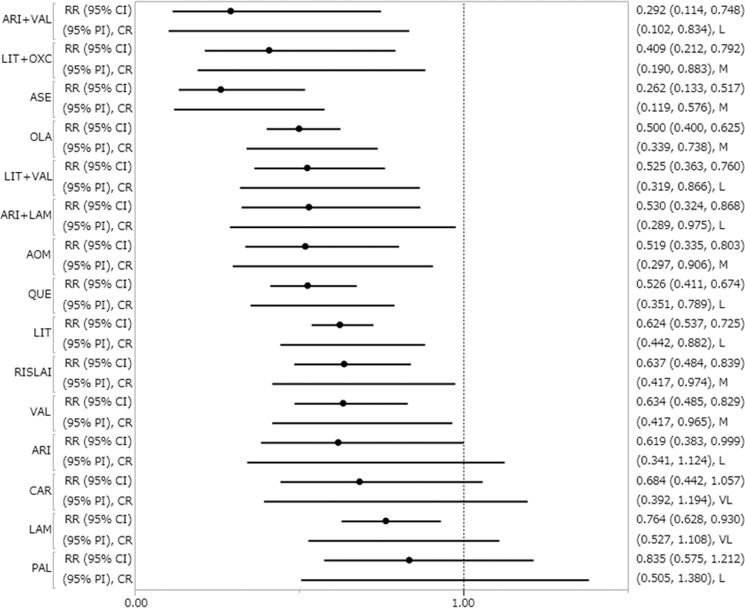
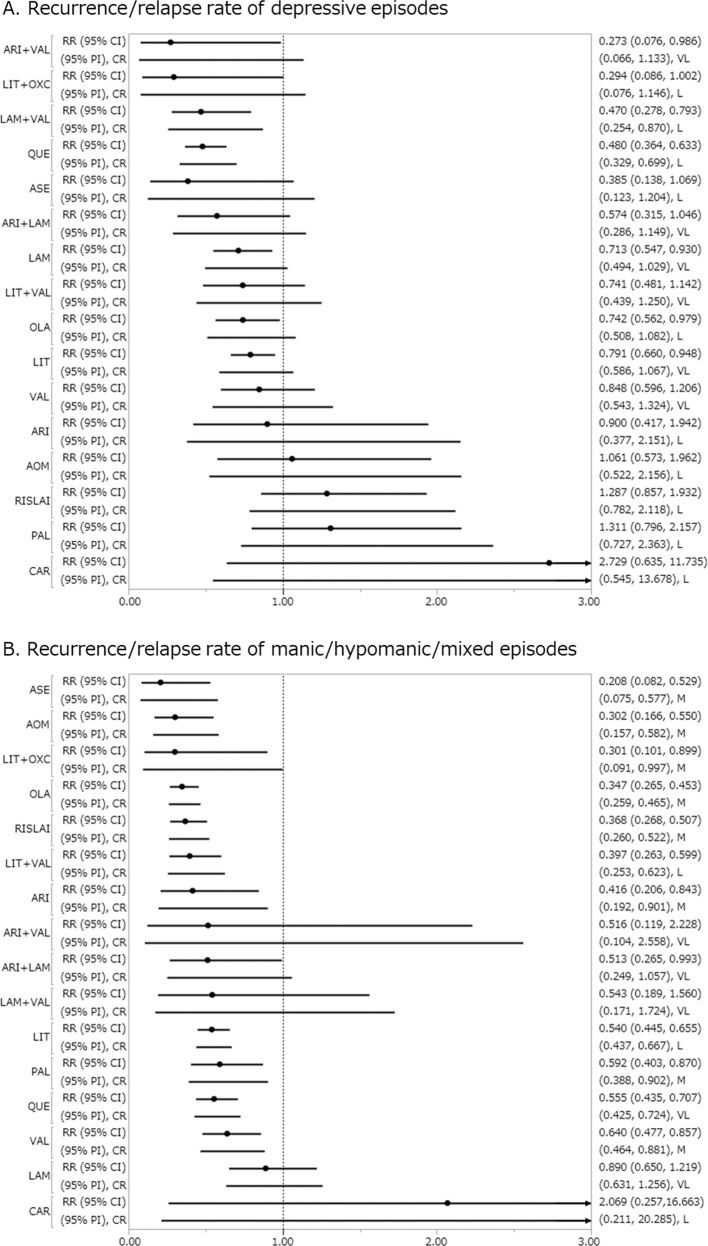
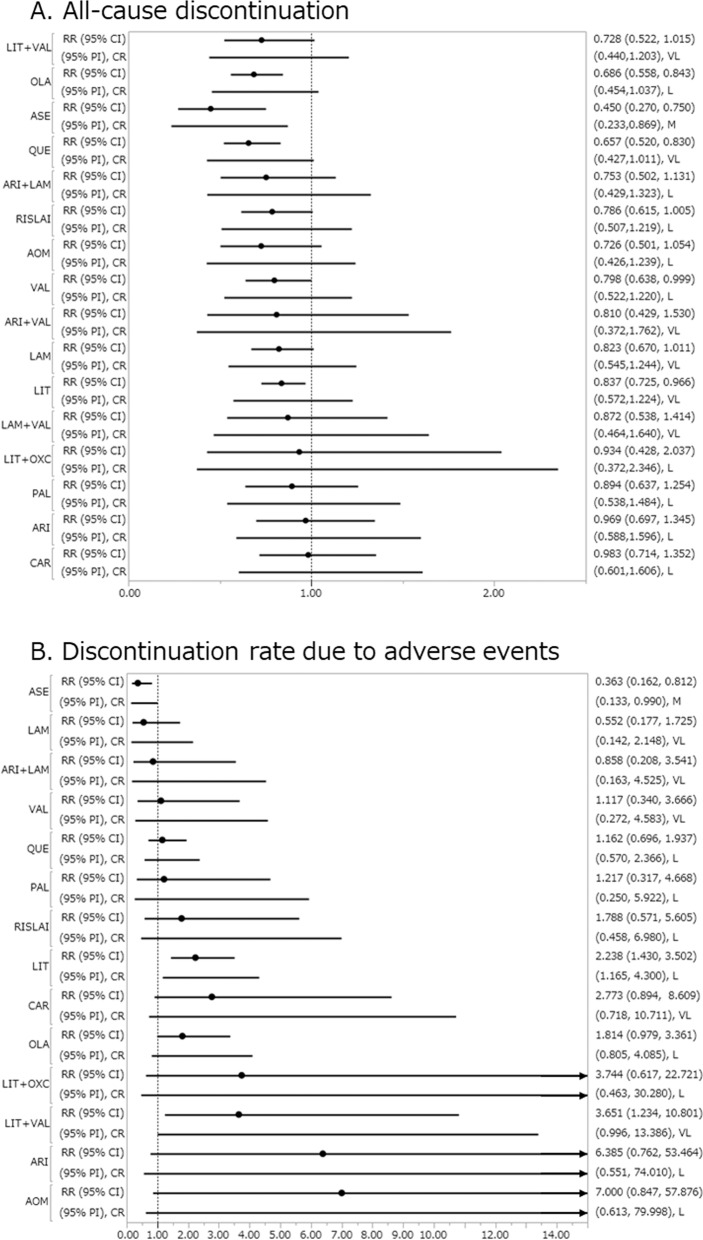
We searched Embase, PubMed, and CENTRAL from inception until 22 May 2020 to investigate which antipsychotics and/or mood stabilizers are better for patients with bipolar disorder in the maintenance phase. We performed two categorical network meta-analyses. The first included monotherapy studies and studies in which the two drugs used were specified (i.e., aripiprazole, aripiprazole once monthly, aripiprazole+lamotrigine, aripiprazole+valproate, asenapine, carbamazepine, lamotrigine, lamotrigine+valproate, lithium, lithium+oxcarbazepine, lithium+valproate, olanzapine, paliperidone, quetiapine, risperidone long-acting injection, valproate, and placebo). The second included studies on second-generation antipsychotic combination therapies (SGAs) (i.e., aripiprazole, lurasidone, olanzapine, quetiapine, and ziprasidone) with lithium or valproate (LIT/VAL) compared with placebo with LIT/VAL. Outcomes were recurrence/relapse rate of any mood episode (RR-any, primary), depressive episode (RR-dep) and manic/hypomanic/mixed episode (RR-mania), discontinuation, mortality, and individual adverse events. Risk ratios and 95% credible interval were calculated. Forty-one randomized controlled trials were identified ( n = 9821; mean study duration, 70.5 ± 36.6 weeks; percent female, 54.1%; mean age, 40.7 years). All active treatments other than carbamazepine, lamotrigine+valproate (no data) and paliperidone outperformed the placebo for RR-any. Aripiprazole+valproate, lamotrigine, lamotrigine+valproate, lithium, olanzapine, and quetiapine outperformed placebo for RR-dep. All active treatments, other than aripiprazole+valproate, carbamazepine, lamotrigine, and lamotrigine+valproate, outperformed placebo for RR-mania. Asenapine, lithium, olanzapine, quetiapine, and valproate outperformed placebo for all-cause discontinuation. All SGAs+LIT/VALs other than olanzapine+LIT/VAL outperformed placebo+LIT/VAL for RR-any. Lurasidone+LIT/VAL and quetiapine+LIT/VAL outperformed placebo+LIT/VAL for RR-dep. Aripiprazole+LIT/VAL and quetiapine+LIT/VAL outperformed placebo+LIT/VAL for RR-mania. Lurasidone+LIT/VAL and quetiapine+LIT/VAL outperformed placebo+LIT/VAL for all-cause discontinuation. Treatment efficacy, tolerability, and safety profiles differed among treatments.
Overview
The claims and statistics of this paper haven’t been checked yet.
Free: it reads the open-access text and checks the first 5 claims that cite a source we can check. Create a free account to check every claim.
Integrity signals
Registry
Cites
Statistics
Figures
Verification
Claims the paper makes
The claims and statistics of this paper haven’t been checked yet.
Free: it reads the open-access text and checks the first 5 claims that cite a source we can check. Create a free account to check every claim.
Claims other papers make about this one
Each is checked against this paper’s own text: does it say what the citing paper says it does?
The cited source says what the claim attributes to it.
In the citing paper
“Supportively, a recent network metaanalysis on maintenance treatment of BD reported lamotrigine and valproate in combination with each other and other drugs to reduce recurrence or relapse of depressive episodes.44”
From Comparative efficacy and tolerability of pharmacological interventions for acute bipolar depression in adults: a systematic review and network meta-analysis (2023) · cites this paper as [44]
Self-check
Percentages, sums and reported differences re-computed from the paper’s own numbers.
The self-check needs the paper’s full text.
Citations
Cites
Diagnostic and Statistical Manual of Mental Disorders
American Psychiatric Association (2013) · doi:10.1176/appi.books.9780890425596 · Cited by 116,369
Diagnostic and Statistical Manual of Mental Disorders
Williams, J. B. W., & First, M. (2013) · Encyclopedia of Social Work · doi:10.1093/acrefore/9780199975839.013.104 · Cited by 109,519
Preferred Reporting Items for Systematic Reviews and Meta-Analyses: the PRISMA statement
Moher, D., Liberati, A., Tetzlaff, J., Altman, D. G., & for the PRISMA Group (2009) · BMJ · doi:10.1136/bmj.b2535 · Cited by 83,823
Preferred reporting items for systematic reviews and meta-analyses: the PRISMA Statement.
(2009) · PubMed Central · Cited by 44,859
Meta-analysis in clinical trials
DerSimonian, R., & Laird, N. (1986) · Controlled Clinical Trials · doi:10.1016/0197-2456(86)90046-2 · Cited by 39,552 · cited 1×
“A Bayesian NMA based on random-effects models [10] was conducted using the netmeta package [11].”
MethodCochrane Handbook for Systematic Reviews of Interventions
(2019) · doi:10.1002/9781119536604 · Cited by 14,828
Cumpston, M., Li, T., Page, M. J., Chandler, J., Welch, V. A., Higgins, J. P., & Thomas, J. (2019) · Cochrane Database of Systematic Reviews · doi:10.1002/14651858.ed000142 · Cited by 7,218
Yatham, L., & Malhi, G. (2011) · Oxford University Press eBooks · doi:10.1093/med/9780199562305.001.0001 · Cited by 3,506
Yatham, L. N., Kennedy, S. H., Parikh, S. V., Schaffer, A., Bond, D. J., Frey, B. N., Sharma, V., Goldstein, B. I., Rej, S., Beaulieu, S., et al. (2018) · Bipolar Disorders · doi:10.1111/bdi.12609 · Cited by 1,852
Grande, I., Berk, M., Birmaher, B., & Vieta, E. (2016) · The Lancet · doi:10.1016/s0140-6736(15)00241-x · Cited by 1,710
Research works printed but not linked: 1
- Koyama T Higuchi T Yamawaki S Kanba S Terao T Shinohara A Study SCA104779, an evaluation of BW430C (lamotrigine) versus placebo in the prevention of mood episodes in bipolar I disorder patients Jpn J Clin Psychiatry 2011 40 369 83
Cited by
Leichsenring, F., Steinert, C., Rabung, S., & Ioannidis, J. P. A. (2022) · World Psychiatry · doi:10.1002/wps.20941 · Cited by 485
Bipolar disorders: an update on critical aspects
Oliva, V., Fico, G., Prisco, M. D., Gonda, X., Rosa, A. R., & Vieta, E. (2024) · The Lancet Regional Health - Europe · doi:10.1016/j.lanepe.2024.101135 · Cited by 229
Kishi, T., Ikuta, T., Matsuda, Y., Sakuma, K., Okuya, M., Nomura, I., Hatano, M., & Iwata, N. (2022) · Molecular Psychiatry · doi:10.1038/s41380-021-01334-4 · Cited by 161
“A recent network meta-analysis of BD in the maintenance phase showed that these SGAs prevent the recurrence/relapse of any mood episode [33].”
MethodSelf-citationOrtega, M. A., Álvarez-Mon, M. Á., Montero, C. G., Fraile‐Μartinez, O., Monserrat, J., Martinez-Rozas, L., Rodríguez–Jiménez, R., Álvarez‐Mon, M., & Lahera, G. (2023) · Molecular Psychiatry · doi:10.1038/s41380-023-01964-w · Cited by 152
Leucht, S., Priller, J., & Davis, J. M. (2024) · American Journal of Psychiatry · doi:10.1176/appi.ajp.20240738 · Cited by 117
Nestsiarovich, A., Gaudiot, C., Baldessarini, R. J., Vieta, E., Zhu, Y., & Tohen, M. F. (2021) · European Neuropsychopharmacology · doi:10.1016/j.euroneuro.2021.08.264 · Cited by 107
Yildiz, A., Siafis, S., Mavridis, D., Vieta, E., & Leucht, S. (2023) · The Lancet Psychiatry · doi:10.1016/s2215-0366(23)00199-2 · Cited by 104
Patterns of pharmacotherapy for bipolar disorder: A GBC survey
Singh, B., Yocum, A. K., Strawbridge, R., Burdick, K. E., Millett, C. E., Peters, A. T., Sperry, S. H., Fico, G., Vieta, E., Verdolini, N., et al. (2023) · Bipolar Disorders · doi:10.1111/bdi.13366 · Cited by 85
Theta burst stimulation for depression: a systematic review and network and pairwise meta-analysis
Kishi, T., Ikuta, T., Sakuma, K., Hatano, M., Matsuda, Y., Wilkening, J., Goya-Maldonado, R., Tik, M., Williams, N. R., Kito, S., et al. (2024) · Molecular Psychiatry · doi:10.1038/s41380-024-02630-5 · Cited by 74
Self-citationNew Advances in the Pharmacology and Toxicology of Lithium: A Neurobiologically Oriented Overview
Bortolozzi, A. A., Fico, G., Berk, M., Solmi, M., Fornaro, M., Quevedo, J., Zarate, C. A., Kessing, L. V., Vieta, E., & Carvalho, A. F. (2024) · Pharmacological Reviews · doi:10.1124/pharmrev.120.000007 · Cited by 74
Bipolar depression: a review of treatment options
Levenberg, K., & Cordner, Z. A. (2022) · General Psychiatry · doi:10.1136/gpsych-2022-100760 · Cited by 69
The treatment of depression — searching for new ideas
Stachowicz, K., & Sowa-Kućma, M. (2022) · Frontiers in Pharmacology · doi:10.3389/fphar.2022.988648 · Cited by 66
“effective in combination therapy; however, they still have not overcome the effectiveness of combination therapy with lithium (Vázquez et al., 2021; Kishi et al., 2021).”
BackgroundBauer, M. S. (2022) · Annals of Internal Medicine · doi:10.7326/aitc202207190 · Cited by 61
Pharmacological treatments for psychotic depression: a systematic review and network meta-analysis
Oliva, V., Possidente, C., Prisco, M. D., Fico, G., Anmella, G., Hidalgo‐Mazzei, D., Murru, A., Fanelli, G., Fabbri, C., Fornaro, M., et al. (2024) · The Lancet Psychiatry · doi:10.1016/s2215-0366(24)00006-3 · Cited by 62
Anmella, G., Faurholt‐Jepsen, M., Hidalgo‐Mazzei, D., Raduà, J., Passos, I. C., Kapczinski, F. P., Minuzzi, L., Alda, M., Meier, S. M., Hájek, T., et al. (2022) · Bipolar Disorders · doi:10.1111/bdi.13243 · Cited by 60
Application of Antipsychotic Drugs in Mood Disorders
RYBAKOWSKI, J. K. (2023) · Brain Sciences · doi:10.3390/brainsci13030414 · Cited by 57
“[83] performed meta-analyses of the prophylactic efficacy in bipolar disorder, including SGAs and TGAs.”
Therapeutic Drug Monitoring in Psychiatry: Enhancing Treatment Precision and Patient Outcomes
Biso, L., Aringhieri, S., Carli, M., Scarselli, M., & Longoni, B. (2024) · Pharmaceuticals · doi:10.3390/ph17050642 · Cited by 53
“It has been proposed as an effective adjunctive treatment for lithium [79,80].”
BackgroundPsychological and Psychopharmacological Interventions in Psychocardiology
Kahl, K. G., Stapel, B., & Correll, C. U. (2022) · Frontiers in Psychiatry · doi:10.3389/fpsyt.2022.831359 · Cited by 44
A systematic review and meta‐analysis of treatments for rapid cycling bipolar disorder
Strawbridge, R., Kurana, S., Kerr‐Gaffney, J., Jauhar, S., Kaufman, K. R., Yalın, N., & Young, A. H. (2022) · Acta Psychiatrica Scandinavica · doi:10.1111/acps.13471 · Cited by 43
“%) and divalproex (84%)46 though the latter rate included both patients with and without RCBD.”
BackgroundInfluentialMood Stabilizers of First and Second Generation
RYBAKOWSKI, J. K. (2023) · Brain Sciences · doi:10.3390/brainsci13050741 · Cited by 37
Therapeutic Potential and Limitation of Serotonin Type 7 Receptor Modulation
Fukuyama, K., Motomura, E., & Okada, M. (2023) · International Journal of Molecular Sciences · doi:10.3390/ijms24032070 · Cited by 36
Twenty‐year medication use trends in first‐episode bipolar disorder
Poranen, J., Koistinaho, A., Tanskanen, A. J., Tiihonen, J., Taipale, H. T., & Lähteenvuo, M. (2022) · Acta Psychiatrica Scandinavica · doi:10.1111/acps.13504 · Cited by 36
Hsu, C., Tsai, S., Tseng, P., Liang, C., Vieta, E., Carvalho, A. F., Stubbs, B., Kao, H.-Y., Tu, Y., & Lin, P. (2022) · European Neuropsychopharmacology · doi:10.1016/j.euroneuro.2022.01.112 · Cited by 35
Feng, X.-Z., Li, Z., Li, Z.-Y., Wang, K., Tan, X. N., Zhao, Y.-Y., Mi, W., Zhu, W.-L., Bao, Y., Lü, L., et al. (2023) · Psychiatry Research · doi:10.1016/j.psychres.2023.115637 · Cited by 32
Montano, C. B., Jackson, W., Vanacore, D., & Weisler, R. H. (2023) · Postgraduate Medicine · doi:10.1080/00325481.2023.2189868 · Cited by 31
Vita, G., Nöhles, V. B., Ostuzzi, G., Barbui, C., Tedeschi, F., Heuer, F. H., Keller, A., DelBello, M. P., Welge, J. A., Blom, T. J., et al. (2024) · Journal of the American Academy of Child & Adolescent Psychiatry · doi:10.1016/j.jaac.2024.07.920 · Cited by 31
Crapanzano, C., Casolaro, I., Amendola, C., & Damiani, S. (2022) · Clinical Psychopharmacology and Neuroscience · doi:10.9758/cpn.2022.20.3.403 · Cited by 30
“9,240) no significant differences are found between lithium and valproate in terms of long-term efficacy [14,36,37], although lithium appears more efficacious and overall”
BackgroundResultInfluentialSampogna, G., Janiri, D., Albert, U., Caraci, F., Martinotti, G., Serafini, G., Tortorella, A. A. V., Zuddas, A., Sani, G., & Fiorillo, A. (2022) · Expert Review of Neurotherapeutics · doi:10.1080/14737175.2022.2161895 · Cited by 29
“[27] found that the combination of aripiprazole and valproate was the best treatment for reducing the recurrence/relapse rates of any mood episode and of depressive episodes in patients with bipolar disorder, with the association lithium/oxcarbazepine ranking high with respect to reduced recurrences/relapses.”
BackgroundMari, J. D. J., Dieckmann, L. H. J., Baldez, D. P., Haddad, M., da Silva, N. R., & Kapczinski, F. P. (2024) · BMJ Open · doi:10.1136/bmjopen-2024-087999 · Cited by 28
“24 This exception underscores the importance of considering individual study nuances and the potential impact of high-quality methodologies.”
BackgroundInfluentialPrisco, M. D., Ţăpoi, C., Oliva, V., Possidente, C., Strumila, R., Lageborn, C. T., Bracco, L., Girone, N., Macellaro, M., Vieta, E., et al. (2023) · European Neuropsychopharmacology · doi:10.1016/j.euroneuro.2023.11.006 · Cited by 28
“…the presence of this symptomatology may guide the clinician to also consider second-line strategies, such as the use of second-generation antipsychotics (e.g., aripiprazole, risperidone) (Kellner, 2010), which have also demonstrated efficacy in BD (Cipriani et al., 2011; Kishi et al., 2021, 2022).”
Ermiş, Ç., Taipale, H. T., Tanskanen, A. J., Vieta, E., Correll, C. U., Mittendorfer‐Rutz, E., & Tiihonen, J. (2025) · The Lancet Psychiatry · doi:10.1016/s2215-0366(24)00411-5 · Cited by 26
Fukuyama, K., & Okada, M. (2021) · International Journal of Molecular Sciences · doi:10.3390/ijms22115623 · Cited by 26
Psychosis superspectrum II: neurobiology, treatment, and implications
Kotov, R., Carpenter, W. T., Cicero, D. C., Correll, C. U., Martin, E. A., Young, J. W., Zald, D. H., & Jonas, K. G. (2024) · Molecular Psychiatry · doi:10.1038/s41380-024-02410-1 · Cited by 26
Bartoli, F., Callovini, T., Cavaleri, D., Crocamo, C., Riboldi, I., Aguglia, A., Fazio, P. D., Martinotti, G., D’Agostino, A., Ostuzzi, G., et al. (2022) · European Archives of Psychiatry and Clinical Neuroscience · doi:10.1007/s00406-022-01522-5 · Cited by 23
“The pharmacological treatment of BD, based on mood stabilizers, antipsychotics, and sometimes on novel therapeutic options [3–6], involves the acute management of mood episodes and a maintenance therapy aimed at preventing clinical relapses [7, 8].”
BackgroundCarvalho, A. F., Hsu, C.-W., Vieta, E., Solmi, M., Marx, W., Berk, M., Liang, C., Tseng, P., & Wang, L. (2024) · Psychotherapy and Psychosomatics · doi:10.1159/000535777 · Cited by 23
Experimental solubility of aripiprazole in supercritical carbon dioxide and modeling
Ansari, E., Honarvar, B., Sajadian, S. A., Aboosadi, Z. A., & Azizi, M. (2023) · Scientific Reports · doi:10.1038/s41598-023-40537-3 · Cited by 21
Hara, T., Owada, Y., & Takata, A. (2022) · Journal of Human Genetics · doi:10.1038/s10038-022-01046-9 · Cited by 25
“Antipsychotics commonly used for BD include quetiapine, olanzapine, aripiprazole, risperidone, and lurasidone [74].”
BackgroundJeong, J., Bahk, W., Woo, Y. S., Yoon, B.-H., Lee, J. G., Kim, W., Sohn, I., Park, S., Shim, S.-H., Seo, J. S., et al. (2023) · Clinical Psychopharmacology and Neuroscience · doi:10.9758/cpn.2023.21.1.32 · Cited by 21
“during maintenance treatment [74-77], and it was recommended as first-line in CANMAT 2018 [19].”
Hickie, I. B., Merikangas, K. R., Carpenter, J. S., Iorfino, F., Scott, E. M., Scott, J. L., & Crouse, J. J. (2023) · Bipolar Disorders · doi:10.1111/bdi.13304 · Cited by 20
Practice Guidelines for Bipolar Disorder by the JSMD (Japanese Society of Mood Disorders)
Kato, T., Ogasawara, K., Motomura, K., Kato, M., Tanaka, T., Takaesu, Y., Nio, S., Kishi, T., So, M., Nemoto, K., et al. (2024) · Psychiatry and Clinical Neurosciences · doi:10.1111/pcn.13724 · Cited by 22
Self-citationKessing, L. V., Knudsen, M. B., Rytgaard, H. C. W., Torp-Pedersen, C., & Berk, M. (2024) · European Neuropsychopharmacology · doi:10.1016/j.euroneuro.2024.04.009 · Cited by 19
Ng, V. W. S., Leung, M. T. Y., Chan, E. W., Lee, E. H. M., Hayes, J., Osborn, D., Wing, Y. K., Lau, W. C. Y., Man, K. K. C., & Wong, I. C. K. (2023) · Psychiatry Research · doi:10.1016/j.psychres.2023.115236 · Cited by 18
“Antipsychotics has been evident in relieving neuropsychiatric symptoms, which might potentially lower the risk (Kishi et al., 2021).”
BackgroundUğuz, F., Sharma, V., Boyce, P. M., Clark, C. T., Galbally, M., Koukopoulos, A. E., Marsh, W., Stevens, A. W. M. M., & Viguera, A. C. (2023) · Journal of Clinical Psychopharmacology · doi:10.1097/jcp.0000000000001740 · Cited by 18
Alcantarilla, L., López-Castro, M., Betriu, M., Torres, A., Garcia, C., Solé, E., Gelabert, E., & Roca, A. (2023) · Archives of Women s Mental Health · doi:10.1007/s00737-023-01370-9 · Cited by 16
“…(Estrada-Prat et al. 2019), type II BD (Najafi-Vosough et al. 2016; Estrada-Prat et al. 2019), treatment dropout (Najafi-Vosough et al. 2016; Kishi et al. 2020), and lithium level < 0.4 mmol/L (Hsu et al. 2021) and for MDD recurrence, youth, high BMI (body mass index), use of psycho-tropic…”
BackgroundInfluentialHuang, W., He, S., Liu, M., & Xu, J. (2024) · Molecular Psychiatry · doi:10.1038/s41380-024-02705-3 · Cited by 17
“Moreover, a network meta-analysis (NMA) revealed that the combination of aripiprazole and valproate was the most effective in reducing recurrence/relapse rates for mood and depressive episodes during the maintenance phase [15].”
Hong, Y., Huang, W., Cao, D., Xu, J., Wei, H., Zhang, J., & Wang, L. (2022) · Psychopharmacology · doi:10.1007/s00213-022-06230-5 · Cited by 17
Detection of bipolar disorder in the prodromal phase: A systematic review of assessment instruments
Álvarez-Cadenas, L., Vázquez, P. G., Ezquerra, B., Stiles, B. J., Lahera, G., Andrade‐González, N., & Vieta, E. (2023) · Journal of Affective Disorders · doi:10.1016/j.jad.2023.01.012 · Cited by 17
Fire and Darkness: On the Assessment and Management of Bipolar Disorder
Nikolitch, K., Saraf, G., Solmi, M., Kroenke, K., & Fiedorowicz, J. G. (2022) · Medical Clinics of North America · doi:10.1016/j.mcna.2022.04.002 · Cited by 14
Updated perspectives on how and when lithium should be used in the treatment of mood disorders
RYBAKOWSKI, J. K., & Ferensztajn‐Rochowiak, E. (2023) · Expert Review of Neurotherapeutics · doi:10.1080/14737175.2023.2181076 · Cited by 14
“researchers who reported good results of the combinations of lithium with mood stabilizers mentioned above but also with lurasidone [96].”
ResultVieta, E., Ghorpade, S., Biswas, A., Sarkar, A., Phansalkar, A., & Cooper, J. A. (2023) · European Neuropsychopharmacology · doi:10.1016/j.euroneuro.2023.09.001 · Cited by 14
Fico, G., Anmella, G., Sagué‐Vilavella, M., Gómez-Ramiro, M., Hidalgo‐Mazzei, D., Vieta, E., & Murru, A. (2022) · Journal of Affective Disorders · doi:10.1016/j.jad.2022.02.042 · Cited by 14
Bohnen, J. L. B., Wigstrom, T. P., Griggs, A., Roytman, S., Paalanen, N., Andrews, H. A., Bohnen, N. I., Franklin, J. J. H., & McInnis, M. G. (2023) · Nutrients · doi:10.3390/nu15133068 · Cited by 13
“Although the exact mechanisms underlying bipolar disorder remain unclear, it is evident that agents implicated in neuronal membrane stability are effective in mitigating symptoms [12–16].”
Neurotransmitters in Neural Circuits and Neurological Diseases
Gholami, A., & Mortezaee, K. (2025) · ACS Chemical Neuroscience · doi:10.1021/acschemneuro.5c00426 · Cited by 12
Jalles, A., Vieira, C., Pereira‐Sousa, J., Vilasboas‐Campos, D., Mota, A. F., Vasconcelos, S., Ferreira-Lomba, B., Costa, M. D., Silva, J. D. D., Maciel, P., et al. (2022) · Biomedicines · doi:10.3390/biomedicines10020370 · Cited by 12
“Aripiprazole is an atypical antipsychotic most commonly prescribed for the treatment of schizophrenia [11], but also for other psychotic conditions and as an augmentation drug in mood disorders [12,13].”
BackgroundHernandorena, C. V., Dines, M., Miola, A., Núñez, N. A., Tondo, L., Baldessarini, R. J., & Vázquez, G. H. (2025) · International Journal of Bipolar Disorders · doi:10.1186/s40345-025-00381-y · Cited by 12
Kishi, T., Citrome, L., Sakuma, K., & Iwata, N. (2024) · Psychiatry Research · doi:10.1016/j.psychres.2024.115761 · Cited by 11
Self-citationSahraian, A., Ghahremanpouri, B., & Mowla, A. (2021) · CNS Spectrums · doi:10.1017/s1092852921000572 · Cited by 12
Lan, M. J., Zanderigo, F., Pantazatos, S. P., Sublette, M. E., Miller, J. M., Ogden, R. T., & Mann, J. J. (2022) · The International Journal of Neuropsychopharmacology · doi:10.1093/ijnp/pyac001 · Cited by 11
Clinical practice guidelines for the management of bipolar disorder: 2025 update
Menon, V., Ganesh, R., Deep, R., Sarkhel, S., Goswami, S., Mohapatra, D., Munoli, R. N., Sharma, P., Reddy, M., & Muralidharan, K. (2026) · Indian Journal of Psychiatry · doi:10.4103/indianjpsychiatry_1186_25 · Cited by 10
“176–179] However, its use has declined over recent decades, partly due to long-term safety concerns, [179] even though these can be mitigated through patient education and regular monitoring.”
Fisher, K. A., Furtado-Pessoa-de-Mendonca, L., Kaushal, S. A., Sterling, L., Carrasco, Á. G., Pagan-Rosado, R. D., Hallo, C., Aoki, K. C., Caceres, J., Prokop, L. J., et al. (2024) · Neuromodulation Technology at the Neural Interface · doi:10.1016/j.neurom.2024.09.001 · Cited by 10
Predictors of Intensive Treatment in Patients With Obsessive-Compulsive Disorder
du Mortier, J. A. M., Remmerswaal, K. C. P., Batelaan, N. M., Visser, H. A. D., Twisk, J. W. R., van Oppen, P., & van Balkom, A. J. L. M. (2021) · Frontiers in Psychiatry · doi:10.3389/fpsyt.2021.659401 · Cited by 9
Romm, K. L., Skoge, M., Barrett, E. A., Berentzen, L., Bergsager, D., Fugelli, P., Bjella, T. D., Gardsjord, E. S., Kling, K., Kruse, S. H., et al. (2025) · JMIR Formative Research · doi:10.2196/57614 · Cited by 9
“Antipsychotics are effective, especially during the early and acute phase of psychosis [37], and are also commonly used in people with bipolar disorder [38], along with mood stabilizers [39].”
Fitzgerald, I., Bayraktar, İ., Eiden, B., Gittins, R., Magni, E., Humbert‐Claude, M., Molitschnig, L.-T., Darm, P., Waksmundzka-Walczuk, A., Riesenhuber, N., et al. (2025) · International Journal of Clinical Pharmacy · doi:10.1007/s11096-025-01919-x · Cited by 9
“Quetiapine can be considered the most well-rounded mood stabiliser in the management of BPAD, given its documented efficacy in treating and preventing episodes of mania, depression and mixed affective presentations [14, 16, 24, 28].”
New “drugs and targets” in the GWAS era of bipolar disorder
Qi, H.-X., Xiao, X., Li, T., & Li, M. (2023) · Bipolar Disorders · doi:10.1111/bdi.13295 · Cited by 9
Lee, J., Lim, J., Kim, S. H., Kim, J., Mun, K. H., & Kang, J. (2025) · Journal of Psychiatric Research · doi:10.1016/j.jpsychires.2025.03.045 · Cited by 9
Dey, A. D., Mannan, A., Dhiman, S., & Singh, T. G. (2024) · Psychopharmacology · doi:10.1007/s00213-024-06617-6 · Cited by 8
“…such as lithium, which can cause tremor, thirst, and kidney issues; anticonvulsants and anti-psychotics cause drowsiness, weight gain like side effects, and anti-depressants can even worsen mania in BD and also cause sexual side effects and weight gain (Volkmann et al. 2020; Kishi et al. 2021).”
Khudaida, S. H., Yang, C., Luo, R.-H., & Su, C. (2024) · Journal of the Taiwan Institute of Chemical Engineers · doi:10.1016/j.jtice.2024.105765 · Cited by 8
Sugawara, N., Adachi, N., Kubota, Y., Watanabe, Y., Miki, K., Azekawa, T., Edagawa, K., Katsumoto, E., Hongo, S., Goto, E., et al. (2022) · Journal of Psychiatric Research · doi:10.1016/j.jpsychires.2022.05.028 · Cited by 7
Pharmacoepidemiology and Clinical Correlates of Lithium Treatment for Bipolar Disorder in Asia
Shuy, Y. K., Santharan, S., Chew, Q. H., Lin, S., Ouyang, W., Chen, C., Park, S., Jang, O., Park, J. H., Chee, K., et al. (2024) · Journal of Clinical Psychopharmacology · doi:10.1097/jcp.0000000000001813 · Cited by 7
Moningka, H., El‐Deredy, W., Bentall, R. P., & Mason, L. (2024) · Biological Psychiatry Global Open Science · doi:10.1016/j.bpsgos.2024.100330 · Cited by 7
“Given the dopaminergic innervation of the loci we identi fi ed in the current study, it will be intriguing to evaluate whether the ef fi cacy of this class of medication (55,56) occurs via amelioration of momentum-biased RPE signaling.”
Lin, C., Lin, Y.-P., Park, S., Jang, O., Si, T., Xiang, Y., Lin, H.-L., Javed, A., Khan, M. N. S., Grover, S., et al. (2024) · Asian Journal of Psychiatry · doi:10.1016/j.ajp.2024.104338 · Cited by 6
Sokół-Szawłowska, M., Kamińska, O., & Sochacka, M. (2024) · Postępy Psychiatrii i Neurologii · doi:10.5114/ppn.2024.147100 · Cited by 6
“More than one in five patients who are prescribed mood stabilizers, in accordance with international guidelines, face a high risk of episode recurrence within a year [3].”
Fredskild, M. U., Bruun, C. F., Vinberg, M., Faurholt‐Jepsen, M., Kessing, L. V., & Munkholm, K. (2025) · Journal of Affective Disorders · doi:10.1016/j.jad.2025.04.125 · Cited by 7
Fornaro, M., Lorenzo, C. D., Daray, F. M., & Kishi, T. (2026) · Journal of Affective Disorders · doi:10.1016/j.jad.2026.121798 · Cited by 7
Self-citationSeifert, J., Bleich, S., & Seifert, R. (2022) · Springer eBooks · doi:10.1007/978-3-662-66303-5_22 · Cited by 6
Tao, H., Wang, J., Shen, D., Sun, F., & Jin, W. (2022) · Frontiers in Psychiatry · doi:10.3389/fpsyt.2022.850021 · Cited by 6
“Fortunately, aripiprazole has good advantages, which have been confirmed in other similar research (43), but some studies have put forward opposite views that aripiprazole showed higher discontinuation rates vs.”
ResultPatterns of lithium exposure and mortality in bipolar disorder: A population-based cohort study
Oliva, V., Prisco, M. D., Anmella, G., Valenzuela‐Pascual, C., Mas, A., Fernández‐Plaza, T., Fico, G., Murru, A., Valentí, M., Blanch, J., et al. (2025) · European Psychiatry · doi:10.1192/j.eurpsy.2025.10090 · Cited by 5
“These biological effects of lithium, combined with its well-established efficacy in preventing relapse of any mood episode [27], treating manic episodes [28], and its anti-suicidal properties [5], continue to make it a first-line treatment in the management of BD [4].”
Kishi, T., Sakuma, K., Hatano, M., Hamanaka, S., Nishii, Y., & Iwata, N. (2025) · Psychological Medicine · doi:10.1017/s0033291725101578 · Cited by 5
“All-cause discontinuation is a critical outcome in DBRPCTs of pharmacological treatments for mental illnesses, as it reflects efficacy, tolerability, and other factors (Kishi et al., 2021, 2022; Kishi, Ikuta, et al., 2023; Kishi, Matsuda, Sakuma, Okuya, & Iwata, 2020; Kishi, Sakuma, et al., 2023).”
Self-citationPark, S. A., Son, S., Tae, B. S., Choi, H., Jeong, J.-H., Yoon, H.-K., Shin, C., Kwon, D.-Y., & Ko, Y. (2025) · Journal of Affective Disorders · doi:10.1016/j.jad.2025.120264 · Cited by 5
Yalın, N., Yildiz, A., Siafis, S., Vieta, E., & Leucht, S. (2026) · European Neuropsychopharmacology · doi:10.1016/j.euroneuro.2026.112818 · Cited by 6
Miola, A., Tondo, L., & Baldessarini, R. J. (2022) · Journal of Clinical Psychopharmacology · doi:10.1097/jcp.0000000000001601 · Cited by 5
Zhang, L., Zhang, H., Lv, L., Tan, Q., Xu, X., Hu, J. S., Zi, L., Cooper, J. A., Phansalkar, A., & Wang, G. (2022) · International Journal of Bipolar Disorders · doi:10.1186/s40345-022-00266-4 · Cited by 5
Tratamento e acompanhamento de pacientes com Transtorno Afetivo Bipolar
Vieira, A. C. L., Batista, C. D. C. L., Ribeiro, L. F. G., da Rosa, J. F. F., de Paula, J. C., Rocha, H. R. D., de Souza, T. C., & Curto, H. N. (2022) · Brazilian Journal of Health Review · doi:10.34119/bjhrv5n5-076 · Cited by 5
Endoxifen Approval for Bipolar Disorder in India: A Premature or a Pragmatic Decision?
Gupta, R., & Singh, S. (2022) · Journal of Clinical Psychopharmacology · doi:10.1097/jcp.0000000000001643 · Cited by 5
Factors associated with lamotrigine concentration/dose ratio in individuals with bipolar disorders
Chouchana, M., Delage, C., Godin, O., Fontan, J., Bellivier, F., Gard, S., Aubin, V., Belzeaux-R, R., Dubertret, C., Haffen, É., et al. (2023) · European Neuropsychopharmacology · doi:10.1016/j.euroneuro.2023.04.005 · Cited by 5
Goto, J., Shono, M., Abe, Y., Fujita, Y., Ueda, K., Yoshida, B., & Nabeshima, Y. (2023) · Neuropsychopharmacology Reports · doi:10.1002/npr2.12371 · Cited by 5
Almeida, O. P., Etherton‐Beer, C., Kelty, E. A., Sanfilippo, F. M., Preen, D. B., & Page, A. T. (2023) · American Journal of Geriatric Psychiatry · doi:10.1016/j.jagp.2023.03.012 · Cited by 5
As in cooking, so in medicine: Doses do matter
Prisco, M. D., & Oliva, V. (2023) · European Neuropsychopharmacology · doi:10.1016/j.euroneuro.2022.10.013 · Cited by 5
Kim, Y. H., Jang, J., Kang, N., Jeong, J. H., Kim, J., Ahn, Y. M., Kim, S. H., & Kim, S. H. (2025) · Translational Psychiatry · doi:10.1038/s41398-025-03403-6 · Cited by 4
Wagner, E. M., Katyal, S., Lee, I. O., Tasnim, S., Wadia, H. E., Mortazavi, M., García-Carmona, J. A., Hasan, A., Colman, I., Taipale, H. T., et al. (2026) · The Canadian Journal of Psychiatry · doi:10.1177/07067437251412576 · Cited by 4
New pharmacotherapies to tackle the unmet needs in bipolar disorder: a focus on acute suicidality
Kotzalidis, G. D., Fiaschè, F., Alcibiade, A., Monti, L., Segni, F. D., Mazza, M., & Sani, G. (2024) · Expert Opinion on Pharmacotherapy · doi:10.1080/14656566.2024.2334425 · Cited by 4
“Current pharmacological treatment of bipolar disorder involves the use of mood stabilizers like lithium and antic-onvulsants, but adding an antipsychotic might improve performance in all phases of the disorder, i.e. maintenance of euthymia [11], manic phase [12], and depressive phase [13,14].”
BackgroundThe Role of Case Series and Case Reports in Evidence-Based Medicine
Smith, E. G., & Patel, K. M. (2024) · Journal of Clinical Psychopharmacology · doi:10.1097/jcp.0000000000001826 · Cited by 4
Hennion, V., Scott, J. L., Martinot, V., Benizri, C., Cynthia Marie-claire, A., Bellivier, F., & Étain, B. (2024) · Comprehensive Psychiatry · doi:10.1016/j.comppsych.2024.152531 · Cited by 4
Seifert, J., Bleich, S., & Seifert, R. (2025) · Springer eBooks · doi:10.1007/978-3-662-70594-0_22 · Cited by 3
Unraveling Neurodegenerative Disorders: The Potential of Indole and Imidazole-Based Heterocycles
Shikha, R., Kumar, D., Lari, M. Q., Ashesh, A. M., Wal, P., Singh, B., Pandey, S., Kumar, D., & Kumar, A. (2025) · Current Topics in Medicinal Chemistry · doi:10.2174/0115680266356937250527075734 · Cited by 3
Discontinuation Rate of Lurasidone and Quetiapine Extended Release in Bipolar Depression
Kishi, T., Sakuma, K., Hamanaka, S., Nishii, Y., & Iwata, N. (2024) · Pharmacopsychiatry · doi:10.1055/a-2331-2300 · Cited by 3
Self-citationUnlocking treatment success: predicting atypical antipsychotic continuation in youth with mania
Yang, X., Huang, W., Liu, L., Li, L., Qing, S., Huang, N., Zeng, J., & Yang, K. (2024) · BMC Medical Informatics and Decision Making · doi:10.1186/s12911-024-02622-z · Cited by 3
“Next, a previous large network meta-analysis [32] showed that most patients with manic/hypomania/mixed episodes receiving a combination of lithium, anticon-vulsants, and second-generation antipsychotics had the lowest relapse/recurrence rates and the lowest incidence of all-cause discontinuation.”
ResultEl‐Mallakh, R. S., & Belmaker, R. H. (2023) · Springer eBooks · doi:10.1007/978-3-030-42825-9_19-1 · Cited by 3
Improving outcome of anxiety and obsessive-compulsive disorders
Remmerswaal, K. C. P. (2023) · doi:10.5463/thesis.227 · Cited by 3
Chen, Y., Yao, Y., Wu, C., Li, H., Zhang, M., & Peng, Z. (2025) · Journal of Neurochemistry · doi:10.1111/jnc.70143 · Cited by 2
Metadata
- Authors
- Kishi, T., Ikuta, T., Matsuda, Y., Sakuma, K., Okuya, M., Mishima, K., & Iwata, N.
- Affiliations
- Fujita Health University (JP)
- University of Mississippi (US)
- Jikei University School of Medicine (JP)
- Akita University (JP)
- Corresponding author
- Kishi, Taro
- Venue
- Molecular Psychiatry
- Published
- 2020-11-11
- Volume
- 26
- Issue
- 8
- Pages
- 4146-4157
- ISSN
- 1359-4184 (ISSN-L)
- 1476-5578
- PMC
- PMC8550938
- OpenAlex
- W3100071226
- Semantic Scholar
- 0f55083ce514be9dc347a24c711dc449966dd667
- Cited by
- 169
- References
- 67
- Citations by year
- 2026: 20 · 2025: 33 · 2024: 35 · 2023: 41 · 2022: 31 · 2021: 8
- FWCI
- 3.31
- Type
- journal article
- Language
- en
- Open access
- hybrid
- doi.org
- Licence
- cc-by
- creativecommons.org/licenses/by/4.0 (tdm)
- creativecommons.org/licenses/by/4.0 (vor)
- Locations
- Molecular Psychiatry (publishedVersion, cc-by)
- Europe PMC (PubMed Central) (publishedVersion, other-oa)
- PubMed Central (publishedVersion, cc-by)
- PubMed (publishedVersion)
- OSF Preprints (OSF Preprints) (submittedVersion)
- Funders
- The Health and Labor Sciences Research Grants
- Topics
- Health Sciences › Medicine › Psychiatry and Mental health › Bipolar Disorder and Treatment
- Health Sciences › Medicine › Psychiatry and Mental health › Schizophrenia research and treatment
- Health Sciences › Medicine › Pharmacology (medical) › Treatment of Major Depression
- Keywords
- bipolar disorder, maintenance phase, mood stabilizers, antipsychotic drugs, atypical antipsychotics, lithium, valproic acid, lamotrigine, aripiprazole, olanzapine, quetiapine, asenapine, carbamazepine, paliperidone, relapse prevention, depressive episodes, manic episodes, treatment discontinuation
- MeSH terms
- Adult, Bipolar Disorder, Female, Humans, Antipsychotic Agents, Randomized Controlled Trials as Topic, Antimanic Agents
About these checks
Registry, retraction, Cites and statistics results are computed, not judged, with one exception: a printed reference that no index lists is read once by a model before it counts as a citation error. Claims are extracted by a model and kept only when their quote appears verbatim in the text; each cited source is then checked, with a model’s help, for whether it says what the claim relies on. Those verdicts can be wrong — read the claim’s quote and the cited source before relying on one.
Statistics and arithmetic are recomputed, not judged.
Confidence bands are shown only for fields calibrated on our annotated test set. None is calibrated yet, so no band is shown.
What counts as a claim ›How we measure confidence ›How we check this ›
Are you an author, or do you see a problem with this page? Request a review
Data sources
Bibliographic data: Semantic Scholar, OpenAlex, Crossref.
Contains information from the Semantic Scholar Academic Graph Datasets, made available under the ODC Attribution License (ODC-BY 1.0).
Semantic Scholar’s data is described in: Kinney, R., et al. (2023). The Semantic Scholar Open Data Platform. arXiv:2301.10140.
