

Increasing hexokinase 1 expression improves mitochondrial and glycolytic functional deficits seen in sporadic Alzheimer’s disease astrocytes
Open accessThe DOI matches its Crossref record; 95 of the 96 references it cites were found in a registry or an index; none of the 92 sources its claims cite is checked for support yet.
Abstract
Abnormalities in cellular metabolism are seen early in Alzheimer’s disease (AD). Astrocyte support for neuronal function has a high metabolic demand, and astrocyte glucose metabolism plays a key role in encoding memory. This indicates that astrocyte metabolic dysfunction might be an early event in the development of AD. In this paper we interrogate glycolytic and mitochondrial functional changes and mitochondrial structural alterations in patients’ astrocytes derived with a highly efficient direct conversion protocol. In astrocytes derived from patients with sporadic (sAD) and familial AD (fAD) we identified reductions in extracellular lactate, total cellular ATP and an increase in mitochondrial reactive oxygen species. sAD and fAD astrocytes displayed significant reductions in mitochondrial spare respiratory capacity, have altered mitochondrial membrane potential and a stressed mitochondrial network. A reduction in glycolytic reserve and glycolytic capacity is seen. Interestingly, glycolytic reserve, mitochondrial spare respiratory capacity and extracellular lactate levels correlated positively with neuropsychological tests of episodic memory affected early in AD. We identified a deficit in the glycolytic enzyme hexokinase 1 (HK1), and correcting this deficit improved the metabolic phenotype in sAD not fAD astrocytes. Importantly, the amount of HK1 at the mitochondria was shown to be reduced in sAD astrocytes, and not in fAD astrocytes. Overexpression of HK1 in sAD astrocytes increases mitochondrial HK1 levels. In fAD astrocytes HK1 levels were unaltered at the mitochondria after overexpression. This study highlights a clear metabolic deficit in AD patient-derived astrocytes and indicates how HK1, with its roles in both oxidative phosphorylation and glycolysis, contributes to this.
Overview
CoChat Summary
TL;DR
Patient-derived sAD and fAD astrocytes show impaired glycolysis and mitochondrial function, including reduced lactate/ATP and increased mitochondrial ROS. Overexpressing hexokinase 1 improves metabolic deficits in sAD but not fAD astrocytes, suggesting divergent upstream mechanisms.
Key findings
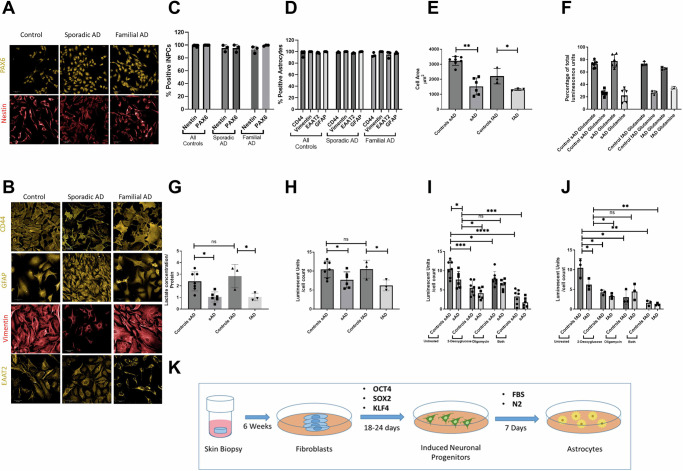
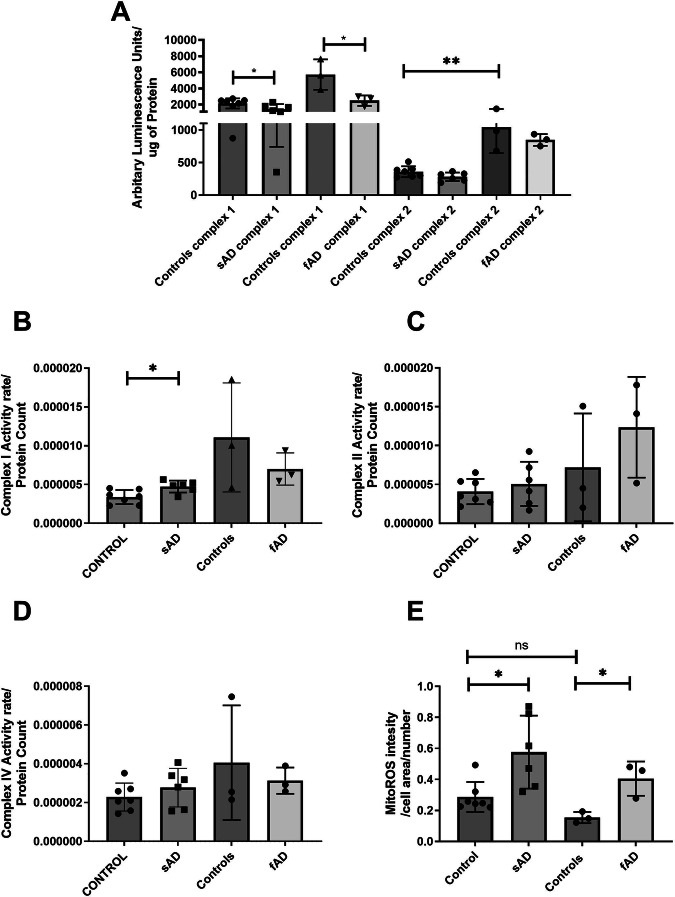
- sAD and fAD astrocytes had reduced extracellular lactate (sAD 56% reduction, p=0.0043; fAD 63% reduction, p=0.0421), reduced total cellular ATP (sAD 32% reduction, p=0.0158; fAD 41.0% reduction, p=0.050), and increased mitochondrial ROS (sAD 200% increase, p=0.012; fAD 260% increase, p=0.020).
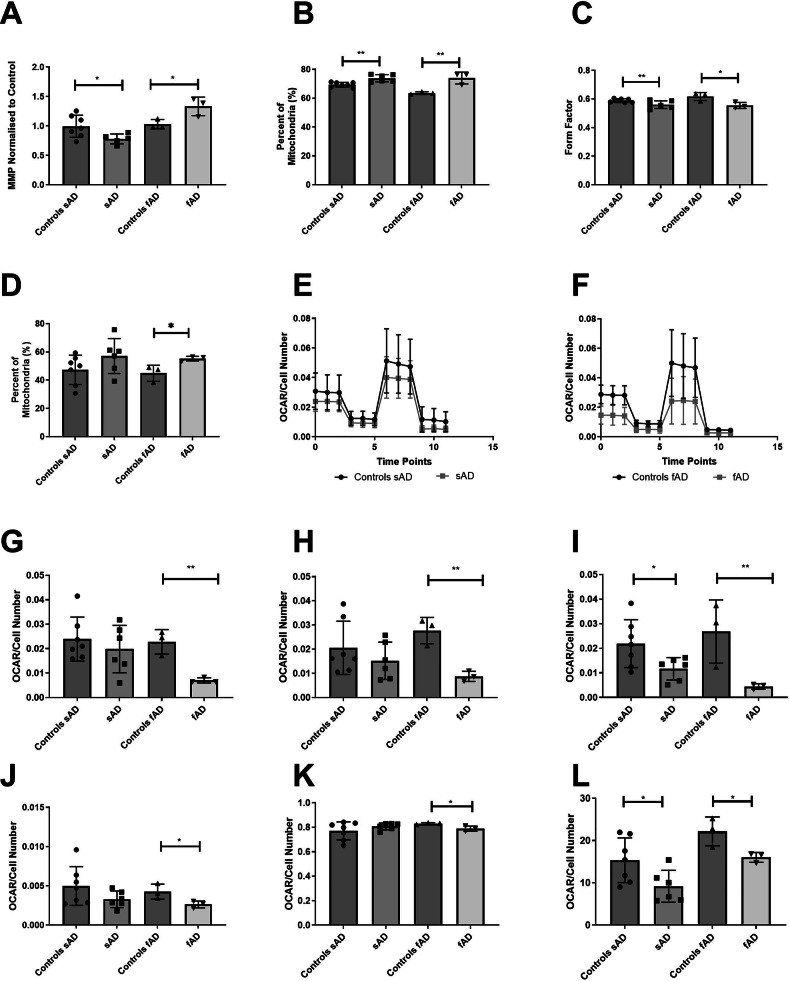
- Mitochondrial spare respiratory capacity was reduced in both sAD (46.6% reduction, p=0.038) and fAD (83.5% reduction, p=0.040); fAD astrocytes also showed lower ATP-linked respiration (69% reduction, p=0.005), basal respiration (68.4% reduction, p=0.004), and coupling efficiency (5% reduction, p=0.032). sAD astrocytes had reduced mitochondrial membrane potential (22% reduction, p=0.05), whereas fAD astrocytes had increased MMP (30% increase, p=0.041).
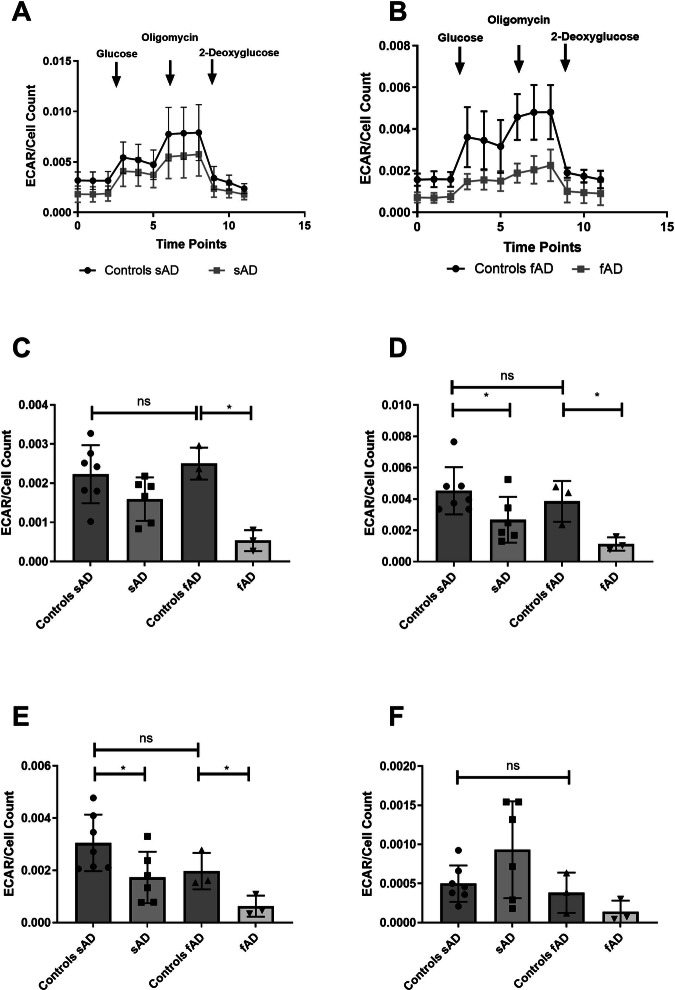
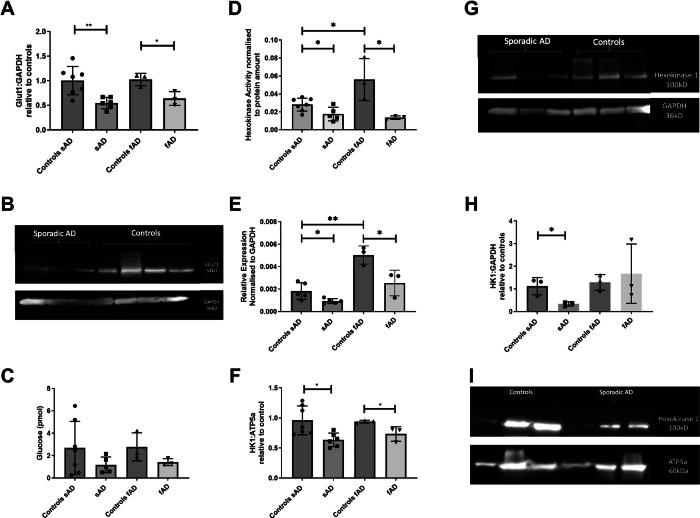
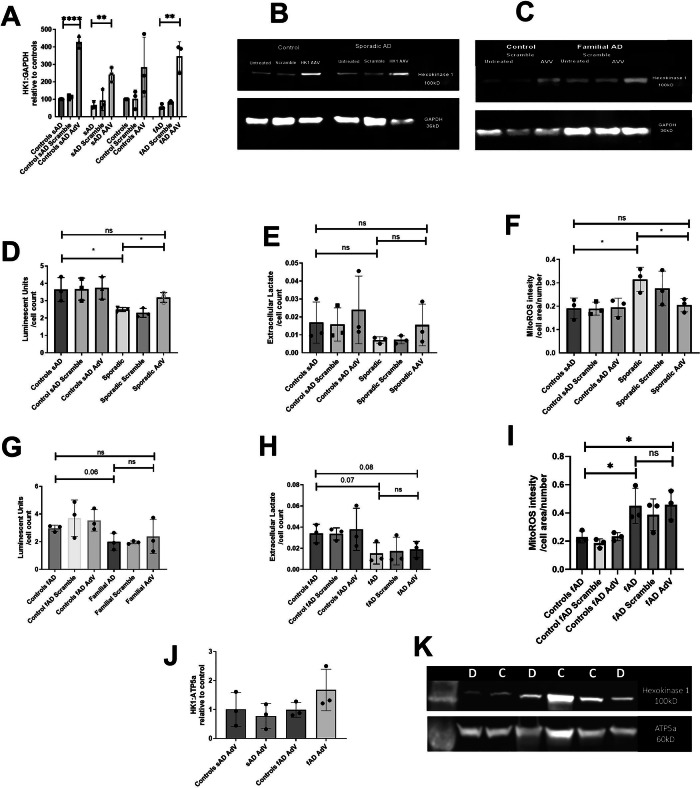
- Glycolytic capacity and glycolytic reserve were reduced in sAD and fAD astrocytes; hexokinase 1 activity, mRNA, and protein were reduced, and mitochondrial HK1 was reduced in sAD (70% reduction, p=0.025) but not fAD. HK1 overexpression increased total cellular ATP (28.1% increase, p=0.017) and reduced mitochondrial ROS (34.9% decrease, p=0.032) in sAD astrocytes, but did not improve these measures in fAD astrocytes.
- In sAD, glycolytic reserve and extracellular lactate positively correlated with episodic memory measures after controlling for brain reserve, education, and age (e.g., immediate recall vs glycolytic reserve r=0.766, p=0.016; delayed recall vs lactate r=0.677, p=0.045); HK1 activity did not correlate with neuropsychological test results.
Methods
- Patient fibroblasts were directly converted to induced neuronal progenitor cells and then differentiated into astrocytes; experiments compared sAD and fAD (PSEN1 mutation) astrocytes with age-matched controls. Sample sizes across experiments included 7 sAD controls, 6 sAD lines (5 in some assays), 3 fAD control lines, and 3 fAD lines, with at least 3 technical and 3 biological repeats.
- Assays included Seahorse mitochondrial and glycolysis stress tests, total cellular ATP and ATP inhibitor assays, extracellular lactate, glutamate/glutamine, glucose uptake, mitochondrial membrane potential and morphology, mitochondrial ROS, ETC complex activity, qPCR, western blot, mitochondrial isolation, hexokinase activity, and adenoviral HK1 overexpression at MOI 40.
- Statistical comparisons between AD and control groups used t-tests; Pearson correlations were used for metabolic–neuropsychological relationships, with analyses performed in GraphPad Prism v8 and IBM SPSS v29.
Limitations
- The paper states the study is limited by sample size, although it is one of the larger studies of sporadic AD patient-derived astrocytes and the number of PSEN1 mutant lines is in line with published studies; larger sAD and fAD cohorts are needed. It also notes age differences between fAD and sAD cohorts, and although each disease group was compared with age-matched controls, some parameters may change with age.
- The paper states that neuropsychological correlations were only available for sAD and controls, involved a small cohort, and plotted disease and control astrocyte lines together, so caution is needed before robust conclusions. It also states that astrocytes were studied in monoculture, and future co-culture with neurons is needed.
- The paper states that the mechanism behind metabolic dysfunction in fAD astrocytes remains unidentified, particularly whether it relates to PSEN1 action on the mitochondrial membrane. Evident from the text: glucose uptake showed significant interline variability and no group change; sAD glycolytic rate was not significantly reduced (28.2% reduction, p=0.1124); and some sAD mitochondrial respiration changes were trends rather than significant.
Model-written summary. Check it against the paper before relying on it.
Integrity signals
Registry
Cites
Statistics
Figures
Verification
Claims the paper makes
0 Valid · 0 Not valid · 39 Not checked · 128 Own results and interpretations
A result the paper reports from its own data — it cites no other source for it, so there is none to check. The quote shows it is in the paper.
In the paper
“However, hexokinase 1 overexpression does not restore fAD metabolic function”
§ Increasing hexokinase 1 expression improves mitochondrial and glycolytic functional deficits seen in sporadic Alzheimer’s disease astrocytes > Discussion
plain- Asserted: passes — The authors put it forward as true.
- Checkable: passes — It can be checked against evidence.
- Load-bearing: passes — The paper’s conclusions depend on it.
- Based: passes — The paper gives a reason why it holds.
A result the paper reports from its own data — it cites no other source for it, so there is none to check. The quote shows it is in the paper.
In the paper
“Expression of the hexokinase protein increased by 160% in sAD astrocytes, p = 0.024, SEM ± 42%, when compared to the scramble condition”
§ Increasing hexokinase 1 expression improves mitochondrial and glycolytic functional deficits seen in sporadic Alzheimer’s disease astrocytes > Results > Restoring hexokinase expression improves markers of astrocyte metabolic output and reduces mitochondrial ROS in sAD astrocytes
plainstates a cause- Asserted: passes — The authors put it forward as true.
- Checkable: passes — It can be checked against evidence.
- Load-bearing: passes — The paper’s conclusions depend on it.
- Based: passes — The paper gives a reason why it holds.
A result the paper reports from its own data — it cites no other source for it, so there is none to check. The quote shows it is in the paper.
In the paper
“Conversely hexokinase 1 activity was not found to correlate significantly with any of the neuropsychological test results (Supplementary Fig. 5).”
§ Increasing hexokinase 1 expression improves mitochondrial and glycolytic functional deficits seen in sporadic Alzheimer’s disease astrocytes > Results > Astrocyte metabolic output and capacity biomarkers correlate with neuropsychological indices in sporadic AD astrocytes but not with hexokinase 1 activity
plain- Asserted: passes — The authors put it forward as true.
- Checkable: passes — It can be checked against evidence.
- Load-bearing: unclear — It is unclear whether the paper’s conclusions depend on it.
- Based: passes — The paper gives a reason why it holds.
A result the paper reports from its own data — it cites no other source for it, so there is none to check. The quote shows it is in the paper.
In the paper
“Some of these abnormalities correlate with neuropsychological abnormalities seen early in AD.”
§ Increasing hexokinase 1 expression improves mitochondrial and glycolytic functional deficits seen in sporadic Alzheimer’s disease astrocytes > Discussion
plainstates an association- Asserted: passes — The authors put it forward as true.
- Checkable: passes — It can be checked against evidence.
- Load-bearing: passes — The paper’s conclusions depend on it.
- Based: passes — The paper gives a reason why it holds.
A result the paper reports from its own data — it cites no other source for it, so there is none to check. The quote shows it is in the paper.
In the paper
“In this study we have shown that astrocytes derived from patients with both sAD and fAD have deficits in glycolytic function and in mitochondrial structure and function.”
§ Increasing hexokinase 1 expression improves mitochondrial and glycolytic functional deficits seen in sporadic Alzheimer’s disease astrocytes > Discussion
boostedstates an association- Asserted: passes — The authors put it forward as true.
- Checkable: passes — It can be checked against evidence.
- Load-bearing: passes — The paper’s conclusions depend on it.
- Based: passes — The paper gives a reason why it holds.
82 more claims
Create a free account to see all 167 claims and to verify the 92 references still open.
- Probably not a substantial claim. 43
- The quote only partly states this claim. 2
- It may state two separate claims as one. 47
Self-check
Percentages, sums and reported differences re-computed from the paper’s own numbers.
Each contradiction between two passages listed here was confirmed by an independent check.
Rated minor: it would not touch a result — a value no result rests on, a p-value that stays on the same side of the significance level, or a conflict that is clerical, resolved elsewhere in the paper, or outside its own findings.
In the paper
§ Increasing hexokinase 1 expression improves mitochondrial and glycolytic functional deficits seen in sporadic Alzheimer’s disease astrocytes > Discussion
“The recent study by Samanta et al. directly highlights how cognitive function can be preserved by maintaining mitochondrial function in AD, supporting the findings of the present study [23].”
§ Increasing hexokinase 1 expression improves mitochondrial and glycolytic functional deficits seen in sporadic Alzheimer’s disease astrocytes > References
“23. Curti D, Rognoni F, Gasparini L, Cattaneo A, Paolillo M, Racchi M, et al. Oxidative metabolism in cultured fibroblasts derived from sporadic Alzheimer’s disease (AD) patients.”
Rated minor: it would not touch a result — a value no result rests on, a p-value that stays on the same side of the significance level, or a conflict that is clerical, resolved elsewhere in the paper, or outside its own findings.
In the paper
§ Increasing hexokinase 1 expression improves mitochondrial and glycolytic functional deficits seen in sporadic Alzheimer’s disease astrocytes > Results > Restoring hexokinase expression improves markers of astrocyte metabolic output and reduces mitochondrial ROS in sAD astrocytes
“H Extracellular lactate levels after AdV transduction in sAD lines.”
§ Increasing hexokinase 1 expression improves mitochondrial and glycolytic functional deficits seen in sporadic Alzheimer’s disease astrocytes > Results > Restoring hexokinase expression improves markers of astrocyte metabolic output and reduces mitochondrial ROS in sAD astrocytes
“Interestingly, in fAD astrocytes, transduction with the hexokinase 1 containing AdV did not increase total cellular ATP (Fig. 6G), or extracellular lactate levels (Fig. 6H)”
Rated minor: it would not touch a result — a value no result rests on, a p-value that stays on the same side of the significance level, or a conflict that is clerical, resolved elsewhere in the paper, or outside its own findings.
In the paper
§ Increasing hexokinase 1 expression improves mitochondrial and glycolytic functional deficits seen in sporadic Alzheimer’s disease astrocytes > Methods > Fibroblast reprogramming
“E Intracellular fractions of glutamate and glutamine *p < 0.05. F Astrocyte extracellular lactate levels.”
§ Increasing hexokinase 1 expression improves mitochondrial and glycolytic functional deficits seen in sporadic Alzheimer’s disease astrocytes > Results > Astrocytes derived from sAD/fAD patients display reduced total cellular ATP and extracellular lactate
“Functionally, all astrocyte lines had similar intracellular proportions of glutamine and glutamate (Fig. 1F). Extracellular lactate levels were reduced in both sAD (56% reduction SEM ± 15%, p = 0.0043) and fAD astrocytes (63% reduction SEM ± 21%, p = 0.0421) when compared with their control groups (Fig. 1G).”
Citations
Cites
Takahashi, K., & Yamanaka, S. (2006) · Cell · doi:10.1016/j.cell.2006.07.024 · Cited by 26,673
Induction of Pluripotent Stem Cells from Adult Human Fibroblasts by Defined Factors
Takahashi, K., Tanabe, K., Ohnuki, M., Narita, M., Ichisaka, T., Tomoda, K., & Yamanaka, S. (2007) · Cell · doi:10.1016/j.cell.2007.11.019 · Cited by 20,221
Lecanemab in early Alzheimer's disease
van Dyck, C. H., Swanson, C. J., Aisen, P., Bateman, R. J., Chen, C., Gee, M., Kanekiyo, M., Li, D., Reyderman, L., Cohen, S., et al. (2023) · New England Journal of Medicine · doi:10.1056/nejmoa2212948 · Cited by 5,678
Feigin, V. L., Nichols, E., Alam, T., Bannick, M. S., Beghi, E., Blake, N., Culpepper, W. J., Dorsey, E. R., Elbaz, A., Ellenbogen, R. G., et al. (2019) · The Lancet Neurology · doi:10.1016/s1474-4422(18)30499-x · Cited by 5,644 · cited 1×
“Alzheimer ’ s disease (AD) is the most common cause of dementia worldwide [1].”
Nichols, E., Steinmetz, J. D., Vollset, S. E., Fukutaki, K., Chalek, J., Abd-Allah, F., Abdoli, A., Abualhasan, A., Abu-Gharbieh, E., Akram, T. T., et al. (2022) · The Lancet Public Health · doi:10.1016/s2468-2667(21)00249-8 · Cited by 5,575
Interplay between Cortical Spreading Depolarization and Seizures
Kramer, D. R., Fujii, T., Ohiorhenuan, I., & Liu, C. Y. (2017) · Stereotactic and Functional Neurosurgery · doi:10.1159/000452841 · Cited by 3,696
An Energy Budget for Signaling in the Grey Matter of the Brain
Attwell, D., & Laughlin, S. B. (2001) · Journal of Cerebral Blood Flow & Metabolism · doi:10.1097/00004647-200110000-00001 · Cited by 3,543
Donanemab in Early Symptomatic Alzheimer Disease: The TRAILBLAZER-ALZ 2 Randomized Clinical Trial
Sims, J. R., Zimmer, J. A., Evans, C. D., Lu, M., Ardayfio, P., Sparks, J., Wessels, A. M., Shcherbinin, S., Wang, H., Monkul Nery, E. S., et al. (2023) · JAMA · doi:10.1001/jama.2023.13239 · Cited by 2,932 · cited 1×
“Donanemab, another monoclonal antibody, has recently been shown to have an even greater effect on cognitive decline [7].”
Pellerin, L., & Magistretti, P. J. (1994) · Proceedings of the National Academy of Sciences · doi:10.1073/pnas.91.22.10625 · Cited by 2,927
Generation of induced pluripotent stem cells without Myc from mouse and human fibroblasts
Nakagawa, M., Koyanagi, M., Tanabe, K., Takahashi, K., Ichisaka, T., Aoi, T., Okita, K., Mochiduki, Y., Takizawa, N., & Yamanaka, S. (2008) · Nature Biotechnology · doi:10.1038/nbt1374 · Cited by 2,380
Cited by
Zhgenti, N., Bibilashvili, O., Shengelia, M., Burjanadze, G., Koshoridze, M., Davitashvili, E., & Koshoridze, N. (2025) · PubMed Central · doi:10.22038/ijbms.2025.84754.18338 · Cited by 189
Joseph, G. U., Oyovwi, M. O., Jeroh, E., Esuku, D. T., & Ben‐Azu, B. (2025) · Journal of Molecular Pathology · doi:10.3390/jmp6020012 · Cited by 24
Glucose Metabolism, Lactate, Lactylation and Alzheimer’s Disease
Hai, S., Hou, Y., Zhang, M., Gao, X., Yang, T., Shang, X., & Sun, X. (2025) · Aging and Disease · doi:10.14336/ad.2025.0338 · Cited by 14
Cáceres-Palomo, L., Sánchez‐Mejías, E., Trujillo‐Estrada, L., Pérez-Moreno, J. J., Lopez-Oliva, E., Lim, T. E., DeFlitch, L., Chang, S. H., Kampman, L., Corces, M. R., et al. (2025) · Journal of Neuroinflammation · doi:10.1186/s12974-025-03607-z · Cited by 12
Kaushik, M., Potdar, M. B., Guptha, P. M., Vanangamudi, M., Abubakar, M., Mishra, M. K., & Nand, S. (2026) · Current Neuropharmacology · doi:10.2174/011570159x415585260303184042 · Cited by 9
Metadata
- Authors
- Bell, S. M., Wareing, H., Capriglia, F., Hughes, R., Barnes, K., Hamshaw, A., Adair, L., Shaw, A., Olejnik, A., De, S., New, E., Shaw, P. J., De Marco, M., Venneri, A., Blackburn, D. J., Ferraiuolo, L., & Mortiboys, H.
- Affiliations
- Sheffield Teaching Hospitals NHS Foundation Trust (GB)
- University of Sheffield (GB)
- The University of Sydney (AU)
- University of Parma (IT)
- Corresponding author
- Bell, Simon M.
- Mortiboys, Heather
- ORCID
- Venue
- Molecular Psychiatry
- Published
- 2024-09-13
- Volume
- 30
- Issue
- 4
- Pages
- 1369-1382
- ISSN
- 1359-4184 (ISSN-L)
- 1476-5578
- PMC
- PMC11919762
- OpenAlex
- W4402514770
- Semantic Scholar
- 4372c6a750070804e3584cc17e195df40bc94961
- Cited by
- 41
- References
- 94
- Citations by year
- 2026: 26 · 2025: 14 · 2024: 1
- FWCI
- 4.86
- Type
- journal article
- Language
- en
- Open access
- hybrid
- doi.org
- Licence
- cc-by
- creativecommons.org/licenses/by/4.0 (tdm)
- creativecommons.org/licenses/by/4.0 (vor)
- Locations
- Molecular Psychiatry (publishedVersion, cc-by)
- PubMed Central (publishedVersion, cc-by)
- PubMed (publishedVersion)
- White Rose Research Online (University of Leeds, The University of Sheffield, University of York) (acceptedVersion)
- Brunel University Research Archive (BURA) (Brunel University London) (submittedVersion, cc-by)
- Funders
- Michael J. Fox Foundation for Parkinson's Research (005021)
- Wellcome Trust (216340/Z/19/Z)
- National Institute for Health and Care Research (NF-SI-0617-10077, 203321, NIHR203321)
- Department of Health and Social Care
- Parkinson's UK (F1301)
- Academy of Medical Sciences (SGL028\1097)
- European Commission (601055, 2007–2013, PE0000006, FP7 2007-2013, FP7/2007, CUP D93C22000930002)
- Department of Education and Training (CE200100012)
- Sheffield Teaching Hospitals NHS Foundation Trust
- NIHR Sheffield Biomedical Research Centre (NIHR 203321)
- NextGenerationEU (PE0000006)
- Topics
- Life Sciences › Neuroscience › Cellular and Molecular Neuroscience › Alzheimer's disease research and treatments
- Life Sciences › Biochemistry, Genetics and Molecular Biology › Molecular Biology › Mitochondrial Function and Pathology
- Health Sciences › Medicine › Psychiatry and Mental health › Dementia and Cognitive Impairment Research
- Keywords
- Alzheimer's disease, astrocytes, hexokinase 1, glycolysis, mitochondrial dysfunction, sporadic Alzheimer's disease, familial Alzheimer's disease, mitochondrial reactive oxygen species, mitochondrial membrane potential, extracellular lactate, ATP, episodic memory
- MeSH terms
- Adenosine Triphosphate, Aged, Aged, 80 and over, Alzheimer Disease, Astrocytes, Cells, Cultured, Female, Glucose, Glycolysis, Hexokinase, Humans, Male, Middle Aged, Mitochondria, Reactive Oxygen Species, Lactic Acid, Membrane Potential, Mitochondrial
About these checks
Registry, retraction, Cites and statistics results are computed, not judged, with one exception: a printed reference that no index lists is read once by a model before it counts as a citation error. Claims are extracted by a model and kept only when their quote appears verbatim in the text; each cited source is then checked, with a model’s help, for whether it says what the claim relies on. Those verdicts can be wrong — read the claim’s quote and the cited source before relying on one.
A language model drew the claims from the paper on 2026-11-25, under version 3 of the claim definition (model deepseek-v4.1-flash, prompt extract-v3).
A second model labelled each claim on 2026-11-25 (model jev-1.13-20260917, definition revision gold-guideline-v0.2).
Statistics and arithmetic are recomputed, not judged.
Confidence bands are shown only for fields calibrated on our annotated test set. None is calibrated yet, so no band is shown.
What counts as a claim ›How we measure confidence ›How we check this ›
Are you an author, or do you see a problem with this page? Request a review
Data sources
Bibliographic data: Semantic Scholar, OpenAlex, Crossref.
Contains information from the Semantic Scholar Academic Graph Datasets, made available under the ODC Attribution License (ODC-BY 1.0).
Semantic Scholar’s data is described in: Kinney, R., et al. (2023). The Semantic Scholar Open Data Platform. arXiv:2301.10140.
