

Abnormal reward prediction-error signalling in antipsychotic naive individuals with first-episode psychosis or clinical risk for psychosis
Open accessPublished version of a preprint
The DOI matches its Crossref record; 67 of the 68 references it cites were found in a registry or an index.
Abstract
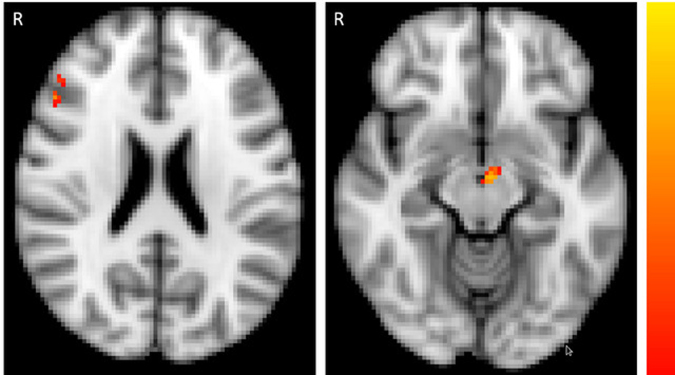
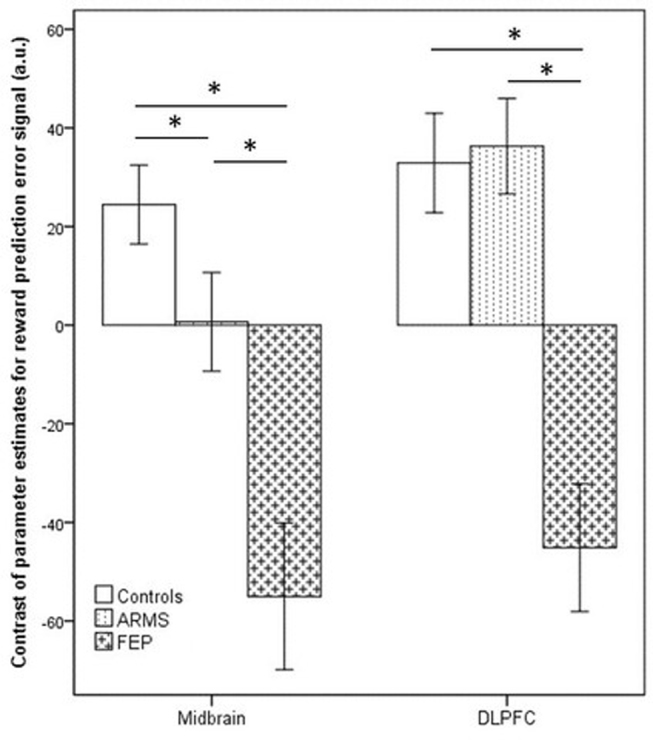
Ongoing research suggests preliminary, though not entirely consistent, evidence of neural abnormalities in signalling prediction errors in schizophrenia. Supporting theories suggest mechanistic links between the disruption of these processes and the generation of psychotic symptoms. However, it is unknown at what stage in the pathogenesis of psychosis these impairments in prediction-error signalling develop. One major confound in prior studies is the use of medicated patients with strongly varying disease durations. Our study aims to investigate the involvement of the meso-cortico-striatal circuitry during reward prediction-error signalling in earliest stages of psychosis. We studied patients with first-episode psychosis (FEP) and help-seeking individuals at-risk for psychosis due to sub-threshold prodromal psychotic symptoms. Patients with either FEP (n = 14), or at-risk for developing psychosis (n = 30), and healthy volunteers (n = 39) performed a reinforcement learning task during fMRI scanning. ANOVA revealed significant (p < 0.05 family-wise error corrected) prediction-error signalling differences between groups in the dopaminergic midbrain and right middle frontal gyrus (dorsolateral prefrontal cortex, DLPFC). FEP patients showed disrupted reward prediction-error signalling compared to controls in both regions. At-risk patients showed intermediate activation in the midbrain that significantly differed from controls and from FEP patients, but DLPFC activation that did not differ from controls. Our study confirms that FEP patients have abnormal meso-cortical signalling of reward-prediction errors, whereas reward-prediction-error dysfunction in the at-risk patients appears to show a more nuanced pattern of activation with a degree of midbrain impairment but preserved cortical function.
Overview
The claims and statistics of this paper haven’t been checked yet.
Free: it reads the open-access text and checks the first 5 claims that cite a source we can check. Create a free account to check every claim.
Integrity signals
Registry
Cites
Statistics
Figures
Verification
Claims the paper makes
The claims and statistics of this paper haven’t been checked yet.
Free: it reads the open-access text and checks the first 5 claims that cite a source we can check. Create a free account to check every claim.
Claims other papers make about this one
Each is checked against this paper’s own text: does it say what the citing paper says it does?
The source backs part of the claim, not all of it — or backs it for a different population, condition or comparison.
In the citing paper
“CHR subjects show PE-associated signal in the midbrain that is intermediate between that in HC and patients with psychosis (79), who show a decreased reward PE signal in the midbrain and striatum compared to HC (36).”
From Aberrant Salience, Information Processing, and Dopaminergic Signaling in People at Clinical High Risk for Psychosis (2020) · cites this paper as [79]
Experimental — accuracy not yet measuredThe cited source says what the claim attributes to it.
In the citing paper
“Sample size was determined based on our prior studies [10, 11].”
From Precision weighting of cortical unsigned prediction error signals benefits learning, is mediated by dopamine, and is impaired in psychosis (2021) · cites this paper as [10]
The cited source says what the claim attributes to it.
In the citing paper
“Previous work showed aberrant cortical and subcortical prediction error coding in people with psychosis [10, 11, 43].”
From Precision weighting of cortical unsigned prediction error signals benefits learning, is mediated by dopamine, and is impaired in psychosis (2021) · cites this paper as [10]
The cited source says what the claim attributes to it.
In the citing paper
“Taken together, this evidence indicates altered salience processing (80-83), reward anticipation (7577) and PE-signalling (78, 79) in CHR relative to HC.”
From Aberrant Salience, Information Processing, and Dopaminergic Signaling in People at Clinical High Risk for Psychosis (2020) · cites this paper as [79]
The cited source says what the claim attributes to it.
In the citing paper
“| | 14 FEP | | | CHR (vs. FEP) (midbrain) | - |”
From Aberrant Salience, Information Processing, and Dopaminergic Signaling in People at Clinical High Risk for Psychosis (2020) · cites this paper as [79]
1 more claim about this paper
Create a free account to see every claim other papers make about this one.
Self-check
Percentages, sums and reported differences re-computed from the paper’s own numbers.
The self-check needs the paper’s full text.
Citations
Cites
A neural substrate of prediction and reward
Schultz, W., Dayan, P., & Montague, P. R. (1997) · Science · doi:10.1126/science.275.5306.1593 · Cited by 9,388 · cited 2×
“Dopaminergic neurons in the midbrain, which project heavily to the striatum as well as to the cortex, have been found to code reward prediction errors [15].”
Nonparametric permutation tests for functional neuroimaging: A primer with examples
Nichols, T. E., & Holmes, A. P. (2002) · Human Brain Mapping · doi:10.1002/hbm.1058 · Cited by 6,256
Permutation inference for the general linear model
Winkler, A. M., Ridgway, G. R., Webster, M. A., Smith, S. M., & Nichols, T. E. (2014) · NeuroImage · doi:10.1016/j.neuroimage.2014.01.060 · Cited by 3,563 · cited 1×
“We used permutation based statistics using the FSL tool randomise, utilising threshold-freecluster enhancement, which enhances cluster-like structures but remains fundamentally a voxel-wise statistical testing method [44].”
MethodPearce, J. M., & Hall, G. (1980) · Psychological Review · doi:10.1037/0033-295x.87.6.532 · Cited by 3,023
Kapur, S. (2003) · American Journal of Psychiatry · doi:10.1176/appi.ajp.160.1.13 · Cited by 2,813
Mapping the Onset of Psychosis: The Comprehensive Assessment of At-Risk Mental States
Yung, A. R., Yung, A. R., Pan Yuen, H., Mcgorry, P. D., Phillips, L. J., Kelly, D., Dell'olio, M., Francey, S. M., Cosgrave, E. M., Killackey, E., et al. (2005) · Australian & New Zealand Journal of Psychiatry · doi:10.1080/j.1440-1614.2005.01714.x · Cited by 2,196 · cited 3×
“Help-seeking patients with these features have been shown to have increased risk for developing psychotic illness, and have been termed to have at-risk mental states (ARMS) or be at “ultrahigh clinical risk” of psychosis [33].”
BackgroundMethodInfluentialA strategy of win-stay, lose-shift that outperforms tit-for-tat in the Prisoner's Dilemma game
Nowak, M., & Sigmund, K. (1993) · Nature · doi:10.1038/364056a0 · Cited by 1,797 · cited 1×
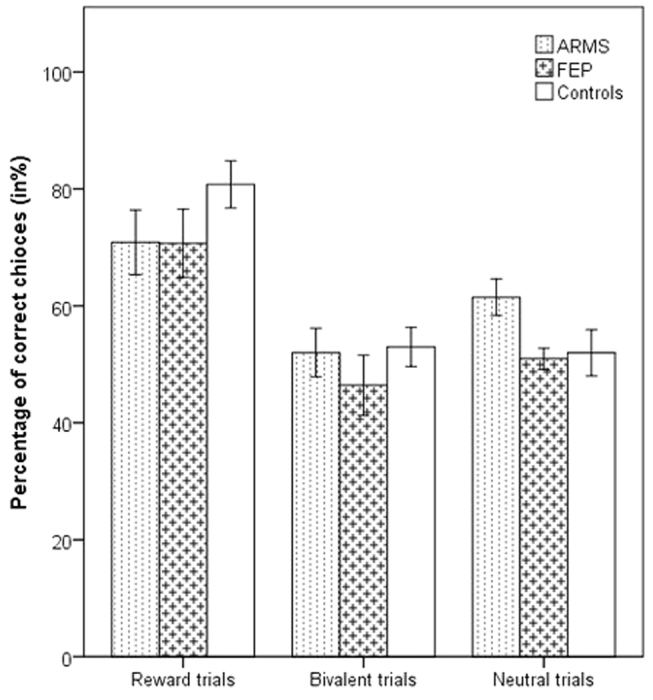
“Win-stay/lose-shift analysis revealed that participants, independent of trial type (reward, bivalent or neutral), have a significantly higher probability to repeat the same response after a win than to shift after a loss, which is a clear indication for engagement and learning in a probabilistic learning task [59, 60].”
BackgroundDopamine-dependent prediction errors underpin reward-seeking behaviour in humans
Pessiglione, M., Seymour, B., Flandin, G., Dolan, R. J., & Frith, C. D. (2006) · Nature · doi:10.1038/nature05051 · Cited by 1,584 · cited 2×
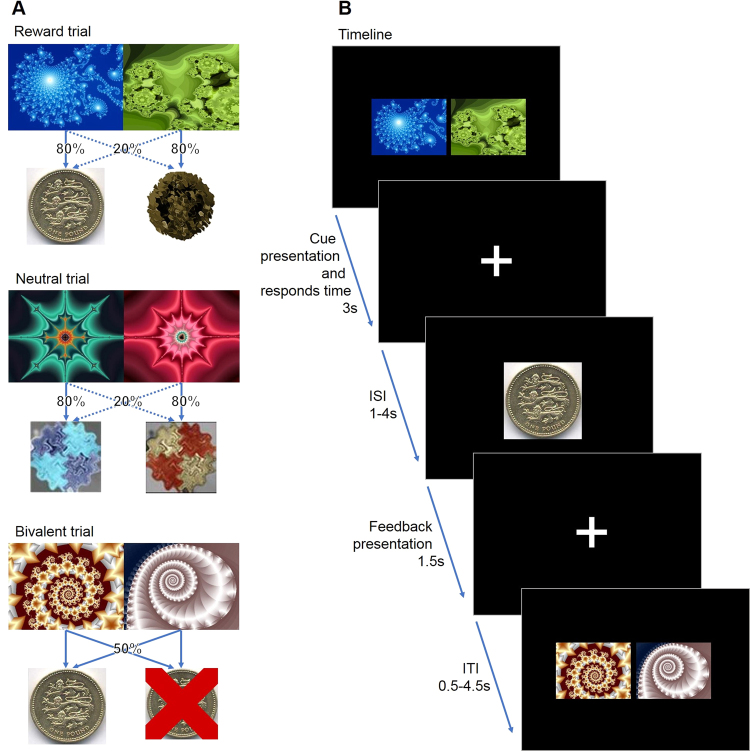
“1) that required them to choose between two abstract visual stimuli (fractal pictures) displayed on a computer screen, to maximise pay-offs [12, 26, 40, 41].”
BackgroundMethodPerceiving is believing: a Bayesian approach to explaining the positive symptoms of schizophrenia
Fletcher, P. C., & Frith, C. D. (2009) · Nature Reviews Neuroscience · doi:10.1038/nrn2536 · Cited by 1,462 · cited 1×
“INTRODUCTION The cognitive basis of psychotic symptoms remains unknown, but abnormalities in the processing of prediction error have been proposed to contribute to the development of psychotic symptoms [1, 2].”
BackgroundSelf-citationNeuronal Coding of Prediction Errors
Schultz, W., & Dickinson, A. (2000) · Annual Review of Neuroscience · doi:10.1146/annurev.neuro.23.1.473 · Cited by 1,427 · cited 1×
“Prediction errors help us to update our expectations and can lead to allocation of attention and attribution of salience to stimuli, which may drive subsequent learning [3, 4].”
Background
Cited by
Nonsocial and social cognition in schizophrenia: current evidence and future directions
Green, M. F., Horan, W. P., & Lee, J. (2019) · World Psychiatry · doi:10.1002/wps.20624 · Cited by 612
Menon, V., Palaniyappan, L. K., & Supekar, K. (2022) · Biological Psychiatry · doi:10.1016/j.biopsych.2022.09.029 · Cited by 189
“This striatal dopaminergic dysregulation has been linked to aberrant reward prediction errors that are prominent in schizophrenia (99).”
Ventral Tegmental Dopamine Neurons Participate in Reward Identity Predictions
Keiflin, R., Pribut, H. J., Shah, N. B., & Janak, P. H. (2019) · Current Biology · doi:10.1016/j.cub.2018.11.050 · Cited by 142
Heinz, A., Murray, G. K., Schlagenhauf, F., Sterzer, P., Grace, A. A., & Waltz, J. A. (2019) · Schizophrenia Bulletin · doi:10.1093/schbul/sby154 · Cited by 116
Self-citationHowes, O. D., Hird, E. J., Adams, R. A., Corlett, P. R., & McGuire, P. (2020) · Biological Psychiatry · doi:10.1016/j.biopsych.2020.03.012 · Cited by 110
“Taken together, this evidence indicates altered sal ience processing (80–83), reward anticipation (75– 77) and PE-signalling (78, 79) in CHR relative to HC.”
BackgroundMethodResultInfluentialHaarsma, J., Fletcher, P. C., Griffin, J. D., Taverne, H. J., Ziauddeen, H., Spencer, T. J., Miller, C., Katthagen, T., Goodyer, I., Diederen, K. M. J., et al. (2021) · Molecular Psychiatry · doi:10.1038/s41380-020-0803-8 · Cited by 108
“Sample size was determined based on our prior studies [10, 11].”
BackgroundMethodInfluentialSelf-citationFunctional neuroimaging in psychiatry and the case for failing better
Nour, M. M., Liu, Y., & Dolan, R. J. (2022) · Neuron · doi:10.1016/j.neuron.2022.07.005 · Cited by 105
Millard, S. J., Bearden, C. E., Karlsgodt, K. H., & Sharpe, M. J. (2022) · Neuropsychopharmacology · doi:10.1038/s41386-021-01188-y · Cited by 81
Atypical processing of uncertainty in individuals at risk for psychosis
Cole, D. M., Diaconescu, A. O., Pfeiffer, U. J., Brodersen, K. H., Mathys, C. D., Julkowski, D., Ruhrmann, S., Schilbach, L., Tittgemeyer, M., Vogeley, K., et al. (2020) · NeuroImage: Clinical · doi:10.1016/j.nicl.2020.102239 · Cited by 72
Striatal Dopamine and Reward Prediction Error Signaling in Unmedicated Schizophrenia Patients
Katthagen, T., Kaminski, J., Heinz, A., Buchert, R., & Schlagenhauf, F. (2020) · Schizophrenia Bulletin · doi:10.1093/schbul/sbaa055 · Cited by 79
The promise of layer-specific neuroimaging for testing predictive coding theories of psychosis
Haarsma, J., Kok, P., & Browning, M. (2022) · Schizophrenia Research · doi:10.1016/j.schres.2020.10.009 · Cited by 59
Subcortical Dopamine and Cognition in Schizophrenia: Looking Beyond Psychosis in Preclinical Models
Conn, K., Burne, T. H. J., & Kesby, J. P. (2020) · Frontiers in Neuroscience · doi:10.3389/fnins.2020.00542 · Cited by 70
“Some studies suggests that there are preliminary results in schizophrenia patients showing abnormal prediction error signaling, however, these findings remain inconsistent (Ermakova et al., 2018).”
ResultPleasure, Reward Value, Prediction Error and Anhedonia
Kieslich, K., Valton, V., & Roiser, J. P. (2022) · Current topics in behavioral neurosciences · doi:10.1007/7854_2021_295 · Cited by 64
Gibbs-Dean, T., Katthagen, T., Tsenkova, I., Ali, R., Liang, X., Spencer, T. J., & Diederen, K. M. J. (2023) · Neuroscience & Biobehavioral Reviews · doi:10.1016/j.neubiorev.2023.105087 · Cited by 58
Neural Circuitry of Salience and Reward Processing in Psychosis
Kesby, J. P., Murray, G. K., & Knolle, F. (2023) · Biological Psychiatry Global Open Science · doi:10.1016/j.bpsgos.2021.12.003 · Cited by 55
“Moreover, the nucleus accumbens functional coupling was greatest with the dorsal striatum in young adolescents but shifted to the ventrolateral al Open Science January 2023; 3:33–46 www.sobp.org/GOS 39 Salience and Reward Processing in Psychosis Biological Psychiatry: GOS PFC with increased age (104).”
BackgroundInfluentialSelf-citationMurray, G. K., Knolle, F., Ersche, K. D., Craig, K. J., Abbott, S., Shabbir, S. S., Fineberg, N. A., Suckling, J., Sahakian, B. J., Bullmore, E. T., et al. (2019) · Psychopharmacology · doi:10.1007/s00213-019-05292-2 · Cited by 53
“1), adapted from previous similar tasks (Bernacer et al. 2013; Ermakova et al. 2018; O’doherty et al. 2004; Pessiglione et al. 2006).”
Self-citationLiraglutide restores impaired associative learning in individuals with obesity
Hanssen, R., Rigoux, L., Kuzmanovic, B., Iglesias, S., Kretschmer, A. C., Schlamann, M., Albus, K., Edwin Thanarajah, S., Sitnikow, T., Melzer, C., et al. (2023) · Nature Metabolism · doi:10.1038/s42255-023-00859-y · Cited by 52
“4Faculty of Medicine and University Hospital Cologne, Department I of Internal Medicine, Center for Integrated Oncology Aachen Bonn Cologne Duesseldorf (CIO ABCD) and Excellence Center for Medical Mycology (ECMM), University of Cologne, Cologne, Germany.”
MethodInfluentialRevisiting the role of computational neuroimaging in the era of integrative neuroscience
Loosen, A. M., Kato, A., & Gu, X. (2024) · Neuropsychopharmacology · doi:10.1038/s41386-024-01946-8 · Cited by 42
Millman, Z. B., Gallagher, K., Demro, C., Schiffman, J., Reeves, G. M., Gold, J. M., Rakhshan Rouhakhtar, P. J., Fitzgerald, J., Andorko, N. D., Redman, S., et al. (2020) · Schizophrenia Research · doi:10.1016/j.schres.2019.03.017 · Cited by 39
“Although not all studies assessing RL in CHR have reported between-group differences (Ermakova et al., 2018), our results add to a growing literature suggesting that RL deficits in CHR can be measured using a range of experimental tasks and may play an important role in the early stages of psychosis.”
ResultCannabinoids, reward processing, and psychosis
Gunasekera, B., Diederen, K. M. J., & Bhattacharyya, S. (2021) · Psychopharmacology · doi:10.1007/s00213-021-05801-2 · Cited by 38
Knolle, F., Ermakova, A. O., Justicia, A., Fletcher, P. C., Bunzeck, N., Düzel, E., & Murray, G. K. (2018) · Translational Psychiatry · doi:10.1038/s41398-018-0250-3 · Cited by 37
Self-citationKirschner, M., Haugg, A., Manoliu, A., Simon, J. J., Huys, Q. J. M., Seifritz, E., Tobler, P. N., & Kaiser, S. (2018) · Brain · doi:10.1093/brain/awy203 · Cited by 33
“While there is evidence for reduced absolute coding of reward values and prediction error signals in the schizophrenia spectrum (Corlett et al., 2007; Murray et al., 2008; Ermakova et al., 2018), a conclusive association with symptom expression integrating negative and positive symptoms is still missing (Radua et al.”
BackgroundBelief Updating in Subclinical and Clinical Delusions
Fromm, S. P., Katthagen, T., Deserno, L., Heinz, A., Kaminski, J. A., & Schlagenhauf, F. (2022) · Schizophrenia Bulletin Open · doi:10.1093/schizbullopen/sgac074 · Cited by 27
“25,63,64 Furthermore, medication status and substance use contribute to dopaminergic activity and likely influence PE-signaling.”
BackgroundMontagnese, M., Knolle, F., Haarsma, J., Griffin, J. D., Richards, A., Vertes, P. E., Kiddle, B., Fletcher, P. C., Jones, P. B., Owen, M. J., et al. (2020) · Schizophrenia Research · doi:10.1016/j.schres.2020.04.022 · Cited by 26
Self-citationGABA Supplementation Negatively Affects Cognitive Flexibility Independent of Tyrosine
Lim, L. W., & Aquili, L. (2021) · Journal of Clinical Medicine · doi:10.3390/jcm10091807 · Cited by 25
“Furthermore, impairments in reward prediction error have been reported in psychiatric and neurological disorders including depression [57], schizophrenia [58] and addiction [59], highlighting links between GABA and DA function, cognitive flexibility, reward prediction error and disease.”
BackgroundNegative symptoms, striatal dopamine and model-free reward decision-making in schizophrenia
Brandl, F., Knolle, F., Avram, M., Leucht, C., Yakushev, I., Priller, J., Leucht, S., Ziegler, S., Wunderlich, K., & Sorg, C. (2023) · Brain · doi:10.1093/brain/awac268 · Cited by 24
Self-citationUnderstanding Cognitive Behavioral Therapy for Psychosis Through the Predictive Coding Framework
Sheffield, J. M., Brinen, A. P., Feola, B., Heckers, S., & Corlett, P. R. (2024) · Biological Psychiatry Global Open Science · doi:10.1016/j.bpsgos.2024.100333 · Cited by 25
Guided by Expectations: Overweighted Semantic Priors in Schizotypy and Their Links to Glutamate
Knolle, F., Sterner, E., Demler, V. F., MacGregor, L. J., & Mathys, C. D. (2025) · Biological Psychiatry · doi:10.1016/j.biopsych.2025.06.025 · Cited by 22
Self-citationDexter, T. D., Roberts, B. Z., Ayoub, S. M., Noback, M. N., Barnes, S. A., & Young, J. W. (2024) · Journal of Neurochemistry · doi:10.1111/jnc.16243 · Cited by 22
“While additional studies are required to establish associations between predispositions to behavioral response to RPEs (e.g., more or less exploratory or exploitive) and the under - lying neural responses, abnormalities in midbrain dopamine signaling and the corresponding RPE disruptions likely contribute to the defic…”
InfluentialCost Evaluation During Decision-Making in Patients at Early Stages of Psychosis
Ermakova, A. O., Gileadi, N., Knolle, F., Justicia, A., Anderson, R. J., Fletcher, P. C., Moutoussis, M., & Murray, G. K. (2019) · Computational Psychiatry · doi:10.1162/cpsy_a_00020 · Cited by 22
Self-citationAction selection in early stages of psychosis: an active inference approach
Knolle, F., Sterner, E., Moutoussis, M., Adams, R. A., Griffin, J. D., Haarsma, J., Taverne, H., Goodyer, I. M., Fletcher, P. C., & Murray, G. K. (2023) · Journal of Psychiatry and Neuroscience · doi:10.1503/jpn.220141 · Cited by 20
Self-citationThe Paradox of Delusions: Are Deluded Individuals Resistant to Evidence?
Furl, N., Coltheart, M., & McKay, R. (2024) · Oxford University Press eBooks · doi:10.1093/oso/9780198872221.003.0012 · Cited by 21
Yang, X., Song, Y. Y., Zou, Y., Li, Y., & Zeng, J. (2023) · Cerebral Cortex · doi:10.1093/cercor/bhad471 · Cited by 20
Predictive processing accounts of psychosis: bottom-up or top-down disruptions
Goodwin, I., Diederen, K. M. J., Hird, E., Weilnhammer, V. A., Garrido, M. I., & Knolle, F. (2026) · Nature Mental Health · doi:10.1038/s44220-025-00558-5 · Cited by 15
“Changes in reward processing are typically characterized by a reinforcement learning framework, which explains behavior as aiming to maximize reward, in contrast to predictive processing, which does not emphasise the importance of reward 95,99,100 .”
Self-citationThe Placebo Effect in Psychosis: Why It Matters and How to Measure It
Hird, E., Diederen, K. M. J., Leucht, S., Jensen, K. B., & McGuire, P. K. (2023) · Biological Psychiatry Global Open Science · doi:10.1016/j.bpsgos.2023.02.008 · Cited by 15
Büetiger, J. R., Hubl, D., Kupferschmid, S., Schultze‐Lutter, F., SCHIMMELMANN, B. G., Federspiel, A., Hauf, M., Walther, S., Kaess, M., Michel, C., et al. (2020) · Frontiers in Psychiatry · doi:10.3389/fpsyt.2020.535652 · Cited by 15
Computational mechanisms of belief updating in relation to psychotic-like experiences
Fromm, S. P., Wieland, L., Klettke, A., Nassar, M. R., Katthagen, T., Markett, S. A., Heinz, A., & Schlagenhauf, F. (2023) · Frontiers in Psychiatry · doi:10.3389/fpsyt.2023.1170168 · Cited by 14
“Lower performance in probabilistic belief updating paradigms is an established finding in patients with schizophrenia (12, 13, 47) or first-episode psychosis (19) but also subclinical populations such as people with high paranoia (47–49), however not in people at a clinical high risk for psychosis (50, 51).”
BackgroundManivannan, A., Foran, W., Jalbrzikowski, M., Murty, V. P., Haas, G. L., Tarcijonas, G., Luna, B., & Sarpal, D. K. (2019) · Biological Psychiatry Cognitive Neuroscience and Neuroimaging · doi:10.1016/j.bpsc.2019.01.007 · Cited by 14
“Reward functioning and related recruitment of the striatum and prefrontal cortex have been shown to be blunted in patients with schizophrenia (49, 50).”
Knolle, F., Garofalo, S., Viviani, R., Justicia, A., Ermakova, A. O., Blank, H., Williams, G. B., Arrondo, G., Ramachandra, P., Tudor-Sfetea, C., et al. (2020) · NeuroImage Clinical · doi:10.1016/j.nicl.2020.102277 · Cited by 13
Self-citationAmir, C., Ghahremani, D. G., Chang, S. E., Cooper, Z. D., & Bearden, C. E. (2025) · Biological Psychiatry · doi:10.1016/j.biopsych.2025.05.019 · Cited by 12
“There is evidence for diminished or disrupted reward processing (e.g., reduced responsiveness to reward) in both individuals with psychotic disorder and individuals at clinical high risk for psychosis (17,18).”
Cheng, X., Wang, L., Lv, Q., Wu, H., Huang, X., Yuan, J., Sun, X., Zhao, X., Yan, C., & Yi, Z. (2022) · BMC Psychiatry · doi:10.1186/s12888-021-03682-5 · Cited by 10
Spilka, M. J., Raugh, I. M., Berglund, A. M., Visser, K. F., & Strauss, G. P. (2022) · European Archives of Psychiatry and Clinical Neuroscience · doi:10.1007/s00406-022-01528-z · Cited by 10
“The results add to those of studies reporting other intact aspects of reward processing in CHR, including explicit RL [37, 71, 72], reward anticipation [34], and delay discounting [19].”
BackgroundResultIncreased Functional Coupling between VTA and Hippocampus during Rest in First-Episode Psychosis
Gregory, D. F., Rothrock, J. M., Jalbrzikowski, M., Foran, W., Montez, D. F., Luna, B., & Murty, V. P. (2021) · eNeuro · doi:10.1523/eneuro.0375-20.2021 · Cited by 10
Frydecka, D., Misiak, B., Piotrowski, P., Bielawski, T., Pawlak, E., Kłosińska, E., Krefft, M., Noaimy, K. A., Rymaszewska, J., Moustafa, A. A., et al. (2021) · Brain Sciences · doi:10.3390/brainsci12010007 · Cited by 10
“Recent studies have demonstrated that individuals at increased clinical risk of developing psychosis are characterized by subtle PE abnormalities during RL task performance [22], and patients with first-episode psychosis (FEP) present lower learning rate as well as lower sensitivity to reward and punishment in RL task…”
BackgroundTranter, M. M., Aggarwal, S., Young, J. W., Dillon, D. G., & Barnes, S. A. (2022) · Neuropsychopharmacology · doi:10.1038/s41386-022-01514-y · Cited by 10
“For instance, people with schizophrenia exhibit abnormalities in the explore-exploit balance [5], learning rate [6], and reward prediction errors (PEs) [7, 8].”
BackgroundHaarsma, J., Fletcher, P. C., Griffin, J. D., Taverne, H., Ziauddeen, H., Spencer, T. J., Goodyer, I. M., Diederen, K. M. J., & Murray, G. K. (2019) · bioRxiv (Cold Spring Harbor Laboratory) · doi:10.1101/558478 · Cited by 10
Self-citationThe promise of layer-specific neuroimaging for testing predictive coding theories of psychosisPreprint
Haarsma, J., Kok, P., & Browning, M. D. (2020) · PsyArXiv (OSF Preprints) · doi:10.31234/osf.io/5p64f · Cited by 10
“, 2018 for a meta-analysis), and both have been shown to be perturbed in psychosis (Corlett et al., 2007a; Murray et al., 2008; Ermakova et al., 2018).”
BackgroundKnolle, F., Sen, P., Culbreth, A., Koch, K., Schmitz-Koep, B., Gürsel, D. A., Wunderlich, K., Avram, M., Berberich, G., Sorg, C., et al. (2024) · Journal of Psychiatry and Neuroscience · doi:10.1503/jpn.240020 · Cited by 9
“38,55 The Bayesian computational parameters in the present analysis clearly showed more random exploration with lower effect of preceding rewards (i.e., increased choice randomness) and more choice switches (i.e., reduced perseverance) among patients with schizophrenia, which was similar to the…”
Self-citationDemler, V. F., Sterner, E., Wilson, M., Zimmer, C., & Knolle, F. (2023) · Scientific Reports · doi:10.1038/s41598-023-39881-1 · Cited by 9
Self-citationWalter, H., Daniels, A., & Wellan, S. A. (2021) · Der Nervenarzt · doi:10.1007/s00115-021-01167-0 · Cited by 8
“Im Bereich der Schizophrenie wurde insbesondere der Vorhersagefehler bei der Wahnentstehung untersucht [7, 11].”
BackgroundNielsen, M. Ø., Rostrup, E., Hilker, R. W., Legind, C. S., Anhøj, S. J., Robbins, T. W., Sahakian, B. J., Fagerlund, B., & Glenthoj, B. Y. (2022) · Biological Psychiatry Global Open Science · doi:10.1016/j.bpsgos.2022.01.002 · Cited by 8
“(37) found disrupted brain activity in the midbrain but intact frontal prediction error signaling and suggested that this may prevent mild symptoms from becoming severe.”
BackgroundSelf-citationNeural correlates of uncertainty processing in psychosis spectrum disorder
Fromm, S. P., Wieland, L., Deneault, A., Heinz, A., Katthagen, T., & Schlagenhauf, F. (2024) · Brain Communications · doi:10.1093/braincomms/fcaf073 · Cited by 7
Hua, J. P. Y., Karcher, N. R., Straub, K. T., & Kerns, J. G. (2021) · Brain Imaging and Behavior · doi:10.1007/s11682-021-00479-8 · Cited by 7
Speech Illusions in People at Clinical High Risk for Psychosis Linked to Clinical Outcome
Hird, E., Ohmuro, N., Allen, P., Moseley, P., Kempton, M. J., Modinos, G., Sachs, G., van der Gaag, M., de Haan, L., Gadelha, A., et al. (2022) · Schizophrenia Bulletin · doi:10.1093/schbul/sbac163 · Cited by 8
Montagnese, M., Knolle, F., Haarsma, J., Griffin, J. D., Richards, A., Vértes, P. E., Kiddle, B., Fletcher, P. C., Jones, P., Owen, M., et al. (2019) · bioRxiv (Cold Spring Harbor Laboratory) · doi:10.1101/668939 · Cited by 7
Self-citationA generalized reward processing deficit pathway to negative symptoms across diagnostic boundaries
Spilka, M. J., Millman, Z. B., Waltz, J. A., Walker, E. F., Levin, J. A., Powers, A. R., Corlett, P. R., Schiffman, J. E., Gold, J. M., Silverstein, S. M., et al. (2025) · Psychological Medicine · doi:10.1017/s003329172400326x · Cited by 6
“…processing abnormalities in CHR samples relative to community control groups; however, findings have been mixed across studies and constructs examined (Ermakova et al., 2018; Gruber et al., 2018; Karcher, Hua, & Kerns, 2019; Millman et al., 2020; Strauss et al., 2023; Strauss, Ruiz, et al., 2018).”
Tangmose, K., Rostrup, E., Bojesen, K. B., Sigvard, A. K., Jessen, K., Johansen, L. B., Glenthoj, B. Y., & Nielsen, M. Ø. (2021) · Psychological Medicine · doi:10.1017/s0033291721003305 · Cited by 6
“Likewise, an aberrant signal during outcome evaluation has been found in the midbrain, striatum, thalamus, prefrontal cortex, including the anterior cingulate cortex (ACC) and dorsolateral prefrontal cortex (DLPFC) (Ermakova et al., 2018; Radua et al., 2015; White, Kraguljac, Reid, & Lahti, 2015).”
BackgroundResultKarcher, N. R., Hua, J. P. Y., & Kerns, J. G. (2019) · Neuropsychopharmacology · doi:10.1038/s41386-019-0455-z · Cited by 7
Langley, C., Murray, G. K., Armand, S., Knolle, F., Cardinal, R. N., Johansen, A., Jensen, P. S., Feng, J., Stenbæk, D. S., Knudsen, G. M., et al. (2025) · Translational Psychiatry · doi:10.1038/s41398-025-03392-6 · Cited by 5
“1), adapted from previous similar tasks [28 – 30 , 38 ].”
Self-citationKnolle, F., Arumugham, S. S., Barker, R. A., Chee, M. W. L., Justicia, A., Kamble, N. L., Lee, J., Liu, S., Lenka, A., Lewis, S. J. G., et al. (2023) · npj Parkinson's Disease · doi:10.1038/s41531-023-00522-z · Cited by 5
Self-citationSterner, E., Greve, A., & Knolle, F. (2025) · Schizophrenia · doi:10.1038/s41537-025-00643-9 · Cited by 5
Self-citationTangmose, K., Rostrup, E., Bojesen, K. B., Sigvard, A. K., Glenthoj, B. Y., & Nielsen, M. Ø. (2023) · Psychiatry Research · doi:10.1016/j.psychres.2023.115308 · Cited by 5
Fu, X., Yao, Y., An, S., Pan, N., Lin, X., Gong, Q., Deng, H., & Chen, Y. (2025) · Cerebral Cortex · doi:10.1093/cercor/bhaf052 · Cited by 5
Bracher, K. M., Wohlschlaeger, A. M., Koch, K., & Knolle, F. (2024) · Scientific Reports · doi:10.1038/s41598-024-71316-3 · Cited by 4
“Using simple task data, however, such as the Delay Discounting task may be a beneficial contribution as they include reward processing an ability reported to be impaired across all stages of psychosis 12,13,15,17 .”
MethodSelf-citationAltered semantic prediction error processing with increasing schizotypal and autistic traits
Sterner, E., Demler, V. F., Rachel, L. E. N. Z., MacGregor, L. J., Mathys, C. D., & Knolle, F. (2026) · Translational Psychiatry · doi:10.1038/s41398-026-04479-4 · Cited by 4
Self-citationErickson, M. A., Bansal, S., Li, C., Waltz, J. A., Corlett, P. R., & Gold, J. M. (2024) · Biological Psychiatry Global Open Science · doi:10.1016/j.bpsgos.2024.100394 · Cited by 4
Mısır, E., Özbek, M. M., Halaç, E., Turan, S., Alkaş, G. E., Çıray, R. O., & Ermiş, Ç. (2022) · PsyCh Journal · doi:10.1002/pchj.562 · Cited by 4
Romain, K., Eriksson, A., Onyon, R., & Kumar, M. T. (2019) · BJPsych Advances · doi:10.1192/bja.2019.34 · Cited by 3
“Ermakova et al (2018) further investigated prediction errors, finding disrupted reward prediction error signalling in the dopaminergic midbrain in those at risk for psychosis, present at an intermediate level between controls and individuals with first-episode psychosis.”
BackgroundSen, P., & Knolle, F. (2025) · NeuroImage Clinical · doi:10.1016/j.nicl.2025.103756 · Cited by 4
Self-citationSong, Y. Y., Zeng, J., Cao, H., Cheng, B., & Yang, X. (2025) · Psychological Medicine · doi:10.1017/s0033291725101323 · Cited by 2
Targeting disrupted networks in schizophrenia: Can muscarinic drugs make a fundamental difference?
Pratt, J. A., & Morris, B. (2025) · Journal of Psychopharmacology · doi:10.1177/02698811251375104 · Cited by 2
“…incentive salience theory has been challenged, and a prominent theory based upon animal learning and Bayesian inference (see Corlett et al., 2010; Ermakova et al., 2018; Millard et al., 2022) suggests that delusions arise from errors in how the brain processes predictions and uncertainty…”
Cha, J., Park, J., Cho, M., Lee, E., Kim, B., Kim, G., & Joo, Y. Y. (2024) · Research Square · doi:10.21203/rs.3.rs-4618474/v1 · Cited by 2
Neuro-behavioural impact of changes in hippocampal neural activity
Williams, S. A. (2021) · Nottingham ePrints (University of Nottingham) · Cited by 2
Klaassen, A.-L., Michel, C., Stüble, M., Scholkmann, F., Kaess, M., & Kindler, J. (2025) · Journal of Psychiatric Research · doi:10.1016/j.jpsychires.2025.01.051 · Cited by 1
Chu, R. S. T., Waltz, J. A., Gold, J. M., Wo, S. F., Wong, C. F., Hui, C. L. M., Chan, S. K. W., Lee, E. H. M., Lui, S. S. Y., Chen, E. Y. H., et al. (2026) · European Neuropsychopharmacology · doi:10.1016/j.euroneuro.2026.112824 · Cited by 1
Kielhold, M. L., Jacobs, D. S., Pacheco, A. T., Lefner, M. J., Bogachuk, A. P., Lebowitz, J. J., Langdon, A., Williams, J. T., Zweifel, L. S., & Moghaddam, B. (2026) · Molecular Psychiatry · doi:10.1038/s41380-026-03632-1 · Cited by 1
Knolle, F., Ermakova, A. O., Justicia, A., Fletcher, P. C., Bunzeck, N., Düzel, E., & Murray, G. K. (2018) · bioRxiv (Cold Spring Harbor Laboratory) · doi:10.1101/263020 · Cited by 2
Self-citationPark, J., Cho, M.-J., Lee, E., Kim, B., Kim, G., Joo, Y. Y., & Cha, J. (2023) · medRxiv · doi:10.1101/2023.04.30.23289335 · Cited by 1
Cha, J., Park, J., Cho, M., Lee, E., Kim, B., Kim, G., & Joo, Y. Y. (2024) · Research Square · doi:10.21203/rs.3.rs-3931461/v1 · Cited by 1
Sen, P., & Knolle, F. (2024) · medRxiv · doi:10.1101/2024.10.02.24314810 · Cited by 1
Self-citationDubourg, L. (2019) · Archive ouverte UNIGE (University of Geneva) · doi:10.13097/archive-ouverte/unige:138136
Schoenbaum, G. M. (2019) · Faculty Opinions – Post-Publication Peer Review of the Biomedical Literature · doi:10.3410/f.734661276.793560164
Muscarinic agonists for schizophrenia: Bridging preclinical evidence and clinical enthusiasm
Morris, B., & Pratt, J. A. (2026) · British Journal of Pharmacology · doi:10.1111/bph.70582
“By comparison, theories of associative learning and Bayesian inference propose that delusions reflect deficits in prediction error processing and uncertainty estimation (Corlett et al., 2010; Ermakova et al., 2018; Millard et al., 2022), aligning more closely with RDoC cognitive domains.”
Functional magnetic resonance imaging for exogenous and endogenous psychoses. A literature review
Stepanov, Y. A., Tarumov, D. A., Bogdanovskaya, A. S., & Rogov, N. V. (2025) · Vestnik nevrologii psihiatrii i nejrohirurgii (Bulletin of Neurology Psychiatry and Neurosurgery) · doi:10.33920/med-01-2508-07
Belief updating and dopaminergic markers in psychosis
Fromm, S. P. (2024) · edoc Publication server (Humboldt University of Berlin) · doi:10.18452/28358
Griffin, J. D. (2023) · Apollo (University of Cambridge) · doi:10.17863/cam.101843
Cheng, X., Wang, L., Lv, Q., Wu, H. N., Huang, X., Yuan, J., Sun, X., Zhao, X., Yan, C., & Yi, Z. (2022) · Figshare · doi:10.6084/m9.figshare.19185517
Cheng, X., Wang, L., Lv, Q., Wu, H. N., Huang, X., Yuan, J., Sun, X., Zhao, X., Yan, C., & Yi, Z. (2022) · Figshare · doi:10.6084/m9.figshare.19185514
Relationship Between Cognitive Impairment and Negative Symptoms in Schizophrenia
Melillo, A., Perrottelli, A., Mucci, A., & Galderisi, S. (2025) · Comprehensive approach to psychiatry · doi:10.1007/978-3-032-06209-3_14
Millman, Z. B., Gold, J. M., Schiffman, J. E., Ellman, L. M., Walker, E. F., Powers, A. R., Woods, S. W., Silverstein, S. M., Mittal, V. A., Corlett, P. R., et al. (2026) · Translational Psychiatry · doi:10.1038/s41398-026-04065-8
“Some studies have reported no impairments in explicit RL in CHR youth [38, 42], potentially owing to population heterogeneity and/or small sample sizes in conjunction with true effects that may be of a smaller magnitude than is seen in established psychosis.”
Pillny, M., Durlanik, D., Lincoln, T. M., Cella, M., Wykes, T., & Edwards, C. (2026) · Schizophrenia Bulletin · doi:10.1093/schbul/sbag125
Chau, A. K. C., Waltz, J. A., Chan, J. K. N., Chan, T. C. W., Lee, H. C., Wo, S. F., Wong, C. F., Chan, S. I., Chiu, S., Hui, C. L. M., et al. (2026) · European Archives of Psychiatry and Clinical Neuroscience · doi:10.1007/s00406-026-02408-6
A meta-analytic comparison of eye movement subtypes as potential biomarkers of schizophrenia
Badioli, M., Orsoni, M., Ruscelli, C., Col, S. D., Giovagnoli, S., Santangelo, R., Murray, G., Pansell, T., Benassi, M., & Garofalo, S. (2026) · Neuroscience & Biobehavioral Reviews · doi:10.1016/j.neubiorev.2026.107091
Self-citationFromm, S. P., Wieland, L., Klettke, A., Nassar, M. R., Katthagen, T., Markett, S., Heinz, A., & Schlagenhauf, F. (2023) · doi:10.3389/fpsyt.2023.1170168.s001
Metadata
- Authors
- Ermakova, A. O., Knolle, F., Justicia, A., Bullmore, E. T., Jones, P. B., Robbins, T. W., Fletcher, P. C., & Murray, G. K.
- Affiliations
- University of Cambridge (GB)
- Corresponding author
- Murray, Graham K.
- ORCID
- Venue
- Neuropsychopharmacology
- Published
- 2018-04-05
- Volume
- 43
- Issue
- 8
- Pages
- 1691-1699
- ISSN
- 0893-133X (ISSN-L)
- 1740-634X
- PMC
- PMC6006166
- OpenAlex
- W2767721831
- Cited by
- 91
- References
- 68
- Citations by year
- 2026: 7 · 2025: 12 · 2024: 11 · 2023: 12 · 2022: 14 · 2021: 11 · 2020: 10 · 2019: 8 · 2018: 6
- FWCI
- 6.84
- Type
- journal article
- Language
- en
- Open access
- hybrid
- doi.org
- Licence
- cc-by
- creativecommons.org/licenses/by/4.0 (tdm)
- Locations
- Neuropsychopharmacology (publishedVersion, cc-by)
- bioRxiv (Cold Spring Harbor Laboratory) (acceptedVersion)
- Europe PMC (PubMed Central) (publishedVersion, other-oa)
- PubMed Central (publishedVersion, cc-by)
- PubMed (publishedVersion)
- Apollo (University of Cambridge) (submittedVersion, cc-by)
- Apollo (cc-by)
- Funders
- Wellcome Trust (G1000183, 093875/Z/10/Z, 095692, 093875, 097814)
- National Institute for Health and Care Research (NF-SI-0513-10051)
- University of Cambridge
- Isaac Newton Trust
- Medical Research Council (G0701911, G1000183)
- Topics
- Health Sciences › Medicine › Psychiatry and Mental health › Schizophrenia research and treatment
- Life Sciences › Neuroscience › Cognitive Neuroscience › Neural and Behavioral Psychology Studies
- Life Sciences › Neuroscience › Cellular and Molecular Neuroscience › Neurotransmitter Receptor Influence on Behavior
- Keywords
- reward prediction error, first-episode psychosis, psychosis risk, prodromal psychosis, dopaminergic midbrain, dorsolateral prefrontal cortex, reinforcement learning, schizophrenia pathogenesis
- MeSH terms
- Brain, Brain Mapping, Female, Humans, Magnetic Resonance Imaging, Male, Neural Pathways, Psychotic Disorders, Reward, Risk, Young Adult, Anticipation, Psychological, Prodromal Symptoms
About these checks
Registry, retraction, Cites and statistics results are computed, not judged, with one exception: a printed reference that no index lists is read once by a model before it counts as a citation error. Claims are extracted by a model and kept only when their quote appears verbatim in the text; each cited source is then checked, with a model’s help, for whether it says what the claim relies on. Those verdicts can be wrong — read the claim’s quote and the cited source before relying on one.
Statistics and arithmetic are recomputed, not judged.
Confidence bands are shown only for fields calibrated on our annotated test set. None is calibrated yet, so no band is shown.
What counts as a claim ›How we measure confidence ›How we check this ›
Are you an author, or do you see a problem with this page? Request a review
Data sources
Bibliographic data: Semantic Scholar, OpenAlex, Crossref.
Contains information from the Semantic Scholar Academic Graph Datasets, made available under the ODC Attribution License (ODC-BY 1.0).
Semantic Scholar’s data is described in: Kinney, R., et al. (2023). The Semantic Scholar Open Data Platform. arXiv:2301.10140.
