

The DOI matches its Crossref record; 114 of the 114 references it cites were found in a registry or an index.
Emerging insights into HAUSP (USP7) in physiology, cancer and other diseases.
Open accessAbstract
Herpesvirus-associated ubiquitin-specific protease (HAUSP) is a USP family deubiquitinase. HAUSP is a protein of immense biological importance as it is involved in several cellular processes, including host-virus interactions, oncogenesis and tumor suppression, DNA damage and repair processes, DNA dynamics and epigenetic modulations, regulation of gene expression and protein function, spatio-temporal distribution, and immune functions. Since its discovery in the late 1990s as a protein interacting with a herpes virus regulatory protein, extensive studies have assessed its complex roles in p53-MDM2-related networks, identified numerous additional interacting partners, and elucidated the different roles of HAUSP in the context of cancer, development, and metabolic and neurological pathologies. Recent analyses have provided new insights into its biochemical and functional dynamics. In this review, we provide a comprehensive account of our current knowledge about emerging insights into HAUSP in physiology and diseases, which shed light on fundamental biological questions and promise to provide a potential target for therapeutic intervention.
Overview
The claims and statistics of this paper haven’t been checked yet.
Run the check — free, no account needed. It reads the open-access text and checks the sources it cites.
Integrity signals
Registry
Cites
Statistics
Figures
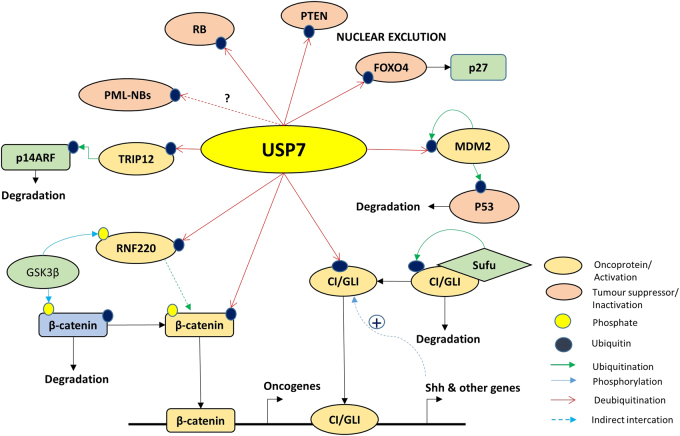
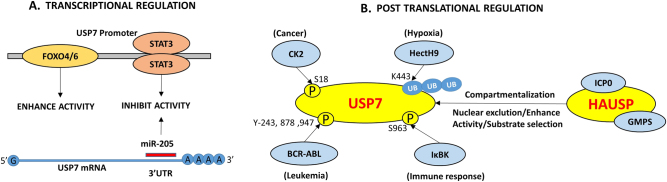
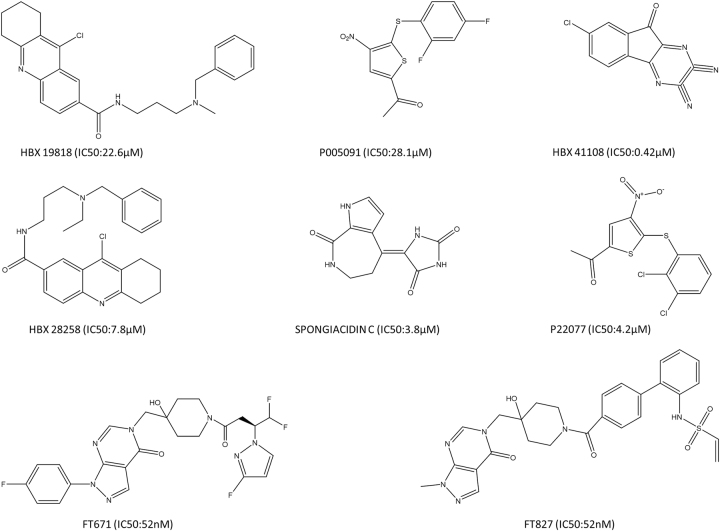
Verification
Claims the paper makes
The claims and statistics of this paper haven’t been checked yet.
Run the check — free, no account needed. It reads the open-access text and checks the sources it cites.
Claims other papers make about this one
Each is checked against this paper’s own text: does it say what the citing paper says it does?
In the citing paper
“In addition to tumor suppressive roles, USP7 also seems to have context-dependent oncogenic functions (Bhattacharya et al., 2018).”
From USP7 Is a Master Regulator of Genome Stability (2020) · cites this paper as Bhattacharya et al., 2018
In the citing paper
“USP7 was initially described as a having a tumor suppressive role, following its identification as a p53 deubiquitinating enzyme (Li et al., 2002; Bhattacharya et al., 2018).”
From USP7 Is a Master Regulator of Genome Stability (2020) · cites this paper as Bhattacharya et al., 2018
Self-check
Percentages, sums and reported differences re-computed from the paper’s own numbers.
The self-check needs the paper’s full text.
Citations
Cites
Mechanisms Underlying Ubiquitination
Pickart, C. M. (2001) · Annual Review of Biochemistry · doi:10.1146/annurev.biochem.70.1.503 · Cited by 3,184
Regulation and cellular roles of ubiquitin-specific deubiquitinating enzymes.
Reyes-Turcu, F. E., Ventii, K. H., & Wilkinson, K. D. (2009) · Annual Review of Biochemistry · doi:10.1146/annurev.biochem.78.082307.091526 · Cited by 1,396
Deubiquitination of p53 by HAUSP is an important pathway for p53 stabilization
Li, M., Chen, D., Shiloh, A., Luo, J., Nikolaev, A. Y., Qin, J., & Gu, W. J. (2002) · Nature · doi:10.1038/nature737 · Cited by 1,048
Mechanism and function of deubiquitinating enzymes
Amerik, A. Y., & Hochstrasser, M. (2004) · Biochimica et Biophysica Acta (BBA) - Molecular Cell Research · doi:10.1016/j.bbamcr.2004.10.003 · Cited by 1,010
A dynamic role of HAUSP in the p53-Mdm2 pathway
Li, M., Brooks, C. L., Kon, N., & Gu, W. (2004) · Molecular Cell · doi:10.1016/s1097-2765(04)00157-1 · Cited by 679
Hu, M., Li, P., Li, M., Li, W., Yao, T., Wu, J.-W., Gu, W. J., Cohen, R. E., & Shi, Y. (2002) · Cell · doi:10.1016/s0092-8674(02)01199-6 · Cited by 666
Atypical ubiquitylation — the unexplored world of polyubiquitin beyond Lys48 and Lys63 linkages
Kulathu, Y., & Komander, D. (2012) · Nature Reviews Molecular Cell Biology · doi:10.1038/nrm3394 · Cited by 619
Chauhan, D., Tian, Z., Nicholson, B., Kumar, K. G. S., Zhou, B., Carrasco, R., McDermott, J. L., Leach, C. A., Fulcinniti, M., Kodrasov, M. P., et al. (2012) · Cancer Cell · doi:10.1016/j.ccr.2012.08.007 · Cited by 589
The deubiquitinylation and localization of PTEN are regulated by a HAUSP-PML network
Song, M. S., Salmena, L., Carracedo, A., Egia, A., Lo-Coco, F., Teruya-Feldstein, J., & Pandolfi, P. P. (2008) · Nature · doi:10.1038/nature07290 · Cited by 548
Everett, R. D., Meredith, M., Orr, A., Cross, A., Kathoria, M., & Parkinson, J. (1997) · The EMBO Journal · doi:10.1093/emboj/16.7.1519 · Cited by 491
Cited by
Sorted by citations
Targeting p53 pathways: mechanisms, structures, and advances in therapy
Wang, H., Guo, M., Wei, H., & Chen, Y. (2023) · Signal Transduction and Targeted Therapy · doi:10.1038/s41392-023-01347-1 · Cited by 1,016
Ubiquitin–proteasome system (UPS) as a target for anticancer treatment
Park, J., Cho, J., & Song, E. J. (2020) · Archives of Pharmacal Research · doi:10.1007/s12272-020-01281-8 · Cited by 430
Wang, J., Toan, S., & Zhou, H. (2020) · Pharmacological Research · doi:10.1016/j.phrs.2020.104771 · Cited by 187
Advances in Discovering Deubiquitinating Enzyme (DUB) Inhibitors
Schauer, N. J., Magin, R. S., Liu, X., Doherty, L. M., & Buhrlage, S. J. (2019) · Journal of Medicinal Chemistry · doi:10.1021/acs.jmedchem.9b01138 · Cited by 191
Qi, S., Cheng, G., Cheng, X., Xu, Z., Xu, B., Zhang, W., & Qin, J. (2020) · Frontiers in Cell and Developmental Biology · doi:10.3389/fcell.2020.00233 · Cited by 167
Metadata
- Authors
- Bhattacharya, S., Chakraborty, D., Basu, M., & Ghosh, M. K.
- Affiliations
- Indian Institute of Chemical Biology (IN)
- Surendranath College (IN)
- Corresponding author
- Ghosh, Mrinal K
- Venue
- Signal Transduction and Targeted Therapy
- Published
- 2018-06-29
- Volume
- 3
- Issue
- 1
- Pages
- 17-17
- ISSN
- 2059-3635 (ISSN-L)
- PMC
- PMC6023882
- OpenAlex
- W2809511392
- Cited by
- 162
- References
- 114
- Citations by year
- 2026: 8 · 2025: 27 · 2024: 16 · 2023: 23 · 2022: 29 · 2021: 15 · 2020: 26 · 2019: 16 · 2018: 1
- FWCI
- 5.34
- Type
- journal article
- Language
- en
- Open access
- gold
- doi.org
- Locations
- Signal Transduction and Targeted Therapy (publishedVersion, cc-by)
- Europe PMC (PubMed Central) (publishedVersion, cc-by)
- PubMed Central (publishedVersion, cc-by)
- PubMed (publishedVersion)
- DOAJ (DOAJ: Directory of Open Access Journals) (submittedVersion)
- Funders
- Department of Biotechnology, Ministry of Science and Technology, India
- Department of Science and Technology, Ministry of Science and Technology, India (SR/NM/NS-1058/2015)
- Council of Scientific and Industrial Research, India
- Topics
- Life Sciences › Biochemistry, Genetics and Molecular Biology › Molecular Biology › Ubiquitin and proteasome pathways
- Health Sciences › Medicine › Oncology › Cancer-related Molecular Pathways
- Life Sciences › Biochemistry, Genetics and Molecular Biology › Molecular Biology › Protein Degradation and Inhibitors
- Keywords
- USP7, deubiquitinase, host-virus interaction, herpesvirus, carcinogenesis, tumor suppression, DNA damage and repair, epigenetic regulation, gene expression regulation, immune function, metabolic disorders, neurological disorders, therapeutic target
About these checks
Registry, retraction, Cites and statistics results are computed, not judged, with one exception: a printed reference that no index lists is read once by a model before it counts as a citation error. Claims are extracted by a model and kept only when their quote appears verbatim in the text; each cited source is then checked, with a model’s help, for whether it says what the claim relies on. Those verdicts can be wrong — read the claim’s quote and the cited source before relying on one.
Statistics and arithmetic are recomputed, not judged.
Confidence bands are shown only for fields calibrated on our annotated test set. None is calibrated yet, so no band is shown.
What counts as a claim ›How we measure confidence ›How we check this ›
Are you an author, or do you see a problem with this page? Request a review
