

Downregulation of MEIS1 mediated by ELFN1-AS1/EZH2/DNMT3a axis promotes tumorigenesis and oxaliplatin resistance in colorectal cancer
Open accessThe DOI matches its Crossref record; 53 of the 53 references it cites were found in a registry or an index.
Abstract
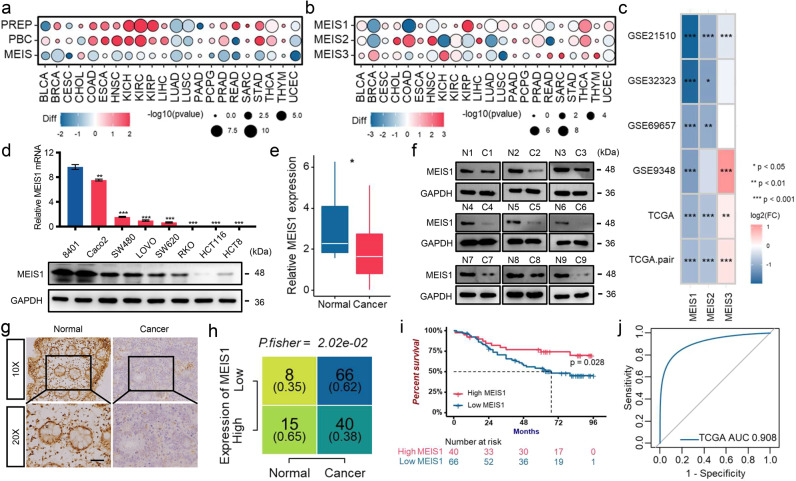
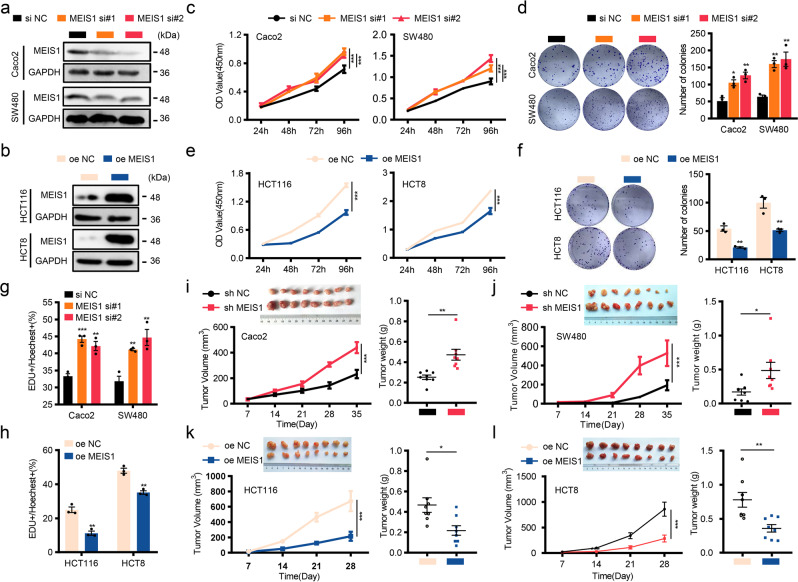
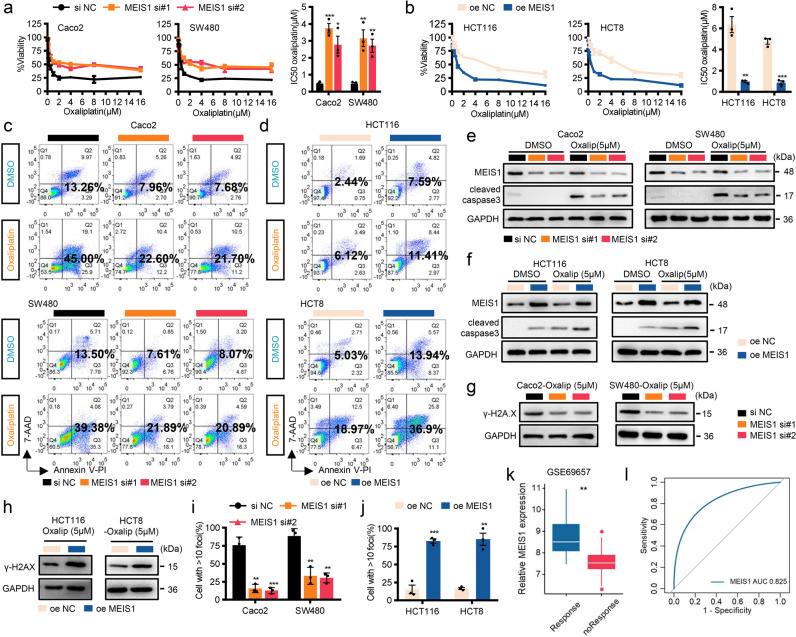
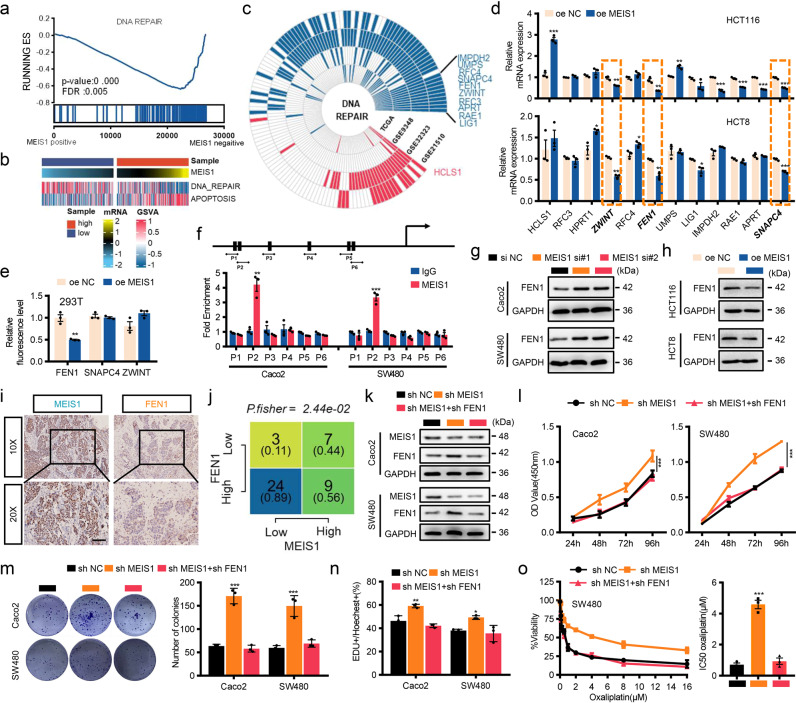
Oxaliplatin is widely used in the frontline treatment of colorectal cancer (CRC), but an estimated 50% of patients will eventually stop responding to treatment due to acquired resistance. This study revealed that diminished MEIS1 expression was detected in CRC and harmed the survival of CRC patients. MEIS1 impaired CRC cell viabilities and tumor growth in mice and enhanced CRC cell sensitivity to oxaliplatin by preventing DNA damage repair. Mechanistically, oxaliplatin resistance following MEIS1 suppression was critically dependent on enhanced FEN1 expression. Subsequently, we confirmed that EZH2-DNMT3a was assisted by lncRNA ELFN1-AS1 in locating the promoter of MEIS1 to suppress MEIS1 transcription epigenetically. Based on the above, therapeutics targeting the role of MEIS1 in oxaliplatin resistance were developed and our results suggested that the combination of oxaliplatin with either ELFN1-AS1 ASO or EZH2 inhibitor GSK126 could largely suppress tumor growth and reverse oxaliplatin resistance. This study highlights the potential of therapeutics targeting ELFN1-AS1 and EZH2 in cell survival and oxaliplatin resistance, based on their controlling of MEIS1 expression, which deserve further verification as a prospective therapeutic strategy.
Overview
The claims and statistics of this paper haven’t been checked yet.
Free: it reads the open-access text and checks the first 5 claims that cite a source we can check. Create a free account to check every claim.
Integrity signals
Registry
Cites
Statistics
Figures
Verification
Claims the paper makes
The claims and statistics of this paper haven’t been checked yet.
Free: it reads the open-access text and checks the first 5 claims that cite a source we can check. Create a free account to check every claim.
Claims other papers make about this one
Each is checked against this paper’s own text: does it say what the citing paper says it does?
The cited source says what the claim attributes to it.
In the citing paper
“Targeting EZH2 may also be an effective strategy to overcome oxaliplatin resistance, since EZH2 was shown to promote oxaliplatin resistance in CRC cells, while EZH2 inhibitor suppressed tumor growth and sensitized CRC cells to oxaliplatin [172,173].”
From Mechanisms and Strategies to Overcome Drug Resistance in Colorectal Cancer (2025) · cites this paper as [173]
Self-check
Percentages, sums and reported differences re-computed from the paper’s own numbers.
The self-check needs the paper’s full text.
Citations
Cites
Sung, H., Ferlay, J., Siegel, R. L., Laversanne, M., Soerjomataram, I., Jemal, A., & Bray, F. (2021) · CA: A Cancer Journal for Clinicians · doi:10.3322/caac.21660 · Cited by 108,699
Shrestha, S., & Offer, S. M. (2016) · Medical Epigenetics · doi:10.1159/000444713 · Cited by 8,914
lincRNAs: Genomics, Evolution, and Mechanisms
Ulitsky, I., & Bartel, D. P. (2013) · Cell · doi:10.1016/j.cell.2013.06.020 · Cited by 2,608
Chemokines in the cancer microenvironment and their relevance in cancer immunotherapy
Nagarsheth, N., Wicha, M. S., & Zou, W. (2017) · Nature Reviews Immunology · doi:10.1038/nri.2017.49 · Cited by 2,206
The Polycomb group protein EZH2 directly controls DNA methylation
Viré, E., Brenner, C., Deplus, R., Blanchon, L., Fraga, M., Didelot, C., Morey, L., Van Eynde, A., Bernard, D., Vanderwinden, J.-M., et al. (2006) · Nature · doi:10.1038/nature04431 · Cited by 2,204
EZH2 inhibition as a therapeutic strategy for lymphoma with EZH2-activating mutations
McCabe, M. T., Ott, H. M., Ganji, G., Korenchuk, S., Thompson, C., Van Aller, G. S., Liu, Y., Graves, A. P., III, A. D. P., Diaz, E., et al. (2012) · Nature · doi:10.1038/nature11606 · Cited by 1,786 · cited 1×
“Among them, GSK126 with a highly selective and inhibitory effect on EZN2 was investigated further in this study.(25) GSK126 did increased the protein level of MEIS1 in HCT116/L-OHP cells in a dose-dependent manner (Supplementary Fig.”
BackgroundKogo, R., Shimamura, T., Mimori, K., Kawahara, K., Imoto, S., Sudo, T., Tanaka, F., Shibata, K., Suzuki, A., Komune, S., et al. (2011) · Cancer Research · doi:10.1158/0008-5472.can-11-1021 · Cited by 1,238
Xiang, J.-F., Yin, Q.-F., Chen, T., Zhang, Y., Zhang, X.-O., Wu, Z., Zhang, S., Wang, H.-B., Ge, J., Lu, X., et al. (2014) · Cell Research · doi:10.1038/cr.2014.35 · Cited by 726
DNA Methyltransferases, DNA Damage Repair, and Cancer
Jin, B., & Robertson, K. D. (2013) · Advances in Experimental Medicine and Biology · doi:10.1007/978-1-4419-9967-2_1 · Cited by 519
Advanced colorectal cancer: ESMO Clinical Practice Guidelines for treatment
Van Cutsem, E., Nordlinger, B., & Cervantes, A. (2010) · Annals of Oncology · doi:10.1093/annonc/mdq222 · Cited by 479
Cited by
Items 101–166 of 166
Dai, W., Mo, W., Xu, W., Han, D., & Xu, X. (2023) · Aging · doi:10.18632/aging.205079 · Cited by 6
Liu, J., Duan, Y., Xiao, Q., Deng, S., Li, A., Wu, D., Wu, J., Liu, C., Yi, H., Wang, M., et al. (2026) · Cell Death and Differentiation · doi:10.1038/s41418-026-01714-9 · Cited by 5
Self-citationLi, S., Yang, S., Wang, H., Hui, T., Cheng, M., Zhang, X., Li, B.-K., & Wang, G. (2024) · World Journal of Gastrointestinal Oncology · doi:10.4251/wjgo.v16.i4.1564 · Cited by 5
Du, P., Chen, Y., Li, Q., Gai, Z., Bai, H., Zhang, L.-Q., Liu, Y., Cao, Y., Zhai, Y., & Jin, W. Y. (2024) · Database · doi:10.1093/database/baae029 · Cited by 5
Revisiting epigenetic regulation in cancer: Evolving trends and translational implications
Khan, M. A., Mishra, D., Kumar, R., & Siddique, H. R. (2024) · International review of cytology · doi:10.1016/bs.ircmb.2024.09.002 · Cited by 5
Yang, B., Cao, H.-X., He, Y., Ouyang, J.-J., Lv, M., Li, Y., & Lu, Y. (2025) · World Journal of Gastroenterology · doi:10.3748/wjg.v31.i12.103991 · Cited by 5
Self-citationCao, J.-P., Yang, Y., Li, X.-S., Zhu, L.-X., Hu, R., & Feng, P.-F. (2024) · Scientific Reports · doi:10.1038/s41598-024-75457-3 · Cited by 5
Multimodal foundation model predicts zero-shot functional perturbations and cell fate dynamicsPreprint
Yang, Z., Fan, X., Lan, M., Tang, X., Zheng, Z., Liu, B., You, Y., Tian, L., Church, G. M., Liu, X., et al. (2024) · bioRxiv (Cold Spring Harbor Laboratory) · doi:10.1101/2024.12.19.629561 · Cited by 5
Lai, C., Jia, X., Chen, Y., Chen, K., Wang, F., Zhang, Q., Xiang, X., Chen, Z., Xu, L., & Dai, S. (2025) · International Journal of Molecular Medicine · doi:10.3892/ijmm.2025.5675 · Cited by 4
Geniposide reverses oxaliplatin resistance in colorectal cancer via suppression of PI3K/AKT pathway
Chen, S., & Chen, A. (2025) · Revista de investigaci�n Cl�nica · doi:10.1016/j.ric.2025.100022 · Cited by 4
Li, G., Wang, D., & Chen, G. (2025) · BMC Cancer · doi:10.1186/s12885-025-15241-2 · Cited by 4
Zhang, C., Zeng, M., Xu, Y., Huang, B., Shi, P., Zhu, X., & Cao, Y. (2024) · Gene · doi:10.1016/j.gene.2024.148406 · Cited by 4
Krasnytska, D. A., Khita, O. O., Viletska, Y. M., Minchenko, D. O., Halkin, O. V., Rudnytska, O. V., Hoian, S. L., & Minchenko, О. H. (2024) · Endocrine Regulations · doi:10.2478/enr-2024-0006 · Cited by 4
Xia, G., Zhou, G., Jiang, W., Chu, C., Wang, L., & Moorthy, B. (2024) · International Journal of Molecular Sciences · doi:10.3390/ijms25073781 · Cited by 4
Fahim, S. A., Ragheb, M., Fayed, I. H., Osama, A., Karam, A., Magdeldin, S., Metwale, R., Elsayed, M. D. A. A., Abdellatif, A., Sadek, H. A., et al. (2025) · Cells · doi:10.3390/cells14020125 · Cited by 4
Li, S., Wang, X., Liu, Y., Xiao, J., & Yi, J. (2023) · Frontiers in Genetics · doi:10.3389/fgene.2023.1170640 · Cited by 4
Unlocking the Epigenetic Landscape of Colorectal Cancer: A Step Toward Epigenetics to Precision
Elbrashy, M. M., Farouk, S., Hamdy, N. Μ., Metwally, H., & Din, N. G. B. E. (2026) · Sub-cellular biochemistry/Subcellular biochemistry · doi:10.1007/978-3-032-08530-6_4 · Cited by 3
Lin, Q., Wu, F., Zhang, L., Zhang, Y., Sun, S., Wu, X., & Hx, Y. (2026) · Acta Biochimica et Biophysica Sinica · doi:10.3724/abbs.2026013 · Cited by 3
Pandya, G., Singh, A. P., Saurav, S., Raju, S., Kumari, R., Sharma, R., Sengupta, S., Goyal, V., Das, B. C., Sethi, G., et al. (2026) · Cell Death Discovery · doi:10.1038/s41420-026-03040-y · Cited by 3
Targeting EZH2 in Cancer: From Molecular Mechanisms to Clinical Translation
Zhong, X., Li, J., Pan, M., Ke, X., & Cui, H. (2026) · MedComm – Oncology · doi:10.1002/mog2.70070 · Cited by 4
Self-citationTargeting LIG1 to overcome oxaliplatin resistance by inducing PANoptosis in colorectal cancer
Gao, Q., Chen, M., Ling, H., 盛勤松, Zhu, Z., Li, L., He, J., Xu, F., Huang, Y., Qiao, Y., et al. (2026) · Drug Resistance Updates · doi:10.1016/j.drup.2026.101445 · Cited by 3
MEIS1: From functional versatility to post-transcriptional/translational regulation
Fahim, S. A., Sobky, S. A. E., Abdellatif, A., Fawzy, I. O., & Abdelaziz, A. I. (2025) · Life Sciences · doi:10.1016/j.lfs.2025.123683 · Cited by 3
A novel regulator in cancer initiation and progression: long noncoding RNA SHNG9
Zhao, M., Zhang, Y., & Shen, S. (2022) · Clinical & Translational Oncology · doi:10.1007/s12094-022-03060-x · Cited by 3
Chen, M., Zhou, Y., Fu, Z., & Wu, C. (2025) · Acta Biochimica et Biophysica Sinica · doi:10.3724/abbs.2024237 · Cited by 2
Hjazi, A. M., Hussn, A., Kareem, A. K., Alshahrani, M. Y., Malathi, H., Nayak, P. P., Chauhan, A. S., & Sharma, J. (2025) · Experimental Cell Research · doi:10.1016/j.yexcr.2025.114648 · Cited by 2
Roles of FEN1 in tumor biology: Mechanisms, therapeutic implications, and emerging strategies
Zhang, Y., Chen, W., Shao, L., Heng, Y., Lei, L., Wang, X., Hu, J., Huang, H., & Xin, X. (2025) · Critical Reviews in Oncology/Hematology · doi:10.1016/j.critrevonc.2025.105038 · Cited by 2
Wang, H., Du, F., Zhang, H., Li, J., Xiong, Q., Zhang, Y., Chen, N., Liu, Y., Guo, S., Xie, Q., et al. (2026) · Cellular and Molecular Life Sciences · doi:10.1007/s00018-025-05998-x · Cited by 2
Self-citationZhu, B., Chen, H., & Luo, H. (2026) · Molecular Biology Reports · doi:10.1007/s11033-026-11690-5 · Cited by 2
Ding, X., Zhou, Y., He, L., Kang, H., Wen, Y., Xu, J., Zhu, C., Luo, L., & Zeng, Q. (2024) · Chemical Biology & Drug Design · doi:10.1111/cbdd.70012 · Cited by 2
Differential H3K4me3 Domains in Normal and Colorectal Cancer Cells Reveal Novel Epigenetic Targets
Bahia, R. K., Lopez, C. L., Nardocci, G., & Davie, J. (2025) · International Journal of Molecular Sciences · doi:10.3390/ijms26062546 · Cited by 2
Su, Y., Xu, B., Gao, C., Pei, W., Ma, M., Zhang, W., Hu, T., Zhang, F., & Zhang, S. (2025) · Biomolecules · doi:10.3390/biom15050630 · Cited by 2
DR6 Augments Colorectal Cancer Cell Growth, Invasion, and Stemness by Activating AKT/NF-κB Pathway
Jia, J., Huang, Y., Chen, Q., Hou, J., Liu, Y., Xie, L., Li, X., & Yang, C. (2024) · Biochemical Genetics · doi:10.1007/s10528-024-10673-0 · Cited by 2
Shah, A., & Folpe, A. L. (2025) · Surgical pathology clinics · doi:10.1016/j.path.2025.01.010 · Cited by 1
Zhang, C., Hao, W., Wang, X., Guo, H., He, L., Jiao, Y., Wang, Y., Zheng, X., Li, Z., Han, Q., et al. (2025) · International Journal of Molecular Medicine · doi:10.3892/ijmm.2025.5583 · Cited by 1
Li, A., Wu, Q., Xu, Y., Gu, Y., Wang, X., Liu, J., Wang, Y., Xie, J., Fu, X., & Li, Y. (2025) · Journal of Cellular and Molecular Medicine · doi:10.1111/jcmm.70721 · Cited by 1
Self-citationChen, C., Li, J., Wen, B., Dou, W., & Haisheng, Z. (2025) · Scientific Reports · doi:10.1038/s41598-025-23339-7 · Cited by 1
Self-citationLiang, X., Yao, J., Jiao, W., Li, X., Yang, B., & Fan, H. (2025) · Cellular and Molecular Life Sciences · doi:10.1007/s00018-025-05992-3 · Cited by 1
Lu, P., Zheng, C., Zhang, J., Zhu, X., Chen, X., Zhang, J., Cao, Y., & Huang, Z. (2026) · Discover Oncology · doi:10.1007/s12672-026-04530-2 · Cited by 1
Self-citationZhu, Z., Zhang, M., Di, Z., Tao, X., Dai, Y., Zhan, Z., & Chen, H. (2026) · BMC Gastroenterology · doi:10.1186/s12876-026-04663-2 · Cited by 1
Epigenetic and post-transcriptional integration of lncRNAs and EZH2 in GI tumorigenesis
Mohammad, S. I., Gajjar, T. B., Baig, M. R., Vasudevan, A., Hanumanthayya, M., Prasannakumar, M., Shukla, S. K., Tailor, N. K., Hussien, S., & El‐Sehrawy, A. A. M. A. (2026) · Experimental Cell Research · doi:10.1016/j.yexcr.2026.115020 · Cited by 1
Xie, J., Wu, Q., Xu, Y., Liu, J., Wang, Y., Wang, X., Fu, X., & Li, Y. (2026) · International Journal of Medical Sciences · doi:10.7150/ijms.129345 · Cited by 1
Self-citationA novel oxaliplatin-resistant gene signatures predicting survival of patients in colorectal cancer
Gu, Q., LAI, C., Guan, X., Zhu, J., Zhan, T., & ZHANG, J. (2024) · Biocell · doi:10.32604/biocell.2023.028336 · Cited by 1
Hu, S.-W., & Wang, M. (2025) · Discover Oncology · doi:10.1007/s12672-025-02267-y · Cited by 1
Duan, Y., Li, K., Dou, Y., Dong, Y., Huang, B., Guo, J., Kong, P., Liu, Y., Liu, B., Long, M., et al. (2022) · Research Square · doi:10.21203/rs.3.rs-1766741/v1
Pan, M., Feng, Y., Ding, P., Ning, J., Wang, Y., Wang, Z., Duan, H., Shao, C., Jiang, M., Ren, X., et al. (2022) · Research Square · doi:10.21203/rs.3.rs-2191321/v1
Kayacık, N., Kurter, H., Sever, T., Başbınar, Y., & Calibasi‐Kocal, G. (2025) · Oncology Letters · doi:10.3892/ol.2025.14966
Chen, Y., Zhu, X., Lin, C., Xu, R., Xu, P., Xin, L., Li, L., & Zhang, L. (2025) · Discover Oncology · doi:10.1007/s12672-025-03347-9
Wu, R., Hou, Y., Gai, Y., Tan, J., Zhou, Y. F., Jiang, D., Wang, K., Gao, Z., & Xia, X. (2025) · Molecular Pharmaceutics · doi:10.1021/acs.molpharmaceut.5c01145
Hu, S., Xia, K., Huang, X., Zhao, Y., Zhang, Q., Huang, D., Xu, W., Chen, Z., Wang, C., & Zhang, Z. (2024) · Figshare · doi:10.6084/m9.figshare.26620960
Li, P., Xu, X., Zhang, X., Xie, H., Xiao, C., & Yang, Y. (2025) · Research Square · doi:10.21203/rs.3.rs-8214331/v1
Qi, G., Yang, X., Xie, Y., Liao, L., Zhang, Y., Bing, W., Li, Y., Zhong, Y., & Yang, X. (2026) · Microchimica Acta · doi:10.1007/s00604-026-07846-6
Self-citationSilencing of circRERE(4-5) inhibits ONECUT2-mediated tumorigenesis and metastasis in gastric cancer
Xiao, H., Yu, B., Ma, M., Zhong, C., Shi, M., Ye, Y., Hu, Q., Liu, S., Long, Q., Zhu, K., et al. (2026) · Frontiers in Immunology · doi:10.3389/fimmu.2026.1686702
Chen, Y., Gao, Y., Wang, H., Li, W., Zhou, F., Sun, H., Yu, J., Zou, D., & Wang, F. (2026) · Journal of Experimental & Clinical Cancer Research · doi:10.1186/s13046-026-03706-6
Shen, C., Maimaiti, T., Kuerban, G., Abulimiti, M., Hu, J., Yalihong, Z., & Maimaiti, A. (2026) · Biomedicines · doi:10.3390/biomedicines14050951
Li, S., Jiang, X., Oyang, L., Xia, L., Tan, S., Ren, Z., Peng, Q., Lin, J., Liao, Q., & Zhou, Y. (2026) · International Journal of Biological Sciences · doi:10.7150/ijbs.125799
Sun, Q., Zhao, D., Yao, Z., Sun, R., & Zhang, Y. (2026) · Korean Journal of Physiology and Pharmacology · doi:10.4196/kjpp.25.448
Self-citationHu, Y. R., Li, S., Zhu, M., Gong, C., & Fang, Z. (2026) · Molecular Carcinogenesis · doi:10.1002/mc.70147
Khakimov, A. R., Лебедева, А. И., Мусина, Л. А., & Khismatullina, Z. R. (2026) · Russian Journal of Veterinary Pathology · doi:10.23947/2949-4826-2026-25-2-14-24
TFAM loss drives oxaliplatin resistance by linking mtDNA release to STING–TBK1-mediated lysophagy
Wang, X., Wang, X.-H., Fan, Z.-H., Ding, X.-F., Zhong, J.-R., Zhu, B.-M., Lyu, J., Wang, S., He, Q.-Y., Wang, Y., et al. (2026) · Oncogene · doi:10.1038/s41388-026-03990-8
Yingchen, W., Yinhang, W., Jing, Z., Jian, C., Zheng, W., Jiang, L., & Han, S. (2026) · BMC Cancer · doi:10.1186/s12885-026-16367-7
Long, Y., Li, X., Zhu, Y., Shen, Y., Zhou, X., Wei, Z., Yue, Y., Zhang, J., & Miao, C. (2026) · Oncogene · doi:10.1038/s41388-026-04024-z
Liu, S., Ming, D., Xu, Y.-H., Li, B.-H., Shi, M., Xi, S., Cui, J., Yang, J., Xiong, X., He, S., et al. (2026) · Proceedings of the National Academy of Sciences · doi:10.1073/pnas.2600167123
Li, S., Wang, X., Liu, Y., Xiao, J., & Yi, J. (2023) · doi:10.3389/fgene.2023.1170640.s002
Wu, Q., Tian, R., He, X., Liu, J., Ou, C., Li, Y., & Fu, X. (2023) · doi:10.3389/fimmu.2023.1164408.s003
Self-citationLi, Y., Tian, R., Liu, J., Li, J., Tan, H., Wu, Q., & Fu, X. (2022) · doi:10.3389/fimmu.2022.940801.s007
Self-citation
Metadata
- Authors
- Li, Y., Gan, Y., Liu, J., Li, J., Zhou, Z., Tian, R., Sun, R., Liu, J., Xiao, Q., Li, Y., Lu, P., Peng, Y., Peng, Y., Shu, G., & Yin, G.
- Affiliations
- Central South University (CN)
- Corresponding author
- Yin, Gang
- ORCID
- Venue
- Signal Transduction and Targeted Therapy
- Published
- 2022-03-30
- Volume
- 7
- Issue
- 1
- Pages
- 87-87
- ISSN
- 2059-3635 (ISSN-L)
- PMC
- PMC8964798
- OpenAlex
- W4220837638
- Cited by
- 153
- References
- 53
- Citations by year
- 2026: 19 · 2025: 38 · 2024: 50 · 2023: 36 · 2022: 10
- FWCI
- 14.09
- Type
- journal article
- Language
- en
- Open access
- gold
- doi.org
- Licence
- cc-by
- creativecommons.org/licenses/by/4.0 (tdm)
- creativecommons.org/licenses/by/4.0 (vor)
- Locations
- Signal Transduction and Targeted Therapy (publishedVersion, cc-by)
- PubMed Central (publishedVersion, cc-by)
- PubMed (publishedVersion)
- DOAJ (DOAJ: Directory of Open Access Journals) (submittedVersion, cc-by-sa)
- Funders
- National Natural Science Foundation of China (82173376)
- Key Project of Hunan Province
- Topics
- Life Sciences › Biochemistry, Genetics and Molecular Biology › Cancer Research › Cancer-related molecular mechanisms research
- Life Sciences › Biochemistry, Genetics and Molecular Biology › Molecular Biology › Epigenetics and DNA Methylation
- Health Sciences › Medicine › Oncology › Colorectal Cancer Treatments and Studies
- Keywords
- MEIS1, EZH2, DNMT3A, oxaliplatin resistance, colorectal cancer, FEN1, DNA repair, long non-coding RNA, transcriptional repression, GSK126, antisense oligonucleotides, tumor growth
- MeSH terms
- Enhancer of Zeste Homolog 2 Protein, Oxaliplatin, Animals, Cell Transformation, Neoplastic, Humans, Colorectal Neoplasms, Down-Regulation, Cell Proliferation, Mice, Carcinogenesis
About these checks
Registry, retraction, Cites and statistics results are computed, not judged, with one exception: a printed reference that no index lists is read once by a model before it counts as a citation error. Claims are extracted by a model and kept only when their quote appears verbatim in the text; each cited source is then checked, with a model’s help, for whether it says what the claim relies on. Those verdicts can be wrong — read the claim’s quote and the cited source before relying on one.
Statistics and arithmetic are recomputed, not judged.
Confidence bands are shown only for fields calibrated on our annotated test set. None is calibrated yet, so no band is shown.
What counts as a claim ›How we measure confidence ›How we check this ›
Are you an author, or do you see a problem with this page? Request a review
Data sources
Bibliographic data: Semantic Scholar, OpenAlex, Crossref.
Contains information from the Semantic Scholar Academic Graph Datasets, made available under the ODC Attribution License (ODC-BY 1.0).
Semantic Scholar’s data is described in: Kinney, R., et al. (2023). The Semantic Scholar Open Data Platform. arXiv:2301.10140.
