

APOE interacts with ACE2 inhibiting SARS-CoV-2 cellular entry and inflammation in COVID-19 patients
Open accessThe DOI matches its Crossref record; 43 of the 43 references it cites were found in a registry or an index.
Abstract
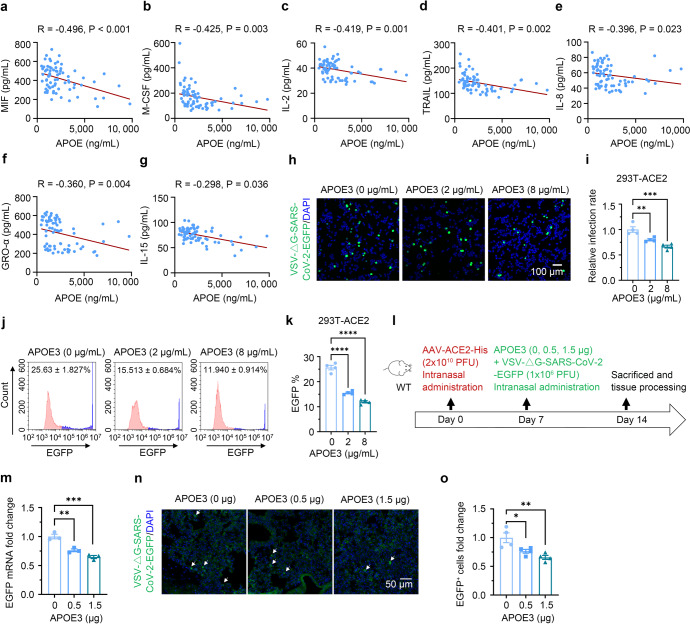
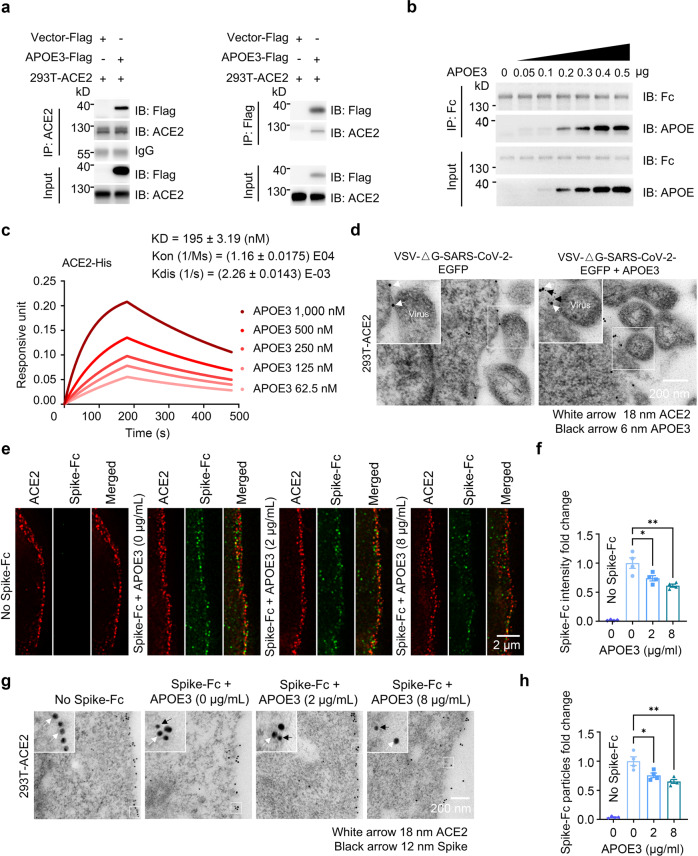
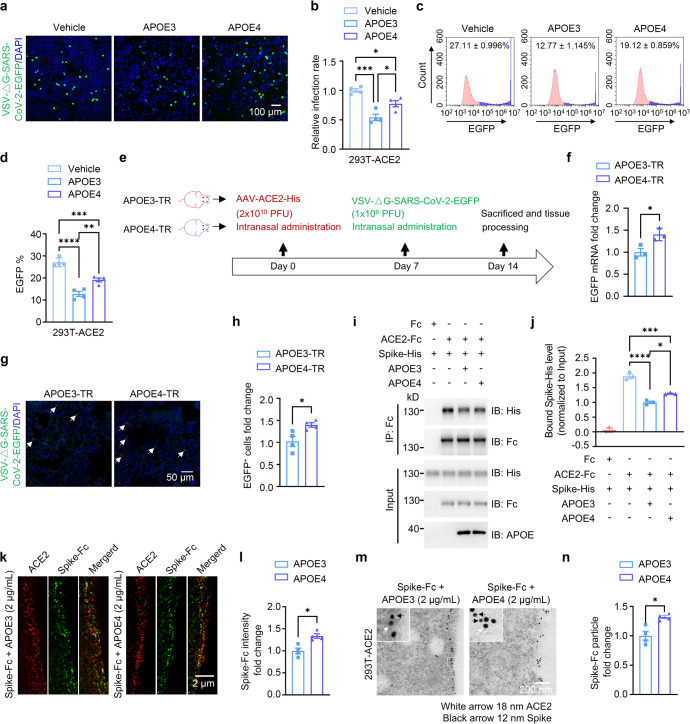
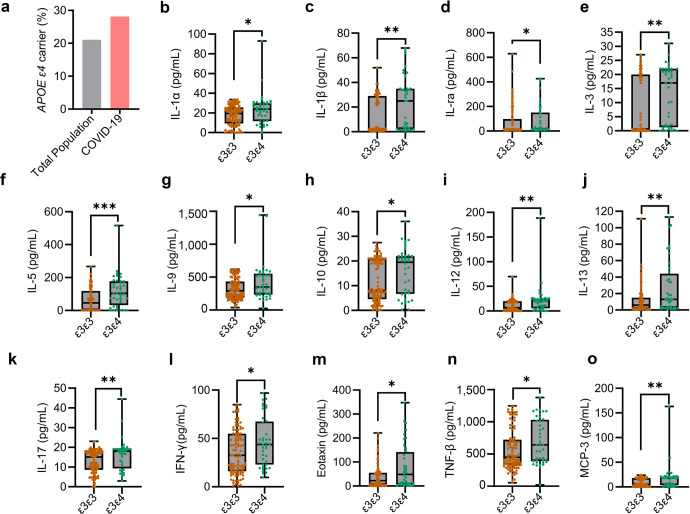
Apolipoprotein E (APOE) plays a pivotal role in lipid including cholesterol metabolism. The APOE ε4 (APOE4) allele is a major genetic risk factor for Alzheimer’s and cardiovascular diseases. Although APOE has recently been associated with increased susceptibility to infections of several viruses, whether and how APOE and its isoforms affect SARS-CoV-2 infection remains unclear. Here, we show that serum concentrations of APOE correlate inversely with levels of cytokine/chemokine in 73 COVID-19 patients. Utilizing multiple protein interaction assays, we demonstrate that APOE3 and APOE4 interact with the SARS-CoV-2 receptor ACE2; and APOE/ACE2 interactions require zinc metallopeptidase domain of ACE2, a key docking site for SARS-CoV-2 Spike protein. In addition, immuno-imaging assays using confocal, super-resolution, and transmission electron microscopies reveal that both APOE3 and APOE4 reduce ACE2/Spike-mediated viral entry into cells. Interestingly, while having a comparable binding affinity to ACE2, APOE4 inhibits viral entry to a lesser extent compared to APOE3, which is likely due to APOE4’s more compact structure and smaller spatial obstacle to compete against Spike binding to ACE2. Furthermore, APOE ε4 carriers clinically correlate with increased SARS-CoV-2 infection and elevated serum inflammatory factors in 142 COVID-19 patients assessed. Our study suggests a regulatory mechanism underlying SARS-CoV-2 infection through APOE interactions with ACE2, which may explain in part increased COVID-19 infection and disease severity in APOE ε4 carriers.
Overview
The claims and statistics of this paper haven’t been checked yet.
Free: it reads the open-access text and checks the first 5 claims that cite a source we can check. Create a free account to check every claim.
Integrity signals
Registry
Cites
Statistics
Figures
Verification
Claims the paper makes
The claims and statistics of this paper haven’t been checked yet.
Free: it reads the open-access text and checks the first 5 claims that cite a source we can check. Create a free account to check every claim.
Claims other papers make about this one
Each is checked against this paper’s own text: does it say what the citing paper says it does?
The source backs part of the claim, not all of it — or backs it for a different population, condition or comparison.
In the citing paper
“APOE4 as a significant genetic risk factor for AD also interacts with angiotensin-converting enzyme 2 (ACE2) to hinder SARS-CoV-2 infection and influence inflammation levels.605”
From Recent advances in Alzheimer's disease: Mechanisms, clinical trials and new drug development strategies. (2024) · cites this paper as [605]
Experimental — accuracy not yet measuredThe source backs part of the claim, not all of it — or backs it for a different population, condition or comparison.
In the citing paper
“From a genetic perspective, some genes such as APOE4 and oligoadenylate synthetase 1 (OAS1) play important roles in susceptibility to both COVID-19 and AD.”
From Recent advances in Alzheimer's disease: Mechanisms, clinical trials and new drug development strategies. (2024) · cites this paper as [605]
Experimental — accuracy not yet measured
Self-check
Percentages, sums and reported differences re-computed from the paper’s own numbers.
The self-check needs the paper’s full text.
Citations
Cites
Structure of the SARS-CoV-2 spike receptor-binding domain bound to the ACE2 receptor
Lan, J., Ge, J., Yu, J., Shan, S., Zhou, H., Fan, S., Zhang, Q., Shi, X., Wang, Q., Zhang, L., et al. (2020) · Nature · doi:10.1038/s41586-020-2180-5 · Cited by 5,983
Structural basis for the recognition of SARS-CoV-2 by full-length human ACE2
Yan, R., Zhang, Y., Li, Y., Xia, L., Guo, Y., & Zhou, Q. (2020) · Science · doi:10.1126/science.abb2762 · Cited by 5,040 · cited 1×
“APOE genotype has also been associated with other viral HSV-1 (herpes simplex virus type 1) and HIV-1 (human immunodeficiency virus type 1) infection,(34,35) which also requires interactions with viral docking proteins.(36) Future studies may determine whether APOE concentrations and APOE4 status can likewise modulate…”
BackgroundSelf-citationApolipoprotein E and Alzheimer disease: risk, mechanisms and therapy
Liu, C.-C., Kanekiyo, T., Xu, H., & Bu, G. (2013) · Nature Reviews Neurology · doi:10.1038/nrneurol.2012.263 · Cited by 3,459
Self-citationClinical and immunological assessment of asymptomatic SARS-CoV-2 infections
Long, Q.-X., Tang, X.-J., Shi, Q.-L., Li, Q., Deng, H.-J., Yuan, J., Hu, J.-L., Xu, W., Zhang, Y., Lv, F.-J., et al. (2020) · Nature Medicine · doi:10.1038/s41591-020-0965-6 · Cited by 2,686
Self-citationZiegler, C. G. K., Allon, S. J., Nyquist, S. K., Mbano, I. M., Miao, V. N., Tzouanas, C. N., Cao, Y., Yousif, A. S., Bals, J., Hauser, B. M., et al. (2020) · Cell · doi:10.1016/j.cell.2020.04.035 · Cited by 2,284
SARS-CoV-2 is associated with changes in brain structure in UK Biobank
Douaud, G., Lee, S., Alfaro-Almagro, F., Arthofer, C., Wang, C., McCarthy, P., Lange, F., Andersson, J. L. R., Griffanti, L., Duff, E., et al. (2022) · Nature · doi:10.1038/s41586-022-04569-5 · Cited by 1,646 · cited 1×
“Analyses of multi-modal brain imaging data showed that gray matter thickness in the orbitofrontal cortex and global brain size are reduced in individuals who have been exposed to SARS-CoV-2 infection, when compared to same individuals before the viral infection.(27) Likewise, APOE4 has also been known to associate wit…”
BackgroundHydrolysis of Biological Peptides by Human Angiotensin-converting Enzyme-related Carboxypeptidase
Vickers, C., Hales, P., Kaushik, V., Dick, L., Gavin, J., Tang, J., Godbout, K., Parsons, T., Baronas, E., Hsieh, F., et al. (2002) · Journal of Biological Chemistry · doi:10.1074/jbc.m200581200 · Cited by 1,407
The pathogenicity of SARS-CoV-2 in hACE2 transgenic mice
Bao, L., Deng, W., Huang, B., Gao, H., Liu, J., Ren, L., Wei, Q., Yu, P., Xu, Y., Qi, F., et al. (2020) · Nature · doi:10.1038/s41586-020-2312-y · Cited by 1,126
Molecular and cellular mechanisms underlying the pathogenesis of Alzheimer’s disease
Guo, T., Zhang, D., Zeng, Y., Huang, T. Y., Xu, H., & Zhao, Y. (2020) · Molecular Neurodegeneration · doi:10.1186/s13024-020-00391-7 · Cited by 994
Self-citationSARS-CoV-2 viral load is associated with increased disease severity and mortality
Fajnzylber, J., Regan, J., Coxen, K., Corry, H., Wong, C., Rosenthal, A., Worrall, D., Giguel, F., Piechocka-Trocha, A., Atyeo, C., et al. (2020) · Nature Communications · doi:10.1038/s41467-020-19057-5 · Cited by 906 · cited 1×
“For instance, a higher viral load of SARS-CoV-2 is linked to increased inflammatory markers, and disease severity and mortality in COVID-19 patients.(3) Several genetic factors have been associated with COVID-19 susceptibility and severity, including ACE2, TMPRSS2, IL10RB, PLSCR1, ATP11A, MUC1, and APOE.”
Background
Cited by
Zhang, J., Zhang, Y., Wang, J., Xia, Y., Zhang, J., & Chen, L. (2024) · Signal Transduction and Targeted Therapy · doi:10.1038/s41392-024-01911-3 · Cited by 1,138
Self-citationApolipoprotein E and viral infection: Risks and Mechanisms
Chen, F., Ke, Q., Wei, W., Cui, L., & Wang, Y. (2023) · Molecular Therapy — Nucleic Acids · doi:10.1016/j.omtn.2023.07.031 · Cited by 64
Huang, P., Zhang, L., Tan, Y., & Chen, S. (2023) · Translational Neurodegeneration · doi:10.1186/s40035-023-00337-1 · Cited by 63
“They postulated that this disparity may be due to the more compact structure of APOE4 and its smaller spatial obstacle to compete against Spike protein binding to the ACE2 receptor [209].”
BackgroundApoE4 associated with severe COVID-19 outcomes via downregulation of ACE2 and imbalanced RAS pathway
Chen, F., Chen, Y., Ke, Q., Wang, Y., Gong, Z., Chen, X., Cai, Y., Li, S., Sun, Y., Peng, X., et al. (2023) · Journal of Translational Medicine · doi:10.1186/s12967-023-03945-7 · Cited by 52
“Notable, recently Xu’s group also detected the association between ApoE and ACE2, and this interaction exhibits an inhibitory effect of SARS-CoV-2 pseudo-viral infection [15].”
BackgroundPathogenic mechanisms of cardiovascular damage in COVID-19
Shao, H., & Yin, R. (2024) · Molecular Medicine · doi:10.1186/s10020-024-00855-2 · Cited by 52
“However, the inhibitory effect of APOE4 was lower due to different conformational structures (Zhang et al. 2022).”
BackgroundThe Molecular Mechanisms of Cognitive Dysfunction in Long COVID: A Narrative Review
Popa, E., Popa, A. E., Poroch, M., Poroch, V., Ungureanu, M. I., Slănină, A. M., Bacușcă, A. I., & Coman, A. E. (2025) · International Journal of Molecular Sciences · doi:10.3390/ijms26115102 · Cited by 50
“APOE ε 4 carriers, already at elevated risk for AD, have shown increased vulnerability to severe COVID-19 and its neurological sequelae [161,162], likely due to underlying impairments in lipid metabolism, immune regulation, and vascular integrity.”
Chen, J., Chen, J., Lei, Z., Zhang, F., Zeng, L., Wu, X., Li, S., & Tan, J. (2023) · Translational Psychiatry · doi:10.1038/s41398-023-02692-z · Cited by 34
Li, X., Hu, B., Xiaoyan, G., Wang, Z., Zhou, Y., Sun, H., Zhang, X., Li, Y., Huang, X., Zhao, Y., et al. (2023) · Journal of Neuroinflammation · doi:10.1186/s12974-023-02774-1 · Cited by 29
“IL‐1β and TNF‐α protein assay Protein levels of IL-1β and TNF-α in the supernatant of mouse brain lysate or conditioned medium from primary microglia were measured according to the previous methods [23].”
MethodSelf-citationDeep spatial proteomics reveals region-specific features of severe COVID-19-related pulmonary injury
Mao, Y., Chen, Y., Li, Y., Ma, L., Wang, X., Wang, Q. M., He, A., Liu, X., Dong, T., Gao, W., et al. (2024) · Cell Reports · doi:10.1016/j.celrep.2024.113689 · Cited by 23
Jiao, B., Ouyang, Z., Liu, Y., Zhang, C., Xu, T., Yang, Q., Zhang, S., Zhu, Y., Wan, M., Xiao, X., et al. (2025) · Alzheimer s Research & Therapy · doi:10.1186/s13195-025-01712-y · Cited by 23
Amadoro, G., Latina, V., Stigliano, E., & Micera, A. (2023) · Cells · doi:10.3390/cells12222601 · Cited by 22
Human apolipoprotein E glycosylation and sialylation: from structure to function
Moon, H.-J., Luo, Y., Chugh, D., & Zhao, L. (2024) · Frontiers in Molecular Neuroscience · doi:10.3389/fnmol.2024.1399965 · Cited by 20
Li, J., Kong, X., Liu, T., Xian, M., & Wei, J. (2024) · International Journal of Molecular Sciences · doi:10.3390/ijms25189960 · Cited by 20
Host factors of SARS-CoV-2 in infection, pathogenesis, and long-term effects
Zhang, Y., Chen, S., Tian, Y., & Fu, X. (2024) · Frontiers in Cellular and Infection Microbiology · doi:10.3389/fcimb.2024.1407261 · Cited by 20
Self-citationLong-term outcomes of patients with a pre-existing neurological condition after SARS-CoV-2 infection
Hadidchi, R., Al‐Ani, Y., Choi, S., Renteria, S., Duong, K. S., Henry, S. S., Wang, S. H., & Duong, T. Q. (2025) · Journal of the Neurological Sciences · doi:10.1016/j.jns.2025.123477 · Cited by 17
Zhou, X., Kumar, P., Bhuyan, D. J., Jensen, S. O., Roberts, T. L., & Münch, G. W. (2023) · Biomolecules · doi:10.3390/biom13111568 · Cited by 18
Liang, N., Harsch, B., Zhou, S.-T., Borkowska, A. G., Shearer, G., Kaddurah-Daouk, R., Newman, J. W., & Borkowski, K. (2023) · Progress in lipid research · doi:10.1016/j.plipres.2023.101265 · Cited by 14
Targeted screening of genetic associations with COVID-19 susceptibility and severity
Li, P., Ke, Y., Shen, W., Shi, S., Wang, Y., Lin, K., Guo, X., Wang, C., Zhang, Y., & Zhao, Z. (2022) · Frontiers in Genetics · doi:10.3389/fgene.2022.1073880 · Cited by 16
“Meanwhile, recent researches indicated that APOE might also affect SARS-CoV-2 infection directly by interacting with ACE2 inhibiting SARS-CoV-2 cellular entry (Zhang et al., 2022), regulating cellular cholesterol homeostasis (Gao et al.”
BackgroundSelf-citationPham, M.-T., Lee, J., Ritter, C., Thielemann, R., Meyer, J., Haselmann, U., Funaya, C., Laketa, V., Rohr, K., & Bartenschlager, R. F. W. (2023) · PLoS Pathogens · doi:10.1371/journal.ppat.1011052 · Cited by 15
Human genetic basis of severe or critical illness in COVID-19
Ji, X.-S., Chen, B., Ze, B., & Zhou, W. (2022) · Frontiers in Cellular and Infection Microbiology · doi:10.3389/fcimb.2022.963239 · Cited by 16
“This may be explained by a regulatory mechanism underlying SARS-CoV-2 infection through ApoE interactions with ACE2 (Zhang et al., 2022).”
BackgroundCOVID-19 and the cardiovascular system: a study of pathophysiology and interpopulation variability
Zhao, Y., Han, X., Li, C., Liu, Y., Cheng, J., Adhikari, B. K., & Wang, Y. (2023) · Frontiers in Microbiology · doi:10.3389/fmicb.2023.1213111 · Cited by 16
“In addition to this, patients carrying the APOEε4 gene have a higher susceptibility to SARS-CoV-2 and increased inflammatory factors in the serum (Zhang et al., 2022).”
BackgroundSelf-citationCai, J., Xie, D., Kong, F., Zhai, Z., Zhu, Z., Zhao, Y., Xu, Y., & Sun, T. (2024) · Journal of Alzheimer s Disease · doi:10.3233/jad-231249 · Cited by 13
Self-citationPost-COVID-19 Cognitive Decline and Apoe Polymorphism: Towards a Possible Link?
Tavares-Júnior, J. W. L., Oliveira, D. N., da Silva, J. B. S., Feitosa, W. L. Q., Sousa, A. V. M., Marinho, S. C., Cunha, L. C. V., Gaspar, S. D. B., Gomes, C. M. P., de Oliveira, L. L. B., et al. (2023) · Brain Sciences · doi:10.3390/brainsci13121611 · Cited by 13
The current state of apolipoprotein E in dyslipidemia
Rasmussen, K. L., & Frikke‐Schmidt, R. (2023) · Current Opinion in Lipidology · doi:10.1097/mol.0000000000000915 · Cited by 11
Coupling of Alzheimer’s Disease Genetic Risk Factors with Viral Susceptibility and Inflammation
Cao, C., Fu, G., Xu, R., & Li, N. (2023) · Aging and Disease · doi:10.14336/ad.2023.1017 · Cited by 8
Huang, X., Huang, L., Tan, C., Wei, J.-M., Zhang, X.-H., Tan, L., & Xu, W. (2025) · Journal of Neurology · doi:10.1007/s00415-025-13434-0 · Cited by 9
Lin, Z., Wang, W., Liu, D.-X., Liu, Q., Wang, C., Xu, Z., Wu, Z., Zhou, X., 张晓东, Huang, Y., et al. (2025) · Biomaterials · doi:10.1016/j.biomaterials.2025.123840 · Cited by 5
Self-citationACE2: Friend or Foe in Post-COVID-19 Neurodegeneration?
Kononova, S., Бобкова, Н. В., Полтавцева, Р. А., Leonov, S. V., & Sukhikh, G. T. (2025) · International Journal of Molecular Sciences · doi:10.3390/ijms262211104 · Cited by 5
“A new discovery emphasizes that the middle and C-terminal segments of the ACE2 zinc domain play a significant role in the interaction between ACE2 and APOE3 in vitro [209].”
Sriranjini, A. S., Thapliyal, A., & Pant, K. (2023) · Journal of Biomolecular Structure and Dynamics · doi:10.1080/07391102.2023.2252094 · Cited by 5
“…APOE4 (Cys112), and APOE4 (Arg112) are the major isoforms of the APOE gene while APOE4 is the major contributor to sporadic AD as they increase cholesterol concentrations and decrease neuronal signaling in the brain cells (Castellano et al., 2011; Xiong, Schiller et al., 2021; Zhang et al., 2022).”
Gao, F., Lin, W., Wang, X., Liao, M., Zhang, M., Qin, N., Chen, X., Xia, L., Chen, Q., & Sha, O. (2024) · Heliyon · doi:10.1016/j.heliyon.2024.e28280 · Cited by 5
Long-COVID olfactory dysfunction: allele E4 of apolipoprotein E as a possible protective factor
Oliveira, D. N., Tavares-Júnior, J. W. L., Feitosa, W. L. Q., Cunha, L. C. V., Gomes, C. M. P., Moreira-Nunes, C. A., da Silva, J. B. S., Sousa, A. V. M., Gaspar, S. D. B., Sobreira, E. S. T., et al. (2024) · Arquivos de Neuro-Psiquiatria · doi:10.1055/s-0044-1788272 · Cited by 5
“…among the APOE alleles, E4 is the one that least inhibits the entry of SARS-CoV-2, thus conferring a greater risk for severe forms of COVID-19, which was also shown by Kuo et al. 9,10 Thus, the lower frequency of E4 found in our OD group may explain the lower severity found in these same patients.”
BackgroundCiurleo, G. C. V., Tavares-Júnior, J. W. L., Vieira, C. M. A. G., Braga‐Neto, P., & Oriá, R. B. (2023) · Frontiers in Neuroscience · doi:10.3389/fnins.2023.1229073 · Cited by 5
“The apoE4 isoform facilitates the cell viral entry compared to the apoE3, probably due to the more compact structure of the apoE4 and minor spatial interference, thus augmenting the interaction between SARS-CoV-2 spike protein with ACE receptor (Zhang et al., 2022).”
BackgroundYang, X., Zhu, J., Wang, Q., Tang, B., Shen, Y., Wang, B., Li, J., Liu, H., Wuchty, S., Zhang, Z., et al. (2024) · mSystems · doi:10.1128/msystems.01385-23 · Cited by 6
Self-citationLysosomal “TRAP”: a neotype modality for clearance of viruses and variants
Lyu, C., He, Z., Hu, X., Wang, S., Qin, M., Zhu, L., Li, Y., Yang, F., Jiao, Z., Zhang, X., et al. (2024) · Nature Communications · doi:10.1038/s41467-024-54505-6 · Cited by 4
An overview on the impact of viral pathogens on Alzheimer's disease
AmeliMojarad, M., AmeliMojarad, M., & Cui, X. (2024) · Ageing Research Reviews · doi:10.1016/j.arr.2024.102615 · Cited by 4
Biasetti, L., Zervogiannis, N., Shaw, K., Trewhitt, H., Serpell, L. C., Bailey, D., Wright, E., & Hall, C. N. (2024) · Open Biology · doi:10.1098/rsob.230349 · Cited by 3
Yang, R., He, Y., Pan, Y., Geng, A., Huang, F., Guo, K., & Zhang, H. (2026) · Immunity & Ageing · doi:10.1186/s12979-026-00565-9 · Cited by 3
“Thioflavin S (Thio-S) staining for plaque was performed as previously described [24].”
Self-citationHDL mimetics protect Alzheimer’s patients carrying APOE ε4 from SARS-CoV-2 invasion
Xu, R., Gao, J., Cao, C., Shi, M., Zhang, Y., Hong, S., Guo, S., Chen, M., Song, P., Fu, G., et al. (2023) · Nano Today · doi:10.1016/j.nantod.2023.102051 · Cited by 3
Self-citationBuzaglo, A. V., Vieira, C. M. D. A. G., Ciurleo, G. C. V., Belayev, L., & Oriá, R. B. (2024) · Frontiers in Nutrition · doi:10.3389/fnut.2024.1422218 · Cited by 3
Li, J., Tao, L., Zhou, Y., Zhu, Y., Li, C., Pan, Y., Yao, P., Qian, X., & Liu, J. (2025) · PLoS ONE · doi:10.1371/journal.pone.0317915 · Cited by 3
In silico analysis of ion channels and lipid metabolism in SARS-CoV-2 infected patients
George, J. P., Parthasarathi, K. T. S., Gaikwad, K. B., Rana, S., Gupta, V., Kaur, P., Pandey, A., Singh, H., & Sharma, J. N. (2025) · In Silico Research in Biomedicine · doi:10.1016/j.insi.2025.100141 · Cited by 2
Rahman, M. A., Amin, M. A., Yeasmin, M. N., & Islam, M. Z. (2023) · Bioinformatics and Biology Insights · doi:10.1177/11779322231186481 · Cited by 2
Host Genetics and COVID-19: Genes Underlying the Patterns of Susceptibility and Prognosis
Khouri, B. F., CANDIDO, I. P. D. S., Poli‐Frederico, R. C., & Bignardi, P. R. (2023) · Gene Expression · doi:10.14218/ge.2023.00026 · Cited by 2
Lima, W. D. S., Soares, M. H. P., Paschoal, E. H. A., Paschoal, J. K. S. F., Paschoal, F. M., & Bor‐Seng‐Shu, E. (2023) · Arquivos de Neuro-Psiquiatria · doi:10.1055/s-0043-1772834 · Cited by 3
Baumgardt, M., Obermayer, B., Balázs, A., Löwa, A., Wyler, E., Alves, L. G. T., Hellwig, K., Beule, D., Landthaler, M., Müller, M. A., et al. (2025) · The Journal of Infectious Diseases · doi:10.1093/infdis/jiaf125 · Cited by 2
Balakrishnan, R., Subbarayan, R., Shrestha, R., & Chauhan, A. (2025) · Biochemical Genetics · doi:10.1007/s10528-025-11208-x · Cited by 1
“Notably, APOE4 demonstrates reduced efficiency in inhibiting the cellular entry of SARS–CoV-2 (Zhang et al. 2022).”
Nascimento, J. C. R., Castro, L. F. F., Oriá, R. B., & Toniutto, P. (2025) · Springer eBooks · doi:10.1007/978-3-031-52641-1_54-1 · Cited by 1
Nguyen, T. T., Zayed, M. A., Choi, D.-I., Lee, C.-S., & Jeong, B. (2025) · Russian Journal of Genetics · doi:10.1134/s1022795425700528 · Cited by 1
“Accordingly, the compact structure of the APOE 4 protein impairs its ability to compete against SARS-CoV-2 spike binding to ACE2 [38, 65].”
Rasmussen, K. L., Luo, J., Nielsen, S. P., Nordestgaard, B. G., Tybjærg‐Hansen, A., & Frikke‐Schmidt, R. (2026) · ACR Open Rheumatology · doi:10.1002/acr2.70124 · Cited by 1
Li, X., Hu, B., Xiaoyan, G., Wang, Z., Zhou, Y., Sun, H., Zhang, X., Li, Y., Huang, X., Zhao, Y., et al. (2024) · Figshare · doi:10.6084/m9.figshare.26593178
Self-citationLi, X., Hu, B., Xiaoyan, G., Wang, Z., Zhou, Y., Sun, H., Zhang, X., Li, Y., Huang, X., Zhao, Y., et al. (2024) · Figshare · doi:10.6084/m9.figshare.26593163
Self-citationLi, X., Hu, B., Xiaoyan, G., Wang, Z., Zhou, Y., Sun, H., Zhang, X., Li, Y., Huang, X., Zhao, Y., et al. (2024) · Figshare · doi:10.6084/m9.figshare.26593166
Self-citationLi, X., Hu, B., Xiaoyan, G., Wang, Z., Zhou, Y., Sun, H., Zhang, X., Li, Y., Huang, X., Zhao, Y., et al. (2024) · Figshare · doi:10.6084/m9.figshare.26593160
Self-citationChen, F., Chen, Y., Ke, Q., Wang, Y., Gong, Z., Chen, X., Cai, Y., Li, S., Sun, Y., Peng, X., et al. (2024) · Figshare · doi:10.6084/m9.figshare.26567585
Li, X., Hu, B., Xiaoyan, G., Wang, Z., Zhou, Y., Sun, H., Zhang, X., Li, Y., Huang, X., Zhao, Y., et al. (2024) · Figshare · doi:10.6084/m9.figshare.26593169
Self-citationLi, X., Hu, B., Xiaoyan, G., Wang, Z., Zhou, Y., Sun, H., Zhang, X., Li, Y., Huang, X., Zhao, Y., et al. (2024) · Figshare · doi:10.6084/m9.figshare.26593175
Self-citationLi, X., Hu, B., Xiaoyan, G., Wang, Z., Zhou, Y., Sun, H., Zhang, X., Li, Y., Huang, X., Zhao, Y., et al. (2024) · Figshare · doi:10.6084/m9.figshare.26593172
Self-citationDyhrfort, P. (2025) · Uppsala University Publications (Uppsala University)
ApoE and COVID-19 Risk and Long-Term Burden
Tavares-Júnior, J. W. L., Ciurleo, G. C. V., Oriá, R. B., & Braga‐Neto, P. (2025) · Springer eBooks · doi:10.1007/978-3-031-52641-1_56-1
Fan, C., Song, Z., Li, K., Li, F., Zhao, G., Huo, F., He, J., Jin, D., Huo, Y., Wang, H., et al. (2026) · Translational research · doi:10.1016/j.trsl.2026.02.001
Self-citationApoE and COVID-19 Risk and Long-Term Burden
Tavares-Júnior, J. W. L., Ciurleo, G. C. V., Oriá, R. B., & Braga‐Neto, P. (2026) · Springer eBooks · doi:10.1007/978-3-031-96089-5_56
The physiological effects of APOE genotype in healthy young/middle‐aged individuals
de Leeuw, S. M., Emrani, S., Putter, J., & Nuriel, T. (2026) · Biological reviews/Biological reviews of the Cambridge Philosophical Society · doi:10.1002/brv.70187 · Cited by 1
Tahamtan, A., Nissapatorn, V., Saravanabhavan, S. S., Taherkhani, S., & Aghcheli, B. (2026) · Current Microbiology · doi:10.1007/s00284-026-05018-6 · Cited by 1
Apolipoprotein E and infectious diseases: A framework for therapeutic developments
Viswalingam, V., Kumar, D., Tewari, S., & Ganeshpurkar, A. (2026) · Elsevier eBooks · doi:10.1016/b978-0-443-40563-1.00018-1
Millan, M. J. (2026) · Neuroscience Applied · doi:10.1016/j.nsa.2026.107024 · Cited by 1
Molecular and systemic mechanisms of cognitive impairment associated with coronavirus infection
Shirolapov, I. V., Zakharov, A. V., Kurmaev, D. P., & Bulgakova, S. V. (2026) · S S Korsakov Journal of Neurology and Psychiatry · doi:10.17116/jnevro202612608140
Estrogen deprivation exacerbates Alzheimer’s disease pathology through neuronal CTSS signaling
Yang, R., Shao, L., Huang, F., He, Y., Yuan, M., Wu, Q., Lin, S., Guo, K., & Zhang, H. (2026) · Journal of Neuroinflammation · doi:10.1186/s12974-026-03970-5
“Brain samples were prepared and measured as previously described [19, 21].”
Self-citationTucker, A. E., Barber, R. C., Zhou, Z., Jones, H. P., & Phillips, N. (2026) · Journal of Alzheimer s Disease · doi:10.1177/13872877261484965
Orzeł, U., Wójcik, E., Filipek, S., & Moreira, I. S. (2026) · Molecular Aspects of Medicine · doi:10.1016/j.mam.2026.101519
Using genetics and cell models to understand virus-host interactions in the airways
Shrees, C. (2026) · Nottingham ePrints (University of Nottingham)
Metadata
- Authors
- Zhang, H., Shao, L., Lin, Z., Long, Q.-X., Yuan, H., Cai, L., Jiang, G., Guo, X., Yang, R., Zhang, Z., Zhang, B., Liu, F., Li, Z., Ma, Q., Zhang, Y.-W., Huang, A.-L., Wang, Z., Zhao, Y., & Xu, H.
- Affiliations
- Xiamen University (CN)
- Chongqing Medical University (CN)
- Corresponding author
- Wang, Zhanxiang
- Zhao, Yingjun
- Xu, Huaxi
- ORCID
- Venue
- Signal Transduction and Targeted Therapy
- Published
- 2022-08-01
- Volume
- 7
- Issue
- 1
- Pages
- 261-261
- ISSN
- 2059-3635 (ISSN-L)
- PMC
- PMC9340718
- OpenAlex
- W4289169653
- Cited by
- 67
- References
- 43
- Citations by year
- 2026: 12 · 2025: 12 · 2024: 20 · 2023: 20 · 2022: 3
- FWCI
- 7.33
- Type
- journal article
- Language
- en
- Open access
- gold
- doi.org
- Licence
- cc-by
- creativecommons.org/licenses/by/4.0 (tdm)
- creativecommons.org/licenses/by/4.0 (vor)
- Locations
- Signal Transduction and Targeted Therapy (publishedVersion, cc-by)
- PubMed Central (publishedVersion, cc-by)
- PubMed (publishedVersion)
- DOAJ (DOAJ: Directory of Open Access Journals) (submittedVersion, cc-by-sa)
- Funders
- National Natural Science Foundation of China (92149303, 92049202, 82071213)
- Ministry of Science and Technology of the People's Republic of China (2021ZD0202402, 2021YFA1100012)
- Topics
- Health Sciences › Medicine › Infectious Diseases › SARS-CoV-2 and COVID-19 Research
- Health Sciences › Medicine › Infectious Diseases › COVID-19 Clinical Research Studies
- Life Sciences › Biochemistry, Genetics and Molecular Biology › Genetics › Genetic Associations and Epidemiology
- Keywords
- apolipoprotein E, APOE ε4, APOE3, ACE2, SARS-CoV-2, COVID-19 pandemic, viral entry, spike protein binding, cytokines and chemokines, inflammation, APOE isoforms, disease severity
- MeSH terms
- Angiotensin-Converting Enzyme 2, COVID-19, SARS-CoV-2, Apolipoproteins E, Binding Sites, Humans, Inflammation, Protein Binding, Apolipoprotein E3, Apolipoprotein E4, Spike Glycoprotein, Coronavirus
About these checks
Registry, retraction, Cites and statistics results are computed, not judged, with one exception: a printed reference that no index lists is read once by a model before it counts as a citation error. Claims are extracted by a model and kept only when their quote appears verbatim in the text; each cited source is then checked, with a model’s help, for whether it says what the claim relies on. Those verdicts can be wrong — read the claim’s quote and the cited source before relying on one.
Statistics and arithmetic are recomputed, not judged.
Confidence bands are shown only for fields calibrated on our annotated test set. None is calibrated yet, so no band is shown.
What counts as a claim ›How we measure confidence ›How we check this ›
Are you an author, or do you see a problem with this page? Request a review
Data sources
Bibliographic data: Semantic Scholar, OpenAlex, Crossref.
Contains information from the Semantic Scholar Academic Graph Datasets, made available under the ODC Attribution License (ODC-BY 1.0).
Semantic Scholar’s data is described in: Kinney, R., et al. (2023). The Semantic Scholar Open Data Platform. arXiv:2301.10140.
