

Neural stem cell-derived extracellular vesicles mitigate Alzheimer’s disease-like phenotypes in a preclinical mouse model
Open accessThe DOI matches its Crossref record; 5 of the 5 references it cites were found in a registry or an index.
Abstract
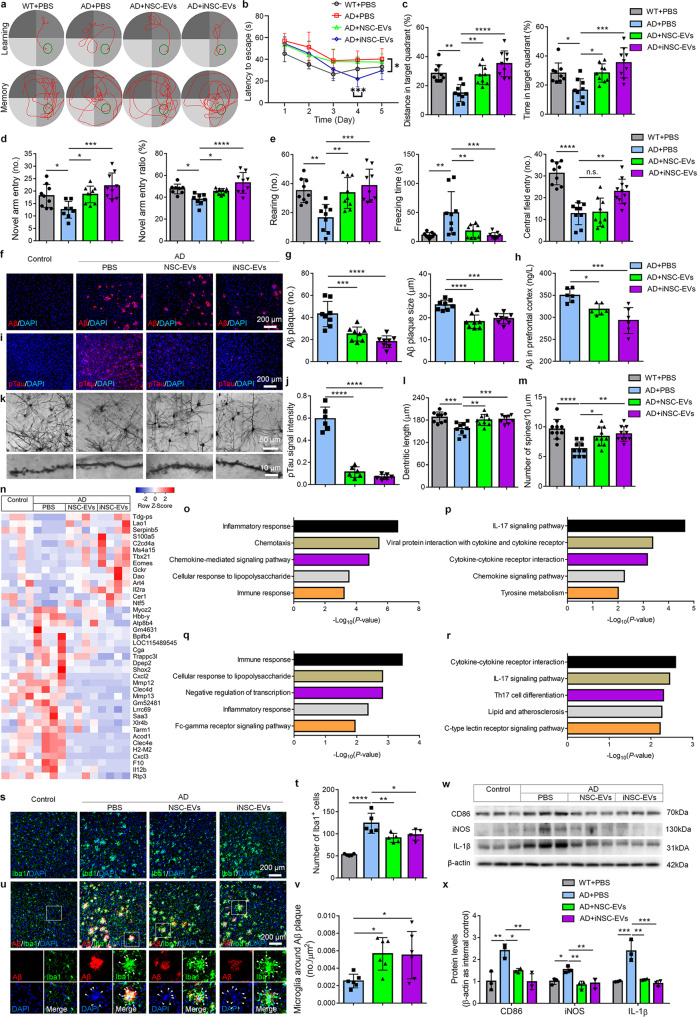
Alzheimer’s disease (AD) is the most common neurodegenerative disorder and the No.1 cause of dementia in elderly with no effective treatments. 1 The application of stem cell-derived extracellular vesicles (EVs) has emerged as a promising therapeutic strategy for AD. 2 EVs are small bilipid layer-enclosed vesicles that display blood-brain barrier (BBB) penetrating ability and similar potency to their parental cells. 2 The administration of EVs derived from neural stem cells (NSCs) and mesenchymal stem cell (MSCs) improved learning and memory functions of AD mice after EVs injection. 2 NSC-derived EVs (NSC-EVs) have been reported to show better effects on improving neural recovery than MSC-derived EVs. 3 However, due to ethical/religious concerns, supply constraints, limited expandability in culture, genetic/phenotypic instability issues, and potential immune responses of allogenic cell secretomes, NSCs may not be an excellent cell source for the production of clinical-grade EVs. Our previous studies obtained mouse fibroblast-derived induced NSCs (iNSCs) through somatic cell reprogramming, opening a new window for obtaining EVs derived from NSC-like cells. 4 , 5 However, whether iNSC-derived (iNSC-EVs) can serve as promising substitutes of NSC-EVs in AD treatment remains unclear.
Overview
The claims and statistics of this paper haven’t been checked yet.
Free: it reads the open-access text and checks the first 5 claims that cite a source we can check. Create a free account to check every claim.
Integrity signals
Registry
Cites
Statistics
Figures
Verification
Claims the paper makes
The claims and statistics of this paper haven’t been checked yet.
Free: it reads the open-access text and checks the first 5 claims that cite a source we can check. Create a free account to check every claim.
Claims other papers make about this one
Each is checked against this paper’s own text: does it say what the citing paper says it does?
The cited source says what the claim attributes to it.
In the citing paper
“NSC-EVs have been shown to inhibit neuroinflammation and ameliorate pathological events and behaviours in AD mice and PD models.444,445”
From Antiageing strategy for neurodegenerative diseases: from mechanisms to clinical advances (2025) · cites this paper as [444]
Self-check
Percentages, sums and reported differences re-computed from the paper’s own numbers.
The self-check needs the paper’s full text.
Citations
Cites
Neuroinflammation and microglial activation in Alzheimer disease: where do we go from here?
Leng, F., & Edison, P. (2021) · Nature Reviews Neurology · doi:10.1038/s41582-020-00435-y · Cited by 3,179
Webb, R. L., Kaiser, E. E., Scoville, S. L., Thompson, T. A., Fatima, S., Pandya, C., Sriram, K., Swetenburg, R. L., Vaibhav, K., Arbab, A. S., et al. (2018) · Translational Stroke Research · doi:10.1007/s12975-017-0599-2 · Cited by 282 · cited 2×
“NSC-derived EVs (NSC-EVs) have been reported to show better effects on improving neural recovery than MSC-derived EVs.(3) However, due to ethical/religious concerns, supply constraints, limited expandability in culture, genetic/phenotypic instability issues, and potential immune responses of allogenic cell secretomes,…”
BackgroundInfluentialMa, Y., Li, C., Huang, Y., Wang, Y., Xia, X., & Zheng, J. C. (2019) · Cell Communication and Signaling · doi:10.1186/s12964-019-0418-3 · Cited by 104 · cited 1×
“Our previous studies obtained mouse fibroblast-derived induced NSCs (iNSCs) through somatic cell reprogramming, opening a new window for obtaining EVs derived from NSC-like cells.(4,5) However, whether iNSC-derived (iNSC-EVs) can serve as promising substitutes of NSC-EVs in AD treatment remains unclear.”
BackgroundSelf-citationExtracellular vesicles, from the pathogenesis to the therapy of neurodegenerative diseases
Xia, X., Wang, Y., & Zheng, J. C. (2022) · Translational Neurodegeneration · doi:10.1186/s40035-022-00330-0 · Cited by 92 · cited 4×
“LETTER OPEN Neural stem cell-derived extracellular vesicles mitigate Alzheimer’s disease-like phenotypes in a preclinical mouse model Signal Transduction and Targeted Therapy (2023) 8:228 ; https://doi.org/10.1038/s41392-023-01436-1 Dear Editor, Alzheimer’s disease (AD) is the most common neurodegenerative disorder an…”
BackgroundInfluentialSelf-citationInduced neural stem/progenitor cell‐derived extracellular vesicles promote recovery post‐stroke
Gao, G., Li, C., Zhu, J., Sheng, S., Liang, Z., Fu, S., Li, X., Sun, Y., Wang, Y., Feng, X., et al. (2022) · Clinical and Translational Medicine · doi:10.1002/ctm2.936 · Cited by 26
Self-citation
Cited by
Extracellular vesicles as tools and targets in therapy for diseases
Kumar, M. A., Baba, S. K., Sadida, H. Q., Marzooqi, S. A., Jerobin, J., Altemani, F. H., Algehainy, N., Alanazi, M. A., Abou-Samra, A.-B., Kumar, R., et al. (2024) · Signal Transduction and Targeted Therapy · doi:10.1038/s41392-024-01735-1 · Cited by 1,343
Clinical applications of stem cell-derived exosomes
Tan, F., Li, X., Wang, Z., Li, J., Shahzad, K., & Zheng, J. (2024) · Signal Transduction and Targeted Therapy · doi:10.1038/s41392-023-01704-0 · Cited by 708
“190 Therefore, iNSCs might be an excellent cellular source to produce clinical-grade exosomes in clinical trials.”
BackgroundSelf-citationAntiageing strategy for neurodegenerative diseases: from mechanisms to clinical advances
Jiang, Q., Liu, J., Huang, S., Wang, X.-Y., Chen, X., Liu, G.-H., Ye, K., Song, W., Masters, C. L., Wang, J., et al. (2025) · Signal Transduction and Targeted Therapy · doi:10.1038/s41392-025-02145-7 · Cited by 165
Self-citationMadhu, L. N., Kodali, M., Upadhya, R., Rao, S., Somayaji, Y., Attaluri, S., Shuai, B., Kirmani, M., Gupta, S., Maness, N., et al. (2024) · Journal of Extracellular Vesicles · doi:10.1002/jev2.12519 · Cited by 79
“…of age, an age at which these mice start to display A β plaques, microgliosis, and a proinflammatory milieu in the brain (Boza-Serrano et al., 2018; Gao et al., 2023), and interrogated with behavioural tests at ∼ 4.5 months of age, a stage where untreated 5xFAD mice display cognitive and mood…”
MethodInfluentialDeng, S., Cao, H., Cui, X., Fan, Y., Wang, Q., & Zhang, X. (2023) · Acta Biomaterialia · doi:10.1016/j.actbio.2023.09.023 · Cited by 63
Wang, L., Zhang, X., Yang, Z., Wang, B., Gong, H., Zhang, K., Lin, Y., & Sun, M. (2024) · Translational Neurodegeneration · doi:10.1186/s40035-024-00453-6 · Cited by 59
Extracellular vesicles: From large-scale production and engineering to clinical applications
Wang, Y., Xiong, J., Ouyang, K., Ling, M., Luo, J., Sun, J., Xi, Q., Chen, T., & Zhang, Y. (2025) · Journal of Tissue Engineering · doi:10.1177/20417314251319474 · Cited by 62
Self-citationSignaling pathways activated and regulated by stem cell-derived exosome therapy
Li, D., Li, D., Wang, Z., Li, J., Shahzad, K. A., Wang, Y., & Tan, F. (2024) · Cell & Bioscience · doi:10.1186/s13578-024-01277-7 · Cited by 58
“As one of the solutions, fibroblast-derived iNSCs have created a brilliant opportunity for obtaining exosomes from NSC-like cells [180, 181].”
BackgroundSelf-citationThe emerging role of exosomes in communication between the periphery and the central nervous system
Han, W., Zhang, H., Feng, L., Dang, R., Wang, J., Cui, C., & Jiang, P. (2023) · MedComm · doi:10.1002/mco2.410 · Cited by 48
Li, J., Li, X., Li, X., Liang, Z., Wang, Z., Shahzad, K. A., Xu, M., & Tan, F. (2024) · ACS Applied Materials & Interfaces · doi:10.1021/acsami.4c05004 · Cited by 32
Self-citationYang, Y., Nicol, C. J. B., & Chiang, M. (2025) · International Journal of Molecular Sciences · doi:10.3390/ijms26083915 · Cited by 38
“Exos are small, membrane-bound vesicles typically measuring 30–150 nm in diameter [29–31].”
Cai, H., Pang, Y., Ren, Z., Fu, X., & Jia, L. (2024) · BMC Medicine · doi:10.1186/s12916-024-03359-2 · Cited by 29
“Recent research efforts have explored EVs as drug-delivery tools or gene therapy vectors [25].”
BackgroundZhang, H., Zhou, L., Yang, S., Dong, M., Chen, L., Lu, Y.-L., Zhang, L., Zhang, L., Chu, Y., Xu, L., et al. (2025) · Cell Metabolism · doi:10.1016/j.cmet.2025.04.009 · Cited by 27
Non-pharmacological treatment of Alzheimer’s disease: an update
Wang, S., Xu, H., Liu, G., & Chen, L.-M. (2025) · Frontiers in Aging Neuroscience · doi:10.3389/fnagi.2025.1527242 · Cited by 25
Neural Stem Cell‐Derived Extracellular Vesicles for Advanced Neural Repair
Moretti, E. H., Lin, A. L. Y., Peruzzotti‐Jametti, L., Pluchino, S., & Mozafari, S. (2025) · Journal of Neurochemistry · doi:10.1111/jnc.70170 · Cited by 16
Proposed Mechanisms of Cell Therapy for Alzheimer’s Disease
Belousova, E., Salikhova, D. I., Maksimov, Y., Nebogatikov, V. O., Sudina, A. K., Goldshtein, D. V., & Ustyugov, A. A. (2024) · International Journal of Molecular Sciences · doi:10.3390/ijms252212378 · Cited by 19
“The exosomes show a more pronounced inhibition of A β 1-42 accumulation and Tau phosphorylation, as well as better therapeutic effects on restoring dendrite length and the density of dendritic spines compared to MSC-EV in the mouse AD model [103].”
Tan, F., Xu, M., Li, X., Wang, Z., Li, J., & Shahzad, K. A. (2024) · Advanced Therapeutics · doi:10.1002/adtp.202300387 · Cited by 14
Self-citationYang, L., Chan, M., Sheng, J., Qi, S., Chan, B., Shantaram, D., Rima, X. Y., Reátegui, E., Han, X., Hsueh, W. A., et al. (2025) · Alzheimer s & Dementia · doi:10.1002/alz.70603 · Cited by 16
The Recent Applications of Stem Cell-Derived Exosomes and Hydrogels in Neurological Disorders
Ajwad, N., Mustapha, M., Idris, Z., & Lee, S. (2025) · Tissue Engineering Part B Reviews · doi:10.1089/ten.teb.2024.0353 · Cited by 14
“61 Modification and Engineering of SC-Exos for Cargo Delivery”
Kumar, M., Ray, S., & Sil, S. (2025) · Extracellular Vesicles and Circulating Nucleic Acids · doi:10.20517/evcna.2025.65 · Cited by 9
Salim, M. W., Zhang, W., Collins‐Praino, L. E., Wang, Y., & Care, A. (2026) · Advanced Healthcare Materials · doi:10.1002/adhm.202504608 · Cited by 8
Self-citationAge-Related Neurodegenerative Diseases: A Stem Cell’s Perspective
Calvo, B., Schembri-Wismayer, P., & Alonso, M. B. D. (2025) · Cells · doi:10.3390/cells14050347 · Cited by 10
Extracellular Vesicles for the Treatment of Alzheimer's Disease: A Systematic Review
Phelps, J., Orr, A., Elvira, K. S., & Willerth, S. M. (2025) · Journal of Extracellular Biology · doi:10.1002/jex2.70077 · Cited by 11
“In 5xFAD mice, it was found iNSC-EVs were more effective than MSC-EVs in improving cognitive outcomes, inhibiting A β 42 accumulation and p-tau propagation, and restoring dendritic length and dendritic spine density (Gao et al. 2023).”
InfluentialFu, Y.-J., Jian, J., Liu, C., Yi, Y., Ding, Y.-T., Wen, J., Li, Y.-F., & Guo, Q. (2025) · World Journal of Stem Cells · doi:10.4252/wjsc.v17.i11.113631 · Cited by 7
Self-citationN -Acetylcysteine-Capped TLQP21-Containing Au Nanocages Alleviate Depression in Mice
Shi, M., Li, X., Fan, Z., Wang, Y., Li, C., Ning, Y., Ma, Y., Sun, M., Xia, X., Du, J., et al. (2025) · ACS Nano · doi:10.1021/acsnano.5c11681 · Cited by 7
Self-citationRen, X., Huang, Q., Xie, Z., Liu, Z., Wei, J., Zheng, J., Li, Z., Wang, Z., Li, T., Chen, Z., et al. (2025) · Biomaterials · doi:10.1016/j.biomaterials.2025.123654 · Cited by 4
Self-citationExtracellular Vesicles: A Promising Therapeutic Approach to Alzheimer's Disease
Mehrabadi, S. (2025) · Current Alzheimer Research · doi:10.2174/0115672050365314250112042136 · Cited by 3
Li, J., Xu, M., Cai, B., Li, X., Liang, Z., Xia, X., Zhang, H., Zhang, Z., Tan, F., & Zheng, J. (2025) · Advanced Science · doi:10.1002/advs.202508574 · Cited by 13
Self-citationZafarjonovna, A. Z., Aysulu, E., Matlyuba, S., Hamroyev, R., Azamatovich, J. B., Ahmadjon, A., Barno, A., Kurbanovna, A. M., ugli, M. R. M., Shaxodat, I., et al. (2026) · Clinica Chimica Acta · doi:10.1016/j.cca.2026.120932 · Cited by 5
Gupta, A., Ghosh, A., Sharma, N., & Gorain, B. (2025) · Molecular Neurobiology · doi:10.1007/s12035-025-05003-3 · Cited by 4
“…treatment, which revealed a significant increase in cognitive ability and a decrease in the intensity of extracellular plaque, where the increase in dendritic length and spine density in the prefrontal cortex and hippocampus could be attributed to the intravenous administration of these EVs [122].”
Uptake of Mesenchymal Stem Cell-Derived Exosomes in Mouse Brain through Intranasal Delivery
Zhang, Z., He, S., Jiang, W., Lu, J., Liu, S., Xu, W., Wang, Z., Lu, F., Xiao, Q., & Zhang, J. (2024) · Current Drug Delivery · doi:10.2174/0115672018339798240904171503 · Cited by 7
“In previous studies involving brain disease models in mice, exosomes were predominantly administered through tail vein and lateral ventricle injections [44-48].”
Janadri, S., Shreelaxmi, D., Mudagal, M. P., Sharma, U., Vada, S., & Haribabu, T. (2025) · International Journal of Current Pharmaceutical Research · doi:10.22159/ijcpr.2025v17i1.6039 · Cited by 2
Zheng, Q., Wang, S., Wang, T., & Zhang, G. (2025) · Current Stem Cell Research & Therapy · doi:10.2174/011574888x352270250407170235 · Cited by 3
Li, Y.-J., Chen, X., Luo, Y., Chang, J., Liu, S.-Z., Shan, X., Song, J.-J., Hao, N., Yan, X.-H., Gao, W.-L., et al. (2026) · World Journal of Stem Cells · doi:10.4252/wjsc.v18.i3.114929 · Cited by 1
Self-citationNatale, F., Dellaria, A., Sarrapochiello, I. N., Leone, L., Spinelli, M., Rinaudo, M., Garofalo, N., Grassi, C., & Fusco, S. (2026) · Alzheimer s Research & Therapy · doi:10.1186/s13195-026-02014-7 · Cited by 1
“Recently, fibroblast-derived induced NSC have been reported to ameliorate the AD phenotype in 5×FAD mice [73].”
Li, R., Xiong, W., & Sun, C. (2025) · International Journal of Neuroscience · doi:10.1080/00207454.2025.2540989
“…learning and memory, reductions in amyloid-beta plaques and tau phosphorylation, decreased neuroinflammation, and enhanced neurore-generation (particularly with iNSc-evs) [198,199]. importantly, NSc-evs can also mitigate blood-brain barrier (BBB) disruption, a key pathological feature of AD [200].”
Cai, H., Pang, Y., Ren, Z., Fu, X., & Jia, L. (2024) · Figshare · doi:10.6084/m9.figshare.25478748
Cai, H., Pang, Y., Ren, Z., Fu, X., & Jia, L. (2024) · Figshare · doi:10.6084/m9.figshare.25479113
Extracellular Vesicles in Neurodegenerative Diseases: Tools for Therapy and Regeneration
Bakr, M., Gobba, F., Sabry, M., & Salama, M. (2026) · Stem cell biology and regenerative medicine · doi:10.1007/978-3-032-12705-1_3
Acupuncture in neural stem cell-based therapy for cognitive impairment
Chang, H.-C. (2026) · World Journal of Stem Cells · doi:10.4252/wjsc.119872
Application of neural stem/progenitor cells in cell therapy of different types of dementia
Voronova, A. D., Karsuntseva, E. K., Shishkina, V. S., Chadin, A. V., Fursa, G. A., Reshetov, I. V., Шпорт, С. В., Stepanova, O. V., & Chekhonin, V. P. (2026) · Vestnik Moskovskogo universiteta Seria 16 Biologia · doi:10.55959/msu0137-0952-16-81-1-4
Jiang, Q., & Yan-Jiang, W. A. N. G. (2026) · Shengming kexue · doi:10.3724/cbls.2026100
Self-citationWu, A., Zeng, Y., Huang, Y., Chen, L., Guo, S., Wang, J., Mou, X., & Chang, X. (2026) · Extracellular Vesicles and Circulating Nucleic Acids · doi:10.20517/evcna.2026.43 · Cited by 1
“…NSCs-EVs Improved learning and memory in AD mice Reduced A β levels and tau phosphorylation, while restoring dendritic length and spine density [17] MSCs-EVs Reduced chronic inflammation in 5 × FAD mice Promoted A β clearance and preserved the tissue microenvironment required for neural…”
Anwer, T., Verma, A., Asiri, A., Alaklobie, M., Albaqami, A., ALSHAHRANI, F., Aly, K., Sharma, M., Siddiqui, S., Alam, N., et al. (2026) · Journal of Molecular Neuroscience · doi:10.1007/s12031-026-02587-w · Cited by 1
“Neuron-derived exosomes provide valuable information regarding neuronal metabolism and synaptic integrity, whereas astrocyte-derived and microglia-derived exosomes more accurately reflect glial activation, neuroinflammatory status and metabolic support (Gao et al. 2023 ).”
Chemical design of diagnostic and therapeutic nanoplatforms for cerebrovascular diseases
Nan, J., Chen, Y., Xia, C., Jiang, W., Cui, Z., Zhang, J., Li, Y., Xia, L., Chen, Y., & Zhang, J. (2026) · Coordination Chemistry Reviews · doi:10.1016/j.ccr.2026.218425
Self-citationThe Use of Neural Stem/Progenitor Cells in Cell Therapy of Different Types of Dementia
Voronova, A. D., Karsuntseva, E. K., Shishkina, V. S., Chadin, A. V., Fursa, G. A., Reshetov, I. V., Шпорт, С. В., Stepanova, O. V., & Chekhonin, V. P. (2026) · Moscow University Biological Sciences Bulletin · doi:10.3103/s0096392526600316
Metadata
- Authors
- Gao, G., Li, C., Ma, Y., Liang, Z., Li, Y., Li, X., Fu, S., Wang, Y., Xia, X., & Zheng, J. C.
- Affiliations
- Tongji University (CN)
- Corresponding author
- Wang, Yi
- Xia, Xiaohuan
- Zheng, Jialin C.
- Venue
- Signal Transduction and Targeted Therapy
- Published
- 2023-06-14
- Volume
- 8
- Issue
- 1
- Pages
- 228-228
- ISSN
- 2059-3635 (ISSN-L)
- PMC
- PMC10264449
- OpenAlex
- W4380538441
- Semantic Scholar
- 5579f237d16e2ca905b1adb8bbb49a93881b5afc
- Cited by
- 46
- References
- 5
- Citations by year
- 2026: 12 · 2025: 20 · 2024: 12 · 2023: 2
- FWCI
- 4.10
- Type
- journal article
- Language
- en
- Open access
- gold
- doi.org
- Licence
- cc-by
- creativecommons.org/licenses/by/4.0 (tdm)
- creativecommons.org/licenses/by/4.0 (vor)
- Locations
- Signal Transduction and Targeted Therapy (publishedVersion, cc-by)
- PubMed Central (publishedVersion, cc-by)
- PubMed (publishedVersion)
- DOAJ (DOAJ: Directory of Open Access Journals) (submittedVersion, cc-by-sa)
- Funders
- National Natural Science Foundation of China (81971145, 82271477, 81830037, 91949204)
- Topics
- Life Sciences › Biochemistry, Genetics and Molecular Biology › Molecular Biology › Extracellular vesicles in disease
- Life Sciences › Neuroscience › Cellular and Molecular Neuroscience › Alzheimer's disease research and treatments
- Life Sciences › Neuroscience › Neurology › Neuroinflammation and Neurodegeneration Mechanisms
- Keywords
- Alzheimer's disease, extracellular vesicles, neural stem cells, induced neural stem cells, somatic cell reprogramming, mesenchymal stem cells, blood-brain barrier, learning and memory, preclinical mouse models
- MeSH terms
- Alzheimer Disease, Animals, Phenotype, Mice
About these checks
Registry, retraction, Cites and statistics results are computed, not judged, with one exception: a printed reference that no index lists is read once by a model before it counts as a citation error. Claims are extracted by a model and kept only when their quote appears verbatim in the text; each cited source is then checked, with a model’s help, for whether it says what the claim relies on. Those verdicts can be wrong — read the claim’s quote and the cited source before relying on one.
Statistics and arithmetic are recomputed, not judged.
Confidence bands are shown only for fields calibrated on our annotated test set. None is calibrated yet, so no band is shown.
What counts as a claim ›How we measure confidence ›How we check this ›
Are you an author, or do you see a problem with this page? Request a review
Data sources
Bibliographic data: Semantic Scholar, OpenAlex, Crossref.
Contains information from the Semantic Scholar Academic Graph Datasets, made available under the ODC Attribution License (ODC-BY 1.0).
Semantic Scholar’s data is described in: Kinney, R., et al. (2023). The Semantic Scholar Open Data Platform. arXiv:2301.10140.
