

Role of neuroinflammation in neurodegeneration development
Open accessThe DOI matches its Crossref record; 585 of the 590 references it cites were found in a registry or an index; 359 of the 564 sources its claims cite were checked for support.
Abstract
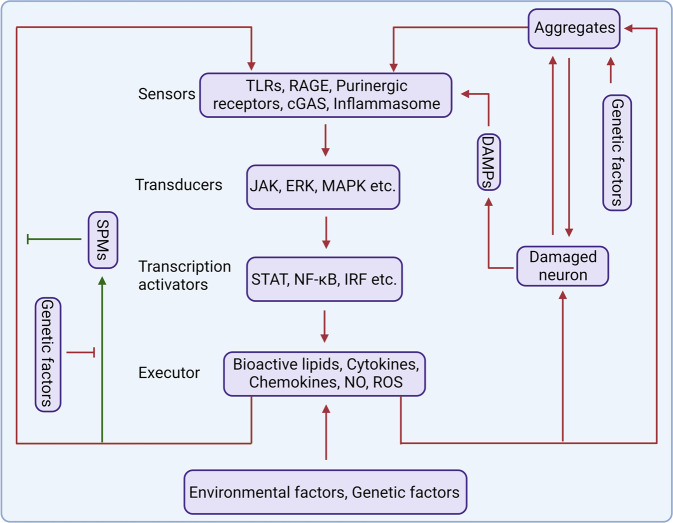
Studies in neurodegenerative diseases, including Alzheimer's disease, Parkinson's disease and Amyotrophic lateral sclerosis, Huntington's disease, and so on, have suggested that inflammation is not only a result of neurodegeneration but also a crucial player in this process. Protein aggregates which are very common pathological phenomenon in neurodegeneration can induce neuroinflammation which further aggravates protein aggregation and neurodegeneration. Actually, inflammation even happens earlier than protein aggregation. Neuroinflammation induced by genetic variations in CNS cells or by peripheral immune cells may induce protein deposition in some susceptible population. Numerous signaling pathways and a range of CNS cells have been suggested to be involved in the pathogenesis of neurodegeneration, although they are still far from being completely understood. Due to the limited success of traditional treatment methods, blocking or enhancing inflammatory signaling pathways involved in neurodegeneration are considered to be promising strategies for the therapy of neurodegenerative diseases, and many of them have got exciting results in animal models or clinical trials. Some of them, although very few, have been approved by FDA for clinical usage. Here we comprehensively review the factors affecting neuroinflammation and the major inflammatory signaling pathways involved in the pathogenicity of neurodegenerative diseases, including Alzheimer's disease, Parkinson's disease, and Amyotrophic lateral sclerosis. We also summarize the current strategies, both in animal models and in the clinic, for the treatment of neurodegenerative diseases.
Overview
CoChat Summary
TL;DR
This review argues that neuroinflammation is not just a downstream consequence of neurodegeneration, but can begin early and help drive disease progression in AD, PD, and ALS. It synthesizes evidence on inflammatory triggers, signaling pathways, and immune-directed therapies, while emphasizing that many inflammatory targets have both harmful and protective roles depending on timing and context.
Key findings
- The paper states that neuroinflammation is a shared hallmark across major neurodegenerative diseases, including Alzheimer’s disease (AD), Parkinson’s disease (PD), and amyotrophic lateral sclerosis (ALS), and may occur before overt protein aggregation.
- In AD, the review notes that more than 10% of people older than 65 and 30% of people older than 85 are affected; it also states that ~90–95% of AD is sporadic, while early-onset AD accounts for up to 5% of cases.
- In PD, the paper reports that at diagnosis about 30% of dopaminergic neuronal cell bodies in the substantia nigra and 50% of dopamine axon terminals in the dorsal putamen have already been lost; by 4 years after diagnosis almost all dopamine axon terminals are lost, and by 5 years most neuronal cell bodies are lost.
- In TBI, the review reports diffuse Aβ plaques in the brains of 30% of individuals who acutely die from TBI, and says TBI is a risk factor for PD and ALS.
- The paper highlights several therapeutic findings: aducanumab was approved by the US FDA in 2021, lecanemab in January 2023, and edaravone was approved in Japan in 2015 and the US in 2017 for ALS.
Methods
- Narrative review of the role of neuroinflammation in neurodegeneration, focused on AD, PD, and ALS, with sections on endogenous, environmental, and genetic inflammatory triggers, signaling pathways, and immune-directed therapies.
- The paper synthesizes findings from clinical studies, GWAS, postmortem human tissue studies, animal models, and in vitro experiments; no original cohort or experimental dataset is presented.
- Main analysis is qualitative integration of prior literature, including comparisons across disease stages and discussion of pro-inflammatory and pro-resolving signaling.
Limitations
- The paper explicitly states that many mechanisms are “still far from being completely understood” and that further studies are needed to clarify signaling roles, especially for pathways such as cGAS-STING, TLRs, RAGE, TREM2, NLRP3, and NO.
- It also states that many therapies show effects in animal models or early trials but have limited clinical success or no confirmed clinical benefit yet.
- Evident from the text: this is a review article, so it cannot establish causality on its own and relies on heterogeneous prior studies, often with conflicting results across models and disease stages.
Model-written summary. Check it against the paper before relying on it.
Integrity signals
Registry
Cites
Statistics
Figures
Verification
Claims the paper makes
271 Valid · 18 Not valid · 140 Not checked · 102 Own results and interpretations
Some cited sources support this claim and some don’t — read each source’s verdict below.
In the paper
“increasing evidence demonstrate that immune signaling may not just be a consequence of protein aggregation in the brain, but that it actually causes the buildup of aggregates at the earliest stages of the disease process.15–17”
§ Role of neuroinflammation in neurodegeneration development > Probable inducers of inflammation in neurodegeneration
What the sources say
- Disputedcites [15] Hong S Complement and microglia mediate early synapse loss in Alzheimer mouse models Science 2016 352 712 716 10.1126/science.aad8373 27033548 PMC5094372 sourceExperimental — accuracy not yet measured
The Abstract (page not supplied) describes the opposite causal direction for the measured pathway: soluble Aβ increases C1q deposition, and Aβ oligomers induce complement activity. It identifies complement and microglia as early mediators of synapse loss before plaques form, not as causes of aggregate buildup. (LLM, conf=0.86)
Checked by a reasoning model — may be wrong.
- Partly supportedcites [16] Sosna J Early long-term administration of the CSF1R inhibitor PLX3397 ablates microglia and reduces accumulation of intraneuronal amyloid, neuritic plaque deposition and pre-fibrillar oligomers in 5XFAD mouse model of Alzheimer’s disease Mol. Neurodegener. 2018 13 11 10.1186/s13024-018-0244-x 29490706 PMC5831225 sourceExperimental — accuracy not yet measured
The Discussion (page unavailable) reports that early PLX3397 treatment reduced intraneuronal amyloid and plaque accumulation in 5XFAD mice, supporting a possible role for signaling in early aggregate buildup. But it leaves open whether the effect reflects microglial immune signaling or CSF1R signaling in neurons, so it does not establish that immune signaling itself causes the buildup. (LLM, conf=0.84)
- Partly supportedcites [17] Shi, Q. et al. Complement C3 deficiency protects against neurodegeneration in aged plaque-rich APP/PS1 mice. Sci. Transl. Med. 9, eaaf6295 (2017). PMC6936623 28566429 sourceExperimental — accuracy not yet measured
The Discussion reports that complement can promote the nucleation phase of Aβ aggregation, supporting a possible role in initiating aggregates. But the Results found no difference in plaque burden with C3 deficiency at the earliest stages of plaque deposition; the paper does not establish that immune signaling causes aggregate buildup at the earliest disease stages. In aged mice, C3 deficiency instead increased plaque deposition. (LLM, conf=0.86)
hedgedstates a possible cause- Asserted: passes — The authors put it forward as true.
- Checkable: passes — It can be checked against evidence.
- Load-bearing: passes — The paper’s conclusions depend on it.
- Based: passes — The paper gives a reason why it holds.
- Disputed
At least one cited source doesn’t support this claim or points to a different paper, and none confirmed it — see the verdicts below.
In the paper
“but multiple clinical trials have failed to bear that out.541”
§ Role of neuroinflammation in neurodegeneration development > Immune-directed therapies > Alzheimer’s disease
What the sources say
- Disputedcites [541] Rivers-Auty J Mather AE Peters R Lawrence CB Brough D Anti-inflammatories in Alzheimer’s disease-potential therapy or spurious correlate? Brain Commun. 2020 2 fcaa109 10.1093/braincomms/fcaa109 33134914 PMC7585697 sourceExperimental — accuracy not yet measured
The Introduction (page not specified) says epidemiological studies associated NSAID use with a lower, not increased, risk of developing Alzheimer’s disease. It reports that multiple clinical trials found no significant effect on disease progression; those trials did not test the claimed increased-risk association. (LLM, conf=0.88)
Checked by a reasoning model — may be wrong.
plain- Asserted: passes — The authors put it forward as true.
- Checkable: passes — It can be checked against evidence.
- Load-bearing: unclear — It is unclear whether the paper’s conclusions depend on it.
- Based: passes — The paper gives a reason why it holds.
- Disputed
The cited sources support only part of this claim — read each source’s verdict below.
In the paper
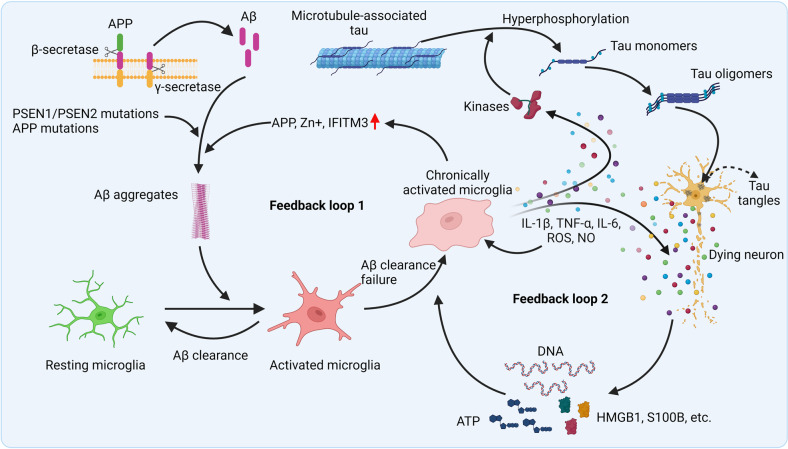
“while tau pathology usually occurs downstream from the deposition of Aβ plaques.31”
§ Role of neuroinflammation in neurodegeneration development > Probable inducers of inflammation in neurodegeneration > Endogenous factors
What the sources say
- Partly supportedcites [31] Pontecorvo MJ Relationships between flortaucipir PET tau binding and amyloid burden, clinical diagnosis, age and cognition Brain 2017 140 748 763 28077397 PMC5382945 sourceExperimental — accuracy not yet measured
The Introduction describes tau pathology appearing after amyloid-β plaques as a hypothesis, but also presents evidence that the two pathologies may begin independently. The Discussion says the results are consistent with independent beginnings and a possible dependence on amyloid for tau's later spread. The source therefore does not establish that tau pathology usually begins downstream of plaque deposition. (LLM, conf=0.86)
hedgedstates a cause- Asserted: passes — The authors put it forward as true.
- Checkable: passes — It can be checked against evidence.
- Load-bearing: unclear — It is unclear whether the paper’s conclusions depend on it.
- Based: passes — The paper gives a reason why it holds.
- Partly supported
The cited sources support only part of this claim — read each source’s verdict below.
In the paper
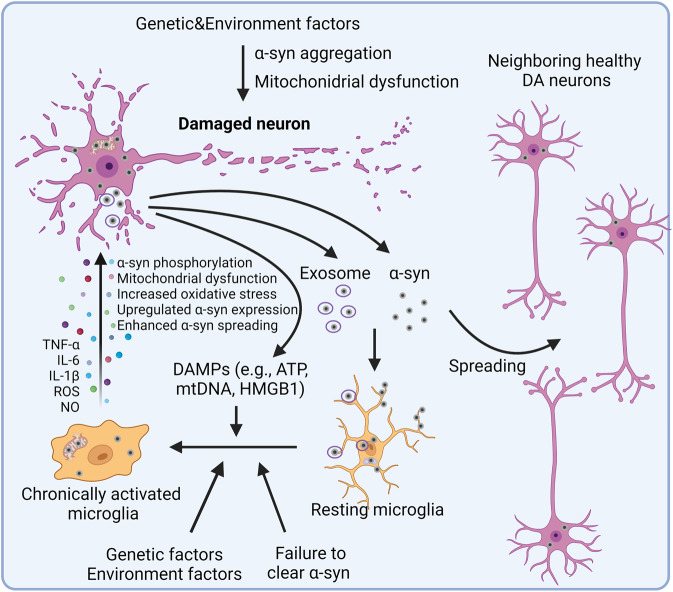
“In animal models of PD and in PD patients, misfolded α-synuclein was found to be released from injured neurons into the extracellular fluid.51,61,62”
§ Role of neuroinflammation in neurodegeneration development > Probable inducers of inflammation in neurodegeneration > Endogenous factors
What the sources say
- Supportedcites [51] Gundersen V Parkinson’s disease: can targeting inflammation be an effective neuroprotective strategy? Front. Neurosci. 2020 14 580311 10.3389/fnins.2020.580311 33716638 PMC7946840 source
The “Brain Inflammation and Microglia Activation” section states that misfolded α-synuclein is released from injured neurons into extracellular fluid in animal models of PD. It also reports evidence that aberrant α-synuclein is secreted from neurons into extracellular fluid in PD patients. (LLM, conf=0.91)
- Partly supportedcites [61] Kim C Neuron-released oligomeric alpha-synuclein is an endogenous agonist of TLR2 for paracrine activation of microglia Nat. Commun. 2013 4 1562 10.1038/ncomms2534 23463005 PMC4089961 sourceExperimental — accuracy not yet measured
The Abstract (page unavailable) says neurons release α-synuclein and that misfolding and aggregation may facilitate its release. The Results section on cell-released α-synuclein (page unavailable) demonstrates release from cultured neuronal cells, but reports that overexpression did not affect their viability. The paper does not establish that misfolded α-synuclein was released from injured neurons in PD animal models or PD patients. (LLM, conf=0.86)
- Partly supportedcites [62] Choi I Microglia clear neuron-released alpha-synuclein via selective autophagy and prevent neurodegeneration Nat. Commun. 2020 11 1386 10.1038/s41467-020-15119-w 32170061 PMC7069981 sourceExperimental — accuracy not yet measured
The Introduction (page not provided) says neurons can secrete α-synuclein following stress or injury, and the Results (page not provided) report extracellular neuron-released α-synuclein in mouse models. The paper does not establish that the released protein was misfolded or report its release from injured neurons in PD patients. (LLM, conf=0.85)
plainstates a cause- Asserted: passes — The authors put it forward as true.
- Checkable: passes — It can be checked against evidence.
- Load-bearing: passes — The paper’s conclusions depend on it.
- Based: passes — The paper gives a reason why it holds.
- Supported
Every source the paper cites for this claim was checked and supports it.
In the paper
“NFTs have also been found to be spatially correlated with neuroinflammation in clinical samples from AD patients.45”
§ Role of neuroinflammation in neurodegeneration development > Probable inducers of inflammation in neurodegeneration > Endogenous factors
What the sources say
- Supportedcites [45] Dani M Microglial activation correlates in vivo with both tau and amyloid in Alzheimer’s disease Brain 2018 141 2740 2754 30052812 source
The Voxel-level correlations section reports significant positive correlations across several cortical regions between PET measures of tau aggregation and microglial activation in subjects with Alzheimer’s disease. The Discussion connects tau aggregation with neurofibrillary tangles, supporting the claim as a paraphrase of the imaging finding. (LLM, conf=0.92)
plainstates an association- Asserted: passes — The authors put it forward as true.
- Checkable: passes — It can be checked against evidence.
- Load-bearing: unclear — It is unclear whether the paper’s conclusions depend on it.
- Based: passes — The paper gives a reason why it holds.
- Supported
237 more claims · 122 with their cited sources checked
Create a free account to see all 531 claims and to verify the 66 references still open.
- It may state two separate claims as one. 257
- Probably not a substantial claim. 56
Claims other papers make about this one
Each is checked against this paper’s own text: does it say what the citing paper says it does?
The source backs part of the claim, not all of it — or backs it for a different population, condition or comparison.
In the citing paper
“For instance, IL-6 promotes T helper 17 (Th17) cell differentiation in MS and contributes to neuroinflammation in AD and PD, while TNF-α is implicated in demyelination in MS, amyloid pathology in AD, and microglial activation in PD8,11.”
From Elevated miRNA-21, miRNA-155, and miRNA-182 levels correlate with cytokine dysregulation in neurological disorders and indicate potential for biomarker and therapy development (2025) · cites this paper as [8]
Experimental — accuracy not yet measuredThe source backs part of the claim, not all of it — or backs it for a different population, condition or comparison.
In the citing paper
“IL-6 and TNF-α are key pro-inflammatory mediators that exacerbate inflammation and neuronal damage in these disorders.”
From Elevated miRNA-21, miRNA-155, and miRNA-182 levels correlate with cytokine dysregulation in neurological disorders and indicate potential for biomarker and therapy development (2025) · cites this paper as [8]
Experimental — accuracy not yet measuredThe source backs part of the claim, not all of it — or backs it for a different population, condition or comparison.
In the citing paper
“IL-6 and TNF-α increase inflammation and contribute to the development of MS, AD, and PD8,11.”
From Elevated miRNA-21, miRNA-155, and miRNA-182 levels correlate with cytokine dysregulation in neurological disorders and indicate potential for biomarker and therapy development (2025) · cites this paper as [8]
Experimental — accuracy not yet measuredThe source backs part of the claim, not all of it — or backs it for a different population, condition or comparison.
In the citing paper
“Moreover, the efficient uptake of TD5 BLNPs by astrocytes and neurons allows for potent delivery of mRNAs encoding anti-inflammatory proteins, providing a targeted approach to mitigate neuroinflammation, which is a key contributor to neurodegeneration in both AD and PD.[31]”
From Lipid Nanoparticles Enhance mRNA Delivery to the Central Nervous System Upon Intrathecal Injection (2025) · cites this paper as [31]
Experimental — accuracy not yet measuredThe check wasn’t confident either way, so it gives no verdict — never disputed.
In the citing paper
“For instance, IL-6 promotes T helper 17 (Th17) cell differentiation in MS and contributes to neuroinflammation in AD and PD, while TNF-α is implicated in demyelination in MS, amyloid pathology in AD, and microglial activation in PD8,11.”
From Elevated miRNA-21, miRNA-155, and miRNA-182 levels correlate with cytokine dysregulation in neurological disorders and indicate potential for biomarker and therapy development (2025) · cites this paper as [8]
Experimental — accuracy not yet measured
7 more claims about this paper
Create a free account to see every claim other papers make about this one.
Self-check
Percentages, sums and reported differences re-computed from the paper’s own numbers.
Self-check results appear here once an independent check has confirmed them.
Cited works that were retracted
Works this paper cites that were later retracted, from the retraction notices publishers deposit. Major when the notice came out before this paper was published.
A note, not an issue: for example, a cited work that was retracted only after this paper was published, which its authors could not have known.
In the paper
“Multiple studies have revealed that loss of PRKN and PINK1 dysregulated mitophagy and increased mitochondria stress, leading to mito-inflammation,(267) which was recently suggested to be involved in PD pathology in PINK1 and PRKN deficient mice.(268) In addition to mito-inflammation, both PRKN and PINK1 have been impl…”
Cited work 10.1038/s41586-018-0448-9 · retracted 2025-07-30 · notice 10.1038/s41586-025-09346-8 · this paper published 2023-07-12
A note, not an issue: for example, a cited work that was retracted only after this paper was published, which its authors could not have known.
In the paper
“In vitro cultured pericytes were suggested to rapidly clear extracellular Aβ40 via LRP1, while excessive accumulation of Aβ in pericytes over longer periods of time resulted in cell death.(506) Pericytes dysfunction may also involve in the pathology of ALS.”
Cited work 10.1038/ncomms3932 · retracted 2024-04-03 · notice 10.1038/s41467-024-47285-6 · this paper published 2023-07-12
Citations
Cites
2 retracted
RETRACTED ARTICLE: Parkin and PINK1 mitigate STING-induced inflammation
Sliter, D. A., Martinez, J., Hao, L., Chen, X., Sun, N., Fischer, T. D., Burman, J. L., Li, Y., Zhang, Z., Narendra, D. P., et al. (2018) · Nature · doi:10.1038/s41586-018-0448-9 · Cited by 1,287 · cited 2×
“Multiple studies have revealed that loss of PRKN and PINK1 dysregulated mitophagy and increased mitochondria stress, leading to mito-inflammation,(267) which was recently suggested to be involved in PD pathology in PINK1 and PRKN deficient mice.(268) In addition to mito-inflammation, both PRKN and PINK1 have been impl…”
BackgroundRetractedRETRACTED ARTICLE: Pericyte loss influences Alzheimer-like neurodegeneration in mice
Sagare, A. P., Bell, R. D., Zhao, Z., Ma, Q., Winkler, E. A., Ramanathan, A., & Zlokovic, B. V. (2013) · Nature Communications · doi:10.1038/ncomms3932 · Cited by 589 · cited 1×
“In vitro cultured pericytes were suggested to rapidly clear extracellular Aβ40 via LRP1, while excessive accumulation of Aβ in pericytes over longer periods of time resulted in cell death.(506) Pericytes dysfunction may also involve in the pathology of ALS.”
BackgroundRetractedPolazzi, E., Mengoni, I., Caprini, M., Peña-Altamira, E., Kurtys, E., & Monti, B. (2013) · Neurosignals · doi:10.1159/000337115 · Cited by 8,994
Ubiquitinated TDP-43 in Frontotemporal Lobar Degeneration and Amyotrophic Lateral Sclerosis
Neumann, M., Sampathu, D. M., Kwong, L. K., Truax, A. C., Micsenyi, M. C., Chou, T. T., Bruce, J., Schuck, T., Grossman, M., Clark, C. M., et al. (2006) · Science · doi:10.1126/science.1134108 · Cited by 6,576 · cited 13×
“In vitro and in vivo studies revealed that silencing of HMGB1 or S100B reduced neuroinflammation and attenuated neurodegenerative diseases.336,337 RAGEs receptor was also highly expressed in PD patients,338 and RAGE gene polymorphisms were associated with sporadic PD in the Chinese Han population.339 Deficiency of RAG…”
BackgroundInfluentialA Toll-like receptor recognizes bacterial DNA
Hemmi, H., Takeuchi, O., Kawai, T., Kaisho, T., Sato, S., Sanjo, H., Matsumoto, M., Hoshino, K., Wagner, H., Takeda, K., et al. (2000) · Nature · doi:10.1038/35047123 · Cited by 6,491 · cited 1×
“TLR9, the sole TLR that can detect DNA, was originally found as a sensor for bacterial DNA that has abundant unmethylated CpG dinucleotides.(311) However, unmethylated, CpG-rich sequences are present in mammalian nuclear DNA, albeit at low frequency.”
BackgroundLecanemab in early Alzheimer's disease
van Dyck, C. H., Swanson, C. J., Aisen, P., Bateman, R. J., Chen, C., Gee, M., Kanekiyo, M., Li, D., Reyderman, L., Cohen, S., et al. (2023) · New England Journal of Medicine · doi:10.1056/nejmoa2212948 · Cited by 5,678 · cited 1×
“In January 2023, Lecanemab, the other antibody for Aβ, was also approved by using the US FDA’s accelerated approval pathway as a treatment for early AD.(530) Considering that tau pathology has better correlation with cognitive impairments than Aβ plaques, tau targeted therapy is thought to be a better choice than Aβ.”
MethodA Unique Microglia Type Associated with Restricting Development of Alzheimer’s Disease
Keren-Shaul, H., Spinrad, A., Weiner, A., Matcovitch-Natan, O., Dvir-Szternfeld, R., Ulland, T. K., David, E., Baruch, K., Lara-Astaiso, D., Toth, B., et al. (2017) · Cell · doi:10.1016/j.cell.2017.05.018 · Cited by 5,493
Cyclic GMP-AMP Synthase Is a Cytosolic DNA Sensor That Activates the Type I Interferon Pathway
Sun, L., Wu, J., Du, F., Chen, X., & Chen, Z. J. (2013) · Science · doi:10.1126/science.1232458 · Cited by 4,996
Microglia: Active sensor and versatile effector cells in the normal and pathologic brain
Hanisch, U.-K., & Kettenmann, H. (2007) · Nature Neuroscience · doi:10.1038/nn1997 · Cited by 3,676 · cited 1×
“The immune system plays crucial roles in the maintenance of tissue homeostasis, removal of pathogens, and injury recovery.(18,19) In most cases, the immune response is beneficial and self-limited, and it is resolved once the tissue injury has been repaired or the infection has been eliminated.”
BackgroundMechanisms underlying inflammation in neurodegeneration
Glass, C. K., Saijo, K., Winner, B., Marchetto, M. C., & Gage, F. H. (2010) · Cell · doi:10.1016/j.cell.2010.02.016 · Cited by 3,580 · cited 1×
“ALS is always fatal, with an average life expectancy of 2–5 years after diagnosis.(77) The progression of ALS toward the fatal outcome is extremely rapid—faster than any other neurodegenerative disease.”
Background
Cited by
Items 1,101–1,200 of 1,630
Dias, A. L., da Silva, P. R., Souza, L. R. P., Pires, H. F. O., Gonçalves, M. C. F., Neri, L. C. D., Barbosa, N. M. M. V., Matos, A. L. L. D. S., Nayarisseri, A., Scotti, M. T., et al. (2026) · International Journal of Molecular Sciences · doi:10.3390/ijms27135857 · Cited by 3
“Upon activation, RAGE triggers an intracellular signaling cascade that leads to the activation of pathways such as MAPKs, as well as transcription factors such as NF-κ B, resulting in increased expression of pro-inflammatory mediators, including pro-inflammatory cytokines and chemokines [72].”
Purinergic–cytokine signaling as a regulatory axis in neuroimmune development
Silva, J. B., Viero, F. T., Higa, G. S. V., Turrini, N., Marques, L. B., Carlos, G. O., Silva, A. B. S., Kihara, A. H., Takada, S. H., Britto, L. R., et al. (2026) · Neuropharmacology · doi:10.1016/j.neuropharm.2026.111087 · Cited by 1
Mechanisms of Therapeutic Resistance and Recent Advances in Glioblastoma Treatment
Achari, E., Ahmady, F., Sharma, A., Schmidt‐Wolf, I. G. H., Maciaczyk, J., Luwor, R. B., & Achuthan, A. A. (2026) · Immunology and Cell Biology · doi:10.1111/imcb.70144 · Cited by 2
“Today, neurodegenerative conditions, such as Parkinson's disease and Alzheimer's disease, have been linked to dysregulated immune function [7–9].”
The autophagy-senescence-inflammasome axis: A novel triad in neurodegenerative diseases?
Ellappan, S., Kujur, P. P., & Mondal, A. C. (2026) · Ageing Research Reviews · doi:10.1016/j.arr.2026.103248 · Cited by 1
Waseem, A., Ghosh, S., Kumari, M., Raza, S. S., & Verma, S. K. (2026) · Ageing Research Reviews · doi:10.1016/j.arr.2026.103257 · Cited by 1
Khan, M. S., Zafar, I., & Bopassa, J. C. (2026) · International Journal of Molecular Sciences · doi:10.3390/ijms27146329 · Cited by 3
COSTA, I. M., Kanashiro, A., Barros, G. S. F., Monteiro, A. J., Bonilha, C. S., Galdino, G., & Veras, F. P. (2026) · Brain Sciences · doi:10.3390/brainsci16080792 · Cited by 2
“Particularly, scientific evidence also indicates that neuroinflammation plays an important role in the pathogenesis of neurodegenerative diseases, such as Alzheimer’s, Parkinson’s, and multiple sclerosis, which affect millions of people [2,3].”
Wang, Q.-Q., Sun, Q.-Q., Guo, Y.-S., Yin, S., & Zhou, J. (2026) · Translational Neurodegeneration · doi:10.1186/s40035-026-00571-3 · Cited by 3
“Beyond inflammation orchestrated by central glial cells, which are principal immune effectors within the brain, peripheral inflammatory processes also play a significant role in fostering and amplifying neuroinflammation in these diseases [15–17].”
Jasak, P., Wesołowska, A., Żółtowska, M., Alster, P., & Madetko‐Alster, N. (2026) · Parkinsonism & Related Disorders · doi:10.1016/j.parkreldis.2026.108917 · Cited by 1
P2X7 Signaling in Neuroinflammation: Glial Crosstalk, Redox Integration, and Therapeutic Targeting
Ayyubova, G., Sultanova, T., Gurbanova, S., & Ayyubova, N. (2026) · Journal of Molecular Neuroscience · doi:10.1007/s12031-026-02581-2 · Cited by 2
“(Beaino et al.”
Alshammari, A. A. A., & Mani, V. (2026) · Food and Chemical Toxicology · doi:10.1016/j.fct.2026.116335 · Cited by 1
The role of astrocytes response triggered by hyperglycaemia during spinal cord injury
Sámano, C., & Mazzone, G. L. (2023) · Archives of Physiology and Biochemistry · doi:10.1080/13813455.2023.2264538 · Cited by 3
“Antioxidants inflammatory reaction is one of the main secondary deleterious mechanisms in many neurodegenerative diseases (Zhang et al. , 2023). extensive evidence has demonstrated that mitochondrial dysfunction, endoplasmic reticulum stress, ROS, and lipid peroxidation are downstream mediators…”
Syntaxin 1A gene polymorphism in multiple sclerosis: a case–control study
Oraby, M. I., Soliman, R. H., Kader, N. A. A., Galil, E. M. A., & Masoud, M. M. (2024) · The Egyptian Journal of Neurology Psychiatry and Neurosurgery · doi:10.1186/s41983-024-00811-1 · Cited by 2
Etukudo, E. M., Mwabaleke, J. A., Makeri, D., Archibong, V., Ifie, J. E., & Usman, I. M. (2024) · KIU Journal of Health Sciences · doi:10.59568/kjhs-2024-4-1-12 · Cited by 3
Microglial dysfunction and genetic risk for neurodegenerative disease
MacDonald, D. S., & Penney, J. (2024) · Neural Regeneration Research · doi:10.4103/nrr.nrr-d-24-00146 · Cited by 3
Association of Autoimmune Diseases with the Risk of Parkinson’s Disease
Ma, Y., Xiao, Y., Zhang, S., Liu, J., & Shang, H. (2024) · Neuroepidemiology · doi:10.1159/000539466 · Cited by 2
Bakuchiol impact on ageing and longevity: Insights from Caenorhabditis elegans studies
Ranjan, S., Kushwaha, N. S., & Khan, S. (2024) · Annals of Phytomedicine An International Journal · doi:10.54085/ap.2024.13.1.12
“…on neurodegenerative disorders such as AD, PD, Amyotrophic lateral sclerosis, Huntington’s disease and others have shown that inflammation is not just a by product of neurodegeneration but also a critical factor in the process (Kip and Parr-Brownlie, 2022; Wyss-Coray, 2016; Zhang et al ., 2023).”
Kheirouri, S., Azizi, A. F. N., Valiei, F., & Taheraghdam, A. (2024) · Revista Española de Nutrición Humana y Dietética · doi:10.14306/renhyd.28.3.2144 · Cited by 1
Lee, K. M., Kim, S., Tian, Y., Jung, S. M., Chang, Y., Rhee, H. Y., Park, S., Ryu, C., Lee, W.-I., Kim, E. J., et al. (2024) · Frontiers in Aging Neuroscience · doi:10.3389/fnagi.2024.1388654 · Cited by 2
Pocevičiūtė, D., Wennström, M., & Ohlsson, B. (2024) · Nutrients · doi:10.3390/nu16172847 · Cited by 1
“Neuroinflammation is an inflammatory response in the brain seen in association with severe damage like traumatic head injuries [1] or neurodegenerative disorders [2] but also in response to milder or more subtle changes, such as major depression, stress, or inflammatory illness [3].”
BackgroundNavaseelan, L., Retinasamy, T., Shaikh, M. F., & Arulsamy, A. (2024) · Frontiers in Bioscience-Landmark · doi:10.31083/j.fbl2909322 · Cited by 1
Spatially Preorganized Hybridization Chain Reaction for the Prompt Diagnosis of Inflammation
Jia, B., Ge, J., Ma, Y., Sun, X., Li, Z., Jiang, S., & Yu, H. (2025) · Angewandte Chemie · doi:10.1002/ange.202421022 · Cited by 7
Analysis of total RNA as a potential biomarker of Parkinson’s disease in silico
Jovičić, S. M. (2025) · International Journal of Immunopathology and Pharmacology · doi:10.1177/03946320241297738 · Cited by 1
Study on the Modulation of NLRP1 by Natural Products in Neurodegenerative Diseases
Wang, T., Zuo, X., Cheng, L., Shao, N., & Zhou, P. (2025) · Natural Product Communications · doi:10.1177/1934578x251328242 · Cited by 1
Early and late structural brain changes after radiation therapy: an MRI study in glioma patients
Maza, E. J. L., Pavoni, J. F., & Leoni, R. F. (2025) · Journal of Neuro-Oncology · doi:10.1007/s11060-025-05008-x · Cited by 2
Oppong, A., Adams, A., Ankrah, R. R., Xedzro, F., & Mante, P. K. (2025) · Nutrire · doi:10.1186/s41110-025-00340-8 · Cited by 1
Capsazepine Inhibits Astrocyte Activation and Attenuates Neuroinflammation by Targeting Syntaxin 7
Hou, Y., Yang, Y., Zhao, Z., Wang, S., Chen, X., Xie, Y., Chen, H., & Xu, J. (2025) · The FASEB Journal · doi:10.1096/fj.202500523r · Cited by 3
“Targeting neuroinflammatory pathways represents a promising therapeutic strategy to enhance the prognosis of patients with neurodegenerative diseases [8].”
Rahamouz-Haghighi, S., Akaberi, M., Emami, S. A., & Tayarani‐Najaran, Z. (2025) · Journal of Ethnopharmacology · doi:10.1016/j.jep.2025.120504 · Cited by 1
Munan, S., Mondal, A., Tiwari, S., Yadav, R., Pareek, N., & Samanta, A. (2025) · Journal of Materials Chemistry B · doi:10.1039/d5tb00968e · Cited by 1
An Insight into the Therapeutic Potential of Phytobioactives for Diabetic Neuropathy
Eqbal, A., Kushwaha, P., Kumar, S., Nisha, A., Ahsan, R., & Asif, M. (2025) · Experimental and Clinical Endocrinology & Diabetes · doi:10.1055/a-2706-7255 · Cited by 1
“…have been shown to ameliorate sensorimotor impairments and proteomic alterations associated with PDN. Natural phytobioactive compounds, particularly flavonoids and phenolic acids, have garnered consid - erable attention for their potent antioxidative and anti-inflamma - tory properties [44, 45].”
Babu, N. A., Nedunchezhian, A. M., Rajesh, E., & Mathangi, R. (2025) · Biomedical and Biotechnology Research Journal (BBRJ) · doi:10.4103/bbrj.bbrj_212_25 · Cited by 1
Ye, P., Bi, L., Qiu, Y., Yang, M., Huang, G., Zhao, X., Liu, Y., Hou, Y., Sun, R., Zheng, P., et al. (2024) · Research Square · doi:10.21203/rs.3.rs-3913696/v1 · Cited by 1
Heikal, S. A., Fawi, G., Moustafa, S. A., et al. (2024) · Research Square · doi:10.21203/rs.3.rs-3893418/v1 · Cited by 1
Caruso, G., Maugeri, S., Privitera, A., Lazzarino, G., Lazzarino, G., & Amorini, A. M. (2024) · Wiley eBooks · doi:10.1002/9780470015902.a0029609 · Cited by 1
PBM Combined with hUCMSCs Modulates the Polarization of MicrogliaPreprint
Chen, H., Zhu, H., Cai, Y., Guo, J., Liu, P., Han, Z., Wei, X., & Liu, Y. (2024) · Research Square · doi:10.21203/rs.3.rs-4096663/v1 · Cited by 1
Liu, Y., Bondarenko, A., Zhang, H., Luan, P., Zhang, Q., Wang, B., Najam, S. S., Liang, X., Syed, A. A. S., Lin, D., et al. (2024) · bioRxiv (Cold Spring Harbor Laboratory) · doi:10.1101/2024.07.02.601503 · Cited by 1
“…Inflares can be efficiently retrieved and further transduced by microglia as the key decoder 23 , which may modulate their migration, proliferation and initiation of inflammatory responses leading to reactive microgliosis 65,66 , also detected by us in the PVH from patients with diabetes mellitus.”
Sekar, R., Cioanca, A. V., Yang, Y., Kamath, K. S., Carroll, L., Natoli, R., & Wooff, Y. (2024) · bioRxiv (Cold Spring Harbor Laboratory) · doi:10.1101/2024.08.06.606930 · Cited by 2
Chim, S. M., Howell, K., Kokkosis, A. G., Zambrowicz, B., Karalis, K. P., & Pavlopoulos, E. (2024) · bioRxiv (Cold Spring Harbor Laboratory) · doi:10.1101/2024.08.11.607509 · Cited by 1
Yin, J., White, J., Khare, S., Wu, M., Zuberi, A. R., Gao, M., Nick, J. A., Lutz, C. M., Allen, K. D., Nick, H. S., et al. (2024) · bioRxiv (Cold Spring Harbor Laboratory) · doi:10.1101/2024.10.28.620701 · Cited by 1
Correction to “Unlocking the Therapeutic Potential of Natural Products for Alzheimer’s Disease”
Li, Z., Zhang, Z., & Yu, B. (2025) · Journal of Medicinal Chemistry · doi:10.1021/acs.jmedchem.5c00926 · Cited by 2
Gall-Duncan, T., Ko, S. Y., Quick, I. K., Khan, M., Feng, K., Kelley, C. P., Coleman, A., Touzé, A., Tang, S., Mehkary, M., et al. (2025) · bioRxiv (Cold Spring Harbor Laboratory) · doi:10.1101/2025.04.25.650652 · Cited by 1
“Neuroinflammation pathways can induce neurodegeneration in HD and other brain diseases 109– 111 .”
Cheng, X., Patel, K. K., Zhou, B., Fu, Y., Cleary, R., Highkin, M. K., Hsia, J., Jin, X., Kohn, B., Prior, J. L., et al. (2025) · bioRxiv (Cold Spring Harbor Laboratory) · doi:10.1101/2025.06.17.660224 · Cited by 1
Reperfusion stroke injury and brain atrophy: a penumbra of progressive cognitive decline
Chavda, V. K., Ayomide, O. T., Stary, C. M., et al. (2025) · Annals of Medicine and Surgery · doi:10.1097/ms9.0000000000003735 · Cited by 1
Deng, H., Gong, Y., Zhang, Q., Wu, D., Liu, A., Li, T., Xiao, Z., Li, Y., Haeri, M., Swerdlow, R. H., et al. (2025) · Research Square · doi:10.21203/rs.3.rs-7303622/v1 · Cited by 2
Saunders, D., Sultan, F. A., Vialle, R. A., Kearns, N. A., Ng, B., Clark, E. M., Vyas, H., Tissera, S. L. D., Xu, J., Bennett, D. A., et al. (2025) · bioRxiv (Cold Spring Harbor Laboratory) · doi:10.1101/2025.08.30.673269 · Cited by 2
Predicting emergent phenotypes from single cell populations using CELLECTIONPreprint
Hu, H., Sanghi, S., & Quon, G. (2025) · bioRxiv (Cold Spring Harbor Laboratory) · doi:10.1101/2025.09.02.673886 · Cited by 1
Pulmonary Hypertension Promotes Neuroinflammation and NeurodegenerationPreprint
Cruz, P. D. L., Lockett, A. D., Gomes, M. T., Banerjee, S., Razee, A., Fisher, A. J., Cook, T. G., Lloyd, C. D., Magaki, S., Umar, S., et al. (2025) · bioRxiv (Cold Spring Harbor Laboratory) · doi:10.1101/2025.09.02.673803 · Cited by 4
“Neuroinflammation is recognized as an early and critical risk factor for neurodegeneration 29,30 .”
Discovery of TDP-43 aggregation inhibitors via a hybrid machine learning frameworkPreprint
Kapsiani, S., Vora, S., Fernández‐Villegas, A., Kaminski, C. F., Läubli, N. F., & Schierle, G. S. K. (2026) · bioRxiv (Cold Spring Harbor Laboratory) · doi:10.64898/2026.02.12.705375 · Cited by 1
“The model disfavors compounds targeting DNA repair pathways, which may help minimise off-target toxicity, and shows a positive association with ROR-γ , consistent with the established role of inflammation in neurodegeneration[3].”
Cortes-Flores, H., Torrandell-Haro, G., & Brinton, R. (2026) · medRxiv · doi:10.64898/2026.03.06.26347446 · Cited by 1
Papetti, A. V., Ma, Z., Ng, M., Jin, M., Levison, S. W., & Jiang, P. (2026) · bioRxiv (Cold Spring Harbor Laboratory) · doi:10.64898/2026.05.26.728058 · Cited by 1
“Complement-mediated synaptic pruning, MHC-I-dependent synaptic remodeling, and interferon-driven neurodegeneration have been recognized as contributors to neuronal loss and circuit disruption in aging and disease 94 .”
Hirota, Y., Yamamoto, J., Takatori, S., Sakakibara, Y., Takei, K., Saji, T., Sekiya, M., Tomita, T., & Iijima, K. M. (2026) · Molecular Neurodegeneration Advances · doi:10.1186/s44477-026-00032-1 · Cited by 1
Microglia Nuclear Receptor Corepressor 1 Deficiency Alleviates Neuroinflammation in MicePreprint
Qiu, S., Xian, Z., Chen, J., et al. (2023) · SSRN Electronic Journal · doi:10.2139/ssrn.4593656
Leitao, R., Wan, I. U., Fisher, M. C., & Rhodes, J. L. (2023) · bioRxiv (Cold Spring Harbor Laboratory) · doi:10.1101/2023.10.25.563977
Zhang, L., Tan, Z., Wang, Y., Wu, C., Xu, A., Lian, X., Zeng, Y., Yuan, Y., Li, W., & Peng, J. (2024) · Research Square · doi:10.21203/rs.3.rs-3825950/v1
Shafi, O., Rajpar, R., Yaqoob, Ú., Rahman, I. A., Savanti, Madhwani, M., Haseeb, M., & Raveena (2024) · Research Square · doi:10.21203/rs.3.rs-3982517/v1
Liu, S. X., Muelken, P., Maxim, Z. L., Ramakrishnan, A., Estill, M. S., LeSage, M. G., Smethells, J. R., Shen, L., Tran, P. V., Harris, A. C., et al. (2024) · bioRxiv (Cold Spring Harbor Laboratory) · doi:10.1101/2024.02.29.582799
Арьев, А. Л., & Лаптева, Е. С. (2024) · Успехи геронтологии · doi:10.34922/ae.2023.36.6.006
A Comprehensive Review of Exosomes with Therapeutic Potential in Cancer and Coeliac Disease
Assainar, F., Thomas, J. G., Saleem, Z., Thekkekara, S., Mammoo, F., & Kallan, N. N. (2024) · Journal of Biosciences and Medicines · doi:10.4236/jbm.2024.123003
Park, S. B., Yi, S., Lee, J. H., et al. (2024) · Research Square · doi:10.21203/rs.3.rs-4020381/v1
Wang, J., Qu, Y., Huang, Y., Zeng, H., Chui, E., & Yao, C. (2024) · Research Square · doi:10.21203/rs.3.rs-3909570/v1
Olanrewaju, J. A., Arietarhire, L. O., Soremekun, O. E., et al. (2024) · Research Square · doi:10.21203/rs.3.rs-4248639/v1
Analysis of transporter activity in an Alzheimer’s disease blood-brain barrier cell model
Chaves, J. (2024) · Queensland University of Technology · doi:10.5204/thesis.eprints.248279
The Role of Catechol in Caffeic Acid Phenethyl Ester Derivatives for Neuroprotective Effects
Hao, Y. (2024) · ChemistrySelect · doi:10.1002/slct.202400461
Jati, S., Muñoz-Mayorga, D., Shahabi, S., Tang, K., Tao, Y., Dickson, D. W., Litvan, I., Ghosh, G., Mahata, S. K., & Xu, C. (2024) · bioRxiv (Cold Spring Harbor Laboratory) · doi:10.1101/2024.06.11.598548
“Tauopathies are closely associated with metabolic dysfunctions, including insulin resistance, hyperglycemia, and hypertension ( 6, 7 ), as well as neuroinflammation ( 8, 9 ).”
Backgroundde Lange, M., Yarosh, V., Farell, K., Oates, C., Patil, R., Hawthorn, I., Jung, M.-M., Wenje, S., & Steinert, J. R. (2024) · bioRxiv (Cold Spring Harbor Laboratory) · doi:10.1101/2024.07.12.603123
“…in the pathogenesis of various neurodegenerative diseases by promoting neuronal damage and impairing synaptic function as shown in different model systems (Bourgognon, Spiers et al. 2021, Spiers, Cortina Chen et al. 2022, Steinert and Amal 2023, Zhang, Xiao et al. 2023, Adamu, Li et al. 2024).”
BackgroundGhosh, R., Chatterjee, S., Bhattacharjee, R., & Dubey, S. (2024) · Indian Journal Of Clinical Practice · doi:10.59793/ijcp.v35i1.1034
Li, N., Zhu, H., Cai, Y., Guo, J., Liu, P., Han, Z., Wu, H., Liu, Y. F., & Chen, H. (2024) · Research Square · doi:10.21203/rs.3.rs-4697618/v1
Research progress of endogenous retroviruses in tumors and other human diseases
Li, S., ZHANG, J., Zhi, R. A. N., Huang, C., XuJuan, W. A. N. G., YinShuang, L. I., Liu, J., Kuang, C., & Yuan, K. (2024) · Scientia Sinica Vitae · doi:10.1360/ssv-2024-0150
Introducing the First Nano-Antibody Therapeutic for Chikungunya Virus Infection
Gomez, H. J., Carrizosa, J., Kumar, S., Singh, S. P., Singh, S., & Parihar, A. S. (2024) · Infectious diseases · doi:10.5772/intechopen.115398
Dietary Interventions in Neurodegenerative Diseases: Neuroinflammatory Mechanisms and Implications
Demir, E. (2024) · Advances in healthcare information systems and administration book series · doi:10.4018/979-8-3693-3260-3.ch004
Associations of healthy aging index with dementia: a prospective cohort study of 305,566 individualsPreprint
Tan, S., Huang, X., Ling, Y., Yuan, S., Bai, Z., Cheng, H., Xu, A., & Lyu, J. (2024) · Research Square · doi:10.21203/rs.3.rs-4999254/v1
Raj, A. N. P., Chakravorty, A., Luktuke, S., Santra, S., Das, S., Sahoo, S., Ramesh, K., Ali, N. F., Sana, S. S., Jayanthi, S., et al. (2024) · Current Computer - Aided Drug Design · doi:10.2174/0115734099309926241007055607
Dysfunctional K+ Homeostasis as a Driver for Brain Inflammation
Ozsoy, N., & Dallas, M. L. (2024) · Encyclopedia · doi:10.3390/encyclopedia4040110 · Cited by 1
“Inflammation within the brain is a complex cascade of immune responses involving distinct cellular and molecular entities [5–7].”
Плескановская, С. А., Agamedov, M., & Saparov, N. (2024) · International Journal of Clinical Pediatrics · doi:10.14740/ijcp546
“Directly or by implication, they indicate the immune system’s involvement in the pathogenesis of central nervous system (CNS) diseases [10, 11].”
Liang, S., & Hu, Z. (2024) · Biomedical Papers · doi:10.5507/bp.2024.038
Role of Enzymes in Prion Disease: A Molecular Mechanism
Firdous, S. M., Pal, S., & Mandal, S. (2024) · Springer eBooks · doi:10.1007/978-981-97-6822-6_8
Future Directions and Challenges in Enzyme Research for Neurodegenerative Diseases
Rathi, K. M., Pingat, P., & Firdous, S. M. (2024) · Springer eBooks · doi:10.1007/978-981-97-6822-6_10 · Cited by 1
Immune Transformations for Therapeutic Gain in Neurodegenerative Disease
Sapkota, R., & Mosley, R. L. (2024) · Springer eBooks · doi:10.1007/978-3-031-68237-7_50
Yang, J., Li, W., Tian, M., Zhang, L., Du, F., Li, X., Liu, Q., Li, R., Li, Z., Dong, H., et al. (2025) · Frontiers in Neuroscience · doi:10.3389/fnins.2024.1514554
Xu, Y., & You, K. (2025) · Theoretical and Natural Science · doi:10.54254/2753-8818/2024.19395
Functional Proteins/Peptides Targeting to Clear Amyloid‐β for Alzheimer's Disease Therapy
Gao, Z., Hou, R., & Qian, C. (2025) · ChemBioChem · doi:10.1002/cbic.202400912
Beauchet, O., Galéry, K., Gaudreau, P., & Allali, G. (2025) · The Journals of Gerontology Series A · doi:10.1093/gerona/glae260 · Cited by 1
“Elevated CRP and other inflammatory cytokines can promote tau hyperphosphorylation and aggregation, contributing to neurofibrillary tangles and neuronal death (11,12).”
Molecular Mechanism of Action of Abamectin on Human Microglia Clone 3 Cell Line
Sancer, O., Çankara, F. N., Şahın, U., Tepebaşı, M. Y., ÖZBALCI, F. İ., & Ateş, M. (2025) · Applied In Vitro Toxicology · doi:10.1089/aivt.2024.0027
A New Approach to Synthesize Carbon-11-PBR28 and its Clinical Validation in ALS Patients
Kumar, P., Kumar, A., Keerthipriya, M. S., Chandrika, H., Nalini, A., Vengalil, S., Sitani, K., Nagaraj, C., Dey, S., Debnath, M., et al. (2025) · Current Radiopharmaceuticals · doi:10.2174/0118744710341203250220042349
The Neurobiology of Comorbidities
Kohshour, M. O., Navarro‐Flores, A., Budde, M., & Schulze, T. G. (2025) · Springer eBooks · doi:10.1007/978-3-031-81802-8_5
Multilayered neuroprotection by cannabinoids in neurodegenerative diseases
Hasbi, A., & George, S. R. (2025) · Exploration of Neuroprotective Therapy · doi:10.37349/ent.2024.100498 · Cited by 6
Genetic dissection of hippocampal sclerosis of ageing using magnetic resonance imaging surrogatesPreprint
Olivé, C., de Rojas, I., Zhang, L., Sotolongo‐Grau, Ó., Quintela, I., García‐González, P., Puerta, R., García‐Gutiérrez, F., Montrreal, L., Capdevila-Bayo, M., et al. (2025) · Research Square · doi:10.1101/2025.03.10.25323307
Multimodal brain cell atlas across the adult macaque lifespanPreprint
Zhang, X., Lai, G., Guo, X., Ma, W., Yuan, Y., Zhang, H., Fan, P., Liu, X., Guo, P., An, J., et al. (2025) · bioRxiv (Cold Spring Harbor Laboratory) · doi:10.1101/2025.03.11.641786
Neuroimaging in Psychoneuroimmunology Research
Chand, T., Gupta, R., Verma, K., & Nayak, K. (2025) · Advances in medical diagnosis, treatment, and care (AMDTC) book series · doi:10.4018/979-8-3693-7432-0.ch011
Cossu, D., Noda, S., Sato, S., Yokoyama, K., Tomizawa, Y., Vascellari, S., Sechi, L. A., & Hattori, N. (2025) · Research Square · doi:10.21203/rs.3.rs-6240835/v1
Alexandre, A. D. S., da Silva, D. R., Casas, L. L., & Núñez, C. V. (2025) · Microorganisms · doi:10.3390/microorganisms13040792
“Moreover, uridine has been shown to modulate pyrimidine metabolism, influencing the synthesis of DNA and RNA and acting as a precursor for the biosynthesis of uridine diphosphate sugars (UDP-sugars), which are crucial for glycosylation processes in cells [45].”
Brody, A. L., Sanavi, A. Y., Beverly‐Aylwin, R., Guggino, N., Mischel, A. K., Wong, A., Bahn, J. H., Myers, M. G., Rana, B. K., Vera, D. R., et al. (2025) · Addiction Biology · doi:10.1111/adb.70024 · Cited by 1
“…abnormally low levels of neuroinflammation impair response to CNS injury and can lead to cognitive impairment [6], while abnormally high levels of neuroinflammation are associated with neurological illnesses (e.g., Alzheimer's disease, Parkinson's disease and amyotrophic lateral sclerosis) [7, 8].”
Research Progress on the Role of Puerarin in the Prevention and Treatment of Alzheimer's Disease
Chu, C., Jia, Y., Liu, Y., Du, R., Wang, Z. M., Zhang, Z., Zheng, W., & Song, J. (2025) · Chinese medicine and natural products · doi:10.1055/s-0045-1807255
Xue, X., Du, J., Hussain, S. A., Maddu, N., & Xiong, J. (2025) · Journal of physiological investigation. · doi:10.4103/ejpi.ejpi-d-25-00004
Grossberg, A. N. (2024) · Digital Commons - DU (University of Denver) · doi:10.56902/etdcrp.2024.14
Global rise in Parkinson's disease expected by 2050
Palmer, S. J. (2025) · Nursing and Residential Care · doi:10.12968/nrec.2025.0014
Minasyan, A., Cherkaoui‐Malki, M., Andreoletti, P., & Sahakyan, N. Z. (2025) · Research Square · doi:10.21203/rs.3.rs-6669681/v1
Porel, P., Hunjan, G., Kaur, N., Sharma, V., Kaur, M., Mittal, Y., Kaur, R., & Aran, K. R. (2025) · Metabolic Brain Disease · doi:10.1007/s11011-025-01629-3 · Cited by 1
“Neuroinflammation is considered a major pathology leading to improper neuronal signaling and promoting cognitive decline (Zhang et al. 2023 ).”
RETRACTED ARTICLE: Transcriptional characterization of sepsis in a LPS porcine model
Neill, R. G.-R. (2025) · Molecular Genetics and Genomics · doi:10.1007/s00438-025-02261-7 · Cited by 1
RetractedIdentification of N-(Alkyl)-4-phenylpiperidines as Anti-Neuroinflammatory Agents
Vestal, K. A., Ahmed, W., Luu, J., Lieland, O., Kuo, P., Yen, J.-H. J., & Brown, D. A. (2025) · Medicinal Chemistry Research · doi:10.1007/s00044-025-03433-1
Metadata
- Authors
- Zhang, W., Xiao, D., Mao, Q., & Xia, H.
- Affiliations
- Shaanxi Normal University (CN)
- Xijing Hospital (CN)
- University of Utah (US)
- Corresponding author
- Xia, Haibin
- Venue
- Signal Transduction and Targeted Therapy
- Published
- 2023-07-12
- Volume
- 8
- Issue
- 1
- Pages
- 267-267
- ISSN
- 2059-3635 (ISSN-L)
- PMC
- PMC10336149
- OpenAlex
- W4383894096
- Semantic Scholar
- 06d8152c958fe20ba35cf2cd49421ed1ece7da14
- Cited by
- 1,668
- References
- 590
- Citations by year
- 2026: 598 · 2025: 700 · 2024: 349 · 2023: 21
- FWCI
- 43.51
- Type
- journal article
- Language
- en
- Open access
- gold
- doi.org
- Licence
- cc-by
- creativecommons.org/licenses/by/4.0 (tdm)
- creativecommons.org/licenses/by/4.0 (vor)
- Locations
- Signal Transduction and Targeted Therapy (publishedVersion, cc-by)
- PubMed Central (publishedVersion, cc-by)
- PubMed (publishedVersion)
- DOAJ (DOAJ: Directory of Open Access Journals) (submittedVersion, cc-by-sa)
- Funders
- National Natural Science Foundation of China (81773265, 82101443)
- Natural Science Foundation of Shaanxi Province (2023-JC-YB-160)
- Topics
- Life Sciences › Neuroscience › Neurology › Neuroinflammation and Neurodegeneration Mechanisms
- Life Sciences › Neuroscience › Neurology › Neurological Disease Mechanisms and Treatments
- Life Sciences › Neuroscience › Cellular and Molecular Neuroscience › Alzheimer's disease research and treatments
- Keywords
- neuroinflammation, neurodegeneration, neurodegenerative diseases, Alzheimer's disease, Parkinson's disease, amyotrophic lateral sclerosis, protein aggregation, inflammatory signaling, peripheral immune cells, anti-inflammatory therapy, pathogenesis
- MeSH terms
- Neuroinflammatory Diseases, Alzheimer Disease, Amyotrophic Lateral Sclerosis, Animals, Clinical Trials as Topic, Disease Models, Animal, Humans, Inflammation, Parkinson Disease, Protein Aggregates
About these checks
Registry, retraction, Cites and statistics results are computed, not judged, with one exception: a printed reference that no index lists is read once by a model before it counts as a citation error. Claims are extracted by a model and kept only when their quote appears verbatim in the text; each cited source is then checked, with a model’s help, for whether it says what the claim relies on. Those verdicts can be wrong — read the claim’s quote and the cited source before relying on one.
The claim verdicts this report counts are experimental: their accuracy is not yet measured.
A language model drew the claims from the paper on 2026-10-10, under version 3 of the claim definition (model deepseek-v4.1-flash, prompt extract-v3).
A second model labelled each claim on 2026-10-10 (model jev-1.13-20260917, definition revision gold-guideline-v0.2).
Cited sources are checked with a language model’s help (gpt-6-sol).
Statistics and arithmetic are recomputed, not judged.
Confidence bands are shown only for fields calibrated on our annotated test set. None is calibrated yet, so no band is shown.
What counts as a claim ›How we measure confidence ›How we check this ›
Are you an author, or do you see a problem with this page? Request a review
Data sources
Bibliographic data: Semantic Scholar, OpenAlex, Crossref.
Contains information from the Semantic Scholar Academic Graph Datasets, made available under the ODC Attribution License (ODC-BY 1.0).
Semantic Scholar’s data is described in: Kinney, R., et al. (2023). The Semantic Scholar Open Data Platform. arXiv:2301.10140.
