

Cyrius: accurate CYP2D6 genotyping using whole-genome sequencing data
Open accessPublished version of a preprint
The DOI matches its Crossref record; 44 of the 44 references it cites were found in a registry or an index.
Abstract
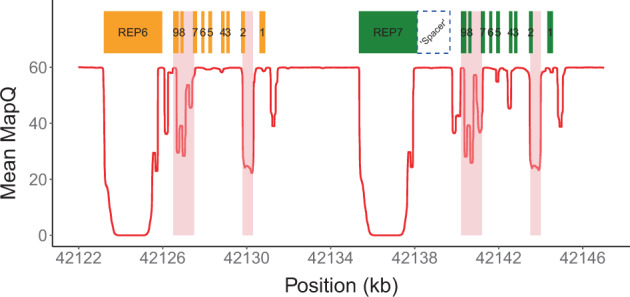
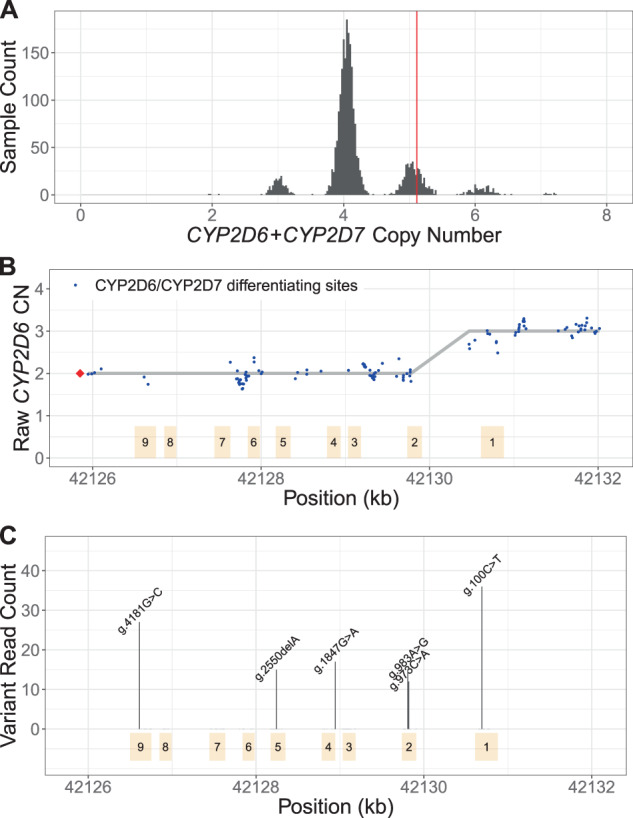
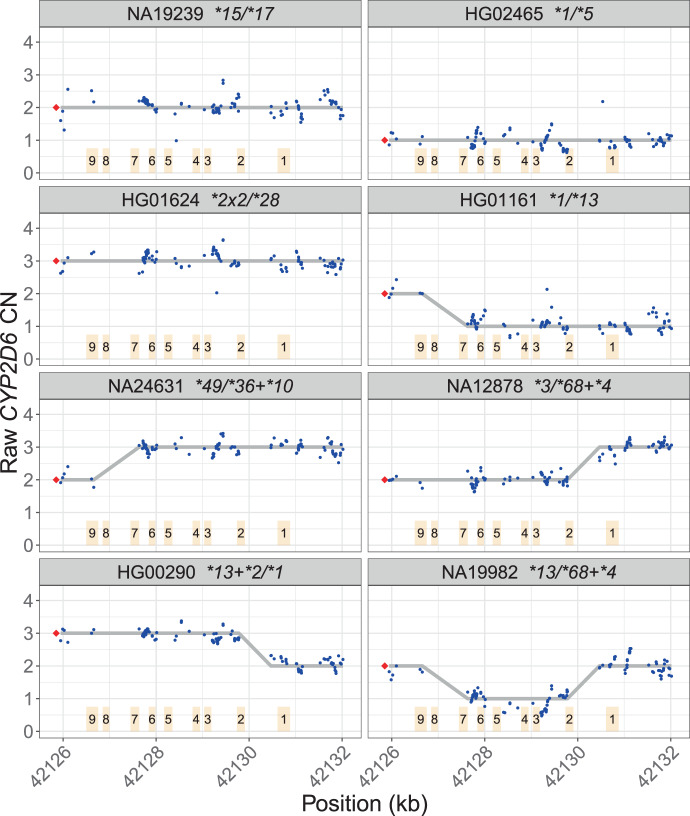
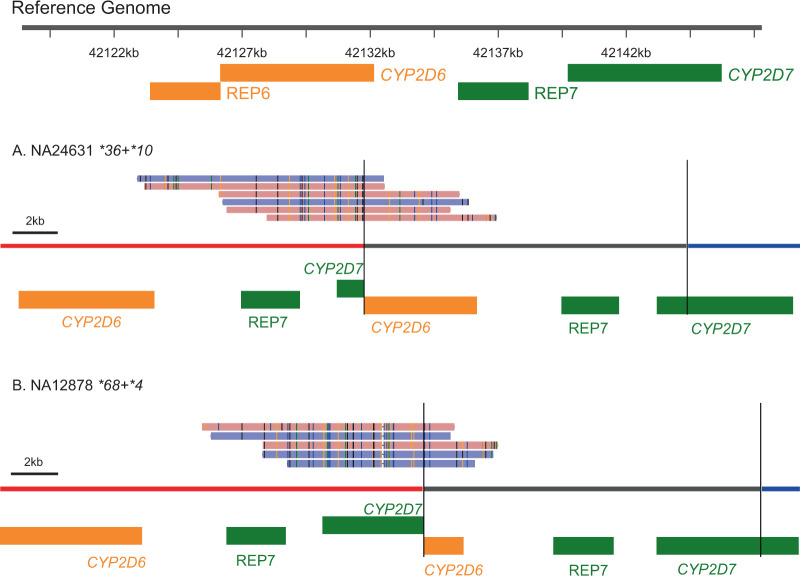
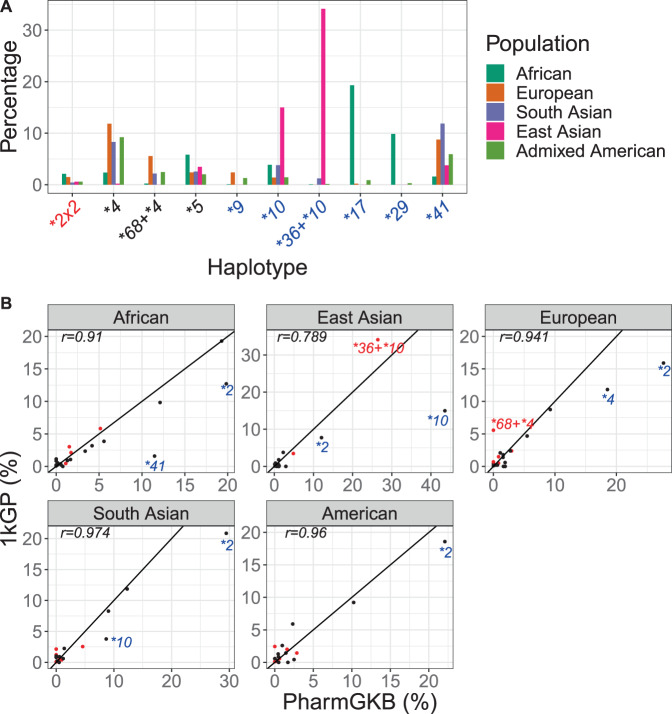
Responsible for the metabolism of ~21% of clinically used drugs, CYP2D6 is a critical component of personalized medicine initiatives. Genotyping CYP2D6 is challenging due to sequence similarity with its pseudogene paralog CYP2D7 and a high number and variety of common structural variants (SVs). Here we describe a novel bioinformatics method, Cyrius, that accurately genotypes CYP2D6 using whole-genome sequencing (WGS) data. We show that Cyrius has superior performance (96.5% concordance with truth genotypes) compared to existing methods (84–86.8%). After implementing the improvements identified from the comparison against the truth data, Cyrius’s accuracy has since been improved to 99.3%. Using Cyrius, we built a haplotype frequency database from 2504 ethnically diverse samples and estimate that SV-containing star alleles are more frequent than previously reported. Cyrius will be an important tool to incorporate pharmacogenomics in WGS-based precision medicine initiatives.
Overview
The claims and statistics of this paper haven’t been checked yet.
Free: it reads the open-access text and checks the first 5 claims that cite a source we can check. Create a free account to check every claim.
Integrity signals
Registry
Cites
Statistics
Figures
Verification
Claims the paper makes
The claims and statistics of this paper haven’t been checked yet.
Free: it reads the open-access text and checks the first 5 claims that cite a source we can check. Create a free account to check every claim.
Self-check
Percentages, sums and reported differences re-computed from the paper’s own numbers.
The self-check needs the paper’s full text.
Citations
Cites
A global reference for human genetic variation
The 1000 Genomes Project Consortium, authors, C., Auton, A., Abecasis, G. R., Steering committee, Altshuler, D. M., Durbin, R. M., Abecasis, G. R., Bentley, D. R., Chakravarti, A., et al. (2015) · Nature · doi:10.1038/nature15393 · Cited by 18,247
Self-citationEfficient generation of mouse models of human diseases via ABE- and BE-mediated base editing
Liu, Z., Lu, Z., Yang, G., Huang, S., Li, G., Feng, S., Liu, Y., Li, J., Yu, W., Zhang, Y., et al. (2018) · Nature Communications · doi:10.1038/s41467-018-04768-7 · Cited by 2,074
Pharmacogenomics Knowledge for Personalized Medicine
Whirl-Carrillo, M., McDonagh, E. M., Hebert, J. M., Gong, L., Sangkuhl, K., Thorn, C. F., Altman, R. B., & Klein, T. E. (2012) · Clinical Pharmacology & Therapeutics · doi:10.1038/clpt.2012.96 · Cited by 1,796
The CYP2D6 Activity Score: Translating Genotype Information into a Qualitative Measure of Phenotype
Gaedigk, A., Simon, S., Pearce, R., Bradford, L., Kennedy, M., & Leeder, J. (2008) · Clinical Pharmacology & Therapeutics · doi:10.1038/sj.clpt.6100406 · Cited by 779
Moving towards individualized medicine with pharmacogenomics
Evans, W. E., & Relling, M. V. (2004) · Nature · doi:10.1038/nature02626 · Cited by 768
Polymorphism of Human Cytochrome P450 2D6 and Its Clinical Significance: Part I
Zhou, S.-F. (2009) · Clinical Pharmacokinetics · doi:10.2165/11318030-000000000-00000 · Cited by 756
The Genome of the Netherlands Consortium (2014) · Nature Genetics · doi:10.1038/ng.3021 · Cited by 659
The Precision Medicine Initiative: A New National Effort
Ashley, E. A. (2015) · JAMA · doi:10.1001/jama.2015.3595 · Cited by 560
Caudle, K. E., Sangkuhl, K., Whirl‐Carrillo, M., Swen, J. J., Haidar, C. E., Klein, T. E., Gammal, R. S., Relling, M. V., Scott, S. A., Hertz, D. L., et al. (2020) · Clinical and Translational Science · doi:10.1111/cts.12692 · Cited by 536
Prediction of CYP2D6 phenotype from genotype across world populations
Gaedigk, A., Sangkuhl, K., Whirl-Carrillo, M., Klein, T., & Leeder, J. S. (2017) · Genetics in Medicine · doi:10.1038/gim.2016.80 · Cited by 506
Cited by
Items 101–113 of 113
Genome Sequencing Enhances Precision and Clinical Utility of Pharmacogenetic Data Compared to Arrays
Numanagić, I., Similuk, M. N., Sissung, T. M., Hari, A., Ford, M. K. B., Walkiewicz, M. A., Yan, J., Ghosh, R., Lack, J., Cao, W., et al. (2026) · The Journal of Clinical Pharmacology · doi:10.1002/jcph.70235
Genetic Polymorphism and Xenobiotic Metabolism: In Relation to Human Health
Mukherjee, A., De, S., Samanta, S., Kar, I., & Kesh, S. S. (2026) · Springer eBooks · doi:10.1007/978-3-032-28619-2_8
Genome research: Basic concept and recent advances
Goulart, D. B., Hussain, M. B., Abegunde, M. O., Ogundimu, T., Rostami, S., & Hussain, N. (2026) · Elsevier eBooks · doi:10.1016/b978-0-443-42857-9.00004-9
Kachhadia, M. P., Puri, P., Buha, N., Vadodariya, J., Kant, S., Giknavorian, H., Gautam, A., Patel, J., Kumar, L., Shaikh, J. D., et al. (2026) · Journal of Clinical Medicine Research · doi:10.14740/jocmr6673
Gonzales-Magallanes, S., Menéndez, C., Blanco, V., Badano, J. L., Cayota, A., Olmos, I., Ricciardi, C., Mato, M., Guevara, N., Acuña, S., et al. (2026) · Biomedicine & Pharmacotherapy · doi:10.1016/j.biopha.2026.119992
CyriPanel for CYP2D6 Genotyping from Targeted Capture Panels Using Assay-Matched Diploid ReferencesPreprint
Lin, Y., Chang, T.-Y., Huang, K.-T., Cheng, Y.-H., Liu, Y., Chiu, I.-H., Lin, H.-F., Hsu, C.-L., Yang, Y.-C., Chen, C., et al. (2026) · medRxiv · doi:10.64898/2026.10.23.26365897
Silgado-Guzmán, D. F., Angulo-Aguado, M., Morel, A., Niño-Orrego, M. J., Ruiz-Torres, D.-A., Bravo, N. C. C., Restrepo, C. M., Ortega-Recalde, O., & Fonseca-Mendoza, D. J. (2022) · doi:10.3389/fphar.2022.931531.s005
Shugg, T., Ly, R. C., Osei, W., Rowe, E. J., Granfield, C. A., Lynnes, T. C., Medeiros, E. B., Hodge, J. C., Breman, A. M., Schneider, B. P., et al. (2023) · doi:10.3389/fonc.2023.1199741.s001
Gan, P., Hajis, M. I. B., Yumna, M., Haruman, J., Matoha, H. K., Wahyudi, D. T., Silalahi, S., Oktariani, D. R., Dela, F., Annisa, T., et al. (2024) · doi:10.3389/fphar.2024.1349203.s004
Supporting information 2 of The pharmacogenomic landscape of an Indigenous Australian population
Samarasinghe, S. R., Hoy, W., Jadhao, S., McMorran, B. J., Guchelaar, H.-J., & Nagaraj, S. H. (2023) · doi:10.3389/fphar.2023.1180640.s002
Calendo, G., Kusic, D., Madzo, J., Gharani, N., & Scheinfeldt, L. (2024) · doi:10.3389/fbinf.2024.1351620.s001
Supporting information 3 of PAnno: A pharmacogenomics annotation tool for clinical genomic testing
Liu, Y., Lin, Z., Chen, Q., Chen, Q., Sang, L., Wang, Y., Shi, L., Guo, L., & Yu, Y. (2023) · doi:10.3389/fphar.2023.1008330.s003
Turner, A. J., Derezinski, A. D., Gaedigk, A., Berres, M. E., Gregornik, D. B., Brown, K., Broeckel, U., & Scharer, G. (2023) · doi:10.3389/fphar.2023.1195778.s002
Metadata
- Authors
- Chen, X., Shen, F., Gonzaludo, N., Malhotra, A., Rogert, C., Taft, R. J., Bentley, D. R., & Eberle, M. A.
- Affiliations
- Illumina (United States) (US)
- Illumina (United Kingdom) (GB)
- Corresponding author
- Eberle, Michael A.
- Venue
- The Pharmacogenomics Journal
- Published
- 2021-01-18
- Volume
- 21
- Issue
- 2
- Pages
- 251-261
- ISSN
- 1470-269X (ISSN-L)
- 1473-1150
- PMC
- PMC7997805
- OpenAlex
- W3123208427
- Semantic Scholar
- 8faa4ea54e29c009ec443630935ae63c7408202e
- Cited by
- 95
- References
- 44
- Citations by year
- 2026: 16 · 2025: 17 · 2024: 22 · 2023: 15 · 2022: 19 · 2021: 6
- FWCI
- 15.54
- Type
- journal article
- Language
- en
- Update notices
- correction (2022-09-28)
- Open access
- hybrid
- doi.org
- Licence
- cc-by
- creativecommons.org/licenses/by/4.0 (tdm)
- creativecommons.org/licenses/by/4.0 (vor)
- Locations
- The Pharmacogenomics Journal (publishedVersion, cc-by)
- PubMed Central (publishedVersion, cc-by)
- PubMed (publishedVersion)
- Funders
- New York Genome Center
- Centers for Disease Control and Prevention
- Topics
- Life Sciences › Pharmacology, Toxicology and Pharmaceutics › Pharmacology › Pharmacogenetics and Drug Metabolism
- Life Sciences › Biochemistry, Genetics and Molecular Biology › Genetics › Genomics and Rare Diseases
- Life Sciences › Biochemistry, Genetics and Molecular Biology › Genetics › Genetic Associations and Epidemiology
- Keywords
- CYP2D6, CYP2D6 genotyping, whole genome sequencing, structural variants, star alleles, pharmacogenomics, drug metabolism, precision medicine
- MeSH terms
- Whole Genome Sequencing, Alleles, Ethnicity, Genotype, Haplotypes, Humans, Polymorphism, Genetic, Computational Biology, Cytochrome P-450 CYP2D6, Genotyping Techniques
About these checks
Registry, retraction, Cites and statistics results are computed, not judged, with one exception: a printed reference that no index lists is read once by a model before it counts as a citation error. Claims are extracted by a model and kept only when their quote appears verbatim in the text; each cited source is then checked, with a model’s help, for whether it says what the claim relies on. Those verdicts can be wrong — read the claim’s quote and the cited source before relying on one.
Statistics and arithmetic are recomputed, not judged.
Confidence bands are shown only for fields calibrated on our annotated test set. None is calibrated yet, so no band is shown.
What counts as a claim ›How we measure confidence ›How we check this ›
Are you an author, or do you see a problem with this page? Request a review
Data sources
Bibliographic data: Semantic Scholar, OpenAlex, Crossref.
Contains information from the Semantic Scholar Academic Graph Datasets, made available under the ODC Attribution License (ODC-BY 1.0).
Semantic Scholar’s data is described in: Kinney, R., et al. (2023). The Semantic Scholar Open Data Platform. arXiv:2301.10140.
