

Fetal glucocorticoid receptor (Nr3c1) deficiency alters the landscape of DNA methylation of murine placenta in a sex-dependent manner and is associated to anxiety-like behavior in adulthood
Open accessThe DOI matches its Crossref record; 80 of the 80 references it cites were found in a registry or an index.
Abstract
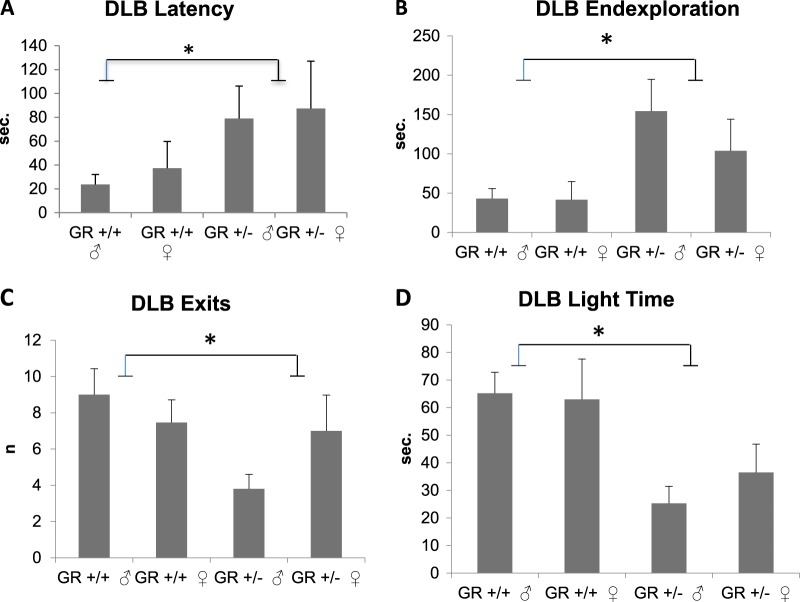
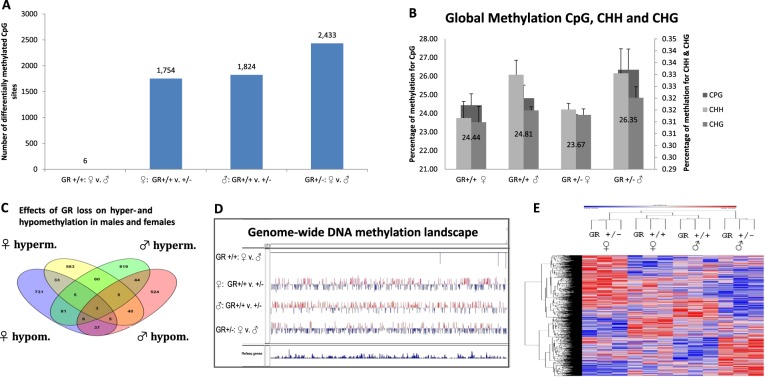
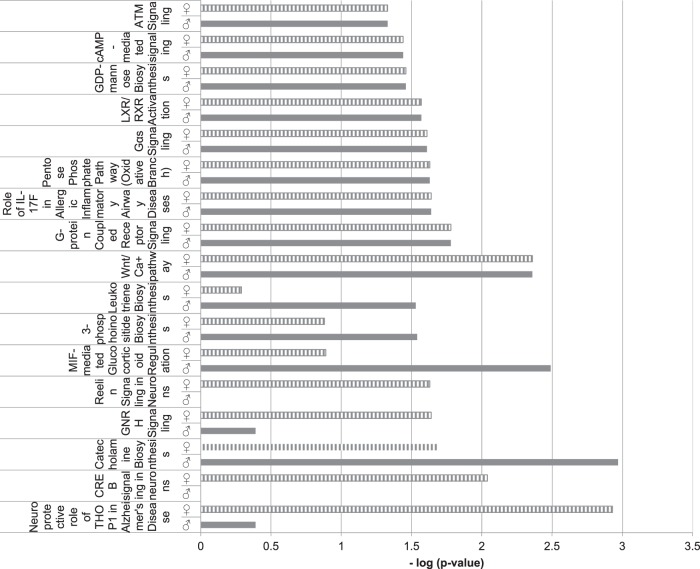
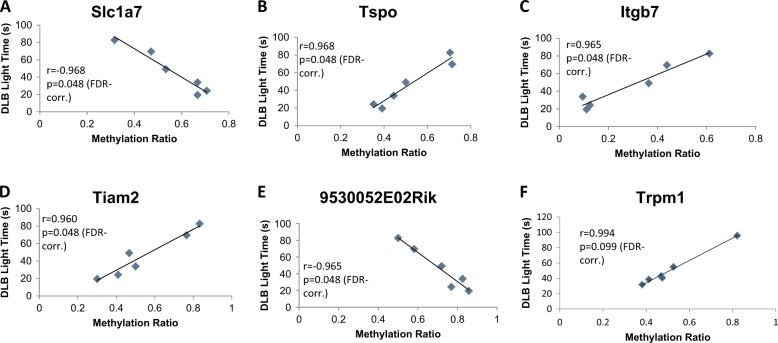
Prenatal stress defines long-term phenotypes through epigenetic programming of the offspring. These effects are potentially mediated by glucocorticoid release and by sex. We hypothesized that the glucocorticoid receptor ( Gr, Nr3c1 ) fashions the DNA methylation profile of offspring. Consistent with this hypothesis, fetal Nr3c1 heterozygosity leads to altered DNA methylation landscape in fetal placenta in a sex-specific manner. There was a significant overlap of differentially methylated genes in fetal placenta and adult frontal cortex in Nr3c1 heterozygotes. Phenotypically, Nr3c1 heterozygotes show significantly more anxiety-like behavior than wildtype. DNA methylation status of fetal placental tissue is significantly correlated with anxiety-like behavior of the same animals in adulthood. Thus, placental DNA methylation might predict behavioral phenotypes in adulthood. Our data supports the hypothesis that Nr3c1 influences DNA methylation at birth and that DNA methylation in placenta correlates with adult frontal cortex DNA methylation and anxiety-like phenotypes.
Overview
The claims and statistics of this paper haven’t been checked yet.
Free: it reads the open-access text and checks the first 5 claims that cite a source we can check. Create a free account to check every claim.
Integrity signals
Registry
Cites
Statistics
Figures
Verification
Claims the paper makes
The claims and statistics of this paper haven’t been checked yet.
Free: it reads the open-access text and checks the first 5 claims that cite a source we can check. Create a free account to check every claim.
Claims other papers make about this one
Each is checked against this paper’s own text: does it say what the citing paper says it does?
The source backs part of the claim, not all of it — or backs it for a different population, condition or comparison.
In the citing paper
“and these changes have been associated with methylation changes in the adult prefrontal cortex, as well as with increased anxiety-like behaviors in the same animals (146).”
From Epigenetic Modifications in Stress Response Genes Associated With Childhood Trauma (2019) · cites this paper as [146]
Experimental — accuracy not yet measuredThe cited source says what the claim attributes to it.
In the citing paper
“hemizygosity of a deletion of nr3c1 (nr3c1-/+ heterozygote) has been associated with changes in DNA methylation in fetal placenta”
From Epigenetic Modifications in Stress Response Genes Associated With Childhood Trauma (2019) · cites this paper as [146]
The cited source says what the claim attributes to it.
In the citing paper
“Additionally, hypomethylation of FKBP5, which encodes FK506 binding protein 5, a proximal protein regulator of GRs that has been shown to decrease GR affinity for its ligand cortisol, therefore disrupting the negative feedback loop in the HPA axis, was reported in the placenta (Wochnik et al., 2005; Schmidt et al., 2019).”
From The Epigenetics of Anxiety Pathophysiology: A DNA Methylation and Histone Modification Focused Review (2023) · cites this paper as Schmidt et al., 2019
Self-check
Percentages, sums and reported differences re-computed from the paper’s own numbers.
The self-check needs the paper’s full text.
Citations
Cites
Introduction to mediation, moderation, and conditional process analysis :
Hayes, A. F., & names (2015) · Cited by 7,004
Epigenetic programming by maternal behavior
Weaver, I. C. G., Cervoni, N., Champagne, F. A., D'Alessio, A. C., Sharma, S., Seckl, J. R., Dymov, S., Szyf, M., & Meaney, M. J. (2004) · Nature Neuroscience · doi:10.1038/nn1276 · Cited by 6,177
Epigenetic regulation of the glucocorticoid receptor in human brain associates with childhood abuse
McGowan, P. O., Sasaki, A., D'Alessio, A. C., Dymov, S., Labonté, B., Szyf, M., Turecki, G., & Meaney, M. J. (2009) · Nature Neuroscience · doi:10.1038/nn.2270 · Cited by 3,531
methylKit: a comprehensive R package for the analysis of genome-wide DNA methylation profiles
Akalin, A., Kormaksson, M., Li, S., Garrett-Bakelman, F. E., Figueroa, M. E., Melnick, A., & Mason, C. E. (2012) · Genome Biology · doi:10.1186/gb-2012-13-10-r87 · Cited by 2,238
The Corticosteroid Receptor Hypothesis of Depression
Holsboer, F. (2000) · Neuropsychopharmacology · doi:10.1016/s0893-133x(00)00159-7 · Cited by 2,181
Disruption of the glucocorticoid receptor gene in the nervous system results in reduced anxiety
Tronche, F., Kellendonk, C., Kretz, O., Gass, P., Anlag, K., Orban, P. C., Bock, R., Klein, R., & Schütz, G. (1999) · Nature Genetics · doi:10.1038/12703 · Cited by 1,838
Self-citationAllele-specific FKBP5 DNA demethylation mediates gene–childhood trauma interactions
Klengel, T., Mehta, D., Anacker, C., Rex-Haffner, M., Pruessner, J. C., Pariante, C. M., Pace, T. W. W., Mercer, K. B., Mayberg, H. S., Bradley, B., et al. (2013) · Nature Neuroscience · doi:10.1038/nn.3275 · Cited by 1,447
Antenatal maternal stress and long‐term effects on child neurodevelopment: how and why?
Talge, N. M., Neal, C., Glover, V., & the Early Stress, T. R. A. P. S. N. F. A. N. E. O. C. A. A. M. H. (2007) · Journal of Child Psychology and Psychiatry · doi:10.1111/j.1469-7610.2006.01714.x · Cited by 1,349
BSMAP: whole genome bisulfite sequence MAPping program
Xi, Y., & Li, W. (2009) · BMC Bioinformatics · doi:10.1186/1471-2105-10-232 · Cited by 1,212
Sex-Specific Programming of Offspring Emotionality after Stress Early in Pregnancy
Mueller, B. R., & Bale, T. L. (2008) · The Journal of Neuroscience · doi:10.1523/jneurosci.1424-08.2008 · Cited by 988
Cited by
Epigenetic Modifications in Stress Response Genes Associated With Childhood Trauma
Jiang, S., Postovit, L., Cattaneo, A., Binder, E. B., & Aitchison, K. J. (2019) · Frontiers in Psychiatry · doi:10.3389/fpsyt.2019.00808 · Cited by 288
The Role of Epigenetics in Placental Development and the Etiology of Preeclampsia
Apicella, C., Ruano, C. S. M., Méhats, C., Miralles, F., & Vaiman, D. (2019) · International Journal of Molecular Sciences · doi:10.3390/ijms20112837 · Cited by 190
“GR+/−mice Illumina HiSeq 2000 GSE123188 GR mutation in mice changes the epigenome of placental tissue in a sex-specific manner [67]”
The epigenetics of perinatal stress
Szyf, M. (2019) · Dialogues in Clinical Neuroscience · doi:10.31887/dcns.2019.21.4/mszyf · Cited by 58
Persaud, N. S., & Cates, H. M. (2023) · eneuro · doi:10.1523/eneuro.0109-21.2021 · Cited by 41
Perinatal stress and epigenetics.
(2021) · Handbook of Clinical Neurology · doi:10.1016/b978-0-12-820107-7.00008-2 · Cited by 28
How is prenatal stress transmitted from the mother to the fetus?
Sze, Y., & Brunton, P. J. (2024) · Journal of Experimental Biology · doi:10.1242/jeb.246073 · Cited by 36
Methyl-CpG binding domain 2 (Mbd2) is an epigenetic regulator of autism-risk genes and cognition
Lax, E., Carmo, S. D., Enuka, Y., Sapozhnikov, D. M., Welikovitch, L. A., Mahmood, N., Rabbani, S. A., Wang, L., Britt, J. P., Hancock, W. W., et al. (2023) · Translational Psychiatry · doi:10.1038/s41398-023-02561-9 · Cited by 28
Self-citationRuiz‐Raya, F., Noguera, J. C., & Velando, A. (2023) · Hormones and Behavior · doi:10.1016/j.yhbeh.2023.105316 · Cited by 16
Ruiz‐Conca, M., Gardela, J., Martinez-Serrano, C. A., Wright, D., López‐Béjar, M., Rodríguez‐Martínez, H., & Álvarez‐Rodríguez, M. (2020) · International Journal of Molecular Sciences · doi:10.3390/ijms21124437 · Cited by 20
“Previous studies in NR3C1 knock-out rodents, found an exaggerated inflammatory response, aberrant immunomodulation, and immune cell recruitment [8], even linked to transgenerational effects [19] and important reproductive pathologies [53].”
BackgroundAwalt, S. L., Boghean, L., Klinkebiel, D. L., & Strasser, R. (2024) · Developmental Psychobiology · doi:10.1002/dev.22482 · Cited by 16
Srividhya, D., Korlimarla, A., Ravikumar, G., Snijesh, V. P., Kaku, S. M., & Visweswariah, A. M. (2022) · Birth Defects Research · doi:10.1002/bdr2.2119 · Cited by 15
“Further, this differential methylation in the placenta was correlated with the methylation pattern in the frontal cortex of adult mice that showed anxiety-like behavior (M. Schmidt et al., 2019).”
Castelli, V., Lavanco, G., Brancato, A., & Plescia, F. (2020) · Frontiers in Behavioral Neuroscience · doi:10.3389/fnbeh.2020.00009 · Cited by 16
Ortiz‐Valladares, M., Pedraza‐Medina, R., Pinto-González, M. F., Guzmán‐Muñiz, J., González-Pérez, Ó., & López, N. A. M. (2021) · Neuroscience & Biobehavioral Reviews · doi:10.1016/j.neubiorev.2021.07.028 · Cited by 17
Maternal glucocorticoids do not directly mediate the effects of maternal social stress on the fetus
Sze, Y., Fernandes, J., Kołodziejczyk, Z. M., & Brunton, P. J. (2022) · Journal of Endocrinology · doi:10.1530/joe-22-0226 · Cited by 15
Early-life iron deficiency persistently disrupts affective behaviour in mice
Gundacker, A., Glat, M. J., Wais, J. P., Stöhrmann, P., Pollak, A. J., & Pollak, D. D. (2023) · Annals of Medicine · doi:10.1080/07853890.2023.2191003 · Cited by 11
“However, several of the target genes, some of which by themselves act as regulators of gene expression (such as the transcription factors jun and atf3) have been demonstrated to be relevant to psychiatric disorders (including nr3c1, the glucocorticoid receptor [70,71]; ntrk2, the receptor for brain-derived neurotrophi…”
BackgroundThe role of epigenetics in anxiety disorders
Azargoonjahromi, A. (2023) · Molecular Biology Reports · doi:10.1007/s11033-023-08787-6 · Cited by 16
Epigenetic changes caused by early life stress in the pathogenesis of depression
Bi, H., Jin, J., Sun, M., Chen, M., Li, X., & Wang, Y. (2025) · European Journal of Pharmacology · doi:10.1016/j.ejphar.2025.177671 · Cited by 10
Stress and the gut microbiota-brain axis
Hyder, N., & Raza, M. L. (2025) · Progress in brain research · doi:10.1016/bs.pbr.2025.01.002 · Cited by 8
Gilani, M., Abak, N., & Saberian, M. (2024) · Pharmacology Biochemistry and Behavior · doi:10.1016/j.pbb.2024.173897 · Cited by 6
Thébault‐Dagher, F., Robles, M., Herba, C. M., St‐Pierre, J., Brochen, C., Muckle, G., LUPIEN, S. J., Séguin, J. R., Fraser, W. D., Vaillancourt, C., et al. (2021) · Journal of Neuroendocrinology · doi:10.1111/jne.13046 · Cited by 8
Tavitian, A., Lax, E., Song, W., Szyf, M., & Schipper, H. M. (2025) · Biochimica et Biophysica Acta (BBA) - Molecular Cell Research · doi:10.1016/j.bbamcr.2025.119899 · Cited by 5
Self-citationChen, C., Saha, E., Fischer, J., Guebila, M. B., Fanfani, V., Shutta, K. H., Padi, M., Glass, K., DeMeo, D. L., Lopes‐Ramos, C. M., et al. (2025) · Biology of Sex Differences · doi:10.1186/s13293-025-00752-1 · Cited by 9
“However, NR3C1 deficiency has been linked to sex-dependent DNA methylation changes in murine models [74] admitting a possible sex-dependent role here as well.”
Yuan, H.-J., Han, X., Wang, G., Wu, J.-S., He, N., Zhang, J., Kong, Q.-Q., Gong, S., Luo, M., & Tan, J. (2022) · Frontiers in Cell and Developmental Biology · doi:10.3389/fcell.2022.874374 · Cited by 5
Astrocytic glucocorticoid receptors in the ventral hippocampus modulate anxiety-like behaviors
Lu, C., Ren, J., Wang, W., Chen, L.-Y., Lian, X.-Y., & Cao, X. (2025) · Brain Research Bulletin · doi:10.1016/j.brainresbull.2025.111518 · Cited by 3
Environmental Factors and Epigenetics
Weber‐Stadlbauer, U., & Richetto, J. (2021) · Elsevier eBooks · doi:10.1016/b978-0-12-819641-0.00135-3 · Cited by 3
Yao, D., Li, J., Lu, Y., Sun, A., Pang, X., Yi, Q., Zhu, Z., Song, D., Lu, Y., & Li, H. (2025) · Psychoneuroendocrinology · doi:10.1016/j.psyneuen.2025.107683 · Cited by 2
Liu, M., Sun, H., Zhang, X., & He, W. (2026) · Frontiers in Psychiatry · doi:10.3389/fpsyt.2026.1739728 · Cited by 1
“Boys showed consistently higher odds of total dif fi culties across all paternal drinking levels (OR = 1.88 for >20 g/day) compared to girls, consistent with prior evidence of sex-speci fi c vulnerability to early-life environmental stressors (59 – 63).”
InfluentialStress-Mediated Regulation of the DNA Methylome
Dick, A. L. W., & Chen, A. (2020) · Elsevier eBooks · doi:10.1016/b978-0-12-813156-5.00004-2 · Cited by 1
Richter, T. A., Baraty, L. J., & Hunter, R. G. (2024) · Elsevier eBooks · doi:10.1016/b978-0-443-18516-8.00004-1 · Cited by 1
Experience and the genome: the role of epigenetics
Szyf, M. (2021) · Elsevier eBooks · doi:10.1016/b978-0-323-90752-1.00001-8 · Cited by 1
DNA Methylation as an Epigenetic Mechanism of Anticipation
Szyf, M. (2022) · Cognitive systems monographs · doi:10.1007/978-3-031-17678-4_2 · Cited by 1
Warhaftig, G., Sapozhnikov, D. M., Yadid, G., & Szyf, M. (2023) · Elsevier eBooks · doi:10.1016/b978-0-12-823937-7.00009-2
Pehlıvan, S., Nursal, A. F., Oyacı, Y., Pehlıvan, M., & Bekerecioğlu, M. (2023) · Kastamonu Medical Journal · doi:10.51271/kmj-0121
Epigenetic Processes as Mediators of the Impact of the Social Environment
Szyf, M. (2024) · Springer eBooks · doi:10.1007/978-3-031-59286-7_6
Microbial Metabolites and Neural Epigenetic Circuitry in Emotional Homeostasis and Depression
Chen, Y., Gong, X., Chen, Y., Liu, Y., Zhang, X., & Manickam, S. (2026) · Nutrition Reviews · doi:10.1093/nutrit/nuag119
Epigenome-wide placental methylation landscapes in relation to antenatal depressive symptoms
Thirumoorthy, C., Nair, S. S. D., Deepa, M., Ram, U., Anjana, R. M., Balasubramanyam, M., Mohan, V., Saravanan, P., & Gokulakrishnan, K. (2026) · Neurochemistry International · doi:10.1016/j.neuint.2026.106262
Animal models with construct validity for studying epigenetic processes in neurobehavior
LAX, E., BERHE, M., & Yadid, G. (2026) · Handbook of clinical neurology · doi:10.1016/b978-0-443-19043-8.00028-1
Self-citation
Metadata
- Authors
- Schmidt, M., Lax, E., Zhou, R., Cheishvili, D., Ruder, A. M., Ludiro, A., Lapert, F., Macedo da Cruz, A., Sandrini, P., Calzoni, T., Vaisheva, F., Brandwein, C., Luoni, A., Massart, R., Lanfumey, L., Riva, M. A., Deuschle, M., Gass, P., & Szyf, M.
- Affiliations
- Heidelberg University (DE)
- McGill University (CA)
- University of Milan (IT)
- Inserm (FR)
- Corresponding author
- Schmidt, Michaela
- ORCID
- Venue
- Translational Psychiatry
- Published
- 2019-01-17
- Volume
- 9
- Issue
- 1
- Pages
- 23-23
- ISSN
- 2158-3188 (ISSN-L)
- PMC
- PMC6336883
- OpenAlex
- W2909490348
- Cited by
- 37
- References
- 80
- Citations by year
- 2026: 4 · 2025: 6 · 2024: 5 · 2023: 6 · 2022: 5 · 2021: 5 · 2020: 3 · 2019: 3
- FWCI
- 1.32
- Type
- journal article
- Language
- en
- Open access
- gold
- doi.org
- Licence
- cc-by
- creativecommons.org/licenses/by/4.0 (tdm)
- creativecommons.org/licenses/by/4.0 (vor)
- Locations
- Translational Psychiatry (publishedVersion, cc-by)
- Europe PMC (PubMed Central) (publishedVersion, other-oa)
- PubMed Central (publishedVersion, cc-by)
- PubMed (publishedVersion)
- Archivio Istituzionale della Ricerca (Universita Degli Studi Di Milano) (submittedVersion, other-oa)
- DOAJ (DOAJ: Directory of Open Access Journals) (submittedVersion)
- Funders
- Era-Net Neuron
- Era-Net Neuron grant
- Era-Net Neuron grant MOP-42411 from the Canadian Institute of Health Research
- Topics
- Life Sciences › Biochemistry, Genetics and Molecular Biology › Molecular Biology › Epigenetics and DNA Methylation
- Health Sciences › Medicine › Pediatrics, Perinatology and Child Health › Birth, Development, and Health
- Life Sciences › Neuroscience › Behavioral Neuroscience › Stress Responses and Cortisol
- Keywords
- glucocorticoid receptor, NR3C1, DNA methylation, placenta, prenatal stress, epigenetic programming, sex differences, anxiety-like behavior, frontal cortex, fetal programming, differentially methylated genes, mouse model
- MeSH terms
- Animals, Anxiety Disorders, Behavior, Animal, Disease Models, Animal, Female, Fetus, Male, Placenta, Pregnancy, Prenatal Exposure Delayed Effects, Receptors, Glucocorticoid, Sex Factors, Mice, Knockout, CpG Islands, DNA Methylation, Epigenesis, Genetic, Mice
About these checks
Registry, retraction, Cites and statistics results are computed, not judged, with one exception: a printed reference that no index lists is read once by a model before it counts as a citation error. Claims are extracted by a model and kept only when their quote appears verbatim in the text; each cited source is then checked, with a model’s help, for whether it says what the claim relies on. Those verdicts can be wrong — read the claim’s quote and the cited source before relying on one.
Statistics and arithmetic are recomputed, not judged.
Confidence bands are shown only for fields calibrated on our annotated test set. None is calibrated yet, so no band is shown.
What counts as a claim ›How we measure confidence ›How we check this ›
Are you an author, or do you see a problem with this page? Request a review
Data sources
Bibliographic data: Semantic Scholar, OpenAlex, Crossref.
Contains information from the Semantic Scholar Academic Graph Datasets, made available under the ODC Attribution License (ODC-BY 1.0).
Semantic Scholar’s data is described in: Kinney, R., et al. (2023). The Semantic Scholar Open Data Platform. arXiv:2301.10140.
