

Predicting remission after internet-delivered psychotherapy in patients with depression using machine learning and multi-modal data
Open accessPublished version of a preprint
The DOI matches its Crossref record; 46 of the 46 references it cites were found in a registry or an index.
Abstract
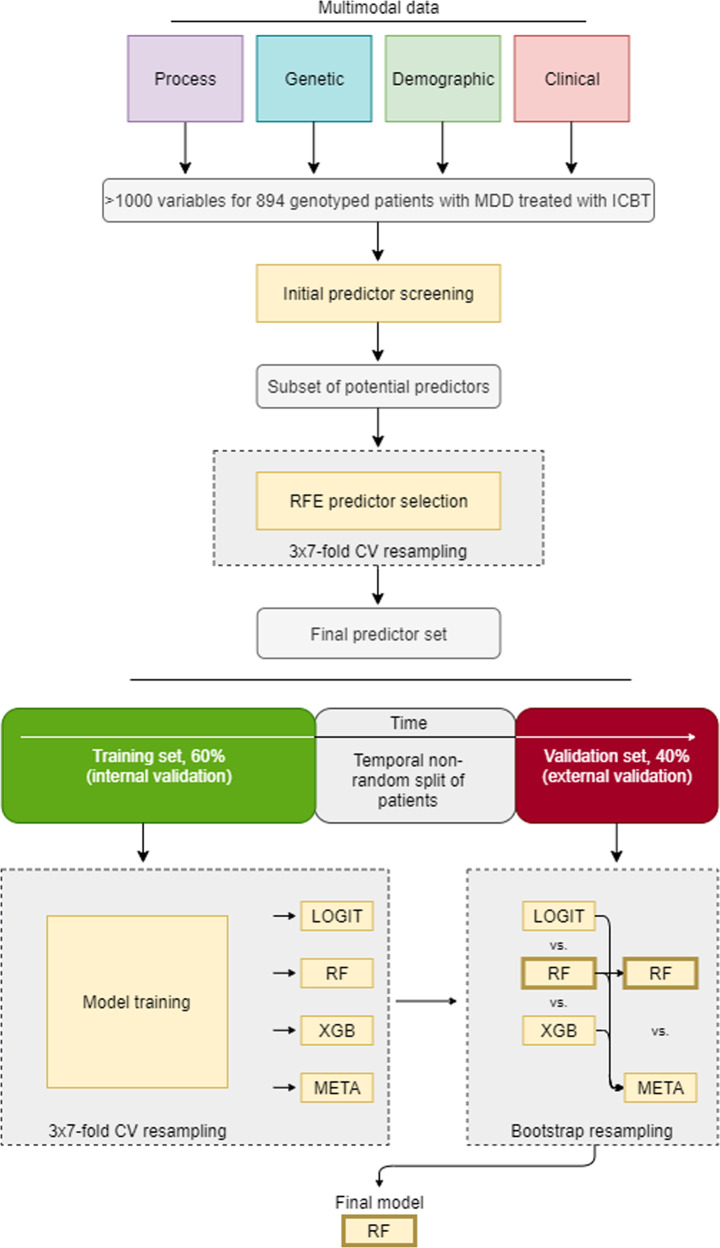
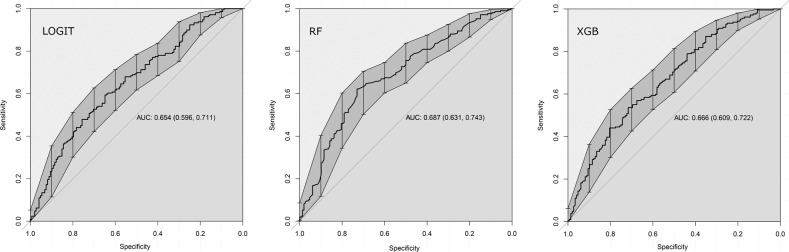
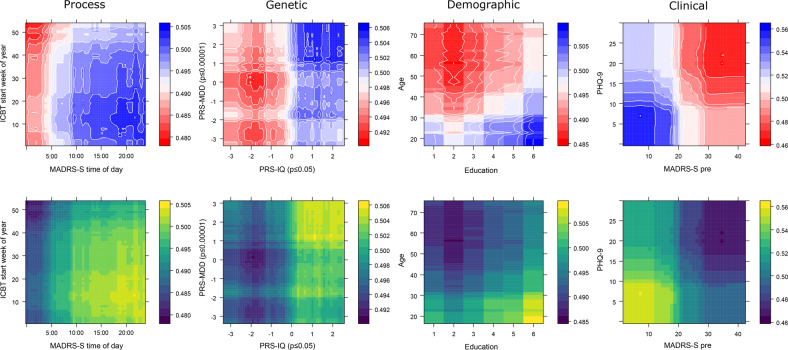
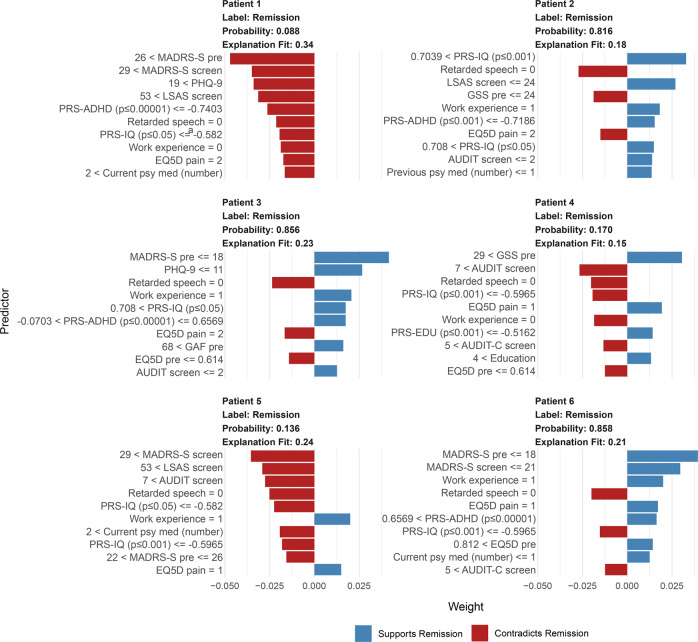
BACKGROUND Whether a patient benefits from psychotherapy or not is arguably a complex process and heterogeneous information extracted from process, genetic, demographic, and clinical data could contribute to the prediction of remission status after psychotherapy. This study applied supervised machine learning with such multi-modal baseline data to predict remission in patients with major depressive disorder (MDD) after completed psychotherapy. METHODS Eight-hundred ninety-four genotyped adult patients (65.5% women, age range 18-75 years) diagnosed with MDD and treated with guided Internet-based Cognitive Behaviour Therapy (ICBT) at the Internet Psychiatry Clinic in Stockholm were included (2008-2016). Predictor variables from multiple domains were available: demographic, clinical, process (e.g. time to complete online questionnaires), and genetic (polygenic risk scores for depression, education and more). The outcome was remission status post ICBT (cut-off ≤10 on MADRS-S). Data were split into train (60%) and validation (40%) sets based on treatment start date. Predictor selection employed human domain knowledge followed by Recursive Feature Elimination. Model derivation was internally validated through repeated cross-validation resampling. The final random forest model was externally validated against a (i) null, (ii) logit, (iii) XGBoost, and (iv) blended meta-ensemble model on the hold-out validation set. Model transparency was explored through partial dependence and Local Interpretable Model-agnostic Explanations (LIME) analysis. RESULTS Feature selection retained 45 predictors representing all four predictor types. With unseen validation data, the final random forest model proved reasonably accurate at classifying post ICBT remission (Accuracy 0.656 [0.604, 0.705], P vs null model = 0.004; AUC 0.687 [0.631, 0.743]), slightly better vs logit (bootstrap D =1.730, P = 0.084) but not vs XGBoost (D = 0.463, P = 0.643). Transparency analysis showed model usage of all predictor types at both the group and individual patient level. CONCLUSION A new, multi-modal classifier for predicting MDD remission status after ICBT treatment in routine psychiatric care was derived and empirically validated. The multi-modal approach to predicting remission may inform tailored treatment, and deserves further investigation. One-sentence Summary Predicting remission of depression in adults after psychotherapy
Overview
The claims and statistics of this paper haven’t been checked yet.
Free: it reads the open-access text and checks the first 5 claims that cite a source we can check. Create a free account to check every claim.
Integrity signals
Registry
Cites
Statistics
Figures
Verification
Claims the paper makes
The claims and statistics of this paper haven’t been checked yet.
Free: it reads the open-access text and checks the first 5 claims that cite a source we can check. Create a free account to check every claim.
Claims other papers make about this one
Each is checked against this paper’s own text: does it say what the citing paper says it does?
The source backs part of the claim, not all of it — or backs it for a different population, condition or comparison.
In the citing paper
“They recognized that this accuracy level did not outperform other models in the literature (28).”
From Examining the role of AI technology in online mental healthcare: opportunities, challenges, and implications, a mixed-methods review (2024) · cites this paper as [28]
Experimental — accuracy not yet measuredThe source backs part of the claim, not all of it — or backs it for a different population, condition or comparison.
In the citing paper
“Additionally, the studies reporting on the use of ML algorithms found significant success in outcome prediction and feature detection to support online therapy delivery (6, 19, 28, 29, 31, 33, 83, 85, 86, 92–94).”
From Examining the role of AI technology in online mental healthcare: opportunities, challenges, and implications, a mixed-methods review (2024) · cites this paper as [28]
Experimental — accuracy not yet measuredThe source backs part of the claim, not all of it — or backs it for a different population, condition or comparison.
In the citing paper
“As such, the relevant studies highlighted the importance of analyzing the large datasets produced by online mental healthcare interventions and the efficiency and accuracy of AI algorithms which in some cases were comparable to or better than human assessors (6, 19, 28, 29, 31, 33, 83, 85, 86, 92–94).”
From Examining the role of AI technology in online mental healthcare: opportunities, challenges, and implications, a mixed-methods review (2024) · cites this paper as [28]
Experimental — accuracy not yet measuredThe cited source says what the claim attributes to it.
In the citing paper
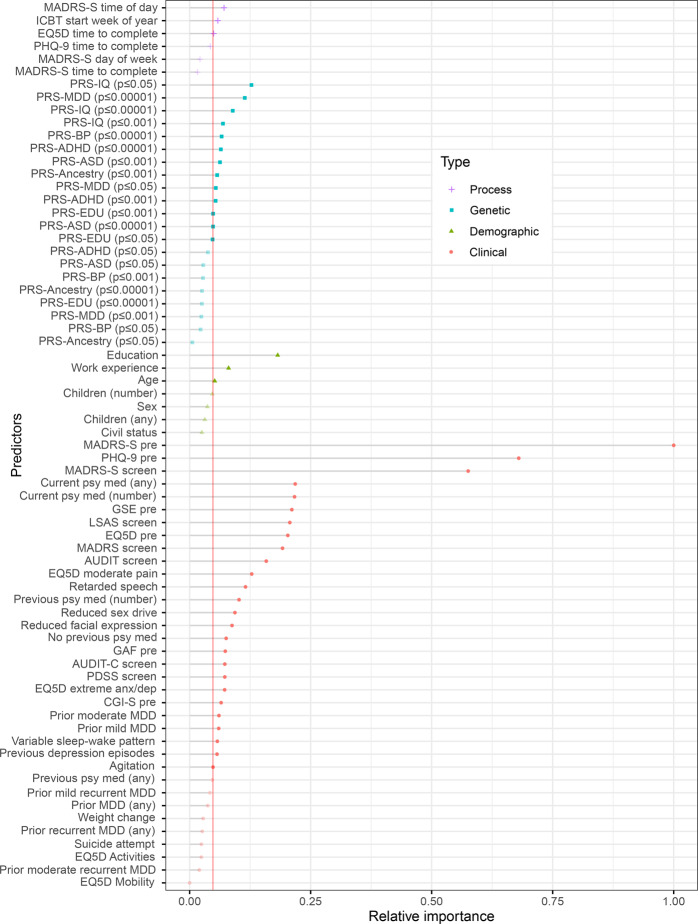
“Wallert et al. (2022) reported that polygenic risk factors for intelligence was the most important genetic predictor, pre-treatment MADRS-S was the most important clinical predictor, and the time of day when the patient completed their MADRS-S was the most important treatment process predictor of symptom remission after participation in an eCBT program for depression with around 65% accuracy.”
From Examining the role of AI technology in online mental healthcare: opportunities, challenges, and implications, a mixed-methods review (2024) · cites this paper as [28]
Self-check
Percentages, sums and reported differences re-computed from the paper’s own numbers.
The self-check needs the paper’s full text.
Citations
Cites
Breiman, L. (2001) · Machine Learning · doi:10.1023/a:1010933404324 · Cited by 133,538
LeCun, Y., Bengio, Y., & Hinton, G. (2015) · Nature · doi:10.1038/nature14539 · Cited by 84,126
The Elements of Statistical Learning
Hastie, T., Tibshirani, R., & Friedman, J. (2009) · Springer Series in Statistics · doi:10.1007/978-0-387-84858-7 · Cited by 25,970
"Why Should I Trust You?": Explaining the Predictions of Any Classifier
Ribeiro, M. T., Singh, S., & Guestrin, C. (2016) · Proceedings of the 22nd ACM SIGKDD International Conference on Knowledge Discovery and Data Mining · doi:10.1145/2939672.2939778 · Cited by 17,555
A new depression scale designed to be sensitive to change
Montgomery, S. A., & Åsberg, M. (1979) · British Journal of Psychiatry · doi:10.1192/bjp.134.4.382 · Cited by 13,962 · cited 1×
“The MADRS-S is a widely used instrument for assessing MDD [26, 27].”
MethodJames, S. L., Abate, D., Abate, K. H., Abay, S. M., Abbafati, C., Abbasi, N., Abbastabar, H., Abd-Allah, F., Abdela, J., Abdelalim, A., et al. (2018) · The Lancet · doi:10.1016/s0140-6736(18)32279-7 · Cited by 13,867
Machine learning: Trends, perspectives, and prospects
Jordan, M. I., & Mitchell, T. M. (2015) · Science · doi:10.1126/science.aaa8415 · Cited by 9,955 · cited 1×
“0]) on pretreatment MADRS-S and had a smaller percentage symptom decline (-22 [28] vs -68 [23]) pre-post treatment MADRS-S, compared to patients in post-treatment remission.”
ResultGene selection for cancer classification using support vector machines
Guyon, I., Weston, J., Barnhill, S., & Vapnik, V. (2002) · Machine Learning · doi:10.1023/a:1012487302797 · Cited by 9,954
Building Predictive Models in R Using the caret Package
Kuhn, M. (2008) · Journal of Statistical Software · doi:10.18637/jss.v028.i05 · Cited by 8,863
Kuhn, M., & Johnson, K. (2013) · doi:10.1007/978-1-4614-6849-3 · Cited by 6,788
Research works printed but not linked: 3
- Young, C, Campbell, K & Dulong, C. Internet-delivered cognitive behavioural therapy for major depression and anxiety disorders: a review of clinical effectiveness. The Canadian Agency for Drugs and Technologies in Health (CADTH)) 1-48 (CADTH, Ottawa, CA, 2018). 30883066
- Wallert, J. Forecasting myocardial infarction and subsequent behavioural outcomes. PhD thesis, Uppsala University, (2020).
- Shahriari, B, Swersky, K, Wang, Z, Adams, RP & de Freitas, N. in Proceedings of the IEEE. 148–75.
Cited by
Vieira, S., Liang, X., Guiomar, R. N. R. M., & Mechelli, A. (2022) · Clinical Psychology Review · doi:10.1016/j.cpr.2022.102193 · Cited by 94
Gutierrez, G., Stephenson, C., Eadie, J., Asadpour, K., & Alavi, N. (2024) · Frontiers in Psychiatry · doi:10.3389/fpsyt.2024.1356773 · Cited by 71
McNamara, M. E., Zisser, M., Beevers, C. G., & Shumake, J. (2022) · Behaviour Research and Therapy · doi:10.1016/j.brat.2022.104086 · Cited by 61
Park, J., Shin, Y., Jung, D., Hur, J., Pack, S. P., Lee, H., Lee, H., & Cho, C. (2025) · Frontiers in Psychiatry · doi:10.3389/fpsyt.2024.1504190 · Cited by 40
Curtiss, J. E., & DiPietro, C. P. (2025) · Clinical Psychology Review · doi:10.1016/j.cpr.2025.102593 · Cited by 30
Prasad, N., Chien, I., Regan, T. W., Enrique, Á., Palacios, J. E., Keegan, D., Munir, U., Tanno, R., Richardson, H., Nori, A., et al. (2023) · PLoS ONE · doi:10.1371/journal.pone.0272685 · Cited by 32
Zainal, N. H., & Newman, M. G. (2024) · Journal of Anxiety Disorders · doi:10.1016/j.janxdis.2024.102825 · Cited by 20
Hammelrath, L., Hilbert, K., Heinrich, M., Zagorscak, P., & Knaevelsrud, C. (2023) · Psychological Medicine · doi:10.1017/s0033291723003537 · Cited by 21
The latest developments with internet-based psychological treatments for depression
Andersson, G. (2024) · Expert Review of Neurotherapeutics · doi:10.1080/14737175.2024.2309237 · Cited by 20
“Machine learning data analytic methods are now increasingly used in research, for example in a depression study in which 894 patients were included and the authors reported that they derived a multi-modal classifier for predicting major depression remission status after ICBT [37].”
MethodHilbert, K., Böhnlein, J., Meinke, C., Chavanne, A. V., Langhammer, T., Stumpe, L., Winter, N. R., Leenings, R., Adolph, D., Arolt, V., et al. (2024) · NeuroImage · doi:10.1016/j.neuroimage.2024.120639 · Cited by 19
Morneau‐Vaillancourt, G., Palaiologou, E., Polderman, T. J. C., & Eley, T. C. (2024) · Journal of Child Psychology and Psychiatry · doi:10.1111/jcpp.14099 · Cited by 16
“For example, one study shows that polygenic scores may significantly improve the prediction of depression remission, when considered in combination with 45 other demographic and clinical factors (Wallert et al., 2022).”
Prediction of individual patient outcomes to psychotherapy vs medication for major depression
LoParo, D., Dunlop, B. W., Nemeroff, C. B., Mayberg, H. S., & Craighead, W. E. (2025) · npj Mental Health Research · doi:10.1038/s44184-025-00119-9 · Cited by 14
The Role of Genetic Data in Dissecting Depression Heterogeneity
Mitchell, B. L., Monistrol-Mula, A., Thomas, J. T., & Byrne, E. M. (2025) · Biological Psychiatry · doi:10.1016/j.biopsych.2025.10.029 · Cited by 14
Boberg, J., Kaldo, V., Mataix‐Cols, D., Crowley, J. J., Roelstraete, B., Halvorsen, M., Forsell, E., Isacsson, N. H., Sullivan, P. F., Svanborg, C., et al. (2023) · BMJ Open · doi:10.1136/bmjopen-2022-069427 · Cited by 12
Self-citationPsychotherapist remarks’ ML classifier: insights from LLM and topic modeling application
Vanin, A. V., Bolshev, V. E., & Panfilova, A. S. (2025) · Frontiers in Psychiatry · doi:10.3389/fpsyt.2025.1608163 · Cited by 9
Artificial intelligence-based psychotherapy: focusing on common psychotherapeutic factors
Giotakos, O. (2025) · Frontiers in Psychiatry · doi:10.3389/fpsyt.2025.1710715 · Cited by 11
Bäckman, J., Wallert, J., Halvorsen, M., Crowley, J. J., Mataix‐Cols, D., & Rück, C. (2025) · Discover Mental Health · doi:10.1007/s44192-025-00213-6 · Cited by 8
Self-citationKravchenko, O., Bäckman, J., Mataix‐Cols, D., Crowley, J. J., Halvorsen, M., Sullivan, P. F., Wallert, J., & Rück, C. (2025) · BMC Psychiatry · doi:10.1186/s12888-025-07012-x · Cited by 7
“In another study using the same data as [41] with machine learning modelling, higher PRS MDD and PRS for intelligence (PRS IQ) weakly predicted remission in ICBT for MDD [42].”
Self-citationPontén, M., Flygare, O., Bellander, M., Karemyr, M., Nilbrink, J., Hellner, C., Ojala, O., & Bjureberg, J. (2024) · BMC Psychiatry · doi:10.1186/s12888-024-06391-x · Cited by 7
Self-citationHarrer, M., Ebert, D. D., Kuper, P., Paganini, S., Schlicker, S., Terhorst, Y., Reuter, B., Sander, L., & Baumeister, H. (2023) · Internet Interventions · doi:10.1016/j.invent.2023.100634 · Cited by 7
“They are employed, for instance, to assign individual patients to formats with the largest expected benefits (Wallert et al., 2022), to identify patients with low levels of adherence (Chien et al.”
BackgroundMachine Learning Model for Response to Internet-Delivered CBT vs Antidepressant Medication
Lee, C. T., Richards, D., Heinzle, J., Hanlon, A. K., Lynch, K., Harty, S., Claus, N., O’Keane, V., Stephan, K. E., Whelan, R., et al. (2025) · JAMA Network Open · doi:10.1001/jamanetworkopen.2025.41639 · Cited by 7
Predicting outcomes at the individual patient level: what is the best method?
Liu, Q., Ostinelli, E. G., Crescenzo, F. D., Li, Z., Tomlinson, A., Salanti, G., Cipriani, A., & Efthimiou, O. (2023) · BMJ Mental Health · doi:10.1136/bmjment-2023-300701 · Cited by 7
“28 Finally, we did not consider neuro-imaging and genomic multimodal data in our analyses, which could potentially introduce non-linearities, enlarge the separation between clusters and benefit the predictive performance of the similarity-based approach.”
Isacsson, N. H., Zantvoort, K., Forsell, E., Boman, M., & Kaldo, V. (2024) · Internet Interventions · doi:10.1016/j.invent.2024.100773 · Cited by 6
“Various data types have been considered for outcome predictions, ranging from neuroimaging, socio-demographic, and genetic to behavioral data (Lee et al., 2018; Vieira et al., 2022; Wallert et al., 2022).”
BackgroundSelf-citationPark, J.-H., Kang, H., Jeon, J. H., Kang, S. W., Kim, J.-W., Kim, J.-M., & Lee�, H. (2026) · JMIR Mental Health · doi:10.2196/83352 · Cited by 4
Bäckman, J., Wallert, J., Halvorsen, M., Roelstraete, B., de Schipper, E. J., Strom, N. I., Eide, T. O., Höffler, K. D., Mattheisen, M., Hansen, B. K. A., et al. (2025) · American Journal of Medical Genetics Part B Neuropsychiatric Genetics · doi:10.1002/ajmg.b.33026 · Cited by 5
“Single PRSs alone will likely not be used to guide future clinical decision-making but could be helpful when combined in a multi-PRS approach (Albiñana et al. 2023; Krapohl et al. 2018) and in combination with other types of data (Boberg et al. 2023; Wallert et al. 2022).”
Self-citationBäckman, J., Kravchenko, O., Halvorsen, M., de Schipper, E. J., Ivanova, E. N., Kaldo, V., Isacsson, N. H., Eide, T. O., Höffler, K. D., Mattheisen, M., et al. (2026) · American Journal of Medical Genetics Part B Neuropsychiatric Genetics · doi:10.1002/ajmg.b.70015 · Cited by 3
Self-citationHisler, G. C., Young, K. S., Cumpanasoiu, D. C., Palacios, J. E., Duffy, D. J., Enrique, Á., Keegan, D., & Richards, D. (2024) · Counselling and Psychotherapy Research · doi:10.1002/capr.12771 · Cited by 4
Zwalmen, Y. V., Koster, E. H. W., Demeester, D., Baeken, C., Verhaeghe, N., & Hoorelbeke, K. (2025) · Journal of Affective Disorders Reports · doi:10.1016/j.jadr.2025.100894 · Cited by 3
Inclusive education via empathy propagation in schools of students with special education needsPreprint
Lugo, I., Contreras, M. G. A., & Coutiño‐Vázquez, B. (2025) · arXiv (Cornell University) · doi:10.48550/arxiv.2511.16379 · Cited by 3
Calderon, A., Zhu, D., Zainal, N. H., Lu, C., Fitzsimmons‐Craft, E. E., Wilfley, D. E., Eisenberg, D., Taylor, C. B., & Newman, M. G. (2026) · Psychotherapy and Psychosomatics · doi:10.1159/pps/aemag007 · Cited by 2
Cuomo, A., Koukouna, D., Pardossi, S., Pinzi, M., Pierini, C., Rescalli, M. B., & Fagiolini, A. (2025) · Pharmacopsychiatry · doi:10.1055/a-2751-7163 · Cited by 2
A clinically actionable framework for personalizing iCBT to improve depression outcomes
Doorn, K. A., & Christensen, H. M. (2026) · npj Digital Medicine · doi:10.1038/s41746-026-02844-7 · Cited by 2
“Recent multimodalmachine-learningapproachesintegrateclinical,behavioral,and biologicaldatatoimproveprognosticaccuracy 8,61 but incremental gains are small and have not translated into improved outcomes via prescriptive treatment matching.”
Föyen, L. F., Sennerstam, V., Kontio, E., Flygare, O., Boman, M., & Lindsäter, E. (2025) · JMIR Research Protocols · doi:10.2196/65790 · Cited by 1
“If confirmed, our findings would support the notion that predictive models using sociodemographic, clinical, self-rated, treatment-related, and potentially cognitive variables are valuable when predicting therapy outcomes, as have been suggested in other patient populations [17,18,80].”
Self-citationShu, Y., Qiang, L., Liu, Q., Xu, Y., Huang, C., & Yao, X. P. (2026) · BMC Psychiatry · doi:10.1186/s12888-026-07942-0 · Cited by 2
“In recent years, ML-based models have demonstrated outstanding performance in the early diagnosis and screening of psychiatric disorders such as depression or anxiety, particularly in evaluating treatment response and prognosis [26, 27].”
Pozuelo, J. R., Kessler, R. C., Patel, V., Lahiri, A., Parashar, Y., Herzallah, M. M., Khanduri, M., O’Neill, K., Martinez, A., Bhan, A., et al. (2026) · Journal of Affective Disorders · doi:10.1016/j.jad.2026.121674 · Cited by 1
Lees, J., & Delgadillo, J. (2026) · Behaviour Research and Therapy · doi:10.1016/j.brat.2026.105024 · Cited by 1
Crema, C., Francesco, S. D., Baronio, C. M., Boccali, A., Demaria, C., Tura, G. B., Archetti, D., & Redolfi, A. (2026) · Frontiers in Digital Health · doi:10.3389/fdgth.2026.1812241 · Cited by 1
“Two papers by Habets 59) predicted remission after ICBT using a mixed feature set of predictors, i.e., demographic, clinical, digital platform behavior, and genetic PRS. Methodologically, these papers differed more in how multimodal integration was operationalized and validated through…”
Gretton, A., Sapkota, R. P., Orobosa, G. O., Dear, B. F., Titov, N., & Hadjistavropoulos, H. D. (2026) · Internet Interventions · doi:10.1016/j.invent.2026.100998 · Cited by 1
Skelton, M., Catarino, A., Brown, S. A. T., Carr, E., Davies, M. R., Peel, A. J., Rayner, C., Breen, G. D., & Eley, T. C. (2023) · Behaviour Research and Therapy · doi:10.1016/j.brat.2023.104386 · Cited by 1
Calderon, A., Zhu, D., Tong, Y. A., Lu, C., Fitzsimmons‐Craft, E. E., Wilfley, D. E., Eisenberg, D., Taylor, C. B., & Newman, M. G. (2025) · OSF Preprints (OSF Preprints) · doi:10.31219/osf.io/63zqk · Cited by 2
Clinical Application of Machine Learning Methods in Psychiatric Disorders
Mohammadi, M. A. (2023) · International Journal for Research in Applied Science and Engineering Technology · doi:10.22214/ijraset.2023.57349
Schmidt, F., Kurzawski, M. G., Hammerfald, K., Jahren, H. H., Solbakken, O. A., & Vlassov, V. (2024) · IEEE International Conference on Digital Health (ICDH) · doi:10.1109/icdh62654.2024.00024
“These models encompass a broad spectrum of tasks, including predicting adherence [17], assessing treat-ment response [18]–[21], and analyzing trajectories of suicidal”
BackgroundWho does iCBT work for and why: predicting and understanding treatment outcomes in depression
Lee, C. T. (2024) · Trinity's Access to Research Output (TARA) (Trinity College Dublin)
Can we improve prediction of psychotherapy outcomes through pretraining with simulated data?
Jacobs, N., Voelkle, M. C., Kathmann, N., & Hilbert, K. (2026) · Frontiers in Psychology · doi:10.3389/fpsyg.2026.1866418
Precision Psychiatry in the Age of AI: Early Detection and Personalized Treatment of Mood Disorders
Verma, M., & Beg, M. J. (2026) · Advances in computational intelligence and robotics book series · doi:10.4018/979-8-3373-1325-2.ch004
Babirye, S., Huang, R., Zeng, C., Kwesiga, J. M., Kemigisha, B., Wamala, K., Kasujja, R., Kalani, K., Martinez, R. A., & Nakimuli‐Mpungu, E. (2026) · Wellcome Open Research · doi:10.12688/wellcomeopenres.25768.1 · Cited by 1
Deep Neural Decision Forest for Clinical Outcome Prediction in Multiview ICBT Tabular Data
Mansha, S., Håkansson, A., Hammerfald, K., Jahren, H. H., & Vlassov, V. (2026) · ACM Symposium on Applied Computing · doi:10.1145/3748522.3779782
Ahn, G., Li, C. E., Liang, A., Choi, W., Ahn, S., Roberts, C., & Gabrieli, J. D. E. (2026) · JMIR AI · doi:10.2196/89054
Nobre, D. B., Vasconcellos, C. A. G. B., de Freitas, R. C., Ferreira, J. H. P., & de Santana, E. S. (2026) · Cadernos Cajuína · doi:10.52641/cadcajv11i7.3291
Kravchenko, O., Halvorsen, M., Boberg, J., Kaldo, V., Crowley, J. J., Kuja‐Halkola, R., Rück, C., & Wallert, J. (2026) · Journal of Medical Internet Research · doi:10.2196/100162
“Preliminary findings include a positive association between PGS for educational attainment and symptom reduction [21], a negative association between PGS for autism spectrum disorder and symptom reduction [22], and a weak predictive effect of PGS for depression and intelligence on remission [11].”
InfluentialSelf-citationWan, Z., Liu, Y., Su, Z., Bai, C., Liu, X., Li, X., Zhao, X., Li, P., Song, L., & Rao, J. (2026) · Frontiers in Psychiatry · doi:10.3389/fpsyt.2026.1896124
Prediction Models for Treatment Response in Stress-Related Disorders (Preprint)Preprint
Föyen, L. F., Sennerstam, V., Kontio, E., Flygare, O., Boman, M., & Lindsäter, E. (2026) · doi:10.2196/preprints.109431
Self-citationBabirye, S., Huang, R., Zeng, C., Kwesiga, J. M., Kemigisha, B., Wamala, K., Kasujja, R., Kalani, K., Andres, R., & Nakimuli‐Mpungu, E. (2026) · Wellcome Open Research · doi:10.12688/wellcomeopenres.25768.2
Weller, P. D., Hilbert, K., Alpers, G. W., Bartholdy, S., Berger, E., Brakemeier, E., Bräscher, A., Brockmeyer, T., Christiansen, H., Equit, M., et al. (2026) · Scientific Reports · doi:10.1038/s41598-026-70047-x
Ku, D. K. K., Wong, A. Y. C., Chan, K. Y., Wing, Y. K., & Li, T. M. H. (2026) · Healthcare · doi:10.3390/healthcare14193238
“…which may reflect reductions in home-related stressors associated with depression [44,45]; sadness-related words [14,42], aligning with the central role of low mood in depression; and work-related words, given the established relationship between chronic work stress and depressive symptoms [46].”
Influential
Metadata
- Authors
- Wallert, J., Boberg, J., Kaldo, V., Mataix-Cols, D., Flygare, O., Crowley, J. J., Halvorsen, M., Ben Abdesslem, F., Boman, M., Andersson, E., Hentati Isacsson, N., Ivanova, E., & Rück, C.
- Affiliations
- Region Stockholm (SE)
- Linnaeus University (SE)
- University of North Carolina at Chapel Hill (US)
- Karolinska Institutet (SE)
- Corresponding author
- Wallert, John
- ORCID
- Venue
- Translational Psychiatry
- Published
- 2022-09-01
- Volume
- 12
- Issue
- 1
- Pages
- 357-357
- ISSN
- 2158-3188 (ISSN-L)
- PMC
- PMC9437007
- OpenAlex
- W4294011802
- Cited by
- 48
- References
- 46
- Citations by year
- 2026: 15 · 2025: 13 · 2024: 11 · 2023: 7 · 2022: 2
- FWCI
- 7.29
- Type
- journal article
- Language
- en
- Open access
- gold
- doi.org
- Licence
- cc-by
- creativecommons.org/licenses/by/4.0 (tdm)
- creativecommons.org/licenses/by/4.0 (vor)
- Locations
- Translational Psychiatry (publishedVersion, cc-by)
- medRxiv (acceptedVersion)
- PubMed Central (publishedVersion, cc-by)
- PubMed (publishedVersion)
- Carolina Digital Repository (University of North Carolina at Chapel Hill) (submittedVersion, cc-by)
- KTH Publication Database DiVA (KTH Royal Institute of Technology) (submittedVersion, other-oa)
- DOAJ (DOAJ: Directory of Open Access Journals) (submittedVersion, cc-by-sa)
- UNC Libraries
- Funders
- Familjen Erling-Perssons Stiftelse
- Karolinska Institutet
- Stockholms Läns Landsting
- Vetenskapsrådet (2021-06377, 2018-02487, 2021-06377 JW, 2018-, 2016-01961)
- Forskningsrådet om Hälsa, Arbetsliv och Välfärd (954440, 2018-00221 CR, 2018-00221)
- Center for Innovative Medicine (96328, 954440, CIMED 96328 JW)
- National Institute of Mental Health (R01MH110427)
- Topics
- Social Sciences › Psychology › Applied Psychology › Digital Mental Health Interventions
- Social Sciences › Psychology › Experimental and Cognitive Psychology › Anxiety, Depression, Psychometrics, Treatment, Cognitive Processes
- Health Sciences › Medicine › Pharmacology (medical) › Treatment of Major Depression
- Keywords
- major depressive disorder, remission prediction, internet-based cognitive behavioral therapy, polygenic risk score, multimodal data, random forest, XGBoost, genetic predictors, treatment response, personalized treatment
- MeSH terms
- Machine Learning, Adolescent, Adult, Aged, Depression, Depressive Disorder, Major, Major Depressive Disorder, Female, Humans, Male, Middle Aged, Psychotherapy, Treatment Outcome, Internet, Young Adult
About these checks
Registry, retraction, Cites and statistics results are computed, not judged, with one exception: a printed reference that no index lists is read once by a model before it counts as a citation error. Claims are extracted by a model and kept only when their quote appears verbatim in the text; each cited source is then checked, with a model’s help, for whether it says what the claim relies on. Those verdicts can be wrong — read the claim’s quote and the cited source before relying on one.
Statistics and arithmetic are recomputed, not judged.
Confidence bands are shown only for fields calibrated on our annotated test set. None is calibrated yet, so no band is shown.
What counts as a claim ›How we measure confidence ›How we check this ›
Are you an author, or do you see a problem with this page? Request a review
Data sources
Bibliographic data: Semantic Scholar, OpenAlex, Crossref.
Contains information from the Semantic Scholar Academic Graph Datasets, made available under the ODC Attribution License (ODC-BY 1.0).
Semantic Scholar’s data is described in: Kinney, R., et al. (2023). The Semantic Scholar Open Data Platform. arXiv:2301.10140.
