

A network-based analysis anticipates time to recovery from major depression revealing a plasticity by context interplay
Open accessThe DOI matches its Crossref record; 41 of the 41 references it cites were found in a registry or an index.
Abstract
Predicting disease trajectories in patients with major depressive disorder (MDD) can allow designing personalized therapeutic strategies. In this study, we aimed to show that measuring patients' plasticity - that is the susceptibility to modify the mental state - identifies at baseline who will recover, anticipating the time to transition to wellbeing. We conducted a secondary analysis in two randomized clinical trials, STAR*D and CO-MED. Symptom severity was assessed using the Quick Inventory of Depressive Symptomatology while the context was measured at enrollment with the Quality-of-Life Enjoyment and Satisfaction Questionnaire. Patients were retrospectively grouped based on both their time to response or remission and their plasticity levels at baseline assessed through a network-based mathematical approach that operationalizes plasticity as the inverse of the symptom network connectivity strength. The results show that plasticity levels at baseline anticipate time to response and time to remission. Connectivity strength among symptoms is significantly lower - and thus plasticity higher - in patients experiencing a fast recovery. When the interplay between plasticity and context is considered, plasticity levels are predictive of disease trajectories only in subjects experiencing a favorable context, confirming that plasticity magnifies the influence of the context on mood. In conclusion, the assessment of plasticity levels at baseline holds promise for predicting MDD trajectories, potentially informing the design of personalized treatments and interventions. The combination of high plasticity and the experience of a favorable context emerges as critical to achieve recovery.
Overview
The claims and statistics of this paper haven’t been checked yet.
Free: it reads the open-access text and checks the first 5 claims that cite a source we can check. Create a free account to check every claim.
Integrity signals
Registry
Cites
Statistics
Figures
Verification
Claims the paper makes
The claims and statistics of this paper haven’t been checked yet.
Free: it reads the open-access text and checks the first 5 claims that cite a source we can check. Create a free account to check every claim.
Claims other papers make about this one
Each is checked against this paper’s own text: does it say what the citing paper says it does?
The check wasn’t confident either way, so it gives no verdict — never disputed.
In the citing paper
“agents that combine robust induction with TrkB-linked consolidation produce larger, longer-lived gains in spine density, fewer relapses after stress re-exposure, and superior functional rescue compared with either strategy alone [343].”
From Synaptic Plasticity—Intrinsic Excitability and Antidepressant Discovery (2026) · cites this paper as [343]
Experimental — accuracy not yet measuredThe check wasn’t confident either way, so it gives no verdict — never disputed.
In the citing paper
“TrkB agonism or positive modulation with 7,8-DHF restores thin spine maturity, prevents stress- or age-related synaptic erosion, and sustains cognitive recovery across hippocampal, amygdalar, and cortical circuits [343,344].”
From Synaptic Plasticity—Intrinsic Excitability and Antidepressant Discovery (2026) · cites this paper as [343]
Experimental — accuracy not yet measuredThe check wasn’t confident either way, so it gives no verdict — never disputed.
In the citing paper
“Higher baseline rACC theta predicts greater symptom improvement across modalities and differentiates responders”
From Synaptic Plasticity—Intrinsic Excitability and Antidepressant Discovery (2026) · cites this paper as [343]
Experimental — accuracy not yet measured
Self-check
Percentages, sums and reported differences re-computed from the paper’s own numbers.
The self-check needs the paper’s full text.
Citations
Cites
Catastrophic shifts in ecosystems
Scheffer, M., Carpenter, S., Foley, J. A., Folke, C., & Walker, B. (2001) · Nature · doi:10.1038/35098000 · Cited by 7,510
A network theory of mental disorders
Borsboom, D. (2017) · World Psychiatry · doi:10.1002/wps.20375 · Cited by 3,482 · cited 1×
“Based on systems science [31, 32], speci fi c signals, such as critical slowing down, may indicate how close a system is to transition.”
Anticipating Critical Transitions
Scheffer, M., Carpenter, S. R., Lenton, T. M., Bascompte, J., Brock, W., Dakos, V., van de Koppel, J., van de Leemput, I. A., Levin, S. A., van Nes, E. H., et al. (2012) · Science · doi:10.1126/science.1225244 · Cited by 2,208 · cited 1×
“The development of strategies to anticipate critical transitions, such as the one from psychopathology to wellbeing, is an emerging fi eld in psychiatry and other disciplines [29, 30].”
Cooney, G. M., Dwan, K., Greig, C. A., Lawlor, D. A., Rimer, J., Waugh, F. R., McMurdo, M., & Mead, G. E. (2013) · Cochrane Database of Systematic Reviews · doi:10.1002/14651858.cd004366.pub6 · Cited by 1,834
Comparing network structures on three aspects: A permutation test.
van Borkulo, C. D., van Bork, R., Boschloo, L., Kossakowski, J. J., Tio, P., Schoevers, R. A., Borsboom, D., & Waldorp, L. J. (2023) · Psychological Methods · doi:10.1037/met0000476 · Cited by 1,465 · cited 1×
“The Network Comparison Test (NTC) is a permutation-based test that randomly regroups participants from the network repeatedly [19, 20].”
Vulnerability genes or plasticity genes?
Belsky, J., Jonassaint, C., Pluess, M., Stanton, M., Brummett, B., & Williams, R. (2009) · Molecular Psychiatry · doi:10.1038/mp.2009.44 · Cited by 1,017 · cited 3×
“These results con fi rm the differential role of plasticity levels in promoting wellbeing according to contextual in fl uences [3, 4, 25].”
Association of Symptom Network Structure With the Course of Depression
van Borkulo, C., Boschloo, L., Borsboom, D., Penninx, B. W. J. H., Waldorp, L. J., & Schoevers, R. A. (2015) · JAMA Psychiatry · doi:10.1001/jamapsychiatry.2015.2079 · Cited by 846 · cited 1×
“The Network Comparison Test (NTC) is a permutation-based test that randomly regroups participants from the network repeatedly [19, 20].”
Critical slowing down as early warning for the onset and termination of depression
van de Leemput, I. A., Wichers, M., Cramer, A. O. J., Borsboom, D., Tuerlinckx, F., Kuppens, P., van Nes, E. H., Viechtbauer, W., Giltay, E. J., Aggen, S. H., et al. (2014) · Proceedings of the National Academy of Sciences · doi:10.1073/pnas.1312114110 · Cited by 771 · cited 1×
“This includes how an individual is progressing towards the onset of depression or to the achievement of [33].”
Neuroplasticity in cognitive and psychological mechanisms of depression: an integrative model
Price, R. B., & Duman, R. (2020) · Molecular Psychiatry · doi:10.1038/s41380-019-0615-x · Cited by 739 · cited 1×
“…as the ability to modify brain functioning and behavior, is increasingly acknowledged as a pivotal process in psychiatry and applied neuroscience as it plays a fundamental role in the reorganization of the neural and mental processes during the transition from psychopathology to well-being [1, 2].”
Psychedelics and the essential importance of context
Carhart-Harris, R. L., Roseman, L., Haijen, E., Erritzoe, D., Watts, R., Branchi, I., & Kaelen, M. (2018) · Journal of Psychopharmacology · doi:10.1177/0269881118754710 · Cited by 657 · cited 1×
“By contrast, patients with low plasticity are expected to show slower transition to wellbeing that might be accelerated by enhancing-plasticity treatments [1, 3, 6].”
Self-citationReporting standards for psychological network analyses in cross-sectional data.
Burger, J., Isvoranu, A.-M., Lunansky, G., Haslbeck, J. M. B., Epskamp, S., Hoekstra, R. H. A., Fried, E. I., Borsboom, D., & Blanken, T. F. (2023) · Psychological Methods · doi:10.1037/met0000471 · Cited by 516
Comparing network structures on three aspects: A permutation test
van Borkulo, C. D., Boschloo, L., Kossakowski, J. J., Tio, P., Schoevers, R. A., Borsboom, D., & Waldorp, L. (2017) · doi:10.13140/rg.2.2.29455.38569 · Cited by 465
Isvoranu, A.-M., & Epskamp, S. (2023) · Psychological Methods · doi:10.1037/met0000439 · Cited by 401
Penninx, B. W. J. H., Nolen, W. A., Lamers, F., Zitman, F. G., Smit, J. H., Spinhoven, P., Cuijpers, P., de Jong, P. J., van Marwijk, H. W. J., der Meer, K. V., et al. (2011) · Journal of Affective Disorders · doi:10.1016/j.jad.2011.03.027 · Cited by 354 · cited 1×
“This, however, does not imply that treatment regimen is not important [14].”
Cuijpers, P., Karyotaki, E., Ciharova, M., Miguel, C., Noma, H., & Furukawa, T. A. (2021) · Acta Psychiatrica Scandinavica · doi:10.1111/acps.13335 · Cited by 336 · cited 1×
“…into clinical practice, it appears crucial to integrate strategies capable to improve the patients ’ living conditions, such as environmental or lifestyle interventions [26, 27], or patients ’ subjective appraisal, such as psychotherapeutic approaches [28], with treatments that enhance plasticity.”
Lundberg, J., Cars, T., Lööv, S.-Å., Söderling, J., Sundström, J., Tiihonen, J., Leval, A., Gannedahl, A., Björkholm, C., Själin, M., et al. (2023) · JAMA Psychiatry · doi:10.1001/jamapsychiatry.2022.3860 · Cited by 166 · cited 1×
“This information may prove particularly valuable to develop personalized therapeutic strategies based on patient ’ s plasticity and contextual factors that hold the potential to reduce the burden of mental illness not only at clinical, but also at societal and economic levels [11, 34].”
Branchi, I. (2011) · Psychoneuroendocrinology · doi:10.1016/j.psyneuen.2010.08.011 · Cited by 156 · cited 4×
“These results con fi rm the differential role of plasticity levels in promoting wellbeing according to contextual in fl uences [3, 4, 25].”
InfluentialSelf-citationDelgadillo, J., de Jong, K., Lucock, M., Lutz, W., Rubel, J., Gilbody, S., Ali, S., Aguirre, E., Appleton, M., Nevin, J., et al. (2018) · The Lancet Psychiatry · doi:10.1016/s2215-0366(18)30162-7 · Cited by 152
Treatment with psychedelics is psychotherapy: beyond reductionism
Gründer, G., Brand, M., Mertens, L. J., Jungaberle, H., Kärtner, L., Scharf, D., Spangemacher, M., & Wolff, M. (2023) · The Lancet Psychiatry · doi:10.1016/s2215-0366(23)00363-2 · Cited by 129 · cited 2×
“These results con fi rm the differential role of plasticity levels in promoting wellbeing according to contextual in fl uences [3, 4, 25].”
A Dynamical Systems View of Psychiatric Disorders—Theory: A Review
Scheffer, M., Bockting, C. L., Borsboom, D., Cools, R., Delecroix, C., Hartmann, J. A., Kendler, K. S., van de Leemput, I., van der Maas, H. L. J., van Nes, E., et al. (2024) · JAMA Psychiatry · doi:10.1001/jamapsychiatry.2024.0215 · Cited by 121 · cited 1×
“Based on systems science [31, 32], speci fi c signals, such as critical slowing down, may indicate how close a system is to transition.”
van Schaik, C. P. (2013) · Philosophical Transactions of the Royal Society B Biological Sciences · doi:10.1098/rstb.2012.0339 · Cited by 99 · cited 1×
“While plasticity, or fl exibility, is known to affect the speed of adaptation or learning in disciplines from ecology to neuroscience [22, 23], the effects of different plasticity levels on the time required for the transition to wellbeing have been limitedly explored in the mental health fi eld.”
Bottemanne, H., Morlaàs, O., Claret, A., Sharot, T., Fossati, P., & Schmidt, L. (2022) · JAMA Psychiatry · doi:10.1001/jamapsychiatry.2022.2996 · Cited by 76 · cited 1×
“Indeed, an enhancement of plasticity has been demonstrated to be therapeutically effective when associated with favorable contextual factors [5 – 9].”
Köhler, S., Chrysanthou, S., Guhn, A., & Sterzer, P. (2019) · Depression and Anxiety · doi:10.1002/da.22835 · Cited by 75 · cited 1×
“The identi fi cation of relevant predictors of the duration of a depressive episode provides prognostic indicators that can be used for optimizing personalized treatments [10].”
Reporting Standards for Psychological Network Analyses in Cross-sectional DataPreprint
Burger, J., Isvoranu, A., Lunansky, G., et al. (2020) · doi:10.31234/osf.io/4y9nz · Cited by 71 · cited 1×
“The methods implemented in the present study follow the reporting guidelines of the EQUATOR network for psychological network analyses in cross-sectional data [21].”
Chiarotti, F., Viglione, A., Giuliani, A., & Branchi, I. (2017) · Translational Psychiatry · doi:10.1038/tp.2017.35 · Cited by 68
Self-citationPredicting individual clinical trajectories of depression with generative embedding
Frässle, S., Marquand, A. F., Schmaal, L., Dinga, R., Veltman, D. J., van der Wee, N. J. A., van Tol, M.-J., Schöbi, D., Penninx, B. W. J. H., & Stephan, K. E. (2020) · NeuroImage: Clinical · doi:10.1016/j.nicl.2020.102213 · Cited by 55
Predicting antidepressant treatment outcome based on socioeconomic status and citalopram dose
Viglione, A., Chiarotti, F., Poggini, S., Giuliani, A., & Branchi, I. (2019) · The Pharmacogenomics Journal · doi:10.1038/s41397-019-0080-6 · Cited by 48 · cited 1×
“Indeed, an enhancement of plasticity has been demonstrated to be therapeutically effective when associated with favorable contextual factors [5 – 9].”
Self-citationColli, C. D., Borgi, M., Poggini, S., Chiarotti, F., Cirulli, F., Penninx, B. W. J. H., Benedetti, F., Vai, B., & Branchi, I. (2022) · Translational Psychiatry · doi:10.1038/s41398-022-02035-4 · Cited by 43 · cited 1×
“However, they also exhibit faster recovery when contextual conditions improve [24], corro-borating the view that the higher the plasticity, the shorter the time to transition from psychopathology to wellbeing.”
Self-citationSkelton, M., Carr, E., Buckman, J. E. J., Davies, M. R., Goldsmith, K., Hirsch, C. R., Peel, A. J., Rayner, C., Rimes, K. A., Saunders, R., et al. (2022) · Psychological Medicine · doi:10.1017/s0033291722003403 · Cited by 39 · cited 2×
“This information may prove particularly valuable to develop personalized therapeutic strategies based on patient ’ s plasticity and contextual factors that hold the potential to reduce the burden of mental illness not only at clinical, but also at societal and economic levels [11, 34].”
Borgi, M., Marcolin, M., Tomasin, P., Correale, C., Venerosi, A., Grizzo, A., Orlich, R., & Cirulli, F. (2019) · International Journal of Environmental Research and Public Health · doi:10.3390/ijerph16183501 · Cited by 37 · cited 1×
“…into clinical practice, it appears crucial to integrate strategies capable to improve the patients ’ living conditions, such as environmental or lifestyle interventions [26, 27], or patients ’ subjective appraisal, such as psychotherapeutic approaches [28], with treatments that enhance plasticity.”
Self-citationPlasticity in mental health: A network theory
Branchi, I. (2022) · Neuroscience & Biobehavioral Reviews · doi:10.1016/j.neubiorev.2022.104691 · Cited by 35 · cited 3×
“By contrast, patients with low plasticity are expected to show slower transition to wellbeing that might be accelerated by enhancing-plasticity treatments [1, 3, 6].”
Self-citationEscitalopram modulates learning content-specific neuroplasticity of functional brain networks
Klöbl, M., Seiger, R., Vanicek, T., Handschuh, P. A., Reed, M. B., Spurny‐Dworak, B., Ritter, V., Godbersen, G. M., Gryglewski, G., Kraus, C., et al. (2021) · NeuroImage · doi:10.1016/j.neuroimage.2021.118829 · Cited by 33
Kendler, K. S., Myers, J. R., & Halberstadt, L. J. (2009) · Psychological Medicine · doi:10.1017/s0033291709990845 · Cited by 30 · cited 1×
“Indeed, in the light of the assessment of plasticity, the context provides key information that conveys relevant clinical utility, warranting its evaluation for an accurate prognosis [35, 36].”
Buckman, J. E. J., Cohen, Z. D., O'Driscoll, C., Fried, E. I., Saunders, R., Ambler, G., DeRubeis, R. J., Gilbody, S., Hollon, S. D., Kendrick, T., et al. (2021) · Psychological Medicine · doi:10.1017/s0033291721001616 · Cited by 29 · cited 1×
“Previous studies have identi fi ed potential predictors, such as clinical, psychological, and biological measures as well as neuroimaging data, which exhibit reasonable discriminative ability in predicting disease trajectories [11 – 15].”
Colli, C. D., Chiarotti, F., Campolongo, P., Giuliani, A., & Branchi, I. (2024) · Nature Mental Health · doi:10.1038/s44220-023-00192-z · Cited by 21 · cited 3×
“The STAR*D enrolled a total of 4041 outpatients (18 – 75 years old) with nonpsychotic MDD (17-item Hamilton Depression Rating Scale [HAM-17] score ≥ 14).”
Self-citationTop-down causation in psychiatric disorders: a clinical-philosophical inquiry
Kendler, K. S., & Woodward, J. (2021) · Psychological Medicine · doi:10.1017/s0033291721001811 · Cited by 16
Branchi, I. (2024) · European Journal of Neuroscience · doi:10.1111/ejn.16331 · Cited by 14 · cited 1×
“Finally, these fi ndings offer a potential explanation for why only some individuals bene fi t from favorable contextual factors, despite the growing recognition of these factors as key in promoting wellbeing [37, 38].”
Self-citationKasada, M., & Yoshida, T. (2020) · Population Ecology · doi:10.1002/1438-390x.12059 · Cited by 12 · cited 1×
“While plasticity, or fl exibility, is known to affect the speed of adaptation or learning in disciplines from ecology to neuroscience [22, 23], the effects of different plasticity levels on the time required for the transition to wellbeing have been limitedly explored in the mental health fi eld.”
Branchi, I. (2023) · Neuroscience & Biobehavioral Reviews · doi:10.1016/j.neubiorev.2023.105272 · Cited by 12 · cited 2×
“In previous studies, we have proposed the network-based operationalization of plasticity [16], showing that the weaker the connectivity of the symptom network, the higher the plasticity, and the greater the ability to change mood rating according to contextual factors [17].”
Self-citationPredicting individual clinical trajectories of depression with generative embeddingPreprint
Frässle, S., Marquand, A. F., Schmaal, L., et al. (2019) · medRxiv · doi:10.1101/19006650 · Cited by 10
Letter to the Editor: Context dependency of major depression
Patten, S. B. (2010) · Psychological Medicine · doi:10.1017/s0033291710001364 · Cited by 4 · cited 1×
“Indeed, in the light of the assessment of plasticity, the context provides key information that conveys relevant clinical utility, warranting its evaluation for an accurate prognosis [35, 36].”
Cited by
Synaptic priming: A framework for pharmacotherapy in depression
Brown, K. A., Ajibola, M. I., Medeiros, G. C., & Gould, T. D. (2025) · Neuron · doi:10.1016/j.neuron.2025.09.010 · Cited by 13
Integrating plasticity into precision psychiatry
Branchi, I. (2025) · European Psychiatry · doi:10.1192/j.eurpsy.2025.19 · Cited by 9
“The validity of this operationalization has been recently demonstrated through an analysis of two independent datasets, the STAR*D-Sequenced treatment alternatives to relieve depression and the CO-MED-Combining medications to enhance depression outcomes [12, 13].”
Self-citationA network-based approach reveals higher plasticity levels in bipolar than major depressive disorder
Viglione, A., Colli, C. D., Poggini, S., Mobasher, M., Vai, B., Poletti, S., Benedetti, F., & Branchi, I. (2025) · Journal of Affective Disorders · doi:10.1016/j.jad.2025.119549 · Cited by 7
Self-citationColli, C. D., Viglione, A., Giuliani, A., & Branchi, I. (2025) · European Psychiatry · doi:10.1192/j.eurpsy.2025.10083 · Cited by 5
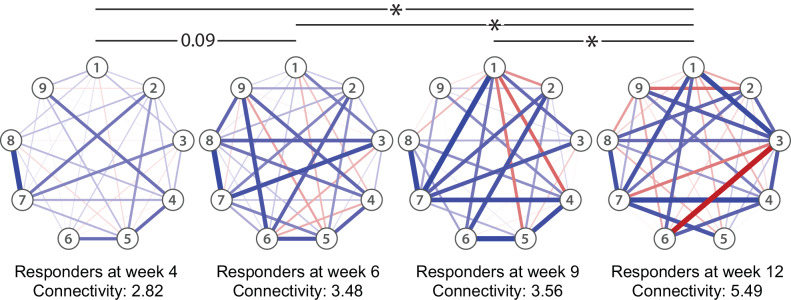
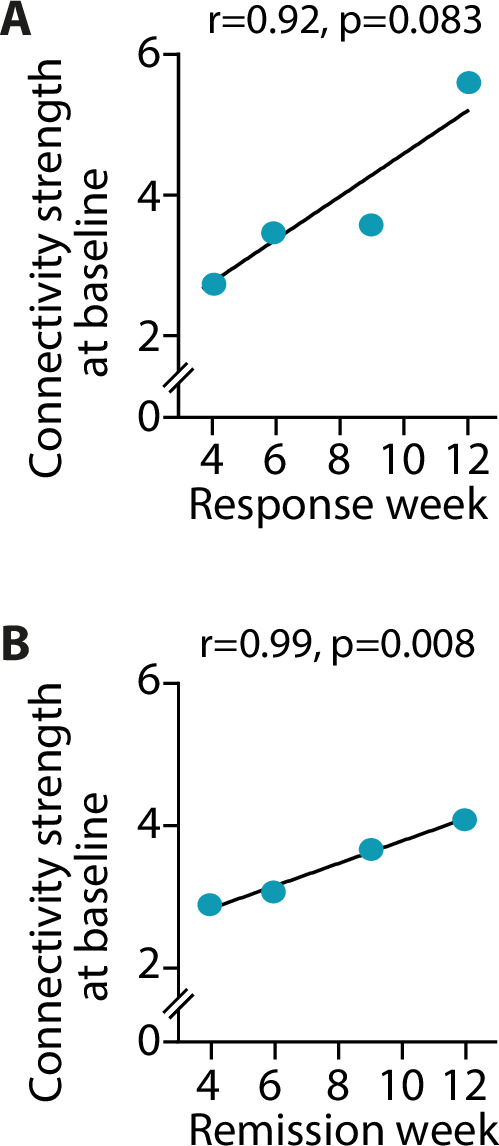
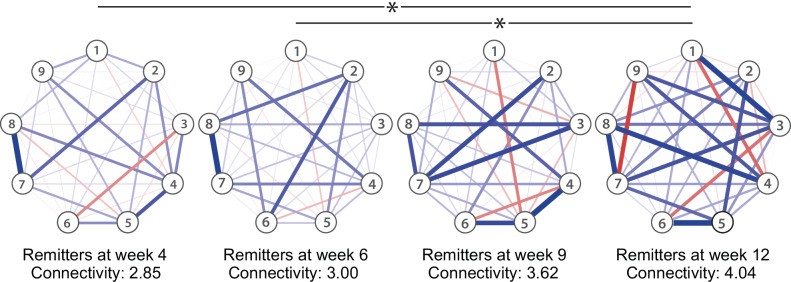
“…achieved at any point during the clinical trial (Figure 1A) and final clinical outcome at week 12 (Figure 1B) align with previous studies reporting densely connected symptom networks to be associated with poorer prospects for transitioning from psychopathology to mental well-being [8, 17, 19 – 22].”
InfluentialSelf-citationQuantifying plasticity: A network-based framework linking structure to dynamical regimes
Branchi, I. (2026) · Neuroscience & Biobehavioral Reviews · doi:10.1016/j.neubiorev.2026.106765 · Cited by 4
Self-citation
Metadata
- Authors
- Delli Colli, C., Viglione, A., Poggini, S., Cirulli, F., Chiarotti, F., Giuliani, A., & Branchi, I.
- Affiliations
- Istituto Superiore di Sanità (IT)
- Corresponding author
- Branchi, Igor
- ORCID
- Venue
- Translational Psychiatry
- Published
- 2025-01-28
- Volume
- 15
- Issue
- 1
- Pages
- 32-32
- ISSN
- 2158-3188 (ISSN-L)
- PMC
- PMC11775195
- OpenAlex
- W4406891487
- Cited by
- 7
- References
- 40
- Citations by year
- 2026: 4 · 2025: 3
- FWCI
- 7.33
- Type
- journal article
- Language
- en
- Open access
- gold
- doi.org
- Licence
- cc-by-nc-nd
- creativecommons.org/licenses/by-nc-nd/4.0 (tdm)
- creativecommons.org/licenses/by-nc-nd/4.0 (vor)
- Locations
- Translational Psychiatry (publishedVersion, cc-by-nc-nd)
- PubMed Central (publishedVersion, cc-by-nc-nd)
- PubMed (publishedVersion)
- DOAJ (DOAJ: Directory of Open Access Journals) (submittedVersion, cc-by-sa)
- Funders
- Ministero della Salute (RF-2018-12367249)
- Istituto Superiore di Sanità (EnviroMood)
- Topics
- Social Sciences › Psychology › Experimental and Cognitive Psychology › Mental Health Research Topics
- Social Sciences › Psychology › Experimental and Cognitive Psychology › Anxiety, Depression, Psychometrics, Treatment, Cognitive Processes
- Health Sciences › Medicine › Pharmacology (medical) › Treatment of Major Depression
- Keywords
- major depressive disorder, plasticity, time to remission, time to response, disease progression prediction, quality of life, personalized treatment, STAR*D
- MeSH terms
- Adult, Antidepressive Agents, Depressive Disorder, Major, Major Depressive Disorder, Female, Humans, Male, Middle Aged, Neuronal Plasticity, Quality of Life, Retrospective Studies, Time Factors
About these checks
Registry, retraction, Cites and statistics results are computed, not judged, with one exception: a printed reference that no index lists is read once by a model before it counts as a citation error. Claims are extracted by a model and kept only when their quote appears verbatim in the text; each cited source is then checked, with a model’s help, for whether it says what the claim relies on. Those verdicts can be wrong — read the claim’s quote and the cited source before relying on one.
Statistics and arithmetic are recomputed, not judged.
Confidence bands are shown only for fields calibrated on our annotated test set. None is calibrated yet, so no band is shown.
What counts as a claim ›How we measure confidence ›How we check this ›
Are you an author, or do you see a problem with this page? Request a review
Data sources
Bibliographic data: Semantic Scholar, OpenAlex, Crossref.
Contains information from the Semantic Scholar Academic Graph Datasets, made available under the ODC Attribution License (ODC-BY 1.0).
Semantic Scholar’s data is described in: Kinney, R., et al. (2023). The Semantic Scholar Open Data Platform. arXiv:2301.10140.
