

Current understanding of osteoarthritis pathogenesis and relevant new approaches
Open accessThe DOI matches its Crossref record; 258 of the 261 references it cites were found in a registry or an index, and 1 are not checked yet.
Abstract
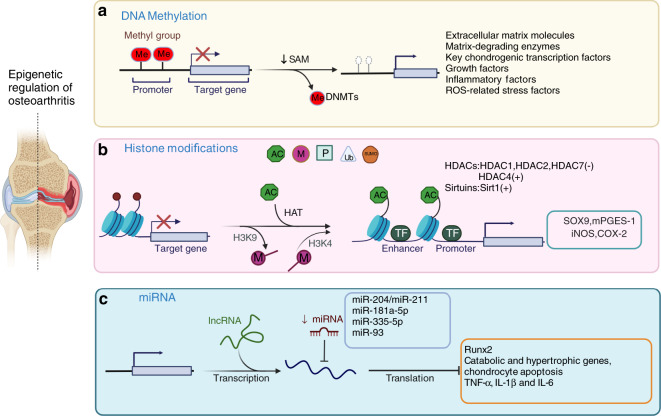
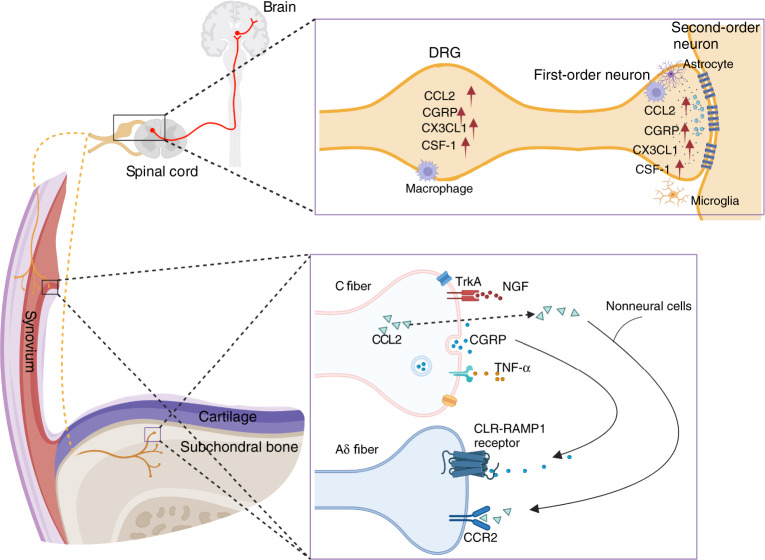
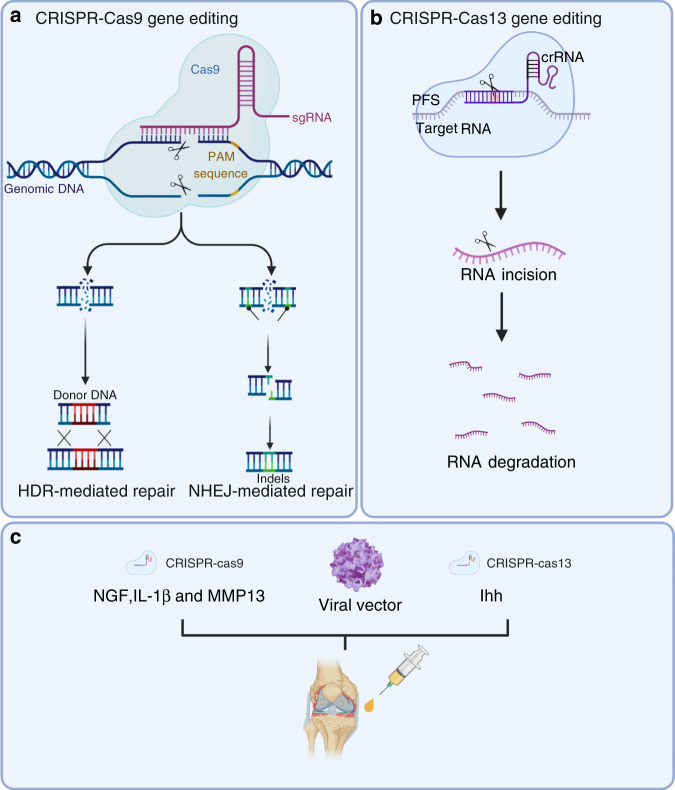
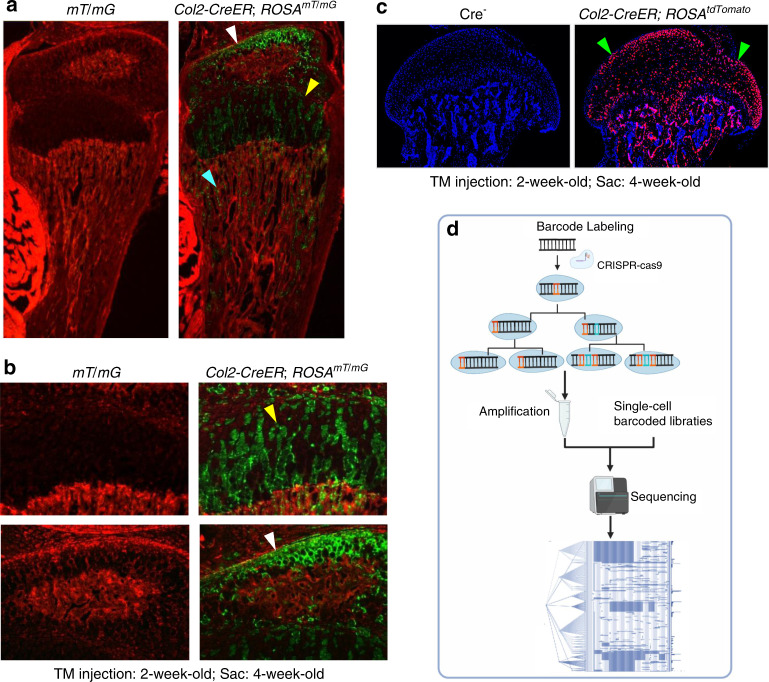
Osteoarthritis (OA) is the most common degenerative joint disease that causes painful swelling and permanent damage to the joints in the body. The molecular mechanisms of OA are currently unknown. OA is a heterogeneous disease that affects the entire joint, and multiple tissues are altered during OA development. To better understand the pathological mechanisms of OA, new approaches, methods, and techniques need to be used to understand OA pathogenesis. In this review, we first focus on the epigenetic regulation of OA, with a particular focus on DNA methylation, histone modification, and microRNA regulation, followed by a summary of several key mediators in OA-associated pain. We then introduce several innovative techniques that have been and will continue to be used in the fields of OA and OA-associated pain, such as CRISPR, scRNA sequencing, and lineage tracing. Next, we discuss the timely updates concerning cell death regulation in OA pathology, including pyroptosis, ferroptosis, and autophagy, as well as their individual roles in OA and potential molecular targets in treating OA. Finally, our review highlights new directions on the role of the synovial lymphatic system in OA. An improved understanding of OA pathogenesis will aid in the development of more specific and effective therapeutic interventions for OA.
Overview
The claims and statistics of this paper haven’t been checked yet.
Free: it reads the open-access text and checks the first 5 claims that cite a source we can check. Create a free account to check every claim.
Integrity signals
Registry
Cites
Statistics
Figures
Verification
Claims the paper makes
The claims and statistics of this paper haven’t been checked yet.
Free: it reads the open-access text and checks the first 5 claims that cite a source we can check. Create a free account to check every claim.
Claims other papers make about this one
Each is checked against this paper’s own text: does it say what the citing paper says it does?
The cited source says what the claim attributes to it.
In the citing paper
“The current study found that chondrocyte pyroptosis, contributes to the progression of OA [14].”
From Picroside II suppresses chondrocyte pyroptosis through MAPK/NF-κB/NLRP3 signaling pathway alleviates osteoarthritis (2024) · cites this paper as [14]
The cited source says what the claim attributes to it.
In the citing paper
“This process is predominantly dependent on the activation of inflammatory caspases, especially caspase-1, is marked by the emission of numerous pro-inflammatory cytokines [14].”
From Picroside II suppresses chondrocyte pyroptosis through MAPK/NF-κB/NLRP3 signaling pathway alleviates osteoarthritis (2024) · cites this paper as [14]
Self-check
Percentages, sums and reported differences re-computed from the paper’s own numbers.
The self-check needs the paper’s full text.
Citations
Cites
Ferroptosis: An Iron-Dependent Form of Nonapoptotic Cell Death
Dixon, S. J., Lemberg, K. M., Lamprecht, M. R., Skouta, R., Zaitsev, E. M., Gleason, C. E., Patel, D. N., Bauer, A. J., Cantley, A. M., Yang, W. S., et al. (2012) · Cell · doi:10.1016/j.cell.2012.03.042 · Cited by 18,691
A Programmable Dual-RNA–Guided DNA Endonuclease in Adaptive Bacterial Immunity
Jinek, M., Chylinski, K., Fonfara, I., Hauer, M., Doudna, J. A., & Charpentier, E. (2012) · Science · doi:10.1126/science.1225829 · Cited by 17,116
Multiplex Genome Engineering Using CRISPR/Cas Systems
Cong, L., Ran, F. A., Cox, D., Lin, S., Barretto, R., Habib, N., Hsu, P. D., Wu, X., Jiang, W., Marraffini, L. A., et al. (2013) · Science · doi:10.1126/science.1231143 · Cited by 15,339
James, S. L., Abate, D., Abate, K. H., Abay, S. M., Abbafati, C., Abbasi, N., Abbastabar, H., Abd-Allah, F., Abdela, J., Abdelalim, A., et al. (2018) · The Lancet · doi:10.1016/s0140-6736(18)32279-7 · Cited by 13,867
Apoptosis: A Review of Programmed Cell Death
Elmore, S. (2007) · Toxicologic Pathology · doi:10.1080/01926230701320337 · Cited by 13,853 · cited 1×
“In contrast, programmed cell death is regulated by a complex and delicate genetic process and is beneficial for tissue homeostasis and immune responses.(193,194) For many years, apoptosis has long been considered the only form of regulated cell death, and necrosis was considered an unregulated cell death process.”
BackgroundMost mammalian mRNAs are conserved targets of microRNAs
Friedman, R. C., Farh, K. K.-H., Burge, C. B., & Bartel, D. P. (2009) · Genome Research · doi:10.1101/gr.082701.108 · Cited by 8,462 · cited 1×
“MiRNAs control approximately 50% of the human transcriptome, and human DNA contains more than 45 000 miRNA target sites.(84,85) A recent study demonstrated that 142 miRNAs were differentially expressed between damaged and nondamaged OA articular cartilage.”
BackgroundFerroptosis: mechanisms, biology and role in disease
Jiang, X., Stockwell, B. R., & Conrad, M. (2021) · Nature Reviews Molecular Cell Biology · doi:10.1038/s41580-020-00324-8 · Cited by 7,505
Galluzzi, L., Vitale, I., Aaronson, S. A., Abrams, J. M., Adam, D., Agostinis, P., Alnemri, E. S., Altucci, L., Amelio, I., Andrews, D. W., et al. (2018) · Cell Death & Differentiation · doi:10.1038/s41418-017-0012-4 · Cited by 6,680
Okano, M., Bell, D. W., Haber, D. A., & Li, E. (1999) · Cell · doi:10.1016/s0092-8674(00)81656-6 · Cited by 6,143
CRISPR Provides Acquired Resistance Against Viruses in Prokaryotes
Barrangou, R., Fremaux, C., Deveau, H., Richards, M., Boyaval, P., Moineau, S., Romero, D. A., & Horvath, P. (2007) · Science · doi:10.1126/science.1138140 · Cited by 5,947
Cited by
Osteoarthritis: pathogenic signaling pathways and therapeutic targets
Yao, Q., Wu, X., Tao, C., Gong, W., Chen, M., Qu, M., Zhong, Y., He, T., Chen, S., & Xiao, G. (2023) · Signal Transduction and Targeted Therapy · doi:10.1038/s41392-023-01330-w · Cited by 1,194
Self-citationIron Homeostasis and Ferroptosis in Human Diseases: Mechanisms and Therapeutic Prospects
Ru, Q., Li, Y., Chen, L., Wu, Y., Min, J., & Wang, F. (2024) · Signal Transduction and Targeted Therapy · doi:10.1038/s41392-024-01969-z · Cited by 724
Self-citationWei, G., Lu, K., Umar, M., Zhu, Z., Lu, W. W., Speakman, J. R., Chen, Y., Tong, L., & Chen, D. (2023) · Bone Research · doi:10.1038/s41413-023-00301-9 · Cited by 207
Self-citationLi, Y., Cai, Z., Ma, W., Bai, L., Luo, E., & Lin, Y. (2024) · Bone Research · doi:10.1038/s41413-024-00319-7 · Cited by 182
The Role of Regulated Programmed Cell Death in Osteoarthritis: From Pathogenesis to Therapy
Liu, S., Pan, Y., Li, T., Zou, M., Liu, W., Li, Q., Wan, H., Peng, J., & Hao, L. (2023) · International Journal of Molecular Sciences · doi:10.3390/ijms24065364 · Cited by 105
Metadata
- Authors
- Tong, L., Yu, H., Huang, X., Shen, J., Xiao, G., Chen, L., Wang, H., Xing, L., & Chen, D.
- Affiliations
- Chinese Academy of Sciences (CN)
- Washington University in St. Louis (US)
- Southern University of Science and Technology (CN)
- Army Medical University (CN)
- University of Rochester Medicine (US)
- Corresponding author
- Chen, Di
- ORCID
- Venue
- Bone Research
- Published
- 2022-09-20
- Volume
- 10
- Issue
- 1
- Pages
- 60-60
- ISSN
- 2095-4700 (ISSN-L)
- 2095-6231
- PMC
- PMC9489702
- OpenAlex
- W4296774058
- Cited by
- 437
- References
- 261
- Citations by year
- 2026: 114 · 2025: 140 · 2024: 117 · 2023: 57 · 2022: 9
- FWCI
- 13.35
- Type
- journal article
- Language
- en
- Open access
- gold
- doi.org
- Licence
- cc-by
- creativecommons.org/licenses/by/4.0 (tdm)
- creativecommons.org/licenses/by/4.0 (vor)
- Locations
- Bone Research (publishedVersion, cc-by)
- PubMed Central (publishedVersion, cc-by)
- PubMed (publishedVersion)
- Digital Commons@Becker (Washington University School of Medicine) (submittedVersion, cc-by)
- DOAJ (DOAJ: Directory of Open Access Journals) (submittedVersion, cc-by-sa)
- Funders
- National Natural Science Foundation of China (82161160342, 82172397)
- Youth Innovation Promotion Association of the Chinese Academy of Sciences (2020353)
- Topics
- Health Sciences › Medicine › Rheumatology › Osteoarthritis Treatment and Mechanisms
- Health Sciences › Medicine › Orthopedics and Sports Medicine › Bone and Joint Diseases
- Health Sciences › Medicine › Surgery › Hip disorders and treatments
- Keywords
- osteoarthritis, osteoarthritis pathogenesis, epigenetic regulation, DNA methylation, histone modifications, microRNA, CRISPR, single-cell RNA sequencing, lineage tracing, pyroptosis, ferroptosis, autophagy, cell death regulation, therapeutic target
About these checks
Registry, retraction, Cites and statistics results are computed, not judged, with one exception: a printed reference that no index lists is read once by a model before it counts as a citation error. Claims are extracted by a model and kept only when their quote appears verbatim in the text; each cited source is then checked, with a model’s help, for whether it says what the claim relies on. Those verdicts can be wrong — read the claim’s quote and the cited source before relying on one.
Statistics and arithmetic are recomputed, not judged.
Confidence bands are shown only for fields calibrated on our annotated test set. None is calibrated yet, so no band is shown.
What counts as a claim ›How we measure confidence ›How we check this ›
Are you an author, or do you see a problem with this page? Request a review
How to cite
Cite CoChat for the checks on this page, and the paper for its own findings.
- This page
- CoChat. (2026). Citation check: Current understanding of osteoarthritis pathogenesis and relevant new approaches. https://app.cochat.ai/papers/10.1038/s41413-022-00226-9
- The paper
- Tong, L., Yu, H., Huang, X., Shen, J., Xiao, G., Chen, L., Wang, H., Xing, L., & Chen, D. (2022). Current understanding of osteoarthritis pathogenesis and relevant new approaches. Bone Research. https://doi.org/10.1038/s41413-022-00226-9
Data sources
Bibliographic data: Semantic Scholar, OpenAlex, Crossref.
Contains information from the Semantic Scholar Academic Graph Datasets, made available under the ODC Attribution License (ODC-BY 1.0).
Semantic Scholar’s data is described in: Kinney, R., et al. (2023). The Semantic Scholar Open Data Platform. arXiv:2301.10140.
