

Modulation of bone remodeling by the gut microbiota: a new therapy for osteoporosis
Open accessThe DOI matches its Crossref record; 228 of the 228 references it cites were found in a registry or an index.
Abstract
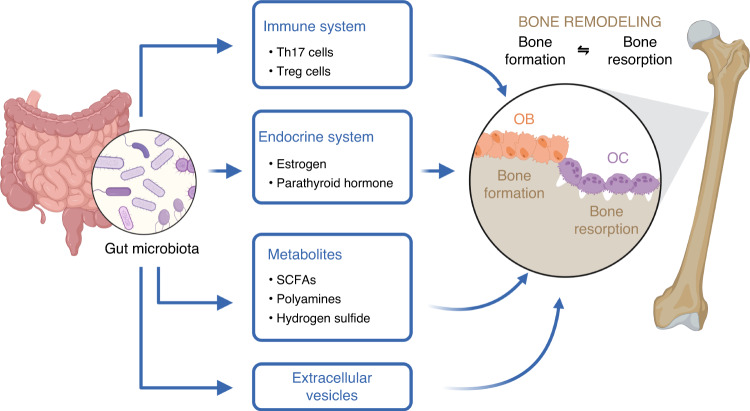
The gut microbiota (GM) plays a crucial role in maintaining the overall health and well-being of the host. Recent studies have demonstrated that the GM may significantly influence bone metabolism and degenerative skeletal diseases, such as osteoporosis (OP). Interventions targeting GM modification, including probiotics or antibiotics, have been found to affect bone remodeling. This review provides a comprehensive summary of recent research on the role of GM in regulating bone remodeling and seeks to elucidate the regulatory mechanism from various perspectives, such as the interaction with the immune system, interplay with estrogen or parathyroid hormone (PTH), the impact of GM metabolites, and the effect of extracellular vesicles (EVs). Moreover, this review explores the potential of probiotics as a therapeutic approach for OP. The insights presented may contribute to the development of innovative GM-targeted therapies for OP.
Overview
The claims and statistics of this paper haven’t been checked yet.
Free: it reads the open-access text and checks the first 5 claims that cite a source we can check. Create a free account to check every claim.
Integrity signals
Registry
Cites
Statistics
Figures
Verification
Claims the paper makes
The claims and statistics of this paper haven’t been checked yet.
Free: it reads the open-access text and checks the first 5 claims that cite a source we can check. Create a free account to check every claim.
Claims other papers make about this one
Each is checked against this paper’s own text: does it say what the citing paper says it does?
The source backs part of the claim, not all of it — or backs it for a different population, condition or comparison.
In the citing paper
“microbial dysbiosis not only perturbs the balance between bone formation and resorption but also resets immune thresholds within niches such as bone marrow and synovium. These shifts give rise to “immuno-metabolic–endocrine” phenotypes that underlie OP, inflammatory bone loss, and degenerative joint disease [55]”
From Interorgan Communications in Skeletal Pathophysiology: From Molecular Pathways to Multidisciplinary Therapies (2026) · cites this paper as [55]
Experimental — accuracy not yet measured
Self-check
Percentages, sums and reported differences re-computed from the paper’s own numbers.
The self-check needs the paper’s full text.
Citations
Cites
Items 201–228 of 228
Wallimann, A., Hildebrand, M., Groeger, D., Stanić, B., Akdiş, C. A., Zeiter, S., Richards, R. G., Moriarty, T. F., O’Mahony, L., & Thompson, K. (2021) · Calcified Tissue International · doi:10.1007/s00223-020-00790-4 · Cited by 48
Mulhall, H., DiChiara, J. M., Huck, O., & Amar, S. (2022) · Journal Of Clinical Periodontology · doi:10.1111/jcpe.13629 · Cited by 48
Lee, M., Chen, Y., Huang, Y., Hsu, Y., Chiang, L., Chen, T., & Wang, G. (2013) · Journal of Cellular Biochemistry · doi:10.1002/jcb.24620 · Cited by 47 · cited 6×
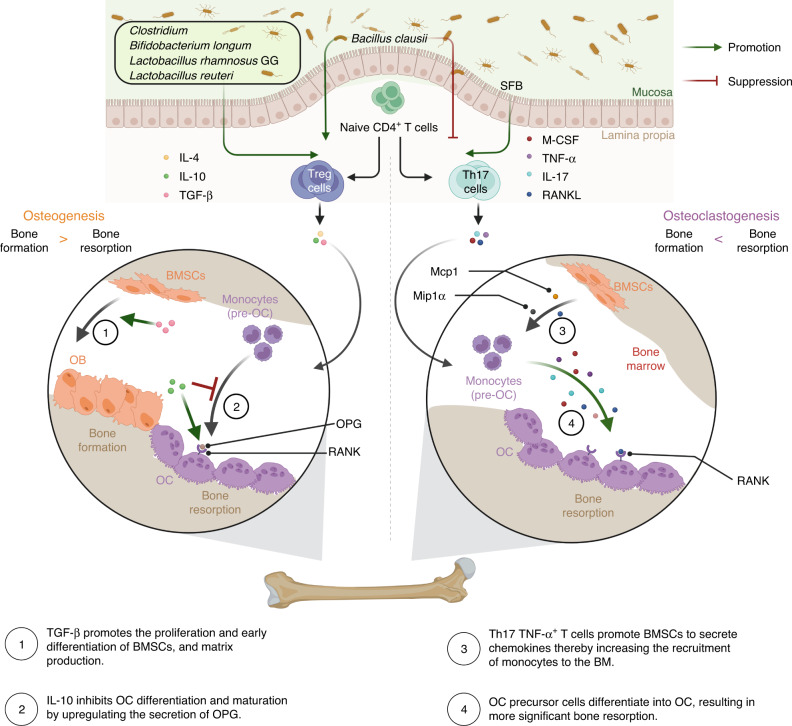
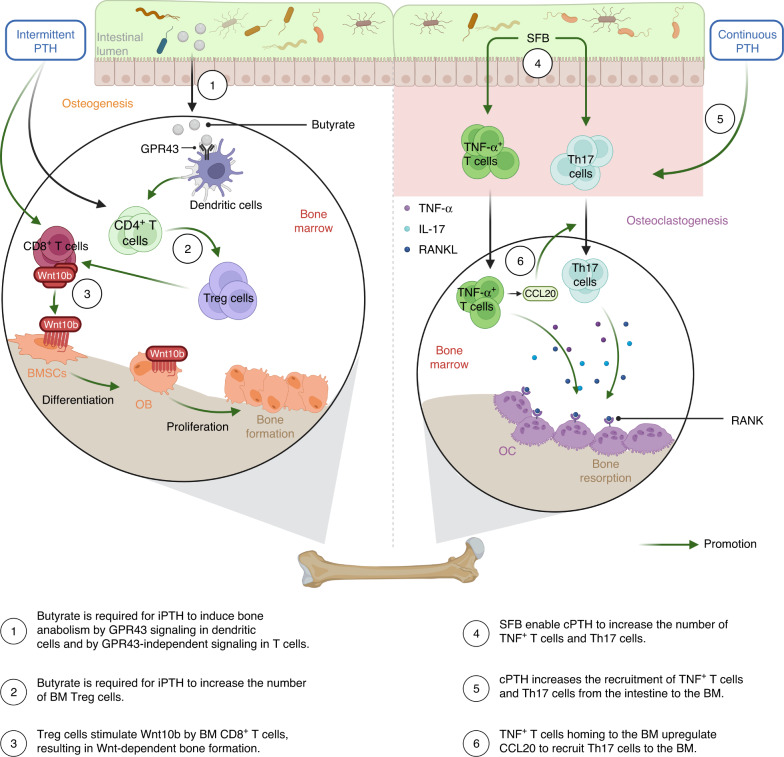
“After treatment with butyrate, mice exhibited a substantial increase in BV/TV, serum osteocalcin (OCN), and mineral apposition rate (MAR) after two and four weeks compared to those treated with a control vehicle.33 The increase in femoral BV/TV by butyrate disappeared following inhibition of Treg cells with a CD25 ant…”
BackgroundInfluentialMcDougall, K. E., Perry, M. J., Gibson, R. L., Colley, S. M., Korach, K. S., & Tobias, J. H. (2003) · Endocrinology · doi:10.1210/en.2002-0074 · Cited by 47 · cited 1×
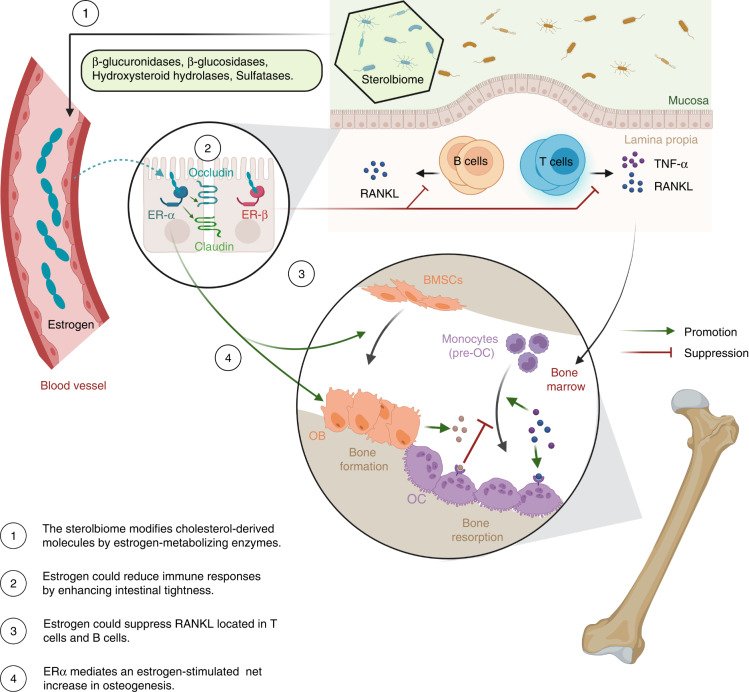
“3, estrogen receptor α (ERα) mediates an estrogen-stimulated net increase in bone formation.(84,85) A lack of ERα results in reduced femur length in female adult mice.”
BackgroundParvaneh, M., Karimi, G., Jamaluddin, R., NG, A. M. H., Ibrahim, Z., & Muhammad, S. I. (2018) · Clinical Interventions in Aging · doi:10.2147/cia.s169223 · Cited by 47
Huang, R., Liu, P., Bai, Y., Huang, J., Pan, R., Li, H., Su, Y., Zhou, Q., Ma, R., Zong, S., et al. (2022) · Journal of Zhejiang University SCIENCE B · doi:10.1631/jzus.b2200344 · Cited by 46
Chiba, T., & Seno, H. (2011) · Gastroenterology · doi:10.1053/j.gastro.2011.07.013 · Cited by 42
Polyamine Homeostasis in Snyder-Robinson Syndrome
Stewart, T. M., Dunworth, M., Foley, J. R., Schwartz, C. E., & Casero, R. A. (2018) · Medical Sciences · doi:10.3390/medsci6040112 · Cited by 42 · cited 1×
“Patients with Snyder-Robinson syndrome, a syndrome caused by loss-of-function mutations of the spermine synthase gene, exhibit severe OP and kyphoscoliosis and have BMSCs with impaired capacities for osteogenic differentiation and mineralization.(142)”
BackgroundHsu, C., Hou, Y.-H., Wang, C.-S., Lin, S.-W., Jhou, B.-Y., Chen, C., & Chen, Y. (2019) · Journal of the American College of Nutrition · doi:10.1080/07315724.2019.1571454 · Cited by 42
The polymine spermine regulates osteogenic differentiation in adipose stem cells†
Tjabringa, G. S., Zandieh‐Doulabi, B., Helder, M. N., Knippenberg, M., Wuisman, P. I. J. M., & Klein‐Nulend, J. (2008) · Journal of Cellular and Molecular Medicine · doi:10.1111/j.1582-4934.2008.00224.x · Cited by 40 · cited 5×
“Polyamines have been shown to promote osteogenic differentiation of goat adipose tissue‐derived mesenchymal stem cells (ADSCs) and mouse BMSCs.(8,136,137) Lee et al.”
BackgroundInfluentialAlbert, J. S., Bhattacharyya, N., Wolfe, L. A., Bone, W. P., Maduro, V. V. B., Accardi, J., Adams, D. R., Schwartz, C. E., Norris, J. W., Wood, T. C., et al. (2015) · Orphanet Journal of Rare Diseases · doi:10.1186/s13023-015-0235-8 · Cited by 40 · cited 1×
“Deficiency of spermine synthase causes excessive spermidine accumulation and a lack of spermine.(141) Patients with Snyder-Robinson syndrome, a syndrome caused by loss-of-function mutations of the spermine synthase gene, exhibit severe OP and kyphoscoliosis and have BMSCs with impaired capacities for osteogenic differ…”
BackgroundLee, C. S., Kim, J. ‐., Kim, B. K., Lee, I. O., Park, N. H., & Kim, S. H. (2021) · Journal of Applied Microbiology · doi:10.1111/jam.14852 · Cited by 39
Is high-dose estrogen-induced osteogenesis in the mouse mediated by an estrogen receptor?
Samuels, A., Perry, M. J., Goodship, A. E., Fraser, W. D., & Tobias, J. H. (2000) · Bone · doi:10.1016/s8756-3282(00)00289-1 · Cited by 38 · cited 1×
“3, estrogen receptor α (ERα) mediates an estrogen-stimulated net increase in bone formation.(84,85) A lack of ERα results in reduced femur length in female adult mice.”
BackgroundHathaway‐Schrader, J. D., Poulides, N. A., Carson, M. D., Kirkpatrick, J. E., Warner, A. J., Swanson, B. A., Taylor, E. V., Chew, M. E., Reddy, S. V., Liu, B., et al. (2020) · JBMR Plus · doi:10.1002/jbm4.10338 · Cited by 36 · cited 1×
“SFB has been demonstrated to disrupt BMD through maternal vertical transmission and cohabitation transmission.(23,53,54) Th17 cells play a vital role in OVX-induced bone loss.”
BackgroundSang, C., Zhang, J., Zhang, Y., Chen, F., Cao, X., & Guo, L. (2017) · Journal of Cellular Physiology · doi:10.1002/jcp.25784 · Cited by 35 · cited 1×
“Women face a greater risk of developing OP due to bone loss caused by the sharp decline in estrogen levels during menopause.(3) Moreover, estrogenindependent mechanisms, such as secondary hyperparathyroidism, chronic inflammation, and senility, can also contribute to the development of OP.”
BackgroundNaskar, D., Teng, F., Felix, K. M., Bradley, C. P., & Wu, H.-J. J. (2017) · The Journal of Immunology · doi:10.4049/jimmunol.1601776 · Cited by 35 · cited 1×
“Oral administration of synthetic retinoid AM80 upregulates the expression of gut-homing molecule α4β7 on T cells, transferring T follicular helper cells (CD19 CD4 CXCR PD-1 T cells) from the inflammation site to PPs and thereby reducing the inflammatory response.(61) Increasing the migration of T cells from bone to in…”
BackgroundOsteoporosis in psoriatic arthritis: a cross-sectional study of an outpatient clinic population
Gulati, A. M., Michelsen, B., Diamantopoulos, A. P., Grandaunet, B., Salvesen, Ø. O., Kavanaugh, A., Hoff, M., & Haugeberg, G. (2018) · RMD Open · doi:10.1136/rmdopen-2017-000631 · Cited by 33
Jhun, J., Min, H. K., Ryu, J., Lee, S.-Y., Ryu, J.-G., Choi, J. W., Na, H. S., Lee, S. Y., Jung, Y., Park, S.-J., et al. (2020) · Journal of Translational Medicine · doi:10.1186/s12967-020-02477-8 · Cited by 33
Osteoporosis and Osteoarthritis, Rheumatoid Arthritis and Spondylarthropathies
Clayton, E. S., & Hochberg, M. C. (2013) · Current Osteoporosis Reports · doi:10.1007/s11914-013-0172-1 · Cited by 32
Ai, T., Hao, L., Shang, L., Wang, L., Li, B., & Li, J. (2021) · Journal of Agricultural and Food Chemistry · doi:10.1021/acs.jafc.0c07839 · Cited by 30 · cited 2×
“Mice fed a low-calcium diet also had lower BMD and a decreased abundance of Bifidobacterium.(183) Bifidobacterium has been proven to prevent bone loss induced by OVX or obesity,(184,185) inhibit pre-OC differentiation in vitro,(186) and accelerate callus cartilage remodeling in fractured mice.”
BackgroundPeek, C. T., Ford, C. A., Eichelberger, K. R., Jacobse, J., Torres, T. P., Maseda, D., Latour, Y. L., Piazuelo, M. B., Johnson, J., Byndloss, M. X., et al. (2022) · Cellular and Molecular Gastroenterology and Hepatology · doi:10.1016/j.jcmgh.2022.07.002 · Cited by 30 · cited 2×
“Significant bone loss has been observed in various models of intestinal inflammation, including in dextran sulfate sodium (DSS)-induced chemical injury, adoptive T-cell transfer of colitis, and Salmonella enterica infection.(38) Several chemokines and inflammatory cytokines in the femur, including granulocyte colony-s…”
BackgroundJang, A., Park, J. S., Kim, D., Park, J. Y., Ahn, J. ‐., Kim, D. ‐., Lee, T., Chang, J. Y., Choi, J., & Park, J. (2021) · Letters in Applied Microbiology · doi:10.1111/lam.13525 · Cited by 22
Serum Spermidine as a Novel Potential Predictor for Fragility Fractures
Kong, S. H., Kim, J. H., & Shin, C. S. (2020) · The Journal of Clinical Endocrinology & Metabolism · doi:10.1210/clinem/dgaa745 · Cited by 18 · cited 1×
“Excessive spermidine concentrations were associated with an increased risk of osteoporotic fracture.(140) Spermine synthase is responsible for synthesizing spermine from spermidine.”
BackgroundWu, Z., Xiao, Y., Zhou, F., Chen, J., Chen, X., Hou, A., Wang, Y., & Li, Z. (2022) · Molecules · doi:10.3390/molecules27196159 · Cited by 18
Yamada, T., Park, G., Node, J., Ozaki, K., Hiraiwa, M., Kitaguchi, Y., Kaneda, K., Hiramoto, S., & Hinoi, E. (2019) · Food Science and Biotechnology · doi:10.1007/s10068-019-00561-4 · Cited by 16 · cited 1×
“More recently, daily oral supplementation of a diet containing polyamine-rich yeast was found to inhibit osteoclastic activation in OVX mice.(139) However, inhibition of polyamine biosynthesis in vivo has limited the beneficial effects of spermine and spermidine on bone strength.”
BackgroundLactobacillus Fermentum ZS40 prevents secondary osteoporosis in Wistar Rat
Liu, X., Fan, J., Hu, J., Li, F., Yi, R., Tan, F., & Zhao, X. (2020) · Food Science & Nutrition · doi:10.1002/fsn3.1824 · Cited by 15
Liu, X., Zheng, J., Li, F., Yi, R., Mu, J., Tan, F., & Zhao, X. (2020) · Evidence-based Complementary and Alternative Medicine · doi:10.1155/2020/2054389 · Cited by 10
First integrin inhibitor since Tysabri nears approval for IBD
Sheridan, C. (2014) · Nature Biotechnology · doi:10.1038/nbt0314-205 · Cited by 4
Cited by
Diets intervene osteoporosis via gut-bone axis
Zhang, Y.-W., Song, P.-R., Wang, S.-C., Liu, H., Shi, Z.-M., & Su, J.-C. (2024) · Gut Microbes · doi:10.1080/19490976.2023.2295432 · Cited by 176
“52 Recent studies have also revealed that probiotic therapy could inhibit the activity of osteoclasts in ovariectomy (OVX)-induced mice by inhibiting the secretion of IL-6 and intestinal inflammatory response, thus enhancing the bone mass. 53,54 Figure 2.”
BackgroundXu, L., Zhang, Y., Li, X., Li, C., Hu, H., Hu, J., Liu, M., Yang, Q. Z., Gu, P., Li, J., et al. (2025) · iMeta · doi:10.1002/imt2.270 · Cited by 154
Inflammatory Processes Affecting Bone Health and Repair
de Oliveira, H. T., Arnold, K. M., Oviedo, M., Westendorf, J. J., & Weaver, S. R. (2023) · Current Osteoporosis Reports · doi:10.1007/s11914-023-00824-4 · Cited by 150
“New therapies for osteoporosis based on modulation of the gut microbiota and the immuno-inflammatory response are under investigation, including modulation of T helper 17 (T h 17) cells [139, 140].”
Liu, H., Song, P., Zhang, H., Zhou, F., Ji, N., Wang, M., Zhou, G., Han, R., Liu, X., Weng, W., et al. (2024) · Journal of Extracellular Vesicles · doi:10.1002/jev2.12429 · Cited by 112
“Recently, the influence of gut microbes on bone metabolism has received increasing attention (Lyu et al., 2023).”
BackgroundHu, X., Wang, Z., Wang, W., Cui, P., Kong, C., Chen, X., & Lu, S. (2023) · Journal of Advanced Research · doi:10.1016/j.jare.2023.09.001 · Cited by 99
“Various strategies, such as antibiotic therapy, dietary changes, probiotic supplementation, and fecal microbiota transplantation (FMT), have been developed to address these microbiota disruptions [114–116].”
Background
Metadata
- Authors
- Lyu, Z., Hu, Y., Guo, Y., & Liu, D.
- Affiliations
- State Key Laboratory of Animal Nutrition (CN)
- Corresponding author
- Liu, Dan
- Venue
- Bone Research
- Published
- 2023-06-09
- Volume
- 11
- Issue
- 1
- Pages
- 31-31
- ISSN
- 2095-4700 (ISSN-L)
- 2095-6231
- PMC
- PMC10256815
- OpenAlex
- W4380090157
- Semantic Scholar
- 109243aece0b620d1473765eb8d657a9c49a33cd
- Cited by
- 207
- References
- 227
- Citations by year
- 2026: 70 · 2025: 80 · 2024: 49 · 2023: 8
- FWCI
- 5.47
- Type
- journal article
- Language
- en
- Open access
- gold
- doi.org
- Licence
- cc-by
- creativecommons.org/licenses/by/4.0 (tdm)
- creativecommons.org/licenses/by/4.0 (vor)
- Locations
- Bone Research (publishedVersion, cc-by)
- PubMed Central (publishedVersion, cc-by)
- PubMed (publishedVersion)
- DOAJ (DOAJ: Directory of Open Access Journals) (submittedVersion, cc-by-sa)
- Funders
- China Agricultural University (2022YFD1300400)
- National Key Research and Development Program of China (2022YFD1300400)
- Topics
- Life Sciences › Biochemistry, Genetics and Molecular Biology › Molecular Biology › Gut microbiota and health
- Life Sciences › Biochemistry, Genetics and Molecular Biology › Molecular Biology › Bone Metabolism and Diseases
- Health Sciences › Medicine › Orthopedics and Sports Medicine › Bone health and osteoporosis research
- Keywords
- gut microbiota, bone remodeling, osteoporosis, bone metabolism, probiotics, antibiotics, microbiota-immune interactions, estrogen, parathyroid hormone, microbial metabolites, extracellular vesicles, microbiota-targeted therapy
About these checks
Registry, retraction, Cites and statistics results are computed, not judged, with one exception: a printed reference that no index lists is read once by a model before it counts as a citation error. Claims are extracted by a model and kept only when their quote appears verbatim in the text; each cited source is then checked, with a model’s help, for whether it says what the claim relies on. Those verdicts can be wrong — read the claim’s quote and the cited source before relying on one.
Statistics and arithmetic are recomputed, not judged.
Confidence bands are shown only for fields calibrated on our annotated test set. None is calibrated yet, so no band is shown.
What counts as a claim ›How we measure confidence ›How we check this ›
Are you an author, or do you see a problem with this page? Request a review
Data sources
Bibliographic data: Semantic Scholar, OpenAlex, Crossref.
Contains information from the Semantic Scholar Academic Graph Datasets, made available under the ODC Attribution License (ODC-BY 1.0).
Semantic Scholar’s data is described in: Kinney, R., et al. (2023). The Semantic Scholar Open Data Platform. arXiv:2301.10140.
