

Bone-derived factors mediate crosstalk between skeletal and extra-skeletal organs
Open accessThe DOI matches its Crossref record; 283 of the 283 references it cites were found in a registry or an index.
Abstract
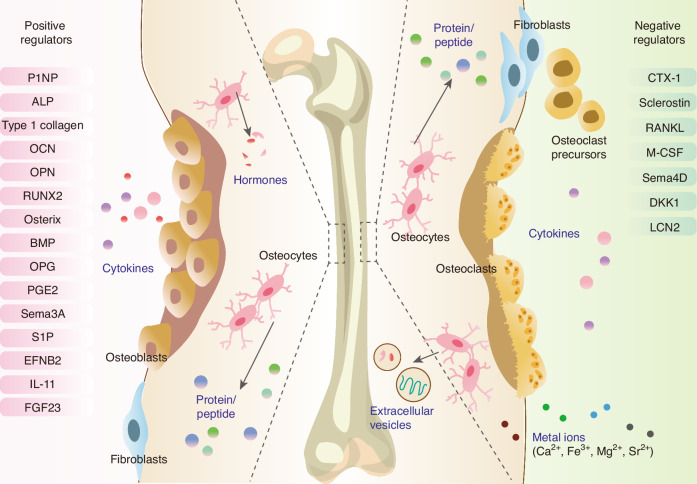
Bone has long been acknowledged as a fundamental structural entity that provides support and protection to the body's organs. However, emerging research indicates that bone plays a crucial role in the regulation of systemic metabolism. This is achieved through the secretion of a variety of hormones, cytokines, metal ions, extracellular vesicles, and other proteins/peptides, collectively referred to as bone-derived factors (BDFs). BDFs act as a medium through which bones can exert targeted regulatory functions upon various organs, thereby underscoring the profound and concrete implications of bone in human physiology. Nevertheless, there remains a pressing need for further investigations to elucidate the underlying mechanisms that inform the effects of bone on other body systems. This review aims to summarize the current findings related to the roles of these significant modulators across different organs and metabolic contexts by regulating critical genes and signaling pathways in vivo. It also addresses their involvement in the pathogenesis of various diseases affecting the musculoskeletal system, circulatory system, glucose and lipid metabolism, central nervous system, urinary system, and reproductive system. The insights gained from this review may contribute to the development of innovative therapeutic strategies through a focused approach to bone secretomes. Continued research into BDFs is expected to enhance our understanding of bone as a multifunctional organ with diverse regulatory roles in human health.
Overview
The claims and statistics of this paper haven’t been checked yet.
Free: it reads the open-access text and checks the first 5 claims that cite a source we can check. Create a free account to check every claim.
Integrity signals
Registry
Cites
Statistics
Figures
Verification
Claims the paper makes
The claims and statistics of this paper haven’t been checked yet.
Free: it reads the open-access text and checks the first 5 claims that cite a source we can check. Create a free account to check every claim.
Claims other papers make about this one
Each is checked against this paper’s own text: does it say what the citing paper says it does?
The source backs part of the claim, not all of it — or backs it for a different population, condition or comparison.
In the citing paper
“Bone-derived signals exert systemic effects across spatial and temporal scales, but we still lack the data of long-term investigation. For example, bone-derived factors affect metabolism and blood flow with long-term effects [158].”
From Interorgan Communications in Skeletal Pathophysiology: From Molecular Pathways to Multidisciplinary Therapies (2026) · cites this paper as [158]
Experimental — accuracy not yet measuredThe cited source says what the claim attributes to it.
In the citing paper
“Recent studies have shown that osteokines participate in a 2-way dialogue between bone and other organs, but causal relationships are less well defined [157,158].”
From Interorgan Communications in Skeletal Pathophysiology: From Molecular Pathways to Multidisciplinary Therapies (2026) · cites this paper as [158]
Self-check
Percentages, sums and reported differences re-computed from the paper’s own numbers.
The self-check needs the paper’s full text.
Citations
Cites
Osteoprotegerin: a novel secreted protein involved in the regulation of bone density.
Simonet, W. S., Lacey, D. L., Dunstan, C. R., Kelley, M., Chang, M.-S., Lüthy, R., Nguyen, H. Q., Wooden, S., Bennett, L., Boone, T., et al. (1997) · Cell · doi:10.1016/s0092-8674(00)80209-3 · Cited by 5,130 · cited 1×
“74,75 Molecularly, RANK is a type I transmembrane glycoprotein and mainly expressed in osteoclast precursors, mature osteoclasts, epithelial cells, hypertrophic chondrocytes, and immune cells such as DCs, macrophages, and microglia.”
Stöckl, S., Göttl, C., Grifka, J., & Grässel, S. (2013) · Cellular Physiology and Biochemistry · doi:10.1159/000350089 · Cited by 4,656
OPGL is a key regulator of osteoclastogenesis, lymphocyte development and lymph node organogenesis.
Kong, Y.-Y., Yoshida, H., Sarosi, I., Tan, H.-L., Timms, E., Capparelli, C., Morony, S., Oliveira-dos-Santos, A. J., Van, G., Itie, A., et al. (1999) · Nature · doi:10.1038/16852 · Cited by 3,351 · cited 2×
“76 However, deletion of the Opg gene in mice ( Opg − / − ) caused severe osteoporosis with decreased BMD and high bone turnover rate, disorganized matrix, and increased mortality compared with their control littermates.”
Endocrine regulation of energy metabolism by the skeleton
Lee, N. K., Sowa, H., Hinoi, E., Ferron, M., Ahn, J. D., Confavreux, C., Dacquin, R., Mee, P. J., McKee, M. D., Jung, D. Y., et al. (2007) · Cell · doi:10.1016/j.cell.2007.05.047 · Cited by 2,554 · cited 4×
“110 Moreover, ucOCN administration improved glucose tolerance and increased insulin secretion and sensitivity, resulting in mice displaying decreased fat mass and becoming lean.”
InfluentialOsteoprotegerin-deficient mice develop early onset osteoporosis and arterial calcification.
Bucay, N., Sarosi, I., Dunstan, C. R., Morony, S., Tarpley, J., Capparelli, C., Scully, S., Tan, H. L., Xu, W., Lacey, D. L., et al. (1998) · Genes & Development · doi:10.1101/gad.12.9.1260 · Cited by 2,483
A homologue of the TNF receptor and its ligand enhance T-cell growth and dendritic-cell function.
Anderson, D. M., Maraskovsky, E., Billingsley, W. L., Dougall, W. C., Tometsko, M. E., Roux, E. R., Teepe, M. C., DuBose, R. F., Cosman, D., & Galibert, L. (1997) · Nature · doi:10.1038/36593 · Cited by 2,290 · cited 2×
“72 This research group also isolated RANKL as a RANK ligand by direct expression screening in the dendritic cells, which stimulates naive T-cell proliferation and survival by interacting with RANK in T cells.”
FGF-23 Is a Potent Regulator of Vitamin D Metabolism and Phosphate Homeostasis
Shimada, T., Hasegawa, H., Yamazaki, Y., Muto, T., Hino, R., Takeuchi, Y., Fujita, T., Nakahara, K., Fukumoto, S., & Yamashita, T. (2004) · Journal of Bone and Mineral Research · doi:10.1359/jbmr.0301264 · Cited by 1,883 · cited 1×
“…25-hydroxyvitamin D-1 α -hydroxylase ( Cyp27b1 ) in renal tissues, which is the key enzyme for the production of active 1,25(OH) 2 D 3 from 25(OH)D. 239 Moreover, FGF23 also increased the mRNA level for 25-hydroxyvitamin D-24-hydroxylase ( Cyp24 α 1 ) in renal tissues, which inactivates 1,25(OH) 2…”
Klotho converts canonical FGF receptor into a specific receptor for FGF23
Urakawa, I., Yamazaki, Y., Shimada, T., Iijima, K., Hasegawa, H., Okawa, K., Fujita, T., Fukumoto, S., & Yamashita, T. (2006) · Nature · doi:10.1038/nature05315 · Cited by 1,850
Evidence for osteocyte regulation of bone homeostasis through RANKL expression
Nakashima, T., Hayashi, M., Fukunaga, T., Kurata, K., Oh-hora, M., Feng, J. Q., Bonewald, L. F., Kodama, T., Wutz, A., Wagner, E. F., et al. (2011) · Nature Medicine · doi:10.1038/nm.2452 · Cited by 1,778 · cited 1×
“79,81 RANKL has three isoforms coded from a single gene by alternative splicing in humans, i.e., two of these isoforms are type II transmembrane-bound glycoproteins and the third isoform is a soluble ligand (sRANKL) which lacks both the transmembrane and cytoplasmic domains.”
Increased bone formation in osteocalcin-deficient mice
Ducy, P., Desbois, C., Boyce, B., Pinero, G., Story, B., Dunstan, C., Smith, E., Bonadio, J., Goldstein, S., Gundberg, C., et al. (1996) · Nature · doi:10.1038/382448a0 · Cited by 1,725
Cited by
Enzyme‐Programmable DNA‐PEG Hydrogel Spatiotemporally Regulates Bone Regeneration Microenvironment
Wu, X., Wang, F., Li, R., Yu, B., Qi, T., Li, Y., Chen, X. D., Wang, J., Geng, Z., Song, P., et al. (2025) · Advanced Materials · doi:10.1002/adma.202514461 · Cited by 44
Zhang, B., Chen, Q., Chen, Q., & Zhang, H. (2025) · Metabolism · doi:10.1016/j.metabol.2025.156333 · Cited by 35
Liu, M., Liu, Y., Yu, J., Gong, J., Zhao, C., & Liu, Z. (2025) · Bone Research · doi:10.1038/s41413-025-00494-1 · Cited by 23
“20 The bidirectional, osteokine-mediated functional interaction between the skeleton and the brain has increasingly become a research focal point.”
Biomineralization empowers bone organoids
Zhu, M., Fan, Z., Chen, M., Xu, K., Jiang, Y., & Su, J. (2025) · Biomaterials · doi:10.1016/j.biomaterials.2025.123703 · Cited by 22
Immune-Guided Bone Healing: The Role of Osteoimmunity in Tissue Engineering Approaches
Munaò, S., Armeli, A., Bonfiglio, D., Iaconis, A., & Calabrese, G. (2025) · International Journal of Molecular Sciences · doi:10.3390/ijms262311642 · Cited by 17
“Additional contributors, such as stromal, cartilage, hematopoietic, and mesenchymal stem cells, participate in bone composition, forming a dense signaling network [30,31].”
Advancements in High-Resolution Computed Tomography: Revolutionising Bone Health Micro-Research
Lindtner, R. A., Kampik, L., Putzer, D., Klosterhuber, M., Pallua, A., Streif, W., Schirmer, M., Degenhart, G., Arora, R. R., & Pallua, J. D. (2025) · Bioengineering · doi:10.3390/bioengineering12111189 · Cited by 16
Advancing Nanomedicine: For Bone Defect Repair and Regeneration
Niu, Z., Fan, Y., Yin, L., Tong, Y., Yao, L., Ding, S., Chen, J., Bi, Q., & Xia, C. (2025) · International Journal of Nanomedicine · doi:10.2147/ijn.s545353 · Cited by 16
Molecular communication from bone to skeletal muscle: an overview
Li, G., Qi, M., Wang, Y., Liang, S., & Xu, H. (2025) · Frontiers in Cell and Developmental Biology · doi:10.3389/fcell.2025.1715009 · Cited by 11
“In addition to provide structural support for the internal organs, bone serves as a substantial reservoir for osteogenic growth factors, such as insulin-like growth factors (IGF S ), bone morphogenetic proteins (BMPs) and transforming growth factor β (TGFβ), etc (He et al., 2025).”
Sun, Y., Zhang, Y., Wang, Y., Wang, K., Wang, Z., Wei, Z., Huang, L., Wang, Z., Chen, S., & Kang, X. (2025) · Environmental Pollution · doi:10.1016/j.envpol.2025.127379 · Cited by 9
Self-citationRao, X., & Cai, X. T. (2026) · The FASEB Journal · doi:10.1096/fj.202505069r · Cited by 11
“Within the bone–muscle axis, recent integrative discussions emphasize that bone-derived factors can influence muscle performance and adaptation beyond purely mechanical loading, supporting the concept of bidirectional endocrine cross-talk in osteosarcopenic states [63].”
The role of bone-derived factors in bone and muscle communication
Li, G., Qi, M., & Liang, S. (2025) · Frontiers in Endocrinology · doi:10.3389/fendo.2025.1702104 · Cited by 6
“The endocrine role of bone and its interactions in bone-muscle crosstalk has recently gained great attention (75 – 77).”
Tang, J., Ye, W., He, L., Zhou, D., Chang, L., You, Z., Jiang, Y., Tang, G., Deng, L., & Li, C. (2025) · Advanced Science · doi:10.1002/advs.202512424 · Cited by 5
The bone–immune interface shapes skeletal regeneration
Geißler, S. (2026) · Annals of Anatomy - Anatomischer Anzeiger · doi:10.1016/j.aanat.2025.152779 · Cited by 5
An aptamer specifically targeting mCRP ameliorates experimental arthritis
Wang, Z., Xie, D., Zhu, P., Guo, J., Cao, C., Du, Y., Lü, A., & Liang, C. (2025) · Journal of Orthopaedic Translation · doi:10.1016/j.jot.2025.08.010 · Cited by 4
“Emerging evidence suggests that bone serves not only as a structural organ but also as a central hub that integrates signals from distant tissues and secretes regulatory factors to coordinate immune responses [10].”
Tang, M., Zhang, L., Hieawy, A., Liang, S., Liu, H., & Shen, Y. (2026) · Materials & Design · doi:10.1016/j.matdes.2026.116416 · Cited by 5
Yang, Q., Shi, R., Zhang, C. H. I., Sun, W., & Chen, G. (2026) · Pharmacological Research · doi:10.1016/j.phrs.2026.108346 · Cited by 4
Qiu, C., Li, Y., Gong, Y., Sherman, W., Tian, D., Lin, W., Pan, Z., Afolabi, B., Thumbigere‐Math, V., Su, K.-J., et al. (2026) · Bone Research · doi:10.1038/s41413-026-00520-w · Cited by 4
“14,15 Although single-cell RNA sequencing (scRNA-seq) has signi fi - cantly enhanced our understanding of cellular heterogeneity in musculoskeletal tissues, 16 – 22 it lacks spatial context, limiting the ability to contextualize cellular changes within their native microenvironments or to map…”
Jantarawong, S., Khimmaktong, W., Panichayupakaranant, P., & Pengjam, Y. (2025) · PLoS ONE · doi:10.1371/journal.pone.0338571 · Cited by 3
“Mechanical loading and physical training further stimulate osteocalcin production, which contributes to enhanced musculoskeletal performance and bone strength mineralization [15].”
InfluentialThe puzzling duality of mesenchymal stem cells and adipocytes in bone marrow and ageing
Gonzalez-Garcia, B., Aparicio, C., Rocio, A., Muriana, F. J. G., & Jaramillo-Carmona, S. M. (2026) · npj Aging · doi:10.1038/s41514-026-00353-1 · Cited by 3
Yin, M., Shi, H., Lv, C., Shi, L., Xie, L., Yu, G., & Xu, K. (2025) · Medicine Plus · doi:10.1016/j.medp.2025.100104 · Cited by 2
Gan, D., Qin, L., & Xiao, G. (2026) · Research · doi:10.34133/research.1319 · Cited by 1
“For example, bone-derived factors affect metabolism and blood flow with long-term effects [ 158 ].”
Self-citationCan, Ü. K., Tanrısever, M., Ozcan, E. C., Dogan, D., İstek, Ö., Dönmezer, T., Karabulut, B., & Dündar, S. (2026) · Revista Científica de la Facultad de Ciencias Veterinarias · doi:10.52973/rcfcv-e361832 · Cited by 1
“Furthermore, the suppression of inflammatory responses by systemic fasting may contribute to bone repair by reducing osteoclastic resorption [33, 37, 38, 39].”
Xin, Y., Chen, G., Hammour, M. M., Gao, X., Springer, F., Maurer, E., Nussler, A. K., & Aspera-Werz, R. H. (2026) · Cells · doi:10.3390/cells15030274 · Cited by 2
“The liver produces and secretes multiple endocrine and paracrine factors, such as BMPs, fibroblast growth factor 21, and TGF β , all of which critically modulate bone remodeling and cellular function [46,47].”
Molecular nanoarchitectonics with peptide chirality directs osteoimmune regulation for bone repair
Li, L., Wang, M., Zhang, Y., Kong, N., Zhang, S., Zhang, M., Cui, D., Wang, X., Yan, F., & Yan, F. (2026) · Chinese Chemical Letters · doi:10.1016/j.cclet.2026.112704 · Cited by 1
Bian, S., Zhao, L. F., Wang, X., Wu, Z., Yang, M., Ou, J., Han, T., Liao, F., Xue, Q., Huo, X., et al. (2026) · Frontiers in Immunology · doi:10.3389/fimmu.2026.1767279 · Cited by 1
“However, most studies to date have focused on glucose and lipid metabolism (22, 23), whereas the role of nucleotide metabolism, particularly pyrimidine metabolism, in redox regulation and osteoclast differentiation remains largely unexplored.”
Aghayan, A. H., Mohammadi, D., Samarkhazan, H. S., Atashi, A., & Jamalpoor, Z. (2026) · Journal of Biological Engineering · doi:10.1186/s13036-026-00684-3 · Cited by 1
“In parallel, the elevated expression of OPN and OCN— late-stage markers of osteoblast activity and matrix mineralization—reflects progression toward terminal osteoblastic differentiation and functional bone formation [133].”
Gene-programmed micro-nano metabolic engine drives coupled osteogenic-angiogenic regeneration
Yang, W., Ding, T., Zhang, Y., Zhou, W., Zhuang, P., Chen, Y., Viitala, T., Kang, H., Zhang, H., & Cui, W. (2026) · Biomaterials · doi:10.1016/j.biomaterials.2026.124255 · Cited by 2
Chen, S., & Cui, X. (2026) · International Journal of Molecular Medicine · doi:10.3892/ijmm.2026.5864 · Cited by 1
“First, the current human literature regarding osteokine directionality, particularly for OCN, sclerostin, FGF‑23 and LCN2, remains hetero‑ geneous (229,281,282).”
Self-citationWang, D., & Li, Y. (2026) · Seminars in Oncology · doi:10.1016/j.seminoncol.2026.152516 · Cited by 1
Wang, F., & Qin, W. (2026) · Tissue and Cell · doi:10.1016/j.tice.2026.103687 · Cited by 1
Bao, Z., Du, J., Gao, Y., Liu, S. J., Xiao, N., Wang, H. T., Zhao, L., Chen, M., Feng, F., Qu, W., et al. (2026) · ACS Omega · doi:10.1021/acsomega.6c02223 · Cited by 1
Su, S., Yang, L., Li, S., Gou, Z., Sun, E., Shen, Q., Li, Z., Wang, L., He, Y., Wang, J., et al. (2026) · Journal of the Science of Food and Agriculture · doi:10.1002/jsfa.70980 · Cited by 1
Skeletal stem and progenitor cell niche organization, regulation and repair
Chen, K., & Ambrosi, T. H. (2026) · Reviews in Endocrine and Metabolic Disorders · doi:10.1007/s11154-026-10080-3 · Cited by 1
Editorial: Molecular and cellular mechanisms of bone remodeling
Kumar, S., McCarthy, A. D., & Sedlinsky, C. (2026) · Frontiers in Endocrinology · doi:10.3389/fendo.2026.1898761 · Cited by 1
Li, Q., Liu, T., Lin, W., Ye, Z., Jiang, C., Huang, F., Lin, Z., & Zhu, P. (2026) · Immunity & Ageing · doi:10.1186/s12979-026-00556-w
“In addition to its role in muscle maintenance, SDF-1α recruits osteoblasts and osteoprogenitor cells to fracture sites, facilitating bone repair [49].”
Yang, G., Huang, X., Qiu, D., Wang, A., Liu, D., & Liu, Z. (2026) · Frontiers in Neuroscience · doi:10.3389/fnins.2026.1801524
“Concurrently, acting as an endocrine organ, the skeleton secretes bone-derived factors—such as osteocalcin (OCN), fibroblast growth factor 23 (FGF23), and lipocalin 2 (LCN2)—precisely target central nuclei, establishing a closed-loop regulatory network (He et al., 2025; Zheng et al., 2023).”
Editorial: Application of stem cells in degenerative orthopedic diseases
Pan, J. (2026) · Frontiers in Cell and Developmental Biology · doi:10.3389/fcell.2026.1868045
“Osteokines and bone-derived extracellular vesicles (EVs) are no longer viewed as localized messengers but as systemic rheostats of inflammation (He et al., 2025).”
Song, Z., Huang, T., Song, L., Wang, T., Li, H., Chen, W., & Huang, G.-B. (2026) · Physical Chemistry Chemical Physics · doi:10.1039/d5cp03283k
Harsányi, Š., Schmiedlova, K., Milosovicova, L., Bernatova, S., Harsanyiova, K., Danišovič, Ľ., & Šteňo, B. (2026) · Journal of Orthopaedic Surgery and Research · doi:10.1186/s13018-026-07009-6
“…of nine serum analytes: adrenocorticotropic hormone (ACTH), Dickkopf-1 (DKK1), leptin, osteoprotegerin (OPG), osteocalcin (OC), osteopontin (OPN), sclerostin (SOST), interleukin-1β (IL-1β), and parathyroid hormone (PTH), selected to cover key pathways plausibly relevant to hip OA phenotypes [14].”
Qui, C., Yu, D., Li, Y., & Wang, D. (2026) · Archives of Gerontology and Geriatrics · doi:10.1016/j.archger.2026.106337
Ren, P., Wang, D. D., Sun, W., Li, D., Yang, S., Zhang, S., Zhang, Y., Liu, Y., Hu, P., Li, J., et al. (2026) · Journal of Biomedical Materials Research Part A · doi:10.1002/jbm.a.70103
Self-citationThe role of ucOCN in aerobic exercise induced amelioration of autism spectrum disorder phenotypes
Shi, Y., Zhu, T., Wang, S., Sun, Y., Liu, Y., Chen, S., Qiao, W., zhou, D., Wang, Z., Fan, L., et al. (2026) · iScience · doi:10.1016/j.isci.2026.116541 · Cited by 1
“30 Studies have found that metabolic abnormalities reduce ucOCN levels, which are negatively correlated with hyperglycemia.”
Self-citationFang, S., Huang, M.-K., Shen, H.-T. E., Zhang, B.-X. B., Chao, T.-H. C., & Wu, C.-C. (2026) · Nutrients · doi:10.3390/nu18162711 · Cited by 1
“The third proposed pillar reframes bone as an endocrine organ whose secreted factors (osteokines) act on distant targets [6,36].”
Shen, T., Shen, H., Wu, W., Jiang, Z., Liu, B., Xian, Y., Peng, R., Yan, A., Ben, Y., Shi, Y., et al. (2026) · Advanced Science · doi:10.1002/advs.76500
Jantarawong, S., Phuntong, S., Kanobthammakul, S., Watcharanurak, P., Szekely, J., Kaewrakmuk, J., Chotianuson, E., Amornlerdpison, D., Vaddhanaphuti, C. S., Senphan, T., et al. (2026) · iScience · doi:10.1016/j.isci.2026.116808
The bone-muscle-adipose tissue axis: mechanisms and clinical implications
Vincenzo, O. D., Cardinali, L., Minnetti, M., Mocini, E., Muzzioli, L., & Migliaccio, S. (2026) · International Journal of Bone Fragility · doi:10.57582/ijbf.250601.009
“Moreover, bone itself is recognized as an endocrine organ that releases factors such as osteocalcin and osteopontin, which influence glucose metabolism, insulin sensitivity, and energy homeostasis [23] .”
Jasim, R. A., Hamzah, M. I., & Qaisy, U. K. A. J. A. (2026) · Romanian Journal of Psychiatry & Psychotherapy · doi:10.37897/rjpp.2026.2.2
“It is released during the conversion of procollagen to mature collagen and is widely used as a marker of extracellular matrix re-modeling and bone turnover [24].”
Agan, V. (2026) · Metabolites · doi:10.3390/metabo16080539
“…its critical roles in calcium-phosphorus homeostasis and skeletal mineralization, has been shown to participate in a broad range of biological processes—including immune modulation, inflammation control, cellular proliferation, and energy mechanisms—in addition to its pleiotropic properties [1].”
Targeting the immune-metabolic axis reverses orthodontics-induced systemic pathology
Zhang, Y., Jiang, S., Zheng, H., Liu, J., Heng, B. C., Li, W., Han, B., Lü, D., Wei, Y., & Deng, X. (2026) · Signal Transduction and Targeted Therapy · doi:10.1038/s41392-026-02912-0
“91,92 It should be acknowledged that a major limitation in the animal study is the use of Rag1-de fi cient rats, which lack both conventional adaptive lymphocytes and innate-like lymphocyte populations.”
Wen, J., Deng, Y., Jiang, R., Hu, L., Wu, Q., Wang, X., Liao, Z., Ding, W., Jiang, F., Chen, X., et al. (2026) · Bone Research · doi:10.1038/s41413-026-00552-2
“13 – 16 While these factors are indispensable for skeletal development and homeostasis, many function as broadly acting morphogenetic or growth signals with pleiotropic effects, complex feedback regulation, and potential translational constraints when applied therapeutically.”
Liu, M., Ma, X., Wu, X., Ma, J., Chen, B., & Tian, Y. (2026) · Journal of Radiation Research and Applied Sciences · doi:10.1016/j.jrras.2026.102579
Targeting RANKL Prevents Bone Loss, Improves Muscle Function and Extends Lifespan in Progeroid Mice
Freitas‐Rodríguez, S., Valle, A., Rodríguez, F., Fernández‐Sanjurjo, M., Fernández‐Garcia, B., Loredo, V., Fernández‐García, M. T., Fiuza‐Luces, C., Lucía, A., López-Otín, C., et al. (2026) · Aging Cell · doi:10.1111/acel.70655
Li, Y., Chen, Z., Li, G., Ji, S., Yin, R., & Wang, S. (2026) · Comprehensive physiology · doi:10.1002/cph4.70242
Metabolomics of Osteoporosis: The Vietnam Osteoporosis StudyPreprint
Nguyen, H. G., Huynh, N., Lam, T. P., Nguyen-Tran, T., Nguyen, Q. H. N., Tran, S. T., Nguyen, T. V., & Ho-Pham, L. T. (2026) · Research Square · doi:10.21203/rs.3.rs-10621563/v1
Hossain, M. A., Muratovic, D., Sun, Q., Ramasamy, B., Solomon, L. B., Hurtado, P. R., & Atkins, G. J. (2026) · bioRxiv (Cold Spring Harbor Laboratory) · doi:10.64898/2026.08.28.747728
Liu, Y., Zhang, Z., Zhang, F., Xu, S., & Yang, G. (2026) · iScience · doi:10.1016/j.isci.2026.117145
“Additionally, given that skeletal remodeling and homeostasis are governed by the dynamic balance between bone formation and resorption, 30 the present analysis of bone resorption parameters, which revealed no significant changes in osteoclast activity or serum CTX-1 levels could exclude the…”
Self-citationHe, T., Li, J., Mei, Y., & Xiao, G. (2026) · 四川大学学报:医学版 · doi:10.12182/20260760301
Self-citationOsteoimmunology: interactions of the bone and immune system
Mo, Q., Jiang, Y., Han, X., Li, C., & Tang, G. (2026) · Frontiers in Immunology · doi:10.3389/fimmu.2026.1925819
“Osteocyte-derived sclerostin (SOST) serves as a principal negative regulator of the Wnt/ b -catenin pathway (3, 148, 149), and its expression levels are now known to be governed by mechanical loading as well as by in fl ammatory conditions.”
InfluentialXiang, L., Deng, K., Gao, Z., Pang, Q., Wang, A., Fernandez, J., Chen, L., & Gu, Y. (2026) · Journal of Bone and Mineral Research · doi:10.1093/jbmr/zjag138
Duan, H., Liang, X., Wang, D., Yuan, J., & Yang, F. (2026) · Frontiers in Immunology · doi:10.3389/fimmu.2026.1906418
“Osteocytic communication governs metabolic homeostasis, coordinating bone formation and osteoclast-mediated resorption (19 – 23).”
Vohl, N., Herrmann, A., Ooms, M., Müller-Diesing, F., Heitzer, M., Schaffrath, K., Apel, C., Hölzle, F., Modabber, A., & Winnand, P. (2026) · Scientific Reports · doi:10.1038/s41598-026-73643-z
“Bone is characterized by a rigid, mineralized matrix composed primarily of collagen type I and hydroxyapatite 6 , a hypoxic and nutrient-limited milieu, and dynamic interactions with osteoblasts, osteoclasts, and marrow stromal cells 6,7 .”
Ye, J., Jin, X., Huang, Y., Khup, P. L., Yu, Y., Cheng, M., Yuan, Q., Xu, D., Nie, X., & Cheng, G. (2026) · Materials Today Bio · doi:10.1016/j.mtbio.2026.103755
“Col-I is the major organic component of bone matrix [68], and OPN is a key non-collagenous matrix protein involved in osteoblast differentiation and matrix mineralization [69].”
Osteoporosis and Alzheimer’s Disease: The Role of Sclerostin
Gagiano, L., Chen, Z., Blakeney, W. G., Jones, C. W., Mastaglia, F., 郑铭豪, & Yuan, J. (2026) · Current Osteoporosis Reports · doi:10.1007/s11914-026-00993-y
“This expanding repertoire of bone-derived signals positions the bone as a potential hub and support the concept of a “bone-brain axis”, in which bone-derived signals contribute to inter-organ communication and actively regulate neural function and cognitive health [20–22].”
Diao, F., Yu, C., Song, Y., Zhou, J., Xie, L., Han, W., Zhao, H., 曲狄, Zhao, C., Hui, T., et al. (2026) · Materials & Design · doi:10.1016/j.matdes.2026.117362
Advances in Bone-Brain Axis Research: Bidirectional Regulatory Mechanisms and Evidentiary Boundaries
熊, 昭. (2026) · Advances in Clinical Medicine · doi:10.12677/acm.2026.16103506
Xie, S., Tian, H., Song, Y., & Liang, F.-X. (2026) · Frontiers in Pharmacology · doi:10.3389/fphar.2026.1960543
Jin, X., Duan, X., Ma, J., Wang, Z., Chen, W., Xu, H., Yang, F., & Chen, J. (2026) · International Journal of Molecular Sciences · doi:10.3390/ijms272210057
Metadata
- Authors
- He, T., Qin, L., Chen, S., Huo, S., Li, J., Zhang, F., Yi, W., Mei, Y., & Xiao, G.
- Affiliations
- Chinese Academy of Sciences (CN)
- Shenzhen University (CN)
- Wuhan Union Hospital (CN)
- Guangzhou University of Chinese Medicine (CN)
- Southern University of Science and Technology (CN)
- Shenzhen Third People’s Hospital (CN)
- Corresponding author
- Mei, Yifang
- Xiao, Guozhi
- Venue
- Bone Research
- Published
- 2025-04-30
- Volume
- 13
- Issue
- 1
- Pages
- 49-49
- ISSN
- 2095-4700 (ISSN-L)
- 2095-6231
- PMC
- PMC12044029
- OpenAlex
- W4409974660
- Cited by
- 58
- References
- 278
- Citations by year
- 2026: 45 · 2025: 13
- FWCI
- 5.13
- Type
- journal article
- Language
- en
- Open access
- gold
- doi.org
- Licence
- cc-by
- creativecommons.org/licenses/by/4.0 (tdm)
- creativecommons.org/licenses/by/4.0 (vor)
- Locations
- Bone Research (publishedVersion, cc-by)
- PubMed Central (publishedVersion, cc-by)
- PubMed (publishedVersion)
- DOAJ (DOAJ: Directory of Open Access Journals) (submittedVersion, cc-by-sa)
- Funders
- National Natural Science Foundation of China (82261160395, 82230081, 2017B030301018, 82004395, 82302767, 82430078)
- Natural Science Foundation of Hubei Province
- Shenzhen Fundamental Research Program (JCYJ20220818100617036)
- Wuhan Union Hospital (2022xhyn032)
- National Key Research and Development Program of China (2019YFA0906004)
- Topics
- Life Sciences › Biochemistry, Genetics and Molecular Biology › Molecular Biology › Bone Metabolism and Diseases
- Health Sciences › Medicine › Orthopedics and Sports Medicine › Bone health and osteoporosis research
- Life Sciences › Biochemistry, Genetics and Molecular Biology › Biochemistry › Bone and Dental Protein Studies
- Keywords
- muscle-bone crosstalk, bone metabolism regulation, bone hormones, cytokines, extracellular vesicles, metal ions, signaling pathways, musculoskeletal disorders, glucose metabolism, lipid metabolism, bone-targeted therapy
- MeSH terms
- Animals, Bone and Bones, Humans, Signal Transduction
About these checks
Registry, retraction, Cites and statistics results are computed, not judged, with one exception: a printed reference that no index lists is read once by a model before it counts as a citation error. Claims are extracted by a model and kept only when their quote appears verbatim in the text; each cited source is then checked, with a model’s help, for whether it says what the claim relies on. Those verdicts can be wrong — read the claim’s quote and the cited source before relying on one.
Statistics and arithmetic are recomputed, not judged.
Confidence bands are shown only for fields calibrated on our annotated test set. None is calibrated yet, so no band is shown.
What counts as a claim ›How we measure confidence ›How we check this ›
Are you an author, or do you see a problem with this page? Request a review
Data sources
Bibliographic data: Semantic Scholar, OpenAlex, Crossref.
Contains information from the Semantic Scholar Academic Graph Datasets, made available under the ODC Attribution License (ODC-BY 1.0).
Semantic Scholar’s data is described in: Kinney, R., et al. (2023). The Semantic Scholar Open Data Platform. arXiv:2301.10140.
