

Expert recommendations on the management of hypertension in patients with ovarian and cervical cancer receiving bevacizumab in the UK
Open accessThe DOI matches its Crossref record; 69 of the 69 references it cites were found in a registry or an index.
Abstract
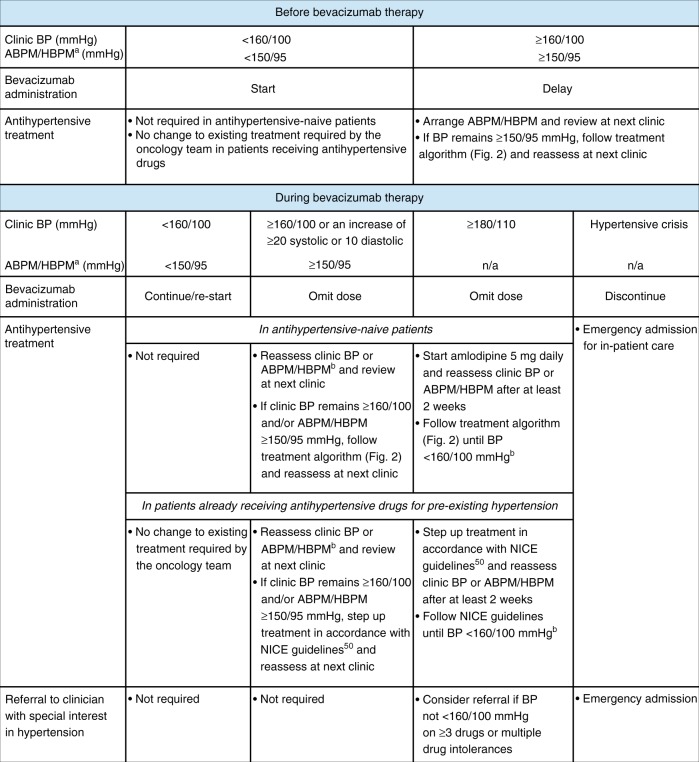
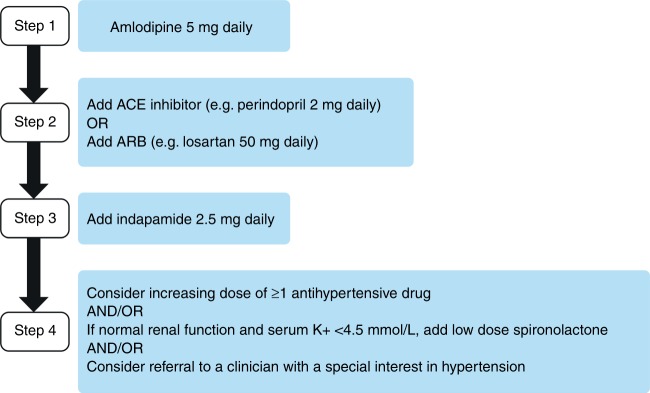
Bevacizumab is an anti-vascular endothelial growth factor monoclonal antibody that may prolong survival in ovarian and cervical cancer when given in combination with chemotherapy. It works by blocking the signalling pathways that are required for tumour angiogenesis, potentially limiting the cancer's ability to grow and spread. Hypertension is a known side effect of all angiogenesis inhibitors and could lead to interruption or premature discontinuation of effective anti-cancer treatment. Hypertension may also act as a barrier to the initiation of such treatment. In this review, we aim to present clear and practical recommendations on the management of blood pressure in ovarian and cervical cancer patients before, during and after bevacizumab treatment. This guidance covers considerations before initiating bevacizumab therapy and recommendations on the management of patients who develop hypertension, or who experience worsening of pre-existing hypertension, during bevacizumab treatment, and once the course of bevacizumab has been completed. These recommendations were developed collaboratively by a group of clinicians, comprising cardiologists, oncologists, a general practitioner and specialist oncology nurses, with expertise and practical experience in either oncology or hypertension. The aim of these recommendations is to support oncologists with hypertension assessment and management to facilitate starting or continuing bevacizumab.
Overview
The claims and statistics of this paper haven’t been checked yet.
Free: it reads the open-access text and checks the first 5 claims that cite a source we can check. Create a free account to check every claim.
Integrity signals
Registry
Cites
Statistics
Figures
Verification
Claims the paper makes
The claims and statistics of this paper haven’t been checked yet.
Free: it reads the open-access text and checks the first 5 claims that cite a source we can check. Create a free account to check every claim.
Claims other papers make about this one
Each is checked against this paper’s own text: does it say what the citing paper says it does?
The check wasn’t confident either way, so it gives no verdict — never disputed.
In the citing paper
“No increase in blood pressure with aspirin”
From 2020 International Society of Hypertension Global Hypertension Practice Guidelines (2020) · cites this paper as [39]
Experimental — accuracy not yet measuredThe check wasn’t confident either way, so it gives no verdict — never disputed.
In the citing paper
“3/1 mm Hg increase with nonselective NSAIDs”
From 2020 International Society of Hypertension Global Hypertension Practice Guidelines (2020) · cites this paper as [39]
Experimental — accuracy not yet measuredThe check wasn’t confident either way, so it gives no verdict — never disputed.
In the citing paper
“No difference or an increase of up to 3/1 mm Hg with celecoxib”
From 2020 International Society of Hypertension Global Hypertension Practice Guidelines (2020) · cites this paper as [39]
Experimental — accuracy not yet measuredThe check wasn’t confident either way, so it gives no verdict — never disputed.
In the citing paper
“NSAIDs can antagonize the effects of RAAS-inhibitors and beta blockers”
From 2020 International Society of Hypertension Global Hypertension Practice Guidelines (2020) · cites this paper as [39]
Experimental — accuracy not yet measuredThe check wasn’t confident either way, so it gives no verdict — never disputed.
In the citing paper
“2/1 mm Hg increase with SNRI (selective norepinephrine and serotonin reuptake inhibitors)”
From 2020 International Society of Hypertension Global Hypertension Practice Guidelines (2020) · cites this paper as [39]
Experimental — accuracy not yet measured
3 more claims about this paper
Create a free account to see every claim other papers make about this one.
Self-check
Percentages, sums and reported differences re-computed from the paper’s own numbers.
The self-check needs the paper’s full text.
Citations
Cites
2018 ESC/ESH Guidelines for the management of arterial hypertension
Williams, B., Mancia, G., Spiering, W., Agabiti Rosei, E., Azizi, M., Burnier, M., Clement, D. L., Coca, A., de Simone, G., Dominiczak, A., et al. (2018) · European Heart Journal · doi:10.1093/eurheartj/ehy339 · Cited by 10,286
James, P. A., Oparil, S., Carter, B. L., Cushman, W. C., Dennison-Himmelfarb, C., Handler, J., Lackland, D. T., LeFevre, M. L., MacKenzie, T. D., Ogedegbe, O., et al. (2014) · JAMA · doi:10.1001/jama.2013.284427 · Cited by 7,950
Whelton, P. K., Carey, R. M., Aronow, W. S., Casey, D. E., Collins, K. J., Dennison Himmelfarb, C., DePalma, S. M., Gidding, S., Jamerson, K. A., Jones, D. W., et al. (2018) · Hypertension · doi:10.1161/hyp.0000000000000065 · Cited by 7,391
Whelton, P. K., Carey, R. M., Aronow, W. S., Casey, D. E., Collins, K. J., Dennison Himmelfarb, C., DePalma, S. M., Gidding, S., Jamerson, K. A., Jones, D. W., et al. (2018) · Journal of the American College of Cardiology · doi:10.1016/j.jacc.2017.11.006 · Cited by 6,616
Law, M. R., Morris, J. K., & Wald, N. J. (2009) · BMJ · doi:10.1136/bmj.b1665 · Cited by 2,775
Zamorano, J. L., Lancellotti, P., Rodriguez Muñoz, D., Aboyans, V., Asteggiano, R., Galderisi, M., Habib, G., Lenihan, D. J., Lip, G. Y. H., Lyon, A. R., et al. (2016) · European Heart Journal · doi:10.1093/eurheartj/ehw211 · Cited by 2,544
Incorporation of Bevacizumab in the Primary Treatment of Ovarian Cancer
Burger, R. A., Brady, M. F., Bookman, M. A., Fleming, G. F., Monk, B. J., Huang, H., Mannel, R. S., Homesley, H. D., Fowler, J., Greer, B. E., et al. (2011) · New England Journal of Medicine · doi:10.1056/nejmoa1104390 · Cited by 2,404 · cited 1×
“These trials demonstrated significant benefits in progression-free survival and overall survival in patients treated with bevacizumab compared with those not treated with bevacizumab.(33,36,38,39) Patients with hypertension were not excluded from these trials unless the condition was uncontrolled, despite antihyperten…”
BackgroundA Phase 3 Trial of Bevacizumab in Ovarian Cancer
Perren, T. J., Swart, A. M., Pfisterer, J., Ledermann, J. A., Pujade-Lauraine, E., Kristensen, G., Carey, M. S., Beale, P., Cervantes, A., Kurzeder, C., et al. (2011) · New England Journal of Medicine · doi:10.1056/nejmoa1103799 · Cited by 2,172
Zamorano, J. L., Lancellotti, P., Rodriguez Muñoz, D., Aboyans, V., Asteggiano, R., Galderisi, M., Habib, G., Lenihan, D. J., Lip, G. Y. H., Lyon, A. R., et al. (2017) · European Journal of Heart Failure · doi:10.1002/ejhf.654 · Cited by 1,795
Rapsomaniki, E., Timmis, A., George, J., Pujades-Rodriguez, M., Shah, A. D., Denaxas, S., White, I. R., Caulfield, M. J., Deanfield, J. E., Smeeth, L., et al. (2014) · The Lancet · doi:10.1016/s0140-6736(14)60685-1 · Cited by 1,643
Cited by
2020 International Society of Hypertension Global Hypertension Practice Guidelines
Unger, T., Borghi, C., Charchar, F., Khan, N. A., Poulter, N. R., Prabhakaran, D., Ramirez, A., Schlaich, M., Stergiou, G. S., Tomaszewski, M., et al. (2020) · Hypertension · doi:10.1161/hypertensionaha.120.15026 · Cited by 4,132
2020 International Society of Hypertension global hypertension practice guidelines
Unger, T., Borghi, C., Charchar, F., Khan, N. A., Poulter, N. R., Prabhakaran, D., Ramirez, A., Schlaich, M., Stergiou, G. S., Tomaszewski, M., et al. (2020) · Journal of Hypertension · doi:10.1097/hjh.0000000000002453 · Cited by 1,283
Herrmann, J., Lenihan, D., Armenian, S., Barac, A., Blaes, A., Cardinale, D., Carver, J., Dent, S., Ky, B., Lyon, A. R., et al. (2022) · European Heart Journal · doi:10.1093/eurheartj/ehab674 · Cited by 645
Exploiting the folate receptor α in oncology
Scaranti, M., Cojocaru, E., Banerjee, S., & Banerji, U. (2020) · Nature Reviews Clinical Oncology · doi:10.1038/s41571-020-0339-5 · Cited by 593
Angiogenesis in gynecological cancers and the options for anti-angiogenesis therapy
Yetkin-Arik, B., Kastelein, A. W., Klaassen, I., Jansen, C. H. J. R., Latul, Y. P., Vittori, M., Bırı, A., Kahraman, K., Griffioen, A. W., Amant, F. C., et al. (2020) · Biochimica et Biophysica Acta (BBA) - Reviews on Cancer · doi:10.1016/j.bbcan.2020.188446 · Cited by 98
VEGF Receptor Inhibitor-Induced Hypertension: Emerging Mechanisms and Clinical Implications
Camarda, N. D., Travers, R. J., Yang, V. K., London, C. A., & Jaffe, I. Z. (2022) · Current Oncology Reports · doi:10.1007/s11912-022-01224-0 · Cited by 95
Anlotinib: A Novel Targeted Drug for Bone and Soft Tissue Sarcoma
Li, S. (2021) · Frontiers in Oncology · doi:10.3389/fonc.2021.664853 · Cited by 90
“The mechanism of action of bevacizumab is that by binding to VEGF, it prevents VEGF from binding to its natural receptor, VEGFR, and inhibits the proliferation and activation of vascular endothelial cells, so as to exert anti-angiogenesis and anti-tumor effects (86, 87).”
BackgroundEtiology and management of hypertension in patients with cancer
Mohammed, T. J., Singh, M., Tiu, J. G., & Kim, A. S. (2021) · Cardio-Oncology · doi:10.1186/s40959-021-00101-2 · Cited by 90
“In the case of high-grade hypertension necessitating additional anti-hypertensives, angiotensin converting enzyme inhibitors (ACEI) may be used [51].”
BackgroundInfluentialQuintela-Fandiño, M., Morales, S. M., Cortés-Salgado, A., Manso, L., Apala, J. V., Muñoz, M., Cudós, A. G., Fortuny, J. S., Gión, M., López‐Alonso, A., et al. (2020) · Clinical Cancer Research · doi:10.1158/1078-0432.ccr-19-2023 · Cited by 50
Ray-Coquard, I. L., Mirza, M. R., Pignata, S., Walther, A., Romero, I., & du Bois, A. (2020) · Cancer Treatment Reviews · doi:10.1016/j.ctrv.2020.102107 · Cited by 33
Targeted drug conjugate systems for ovarian cancer chemotherapy
Ogundipe, O. D., Olajubutu, O., & Adesina, S. K. (2023) · Biomedicine & Pharmacotherapy · doi:10.1016/j.biopha.2023.115151 · Cited by 48
Management of hypertension in patients with cancer: challenges and considerations
Pandey, S., Kalaria, A., Jhaveri, K. D., Herrmann, S. M., & Kim, A. S. (2023) · Clinical Kidney Journal · doi:10.1093/ckj/sfad195 · Cited by 37
“…occurrence of acute or-Onco-hypertension gan damage, including pulmonary oedema, cardiac ischaemia, acute renal failure, papilledema, hypertensive encephalopathy, neurologic deficits or posterior reversible encephalopathy syndrome, may warrant permanent discontinuation of cancer therapy [ 4 , 69 ].”
BackgroundBalkrishnan, R., Desai, R. P., Narayan, A. P., Camacho, F., Flausino, L. E., & Chammas, R. J. (2021) · Cancer Medicine · doi:10.1002/cam4.4088 · Cited by 26
Cancer Treatment-Related Cardiovascular Toxicity in Gynecologic Malignancies
Parashar, S., Akhter, N., Paplomata, E., Elgendy, I. Y., Upadhyaya, D., Scherrer‐Crosbie, M., Okwuosa, T. M., Sanghani, R. M., Chalas, E., Lindley, K. J., et al. (2023) · JACC CardioOncology · doi:10.1016/j.jaccao.2023.02.002 · Cited by 30
“De-escalation of antihypertensive therapy can be undertaken after discontinuation of bevacizumab.(83)”
BackgroundOnco-hypertension: An Emerging Specialty
Gudsoorkar, P. S., Ruf, R., Adnani, H., Safdar, K. A., & Sparks, M. A. (2021) · Advances in Chronic Kidney Disease · doi:10.1053/j.ackd.2021.09.011 · Cited by 24
Chu, G., Liu, X., Yu, W., Chen, M., & Dong, L. (2021) · BMC Cancer · doi:10.1186/s12885-021-07869-7 · Cited by 24
“One possible explanation [13, 29, 30] is that blocking VEGF results in a decrease in nitric oxide (NO) that dilates blood vessels.”
BackgroundYagi, K., Mitstui, M., Zamami, Y., Niimura, T., Izawa‐Ishizawa, Y., Goda, M., Chuma, M., Fukunaga, K., Shibata, T., Ishida, S., et al. (2020) · Cancer Medicine · doi:10.1002/cam4.3587 · Cited by 19
Cardiotoxicity of Biological Therapies in Cancer Patients: An In-depth Review
Madanat, L., Gupta, R., Weber, P., Kumar, N., Chandra, R., Ahaneku, H. P., Bansal, Y., Anderson, J., Bilolikar, A., & Jaiyesimi, I. A. (2022) · Current Cardiology Reviews · doi:10.2174/1573403x18666220531094800 · Cited by 24
“Once bevacizumab is initiated, blood pressure should be measured prior to every chemotherapy infusion, and if blood pressure rises above 160/100, antihypertensive therapy should be initiated for the remainder of bevacizumab treat-ment [110].”
BackgroundKiran, S., Dwivedi, P., Khatik, R., Hameed, S., Dwivedi, M., Huang, F., & Xu, R. X. (2019) · Chemical Communications · doi:10.1039/c9cc09131a · Cited by 14
Berton, D., Floquet, A., Lescaut, W., Baron, G., Kaminsky, M., Toussaint, P., Largillier, R., Savoye, A.-M., Alexandre, J., Delbaldo, C., et al. (2021) · Frontiers in Pharmacology · doi:10.3389/fphar.2021.711813 · Cited by 14
“Most recently, results from the PAOLA-1 randomized phase 3 trial showed median PFS of 16.6 months with front-line bevacizumab and chemotherapy (consistent with findings in our study), but this was increased to 22.1 months with the addition of maintenance olaparib therapy (Ray-Coquard et al., 2019).”
BackgroundInfluentialJankiewicz, W. K., Barnett, S. D., Stavniichuk, A., Hwang, S. H., Hammock, B. D., Belayet, J. B., Khan, A. H., & Imig, J. D. (2021) · Frontiers in Pharmacology · doi:10.3389/fphar.2021.744776 · Cited by 14
“This is important as the overall hypertension incidence in patients who receive sorafenib ranges from 6% to 43%, which is a significant clinical limitation for this class of drugs (Wu et al., 2008; Chang et al., 2017; Caletti et al., 2018; Plummer et al., 2019).”
BackgroundOnco-hypertension: Overview of hypertension with anti-cancer agents
Ruf, R., Yarandi, N., Ortiz-Melo, D. I., & Sparks, M. A. (2021) · Journal of Onco-Nephrology · doi:10.1177/23993693211001374 · Cited by 13
Effect of Metabolic Syndrome and Individual Components on Colon Cancer Characteristics and Prognosis
Silva, A., Pereira, S. S., Monteiro, M. P., Araújo, A., & Faria, G. R. (2021) · Frontiers in Oncology · doi:10.3389/fonc.2021.631257 · Cited by 12
“Hypertension is a known side effect of all angiogenesis inhibitors used in the treatment of CC (31).”
BackgroundLogotheti, S., Pavlopoulou, A., Rudsari, H. K., Galow, A.-M., Kafalı, Y., Kyrodimos, E., Giotakis, A. Ι., Marquardt, S., Velalopoulou, A. P., Verginadis, I. I., et al. (2024) · Pharmacology & Therapeutics · doi:10.1016/j.pharmthera.2024.108670 · Cited by 11
Caught in the crossfire: cardiac complications of cancer therapy
Guerra, G., Mergiotti, M., Ardehali, H., Hirsch, E., & Ghigo, A. (2026) · Journal of Clinical Investigation · doi:10.1172/jci198289 · Cited by 9
“Moreover, anti-hypertensive agents, such as amlodipine, can be useful in managing bevacizumab-induced hypertension, as indicated from expert recommendations (131).”
Meng, C., Wang, X., Fan, L., Fan, Y., Yan, Z., Wang, Y., Li, Y., Zhang, J., & Lv, S. (2023) · Biomedicine & Pharmacotherapy · doi:10.1016/j.biopha.2023.115588 · Cited by 8
Romero, I., Guerra, E., Madariaga, A., & Manso, L. (2024) · Frontiers in Oncology · doi:10.3389/fonc.2023.1304303 · Cited by 11
“If hypertension persists, the patient should be referred to specialized hypertension units or the general practitioner for adequate monitoring and follow-up (Table 4) (37, 38).”
BackgroundShen, B., Tan, M., Wang, Z., Song, C., Hu, H., Deng, S., & Yang, Y. (2022) · Journal of Oncology · doi:10.1155/2022/1476038 · Cited by 8
“Amlodipine is recommended as the first choice for patients taking anti-hypertensive medications [33].”
BackgroundChen, Y.-L., Huang, A. P., Wang, C., Chen, H., Chen, Y., Xiao, F., Lu, S.-L., Cheng, J. C., & Hsu, F. (2021) · Journal of Neuro-Oncology · doi:10.1007/s11060-021-03782-y · Cited by 7
“The incidence of bevacizumab-related hypertension of any grade, and ≥ grade 3 hypertension were reported to be 26%–55% and 6%–25%, respectively [37].”
BackgroundKim, Y. J., Lee, H. M., Lee, G. E., Yoo, J. H., Lee, H. J., & Rhie, S. J. (2024) · Pharmaceuticals · doi:10.3390/ph17081095 · Cited by 5
“…careful monitoring and supportive care should be facilitated to avoid underestimation and inadequate treatment of potential overlapping adverse events in concomitant use of cytotoxic and antiangiogenic agents as part of efforts to maintain the quality of life in patients with ovarian cancer.”
BackgroundBevacizumab-associated glomerular microangiopathy: a case report and literature review
Jiang, R., Yu, R.-Z., Yang, H., Wang, L.-X., & Lin, J. (2025) · BMC Nephrology · doi:10.1186/s12882-025-04385-9 · Cited by 4
“Although no standardized protocol exists for blood pressure management, current evidence supports dynamic BP monitoring with timely initiation of antihypertensive therapy upon detecting abnormal elevations [5, 6, 11].”
Polano, M., Bedon, L., Bo, M. D., Sorio, R., Bartoletti, M., Mattia, E. D., Cecchin, E., Pisano, C., Lorusso, D., Lissoni, A. A., et al. (2023) · Clinical Pharmacology & Therapeutics · doi:10.1002/cpt.2960 · Cited by 6
“A basal hypertension state (prior to bevacizumab administration) was associated with a higher incidence of hypertension toxicity.(11,25,26) Several studies, including a GWAS with four clinical trials, have shown an association between different germline variants and bevacizumabrelated toxicities such as hypertension.”
BackgroundLicht-Ardila, M., Romero, L. A., & Vallejo-Ardila, D. L. (2022) · Revista Colombiana de Cardiología · doi:10.24875/rccar.21000078 · Cited by 7
Zheng, Z., Zhao, Y., Xie, J., Gao, M., Wang, Y., & Li, X. (2024) · Frontiers in Pharmacology · doi:10.3389/fphar.2024.1463026 · Cited by 4
Comorbid conditions and survival among Black women with ovarian cancer
Richards, A. R., Johnson, C. E., Montalvo, N. R., Alberg, A. J., Bandera, E. V., Bondy, M. L., Collin, L. J., Coté, M. L., Hastert, T. A., Haller, K., et al. (2025) · Cancer · doi:10.1002/cncr.35694 · Cited by 4
“45,46 Last, steroid use is required during paclitaxel chemotherapy and can result in hyperglycemia and an increased risk of developing new ‐ onset diabetes.”
Abraham, S., & Samson, A. (2024) · Frontiers in Oncology · doi:10.3389/fonc.2023.1279501 · Cited by 3
Chen, Y., Lin, Y., Guan, S., Zhao, Z.-R., Lin, D., Guan, J., Zhou, C., Liu, J., Cao, X., Lin, Z., et al. (2023) · Drug Metabolism and Disposition · doi:10.1124/dmd.123.001428 · Cited by 2
“Currently, dose reduction is required when severe AEs occur while sufficient monitoring and symptomatic therapy such as antihypertensives for hypertension was recommended in terms of moderate AEs (Bellmunt et al., 2011; Plummer et al., 2019).”
BackgroundKidoguchi, S. (2025) · Hypertension Research · doi:10.1038/s41440-025-02197-w · Cited by 2
“According to expert consensus on the management of hypertension in patients with ovarian and cervical cancer receiving bevacizumab, anti-hypertensive treatment is not recommended for patients without prior hypertension until blood pressure exceeds 160/100 mmHg [15].”
Heartbreaker: Detection and prevention of cardiotoxicity in hematological malignancies
Vakilpour, A., Lefebvre, B., Lai, C., & Scherrer‐Crosbie, M. (2023) · Blood Reviews · doi:10.1016/j.blre.2023.101166 · Cited by 2
Fakih, M., Ciardiello, F., Prager, G. W., Élez, E., Calleja, E., Caussé-Amellal, N., Taïeb, J., & Cutsem, E. V. (2025) · ESMO Gastrointestinal Oncology · doi:10.1016/j.esmogo.2025.100191 · Cited by 4
“12,30 Assessment of cardiovascular risk includes the evaluation of various risk factors, including underlying cardiovascular disease, chronic kidney disease, diabetes mellitus, hyperlipidemia, obesity, tobacco use, family history of hypertension, and advanced age.”
InfluentialMetastatic Cervical Cancer in the Asia-Pacific Region: Current Treatment Landscape and Barriers
Goh, J. C. H., Lai, C., Domingo, E. J., Kim, J. H., Spiteri, C., Hsu, D., Ihm, S. Y., & Peng, P. (2025) · Cancer Research Communications · doi:10.1158/2767-9764.crc-24-0647 · Cited by 1
“As bevacizumab functions by inhibiting VEGF, which predisposes individuals to hypertension development, an appropriate treatment course would be necessary (45).”
Mingrone, G., Moia, E. C., Delsignore, E., Demicheli, G., Destefanis, P., Forno, D., Tos, G. G., Luciano, A., Pinna, G., Ravera, L., et al. (2021) · Hearts · doi:10.3390/hearts2010006 · Cited by 1
Zhang, X., Yang, J., Chen, S., Liu, C., Wang, Z., Ren, H., & Zhou, L. (2022) · Journal of Thrombosis and Thrombolysis · doi:10.1007/s11239-022-02653-1
Advances in Research on VEGF Pathway Inhibitors Related Renal Injury
唐, 文. (2022) · Advances in Clinical Medicine · doi:10.12677/acm.2022.1281077
Ewer, M. S., Ewer, S. M., & Suter, T. M. (2022) · Wiley eBooks · doi:10.1002/9781119000822.hfcm133.pub2
Onco-Hypertension: Anticancer Therapy-Associated Hypertension
Kim, A. S. (2023) · Elsevier eBooks · doi:10.1016/b978-0-323-88369-6.00040-2
Diagnostic et prise en charge de l’hypertension artérielle sous traitements anticancéreux
Grigore, D., Mion, B., Cribari, F., Hamdi, I., & Mirabel, M. (2023) · Archives des Maladies du Coeur et des Vaisseaux - Pratique · doi:10.1016/j.amcp.2023.10.003
Germline predictors for bevacizumab induced hypertensive crisis in ECOG-ACRIN 5103 and BEATRICE
Shen, F., Jiang, G., Philips, S., Cantor, E., Gardner, L., Xue, G. R., Cunningham, G. M., Kassem, N., O’Neill, A., Cameron, D., et al. (2024) · British Journal of Cancer · doi:10.1038/s41416-024-02602-0 · Cited by 1
Jochum, F., Dumas, É., Salem, J., Éderhy, S., Hamy, A., Lecointre, L., Laas, E., Reyal, F., Lecuru, F. R., Akladios, C. Y., et al. (2025) · Clinical Pharmacology & Therapeutics · doi:10.1002/cpt.70067
“…vary: the European Society of Cardiology (ESC) guidelines favor ACEi as the first-line treat-ment, 5 gynecological cancer guidelines suggest CCBs for managing bevacizumab-associated hypertension in patients without comorbidities, 6 and the National Health Service (NHS) recommends both options.”
Zhang, L., Li, H., Guo, C., & Cheng, T. (2025) · International Journal of Radiation Research · doi:10.61882/ijrr.23.3.16
Kitaoka, K., Morimoto, S., Minegishi, S., Hiroshi, K. A. T. O., Kitahara, Y., Shioyama, W., Shiga, T., Tajiri, K., Shoji, M., Fukata, M., et al. (2026) · Hypertension Research · doi:10.1038/s41440-025-02524-1
肖, 子. (2026) · Asian Case Reports in Emergency Medicine · doi:10.12677/acrem.2026.142018
Metadata
- Authors
- Plummer, C., Michael, A., Shaikh, G., Stewart, M., Buckley, L., Miles, T., Ograbek, A., & McCormack, T.
- Affiliations
- Freeman Hospital (GB)
- Royal Surrey County Hospital (GB)
- James Cook University Hospital (GB)
- Hull University Teaching Hospitals NHS Trust (GB)
- Royal United Hospital Bath NHS Trust (GB)
- Roche (United Kingdom) (GB)
- Hull York Medical School (GB)
- Corresponding author
- Plummer, Chris
- Venue
- British Journal of Cancer
- Published
- 2019-06-11
- Volume
- 121
- Issue
- 2
- Pages
- 109-116
- ISSN
- 0007-0920 (ISSN-L)
- 1532-1827
- PMC
- PMC6738076
- OpenAlex
- W2951382000
- Cited by
- 52
- References
- 69
- Citations by year
- 2026: 3 · 2025: 7 · 2024: 6 · 2023: 9 · 2022: 7 · 2021: 12 · 2020: 6 · 2019: 2
- FWCI
- 1.22
- Type
- journal article
- Language
- en
- Open access
- hybrid
- doi.org
- Licence
- cc-by
- creativecommons.org/licenses/by/4.0 (tdm)
- creativecommons.org/licenses/by/4.0 (vor)
- Locations
- British Journal of Cancer (publishedVersion, cc-by)
- PubMed Central (publishedVersion, cc-by)
- PubMed (publishedVersion)
- Topics
- Health Sciences › Medicine › Cardiology and Cardiovascular Medicine › Blood Pressure and Hypertension Studies
- Life Sciences › Biochemistry, Genetics and Molecular Biology › Molecular Biology › Angiogenesis and VEGF in Cancer
- Health Sciences › Medicine › Cardiology and Cardiovascular Medicine › Chemotherapy-induced cardiotoxicity and mitigation
- Keywords
- hypertension, bevacizumab, ovarian cancer, cervical cancer, anti-angiogenic therapy, blood pressure control, treatment discontinuation, pre-existing hypertension
- MeSH terms
- Bevacizumab, Uterine Cervical Neoplasms, Clinical Trials as Topic, Female, Humans, Hypertension, Ovarian Neoplasms, Angiogenesis Inhibitors
About these checks
Registry, retraction, Cites and statistics results are computed, not judged, with one exception: a printed reference that no index lists is read once by a model before it counts as a citation error. Claims are extracted by a model and kept only when their quote appears verbatim in the text; each cited source is then checked, with a model’s help, for whether it says what the claim relies on. Those verdicts can be wrong — read the claim’s quote and the cited source before relying on one.
Statistics and arithmetic are recomputed, not judged.
Confidence bands are shown only for fields calibrated on our annotated test set. None is calibrated yet, so no band is shown.
What counts as a claim ›How we measure confidence ›How we check this ›
Are you an author, or do you see a problem with this page? Request a review
Data sources
Bibliographic data: Semantic Scholar, OpenAlex, Crossref.
Contains information from the Semantic Scholar Academic Graph Datasets, made available under the ODC Attribution License (ODC-BY 1.0).
Semantic Scholar’s data is described in: Kinney, R., et al. (2023). The Semantic Scholar Open Data Platform. arXiv:2301.10140.
