

The DOI matches its Crossref record; 43 of the 43 references it cites were found in a registry or an index.
The transcription factor c-Jun/AP-1 promotes liver fibrosis during non-alcoholic steatohepatitis by regulating Osteopontin expression
Open accessAbstract
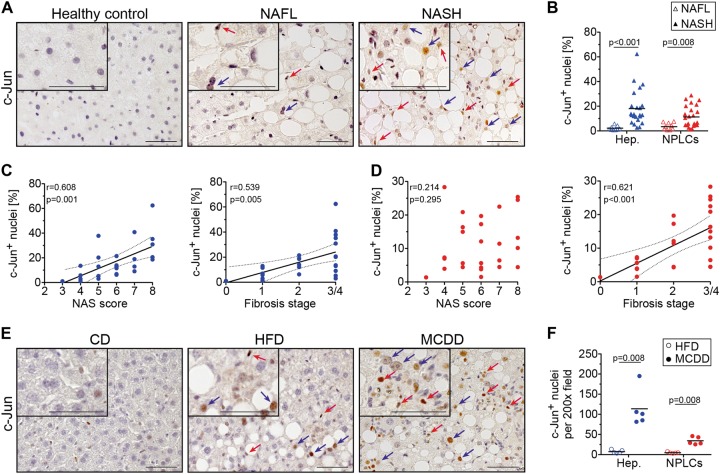
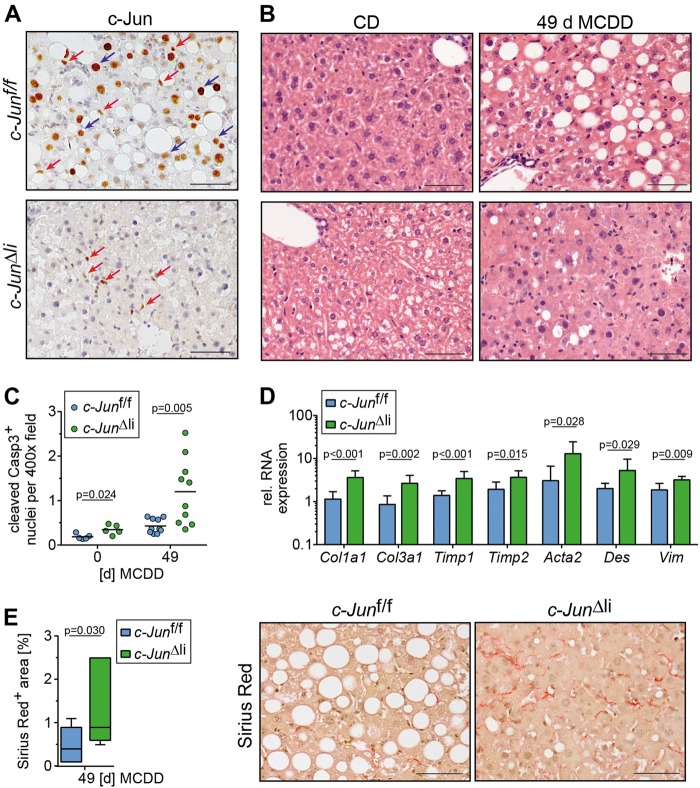
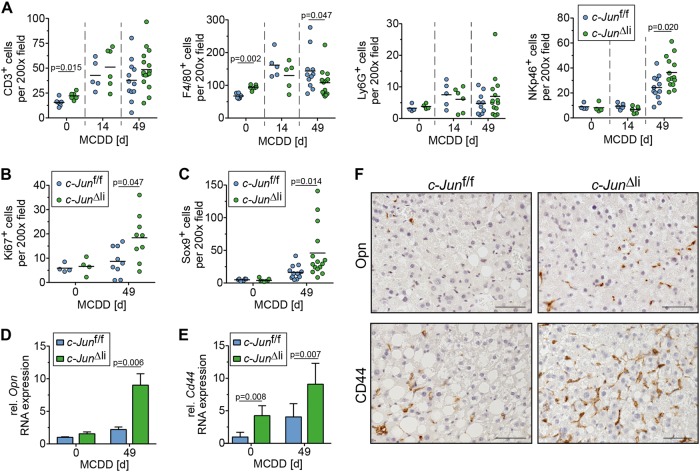
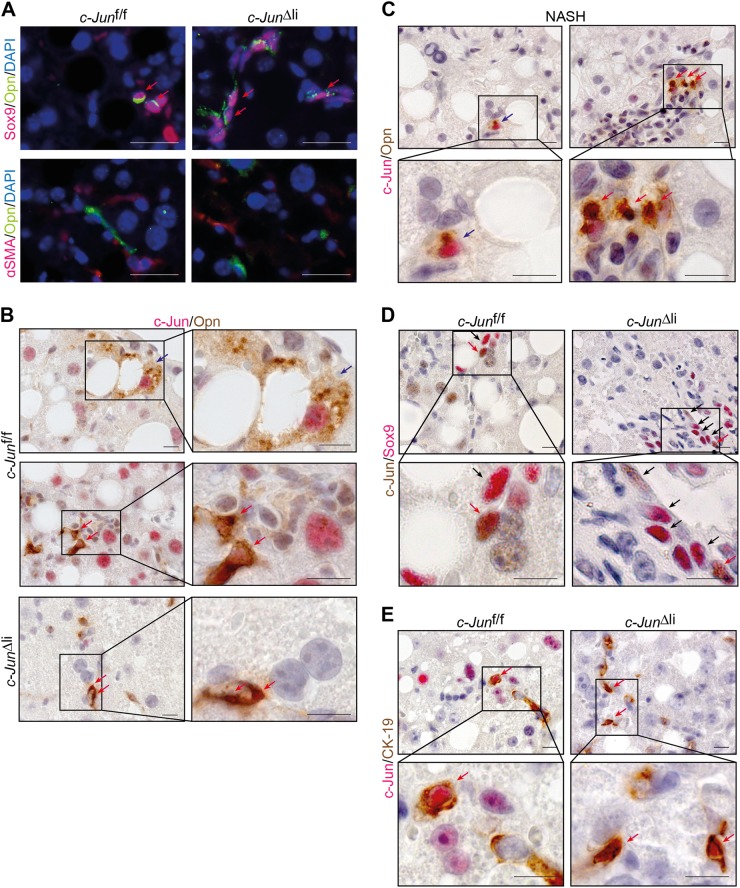
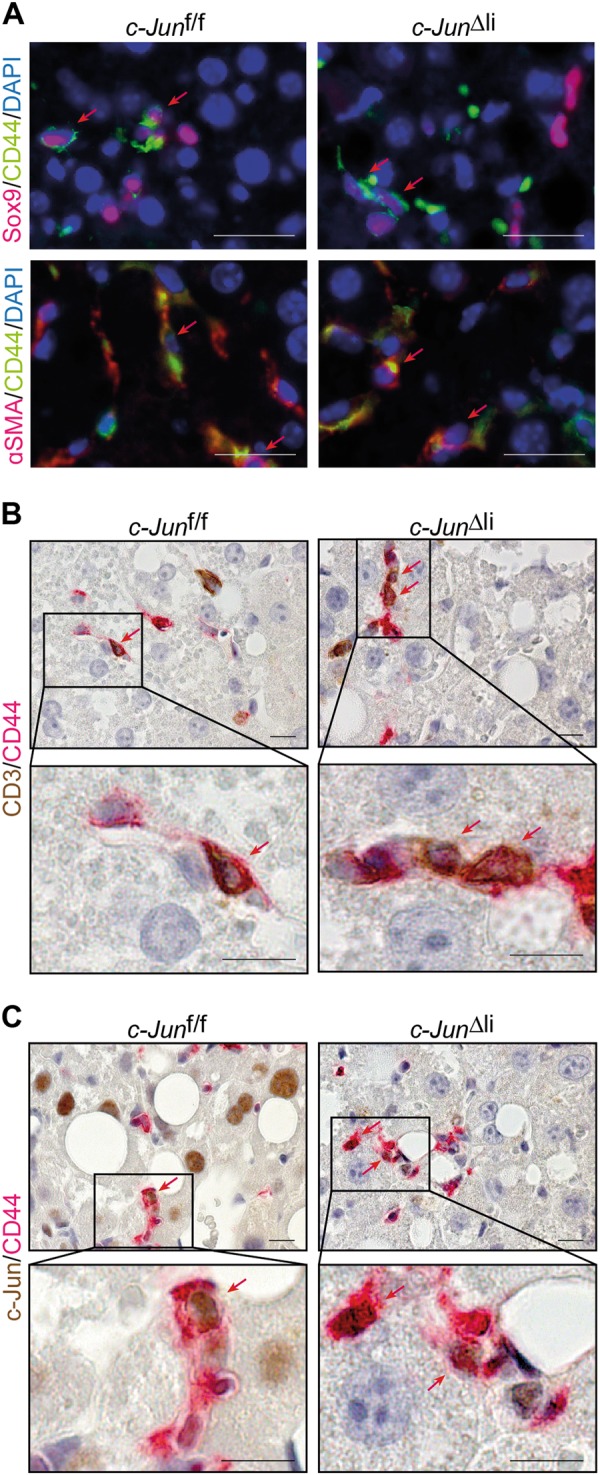
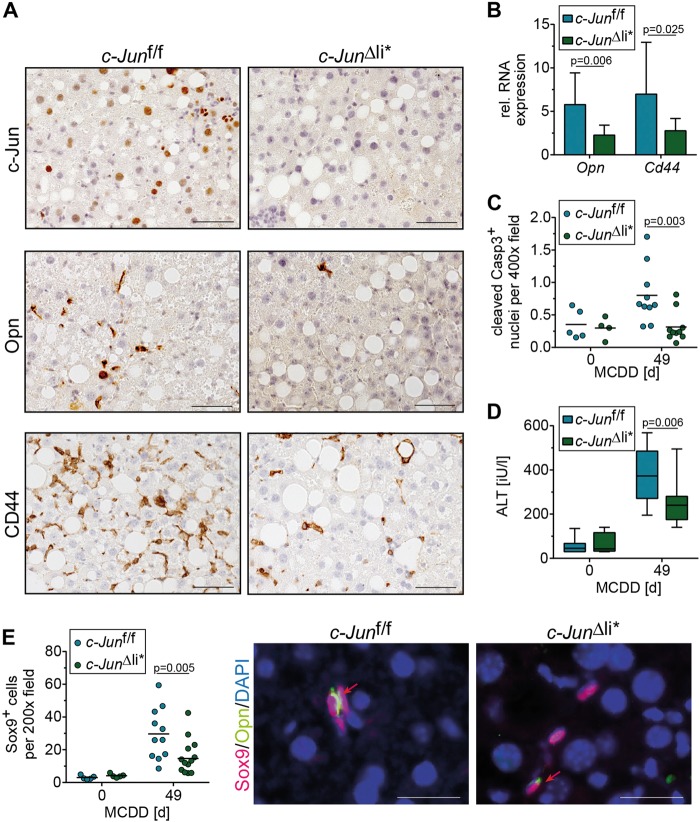
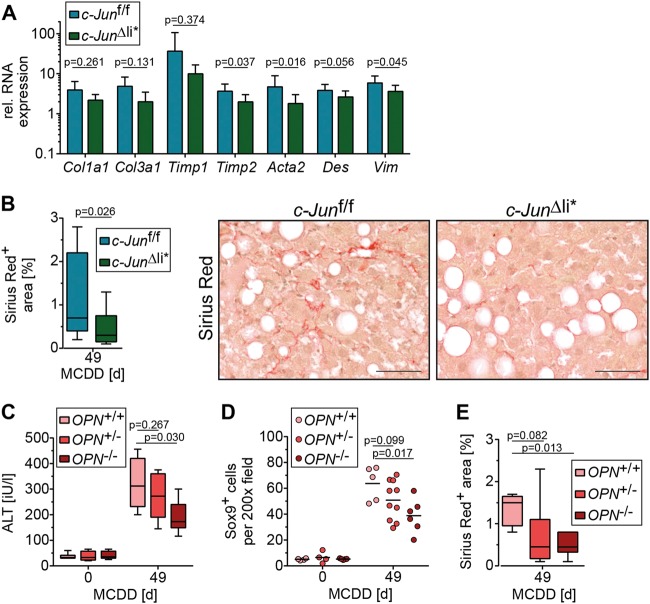
Progression of non-alcoholic fatty liver disease (NAFLD) from steatosis to non-alcoholic steatohepatitis (NASH) is a key step of NASH pathogenesis. The AP-1 transcription factor c-Jun is an important regulator of hepatic stress responses, but its contribution to NASH pathogenesis remains poorly defined. We therefore addressed c-Jun expression in liver biopsies of patients with steatosis and NASH. The role of c-Jun during NASH pathogenesis was analyzed mechanistically in c-Jun mutant mice fed with a methionine- and choline-deficient diet (MCDD). Disease progression from steatosis to NASH in patients correlated with increased c-Jun expression in hepatocytes, while its expression in non-parenchymal liver cells (NPLCs) particularly correlated with fibrosis. Analysis of untreated and MCDD-fed mice lacking c-Jun in hepatocytes ( c-Jun ∆li ) revealed that c-Jun promotes hepatocyte survival, thereby protecting against the regenerative ductular reaction (DR) of Sox9/Osteopontin (Opn) co-expressing NPLCs, expression of the Opn receptor CD44 and fibrosis, which were all exacerbated in c-Jun ∆li mice. Since Opn and c-Jun were co-expressed by NPLCs in mice and patients with NASH, we wondered whether the increased fibrosis observed in c-Jun ∆li mice could be rescued by additional c-Jun deletion in NPLCs ( c-Jun ∆li* ). c-Jun ∆li* mice with NASH indeed exhibited reduced expression of Opn and CD44 in NPLCs, impaired DR and reduced fibrosis. A similar phenotype was observed in Opn knockout mice, suggesting that the observed functions of c-Jun were indeed Opn-dependent. In conclusion, c-Jun expression correlates with disease progression from steatosis to NASH in patients and exerts cell-type-specific functions in mice: In hepatocytes, it promotes cell survival thereby limiting the DR and fibrogenesis. In NPLCs, it rather promotes the DR and fibrogenesis by regulating expression of Opn and CD44.
Overview
The claims and statistics of this paper haven’t been checked yet.
Run the check — free, no account needed. It reads the open-access text and checks the sources it cites.
Integrity signals
Registry
Cites
Statistics
Figures
Verification
Claims the paper makes
The claims and statistics of this paper haven’t been checked yet.
Run the check — free, no account needed. It reads the open-access text and checks the sources it cites.
Claims other papers make about this one
Each is checked against this paper’s own text: does it say what the citing paper says it does?
In the citing paper
“Indeed SPP1-deficient mice are protected from MASH fibrosis in the MCD model (162).”
From Found in translation—Fibrosis in metabolic dysfunction–associated steatohepatitis (MASH) (2023) · cites this paper as [162]
Self-check
Percentages, sums and reported differences re-computed from the paper’s own numbers.
The self-check needs the paper’s full text.
Citations
Cites
1 retracted
Iqbal, J., McRae, S., Banaudha, K. K., Mai, T., & Waris, G. (2013) · Journal of Biological Chemistry · doi:10.1074/jbc.m113.492314 · Cited by 48
RetractedDesign and validation of a histological scoring system for nonalcoholic fatty liver disease†
Kleiner, D. E., Brunt, E. M., Van Natta, M., Behling, C., Contos, M. J., Cummings, O. W., Ferrell, L. D., Liu, Y., Torbenson, M. S., Unalp‐Arida, A., et al. (2005) · Hepatology · doi:10.1002/hep.20701 · Cited by 10,791
Endoplasmic Reticulum Stress Links Obesity, Insulin Action, and Type 2 Diabetes
Özcan, U., Cao, Q., Yilmaz, E., Lee, A.-H., Iwakoshi, N. N., Özdelen, E., Tuncman, G., Görgün, C., Glimcher, L. H., & Hotamisligil, G. S. (2004) · Science · doi:10.1126/science.1103160 · Cited by 3,844
AP-1: a double-edged sword in tumorigenesis
Eferl, R., & Wagner, E. F. (2003) · Nature reviews. Cancer · doi:10.1038/nrc1209 · Cited by 2,218
Inducible Gene Targeting in Mice
Kühn, R., Schwenk, F., Aguet, M., & Rajewsky, K. (1995) · Science · doi:10.1126/science.7660125 · Cited by 1,641
Cause, Pathogenesis, and Treatment of Nonalcoholic Steatohepatitis
Diehl, A. M., & Day, C. (2017) · New England Journal of Medicine · doi:10.1056/nejmra1503519 · Cited by 1,283
Fu, S., Yang, L., Li, P., Hofmann, O., Dicker, L. H., Hide, W. A., Lin, X., Watkins, S. M., Ivanov, A. R., & Hotamışlıgil, G. S. (2011) · Nature · doi:10.1038/nature09968 · Cited by 1,045
Nutrient sensing and inflammation in metabolic diseases
Hotamisligil, G. S., & Erbay, E. (2008) · Nature Reviews Immunology · doi:10.1038/nri2449 · Cited by 1,040
Furuyama, K., Kawaguchi, Y., Akiyama, H., Horiguchi, M., Kodama, S., Kuhara, T., Hosokawa, S., Elbahrawy, A., Soeda, T., Koizumi, M., et al. (2010) · Nature Genetics · doi:10.1038/ng.722 · Cited by 841
Activation and Dysregulation of the Unfolded Protein Response in Nonalcoholic Fatty Liver Disease
Puri, P., Mirshahi, F., Cheung, O., Natarajan, R., Maher, J. W., Kellum, J. M., & Sanyal, A. J. (2007) · Gastroenterology · doi:10.1053/j.gastro.2007.10.039 · Cited by 615
Pathogenesis of Nonalcoholic Steatohepatitis
Machado, M. V., & Diehl, A. M. (2016) · Gastroenterology · doi:10.1053/j.gastro.2016.02.066 · Cited by 549
Determinants of Fibrosis Progression and Regression in NASH
Schuppan, D., Surabattula, R., & Wang, X. Y. (2018) · Journal of Hepatology · doi:10.1016/j.jhep.2017.11.012 · Cited by 479
Eferl, R., Ricci, R., Kenner, L., Zenz, R., David, J., Rath, M., & Wagner, E. F. (2003) · Cell · doi:10.1016/s0092-8674(03)00042-4 · Cited by 473
Nonalcoholic Fatty Liver Disease: Pathologic Patterns and Biopsy Evaluation in Clinical Research
Kleiner, D. E., & Brunt, E. M. (2012) · Seminars in Liver Disease · doi:10.1055/s-0032-1306421 · Cited by 402
JNK1 but not JNK2 promotes the development of steatohepatitis in mice
Schattenberg, J. M., Singh, R., Wang, Y., Lefkowitch, J. H., Rigoli, R. M., Scherer, P. E., & Czaja, M. J. (2006) · Hepatology · doi:10.1002/hep.20999 · Cited by 384
Preclinical models of non-alcoholic fatty liver disease
Santhekadur, P. K., Kumar, D. P., & Sanyal, A. J. (2018) · Journal of Hepatology · doi:10.1016/j.jhep.2017.10.031 · Cited by 380
Permutt, Z., Le, T., Peterson, M. R., Seki, E., Brenner, D. A., Sirlin, C. B., & Loomba, R. S. (2012) · Alimentary Pharmacology & Therapeutics · doi:10.1111/j.1365-2036.2012.05121.x · Cited by 344
Functions of c-Jun in Liver and Heart Development
Eferl, R., Sibilia, M. C., Hilberg, F., Fuchsbichler, A., Kufferath, I., Guertl, B., Zenz, R., Wagner, E. F., & Zatloukal, K. (1999) · The Journal of Cell Biology · doi:10.1083/jcb.145.5.1049 · Cited by 275
Syn, W.-K., Choi, S. S., Liaskou, E., Karaca, G. F., Agboola, K. M., Oo, Y. H., Mi, Z., Pereira, T. A., Zdanowicz, M., Malladi, P., et al. (2011) · Hepatology · doi:10.1002/hep.23998 · Cited by 275
Behrens, A., Sibilia, M. C., David, J., Möhle-Steinlein, U., Tronche, F., Schütz, G., & Wagner, E. F. (2002) · The EMBO Journal · doi:10.1093/emboj/21.7.1782 · Cited by 273
NKT-Associated Hedgehog and Osteopontin Drive Fibrogenesis in Non-Alcoholic Fatty Liver Disease
Syn, W.-K., Agboola, K. M., Swiderska, M., Michelotti, G. A., Liaskou, E., Pang, H., Xie, G., Philips, G., Chan, I. S., Karaca, G. F., et al. (2012) · Gut · doi:10.1136/gutjnl-2011-301857 · Cited by 266
Liver cancer initiation is controlled by AP-1 through SIRT6-dependent inhibition of survivin
Min, L., Ji, Y., Bakiri, L., Qiu, Z., Cen, J., Chen, X., Chen, L., Scheuch, H., Zheng, H., Qin, L., et al. (2012) · Nature Cell Biology · doi:10.1038/ncb2590 · Cited by 246
EGFR has a tumour-promoting role in liver macrophages during hepatocellular carcinoma formation
Lanaya, H., Natarajan, A., Komposch, K., Li, L., Amberg, N., Chen, L., Wculek, S. K., Hammer, M., Zenz, R., Peck‐Radosavljevic, M., et al. (2014) · Nature Cell Biology · doi:10.1038/ncb3031 · Cited by 244
Osteopontin as a mediator of NKT cell function in T cell-mediated liver diseases.
Diao, H., Kon, S., Iwabuchi, K., Kimura, C., Morimoto, J., Ito, D., Segawa, T., Maeda, M., Hamuro, J., Nakayama, T., et al. (2004) · Immunity · doi:10.1016/j.immuni.2004.08.012 · Cited by 226
Sahai, A., Malladi, P., Melin-Aldana, H., Green, R. M., & Whitington, P. F. (2004) · American Journal of Physiology-Gastrointestinal and Liver Physiology · doi:10.1152/ajpgi.00002.2004 · Cited by 181
Hedgehog signalling in liver pathophysiology
Machado, M. V., & Diehl, A. M. (2017) · Journal of Hepatology · doi:10.1016/j.jhep.2017.10.017 · Cited by 155
Arriazu, E., Ge, X., Leung, T.-M., Magdaleno, F., Lopategi, A., Lu, Y., Kitamura, N., Urtasun, R., Theise, N., Antoine, D. J., et al. (2017) · Gut · doi:10.1136/gutjnl-2015-310752 · Cited by 144
Regulation of Steatohepatitis and PPARγ Signaling by Distinct AP-1 Dimers
Hasenfuss, S. C., Bakiri, L., Thomsen, M. K., Williams, E. G., Auwerx, J. H., & Wagner, E. F. (2014) · Cell Metabolism · doi:10.1016/j.cmet.2013.11.018 · Cited by 141
CD44 is a key player in non-alcoholic steatohepatitis
Patouraux, S., Rousseau, D., Bonnafous, S., Lebeaupin, C., Luci, C., Canivet, C. M., Schneck, A.-S., Bertola, A., Saint‐Paul, M., Iannelli, A., et al. (2017) · Journal of Hepatology · doi:10.1016/j.jhep.2017.03.003 · Cited by 139
Osteopontin induces ductular reaction contributing to liver fibrosis
Wang, X., Lopategi, A., Ge, X., Lu, Y., Kitamura, N., Urtasun, R., Leung, T.-M., Fiel, M. I., & Nieto, N. (2014) · Gut · doi:10.1136/gutjnl-2013-306373 · Cited by 108
SOX9 is a novel cancer stem cell marker surrogated by osteopontin in human hepatocellular carcinoma
Kawai, T., Yasuchika, K., Ishii, T., Miyauchi, Y., Kojima, H., Yamaoka, R., Katayama, H., Yoshitoshi, E. Y., Ogiso, S., Kita, S., et al. (2016) · Scientific Reports · doi:10.1038/srep30489 · Cited by 99
Osteopontin neutralisation abrogates the liver progenitor cell response and fibrogenesis in mice
Coombes, J. D., Swiderska‐Syn, M., Dollé, L., Reid, D. T., Eksteen, B., Claridge, L. C., Briones-Orta, M. A., Shetty, S., Oo, Y. H., Riva, A., et al. (2014) · Gut · doi:10.1136/gutjnl-2013-306484 · Cited by 97
Pritchett, J. P., Harvey, E., Athwal, V. S., Berry, A. A., Rowe, C., Oakley, F., Moles, A., Mann, D. A., Bobola, N., Sharrocks, A. D., et al. (2012) · Hepatology · doi:10.1002/hep.25758 · Cited by 97
Increased expression of c-Jun in nonalcoholic fatty liver disease
Dorn, C., Engelmann, J. C., Saugspier, M., Koch, A., Hartmann, A., Müller, M., Spang, R., Bosserhoff, A., & Hellerbrand, C. (2014) · Laboratory Investigation · doi:10.1038/labinvest.2014.3 · Cited by 90
Osteopontin: Versatile modulator of liver diseases
Nagoshi, S. (2013) · Hepatology Research · doi:10.1111/hepr.12166 · Cited by 87
Hasselblatt, P., Rath, M., Komnenovic, V., Zatloukal, K., & Wagner, E. F. (2007) · Proceedings of the National Academy of Sciences · doi:10.1073/pnas.0706272104 · Cited by 75
Self-citationFuest, M., Willim, K., MacNelly, S., Fellner, N., Resch, G. P., Blum, H. E., & Hasselblatt, P. (2011) · Hepatology · doi:10.1002/hep.24699 · Cited by 70
Self-citationThe transcription factor c-JUN/AP-1 promotes HBV-related liver tumorigenesis in mice
Trierweiler, C., Hockenjos, B., Zatloukal, K., Thimme, R., Blum, H. E., Wagner, E. F., & Hasselblatt, P. (2015) · Cell Death and Differentiation · doi:10.1038/cdd.2015.121 · Cited by 67
Self-citationKhamphaya, T., Chukijrungroat, N., Saengsirisuwan, V., Mitchell-Richards, K., Robert, M. E., Mennone, A., Ananthanarayanan, M., Nathanson, M. H., & Weerachayaphorn, J. (2017) · Hepatology · doi:10.1002/hep.29588 · Cited by 64
Nakatsuka, T., Tateishi, K., Kudo, Y., Yamamoto, K., Nakagawa, H., Fujiwara, H., Takahashi, R., Miyabayashi, K., Asaoka, Y., Tanaka, Y., et al. (2017) · Oncogene · doi:10.1038/onc.2017.222 · Cited by 49
Hasenfuss, S. C., Bakiri, L., Thomsen, M. K., Hamacher, R., & Wagner, E. F. (2013) · Hepatology · doi:10.1002/hep.26518 · Cited by 33
Ubiquitous postnatal LoxP recombination using a doxycycline auto-inducible Cre transgene (DAI-Cre)
Holzenberger, M., Zaoui, R., Leneuve, P., Hamard, G., & Bouc, Y. L. (2000) · genesis · doi:10.1002/(sici)1526-968x(200002)26:2 · Cited by 23
The AlfpCre mouse revisited: Evidence for liver steatosis related to growth hormone deficiency
Pruniau, V. P. E. G., Louagie, E., Brouwers, B., Declercq, J., & Creemers, J. W. M. (2013) · Hepatology · doi:10.1002/hep.26483 · Cited by 16
Cited by
Sorted by citations
Mechanisms and disease consequences of nonalcoholic fatty liver disease
Loomba, R., Friedman, S. L., & Shulman, G. I. (2021) · Cell · doi:10.1016/j.cell.2021.04.015 · Cited by 2,002
Found in translation—Fibrosis in metabolic dysfunction–associated steatohepatitis (MASH)
Wang, S., & Friedman, S. L. (2023) · Science Translational Medicine · doi:10.1126/scitranslmed.adi0759 · Cited by 158
Adu‐Berchie, K., Liu, Y., Zhang, D. K. Y., Freedman, B. R., Brockman, J. M., Vining, K. H., Nerger, B. A., Garmilla, A., & Mooney, D. J. (2023) · Nature Biomedical Engineering · doi:10.1038/s41551-023-01052-y · Cited by 130
Elucidating the fundamental fibrotic processes driving abdominal adhesion formation
Foster, D. S., Marshall, C. D., Gulati, G. S., Chinta, M. S., Nguyen, A. T., Salhotra, A., Jones, R. E., Burcham, A. R., Lerbs, T., Cui, L., et al. (2020) · Nature Communications · doi:10.1038/s41467-020-17883-1 · Cited by 118
Tyrosine kinase receptor B attenuates liver fibrosis by inhibiting TGF-β/SMAD signaling
Song, Y., Wei, J., Li, R., Fu, R., Han, P., Wang, H., Zhang, G., Li, S., Chen, S., Liu, Z., et al. (2023) · Hepatology · doi:10.1097/hep.0000000000000319 · Cited by 122
Metadata
- Authors
- Schulien, I., Hockenjos, B., Schmitt-Graeff, A., Perdekamp, M. G., Follo, M., Thimme, R., & Hasselblatt, P.
- Affiliations
- University of Freiburg (DE)
- Corresponding author
- Hasselblatt, Peter
- Venue
- Cell Death & Differentiation
- Published
- 2019-02-18
- Volume
- 26
- Issue
- 9
- Pages
- 1688-1699
- ISSN
- 1350-9047 (ISSN-L)
- 1476-5403
- PMC
- PMC6748141
- OpenAlex
- W2913699817
- Cited by
- 111
- References
- 43
- Citations by year
- 2026: 12 · 2025: 26 · 2024: 16 · 2023: 12 · 2022: 11 · 2021: 24 · 2020: 9 · 2019: 1
- FWCI
- 8.56
- Type
- journal article
- Language
- en
- Open access
- hybrid
- doi.org
- Licence
- Locations
- Cell Death and Differentiation (publishedVersion, cc-by)
- PubMed Central (publishedVersion, cc-by)
- PubMed (publishedVersion)
- Funders
- Deutsche Forschungsgemeinschaft (Ha4314/2-3)
- Topics
- Health Sciences › Medicine › Hepatology › Liver Disease Diagnosis and Treatment
- Health Sciences › Medicine › Hepatology › Liver physiology and pathology
- Health Sciences › Medicine › Hepatology › Liver Diseases and Immunity
- Keywords
- c-Jun, AP-1 transcription factor, nonalcoholic steatohepatitis, liver fibrosis, osteopontin, CD44, non-parenchymal liver cells, hepatocyte viability, steatosis, methionine-choline-deficient diet, SOX9
- MeSH terms
- Animals, Diet, Humans, Liver Cirrhosis, Male, Mice, Inbred C57BL, Regeneration, Proto-Oncogene Proteins c-jun, Mice, Knockout, Disease Progression, Hyaluronan Receptors, Hepatocytes, Cell Proliferation, Mice, Osteopontin, Non-alcoholic Fatty Liver Disease
About these checks
Registry, retraction, Cites and statistics results are computed, not judged, with one exception: a printed reference that no index lists is read once by a model before it counts as a citation error. Claims are extracted by a model and kept only when their quote appears verbatim in the text; each cited source is then checked, with a model’s help, for whether it says what the claim relies on. Those verdicts can be wrong — read the claim’s quote and the cited source before relying on one.
Statistics and arithmetic are recomputed, not judged.
Confidence bands are shown only for fields calibrated on our annotated test set. None is calibrated yet, so no band is shown.
What counts as a claim ›How we measure confidence ›How we check this ›
Are you an author, or do you see a problem with this page? Request a review
