

The DOI matches its Crossref record; 50 of the 50 references it cites were found in a registry or an index.
Inhibition of cGAS-STING by JQ1 alleviates oxidative stress-induced retina inflammation and degeneration
Open accessAbstract
Atrophic (“dry”) form of age-related macular degeneration (AMD) is a leading cause of vision loss characterized by macular retinal pigment epithelium (RPE) and the ensuing photoreceptor degeneration. cGAS-STING signaling is a key cytosolic DNA sensor system in innate immunity and have recently been shown promotes RPE degeneration. However, expression regulation and therapeutic potential of cGAS and STING are not explored in retina under dry AMD pathogenic conditions. Our analysis shows upregulated STING RNA and increased chromatin accessibility around cGAS and STING promoters in macular retinas from dry AMD patients. cGAS-STING activation was detected in oxidative stress-induced mouse retina degeneration, accompanied with cytosolic leakage of damaged DNA in photoreceptors. Pharmaceutical or genetic approaches indicates STING promotes retina inflammation and degeneration upon oxidative damage. Drug screening reveals that BRD4 inhibitor JQ1 reduces cGAS-STING activation, inflammation and photoreceptor degeneration in the injured retina. BRD4 inhibition epigenetically suppresses STING transcription, and promotes autophagy-dependent cytosolic DNA clearance. Together, our results show that activation of cGAS-STING in retina may present pivotal innate immunity response in GA pathogenesis, whereas inhibition of cGAS-STING signaling by JQ1 could serve as a potential therapeutic strategy.
Overview
The claims and statistics of this paper haven’t been checked yet.
Run the check — free, no account needed. It reads the open-access text and checks the sources it cites.
Integrity signals
Registry
Cites
Statistics
Figures
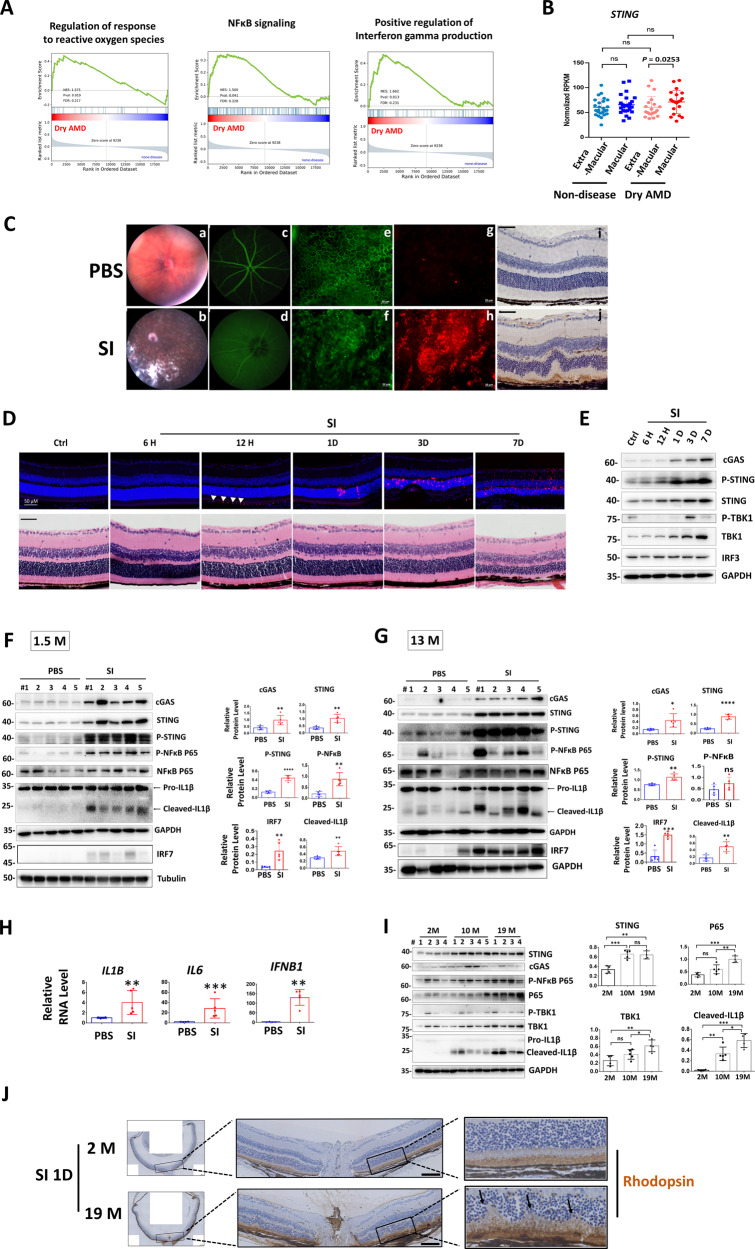
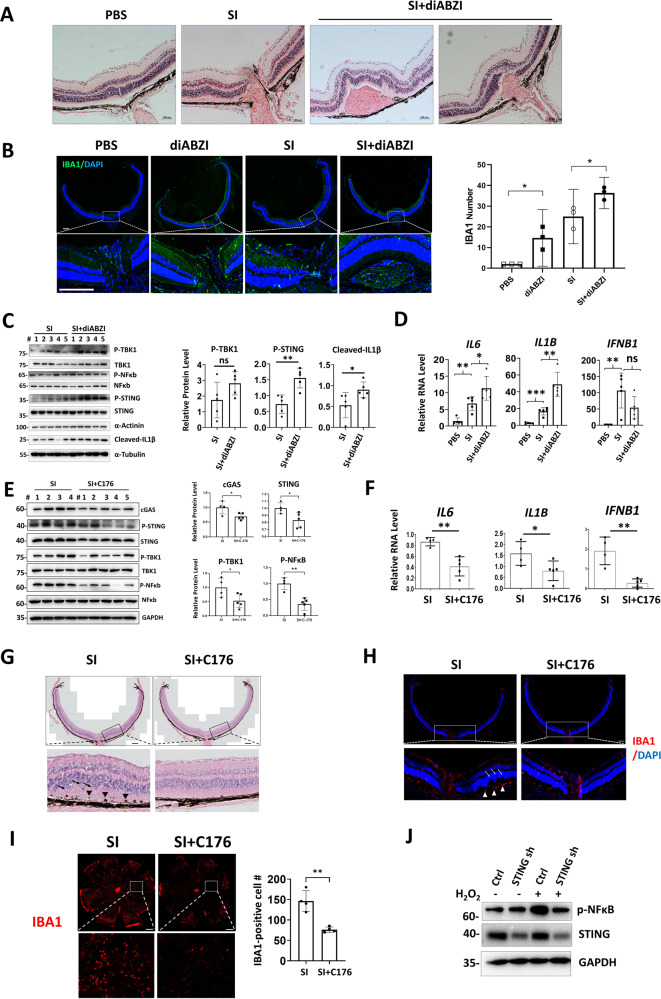
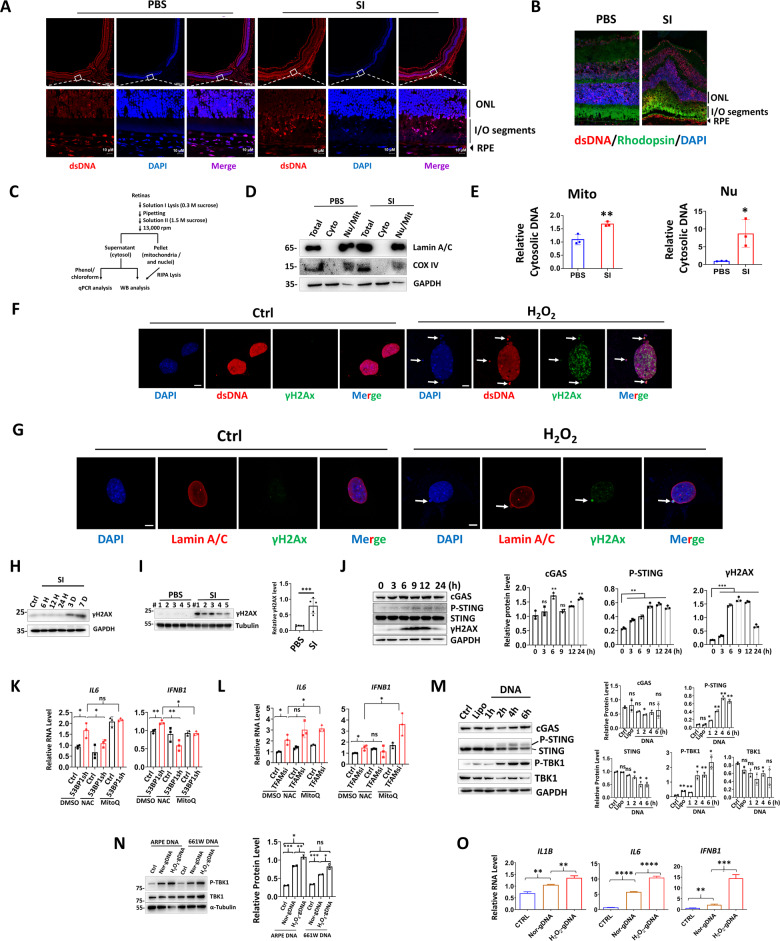
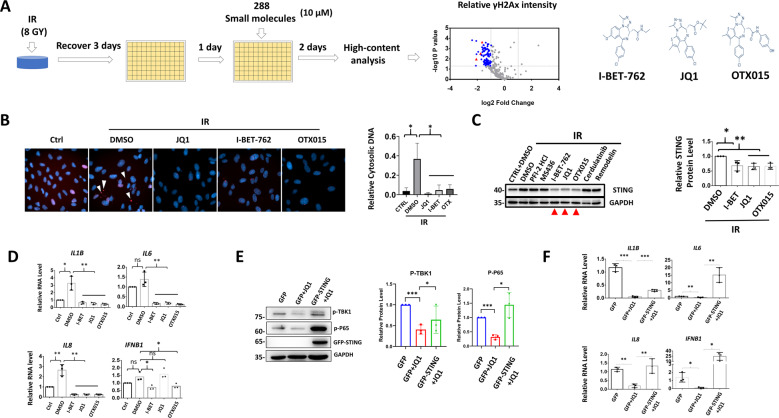
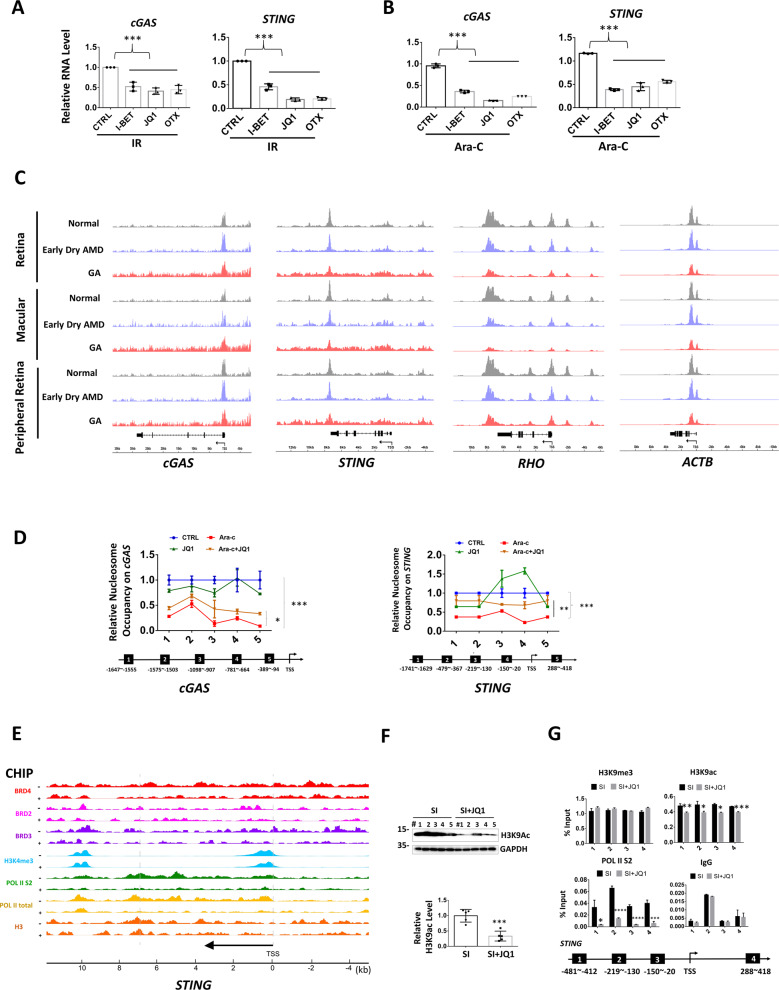
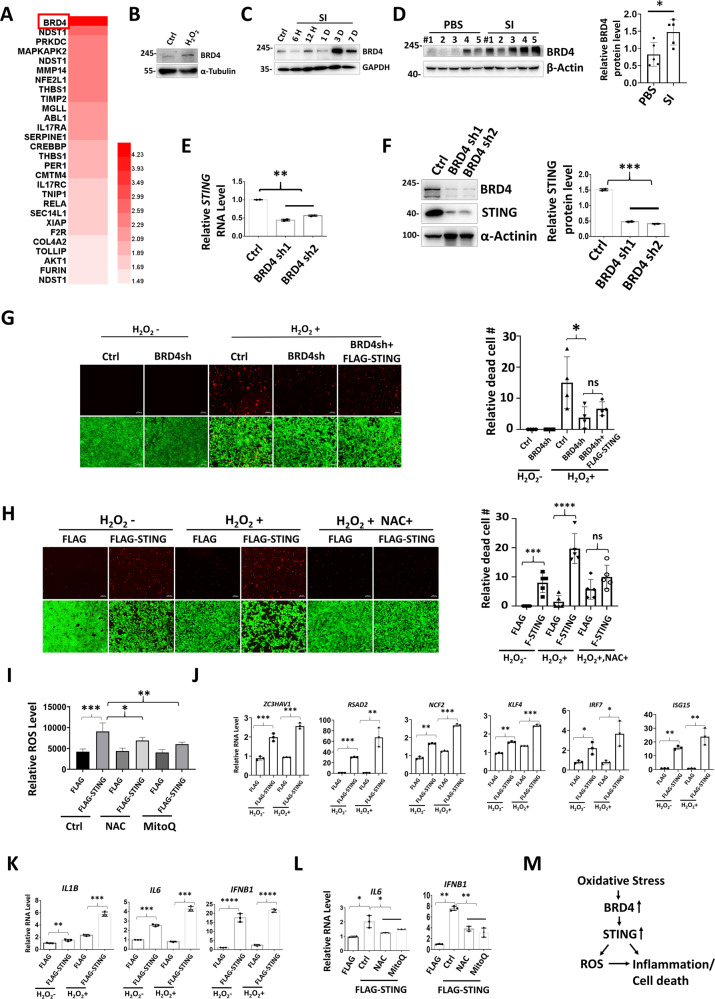
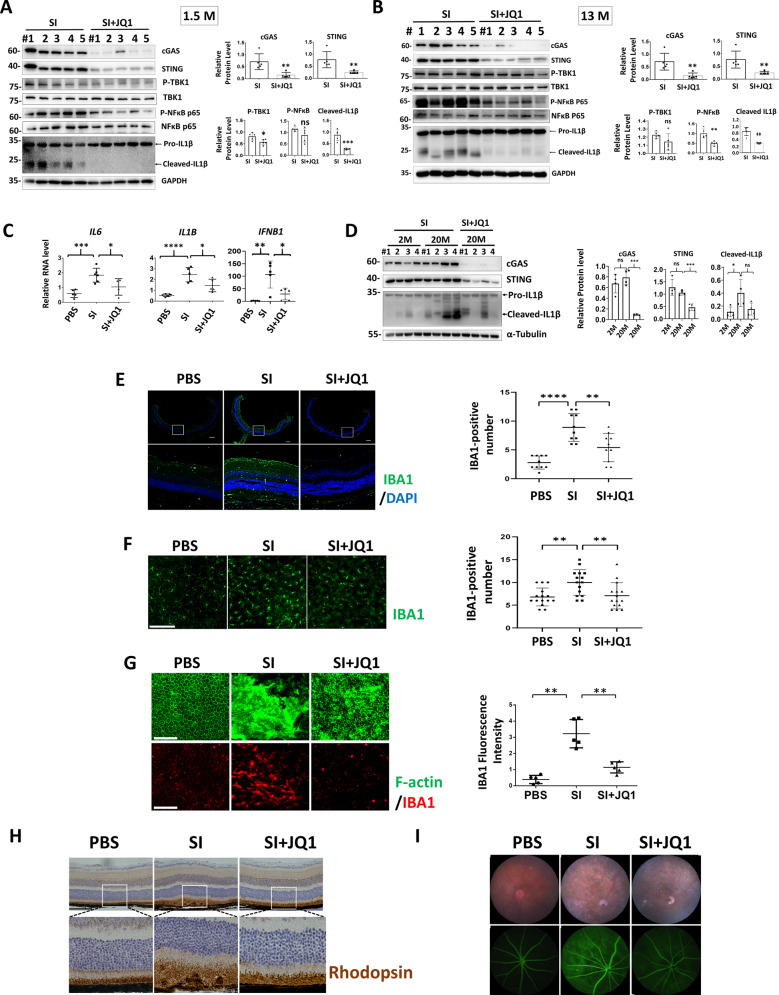
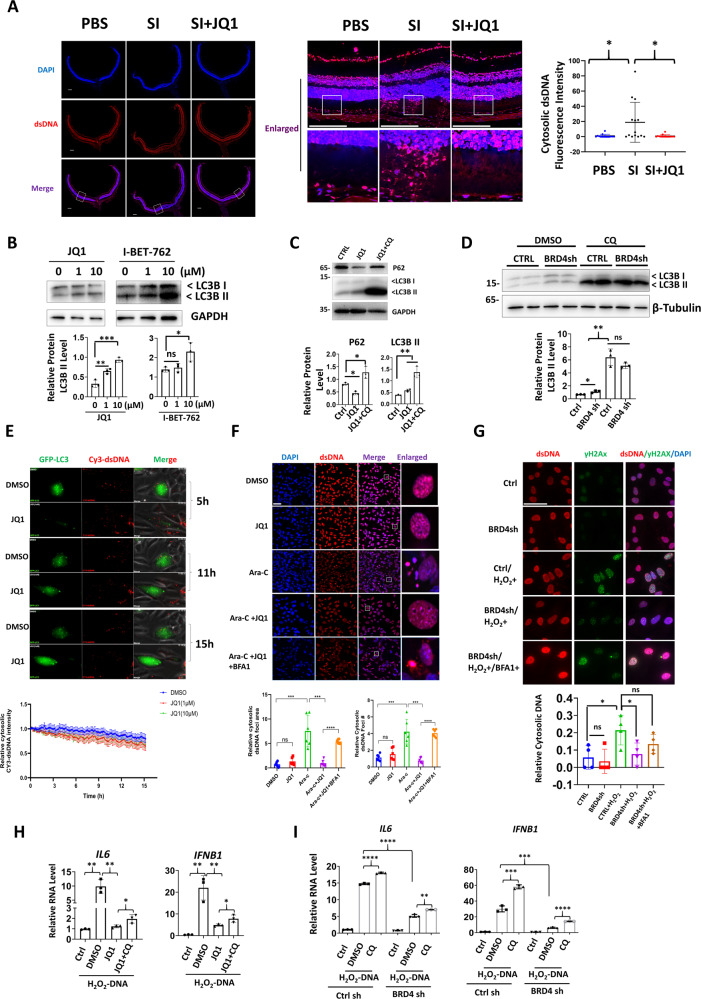
Verification
Claims the paper makes
The claims and statistics of this paper haven’t been checked yet.
Run the check — free, no account needed. It reads the open-access text and checks the sources it cites.
Claims other papers make about this one
Each is checked against this paper’s own text: does it say what the citing paper says it does?
In the citing paper
“The study demonstrated that cGAS-STING would be activated when cytosolic DNA is found in the retina, resulting in DNA clearance and local inflammation, which is likely to be a barrier for naked DNA delivery [71].”
From Immune responses to gene editing by viral and non-viral delivery vectors used in retinal gene therapy (2022) · cites this paper as [71]
In the citing paper
“DNA leakage was found in the retina after OS, which promoted the expression of cGAS and STING, which further promoted retinal inflammation, as an infiltration of microglial cells were observed.”
From Immune responses to gene editing by viral and non-viral delivery vectors used in retinal gene therapy (2022) · cites this paper as [71]
Self-check
Percentages, sums and reported differences re-computed from the paper’s own numbers.
The self-check needs the paper’s full text.
Citations
Cites
The Sequence Alignment/Map format and SAMtools
Li, H., Handsaker, B., Wysoker, A., Fennell, T., Ruan, J., Homer, N., Marth, G., Abecasis, G., Durbin, R., & 1000 Genome Project Data Processing Subgroup (2009) · Bioinformatics · doi:10.1093/bioinformatics/btp352 · Cited by 62,041
deepTools2: a next generation web server for deep-sequencing data analysis
Ramírez, F., Ryan, D. P., Grüning, B., Bhardwaj, V., Kilpert, F., Richter, A. S., Heyne, S., Dündar, F., & Manke, T. (2016) · Nucleic Acids Research · doi:10.1093/nar/gkw257 · Cited by 8,096
Cillà, S. D., Farruggio, S., Vujosevic, S., Raina, G., Filippini, D. A., Gatti, V., Clemente, N., Mary, D., Vezzola, D., Casini, G., et al. (2017) · Cellular Physiology and Biochemistry · doi:10.1159/000479441 · Cited by 5,154
Cyclic GMP-AMP Synthase Is a Cytosolic DNA Sensor That Activates the Type I Interferon Pathway
Sun, L., Wu, J., Du, F., Chen, X., & Chen, Z. J. (2013) · Science · doi:10.1126/science.1232458 · Cited by 4,996
STING is an endoplasmic reticulum adaptor that facilitates innate immune signalling
Ishikawa, H., & Barber, G. N. (2008) · Nature · doi:10.1038/nature07317 · Cited by 3,576
Cyclic GMP-AMP Is an Endogenous Second Messenger in Innate Immune Signaling by Cytosolic DNA
Wu, J., Sun, L., Chen, X., Du, F., Shi, H., Chen, C., & Chen, Z. J. (2012) · Science · doi:10.1126/science.1229963 · Cited by 2,628
Sambamba: fast processing of NGS alignment formats
Tarasov, A., Vilella, A. J., Cuppen, E. P. J. G., Nijman, I. J., & Prins, P. (2015) · Bioinformatics · doi:10.1093/bioinformatics/btv098 · Cited by 2,426
Regulation and function of the cGAS–STING pathway of cytosolic DNA sensing
Chen, Q., Sun, L., & Chen, Z. J. (2016) · Nature Immunology · doi:10.1038/ni.3558 · Cited by 2,333
The Role of Oxidative Stress in the Pathogenesis of Age-Related Macular Degeneration
Beatty, S., Koh, H.-H., Phil, M., Henson, D., & Boulton, M. (2000) · Survey of Ophthalmology · doi:10.1016/s0039-6257(00)00140-5 · Cited by 2,051
Suppression of inflammation by a synthetic histone mimic
Nicodeme, E., Jeffrey, K. L., Schaefer, U., Beinke, S., Dewell, S., Chung, C.-W., Chandwani, R., Marazzi, I., Wilson, P., Coste, H., et al. (2010) · Nature · doi:10.1038/nature09589 · Cited by 1,563
DNA sensing by the cGAS–STING pathway in health and disease
Motwani, M., Pesiridis, S., & Fitzgerald, K. A. (2019) · Nature Reviews Genetics · doi:10.1038/s41576-019-0151-1 · Cited by 1,467
Jang, M. K., Mochizuki, K., Zhou, M., Jeong, H., Brady, J. N., & Ozato, K. (2005) · Molecular Cell · doi:10.1016/j.molcel.2005.06.027 · Cited by 1,301
Targeting STING with covalent small-molecule inhibitors
Haag, S. M., Gulen, M. F., Reymond, L., Gibelin, A., Abrami, L., Decout, A., Heymann, M., van der Goot, F. G., Turcatti, G., Behrendt, R., et al. (2018) · Nature · doi:10.1038/s41586-018-0287-8 · Cited by 1,178
Mechanisms of Age-Related Macular Degeneration
Ambati, J., & Fowler, B. J. (2012) · Neuron · doi:10.1016/j.neuron.2012.06.018 · Cited by 1,062
The cGAS-cGAMP-STING Pathway of Cytosolic DNA Sensing and Signaling
Cai, X., Chiu, Y., & Chen, Z. J. (2014) · Molecular Cell · doi:10.1016/j.molcel.2014.03.040 · Cited by 1,017
Design of amidobenzimidazole STING receptor agonists with systemic activity
Ramanjulu, J. M., Pesiridis, G. S., Yang, J., Concha, N., Singhaus, R., Zhang, S.-Y., Tran, J.-L., Moore, P., Lehmann, S., Eberl, H. C., et al. (2018) · Nature · doi:10.1038/s41586-018-0705-y · Cited by 912
The impact of oxidative stress and inflammation on RPE degeneration in non-neovascular AMD
Datta, S., Cano, M., Ebrahimi, K. B., Wang, L., & Handa, J. T. (2017) · Progress in Retinal and Eye Research · doi:10.1016/j.preteyeres.2017.03.002 · Cited by 843
Mitochondrial Damage Causes Inflammation via cGAS-STING Signaling in Acute Kidney Injury
Maekawa, H., Inoue, T., Ouchi, H., Jao, T.-M., Inoue, R., Nishi, H., Fujii, R., Ishidate, F., Tanaka, T., Tanaka, Y., et al. (2019) · Cell Reports · doi:10.1016/j.celrep.2019.09.050 · Cited by 586
Gehrke, N., Mertens, C., Zillinger, T., Wenzel, J., Bald, T., Zahn, S., Tüting, T., Hartmann, G., & Barchet, W. (2013) · Immunity · doi:10.1016/j.immuni.2013.08.004 · Cited by 485
Huang, L. S., Hong, Z., Wu, W., Xiong, S., Zhong, M., Gao, X., Rehman, J., & Malik, A. B. (2020) · Immunity · doi:10.1016/j.immuni.2020.02.002 · Cited by 435
Belkina, A. C., Nikolajczyk, B. S., & Denis, G. V. (2013) · The Journal of Immunology · doi:10.4049/jimmunol.1202838 · Cited by 426
BRD4 Connects Enhancer Remodeling to Senescence Immune Surveillance
Tasdemir, N., Banito, A., Roe, J.-S., Alonso-Curbelo, D., Camiolo, M., Tschaharganeh, D. F., Huang, C.-H., Aksoy, O., Bolden, J. E., Chen, C.-C., et al. (2016) · Cancer Discovery · doi:10.1158/2159-8290.cd-16-0217 · Cited by 415 · cited 1×
“BRD4, a member of Bromodomain and extraterminal domain (BET) proteins, plays pivotal roles in inflammation through assembly of acetylated histone and acetylation-dependent chromatin complexes on inflammatory genes [20, 21].”
BackgroundHolz, F. G., Strauss, E. C., Schmitz-Valckenberg, S., & Campagne, M. V. L. (2014) · Ophthalmology · doi:10.1016/j.ophtha.2013.11.023 · Cited by 404
BRD4 is a histone acetyltransferase that evicts nucleosomes from chromatin
Devaiah, B. N., Case‐Borden, C., Gégonne, A., Hsu, C. H., Chen, Q., Meerzaman, D. M., Dey, A., Ozato, K., & Singer, D. S. (2016) · Nature Structural & Molecular Biology · doi:10.1038/nsmb.3228 · Cited by 381
Vizioli, M. G., Liu, T., Miller, K. N., Robertson, N. A., Gilroy, K., Lagnado, A. B., Perez-Garcia, A., Kiourtis, C., Dasgupta, N., Lei, X., et al. (2020) · Genes & Development · doi:10.1101/gad.331272.119 · Cited by 359
RPE necroptosis in response to oxidative stress and in AMD
Hanus, J., Anderson, C. A., & Wang, S. (2015) · Ageing Research Reviews · doi:10.1016/j.arr.2015.09.002 · Cited by 293
cGAS drives noncanonical-inflammasome activation in age-related macular degeneration
Kerur, N., Fukuda, S., Banerjee, D., Kim, Y., Fu, D., Apicella, I., Varshney, A., Yasuma, R., Fowler, B. J., Baghdasaryan, E., et al. (2017) · Nature Medicine · doi:10.1038/nm.4450 · Cited by 290
Inhibition of double‐strand DNA‐sensing cGAS ameliorates brain injury after ischemic stroke
Li, Q., Cao, Y., Dang, C., Han, B., Han, R., Ma, H., Hao, J., & Wang, L. (2020) · EMBO Molecular Medicine · doi:10.15252/emmm.201911002 · Cited by 284
Newman, A. M., Gallo, N., Hancox, L. S., Miller, N. J., Radeke, C. M., Maloney, M. A., Cooper, J. B., Hageman, G. S., Anderson, D. H., Johnson, L. V., et al. (2012) · Genome Medicine · doi:10.1186/gm315 · Cited by 276
Boyer, D. S., Schmidt-Erfurth, U. M., Campagne, M. V. L., Henry, E. C., & Brittain, C. J. (2016) · Retina · doi:10.1097/iae.0000000000001392 · Cited by 272
ATM inhibition enhances cancer immunotherapy by promoting mtDNA leakage and cGAS/STING activation
Hu, M., Zhou, M., Bao, X., Pan, D., Jiao, M., Liu, X., Li, F., & Li, C. (2020) · Journal of Clinical Investigation · doi:10.1172/jci139333 · Cited by 260
Bromodomain Protein BRD4 Is a Transcriptional Repressor of Autophagy and Lysosomal Function
Sakamaki, J.-I., Wilkinson, S., Hahn, M., Tasdemir, N., O’Prey, J., Clark, W., Hedley, A., Nixon, C., Long, J. S., New, M., et al. (2017) · Molecular Cell · doi:10.1016/j.molcel.2017.04.027 · Cited by 249
STING enhances cell death through regulation of reactive oxygen species and DNA damage
Hayman, T. J., Baro, M., MacNeil, T., Phoomak, C., Aung, T. N., Cui, W., Leach, K., Iyer, R. P., Challa, S., Sandoval-Schaefer, T., et al. (2021) · Nature Communications · doi:10.1038/s41467-021-22572-8 · Cited by 219
de Guimarães, T. A. C., Varela, M. D., Georgiou, M., & Michaelides, M. (2021) · British Journal of Ophthalmology · doi:10.1136/bjophthalmol-2020-318452 · Cited by 197
Wang, J., Zibetti, C., Shang, P., Sripathi, S. R., Zhang, P., Cano, M., Hoang, T., Xia, S., Ji, H., Merbs, S. L., et al. (2018) · Nature Communications · doi:10.1038/s41467-018-03856-y · Cited by 185
Genome-Derived Cytosolic DNA Mediates Type I Interferon-Dependent Rejection of B Cell Lymphoma Cells
Shen, Y. J., Bert, N. L., Chitre, A., Koo, C. X., Nga, X. H., Ho, S. S. W., Khatoo, M., Tan, N. Y., Ishii, K. J., & Gasser, S. (2015) · Cell Reports · doi:10.1016/j.celrep.2015.03.041 · Cited by 184
Age-related macular degeneration: genome-wide association studies to translation
Black, J. R., & Clark, S. J. (2015) · Genetics in Medicine · doi:10.1038/gim.2015.70 · Cited by 139
Enzmann, V., Row, B. W., Yamauchi, Y., Kheirandish, L., Gozal, D., Kaplan, H. J., & McCall, M. A. (2005) · Experimental Eye Research · doi:10.1016/j.exer.2005.08.002 · Cited by 134
Modulation of three key innate immune pathways for the most common retinal degenerative diseases
Akhtar‐Schäfer, I., Wang, L., Krohne, T. U., Xu, H., & Langmann, T. (2018) · EMBO Molecular Medicine · doi:10.15252/emmm.201708259 · Cited by 129
Ma, W., Zhang, Y., Gao, C., Fariss, R. N., Tam, J., & Wong, W. T. (2017) · Scientific Reports · doi:10.1038/s41598-017-08702-7 · Cited by 102
Moriguchi, M., Nakamura, S., Inoue, Y., Nishinaka, A., Nakamura, M., Shimazawa, M., & Hara, H. (2018) · Investigative Ophthalmology & Visual Science · doi:10.1167/iovs.17-23532 · Cited by 83
EXPERIMENTAL PIGMENTARY DEGENERATION OF THE RETINA BY SODIUM IODATE
Sorsby, A. (1941) · British Journal of Ophthalmology · doi:10.1136/bjo.25.2.58 · Cited by 67
Kawashima, A., Tanigawa, K., Akama, T., Wu, H., Sue, M., Yoshihara, A., Ishido, Y., Kobiyama, K., Takeshita, F., Ishii, K. J., et al. (2011) · Endocrinology · doi:10.1210/en.2010-1132 · Cited by 55
Nuclear PTEN tumor-suppressor functions through maintaining heterochromatin structure
Gong, L., Govan, J. M., Evans, E. B., Dai, H., Wang, E., Lee, S.-W., Lin, H.-K., Lazar, A., Mills, G., & Lin, S.-Y. (2015) · Cell Cycle · doi:10.1080/15384101.2015.1044174 · Cited by 49
Self-citationCotney, J. L., & Noonan, J. P. (2015) · Cold Spring Harbor Protocols · doi:10.1101/pdb.err087585 · Cited by 47
Cotney, J. L., & Noonan, J. P. (2015) · Cold Spring Harbor Protocols · doi:10.1101/pdb.prot084848 · Cited by 42
Wang, B., Wang, L., Gu, S., Yu, Y., Huang, H., Mo, K., Xu, H., Zeng, F., Xiao, Y., Peng, L., et al. (2020) · Signal Transduction and Targeted Therapy · doi:10.1038/s41392-020-0122-1 · Cited by 36
Self-citationGong, L., Liu, F., Xiong, Z., Qi, R., Luo, Z., Gong, X., Nie, Q., Sun, Q., Liu, Y.-F., Qing, W., et al. (2018) · Proceedings of the National Academy of Sciences · doi:10.1073/pnas.1715237115 · Cited by 32
Self-citationSun, Q., Gong, L., Qi, R., Qing, W., Zou, M., Ke, Q., Zhang, L., Tang, X., Nie, Q., Yang, Y., et al. (2019) · Free Radical Biology and Medicine · doi:10.1016/j.freeradbiomed.2019.12.029 · Cited by 27
Self-citationZou, M., Gong, L., Ke, Q., Qi, R., Zhu, X., Liu, W., Sun, Q., Tang, X., Luo, Z., Gong, X., et al. (2021) · Free Radical Biology and Medicine · doi:10.1016/j.freeradbiomed.2021.11.040 · Cited by 25
Self-citation
Cited by
Sorted by citations
Mitophagy and cGAS–STING crosstalk in neuroinflammation
Zhou, X., Wang, J., Yu, L., Qiao, G., Qin, D., Yuen-Kwan Law, B., Ren, F., Wu, J., & Wu, A. (2024) · Acta Pharmaceutica Sinica B · doi:10.1016/j.apsb.2024.05.012 · Cited by 131
An, C., Sun, F., Liu, C., Huang, S., Xu, T., Zhang, C., & Ge, S. (2023) · International Immunopharmacology · doi:10.1016/j.intimp.2023.110795 · Cited by 99
Li, Y., Zhu, L., Cai, M.-X., Wang, Z., Zhuang, M., Tan, C., Xie, T., Yao, Y., & Wei, T. (2023) · Cell Death and Disease · doi:10.1038/s41419-023-06111-5 · Cited by 88
Wang, L., Yu, X., Zhang, D., Wen, Y., Zhang, L., Xia, Y., Chen, J., Xie, C., Zhu, H., Tong, J., et al. (2023) · Journal of Photochemistry and Photobiology B Biology · doi:10.1016/j.jphotobiol.2023.112654 · Cited by 82
Zhao, L., Rao, X., Zheng, R., Huang, C., Kong, R., Cheng, H. B., Li, B., & Li, S. (2023) · Nano Letters · doi:10.1021/acs.nanolett.3c01812 · Cited by 67
Metadata
- Authors
- Zou, M., Ke, Q., Nie, Q., Qi, R., Zhu, X., Liu, W., Hu, X., Sun, Q., Fu, J.-L., Tang, X., Liu, Y., Li, D. W.-C., & Gong, L.
- Affiliations
- Sun Yat-sen University (CN)
- Corresponding author
- Li, David Wan-Cheng
- Gong, Lili
- ORCID
- Venue
- Cell Death & Differentiation
- Published
- 2022-03-28
- Volume
- 29
- Issue
- 9
- Pages
- 1816-1833
- ISSN
- 1350-9047 (ISSN-L)
- 1476-5403
- PMC
- PMC9433402
- OpenAlex
- W4220995455
- Cited by
- 138
- References
- 50
- Citations by year
- 2026: 28 · 2025: 37 · 2024: 45 · 2023: 20 · 2022: 8
- FWCI
- 9.30
- Type
- journal article
- Language
- en
- Open access
- hybrid
- doi.org
- Locations
- Cell Death and Differentiation (publishedVersion, cc-by)
- PubMed Central (publishedVersion, cc-by)
- PubMed (publishedVersion)
- Funders
- National Natural Science Foundation of China (81770910, 81970787, 82070969, 82000876, 81970784, 81970910)
- Natural Science Foundation of Guangdong Province (2019B1515120014)
- Sun Yat-sen University (3030901009090)
- Topics
- Health Sciences › Medicine › Ophthalmology › Retinal Development and Disorders
- Health Sciences › Medicine › Ophthalmology › Retinal Diseases and Treatments
- Life Sciences › Immunology and Microbiology › Immunology › interferon and immune responses
- Keywords
- cGAS-STING pathway, JQ1, BRD4 inhibition, dry age-related macular degeneration, retinal pigment epithelium degeneration, photoreceptor degeneration, oxidative stress, cytosolic DNA sensing, chromatin accessibility, autophagy, innate immunity
- MeSH terms
- STING Protein, Cyclic Guanosine Monophosphate-Adenosine Monophosphate Synthase, Animals, Inflammation, Membrane Proteins, Nuclear Proteins, Nucleotidyltransferases, Retina, Transcription Factors, Oxidative Stress, Mice, Retinal Pigment Epithelium
About these checks
Registry, retraction, Cites and statistics results are computed, not judged, with one exception: a printed reference that no index lists is read once by a model before it counts as a citation error. Claims are extracted by a model and kept only when their quote appears verbatim in the text; each cited source is then checked, with a model’s help, for whether it says what the claim relies on. Those verdicts can be wrong — read the claim’s quote and the cited source before relying on one.
Statistics and arithmetic are recomputed, not judged.
Confidence bands are shown only for fields calibrated on our annotated test set. None is calibrated yet, so no band is shown.
What counts as a claim ›How we measure confidence ›How we check this ›
Are you an author, or do you see a problem with this page? Request a review
