

The DOI matches its Crossref record; 3 of the 3 references it cites were found in a registry or an index.
TRPV4-induced inflammatory response is involved in neuronal death in pilocarpine model of temporal lobe epilepsy in mice
Open accessAbstract
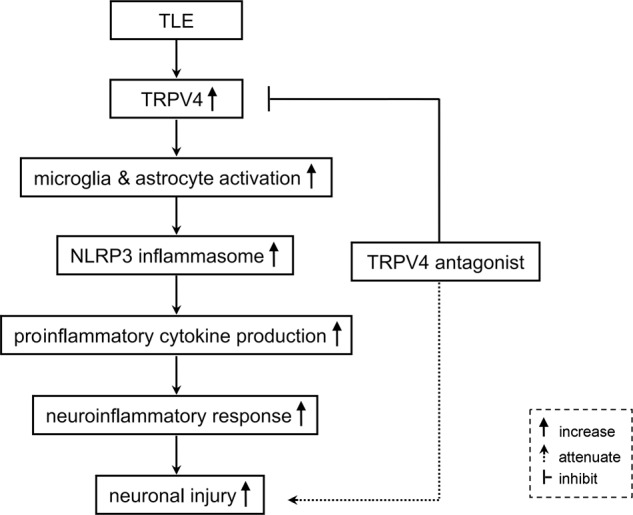
Activation of transient receptor potential vanilloid 4 (TRPV4) induces neuronal injury. TRPV4 activation enhances inflammatory response and promotes the proinflammatory cytokine release in various types of tissue and cells. Hyperneuroinflammation contributes to neuronal damage in epilepsy. Herein, we examined the contribution of neuroinflammation to TRPV4-induced neurotoxicity and its involvement in the inflammation and neuronal damage in pilocarpine model of temporal lobe epilepsy in mice. Icv. injection of TRPV4 agonist GSK1016790A (GSK1016790A-injected mice) increased ionized calcium binding adapter molecule-1 (Iba-1) and glial fibrillary acidic protein (GFAP) protein levels and Iba-1-positive (Iba-1+) and GFAP-positive (GFAP+) cells in hippocampi, which indicated TRPV4-induced microglial cell and astrocyte activation. The protein levels of nucleotide-binding oligomerization domain-like receptor pyrin domain containing 3 (NLRP3) inflammasome components NLRP3, apoptosis-related spotted protein (ASC) and cysteinyl aspartate-specific protease-1 (caspase-1) were increased in GSK1016790A-injected mice, which indicated NLRP3 inflammasome activation. GSK1016790A also increased proinflammatory cytokine IL-1β, TNF-α and IL-6 protein levels, which were blocked by caspase-1 inhibitor Ac-YVAD-cmk. GSK1016790A-induced neuronal death was attenuated by Ac-YVAD-cmk. Icv. injection of TRPV4-specific antagonist HC-067047 markedly increased the number of surviving cells 3 d post status epilepticus in pilocarpine model of temporal lobe epilepsy in mice (pilocarpine-induced status epilepticus, PISE). HC-067047 also markedly blocked the increase in Iba-1 and GFAP protein levels, as well as Iba-1+ and GFAP+ cells 3 d post-PISE. Finally, the increased protein levels of NLRP3, ASC and caspase-1 as well as IL-1β, TNF-α and IL-6 were markedly blocked by HC-067047. We conclude that TRPV4-induced neuronal death is mediated at least partially by enhancing the neuroinflammatory response, and this action is involved in neuronal injury following status epilepticus.
Overview
The claims and statistics of this paper haven’t been checked yet.
Run the check — free, no account needed. It reads the open-access text and checks the sources it cites.
Integrity signals
Registry
Cites
Statistics
Figures
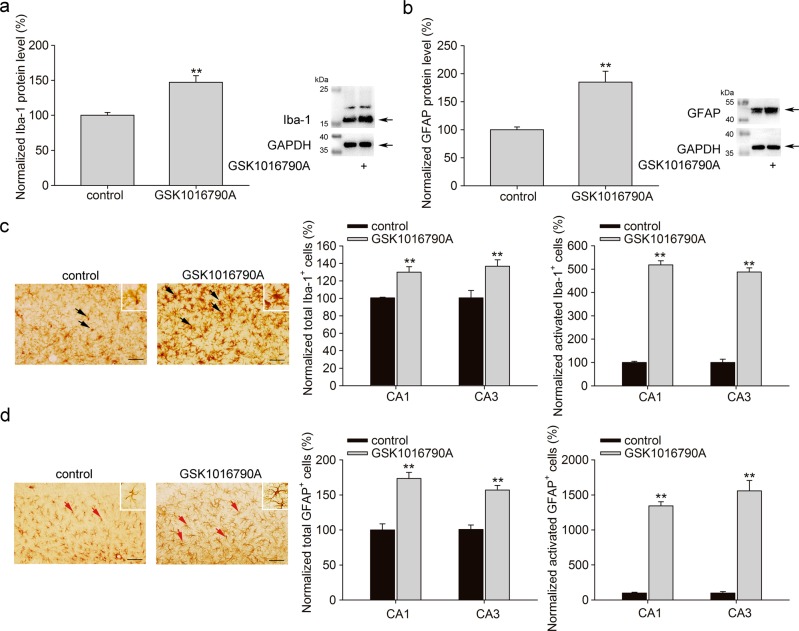
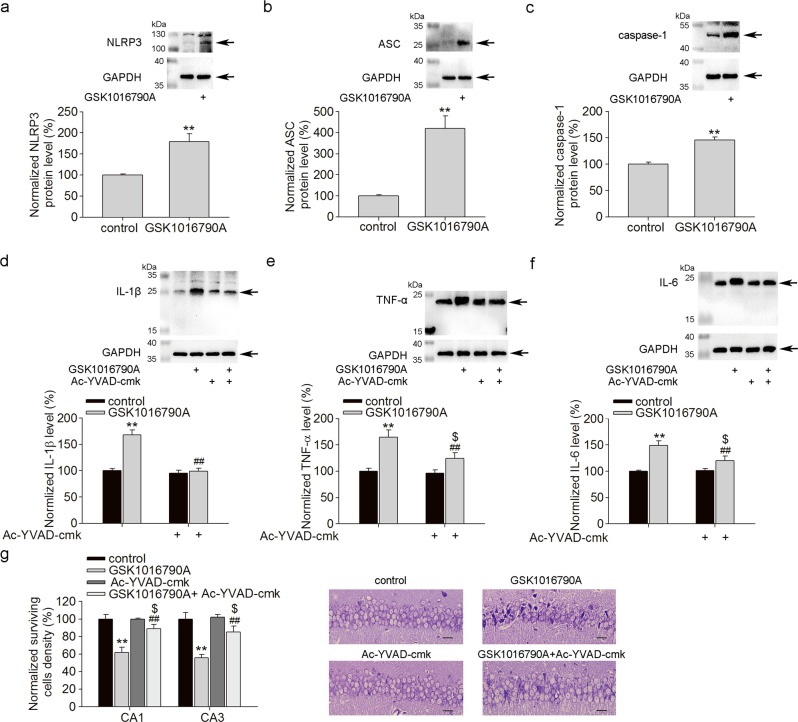
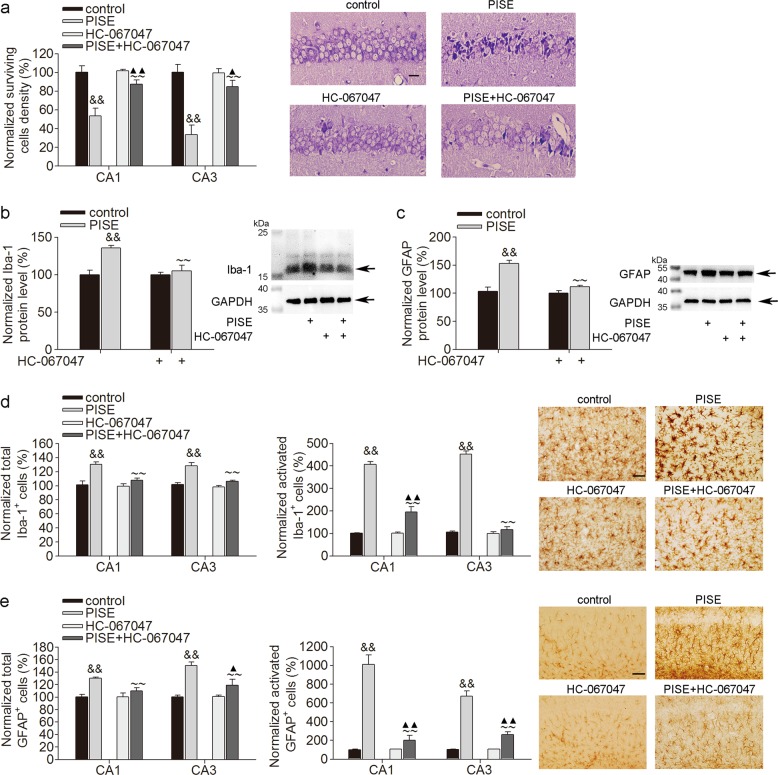
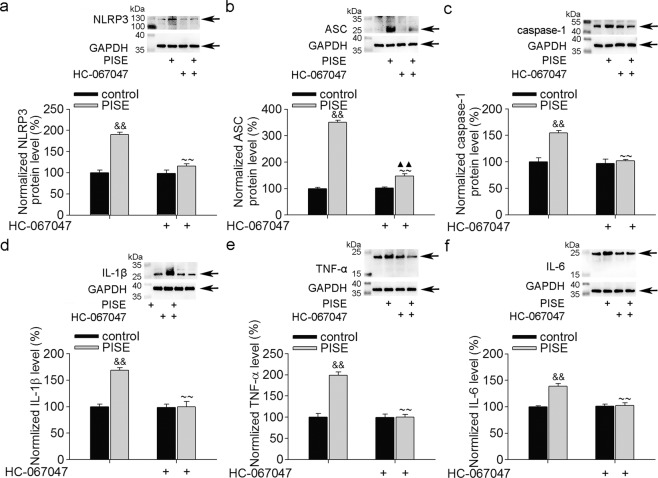
Verification
Claims the paper makes
The claims and statistics of this paper haven’t been checked yet.
Run the check — free, no account needed. It reads the open-access text and checks the sources it cites.
Claims other papers make about this one
Each is checked against this paper’s own text: does it say what the citing paper says it does?
The source backs part of the claim, not all of it — or backs it for a different population, condition or comparison.
In the citing paper
“Transient receptor potential vanilloid 4 (TRPV4) is an ion channel localized in the primary cilium, and intraperitoneal (i.p.) administration of the TRPV4 activator GSK1016790A enhanced the activation of microglia and astrocytes in the hippocampal region in mice (Wang et al. 2019).”
From Astrocyte-specific inhibition of the primary cilium suppresses C3 expression in reactive astrocyte (2024) · cites this paper as Wang et al. 2019
Experimental — accuracy not yet measuredThe source backs part of the claim, not all of it — or backs it for a different population, condition or comparison.
In the citing paper
“Transient receptor potential vanilloid 4 (TRPV4) is an ion channel localized in the primary cilium, and intraperitoneal (i.p.) administration of the TRPV4 activator GSK1016790A enhanced the activation of microglia and astrocytes in the hippocampal region in mice (Wang et al. 2019).”
From Astrocyte-specific inhibition of the primary cilium suppresses C3 expression in reactive astrocyte (2024) · cites this paper as Wang et al. 2019
Experimental — accuracy not yet measured
Self-check
Percentages, sums and reported differences re-computed from the paper’s own numbers.
The self-check needs the paper’s full text.
Citations
Cites
Inflammasome signalling in brain function and neurodegenerative disease
Heneka, M. T., McManus, R. M., & Latz, E. (2018) · Nature Reviews Neuroscience · doi:10.1038/s41583-018-0055-7 · Cited by 836
Shibley, H., & Smith, B. N. (2002) · Epilepsy Research · doi:10.1016/s0920-1211(02)00012-8 · Cited by 201
Pairet, N., Mang, S., Fois, G., Keck, M., Kühnbach, M., Gindele, J., Frick, M., Dietl, P., & Lamb, D. J. (2018) · PLOS ONE · doi:10.1371/journal.pone.0196055 · Cited by 76
Research works printed but not linked: 40
- Garcia-Elias, A. et al. The TRPV4 channel. Handb. Exp. Pharmacol. 222, 293–319 (2014). · DOI
- Scheraga, R. G., Southern, B. D., Grove, L. M. & Olman, M. A. The role of transient receptor potential vanilloid 4 in pulmonary inflammatory diseases. Front. Immunol. 8, 503 (2017). · DOI
- Jie, P. et al. Activation of transient receptor potential vanilloid 4 is involved in neuronal injury in middle cerebral artery occlusion in mice. Mol. Neurobiol. 53, 8–17 (2016). · DOI
- Bai, J. Z. & Lipski, J. Involvement of TRPV4 channels in Aβ(40)-induced hippocampal cell death and astrocytic Ca(2+) signalling. Neurotoxicology 41, 64–72 (2014). · DOI
- Yin, J. et al. Role of transient receptor potential vanilloid 4 in neutrophil activation and acute lung injury. Am. J. Respir. Cell Mol. Biol. 54, 370–383 (2016). · DOI
- Walter, B. A. et al. Reduced tissue osmolarity increases TRPV4 expression and pro-inflammatory cytokines in intervertebral disc cells. Eur. Cell. Mater. 32, 123–136 (2016). · DOI
- White, J. P. et al. TRPV4: molecular conductor of a diverse orchestra. Physiol. Rev. 96, 911–973 (2016). · DOI · Paper page
- Shi, M. et al. Glial cell-expressed mechanosensitive channel TRPV4 mediates infrasound-induced neuronal impairment. Acta Neuropathol. 126, 725–739 (2013). · DOI
- Farrell, J. S., Wolff, M. D. & Teskey, G. C. Neurodegeneration and Pathology in Epilepsy: clinical and basic perspectives. Adv. Neurobiol. 15, 317–334 (2017). · DOI
- Pitkänen, A. et al. Progression of neuronal damage after status epilepticus and during spontaneous seizures in a rat model of temporal lobe epilepsy. Prog. Brain. Res. 135, 67–83 (2002). · DOI
- Vezzani, A., French, J., Bartfai, T. & Baram, T. Z. The role of inflammation in epilepsy. Nat. Rev. Neurol. 7, 31–40 (2011). · DOI · Paper page
- Aronica, E. & Crino, P. B. Inflammation in epilepsy: clinical observations. Epilepsia 52, 26–32 (2011). · DOI · Paper page
- Hunt, R. F., Hortopan, G. A., Gillespie, A. & Baraban, S. C. A novel zebrafish model of hyperthermia-induced seizures reveals a role for TRPV4 channels and NMDA-type glutamate receptors. Exp. Neurol. 237, 199–206 (2012). · DOI
- Wu, B. et al. Ac-YVAD-CMK decreases blood-brain barrier degradation by inhibiting caspase-1 activation of interleukin-1β in intracerebral hemorrhage mouse model. Transl. Stroke Res. 1, 57–64 (2010). · DOI
- Shakeel, S., Rehman, M. U., Tabassum, N., Amin, U. & Mir, M. U. R. Effect of naringenin (a naturally occurring flavanone) against pilocarpine-induced status epilepticus and oxidative stress in Mice. Pharmacogn. Mag. 13, S154–S160 (2017). · DOI
- Racine, R. J. Modification of seizure activity by electrical stimulation: II. Motor seizure. Electroenceph. Clin. Neurophysiol. 32, 281–294 (1972). · DOI
- Hong, J. et al. Sigma-1 receptor deficiency reduces MPTP-induced parkinsonism and death of dopaminergic neurons. Cell Death Dis. 6, e1832 (2015). · DOI
- Bauernfeind, F. et al. Inflammasomes: current understanding and open questions. Cell. Mol. Life Sci. 68, 765–783 (2011). · DOI
- Shao, B. Z., Cao, Q. & Liu, C. Targeting NLRP3 inflammasome in the treatment of CNS diseases. Front. Mol. Neurosci. 11, 320 (2018). · DOI
- Xiong, T. et al. The progressive changes of filamentous actin cytoskeleton in the hippocampal neurons after pilocarpine-induced status epilepticus. Epilepsy Res. 118, 55–67 (2015). · DOI
- Meng, X. F. et al. Inhibition of the NLRP3 inflammasome provides neuroprotection in rats following amygdala kindling-induced status epilepticus. J. Neuroinflammation. 11, 212 (2014). · DOI
- Shen, J. et al. TRPV4 channels stimulate Ca-induced Ca release in mouse neurons and trigger endoplasmic reticulum stress after intracerebral hemorrhage. Brain Res. Bull. 146, 143–152 (2019). · DOI
- Zhao, H. et al. TRPV4 blockade preserves the blood-brain barrier by inhibiting stress fiber formation in a rat model of intracerebral hemorrhage. Front. Mol. Neurosci. 11, 97 (2018). · DOI
- Lu, K. T., Huang, T. C., Tsai, Y. H. & Yang, Y. L. Transient receptor potential vanilloid type 4 channels mediate Na-K-Cl-co-transporter-induced brain edema after traumatic brain injury. J. Neurochem. 140, 718–727 (2017). · DOI
- Li, L. et al. Transient receptor potential vanilloid 4 mediates hypotonicity-induced enhancement of synaptic transmission in hippocampal slices. CNS Neurosci. Ther. 19, 854–862 (2013). · DOI
- Li, L. et al. Activation of transient receptor potential vanilloid 4 increases NMDA-activated current in hippocampal pyramidal neurons. Front. Cell. Neurosci. 7, 17 (2013).
- Shibasaki, K., Ikenaka, K., Tamalu, F., Tominaga, M. & Ishizaki, Y. A novel subtype of astrocytes expressing TRPV4 (transient receptor potential vanilloid 4) regulates neuronal excitability via release of gliotransmitters. J. Biol. Chem. 289, 14470–14480 (2014). · DOI · Paper page
- Jie, P. et al. Activation of transient receptor potential vanilloid 4 induces apoptosis in hippocampus through downregulating PI3K/Akt and upregulating p38 MAPK signaling pathways. Cell Death Dis. 6, e1775 (2015). · DOI
- Jie, P. et al. Blockage of transient receptor potential vanilloid 4 inhibits brain edema in middle cerebral artery occlusion mice. Front. Cell. Neurosci. 9, 141 (2015). · DOI
- Chen, C. K. et al. TRPV4 activation contributes functional recovery from ischemic stroke via angiogenesis and neurogenesis. Mol. Neurobiol. 55, 4127–4135 (2018).
- Rajasekhar, P., Poole, D. P. & Veldhuis, N. A. Role of Nonneuronal TRPV4 signaling in inflammatory processes. Adv. Pharmacol. 79, 117–139 (2017). · DOI
- Liu, M. et al. TRPV4 inhibition improved myelination and reduced glia reactivity and inflammation in a cuprizone-induced mouse model of demyelination. Front. Cell. Neurosci. 12, 392 (2018). · DOI
- Konno, M. et al. Stimulation of transient receptor potential vanilloid 4 channel suppresses abnormal activation of microglia induced by lipopolysaccharide. Glia 60, 761–770 (2012). · DOI
- Latz, E. The inflammasomes: mechanisms of activation and function. Curr. Opin. Immunol. 22, 28–33 (2010). · DOI
- Jin, C. & Flavell, R. A. Molecular mechanism of NLRP3 inflammasome activation. J. Clin. Immunol. 30, 628–631 (2010). · DOI · Paper page
- Zhong, Z. et al. TRPM2 links oxidative stress to NLRP3 inflammasome activation. Nat. Commun. 4, 1611 (2013). · DOI
- Yao, H. et al. Inhibition of lanthanide nanocrystal-induced inflammasome activation in macrophages by a surface coating peptide through abrogation of ROS production and TRPM2-mediated Ca(2+) influx. Biomaterials. 108, 143–156 (2016). · DOI
- Hong, Z. et al. Enhanced oxidative stress is responsible for TRPV4-induced neurotoxicity. Front. Cell. Neurosci. 10, 232 (2016).
- Chen, L., Liu, C. & Liu, L. The modulation of voltage-gated potassium channels by anisotonicity in trigeminal ganglion neurons. Neuroscience 154, 482–495 (2008). · DOI
- Chen, X. et al. Increased expression of transient receptor potential vanilloid 4 in cortical lesions of patients with focal cortical dysplasia. CNS Neurosci. Ther. 22, 280–290 (2016). · DOI
Cited by
Sorted by citations
Astrocyte-specific inhibition of the primary cilium suppresses C3 expression in reactive astrocyte
Muhamad, N. A., Masutani, K., Furukawa, S., Yuri, S., Toriyama, M., Matsumoto, C., Itoh, S., Shinagawa, Y., Isotani, A., Toriyama, M., et al. (2024) · Cellular and Molecular Neurobiology · doi:10.1007/s10571-024-01482-5 · Cited by 9
Metadata
- Authors
- Wang, Z., Zhou, L., An, D., Xu, W., Wu, C., Sha, S., Li, Y., Zhu, Y., Chen, A., Du, Y., Chen, L., & Chen, L.
- Affiliations
- Nanjing Medical University (CN)
- Nanjing Children's Hospital (CN)
- Wuhan Union Hospital (CN)
- Corresponding author
- Chen, Lei
- Chen, Ling
- ORCID
- Venue
- Cell Death & Disease
- Published
- 2019-05-16
- Volume
- 10
- Issue
- 6
- Pages
- 386-386
- ISSN
- 2041-4889 (ISSN-L)
- PMC
- PMC6522539
- OpenAlex
- W2946016906
- Cited by
- 149
- References
- 3
- Citations by year
- 2026: 12 · 2025: 15 · 2024: 31 · 2023: 25 · 2022: 29 · 2021: 17 · 2020: 17 · 2019: 2
- FWCI
- 12.87
- Type
- journal article
- Language
- en
- Update notices
- correction (2019-06-21)
- Open access
- gold
- doi.org
- Locations
- Cell Death and Disease (publishedVersion, cc-by)
- PubMed Central (publishedVersion, cc-by)
- PubMed (publishedVersion)
- DOAJ (DOAJ: Directory of Open Access Journals) (submittedVersion)
- Funders
- National Natural Science Foundation of China (81571270, 31571168, 81770328)
- 13th Talents Project of Jiangsu Province (JY-049) to Lei Chen
- Topics
- Health Sciences › Medicine › Clinical Neurology › Epilepsy research and treatment
- Life Sciences › Neuroscience › Neurology › Neuroinflammation and Neurodegeneration Mechanisms
- Life Sciences › Neuroscience › Sensory Systems › Ion Channels and Receptors
- Keywords
- TRPV4, temporal lobe epilepsy, neuroinflammation, neuronal cell death, NLRP3 inflammasome, caspase-1, inflammatory cytokines, microglial activation, astrocyte activation, pilocarpine-induced status epilepticus, GSK1016790A, HC-067047, IL-1β, TNF-α, interleukin-6, neuroprotection, hippocampus, Ac-YVAD-cmk
- MeSH terms
- Animals, Astrocytes, Epilepsy, Temporal Lobe, Inflammation, Leucine, Male, Mice, Inbred ICR, Morpholines, Neurons, Pilocarpine, Pyrroles, Status Epilepticus, Sulfonamides, Microglia, TRPV Cation Channels, Mice, Inflammasomes
About these checks
Registry, retraction, Cites and statistics results are computed, not judged, with one exception: a printed reference that no index lists is read once by a model before it counts as a citation error. Claims are extracted by a model and kept only when their quote appears verbatim in the text; each cited source is then checked, with a model’s help, for whether it says what the claim relies on. Those verdicts can be wrong — read the claim’s quote and the cited source before relying on one.
Statistics and arithmetic are recomputed, not judged.
Confidence bands are shown only for fields calibrated on our annotated test set. None is calibrated yet, so no band is shown.
What counts as a claim ›How we measure confidence ›How we check this ›
Are you an author, or do you see a problem with this page? Request a review
