

Aurora-A/ERK1/2/mTOR axis promotes tumor progression in triple-negative breast cancer and dual-targeting Aurora-A/mTOR shows synthetic lethality
Open accessThe DOI matches its Crossref record; 54 of the 55 references it cites were found in a registry or an index.
Abstract
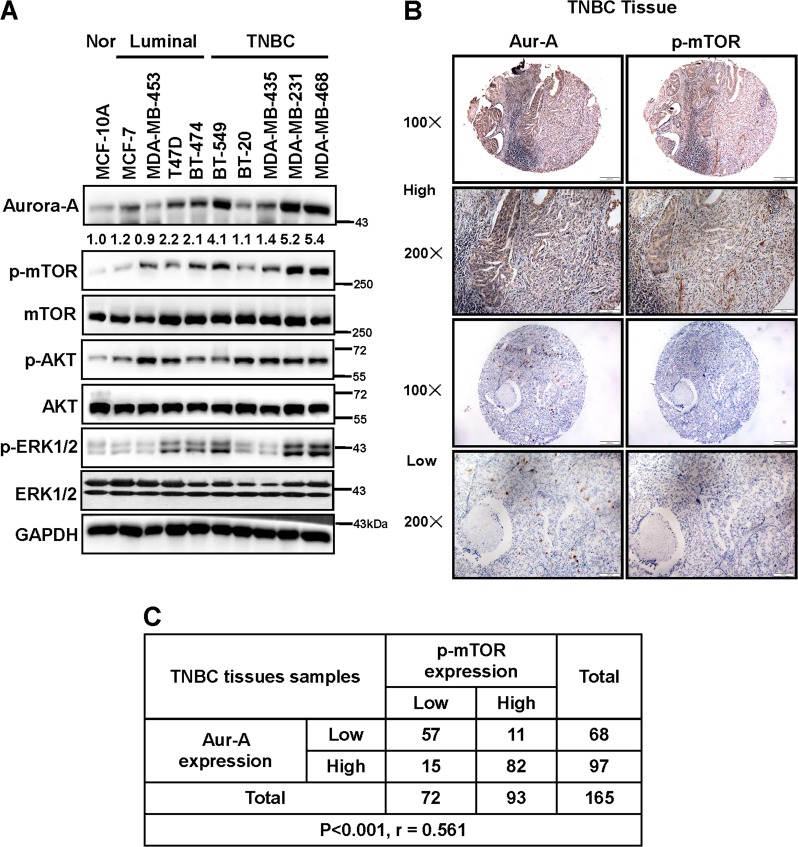
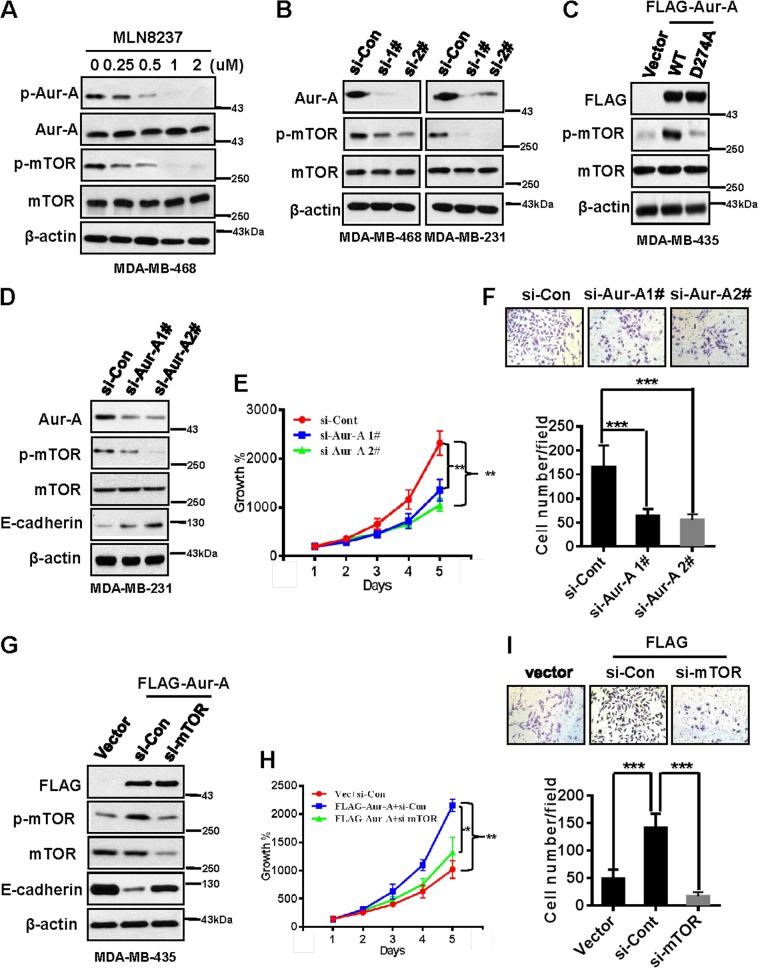
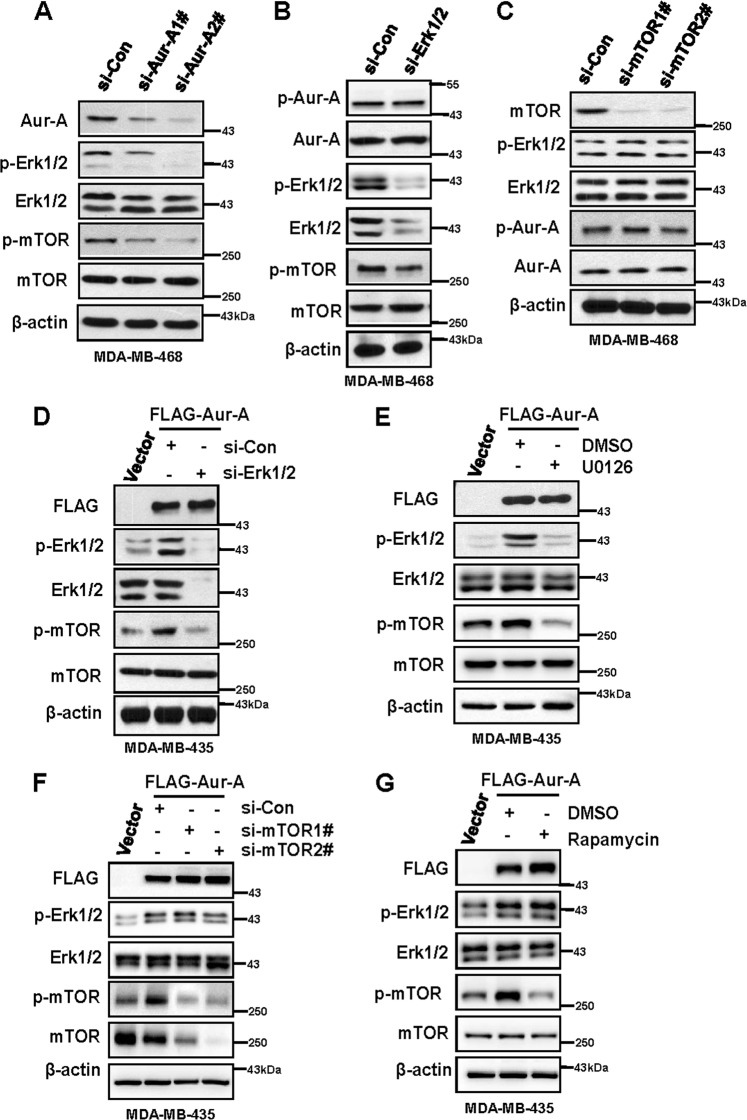
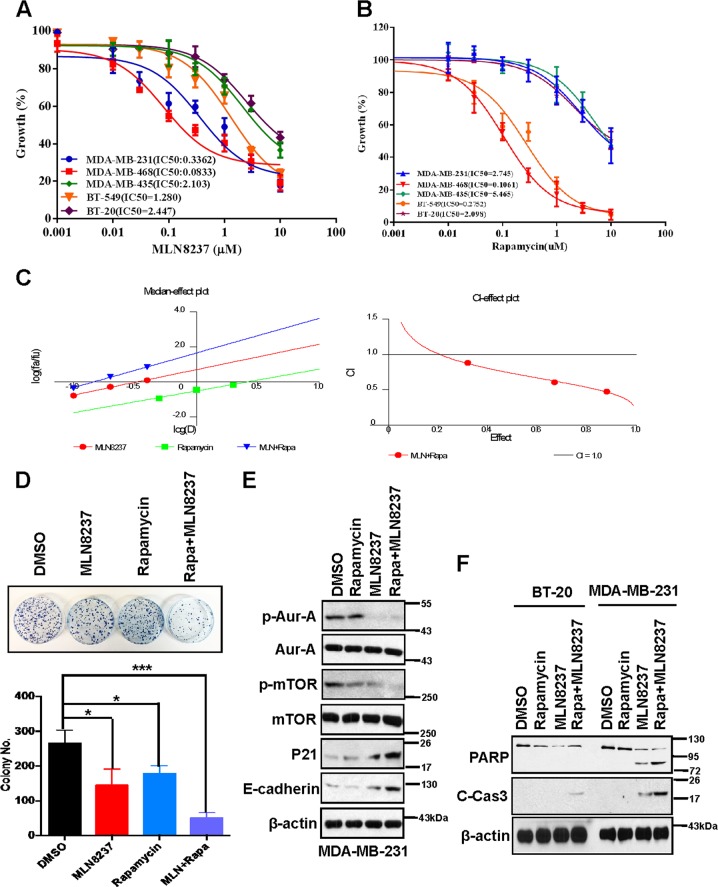
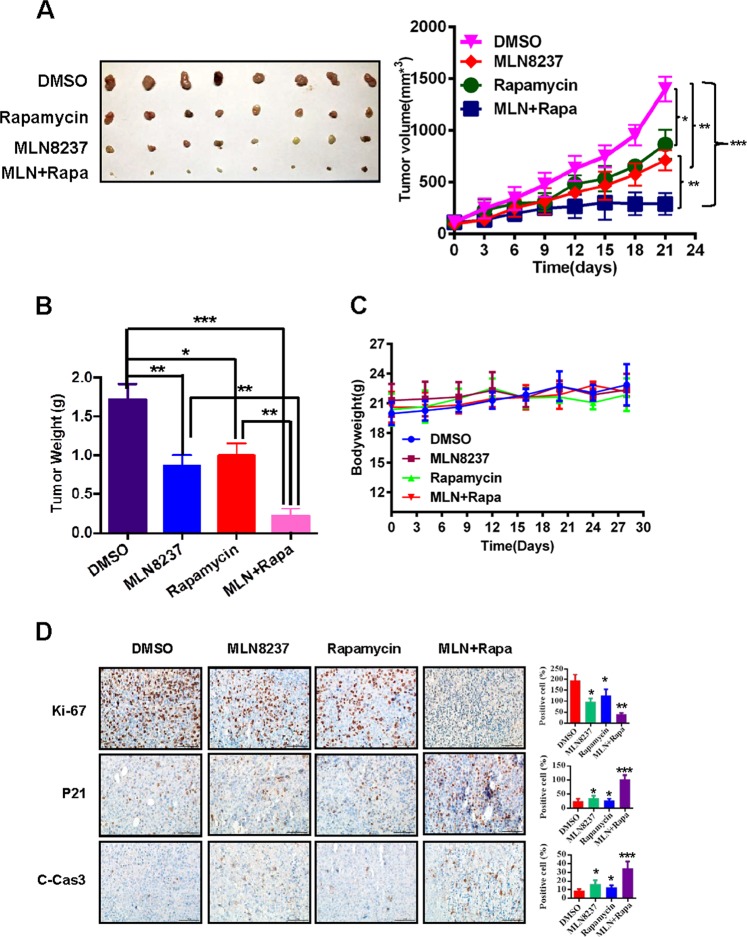
Triple-negative breast cancer (TNBC), defined as a tumor subtype that lacks ER, PR, and HER2, shows a poor prognosis due to its aggressive tumor biology and limited treatment options. Deregulation of Aurora kinase A (Aur-A), a member of the mitotic serine/threonine Aurora kinase family, and overactivation of the mTOR pathway commonly occur in multiple cancer types. We previously found that Aur-A activated the mTOR pathway and inhibited autophagy activity in breast cancer cell models. Whether and how Aur-A regulates mTOR in TNBC are still unclear. Here, we found that Aur-A and p-mTOR are highly expressed and positively associated with each other in TNBC cells and tissues. Inhibition or knockdown of Aur-A decreased p-mTOR and suppressed cell proliferation and migration, whereas overexpression of Aur-A increased p-mTOR levels and promoted cell proliferation and migration, which was significantly abrogated by simultaneous silencing of mTOR. Intriguingly, overexpression of Aur-A enhanced the expression of p-mTOR and p-ERK1/2, and silencing or inhibition of ERK1/2 blocked Aur-A-induced p-mTOR. However, silencing or inhibition of mTOR failed to reverse Aur-A-induced ERK1/2, indicating that Aur-A/ERK1/2/mTOR forms an oncogenic cascade in TNBC. We finally found that double inhibition of Aur-A and mTOR showed significant synergistic effects in TNBC cell lines and a xenograft model, indicating that Aur-A and mTOR are potential therapeutic targets in the TNBC subtype.
Overview
The claims and statistics of this paper haven’t been checked yet.
Free: it reads the open-access text and checks the first 5 claims that cite a source we can check. Create a free account to check every claim.
Integrity signals
Registry
Cites
Statistics
Figures
Verification
Claims the paper makes
The claims and statistics of this paper haven’t been checked yet.
Free: it reads the open-access text and checks the first 5 claims that cite a source we can check. Create a free account to check every claim.
Claims other papers make about this one
Each is checked against this paper’s own text: does it say what the citing paper says it does?
The source backs part of the claim, not all of it — or backs it for a different population, condition or comparison.
In the citing paper
“On the other hand, AURKA, in turn, promotes resistance to therapeutic targeting of EGFR and RAS pathway components by activating RAS downstream effectors such as RalA, ERK1/2, and AKT [132–134].”
From Differential Response and Resistance to KRAS-Targeted Therapy (2025) · cites this paper as [132]
Experimental — accuracy not yet measured
Self-check
Percentages, sums and reported differences re-computed from the paper’s own numbers.
The self-check needs the paper’s full text.
Citations
Cites
Jemal, A., Siegel, R., Ward, E., Hao, Y., Xu, J., & Thun, M. J. (2009) · CA: A Cancer Journal for Clinicians · doi:10.3322/caac.20006 · Cited by 9,709
Self-citationPhosphorylation and regulation of Akt/PKB by the rictor-mTOR complex
Sarbassov, D. D., Guertin, D. A., Ali, S. M., & Sabatini, D. M. (2005) · Science · doi:10.1126/science.1106148 · Cited by 6,216
Paclitaxel plus Bevacizumab versus Paclitaxel Alone for Metastatic Breast Cancer
Miller, K., Wang, M., Gralow, J., Dickler, M., Cobleigh, M., Perez, E. A., Shenkier, T., Cella, D., & Davidson, N. E. (2007) · New England Journal of Medicine · doi:10.1056/nejmoa072113 · Cited by 3,081
Bauer, K. R., Brown, M., Cress, R. D., Parise, C. A., & Caggiano, V. (2007) · Cancer · doi:10.1002/cncr.22618 · Cited by 2,067
Sotiriou, C., Neo, S.-Y., McShane, L. M., Korn, E. L., Long, P. M., Jazaeri, A., Martiat, P., Fox, S. B., Harris, A. L., & Liu, E. T. (2003) · Proceedings of the National Academy of Sciences · doi:10.1073/pnas.1732912100 · Cited by 1,993
The Ras-ERK and PI3K-mTOR pathways: cross-talk and compensation
Mendoza, M. C., Er, E. E., & Blenis, J. (2011) · Trends in Biochemical Sciences · doi:10.1016/j.tibs.2011.03.006 · Cited by 1,817
Tumour amplified kinase STK15/BTAK induces centrosome amplification, aneuploidy and transformation
Zhou, H., Kuang, J., Zhong, L., Kuo, W.-L., Gray, J., Sahin, A., Brinkley, B., & Sen, S. (1998) · Nature Genetics · doi:10.1038/2496 · Cited by 1,276
Molecular Classification and Molecular Forecasting of Breast Cancer: Ready for Clinical Application?
Brenton, J. D., Carey, L. A., Ahmed, A. A., & Caldas, C. (2005) · Journal of Clinical Oncology · doi:10.1200/jco.2005.03.3845 · Cited by 953
Aurora-A — A guardian of poles
Marumoto, T., Zhang, D., & Saya, H. (2005) · Nature Reviews Cancer · doi:10.1038/nrc1526 · Cited by 697
Triple-negative breast cancer—current status and future directions
Gluz, O., Liedtke, C., Gottschalk, N., Pusztai, L., Nitz, U., & Harbeck, N. (2009) · Annals of Oncology · doi:10.1093/annonc/mdp492 · Cited by 687
Triple-Negative Breast Cancer: Distinguishing between Basal and Nonbasal Subtypes
Rakha, E. A., Elsheikh, S. E., Aleskandarany, M. A., Habashi, H. O., Green, A. R., Powe, D. G., El-Sayed, M. E., Benhasouna, A., Brunet, J.-S., Akslen, L. A., et al. (2009) · Clinical Cancer Research · doi:10.1158/1078-0432.ccr-08-2132 · Cited by 489
The Aurora kinases: Role in cell transformation and tumorigenesis
Katayama, H., Brinkley, W. R., & Sen, S. (2003) · Cancer and Metastasis Reviews · doi:10.1023/a:1023789416385 · Cited by 398
Baselga, J., Gómez, P., Greil, R., Braga, S., Climent, M. A., Wardley, A. M., Kaufman, B., Stemmer, S. M., Pêgo, A., Chan, A., et al. (2013) · Journal of Clinical Oncology · doi:10.1200/jco.2012.46.2408 · Cited by 363
Aurora-A Abrogation of p53 DNA Binding and Transactivation Activity by Phosphorylation of Serine 215
Liu, Q., Kaneko, S., Yang, L., Feldman, R. I., Nicosia, S. V., Chen, J., & Cheng, J. Q. (2004) · Journal of Biological Chemistry · doi:10.1074/jbc.m406802200 · Cited by 334
Manfredi, M. G., Ecsedy, J. A., Chakravarty, A., Silverman, L., Zhang, M., Hoar, K. M., Stroud, S. G., Chen, W., Shinde, V., Huck, J. J., et al. (2011) · Clinical Cancer Research · doi:10.1158/1078-0432.ccr-11-1536 · Cited by 300
Aurora Kinase Inhibitors: Current Status and Outlook
Bavetsias, V., & Linardopoulos, S. (2015) · Frontiers in Oncology · doi:10.3389/fonc.2015.00278 · Cited by 277
Melichar, B., Adenis, A., Lockhart, A. C., Bennouna, J., Dees, E. C., Kayaleh, O., Obermannova, R., DeMichele, A., Zatloukal, P., Zhang, B., et al. (2015) · The Lancet Oncology · doi:10.1016/s1470-2045(15)70051-3 · Cited by 254
Basal phenotype identifies a poor prognostic subgroup of breast cancer of clinical importance
Rakha, E. A., El-Rehim, D. A., Paish, C., Green, A. R., Lee, A. H. S., Robertson, J. F., Blamey, R. W., Macmillan, D., & Ellis, I. O. (2006) · European Journal of Cancer · doi:10.1016/j.ejca.2006.08.015 · Cited by 193
Aurora kinase A inhibition-induced autophagy triggers drug resistance in breast cancer cells
Zou, Z., Yuan, Z., Zhang, Q., Long, Z., Chen, J., Tang, Z., Zhu, Y., Chen, S., Xu, J., Yan, M., et al. (2012) · Autophagy · doi:10.4161/auto.22110 · Cited by 181
Self-citationThe Biology Behind mTOR Inhibition in Sarcoma
Wan, X., & Helman, L. J. (2007) · The Oncologist · doi:10.1634/theoncologist.12-8-1007 · Cited by 180
Prat, A., & Baselga, J. (2008) · Nature Clinical Practice Oncology · doi:10.1038/ncponc1179 · Cited by 177
PARPs and the DNA damage response
Sousa, F. G., Matuo, R., Soares, D. G., Escargueil, A. E., Henriques, J. A. P., Larsen, A. K., & Saffi, J. (2012) · Carcinogenesis · doi:10.1093/carcin/bgs132 · Cited by 154
Cyclin B2 and p53 control proper timing of centrosome separation
Nam, H.-J., & van Deursen, J. M. (2014) · Nature Cell Biology · doi:10.1038/ncb2952 · Cited by 153
Huang, X.-F., Luo, S.-K., Xu, J., Li, J., Xu, D.-R., Wang, L., Yan, M., Wang, X.-R., Wan, X., Zheng, F.-M., et al. (2007) · Blood · doi:10.1182/blood-2007-07-099325 · Cited by 139
Self-citationmTOR inhibitors in the treatment of cancer
Fasolo, A., & Sessa, C. (2008) · Expert Opinion on Investigational Drugs · doi:10.1517/13543784.17.11.1717 · Cited by 131
Zhou, W., Xu, J., Li, H., Xu, M., Chen, Z. J., Wei, W., Pan, Z., & Sun, Y. (2017) · Clinical Cancer Research · doi:10.1158/1078-0432.ccr-16-1585 · Cited by 130
Self-citationWang, L., Xiang, J., Yan, M., Zhang, Y., Zhao, Y., Yue, C.-F., Xu, J., Zheng, F.-M., Chen, J.-N., Kang, Z., et al. (2010) · Cancer Research · doi:10.1158/0008-5472.can-10-1246 · Cited by 130
Self-citationYang, G., Chang, B., Yang, F., Guo, X., Cai, K. Q., Xiao, X. (., Wang, H., Sen, S., Hung, M.-C., Mills, G. B., et al. (2010) · Clinical Cancer Research · doi:10.1158/1078-0432.ccr-09-3171 · Cited by 124
Aurora A, mitotic entry, and spindle bipolarity
Liu, Q., & Ruderman, J. V. (2006) · Proceedings of the National Academy of Sciences · doi:10.1073/pnas.0601425103 · Cited by 119
Barr, P. M., Li, H., Spier, C., Mahadevan, D., LeBlanc, M., Ul Haq, M., Huber, B. D., Flowers, C. R., Wagner-Johnston, N. D., Horwitz, S. M., et al. (2015) · Journal of Clinical Oncology · doi:10.1200/jco.2014.60.6327 · Cited by 114
Rong, R., Jiang, L., Sheikh, M. S., & Huang, Y. K. (2007) · Oncogene · doi:10.1038/sj.onc.1210575 · Cited by 110
Wan, X.-B., Long, Z.-J., Yan, M., Xu, J., Xia, L.-P., Liu, L., Zhao, Y., Huang, X.-F., Wang, X.-R., Zhu, X.-F., et al. (2008) · Carcinogenesis · doi:10.1093/carcin/bgn176 · Cited by 105
Self-citationXu, J., Zhou, W., Yang, F., Chen, G., Li, H., Zhao, Y., Liu, P., Li, H., Tan, M., Xiong, X., et al. (2017) · Nature Communications · doi:10.1038/ncomms14002 · Cited by 103
Self-citationZhou, W., Xu, J., Tan, M., Li, H., Li, H., Wei, W., & Sun, Y. (2018) · Molecular Cell · doi:10.1016/j.molcel.2018.06.002 · Cited by 94
Self-citationKatayama, H. G., Wang, J., Treekitkarnmongkol, W., Kawai, H., Sasai, K., Zhang, H., Wang, H., Adams, H. P., Jiang, S., Chakraborty, S. N., et al. (2012) · Cancer Cell · doi:10.1016/j.ccr.2011.12.025 · Cited by 94
Zhou, W.-H., Tang, F., Xu, J., Wu, X., Yang, S.-B., Feng, Z.-Y., Ding, Y.-G., Wan, X., Guan, Z., Li, H.-G., et al. (2012) · Autophagy · doi:10.4161/auto.18641 · Cited by 93
Self-citationXu, J., Wu, X., Zhou, W.-H., Liu, A.-W., Wu, J.-B., Deng, J.-Y., Yue, C.-F., Yang, S.-B., Wang, J., Yuan, Z.-Y., et al. (2013) · PLoS ONE · doi:10.1371/journal.pone.0056919 · Cited by 90
Self-citationGoldberg, S. L., Fenaux, P., Craig, M., Gyan, E., LISTER, J. W., Kassis, J., Pigneux, A., Schiller, G. J., Jung, J., Leonard, E. J., et al. (2014) · Leukemia Research Reports · doi:10.1016/j.lrr.2014.06.003 · Cited by 82
Ertych, N., Stolz, A., Valerius, O., Braus, G. H., & Bastians, H. (2016) · Proceedings of the National Academy of Sciences · doi:10.1073/pnas.1525129113 · Cited by 71
Diamond, J. R., Eckhardt, S. G., Pitts, T. M., van Bokhoven, A., Aisner, D. L., Gustafson, D. L., Capasso, A., Sams, S. B., Kabos, P., Zolman, K. L., et al. (2018) · Breast Cancer Research · doi:10.1186/s13058-018-1014-y · Cited by 70
Xu, J., Yue, C.-F., Zhou, W.-H., Qian, Y., Zhang, Y., Wang, S.-W., Liu, A.-W., & Liu, Q. (2014) · Journal of Translational Medicine · doi:10.1186/1479-5876-12-200 · Cited by 70
Self-citationWei, T. W., Wu, P., Wu, T.-J., Hou, H., Chou, W., Teng, C. J., Lin, C.-R., Chen, J. M., Lin, T.-Y., Su, H., et al. (2016) · Cancer Research · doi:10.1158/0008-5472.can-16-1004 · Cited by 69
Burum-Auensen, E., Angelis, P. M. D., Schjølberg, A. R., Kravik, K. L., Aure, M., & Clausen, O. P. F. (2007) · Journal of Histochemistry & Cytochemistry · doi:10.1369/jhc.6a7077.2007 · Cited by 59
Poly(ADP-ribose) polymerase inhibition: a new direction for BRCAand triple-negative breast cancer?
Plummer, R. (2011) · Breast Cancer Research · doi:10.1186/bcr2877 · Cited by 54
Dual Targeting of mTOR and Aurora-A Kinase for the Treatment of Uterine Leiomyosarcoma
Brewer Savannah, K. J., Demicco, E. G., Lusby, K., Ghadimi, M. P., Belousov, R., Young, E., Zhang, Y., Huang, K.-L., Lazar, A. J., Hunt, K. K., et al. (2012) · Clinical Cancer Research · doi:10.1158/1078-0432.ccr-12-0436 · Cited by 53
Aurora kinase B/C inhibition impairs malignant glioma growth in vivo
Diaz, R. J., Golbourn, B. J., Shekarforoush, M., Smith, C. A., & Rutka, J. T. (2012) · Journal of Neuro-Oncology · doi:10.1007/s11060-012-0835-2 · Cited by 42
Kelly, K. R., Friedberg, J. W., Park, S. I., McDonagh, K. T., Hayslip, J. W., Persky, D. O., Ruan, J., Puvvada, S. D., Rosen, P. J., Iyer, S. P., et al. (2018) · Clinical Cancer Research · doi:10.1158/1078-0432.ccr-18-0286 · Cited by 37
Xu, L.-Z., Long, Z., Peng, F., Liu, Y., Xu, J., Wang, C., Jiang, L., Guo, T., Muhammad, K. I., Li, S.-S., et al. (2014) · Oncotarget · doi:10.18632/oncotarget.2241 · Cited by 35
Self-citationZhou, W., Xu, J., Gelston, E., Wu, X., Zou, Z., Wang, B., Zeng, Y., Wang, H., Liu, A., Xu, L., et al. (2015) · Oncotarget · doi:10.18632/oncotarget.4306 · Cited by 34
Self-citationAurora-A phosphorylates hnRNPK and disrupts its interaction with p53
Hsueh, K.-W., Fu, S., Huang, C. F., & Lin, C. (2011) · FEBS Letters · doi:10.1016/j.febslet.2011.07.031 · Cited by 32
Zhou, W., Xu, J., Zhao, Y., & Sun, Y. (2014) · Oncotarget · doi:10.18632/oncotarget.2246 · Cited by 31
Self-citationIonkina, A. A., Tentler, J. J., Kim, J., Capasso, A., Pitts, T. M., Ryall, K. A., Howison, R. R., Kabos, P., Sartorius, C. A., Tan, A. C., et al. (2017) · Frontiers in Oncology · doi:10.3389/fonc.2017.00094 · Cited by 25
Aurora and IKK kinases cooperatively interact to protect multiple myeloma cells from Apo2L/TRAIL
Mazzera, L., Lombardi, G., Abeltino, M., Ricca, M., Donofrío, G., Giuliani, N., Cantoni, A. M., Corradi, A., Bonati, A., & Lunghi, P. (2013) · Blood · doi:10.1182/blood-2013-02-482356 · Cited by 24
Zhang, W., Xu, J., Ji, D., Li, Z., He, W., Yang, F., Lan, H., Wang, Y., Wu, Z., Liu, X., et al. (2017) · Cellular Physiology and Biochemistry · doi:10.1159/000480322 · Cited by 13
Self-citation
Cited by
Emerging roles of Aurora-A kinase in cancer therapy resistance
Zheng, D., Li, J., Yan, H., Zhang, G., Li, W., Chu, E., & Wei, N. (2023) · Acta Pharmaceutica Sinica B · doi:10.1016/j.apsb.2023.03.013 · Cited by 129
The role of Aurora-A in human cancers and future therapeutics.
Lin, X., Xiang, X., Hao, L., Wang, T., Lai, Y., Abudoureyimu, M., Zhou, H., Feng, B., Chu, X., & Wang, R. (2020) · PubMed Central · Cited by 83
Sun, S., Zhou, W., Li, X., Peng, F., Yan, M., Zhan, Y., An, F., Li, X., Liu, Y., Liu, Q., et al. (2021) · 癌症:英文版 · doi:10.1002/cac2.12190 · Cited by 53
Self-citationRecent Advances in Drug Discovery for Triple-Negative Breast Cancer Treatment
Masci, D., Naro, C., Puxeddu, M., Urbani, A., Sette, C., Regina, G. L., & Silvestri, R. (2023) · Molecules · doi:10.3390/molecules28227513 · Cited by 34
Wang, N., Zhang, H., Li, D., Jiang, C., Zhao, H., & Teng, Y. (2021) · Bioengineered · doi:10.1080/21655979.2021.2005747 · Cited by 34
Metadata
- Authors
- Zhang, W., Xia, D., Li, Z., Zhou, T., Chen, T., Wu, Z., Zhou, W., Li, Z., Li, L., & Xu, J.
- Affiliations
- Nanchang University (CN)
- Tongji Hospital (CN)
- Third Hospital of Nanchang (CN)
- Army Medical University (CN)
- University of Michigan (US)
- Corresponding author
- Li, Zhangyun
- Xu, Jie
- Venue
- Cell Death & Disease
- Published
- 2019-08-13
- Volume
- 10
- Issue
- 8
- Pages
- 606-606
- ISSN
- 2041-4889 (ISSN-L)
- PMC
- PMC6690898
- OpenAlex
- W2968684419
- Cited by
- 38
- References
- 55
- Citations by year
- 2026: 4 · 2025: 6 · 2024: 8 · 2023: 6 · 2022: 3 · 2021: 6 · 2020: 5
- FWCI
- 1.16
- Type
- journal article
- Language
- en
- Open access
- gold
- doi.org
- Licence
- cc-by
- creativecommons.org/licenses/by/4.0 (tdm)
- creativecommons.org/licenses/by/4.0 (vor)
- Locations
- Cell Death and Disease (publishedVersion, cc-by)
- Europe PMC (PubMed Central) (publishedVersion, cc-by)
- PubMed Central (publishedVersion, cc-by)
- PubMed (publishedVersion)
- DOAJ (DOAJ: Directory of Open Access Journals) (submittedVersion)
- Funders
- National Natural Science Foundation of China (81402194, 81670439)
- Topics
- Life Sciences › Biochemistry, Genetics and Molecular Biology › Molecular Biology › PI3K/AKT/mTOR signaling in cancer
- Life Sciences › Biochemistry, Genetics and Molecular Biology › Cell Biology › Microtubule and mitosis dynamics
- Life Sciences › Biochemistry, Genetics and Molecular Biology › Cancer Research › Breast Cancer Treatment Studies
- Keywords
- triple-negative breast cancer, AURKA, mTOR signaling, ERK1/2, synthetic lethality, dual-targeted therapy, cell proliferation, cell migration, therapeutic target
- MeSH terms
- Synthetic Lethal Mutations, Animals, Antineoplastic Agents, Azepines, Drug Synergism, Enzyme Activation, Female, Humans, Mice, Nude, Neoplasm Invasiveness, Pyrimidines, Disease Progression, Sirolimus, Inhibitory Concentration 50, Gene Silencing, MAP Kinase Signaling System, Xenograft Model Antitumor Assays, Cell Line, Tumor, Cell Proliferation, TOR Serine-Threonine Kinases, Aurora Kinase A, Triple Negative Breast Neoplasms
About these checks
Registry, retraction, Cites and statistics results are computed, not judged, with one exception: a printed reference that no index lists is read once by a model before it counts as a citation error. Claims are extracted by a model and kept only when their quote appears verbatim in the text; each cited source is then checked, with a model’s help, for whether it says what the claim relies on. Those verdicts can be wrong — read the claim’s quote and the cited source before relying on one.
Statistics and arithmetic are recomputed, not judged.
Confidence bands are shown only for fields calibrated on our annotated test set. None is calibrated yet, so no band is shown.
What counts as a claim ›How we measure confidence ›How we check this ›
Are you an author, or do you see a problem with this page? Request a review
Data sources
Bibliographic data: Semantic Scholar, OpenAlex, Crossref.
Contains information from the Semantic Scholar Academic Graph Datasets, made available under the ODC Attribution License (ODC-BY 1.0).
Semantic Scholar’s data is described in: Kinney, R., et al. (2023). The Semantic Scholar Open Data Platform. arXiv:2301.10140.
