

Sirt1 deacetylates and stabilizes p62 to promote hepato-carcinogenesis
Open accessThe DOI matches its Crossref record; 46 of the 46 references it cites were found in a registry or an index.
Abstract
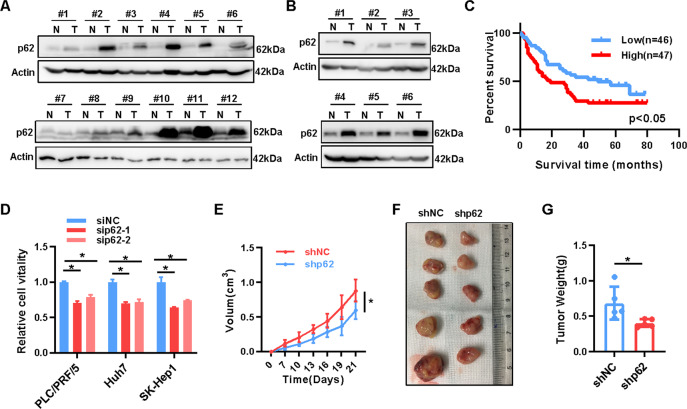
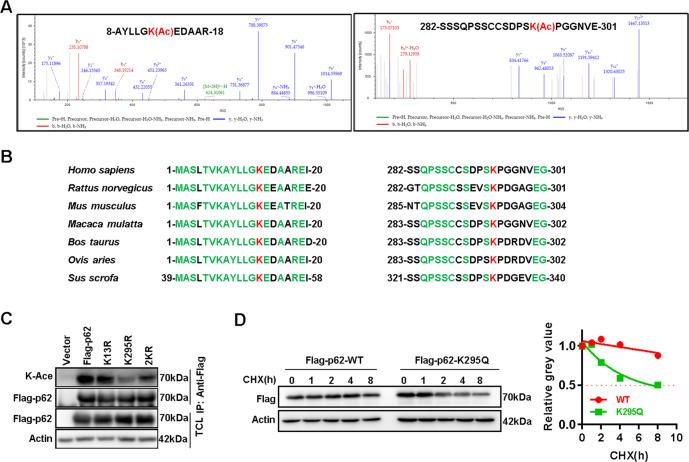
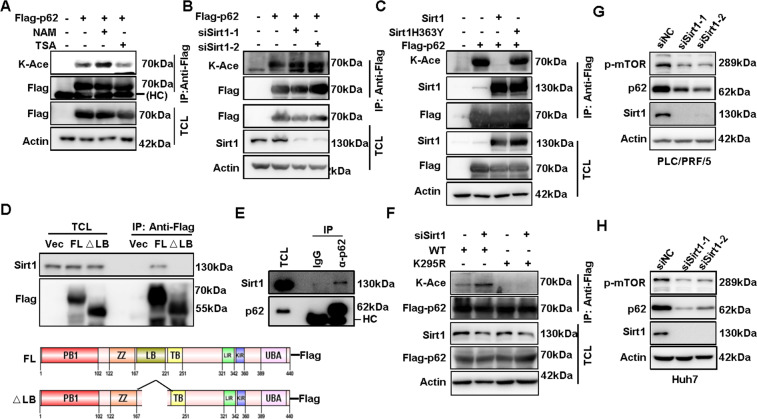
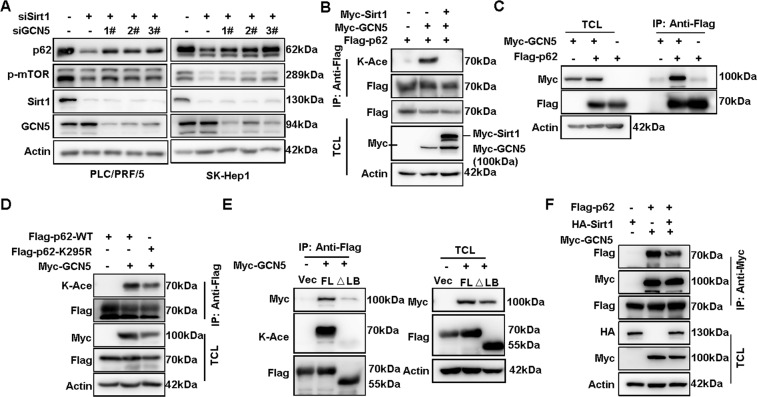
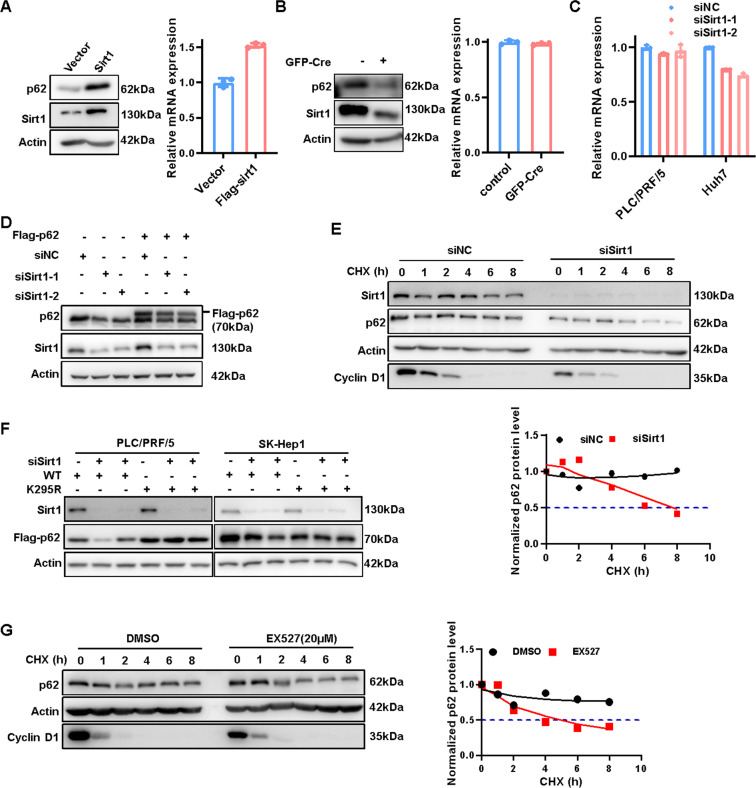
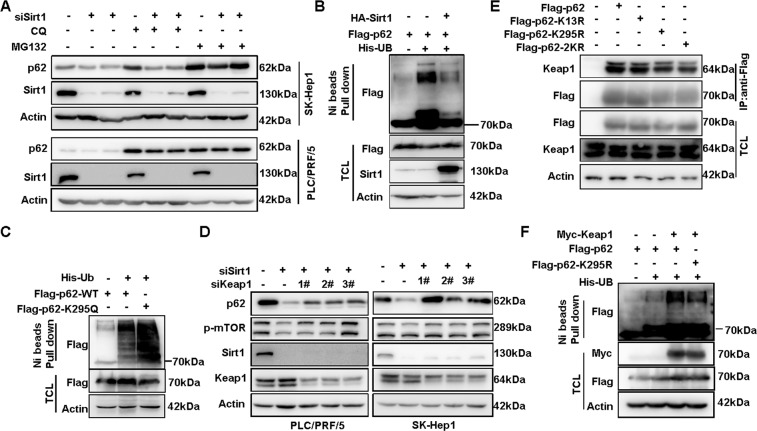
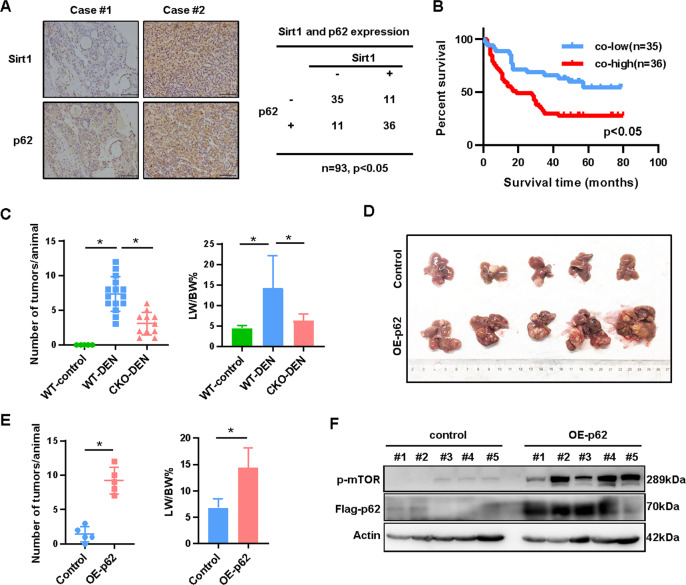
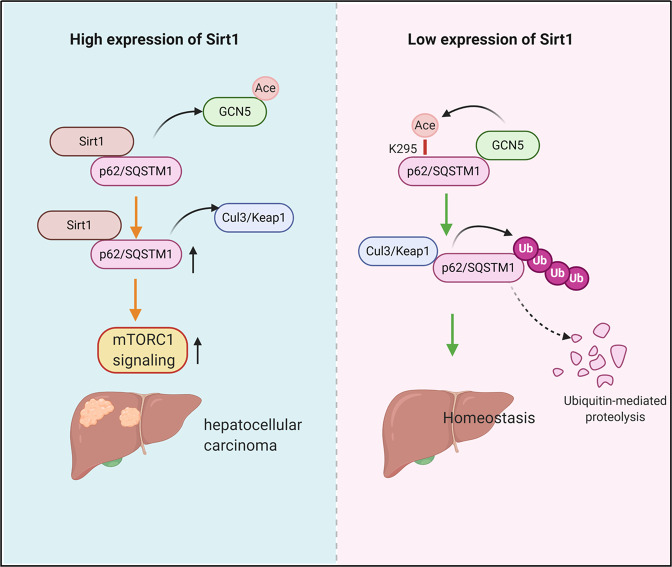
p62/SQSTM1 is frequently up-regulated in many cancers including hepatocellular carcinoma. Highly expressed p62 promotes hepato-carcinogenesis by activating many signaling pathways including Nrf2, mTORC1, and NFκB signaling. However, the underlying mechanism for p62 up-regulation in hepatocellular carcinoma remains largely unclear. Herein, we confirmed that p62 was up-regulated in hepatocellular carcinoma and its higher expression was associated with shorter overall survival in patients. The knockdown of p62 in hepatocellular carcinoma cells decreased cell growth in vitro and in vivo. Intriguingly, p62 protein stability could be reduced by its acetylation at lysine 295, which was regulated by deacetylase Sirt1 and acetyltransferase GCN5. Acetylated p62 increased its association with the E3 ligase Keap1, which facilitated its poly-ubiquitination-dependent proteasomal degradation. Moreover, Sirt1 was up-regulated to deacetylate and stabilize p62 in hepatocellular carcinoma. Additionally, Hepatocyte Sirt1 conditional knockout mice developed much fewer liver tumors after Diethynitrosamine treatment, which could be reversed by the re-introduction of exogenous p62. Taken together, Sirt1 deacetylates p62 at lysine 295 to disturb Keap1-mediated p62 poly-ubiquitination, thus up-regulating p62 expression to promote hepato-carcinogenesis. Therefore, targeting Sirt1 or p62 is a reasonable strategy for the treatment of hepatocellular carcinoma.
Overview
The claims and statistics of this paper haven’t been checked yet.
Free: it reads the open-access text and checks the first 5 claims that cite a source we can check. Create a free account to check every claim.
Integrity signals
Registry
Cites
Statistics
Figures
Verification
Claims the paper makes
The claims and statistics of this paper haven’t been checked yet.
Free: it reads the open-access text and checks the first 5 claims that cite a source we can check. Create a free account to check every claim.
Claims other papers make about this one
Each is checked against this paper’s own text: does it say what the citing paper says it does?
The source backs part of the claim, not all of it — or backs it for a different population, condition or comparison.
In the citing paper
“Conversely, SIRT1 overexpression deacetylated p62 and hindered the p62-KEAP1 interaction, allowing for an increase in HCC tumor volume, which was connected to increased levels of phosphorylated mTOR [103].”
From Acetylation: a new target for protein degradation in cancer (2025) · cites this paper as [103]
Experimental — accuracy not yet measuredThe cited source says what the claim attributes to it.
In the citing paper
“However, the p62-KEAP1 interaction can also be regulated via acetylation at K295 by GCN5 (Figure 4D) [103].”
From Acetylation: a new target for protein degradation in cancer (2025) · cites this paper as [103]
Self-check
Percentages, sums and reported differences re-computed from the paper’s own numbers.
The self-check needs the paper’s full text.
Citations
Cites
Siegel, R. L., Miller, K. D., & Jemal, A. (2020) · CA: A Cancer Journal for Clinicians · doi:10.3322/caac.21590 · Cited by 20,444
Repertoires of Autophagy in the Pathogenesis of Ocular Diseases
Li, Y.-J., Jiang, Q., Cao, G.-F., Yao, J., & Yan, B. (2015) · Cellular Physiology and Biochemistry · doi:10.1159/000373980 · Cited by 16,304
Self-citationVillanueva, A. (2019) · New England Journal of Medicine · doi:10.1056/nejmra1713263 · Cited by 4,508
(1977) · Annals of Internal Medicine · doi:10.7326/0003-4819-87-5-642_1 · Cited by 2,081
Sun, X., Ou, Z., Chen, R., Niu, X., Chen, D., Kang, R., & Tang, D. (2016) · Hepatology · doi:10.1002/hep.28251 · Cited by 2,012
Autophagy Suppresses Tumorigenesis through Elimination of p62
Mathew, R., Karp, C. M., Beaudoin, B., Vuong, N., Chen, G., Chen, H.-Y., Bray, K., Reddy, A., Bhanot, G., Gelinas, C., et al. (2009) · Cell · doi:10.1016/j.cell.2009.03.048 · Cited by 1,719
Autophagy-deficient mice develop multiple liver tumors
Takamura, A., Komatsu, M., Hara, T., Sakamoto, A., Kishi, C., Waguri, S., Eishi, Y., Hino, O., Tanaka, K., & Mizushima, N. (2011) · Genes & Development · doi:10.1101/gad.2016211 · Cited by 1,342
Phosphorylation of p62 Activates the Keap1-Nrf2 Pathway during Selective Autophagy
Ichimura, Y., Waguri, S., Sou, Y.-S., Kageyama, S., Hasegawa, J., Ishimura, R., Saito, T., Yang, Y., Kouno, T., Fukutomi, T., et al. (2013) · Molecular Cell · doi:10.1016/j.molcel.2013.08.003 · Cited by 1,205
Ishizawa, T., Hasegawa, K., Aoki, T., Takahashi, M., Inoue, Y., Sano, K., Imamura, H., Sugawara, Y., Kokudo, N., & Makuuchi, M. (2008) · Gastroenterology · doi:10.1053/j.gastro.2008.02.091 · Cited by 754
Matsumoto, G., Wada, K., Okuno, M., Kurosawa, M., & Nukina, N. (2011) · Molecular Cell · doi:10.1016/j.molcel.2011.07.039 · Cited by 701
Cited by
The autophagy–NAD axis in longevity and disease
Wilson, N., Kataura, T., Korsgen, M. E., Sun, C., Sarkar, S., & Korolchuk, V. I. (2023) · Trends in Cell Biology · doi:10.1016/j.tcb.2023.02.004 · Cited by 117
Serine synthesis sustains macrophage IL-1β production via NAD+-dependent protein acetylation
Wang, C., Chen, Q., Chen, S., Fan, L., Gan, Z., Zhao, M., Shi, L., Bin, P., Yang, G., Zhou, X., et al. (2024) · Molecular Cell · doi:10.1016/j.molcel.2024.01.002 · Cited by 103
Epigenetic regulation in cancer therapy: From mechanisms to clinical advances
Tao, L., Zhou, Y., Luo, Y., Qiu, J., Xiao, Y., Zou, J., Zhang, Y., Liu, X., Yang, X., Gou, K., et al. (2024) · MedComm – Oncology · doi:10.1002/mog2.59 · Cited by 111
The emerging roles of HDACs and their therapeutic implications in cancer
Hai, R., Yang, D., Zheng, F., Wang, W., Han, X., Bode, A. M., & Luo, X. (2022) · European Journal of Pharmacology · doi:10.1016/j.ejphar.2022.175216 · Cited by 79
p62/SQSTM1 in liver diseases: the usual suspect with multifarious identities
Tan, C. T., Soh, N. J. H., Chang, H., & Yu, V. C. K. (2021) · FEBS Journal · doi:10.1111/febs.16317 · Cited by 56
SIRT1: A Novel Protective Molecule in Pre-eclampsia
Liu, Z., Wang, C., Pei, J., Li, M., & Gu, W. (2022) · International Journal of Medical Sciences · doi:10.7150/ijms.73012 · Cited by 42
Self-citationHu, J., Chen, J., Hou, Q., Xu, X., Ren, J., Ma, L., & Yan, X. (2023) · Microbiome · doi:10.1186/s40168-023-01468-3 · Cited by 49
Post-Translational Modification of p62: Roles and Regulations in Autophagy
Xiao, S., Yu, Y., Liao, M., Song, D., Xu, X., Tian, L., Zhang, R., Lyu, H., Guo, D. S., Zhang, Q., et al. (2025) · Cells · doi:10.3390/cells14131016 · Cited by 45
Targeting SIRT1-regulated autophagic cell death as a novel therapeutic avenue for cancer prevention
Patra, S., Praharaj, P. P., Singh, A., & Bhutia, S. K. (2023) · Drug Discovery Today · doi:10.1016/j.drudis.2023.103692 · Cited by 38
Zhang, Y., Liu, S., Xu, Q., Li, H., & Lu, K. (2022) · Molecular Biomedicine · doi:10.1186/s43556-022-00083-2 · Cited by 37
p62/SQSTM1 in cancer: phenomena, mechanisms, and regulation in DNA damage repair
Yang, X., Cao, X., & Zhu, Q. (2025) · Cancer and Metastasis Reviews · doi:10.1007/s10555-025-10250-w · Cited by 38
“These findings align with previously published studies highlighting the predictive significance of p62 expression levels in patients with LIHC [95].”
Emerging roles of Sirtuins in alleviating alcoholic liver Disease: A comprehensive review
Zhao, X., Xue, X., Wang, C., Wang, J., Peng, C. Y., & Li, Y. (2022) · International Immunopharmacology · doi:10.1016/j.intimp.2022.108712 · Cited by 33
Self-citationEmerging role of GCN5 in human diseases and its therapeutic potential
Xiao, H., Jin, J., & Zheng, Z. (2023) · Biomedicine & Pharmacotherapy · doi:10.1016/j.biopha.2023.114835 · Cited by 29
Isaacs‐Ten, A., Moreno‐Gonzalez, M., Bone, C., Märtens, A., Bernuzzi, F., Ludwig, T., Hellmich, C., Hiller, K., Rushworth, S. A., & Beraza, N. (2021) · Cellular and Molecular Gastroenterology and Hepatology · doi:10.1016/j.jcmgh.2021.12.010 · Cited by 27
The Role of Sirtuin-1 (SIRT1) in the Physiology and Pathophysiology of the Human Placenta
Wątroba, M., Szewczyk, G., & Szukiewicz, D. (2023) · International Journal of Molecular Sciences · doi:10.3390/ijms242216210 · Cited by 34
Histone deacetylase (HDACs) inhibitors: Clinical applications
Shanmukha, K. D., Paluvai, H., Lomada, S. K., Gokara, M., & Kalangi, S. K. (2023) · Progress in molecular biology and translational science · doi:10.1016/bs.pmbts.2023.02.011 · Cited by 29
Acetylation: a new target for protein degradation in cancer
Crawford, C. E. W., & Burslem, G. M. (2025) · Trends in Cancer · doi:10.1016/j.trecan.2025.01.013 · Cited by 20
Lao, Y., Jin, Y., Wu, S., Fang, T., Wang, Q., Sun, L., & Sun, B. (2024) · Molecular Cancer · doi:10.1186/s12943-024-02199-1 · Cited by 27
Mehdi, S., Mehmood, M. H., Ahmed, M. G., & Ashfaq, U. A. (2023) · Frontiers in Pharmacology · doi:10.3389/fphar.2023.1085013 · Cited by 27
FOXP3 and SQSTM1/P62 correlate with prognosis and immune infiltration in hepatocellular carcinoma
Liu, S., Zhang, H., Yan, J., Zhu, J. W., Bai, Z., & Li, X. (2022) · Pathology - Research and Practice · doi:10.1016/j.prp.2022.154292 · Cited by 21
PRMT6-mediated ADMA promotes p62 phase separation to form a negative feedback loop in ferroptosis
Feng, L., Chen, L., Wang, W., Wei, Q., Chen, M., Jiang, X., Hu, S., Wu, Y., Duan, L., Zhu, L., et al. (2024) · Theranostics · doi:10.7150/thno.94789 · Cited by 19
Self-citationWang, B., Wang, Y., Hu, Z., Peng, S., Li, N., Zhang, D., Fu, H., & Wu, H. (2025) · Phytomedicine · doi:10.1016/j.phymed.2025.157047 · Cited by 16
Zhu, D., Li, Y., Zhao, L., Pei, D., Guo, Y., & Liu, L. (2025) · Antioxidants and Redox Signaling · doi:10.1177/15230864251395963 · Cited by 14
Self-citationCeballos, M. P., Quiroga, A. D., & Palma, N. F. (2023) · Biochemical Pharmacology · doi:10.1016/j.bcp.2023.115573 · Cited by 17
Qi, Q., Yang, S., Li, J., Li, P., & Du, L. (2023) · Antioxidants and Redox Signaling · doi:10.1089/ars.2023.0371 · Cited by 12
PINK1-mediated mitochondrial autophagy protects lens epithelial cells by reducing ROS and apoptosis
Liu, X., Wang, M., Ji, Z., Zhu, X., Tian, J., Chen, Y., Cai, J., Dong, M., & Li, Z. (2025) · Experimental Eye Research · doi:10.1016/j.exer.2025.110437 · Cited by 12
Autophagy modulates physiologic and adaptive response in the liver
Le, T. V., Truong, N. H., & Holterman, A. (2023) · Liver Research · doi:10.1016/j.livres.2023.12.001 · Cited by 14
Asparagine transporter supports macrophage inflammation via histone phosphorylation
Wang, C., Ye, Y., Zhao, M., Chen, Q., Liu, B., & Ren, W. (2025) · Science Advances · doi:10.1126/sciadv.ads3506 · Cited by 15
Wu, T., Zhao, B., Cai, C., Chen, Y., Miao, Y., Chu, J., Sui, Y., Li, F., Chen, W., Cai, Y., et al. (2023) · International Journal of Molecular Sciences · doi:10.3390/ijms24108719 · Cited by 10
NS1 binding protein regulates stress granule dynamics and clearance by inhibiting p62 ubiquitination
Jeon, P., Ham, H.-J., Choi, H., Park, S., Jang, J.-W., Park, S.-W., Cho, D.-H., Lee, H.-J., Song, H. K., Komatsu, M., et al. (2024) · Nature Communications · doi:10.1038/s41467-024-55446-w · Cited by 14
The Roles of SQSTM1/p62 in Selective Autophagy and Oncogenic Signaling
Kim, Y.-J., Lee, H.-H., Jung, T. Y., Jeong, Y.-H., Lim, K., & Han, J. M. (2026) · International Journal of Molecular Sciences · doi:10.3390/ijms27052342 · Cited by 12
Guo, R., Liang, Y., Zou, B., Li, D., Wu, Z., Xie, F., Zhang, X., & Li, X. (2022) · Frontiers in Oncology · doi:10.3389/fonc.2022.842967 · Cited by 12
Cobalt chloride has beneficial effects across species through a hormetic mechanism
Schiavi, A., Runci, A., Maiorino, T., Naso, F. D., Barenys, M., Fritsche, E., Strappazzon, F., & Ventura, N. (2022) · Frontiers in Cell and Developmental Biology · doi:10.3389/fcell.2022.986835 · Cited by 10
Schütz, F., Longo, L., Keingeski, M. B., Filippi‐Chiela, E. C., Cruz, C. U., & Álvares‐da‐Silva, M. R. (2024) · World Journal of Hepatology · doi:10.4254/wjh.v16.i12.1468 · Cited by 6
Gureev, A. P., & Krutskikh, E. P. (2025) · Russian Journal of Genetics · doi:10.1134/s1022795424701485 · Cited by 7
Qi, M., & Qi, M. (2025) · Journal of Multidisciplinary Healthcare · doi:10.2147/jmdh.s566098 · Cited by 5
Li, Y., Yan, L., Jiang, L., Xu, Q., & Wang, B. (2022) · Disease Markers · doi:10.1155/2022/4835826 · Cited by 4
Self-citationLiu, Y., Yan, Z., Fu, Z., Wu, X., Wang, F., & Yuan, Y. (2025) · Cell Death Discovery · doi:10.1038/s41420-025-02809-x · Cited by 5
Zhu, W., Wang, X., Li, Q., Jiang, X., & Xu, G. (2026) · Cellular & Molecular Biology Letters · doi:10.1186/s11658-026-00884-1 · Cited by 6
Self-citationIchikawa, R., Masuda, S., Nakahara, J., Kobayashi, M., Yamashita, R., Uomoto, S., Ohshima, K., Hara, E., Ito, Y., Shibutani, M., et al. (2022) · The Journal of Toxicological Sciences · doi:10.2131/jts.47.289 · Cited by 2
Post-translational modifications in hepatocellular carcinoma: mechanisms and therapeutic potential
Qin, J., Zhu, W., Yang, Z., Zhang, S., & Zhou, W. (2025) · Medical Oncology · doi:10.1007/s12032-025-03079-4 · Cited by 3
Kennedy, L. L. (2022) · Cellular and Molecular Gastroenterology and Hepatology · doi:10.1016/j.jcmgh.2022.01.011 · Cited by 2
Regulatory role of DBC1 in inflammation and autoimmune diseases
Wu, J., Yang, F., Xu, G., Ma, X., Lin, J., & Chen, W. (2025) · Rheumatology & autoimmunity · doi:10.1002/rai2.12158 · Cited by 1
Reversible Acetylation of Non-histone Proteins in Human Cancers
Feng, C., Zeng, Y., Prochownik, E. V., Jiang, C., & Li, Y. (2025) · Results and problems in cell differentiation · doi:10.1007/978-3-031-91459-1_13 · Cited by 1
Self-citationAutophagy in age-related liver disease
Palacios, R., Francés, D. E., & Motiño, O. (2025) · Geromedicine · doi:10.70401/geromedicine.2025.0005 · Cited by 4
Xie, Z., Deng, Y., Zhang, X., Chen, J., Deng, J., Fang, Y., Ye, X., & Zhou, Z. (2026) · Pharmacogenomics and Personalized Medicine · doi:10.2147/pgpm.s555701 · Cited by 1
The role of e3 ubiquitin ligases and deubiquitinating enzymes in hepatocellular carcinoma
Wang, L., Zhang, H., Hu, Y., Li, X., Liu, J., & Liang, Y. (2026) · Cell Biology and Toxicology · doi:10.1007/s10565-026-10192-1 · Cited by 1
From bone alterations to tumours: Genetic drivers linking Paget’s disease of bone to cancer
Gianfrancesco, F., & di Carlo, F. S. (2026) · Critical Reviews in Oncology/Hematology · doi:10.1016/j.critrevonc.2026.105387 · Cited by 2
Abrar, F., & Martin, D. D. O. (2026) · Autophagy · doi:10.1080/15548627.2026.2711593 · Cited by 2
Predictive Value of p62 Protein in the Recurrence of Oral Squamous Cell Carcinoma
Yin, X., Yang, B., Su, M., Sun, S., & Wang, H. (2021) · ONCOLOGIE · doi:10.32604/oncologie.2021.018705 · Cited by 1
Qu, X., Zhang, Y., Liu, D., Wang, S., Shi, Y., Dan, X., Tan, Y., & Wang, W. (2026) · Discover Oncology · doi:10.1007/s12672-026-04713-x
Gao, J., Lv, X., Zhao, P., Pan, B., & Liu, J. (2026) · Molecular and Cellular Biochemistry · doi:10.1007/s11010-026-05670-3
Wang, W., Jiang, X., Chen, X., Liang, K., Chen, M., 卢开忠, Wei, Q., Wu, Y., Zhu, L., Chen, Y., et al. (2026) · 癌症:英文版 · doi:10.34133/cancomm.0048
Self-citationCircular RNAs and SIRT1 in post-transcriptional regulation and human disease
Vakili, O., Yousefi, Z., Igder, S., Yarahmadi, S., Gheibi, M., Taghizadeh, M., Moshtaghian, M. S., Sartavi, F., Yahyazadeh, S., Shafiee, S. M., et al. (2026) · Biochimica et Biophysica Acta (BBA) - Molecular Basis of Disease · doi:10.1016/j.bbadis.2026.168451 · Cited by 1
Mingmin, W., Haoyue, Y., Jiesong, L., & Yin, X. (2026) · Ecotoxicology and Environmental Safety · doi:10.1016/j.ecoenv.2026.120805
Posttranslational Modifications of p62/SQSTM1 in Health and Disease
Wang, W., Jiang, X., Qiu, R., Wijaya, C. S., Chen, M., Wang, J., Zhu, L., Jin, H., & Feng, L. (2026) · MedComm · doi:10.1002/mco2.70949 · Cited by 1
Self-citationSIRT2-dependent SQSTM1 decrotonylation at K100 rescues impaired mitophagy in aged bovine oocytes
Zhao, Z., Shi, J., Zhao, W., Li, W., Zhao, Y., Zhao, Z., Sun, M., & Xu, D. (2026) · Theriogenology · doi:10.1016/j.theriogenology.2026.118240
Metadata
- Authors
- Feng, L., Chen, M., Li, Y., Li, M., Hu, S., Zhou, B., Zhu, L., Yu, L., Zhou, Q., Tan, L., An, H., Wang, X., & Jin, H.
- Affiliations
- Sir Run Run Shaw Hospital (CN)
- Corresponding author
- Jin, Hongchuan
- ORCID
- Venue
- Cell Death & Disease
- Published
- 2021-04-14
- Volume
- 12
- Issue
- 4
- Pages
- 405-405
- ISSN
- 2041-4889 (ISSN-L)
- PMC
- PMC8046979
- OpenAlex
- W3155781726
- Cited by
- 57
- References
- 46
- Citations by year
- 2026: 13 · 2025: 14 · 2024: 6 · 2023: 11 · 2022: 10 · 2021: 3
- FWCI
- 4.13
- Type
- journal article
- Language
- en
- Open access
- gold
- doi.org
- Licence
- cc-by
- creativecommons.org/licenses/by/4.0 (tdm)
- creativecommons.org/licenses/by/4.0 (vor)
- Locations
- Cell Death and Disease (publishedVersion, cc-by)
- PubMed Central (publishedVersion, cc-by)
- PubMed (publishedVersion)
- DOAJ (DOAJ: Directory of Open Access Journals) (submittedVersion, cc-by-sa)
- Funders
- National Natural Science Foundation of China (81972577, 81761138047)
- Natural Science Foundation of Zhejiang Province (LR19H160003, LZ18H160001)
- Topics
- Health Sciences › Medicine › Geriatrics and Gerontology › Sirtuins and Resveratrol in Medicine
- Life Sciences › Biochemistry, Genetics and Molecular Biology › Molecular Biology › Ubiquitin and proteasome pathways
- Life Sciences › Biochemistry, Genetics and Molecular Biology › Molecular Biology › Histone Deacetylase Inhibitors Research
- Keywords
- SIRT1, p62, protein stability, Keap1, polyubiquitination, proteasomal degradation, hepatocellular carcinoma, GCN5, Nrf2 signaling, conditional knockout mice, diethylnitrosamine, overall survival
- MeSH terms
- Kelch-Like ECH-Associated Protein 1, Animals, Autophagy, Carcinoma, Hepatocellular, Liver Neoplasms, Mice, Inbred BALB C, Protein Processing, Post-Translational, Signal Transduction, Mice, Sirtuin 1, Carcinogenesis
About these checks
Registry, retraction, Cites and statistics results are computed, not judged, with one exception: a printed reference that no index lists is read once by a model before it counts as a citation error. Claims are extracted by a model and kept only when their quote appears verbatim in the text; each cited source is then checked, with a model’s help, for whether it says what the claim relies on. Those verdicts can be wrong — read the claim’s quote and the cited source before relying on one.
Statistics and arithmetic are recomputed, not judged.
Confidence bands are shown only for fields calibrated on our annotated test set. None is calibrated yet, so no band is shown.
What counts as a claim ›How we measure confidence ›How we check this ›
Are you an author, or do you see a problem with this page? Request a review
Data sources
Bibliographic data: Semantic Scholar, OpenAlex, Crossref.
Contains information from the Semantic Scholar Academic Graph Datasets, made available under the ODC Attribution License (ODC-BY 1.0).
Semantic Scholar’s data is described in: Kinney, R., et al. (2023). The Semantic Scholar Open Data Platform. arXiv:2301.10140.
