

m6A reader IGF2BP2-stabilized CASC9 accelerates glioblastoma aerobic glycolysis by enhancing HK2 mRNA stability
Open accessThe DOI matches its Crossref record; 21 of the 21 references it cites were found in a registry or an index.
Abstract
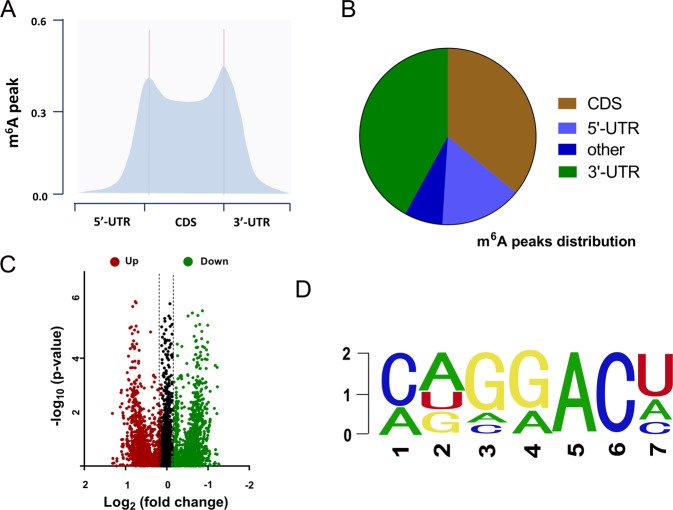
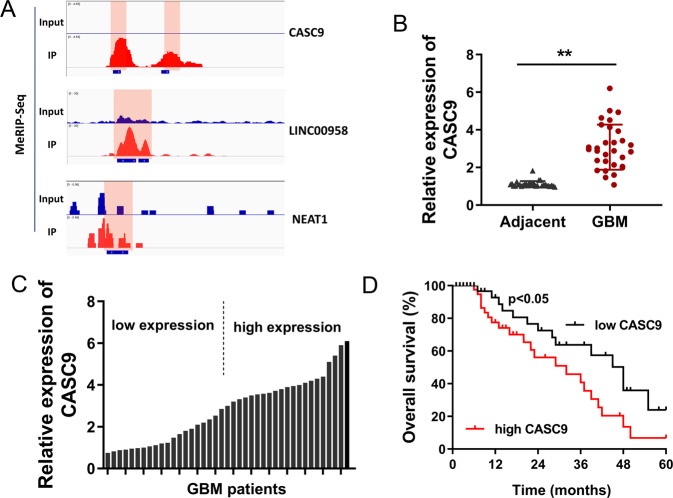
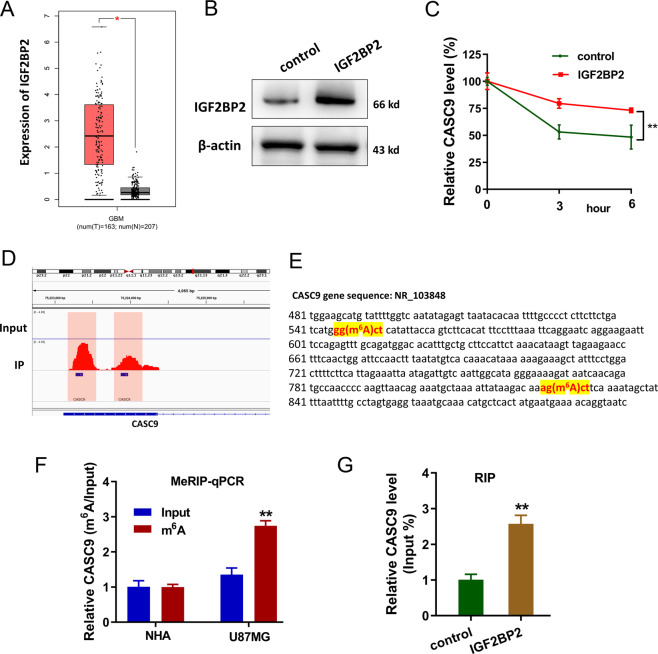
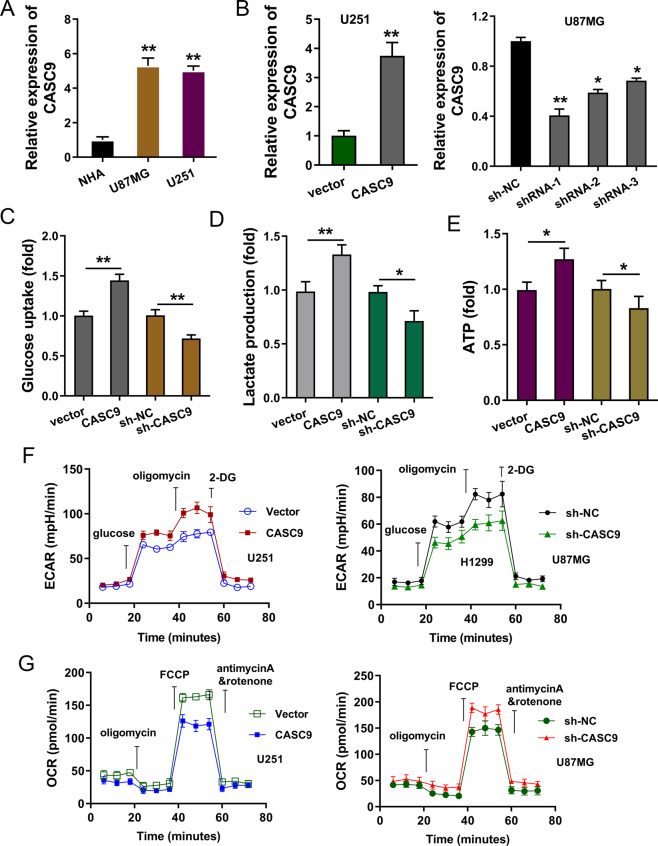
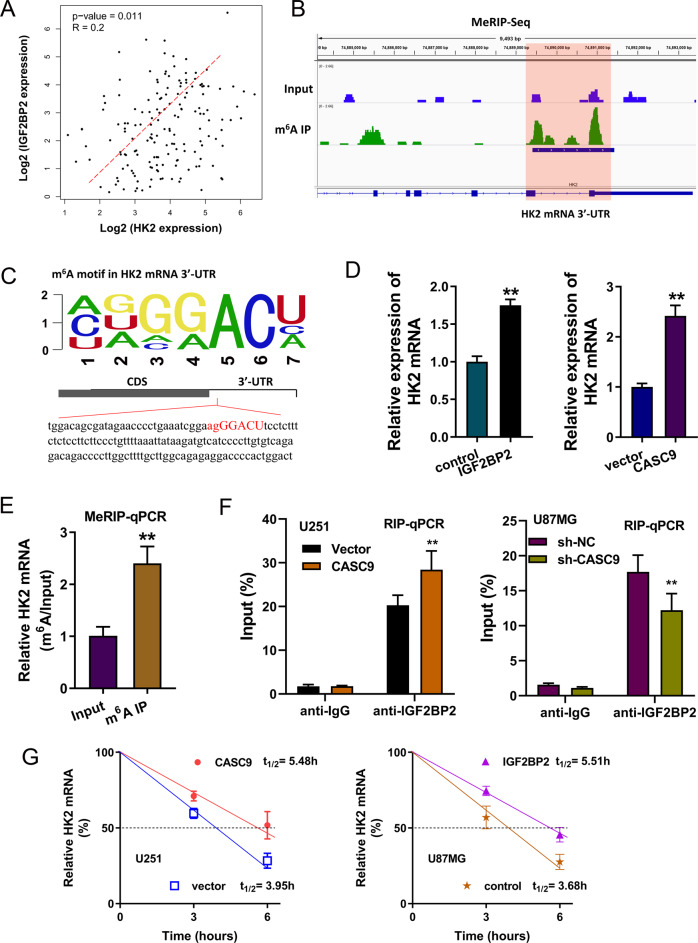
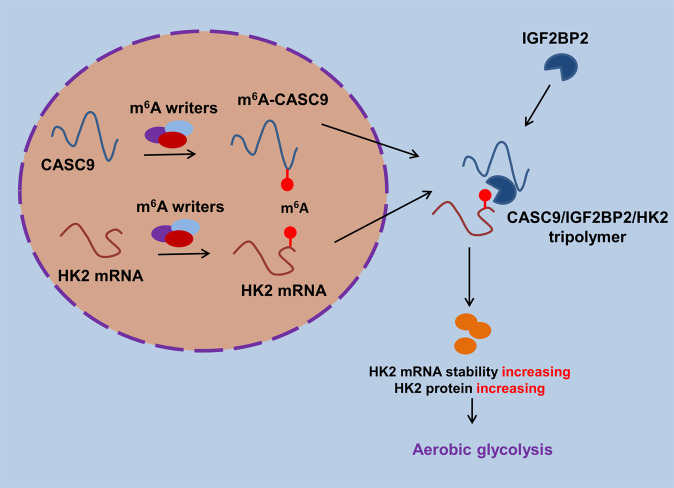
N 6-methyladenosine (m 6 A) has been identified to exert critical roles in human cancer; however, the regulation of m 6 A modification on glioblastoma multiforme (GBM) and long non-coding RNA (lncRNA) CASC9 (cancer susceptibility 9) is still unclear. Firstly, MeRIP-Seq revealed the m 6 A profile in the GBM. Moreover, the m 6 A-related lncRNA CASC9 expression was significantly elevated in the GBM tissue and its ectopic high expression was associated with poor survival, acting as an independent prognostic factor for GBM patients. Functionally, the aerobic glycolysis was promoted in the CASC9 overexpression transfection, which was inhibited in CASC9 knockdown in GBM cells. Mechanistically, m 6 A reader IGF2BP2 (insulin-like growth factor 2 mRNA binding protein 2) could recognize the m 6 A site of CASC9 and enhance its stability, then CASC9 cooperated with IGF2BP2, forming an IGF2BP2/CASC9 complex, to increase the HK2 (Hexokinase 2) mRNA stability. Our findings reveal that CASC9/IGF2BP2/HK2 axis promotes the aerobic glycolysis of GBM.
Overview
The claims and statistics of this paper haven’t been checked yet.
Free: it reads the open-access text and checks the first 5 claims that cite a source we can check. Create a free account to check every claim.
Integrity signals
Registry
Cites
Statistics
Figures
Verification
Claims the paper makes
The claims and statistics of this paper haven’t been checked yet.
Free: it reads the open-access text and checks the first 5 claims that cite a source we can check. Create a free account to check every claim.
Claims other papers make about this one
Each is checked against this paper’s own text: does it say what the citing paper says it does?
The cited source says what the claim attributes to it.
In the citing paper
“In GBM, IMP2 recognizes the m6A modification site on the long non-coding RNA CASC9, enhancing its stability [13].”
From IMPlications of IMP2 in RNA Biology and Disease (2025) · cites this paper as [13]
The cited source says what the claim attributes to it.
In the citing paper
“The upregulation of IMP2 in glioblastoma multiforme (GBM) is associated with poor prognosis.”
From IMPlications of IMP2 in RNA Biology and Disease (2025) · cites this paper as [13]
The cited source says what the claim attributes to it.
In the citing paper
“The IMP2/CASC9 complex increases the ability of IMP2 to bind and stabilize HK2 mRNA, which in turn promotes glycolysis in GBM [13].”
From IMPlications of IMP2 in RNA Biology and Disease (2025) · cites this paper as [13]
The check wasn’t confident either way, so it gives no verdict — never disputed.
In the citing paper
“IMP3 directly bound the 3′-UTR of MEKK1 mRNA, stabilizing it and activating the MEK1/ERK signaling pathway, thereby promoting CRC malignancy.”
From IMPlications of IMP2 in RNA Biology and Disease (2025) · cites this paper as [13]
Experimental — accuracy not yet measuredThe check wasn’t confident either way, so it gives no verdict — never disputed.
In the citing paper
“In cancer models, IMP3 KO mice demonstrated that IMP3 had a critical role in colorectal cancer (CRC) progression.”
From IMPlications of IMP2 in RNA Biology and Disease (2025) · cites this paper as [13]
Experimental — accuracy not yet measured
1 more claim about this paper
Create a free account to see every claim other papers make about this one.
Self-check
Percentages, sums and reported differences re-computed from the paper’s own numbers.
The self-check needs the paper’s full text.
Citations
Cites
1 retracted
Liu, X., Qin, J., Gao, T., Li, C., He, B., Pan, B., Xu, X., Chen, X., Zeng, K., Xu, M., et al. (2020) · Molecular Therapy — Nucleic Acids · doi:10.1016/j.omtn.2020.09.036 · Cited by 78
Self-citationRetractedZhang, S., Zhao, B. S., Zhou, A., Lin, K., Zheng, S., Lu, Z., Chen, Y., Sulman, E. P., Xie, K., Bögler, O., et al. (2017) · Cancer Cell · doi:10.1016/j.ccell.2017.02.013 · Cited by 1,459
Self-citationFunctions of N6-methyladenosine and its role in cancer
He, L., Li, H., Wu, A., Peng, Y., Shu, G., & Yin, G. (2019) · Molecular Cancer · doi:10.1186/s12943-019-1109-9 · Cited by 1,397
Wolf, A., Agnihotri, S., Micallef, J., Mukherjee, J., Sabha, N., Cairns, R., Hawkins, C., & Guha, A. (2011) · Journal of Experimental Medicine · doi:10.1084/jem.20101470 · Cited by 789
Link Between m6A Modification and Cancers
Liu, Z.-X., Li, L.-M., Sun, H.-L., & Liu, S.-M. (2018) · Frontiers in Bioengineering and Biotechnology · doi:10.3389/fbioe.2018.00089 · Cited by 373
Emerging treatment strategies for glioblastoma multiforme
Carlsson, S. K., Brothers, S. P., & Wahlestedt, C. (2014) · EMBO Molecular Medicine · doi:10.15252/emmm.201302627 · Cited by 365
IGF2BP2 regulates DANCR by serving as an N6-methyladenosine reader
Hu, X., Peng, W.-X., Zhou, H., Jiang, J., Zhou, X., Huang, D., Mo, Y.-Y., & Yang, L. (2020) · Cell Death & Differentiation · doi:10.1038/s41418-019-0461-z · Cited by 363
Metabolic Reprogramming in Glioma
Strickland, M., & Stoll, E. A. (2017) · Frontiers in Cell and Developmental Biology · doi:10.3389/fcell.2017.00043 · Cited by 345
TP53 gain-of-function mutation promotes inflammation in glioblastoma
Ham, S. W., Jeon, H.-Y., Jin, X., Kim, E.-J., Kim, J.-K., Shin, Y. J., Lee, Y., Kim, S. H., Lee, S. Y., Seo, S., et al. (2019) · Cell Death & Differentiation · doi:10.1038/s41418-018-0126-3 · Cited by 213
Biomarkers and therapeutic advances in glioblastoma multiforme
Sasmita, A. O., Wong, Y. P., & Ling, A. P. K. (2017) · Asia-Pacific Journal of Clinical Oncology · doi:10.1111/ajco.12756 · Cited by 185
Cited by
m6A-regulated tumor glycolysis: new advances in epigenetics and metabolism
Yue, S., Liu, H., Su, H.-F., Luo, C., Liang, H., Zhang, B., & Zhang, W. (2023) · Molecular Cancer · doi:10.1186/s12943-023-01841-8 · Cited by 140
“The complex can also bind to the methylation site on HK2 mRNA to improve the stability of HK2 mRNA and promote GBM glycolysis [157].”
BackgroundSelf-citationThe role of Insulin-like growth factor 2 mRNA-binding proteins (IGF2BPs) as m6A readers in cancer
Sun, C., Cao, D., Du, B.-B., Chen, C., & Liu, D. (2022) · International Journal of Biological Sciences · doi:10.7150/ijbs.70458 · Cited by 110
Liu, Z., Gao, L., Cheng, L., Lv, G., Sun, B., Wang, G., & Tang, Q. (2023) · Experimental & Molecular Medicine · doi:10.1038/s12276-023-00944-y · Cited by 100
Zhong, C., Long, Z., Yang, T., Wang, S., Zhong, W., Hu, F., Teoh, J. Y., Lü, J., & Mao, X. (2023) · International Journal of Biological Sciences · doi:10.7150/ijbs.77133 · Cited by 66
“Moreover, some specific m6A readers, such as IGF2BP2, could interact with circRNA to enhance its stability [34, 35].”
BackgroundZheng, H., Zhu, M., Li, W., Zhou, Z., & Wan, X. (2022) · Liver International · doi:10.1111/liv.15240 · Cited by 59
Small molecule inhibitors targeting m6A regulators
Feng, G., Wu, Y., Hu, Y., Wen, S., Yang, X. J., Li, Y., Ouyang, L., & Wang, G. (2024) · Journal of Hematology & Oncology · doi:10.1186/s13045-024-01546-5 · Cited by 59
Targeting RNA N6-methyladenosine modification: a precise weapon in overcoming tumor immune escape
Li, W., Hao, Y., Zhang, X., Xu, S., & Pang, D. (2022) · Molecular Cancer · doi:10.1186/s12943-022-01652-3 · Cited by 49
Emerging role of RNA modification and long noncoding RNA interaction in cancer
Yang, L., Tang, L., Min, Q., Tian, H., Li, L., Zhao, Y., Wu, X., Li, M., Du, F., Chen, Y., et al. (2024) · Cancer Gene Therapy · doi:10.1038/s41417-024-00734-2 · Cited by 47
Lv, J., Xing, L., Zhong, X., Li, K., Liu, M., & Du, K. (2023) · Biomedicine & Pharmacotherapy · doi:10.1016/j.biopha.2023.114583 · Cited by 44
IGF2BP2: an m6A reader that affects cellular function and disease progression
Liu, S., Liao, S., He, J., Zhou, Y., & He, Q. (2025) · Cellular & Molecular Biology Letters · doi:10.1186/s11658-025-00723-9 · Cited by 52
“In glioblastoma, IGF2BP2’s interaction with lncRNA CACS9 to enhance its stability suggests a poor prognosis for glioblastoma multiforme (GBM) [145].”
Cai, H., Liang, J., Jiang, Y., Wang, Z., Li, H., Wang, W., Wang, C., & Hou, J. (2024) · Journal of Experimental & Clinical Cancer Research · doi:10.1186/s13046-024-02996-y · Cited by 39
You, S., Su, X., Ying, J., Li, S., Qu, Y., & Mu, D. (2022) · Biomolecules · doi:10.3390/biom12081158 · Cited by 38
Li, Y., Zhang, Y., Zhang, T., Ping, X., Wang, D., Chen, Y., Yu, J., Liu, C., Liu, Z., Zheng, Y., et al. (2023) · Advanced Science · doi:10.1002/advs.202300436 · Cited by 38
Self-citationThe role and regulatory mechanism of m6A methylation in the nervous system
Jiang, L., Li, X., Wang, S., Yuan, Z., & Cheng, J. (2022) · Frontiers in Genetics · doi:10.3389/fgene.2022.962774 · Cited by 30
Self-citationZhou, L., Li, H., Cai, H., Liu, W., Pan, E., Yu, D., & He, S. (2022) · Frontiers in Oncology · doi:10.3389/fonc.2022.809589 · Cited by 24
“IGF2BP2 expression was significantly reduced in ACC, BRCA and KIRC cancer samples, while it was significantly upregulated in COAD, ESCA, GBM, HNSC, LIHC, LUSC, OV, PAAD, READ, SKCM, STAD, TGCT and UCS cancer samples (Figure 3G).”
BackgroundInfluentialTang, J., Zhang, J., Yu, L., He, J., Wang, H., Liu, B., Tu, C., & Li, Z. (2023) · Biomarker Research · doi:10.1186/s40364-023-00484-7 · Cited by 22
Li, M., Thorne, R. F., Wang, R., Cao, L., Cheng, F., Sun, X., Wu, M., Ma, J., & Liu, L. (2023) · Cell Death Discovery · doi:10.1038/s41420-023-01411-3 · Cited by 25
“…cancer-Received overexpressed non-coding RNAs also promote HK2 mRNA stability, with circCDKN2B-AS1 complexing with IGF2BP3 and HK2 mRNA to sustain aerobic glycolysis [33], while the related IGF2BP2 protein also increases HK2 mRNA stability through forming a complex with the lncRNA CASC9 [34].”
Self-citationRNA m6A modifications regulate crosstalk between tumor metabolism and immunity
Gu, J., Cao, H., Chen, X., Zhang, X. D., Thorne, R. F., & Liu, X. (2023) · Wiley Interdisciplinary Reviews - RNA · doi:10.1002/wrna.1829 · Cited by 24
“In addition, YTHDF2 degrades TAR DNA binding protein (TARDBP) in an RNA m6A-dependent manner to promote the survival and proliferation of NK cells through STAT5, also enhancing their antitumor function (S. Ma, Yan, et al., 2021).”
BackgroundSelf-citationLiu, S., Ma, Q., Zeng, C., Li, H., Su, J., Song, Z., Yan, R., Zhao, Z., Tian, S., & Huang, W. (2025) · Biomarker Research · doi:10.1186/s40364-025-00824-9 · Cited by 25
Regulatory RNAs: role as scaffolds assembling protein complexes and their epigenetic deregulation
Poltronieri, P. (2024) · Exploration of Targeted Anti-tumor Therapy · doi:10.37349/etat.2024.00252 · Cited by 18
Yi, Q., Liao, Y., Sun, W., Li, J., Yang, D., Shang, H., & Sun, W. (2025) · International Journal of Molecular Medicine · doi:10.3892/ijmm.2025.5605 · Cited by 24
Wang, S., Wang, X., Qin, C., Liang, C., Li, W., Ran, A., Ma, Q., Pan, X., Yang, F., Ren, J., et al. (2024) · Cellular & Molecular Biology Letters · doi:10.1186/s11658-024-00626-1 · Cited by 21
“These proteins have been implicated in diverse biological processes, including apoptosis [5], epithelial-mesenchymal transition (EMT) [6], DNA damage response (DDR) [7], cell proliferation [8, 9], immune response [10], and metabolism [11].”
BackgroundThe Role of RNA m6A Modification in Cancer Glycolytic Reprogramming
Zhou, Y., Huang, T., Jiang, J., Li, Y., Huang, H., & Wu, S. (2022) · Current Gene Therapy · doi:10.2174/1566523222666220830150446 · Cited by 15
METTL14 Enhances Antitumor Immunity through m6A-Dependent Loss of PD-1
Huang, C. C., Wang, X., Gu, Y., Ren, K., Zang, H., Zhang, Y., Pan, Y., Cheng, S., Zhu, X., Wu, S., et al. (2025) · Cancer Research · doi:10.1158/0008-5472.can-25-0065 · Cited by 14
Ding, Y., Liu, M., Wang, W., & Li, X. (2024) · International Journal of Biological Macromolecules · doi:10.1016/j.ijbiomac.2024.139150 · Cited by 15
The Regulation of m6A Modification in Glioblastoma: Functional Mechanisms and Therapeutic Approaches
Deacon, S., Walker, L., Radhi, M., & Smith, S. J. (2023) · Cancers · doi:10.3390/cancers15133307 · Cited by 16
“A further study demonstrated that IGF2BP2 stabilises CASC9 to accelerate aerobic glycolysis in glioblastoma [94].”
BackgroundIntertwined regulation between RNA m6A modification and cancer metabolism
Liu, J., Huang, H., Zhang, M., Qing, G., & Liu, H. (2022) · Cell Insight · doi:10.1016/j.cellin.2022.100075 · Cited by 19
Self-citationRen, J., Huang, B., Li, W., Wang, Y., Pan, X., Ma, Q., Liu, Y., Wang, X., Liang, C., Zhang, Y., et al. (2024) · Translational Oncology · doi:10.1016/j.tranon.2024.101904 · Cited by 11
Wu, G., Hou, Q., Liu, Z., Pu, Z., & Wu, L. (2024) · Journal of Cancer · doi:10.7150/jca.97533 · Cited by 13
“Among the m 6 A reader proteins, IGF2BP2 acts mainly by enhancing RNA stability [50, 51].”
BackgroundMultifaceted roles of insulin‑like growth factor 2 mRNA binding protein 2 in human cancer (Review)
Shen, J., & Ding, Y. (2025) · Molecular Medicine Reports · doi:10.3892/mmr.2025.13441 · Cited by 12
The Roles and Regulation of m6A Modification in Glioblastoma Stem Cells and Tumorigenesis
Li, P., Richard, H., Zhu, K., Li, L., & Huang, S. (2022) · Biomedicines · doi:10.3390/biomedicines10050969 · Cited by 9
Yang, J., Liang, F., Zhang, F., Zhao, H., Gong, Q., & Gao, N. (2024) · Pharmacology & Therapeutics · doi:10.1016/j.pharmthera.2024.108671 · Cited by 6
Self-citationDou, Z., Ma, X.-T., Piao, M., Wang, J., & Li, J. (2024) · Translational Cancer Research · doi:10.21037/tcr-23-2401 · Cited by 8
“IGF2BP2 in glioblastoma and CRC interacts with m6A methylation sites on lncRNA CASC9 (49) and lncRNA ZFAS1 (50), increasing the stability of CASC9 and ZFAS1.”
Zhang, S., Lecoeur, H., Varet, H., Legendre, R., Mahtal, N., Proux, C., Aulner, N., Shorte, S. L., Granjean, C., Bousso, P., et al. (2022) · bioRxiv (Cold Spring Harbor Laboratory) · doi:10.1101/2022.09.08.507100 · Cited by 8
“Protein levels were expressed as Z-scores based on the relative expression of the M0 group (Liu et al., 2020b).”
MethodSelf-citationRNA Modifications in Cancer Metabolism and Tumor Microenvironment
Qing, Y., Dong, W., Deng, X., Chen, J., & Su, R. J. (2023) · Cancer treatment and research · doi:10.1007/978-3-031-45654-1_1 · Cited by 7
Weng, R., Liu, Y., & Xiong, W. (2025) · American Journal Of Pathology · doi:10.1016/j.ajpath.2025.08.016 · Cited by 5
The role of m6A reader IGF2BPs in tumor metabolic reprogramming
Zhou, X., Li, G., Su, X., Wang, Y., Liu, L., Yang, C., Xu, Y., He, J., & Zhang, J. (2025) · Biochemical Pharmacology · doi:10.1016/j.bcp.2025.117452 · Cited by 6
IMPlications of IMP2 in RNA Biology and Disease
Das, J., Busia-Bourdain, O., Khan, K. M., & Wolfe, A. L. (2025) · International Journal of Molecular Sciences · doi:10.3390/ijms26062415 · Cited by 3
“In GBM, IMP2 recognizes the m6A modification site on the long non-coding RNA CASC9 , enhancing its stability [13].”
InfluentialMa, C., Liu, S., Zhao, Y. Q., Liu, H., & Zhang, X. (2025) · Frontiers in Cell and Developmental Biology · doi:10.3389/fcell.2025.1628915 · Cited by 5
Self-citationWu, W., & Wen, K. (2022) · Oncology Reports · doi:10.3892/or.2022.8365 · Cited by 3
Deregulating m6A regulators leads to altered RNA biology in glioma cell linesPreprint
Batool, S. M., Lee, H., Escobedo, A. K., Gashi, D., Faber, K., Khanna, P., Haas, K. D., Hsia, T., Carter, B. S., & Balaj, L. (2024) · bioRxiv (Cold Spring Harbor Laboratory) · doi:10.1101/2024.10.28.620763 · Cited by 2
“Importantly, IGF2BP2 overexpression is associated with poor prognosis in glioma 33– 35 .”
Qi, C., Jin, X., Wang, H., & Xu, D. (2025) · Biomolecules · doi:10.3390/biom15081092 · Cited by 4
“The m 6 A binding protein IGF2BP2 can recognize modification sites on lncRNA CASC9 (cancer susceptibility 9) and enhance its stability, thereby increasing the stability of hexokinase 2 mRNA, which is beneficial for aerobic glycolysis in GBM and promotes GBM proliferation [114].”
Wang, S., Wang, X., Qin, C., Liang, C., Li, W., Ran, A., Ma, Q., Pan, X., Yang, F., Ren, J., et al. (2024) · Figshare · doi:10.6084/m9.figshare.26771745
Cai, H., Liang, J., Jiang, Y., Wang, Z., Li, H., Wang, W., Wang, C., & Hou, J. (2024) · Figshare · doi:10.6084/m9.figshare.26689058
Cai, H., Liang, J., Jiang, Y., Wang, Z., Li, H., Wang, W., Wang, C., & Hou, J. (2024) · Figshare · doi:10.6084/m9.figshare.25347094
Cai, H., Liang, J., Jiang, Y., Wang, Z., Li, H., Wang, W., Wang, C., & Hou, J. (2024) · Figshare · doi:10.6084/m9.figshare.26689064
Cai, H., Liang, J., Jiang, Y., Wang, Z., Li, H., Wang, W., Wang, C., & Hou, J. (2024) · Figshare · doi:10.6084/m9.figshare.26689061
Wang, S., Wang, X., Qin, C., Liang, C., Li, W., Ran, A., Ma, Q., Pan, X., Yang, F., Ren, J., et al. (2024) · Figshare · doi:10.6084/m9.figshare.26771730
Wang, S., Wang, X., Qin, C., Liang, C., Li, W., Ran, A., Ma, Q., Pan, X., Yang, F., Ren, J., et al. (2024) · Figshare · doi:10.6084/m9.figshare.26777998
Cai, H., Liang, J., Jiang, Y., Wang, Z., Li, H., Wang, W., Wang, C., & Hou, J. (2024) · Figshare · doi:10.6084/m9.figshare.26689055
Wang, S., Wang, X., Qin, C., Liang, C., Li, W., Ran, A., Ma, Q., Pan, X., Yang, F., Ren, J., et al. (2024) · Figshare · doi:10.6084/m9.figshare.26777995
Cai, H., Liang, J., Jiang, Y., Wang, Z., Li, H., Wang, W., Wang, C., & Hou, J. (2024) · Figshare · doi:10.6084/m9.figshare.26689052
Cai, H., Liang, J., Jiang, Y., Wang, Z., Li, H., Wang, W., Wang, C., & Hou, J. (2024) · Figshare · doi:10.6084/m9.figshare.25347217
Zhang, S. (2024) · theses.fr (ABES) · doi:10.70675/60a97388z3f39z4829zbe4ezd73224b4a333
Self-citationLong-read transcriptomic profiling of a glioma cell line following m6A regulator perturbations
Lee, H., Batool, S. M., Escobedo, A. K., Gashi, D., Faber, K., Ponnolu, P., Barretts, N. R., Khanna, P., Haas, K. D., Hsia, T., et al. (2026) · Biochemistry and Biophysics Reports · doi:10.1016/j.bbrep.2026.102614 · Cited by 1
Guo, Y., Kou, R., Huang, Z., Chen, Z., & Yun, H. (2026) · Frontiers in Cell and Developmental Biology · doi:10.3389/fcell.2026.1864321
Guimarães‐Teixeira, C., Miranda‐Gonçalves, V., Henrique, R., & Jerónimo, C. (2026) · Advances in experimental medicine and biology · doi:10.1007/978-3-032-12166-0_11
van de Langerijt, K. A., Kibria, M. G., Villa, G. R., & Mineo, M. (2026) · Cells · doi:10.3390/cells15141251
“The resulting IGF2BP2/CASC9 complex subsequently binds to the m6A-modified site within the 3 ′ untranslated region of HK2 mRNA and markedly increases its stability, whereas IGF2BP2 alone exerts only a modest stabilizing effect [42].”
N6-methyladenosine as a potential epitranscriptomic immune rheostat during SARS-CoV-2 infection
Hui, X., Gao, S., Ding, S., Li, M., & Tian, X. (2026) · Frontiers in Immunology · doi:10.3389/fimmu.2026.1878455
“In glycolytic pathways, the expression and translation of rate-limiting enzymes such as HK2, PFK, and LDHA are subject to m 6 A-dependent regulation (64, 65).”
Li, N., Lu, J., & Zhang, W. (2026) · International Immunopharmacology · doi:10.1016/j.intimp.2026.117352
Meng, G., Li, Y., Gan, L., Chen, X., & Chen, Y. (2026) · Cells · doi:10.3390/cells15181679
“This IGF2BP2-mediated metabolic enhancement effect was reported in various malignant tumors including glioblastoma [57], such as glioblastoma, indicating that this post-transcriptional regulatory axis represents a universal mechanism by which tumors maintain a high glycolysis phenotype.”
RNA modifications and metabolism in cancer: Mechanisms, cross-talk and therapeutic implications
Luo, X., Zuo, X., He, J., & Yi, P. (2026) · Seminars in Cancer Biology · doi:10.1016/j.semcancer.2026.102622
Rana, M. S., Parvin, M. M., Sarker, M. A., Islam, M. T., Rahman, M. M., & Wahid, A. (2026) · Biochimica et Biophysica Acta (BBA) - Proteins and Proteomics · doi:10.1016/j.bbapap.2026.141189
刘, 国. (2026) · Advances in Clinical Medicine · doi:10.12677/acm.2026.16103560
Metadata
- Authors
- Liu, H., Qin, S., Liu, C., Jiang, L., Li, C., Yang, J., Zhang, S., Yan, Z., Liu, X., Yang, J., & Sun, X.
- Affiliations
- Second Hospital of Hebei Medical University (CN)
- Hebei Medical University (CN)
- Corresponding author
- Sun, Xiaofeng
- Venue
- Cell Death Discovery
- Published
- 2021-10-13
- Volume
- 7
- Issue
- 1
- Pages
- 292-292
- ISSN
- 2058-7716 (ISSN-L)
- PMC
- PMC8514511
- OpenAlex
- W3205577640
- Cited by
- 58
- References
- 21
- Citations by year
- 2026: 10 · 2025: 10 · 2024: 17 · 2023: 10 · 2022: 11
- FWCI
- 3.45
- Type
- journal article
- Language
- en
- Open access
- gold
- doi.org
- Licence
- cc-by
- creativecommons.org/licenses/by/4.0 (tdm)
- creativecommons.org/licenses/by/4.0 (vor)
- Locations
- Cell Death Discovery (publishedVersion, cc-by)
- Europe PMC (PubMed Central) (publishedVersion, other-oa)
- PubMed Central (publishedVersion, cc-by)
- PubMed (publishedVersion)
- DOAJ (DOAJ: Directory of Open Access Journals) (submittedVersion, cc-by-sa)
- Funders
- China Aerospace Science and Technology Corporation
- Fondo para la Investigación Científica y Tecnológica (QN2018020)
- Topics
- Life Sciences › Biochemistry, Genetics and Molecular Biology › Molecular Biology › RNA modifications and cancer
- Life Sciences › Biochemistry, Genetics and Molecular Biology › Cancer Research › Cancer-related molecular mechanisms research
- Life Sciences › Biochemistry, Genetics and Molecular Biology › Cancer Research › Cancer, Hypoxia, and Metabolism
- Keywords
- glioblastoma, N6-methyladenosine, m6A reader, IGF2BP2, CASC9, long non-coding RNA, HK2, aerobic glycolysis, mRNA stability, prognostic factors, cancer metabolism
About these checks
Registry, retraction, Cites and statistics results are computed, not judged, with one exception: a printed reference that no index lists is read once by a model before it counts as a citation error. Claims are extracted by a model and kept only when their quote appears verbatim in the text; each cited source is then checked, with a model’s help, for whether it says what the claim relies on. Those verdicts can be wrong — read the claim’s quote and the cited source before relying on one.
Statistics and arithmetic are recomputed, not judged.
Confidence bands are shown only for fields calibrated on our annotated test set. None is calibrated yet, so no band is shown.
What counts as a claim ›How we measure confidence ›How we check this ›
Are you an author, or do you see a problem with this page? Request a review
Data sources
Bibliographic data: Semantic Scholar, OpenAlex, Crossref.
Contains information from the Semantic Scholar Academic Graph Datasets, made available under the ODC Attribution License (ODC-BY 1.0).
Semantic Scholar’s data is described in: Kinney, R., et al. (2023). The Semantic Scholar Open Data Platform. arXiv:2301.10140.
