

BMP9 reduces age-related bone loss in mice by inhibiting osteoblast senescence through Smad1-Stat1-P21 axis
Open accessThe DOI matches its Crossref record; 54 of the 54 references it cites were found in a registry or an index.
Abstract
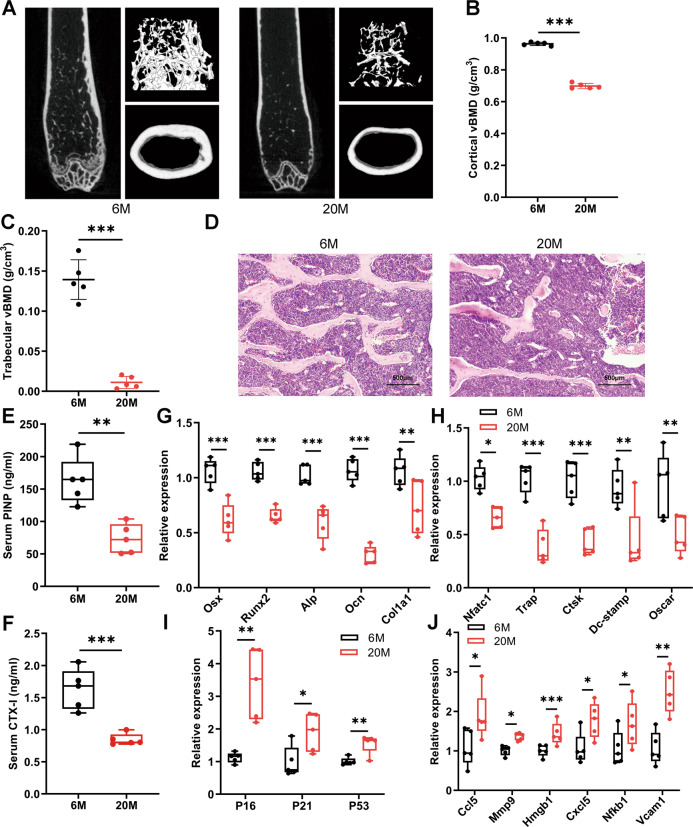
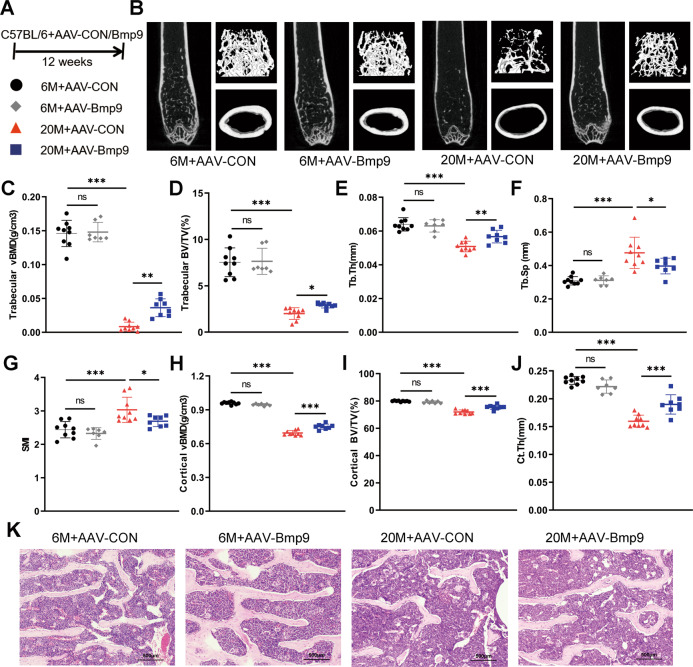
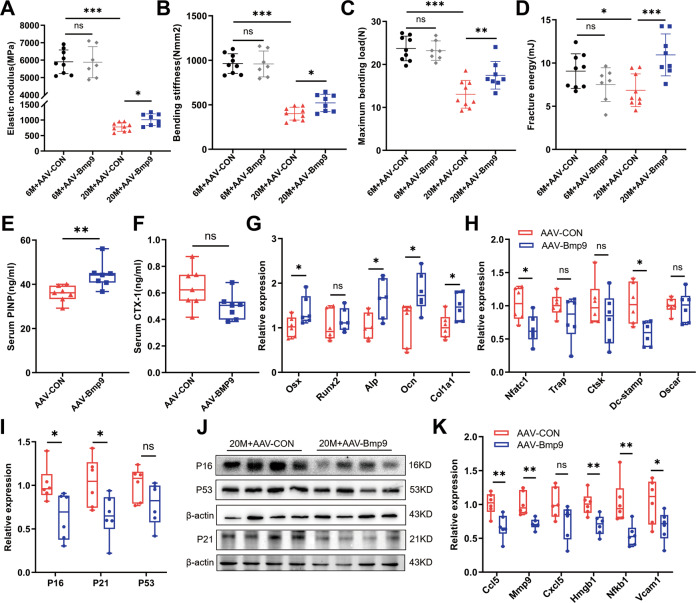
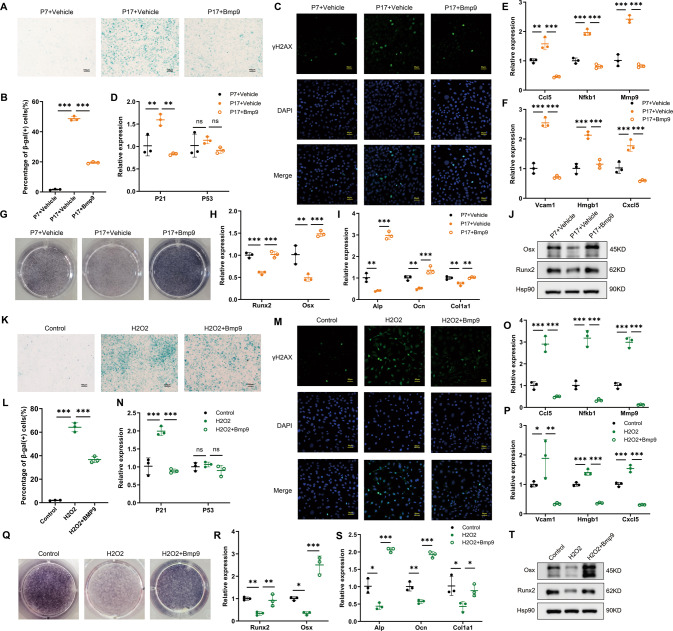
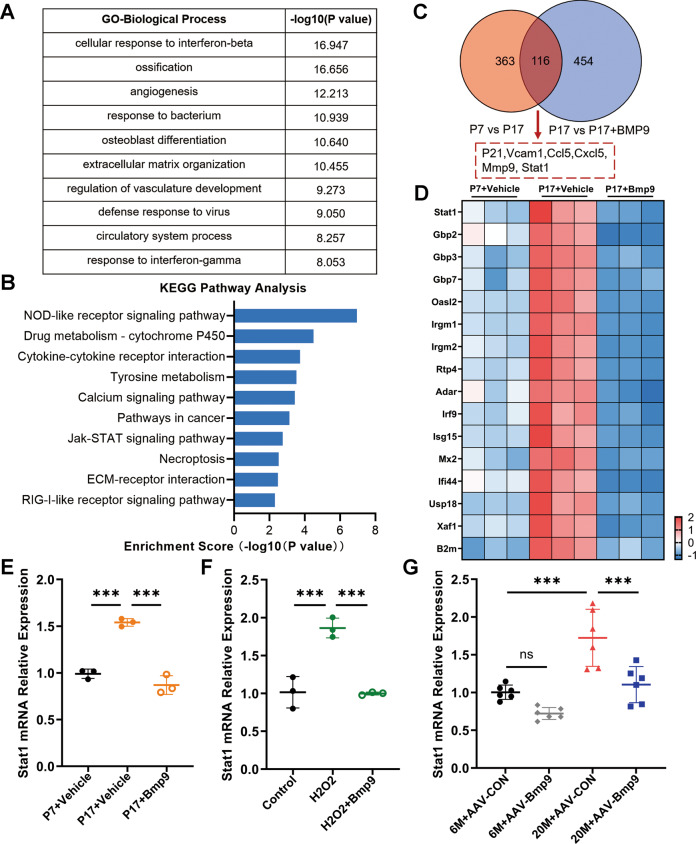
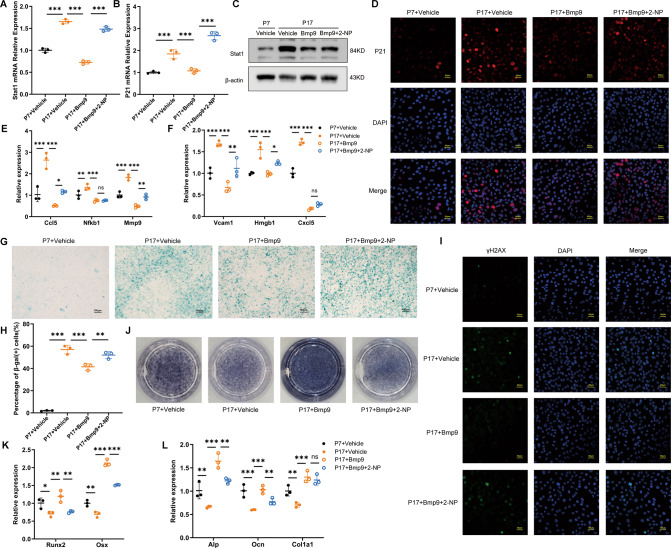
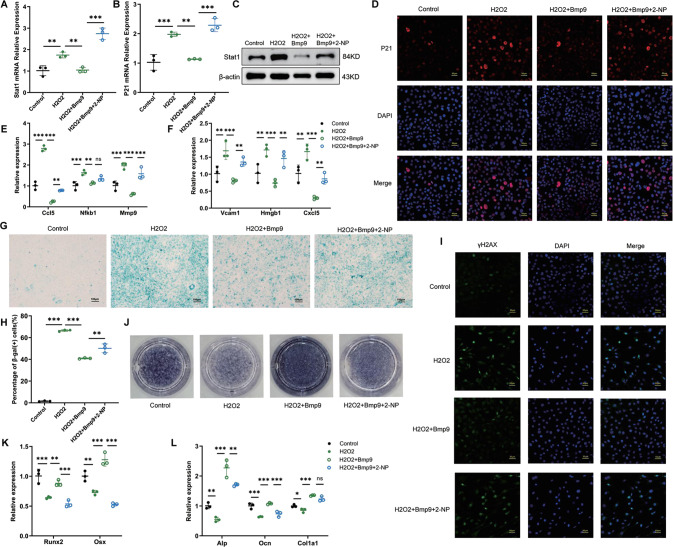
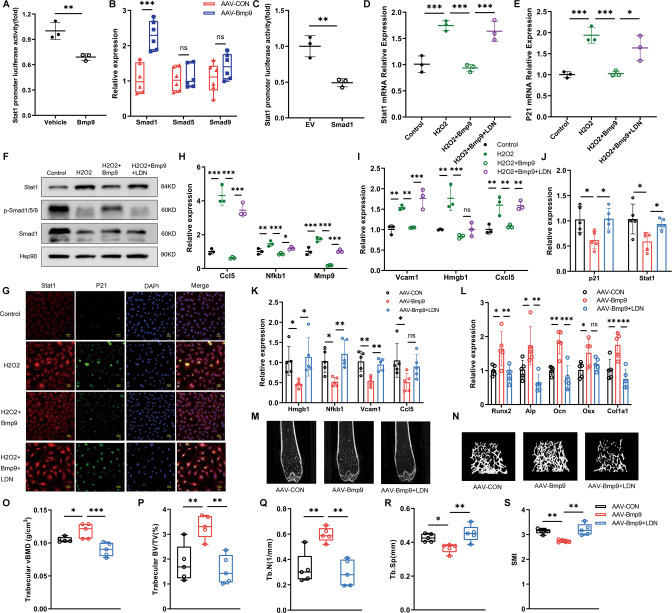
Age-related osteoporosis is characterized by the accumulation of senescent osteoblastic cells in bone microenvironment and significantly reduced osteogenic differentiation. Clearing of the senescent cells is helpful to improve bone formation in aged mice. Bone morphogenetic protein 9 (BMP9), a multifunctional protein produced and secreted by liver, was reported to improve osteoporosis caused by estrogen withdrawal. However, the mechanism of BMP9 has not been fully elucidated, and its effect on senile osteoporosis has not been reported. This study reveals that BMP9 significantly increases bone mass and improves bone biomechanical properties in aged mice. Furthermore, BMP9 reduces expression of senescent genes in bone microenvironment, accompanied by decreased senescence-associated secretory phenotypes (SASPs) such as Ccl5, Mmp9, Hmgb1, Nfkb1, and Vcam1. In vitro, Bmp9 treatment inhibits osteoblast senescence through activating Smad1, which suppresses the transcriptional activity of Stat1, thereby inhibits P21 expression and SASPs production. Furthermore, inhibiting the Smad1 signal in vivo can reverse the inhibitory effect of BMP9 on Stat1 and downstream senescent genes, which eliminates the protection of BMP9 on age-related osteoporosis. These findings highlight the critical role of BMP9 on reducing age-related bone loss by inhibiting osteoblast senescence through Smad1-Stat1-P21 axis.
Overview
The claims and statistics of this paper haven’t been checked yet.
Free: it reads the open-access text and checks the first 5 claims that cite a source we can check. Create a free account to check every claim.
Integrity signals
Registry
Cites
Statistics
Figures
Verification
Claims the paper makes
The claims and statistics of this paper haven’t been checked yet.
Free: it reads the open-access text and checks the first 5 claims that cite a source we can check. Create a free account to check every claim.
Claims other papers make about this one
Each is checked against this paper’s own text: does it say what the citing paper says it does?
In the citing paper
“Xu [43] also demonstrated that BMP 9, which is produced and secreted by the liver, significantly increased bone mass and improved bone biomechanical properties in aged mice through the smad1-Stat1-P21 axis.”
From Emerging role of liver-bone axis in osteoporosis (2024) · cites this paper as [43]
Self-check
Percentages, sums and reported differences re-computed from the paper’s own numbers.
The self-check needs the paper’s full text.
Citations
Cites
Dempster, D. W., Compston, J. E., Drezner, M. K., Glorieux, F. H., Kanis, J. A., Malluche, H., Meunier, P. J., Ott, S. M., Recker, R. R., & Parfitt, A. M. (2013) · Journal of Bone and Mineral Research · doi:10.1002/jbmr.1805 · Cited by 2,543 · cited 1×
“Micro-CT analysis and three-point bending test All procedures involving micro-CT were performed according to the recommendation of the American Society for Bone and Mineral Research [51].”
Cellular senescence in aging and age-related disease: from mechanisms to therapy
Childs, B. G., Durik, M., Baker, D. J., & van Deursen, J. M. (2015) · Nature Medicine · doi:10.1038/nm.4000 · Cited by 2,363 · cited 2×
“INTRODUCTION Aging is manifested as time-dependent degeneration of physiological functions at cellular, tissue, and organismal levels, making the individual more vulnerable to various diseases, such as osteoporosis [1].”
Sudo, H., Kodama, H. A., Amagai, Y., Yamamoto, S., & Kasai, S. (1983) · The Journal of cell biology · doi:10.1083/jcb.96.1.191 · Cited by 1,671 · cited 1×
“Cell culture, osteogenic induction, and reagent treatment Mycoplasma-free osteoblastic MC3T3-E1 cells (American Type Culture Collection, Manassas, VA, USA), a widely used clonal osteoblast-like cell line isolated from calvaria of embryonic mouse [52, 53], was cultured in α-modified minimal essential medium (Gibco, The…”
Targeting cellular senescence prevents age-related bone loss in mice
Farr, J. N., Xu, M., Weivoda, M. M., Monroe, D. G., Fraser, D. G., Onken, J. L., Negley, B. A., Sfeir, J. G., Ogrodnik, M. B., Hachfeld, C. M., et al. (2017) · Nature Medicine · doi:10.1038/nm.4385 · Cited by 1,182 · cited 1×
“In addition, pioneer work demonstrates that eliminating senescent cells or suppressing SASPs is effective in promoting bone formation in aged mice [6, 13].”
Role of p53 in the Regulation of Cellular Senescence
Mijit, M., Caracciolo, V., Melillo, A., Amicarelli, F., & Giordano, A. (2020) · Biomolecules · doi:10.3390/biom10030420 · Cited by 639 · cited 1×
“To verify the aging bone microenvironment, we measured the expression of P16, P21, and P53, which were senescenceassociated genes [8, 23], and found that they were elevated in aged mice (Fig.”
Identification of senescent cells in the bone microenvironment
Farr, J. N., Fraser, D. G., Wang, H., Jaehn, K., Ogrodnik, M. B., Weivoda, M. M., Drake, M. T., Tchkonia, T., LeBrasseur, N. K., Kirkland, J. L., et al. (2016) · Journal of Bone and Mineral Research · doi:10.1002/jbmr.2892 · Cited by 562 · cited 1×
“Eliminating or reducing the burden of senescent cells represents a valuable therapeutic approach to age-related osteoporosis [3].”
Novais, E. J., Tran, V. A., Johnston, S. N., Darris, K. R., Roupas, A. J., Sessions, G. A., Shapiro, I. M., Diekman, B. O., & Risbud, M. V. (2021) · Nature Communications · doi:10.1038/s41467-021-25453-2 · Cited by 440 · cited 1×
“Consistently, recent study noted that mice treated with senolytic drugs (Dasatinib+Quercetin) from 18-month-old to 23-month-old showed improved vertebral bone quality parameters, whereas same treatment during 6–23months of age showed no obvious effect [14].”
Sirt3-mediated mitophagy regulates AGEs-induced BMSCs senescence and senile osteoporosis
Guo, Y., Jia, X., Cui, Y., Song, Y., Wang, S., Geng, Y., Li, R., Gao, W., & Fu, D. (2021) · Redox Biology · doi:10.1016/j.redox.2021.101915 · Cited by 296 · cited 1×
“The BMP9 overexpression model was established as previously described [49, 50].”
Senile Osteoporosis: The Involvement of Differentiation and Senescence of Bone Marrow Stromal Cells
Qadir, A., Liang, S., Wu, Z., Chen, Z., Hu, L., & Qian, A. (2020) · International Journal of Molecular Sciences · doi:10.3390/ijms21010349 · Cited by 268
Farr, J. N., & Khosla, S. (2019) · Bone · doi:10.1016/j.bone.2019.01.015 · Cited by 263
Cited by
The role of p21 in cellular senescence and aging-related diseases
Yan, J., Chen, S., Yi, Z., Zhao, R., Zhu, J., Ding, S., & Wu, J. (2024) · Molecules and Cells · doi:10.1016/j.mocell.2024.100113 · Cited by 166
Epigenetic regulations of cellular senescence in osteoporosis
Huo, S., Tang, X., Chen, W., Gan, D., Guo, H., Yao, Q., Liao, R., Huang, T., Wu, J., Yang, J., et al. (2024) · Ageing Research Reviews · doi:10.1016/j.arr.2024.102235 · Cited by 99
Single-Cell RNA-Sequencing Reveals the Skeletal Cellular Dynamics in Bone Repair and Osteoporosis
Wu, S., Ohba, S., & Matsushita, Y. (2023) · International Journal of Molecular Sciences · doi:10.3390/ijms24129814 · Cited by 42
“The proportion of senescent BMSCs in the skeletal microenvironment increases with age, thereby leading to a decrease in the osteogenic capacity of osteoblasts [81,83].”
BackgroundEmerging role of liver-bone axis in osteoporosis
Gao, H., Peng, X., Li, N., Gou, L., Xu, T., Wang, Y., Qin, J., Liang, H., Ma, P., Li, S., et al. (2024) · Journal of Orthopaedic Translation · doi:10.1016/j.jot.2024.07.008 · Cited by 36
“Xu [43] also demonstrated that BMP 9, which is produced and secreted by the liver, significantly increased bone mass and improved bone biomechanical properties in aged mice through the smad1-Stat1-P21 axis.”
BackgroundWang, Z., Zhang, Y., Wu, F., Qiu, B., Yin, Y., Wang, X., Huang, R., Zhang, X., Sun, Z., Tang, W., et al. (2025) · Neuro-Oncology · doi:10.1093/neuonc/noaf107 · Cited by 29
“40 These findings revealed that STAT1 plays an important role in immune and senescence regulation in both pathological and physiological microenvironments.”
Addressing osteoblast senescence: Molecular pathways and the frontier of anti‐ageing treatments
Zhang, Z., Liu, P., Song, Y., Ma, L., Xu, Y., Lei, J., Tong, B., Zhu, D., Liang, H., Wang, H., et al. (2025) · Clinical and Translational Medicine · doi:10.1002/ctm2.70417 · Cited by 26
The roles of hepatokine and osteokine in liver-bone crosstalk: Advance in basic and clinical aspects
Li, Z., Wen, X., Li, N., Zhong, C., Chen, L., Zhang, F., Zhang, G., Lü, A., & Liu, J. (2023) · Frontiers in Endocrinology · doi:10.3389/fendo.2023.1149233 · Cited by 22
“BMP9 increased bone mass in aged mice by preventing osteoblast senescence and stimulating osteoblast differentiation, improved bone biomechanical properties, and ameliorated the bone microenvironment (61).”
BackgroundSelf-citationChen, X., Yang, Y., Pan, Z.-C., Xu, J.-Z., Jiang, T., Zhang, L.-L., Zhu, K.-C., Zhang, D., Song, J., Sheng, C.-X., et al. (2024) · iScience · doi:10.1016/j.isci.2024.111519 · Cited by 18
Self-citationChen, Y., Yang, S., Yu, T., Zeng, T., Wei, L., You, Y., Tang, J., Dang, T., Sun, H., & Zhang, Y. (2024) · Cancer Cell International · doi:10.1186/s12935-024-03504-0 · Cited by 12
Exosome-derived miR-5p-72106_14 in vascular endothelial cells regulates fate determination of BMSCs
Li, H., Wang, J., Xie, X., Chen, Y., Zheng, Q., He, J., & Lu, Q. (2023) · Toxicology and Applied Pharmacology · doi:10.1016/j.taap.2023.116793 · Cited by 9
Review on the hepatic osteodystrophy in poultry: From pathogenesis to management implications
Guo, F., Zhang, Z.-Q., Zhang, C., Chen, Y., & 黄淑成, S.-C. H. (2026) · Poultry Science · doi:10.1016/j.psj.2026.106410 · Cited by 6
The liver-bone axis: an emerging player in disease pathogenesis and therapeutic intervention
Han, S., Wei, Y., Yu, G., Jia, W., Liao, W., He, Y., Cheng, K., Zhao, J., Xiang, S., Zhang, W., et al. (2026) · Science China Life Sciences · doi:10.1007/s11427-025-3207-5 · Cited by 5
Self-citationZhang, M., Liu, S., Chen, Y., Chen, Y., Jiaojiao, H., Xia, Y., & Yang, Y. (2024) · Experimental Cell Research · doi:10.1016/j.yexcr.2024.114329 · Cited by 5
Self-citationAntisenescence therapies for age‐related bone loss: Target factors, medicines, biomedical materials
Zhu, Q., Hu, M., Wu, L., Wei, E., Pan, X., Liu, H., & Liu, Y. (2025) · Clinical and Translational Medicine · doi:10.1002/ctm2.70350 · Cited by 4
“33,34 Lipocalin-2 (LCN2) and prolactin (PRL) are similarly involved in regulating BMSCs’ activity and delaying CS. 35 Pretreating BMSCs with LCN2 and PRL was shown to promote the repair of cranial defects in mice.”
Liu, Z., Zhao, E., Wang, Y., Huang, H., Wu, Y., He, Y., Bai, S., Wang, S., Fan, S., Cao, S., et al. (2025) · Journal of Advanced Research · doi:10.1016/j.jare.2025.08.056 · Cited by 2
Cellular senescence in musculoskeletal diseases: biological mechanisms and clinical implications
Li, B., Qi, W., Zhang, B., Ma, S., Zhang, W., Zhang, C., Xiang, W., Chen, R., Bai, C., Fei, J., et al. (2026) · Theranostics · doi:10.7150/thno.130018 · Cited by 2
“Bone morphogenetic protein 9 (BMP9) has been shown to effectively suppress the senescence program of osteoblasts through the Smad1-Stat1-p21 Cip1 signaling pathway, thereby improving bone microarchitecture and bone mass in aged mice [121].”
Ricemeyer, E. S., Gallman, K., Maggs, X., Nussbaum, Y., Carroll, R. A., Peuß, R., Rohner, N., Keene, A. C., & Warren, W. C. (2026) · bioRxiv (Cold Spring Harbor Laboratory) · doi:10.64898/2026.06.19.733352 · Cited by 2
“The mouse ortholog of cavefish smad1 suppresses cell senescence by inhibiting expression of senescence-related genes (Xu et al. 2022), and the human ortholog of phf1 is a positive regulator of the p53 pathway (Yang et al. 2013).”
Li, C., Ren, S., Yan, C., Wang, C., Jiang, T., Kang, Y., Chen, J., Xiong, H., Guo, J., Jiang, G., et al. (2024) · Stem Cell Research & Therapy · doi:10.1186/s13287-024-04002-w · Cited by 3
“Additionally, there is evidence suggesting that BMP9 suppresses the transcription of STAT 1 by activating Smad1, leading to a reduction in P21 expression and pro-inflammatory factors production in osteoblasts, thereby ameliorating age-related osteoporosis [37].”
BackgroundYang, L., Ding, H., Liao, X., Wang, X., Li, D., & Wang, C. (2025) · Journal of Orthopaedic Surgery and Research · doi:10.1186/s13018-025-06360-4 · Cited by 1
“BMP9 alleviates osteoblast aging and promotes osteoblastic differentiation by inhibiting p21 [45].”
Oh, J., Lee, J., Kim, E.-C., Kim, J.-R., Ha, H., Kim, T., Lee, K., & Jeong, D. (2025) · Cells · doi:10.3390/cells14241945 · Cited by 1
Kavinda, M. H. D., Karunarathne, W. A. H. M., Lee, K. T., Kim, H., Yang, Y., Bae, J., Jin, C.-Y., Lee, C., Choi, Y. H., & Kim, G. (2025) · Phytomedicine · doi:10.1016/j.phymed.2025.157700 · Cited by 4
Self-citationSTAT1 negatively regulates human glioma U251 cell proliferation Huang et al: Role of STAT1 in glioma
Huang, P., Huang, Q., Wang, H., Dou, C., Ju, H., Xiao, R., Zhang, L., & Liu, X. (2023) · European Journal of Inflammation · doi:10.1177/1721727x231214924
“29 Sun Y et al showed that 82% (82/100) of pancreatic adenocarcinoma cases expressed Stat1 protein, whereas 72% (72/100) of PA cases expressed p21 protein.”
BackgroundSelf-citationArtemis (DCLRE1C) Acts as a Target to Enhance Radiotherapy Response in Triple-Negative Breast Cancer
Bhat, V., Thu, K. L., Santiago, A. D. F. G., Bonvissuto, A. C., Ghasemi, F., Goodale, D. B., Roes, M. V., Passos, D. T., Dick, F. A., Cescon, D. W., et al. (2025) · Cancers · doi:10.3390/cancers17203279
“…(EHF) [61], interleukin 6 (IL6) [62], matrix metal-lopeptidase 1 (MMP1) [63], Toll-like receptor 4 (TLR4) [59], and SMAD family member 1 (SMAD1) [64]; Inhibitor of DNA binding 2 (ID2) [65], which is involved in the inhibition of senescence, was significantly downregulated in the absence of…”
Cellular passages modulate pre-osteoblast responses to bisphosphonate in high-passage cell models
Lilakhunakon, C., & Patntirapong, S. (2026) · Archives of Oral Biology · doi:10.1016/j.archoralbio.2026.106521
Hu, J., An, N., Chang, S., Zhao, S., Su, R., & Huang, J. (2026) · International Dental Journal · doi:10.1016/j.identj.2026.109676
Wang, Y., Ge, X., Chang, S., Wang, D., Xu, K., Xu, H.-W., Liu, X., & Wang, S. (2026) · Journal of Cellular and Molecular Medicine · doi:10.1111/jcmm.71308
“The fundamental reason lies in the fact that this form of osteoporosis is characterized by the massive accumulation of senescent osteoblast lineage cells within bone tissue, rather than a significant increase in osteoclast activity [42].”
Metadata
- Authors
- Xu, J.-Z., Zhou, Y.-M., Zhang, L.-L., Chen, X.-J., Yang, Y.-Y., Zhang, D., Zhu, K.-C., Kong, X.-K., Sun, L.-H., Tao, B., Zhao, H.-Y., & Liu, J.-M.
- Affiliations
- Shanghai Jiao Tong University (CN)
- Venue
- Cell Death Discovery
- Published
- 2022-05-06
- Volume
- 8
- Issue
- 1
- Pages
- 254-254
- ISSN
- 2058-7716 (ISSN-L)
- PMC
- PMC9076651
- OpenAlex
- W4229034321
- Cited by
- 22
- References
- 54
- Citations by year
- 2026: 5 · 2025: 6 · 2024: 7 · 2023: 4
- FWCI
- 1.39
- Type
- journal article
- Language
- en
- Update notices
- correction (2022-07-22)
- Open access
- gold
- doi.org
- Licence
- cc-by
- creativecommons.org/licenses/by/4.0 (tdm)
- creativecommons.org/licenses/by/4.0 (vor)
- Locations
- Cell Death Discovery (publishedVersion, cc-by)
- PubMed Central (publishedVersion, cc-by)
- PubMed (publishedVersion)
- DOAJ (DOAJ: Directory of Open Access Journals) (submittedVersion)
- Funders
- National Natural Science Foundation of China (81970758, 82070865)
- Topics
- Life Sciences › Biochemistry, Genetics and Molecular Biology › Molecular Biology › Bone Metabolism and Diseases
- Life Sciences › Biochemistry, Genetics and Molecular Biology › Cell Biology › Telomeres, Telomerase, and Senescence
- Health Sciences › Medicine › Orthopedics and Sports Medicine › Bone health and osteoporosis research
- Keywords
- BMP9, senile osteoporosis, osteoblast senescence, senescence-associated secretory phenotype, Smad1, STAT1, p21, bone loss, bone mechanical properties, bone microenvironment, senolytic therapy
About these checks
Registry, retraction, Cites and statistics results are computed, not judged, with one exception: a printed reference that no index lists is read once by a model before it counts as a citation error. Claims are extracted by a model and kept only when their quote appears verbatim in the text; each cited source is then checked, with a model’s help, for whether it says what the claim relies on. Those verdicts can be wrong — read the claim’s quote and the cited source before relying on one.
Statistics and arithmetic are recomputed, not judged.
Confidence bands are shown only for fields calibrated on our annotated test set. None is calibrated yet, so no band is shown.
What counts as a claim ›How we measure confidence ›How we check this ›
Are you an author, or do you see a problem with this page? Request a review
Data sources
Bibliographic data: Semantic Scholar, OpenAlex, Crossref.
Contains information from the Semantic Scholar Academic Graph Datasets, made available under the ODC Attribution License (ODC-BY 1.0).
Semantic Scholar’s data is described in: Kinney, R., et al. (2023). The Semantic Scholar Open Data Platform. arXiv:2301.10140.
