

The DOI matches its Crossref record; 61 of the 62 references it cites were found in a registry or an index.
CARAMBA: a first-in-human clinical trial with SLAMF7 CAR-T cells prepared by virus-free Sleeping Beauty gene transfer to treat multiple myeloma
Open accessAbstract
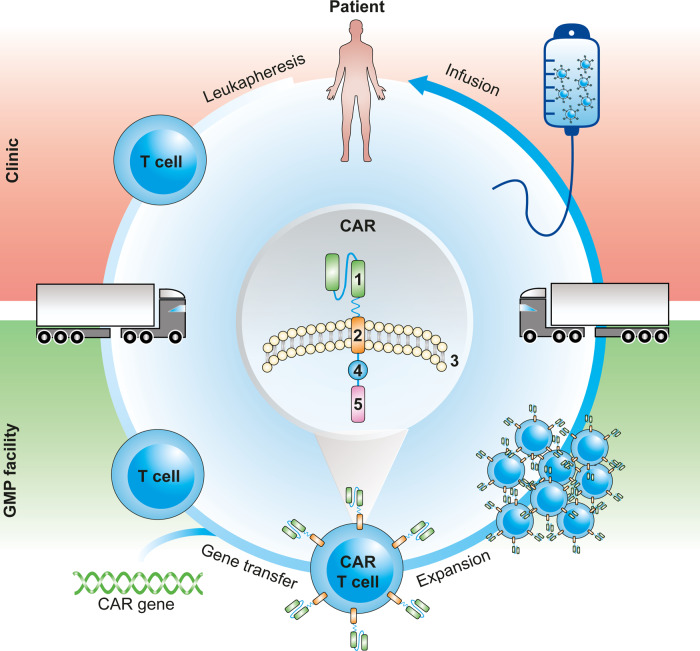
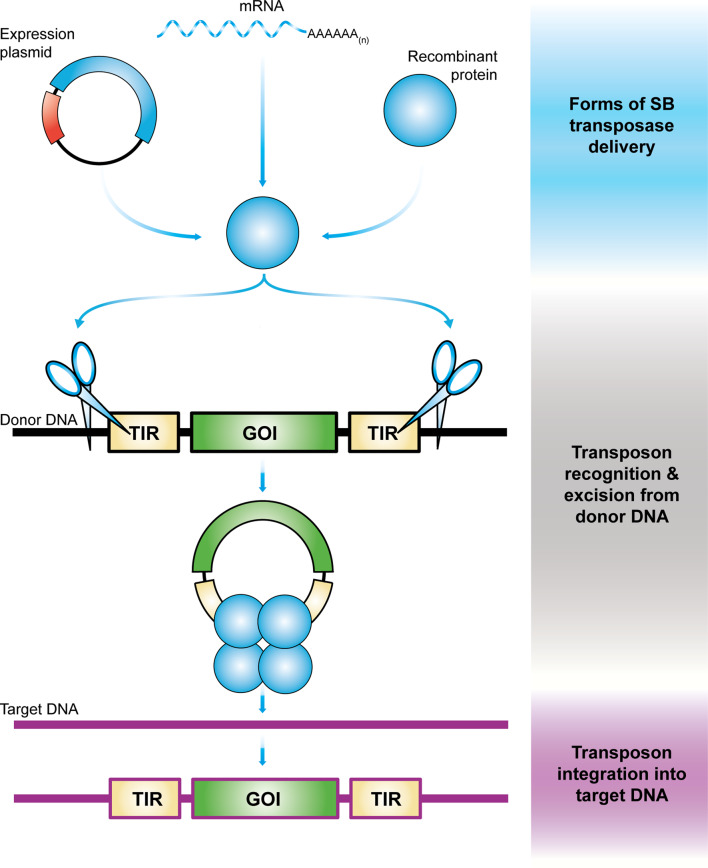
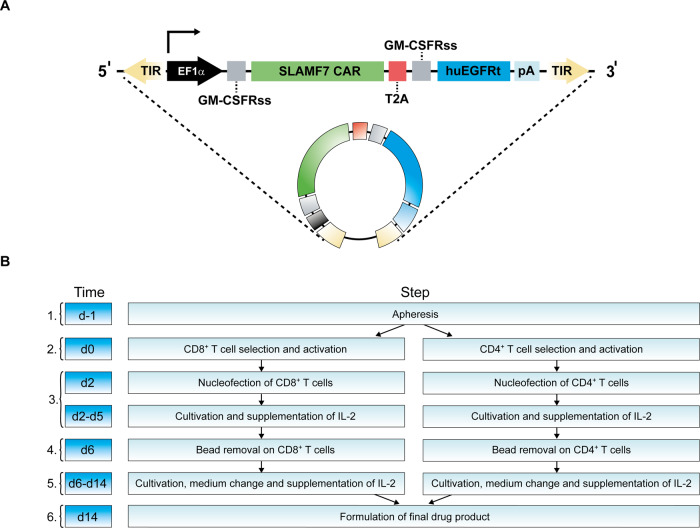
Clinical development of chimeric antigen receptor (CAR)-T-cell therapy has been enabled by advances in synthetic biology, genetic engineering, clinical-grade manufacturing, and complex logistics to distribute the drug product to treatment sites. A key ambition of the CARAMBA project is to provide clinical proof-of-concept for virus-free CAR gene transfer using advanced Sleeping Beauty (SB) transposon technology. SB transposition in CAR-T engineering is attractive due to the high rate of stable CAR gene transfer enabled by optimized hyperactive SB100X transposase and transposon combinations, encoded by mRNA and minicircle DNA, respectively, as preferred vector embodiments. This approach bears the potential to facilitate and expedite vector procurement, CAR-T manufacturing and distribution, and the promise to provide a safe, effective, and economically sustainable treatment. As an exemplary and novel target for SB-based CAR-T cells, the CARAMBA consortium has selected the SLAMF7 antigen in multiple myeloma. SLAMF7 CAR-T cells confer potent and consistent anti-myeloma activity in preclinical assays in vitro and in vivo. The CARAMBA clinical trial (Phase-I/IIA; EudraCT: 2019-001264-30) investigates the feasibility, safety, and anti-myeloma efficacy of autologous SLAMF7 CAR-T cells. CARAMBA is the first clinical trial with virus-free CAR-T cells in Europe, and the first clinical trial that uses advanced SB technology worldwide.
Overview
The claims and statistics of this paper haven’t been checked yet.
Run the check — free, no account needed. It reads the open-access text and checks the sources it cites.
Integrity signals
Registry
Cites
Statistics
Figures
Verification
Claims the paper makes
The claims and statistics of this paper haven’t been checked yet.
Run the check — free, no account needed. It reads the open-access text and checks the sources it cites.
Claims other papers make about this one
Each is checked against this paper’s own text: does it say what the citing paper says it does?
In the citing paper
“SCFA-treatment during CTL manufacturing, which can readily be implemented in clinical-grade GMP manufacturing processes44.”
From Microbial short-chain fatty acids modulate CD8+ T cell responses and improve adoptive immunotherapy for cancer (2021) · cites this paper as [44]
Self-check
Percentages, sums and reported differences re-computed from the paper’s own numbers.
The self-check needs the paper’s full text.
Citations
Cites
The origin and behavior of mutable loci in maize
McClintock, B. (1950) · Proceedings of the National Academy of Sciences · doi:10.1073/pnas.36.6.344 · Cited by 1,752
Anti-BCMA CAR T-cell therapy bb2121 in relapsed or refractory multiple myeloma.
Raje, N., Berdeja, J., Lin, Y., Siegel, D., Jagannath, S., Madduri, D., Liedtke, M., Rosenblatt, J., Maus, M. V., Turka, A., et al. (2019) · New England Journal of Medicine · doi:10.1056/nejmoa1817226 · Cited by 1,730
Ivics, Z., Hackett, P. B., Plasterk, R. H. A., & Izsvák, Z. (1997) · Cell · doi:10.1016/s0092-8674(00)80436-5 · Cited by 1,431
Self-citationKawalekar, O. U., O’Connor, R. S., Fraietta, J. A., Guo, L., McGettigan, S. E., Posey, A. D., Patel, P. R., Guedan, S., Scholler, J., Keith, B., et al. (2016) · Immunity · doi:10.1016/j.immuni.2016.01.021 · Cited by 1,267
Mátés, L., Chuah, M., Belay, E., Jerchow, B., Manoj, N., Acosta‐Sanchez, A., Grzela, D. P., Schmitt, A., Becker, K., Mátrai, J., et al. (2009) · Nature Genetics · doi:10.1038/ng.343 · Cited by 965
Self-citationSommermeyer, D., Hudecek, M., Kosasih, P. L., Gogishvili, T., Maloney, D. G., Turtle, C. J., & Riddell, S. R. (2015) · Leukemia · doi:10.1038/leu.2015.247 · Cited by 888
Self-citationAli, S. A., Shi, V., Marić, I., Wang, M. L., Stroncek, D. F., Rose, J. J., Brudno, J. N., Stetler‐Stevenson, M., Feldman, S. A., Hansen, B. G., et al. (2016) · Blood · doi:10.1182/blood-2016-04-711903 · Cited by 776
Wang, X., Chang, W.-C., Wong, C. W., Colcher, D. M., Sherman, M. A., Ostberg, J. R., Forman, S. J., Riddell, S. R., & Jensen, M. C. (2011) · Blood · doi:10.1182/blood-2011-02-337360 · Cited by 605
CS1, a Potential New Therapeutic Antibody Target for the Treatment of Multiple Myeloma
Hsi, E. D., Steinle, R., Balasa, B., Szmania, S. M., Draksharapu, A., Shum, B. P., Huseni, M. A., Powers, D., Nanisetti, A., Zhang, Y., et al. (2008) · Clinical Cancer Research · doi:10.1158/1078-0432.ccr-07-4246 · Cited by 558
Yant, S. R., Meuse, L. A., Chiu, W. S., Ivics, Z., Izsvák, Z., & Kay, M. A. (2000) · Nature Genetics · doi:10.1038/75568 · Cited by 509
Self-citation
Cited by
Sorted by citations
Items 101–189 of 189
The Significance of mRNA in the Biology of Multiple Myeloma and Its Clinical Implications
Pula, A. E., Robak, P. J., Mikulski, D., & Robak, T. (2021) · International Journal of Molecular Sciences · doi:10.3390/ijms222112070 · Cited by 6
Targets for CAR Therapy in Multiple Myeloma
Si, B., Trunova, G. V., Nemtsova, E. R., Андреевна, Х. В., Venediktova, J. B., Морозова, Н. Б., Vorontsova, M. S., Plyutinskaya, A. D., Zharova, E. P., Shegai, P. V., et al. (2025) · International Journal of Molecular Sciences · doi:10.3390/ijms26136051 · Cited by 6
Exploring transposable elements: new horizons in cancer diagnostics and therapeutics
Chaaban, A., Sleem, R., Santina, J., Rima, M., & Ibrahim, J.-N. (2025) · Mobile DNA · doi:10.1186/s13100-025-00366-9 · Cited by 9
Transposable element DNA and RNA: Drivers of gene expression, evolution, and disease
Ho, J., Douse, C. H., & Marazzi, I. (2026) · Cell · doi:10.1016/j.cell.2026.05.003 · Cited by 8
Boyer, O., Bensoussan, D., Bonig, H. B., Chabannon, C., Clemenceau, B., Cuffel, A., Dachy, G., Vos, J. D., Derenne, S., Diana, J., et al. (2025) · Bone Marrow Transplantation · doi:10.1038/s41409-024-02504-y · Cited by 6
Self-citationBüning, H., Fehse, B., Ivics, Z., Kochanek, S., Koehl, U., Kupatt, C., Mussolino, C., Nettelbeck, D. M., Schambach, A., Uckert, W., et al. (2021) · Human Gene Therapy · doi:10.1089/hum.2021.29178.hbu · Cited by 6
Self-citationJia, W., Asare, E., Liu, T., Zhang, P., Wang, Y., Wang, S., Shen, D., Miskey, C., Gao, B., Ivics, Z., et al. (2022) · Genes · doi:10.3390/genes13122239 · Cited by 6
Self-citationWhat Have We Learned in 30 Years of Investigations on Bari Transposons?
Palazzo, A., Caizzi, R., Moschetti, R., & Marsano, R. M. (2022) · Cells · doi:10.3390/cells11030583 · Cited by 6
Ochmann, M. T., Miskey, C., Botezatu, L., Sandoval-Villegas, N., Diem, T., & Ivics, Z. (2024) · Molecular Therapy — Nucleic Acids · doi:10.1016/j.omtn.2024.102381 · Cited by 5
Self-citationDeveloping anti-TDE vaccine for sensitizing cancer cells to treatment and metastasis control
Meena, S. S., Kosgei, B. K., Soko, G. F., Cheng, T., Chambuso, R., Mwaiselage, J. D., & Han, R. P. S. (2025) · npj Vaccines · doi:10.1038/s41541-024-01035-3 · Cited by 5
Diaby, M., Wu, H., Gao, B., Shi, S., Wang, B., Wang, S., Wang, Y., Wu, Z., Chen, C., Wang, X., et al. (2024) · Advanced Science · doi:10.1002/advs.202400969 · Cited by 4
Mohan, M., Maatman, T. C., & Schinke, C. (2021) · Cancers · doi:10.3390/cancers13194909 · Cited by 5
Minicircles for CAR T Cell Production by Sleeping Beauty Transposition: A Technological Overview
Prommersberger, S., Monjezi, R., Shankar, R., Schmeer, M., Hudecek, M., Ivics, Z., & Schleef, M. (2022) · Methods in molecular biology · doi:10.1007/978-1-0716-2441-8_2 · Cited by 6
Self-citationCAR-T cells for the treatment of relapsed/refractory multiple myeloma in 2022: efficacy and toxicity
Krejčí, M., Adam, Z., Krejčí, M., Pour, L., Sandecká, V., & Štork, M. (2022) · Neoplasma · doi:10.4149/neo_2022_220504n477 · Cited by 5
Castiello, L., Santodonato, L., Napolitano, M., Carlei, D., Montefiore, E., Monque, D. M., D’Agostino, G., & Aricò, E. (2022) · Cancers · doi:10.3390/cancers14215351 · Cited by 5
Wang, Z., Song, Y., Guo, H., Yan, Y., Ma, L., & Liu, B. (2025) · Current Treatment Options in Oncology · doi:10.1007/s11864-025-01290-z · Cited by 3
SLAMF7: A Potential Target for CAR T-Cell Therapy in Multiple Myeloma
Alati, C., Pitea, M., Porto, G., Bilardi, E., Greve, M. B., Vincelli, I. D., Rizzuto, A., Policastro, G., Alvaro, M. E., Utano, G., et al. (2025) · Cancers · doi:10.3390/cancers17213471 · Cited by 4
Chen, H., Zhang, J., Huang, J., Wu, Z., Tang, L., Tian, Y., Gao, S., Huang, S., Cao, J., Chen, J., et al. (2025) · Journal of Translational Medicine · doi:10.1186/s12967-025-07470-7 · Cited by 3
The role of bone marrow microenvironment on CAR‐T efficacy in haematologic malignancies
Gao, D., Hong, F., & He, A. (2023) · Scandinavian Journal of Immunology · doi:10.1111/sji.13273 · Cited by 3
CAR-T Therapy in Multiple Myeloma: Looking Beyond
Maiorana, G., Antolino, G., Verde, G. L., & Tafuri, A. (2024) · Hemato · doi:10.3390/hemato5020015 · Cited by 4
Wang, S.-S., Zhang, P.-J., Sun, Y., Fang, Y., Wang, P., Shao, M.-Q., Zhang, N.-N., Shi, S.-S., Chen, X., Gao, H.-X., et al. (2025) · Nucleic Acids Research · doi:10.1093/nar/gkaf935 · Cited by 4
Maurer, K., & Jacobson, C. (2025) · Leukemia and Lymphoma · doi:10.1080/10428194.2025.2460043 · Cited by 4
Empowering virus-free CAR immune cell therapies.
Bexte, T., & Ullrich, E. (2024) · Molecular Therapy · doi:10.1016/j.ymthe.2024.05.023 · Cited by 1
CAR Treg-based therapeutics for autoimmune diseases
Silva, V., & Radic, M. Z. (2024) · Elsevier eBooks · doi:10.1016/b978-0-443-13947-5.00045-2 · Cited by 2
Cunningham, S. C., Zakas, P. M., Sasaki, N., van Dijk, E. B., Zhu, E., Fu, Y., Salomon, W. E., Citorik, R. J., Rubens, J. R., Cotta‐Ramusino, C., et al. (2024) · The Journal of Gene Medicine · doi:10.1002/jgm.3726 · Cited by 2
Gehrke, L., Seifert, N., Spieler, P., Verbruggen, C., Seifert, R., Toppeta, F., Krick, M., Doose, S., Einsele, H., Hudecek, M., et al. (2025) · Frontiers in Immunology · doi:10.3389/fimmu.2025.1632823 · Cited by 2
Self-citationExploiting TCR Repertoire Analysis to Select Therapeutic TCRs for Cancer Immunotherapy
Demaël, U. M., Rirkkrai, T., Okuş, F. Z., Tiffeau-Mayer, A., & Stauss, H. J. (2025) · Cells · doi:10.3390/cells14151223 · Cited by 2
Ramos, R., Picanço-Castro, V., Oliveira, T. G., Mendrone, A., de Santis, G. C., Bonamino, M., & Rocha, V. (2021) · Hematology, Transfusion and Cell Therapy · doi:10.1016/j.htct.2021.09.007 · Cited by 2
B cell antigens: A key to optimizing CAR-T cell therapy
Khodke, P., Hasurkar, D., Upadhyay, A., Shedge, A., Sippy, R., & Kumbhar, B. V. (2025) · International Reviews of Immunology · doi:10.1080/08830185.2025.2515839 · Cited by 3
Invasive Mykosen – Innovative Therapien
Mellinghoff, S. C., Cornely, O. A., Mammadova, P., Sprute, R., & Stemler, J. (2024) · DMW - Deutsche Medizinische Wochenschrift · doi:10.1055/a-2132-9240 · Cited by 2
Fehse, B. (2021) · Nomos Verlagsgesellschaft mbH & Co. KG eBooks · doi:10.5771/9783748927242-156 · Cited by 1
Ho, P. J., & Li, E. W. (2025) · Internal Medicine Journal · doi:10.1111/imj.16647 · Cited by 2
Zou, W., Fang, X., Zou, Q., & Nie, L. (2025) · Molecular and Cellular Endocrinology · doi:10.1016/j.mce.2025.112586 · Cited by 1
Chimeric antigen receptor T-cell therapy for multiple myeloma
Liu, L., & Htut, M. (2025) · Current Opinion in Oncology · doi:10.1097/cco.0000000000001167 · Cited by 1
CAR-T cell therapy for multiple myeloma: An update on the current state and future potential
Pophali, P. A., Rosenblatt, J. M., & Avigan, D. (2025) · Best Practice & Research Clinical Haematology · doi:10.1016/j.beha.2025.101659 · Cited by 1
Microdroplet Systems for Gene Transfer: From Fundamentals to Future Perspectives
Criollo, M., Layedra, G., Perez, C., Rosero, G., & Peñaherrera, A. (2025) · Micromachines · doi:10.3390/mi16111245 · Cited by 1
Gullà, A., Dhodapkar, M. V., Einsele, H., Raab, M. S., Solimando, A. G., Botta, C., Turi, M., Sester, L. S., Portuguese, A. J., Steinbrunn, T., et al. (2026) · Blood Cancer Discovery · doi:10.1158/2643-3230.bcd-25-0107 · Cited by 1
Self-citationGuerreiro, M. C., Pinto, I. S., Farinha, D., & Faneca, H. (2026) · International Journal of Pharmaceutics · doi:10.1016/j.ijpharm.2026.126848 · Cited by 1
Griebling, D., Scheiwe, A. R., Kuhlen, R., Zech, C., Muller, P., Rische, C., Längst, V., Wegener, C., Schmidt, L., Bothwell, P., et al. (2026) · Cytotherapy · doi:10.1016/j.jcyt.2026.102939 · Cited by 1
Self-citationNasiri, A. M., Fakih, R. O. E., Chabannon, C., Garderet, L., Kuball, J. H. E., Bazarbachi, A. A., Sureda, A. M., Lima, M. J. G. D., Abid, M. B., Syed, F., et al. (2026) · Bone Marrow Transplantation · doi:10.1038/s41409-026-03044-3 · Cited by 1
Cellular Immunotherapies for Multiple Myeloma: Current Status, Challenges, and Future Directions
Yan, Z., Wang, Y., & Chang, Y. (2022) · Oncology and Therapy · doi:10.1007/s40487-022-00186-4 · Cited by 1
Chimeric Antigen Receptor T Cells in Multiple Myeloma
Shah, P., & Sperling, A. S. (2023) · Hematology/Oncology Clinics of North America · doi:10.1016/j.hoc.2023.05.008 · Cited by 1
Gagelmann, N., & Merz, M. (2024) · Seminars in Hematology · doi:10.1053/j.seminhematol.2024.07.002 · Cited by 1
An update on novel multiple myeloma targets
Offidani, M., Corvatta, L., Morè, S., Manieri, V. M., & Olivieri, A. (2022) · Expert Review of Hematology · doi:10.1080/17474086.2022.2085088 · Cited by 1
Spotlight on gene therapy in Germany
Mussolino, C., & Harrison, P. T. (2021) · Gene Therapy · doi:10.1038/s41434-021-00277-3 · Cited by 1
Franklin, J., Pophali, P. A., Jackson, Z., Wald, D. N., & Avigan, D. (2024) · Wiley eBooks · doi:10.1002/9781394180486.ch25 · Cited by 1
Zingg, A., Ritschard, R., Thut, H., Buchi, M., Holbro, A., Oseledchyk, A., Heinzelmann, V., Buser, A. S., Binder, M., Zippelius, A., et al. (2024) · bioRxiv (Cold Spring Harbor Laboratory) · doi:10.1101/2024.09.12.612750 · Cited by 1
ARCOBALENO cell therapy to treat pediatric cancer patients
Presti, V. L. (2022) · doi:10.33540/1187
Bonamino, M., Paiva, R. M. A., de Godoy, J. A. P., Kondo, A. T., Okamoto, O. K., & Kerbauy, L. N. (2022) · JOURNAL OF BONE MARROW TRANSPLANTATION AND CELLULAR THERAPY · doi:10.46765/2675-374x.2022v3n1p155
The Age of Immune-therapy in Multiple Myeloma with a Collective Goal for a Cure
Larios, J. M., & Terebelo, H. R. (2023) · Medical Research Archives · doi:10.18103/mra.v11i10.4607
The future of transposon-based CAR-T cell production in immunotherapy
Lee, S. (2023) · Theoretical and Natural Science · doi:10.54254/2753-8818/20/20230751
Blache, U., Kebbel, K., Quaiser, A., Popp, G., Franz, P., Dünkel, A., Thoma, M., König, N., Platzbecker, U., Schmiedeknecht, G., et al. (2023) · Springer eBooks · doi:10.1007/978-3-662-67908-1_8
Sleeping Beauty: Ein „springendes Gen“ für Anwendungen in der Gentechnik
Nurieva, W., Sandoval-Villegas, N., & Ivics, Z. (2023) · Springer eBooks · doi:10.1007/978-3-662-67908-1_5
Self-citationGen- und Zelltherapie 2.023 - Forschung, klinische Anwendung und Gesellschaft
Fehse, B., Schickl, H., Bartfeld, S., & Zenke, M. (2023) · Springer eBooks · doi:10.1007/978-3-662-67908-1 · Cited by 2
Amberger, M. (2023) · doi:10.21248/gups.81592
Self-citationInvasive Mykosen – Innovative Therapien
Mellinghoff, S. C., Cornely, O. A., Mammadova, P., Sprute, R., & Stemler, J. (2024) · Laryngo-Rhino-Otologie · doi:10.1055/a-2341-0404
Luu, M., Hudecek, M., & Schmalzing, M. (2024) · Aktuelle Rheumatologie · doi:10.1055/a-2358-8290
Self-citationTransposable Elements as Tools
Song, C., & Ivics, Z. (2024) · doi:10.1002/9781394312467.ch10
Self-citationRadhi, M., Yusuf, D. A., AlSaffar, G. M., & Toorani, Z. A. (2025) · Cureus · doi:10.7759/cureus.80068
Genetic Engineering Methods in Primary T Cells
Youssef, A., & Li, H.-S. (2025) · Advanced Therapeutics · doi:10.1002/adtp.202500149
Li, W., Zhang, B., Cao, W., Zhang, W., Li, T., Liu, L., Xu, L., Gao, F., Wang, Y., Wang, F., et al. (2024) · Figshare · doi:10.6084/m9.figshare.26587863
Li, W., Zhang, B., Cao, W., Zhang, W., Li, T., Liu, L., Xu, L., Gao, F., Wang, Y., Wang, F., et al. (2024) · Figshare · doi:10.6084/m9.figshare.26587857
Li, W., Zhang, B., Cao, W., Zhang, W., Li, T., Liu, L., Xu, L., Gao, F., Wang, Y., Wang, F., et al. (2024) · Figshare · doi:10.6084/m9.figshare.26587875
Li, W., Zhang, B., Cao, W., Zhang, W., Li, T., Liu, L., Xu, L., Gao, F., Wang, Y., Wang, F., et al. (2024) · Figshare · doi:10.6084/m9.figshare.26587890
Li, W., Zhang, B., Cao, W., Zhang, W., Li, T., Liu, L., Xu, L., Gao, F., Wang, Y., Wang, F., et al. (2024) · Figshare · doi:10.6084/m9.figshare.26587869
Li, W., Zhang, B., Cao, W., Zhang, W., Li, T., Liu, L., Xu, L., Gao, F., Wang, Y., Wang, F., et al. (2024) · Figshare · doi:10.6084/m9.figshare.26587884
Li, W., Zhang, B., Cao, W., Zhang, W., Li, T., Liu, L., Xu, L., Gao, F., Wang, Y., Wang, F., et al. (2024) · Figshare · doi:10.6084/m9.figshare.26587878
Li, W., Zhang, B., Cao, W., Zhang, W., Li, T., Liu, L., Xu, L., Gao, F., Wang, Y., Wang, F., et al. (2024) · Figshare · doi:10.6084/m9.figshare.26587866
Li, W., Zhang, B., Cao, W., Zhang, W., Li, T., Liu, L., Xu, L., Gao, F., Wang, Y., Wang, F., et al. (2024) · Figshare · doi:10.6084/m9.figshare.26587881
Li, W., Zhang, B., Cao, W., Zhang, W., Li, T., Liu, L., Xu, L., Gao, F., Wang, Y., Wang, F., et al. (2024) · Figshare · doi:10.6084/m9.figshare.26587887
Li, W., Zhang, B., Cao, W., Zhang, W., Li, T., Liu, L., Xu, L., Gao, F., Wang, Y., Wang, F., et al. (2024) · Figshare · doi:10.6084/m9.figshare.26587860
Li, W., Zhang, B., Cao, W., Zhang, W., Li, T., Liu, L., Xu, L., Gao, F., Wang, Y., Wang, F., et al. (2024) · Figshare · doi:10.6084/m9.figshare.26587872
Systemtherapien der Zukunft: CAR-T-Zellen
Müller, F., Hoerster, K., & von Tresckow, B. (2026) · Forum · doi:10.1007/s12312-025-01524-z
Auto‐inducible expression of chimeric antigen receptor T cells using the NR4A1 promoter
Smith‐Bell, S. W., Halpin, J. C., Darcy, P. K., Liyanage, T., Dobson, L. J., & McLellan, A. D. (2026) · Immunology and Cell Biology · doi:10.1111/imcb.70095
Increased mRNA-lipid nanoparticle transfection per ng mRNA by concentrating cells
Kunitskaya, A., Chen, S. P., Ho, C.-H., Grosso, M. D., Blakney, A. K., & Piret, J. M. (2026) · Journal of Biotechnology · doi:10.1016/j.jbiotec.2026.05.003
Andrade, C. D. O., Bezerra, M. R. L., Sousa, I. G., Correia, E. M., Lima, A. J. F., Abdo, L. D. M., Aragão, E. A. A., Araújo, R. P. D. S., Pinheiro, D. P., Studart, I. C., et al. (2026) · Frontiers in Immunology · doi:10.3389/fimmu.2026.1798748 · Cited by 1
Minicircle DNA Vaccines: Overcoming Delivery and Expression Barriers in Next-Generation Immunization
Alduhaymi, I. S., Majrashi, M. A., Alradwan, I. A., Alagrafi, F., Altammami, M. A., Aldossary, A. M., Almughem, F. A., Alshehri, A. A., Fallatah, M., Fayez, N. A., et al. (2026) · Vaccines · doi:10.3390/vaccines14070563
Elranatamab: A novel B-cell maturation T-cell engager
Hossain, S., & Bianchi, G. (2026) · Human Vaccines & Immunotherapeutics · doi:10.1080/21645515.2026.2694852
Mechanisms, optimization strategies, and salvage options for CAR-T cell therapy
Wu, B., Wang, J., Zou, Q., Cai, J., Zhang, Y., Zhong, Q., Bai, B., Liu, F., Cao, Y., Li, P., et al. (2026) · Biomarker Research · doi:10.1186/s40364-026-00974-4
Andreotti, I. A. D. A., Griep, G., Patino-Narino, E., Batista-Silva, L. R., Gongora-Rubio, M., Bonamino, M., & Balbino, T. A. (2026) · Journal of Translational Medicine · doi:10.1186/s12967-026-08388-4 · Cited by 1
Itez, G. G., & Sunguroğlu, A. (2026) · Therapeutic Advances in Hematology · doi:10.1177/20406207261484713
Programmable enzymes for targeted gene insertion
Lampe, G. D., King, R. T., & Sternberg, S. H. (2026) · Nature Reviews Genetics · doi:10.1038/s41576-026-01002-9
Beyond CAR-T: Preventing and Treating Relapse in B-Cell Haematological Malignancies
Canichella, M., Abruzzese, E., Cefalo, M., Gianfelici, V., Mazzone, C., Trotta, G. E., Laureana, R., Cupelli, L., & Principe, M. I. D. (2026) · Cells · doi:10.3390/cells15181660
CAR-T Cell Therapy: Engineering Remission in Refractory Myeloma
Sperling, A. S. (2026) · The Cancer Journal · doi:10.1097/ppo.0000000000000854
A review of genetic modification for ex vivo cellular therapies
Dinh, A., Zhang, N., & Stroncek, D. F. (2026) · Transfusion · doi:10.1111/trf.70163
Genetic Engineering of Natural Killer Cells: Unleashing Their Killer Instincts
Kluge, P., Lai, K.-Y., Knapp, L. R., Sapre, A., Tarannum, M., Raskó, T., Romee, R., Bexte, T., & Ullrich, E. (2026) · Springer eBooks · doi:10.1007/978-3-662-68816-8_48-1
Beyond Viruses: Transposons and CRISPR-Programmable Nonviral Systems for Genome Engineering.
Singh, S., Panchal, O., & Ivics, Z. (2026) · Human Gene Therapy · doi:10.1177/10430342261493722
Self-citationThe preCDD Network as a Model for Academic Preclinical Cancer Drug Development in Germany
Ullrich, E., Weisel, K., Hölzel, M., Diegisser, T., Krones, D., Hudecek, M., Knapp, S., & Reinhardt, H. C. (2026) · Human Gene Therapy · doi:10.1177/10430342261502532
Self-citation
Metadata
- Authors
- Prommersberger, S., Reiser, M., Beckmann, J., Danhof, S., Amberger, M., Quade-Lyssy, P., Einsele, H., Hudecek, M., Bonig, H., & Ivics, Z.
- Affiliations
- Universitätsklinikum Würzburg (DE)
- Goethe University Frankfurt (DE)
- Paul Ehrlich Institut (DE)
- Corresponding author
- Ivics, Zoltán
- ORCID
- Venue
- Gene Therapy
- Published
- 2021-04-13
- Volume
- 28
- Issue
- 9
- Pages
- 560-571
- ISSN
- 0969-7128 (ISSN-L)
- 1476-5462
- PMC
- PMC8455317
- OpenAlex
- W3154860673
- Cited by
- 182
- References
- 62
- Citations by year
- 2026: 23 · 2025: 38 · 2024: 43 · 2023: 35 · 2022: 28 · 2021: 15
- FWCI
- 11.64
- Type
- journal article
- Language
- en
- Open access
- hybrid
- doi.org
- Locations
- Gene Therapy (publishedVersion, cc-by)
- Europe PMC (PubMed Central) (publishedVersion, other-oa)
- PubMed Central (publishedVersion, cc-by)
- PubMed (publishedVersion)
- Informationszentrum Lebenswissenschaften (ZB MED) (submittedVersion, cc-by)
- Online Publication Service of Würzburg University (Würzburg University) (submittedVersion, cc-by)
- Funders
- EC | Horizon 2020 Framework Programme (754658)
- Topics
- Health Sciences › Medicine › Oncology › CAR-T cell therapy research
- Life Sciences › Biochemistry, Genetics and Molecular Biology › Genetics › Virus-based gene therapy research
- Life Sciences › Immunology and Microbiology › Immunology › Immunotherapy and Immune Responses
- Keywords
- SLAMF7, chimeric antigen receptor T cells, multiple myeloma, Sleeping Beauty transposon, DNA minicircles
- MeSH terms
- Signaling Lymphocytic Activation Molecule Family, Humans, Multiple Myeloma, T-Lymphocytes, Genetic Therapy, Immunotherapy, Adoptive
About these checks
Registry, retraction, Cites and statistics results are computed, not judged, with one exception: a printed reference that no index lists is read once by a model before it counts as a citation error. Claims are extracted by a model and kept only when their quote appears verbatim in the text; each cited source is then checked, with a model’s help, for whether it says what the claim relies on. Those verdicts can be wrong — read the claim’s quote and the cited source before relying on one.
Statistics and arithmetic are recomputed, not judged.
Confidence bands are shown only for fields calibrated on our annotated test set. None is calibrated yet, so no band is shown.
What counts as a claim ›How we measure confidence ›How we check this ›
Are you an author, or do you see a problem with this page? Request a review
