

Epigenetic landscape influences the liver cancer genome architecture
Open accessThe DOI matches its Crossref record; 42 of the 42 references it cites were found in a registry or an index.
Abstract
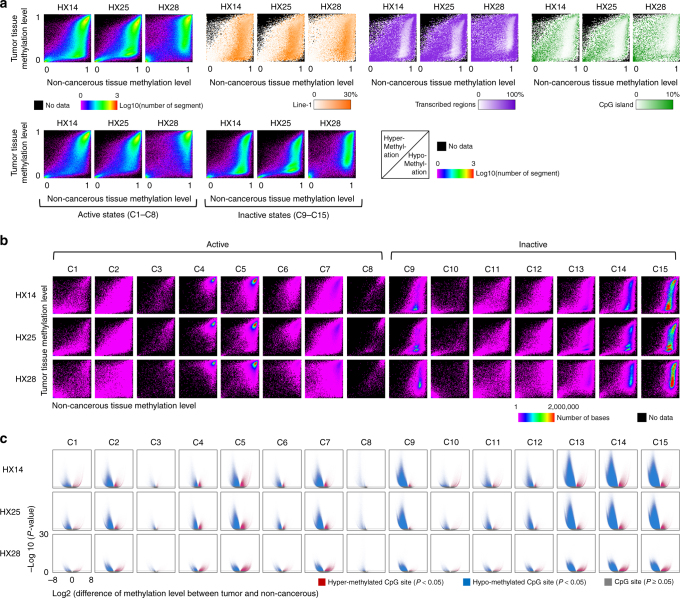
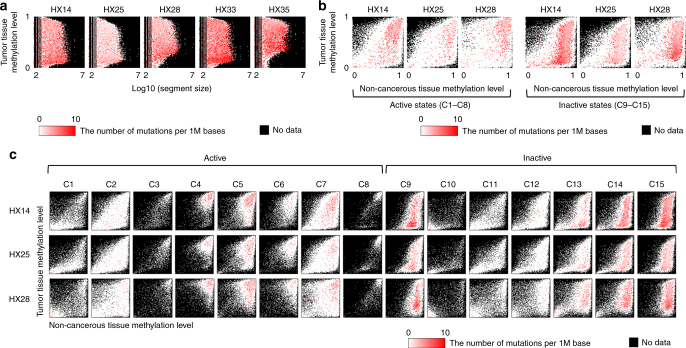
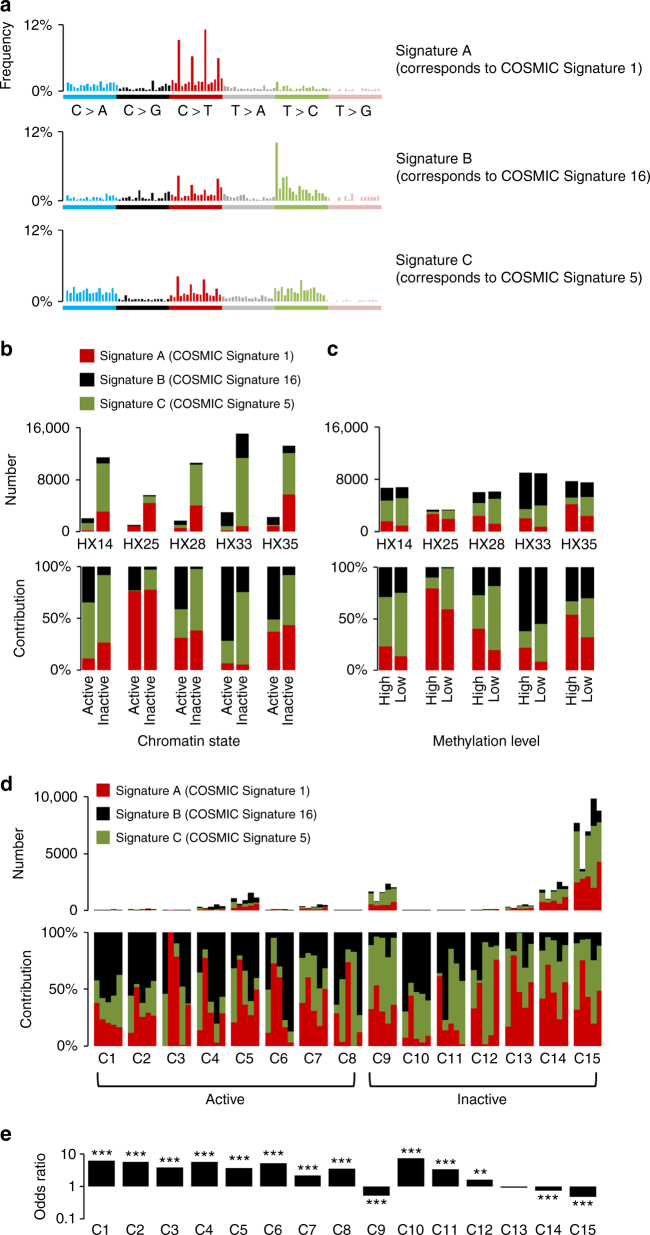
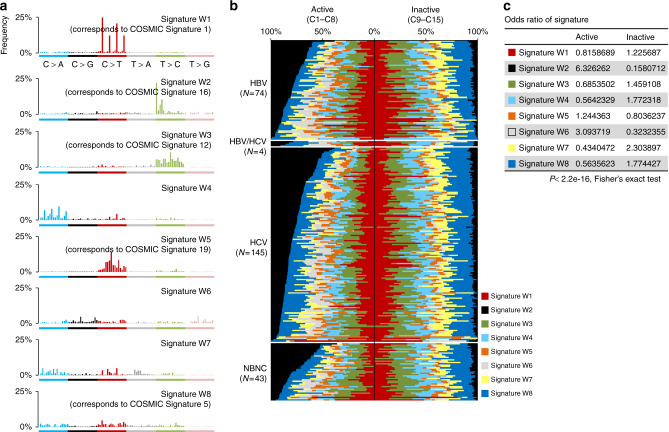
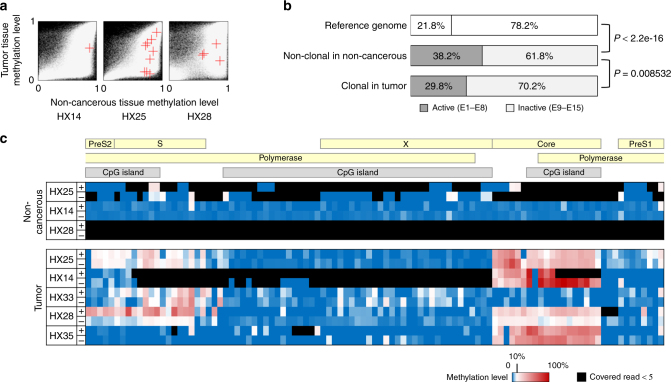
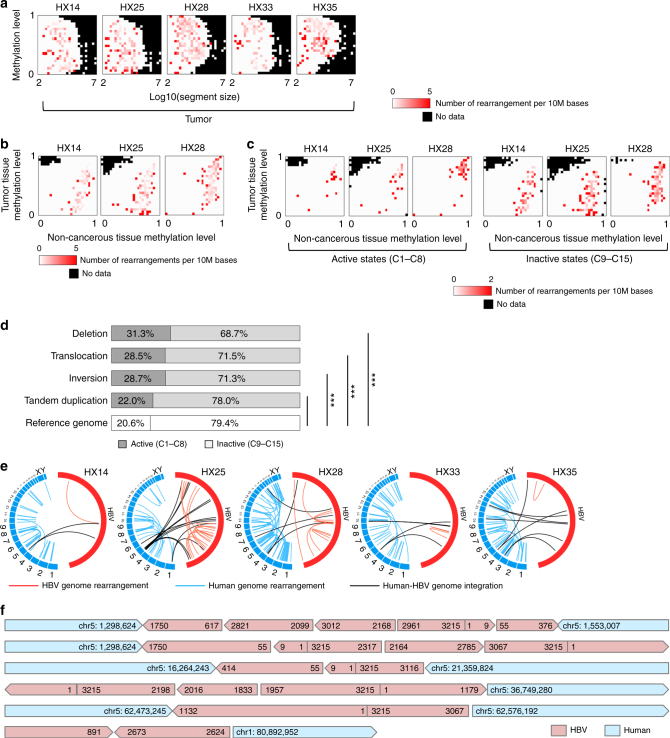
The accumulations of different types of genetic alterations such as nucleotide substitutions, structural rearrangements and viral genome integrations and epigenetic alterations contribute to carcinogenesis. Here, we report correlation between the occurrence of epigenetic features and genetic aberrations by whole-genome bisulfite, whole-genome shotgun, long-read, and virus capture sequencing of 373 liver cancers. Somatic substitutions and rearrangement breakpoints are enriched in tumor-specific hypo-methylated regions with inactive chromatin marks and actively transcribed highly methylated regions in the cancer genome. Individual mutation signatures depend on chromatin status, especially, signatures with a higher transcriptional strand bias occur within active chromatic areas. Hepatitis B virus (HBV) integration sites are frequently detected within inactive chromatin regions in cancer cells, as a consequence of negative selection for integrations in active chromatin regions. Ultra-high structural instability and preserved unmethylation of integrated HBV genomes are observed. We conclude that both precancerous and somatic epigenetic features contribute to the cancer genome architecture.
Overview
The claims and statistics of this paper haven’t been checked yet.
Free: it reads the open-access text and checks the first 5 claims that cite a source we can check. Create a free account to check every claim.
Integrity signals
Registry
Cites
Statistics
Figures
Verification
Claims the paper makes
The claims and statistics of this paper haven’t been checked yet.
Free: it reads the open-access text and checks the first 5 claims that cite a source we can check. Create a free account to check every claim.
Claims other papers make about this one
Each is checked against this paper’s own text: does it say what the citing paper says it does?
In the citing paper
“Mutation rates vary in different parts of the genome, at different stages of the life cycle and in diseases such as cancer, where they depend on the cell of origin, environmental exposure and cancer type [60][61][62] .”
From Advances in epigenetics link genetics to the environment and disease (2019) · cites this paper as [60]
Self-check
Percentages, sums and reported differences re-computed from the paper’s own numbers.
The self-check needs the paper’s full text.
Citations
Cites
Basic local alignment search tool
Altschul, S. F., Gish, W., Miller, W., Myers, E. W., & Lipman, D. J. (1990) · Journal of Molecular Biology · doi:10.1006/jmbi.1990.9999 · Cited by 98,669
The Sequence Alignment/Map format and SAMtools
Li, H., Handsaker, B., Wysoker, A., Fennell, T., Ruan, J., Homer, N., Marth, G., Abecasis, G., Durbin, R., & 1000 Genome Project Data Processing Subgroup (2009) · Bioinformatics · doi:10.1093/bioinformatics/btp352 · Cited by 62,041
Fast and accurate short read alignment with Burrows-Wheeler transform
Li, H., & Durbin, R. (2009) · Bioinformatics · doi:10.1093/bioinformatics/btp324 · Cited by 58,607
Subramanian, A., Tamayo, P., Mootha, V. K., Mukherjee, S., Ebert, B. L., Gillette, M. A., Paulovich, A., Pomeroy, S. L., Golub, T. R., Lander, E. S., et al. (2005) · Proceedings of the National Academy of Sciences · doi:10.1073/pnas.0506580102 · Cited by 53,625
Ultrafast and memory-efficient alignment of short DNA sequences to the human genome.
Langmead, B., Trapnell, C., Pop, M., & Salzberg, S. L. (2009) · Genome Biology · doi:10.1186/gb-2009-10-3-r25 · Cited by 21,849
Mootha, V. K., Lindgren, C. M., Eriksson, K.-F., Subramanian, A., Sihag, S., Lehar, J., Puigserver, P., Carlsson, E., Ridderstråle, M., Laurila, E., et al. (2003) · Nature Genetics · doi:10.1038/ng1180 · Cited by 10,197
Signatures of mutational processes in human cancer
Initiative, A. P. C. G., Alexandrov, L. B., ICGC Breast Cancer Consortium, ICGC MMML-Seq Consortium, PedBrain, I., Nik-Zainal, S., Wedge, D. C., Aparicio, S. A. J. R., Behjati, S., Biankin, A. V., et al. (2013) · Nature · doi:10.1038/nature12477 · Cited by 9,660
Self-citationIntegrative analysis of 111 reference human epigenomes
Roadmap Epigenomics Consortium, Kundaje, A., Meuleman, W., Ernst, J., Bilenky, M., Yen, A., Heravi-Moussavi, A., Kheradpour, P., Zhang, Z., Wang, J., et al. (2015) · Nature · doi:10.1038/nature14248 · Cited by 6,368
Mutational heterogeneity in cancer and the search for new cancer-associated genes
Lawrence, M. S., Stojanov, P., Polak, P., Kryukov, G. V., Cibulskis, K., Sivachenko, A., Carter, S. L., Stewart, C., Mermel, C. H., Roberts, S. A., et al. (2013) · Nature · doi:10.1038/nature12213 · Cited by 5,461
The Global Burden of Cancer 2013
Fitzmaurice, C., Dicker, D., Pain, A., Hamavid, H., Moradi-Lakeh, M., MacIntyre, M. F., Allen, C., Hansen, G., Woodbrook, R., Wolfe, C., et al. (2015) · JAMA Oncology · doi:10.1001/jamaoncol.2015.0735 · Cited by 2,707
Cited by
Advances in epigenetics link genetics to the environment and disease
Cavalli, G., & Heard, E. (2019) · Nature · doi:10.1038/s41586-019-1411-0 · Cited by 1,509
Relationships among smoking, oxidative stress, inflammation, macromolecular damage, and cancer
Caliri, A. W., Tommasi, S., & Besaratinia, A. (2021) · Mutation Research/Reviews in Mutation Research · doi:10.1016/j.mrrev.2021.108365 · Cited by 681
The DNA methylation landscape of advanced prostate cancer
Zhao, S. G., Chen, W. S., Li, H., Foye, A., Zhang, M., Sjöström, M., Aggarwal, R., Playdle, D., Liao, A., Alumkal, J. J., et al. (2020) · Nature Genetics · doi:10.1038/s41588-020-0648-8 · Cited by 351
Epigenetics in hepatocellular carcinoma
Nagaraju, G. P., Dariya, B., Kasa, P., Peela, S., & El-Rayes, B. F. (2022) · Seminars in Cancer Biology · doi:10.1016/j.semcancer.2021.07.017 · Cited by 339
Epigenetics in hepatocellular carcinoma development and therapy: The tip of the iceberg
Fernández-Barrena, M. G., Arechederra, M., Colyn, L., Berasain, C., & Avila, M. A. (2020) · JHEP Reports · doi:10.1016/j.jhepr.2020.100167 · Cited by 126
Epigenetics of hepatocellular carcinoma
Toh, T. B., Lim, J. J., & Chow, E. K. (2019) · Clinical and Translational Medicine · doi:10.1186/s40169-019-0230-0 · Cited by 136
“A recent large scale epigenomic landscape study on 373 liver cancer specimens reported the correlation between epigenetic features and genetic aberrations using wholegenome bisulfite, whole-genome shotgun, long read and virus-capture sequencing [23].”
BackgroundQi, F., Li, J., Qi, Z., Zhang, J., Zhou, B., Yang, B., Qin, W., Cui, W., & Xia, J. (2023) · Research · doi:10.34133/research.0036 · Cited by 64
“The development of HCC is a complex biological process that involves the interplay of various factors, including genetic and epigenetic alterations, viral infection [4], altered cellular microenvironment, and various immune cells [5].”
Epigenetic Biomarkers for the Diagnosis and Treatment of Liver Disease
Arechederra, M., Recalde, M., Gárate‐Rascón, M., Fernández‐Barrena, M. G., Avila, M. A., & Berasain, C. (2021) · Cancers · doi:10.3390/cancers13061265 · Cited by 56
Lin, S., & Kuang, M. (2024) · Nature Reviews Gastroenterology & Hepatology · doi:10.1038/s41575-023-00884-y · Cited by 62
“Genetic variations (for example, gene mutations and copy number variations) and epigenetic changes (for example, DNA methylation and histone modifications) have been demonstrated to have critical roles in human liver cancer initiation and progression 4 .”
Oura, K., Morishita, A., Hamaya, S., Fujita, K., & Masaki, T. (2023) · International Journal of Molecular Sciences · doi:10.3390/ijms24032805 · Cited by 54
“DNA hypomethylation in HCC is caused by genomic instability [26], frequent mutations, and transitions occurring at inactive sites in chromatin regions [27], often in specific CpG islands, repeated DNA sequences, and intergenic regions.”
BackgroundGao, N., Guan, G., Xu, G., Wu, H., Xie, C., Mo, Z., Deng, H. X., Xiao, S., Deng, Z., Peng, L., et al. (2023) · Alimentary Pharmacology & Therapeutics · doi:10.1111/apt.17670 · Cited by 53
“29,30 The functionally cured and uncured patients in this study were previously treated with PEG-IFN; APOBEC3A and APOBEC3G could be induced by IFN and become transcriptionally active, 31 which might provide an opportunity for HBV integration during IFN therapy; it requires further investigation in…”
BackgroundZhang, D., Guo, S., & Schrodi, S. J. (2021) · International Journal of Molecular Sciences · doi:10.3390/ijms22189858 · Cited by 45
“(2018) attributed frequent detection of HBV integration sites within inactive chromatin regions in cancer cells to negative selection for integrations in active chromatin regions [88].”
BackgroundEpigenetic Changes Affecting the Development of Hepatocellular Carcinoma
Wolińska, E., & Skrzypczak, M. (2021) · Cancers · doi:10.3390/cancers13164237 · Cited by 40
“that within such hypomethylated regions, somatic mutations may occur with a higher frequency [11].”
BackgroundMagnetic Resonance Navigation for Targeted Embolization in a Two-Level Bifurcation Phantom
Li, N., Jiang, Y., Plantefève, R., Michaud, F., Nosrati, Z., Tremblay, C. C., Saatchi, K., Häfeli, U. O., Kadoury, S., Moran, G. R., et al. (2019) · Annals of Biomedical Engineering · doi:10.1007/s10439-019-02317-x · Cited by 31
Genomic landscape of hepatocarcinogenesis
Shibata, T. (2021) · Journal of Human Genetics · doi:10.1038/s10038-021-00928-8 · Cited by 36
Self-citationHost Epigenetic Alterations and Hepatitis B Virus-Associated Hepatocellular Carcinoma
Zeisel, M. B., Guerrieri, F., & Levrero, M. (2021) · Journal of Clinical Medicine · doi:10.3390/jcm10081715 · Cited by 36
Zhao, J., Chen, H., Yang, H., Li, Y., Chen, D.-J., Huang, Y., He, L., Zheng, C., Wang, L., Wang, J., et al. (2019) · The Science of The Total Environment · doi:10.1016/j.scitotenv.2019.05.144 · Cited by 27
Ethnic differences in hepatocellular carcinoma prevalence and therapeutic outcomes
Chavda, V. P., Zajac, K. K., Gunn, J., Balar, P. C., Khadela, A. D., Vaghela, D. A., Soni, S., Ashby, C. R., & Tiwari, A. K. (2023) · Cancer Reports · doi:10.1002/cnr2.1821 · Cited by 29
“ber of somatic mutations, were shown to be correlated with hypomethylation.(162) In contrast, DNA repair, angiogenesis, alterations in the metabolism of carcinogens and cell cycle regulation are significantly affected by abnormal hypermethylation.”
BackgroundThe Role of DNA Methylation and DNA Methyltransferases in Cancer
Weisenberger, D. J., Lakshminarasimhan, R., & Liang, G. (2022) · Advances in experimental medicine and biology · doi:10.1007/978-3-031-11454-0_13 · Cited by 30
Recurrent HBV Integration Targets as Potential Drivers in Hepatocellular Carcinoma
Lin, S. Y., Zhang, A., Lian, J., Wang, J., Chang, T., Lin, Y., Song, W., & Su, Y. (2021) · Cells · doi:10.3390/cells10061294 · Cited by 27
Zhang, W., Wang, H., Liu, B., Jiang, M., Gu, Y., Yan, S. L., Han, X., Hou, A. Y., Tang, C., Jiang, Z., et al. (2021) · Journal of Molecular Neuroscience · doi:10.1007/s12031-020-01780-9 · Cited by 22
Gan, W., Gao, N., Gu, L., Mo, Z., Pang, X., Lei, Z., & Gao, Z. (2022) · Journal of Clinical and Translational Hepatology · doi:10.14218/jcth.2022.00177 · Cited by 20
“The protocol and consent forms were approved by the Research Ethics Committee of the Third Affiliated Hospital of Sun Yat-sen University, China (2016, 2-129).”
MethodBure, I. V., Geer, S., Knopf, J., Roas, M., Henze, S., Ströbel, P., Agaimy, A., Wiemann, S., Hoheisel, J. D., Hartmann, A., et al. (2018) · Genes Chromosomes and Cancer · doi:10.1002/gcc.22672 · Cited by 22
DNA methylation in cell plasticity and malignant transformation in liver diseases
Kim, M., Delgado, E. R., & Ko, S. (2022) · Pharmacology & Therapeutics · doi:10.1016/j.pharmthera.2022.108334 · Cited by 21
Huang, P., Xu, M., Han, H., Zhao, X., Li, M. D., & Yang, Z. (2021) · Frontiers in Oncology · doi:10.3389/fonc.2021.769390 · Cited by 22
“Hypomethylation was associated with increased genome instability in HCC (23, 24).”
BackgroundMethodInfluentialWali, A. F., Ansari, A. R., Mir, P. A., El‐Tanani, M., Babiker, R. A., Hussain, M. S., Uppal, J., Zargar, A. I., & Mir, R. H. (2025) · Pharmaceuticals · doi:10.3390/ph18091281 · Cited by 18
“APC and CDKN2A are two hypermethylated gene promoters that can discriminate between the tumours of liver cancer and the surrounding nontumorous liver tissues [155–158].”
Advances in Multi-Omics Applications in HBV-Associated Hepatocellular Carcinoma
Cui, D., Li, W., Jiang, D., Wu, J., Xie, J., & Wu, Y. (2021) · Frontiers in Medicine · doi:10.3389/fmed.2021.754709 · Cited by 19
Optical Imaging of Epigenetic Modifications in Cancer: A Systematic Review
Du, Y., Zhang, P., Liu, W., & Tian, J. (2022) · Phenomics · doi:10.1007/s43657-021-00041-y · Cited by 18
Sharma, P. A., Kumari, P., Sharma, M., Sharma, R., Paliwal, A., Srivastava, S., Ashique, S., Bhowmick, M., Adnan, M., & Mir, R. H. (2024) · Journal of Microencapsulation · doi:10.1080/02652048.2024.2373715 · Cited by 13
“(Hama et al .”
Li, L., Guo, W., Lin, Y., Tang, D., & Liu, J. (2018) · Analytical Methods · doi:10.1039/c8ay01789a · Cited by 9
MacPhillamy, C., Chen, T., Hiendleder, S., Williams, J. L., Alinejad‐Rokny, H., & Low, W. Y. (2024) · GigaScience · doi:10.1093/gigascience/giae061 · Cited by 10
“Mor eov er, we observ ed le v els of liver global CpG methylation between 47% and 62% in the present study, which is similar to previous studies of human [ 64 ], mouse [ 63 ], and cattle [ 65 ].”
Zhao, B., & Hu, T. (2018) · Oncology Letters · doi:10.3892/ol.2018.9780 · Cited by 8
RAB42 is a Potential Biomarker that Correlates With Immune Infiltration in Hepatocellular Carcinoma
Peng, H., Du, X., & Zhang, Y. (2022) · Frontiers in Molecular Biosciences · doi:10.3389/fmolb.2022.898567 · Cited by 9
“Comprehensive genome analysis also revealed that high-frequency mutation of genes may be caused by hypomethylation modification of the gene promoter region (Hama et al., 2018).”
BackgroundCharles, J., Vrionis, A., Mansur, A., Mathias, T. J., Shaikh, J., Ciner, A., Jiang, Y., & Nezami, N. (2023) · Cancers · doi:10.3390/cancers15092624 · Cited by 8
“Additionally, Hama et al. uncovered two genomic regions with distinct DNA methylation profiles associated with increased somatic mutations in liver cancer [206].”
BackgroundWang, K. (2020) · Cellular and Molecular Biology · doi:10.14715/cmb/2020.66.6.24 · Cited by 8
SMARCA4 (BRG1) activates ABCC3 transcription to promote hepatocellular carcinogenesis
Liu, H., Yue, L., Hong, W., & Zhou, J. (2024) · Life Sciences · doi:10.1016/j.lfs.2024.122605 · Cited by 8
The Regulatory Impact of CFLAR Methylation Modification on Liver Lipid Metabolism
Ye, C., Jiang, W., Hu, T., Liang, J., & Chen, Y. (2024) · International Journal of Molecular Sciences · doi:10.3390/ijms25147897 · Cited by 9
A versatile method to profile hepatitis B virus DNA integration
Fukano, K., Wakae, K., Nao, N., Saito, M., Tsubota, A., Toyoshima, T., Aizaki, H., Iijima, H., Matsudaira, T., Kimura, M., et al. (2023) · Hepatology Communications · doi:10.1097/hc9.0000000000000328 · Cited by 6
Zheng, L., Wang, Y., Liu, Z., Wang, Z., Tao, C., Wu, A., Li, H., Xiao, T., Li, Z., & Rong, W. (2024) · Cancer Medicine · doi:10.1002/cam4.7043 · Cited by 5
“30,31 Based on the 96 mutation spectra (4 possible 5 ′ adjacent bases × 6 possible base substitution types adjacent bases) in each tumor sample, with nTry set to six (maximum value), the nonnegative matrix factorization (NMF) method was employed to decompose point mutations into distinct mutation…”
MethodLi, W., Wu, H. M., Xu, X., & Zhang, Y. (2021) · Aging · doi:10.18632/aging.202853 · Cited by 6
“The non-negative matrix factorization (NMF) method was based on the previous study [24].”
Fan, R., Liu, F., Gong, Q., Liu, D., Tang, S., & Shen, D. (2024) · Frontiers in Immunology · doi:10.3389/fimmu.2024.1393801 · Cited by 5
Religion, spirituality, and DNA methylation in HPA-axis genes among Hispanic/Latino adults
Zhen‐Duan, J., Canenguez, K. M., Wilson, A. E., Gu, Y., Valluri, H. G., Chavez, A. D., Argentieri, M. A., Schachter, A. B., Wu, H., Baccarelli, A., et al. (2024) · Epigenomics · doi:10.1080/17501911.2024.2442293 · Cited by 5
Sox15 Methylation Inhibits Cell Proliferation Through Wnt Signaling in Hepatocellular Carcinoma
Wei, B., Chen, H., Chen, X., Guo, D., Hong, L., & Zheng, S. (2022) · Frontiers in Oncology · doi:10.3389/fonc.2022.842312 · Cited by 4
“Various genetic changes like structural rearrangements, nucleotide substitutions, epigenetic alterations, and viral genome integration are involved in cancer occurrence (7).”
BackgroundMechanisms and immunotherapies of HBV- and NAFLD-related hepatocellular carcinoma
Song, X., & Ma, C. (2020) · Hepatoma Research · doi:10.20517/2394-5079.2020.05 · Cited by 4
“Sequencing analysis of 373 liver cancer samples demonstrated ultra-high structural instability and preserved un-methylation in HBV integrated regions([54]).”
BackgroundCheng, C. C. Y., Cheung, M. F., Lee, A. Y., Wu, Q., Chow, S. H.-C., Ang, J. Y. J., Riquelme Medina, I., Lo, G., Wu, H., Yang, W., et al. (2025) · Communications Biology · doi:10.1038/s42003-025-09154-w · Cited by 3
“Overall,ourdataareconsistentwith previous reports of global DNA hypomethylation and focal DNA hyper-methylation in HCC 49 – 52 .”
Two fragments of HBV DNA integrated into chrX: 11009033 and its genetic regulation in HepG2.2.15
Ruan, P., Zhou, R., He, C., Huang, C., Lin, M., Yin, H., Dai, X., & Sun, J. (2023) · Molecular Medicine Reports · doi:10.3892/mmr.2023.12985 · Cited by 3
Li, Y., An, S., Li, X.-B., & Li, B. (2022) · Combinatorial Chemistry & High Throughput Screening · doi:10.2174/1386207325666220514142855 · Cited by 2
Cross talk between genetics and biochemistry in the pathogenesis of hepatocellular carcinoma
Üçdal, M. T., Burus, A., & Celtikci, B. (2024) · Hepatology forum/Hepatology forum (Online) · doi:10.14744/hf.2023.2023.0028 · Cited by 2
“[66] In HCC, hypomethylation activates proto-oncogenes, such as c-Jun and c-myc, [67] potentially enhancing carcinogenesis by affecting mitotic recombination and increasing genomic instability.”
BackgroundCancer: Genetics and Important Pathways
Roy, M., & Datta, A. (2019) · Springer eBooks · doi:10.1007/978-981-13-9471-3_2 · Cited by 3
Weaning Date for Spring Calving Cows Grazing Sandhills Range
Ciminski, L. A., Adams, D. C., Klopfenstein, T. J., Clark, D., Applegarth, A., Musgrave, J. A., & Sandberg, R. (2002) · Lincoln (University of Nebraska) · Cited by 2
Research on Application of Interaction Design in Landscape Design
Liu, Y. (2019) · Lecture notes in computer science · doi:10.1007/978-3-030-23570-3_11 · Cited by 1
Recalde, M. (2022) · Depósito Académico Digital Universidad de Navarra (University of Navarra) · doi:10.15581/10171/65006 · Cited by 2
Advances in epigenetic techniques to study development and diseases
Dzobo, K. (2020) · Elsevier eBooks · doi:10.1016/b978-0-12-819414-0.00032-x
Epigenetic effects of AntiGan in cancer
Naidoo, V., Martínez-Iglesias, O. A., Carrera, I., & Cacabelos, R. (2025) · Elsevier eBooks · doi:10.1016/b978-0-443-18722-3.00002-5
Advances in epigenetic techniques to study development and diseases
Dzobo, K. (2025) · Elsevier eBooks · doi:10.1016/b978-0-443-26759-8.00019-9
Efficiency of all-trans retinoic acid in liver cancer
Allameh, A., Cordani, M., Niayesh‐Mehr, R., Allameh, M., & Sarabandi, S. (2026) · Elsevier eBooks · doi:10.1016/b978-0-443-22305-1.00006-0
Overview of epigenetic changes in cancer-related to gastrointestinal systems
Arumugam, S., Anjugam, C., Muthuvel, R., & Subbaraj, G. K. (2026) · Elsevier eBooks · doi:10.1016/b978-0-443-27765-8.00008-4
Santos, A. D. (2019) · theses.fr (ABES) · doi:10.70675/50131371z9cf2z4925zad84ze1758a9a5831 · Cited by 1
Husein, A., Jamal, A., Kamal, M. A., Alqurashi, Y. E., Al-Malki, E. S., Naiyer, M. M., Hussain, S. A., & Warsi, M. K. (2026) · Cancer Gene Therapy · doi:10.1038/s41417-026-01051-6
“In contrast, during tumour evolution, clonal selection favors integrations within more repressed or methylated genomic domains [15, 82].”
Crosstalk between epigenetic regulation and metabolic reprogramming in hepatocellular carcinoma
Pu, Y., Lv, Y., Wang, Z., & Yuan, K. (2026) · Chinese Medical Journal · doi:10.1097/cm9.0000000000004222
Metadata
- Authors
- Hama, N., Totoki, Y., Miura, F., Tatsuno, K., Saito-Adachi, M., Nakamura, H., Arai, Y., Hosoda, F., Urushidate, T., Ohashi, S., Mukai, W., Hiraoka, N., Aburatani, H., Ito, T., & Shibata, T.
- Affiliations
- National Cancer Center Research Institute (JP)
- Kyushu University (JP)
- Research Center for Advanced Science and Technology, The University of Tokyo (JP)
- Institute of Medical Science, The University of Tokyo (JP)
- National Cancer Center Hospital (JP)
- National Cancer Centre Japan (JP)
- Corresponding author
- Shibata, Tatsuhiro
- ORCID
- Venue
- Nature Communications
- Published
- 2018-04-24
- Volume
- 9
- Issue
- 1
- Pages
- 1643-1643
- ISSN
- 2041-1723 (ISSN-L)
- PMC
- PMC5915380
- OpenAlex
- W2801984350
- Cited by
- 60
- References
- 42
- Citations by year
- 2026: 4 · 2025: 4 · 2024: 9 · 2023: 7 · 2022: 8 · 2021: 12 · 2020: 5 · 2019: 7 · 2018: 3
- FWCI
- 2.40
- Type
- journal article
- Language
- en
- Open access
- gold
- doi.org
- Licence
- cc-by
- creativecommons.org/licenses/by/4.0 (tdm)
- creativecommons.org/licenses/by/4.0 (vor)
- Locations
- Nature Communications (publishedVersion, cc-by)
- Europe PMC (PubMed Central) (publishedVersion, cc-by)
- PubMed Central (publishedVersion, cc-by)
- PubMed (publishedVersion)
- RePEc: Research Papers in Economics (submittedVersion)
- DOAJ (DOAJ: Directory of Open Access Journals) (submittedVersion, cc-by-sa)
- DOAJ (DOAJ: Directory of Open Access Journals) (submittedVersion)
- Funders
- Japan Agency for Medical Research and Development (CREST)
- University of Tokyo
- Japan Society for the Promotion of Science (18K07956, 17K07195)
- Japan Science and Technology Agency (CREST)
- Core Research for Evolutional Science and Technology
- Topics
- Life Sciences › Biochemistry, Genetics and Molecular Biology › Molecular Biology › Epigenetics and DNA Methylation
- Life Sciences › Biochemistry, Genetics and Molecular Biology › Cancer Research › Cancer Genomics and Diagnostics
- Life Sciences › Biochemistry, Genetics and Molecular Biology › Molecular Biology › Chromatin Remodeling and Cancer
- Keywords
- liver cancer, epigenetic modifications, DNA methylation, chromatin state, somatic mutations, structural rearrangement, viral integration, mutational signatures, inactive chromatin, carcinogenesis
- MeSH terms
- Adult, Aged, Chromatin, Female, Hepatitis B virus, Carcinoma, Hepatocellular, Humans, Liver Neoplasms, Male, Middle Aged, Mutation, Genome, Human, Virus Integration, Genome, Viral, DNA Methylation, Epigenomics
About these checks
Registry, retraction, Cites and statistics results are computed, not judged, with one exception: a printed reference that no index lists is read once by a model before it counts as a citation error. Claims are extracted by a model and kept only when their quote appears verbatim in the text; each cited source is then checked, with a model’s help, for whether it says what the claim relies on. Those verdicts can be wrong — read the claim’s quote and the cited source before relying on one.
Statistics and arithmetic are recomputed, not judged.
Confidence bands are shown only for fields calibrated on our annotated test set. None is calibrated yet, so no band is shown.
What counts as a claim ›How we measure confidence ›How we check this ›
Are you an author, or do you see a problem with this page? Request a review
Data sources
Bibliographic data: Semantic Scholar, OpenAlex, Crossref.
Contains information from the Semantic Scholar Academic Graph Datasets, made available under the ODC Attribution License (ODC-BY 1.0).
Semantic Scholar’s data is described in: Kinney, R., et al. (2023). The Semantic Scholar Open Data Platform. arXiv:2301.10140.
