

Diffusion markers of dendritic density and arborization in gray matter predict differences in intelligence
Open accessThe DOI matches its Crossref record; 67 of the 67 references it cites were found in a registry or an index.
Abstract
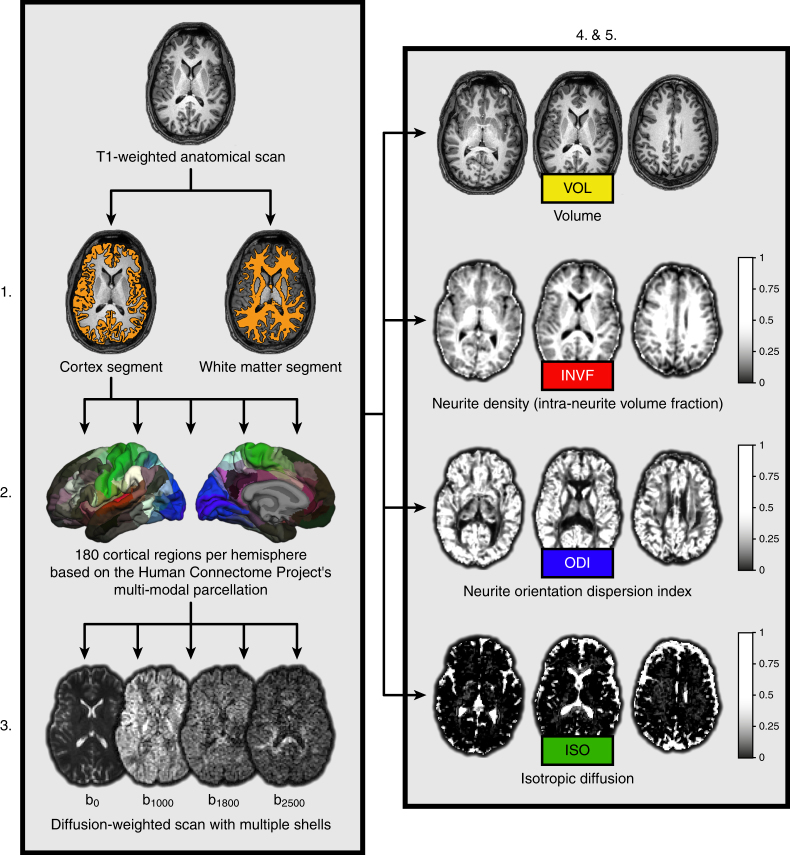
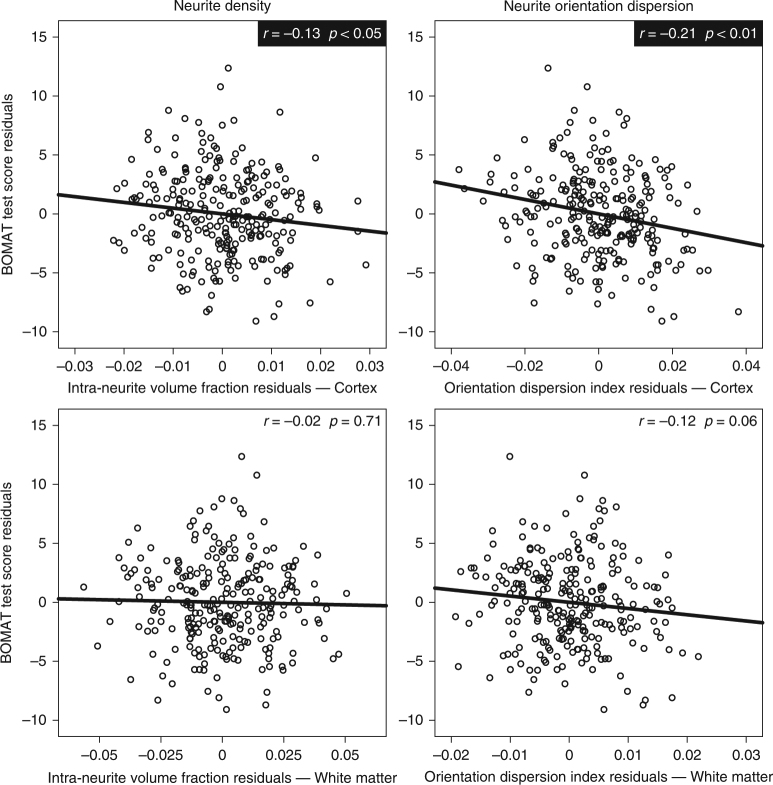
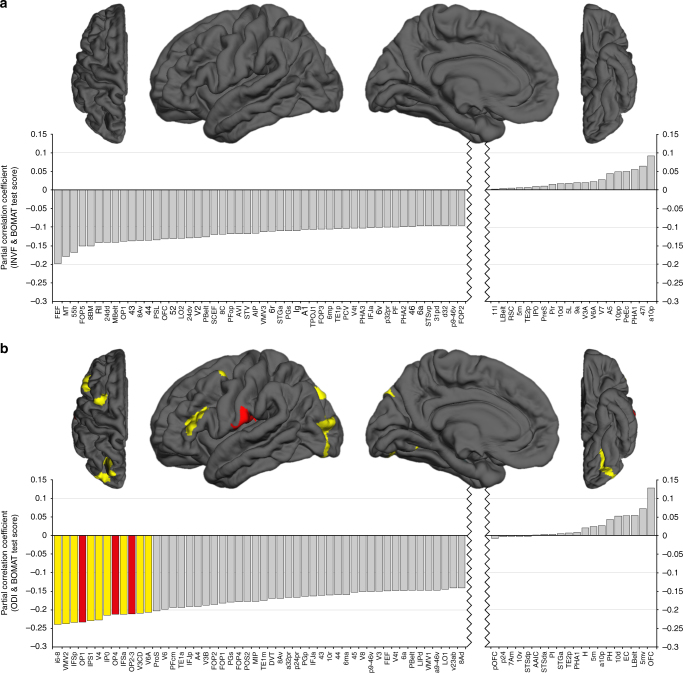
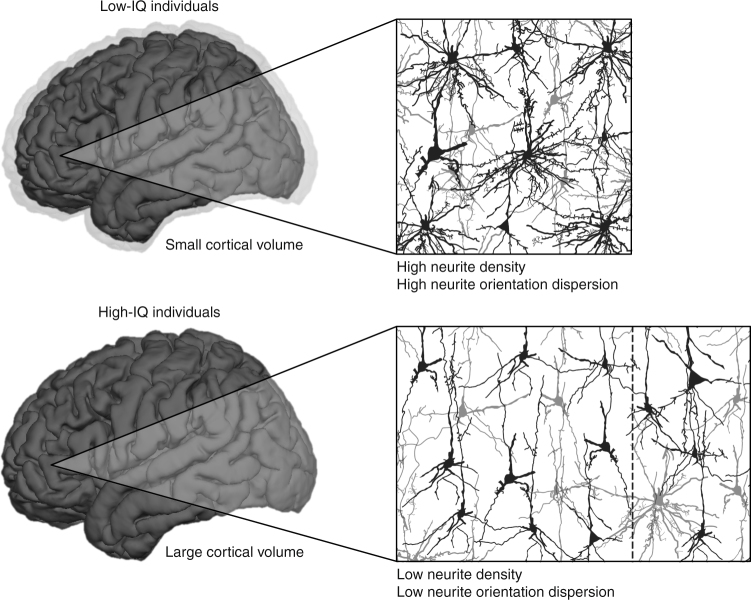
Previous research has demonstrated that individuals with higher intelligence are more likely to have larger gray matter volume in brain areas predominantly located in parieto-frontal regions. These findings were usually interpreted to mean that individuals with more cortical brain volume possess more neurons and thus exhibit more computational capacity during reasoning. In addition, neuroimaging studies have shown that intelligent individuals, despite their larger brains, tend to exhibit lower rates of brain activity during reasoning. However, the microstructural architecture underlying both observations remains unclear. By combining advanced multi-shell diffusion tensor imaging with a culture-fair matrix-reasoning test, we found that higher intelligence in healthy individuals is related to lower values of dendritic density and arborization. These results suggest that the neuronal circuitry associated with higher intelligence is organized in a sparse and efficient manner, fostering more directed information processing and less cortical activity during reasoning.
Overview
The claims and statistics of this paper haven’t been checked yet.
Free: it reads the open-access text and checks the first 5 claims that cite a source we can check. Create a free account to check every claim.
Integrity signals
Registry
Cites
Statistics
Figures
Verification
Claims the paper makes
The claims and statistics of this paper haven’t been checked yet.
Free: it reads the open-access text and checks the first 5 claims that cite a source we can check. Create a free account to check every claim.
Claims other papers make about this one
Each is checked against this paper’s own text: does it say what the citing paper says it does?
The source backs part of the claim, not all of it — or backs it for a different population, condition or comparison.
In the citing paper
“Several studies (Fukutomi et al., 2018;Genç et al., 2018) found optimizing d i, based on the fitting residual is helpful for re- vealing cortical cytoarchitecture with NODDI, though their method is still dependent on the assumption of equal diffusivities ( = d d i, e, ).”
From NODDI in clinical research (2020) · cites this paper as Genç et al., 2018
Experimental — accuracy not yet measuredThe cited source says what the claim attributes to it.
In the citing paper
“However, (Genç et al., 2018) have reported that higher intelligence in healthy young to middle-aged individuals was associated with lower cortical ODI”
From NODDI in clinical research (2020) · cites this paper as Genç et al., 2018
Self-check
Percentages, sums and reported differences re-computed from the paper’s own numbers.
The self-check needs the paper’s full text.
Citations
Cites
Controlling the False Discovery Rate: A Practical and Powerful Approach to Multiple Testing
Benjamini, Y., & Hochberg, Y. (1995) · Journal of the Royal Statistical Society Series B: Statistical Methodology · doi:10.1111/j.2517-6161.1995.tb02031.x · Cited by 109,482
Statistical power analyses using G∗Power 3.1: tests for correlation and regression analyses
Faul, F., Erdfelder, E., Buchner, A., & Lang, A.-G. (2009) · Behavior Research Methods · doi:10.3758/brm.41.4.1149 · Cited by 37,615
The assessment and analysis of handedness: The Edinburgh inventory
Oldfield, R. C. (1971) · Neuropsychologia · doi:10.1016/0028-3932(71)90067-4 · Cited by 35,900
Cortical Surface-Based Analysis
Dale, A. M., Fischl, B., & Sereno, M. I. (1999) · NeuroImage · doi:10.1006/nimg.1998.0395 · Cited by 10,910
Cortical Surface-Based Analysis
Fischl, B., Sereno, M. I., & Dale, A. M. (1999) · NeuroImage · doi:10.1006/nimg.1998.0396 · Cited by 6,147
The WU-Minn Human Connectome Project: An overview
Van Essen, D. C., Smith, S. M., Barch, D. M., Behrens, T. E. J., Yacoub, E., & Ugurbil, K. (2013) · NeuroImage · doi:10.1016/j.neuroimage.2013.05.041 · Cited by 5,651
The minimal preprocessing pipelines for the Human Connectome Project
Glasser, M. F., Sotiropoulos, S. N., Wilson, J. A., Coalson, T. S., Fischl, B., Andersson, J. L., Xu, J., Jbabdi, S., Webster, M., Polimeni, J. R., et al. (2013) · NeuroImage · doi:10.1016/j.neuroimage.2013.04.127 · Cited by 5,253
A multi-modal parcellation of human cerebral cortex
Glasser, M. F., Coalson, T. S., Robinson, E. C., Hacker, C. D., Harwell, J., Yacoub, E., Ugurbil, K., Andersson, J., Beckmann, C. F., Jenkinson, M., et al. (2016) · Nature · doi:10.1038/nature18933 · Cited by 5,111
(1998) · Cited by 4,172
A million spiking-neuron integrated circuit with a scalable communication network and interface
Merolla, P. A., Arthur, J. V., Alvarez-Icaza, R., Cassidy, A. S., Sawada, J., Akopyan, F., Jackson, B. L., Imam, N., Guo, C., Nakamura, Y., et al. (2014) · Science · doi:10.1126/science.1254642 · Cited by 4,147
Research works printed but not linked: 2
- Neubauer, A. C. & Fink, A. in Cognition and Intelligence: Identifying the Mechanisms of the Mind(eds Sternberg, R. J. & Pretz, J. E.) 68–87 (Cambridge University Press, Cambridge, 2005).
- Tukey, J. W. Exploratory Data Analysis (Addison-Wesley, Boston, 1977).
Cited by
Items 101–167 of 167
Xingming, C. H. E. N., Fu, T., Liu, C., Zhang, B., Fu, Y., Enze, L. I., Zhang, J., Chen, S., & Dang, C.-P. (2021) · Advances in Psychological Science · doi:10.3724/sp.j.1042.2022.00255 · Cited by 6
“The Parieto-Frontal Integration Theory (P-FIT) of intelligence: converging neuroimaging evidence.”
Pretraining Improves Deep Learning Based Tissue Microstructure Estimation
Li, Y., Yu, Q., Liu, Z., & Ye, C. (2021) · Mathematics and visualization · doi:10.1007/978-3-030-73018-5_14 · Cited by 4
Classical and Non-Classical Neural Communications
Winlow, W., Fatemi, R., & Johnson, A. S. (2023) · OBM Neurobiology · doi:10.21926/obm.neurobiol.2303181 · Cited by 4
Heyer, D. B., Wilbers, R., Galakhova, A. A., Hartsema, E. A., Braak, S., Hunt, S., Verhoog, M. B., Muijtjens, M. L., Mertens, E. J., Idema, S., et al. (2021) · bioRxiv (Cold Spring Harbor Laboratory) · doi:10.1101/2021.02.07.430103 · Cited by 4
Anderson, J. A. E., Schifani, C., Nazeri, A., Voineskos, A. N., & Initiative, A. D. N. (2021) · medRxiv · doi:10.1101/2021.03.26.21254351 · Cited by 4
Frischkorn, G. T., Hilger, K., Kretzschmar, A., & Schubert, A. (2022) · Psychologische Rundschau · doi:10.1026/0033-3042/a000598 · Cited by 6
Li, Y., Zhuo, Z., Liu, C., Duan, Y., Shi, Y.-L., Wang, T., Li, R., Wang, Y.-L., Jiang, J.-W., Xu, J., et al. (2024) · NeuroImage · doi:10.1016/j.neuroimage.2024.120858 · Cited by 3
“…models have provided valuable biomarkers for brain studies (Colgan et al., 2016; Collorone et al., 2021; De Luca et al., 2021; Fu et al., 2020; Genç et al., 2018; Granberg et al., 2017; Granziera et al., 2021; Kamiya et al., 2020; Koirala et al., 2021; Lucignani et al., 2021; Mitchell et al.,…”
InfluentialMicrostructural integrity of autonomic central nervous tracts is linked to cardiovascular health
Nolde, J. M., Rau, A., Kellner, E., Urbach, H., Weiller, C., Bamberg, F., Weiß, J., Reisert, M., & Hosp, J. A. (2025) · Neurobiology of Disease · doi:10.1016/j.nbd.2025.106972 · Cited by 4
“(Genç et al., 2018) In brainstem tracts that carry nociceptive information, intra-axonal volume was significantly correlated with individual pain experience.”
Artificial intelligence mechanism and mathematics implementation methods
Han, C., & Tiande, G. (2020) · Scientia Sinica Mathematica · doi:10.1360/ssm-2020-0031 · Cited by 3
Evaluating the Weight of the Evidence
Euler, M. J., & McKinney, T. L. (2021) · Cambridge University Press eBooks · doi:10.1017/9781108635462.008 · Cited by 3
A method for support neuron selection in NMLI
Qin, Z., Peng, J., & Jin, D. (2022) · Neurocomputing · doi:10.1016/j.neucom.2022.03.030 · Cited by 3
On the Neurobiology of Intelligence
Draguhn, A. (2022) · Springer eBooks · doi:10.1007/978-3-031-04198-3_2 · Cited by 3
Eye blinks synchronize with musical beats during music listening
Wu, Y., Teng, X., & Du, Y. (2025) · PLoS Biology · doi:10.1371/journal.pbio.3003456 · Cited by 5
Busatto, G., Rosa, P., Serpa, M., Squarzoni, P., & Duran, F. (2020) · Revista Brasileira de Psiquiatria · doi:10.1590/1516-4446-2019-0757 · Cited by 2
Predicting Individual Differences in Cognitive Ability from Brain Imaging and Genetics
Anderson, K. M., & Holmes, A. J. (2021) · Cambridge University Press eBooks · doi:10.1017/9781108635462.021 · Cited by 3
Buford, K. N., Snidow, C. R., Curiel, T. G., Dark, H. E., Purcell, J. B., Grey, D. K., Mrug, S., & Knight, D. C. (2023) · Behavioral Neuroscience · doi:10.1037/bne0000564 · Cited by 3
Cerebral microstructural alterations as an imaging biomarker for Post-COVID-condition
Rau, A., Arnold, P. G., Frase, S., Schröter, N., Mast, H., Weiller, C., Reisert, M., Urbach, H., & Hosp, J. A. (2025) · Scientific Reports · doi:10.1038/s41598-025-18962-3 · Cited by 3
“With respect to neurite integrity, an increase may reflect enhanced structural coupling or a neuroplastic response 34 , whereas a decrease is more likely indicative of axonal loss and reduced connectivity between brain regions 35 .”
COGNITIVE FREEDOM: A NEW HUMAN RIGHT BORN OUT OF ARTIFICIAL INTELLIGENCE
Farinella, F., & Gulyaeva, E. E. (2023) · Revista Direitos Fundamentais & Democracia · doi:10.25192/issn.1982-0496.rdfd.v28i12412 · Cited by 5
General cognitive ability and pericortical contrast
Drakulich, S., Sitartchouk, A., Olafson, E. R., Sarhani, R., Thiffault, A.-C., Chakravarty, M. M., Evans, A. C., & Karama, S. (2022) · Intelligence · doi:10.1016/j.intell.2022.101633 · Cited by 1
Liu, Y., Guo, X., & Zhang, Y. (2024) · Journal of Cognitive Psychology · doi:10.1080/20445911.2024.2371176 · Cited by 1
“…those with higher cognitive ability will exhibit lower activation of brain regions when performing tasks of the same di ffi culty (Dunst et al., 2014; Genc et al., 2018), requiring less brain activation to complete the same task, consuming less energy, inhibiting more interfering information, and…”
Kember, J., Gracia-Tabuenca, Z., Patel, R., Chakravarty, M. M., & Chai, X. J. (2025) · Communications Biology · doi:10.1038/s42003-025-07725-5 · Cited by 2
Quach, T., & Duchemin, A. (2025) · Neuroscience & Biobehavioral Reviews · doi:10.1016/j.neubiorev.2025.106212 · Cited by 1
Stammen, C., Penate, J. S., Metzen, D., Hönscher, M. J., Fraenz, C., Schlüter, C., Güntürkün, O., Kumsta, R., & Genç, E. (2025) · Cerebral Cortex · doi:10.1093/cercor/bhaf199 · Cited by 4
Self-citationSmith, J. C., Callow, D. D., Pena, G. S., & Purcell, J. J. (2025) · Advances in neurobiology · doi:10.1007/978-981-95-0066-6_14 · Cited by 1
Coalitional Psychology and the Evolution of Intelligence
Egeland, J., Kennair, L. E. O., & Kleppestø, T. H. (2026) · Evolution and Human Behavior · doi:10.1016/j.evolhumbehav.2026.106839 · Cited by 2
Guo, X., Liu, Y., Zhang, Y., & Wu, C. (2022) · Frontiers in Neuroscience · doi:10.3389/fnins.2022.1058609 · Cited by 3
“Thus, in comparison with a lower cognitive ability group, a higher cognitive ability group shows lower activation of brain regions when performing tasks with the same difficulty (Dunst et al., 2014; Genc et al., 2018).”
BackgroundThe Genetic Basis of Intelligence
Haier, R. J., Colom, R., & Hunt, E. B. (2023) · Cambridge University Press eBooks · doi:10.1017/9781108569576.007 · Cited by 1
Oeschger, J. M., Tabelow, K., & Mohammadi, S. (2024) · Magnetic Resonance in Medicine · doi:10.1002/mrm.30034 · Cited by 1
Sleep problems and duration in school-aged children at different levels of giftedness
Sun, J., Lu, R., Sun, W., Deng, Y., Liu, J., Jiang, Y., Zhu, Q., Xu, H., Wang, G., & Jiang, F. (2024) · Sleep Medicine · doi:10.1016/j.sleep.2024.07.030 · Cited by 2
A cellular basis of human intelligence
Goriounova, N. A., Heyer, D. B., Wilbers, R., Verhoog, M. B., Giugliano, M., Verbist, C., Obermayer, J., Kerkhofs, A., Smeding, H. M. M., Verberne, M., et al. (2018) · Pure Amsterdam UMC · doi:10.1101/296343 · Cited by 1
Resting-state fMRI Signals of Intelligent People Wander in a Larger SpacePreprint
Dizaji, A. S., Khodaei, M., & Soltanian-Zadeh, H. (2019) · bioRxiv (Cold Spring Harbor Laboratory) · doi:10.1101/529362 · Cited by 2
“As another example, (Genç et al., 2018) show that branching of dendrites in the brain of intelligent individuals shows more efficient and sparse organization compared to less intelligent individuals.”
BackgroundGuerrero, J. M., Adluru, N., Bendlin, B. B., Goldsmith, H. H., Schaefer, S. M., Davidson, R. J., Kecskemeti, S. R., Zhang, H. G., & Alexander, A. L. (2019) · bioRxiv (Cold Spring Harbor Laboratory) · doi:10.1101/630541 · Cited by 1
Static and Dynamic Connectivity Analysis of Human Brain via Functional Magnetic Resonance ImagingPreprint
Sen, B. (2022) · Thesis Commons (OSF Preprints) · doi:10.31237/osf.io/3kunr · Cited by 2
Conditioned fear reactions are associated with gray matter density but not cortical microstructurePreprint
Fraenz, C., Metzen, D., Merz, C. J., Selpien, H., Axmacher, N., & Genç, E. (2020) · bioRxiv (Cold Spring Harbor Laboratory) · doi:10.1101/2020.12.18.423236 · Cited by 1
Self-citationPat, N., Wang, Y., Anney, R., Riglin, L., Thapar, A., & Stringaris, A. K. (2021) · bioRxiv (Cold Spring Harbor Laboratory) · doi:10.1101/2021.02.21.432130 · Cited by 2
Calibration allows accurate estimation of the axonal volume fraction with diffusion MRIPreprint
Papazoglou, S., Ashtarayeh, M., Oeschger, J. M., Callaghan, M. F., Does, M. D., & Mohammadi, S. (2022) · bioRxiv (Cold Spring Harbor Laboratory) · doi:10.1101/2022.04.12.488014 · Cited by 1
Correlation Based Node Partitioning to Sparse Multilayer PerceptronPreprint
Benar, C., & Akansu, A. N. (2023) · TechRxiv · doi:10.36227/techrxiv.23713962 · Cited by 1
The Convergence of Intelligence and LongevityPreprint
Gualtieri, C. (2024) · Qeios · doi:10.32388/wvwb0l
Euler, M. J., & Hilger, K. (2026) · bioRxiv (Cold Spring Harbor Laboratory) · doi:10.64898/2026.02.13.705728 · Cited by 2
Reproducibility of axonal water fraction derived from the spherical mean diffusion weighted signal
Song, J., Chow, H. M., Nikam, R. M., Kandula, V. V. R., Choudhary, A. K., & Li, H. (2019) · Magnetic Resonance Imaging · doi:10.1016/j.mri.2019.08.024
“However, since the spherical mean signal may still be able to provide some useful information about microstructural changes [40], the reproducibility of spherical mean signal in GM was also investigated in this study.”
Gruschus, J. M. (2021) · Elsevier eBooks · doi:10.1016/b978-0-323-85707-9.00007-1
Sparsely connected asynchronous reservoir computing network
Bo, Y.-C., Xin, Z., Bao, L., & Wang, P. (2021) · Scientia Sinica Informationis · doi:10.1360/ssi-2019-0183
Car-Car Analogy on Neural Network SciencePreprint
Hsu, W., Liu, Z.-C., & Liu, Y.-X. (2021) · Research Square · doi:10.21203/rs.3.rs-811703/v1
Sugino, M., Mori, F., Kotani, K., & Jimbo, Y. (2021) · IEEJ Transactions on Electronics Information and Systems · doi:10.1541/ieejeiss.141.602
Implications of the neuroscientific evidence on childhood poverty
Lipina, S. J., & Segretin, M. S. (2020) · CONICET Digital (CONICET)
Theories, Models, and Hypotheses
Barbey, A. K., Karama, S., & Haier, R. J. (2021) · Cambridge University Press eBooks · doi:10.1017/9781108635462.007
Neuroimaging Methods and Findings
Barbey, A. K., Karama, S., & Haier, R. J. (2021) · Cambridge University Press eBooks · doi:10.1017/9781108635462.013
Predictive Modeling Approaches
Barbey, A. K., Karama, S., & Haier, R. J. (2021) · Cambridge University Press eBooks · doi:10.1017/9781108635462.020
Kellner, E., Reisert, M., Rau, A., Hosp, J. A., Demerath, T., Weiller, C., & Urbach, H. (2022) · SSRN Electronic Journal · doi:10.2139/ssrn.4125022
Supporting and Encouraging the Versatile Gifted Child and Adolescent
David, H., & Gyarmathy, É. (2023) · Springer briefs in education · doi:10.1007/978-3-031-22795-0_1 · Cited by 1
The microscopic central nervous system
Ley, J. M. (2023) · Elsevier eBooks · doi:10.1016/b978-0-323-90541-1.00009-1
Correlation Based Node Partitioning to Sparse Multilayer PerceptronPreprint
Benar, C., & Akansu, A. N. (2023) · doi:10.36227/techrxiv.23713962.v1
Correlation Based Node Partitioning to Sparse Multilayer PerceptronPreprint
Benar, C., & Akansu, A. N. (2023) · doi:10.36227/techrxiv.23713962.v2
Haier, R. J., Colom, R., & Hunt, E. B. (2023) · Cambridge University Press eBooks · doi:10.1017/9781108569576.006
Thoughts on the Politics of Intelligence Research
Haier, R. J. (2023) · Springer eBooks · doi:10.1007/978-3-031-29148-7_26
Ströckens, F., & Amunts, K. (2024) · Oxford University Press eBooks · doi:10.1093/med/9780197676592.003.0002 · Cited by 1
Exploring neural architectures for simultaneously recognizing multiple visual attributes
Han, Z., & Sereno, A. B. (2024) · Scientific Reports · doi:10.1038/s41598-024-80679-6
Psychometric intelligence research: A case of degenerate bootstrapping
Akbay, G. (2025) · European Journal for Philosophy of Science · doi:10.1007/s13194-025-00663-3
“Higher cortical thickness and lower dendritic branching were also shown to be associated with higher levels of intelligence (Genç et al, 2018).”
The latent organization of white matter microstructure and its relation to fluid intelligence
Jungeblut, H. M., Genç, E., Burke, M., Gajewski, P. D., Getzmann, S., Wascher, E., & Schubert, A.-L. (2026) · Imaging Neuroscience · doi:10.1162/imag.a.1167 · Cited by 1
“…field of view (FOV) = 220 mm, voxel size = 2 × 2 × 2 mm. Diffusion weighting was based on a multi-shell, high- angular-resolution diffusion imaging (HARDI) scheme with b-values of 0, 1000, 1800, and 2500 s/mm 2 , applied along 20, 40, and 60 uniformly distributed directions ( Gen ç et al., 2018).”
Self-citationYan, J., Iturria‐Medina, Y., Bezgin, G., Toussaint, P. J., Xie, K., He, L., Chen, J., Hilger, K., Genç, E., Evans, A. C., et al. (2026) · Communications Biology · doi:10.1038/s42003-026-09831-4 · Cited by 6
“Compared to DWI, which may suffer from under-recovered long-distance projections and false-positive connections, and SCNs,whichrelysolelyonasinglemeasure,MSNsaresuggestedtobemore comprehensiveandaccurate 24 .”
InfluentialSelf-citationAxiomatic decoupling to surpass constraints in large-scale brain-like emulation
Qiao, G., Zhou, P., Meng, L., Liu, X., Liu, Q., Liu, Y., Chen, T., Ning, N., Yu, Q., & Hu, S. (2026) · Cell Reports Physical Science · doi:10.1016/j.xcrp.2026.103204
Boisselier, N. (2025) · theses.fr (ABES) · doi:10.70675/801d548cz4105z46cfz95fcz749e7eb17f46
Neuronaukowe podstawy inteligencji
Haier, R. J., Kabziński, P., & Mąka, S. (2026) · Wydawnictwo Uniwersytetu Łódzkiego eBooks · doi:10.18778/8331-892-9
The degenerome—a novel streamline-wise approach for white matter integrity in neurodegeneration
Hosp, J. A., Reisert, M., Schröter, N., Kellner, E., Mast, H., Rijntjes, M., Hellwig, S., Frings, L., Wiendl, H., Urbach, H., et al. (2026) · npj Parkinson's Disease · doi:10.1038/s41531-026-01428-2 · Cited by 1
“Forgraymatter,V-intra 65 .”
[First authorship is shared by Sebastian Papazoglou and Mohammad Ashtarayeh.]
Papazoglou, S., Ashtarayeh, M., Oeschger, J. M., Callaghan, M., Does, M., & Mohammadi, S. (2024) · MPG.PuRe (Max Planck Society)
Yao, S.-X., Xu, Z.-Y., Zhao, H.-Q., Deng, D.-F., Yang, Y., Tang, L., Tan, H., & Liu, J. (2026) · Frontiers in Immunology · doi:10.3389/fimmu.2026.1972377
Metadata
- Authors
- Genç, E., Fraenz, C., Schlüter, C., Friedrich, P., Hossiep, R., Voelkle, M. C., Ling, J. M., Güntürkün, O., & Jung, R. E.
- Affiliations
- Ruhr University Bochum (DE)
- Humboldt-Universität zu Berlin (DE)
- Mind Research Network (US)
- Stellenbosch University (ZA)
- University of New Mexico (US)
- Corresponding author
- Genç, Erhan
- ORCID
- Venue
- Nature Communications
- Published
- 2018-05-15
- Volume
- 9
- Issue
- 1
- Pages
- 1905-1905
- ISSN
- 2041-1723 (ISSN-L)
- PMC
- PMC5954098
- OpenAlex
- W2803816323
- Semantic Scholar
- 471a99fe3038652f8090f536b123bfdce0d7718e
- Cited by
- 167
- References
- 67
- Citations by year
- 2026: 8 · 2025: 20 · 2024: 14 · 2023: 25 · 2022: 23 · 2021: 38 · 2020: 16 · 2019: 17 · 2018: 6
- FWCI
- 13.30
- Type
- journal article
- Language
- en
- Open access
- gold
- doi.org
- Licence
- cc-by
- creativecommons.org/licenses/by/4.0 (tdm)
- creativecommons.org/licenses/by/4.0 (vor)
- Locations
- Nature Communications (publishedVersion, cc-by)
- Europe PMC (PubMed Central) (publishedVersion, cc-by)
- PubMed Central (publishedVersion, cc-by)
- PubMed (publishedVersion)
- RePEc: Research Papers in Economics (submittedVersion)
- Universitätsbibliographie, Universität Duisburg-Essen (submittedVersion)
- DOAJ (DOAJ: Directory of Open Access Journals) (submittedVersion, cc-by-sa)
- FreiDok plus (Universitätsbibliothek Freiburg) (submittedVersion)
- SUNScholar (Stellenbosch University) (submittedVersion)
- Funders
- Deutsche Forschungsgemeinschaft (Gu227/16, Project A03, Gu227/16‐1, GE2777/2-1, SFB 1280 project A03, SFB 1280, 1U54MH091657)
- Mercator Research Center Ruhr (1U54MH091657, AN-2015-0044)
- National Institutes of Health (5u54mh091657-05, 1U54‐MH‐091657)
- McDonnell Center for Systems Neuroscience (1U54MH091657)
- National Institute of Mental Health (U54-MH091657)
- NIH Blueprint for Neuroscience Research (1U54-MH-091657)
- Topics
- Health Sciences › Medicine › Radiology, Nuclear Medicine and Imaging › Advanced Neuroimaging Techniques and Applications
- Social Sciences › Psychology › Experimental and Cognitive Psychology › Cognitive Abilities and Testing
- Life Sciences › Neuroscience › Cognitive Neuroscience › Neural and Behavioral Psychology Studies
- Keywords
- intelligence, gray matter, dendritic density, dendritic branching, matrix reasoning, brain efficiency, Culture Fair Intelligence Test
- MeSH terms
- Adolescent, Adult, Brain Mapping, Dendrites, Female, Humans, Intelligence, Intelligence Tests, Male, Young Adult, Gray Matter
About these checks
Registry, retraction, Cites and statistics results are computed, not judged, with one exception: a printed reference that no index lists is read once by a model before it counts as a citation error. Claims are extracted by a model and kept only when their quote appears verbatim in the text; each cited source is then checked, with a model’s help, for whether it says what the claim relies on. Those verdicts can be wrong — read the claim’s quote and the cited source before relying on one.
Statistics and arithmetic are recomputed, not judged.
Confidence bands are shown only for fields calibrated on our annotated test set. None is calibrated yet, so no band is shown.
What counts as a claim ›How we measure confidence ›How we check this ›
Are you an author, or do you see a problem with this page? Request a review
Data sources
Bibliographic data: Semantic Scholar, OpenAlex, Crossref.
Contains information from the Semantic Scholar Academic Graph Datasets, made available under the ODC Attribution License (ODC-BY 1.0).
Semantic Scholar’s data is described in: Kinney, R., et al. (2023). The Semantic Scholar Open Data Platform. arXiv:2301.10140.
