

Diffusion markers of dendritic density and arborization in gray matter predict differences in intelligence
Open accessThe DOI matches its Crossref record; 67 of the 67 references it cites were found in a registry or an index.
Abstract
Previous research has demonstrated that individuals with higher intelligence are more likely to have larger gray matter volume in brain areas predominantly located in parieto-frontal regions. These findings were usually interpreted to mean that individuals with more cortical brain volume possess more neurons and thus exhibit more computational capacity during reasoning. In addition, neuroimaging studies have shown that intelligent individuals, despite their larger brains, tend to exhibit lower rates of brain activity during reasoning. However, the microstructural architecture underlying both observations remains unclear. By combining advanced multi-shell diffusion tensor imaging with a culture-fair matrix-reasoning test, we found that higher intelligence in healthy individuals is related to lower values of dendritic density and arborization. These results suggest that the neuronal circuitry associated with higher intelligence is organized in a sparse and efficient manner, fostering more directed information processing and less cortical activity during reasoning.
Overview
The claims and statistics of this paper haven’t been checked yet.
Free: it reads the open-access text and checks the first 5 claims that cite a source we can check. Create a free account to check every claim.
Integrity signals
Registry
Cites
Statistics
Figures
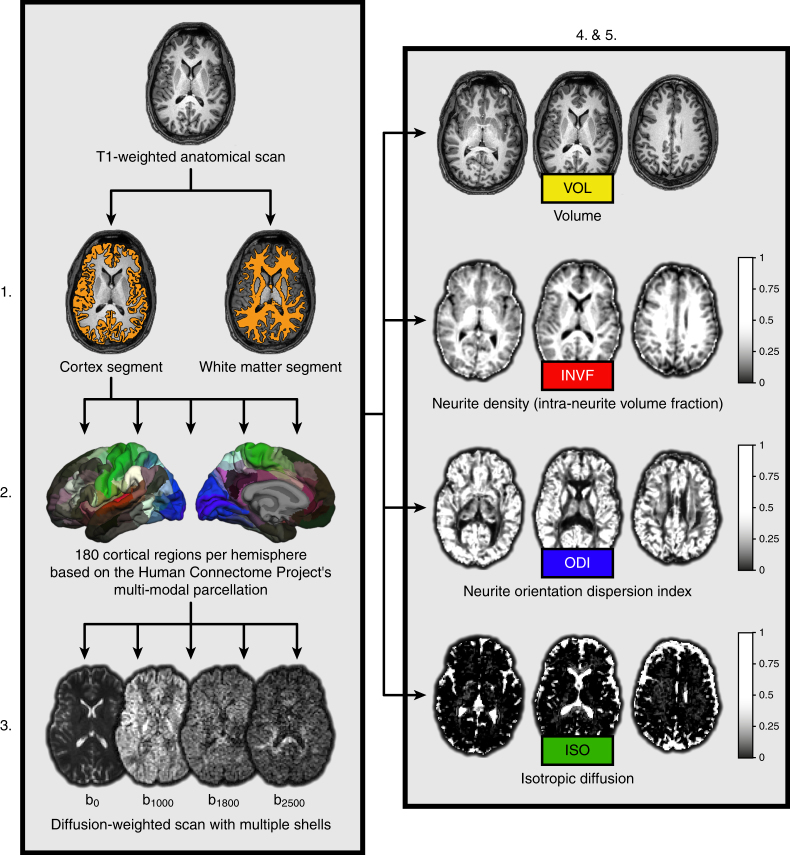
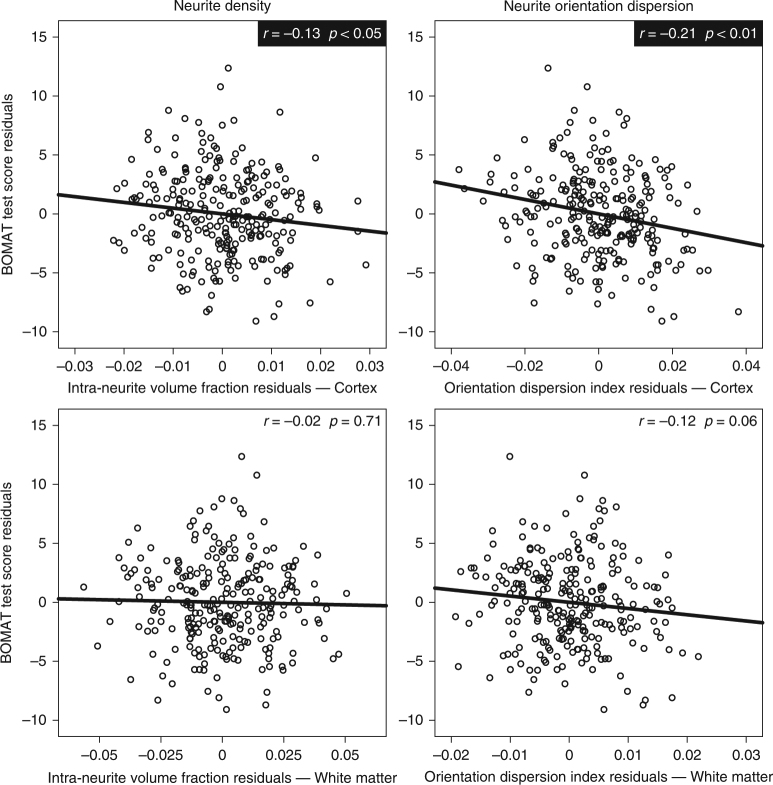
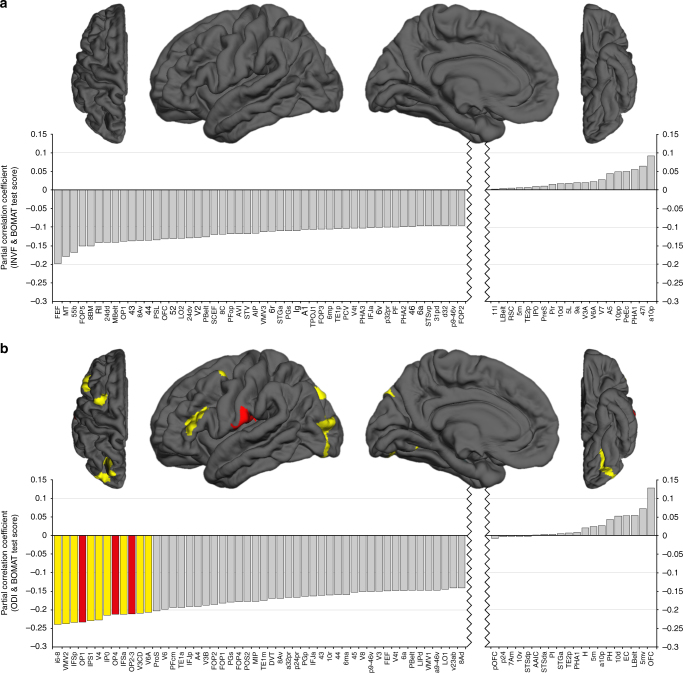
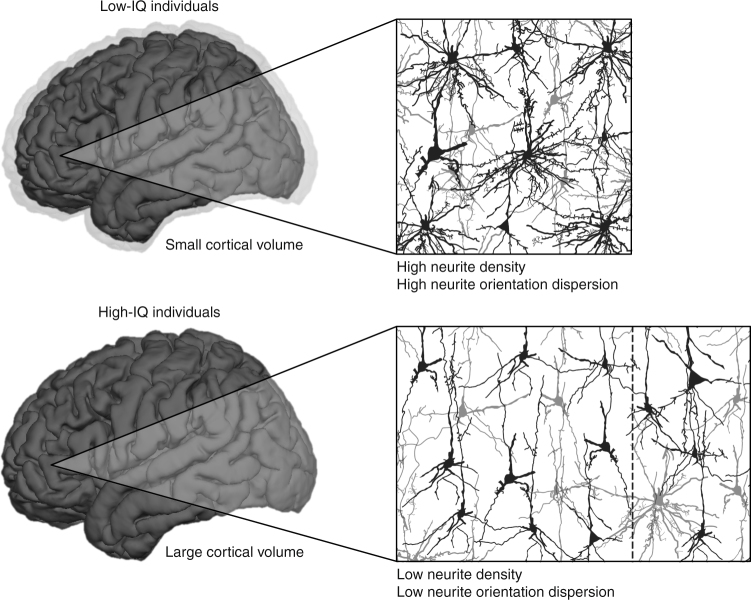
Verification
Claims the paper makes
The claims and statistics of this paper haven’t been checked yet.
Free: it reads the open-access text and checks the first 5 claims that cite a source we can check. Create a free account to check every claim.
Claims other papers make about this one
Each is checked against this paper’s own text: does it say what the citing paper says it does?
The source backs part of the claim, not all of it — or backs it for a different population, condition or comparison.
In the citing paper
“Several studies (Fukutomi et al., 2018;Genç et al., 2018) found optimizing d i, based on the fitting residual is helpful for re- vealing cortical cytoarchitecture with NODDI, though their method is still dependent on the assumption of equal diffusivities ( = d d i, e, ).”
From NODDI in clinical research (2020) · cites this paper as Genç et al., 2018
Experimental — accuracy not yet measuredThe cited source says what the claim attributes to it.
In the citing paper
“However, (Genç et al., 2018) have reported that higher intelligence in healthy young to middle-aged individuals was associated with lower cortical ODI”
From NODDI in clinical research (2020) · cites this paper as Genç et al., 2018
Self-check
Percentages, sums and reported differences re-computed from the paper’s own numbers.
The self-check needs the paper’s full text.
Citations
Cites
Controlling the False Discovery Rate: A Practical and Powerful Approach to Multiple Testing
Benjamini, Y., & Hochberg, Y. (1995) · Journal of the Royal Statistical Society Series B: Statistical Methodology · doi:10.1111/j.2517-6161.1995.tb02031.x · Cited by 109,482
Statistical power analyses using G∗Power 3.1: tests for correlation and regression analyses
Faul, F., Erdfelder, E., Buchner, A., & Lang, A.-G. (2009) · Behavior Research Methods · doi:10.3758/brm.41.4.1149 · Cited by 37,615
The assessment and analysis of handedness: The Edinburgh inventory
Oldfield, R. C. (1971) · Neuropsychologia · doi:10.1016/0028-3932(71)90067-4 · Cited by 35,900
Cortical Surface-Based Analysis
Dale, A. M., Fischl, B., & Sereno, M. I. (1999) · NeuroImage · doi:10.1006/nimg.1998.0395 · Cited by 10,910
Cortical Surface-Based Analysis
Fischl, B., Sereno, M. I., & Dale, A. M. (1999) · NeuroImage · doi:10.1006/nimg.1998.0396 · Cited by 6,147
The WU-Minn Human Connectome Project: An overview
Van Essen, D. C., Smith, S. M., Barch, D. M., Behrens, T. E. J., Yacoub, E., & Ugurbil, K. (2013) · NeuroImage · doi:10.1016/j.neuroimage.2013.05.041 · Cited by 5,651
The minimal preprocessing pipelines for the Human Connectome Project
Glasser, M. F., Sotiropoulos, S. N., Wilson, J. A., Coalson, T. S., Fischl, B., Andersson, J. L., Xu, J., Jbabdi, S., Webster, M., Polimeni, J. R., et al. (2013) · NeuroImage · doi:10.1016/j.neuroimage.2013.04.127 · Cited by 5,253
A multi-modal parcellation of human cerebral cortex
Glasser, M. F., Coalson, T. S., Robinson, E. C., Hacker, C. D., Harwell, J., Yacoub, E., Ugurbil, K., Andersson, J., Beckmann, C. F., Jenkinson, M., et al. (2016) · Nature · doi:10.1038/nature18933 · Cited by 5,111
(1998) · Cited by 4,172
A million spiking-neuron integrated circuit with a scalable communication network and interface
Merolla, P. A., Arthur, J. V., Alvarez-Icaza, R., Cassidy, A. S., Sawada, J., Akopyan, F., Jackson, B. L., Imam, N., Guo, C., Nakamura, Y., et al. (2014) · Science · doi:10.1126/science.1254642 · Cited by 4,147
Research works printed but not linked: 2
- Neubauer, A. C. & Fink, A. in Cognition and Intelligence: Identifying the Mechanisms of the Mind(eds Sternberg, R. J. & Pretz, J. E.) 68–87 (Cambridge University Press, Cambridge, 2005).
- Tukey, J. W. Exploratory Data Analysis (Addison-Wesley, Boston, 1977).
Cited by
Kamiya, K., Hori, M., & Aoki, S. (2020) · Journal of Neuroscience Methods · doi:10.1016/j.jneumeth.2020.108908 · Cited by 321
“However, (Genç et al., 2018) have reported that higher intelligence in healthy young to middle-aged individuals was associated with lower cortical ODI, suggesting that the relationship between cortical ODI and neurocognitive decline with age is likely not straightforward.”
BackgroundMethodStructural brain imaging correlates of general intelligence in UK Biobank
Cox, S. R., Ritchie, S. J., Fawns-Ritchie, C., Tucker-Drob, E. M., & Deary, I. J. (2019) · Intelligence · doi:10.1016/j.intell.2019.101376 · Cited by 164
Large and fast human pyramidal neurons associate with intelligence
Goriounova, N. A., Heyer, D. B., Wilbers, R., Verhoog, M. B., Giugliano, M., Verbist, C., Obermayer, J., Kerkhofs, A., Smeding, H., Verberne, M., et al. (2018) · eLife · doi:10.7554/elife.41714 · Cited by 162
Genetic variation, brain, and intelligence differences
Deary, I. J., Cox, S. R., & Hill, W. D. (2022) · Molecular Psychiatry · doi:10.1038/s41380-021-01027-y · Cited by 137
Genes, Cells and Brain Areas of Intelligence
Goriounova, N. A., & Mansvelder, H. D. (2019) · Frontiers in Human Neuroscience · doi:10.3389/fnhum.2019.00044 · Cited by 168
Friedrich, P., Fraenz, C., Schlüter, C., Ocklenburg, S., Mädler, B., Güntürkün, O., & Genç, E. (2020) · Cerebral Cortex · doi:10.1093/cercor/bhz221 · Cited by 145
Self-citationJiang, R., Calhoun, V. D., Fan, L., Zuo, N., Jung, R., Qi, S., Lin, D., Li, J., Zhuo, C., Song, M., et al. (2020) · Cerebral Cortex · doi:10.1093/cercor/bhz134 · Cited by 126
“2014), white matter (Genc et al. 2018), cortical thickness (Narr et al.”
BackgroundSelf-citationOptimizing the intrinsic parallel diffusivity in NODDI: an extensive empirical evaluation
Guerrero, J. M., Adluru, N., Bendlin, B. B., Goldsmith, H. H., Schaefer, S. M., Davidson, R. J., Kecskemeti, S. R., Zhang, H., & Alexander, A. L. (2019) · PLOS ONE · doi:10.1371/journal.pone.0217118 · Cited by 98
Schmitz, J., Fraenz, C., Schlüter, C., Friedrich, P., Jung, R. E., Güntürkün, O., Genç, E., & Ocklenburg, S. (2019) · NeuroImage · doi:10.1016/j.neuroimage.2019.01.079 · Cited by 81
“, 2015), which allows for robust estimation of fiber population in considerably reduced processing time (Genç et al., 2018; Sepehrband et al., 2016; Tariq et al., 2016).”
Self-citationGenç, E., Schlüter, C., Fraenz, C., Arning, L., Metzen, D., Nguyen, H. P., Voelkle, M. C., Streit, F., Güntürkün, O., Kumsta, R., et al. (2021) · Molecular Neurobiology · doi:10.1007/s12035-021-02398-7 · Cited by 76
“Within the framework of our study, we carried out the advanced short version of the BOMAT, which is known to have a high discriminatory power in samples with generally high intellectual abilities, thus avoiding possible ceiling effects (Genç et al., 2018; Genç et al., 2019).”
MethodSelf-citationHigh associative neuron numbers could drive cognitive performance in corvid species
Ströckens, F., Neves, K., Kirchem, S., Schwäb, C., Herculano‐Houzel, S., & Güntürkün, O. (2022) · The Journal of Comparative Neurology · doi:10.1002/cne.25298 · Cited by 74
Self-citationStoye, D. Q., Blesa, M., Sullivan, G., Galdi, P., Lamb, G. J., Black, G. S., Quigley, A. J., Thrippleton, M. J., Bastin, M. E., Reynolds, R. M., et al. (2020) · eLife · doi:10.7554/elife.60729 · Cited by 62
Jiang, R., Calhoun, V. D., Cui, Y., Qi, S., Zhuo, C., Li, J., Jung, R., Yang, J., Du, Y., Jiang, T., et al. (2020) · Brain Imaging and Behavior · doi:10.1007/s11682-019-00146-z · Cited by 61
“However, our results are in line with findings on the mechanisms of maturation-induced and learning-induced synaptic plasticity, both of which are associated with an initial increase of synapse number and a subsequent synaptic pruning (Genc et al. 2018; Huttenlocher 1990), a process which can speed up learning and pro…”
ResultSelf-citationHosp, J. A., Reisert, M., Dreßing, A., Götz, V., Kellner, E., Mast, H., Arndt, S., Waller, C. F., Wagner, D., Rieg, S., et al. (2024) · Nature Communications · doi:10.1038/s41467-024-48651-0 · Cited by 67
Fluid intelligence and the locus coeruleus–norepinephrine system
Tsukahara, J. S., & Engle, R. W. (2021) · Proceedings of the National Academy of Sciences · doi:10.1073/pnas.2110630118 · Cited by 62
Wu, T., Zhang, X., & Liu, Z. (2022) · Frontiers of Physics · doi:10.1007/s11467-022-1161-6 · Cited by 55
“By combining advanced multi-shell diffusion tensor imaging with a culture-fair matrix-reasoning test, Genc et al. found that higher intelligence in healthy individuals is related to lower values of dendritic density and arborization [89].”
MethodA deep network for tissue microstructure estimation using modified LSTM units
Ye, C.-Y., Li, X.-L., & Chen, J. (2019) · Medical Image Anal. · doi:10.1016/j.media.2019.04.006 · Cited by 50
Heyer, D. B., Wilbers, R., Galakhova, A. A., Hartsema, E. A., Braak, S., Hunt, S., Verhoog, M. B., Muijtjens, M. L., Mertens, E. J., Idema, S., et al. (2021) · Cerebral Cortex · doi:10.1093/cercor/bhab330 · Cited by 49
Brain-Inspired Learning, Perception, and Cognition: A Comprehensive Review
Jiao, L., Ma, M., He, P., Geng, X., Liu, X., Liu, F., Ma, W., Yang, S., Hou, B., & Tang, X. (2024) · IEEE Transactions on Neural Networks and Learning Systems · doi:10.1109/tnnls.2024.3401711 · Cited by 62
“1) Sparsity: The human brain is a sparse and layered structure [26], as shown in Fig.”
Predicting Biological Gender and Intelligence From fMRI via Dynamic Functional Connectivity
Sen, B., & Parhi, K. K. (2020) · IEEE Transactions on Biomedical Engineering · doi:10.1109/tbme.2020.3011363 · Cited by 55
“Recent works have reported the relation between an individual’s intelligence metrics and thickness in gray matter [69], white matter [70], and cortical thickness [71].”
Parker, C. S., Veale, T. D., Bocchetta, M., Slattery, C. F., Malone, I. B., Thomas, D. L., Schott, J. M., Cash, D. M., Zhang, H., & Initiative, A. D. N. (2021) · NeuroImage · doi:10.1016/j.neuroimage.2021.118749 · Cited by 46
“Their changes have been linked to function in both healthy populations (Kunz et al 2014, Genc et al 2018, Mollink et al 2019) and in cases of diseases (Winston et al 2014, Broad et al 2019, Scahill et al 2020).”
BackgroundBrain-Inspired Remote Sensing Interpretation: A Comprehensive Survey
Jiao, L., Huang, Z., Liu, X., Yang, Y., Ma, M., Zhao, J., You, C., Hou, B., Yang, S., Liu, F., et al. (2023) · IEEE Journal of Selected Topics in Applied Earth Observations and Remote Sensing · doi:10.1109/jstars.2023.3247455 · Cited by 49
“1) Sparsity: The biological brain, especially the human brain, is a hierarchical, sparse, and periodic structure [22], as shown in Fig.”
BackgroundBrain-Inspired Remote Sensing Foundation Models and Open Problems: A Comprehensive Survey
Jiao, L.-C., Huang, Z., Lu, X., Liu, X., Yang, Y.-T., Zhao, J.-X., Zhang, J.-Y., Hou, B., Yang, S.-Y., Liu, F., et al. (2023) · IEEE Journal of Selected Topics in Applied Earth Observations and Remote Sensing · doi:10.1109/jstars.2023.3316302 · Cited by 43
Super-Resolved q -Space deep learning with uncertainty quantification
Qin, Y., Liu, Z., Liu, C., Li, Y., Zeng, X., & Ye, C. (2021) · Medical Image Analysis · doi:10.1016/j.media.2020.101885 · Cited by 44
An improved deep network for tissue microstructure estimation with uncertainty quantification
Ye, C., Li, Y., & Zeng, X. (2020) · Medical Image Analysis · doi:10.1016/j.media.2020.101650 · Cited by 50
Grospietsch, F., & Lins, I. (2021) · Frontiers in Education · doi:10.3389/feduc.2021.665752 · Cited by 78
Predicting intelligence from brain gray matter volume
Hilger, K., Winter, N. R., Leenings, R., Sassenhagen, J., Hahn, T., Basten, U., & Fiebach, C. J. (2020) · Brain Structure and Function · doi:10.1007/s00429-020-02113-7 · Cited by 50
Pat, N., Wang, Y., Anney, R., Riglin, L., Thapar, A., & Stringaris, A. K. (2022) · Human Brain Mapping · doi:10.1002/hbm.26027 · Cited by 48
“, 2007) (structural MRI [sMRI]) and white matter (Genç et al., 2018; G ongora et al., 2020) (diffusion tensor imaging [DTI]).”
BackgroundInfluentialDisplaying the autonomic processing network in humans - a global tractography approach
Reisert, M., Weiller, C., & Hosp, J. (2021) · NeuroImage · doi:10.1016/j.neuroimage.2021.117852 · Cited by 34
In vivo coupling of dendritic complexity with presynaptic density in primary tauopathies
Mak, E., Holland, N., Jones, P. S., Savulich, G., Low, A., Malpetti, M., Kaalund, S. S., Passamonti, L., Rittman, T., Romero-Garcia, R., et al. (2021) · Neurobiology of Aging · doi:10.1016/j.neurobiolaging.2021.01.016 · Cited by 36
Epilepsy and Attention Deficit Hyperactivity Disorder: Connection, Chance, and Challenges
Fan, H., Chiang, K.-L., Chang, K., Chen, C., & Tsai, J. (2023) · International Journal of Molecular Sciences · doi:10.3390/ijms24065270 · Cited by 46
Gur, R. C., Butler, E. R., Moore, T. M., Rosen, A. F. G., Ruparel, K., Satterthwaite, T. D., Roalf, D. R., Gennatas, E. D., Bilker, W. B., Shinohara, R. T., et al. (2020) · Cerebral Cortex · doi:10.1093/cercor/bhaa282 · Cited by 31
The biological basis of intelligence: Benchmark findings
Hilger, K., Spinath, F. M., Troche, S. J., & Schubert, A. (2022) · Intelligence · doi:10.1016/j.intell.2022.101665 · Cited by 29
White matter abnormalities associated with ADHD outcomes in adulthood
Versace, A., Jones, N. P., Joseph, H. M., Lindstrom, R. A., Wilson, T. K., Santos, J. P. L., Gnagy, E. M., Pelham, W. E., Ladouceur, C. D., & Molina, B. S. G. (2021) · Molecular Psychiatry · doi:10.1038/s41380-021-01153-7 · Cited by 25
Koirala, N., Perdue, M. V., Su, X., Grigorenko, E. L., & Landi, N. (2021) · NeuroImage · doi:10.1016/j.neuroimage.2021.118426 · Cited by 27
Ramchandran, K., Zeien, E., & Andreasen, N. C. (2019) · Trends in Neuroscience and Education · doi:10.1016/j.tine.2019.02.006 · Cited by 23
Callow, D. D., Purcell, J. J., Won, J., & Smith, J. C. (2022) · Neuropsychologia · doi:10.1016/j.neuropsychologia.2022.108207 · Cited by 25
Foy, J. G., & Foy, M. R. (2020) · Frontiers in Human Neuroscience · doi:10.3389/fnhum.2020.00158 · Cited by 25
The Neural Architecture of General Knowledge
Genç, E., Fraenz, C., Schlüter, C., Friedrich, P., Voelkle, M. C., Hossiep, R., & Güntürkün, O. (2019) · European Journal of Personality · doi:10.1002/per.2217 · Cited by 24
“…2015), N-acetylaspartate and creatine levels (Jung et al., 2005; Rae, Digney, McEwan, & Bates, 2003), structural and functional connectivity (Hilger, Ekman, Fiebach, & Basten, 2017; Li et al., 2009; van den Heuvel, Stam, Kahn, & Hulshoff Pol, 2009), and cortical microstructure (Genc et al., 2018).”
Self-citationFraenz, C., Schlüter, C., Friedrich, P., Jung, R. E., Güntürkün, O., & Genç, E. (2021) · Intelligence · doi:10.1016/j.intell.2021.101545 · Cited by 23
“matrix-reasoning test called Bochumer Matrizentest (BOMAT) (Hossiep, Hasella, & Turck, 2001), which is widely used in neuroscientific research (Genc et al., 2018; Klingberg, 2010; Oelhafen et al., 2013).”
BackgroundMethodInfluentialSelf-citationModeling functional difference between gyri and sulci within intrinsic connectivity networks
Wang, Q., Zhao, S., He, Z., Zhang, S., Jiang, X., Zhang, T., Liu, T., Liu, C., & Han, J. (2022) · Cerebral Cortex · doi:10.1093/cercor/bhac111 · Cited by 21
Ocklenburg, S., Anderson, C., Gerding, W. M., Fraenz, C., Schlüter, C., Friedrich, P., Raane, M., Mädler, B., Schlaffke, L., Arning, L., et al. (2018) · Molecular Neurobiology · doi:10.1007/s12035-018-1351-y · Cited by 21
Self-citationThe neural bases of creativity and intelligence: common ground and differences
Benedek, M., Jung, R. E., & Vartanian, O. A. (2018) · Neuropsychologia · doi:10.1016/j.neuropsychologia.2018.09.006 · Cited by 21
“The findings may point to more efficient processing in higher creative achievers, analogous to the neural efficiency hypothesis in intelligence research (Genç et al., 2018; Neubauer and Fink, 2009).”
Self-citationIshihara, T., Miyazaki, A., Tanaka, H., Fujii, T., Takahashi, M., Nishina, K., Kanari, K., Takagishi, H., & Matsuda, T. (2021) · NeuroImage · doi:10.1016/j.neuroimage.2021.118196 · Cited by 22
Brain and Cognitive Science Inspired Deep Learning: A Comprehensive Survey
Zhang, Z., Ding, X., Liang, X., Zhou, Y., Qin, B., & Liu, T. (2025) · IEEE Transactions on Knowledge and Data Engineering · doi:10.1109/tkde.2025.3527551 · Cited by 28
Cerebellar, Not Nigrostriatal Degeneration Impairs Dexterity in Multiple System Atrophy
Rau, A., Hosp, J. A., Rijntjes, M., Weiller, C., Kellner, E., Berberovic, E., Oikonomou, P., Jost, W. H., Reisert, M., Urbach, H., et al. (2023) · Movement Disorders · doi:10.1002/mds.29661 · Cited by 18
“19,26 T1w imaging datasets were spatially normalized using CAT12 (http://www.neuro.uni-jena. de/cat/), and dMRI images were coregistered to the T1w images.”
MethodThe ABCD study: brain heterogeneity in intelligence during a neurodevelopmental transition stage
Zhao, Q., Voon, V., Zhang, L., Shen, C., Zhang, J., & Feng, J. (2022) · Cerebral Cortex · doi:10.1093/cercor/bhab403 · Cited by 18
“Markers of neural substrates in gray matter regions have shown a close relationship to intellectual ability (Posthuma et al. 2002; Genc et al. 2018).”
BackgroundDizaji, A. S., Vieira, B. H., Khodaei, M. R., Ashrafi, M., Parham, E., Hossein‐Zadeh, G., Salmón, C. E. G., & Soltanian-Zadeh, H. (2021) · Basic and Clinical Neuroscience Journal · doi:10.32598/bcn.12.1.574.1 · Cited by 18
“More recently, Genç et al. (2018) have used advanced multi-shell diffusion tensor imaging combined with a culture-fair matrix-reasoning test to show that higher intelligence in healthy individuals is related to lower values of dendritic density and arborization.”
MethodMundorf, A., Schmitz, J., Hünten, K., Fraenz, C., Schlüter, C., Genç, E., Ocklenburg, S., & Freund, N. (2020) · Journal of Affective Disorders · doi:10.1016/j.jad.2020.12.056 · Cited by 16
Self-citationChen, D., Miao, R., Deng, Z., Han, N., & Deng, C. (2021) · Frontiers in Computational Neuroscience · doi:10.3389/fncom.2021.684373 · Cited by 15
“Methods The sparsity of connections in brain networks has been proved by researchers (Genç et al., 2018).”
BackgroundRobust associations between white matter microstructure and general intelligence
Stammen, C., Fraenz, C., Grazioplene, R. G., Schlüter, C., Merhof, V., Johnson, W., Güntürkün, O., DeYoung, C. G., & Genç, E. (2023) · Cerebral Cortex · doi:10.1093/cercor/bhac538 · Cited by 17
“…which is widely used in neuroscientific researchandknowntohavehighdiscriminatorypowerinsamples with generally high intellectual abilities, thus avoiding possible ceiling effects (Hossiep et al. 2001; Jaeggi et al. 2008; Oelhafen et al. 2013; Genç et al. 2018; Genç et al. 2019; Fraenz et al. 2021).”
BackgroundSelf-citationZhang, Z., Shi, P., Zhang, K., Li, C., & Feng, X. (2024) · Frontiers in Human Neuroscience · doi:10.3389/fnhum.2024.1418803 · Cited by 20
Thinking as Analogy-Making: Toward a Neural Process Account of General Intelligence
Theves, S. (2025) · Journal of Neuroscience · doi:10.1523/jneurosci.1555-24.2025 · Cited by 22
Structural architecture and brain network efficiency link polygenic scores to intelligence
Genç, E., Metzen, D., Fraenz, C., Schlüter, C., Voelkle, M. C., Arning, L., Streit, F., Nguyen, H. P., Güntürkün, O., Ocklenburg, S., et al. (2023) · Human Brain Mapping · doi:10.1002/hbm.26286 · Cited by 18
“problem solving and logical reasoning (Genç et al., 2018).”
BackgroundSelf-citationSchizotypy and altered hemispheric asymmetries: The role of cilia genes
Schmitz, J., Fraenz, C., Schlüter, C., Friedrich, P., Kumsta, R., Moser, D., Güntürkün, O., Genç, E., & Ocklenburg, S. (2019) · Psychiatry Research Neuroimaging · doi:10.1016/j.pscychresns.2019.110991 · Cited by 14
“Preprocessing was performed as described previously (Genç et al., 2018).”
MethodSelf-citationCheng, C.-H., Alshelh, Z., Guan, Y., Sullivan, K. A., Loggia, M. L., & Koo, B. (2021) · Brain Behavior & Immunity - Health · doi:10.1016/j.bbih.2021.100364 · Cited by 14
“, 2016), while higher ND has been linked to less efficient information processing capacity (Genç et al., 2018).”
BackgroundApproximation to pain‐signaling network in humans by means of migraine
Hosp, J. A., Reisert, M., von Kageneck, C., Rijntjes, M., & Weiller, C. (2020) · Human Brain Mapping · doi:10.1002/hbm.25261 · Cited by 14
“In contrast, increased intraneurite volume within the gray matter was associated with higher intelligence (Genç et al., 2018).”
BackgroundWarne, R. T. (2021) · The American Journal of Psychology · doi:10.5406/amerjpsyc.134.4.0479 · Cited by 12
“In turn, these regions—and the brain as a whole—seem to be larger, healthier, and more organized in brighter people (Flashman, Andreasen, Flaum, & Swayze, 1997; Genç et al., 2018; Gignac & Bates, 2017; W. D. Hill et al., 2019).”
BackgroundKhan, A. H., Cao, X., Xu, B., & Li, S. (2022) · Biomimetics · doi:10.3390/biomimetics7030084 · Cited by 12
“Introduction The level of intelligence, learning, and cognitive ability possessed by living beings is directly associated with the structural complexity [1,2] and the size of the brain [3–5].”
BackgroundAnderson, C., Gerding, W. M., Fraenz, C., Schlüter, C., Friedrich, P., Raane, M., Arning, L., Epplen, J. T., Güntürkün, O., Beste, C., et al. (2018) · Brain Structure and Function · doi:10.1007/s00429-018-1729-7 · Cited by 14
Self-citationAhirwar, L. K., Blackburn, S., McBride, D. W., & Pandit, P. K. T. (2025) · Molecular Psychiatry · doi:10.1038/s41380-025-03200-z · Cited by 17
“Another theory is that the way neurons are connected in the brain is more important than the number of neurons themselves [7 – 9].”
Kojori, E. S., Bennett, I. J., Tomeldan, Z. A., Krawczyk, D. C., & Rypma, B. (2021) · Brain Research · doi:10.1016/j.brainres.2021.147431 · Cited by 11
“Our results highlight the contribution of GM to agerelated differences in Gf in younger adults that may be related to the effects of aging on neuronal populations in GM in a manner that limits their ability to process cognitively demanding functions of Gf (Genç et al., 2018).”
ResultXu, H., Xu, C., Yang, Z., Bai, G., & Yin, B. (2023) · Frontiers in Neuroscience · doi:10.3389/fnins.2023.1199106 · Cited by 13
“Markers of neural substrates in brain regions and genetic biomarkers have been closely linked to intelligence (Posthuma et al., 2002; Genç et al., 2018), prompting the use of neuroimaging techniques to uncover the neural signature of intelligence.”
BackgroundSawamura, D., Narita, H., Hashimoto, N., Nakagawa, S., Hamaguchi, H., Fujima, N., Kudo, K., Shirato, H., & Tha, K. K. (2020) · Journal of Magnetic Resonance Imaging · doi:10.1002/jmri.27174 · Cited by 11
“Higher local MK in MDD may be due to delayed or failed dendritic pruning probably associated with hypergyrification, cortical thickening, or both, whereas lower MK in BD may be the result of a decrease in the number of neurons or dendritic arborization (9, 33-36).”
BackgroundMak, E., Reid, R. I., Przybelski, S. A., Fought, A. J., Lesnick, T. G., Schwarz, C. G., Senjem, M. L., Raghavan, S., Vemuri, P., Jack, C. R., et al. (2025) · npj Parkinson's Disease · doi:10.1038/s41531-025-00944-x · Cited by 15
The Biological Basis of Intelligence
Haier, R. J. (2019) · Cambridge University Press eBooks · doi:10.1017/9781108770422.020 · Cited by 12
Frontoinsular cortical microstructure is linked to life satisfaction in young adulthood
Cabeen, R. P., Toga, A. W., & Allman, J. M. (2021) · Brain Imaging and Behavior · doi:10.1007/s11682-021-00467-y · Cited by 11
“posure, genetics, and neurodegeneration (Genç et al., 2018; Schmitz et al., 2019; Cabeen et al., 2020; Baxi et al., 2020; Torso et al.; Caron et al., 2020).”
BackgroundClinical feasibility of diffusion microstructure imaging (DMI) in acute ischemic stroke
Kellner, E., Reisert, M., Rau, A., Hosp, J. A., Demerath, T., Weiller, C., & Urbach, H. (2022) · NeuroImage Clinical · doi:10.1016/j.nicl.2022.103189 · Cited by 12
“Although the model of axonal beading primarily covers the white matter, the intra-axonal compartment has been also adopted for dendritic neurites within the gray matter (Genç et al., 2018).”
BackgroundMicrostructural changes precede depression in patients with relapsing-remitting Multiple Sclerosis
Riemer, F., Skorve, E., Pasternak, O., Zaccagna, F., Lundervold, A. J., Torkildsen, Ø., Myhr, K., & Grüner, R. (2023) · Communications Medicine · doi:10.1038/s43856-023-00319-4 · Cited by 9
How IQ depends on the running mode of brain network?
Cao, L., & Liu, Z. (2020) · Chaos An Interdisciplinary Journal of Nonlinear Science · doi:10.1063/5.0008289 · Cited by 10
Schneider, R., Krieger, B., Genç, E., Gold, R., Bellenberg, B., & Lukas, C. (2021) · Clinical Neuroradiology · doi:10.1007/s00062-021-01010-8 · Cited by 9
“NODDI [47]), since these models measure complementary WM properties and might be more closely related to cognitive performance than DTI [48, 49].”
BackgroundSelf-citationMapping frontoinsular cortex from diffusion microstructure
Cabeen, R. P., Toga, A. W., & Allman, J. M. (2022) · Cerebral Cortex · doi:10.1093/cercor/bhac237 · Cited by 8
Anderson, J. A. E., Schifani, C., Nazeri, A., Voineskos, A. N., & Initiative, A. D. N. (2025) · Journal of Neurochemistry · doi:10.1111/jnc.70167 · Cited by 14
A new beginning of intelligence research. Designing the playground
Protzko, J., & Colom, R. (2021) · Intelligence · doi:10.1016/j.intell.2021.101559 · Cited by 9
Diffusion-Weighted Imaging of Intelligence
Genç, E., & Fraenz, C. (2021) · Cambridge University Press eBooks · doi:10.1017/9781108635462.014 · Cited by 9
Self-citationNeurite density imaging in amygdala nuclei reveals interindividual differences in neuroticism
Schlüter, C., Fraenz, C., Friedrich, P., Güntürkün, O., & Genç, E. (2022) · Human Brain Mapping · doi:10.1002/hbm.25775 · Cited by 7
Self-citationBoom Chack Boom—A multimethod investigation of motor inhibition in professional drummers
Schlaffke, L., Friedrich, S., Tegenthoff, M., Güntürkün, O., Genç, E., & Ocklenburg, S. (2019) · Brain and Behavior · doi:10.1002/brb3.1490 · Cited by 13
“…in the area of intelligence research the so-called neural efficiency hypothesis of intelligence has been brought forward, assuming that especially in rather simple tasks trained individuals show lower and therefore, more efficient brain activations (Genç et al., 2018; Neubauer & Fink, 2009).”
BackgroundResultSelf-citationTetereva, A., Knodt, A. R., Melzer, T. R., van der Vliet, W., Gibson, B., Hariri, A. R., Whitman, E. T., Li, J., Khakpoor, F. L., Deng, J. D., et al. (2025) · PNAS Nexus · doi:10.1093/pnasnexus/pgaf175 · Cited by 18
“Several earlier studies (33 – 35) did not apply any validation when predicting cognitive abilities from MRI, possibly causing inflated predictability (16).”
Axisymmetric diffusion kurtosis imaging with Rician bias correction: A simulation study
Oeschger, J. M., Tabelow, K., & Mohammadi, S. (2022) · Magnetic Resonance in Medicine · doi:10.1002/mrm.29474 · Cited by 6
“The AxTM are of particular interest for neuroscience and clinical research (Coutu et al., 2014; Genç et al., 2018; Donat et al., 2021) because they are invariant against coordinate transformations and describe free and restricted diffusion within nervous tissue.”
BackgroundSensitive dynamics of brain cognitive networks and its resource constraints
Chen, D., Yang, Z., Xiao, Q., & Liu, Z. (2023) · Chaos An Interdisciplinary Journal of Nonlinear Science · doi:10.1063/5.0145734 · Cited by 6
Dai, C., Peng, Z., Wang, L., Song, T., Lin, X., Xu, M., & Shao, Y. (2023) · iScience · doi:10.1016/j.isci.2023.107973 · Cited by 9
“According to the neural efficiency hypothesis, people with higher neural efficiency require less brain activation when they have same or better performance in cognitive tasks compared with individuals with low neural efficiency.(56,57) Our results implied that the table tennis player group was more efficient in proces…”
BackgroundLightweight Fault Prediction Method for Edge Networks
Yang, Y., Mei, J., Zhang, Z., Long, Y., Liu, A., Gao, Z., & Rui, L. (2023) · IEEE Internet of Things Journal · doi:10.1109/jiot.2023.3333293 · Cited by 7
“Restrictions apply. an edge node and other adjacent nodes, a node is likely to fail [31].”
BackgroundTurner, M., Ishihara, T., Beranek, P., Turner, K., Fransen, J., Born, P., & Cruickshank, T. M. (2022) · International Journal of Sports Science & Coaching · doi:10.1177/17479541211055841 · Cited by 8
Structural differences between human and mouse neurons and their implementation in generative AIs
Saiga, R., Shiga, K., Maruta, Y., Inomoto, C., Kajiwara, H., Nakamura, N., Kakimoto, Y., Yamamoto, Y., Yasutake, M., Uesugi, M., et al. (2025) · Scientific Reports · doi:10.1038/s41598-025-10912-3 · Cited by 11
“Since it has been reported that the brain-wide circuitry associated with higher intelligence is organized in a sparse manner 47 , parameter reduction should also be a strategy to improve the performance in biological systems.”
Gargus, J. J., & Haier, R. J. (2025) · Intelligence & Cognitive Abilities · doi:10.65550/001c.146520 · Cited by 6
Brain volume is a better biomarker of outcomes in ischemic stroke compared to brain atrophy
Alhadid, K., Regenhardt, R. W., Rost, N. S., & Schirmer, M. D. (2024) · Frontiers in Stroke · doi:10.3389/fstro.2024.1468772 · Cited by 5
Psicobiología de las altas capacidades intelectuales. Una revisión actualizada
Gómez-León, M. I. (2019) · Psiquiatría Biológica · doi:10.1016/j.psiq.2019.09.001 · Cited by 16
Farinella, F., & Gulyaeva, E. E. (2022) · REVISTA QUAESTIO IURIS · doi:10.12957/rqi.2022.64141 · Cited by 11
Grospietsch, F., & Mayer, J. (2021) · Zeitschrift für Didaktik der Naturwissenschaften · doi:10.1007/s40573-021-00127-0 · Cited by 11
Tetereva, A., Knodt, A. R., Melzer, T. R., van der Vliet, W., Gibson, B., Hariri, A. R., Whitman, E. T., Li, J., Khakpoor, F. L., Deng, J. D., et al. (2024) · bioRxiv (Cold Spring Harbor Laboratory) · doi:10.1101/2024.05.03.589404 · Cited by 6
Lv, S., Tai, H., Sun, J., Zhuo, Z., Duan, Y., Liu, S., Wang, A., Zhang, Z., & Liu, Y. (2024) · Neuroradiology · doi:10.1007/s00234-024-03406-y · Cited by 5
Sparse-FCL: Sparse Federated Continual Learning for Evolving Mobile Edge Computing Environments
Liu, Y., Liu, F., Guo, B., Zhang, Z., Xu, R., & Yu, Z. (2025) · IEEE Transactions on Services Computing · doi:10.1109/tsc.2025.3583174 · Cited by 9
“Compared to artificial neural networks, the human brain exhibits highly sparse neural connectivity [9], where each neuron links to only a small subset of other neurons, this sparse connectivity likely facilitates the brain’s exceptional learning and memoryabilities[10].”
Navarri, X., Vosberg, D. E., Shin, J., Richer, L., Leonard, G. T., Pike, G. B., Banaschewski, T., Bokde, A. L. W., Desrivières, S., Flor, H., et al. (2023) · Developmental Cognitive Neuroscience · doi:10.1016/j.dcn.2023.101232 · Cited by 7
“…is organized in a more sparse manner (i.e., increased thickness), and might process information somewhat differently due to a lower neurite density (Genç et al., 2018) and larger dendrites as suggested previously for high IQ individuals (Goriounova et al., 2018; Goriounova and Mansvelder, 2019).”
BackgroundPar, R. Y. X., Teo, C. W. L., Tan, J. J. K., Ung, Y. W., Heng, K. S., Hang, L. T., Yeo, M. V. M., & Yap, W. N. (2022) · Journal of Functional Foods · doi:10.1016/j.jff.2022.105055 · Cited by 6
“Their findings further support the neural efficiency hypothesis, which lower cortical energy consumption leads to better cognitive performance (Genç et al., 2018; Ramchandran et al., 2019).”
Functional Brain Imaging of Intelligence
Basten, U., & Fiebach, C. J. (2021) · Cambridge University Press eBooks · doi:10.1017/9781108635462.016 · Cited by 6
Papazoglou, S., Ashtarayeh, M., Oeschger, J. M., Callaghan, M. F., Does, M. D., & Mohammadi, S. (2023) · NMR in Biomedicine · doi:10.1002/nbm.5070 · Cited by 6
Relationship of neurite architecture to brain activity during task-based fMRI
Schifani, C., Hawco, C. S., Nazeri, A., & Voineskos, A. N. (2022) · NeuroImage · doi:10.1016/j.neuroimage.2022.119575 · Cited by 5
“, less ramified) dendritic trees, since restricting synaptic connections to an efficient minimum facilitates the differentiation of signals from noise while saving network and energy resources (Genç et al., 2018), leading to better task-related brain activation ability and performance.”
BackgroundMethodWhite matter microstructure in school-age children with down syndrome
Garic, D., Al‐Ali, K., Nasir, A., Azrak, O., Grzadzinski, R., McKinstry, R. C., Wolff, J. J., Lee, C.-M., Pandey, J., Schultz, R. T., et al. (2025) · Developmental Cognitive Neuroscience · doi:10.1016/j.dcn.2025.101540 · Cited by 4
“Lower ODI has previously been interpreted as indicating greater organization and neural efficiency in adults (Genc et al., 2018; Sacco et al., 2020).”
Human intelligence relates to neural measures of cognitive map formation
Tenderra, R. M., & Theves, S. (2025) · Cell Reports · doi:10.1016/j.celrep.2025.116033 · Cited by 7
Comparison of NODDI and spherical mean signal for measuring intra-neurite volume fraction
Li, H., Nikam, R. M., Kandula, V. V. R., Chow, H. M., & Choudhary, A. K. (2018) · Magnetic Resonance Imaging · doi:10.1016/j.mri.2018.11.021 · Cited by 4
“Though the measured NODDI fin or MEANS fin is not accurate in gray matter, it may still be able to provide some useful information about structural changes [46,47].”
Background
Metadata
- Authors
- Genç, E., Fraenz, C., Schlüter, C., Friedrich, P., Hossiep, R., Voelkle, M. C., Ling, J. M., Güntürkün, O., & Jung, R. E.
- Affiliations
- Ruhr University Bochum (DE)
- Humboldt-Universität zu Berlin (DE)
- Mind Research Network (US)
- Stellenbosch University (ZA)
- University of New Mexico (US)
- Corresponding author
- Genç, Erhan
- ORCID
- Venue
- Nature Communications
- Published
- 2018-05-15
- Volume
- 9
- Issue
- 1
- Pages
- 1905-1905
- ISSN
- 2041-1723 (ISSN-L)
- PMC
- PMC5954098
- OpenAlex
- W2803816323
- Semantic Scholar
- 471a99fe3038652f8090f536b123bfdce0d7718e
- Cited by
- 167
- References
- 67
- Citations by year
- 2026: 8 · 2025: 20 · 2024: 14 · 2023: 25 · 2022: 23 · 2021: 38 · 2020: 16 · 2019: 17 · 2018: 6
- FWCI
- 13.30
- Type
- journal article
- Language
- en
- Open access
- gold
- doi.org
- Licence
- cc-by
- creativecommons.org/licenses/by/4.0 (tdm)
- creativecommons.org/licenses/by/4.0 (vor)
- Locations
- Nature Communications (publishedVersion, cc-by)
- Europe PMC (PubMed Central) (publishedVersion, cc-by)
- PubMed Central (publishedVersion, cc-by)
- PubMed (publishedVersion)
- RePEc: Research Papers in Economics (submittedVersion)
- Universitätsbibliographie, Universität Duisburg-Essen (submittedVersion)
- DOAJ (DOAJ: Directory of Open Access Journals) (submittedVersion, cc-by-sa)
- FreiDok plus (Universitätsbibliothek Freiburg) (submittedVersion)
- SUNScholar (Stellenbosch University) (submittedVersion)
- Funders
- Deutsche Forschungsgemeinschaft (Gu227/16, Project A03, Gu227/16‐1, GE2777/2-1, SFB 1280 project A03, SFB 1280, 1U54MH091657)
- Mercator Research Center Ruhr (1U54MH091657, AN-2015-0044)
- National Institutes of Health (5u54mh091657-05, 1U54‐MH‐091657)
- McDonnell Center for Systems Neuroscience (1U54MH091657)
- National Institute of Mental Health (U54-MH091657)
- NIH Blueprint for Neuroscience Research (1U54-MH-091657)
- Topics
- Health Sciences › Medicine › Radiology, Nuclear Medicine and Imaging › Advanced Neuroimaging Techniques and Applications
- Social Sciences › Psychology › Experimental and Cognitive Psychology › Cognitive Abilities and Testing
- Life Sciences › Neuroscience › Cognitive Neuroscience › Neural and Behavioral Psychology Studies
- Keywords
- intelligence, gray matter, dendritic density, dendritic branching, matrix reasoning, brain efficiency, Culture Fair Intelligence Test
- MeSH terms
- Adolescent, Adult, Brain Mapping, Dendrites, Female, Humans, Intelligence, Intelligence Tests, Male, Young Adult, Gray Matter
About these checks
Registry, retraction, Cites and statistics results are computed, not judged, with one exception: a printed reference that no index lists is read once by a model before it counts as a citation error. Claims are extracted by a model and kept only when their quote appears verbatim in the text; each cited source is then checked, with a model’s help, for whether it says what the claim relies on. Those verdicts can be wrong — read the claim’s quote and the cited source before relying on one.
Statistics and arithmetic are recomputed, not judged.
Confidence bands are shown only for fields calibrated on our annotated test set. None is calibrated yet, so no band is shown.
What counts as a claim ›How we measure confidence ›How we check this ›
Are you an author, or do you see a problem with this page? Request a review
Data sources
Bibliographic data: Semantic Scholar, OpenAlex, Crossref.
Contains information from the Semantic Scholar Academic Graph Datasets, made available under the ODC Attribution License (ODC-BY 1.0).
Semantic Scholar’s data is described in: Kinney, R., et al. (2023). The Semantic Scholar Open Data Platform. arXiv:2301.10140.
