

Scalable training of artificial neural networks with adaptive sparse connectivity inspired by network science
Open accessThe DOI matches its Crossref record; 53 of the 53 references it cites were found in a registry or an index.
Abstract
Through the success of deep learning in various domains, artificial neural networks are currently among the most used artificial intelligence methods. Taking inspiration from the network properties of biological neural networks (e.g. sparsity, scale-freeness), we argue that (contrary to general practice) artificial neural networks, too, should not have fully-connected layers. Here we propose sparse evolutionary training of artificial neural networks, an algorithm which evolves an initial sparse topology (Erdős–Rényi random graph) of two consecutive layers of neurons into a scale-free topology, during learning. Our method replaces artificial neural networks fully-connected layers with sparse ones before training, reducing quadratically the number of parameters, with no decrease in accuracy. We demonstrate our claims on restricted Boltzmann machines, multi-layer perceptrons, and convolutional neural networks for unsupervised and supervised learning on 15 datasets. Our approach has the potential to enable artificial neural networks to scale up beyond what is currently possible.
Overview
The claims and statistics of this paper haven’t been checked yet.
Free: it reads the open-access text and checks the first 5 claims that cite a source we can check. Create a free account to check every claim.
Integrity signals
Registry
Cites
Statistics
Figures
Verification
Claims the paper makes
The claims and statistics of this paper haven’t been checked yet.
Free: it reads the open-access text and checks the first 5 claims that cite a source we can check. Create a free account to check every claim.
Claims other papers make about this one
Each is checked against this paper’s own text: does it say what the citing paper says it does?
The cited source says what the claim attributes to it.
In the citing paper
“The idea of selective reinitialization is similar to the emerging idea of dynamic sparse training110–112.”
From Loss of plasticity in deep continual learning (2024) · cites this paper as [110]
Self-check
Percentages, sums and reported differences re-computed from the paper’s own numbers.
The self-check needs the paper’s full text.
Citations
Cites
LeCun, Y., Bengio, Y., & Hinton, G. (2015) · Nature · doi:10.1038/nature14539 · Cited by 84,126
Gradient-based learning applied to document recognition
Lecun, Y., Bottou, L., Bengio, Y., & Haffner, P. (1998) · Proceedings of the IEEE · doi:10.1109/5.726791 · Cited by 58,805
Collective dynamics of ‘small-world’ networks
Watts, D. J., & Strogatz, S. H. (1998) · Nature · doi:10.1038/30918 · Cited by 43,060
Emergence of Scaling in Random Networks
Barabási, A.-L., & Albert, R. (1999) · Science · doi:10.1126/science.286.5439.509 · Cited by 36,135 · cited 1×
“6 and include scale-freeness 7 (detailed in Methods section) and small-worldness 8 .”
Learning representations by back-propagating errors
Rumelhart, D. E., Hinton, G. E., & Williams, R. J. (1986) · Nature · doi:10.1038/323533a0 · Cited by 31,892
Human-level control through deep reinforcement learning
Mnih, V., Kavukcuoglu, K., Silver, D., Rusu, A. A., Veness, J., Bellemare, M. G., Graves, A., Riedmiller, M., Fidjeland, A. K., Ostrovski, G., et al. (2015) · Nature · doi:10.1038/nature14236 · Cited by 30,357
The Elements of Statistical Learning
Hastie, T., Friedman, J., & Tibshirani, R. (2001) · Springer Series in Statistics · doi:10.1007/978-0-387-21606-5 · Cited by 24,162
Reducing the dimensionality of data with neural networks
Hinton, G. E., & Salakhutdinov, R. R. (2006) · Science · doi:10.1126/science.1127647 · Cited by 20,928
Statistical mechanics of complex networks
Albert, R., & Barabási, A.-L. (2002) · Reviews of Modern Physics · doi:10.1103/revmodphys.74.47 · Cited by 20,471
A fast learning algorithm for deep belief nets
Hinton, G. E., Osindero, S., & Teh, Y.-W. (2006) · Neural Computation · doi:10.1162/neco.2006.18.7.1527 · Cited by 16,336 · cited 2×
“…being very successful in providing very good initialization weights to the supervised training of deep arti fi cial neural network architectures 42 , are also very successful as stand alone models in a variety of tasks, such as density estimation to model human choice 31 , collaborative fi…”
InfluentialMastering the game of Go with deep neural networks and tree search
Silver, D., Huang, A., Maddison, C. J., Guez, A., Sifre, L., van den Driessche, G., Schrittwieser, J., Antonoglou, I., Panneershelvam, V., Lanctot, M., et al. (2016) · Nature · doi:10.1038/nature16961 · Cited by 15,612 · cited 2×
“SET can be widely adopted to reduce the fully-connected layers into sparse topologies in other types of ANNs, e.g., recurrent neural networks 3 , deep reinforcement learning networks 2,49 , and so on.”
Approximation by superpositions of a sigmoidal function
Cybenko, G. (1989) · Mathematics of Control, Signals, and Systems · doi:10.1007/bf02551274 · Cited by 13,883 · cited 1×
“In (Cybenko, 1989), it has been demonstrated that MLPs are universal function approximators, so they can be used to model any type of regression or classification problems.”
BackgroundComplex brain networks: graph theoretical analysis of structural and functional systems
Bullmore, E., & Sporns, O. (2009) · Nature Reviews Neuroscience · doi:10.1038/nrn2575 · Cited by 11,820 · cited 1×
“These have been extensively studied in (Bullmore and Sporns, 2009) and include scale-freeness (Barabási and Albert, 1999) and small-worldness (Watts and Strogatz, 1998).”
BackgroundPattern Recognition and Machine Learning
(2006) · doi:10.1007/978-0-387-45528-0 · Cited by 9,824
Learning Deep Architectures for AI
Bengio, Y. (2009) · Foundations and Trends® in Machine Learning · doi:10.1561/2200000006 · Cited by 9,239 · cited 1×
“First, we have analyzed the performance of SET on a bipartite undirected stochastic ANN model, i.e. RBM 28 , which is popular for its unsupervised learning capability 30 and high performance as a feature extractor and density estimator 31 .”
Strogatz, S. H. (2001) · Nature · doi:10.1038/35065725 · Cited by 8,302 · cited 2×
“biological neural networks, actors and movies, power grids, transportation networks) are everywhere, in different forms, and different fields (from neurobiology to statistical physics (Strogatz, 2001)).”
Power-Law Distributions in Empirical Data
Clauset, A., Shalizi, C. R., & Newman, M. E. J. (2009) · SIAM Review · doi:10.1137/070710111 · Cited by 8,019 · cited 1×
“To see if the null hypothesis between the degree distribution of the hidden neurons and a power-law distribution can be rejected, we have computed the p -value 35,36 between them using a one-tailed test.”
Fashion-MNIST: a Novel Image Dataset for Benchmarking Machine Learning Algorithms
Xiao, H., Rasul, K., & Vollgraf, R. (2017) · arXiv · doi:10.48550/arxiv.1708.07747 · Cited by 6,108
Erdős, P., & Rényi, A. (2022) · Publicationes Mathematicae Debrecen · doi:10.5486/pmd.1959.6.3-4.12 · Cited by 5,337
Training Products of Experts by Minimizing Contrastive Divergence
Hinton, G. E. (2002) · Neural Computation · doi:10.1162/089976602760128018 · Cited by 4,879 · cited 2×
“We also assess SET in combination with two different training methods, i.e. contrastive divergence 29 and SGD 3 .”
Random graphs with arbitrary degree distributions and their applications
Newman, M. E. J., Strogatz, S. H., & Watts, D. J. (2001) · Physical Review E · doi:10.1103/physreve.64.026118 · Cited by 3,648
Evolving Neural Networks through Augmenting Topologies
Stanley, K. O., & Miikkulainen, R. (2002) · Evolutionary Computation · doi:10.1162/106365602320169811 · Cited by 3,258 · cited 4×
“While NEAT has shown some impressive empirical results 20 , in practice, NEAT and, most of its direct variants have dif fi culty scaling due to their very large search space.”
InfluentialA Practical Guide to Training Restricted Boltzmann Machines
Hinton, G. E. (2012) · Lecture Notes in Computer Science · doi:10.1007/978-3-642-35289-8_32 · Cited by 2,852
A Novel Connectionist System for Unconstrained Handwriting Recognition
Graves, A., Liwicki, M., Fernandez, S., Bertolami, R., Bunke, H., & Schmidhuber, J. (2009) · IEEE Transactions on Pattern Analysis and Machine Intelligence · doi:10.1109/tpami.2008.137 · Cited by 1,983 · cited 1×
“Based on their purposes and architectures, there are many models of ANNs, such as RBMs 28 , MLPs 55 , CNNs 56 , recurrent neural networks 57 , and so on.”
Restricted Boltzmann machines for collaborative filtering
Salakhutdinov, R., Mnih, A., & Hinton, G. (2007) · Proceedings of the 24th international conference on Machine learning · doi:10.1145/1273496.1273596 · Cited by 1,885 · cited 1×
“13,25 using more complex approaches to remove unimportant weights.”
PRINCIPLES OF NEURODYNAMICS. PERCEPTRONS AND THE THEORY OF BRAIN MECHANISMS
ROSENBLATT, F. (1961) · doi:10.21236/ad0256582 · Cited by 1,691
Static Analysis of Shape in TensorFlow Programs
The Theano Development Team, Al‐Rfou, R., Alain, G., Almahairi, A., Angermueller, C., Bahdanau, D., Ballas, N., Bastien, F., Bayer, J., Belikov, A., et al. (2016) · arXiv (Cornell University) · doi:10.4230/lipics.ecoop.2020.15 · Cited by 1,589
Scientific method: Statistical errors
Nuzzo, R. (2014) · Nature · doi:10.1038/506150a · Cited by 1,536 · cited 2×
“…the performance of SET on a bipartite undirected stochastic ANN model, i.e. restricted Boltzmann machine (Smolensky, 1987), which is popular for its un-supervised learning capability (Bengio, 2009) and high performance as a feature extractor and density estimator (Osogami and Otsuka, 2014).”
BackgroundLearning both Weights and Connections for Efficient Neural Networks
Han, S., Pool, J., Tran, J., & Dally, W. J. (2015) · arXiv · doi:10.48550/arxiv.1506.02626 · Cited by 1,481
Searching for exotic particles in high-energy physics with deep learning
Baldi, P., Sadowski, P., & Whiteson, D. (2014) · Nature Communications · doi:10.1038/ncomms5308 · Cited by 1,164
Evolution Strategies as a Scalable Alternative to Reinforcement Learning
Salimans, T., Ho, J., Chen, X., Sidor, S., & Sutskever, I. (2017) · arXiv · doi:10.48550/arxiv.1703.03864 · Cited by 1,027 · cited 1×
“22,23 , it has been shown that evolution strategies and genetic algorithms, respectively, can train successfully ANNs with up to four million parameters as a viable alternative to DQN 2 for reinforcement learning tasks, but they need over 700 CPUs to do so.”
BackgroundMiikkulainen, R., Liang, J., Meyerson, E., Rawal, A., Fink, D., Francon, O., Raju, B., Shahrzad, H., Navruzyan, A., Duffy, N., et al. (2019) · Artificial Intelligence in the Age of Neural Networks and Brain Computing · doi:10.1016/b978-0-12-815480-9.00015-3 · Cited by 760
Classification using discriminative restricted Boltzmann machines
Larochelle, H., & Bengio, Y. (2008) · Proceedings of the 25th international conference on Machine learning - ICML '08 · doi:10.1145/1390156.1390224 · Cited by 655 · cited 1×
“RBMs, beside being very successful in providing very good initialization weights to the supervised training of deep artificial neural network architectures (Hinton et al, 2006), are also very successful as stand alone models in a variety of tasks, such as density estimation to model human choice (Osogami and Otsuka, 2…”
Ultrastructural evidence for synaptic scaling across the wake/sleep cycle
de Vivo, L., Bellesi, M., Marshall, W., Bushong, E. A., Ellisman, M. H., Tononi, G., & Cirelli, C. (2017) · Science · doi:10.1126/science.aah5982 · Cited by 574 · cited 2×
“E.g., low-level parallel computations of neurons activations based just on their incoming connections and data batches to still perform dense matrix multiplications and to have a low-memory footprint.”
Such, F. P., Madhavan, V., Conti, E., Lehman, J., Stanley, K. O., & Clune, J. (2017) · arXiv (Cornell University) · doi:10.48550/arxiv.1712.06567 · Cited by 525 · cited 1×
“22,23 , it has been shown that evolution strategies and genetic algorithms, respectively, can train successfully ANNs with up to four million parameters as a viable alternative to DQN 2 for reinforcement learning tasks, but they need over 700 CPUs to do so.”
BackgroundHomer1a drives homeostatic scaling-down of excitatory synapses during sleep
Diering, G. H., Nirujogi, R. S., Roth, R. H., Worley, P. F., Pandey, A., & Huganir, R. L. (2017) · Science · doi:10.1126/science.aai8355 · Cited by 516 · cited 1×
“This phenomenon has been demonstrated in two recent papers 26,27 .”
Understanding brain networks and brain organization
Pessoa, L. (2014) · Physics of Life Reviews · doi:10.1016/j.plrev.2014.03.005 · Cited by 464 · cited 1×
“Bycontrast to ANNs, biological neural networks have been demonstrated to have a sparse (rather than dense) topology 4,5 , and also hold other important properties that are instrumental to learning ef fi ciency.”
On the quantitative analysis of deep belief networks
Salakhutdinov, R., & Murray, I. (2008) · Proceedings of the 25th international conference on Machine learning - ICML '08 · doi:10.1145/1390156.1390266 · Cited by 411 · cited 2×
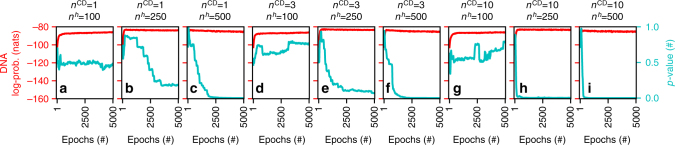
“In each panel, the x axes show the training epochs; the left y axes (red color) show the average log-probabilities computed for SET-RBMs on the test data with AIS 33 ; and the right y axes (cyan color) show the p -values computed between the degree distribution of the hidden neurons in SET-RBM and a power-law distribu…”
Fast ConvNets Using Group-Wise Brain Damage
Lebedev, V., & Lempitsky, V. (2016) · 2016 IEEE Conference on Computer Vision and Pattern Recognition (CVPR) · doi:10.1109/cvpr.2016.280 · Cited by 373 · cited 1×
“Currently, all state-of-the-art deep learning implementations are based on very well-optimized dense matrix multiplications on graphics processing units (GPUs), while sparse matrix multi-plications are extremely limited in performance 50,51 .”
Evolving Deep Neural NetworksPreprint
Miikkulainen, R. P., Liang, J., Meyerson, E., Rawal, A., Fink, D., Francon, O., Raju, B., Shahrzad, H., Navruzyan, A., Duffy, N., et al. (2017) · arXiv (Cornell University) · doi:10.48550/arxiv.1703.00548 · Cited by 302
Deep Learning with S-Shaped Rectified Linear Activation Units
Jin, X., Xu, C., Feng, J., Wei, Y., Xiong, J., & Yan, S. (2016) · Proceedings of the AAAI Conference on Artificial Intelligence · doi:10.1609/aaai.v30i1.10287 · Cited by 194
All Scale-Free Networks Are Sparse
del Genio, C. I., Groß, T., & Bassler, K. E. (2011) · Physical Review Letters · doi:10.1103/physrevlett.107.178701 · Cited by 185
A Neuroevolution Approach to General Atari Game Playing
Hausknecht, M., Lehman, J., Miikkulainen, R., & Stone, P. (2014) · IEEE Transactions on Computational Intelligence and AI in Games · doi:10.1109/tciaig.2013.2294713 · Cited by 168 · cited 1×
“While NEAT has shown some impressive empirical results 20 , in practice, NEAT and, most of its direct variants have dif fi culty scaling due to their very large search space.”
Self-citationThe rate adapting poisson model for information retrieval and object recognition
Gehler, P. V., Holub, A. D., & Welling, M. (2006) · Proceedings of the 23rd international conference on Machine learning - ICML '06 · doi:10.1145/1143844.1143887 · Cited by 100 · cited 1×
“…supervised training of deep arti fi cial neural network architectures 42 , are also very successful as stand alone models in a variety of tasks, such as density estimation to model human choice 31 , collaborative fi ltering 58 , information retrieval 59 , multi-class classi fi cation 60 , and so on.”
A topological insight into restricted Boltzmann machines
Mocanu, D. C., Mocanu, E., Nguyen, P. H., Gibescu, M., & Liotta, A. (2016) · Machine Learning · doi:10.1007/s10994-016-5570-z · Cited by 81
Self-citationThe Power of Sparsity in Convolutional Neural Networks
Changpinyo, S., Sandler, M., & Zhmoginov, A. (2017) · arXiv (Cornell University) · doi:10.48550/arxiv.1702.06257 · Cited by 80 · cited 1×
“Currently, all state-of-the-art deep learning implementations are based on very well-optimized dense matrix multiplications on graphics processing units (GPUs), while sparse matrix multi-plications are extremely limited in performance 50,51 .”
How far can we go without convolution: Improving fully-connected networksPreprint
Lin, Z., Memisevic, R., & Konda, K. (2015) · arXiv (Cornell University) · doi:10.48550/arxiv.1511.02580 · Cited by 61
Functional Census of Mutation Sequence Spaces: The Example of p53 Cancer Rescue Mutants
Danziger, S. A., Swamidass, S. J., Zeng, J., Dearth, L. R., Lü, Q., Chen, J. H., Cheng, J., Hoang, V. P., Saigo, H., Luo, R., et al. (2006) · IEEE Transactions on Computational Biology and Bioinformatics · doi:10.1109/tcbb.2006.22 · Cited by 56
No-reference video quality measurement: added value of machine learning
Mocanu, D. C., Pokhrel, J., Garella, J. P., Seppänen, J., Liotou, E., & Narwaria, M. (2015) · Journal of Electronic Imaging · doi:10.1117/1.jei.24.6.061208 · Cited by 28 · cited 1×
“Moreover, in our previous work 14 , we observed a similar fact.”
Self-citationDecentralized dynamic understanding of hidden relations in complex networks
Mocanu, D. C., Exarchakos, G., & Liotta, A. (2018) · Scientific Reports · doi:10.1038/s41598-018-19356-4 · Cited by 22 · cited 1×
“However, we do not exclude the possibility that there may be better, more sophisticated approaches to removing connections, e.g. using gradient methods 25 , or centrality metrics from network science 48 .”
Self-citationNeural networks with differentiable structurePreprint
Miconi, T. (2016) · arXiv (Cornell University) · doi:10.48550/arxiv.1606.06216 · Cited by 18 · cited 1×
“21 , Miconi has tried to use NEAT like principles (e.g. addition, deletion) in combination with stochastic gradient descent (SGD) to train recurrent neural networks for small problems, due to a still large search space.”
MethodArtificial Neurogenesis: An Introduction and Selective Review
Kowaliw, T., Bredèche, N., Chevallier, S., & Doursat, R. (2014) · Studies in computational intelligence · doi:10.1007/978-3-642-55337-0_1 · Cited by 15
Evolving Neural Network Connectivity
McDonnell, J. R., & Waagen, D. E. (1993) · Defense Technical Information Center (DTIC) · doi:10.21236/ada273134 · Cited by 6
Research works printed but not linked: 18
- Mocanu, D. C. On the synergy of network science and artificial intelligence. In Proc. 25th International Joint Conference on Artificial Intelligence(ed. Kambhampati, S.) 4020–4021 (AAAI Press, New York, 2016).
- Dieleman, S. & Schrauwen, B. Accelerating sparse restricted boltzmann machine training using non-gaussianity measures. In Proc. Deep Learning and Unsupervised Feature Learning, Vol. 9 (eds Bengio Y., Bergstra J. & Le Q.) http://hdl.handle.net/1854/LU-3118568 (Lake Tahoe, 2012).
- Yosinski, J. & Lipson, H. Visually debugging restricted boltzmann machine training with a 3d example. In Representation Learning Workshop, 29th International Conference on Machine Learning (Edinburgh, 2012).
- Whiteson S Stone P Evolutionary function approximation for reinforcement learning J. Mach. Learn. Res. 2006 7 877 917
- Weigend, A. S., Rumelhart, D. E. & Huberman, B. A. Generalization by weight-elimination with application to forecasting. In Proc. Advances in Neural Information Processing Systems, Vol. 3, 875–882 (Morgan-Kaufmann, Colorado, 1991).
- Smolensky, P. Information processing in dynamical systems: foundations of harmony theory. In Parallel Distributed Processing: Explorations in the Microstructure of Cognition (eds Rumelhart, D. E., McClelland, J. L. & CORPORATE PDP Research Group) 194–281 (MIT Press, Cambridge, 1986).
- Osogami T Otsuka M Restricted boltzmann machines modeling human choice Proc. Adv. Neural Inf. Process. Syst. 2014 27 73 81
- Everitt B The Cambridge Dictionary of Statistics 2002 Cambridge, UK; New York Cambridge University Press
- Al-Rfou, R., et al. Theano: a Python framework for fast computation of mathematical expressions. Preprint at https://arxiv.org/abs/1605.02688 (2016). · arXiv
- Urban, G. et al. Do deep convolutional nets really need to be deep and convolutional? In Proc. 5th International Conference on Learning Representations (OpenReview.net, Toulon, 2016).
- Nair, V. & Hinton, G. E. Rectified linear units improve restricted boltzmann machines. In Proc. 27th International Conference on Machine Learning (eds Fürnkranz, J. & Joachims, T.) 807–814 (Omnipress, Haifa, 2010).
- Barabási, A.-L. Network Science (Cambridge University Press, Glasgow, 2016).
- Sutton RS Barto AG Introduction to Reinforcement Learning 1998 Cambridge, MA, USA MIT Press
- Bottou, L. & Bousquet, O. The tradeoffs of large scale learning. In Proc. Advances in Neural Information Processing Systems Vol. 20 (eds Platt, J. C., Koller, D., Singer, Y. & Roweis, S. T.) 161–168 (NIPS Foundation, Vancouver, 2008).
- Larochelle, H. & Murray, I. The neural autoregressive distribution estimator. In Proc. 14th International Conference on Artificial Intelligence and Statistics(eds Gordon, G., Dunson, D. & Dudík, M.) 29–37 (JMLR, Fort Lauderdale, 2011).
- Marlin, B. M., Swersky, K., Chen, B. & de Freitas, N. Inductive principles for restricted boltzmann machine learning. In Proc. 13th International Conference on Artificial Intelligence and Statistics (eds Teh, Y. W. & Titterington, M.) 509–516 (JMLR, Sardinia, 2010).
- LeCun Y Bottou L Bengio Y Haffner P Gradient-based learning applied to document recognition Proc. IEEE 1998 86 2278 2324 10.1109/5.726791 · DOI · Paper page
- Krizhevsky, A. Learning Multiple Layers of Features from Tiny Images. Master’s thesis (2009).
Cited by
ResMLP: Feedforward networks for image classification with data-efficient training
Touvron, H., Bojanowski, P., Caron, M., Cord, M., El-Nouby, A., Grave, E., Izacard, G., Joulin, A., Synnaeve, G., Verbeek, J., et al. (2021) · arXiv · doi:10.48550/arxiv.2105.03404 · Cited by 807
“Several works [37, 40, 59] have questioned if FCNs are also competitive on natural image datasets, such as CIFAR-10 [34].”
BackgroundResMLP: Feedforward Networks for Image Classification With Data-Efficient Training
Touvron, H., Bojanowski, P., Caron, M., Cord, M., El-Nouby, A., Grave, E., Izacard, G., Joulin, A., Synnaeve, G., Verbeek, J., et al. (2023) · IEEE Transactions on Pattern Analysis and Machine Intelligence · doi:10.1109/tpami.2022.3206148 · Cited by 807
“Several works [37, 40, 59] have questioned if FCNs are also competitive on natural image datasets, such as CIFAR-10 [34].”
BackgroundA Survey on Deep Neural Network Pruning: Taxonomy, Comparison, Analysis, and Recommendations
Cheng, H., Zhang, M., & Shi, J. Q. (2024) · IEEE Transactions on Pattern Analysis and Machine Intelligence · doi:10.1109/tpami.2024.3447085 · Cited by 497
“In addition, DSR [95] reallo-catesweightsacrosslayersanddoesnotrestricttotheinner-layer weight redistribution in SET [91].”
InfluentialPicking Winning Tickets Before Training by Preserving Gradient Flow
Wang, C., Zhang, G., & Grosse, R. (2020) · arXiv (Cornell University) · doi:10.48550/arxiv.2002.07376 · Cited by 130
Embracing Change: Continual Learning in Deep Neural Networks
Hadsell, R., Rao, D., Rusu, A. A., & Pascanu, R. (2020) · Trends in Cognitive Sciences · doi:10.1016/j.tics.2020.09.004 · Cited by 467
Metadata
- Authors
- Mocanu, D. C., Mocanu, E., Stone, P., Nguyen, P. H., Gibescu, M., & Liotta, A.
- Affiliations
- Eindhoven University of Technology (NL)
- The University of Texas at Austin (US)
- University of Derby (GB)
- Corresponding author
- Mocanu, Decebal Constantin
- Venue
- Nature Communications
- Published
- 2018-06-19
- Volume
- 9
- Issue
- 1
- Pages
- 2383-2383
- ISSN
- 2041-1723 (ISSN-L)
- PMC
- PMC6008460
- OpenAlex
- W2808133870
- Cited by
- 524
- References
- 45
- Citations by year
- 2026: 45 · 2025: 85 · 2024: 72 · 2023: 68 · 2022: 60 · 2021: 100 · 2020: 51 · 2019: 39 · 2018: 4
- FWCI
- 27.30
- Type
- journal article
- Language
- en
- Open access
- gold
- doi.org
- Licence
- cc-by
- creativecommons.org/licenses/by/4.0 (tdm)
- creativecommons.org/licenses/by/4.0 (vor)
- Locations
- Nature Communications (publishedVersion, cc-by)
- Europe PMC (PubMed Central) (publishedVersion, other-oa)
- PubMed Central (publishedVersion, cc-by)
- PubMed (publishedVersion)
- arXiv (Cornell University) (submittedVersion)
- Open Repository and Bibliography (University of Luxembourg) (submittedVersion, other-oa)
- TU/e Research Portal (submittedVersion, cc-by)
- TU/e Research Portal (submittedVersion)
- RePEc: Research Papers in Economics (submittedVersion)
- DOAJ (DOAJ: Directory of Open Access Journals) (submittedVersion, cc-by-sa)
- DOAJ (DOAJ: Directory of Open Access Journals) (submittedVersion)
- Utrecht University Repository (Utrecht University) (submittedVersion, other-oa)
- Research Output (Edinburgh Napier University) (submittedVersion, cc-by)
- Edinburgh Napier Research Repository (Edinburgh Napier University) (submittedVersion, cc-by)
- Open Research (University of Surrey) (submittedVersion, other-oa)
- arXiv (Cornell University)
- Topics
- Physical Sciences › Computer Science › Artificial Intelligence › Neural Networks and Applications
- Physical Sciences › Computer Science › Computer Vision and Pattern Recognition › Advanced Neural Network Applications
- Physical Sciences › Physics and Astronomy › Statistical and Nonlinear Physics › Complex Network Analysis Techniques
- Keywords
- sparse neural networks, scale-free topology, Erdős-Rényi random graphs, parameter reduction, restricted Boltzmann machine, multilayer perceptron, convolutional neural networks, unsupervised learning, supervised learning
About these checks
Registry, retraction, Cites and statistics results are computed, not judged, with one exception: a printed reference that no index lists is read once by a model before it counts as a citation error. Claims are extracted by a model and kept only when their quote appears verbatim in the text; each cited source is then checked, with a model’s help, for whether it says what the claim relies on. Those verdicts can be wrong — read the claim’s quote and the cited source before relying on one.
Statistics and arithmetic are recomputed, not judged.
Confidence bands are shown only for fields calibrated on our annotated test set. None is calibrated yet, so no band is shown.
What counts as a claim ›How we measure confidence ›How we check this ›
Are you an author, or do you see a problem with this page? Request a review
Data sources
Bibliographic data: Semantic Scholar, OpenAlex, Crossref.
Contains information from the Semantic Scholar Academic Graph Datasets, made available under the ODC Attribution License (ODC-BY 1.0).
Semantic Scholar’s data is described in: Kinney, R., et al. (2023). The Semantic Scholar Open Data Platform. arXiv:2301.10140.
