

Scalable training of artificial neural networks with adaptive sparse connectivity inspired by network science
Open accessThe DOI matches its Crossref record; 53 of the 53 references it cites were found in a registry or an index.
Abstract
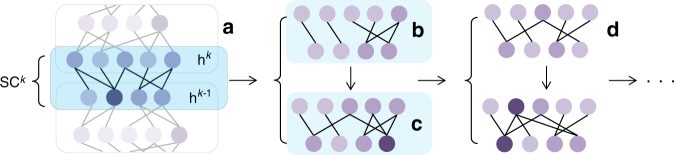
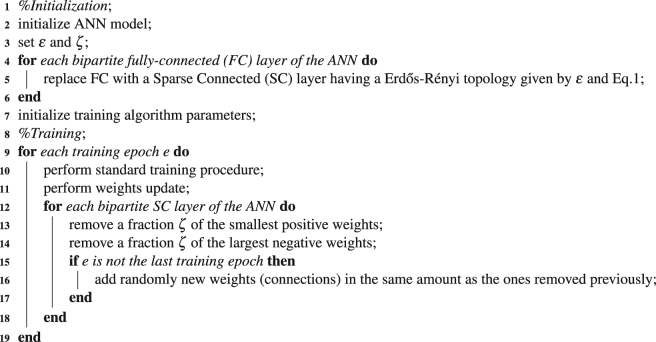
Through the success of deep learning in various domains, artificial neural networks are currently among the most used artificial intelligence methods. Taking inspiration from the network properties of biological neural networks (e.g. sparsity, scale-freeness), we argue that (contrary to general practice) artificial neural networks, too, should not have fully-connected layers. Here we propose sparse evolutionary training of artificial neural networks, an algorithm which evolves an initial sparse topology (Erdős–Rényi random graph) of two consecutive layers of neurons into a scale-free topology, during learning. Our method replaces artificial neural networks fully-connected layers with sparse ones before training, reducing quadratically the number of parameters, with no decrease in accuracy. We demonstrate our claims on restricted Boltzmann machines, multi-layer perceptrons, and convolutional neural networks for unsupervised and supervised learning on 15 datasets. Our approach has the potential to enable artificial neural networks to scale up beyond what is currently possible.
Overview
The claims and statistics of this paper haven’t been checked yet.
Free: it reads the open-access text and checks the first 5 claims that cite a source we can check. Create a free account to check every claim.
Integrity signals
Registry
Cites
Statistics
Figures
Verification
Claims the paper makes
The claims and statistics of this paper haven’t been checked yet.
Free: it reads the open-access text and checks the first 5 claims that cite a source we can check. Create a free account to check every claim.
Claims other papers make about this one
Each is checked against this paper’s own text: does it say what the citing paper says it does?
The cited source says what the claim attributes to it.
In the citing paper
“The idea of selective reinitialization is similar to the emerging idea of dynamic sparse training110–112.”
From Loss of plasticity in deep continual learning (2024) · cites this paper as [110]
Self-check
Percentages, sums and reported differences re-computed from the paper’s own numbers.
The self-check needs the paper’s full text.
Citations
Cites
LeCun, Y., Bengio, Y., & Hinton, G. (2015) · Nature · doi:10.1038/nature14539 · Cited by 84,126
Gradient-based learning applied to document recognition
Lecun, Y., Bottou, L., Bengio, Y., & Haffner, P. (1998) · Proceedings of the IEEE · doi:10.1109/5.726791 · Cited by 58,805
Collective dynamics of ‘small-world’ networks
Watts, D. J., & Strogatz, S. H. (1998) · Nature · doi:10.1038/30918 · Cited by 43,060
Emergence of Scaling in Random Networks
Barabási, A.-L., & Albert, R. (1999) · Science · doi:10.1126/science.286.5439.509 · Cited by 36,135 · cited 1×
“6 and include scale-freeness 7 (detailed in Methods section) and small-worldness 8 .”
Learning representations by back-propagating errors
Rumelhart, D. E., Hinton, G. E., & Williams, R. J. (1986) · Nature · doi:10.1038/323533a0 · Cited by 31,892
Human-level control through deep reinforcement learning
Mnih, V., Kavukcuoglu, K., Silver, D., Rusu, A. A., Veness, J., Bellemare, M. G., Graves, A., Riedmiller, M., Fidjeland, A. K., Ostrovski, G., et al. (2015) · Nature · doi:10.1038/nature14236 · Cited by 30,357
The Elements of Statistical Learning
Hastie, T., Friedman, J., & Tibshirani, R. (2001) · Springer Series in Statistics · doi:10.1007/978-0-387-21606-5 · Cited by 24,162
Reducing the dimensionality of data with neural networks
Hinton, G. E., & Salakhutdinov, R. R. (2006) · Science · doi:10.1126/science.1127647 · Cited by 20,928
Statistical mechanics of complex networks
Albert, R., & Barabási, A.-L. (2002) · Reviews of Modern Physics · doi:10.1103/revmodphys.74.47 · Cited by 20,471
A fast learning algorithm for deep belief nets
Hinton, G. E., Osindero, S., & Teh, Y.-W. (2006) · Neural Computation · doi:10.1162/neco.2006.18.7.1527 · Cited by 16,336 · cited 2×
“…being very successful in providing very good initialization weights to the supervised training of deep arti fi cial neural network architectures 42 , are also very successful as stand alone models in a variety of tasks, such as density estimation to model human choice 31 , collaborative fi…”
Influential
Research works printed but not linked: 18
- Mocanu, D. C. On the synergy of network science and artificial intelligence. In Proc. 25th International Joint Conference on Artificial Intelligence(ed. Kambhampati, S.) 4020–4021 (AAAI Press, New York, 2016).
- Dieleman, S. & Schrauwen, B. Accelerating sparse restricted boltzmann machine training using non-gaussianity measures. In Proc. Deep Learning and Unsupervised Feature Learning, Vol. 9 (eds Bengio Y., Bergstra J. & Le Q.) http://hdl.handle.net/1854/LU-3118568 (Lake Tahoe, 2012).
- Yosinski, J. & Lipson, H. Visually debugging restricted boltzmann machine training with a 3d example. In Representation Learning Workshop, 29th International Conference on Machine Learning (Edinburgh, 2012).
- Whiteson S Stone P Evolutionary function approximation for reinforcement learning J. Mach. Learn. Res. 2006 7 877 917
- Weigend, A. S., Rumelhart, D. E. & Huberman, B. A. Generalization by weight-elimination with application to forecasting. In Proc. Advances in Neural Information Processing Systems, Vol. 3, 875–882 (Morgan-Kaufmann, Colorado, 1991).
- Smolensky, P. Information processing in dynamical systems: foundations of harmony theory. In Parallel Distributed Processing: Explorations in the Microstructure of Cognition (eds Rumelhart, D. E., McClelland, J. L. & CORPORATE PDP Research Group) 194–281 (MIT Press, Cambridge, 1986).
- Osogami T Otsuka M Restricted boltzmann machines modeling human choice Proc. Adv. Neural Inf. Process. Syst. 2014 27 73 81
- Everitt B The Cambridge Dictionary of Statistics 2002 Cambridge, UK; New York Cambridge University Press
- Al-Rfou, R., et al. Theano: a Python framework for fast computation of mathematical expressions. Preprint at https://arxiv.org/abs/1605.02688 (2016). · arXiv
- Urban, G. et al. Do deep convolutional nets really need to be deep and convolutional? In Proc. 5th International Conference on Learning Representations (OpenReview.net, Toulon, 2016).
- Nair, V. & Hinton, G. E. Rectified linear units improve restricted boltzmann machines. In Proc. 27th International Conference on Machine Learning (eds Fürnkranz, J. & Joachims, T.) 807–814 (Omnipress, Haifa, 2010).
- Barabási, A.-L. Network Science (Cambridge University Press, Glasgow, 2016).
- Sutton RS Barto AG Introduction to Reinforcement Learning 1998 Cambridge, MA, USA MIT Press
- Bottou, L. & Bousquet, O. The tradeoffs of large scale learning. In Proc. Advances in Neural Information Processing Systems Vol. 20 (eds Platt, J. C., Koller, D., Singer, Y. & Roweis, S. T.) 161–168 (NIPS Foundation, Vancouver, 2008).
- Larochelle, H. & Murray, I. The neural autoregressive distribution estimator. In Proc. 14th International Conference on Artificial Intelligence and Statistics(eds Gordon, G., Dunson, D. & Dudík, M.) 29–37 (JMLR, Fort Lauderdale, 2011).
- Marlin, B. M., Swersky, K., Chen, B. & de Freitas, N. Inductive principles for restricted boltzmann machine learning. In Proc. 13th International Conference on Artificial Intelligence and Statistics (eds Teh, Y. W. & Titterington, M.) 509–516 (JMLR, Sardinia, 2010).
- LeCun Y Bottou L Bengio Y Haffner P Gradient-based learning applied to document recognition Proc. IEEE 1998 86 2278 2324 10.1109/5.726791 · DOI · Paper page
- Krizhevsky, A. Learning Multiple Layers of Features from Tiny Images. Master’s thesis (2009).
Cited by
ResMLP: Feedforward networks for image classification with data-efficient training
Touvron, H., Bojanowski, P., Caron, M., Cord, M., El-Nouby, A., Grave, E., Izacard, G., Joulin, A., Synnaeve, G., Verbeek, J., et al. (2021) · arXiv · doi:10.48550/arxiv.2105.03404 · Cited by 807
“Several works [37, 40, 59] have questioned if FCNs are also competitive on natural image datasets, such as CIFAR-10 [34].”
BackgroundResMLP: Feedforward Networks for Image Classification With Data-Efficient Training
Touvron, H., Bojanowski, P., Caron, M., Cord, M., El-Nouby, A., Grave, E., Izacard, G., Joulin, A., Synnaeve, G., Verbeek, J., et al. (2023) · IEEE Transactions on Pattern Analysis and Machine Intelligence · doi:10.1109/tpami.2022.3206148 · Cited by 807
“Several works [37, 40, 59] have questioned if FCNs are also competitive on natural image datasets, such as CIFAR-10 [34].”
BackgroundA Survey on Deep Neural Network Pruning: Taxonomy, Comparison, Analysis, and Recommendations
Cheng, H., Zhang, M., & Shi, J. Q. (2024) · IEEE Transactions on Pattern Analysis and Machine Intelligence · doi:10.1109/tpami.2024.3447085 · Cited by 497
“In addition, DSR [95] reallo-catesweightsacrosslayersanddoesnotrestricttotheinner-layer weight redistribution in SET [91].”
InfluentialPicking Winning Tickets Before Training by Preserving Gradient Flow
Wang, C., Zhang, G., & Grosse, R. (2020) · arXiv (Cornell University) · doi:10.48550/arxiv.2002.07376 · Cited by 130
Embracing Change: Continual Learning in Deep Neural Networks
Hadsell, R., Rao, D., Rusu, A. A., & Pascanu, R. (2020) · Trends in Cognitive Sciences · doi:10.1016/j.tics.2020.09.004 · Cited by 467
TabNet: Attentive Interpretable Tabular Learning
Arik, S. Ö., & Pfister, T. (2021) · Proceedings of the AAAI Conference on Artificial Intelligence · doi:10.1609/aaai.v35i8.16826 · Cited by 1,771
The State of Sparsity in Deep Neural Networks
Gale, T., Elsen, E., & Hooker, S. (2019) · arXiv · doi:10.48550/arxiv.1902.09574 · Cited by 440
“, 2018), and a number of techniques have been proposed that draw inspiration from biological phenomena, and derive from evolutionary algorithms and neuromorphic computing (Guo et al., 2016; Bellec et al., 2017; Mocanu et al., 2018).”
BackgroundHoefler, T., Alistarh, D., Ben-Nun, T., Dryden, N., & Peste, A. (2021) · ETH Zurich · doi:10.3929/ethz-b-000519202 · Cited by 423
Pruning neural networks without any data by iteratively conserving synaptic flow
Tanaka, H., Kunin, D., Yamins, D. L. K., & Ganguli, S. (2020) · neural information processing systems · doi:10.48550/arxiv.2006.05467 · Cited by 840
“While there are a variety of approaches to compressing neural networks, such as novel design of micro-architectures [15, 16, 17], dimensionality reduction of network parameters [18, 19], and training of dynamic sparse networks [20, 21], in this work we will focus on neural network pruning.”
BackgroundMachine learning in aerodynamic shape optimization
Li, J., Du, X., & Martins, J. R. R. A. (2022) · Progress in Aerospace Sciences · doi:10.1016/j.paerosci.2022.100849 · Cited by 354
“They are powerful and scalable, making them ideal for tackling large-scale and highly complex ML tasks [245, 246] (Fig.”
BackgroundSmart Anomaly Detection in Sensor Systems: A Multi-Perspective Review
Erhan, L., Ndubuaku, M., Di Mauro, M., Song, W., Chen, M., Fortino, G., Bagdasar, O., & Liotta, A. (2021) · Information Fusion · doi:10.1016/j.inffus.2020.10.001 · Cited by 378
“…⋅ Efficient fusion strategies [111] Acceleration Circuitry Limits ⋅ FPGA-based optimization [112],[113] ⋅ Algorithm complexity reduction [113],[114],[115] Energy Efficiency Power Limits ⋅ Efficient routing protocols [116], [117],[118],[119] ⋅ Smart topologies [117],[118] ⋅ Lightweight operating…”
BackgroundMethodSelf-citationSparse Networks from Scratch: Faster Training without Losing Performance
Dettmers, T., & Zettlemoyer, L. (2019) · arXiv (Cornell University) · doi:10.48550/arxiv.1907.04840 · Cited by 173
“SET also does not include the cross-layer redistribution of weights which we find to be critical for good performance, as shown in our ablation study.”
MethodRigging the Lottery: Making All Tickets Winners
Evci, U., Gale, T., Menick, J., Castro, P. S., & Elsen, E. (2019) · arXiv (Cornell University) · doi:10.48550/arxiv.1911.11134 · Cited by 112
“In Figure 9 we repeat the hyper-parameter sweep done for RigL in Figure 5-right, using SET and SNFS. Cosine schedule with ∆ T = 50 and α = 0 .”
BackgroundMethodInfluentialMulti-Objective Evolutionary Federated Learning
Zhu, H., & Jin, Y. (2020) · IEEE Transactions on Neural Networks and Learning Systems · doi:10.1109/tnnls.2019.2919699 · Cited by 301
An artificial neuron implemented on an actual quantum processor
Tacchino, F., Macchiavello, C., Gerace, D., & Bajoni, D. (2019) · npj Quantum Information · doi:10.1038/s41534-019-0140-4 · Cited by 270
Stabilizing the Lottery Ticket Hypothesis
Frankle, J., Dziugaite, G. K., Roy, D. M., & Carbin, M. (2019) · arXiv (Cornell University) · doi:10.48550/arxiv.1903.01611 · Cited by 133
Open Problems in Mechanistic Interpretability
Sharkey, L., Chughtai, B., Batson, J., Lindsey, J., Wu, J., Bushnaq, L., Goldowsky-Dill, N., Heimersheim, S., Ortega, A., Bloom, J., et al. (2025) · arXiv · doi:10.48550/arxiv.2501.16496 · Cited by 291
Layer-adaptive sparsity for the Magnitude-based PruningPreprint
Lee, J., Park, S., Mo, S., Ahn, S., & Shin, J. (2020) · arXiv (Cornell University) · doi:10.48550/arxiv.2010.07611 · Cited by 406
“A recent work by Evci et al. (2020) proposes a magnitude-based dynamic sparse training method, adopting layerwise sparsity inspired from the network science approach toward neural network pruning (Mocanu et al., 2018).”
BackgroundMethodInfluentialMachine Learning in Epidemiology and Health Outcomes Research
Wiemken, T. L., & Kelley, R. R. (2020) · Annual Review of Public Health · doi:10.1146/annurev-publhealth-040119-094437 · Cited by 222
Chirality in Light–Matter Interaction
Lininger, A., Palermo, G., Guglielmelli, A., Nicoletta, G., Goel, M., Hinczewski, M., & Strangi, G. (2023) · Advanced Materials · doi:10.1002/adma.202107325 · Cited by 223
Artificial intelligence in ultrasound
Shen, Y.-T., Chen, L., Yue, W.-W., & Xu, H.-X. (2021) · European Journal of Radiology · doi:10.1016/j.ejrad.2021.109717 · Cited by 214
Learning N:M Fine-grained Structured Sparse Neural Networks From Scratch
Zhou, A., Ma, Y., Zhu, J., Liu, J., Zhang, Z., Yuan, K., Sun, W., & Li, H. (2021) · arXiv (Cornell University) · doi:10.48550/arxiv.2102.04010 · Cited by 73
“Sparse Evolutionary Training (Mocanu et al., 2018)(SET) is proposed as a simpler scheme where weights are pruned according to the standard magnitude criterion used in pruning and growing connections in random locations.”
MethodMostafa, H., & Wang, X. (2019) · arXiv (Cornell University) · doi:10.48550/arxiv.1902.05967 · Cited by 113
“Because both SET and ours reallocate parameters only intermittently (every few hundred training iterations), the computational overhead was negligible for the experiments pre- sented here4.”
BackgroundMethodInfluentialAdaptive Extreme Edge Computing for Wearable Devices
Covi, E., Donati, E., Liang, X., Kappel, D., Heidari, H., Payvand, M., & Wang, W. (2021) · Frontiers in Neuroscience · doi:10.3389/fnins.2021.611300 · Cited by 177
Carbon emission prediction models: A review
Jin, Y., Sharifi, A., Li, Z., Chen, S., Zeng, S., & Zhao, S. (2024) · The Science of The Total Environment · doi:10.1016/j.scitotenv.2024.172319 · Cited by 180
Loss of plasticity in deep continual learning
Dohare, S., Hernandez-Garcia, J. F., Lan, Q., Rahman, P., Mahmood, A. R., & Sutton, R. S. (2024) · Nature · doi:10.1038/s41586-024-07711-7 · Cited by 172
“The idea of selective reinitialization is similar to the emerging idea of dynamic sparse training 110–112 .”
Pruning Neural Networks at Initialization: Why are We Missing the Mark?Preprint
Frankle, J., Dziugaite, G. K., Roy, D. M., & Carbin, M. (2020) · arXiv (Cornell University) · doi:10.48550/arxiv.2009.08576 · Cited by 226
Deep Learning on Computational-Resource-Limited Platforms: A Survey
Chen, C., Zhang, P., Zhang, H., Dai, J., Yi, Y., Zhang, H., & Zhang, Y. (2020) · Mobile Information Systems · doi:10.1155/2020/8454327 · Cited by 227
“construct a sparse scale-free network topology with two consecutive layers [111].”
BackgroundMethodInfluentialEdge-Cloud Polarization and Collaboration: A Comprehensive Survey for AI
Yao, J., Zhang, S., Yao, Y., Wang, F., Ma, J., Zhang, J., Chu, Y., Ji, L., Jia, K., Shen, T., et al. (2022) · IEEE Transactions on Knowledge and Data Engineering · doi:10.1109/tkde.2022.3178211 · Cited by 232
“Another line of methods [180], [181], [182], [183], [184] focus on jointly learning the sparse structures with model parameters by considering different downstream hardware features, e.”
BackgroundAn Overview of Neural Network CompressionPreprint
O’Neill, J. (2020) · arXiv (Cornell University) · doi:10.48550/arxiv.2006.03669 · Cited by 181
“Sparse evolutionary training (SET; Mocanu et al., 2018) simplifies prune–regrowth cycles by replacing the top-k lowest magnitude weights with newly randomly initialized weights and retrains and this process is repeated throughout each epoch of training.”
BackgroundWortsman, M., Ramanujan, V., Liu, R., Kembhavi, A., Rastegari, M., Yosinski, J., & Farhadi, A. (2020) · arXiv · doi:10.48550/arxiv.2006.14769 · Cited by 144
“The Edge-Popup algorithm from [39] is used to obtain supermasks for various sparsities with a layer-wise budget from [35].”
MethodSoft Threshold Weight Reparameterization for Learnable Sparsity
Kusupati, A., Ramanujan, V., Somani, R., Wortsman, M., Jain, P., Kakade, S. M., & Farhadi, A. (2020) · arXiv (Cornell University) · doi:10.48550/arxiv.2002.03231 · Cited by 90
“, 1990; Hassibi & Stork, 1993), and magnitude-based pruning (Han et al., 2015; Guo et al., 2016; Zhu & Gupta, 2017; Frankle & Carbin, 2019; Gale et al., 2019; Mostafa & Wang, 2019; Wortsman et al., 2019; Bellec et al., 2018; Mocanu et al., 2018; Narang et al., 2019; Kusupati et al., 2018).”
Dynamic Model Pruning with Feedback
Lin, T., Stich, S. U., Barba, L., Dmitriev, D., & Jaggi, M. (2020) · arXiv · doi:10.48550/arxiv.2006.07253 · Cited by 126
“In dynamic pruning methods, the sparsity mask is readjusted during training according to different criteria (Mostafa & Wang, 2019; Mocanu et al., 2018).”
BackgroundMethodInfluentialFederated Learning and Meta Learning: Approaches, Applications, and Directions
Liu, X., Deng, Y., Nallanathan, A., & Bennis, M. (2023) · IEEE Communications Surveys & Tutorials · doi:10.1109/comst.2023.3330910 · Cited by 139
“To achieve these two objectives, modified sparse evolutionary training (SET) was proposed, which can decrease the number of connections between two layers in deep neural networks (DNNs) [127].”
BackgroundA Survey on Evolutionary Construction of Deep Neural Networks
Zhou, X., Qin, A. K., Gong, M., & Tan, K. C. (2021) · IEEE Transactions on Evolutionary Computation · doi:10.1109/tevc.2021.3079985 · Cited by 127
“environment in practice [70], [97], [107].”
Federated Dynamic Sparse Training: Computing Less, Communicating Less, Yet Learning Better
Bibikar, S., Vikalo, H., Wang, Z., & Chen, X. (2022) · Proceedings of the AAAI Conference on Artificial Intelligence · doi:10.1609/aaai.v36i6.20555 · Cited by 162
Chasing Sparsity in Vision Transformers: An End-to-End Exploration
Chen, T., Cheng, Y., Gan, Z., Yuan, L., Zhang, L., & Wang, Z. (2021) · arXiv · doi:10.48550/arxiv.2106.04533 · Cited by 111
“To be specific, we adopt Erdös-Rényi [22] as our ¶ sparsity distribution.”
MethodIdentification of 12 cancer types through genome deep learning
Sun, Y., Zhu, S., Ma, K., Liu, W., Yao, Y., Hu, G., Lü, H., & Chen, W. (2019) · Scientific Reports · doi:10.1038/s41598-019-53989-3 · Cited by 118
Low-Memory Neural Network Training: A Technical ReportPreprint
Sohoni, N. S., Aberger, C. R., Leszczynski, M., Zhang, J., & Ré, C. (2019) · arXiv (Cornell University) · doi:10.48550/arxiv.1904.10631 · Cited by 119
“The sparse training technique we leverage in this paper is dynamic sparse reparameterization (DSR), introduced by Mostafa and Wang [2019], which is a modification of SET [Mocanu et al., 2018].”
BackgroundMethodInfluentialKim, Y. (2020) · IEEE Transactions on Smart Grid · doi:10.1109/tsg.2020.2986539 · Cited by 108
“ssed in Section III-A. Both c 1 and c 2 are set to 0.5 to calculate of i ; different values can be used without loss of generality. Note that the more sophisticated methods discussed, for example, in [33]– [35] can also be used to better combat ANN over-fitting. C. Explicit replication of trained ANNs ( Fig. 5. Piecew…”
BackgroundMethodInfluentialInverse design of plasmonic metasurfaces by convolutional neural network
Lin, R., Zhai, Y., Xiong, C., & Li, X. (2020) · Optics Letters · doi:10.1364/ol.387404 · Cited by 109
A New Hybrid Seagull Optimization Algorithm for Feature Selection
Jia, H., Xing, Z., & Song, W. (2019) · IEEE Access · doi:10.1109/access.2019.2909945 · Cited by 103
“Afterwards, classifications were done using machine learning approaches including artificial immune system [9], [10], support vector machine (SVM) [11]–[13], K-nearest neighbors (KNN) [14]–[16], artificial neural networks (ANN) [17], [18], and case-based technique [19], [20].”
MethodDynamic sparse training: find efficient sparse network from scratch with trainable masked layers
Liu, J., Xu, Z., Shi, R., Cheung, R. C. C., & So, H. K. H. (2020) · arXiv · doi:10.48550/arxiv.2005.06870
A survey of model compression techniques: past, present, and future
Liu, D., Zhu, Y., Liu, Z., Liu, Y., Han, C., Tian, J., Li, R., & Wei, Y. (2025) · Frontiers in Robotics and AI · doi:10.3389/frobt.2025.1518965 · Cited by 130
“In Mocanu et al. (2018), the authors inspired by the sparsity of biological neural networks, argued that artificial neural networks should not be fully connected.”
Han, J. M., Ang, Y. Q., Malkawi, A. M., & Samuelson, H. W. (2021) · Building and Environment · doi:10.1016/j.buildenv.2021.107601 · Cited by 108
Mendonça, R. V., Silva, J. C., Rosa, R. L., Saadi, M., Rodríguez, D. Z., & Farouk, A. (2021) · Expert Systems · doi:10.1111/exsy.12917 · Cited by 128
“…neural network (ANN) (Mendonça et al., 2021), and another sparse evolutionary training (SET) using multilayer per-ceptron model (SET-MLP) model (Mocanu et al., 2018) are used for detecting denial of service (DoS), data type probing, malicious control & operation, spying, the wrong Setup are…”
BackgroundMethodInfluentialRolling Bearing Fault Diagnosis Based on VMD-MPE and PSO-SVM
Ye, M., Yan, X., & Jia, M. (2021) · Entropy · doi:10.3390/e23060762 · Cited by 95
“Although ANN has obtained many achievements in the field of pattern recognition, its identification performance greatly depends on its several important parameters (e.g., the number of layers and nodes).”
BackgroundInfluentialSparseAdapter: An Easy Approach for Improving the Parameter-Efficiency of Adapters
He, S., Ding, L., Dong, D., Zhang, J., & Tao, D. (2022) · Findings of the Association for Computational Linguistics: EMNLP (Findings of EMNLP) · doi:10.18653/v1/2022.findings-emnlp.160 · Cited by 141
Recent Advances on Neural Network Pruning at Initialization
Wang, H., Qin, C., Bai, Y., Zhang, Y., & Fu, Y. (2022) · International Joint Conference on Artificial Intelligence · doi:10.24963/ijcai.2022/786 · Cited by 126
The Difficulty of Training Sparse Neural NetworksPreprint
Evci, U., Pedregosa, F., Gomez, A. N., & Elsen, E. (2019) · arXiv (Cornell University) · doi:10.48550/arxiv.1906.10732 · Cited by 104
“There exists a line of work on training sparse networks (Bellec et al., 2018; Mocanu et al., 2018; Pieterse & Mocanu, 2019; Mostafa & Wang, 2019) which allows the connectivity pattern to change over time.”
BackgroundChen, Z., Wu, M., Chan, A., Li, X., & Ong, Y.-S. (2023) · IEEE Computational Intelligence Magazine · doi:10.1109/mci.2023.3245733 · Cited by 105
“, training under sparsity constraints [39].”
Application of complex systems topologies in artificial neural networks optimization: An overview
Kaviani, S., & Sohn, I. (2021) · Expert Systems with Applications · doi:10.1016/j.eswa.2021.115073 · Cited by 97
Deep limits of residual neural networks
Thorpe, M., & van Gennip, Y. (2022) · Research in the Mathematical Sciences · doi:10.1007/s40687-022-00370-y · Cited by 97
“Recently [70] made the case that improvements can be obtained by using sparsely connected layers.”
Radiomic features of glucose metabolism enable prediction of outcome in mantle cell lymphoma
Mayerhoefer, M. E., Riedl, C. C., Kumar, A. A., Gibbs, P., Weber, M., Tal, I., Schilksy, J., & Schöder, H. M. (2019) · European Journal of Nuclear Medicine and Molecular Imaging · doi:10.1007/s00259-019-04420-6 · Cited by 84
Dendrites endow artificial neural networks with accurate, robust and parameter-efficient learning
Chavlis, S., & Poirazi, P. (2025) · Nature Communications · doi:10.1038/s41467-025-56297-9 · Cited by 100
“In ANNs, sparsity can be achieved by pruning after training 84,85 , using evolutionary algorithms 86,87 , specific regularization 88,89 during training, or iterative methods applied before training 90,91 .”
A Gradient-Guided Evolutionary Approach to Training Deep Neural Networks
Yang, S., Tian, Y., He, C., Zhang, X., Tan, K. C., & Jin, Y. (2021) · IEEE Transactions on Neural Networks and Learning Systems · doi:10.1109/tnnls.2021.3061630 · Cited by 85
“To enhance the scalability in evolving large-scale NNs, a modified sparse evolutionary training (SET) [32] strategy is suggested to remove a fraction of weights with the smallest update at the last training step in NNs.”
MethodInfluentialZhan, C., Dai, Z., Yin, S., Carroll, K. C., & Soltanian, M. R. (2024) · Water Research · doi:10.1016/j.watres.2024.121679 · Cited by 78
Samuel, O., Javaid, N., Alghamdi, T. A., & Kumar, N. (2021) · Sustainable Cities and Society · doi:10.1016/j.scs.2021.103371 · Cited by 90
Reinforcement Learning Techniques in Optimizing Energy Systems
Stavrev, S., & Ginchev, D. (2024) · Electronics · doi:10.3390/electronics13081459 · Cited by 92
Progressive Skeletonization: Trimming more fat from a network at initialization
de Jorge, P., Sanyal, A., Behl, H. S., Torr, P. H. S., Rogez, G., & Dokania, P. K. (2020) · Oxford University Research Archive (ORA) (University of Oxford) · doi:10.48550/arxiv.2006.09081 · Cited by 86
“, 2018) or by dynamically pruning during training (Bellec et al., 2018; Mocanu et al., 2018; Mostafa & Wang, 2019; Dai et al., 2019; Dettmers & Zettlemoyer, 2020; Lin et al., 2020; Kusupati et al., 2020; Evci et al., 2019).”
BackgroundGeneral Inverse Design of Layered Thin-Film Materials with Convolutional Neural Networks
Lininger, A. R., Hinczewski, M., & Strangi, G. (2021) · ACS Photonics · doi:10.1021/acsphotonics.1c01498 · Cited by 75
“40,41 In this work, we apply CNNs to the inverse design of an important class of metamaterials— planar multilayer stacks where each individual film is much thinner than the wavelength of incident light.”
SpaceNet: Make Free Space for Continual Learning
Sokar, G., Mocanu, D. C., & Pechenizkiy, M. (2021) · Neurocomputing · doi:10.1016/j.neucom.2021.01.078 · Cited by 107
Self-citationStelzer, F., Röhm, A., Vicente, R., Fischer, I., & Yanchuk, S. (2021) · Nature Communications · doi:10.1038/s41467-021-25427-4 · Cited by 84
Sparse evolutionary deep learning with over one million artificial neurons on commodity hardware
Liu, S., Mocanu, D. C., Matavalam, A. R. R., Pei, Y., & Pechenizkiy, M. (2020) · Neural Computing and Applications · doi:10.1007/s00521-020-05136-7 · Cited by 96
“…performance, we compare it against another sparse MLP model (implemented by us in the same manner) and in which the bipartite layers are initialized with an Erd˝os-R´enyi topology, but which does not evolve over time and has a fixed sparsity pattern, dubbed MLP FixProb as in (Mocanu et al., 2018).”
BackgroundMethodInfluentialSelf-citationGeng, Z., & Wang, Y. (2020) · Nature Communications · doi:10.1038/s41467-020-17123-6 · Cited by 74
Procrustes: a Dataflow and Accelerator for Sparse Deep Neural Network Training
Yang, D., Ghasemazar, A., Ren, X., Golub, M., Lemieux, G. G. F., & Lis, M. (2020) · IEEE/ACM International Symposium on Microarchitecture (MICRO) · doi:10.1109/micro50266.2020.00064 · Cited by 79
“of the highest-value or highest-gradient weights is needed by all sparse training algorithms [8, 10, 32, 33].”
BackgroundJavanroodi, K., Nik, V. M., Giometto, M. G., & Scartezzini, J. (2022) · The Science of The Total Environment · doi:10.1016/j.scitotenv.2022.154223 · Cited by 67
ESL-SNNs: An Evolutionary Structure Learning Strategy for Spiking Neural Networks
Shen, J., Xu, Q., Liu, J. K., Wang, Y., Pan, G., & Tang, H. (2023) · Proceedings of the AAAI Conference on Artificial Intelligence · doi:10.1609/aaai.v37i1.25079 · Cited by 63
Cognitive Model Priors for Predicting Human DecisionsPreprint
Bourgin, D., Peterson, J. C., Reichman, D., Griffiths, T. L., & Russell, S. (2019) · arXiv (Cornell University) · doi:10.48550/arxiv.1905.09397 · Cited by 75
“(Mocanu et al., 2018) 0.91”
MethodInfluentialGradient Flow in Sparse Neural Networks and How Lottery Tickets Win
Evci, U., Ioannou, Y., Keskin, C., & Dauphin, Y. (2022) · Proceedings of the AAAI Conference on Artificial Intelligence · doi:10.1609/aaai.v36i6.20611 · Cited by 99
Qiu, J., Shi, M., Li, S., Ying, Q., Zhang, X., Mao, X., Shi, S., & Wu, S. (2023) · Ultrasonics Sonochemistry · doi:10.1016/j.ultsonch.2023.106408 · Cited by 59
Do We Actually Need Dense Over-Parameterization? In-Time Over-Parameterization in Sparse Training
Liu, S., Yin, L., Mocanu, D. C., & Pechenizkiy, M. (2021) · International Conference on Machine Learning · doi:10.48550/arxiv.2102.02887 · Cited by 79
“We find the concept of In-Time Over-Parameterization useful (1) in exploring the expressibility of sparse training, especially for extreme sparsities, (2) in reducing training and inference costs (3) in understanding the underlying mechanism of dynamic sparse training (DST) (Mocanu et al., 2018; Evci et al., 2020a), (…”
BackgroundMethodInfluentialSelf-citationMEST: Accurate and Fast Memory-Economic Sparse Training Framework on the Edge
Yuan, G., Ma, X., Niu, W., Li, Z., Kong, Z., Liu, N., Gong, Y., Zhan, Z., He, C., Jin, Q., et al. (2021) · neural information processing systems · doi:10.48550/arxiv.2110.14032 · Cited by 135
“The other reference works (except SET [14] and RigL [11] that use uniform sparsity) use non-uniform sparsity, which leads to a higher computation FLOPs compared to the uniform sparsity under the same sparsity ratio.”
BackgroundMethodInfluentialDynamic Sparse Training for Deep Reinforcement Learning
Sokar, G., Mocanu, E., Mocanu, D. C., Pechenizkiy, M., & Stone, P. (2022) · International Joint Conference on Artificial Intelligence · doi:10.24963/ijcai.2022/477 · Cited by 78
Self-citationSparsity through evolutionary pruning prevents neuronal networks from overfitting
Gerum, R. C., Erpenbeck, A., Krauß, P., & Schilling, A. (2020) · Neural Networks · doi:10.1016/j.neunet.2020.05.007 · Cited by 64
Comprehensive Graph Gradual Pruning for Sparse Training in Graph Neural Networks
Liu, C., Ma, X., Zhan, Y., Ding, L., Tao, D., Du, B., Hu, W., & Mandic, D. P. (2023) · IEEE Transactions on Neural Networks and Learning Systems · doi:10.1109/tnnls.2023.3282049 · Cited by 73
Microclimate spatio-temporal prediction using deep learning and land use data
Han, J., Chong, A., Lim, J., Ramasamy, S., Wong, N. H., & Biljecki, F. (2024) · Building and Environment · doi:10.1016/j.buildenv.2024.111358 · Cited by 58
Sparse Training via Boosting Pruning Plasticity with Neuroregeneration
Liu, S., Chen, T., Chen, X., Atashgahi, Z., Yin, L., Kou, H., Shen, L., Pechenizkiy, M., Wang, Z., & Mocanu, D. C. (2021) · neural information processing systems · doi:10.48550/arxiv.2106.10404 · Cited by 81
“This finding helps to explain several observations (1) for gradual magnitude pruning (GMP), it is always optimal to end pruning before the second learning rate drop [77, 13]; (2) dynamic sparse training (DST) benefits from a monotonically decreasing pruning rate with cosine or linear update schedule [8, 9]; (3) rewind…”
BackgroundMethodInfluentialSelf-citationMa, X., Zeng, T., Zhang, M., Zeng, P., Lin, B., & Lu, S. (2024) · Building and Environment · doi:10.1016/j.buildenv.2024.112490 · Cited by 66
Jiang, L., Shi, L., Liu, L., Yao, J., Yuan, B., & Zheng, Y. (2019) · IEEE Internet of Things Journal · doi:10.1109/jiot.2019.2893625 · Cited by 51
“algorithm [42], artificial neural network [43], and so on.”
BackgroundCai, X., Lan, Y., Zhang, Z., Wen, J., Cui, Z., & Zhang, W. (2021) · IEEE Transactions on Industrial Informatics · doi:10.1109/tii.2021.3093715 · Cited by 54
“[13] decreased the number of connections of the neural”
BackgroundMachine learning technology in the application of genome analysis: A systematic review
Wu, J., & Zhao, Y. (2019) · Gene · doi:10.1016/j.gene.2019.04.062 · Cited by 53
Towards Learning Convolutions from Scratch
Neyshabur, B. (2020) · neural information processing systems · doi:10.48550/arxiv.2007.13657 · Cited by 78
“3 MLP [23] SET(Sparse Evolutionary Training) 74.”
InfluentialAccelerated Sparse Neural Training: A Provable and Efficient Method to Find N:M Transposable Masks
Hubara, I., Chmiel, B., Island, M., Banner, R., Naor, J. S., & Soudry, D. (2021) · neural information processing systems · doi:10.48550/arxiv.2102.08124 · Cited by 85
“Sparse Evolutionary Training (SET) (Mocanu et al., 2018) proposed a simpler scheme where they pruned weights based on their magnitude.”
BackgroundMaxK-GNN: Extremely Fast GPU Kernel Design for Accelerating Graph Neural Networks Training
Peng, H., Xie, X., Shivdikar, K., Hasan, M. A., Zhao, J., Huang, S., Khan, O., Kaeli, D. R., & Ding, C. (2024) · International Conference on Architectural Support for Programming Languages and Operating Systems (ASPLOS) · doi:10.1145/3620665.3640426 · Cited by 84
“The standard scheduler, drop and grow , includes techniques like SET [44], RigL [45], and SNFS [46].”
MethodEffective Sparsification of Neural Networks with Global Sparsity Constraint
Zhou, X. Y., Zhang, W., Xu, H., & Zhang, T. (2021) · IEEE Computer Society Conference on Computer Vision and Pattern Recognition/Proceedings - IEEE Computer Society Conference on Computer Vision and Pattern Recognition/Proceedings · doi:10.1109/cvpr46437.2021.00360 · Cited by 96
“Note that the index of of x-axis is scaled to 1e-2 for Layer 1, and 1e-4 for Layer 23, 26, 30.”
InfluentialWeight-sparse transformers have interpretable circuitsPreprint
Gao, L., Rajaram, A., Coxon, J., Govande, S. V., Baker, B., & Mossing, D. (2025) · arXiv (Cornell University) · doi:10.48550/arxiv.2511.13653 · Cited by 59
“Sparse training is a problem that is well-studied in the literature (Mocanu et al., 2018; Lee et al., 2019; Evci et al., 2020; Louizos et al., 2018; Dettmers & Zettlemoyer, 2019).”
Wang, Y., Xu, C., Wang, Y., & Cheng, X. (2021) · Entropy · doi:10.3390/e23091142 · Cited by 44
“Common fault classification and identification methods include artificial neural networks (ANN) [26], extreme learning machines (ELM) [27,28], and support vector machines (SVM) [29,30].”
BackgroundLiterature Review of Deep Network Compression
Alqahtani, A., Xie, X., & Jones, M. W. (2021) · Informatics · doi:10.3390/informatics8040077 · Cited by 50
Pruning CNN filters via quantifying the importance of deep visual representations
Alqahtani, A., Xie, X., Jones, M. W., & Essa, E. (2021) · Computer Vision and Image Understanding · doi:10.1016/j.cviu.2021.103220 · Cited by 47
The Low-Resource Double Bind: An Empirical Study of Pruning for Low-Resource Machine Translation
Ahia, O., Kreutzer, J., & Hooker, S. (2021) · Findings of the Association for Computational Linguistics: EMNLP (Findings of EMNLP) · doi:10.18653/v1/2021.findings-emnlp.282 · Cited by 74
Atashgahi, Z., Sokar, G., van der Lee, T., Mocanu, E., Mocanu, D. C., Veldhuis, R. N. J., & Pechenizkiy, M. (2021) · Machine Learning · doi:10.1007/s10994-021-06063-x · Cited by 56
Self-citationEfficient and effective training of sparse recurrent neural networks
Liu, S., Ni’mah, I., Menkovski, V., Mocanu, D. C., & Pechenizkiy, M. (2021) · Neural Computing and Applications · doi:10.1007/s00521-021-05727-y · Cited by 51
Self-citationSparse Weight Activation Training
Raihan, A., & Aamodt, T. M. (2020) · neural information processing systems · doi:10.48550/arxiv.2001.01969 · Cited by 43
“ResNet-50 SET [42] 80.”
BackgroundMethodBinary Symbiotic Organism Search Algorithm for Feature Selection and Analysis
Han, C., Zhou, G., & Zhou, Y. (2019) · IEEE Access · doi:10.1109/access.2019.2953800 · Cited by 41
“However, wrappedbased methods depend on a machine learning algorithm such as K-nearest neighbors (KNN) [8], support vector machines (SVMs) [9], [10], or artificial neural networks (ANNs) [11], [12], which build a model by training it using a large”
MethodConsistent Sparse Deep Learning: Theory and Computation
Sun, Y. L., Song, Q., & Liang, F. (2021) · Journal of the American Statistical Association · doi:10.1080/01621459.2021.1895175 · Cited by 57
“DNNs are known to have many redundant parameters (Glorot et al., 2011; Yoon and Hwang, 2017; Scardapane et al., 2017; Denil et al., 2013; Cheng et al., 2015; Mocanu et al., 2018).”
BackgroundLiu, S., Chen, T., Atashgahi, Z., Chen, X., Sokar, G., Mocanu, E., Pechenizkiy, M., Wang, Z., & Mocanu, D. C. (2021) · TU/e Research Portal · doi:10.48550/arxiv.2106.14568 · Cited by 60
“Sparse Initialization.”
InfluentialSelf-citationDistributed Pruning Towards Tiny Neural Networks in Federated Learning
Huang, H., Zhang, L., Sun, C., Fang, R., Yuan, X., & Wu, D. O. (2023) · IEEE International Conference on Distributed Computing Systems (ICDCS) · doi:10.1109/icdcs57875.2023.00036 · Cited by 50
“The other category is dynamic sparse training [14], [25], [26].”
BackgroundSAFARI: Sparsity-Enabled Federated Learning With Limited and Unreliable Communications
Mao, Y., Zhao, Z., Yang, M., Liang, L., Liu, Y., Ding, W., Lan, T., & Zhang, X.-P. S. (2023) · IEEE Transactions on Mobile Computing · doi:10.1109/tmc.2023.3296624 · Cited by 41
“However, the empirical success of the popular sparse algorithms implies that the tolerance to such error can be quite large in practice [7], [21], [22], [25], [30], which enables us to implement sparse training in FL for communication efficiency, and meanwhile utilizes the properties of sparse models to address the un…”
BackgroundNing, H., Wen, H., Meng, Y., Yu, Z., Fu, Y., Zou, X., Shen, Y., Luo, X., Zhao, Q., Zhang, T., et al. (2025) · Nature Electronics · doi:10.1038/s41928-024-01328-4 · Cited by 40
Metadata
- Authors
- Mocanu, D. C., Mocanu, E., Stone, P., Nguyen, P. H., Gibescu, M., & Liotta, A.
- Affiliations
- Eindhoven University of Technology (NL)
- The University of Texas at Austin (US)
- University of Derby (GB)
- Corresponding author
- Mocanu, Decebal Constantin
- Venue
- Nature Communications
- Published
- 2018-06-19
- Volume
- 9
- Issue
- 1
- Pages
- 2383-2383
- ISSN
- 2041-1723 (ISSN-L)
- PMC
- PMC6008460
- OpenAlex
- W2808133870
- Semantic Scholar
- 6dbb9e4b2e3b67dc4e1634989511f67d41373dd0
- Cited by
- 524
- References
- 45
- Citations by year
- 2026: 45 · 2025: 85 · 2024: 72 · 2023: 68 · 2022: 60 · 2021: 100 · 2020: 51 · 2019: 39 · 2018: 4
- FWCI
- 27.30
- Type
- journal article
- Language
- en
- Open access
- gold
- doi.org
- Licence
- cc-by
- creativecommons.org/licenses/by/4.0 (tdm)
- creativecommons.org/licenses/by/4.0 (vor)
- Locations
- Nature Communications (publishedVersion, cc-by)
- Europe PMC (PubMed Central) (publishedVersion, other-oa)
- PubMed Central (publishedVersion, cc-by)
- PubMed (publishedVersion)
- arXiv (Cornell University) (submittedVersion)
- Open Repository and Bibliography (University of Luxembourg) (submittedVersion, other-oa)
- TU/e Research Portal (submittedVersion, cc-by)
- TU/e Research Portal (submittedVersion)
- RePEc: Research Papers in Economics (submittedVersion)
- DOAJ (DOAJ: Directory of Open Access Journals) (submittedVersion, cc-by-sa)
- DOAJ (DOAJ: Directory of Open Access Journals) (submittedVersion)
- Utrecht University Repository (Utrecht University) (submittedVersion, other-oa)
- Research Output (Edinburgh Napier University) (submittedVersion, cc-by)
- Edinburgh Napier Research Repository (Edinburgh Napier University) (submittedVersion, cc-by)
- Open Research (University of Surrey) (submittedVersion, other-oa)
- arXiv (Cornell University)
- Topics
- Physical Sciences › Computer Science › Artificial Intelligence › Neural Networks and Applications
- Physical Sciences › Computer Science › Computer Vision and Pattern Recognition › Advanced Neural Network Applications
- Physical Sciences › Physics and Astronomy › Statistical and Nonlinear Physics › Complex Network Analysis Techniques
- Keywords
- sparse neural networks, scale-free topology, Erdős-Rényi random graphs, parameter reduction, restricted Boltzmann machine, multilayer perceptron, convolutional neural networks, unsupervised learning, supervised learning
About these checks
Registry, retraction, Cites and statistics results are computed, not judged, with one exception: a printed reference that no index lists is read once by a model before it counts as a citation error. Claims are extracted by a model and kept only when their quote appears verbatim in the text; each cited source is then checked, with a model’s help, for whether it says what the claim relies on. Those verdicts can be wrong — read the claim’s quote and the cited source before relying on one.
Statistics and arithmetic are recomputed, not judged.
Confidence bands are shown only for fields calibrated on our annotated test set. None is calibrated yet, so no band is shown.
What counts as a claim ›How we measure confidence ›How we check this ›
Are you an author, or do you see a problem with this page? Request a review
Data sources
Bibliographic data: Semantic Scholar, OpenAlex, Crossref.
Contains information from the Semantic Scholar Academic Graph Datasets, made available under the ODC Attribution License (ODC-BY 1.0).
Semantic Scholar’s data is described in: Kinney, R., et al. (2023). The Semantic Scholar Open Data Platform. arXiv:2301.10140.
