

Lung colonization by Aspergillus fumigatus is controlled by ZNF77
Open accessThe DOI matches its Crossref record; 60 of the 60 references it cites were found in a registry or an index.
Abstract
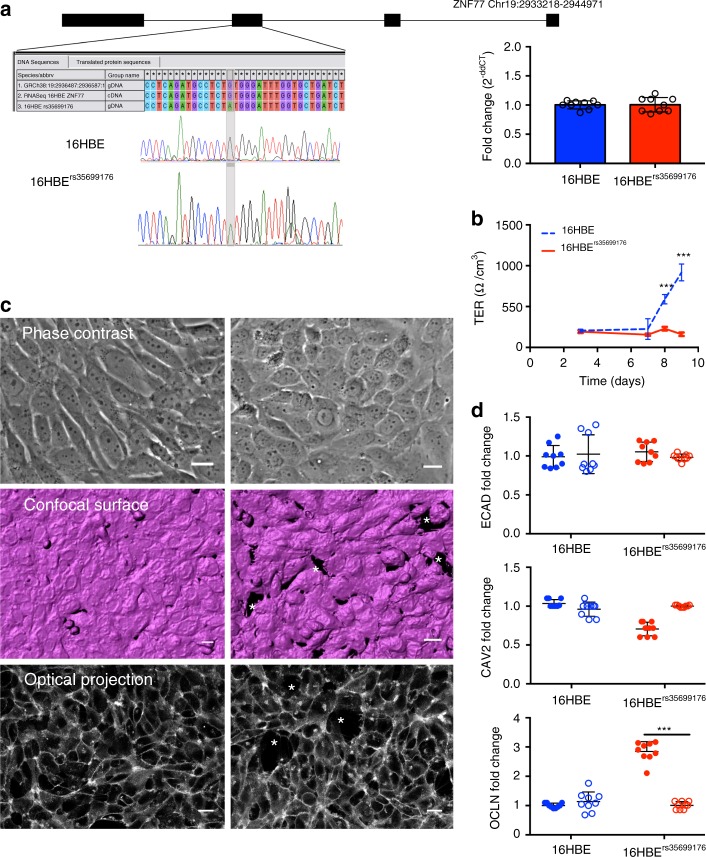
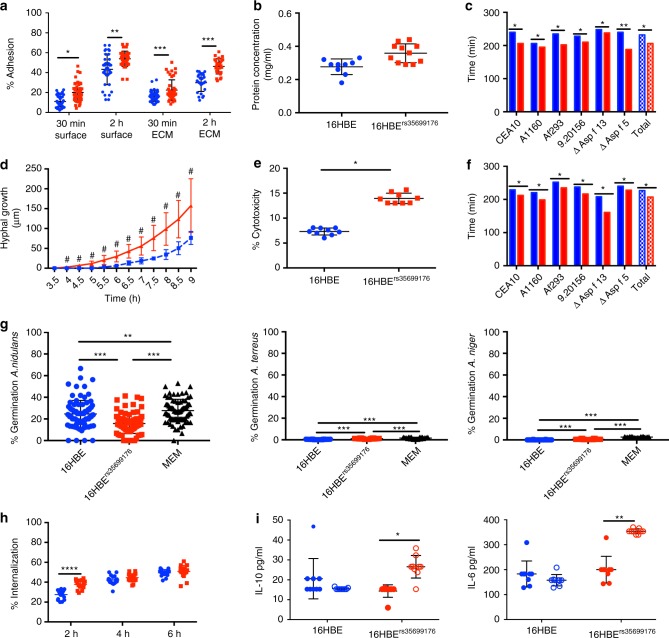
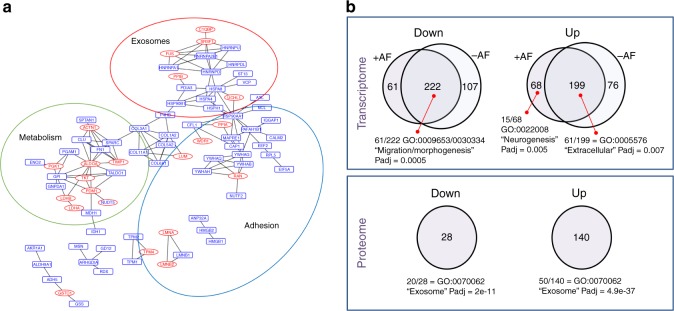
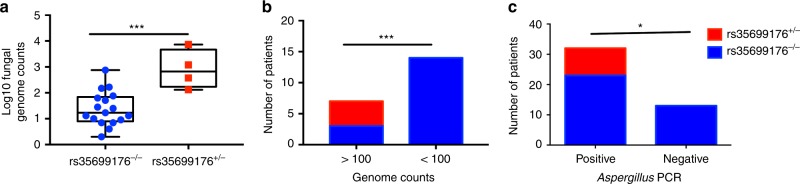
Aspergillus fumigatus is a critical pathogen of humans. Exposure to A. fumigatus conidia occurs frequently but is normally cleared from the respiratory airways. In contrast, individuals with respiratory diseases are often highly colonized by fungi. Here, we use genome-edited epithelial cells to show that the genetic variant rs35699176 in ZNF77 causes loss of integrity of the bronchial epithelium and increases levels of extracellular matrix proteins. These changes promote A. fumigatus conidial adhesion, germination and growth. RNA-seq and LC/MS-MS analysis reveal rs35699176 upregulates vesicle trafficking leading to an increment of adhesion proteins. These changes make cells carrying rs35699176 more receptive to A. fumigatus in the early stages of infection. Moreover, patients with fungal asthma carrying rs35699176+/− have higher A. fumigatus loads in their respiratory airway. Our results indicate ZNF77 as a key controller of Aspergillus colonization and suggest its utility as a risk-marker for patient stratification.
Overview
The claims and statistics of this paper haven’t been checked yet.
Free: it reads the open-access text and checks the first 5 claims that cite a source we can check. Create a free account to check every claim.
Integrity signals
Registry
Cites
Statistics
Figures
Verification
Claims the paper makes
The claims and statistics of this paper haven’t been checked yet.
Free: it reads the open-access text and checks the first 5 claims that cite a source we can check. Create a free account to check every claim.
Claims other papers make about this one
Each is checked against this paper’s own text: does it say what the citing paper says it does?
The source backs part of the claim, not all of it — or backs it for a different population, condition or comparison.
In the citing paper
“It has been found recently that Aspergillus colonization has a strong genetic basis associated with impaired expression of the transcriptional factor ZNF77 in bronchial epithelia, which leads to defective epithelial cell integrity and upregulation of extracellular matrix (ECM) proteins that facilitate conidial adhesion (23).”
From Aspergillus fumigatus and Aspergillosis in 2019 (2019) · cites this paper as [23]
Experimental — accuracy not yet measuredIn the citing paper
“It has been found recently that Aspergillus colonization has a strong genetic basis associated with impaired expression of the transcriptional factor ZNF77 in bronchial epithelia, which leads to defective epithelial cell integrity and upregulation of extracellular matrix (ECM) proteins that facilitate conidial adhesion (23).”
From Aspergillus fumigatus and Aspergillosis in 2019 (2019) · cites this paper as [23]
In the citing paper
“Early studies (23, 561, 562) have shown that A. fumigatus can be isolated from up to 20% of COPD patients.”
From Aspergillus fumigatus and Aspergillosis in 2019 (2019) · cites this paper as [23]
Self-check
Percentages, sums and reported differences re-computed from the paper’s own numbers.
The self-check needs the paper’s full text.
Citations
Cites
Genome engineering using the CRISPR-Cas9 system
Ran, F. A., Hsu, P. D., Wright, J., Agarwala, V., Scott, D. A., & Zhang, F. (2013) · Nature Protocols · doi:10.1038/nprot.2013.143 · Cited by 11,133
Palmer, C. N. A., Irvine, A. D., Terron-Kwiatkowski, A., Zhao, Y., Liao, H., Lee, S. P., Goudie, D. R., Sandilands, A., Campbell, L. E., Smith, F. J. D., et al. (2006) · Nature Genetics · doi:10.1038/ng1767 · Cited by 2,978
Global and Multi-National Prevalence of Fungal Diseases-Estimate Precision
Bongomin, F., Gago, S., Oladele, R., & Denning, D. (2017) · Journal of Fungi · doi:10.3390/jof3040057 · Cited by 2,953
Self-citationCFTR expression and chloride secretion in polarized immortal human bronchial epithelial cells.
Cozens, A. L., Yezzi, M. J., Kunzelmann, K., Ohrui, T., Chin, L., Eng, K., Finkbeiner, W. E., Widdicombe, J. H., & Gruenert, D. C. (1994) · American Journal of Respiratory Cell and Molecular Biology · doi:10.1165/ajrcmb.10.1.7507342 · Cited by 929
Agarwal, R., Chakrabarti, A., Shah, A., Gupta, D., Meis, J. F., Guleria, R., Moss, R., Denning, D. W., & ABPA complicating asthma ISHAM working group (2013) · Clinical & Experimental Allergy · doi:10.1111/cea.12141 · Cited by 896
Self-citationThe clinical spectrum of pulmonary aspergillosis
Kosmidis, C., & Denning, D. W. (2015) · Thorax · doi:10.1136/thoraxjnl-2014-206291 · Cited by 850
Self-citationUnderstanding multicellular function and disease with human tissue-specific networks
Greene, C. S., Krishnan, A., Wong, A. K., Ricciotti, E., Zelaya, R. A., Himmelstein, D. S., Zhang, R., Hartmann, B. M., Zaslavsky, E., Sealfon, S. C., et al. (2015) · Nature Genetics · doi:10.1038/ng.3259 · Cited by 832
Der p 1 facilitates transepithelial allergen delivery by disruption of tight junctions
Wan, H., Winton, H. L., Soeller, C., Tovey, E. R., Gruenert, D. C., Thompson, P. J., Stewart, G. A., Taylor, G. W., Garrod, D. R., Cannell, M. B., et al. (1999) · Journal of Clinical Investigation · doi:10.1172/jci5844 · Cited by 775
Host genetic variation impacts microbiome composition across human body sites
Blekhman, R., Goodrich, J. K., Huang, K., Sun, Q., Bukowski, R., Bell, J. T., Spector, T. D., Keinan, A., Ley, R. E., Gevers, D., et al. (2015) · Genome Biology · doi:10.1186/s13059-015-0759-1 · Cited by 745
A Randomized Trial of Itraconazole in Allergic Bronchopulmonary Aspergillosis
Stevens, D. A., Schwartz, H. J., Lee, J. Y., Moskovitz, B. L., Jerome, D. C., Catanzaro, A., Bamberger, D. M., Weinmann, A. J., Tuazon, C. U., Judson, M. A., et al. (2000) · New England Journal of Medicine · doi:10.1056/nejm200003163421102 · Cited by 533
Cited by
Aspergillus fumigatus and Aspergillosis in 2019
Latgé, J.-P., & Chamilos, G. (2019) · Clinical Microbiology Reviews · doi:10.1128/cmr.00140-18 · Cited by 1,400
“proteins that facilitate conidial adhesion (23).”
Allergic bronchopulmonary aspergillosis
Agarwal, R., Sehgal, I. S., Dhooria, S., Muthu, V., Prasad, K., Bal, A., Aggarwal, A., & Chakrabarti, A. (2020) · The Indian Journal of Medical Research · doi:10.4103/ijmr.ijmr_1187_19 · Cited by 182
Allergic Bronchopulmonary Aspergillosis
Agarwal, R., Muthu, V., Sehgal, I. S., Dhooria, S., Prasad, K. T., & Aggarwal, A. N. (2022) · Clinics in Chest Medicine · doi:10.1016/j.ccm.2021.12.002 · Cited by 127
Pathogenicity and virulence of Aspergillus fumigatus
Earle, K., Valero, C., Conn, D. P., Vere, G., Cook, P. C., Bromley, M., Bowyer, P., & Gago, S. (2023) · Virulence · doi:10.1080/21505594.2023.2172264 · Cited by 132
“Lastly, a significant number of genetic variants in critical genes for Aspergillus sensing and intracellular killing or activation of the downstream immune response have been reported in patients with invasive, allergic, and chronic forms of pulmonary aspergillosis [47,285–290].”
BackgroundInfluentialSelf-citationThe Human Mycobiome: Colonization, Composition and the Role in Health and Disease
Belvoncikova, P., Splichalova, P., Videnska, P., & Gardlik, R. (2022) · Journal of Fungi · doi:10.3390/jof8101046 · Cited by 110
On the lineage of Aspergillus fumigatus isolates in common laboratory use
Bertuzzi, M., van Rhijn, N., Krappmann, S., Bowyer, P., Bromley, M. J., & Bignell, E. M. (2021) · Medical Mycology · doi:10.1093/mmy/myaa075 · Cited by 84
Self-citationRole of Mitophagy in Regulating Intestinal Oxidative Damage
Wen, X., Tang, L., Zhong, R., Liu, L., Chen, L., & Zhang, H. (2023) · Antioxidants · doi:10.3390/antiox12020480 · Cited by 80
New Perspectives in the Diagnosis and Management of Allergic Fungal Airway Disease
Wardlaw, A. J., Rick, E., Özyiğit, L. P., Scadding, A., Gaillard, E. A., & Pashley, C. H. (2021) · Journal of Asthma and Allergy · doi:10.2147/jaa.s251709 · Cited by 72
“fumigatus to an epithelial cell line and that patients with ABPA who were heterozygous for the variant had a higher fungal load in bronchoalveolar lavage.(100) Our study demonstrated that A.”
BackgroundRelationship between Aspergillus and asthma
Agarwal, R., Muthu, V., & Sehgal, I. S. (2023) · Allergology International · doi:10.1016/j.alit.2023.08.004 · Cited by 66
Striking Back against Fungal Infections: The Utilization of Nanosystems for Antifungal Strategies
Du, W., Gao, Y., Liu, L., Sai, S., & Ding, C. (2021) · International Journal of Molecular Sciences · doi:10.3390/ijms221810104 · Cited by 52
“Impaired expression of the transcriptional factor ZNF77 in bronchial epithelia can result in the destruction of epithelial cell integrity, and upregulation of extracellular matrix proteins has been shown to facilitate conidial adhesion [57].”
BackgroundThe mycobiota of the human body: a spark can start a prairie fire
Zhang, D., Wang, Y., Shen, S., Hou, Y., Chen, Y., & Wang, T. (2020) · Gut Microbes · doi:10.1080/19490976.2020.1731287 · Cited by 44
“A recent study found that the Geno variation of ZNF77 is beneficial to fungal colonization in ABPA, which can be regarded as a diagnostic marker for fungal infection.(98) Further study discovered that most patients with ABPA have a Card9 S12 N mutation;(99) the infection of Aspergillus fumigatus activates the RelB sig…”
BackgroundRetinoids in Fungal Infections: From Bench to Bedside
Cosio, T., Gaziano, R., Zuccari, G., Costanza, G., Grelli, S., Francesco, P. D., Bianchi, L., & Campione, E. (2021) · Pharmaceuticals · doi:10.3390/ph14100962 · Cited by 40
“However, they exhibit different dependencies on chaperone-dependent pathways and could therefore display differences in the sensitivity of their inhibition [30].”
BackgroundResultInfluentialPoorly controlled asthma – Easy wins and future prospects for addressing fungal allergy
Denning, D. W., & Pfavayi, L. T. (2023) · Allergology International · doi:10.1016/j.alit.2023.07.003 · Cited by 29
Self-citationWu, Y., Zuo, Y.-H., Cheng, Q., Huang, Y. X., Bao, Z., Jin, X., Gao, X., Tu, C., Hu, W., Hang, J., et al. (2021) · Frontiers in Medicine · doi:10.3389/fmed.2021.640289 · Cited by 23
“factors, some patients might show a stronger inflammatory response to the conidia of Aspergillus (20).”
BackgroundWurster, S., Ruiz, O. E., Samms, K. M., Tatara, A. M., Albert, N. D., Kahan, P. H., Nguyen, A. T., Mikos, A. G., Kontoyiannis, D. P., & Eisenhoffer, G. T. (2020) · Cell Reports · doi:10.1016/j.celrep.2021.108896 · Cited by 17
“, 2012), and loss of epithelial integrity can promote increased levels of these ECM components (Gago et al., 2018).”
BackgroundHadebe, S., & Brombacher, F. (2019) · Frontiers in Immunology · doi:10.3389/fimmu.2019.02696 · Cited by 19
“This was perfectly illustrated in patients with invasive Aspergillosis where variant rs35699176 in ZNF77 was shown to cause loss of integrity of the bronchial epithelium and allowed fungal growth (67).”
BackgroundCurrent State of the Diagnosis of Invasive Pulmonary Aspergillosis in Lung Transplantation
Herrera, S., & Husain, S. (2019) · Frontiers in Microbiology · doi:10.3389/fmicb.2018.03273 · Cited by 17
Host defense mechanisms against Aspergillus fumigatus lung colonization and invasion
Mackel, J. J., & Steele, C. H. (2019) · Current Opinion in Microbiology · doi:10.1016/j.mib.2019.04.003 · Cited by 19
“The authors hypothesized that failures of the epithelium such as this may allow for sensitization to fungal allergens (4).”
BackgroundNovel Treatment Approach for Aspergilloses by Targeting Germination
Verburg, K., van Neer, J., Duca, M., & de Cock, H. (2022) · Journal of Fungi · doi:10.3390/jof8080758 · Cited by 22
“However, most studies with human cells were conducted in vitro with primary human airway epithelial cells [39], lung epithelial cells A549 [84,203], 16HBE bronchial epithelial cells [39,190], blood [200], or neutrophils [98].”
BackgroundRamírez‐Granillo, A., Bautista-Hernández, L. A., Lucio, V. M. B., Magaña‐Guerrero, F. S., Domínguez-López, A., Córdova-Alcántara, I. M., Pérez, N. O., Martínez-Rivera, M., & Rodríguez-Tovar, A. V. (2021) · Frontiers in Cellular and Infection Microbiology · doi:10.3389/fcimb.2021.646054 · Cited by 12
“Aspergillus species can secrete other metabolites such as gliotoxins, fumagillin, and several types of proteases that can trigger changes in the cellular membrane and the cytoskeleton to facilitate the invasion process (Dagenais and Keller, 2009; Osherov, 2012; Croft et al., 2016; Gago et al., 2018).”
BackgroundSurvey of current national and international guidance to reduce risk of aspergillosis in hospitals
Bamber, S., Haiduven, D., & Denning, D. W. (2025) · Journal of Hospital Infection · doi:10.1016/j.jhin.2025.02.015 · Cited by 10
Self-citationWang, Y., Zhang, L., Sun, Y., & Zhang, Y. (2025) · International Archives of Allergy and Immunology · doi:10.1159/000547550 · Cited by 10
“Patients carrying this SNP tend to have a higher fungal load and earlier colonization in the respiratory tract, suggesting that ZNF77 may be a key regulator of Aspergillus colonization [29].”
The human mycobiome: a critical yet understudied component of health and disease
Mohammadi, R., Morovati, H., & Safari, F. (2025) · Microbiology · doi:10.1099/mic.0.001631 · Cited by 9
“As a result, these spores can persist, colonize the lungs and contribute to the development of respiratory diseases [66].”
Asthma and Allergic Bronchopulmonary Aspergillosis: Understanding, Insights, and State-of-the-Art
Saxena, P., Muthu, V., Sehgal, I. S., & Agarwal, R. (2026) · Journal of Inflammation Research · doi:10.2147/jir.s546322 · Cited by 9
Kanjanapruthipong, T., Sukphopetch, P., Reamtong, O., Isarangkul, D., Muangkaew, W., Thiangtrongjit, T., Sansurin, N., Fongsodsri, K., & Ampawong, S. (2021) · Microbial Ecology · doi:10.1007/s00248-021-01750-7 · Cited by 8
“MMP and PLB are digestive enzymes that participate in fungal invasion of host cells, and the presence of MMP and PLB may be closely associated with virulence in candidiasis and aspergillosis [11, 102, 103].”
BackgroundRibeiro, H. A., Scindia, Y. M., Mehrad, B., & Laubenbacher, R. (2023) · Journal of Mathematical Biology · doi:10.1007/s00285-023-01940-6 · Cited by 8
Hales, E. N., Esparza, C., Peng, S., Dahlgren, A. R., Peterson, J. A. M., Miller, A. D., & Finno, C. J. (2020) · Genes · doi:10.3390/genes11010082 · Cited by 6
“However, it has been suggested to have a role in vesicle trafficking and extracellular matrix regulation [38].”
BackgroundCase, N. T., Heitman, J., & Cowen, L. E. (2020) · G3 Genes Genomes Genetics · doi:10.1534/g3.120.401271 · Cited by 5
Scharf, S. A., Bartels, A., Kondakci, M., Haas, R. R., Pfeffer, K., & Henrich, B. (2021) · Medical Mycology · doi:10.1093/mmy/myab045 · Cited by 7
Cai, H., Shuai, D., Xue, X., Mo, Y., Song, X., Ye, L., Li, S., Wang, D., Wang, Y., & Jin, M. (2020) · Mycopathologia · doi:10.1007/s11046-020-00506-0 · Cited by 5
Guo, Q., Guo, Q., Luo, W., Chu, M., Su, Y., Zhang, X., Chen, J., Shi, S., & Xiong, B. (2025) · Journal of Vascular and Interventional Radiology · doi:10.1016/j.jvir.2025.107918 · Cited by 4
Critical parameters of fungal pathogenicity at the epithelial interphase
Möslinger, A., Allert, S., Vylkova, S., & Hube, B. (2026) · microLife · doi:10.1093/femsml/uqag001 · Cited by 3
“This mutation leads to increased adhesion, invasion, germination, and growth of A. fumigatus during interaction with epithelial cells (Gago et al. 2018 ).”
AreAspergillusspp. driving COPD exacerbations?
Bertuzzi, M., & Denning, D. W. (2024) · European Respiratory Journal · doi:10.1183/13993003.01976-2024 · Cited by 3
Self-citationVergidis, P. I., & Denning, D. W. (2020) · Current treatment options in infectious diseases/Current treatment options in infectious disease · doi:10.1007/s40506-020-00213-w · Cited by 4
Self-citationLiu, H., Lin, J., Phan, Q. T., Gravelat, F. N., Sheppard, D. C., & Filler, S. G. (2023) · mSphere · doi:10.1128/msphere.00314-23 · Cited by 3
“Most studies on the pathogenesis of IA have used either the A549 type II alveolar epithelial cell line or the BEAS-2B or 16HBE bronchial cell lines (13, 16, 19–22).”
BackgroundNew insights into the treatment of asthma complicated by allergic bronchopulmonary aspergillosis
Agarwal, R., Muthu, V., & Sehgal, I. S. (2025) · Expert Review of Respiratory Medicine · doi:10.1080/17476348.2025.2517302 · Cited by 6
“Genetic variants like those in ZNF77 compromise epithelial integrity and allow Aspergillus conidia to germinate within the bronchial lumen [10].”
Dancer, P., Pickard, A., Potocka, W., Earle, K., Fortune‐Grant, R., Kadler, K. E., Bertuzzi, M., & Gago, S. (2022) · bioRxiv (Cold Spring Harbor Laboratory) · doi:10.1101/2022.04.13.488236 · Cited by 3
Self-citationHong, Z., He, X., Fang, Y., Liu, H., Zhang, X., & Zhang, Y. (2022) · Reproductive Sciences · doi:10.1007/s43032-021-00835-5 · Cited by 2
“Bioinformatic analysis via human tissue-specific networks suggests ZNF77 controls defensins, elastase, and calmodulin expression, which is firstly described by a research of pathogenic lung colonization [13].”
BackgroundZhu, N., Lin, S., Zhang, Y., Chen, M., Chen, L., & Cao, C. (2025) · BMC Infectious Diseases · doi:10.1186/s12879-025-11574-2 · Cited by 2
“Regarding lesion location, PC predominantly affected the right lung (38 cases, 45.24%), which may be attributed to the relatively shorter and wider right bronchus allowing Cryptococcus spores to reach the right lung more easily [20, 21].”
InfluentialPost-tuberculosis lung disease and pulmonary aspergillosis management: challenges and considerations
Sehgal, I. S., Muthu, V., Salzer, H. J. F., & Agarwal, R. (2026) · Expert Review of Anti-infective Therapy · doi:10.1080/14787210.2026.2631525 · Cited by 4
Does ABPA Contribute to Bronchiectasis? A Structured Evaluation of Competing Hypotheses
Agarwal, R., Sehgal, I. S., Muthu, V., & Bardin, P. G. (2026) · Clinical & Experimental Allergy · doi:10.1111/cea.70299 · Cited by 2
“Finally, host susceptibility likely determines both the tendency toward airway remodelling and fungal persistence [39–41].”
Emergence of Invasive Fungal Infection: Diagnosis and Treatment in Humans
Kumar, R., & Ruhel, R. (2019) · Fungal biology · doi:10.1007/978-3-030-18586-2_9 · Cited by 2
Environmental and Infectious Causes of Bronchiectasis
Carbajal, M. P., & Tenebäck, C. C. (2022) · Respiratory medicine · doi:10.1007/978-3-031-12926-1_4 · Cited by 3
Ribeiro, H. A., Vieira, L. S., Scindia, Y. M., Adhikari, B., Wheeler, M., Knapp, A., Schroeder, W. J., Mehrad, B., & Laubenbacher, R. (2021) · bioRxiv (Cold Spring Harbor Laboratory) · doi:10.1101/2021.06.08.447590 · Cited by 1
Genetic Regulation of the Host-Fungus Interaction in the Pathogenesis of Aspergillosis
Antunes, D., Cunha, C., & Carvalho, A. (2019) · Current Fungal Infection Reports · doi:10.1007/s12281-019-00344-8
Brown, A. C., Mead, M. E., Steenwyk, J. L., Goldman, G. H., & Rokas, A. (2021) · bioRxiv (Cold Spring Harbor Laboratory) · doi:10.1101/2021.10.26.465918
Allergic Bronchopulmonary Aspergillosis
Muthu, V., & Agarwal, R. (2019) · Springer eBooks · doi:10.1007/978-981-13-9459-1_10
Silva, L. P. (2021) · Digital Library of Theses and Dissertations (Universidade de São Paulo) · doi:10.11606/t.17.2021.tde-10052021-133340
Host, pathogenic fungi and the microbiome: A genetic triangle in infection
Gago, S., Mandarano, M., Floridi, C., & Zelante, T. (2023) · Frontiers in Immunology · doi:10.3389/fimmu.2022.1078014 · Cited by 1
“With the increasing number of sequenced fungal genomes it has been observed that pathogenicity emerged in different lineages in the fungal kingdom (43).”
BackgroundSelf-citationLukito, E. F., Chandra, V., Danessa, G., & Wijaya, M. (2024) · Indonesian Journal of Biomedicine and Clinical Sciences · doi:10.22146/inajbcs.v56i2.12973 · Cited by 1
Earle, K., Ortiz, S. C., Valero, C., Bertuzzi, M., Bowyer, P., Bromley, M., & Gago, S. (2025) · F1000Research · doi:10.12688/f1000research.172319.1
Self-citation
Metadata
- Authors
- Gago, S., Overton, N. L. D., Ben-Ghazzi, N., Novak-Frazer, L., Read, N. D., Denning, D. W., & Bowyer, P.
- Affiliations
- University of Manchester (GB)
- Manchester Academic Health Science Centre (GB)
- Corresponding author
- Bowyer, Paul
- ORCID
- Venue
- Nature Communications
- Published
- 2018-09-20
- Volume
- 9
- Issue
- 1
- Pages
- 3835-3835
- ISSN
- 2041-1723 (ISSN-L)
- PMC
- PMC6147781
- OpenAlex
- W2889913345
- Cited by
- 51
- References
- 60
- Citations by year
- 2026: 4 · 2025: 7 · 2024: 2 · 2023: 7 · 2022: 6 · 2021: 10 · 2020: 8 · 2019: 7
- FWCI
- 4.73
- Type
- journal article
- Language
- en
- Open access
- gold
- doi.org
- Licence
- cc-by
- creativecommons.org/licenses/by/4.0 (tdm)
- creativecommons.org/licenses/by/4.0 (vor)
- Locations
- Nature Communications (publishedVersion, cc-by)
- Europe PMC (PubMed Central) (publishedVersion, cc-by)
- PubMed Central (publishedVersion, cc-by)
- PubMed (publishedVersion)
- RePEc: Research Papers in Economics (submittedVersion)
- DOAJ (DOAJ: Directory of Open Access Journals) (submittedVersion, cc-by-sa)
- DOAJ (DOAJ: Directory of Open Access Journals) (submittedVersion)
- Research Explorer (The University of Manchester) (submittedVersion, other-oa)
- Funders
- Medical Research Council (MR/M02010X/1)
- National Centre for the Replacement, Refinement and Reduction of Animals in Research (NC/P002390/1)
- Fungal Infection Trust
- Topics
- Health Sciences › Medicine › Infectious Diseases › Antifungal resistance and susceptibility
- Life Sciences › Biochemistry, Genetics and Molecular Biology › Molecular Biology › Fungal and yeast genetics research
- Health Sciences › Medicine › Pulmonary and Respiratory Medicine › Asthma and respiratory diseases
- Keywords
- Aspergillus fumigatus, lung colonization, extracellular matrix proteins, conidial adhesion, conidial germination, vesicle trafficking, fungal asthma, risk indicators, patient stratification
- MeSH terms
- Adhesiveness, Aspergillosis, Allergic Bronchopulmonary, Aspergillus fumigatus, Base Sequence, Bronchi, Cell Line, Epithelium, Extracellular Matrix, Heterozygote, Humans, Lung, Transcription Factors, Colony Count, Microbial, Sequence Analysis, RNA, Polymorphism, Single Nucleotide
About these checks
Registry, retraction, Cites and statistics results are computed, not judged, with one exception: a printed reference that no index lists is read once by a model before it counts as a citation error. Claims are extracted by a model and kept only when their quote appears verbatim in the text; each cited source is then checked, with a model’s help, for whether it says what the claim relies on. Those verdicts can be wrong — read the claim’s quote and the cited source before relying on one.
Statistics and arithmetic are recomputed, not judged.
Confidence bands are shown only for fields calibrated on our annotated test set. None is calibrated yet, so no band is shown.
What counts as a claim ›How we measure confidence ›How we check this ›
Are you an author, or do you see a problem with this page? Request a review
Data sources
Bibliographic data: Semantic Scholar, OpenAlex, Crossref.
Contains information from the Semantic Scholar Academic Graph Datasets, made available under the ODC Attribution License (ODC-BY 1.0).
Semantic Scholar’s data is described in: Kinney, R., et al. (2023). The Semantic Scholar Open Data Platform. arXiv:2301.10140.
