

The DOI matches its Crossref record; 28 of the 28 references it cites were found in a registry or an index.
Suicide among cancer patients
Open accessAbstract
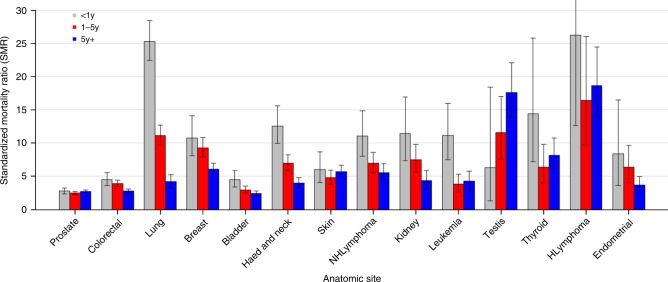
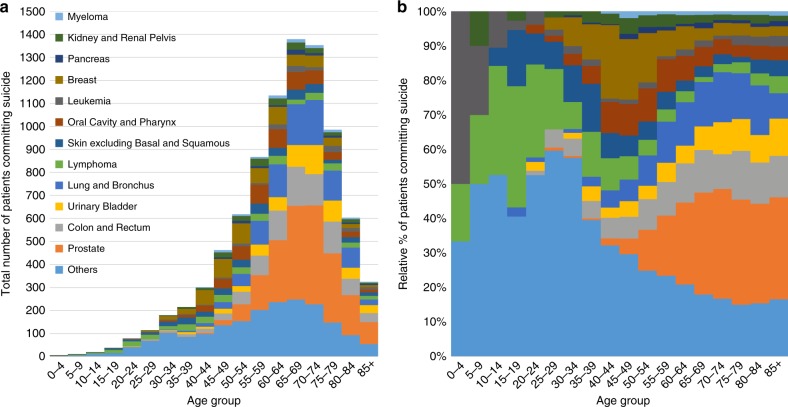
Our purpose is to identify cancer patients at highest risk of suicide compared to the general population and other cancer patients. This is a retrospective, population-based study using nationally representative data from the Surveillance, Epidemiology, and End Results program, 1973-2014. Among 8,651,569 cancer patients, 13,311 committed suicide; the rate of suicide was 28.58/ 100,000-person years, and the standardized mortality ratio (SMR) of suicide was 4.44 (95% CI, 4.33, 4.55). The predominant patients who committed suicide were male (83%) and white (92%). Cancers of the lung, head and neck, testes, bladder, and Hodgkin lymphoma had the highest SMRs ( > 5-10) through the follow up period. Elderly, white, unmarried males with localized disease are at highest risk vs other cancer patients. Among those diagnosed at < 50 years of age, the plurality of suicides is from hematologic and testicular tumors; if > 50, from prostate, lung, and colorectal cancer patients.
Overview
The claims and statistics of this paper haven’t been checked yet.
Run the check — free, no account needed. It reads the open-access text and checks the sources it cites.
Integrity signals
Registry
Cites
Statistics
Figures
Verification
Claims the paper makes
The claims and statistics of this paper haven’t been checked yet.
Run the check — free, no account needed. It reads the open-access text and checks the sources it cites.
Claims other papers make about this one
Each is checked against this paper’s own text: does it say what the citing paper says it does?
The source backs part of the claim, not all of it — or backs it for a different population, condition or comparison.
In the citing paper
“results in a 4.4-fold higher risk of suicide compared with the general population.”
From Web-based mindfulness and skills-based distress reduction for patients with cancer: study protocol of the multicentre, randomised, controlled confirmatory intervention trial Reduct (2022) · cites this paper as [8]
Experimental — accuracy not yet measuredThe source backs part of the claim, not all of it — or backs it for a different population, condition or comparison.
In the citing paper
“In patients with cancer, distress strongly affects all aspects of their lives (eg, work–life, family life)”
From Web-based mindfulness and skills-based distress reduction for patients with cancer: study protocol of the multicentre, randomised, controlled confirmatory intervention trial Reduct (2022) · cites this paper as [8]
Experimental — accuracy not yet measuredThe check wasn’t confident either way, so it gives no verdict — never disputed.
In the citing paper
“causes financial problems”
From Web-based mindfulness and skills-based distress reduction for patients with cancer: study protocol of the multicentre, randomised, controlled confirmatory intervention trial Reduct (2022) · cites this paper as [8]
Experimental — accuracy not yet measuredThe check wasn’t confident either way, so it gives no verdict — never disputed.
In the citing paper
“leads to decreased quality of life”
From Web-based mindfulness and skills-based distress reduction for patients with cancer: study protocol of the multicentre, randomised, controlled confirmatory intervention trial Reduct (2022) · cites this paper as [8]
Experimental — accuracy not yet measured
Self-check
Percentages, sums and reported differences re-computed from the paper’s own numbers.
The self-check needs the paper’s full text.
Citations
Cites
Siegel, R. L., Miller, K. D., & Jemal, A. (2017) · CA: A Cancer Journal for Clinicians · doi:10.3322/caac.21387 · Cited by 14,712
Risk factors for suicidal thoughts and behaviors: A meta-analysis of 50 years of research
Franklin, J. C., Ribeiro, J. D., Fox, K. R., Bentley, K. H., Kleiman, E. M., Huang, X., Musacchio, K. M., Jaroszewski, A. C., Chang, B. P., & Nock, M. K. (2017) · Psychological Bulletin · doi:10.1037/bul0000084 · Cited by 3,784
Statistical Methods in Cancer Research. Volume II – The Design and Analysis of Cohort Studies
Juul, S. (1989) · Scandinavian Journal of Social Medicine · doi:10.1177/140349488901700214 · Cited by 3,602
Warren, J. L., Klabunde, C. N., Schrag, D., Bach, P. B., & Riley, G. F. (2002) · PubMed · doi:10.1097/01.mlr.0000020942.47004.03 · Cited by 1,719
Statistical methods in cancer research. Volume II--The design and analysis of cohort studies.
Breslow, N. E., & Day, N. E. (1987) · PubMed · Cited by 1,684
Bluethmann, S. M., Mariotto, A. B., & Rowland, J. H. (2016) · Cancer Epidemiology, Biomarkers & Prevention · doi:10.1158/1055-9965.epi-16-0133 · Cited by 1,146
Self-citationOverview of the SEER-Medicare Data
Warren, J. L., Klabunde, C. N., Schrag, D., Bach, P. B., & Riley, G. F. (2002) · Medical Care · doi:10.1097/00005650-200208001-00002 · Cited by 775
Andersen, B. L., DeRubeis, R. J., Berman, B. S., Gruman, J., Champion, V. L., Massie, M. J., Holland, J. C., Partridge, A. H., Bak, K., Somerfield, M. R., et al. (2014) · Journal of Clinical Oncology · doi:10.1200/jco.2013.52.4611 · Cited by 735
Causes of death among cancer patients
Zaorsky, N. G., Churilla, T. M., Egleston, B. L., Fisher, S. G., Ridge, J. A., Horwitz, E. M., & Meyer, J. E. (2016) · Annals of Oncology · doi:10.1093/annonc/mdw604 · Cited by 684
Self-citationCompleted Suicide After a Suicide Attempt: A 37-Year Follow-Up Study
Suominen, K., Isometsä, E., Suokas, J., Haukka, J., Achte, K., & Lönnqvist, J. (2004) · American Journal of Psychiatry · doi:10.1176/appi.ajp.161.3.562 · Cited by 650
Cited by
Sorted by citations
Items 101–200 of 329
The efficacy and safety of ketamine for depression in patients with cancer: A systematic review
Azari, L., Hemati, H., Tavasolian, R., Shahdab, S., Tomlinson, S. M., Babilonia, M. B., Huang, J. J., Tometich, D. B., Turner, K. L., Jim, H., et al. (2023) · International Journal of Clinical and Health Psychology · doi:10.1016/j.ijchp.2023.100428 · Cited by 13
Late side effects of testicular cancer and treatment: a comprehensive review
Khan, M. R., Sheehan, P. K., Bazin, A., Leonard, C. E., Aleem, U., Corrigan, L., & McDermott, R. (2024) · Discover Oncology · doi:10.1007/s12672-024-01549-1 · Cited by 13
Du, L., Shi, H., Qian, Y., Jin, X., Yu, H., Fu, X., Song, Y., Chen, H., & Shi, Y.-Q. (2021) · Public Health · doi:10.1016/j.puhe.2021.02.030 · Cited by 13
Bäuerle, A., Martus, P., Erim, Y., Schug, C., Heinen, J., Krakowczyk, J. B., Steinbach, J., Damerau, M., Bethge, W., Dinkel, A., et al. (2022) · BMJ Open · doi:10.1136/bmjopen-2021-056973 · Cited by 12
The Difficult Task of Diagnosing Depression in Elderly People with Cancer: A Systematic Review
Massa, E., Donisi, C., Liscia, N., Madeddu, C., Impera, V., Mariani, S., Scartozzi, M., & Lai, E. (2021) · Clinical Practice and Epidemiology in Mental Health · doi:10.2174/1745017902117010295 · Cited by 10
Narita, Z. C., Shinozaki, T., Goto, A., Hori, H., Kim, Y. J., Wilcox, H. C., Inoue, M., Tsugane, S., & Sawada, N. (2024) · Epidemiology and Psychiatric Sciences · doi:10.1017/s2045796024000325 · Cited by 12
Hirschmiller, J., Schmeckenbecher, J., Schwinn, T., Wiltink, J., Brähler, E., Kapusta, N. D., Zwerenz, R., Beutel, M. E., & Ernst, M. (2024) · Psycho-Oncology · doi:10.1002/pon.70030 · Cited by 15
Scott, C., Omar, K., Alnajjar, H. M., Alifrangis, C., Ahmed, K., & Muneer, A. (2021) · Andrology · doi:10.1111/andr.12984 · Cited by 12
Walker, J., Magill, N., Rosenstein, D. L., Frost, C. D., & Sharpe, M. (2021) · Journal of the Academy of Consultation-Liaison Psychiatry · doi:10.1016/j.jaclp.2021.09.003 · Cited by 15
Kim, H., Min, J., Seo, Y.-S., & Min, K. (2021) · BMC Cancer · doi:10.1186/s12885-021-09013-x · Cited by 12
Endeshaw, D., Walle, T. A., & Yohannes, S. (2022) · BMJ Open · doi:10.1136/bmjopen-2022-063965 · Cited by 12
Michałek, I. M., dos Santos, F. L. C., Wojciechowska, U. E., & Didkowska, J. A. (2023) · Maturitas · doi:10.1016/j.maturitas.2023.107785 · Cited by 12
Choudhury, A., & Shahsavar, Y. (2023) · Scientific Reports · doi:10.1038/s41598-023-45634-x · Cited by 14
DeGuzman, P. B., Vogel, D. L., Horton, B. J., Bernacchi, V., Cupp, C. A., Ghamandi, B. J. F., Hinton, I. D., Sheffield, C., & Jameson, M. J. (2021) · Journal of Cancer Survivorship · doi:10.1007/s11764-021-01052-4 · Cited by 12
Senf, B., Maiwurm, P., & Fettel, J. (2021) · Supportive Care in Cancer · doi:10.1007/s00520-021-06590-2 · Cited by 11
Suicide and Suicidal Ideation Among Survivors of Childhood Cancer
Tan, J. Y., Ge, G., Low, C. E., Rana, S., Tan, T. Y. Z., Fang, N. B. J., Teo, J. Y. Y., Yap, Y. T., Yau, C. E., Lee, A. R. Y. B., et al. (2025) · JAMA Network Open · doi:10.1001/jamanetworkopen.2024.57544 · Cited by 12
Schomberg, J., Teismann, T., Bussmann, S., Vaganian, L., Gerlach, A. L., & Cwik, J. C. (2020) · European Journal of Cancer Care · doi:10.1111/ecc.13330 · Cited by 12
Zhou, Z., Jiang, P., Zhang, P., Lin, X., Zhao, Q., Wen, X., Lin, X., Wang, Y., Yang, Y. F., Jiang, X., et al. (2022) · International Journal of Clinical Oncology · doi:10.1007/s10147-022-02206-9 · Cited by 11
Lai, Q., Huang, H., Zhu, Y., Shu, S., Chen, Y., Luo, Y., Zhang, L., & Yang, Z. (2022) · Supportive Care in Cancer · doi:10.1007/s00520-022-07386-8 · Cited by 10
Payne, C., & Kobayashi, L. C. (2021) · American Journal of Epidemiology · doi:10.1093/aje/kwab241 · Cited by 11
Turner, K. L., Stover, A. M., Tometich, D. B., Geiss, C., Mason, A., Nguyen, O. T., Hume, E., McCormick, R., Powell, S., Johnson, J. E. H., et al. (2022) · JCO Oncology Practice · doi:10.1200/op.22.00433 · Cited by 10
Education and assessment of psycho‐existential symptoms to prevent suicidality in cancer care
Kissane, D. W. (2020) · Psycho-Oncology · doi:10.1002/pon.5519 · Cited by 10
Jung, Y., Lee, D., Jung, K., & Cho, H. (2022) · Cancer Research and Treatment · doi:10.4143/crt.2021.1086 · Cited by 10
Ma, Y., Lyu, J., Yang, B., Yan, T., Ma, Q., Wu, Z., Wang, Z., & He, H. (2022) · Frontiers in Oncology · doi:10.3389/fonc.2022.972908 · Cited by 10
McFarland, D. C., Nelson, C. J., & Miller, A. H. (2020) · Brain Behavior and Immunity · doi:10.1016/j.bbi.2020.08.006 · Cited by 10
Gentile, G., Tambuzzi, S., Calati, R., & Zoja, R. (2022) · International Journal of Environmental Research and Public Health · doi:10.3390/ijerph19020829 · Cited by 10
The Affordable Care Act and suicide incidence among adults with cancer
Barnes, J. M., Graboyes, E. M., Boakye, E. A., Kent, E. E., Scherrer, J. F., Park, E. M., Rosenstein, D. L., Mowery, Y. M., Chino, J., Brizel, D. M., et al. (2022) · Journal of Cancer Survivorship · doi:10.1007/s11764-022-01205-z · Cited by 10
Suicide in Gynecological and Breast Cancer: A Systematic Review
Simonetti, A., Ferrara, O. M., Kotzalidis, G. D., Bernardi, E., Restaino, A., Moccia, L., Camardese, G., Mazza, M., Scambia, G., & Sani, G. (2024) · Psycho-Oncology · doi:10.1002/pon.70007 · Cited by 9
Shafiei, S. B., Shadpour, S., Pangburn, B., Bentley-McLachlan, M., & de León-Casasola, O. A. (2025) · Scientific Reports · doi:10.1038/s41598-025-93678-y · Cited by 12
Suicide after a Diagnosis of Cancer: Follow-Up of 1.4 Million Individuals, 2009–2019
Michałek, I. M., dos Santos, F. L. C., Wojciechowska, U. E., & Didkowska, J. A. (2023) · Cancers · doi:10.3390/cancers15174315 · Cited by 9
A population-based study of COVID-19 mortality risk in US cancer patients
Mani, K., Wu, X., Spratt, D. E., Wang, M., & Zaorsky, N. G. (2024) · JNCI Journal of the National Cancer Institute · doi:10.1093/jnci/djae086 · Cited by 9
Self-citationNon-cancer-related Deaths in Cancer Survivors: A Nationwide Population-based Study in Japan
Gon, Y., Zha, L., Morishima, T., Kimura, Y., Asai, K., Kudo, H., Sasaki, T., Mochizuki, H., Miyashiro, I., & Sobue, T. (2024) · Journal of Epidemiology · doi:10.2188/jea.je20240230 · Cited by 9
Risk classification for non-cancer death in middle-aged cancer patients
Guan, T., Jiang, Y., Tu, P., Ye, B., Zeng, L., Luo, Z., Chi, K., Liang, H., Yang, Y., Huang, J., et al. (2024) · Journal of Advanced Research · doi:10.1016/j.jare.2024.12.039 · Cited by 9
Mental health considerations in patients undergoing complex head and neck reconstruction
Philteos, J., Noel, C. W., Hallet, J., & Eskander, A. E. (2022) · Current Opinion in Otolaryngology & Head & Neck Surgery · doi:10.1097/moo.0000000000000827 · Cited by 9
Güth, U., Junker, C., Elger, B. S., Elfgen, C., Montagna, G., & Schneeberger, A. R. (2023) · Cancer Medicine · doi:10.1002/cam4.6323 · Cited by 8
Liu, Q., Qu, Z., Dong, H., Qi, Y., Wu, J., Zhang, W., Wang, X., Wang, Z., Fang, Y., & Wang, J. (2024) · Translational Psychiatry · doi:10.1038/s41398-024-02917-9 · Cited by 8
Wang, J., Wang, Q., Du, X., Zhu, X., Nie, C., Han, X., Tian, W., Li, H., & Zhou, H. (2022) · Japanese Journal of Clinical Oncology · doi:10.1093/jjco/hyac132 · Cited by 8
Tu, Z., Li, C., Hu, Q., & Luo, J. (2023) · Journal of Cancer Research and Clinical Oncology · doi:10.1007/s00432-023-04635-z · Cited by 8
Risk of Suicide Attempt after Thyroidectomy: A Nationwide Population Study in South Korea
Kim, H., Kim, Y., Shin, M., Choi, K. W., Chung, M. K., & Jeon, H. J. (2020) · Psychiatry Investigation · doi:10.30773/pi.2020.0174 · Cited by 7
Fadoir, N. A., Marie, L., Basu, N., Schuler, K. R., Granato, S., & Smith, P. N. (2021) · Death Studies · doi:10.1080/07481187.2021.2021567 · Cited by 9
Development and validation of a model for predicting the risk of suicide in patients with cancer
Du, L., Shi, H., Qian, Y., Jin, X., Yu, H., Fu, X., Wu, H., & Chen, H. (2022) · Archives of Suicide Research · doi:10.1080/13811118.2022.2035289 · Cited by 8
Cai, Y., Zhang, Y., Cao, W., Hou, F., Xin, M., Guo, V. Y., Deng, Y., Wang, S., You, X., & Li, J. (2022) · PLoS ONE · doi:10.1371/journal.pone.0279290 · Cited by 8
Self-citationGranek, L., & Nakash, O. (2020) · Current Opinion in Supportive and Palliative Care · doi:10.1097/spc.0000000000000503 · Cited by 8
Suicide and Head and Neck Cancer: A Systematic Review With Meta‐Analysis and Narrative Synthesis
Hanna, J. R., McCloy, K., Anderson, J., McKeever, A., & Semple, C. J. (2025) · Psycho-Oncology · doi:10.1002/pon.70233 · Cited by 9
Hoai, B. N., Long, H., Tran, D., Thắng, N. C., Luu, D. T., Sansone, A., & Jannini, E. A. (2021) · Andrologia · doi:10.1111/and.14333 · Cited by 7
Depression, non-medical pain prescriptions, and suicidal behavior in cancer survivors
Mwobobia, J. M., White, M., Osazuwa‐Peters, O. L., Boakye, E. A., Abouelella, D. K., Barnes, J. M., Viet, C. T., Ramos, K., Corbett, C. M., & Osazuwa‐Peters, N. (2025) · Journal of Cancer Survivorship · doi:10.1007/s11764-024-01740-x · Cited by 10
Schwinn, T., Hirschmiller, J., Wiltink, J., Zwerenz, R., Brähler, E., Beutel, M. E., & Ernst, M. (2025) · Journal of Cancer Research and Clinical Oncology · doi:10.1007/s00432-025-06106-z · Cited by 7
Suicide in obstructive lung, cardiovascular and oncological disease
Alias, A., Bertrand, L., Bisson‐Gervais, V., & Henry, M. (2021) · Preventive Medicine · doi:10.1016/j.ypmed.2021.106543 · Cited by 8
Assessment of Cancer Screening
Marcus, P. M. (2022) · Springer eBooks · doi:10.1007/978-3-030-94577-0 · Cited by 16
Kim, H., Kim, Y., Shin, M., Park, Y., Park, H.-E., D, M. F. M., Mischoulon, D., Park, M. J., Kim, E., & Jeon, H. J. (2022) · Frontiers in Psychiatry · doi:10.3389/fpsyt.2022.607892 · Cited by 10
Self-citationPotential Impact of the COVID-19 Pandemic on Financial Toxicity in Cancer SurvivorsPreprint
Baddour, K. (2020) · doi:10.22541/au.158646511.11564157 · Cited by 7
Al-Soneidar, W. A., Harper, S. B., Madathil, S. A., Schlecht, N. F., & Nicolau, B. F. (2022) · Cancer Epidemiology · doi:10.1016/j.canep.2022.102205 · Cited by 6
The impact of a cancer diagnosis on nonfatal self-injury: a matched cohort study in Ontario
Nguyen, L., Hallet, J. I., Eskander, A. E., Chan, W. C., Noel, C. W., Mahar, A. L., & Sutradhar, R. (2023) · CMAJ Open · doi:10.9778/cmajo.20220157 · Cited by 6
Non cancer causes of death after gallbladder cancer diagnosis: a population-based analysis
Yang, X., Lu, S., Huo, C., Li, F., Lin, M., & Huang, J. (2023) · Scientific Reports · doi:10.1038/s41598-023-40134-4 · Cited by 6
Kurisu, K., Harashima, S., Fujimori, M., Akechi, T., Yoshiuchi, K., & Uchitomi, Y. (2023) · Cancer Medicine · doi:10.1002/cam4.6574 · Cited by 6
Trends in suicide mortality among cancer survivors in the US, 1975-2020
Wan, H., Chen, R., Zhan, X., Chen, L., & Li, Z. (2024) · Aging · doi:10.18632/aging.205451 · Cited by 6
Stringent Control of Opioids: Sound Public Health Measures, but a Step Too Far in Palliative Care?
Pinkerton, C., Mitchell, G. K., & Hardy, J. R. (2020) · Current Oncology Reports · doi:10.1007/s11912-020-0900-5 · Cited by 7
Tanaka, T., Suzuki, H., Miwa, K., Ushijima, T., Nagasu, S., Fukahori, M., Ishii, K., Nakamura, T., Iwamoto, H., Masuda, A., et al. (2022) · Oncology Letters · doi:10.3892/ol.2022.13437 · Cited by 6
Yu, H., Tao, S., She, W., Liu, M., Wu, Y., & Lyu, J. (2022) · BMJ Open · doi:10.1136/bmjopen-2022-061913 · Cited by 6
Suicide and women living with and beyond a breast cancer diagnosis
Milligan, F. (2022) · British Journal of Nursing · doi:10.12968/bjon.2022.31.18.954 · Cited by 6
Diabetic mortality risk among cancer patients in the United State SEER population, 1975–2016
Zhu, X., Heng, Y., Zhou, L. F., Zhang, M., Cao, P., & Tao, L. (2020) · Endocrine · doi:10.1007/s12020-020-02405-2 · Cited by 6
Bossarte, R. M., Kennedy, C. J., Luedtke, A. R., Nock, M. K., Smoller, J. W., Stokes, C. M., & Kessler, R. C. (2021) · American Journal of Epidemiology · doi:10.1093/aje/kwab111 · Cited by 7
Ye, C., Pu, D., Zhang, J., Jia, M., Zhang, Y., Du, S., Wang, J., & Xiong, X. (2024) · Journal of Affective Disorders · doi:10.1016/j.jad.2024.01.079 · Cited by 5
Self-citationXu, W., Xiang, L., Wang, S., Zhu, Y., Zheng, M., & Wan, H. (2024) · BMJ Open · doi:10.1136/bmjopen-2024-085551 · Cited by 6
Bushi, G., Khatib, M. N., Singh, M. P., Pattanayak, M., Vishwakarma, T., Ballal, S., Bansal, P., Gaidhane, A. M., Tomar, B. S., Ashraf, A., et al. (2025) · BMC Oral Health · doi:10.1186/s12903-025-05511-7 · Cited by 5
Risk Factors for Suicide Among Head and Neck Cancer Patients: A Systematic Review and Meta‐Analysis
Nassar, S. I., Durgham, R. A., Nguyen, S. A., Newman, J. G., Kejner, A. E., & Albergotti, W. G. (2025) · Head & Neck · doi:10.1002/hed.28145 · Cited by 7
Differential Use of Depression and Anxiety Medications in Adults With a History of Cancer
Miro-Rivera, D., Norris, R. A., Osazuwa‐Peters, O. L., Hurst, J. H., Barnes, J. M., & Osazuwa‐Peters, N. (2025) · JAMA Network Open · doi:10.1001/jamanetworkopen.2025.27585 · Cited by 5
Mental health care as part of cancer care: A call for action
Mathew, A., Jagan, S., & Abraham, J. (2019) · Cancer Research Statistics and Treatment · doi:10.4103/crst.crst_59_19 · Cited by 5
Teng, F., Hu, D., Zhou, Y., Liu, Y., Han, Y., Xu, K., Yu, T., Tan, R., & Ding, X. (2022) · Journal of Clinical Psychology in Medical Settings · doi:10.1007/s10880-021-09779-z · Cited by 5
Al-Fahdi, A., AlZain, I., Al-Mahrouqi, T., AL-Aamri, H., & Al‐Huseini, S. (2022) · Cureus · doi:10.7759/cureus.32725 · Cited by 5
Understanding Suicide over the Life Course Using Data Science Tools within a Triangulation Framework
Johns, L., Zhong, C., & Mezuk, B. R. (2023) · Journal of Psychiatry and Brain Science · doi:10.20900/jpbs.20230003 · Cited by 5
Risk of suicide among stroke survivors in the United States
Grobman, B., Kothapalli, N., Mansur, A., & Lu, C. Y. (2023) · Journal of Stroke and Cerebrovascular Diseases · doi:10.1016/j.jstrokecerebrovasdis.2023.107272 · Cited by 5
Suicide rates among patients with first and second primary cancer
Jiang, Y., Wang, Y., Cheng, X., Zhou, Z., Wang, J., Yu, H., Yao, G., Lu, Z., Chen, X., Yan, S., et al. (2023) · Epidemiology and Psychiatric Sciences · doi:10.1017/s2045796023000690 · Cited by 5
Dourado, J., Emile, S. H., Wignakumar, A., Horesh, N., DeTrolio, V. R., Gefen, R., Garoufalia, Z., & Wexner, S. D. (2024) · Surgery · doi:10.1016/j.surg.2024.09.023 · Cited by 5
A national estimate of mental disorders and mortality outcomes in cancer survivors
Trần, T. X. M., Chung, M. S., Cha, C., & Park, B. (2025) · Cancer · doi:10.1002/cncr.35711 · Cited by 5
Warum brauchen wir Leitlinien für Suizidprävention?
Schneider, B., Reif, A., Wagner, B., & Wolfersdorf, M. (2021) · Bundesgesundheitsblatt - Gesundheitsforschung - Gesundheitsschutz · doi:10.1007/s00103-021-03468-w · Cited by 5
Suicide prevention in cancer care: What are the next steps?
Davidson, C., Jodoin, V. D., Aubin, F., Levenson, J. A., & Rivest, J. (2021) · Palliative & Supportive Care · doi:10.1017/s1478951521000912 · Cited by 5
Yu, F., Liu, Y., Li, X., Zhang, X., Tian, Y., Zhang, D., & Su, Y. (2024) · European Journal of Oncology Nursing · doi:10.1016/j.ejon.2024.102642 · Cited by 4
Yokoi, M., Nishio, N., Kimura, H., Tokura, T., Kishi, S., Tsuzuki, H., Mukoyama, N., Yokoi, S., Wada, A., Shigeyama, M., et al. (2025) · Laryngoscope Investigative Otolaryngology · doi:10.1002/lio2.70109 · Cited by 5
Vasudevan, S. S., Álvarez, V., Schwab, S., Olinde, L., & Nathan, C. O. (2025) · Acta Oto-Laryngologica · doi:10.1080/00016489.2025.2507695 · Cited by 4
Survivorship Challenges and Supportive Care in Lung Cancer
Ha, D. M., Jacob, R. A., & Bade, B. C. (2025) · Seminars in Respiratory and Critical Care Medicine · doi:10.1055/a-2649-9311 · Cited by 4
Nursing Care to Reduce Suicide Risk in Cancer Patients: A Narrative Review of the Literature
Borrallo-Riego, Á., García-Mayo, M., Gil-Ordóñez, I., Domínguez-Sánchez, I., & Guerra-Martín, M. D. (2025) · Nursing Reports · doi:10.3390/nursrep15080265 · Cited by 5
Causes of death among patients with testicular cancer during the survivorship
Yang, L., Song, P., Wu, X., Ma, K., Liu, Z., Zhou, J. W., & Dong, Q. (2023) · European Journal of Surgical Oncology · doi:10.1016/j.ejso.2023.107090 · Cited by 4
Lin, Y., Li, H., Wu, H., Li, S., Abakumov, M. A., Chekhonin, V. P., Peltzer, K., Abbas, K. S., Makatsariya, A. D., Liu, Z., et al. (2024) · Journal of Cancer · doi:10.7150/jca.91758 · Cited by 4
Suicide among lymphoma patients
Zhou, J., Tian, M., Zhang, X., Xiong, L., Huang, J., Xu, M., Xu, H., Yin, Z., Wu, F., Hu, J., et al. (2024) · Journal of Affective Disorders · doi:10.1016/j.jad.2024.05.158 · Cited by 4
Schwinn, T., Paul, R. H., Hirschmiller, J., Brähler, E., Wiltink, J., Zwerenz, R., O’Connor, R. C., Wild, P. S., Münzel, T. F., König, J., et al. (2024) · Journal of Affective Disorders · doi:10.1016/j.jad.2024.08.093 · Cited by 5
Zheng, B., Zhu, N., Yu, M. Y., Guan, Y., Zheng, Z., Deng, Y., & Jiang, Y. (2024) · Journal of Advanced Nursing · doi:10.1111/jan.16591 · Cited by 5
Ma, W., Wu, W., Fu, R., Zheng, S., Bai, R., & Lyu, J. (2021) · International Journal of General Medicine · doi:10.2147/ijgm.s300740 · Cited by 4
Song, P., Lu, N., Zhang, J., Gao, X., Li, X., Li, Y., Yang, L., Liu, Z., Ma, K., & Dong, Q. G. (2022) · PubMed Central · Cited by 4
Huuskonen, M.-L., Koistinen, T., Sihvola, N., Parkkari, I., Palovaara, S., Kytö, V., Sipilä, J., Jyrkkiö, S. M., & Heervä, E. (2022) · Cancer Medicine · doi:10.1002/cam4.5444 · Cited by 4
Shang, F., Liu, X., Ren, X., Li, Y., Cai, L., Sun, Y., Wen, J., & Zhai, X. (2023) · PLoS ONE · doi:10.1371/journal.pone.0292488 · Cited by 4
Chijiiwa, T., & 佳代子, 石. (2024) · Journal of Psychiatric and Mental Health Nursing · doi:10.1111/jpm.13017 · Cited by 4
Progression of oncolytic virus in liver cancer treatment
Hua, X., Xuan, S., Tang, Y., You, S., Zhao, S., Qiu, Y., Li, Y., Li, Y., Su, Y., & Qu, P. (2024) · Frontiers in Oncology · doi:10.3389/fonc.2024.1446085 · Cited by 3
Cao, L., Wang, Z., Wang, X., Zhu, G., Zhang, Y., & Li, J. (2025) · Integrative Cancer Therapies · doi:10.1177/15347354251313533 · Cited by 3
Self-citationRisk of suicide in cancer patients: nationwide cohort study
Yoo, J. E., Jung, W., Jung, J., Yoon, S. E., An, J. H., Han, K., & Shin, D. W. (2025) · The British Journal of Psychiatry · doi:10.1192/bjp.2025.10384 · Cited by 4
Increased Risk of Suicide among Cancer Survivors Who Developed a Second Malignant Neoplasm
Yang, H., Qu, Y., Shang, Y., Wang, C., Wang, J., Lu, D., & Song, H. (2022) · Computational Intelligence and Neuroscience · doi:10.1155/2022/2066133 · Cited by 3
Sun, S., Shi, D., & Wang, W. (2023) · Clinical and Experimental Medicine · doi:10.1007/s10238-023-01199-7 · Cited by 3
Kim, J., & Gang, M. (2023) · Western Journal of Nursing Research · doi:10.1177/01939459231216870 · Cited by 3
Suicide Risk Among Patients With Cancer by Sex in Japan: A Population-based Study
Kitagawa, S., Sobue, T., Zha, L., Morishima, T., Ohno, Y., & Miyashiro, I. (2024) · Journal of Epidemiology · doi:10.2188/jea.je20230280 · Cited by 3
Suicide Risk Screening for Head and Neck Cancer Patients: An Implementation Study
Kansara, B., Basta, A., Mikhael, M., Perkins, R. M., Reisman, P., Johnson, J. E. H., Rollison, D. E. M., Nguyen, O. T., Powell, S., Gilbert, S. M., et al. (2024) · Applied Clinical Informatics · doi:10.1055/s-0044-1787006 · Cited by 3
Metadata
- Authors
- Zaorsky, N. G., Zhang, Y., Tuanquin, L., Bluethmann, S. M., Park, H. S., & Chinchilli, V. M.
- Affiliations
- Pennsylvania State University (US)
- Penn State Cancer Institute (US)
- Yale University (US)
- Corresponding author
- Zaorsky, Nicholas G.
- Venue
- Nature Communications
- Published
- 2019-01-14
- Volume
- 10
- Issue
- 1
- Pages
- 207-207
- ISSN
- 2041-1723 (ISSN-L)
- PMC
- PMC6331593
- OpenAlex
- W2910242363
- Cited by
- 329
- References
- 28
- Citations by year
- 2026: 17 · 2025: 44 · 2024: 47 · 2023: 41 · 2022: 74 · 2021: 51 · 2020: 39 · 2019: 12
- FWCI
- 51.40
- Type
- journal article
- Language
- en
- Update notices
- correction (2020-01-31)
- Open access
- gold
- doi.org
- Locations
- Nature Communications (publishedVersion, cc-by)
- Europe PMC (PubMed Central) (publishedVersion, other-oa)
- PubMed Central (publishedVersion, cc-by)
- PubMed (publishedVersion)
- RePEc: Research Papers in Economics (submittedVersion)
- DOAJ (DOAJ: Directory of Open Access Journals) (submittedVersion)
- DOAJ (DOAJ: Directory of Open Access Journals) (submittedVersion, cc-by-sa)
- Topics
- Social Sciences › Psychology › Clinical Psychology › Suicide and Self-Harm Studies
- Health Sciences › Medicine › Oncology › Cancer survivorship and care
- Health Sciences › Medicine › Oncology › Global Cancer Incidence and Screening
- Keywords
- suicide, cancer patients, suicide risk factors, standardized mortality ratio, lung cancer, head and neck cancer, testicular cancer, Hodgkin's disease, hematologic malignancies, prostate cancer, colorectal cancer, age at diagnosis, marital status, sex differences
- MeSH terms
- Survivorship, Suicide Prevention, Adult, Age Factors, Aged, Aged, 80 and over, Female, Humans, Male, Middle Aged, Mortality, Neoplasms, Retrospective Studies, Risk Factors, Sex Factors, Suicide, SEER Program, Risk Assessment
About these checks
Registry, retraction, Cites and statistics results are computed, not judged, with one exception: a printed reference that no index lists is read once by a model before it counts as a citation error. Claims are extracted by a model and kept only when their quote appears verbatim in the text; each cited source is then checked, with a model’s help, for whether it says what the claim relies on. Those verdicts can be wrong — read the claim’s quote and the cited source before relying on one.
Statistics and arithmetic are recomputed, not judged.
Confidence bands are shown only for fields calibrated on our annotated test set. None is calibrated yet, so no band is shown.
What counts as a claim ›How we measure confidence ›How we check this ›
Are you an author, or do you see a problem with this page? Request a review
