

The DOI matches its Crossref record; 69 of the 69 references it cites were found in a registry or an index.
The deubiquitylating enzyme USP15 regulates homologous recombination repair and cancer cell response to PARP inhibitors
Open accessAbstract
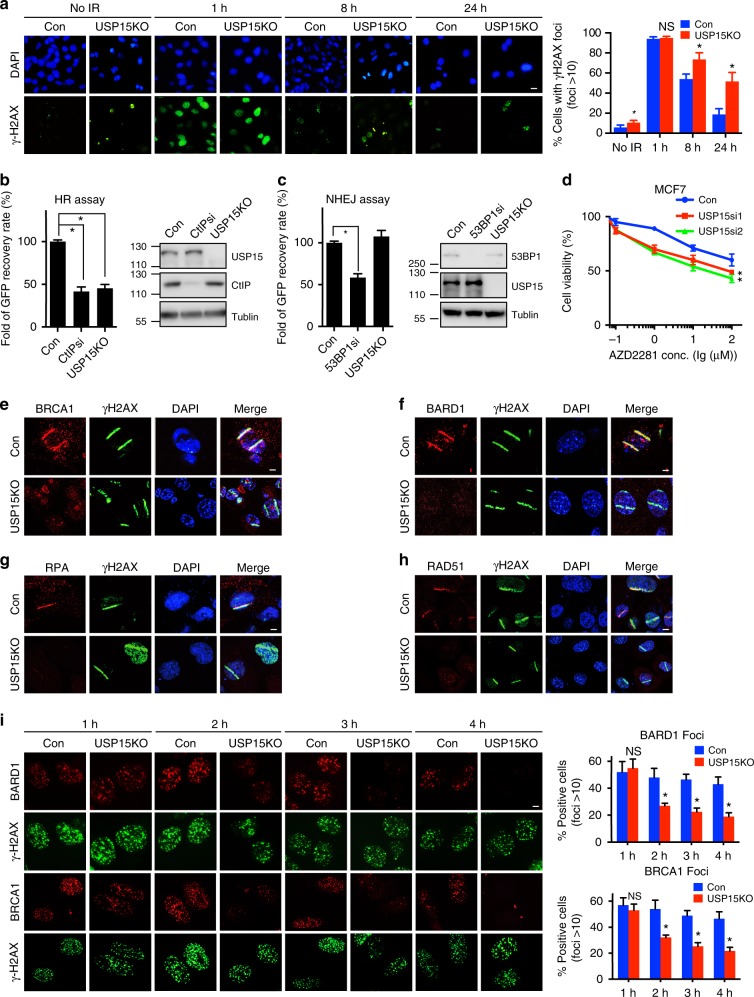
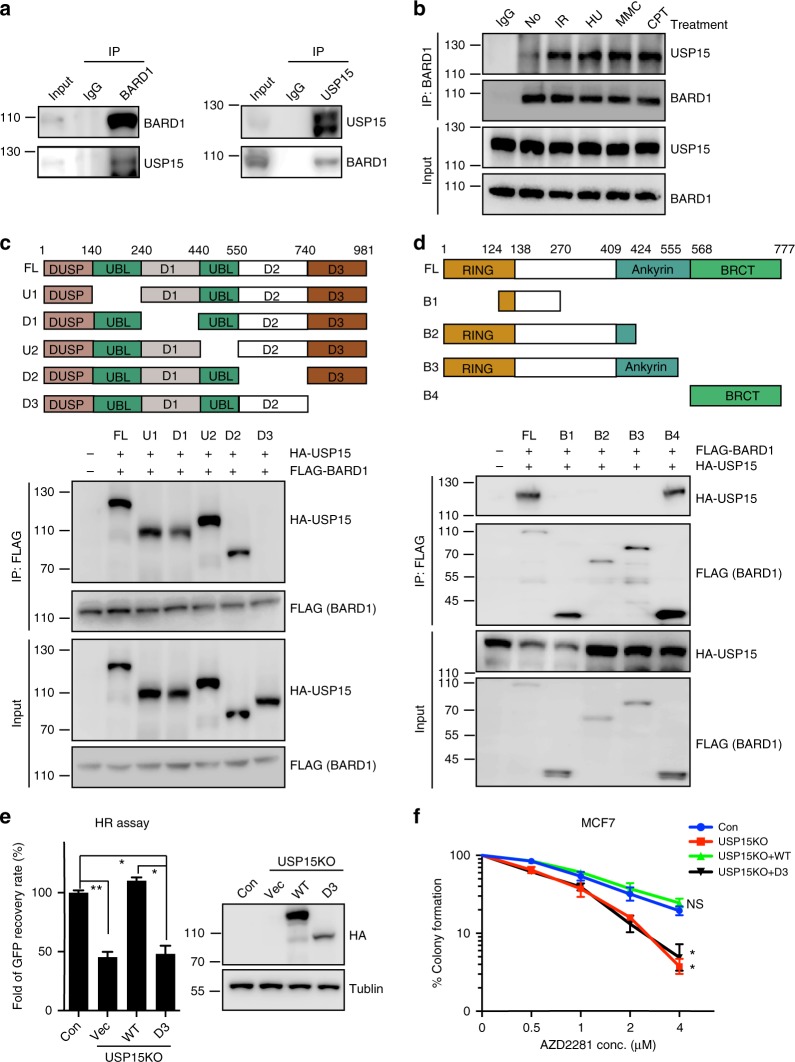
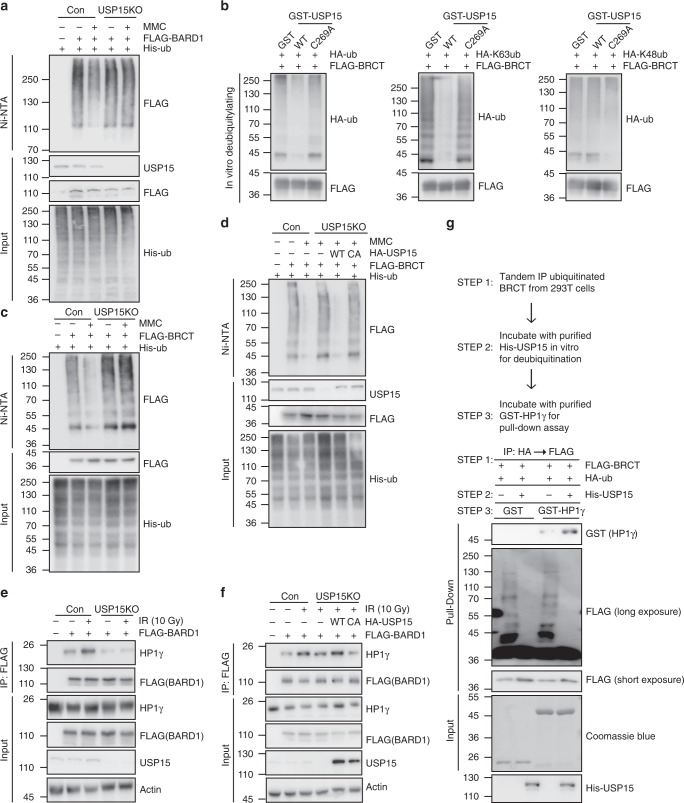
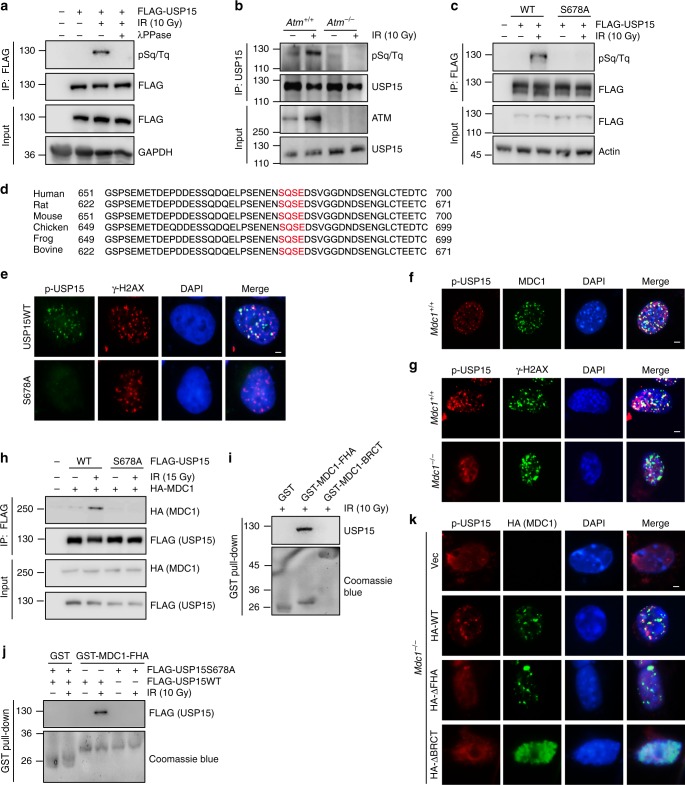
Poly-(ADP-ribose) polymerase inhibitors (PARPi) selectively kill breast and ovarian cancers with defects in homologous recombination (HR) caused by BRCA1/2 mutations. There is also clinical evidence for the utility of PARPi in breast and ovarian cancers without BRCA mutations, but the underlying mechanism is not clear. Here, we report that the deubiquitylating enzyme USP15 affects cancer cell response to PARPi by regulating HR. Mechanistically, USP15 is recruited to DNA double-strand breaks (DSBs) by MDC1, which requires the FHA domain of MDC1 and phosphorylated Ser678 of USP15. Subsequently, USP15 deubiquitinates BARD1 BRCT domain, and promotes BARD1-HP1γ interaction, resulting in BRCA1/BARD1 retention at DSBs. USP15 knockout mice exhibit genomic instability in vivo. Furthermore, cancer-associated USP15 mutations, with decreased USP15-BARD1 interaction, increases PARP inhibitor sensitivity in cancer cells. Thus, our results identify a novel regulator of HR, which is a potential biomarker for therapeutic treatment using PARP inhibitors in cancers.
Overview
The claims and statistics of this paper haven’t been checked yet.
Run the check — free, no account needed. It reads the open-access text and checks the sources it cites.
Integrity signals
Registry
Cites
Statistics
Figures
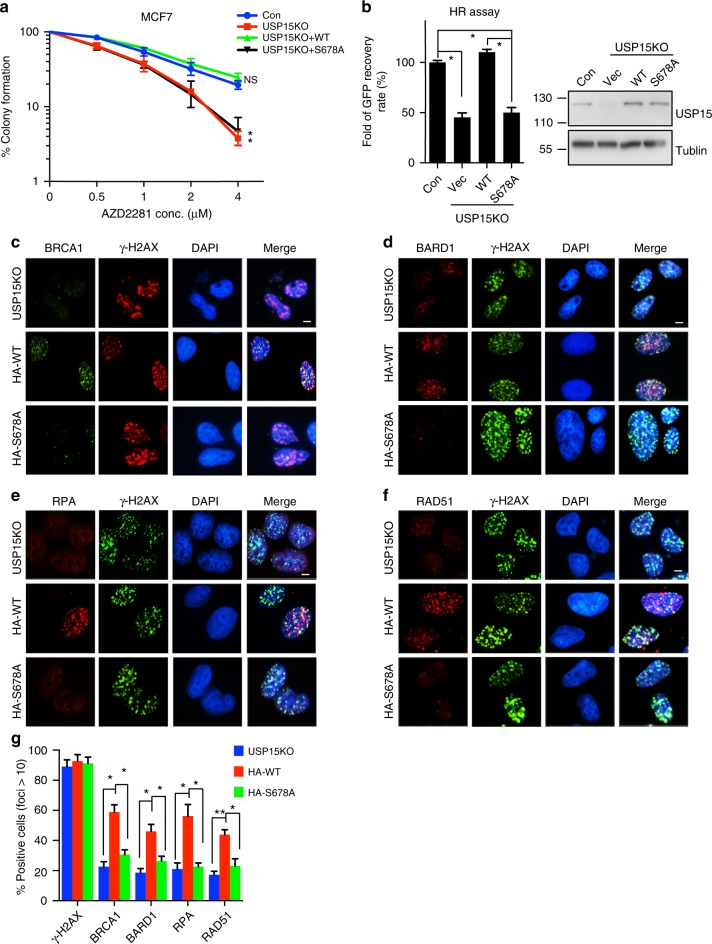
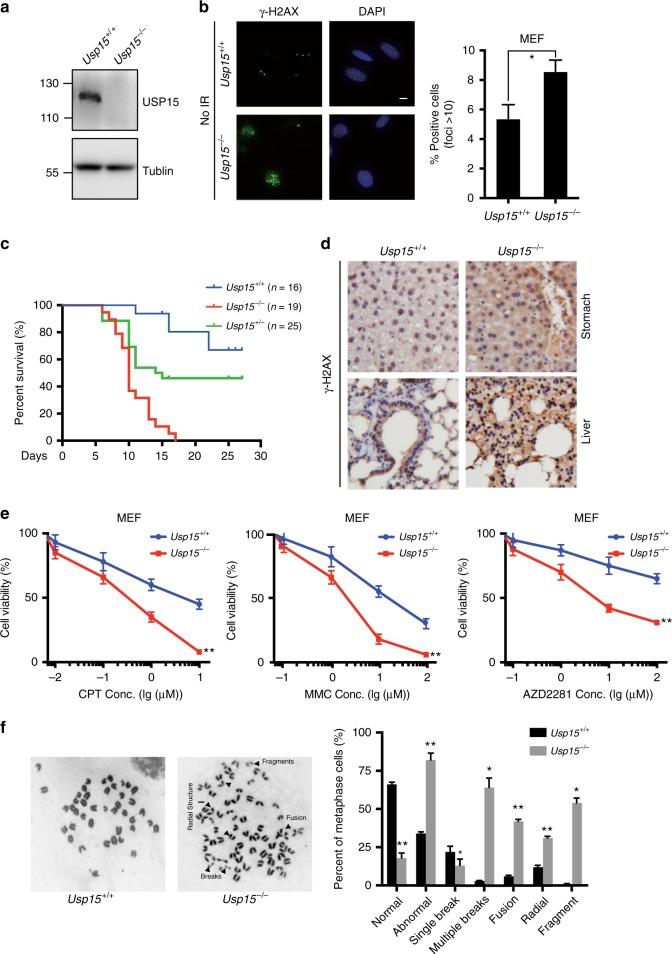
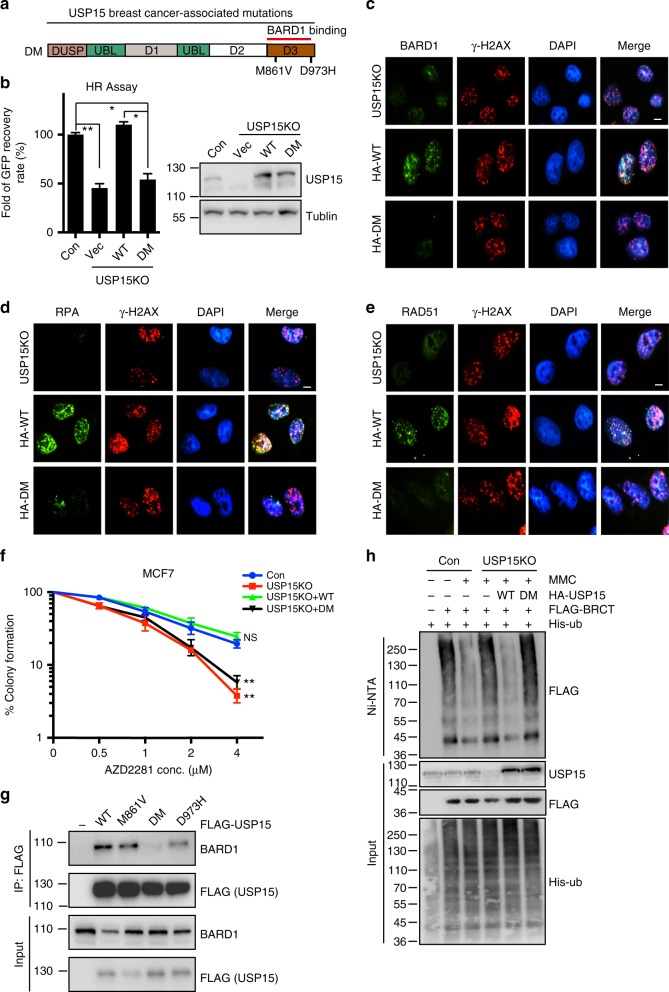
Verification
Claims the paper makes
The claims and statistics of this paper haven’t been checked yet.
Run the check — free, no account needed. It reads the open-access text and checks the sources it cites.
Claims other papers make about this one
Each is checked against this paper’s own text: does it say what the citing paper says it does?
The source backs part of the claim, not all of it — or backs it for a different population, condition or comparison.
In the citing paper
“Due to the conflicting functions of substrates, USP15 shows dual effects in tumorigenesis. For instance, USP15 copy number is increased in glioblastoma, breast cancer, and ovarian cancer, but decreased in pancreatic cancer40,52,55–58.”
From Proteostatic reactivation of the developmental transcription factor TBX3 drives BRAF/MAPK-mediated tumorigenesis (2024) · cites this paper as [56]
Experimental — accuracy not yet measured
Self-check
Percentages, sums and reported differences re-computed from the paper’s own numbers.
The self-check needs the paper’s full text.
Citations
Cites
1 retracted
RETRACTED ARTICLE: A mechanism for the suppression of homologous recombination in G1 cells
Orthwein, A., Noordermeer, S. M., Wilson, M. D., Landry, S., Enchev, R. I., Sherker, A., Munro, M., Pinder, J., Salsman, J., Dellaire, G., et al. (2015) · Nature · doi:10.1038/nature16142 · Cited by 471
RetractedTargeting the DNA repair defect in BRCA mutant cells as a therapeutic strategy
Farmer, H., McCabe, N., Lord, C. J., Tutt, A. N. J., Johnson, D. A., Richardson, T. B., Santarosa, M., Dillon, K. J., Hickson, I., Knights, C., et al. (2005) · Nature · doi:10.1038/nature03445 · Cited by 6,683
The DNA-damage response in human biology and disease
Jackson, S. P., & Bartek, J. (2009) · Nature · doi:10.1038/nature08467 · Cited by 6,092
The DNA Damage Response: Making It Safe to Play with Knives
Ciccia, A., & Elledge, S. J. (2010) · Molecular Cell · doi:10.1016/j.molcel.2010.09.019 · Cited by 4,368
Sensing DNA Damage Through ATRIP Recognition of RPA-ssDNA Complexes
Zou, L., & Elledge, S. J. (2003) · Science · doi:10.1126/science.1083430 · Cited by 2,693
53BP1 Inhibits Homologous Recombination in Brca1-Deficient Cells by Blocking Resection of DNA Breaks
Bunting, S. F., Callén, E., Wong, N., Chen, H.-T., Polato, F., Gunn, A., Bothmer, A., Feldhahn, N., Fernandez-Capetillo, O., Cao, L., et al. (2010) · Cell · doi:10.1016/j.cell.2010.03.012 · Cited by 1,671
Human CtIP promotes DNA end resection
Sartori, A. A., Lukas, C., Coates, J., Mistrik, M., Fu, S., Bartek, J., Baer, R., Lukas, J., & Jackson, S. P. (2007) · Nature · doi:10.1038/nature06337 · Cited by 1,362
RNF8 Ubiquitylates Histones at DNA Double-Strand Breaks and Promotes Assembly of Repair Proteins
Mailand, N., Bekker‐Jensen, S., Kildegaard, H. F., Melander, F., Bártek, J., Lukas, C., & Lukas, J. (2007) · Cell · doi:10.1016/j.cell.2007.09.040 · Cited by 1,193
Sgs1 Helicase and Two Nucleases Dna2 and Exo1 Resect DNA Double-Strand Break Ends
Zhu, Z., Chung, W.-H., Shim, E. Y., Lee, S. E., & Ira, G. (2008) · Cell · doi:10.1016/j.cell.2008.08.037 · Cited by 1,108
Mechanisms of Deubiquitinase Specificity and Regulation
Mevissen, T. E. T., & Komander, D. (2017) · Annual Review of Biochemistry · doi:10.1146/annurev-biochem-061516-044916 · Cited by 1,069
Cited by
Sorted by citations
PARP inhibitor resistance: the underlying mechanisms and clinical implications
Li, H., Liu, Z., Wu, N., Chen, Y., Cheng, Q., & Wang, J. (2020) · Molecular Cancer · doi:10.1186/s12943-020-01227-0 · Cited by 578
Self-citationMolecular mechanisms of tumor resistance to radiotherapy
Wu, Y., Song, Y., Wang, R., & Wang, T. (2023) · Molecular Cancer · doi:10.1186/s12943-023-01801-2 · Cited by 527
Targeting replication stress in cancer therapy
da Costa, A. A. B. A., Chowdhury, D., Shapiro, G. I., D’Andrea, A. D., & Konstantinopoulos, P. A. (2022) · Nature Reviews Drug Discovery · doi:10.1038/s41573-022-00558-5 · Cited by 380
Dewson, G., Eichhorn, P. J. A., & Komander, D. (2023) · Nature reviews. Cancer · doi:10.1038/s41568-023-00633-y · Cited by 353
Deubiquitylating Enzymes in Cancer and Immunity
Ren, J., Yu, P., Liu, S., Li, R., Niu, X., Chen, Y., Zhang, Z., Zhou, F., & Zhang, L. (2023) · Advanced Science · doi:10.1002/advs.202303807 · Cited by 118
Self-citation
Metadata
- Authors
- Peng, Y., Liao, Q., Tan, W., Peng, C., Hu, Z., Chen, Y., Li, Z., Li, J., Zhen, B., Zhu, W., Li, X., Yao, Y., Song, Q., Liu, C., Qi, X., He, F., & Pei, H.
- Affiliations
- George Washington University (US)
- Tianjin University of Science and Technology (CN)
- Beijing Proteome Research Center (CN)
- Renmin Hospital of Wuhan University (CN)
- Corresponding author
- Qi, Xiangdong
- He, Fuchu
- Pei, Huadong
- ORCID
- Venue
- Nature Communications
- Published
- 2019-03-15
- Volume
- 10
- Issue
- 1
- Pages
- 1224-1224
- ISSN
- 2041-1723 (ISSN-L)
- PMC
- PMC6420636
- OpenAlex
- W2920931417
- Cited by
- 104
- References
- 69
- Citations by year
- 2026: 11 · 2025: 21 · 2024: 17 · 2023: 15 · 2022: 13 · 2021: 10 · 2020: 11 · 2019: 6
- FWCI
- 4.18
- Type
- journal article
- Language
- en
- Open access
- gold
- doi.org
- Locations
- Nature Communications (publishedVersion, cc-by)
- Europe PMC (PubMed Central) (publishedVersion, cc-by)
- PubMed Central (publishedVersion, cc-by)
- PubMed (publishedVersion)
- RePEc: Research Papers in Economics (submittedVersion)
- DOAJ (DOAJ: Directory of Open Access Journals) (submittedVersion)
- DOAJ (DOAJ: Directory of Open Access Journals) (submittedVersion, cc-by-sa)
- Funders
- National Natural Science Foundation of China (31571463, 2015CB910601, 31371433, 81572740)
- National Key Research and Development Program of China (2015CB910601, 2018YFC0910303)
- National Cancer Institute (R01CA184717, R01CA177898)
- Topics
- Health Sciences › Medicine › Oncology › PARP inhibition in cancer therapy
- Life Sciences › Biochemistry, Genetics and Molecular Biology › Molecular Biology › DNA Repair Mechanisms
- Life Sciences › Biochemistry, Genetics and Molecular Biology › Molecular Biology › Ubiquitin and proteasome pathways
- Keywords
- USP15, deubiquitinase, homologous recombination repair, PARP inhibitors, BARD1, BRCA1, MDC1, DNA double-strand breaks, deubiquitination, genomic instability, breast cancer, ovarian cancer, biomarkers
- MeSH terms
- Poly(ADP-ribose) Polymerase Inhibitors, Animals, Humans, Mice, Inbred C57BL, Mutation, Neoplasms, Neoplasms, Experimental, Nuclear Proteins, Whole-Body Irradiation, Trans-Activators, Treatment Outcome, Mice, Knockout, Cell Cycle Proteins, Drug Resistance, Neoplasm, Tumor Suppressor Proteins, RNA, Small Interfering, Ubiquitin-Protein Ligases, Intracellular Signaling Peptides and Proteins, Adaptor Proteins, Signal Transducing, Mice, Kaplan-Meier Estimate, DNA Breaks, Double-Stranded, HEK293 Cells, Recombinational DNA Repair, MCF-7 Cells, Ubiquitin-Specific Proteases
About these checks
Registry, retraction, Cites and statistics results are computed, not judged, with one exception: a printed reference that no index lists is read once by a model before it counts as a citation error. Claims are extracted by a model and kept only when their quote appears verbatim in the text; each cited source is then checked, with a model’s help, for whether it says what the claim relies on. Those verdicts can be wrong — read the claim’s quote and the cited source before relying on one.
Statistics and arithmetic are recomputed, not judged.
Confidence bands are shown only for fields calibrated on our annotated test set. None is calibrated yet, so no band is shown.
What counts as a claim ›How we measure confidence ›How we check this ›
Are you an author, or do you see a problem with this page? Request a review
