

The DOI matches its Crossref record; 71 of the 71 references it cites were found in a registry or an index.
Functional cardiac fibroblasts derived from human pluripotent stem cells via second heart field progenitors
Open accessAbstract
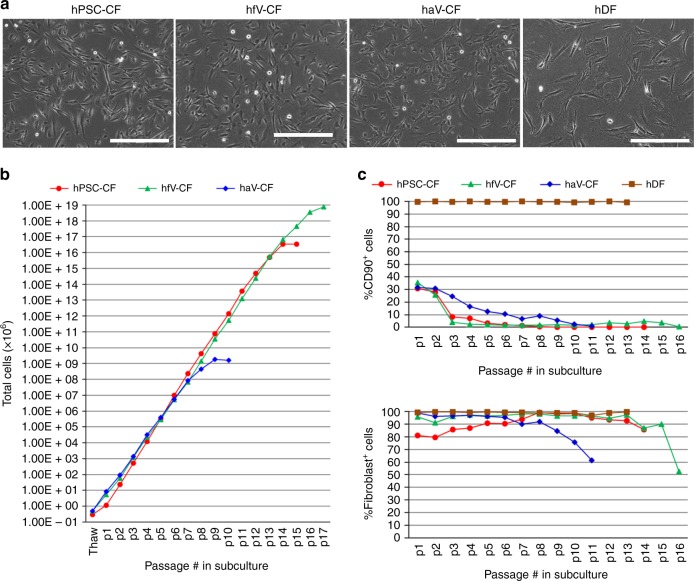
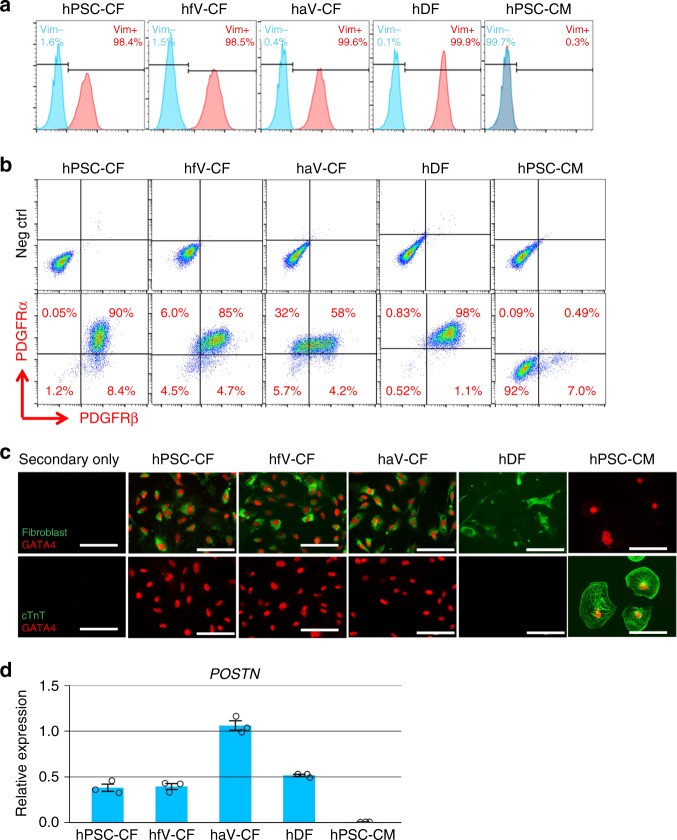
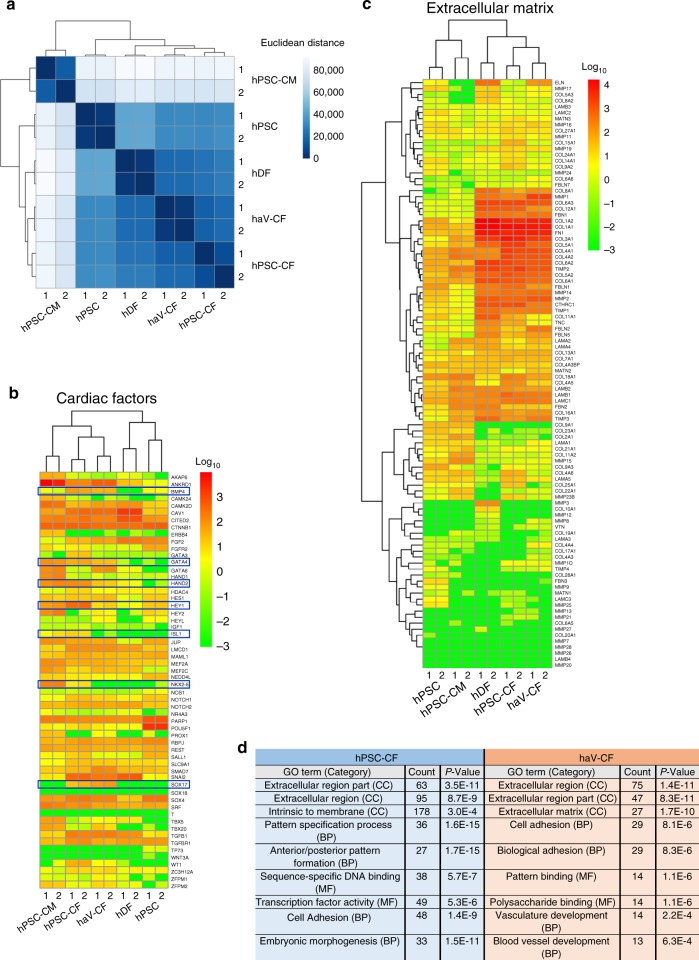
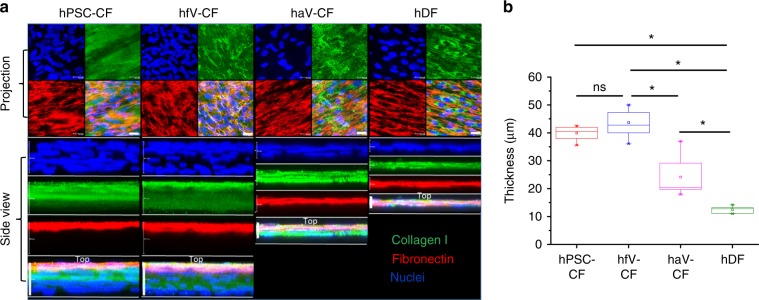
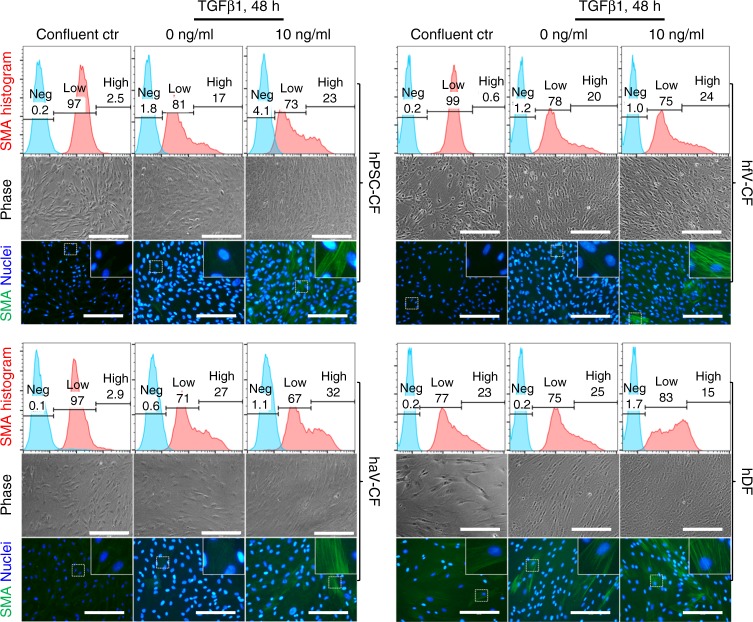
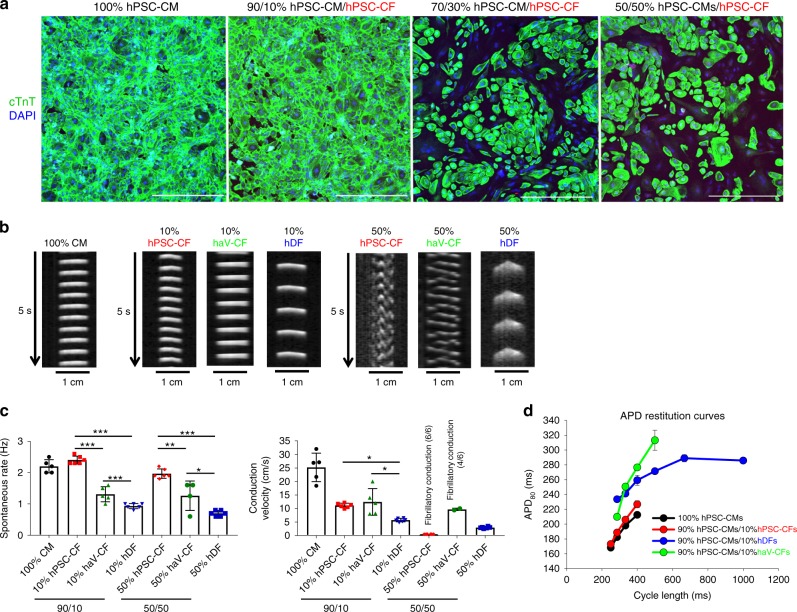
Cardiac fibroblasts (CFs) play critical roles in heart development, homeostasis, and disease. The limited availability of human CFs from native heart impedes investigations of CF biology and their role in disease. Human pluripotent stem cells (hPSCs) provide a highly renewable and genetically defined cell source, but efficient methods to generate CFs from hPSCs have not been described. Here, we show differentiation of hPSCs using sequential modulation of Wnt and FGF signaling to generate second heart field progenitors that efficiently give rise to hPSC-CFs. The hPSC-CFs resemble native heart CFs in cell morphology, proliferation, gene expression, fibroblast marker expression, production of extracellular matrix and myofibroblast transformation induced by TGFβ1 and angiotensin II. Furthermore, hPSC-CFs exhibit a more embryonic phenotype when compared to fetal and adult primary human CFs. Co-culture of hPSC-CFs with hPSC-derived cardiomyocytes distinctly alters the electrophysiological properties of the cardiomyocytes compared to co-culture with dermal fibroblasts. The hPSC-CFs provide a powerful cell source for research, drug discovery, precision medicine, and therapeutic applications in cardiac regeneration.
Overview
The claims and statistics of this paper haven’t been checked yet.
Run the check — free, no account needed. It reads the open-access text and checks the sources it cites.
Integrity signals
Registry
Cites
Statistics
Figures
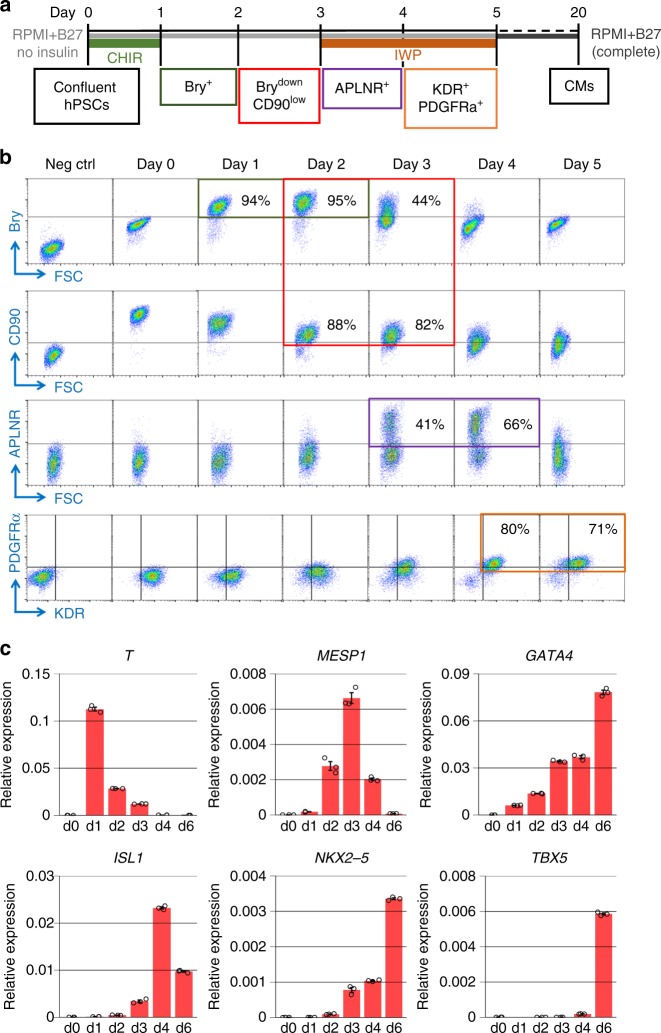
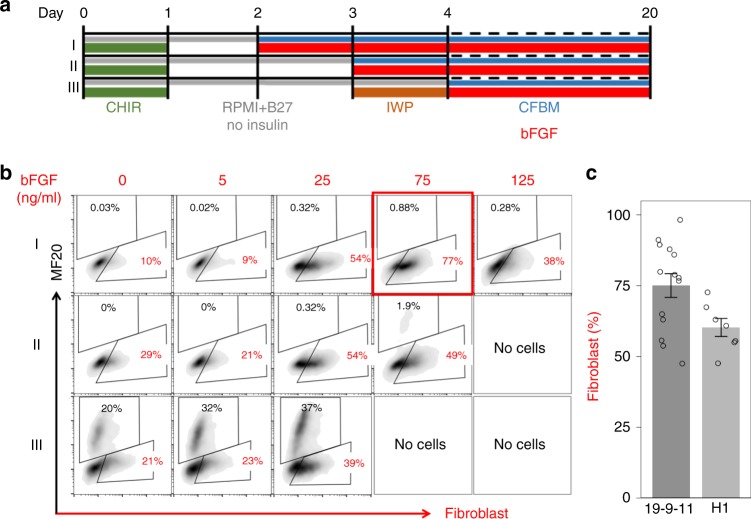
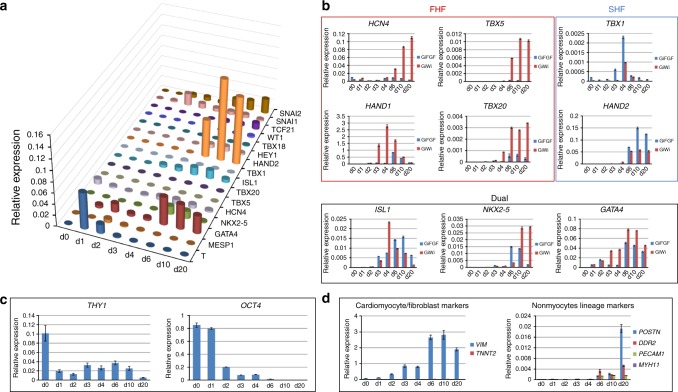
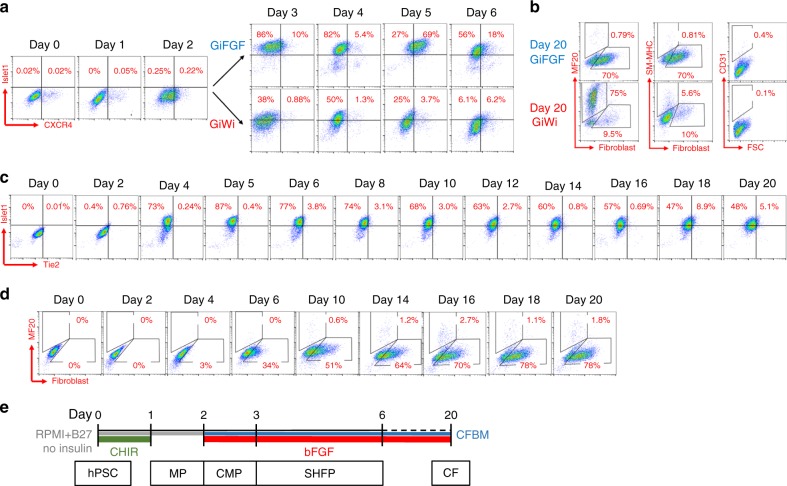
Verification
Claims the paper makes
The claims and statistics of this paper haven’t been checked yet.
Run the check — free, no account needed. It reads the open-access text and checks the sources it cites.
Claims other papers make about this one
Each is checked against this paper’s own text: does it say what the citing paper says it does?
The source backs part of the claim, not all of it — or backs it for a different population, condition or comparison.
In the citing paper
“Similarly, co-culture with cardiac fibroblasts or endothelial cells has also been shown to influence cardiomyocyte maturation, hypertrophy, function and gene expression [26,27,28].”
From Utility of iPSC-Derived Cells for Disease Modeling, Drug Development, and Cell Therapy (2022) · cites this paper as [27]
Experimental — accuracy not yet measured
Self-check
Percentages, sums and reported differences re-computed from the paper’s own numbers.
The self-check needs the paper’s full text.
Citations
Cites
2 retracted
D’Souza, K. M., Malhotra, R., Philip, J. L., Staron, M. L., Theccanat, T., Jeevanandam, V., & Akhter, S. A. (2015) · Journal of Biological Chemistry · doi:10.1074/jbc.a111.218263 · Cited by 31
RetractedD’Souza, K. M., Malhotra, R., Philip, J. L., Staron, M. L., Theccanat, T., Jeevanandam, V., & Akhter, S. A. (2011) · Journal of Biological Chemistry · doi:10.1074/jbc.m111.218263 · Cited by 29
RetractedRSEM: accurate transcript quantification from RNA-Seq data with or without a reference genome
Li, B., & Dewey, C. N. (2011) · BMC Bioinformatics · doi:10.1186/1471-2105-12-323 · Cited by 22,179
Ultrafast and memory-efficient alignment of short DNA sequences to the human genome.
Langmead, B., Trapnell, C., Pop, M., & Salzberg, S. L. (2009) · Genome Biology · doi:10.1186/gb-2009-10-3-r25 · Cited by 21,849
Lian, X., Zhang, J., Azarin, S. M., Zhu, K., Hazeltine, L. B., Bao, X., Hsiao, C., Kamp, T. J., & Palecek, S. P. (2013) · Nature Protocols · doi:10.1038/nprot.2012.150 · Cited by 1,748
Self-citationLian, X., Hsiao, C., Wilson, G., Zhu, K., Hazeltine, L. B., Azarin, S. M., Raval, K. K., Zhang, J., Kamp, T. J., & Palecek, S. P. (2012) · Proceedings of the National Academy of Sciences · doi:10.1073/pnas.1200250109 · Cited by 1,717
Self-citationCai, C., Liang, X., Shi, Y., Chu, P.-H., Pfaff, S. L., Chen, J., & Evans, S. Μ. (2003) · Developmental Cell · doi:10.1016/s1534-5807(03)00363-0 · Cited by 1,592
Functional Cardiomyocytes Derived From Human Induced Pluripotent Stem Cells
Zhang, J., Wilson, G. F., Soerens, A. G., Koonce, C. H., Yu, J., Palecek, S. P., Thomson, J. A., & Kamp, T. J. (2009) · Circulation Research · doi:10.1161/circresaha.108.192237 · Cited by 1,426
Self-citationRevisiting Cardiac Cellular Composition
Pinto, A. R., Ilinykh, A., Ivey, M. J., Kuwabara, J. T., D’Antoni, M. L., Debuque, R., Chandran, A., Wang, L., Arora, K., Rosenthal, N. A., et al. (2016) · Circulation Research · doi:10.1161/circresaha.115.307778 · Cited by 1,400
Human cardiovascular progenitor cells develop from a KDR+ embryonic-stem-cell-derived population
Yang, L., Soonpaa, M. H., Adler, E. D., Roepke, T. K., Kattman, S. J., Kennedy, M., Henckaerts, E., Bonham, K., Abbott, G. W., Linden, R. M., et al. (2008) · Nature · doi:10.1038/nature06894 · Cited by 1,389
Cited by
Sorted by citations
Items 201–201 of 201
Dong, Y., Jiang, H., Zhou, F., & Mu, J. (2026) · Tissue Engineering Part B Reviews · doi:10.1177/19373368261502040
Metadata
- Authors
- Zhang, J., Tao, R., Campbell, K. F., Carvalho, J. L., Ruiz, E. C., Kim, G. C., Schmuck, E. G., Raval, A. N., da Rocha, A. M., Herron, T. J., Jalife, J., Thomson, J. A., & Kamp, T. J.
- Affiliations
- University of Wisconsin–Madison (US)
- University of Michigan (US)
- Corresponding author
- Zhang, Jianhua
- Kamp, Timothy J.
- ORCID
- Venue
- Nature Communications
- Published
- 2019-05-20
- Volume
- 10
- Issue
- 1
- Pages
- 2238-2238
- ISSN
- 2041-1723 (ISSN-L)
- PMC
- PMC6527555
- OpenAlex
- W2901646806
- Cited by
- 201
- References
- 71
- Citations by year
- 2026: 15 · 2025: 32 · 2024: 27 · 2023: 29 · 2022: 30 · 2021: 34 · 2020: 26 · 2019: 8
- FWCI
- 8.11
- Type
- journal article
- Language
- en
- Open access
- gold
- doi.org
- Locations
- Nature Communications (publishedVersion, cc-by)
- Europe PMC (PubMed Central) (publishedVersion, cc-by)
- PubMed Central (publishedVersion, cc-by)
- PubMed (publishedVersion)
- LA Referencia (Red Federada de Repositorios Institucionales de Publicaciones Científicas) (submittedVersion, cc-by)
- RePEc: Research Papers in Economics (submittedVersion)
- DOAJ (DOAJ: Directory of Open Access Journals) (submittedVersion)
- DOAJ (DOAJ: Directory of Open Access Journals) (submittedVersion, cc-by-sa)
- Funders
- Coordenação de Aperfeiçoamento de Pessoal de Nível Superior
- National Institutes of Health (NIH-R01, UL1TR000427)
- Institute for Clinical and Translational Research, University of Wisconsin, Madison (UL1TR000427)
- National Heart, Lung, and Blood Institute (U01HL134764, R01HL129798)
- National Center for Research Resources (S10RR025644)
- National Center for Advancing Translational Sciences
- Topics
- Life Sciences › Biochemistry, Genetics and Molecular Biology › Molecular Biology › Pluripotent Stem Cells Research
- Life Sciences › Biochemistry, Genetics and Molecular Biology › Molecular Biology › Congenital heart defects research
- Life Sciences › Biochemistry, Genetics and Molecular Biology › Cell Biology › Mesenchymal stem cell research
- Keywords
- cardiac fibroblasts, human pluripotent stem cells, Wnt signaling, FGF signaling, myofibroblast transformation, TGF-β1, angiotensin II, extracellular matrix, cardiomyocyte electrophysiology, co-culture, cardiac regeneration, fibroblast differentiation
- MeSH terms
- Intravital Microscopy, Cell Differentiation, Cell Line, Fibroblasts, Heart, Humans, Microscopy, Fluorescence, Myocardium, Coculture Techniques, Dermis, Induced Pluripotent Stem Cells, Primary Cell Culture, Healthy Volunteers
About these checks
Registry, retraction, Cites and statistics results are computed, not judged, with one exception: a printed reference that no index lists is read once by a model before it counts as a citation error. Claims are extracted by a model and kept only when their quote appears verbatim in the text; each cited source is then checked, with a model’s help, for whether it says what the claim relies on. Those verdicts can be wrong — read the claim’s quote and the cited source before relying on one.
Statistics and arithmetic are recomputed, not judged.
Confidence bands are shown only for fields calibrated on our annotated test set. None is calibrated yet, so no band is shown.
What counts as a claim ›How we measure confidence ›How we check this ›
Are you an author, or do you see a problem with this page? Request a review
