

The DOI matches its Crossref record; 57 of the 57 references it cites were found in a registry or an index.
Improving the diagnostic yield of exome- sequencing by predicting gene–phenotype associations using large-scale gene expression analysis
Open accessPublished version of a preprint
Abstract
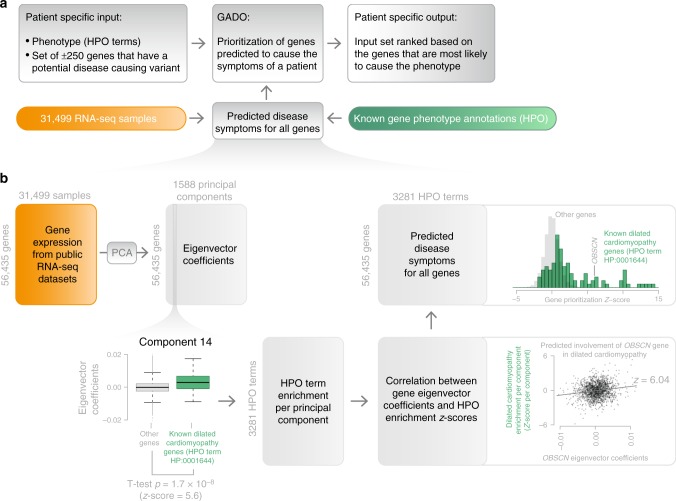
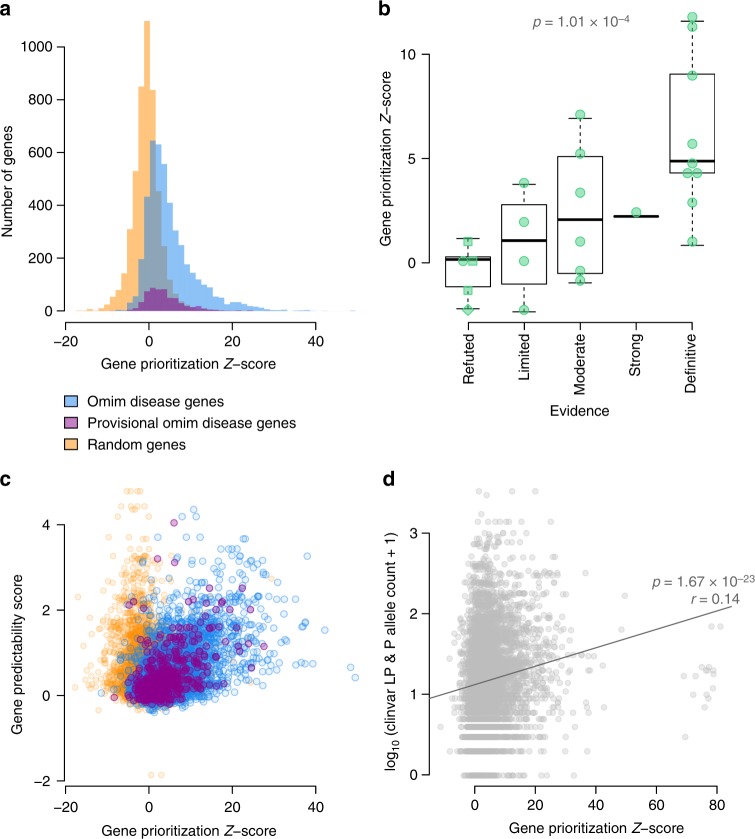
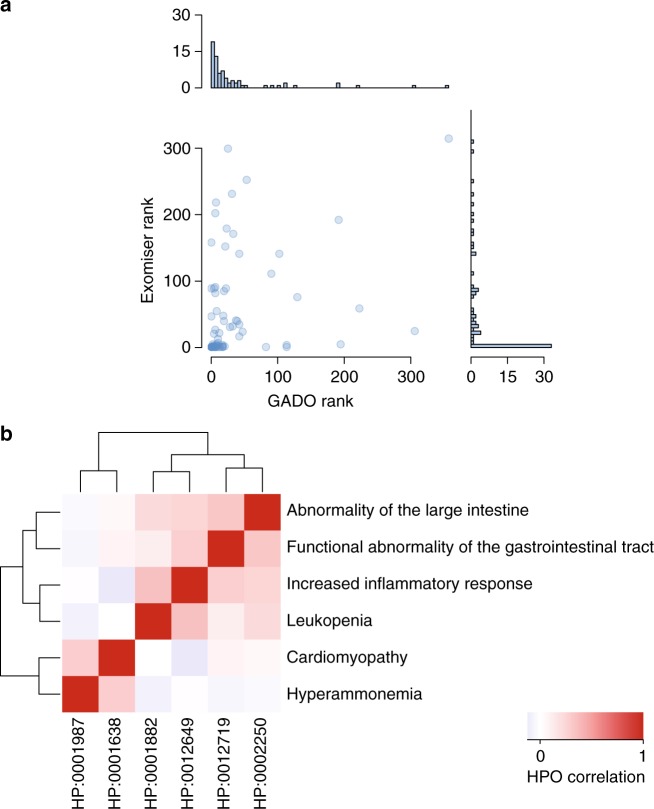
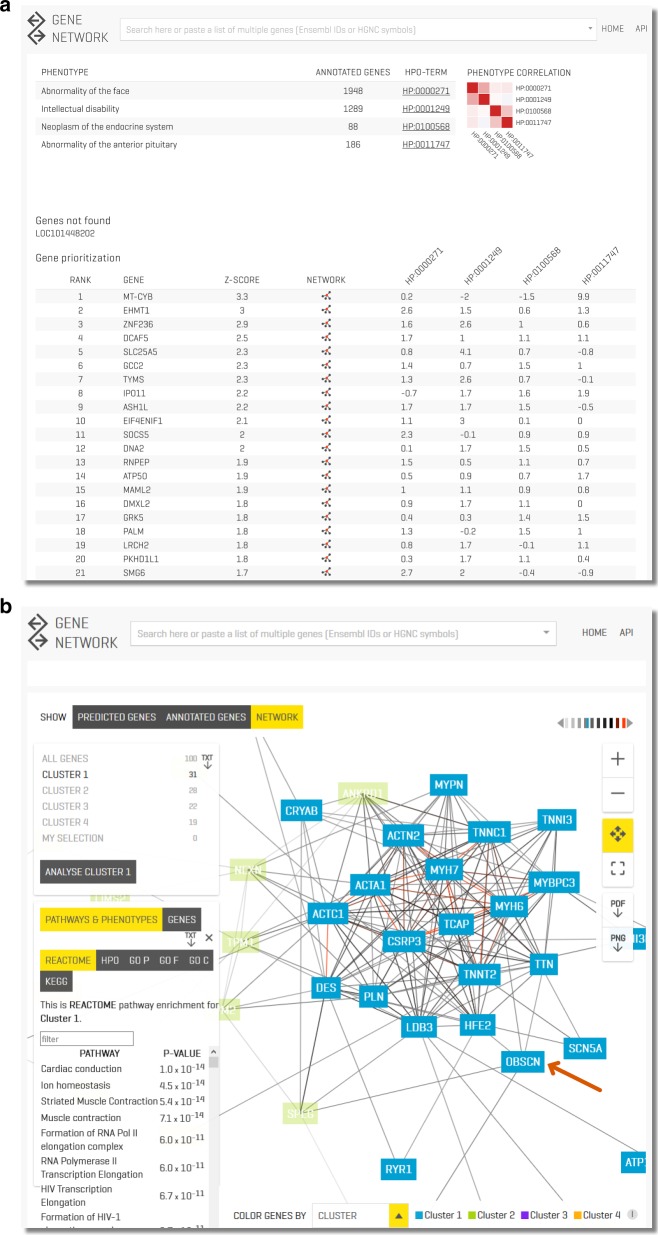
The diagnostic yield of exome and genome sequencing remains low (8–70%), due to incomplete knowledge on the genes that cause disease. To improve this, we use RNA-seq data from 31,499 samples to predict which genes cause specific disease phenotypes, and develop GeneNetwork Assisted Diagnostic Optimization (GADO). We show that this unbiased method, which does not rely upon specific knowledge on individual genes, is effective in both identifying previously unknown disease gene associations, and flagging genes that have previously been incorrectly implicated in disease. GADO can be run on www.genenetwork.nl by supplying HPO-terms and a list of genes that contain candidate variants. Finally, applying GADO to a cohort of 61 patients for whom exome-sequencing analysis had not resulted in a genetic diagnosis, yields likely causative genes for ten cases.
Overview
The claims and statistics of this paper haven’t been checked yet.
Run the check — free, no account needed. It reads the open-access text and checks the sources it cites.
Integrity signals
Registry
Cites
Statistics
Figures
Verification
Claims the paper makes
The claims and statistics of this paper haven’t been checked yet.
Run the check — free, no account needed. It reads the open-access text and checks the sources it cites.
Claims other papers make about this one
Each is checked against this paper’s own text: does it say what the citing paper says it does?
In the citing paper
“Furthermore, novel metrics based on gene co-regulation networks can predict whether genes function within a disease-relevant pathway33.”
From Evidence for 28 genetic disorders discovered by combining healthcare and research data (2020) · cites this paper as [33]
Self-check
Percentages, sums and reported differences re-computed from the paper’s own numbers.
The self-check needs the paper’s full text.
Citations
Cites
Near-optimal probabilistic RNA-seq quantification
Bray, N. L., Pimentel, H., Melsted, P., & Pachter, L. (2016) · Nature Biotechnology · doi:10.1038/nbt.3519 · Cited by 9,723
Analysis of protein-coding genetic variation in 60,706 humans
Exome Aggregation Consortium, Lek, M., Karczewski, K. J., Minikel, E. V., Samocha, K. E., Banks, E., Fennell, T., O’Donnell-Luria, A. H., Ware, J. S., Hill, A. J., et al. (2016) · Nature · doi:10.1038/nature19057 · Cited by 9,587
KEGG: new perspectives on genomes, pathways, diseases and drugs
Kanehisa, M., Furumichi, M., Tanabe, M., Sato, Y., & Morishima, K. (2017) · Nucleic Acids Research · doi:10.1093/nar/gkw1092 · Cited by 8,865
Szklarczyk, D., Morris, J. H., Cook, H., Kuhn, M., Wyder, S., Simonovic, M., Santos, A., Doncheva, N. T., Roth, A., Bork, P., et al. (2017) · Nucleic Acids Research · doi:10.1093/nar/gkw937 · Cited by 6,980
The Reactome pathway Knowledgebase
Fabregat, A., Sidiropoulos, K., Garapati, P., Gillespie, M., Hausmann, K., Haw, R., Jassal, B., Jupe, S., Korninger, F., McKay, S., et al. (2016) · Nucleic Acids Research · doi:10.1093/nar/gkv1351 · Cited by 5,605
ClinVar: public archive of relationships among sequence variation and human phenotype
Landrum, M. J., Lee, J. M., Riley, G. R., Jang, W., Rubinstein, W. S., Church, D. M., & Maglott, D. R. (2014) · Nucleic Acids Research · doi:10.1093/nar/gkt1113 · Cited by 3,516
ToppGene Suite for gene list enrichment analysis and candidate gene prioritization
Chen, J., Bardes, E. E., Aronow, B. J., & Jegga, A. G. (2009) · Nucleic Acids Research · doi:10.1093/nar/gkp427 · Cited by 2,952
The Reactome Pathway Knowledgebase
Fabregat, A., Jupe, S., Matthews, L. R., Sidiropoulos, K., Gillespie, M. E., Garapati, P. V., Haw, R., Jassal, B., Korninger, F., May, B., et al. (2017) · Nucleic Acids Research · doi:10.1093/nar/gkx1132 · Cited by 2,862
Expansion of the Gene Ontology knowledgebase and resources
The Gene Ontology Consortium (2017) · Nucleic Acids Research · doi:10.1093/nar/gkw1108 · Cited by 1,850
GeneMatcher: a matching tool for connecting investigators with an interest in the same gene.
Sobreira, N., Schiettecatte, F., Valle, D., & Hamosh, A. (2015) · Human Mutation · doi:10.1002/humu.22844 · Cited by 1,529
The human phenotype ontology: a tool for annotating and analyzing human hereditary disease
Robinson, P. N., Köhler, S., Bauer, S., Seelow, D., Horn, D., & Mundlos, S. (2008) · The American Journal of Human Genetics · doi:10.1016/j.ajhg.2008.09.017 · Cited by 1,034
Comparison of RNA-Seq and Microarray in Transcriptome Profiling of Activated T Cells
Zhao, S., Fung‐Leung, W., Bittner, A., Ngo, K., & Liu, X. (2014) · PLoS ONE · doi:10.1371/journal.pone.0078644 · Cited by 1,000
Resolution of Disease Phenotypes Resulting from Multilocus Genomic Variation
Posey, J. E., Harel, T., Liu, P., Rosenfeld, J. A., James, R. A., Coban‐Akdemir, Z., Walkiewicz, M. A., Bi, W., Xiao, R., Ding, Y., et al. (2016) · New England Journal of Medicine · doi:10.1056/nejmoa1516767 · Cited by 772
The Human Phenotype Ontology in 2017
Köhler, S., Vasilevsky, N., Engelstad, M., Foster, E. D., McMurry, J. A., Aymé, S., Baynam, G. S., Bello, S. M., Boerkoel, C. F., Boycott, K. M., et al. (2016) · Nucleic Acids Research · doi:10.1093/nar/gkw1039 · Cited by 767
Whitlock, M. C. (2005) · Journal of Evolutionary Biology · doi:10.1111/j.1420-9101.2005.00917.x · Cited by 758
The European nucleotide archive
Leinonen, R., Akhtar, R., Birney, E., Bower, L., Cerdeno-Tarraga, A., Cheng, Y., Cleland, I., Faruque, N., Goodgame, N., Gibson, R., et al. (2011) · Nucleic Acids Research · doi:10.1093/nar/gkq967 · Cited by 690 · cited 1×
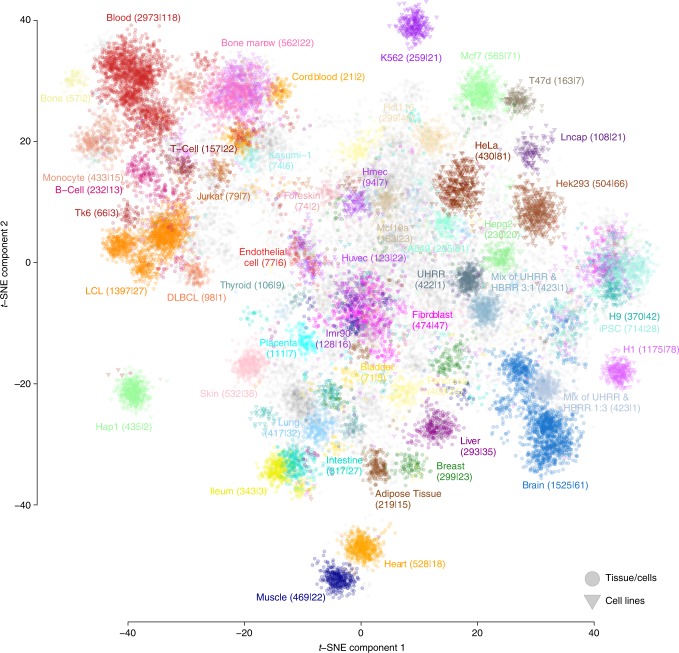
“Imr90 (128|16) Huvec (123|22) Hmec (94|7) Lncap (108|21)”
Paediatric genomics: diagnosing rare disease in children
Wright, C. F., FitzPatrick, D. R., & Firth, H. V. (2018) · Nature Reviews Genetics · doi:10.1038/nrg.2017.116 · Cited by 654
Strande, N. T., Riggs, E. R., Buchanan, A. H., Ceyhan‐Birsoy, O., DiStefano, M. T., Dwight, S. S., Goldstein, J., Ghosh, R., Seifert, B. A., Sneddon, T. P., et al. (2017) · The American Journal of Human Genetics · doi:10.1016/j.ajhg.2017.04.015 · Cited by 602
Alazami, A. M., Patel, N., Shamseldin, H. E., Anazi, S., Al-Dosari, M. S., Alzahrani, F., Hijazi, H., Alshammari, M., Aldahmesh, M. A., Salih, M. A., et al. (2015) · Cell Reports · doi:10.1016/j.celrep.2014.12.015 · Cited by 465
Next-generation diagnostics and disease-gene discovery with the Exomiser
Smedley, D., Jacobsen, J. O. B., Jäger, M., Köhler, S., Holtgrewe, M., Schubach, M., Siragusa, E., Zemojtel, T., Buske, O. J., Washington, N. L., et al. (2015) · Nature Protocols · doi:10.1038/nprot.2015.124 · Cited by 445
Computational tools for prioritizing candidate genes: boosting disease gene discovery
Moreau, Y., & Tranchevent, L.-C. (2012) · Nature Reviews Genetics · doi:10.1038/nrg3253 · Cited by 417 · cited 1×
“However, these tools can be used to successfully prioritize disease genes 41 .”
MethodGene expression analysis identifies global gene dosage sensitivity in cancer
Fehrmann, R. S. N., Karjalainen, J. M., Krajewska, M., Westra, H.-J., Maloney, D., Simeonov, A., Pers, T. H., Hirschhorn, J. N., Jansen, R. C., Schultes, E. A., et al. (2015) · Nature Genetics · doi:10.1038/ng.3173 · Cited by 347
Self-citationGenetic Mapping and Exome Sequencing Identify Variants Associated with Five Novel Diseases
Puffenberger, E. G., Jinks, R. N., Sougnez, C., Cibulskis, K., Willert, R. A., Achilly, N. P., Cassidy, R. P., Fiorentini, C. J., Heiken, K. F., Lawrence, J. J., et al. (2012) · PLoS ONE · doi:10.1371/journal.pone.0028936 · Cited by 286
The Genotype-Tissue Expression (GTEx) project
Lonsdale, J., Thomas, J., Salvatore, M., Phillips, R., Lo, E., Shad, S., Hasz, R., Walters, G., Garcia, F., Young, N., et al. (2013) · Nature Genetics · doi:10.1038/ng.2653 · Cited by 263
Speeding disease gene discovery by sequence based candidate prioritization
Adie, E. A., Adams, R. R., Evans, K. L., Porteous, D. J., & Pickard, B. S. (2005) · BMC Bioinformatics · doi:10.1186/1471-2105-6-55 · Cited by 249
Settling the score: variant prioritization and Mendelian disease
Eilbeck, K. L., Quinlan, A. R., & Yandell, M. D. (2017) · Nature Reviews Genetics · doi:10.1038/nrg.2017.52 · Cited by 230
Kurian, M. A., Zhen, J., Cheng, S., Li, Y., Mordekar, S., Jardine, P. E., Morgan, N. V., Meyer, E., Tee, L. J., Pasha, S. S., et al. (2009) · Journal of Clinical Investigation · doi:10.1172/jci39060 · Cited by 217
Wright, C. F., West, B., Tuke, M., Jones, S. E., Patel, K., Laver, T. W., Beaumont, R. N., Tyrrell, J., Wood, A. R., Frayling, T. M., et al. (2019) · The American Journal of Human Genetics · doi:10.1016/j.ajhg.2018.12.015 · Cited by 212
Kurian, M. A., Li, Y., Zhen, J., Meyer, E., Hai, N. A., Christen, H. ‐., Hoffmann, G. F., Jardine, P. E., von Moers, A., Mordekar, S., et al. (2010) · The Lancet Neurology · doi:10.1016/s1474-4422(10)70269-6 · Cited by 203
Thiel, C. T., Horn, D., Zabel, B., Ekici, A. B., Salinas, K., Gebhart, E., Rüschendorf, F., Sticht, H., Spranger, J., Müller, D., et al. (2005) · The American Journal of Human Genetics · doi:10.1086/497708 · Cited by 136
Identification of Misclassified ClinVar Variants via Disease Population Prevalence
Shah, N., Hou, Y. C., Yu, H., Sainger, R., Dec, E., Perkins, B., Caskey, C. T., Venter, J. C., & Telenti, A. (2018) · The American Journal of Human Genetics · doi:10.1016/j.ajhg.2018.02.019 · Cited by 127
52 Genetic Loci Influencing Myocardial Mass
van der Harst, P., van Setten, J., Verweij, N., Vogler, G., Franke, L., Maurano, M. T., Wang, X., Leach, I. M., Eijgelsheim, M., Sotoodehnia, N., et al. (2016) · Journal of the American College of Cardiology · doi:10.1016/j.jacc.2016.07.729 · Cited by 121
Self-citationCandidate gene prioritization with Endeavour
Tranchevent, L.-C., Ardeshirdavani, A., ElShal, S., Alcaide, D., Aerts, J. A., Auboeuf, D., & Moreau, Y. (2016) · Nucleic Acids Research · doi:10.1093/nar/gkw365 · Cited by 115
Phenotype-driven strategies for exome prioritization of human Mendelian disease genes
Smedley, D. P., & Robinson, P. N. (2015) · Genome Medicine · doi:10.1186/s13073-015-0199-2 · Cited by 112
Bone, W. P., Washington, N. L., Buske, O. J., Adams, D. R., Davis, J., Draper, D. D., Flynn, E. D., Gîrdea, M., Godfrey, R. A., Golas, G. A., et al. (2015) · Genetics in Medicine · doi:10.1038/gim.2015.137 · Cited by 103
Adaptive Mechanisms That Preserve Cardiac Function in Mice Without Myoglobin
Meeson, A. P., Radford, N. B., Shelton, J. M., Mammen, P. P. A., DiMaio, J. M., Hutcheson, K. A., Kong, Y., Elterman, J. B., Williams, R. S., & Garry, D. J. (2001) · Circulation Research · doi:10.1161/hh0701.089753 · Cited by 100
Deelen, P., Zhernakova, D. V., de Haan, M., van der Sijde, M. R., Bonder, M. J., Karjalainen, J. M., van der Velde, K. J., Abbott, K. M., Fu, J., Wijmenga, C., et al. (2015) · Genome Medicine · doi:10.1186/s13073-015-0152-4 · Cited by 94
Self-citationStructural analysis of obscurin gene in hypertrophic cardiomyopathy
Arimura, T., Matsumoto, Y., Okazaki, O., Hayashi, T., Takahashi, M., Inagaki, N., Hinohara, K., Ashizawa, N., Yano, K., & Kimura, A. (2007) · Biochemical and Biophysical Research Communications · doi:10.1016/j.bbrc.2007.07.183 · Cited by 94
OBSCN Mutations Associated with Dilated Cardiomyopathy and Haploinsufficiency
Marston, S. B., Montgiraud, C., Munster, A. B., Copeland, O., Choi, O., dos Remedios, C. G., Messer, A. E., Ehler, E., & Knöll, R. (2015) · PLoS ONE · doi:10.1371/journal.pone.0138568 · Cited by 91
Tarailo‐Graovac, M., Zhu, J., Matthews, A., van Karnebeek, C., & Wasserman, W. W. (2017) · Genetics in Medicine · doi:10.1038/gim.2017.50 · Cited by 77
GAVIN: Gene-Aware Variant INterpretation for medical sequencing
van der Velde, K. J., de Boer, E. N., van Diemen, C. C., Sikkema‐Raddatz, B., Abbott, K. M., Knopperts, A., Franke, L., Sijmons, R. H., de Koning, T. J., Wijmenga, C., et al. (2017) · Genome biology · doi:10.1186/s13059-016-1141-7 · Cited by 64
Self-citationBenson, M. D. (1991) · Journal of Medical Genetics · doi:10.1136/jmg.28.2.73 · Cited by 53
recount workflow: Accessing over 70,000 human RNA-seq samples with Bioconductor
Collado‐Torres, L., Nellore, A., & Jaffe, A. E. (2017) · F1000Research · doi:10.12688/f1000research.12223.1 · Cited by 46
Clinical utility gene card for: Dilated Cardiomyopathy (CMD)
Pósafalvi, A., Herkert, J. C., Sinke, R. J., van den Berg, M. P., Mogensen, J., Jongbloed, J. D. H., & van Tintelen, J. P. (2012) · European Journal of Human Genetics · doi:10.1038/ejhg.2012.276 · Cited by 42
Self-citationTruszkowska, G. T., Bilińska, Z. T., Muchowicz, A., Pollak, A., Biernacka, A., Kozar, K., Stawiński, P., Gasperowicz, P., Kosińska, J., Zieliński, T., et al. (2017) · Scientific Reports · doi:10.1038/s41598-017-03189-8 · Cited by 39
Content discovery and retrieval services at the European Nucleotide Archive
Silvester, N. C., Alako, B., Amid, C., Cerdeño-Tárraga, A. M., Cleland, I., Gibson, R., Goodgame, N., ten Hoopen, P., Kay, S., Leinonen, R., et al. (2014) · Nucleic Acids Research · doi:10.1093/nar/gku1129 · Cited by 37
Nouhravesh, N., Ahlberg, G., Ghouse, J., Andreasen, C., Svendsen, J. H., Haunsø, S., Bundgaard, H., Weeke, P., & OLESEN, M. S. (2016) · Molecular Genetics & Genomic Medicine · doi:10.1002/mgg3.245 · Cited by 30
Identification of Two Distinct Classes of the Human INO80 Complex Genome-Wide
Runge, J. S., Raab, J. R., & Magnuson, T. (2018) · G3 Genes Genomes Genetics · doi:10.1534/g3.117.300504 · Cited by 24
Generalized Ichthyotic Peeling Skin Syndrome due to FLG2 Mutations
Bolling, M. C., Jan, S. Z., Pasmooij, A. M. G., Lemmink, H. H., Franke, L., Yenamandra, V. K., Sinke, R. J., van den Akker, P. C., & Jonkman, M. F. (2018) · Journal of Investigative Dermatology · doi:10.1016/j.jid.2018.01.038 · Cited by 23
Self-citationExome sequencing a review of new strategies for rare genomic disease research
Brown, T., & Meloche, T. M. (2016) · Genomics · doi:10.1016/j.ygeno.2016.06.003 · Cited by 21
AMELIE accelerates Mendelian patient diagnosis directly from the primary literaturePreprint
Birgmeier, J. A., Haeussler, M., Deisseroth, C. A., Jagadeesh, K. A., Ratner, A., Guturu, H., Wenger, A. M., Stenson, P. D., Cooper, D. N., Ré, C., et al. (2017) · bioRxiv (Cold Spring Harbor Laboratory) · doi:10.1101/171322 · Cited by 21
Feiglin, A., Allen, B. K., Kohane, I. S., & Kong, S. W. (2017) · Cell Systems · doi:10.1016/j.cels.2017.06.016 · Cited by 21
Kim, S., Choo, J., Yoon, J. H., Chu, J. R., Bae, Y., Lee, S., Park, T., & Sung, M. (2017) · PLoS ONE · doi:10.1371/journal.pone.0171664 · Cited by 17
Peeling skin syndrome associated with novel variant in FLG2 gene
Alfares, A. A., Al‐Khenaizan, S., & Mutairi, F. A. (2017) · American Journal of Medical Genetics Part A · doi:10.1002/ajmg.a.38468 · Cited by 15
Hirayama, A., Joshita, S., Kitahara, K., Mukawa, K., Suga, T., Umemura, T., Tanaka, E., & Ôta, M. (2016) · Disease Markers · doi:10.1155/2016/6485343 · Cited by 11
Extracting allelic read counts from 250,000 human sequencing runs in Sequence Read Archive
Tsui, B., Dow, M. T., Skola, D., & Carter, H. K. (2018) · Pacific Symposium on Biocomputing (PSB) · doi:10.1142/9789813279827_0018 · Cited by 10
756 Generalized ichthyotic peeling skin syndrome due to FLG2 mutations
Bolling, M. C., Jan, S. Z., Pasmooij, A. M. G., Lemmink, H. H., Franke, L., Yenamandra, V. K., Sinke, R. J., van den Akker, P. C., & Jonkman, M. F. (2018) · Journal of Investigative Dermatology · doi:10.1016/j.jid.2018.03.766 · Cited by 4
Self-citation
Research works printed but not linked: 1
- Fehrmann, R. S. N. et al. Gene expression analysis identifies global gene dosage sensitivity in cancer. Nat. Genet. 47, 115–125 (2015). · DOI · Paper page
Cited by
Sorted by citations
Võsa, U., Claringbould, A., Westra, H.-J., Bonder, M. J., Deelen, P., Zeng, B., Kirsten, H., Saha, A., Kreuzhuber, R., Yazar, S., et al. (2021) · Nature Genetics · doi:10.1038/s41588-021-00913-z · Cited by 2,607
Self-citationEvidence for 28 genetic disorders discovered by combining healthcare and research data
Kaplanis, J., Samocha, K. E., Wiel, L., Zhang, Z., Arvai, K. J., Eberhardt, R. Y., Gallone, G., Lelieveld, S. H., Martin, H. C., McRae, J. F., et al. (2020) · Nature · doi:10.1038/s41586-020-2832-5 · Cited by 615
van Rheenen, W., van der Spek, R. A. A., Bakker, M. K., van Vugt, J. J. F. A., Hop, P. J., Zwamborn, R. A. J., de Klein, N., Westra, H.-J., Bakker, O. B., Deelen, P., et al. (2021) · Nature Genetics · doi:10.1038/s41588-021-00973-1 · Cited by 542
Self-citationGenetic Insights Into Biological Mechanisms Governing Human Ovarian Ageing
Ruth, K. S., Day, F. R., Hussain, J., Martínez-Marchal, A., Aiken, C., Azad, A., Thompson, D. J., Knoblochová, L., Abe, H., Tarry‐Adkins, J. L., et al. (2021) · Obstetrical & Gynecological Survey · doi:10.1038/s41586-021-03779-7 · Cited by 442
de Klein, N., Tsai, E. A., Vochteloo, M., Baird, D., Huang, Y., Chen, C.-Y., van Dam, S., Oelen, R., Deelen, P., Bakker, O. B., et al. (2023) · Nature Genetics · doi:10.1038/s41588-023-01300-6 · Cited by 272
Self-citation
Metadata
- Authors
- Deelen, P., van Dam, S., Herkert, J. C., Karjalainen, J. M., Brugge, H., Abbott, K. M., van Diemen, C. C., van der Zwaag, P. A., Gerkes, E. H., Zonneveld-Huijssoon, E., Boer-Bergsma, J. J., Folkertsma, P., Gillett, T., van der Velde, K. J., Kanninga, R., van den Akker, P. C., Jan, S. Z., Hoorntje, E. T., te Rijdt, W. P., Vos, Y. J., Jongbloed, J. D. H., van Ravenswaaij-Arts, C. M. A., Sinke, R., Sikkema-Raddatz, B., Kerstjens-Frederikse, W. S., Swertz, M. A., & Franke, L.
- Affiliations
- University Medical Center Groningen (NL)
- Corresponding author
- Franke, Lude
- ORCID
- Deelen, Patrick
- Herkert, Johanna C.
- Karjalainen, Juha M.
- Abbott, Kristin M.
- Zonneveld-Huijssoon, Evelien
- Boer-Bergsma, Jelkje J.
- Folkertsma, Pytrik
- Gillett, Tessa
- Jan, Sabrina Z.
- Hoorntje, Edgar T.
- te Rijdt, Wouter P.
- Jongbloed, Jan D. H.
- Sinke, Richard
- Kerstjens-Frederikse, Wilhelmina S.
- Swertz, Morris A.
- Franke, Lude
- Venue
- Nature Communications
- Published
- 2019-06-28
- Volume
- 10
- Issue
- 1
- Pages
- 2837-2837
- ISSN
- 2041-1723 (ISSN-L)
- PMC
- PMC6599066
- OpenAlex
- W2953983664
- Cited by
- 138
- References
- 57
- Citations by year
- 2026: 6 · 2025: 7 · 2024: 15 · 2023: 17 · 2022: 26 · 2021: 38 · 2020: 18 · 2019: 9
- FWCI
- 13.67
- Type
- journal article
- Language
- en
- Open access
- gold
- doi.org
- Locations
- Nature Communications (publishedVersion, cc-by)
- bioRxiv (Cold Spring Harbor Laboratory) (acceptedVersion, cc-by-nc-nd)
- PubMed Central (publishedVersion, cc-by)
- PubMed (publishedVersion)
- University of Groningen research database (University of Groningen / Centre for Information Technology) (acceptedVersion, cc-by)
- DOAJ (DOAJ: Directory of Open Access Journals) (submittedVersion, cc-by-sa)
- DOAJ (DOAJ: Directory of Open Access Journals) (submittedVersion)
- University of Groningen research database (University of Groningen / Centre for Information Technology) (submittedVersion, cc-by)
- University of Groningen research database (University of Groningen / Centre for Information Technology) (submittedVersion)
- Funders
- University of Groningen
- Topics
- Life Sciences › Biochemistry, Genetics and Molecular Biology › Genetics › Genomics and Rare Diseases
- Life Sciences › Biochemistry, Genetics and Molecular Biology › Molecular Biology › Bioinformatics and Genomic Networks
- Health Sciences › Medicine › Health Informatics › Biomedical Text Mining and Ontologies
- Keywords
- exome sequencing, diagnostic yield, genotype-phenotype correlation, RNA-seq, gene expression, disease gene discovery, Human Phenotype Ontology, candidate variants, genetic diagnosis
- MeSH terms
- Gene Expression Regulation, Humans, Models, Genetic, Software, User-Computer Interface, Sequence Analysis, RNA, Genetic Predisposition to Disease, Principal Component Analysis, Databases, Nucleic Acid, Transcriptome
About these checks
Registry, retraction, Cites and statistics results are computed, not judged, with one exception: a printed reference that no index lists is read once by a model before it counts as a citation error. Claims are extracted by a model and kept only when their quote appears verbatim in the text; each cited source is then checked, with a model’s help, for whether it says what the claim relies on. Those verdicts can be wrong — read the claim’s quote and the cited source before relying on one.
Statistics and arithmetic are recomputed, not judged.
Confidence bands are shown only for fields calibrated on our annotated test set. None is calibrated yet, so no band is shown.
What counts as a claim ›How we measure confidence ›How we check this ›
Are you an author, or do you see a problem with this page? Request a review
