

Ketamine can reduce harmful drinking by pharmacologically rewriting drinking memories
Open accessThe DOI matches its Crossref record; 36 of the 36 references it cites were found in a registry or an index.
Abstract
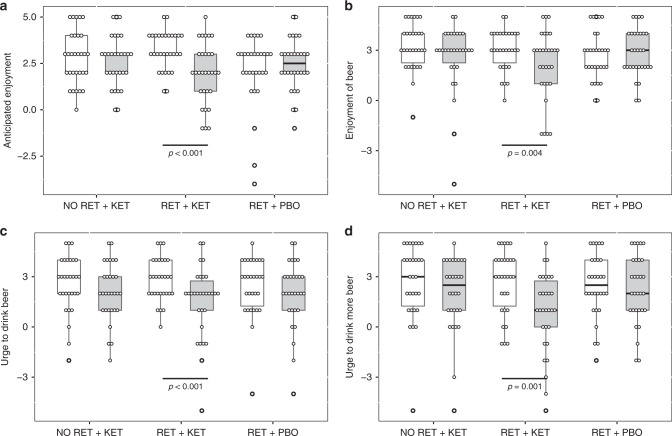
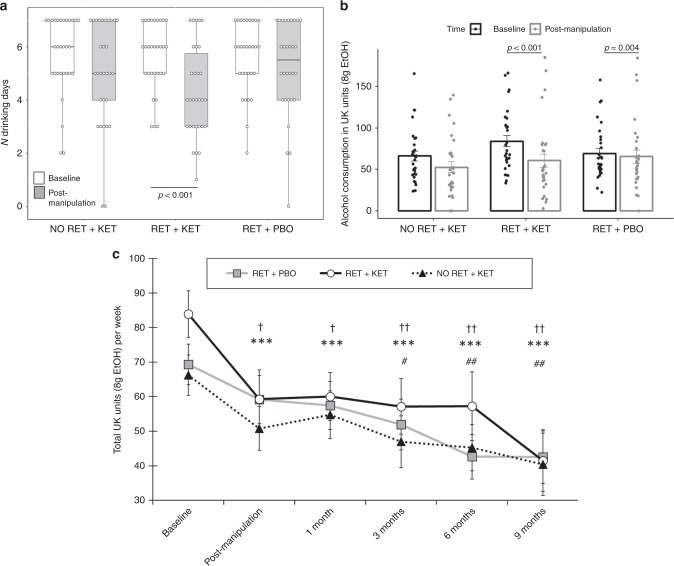
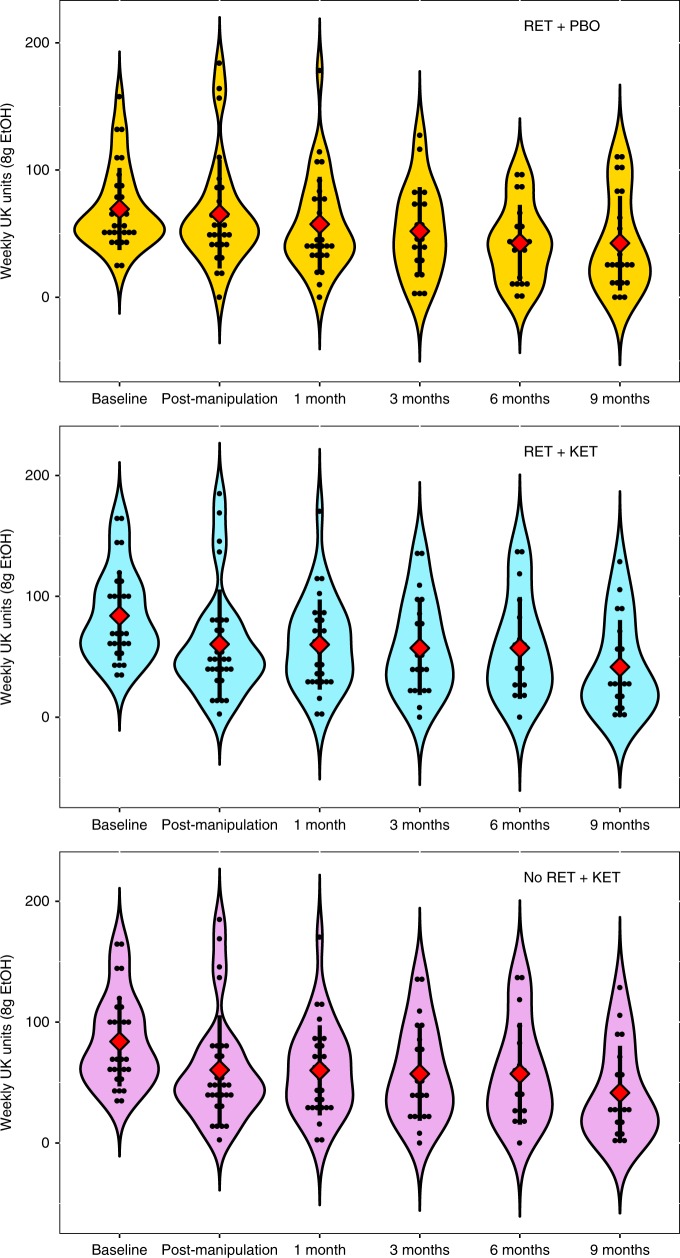
Maladaptive reward memories (MRMs) are involved in the development and maintenance of acquired overconsumption disorders, such as harmful alcohol and drug use. The process of memory reconsolidation - where stored memories become briefly labile upon retrieval - may offer a means to disrupt MRMs and prevent relapse. However, reliable means for pharmacologically weakening MRMs in humans remain elusive. Here we demonstrate that the N-methyl D-aspartate (NMDA) antagonist ketamine is able to disrupt MRMs in hazardous drinkers when administered immediately after their retrieval. MRM retrieval + ketamine (RET + KET) effectively reduced the reinforcing effects of alcohol and long-term drinking levels, compared to ketamine or retrieval alone. Blood concentrations of ketamine and its metabolites during the critical ‘reconsolidation window’ predicted beneficial changes only following MRM reactivation. Pharmacological reconsolidation interference may provide a means to rapidly rewrite maladaptive memory and should be further pursued in alcohol and drug use disorders.
Overview
The claims and statistics of this paper haven’t been checked yet.
Free: it reads the open-access text and checks the first 5 claims that cite a source we can check. Create a free account to check every claim.
Integrity signals
Registry
Cites
Statistics
Figures
Verification
Claims the paper makes
The claims and statistics of this paper haven’t been checked yet.
Free: it reads the open-access text and checks the first 5 claims that cite a source we can check. Create a free account to check every claim.
Claims other papers make about this one
Each is checked against this paper’s own text: does it say what the citing paper says it does?
The source backs part of the claim, not all of it — or backs it for a different population, condition or comparison.
In the citing paper
“a recent, randomized, controlled trial found that ketamine effectively disrupted maladaptive reward memories in 70 hazardous drinkers who were actively recollecting an associated memory”
From Ketamine in neuropsychiatric disorders: an update (2024) · cites this paper as [141]
Experimental — accuracy not yet measuredThe cited source says what the claim attributes to it.
In the citing paper
“reducing the potential reinforcing effects of the memory and long-term drinking patterns [141]”
From Ketamine in neuropsychiatric disorders: an update (2024) · cites this paper as [141]
Self-check
Percentages, sums and reported differences re-computed from the paper’s own numbers.
The self-check needs the paper’s full text.
Citations
Cites
Controlling the False Discovery Rate: A Practical and Powerful Approach to Multiple Testing
Benjamini, Y., & Hochberg, Y. (1995) · Journal of the Royal Statistical Society Series B: Statistical Methodology · doi:10.1111/j.2517-6161.1995.tb02031.x · Cited by 109,482
SAUNDERS, J. B., AASLAND, O. G., BABOR, T. F., DE LA FUENTE, J. R., & GRANT, M. (1993) · Addiction · doi:10.1111/j.1360-0443.1993.tb02093.x · Cited by 13,597
Applied Multivariate Statistics for the Social Sciences
Stevens, J. P. (2012) · Routledge eBooks · doi:10.4324/9780203843130 · Cited by 10,648
Koob, G. F., & Volkow, N. D. (2010) · Neuropsychopharmacology · doi:10.1038/npp.2009.110 · Cited by 5,340
Sobell, L. C., & Sobell, M. B. (1992) · Measuring Alcohol Consumption · doi:10.1007/978-1-4612-0357-5_3 · Cited by 4,110 · cited 2×
“We assessed clinically-relevant MRM weakening via (1) reactivity to sampled alcohol (beer) and alcohol cues (2) perceived changes in drinking levels, plus quantitative drinking days/week, binges/week and total alcohol consumption via the Timeline Follow-Back 31 .”
MethodContext, ambiguity, and unlearning: sources of relapse after behavioral extinction
Bouton, M. E. (2002) · Biological Psychiatry · doi:10.1016/s0006-3223(02)01546-9 · Cited by 1,662
Addiction: A Disease of Learning and Memory
Hyman, S. E. (2005) · American Journal of Psychiatry · doi:10.1176/appi.ajp.162.8.1414 · Cited by 980
Westfall, J., Kenny, D. A., & Judd, C. M. (2014) · Journal of Experimental Psychology: General · doi:10.1037/xge0000014 · Cited by 928 · cited 1×
“For fi xed effects in mixed models, pseudo — η p 2 was calculated using the formulae from Westfall et al 35 Alpha for all a priori tests was set at 0.05, with p -values Bonferroni — corrected for post hoc tests.”
MethodInfluentialDrug Addiction as a Pathology of Staged Neuroplasticity
Kalivas, P. W., & O'Brien, C. (2008) · Neuropsychopharmacology · doi:10.1038/sj.npp.1301564 · Cited by 733
Applying extinction research and theory to cue‐exposure addiction treatments
Conklin, C. A., & Tiffany, S. T. (2002) · Addiction · doi:10.1046/j.1360-0443.2002.00014.x · Cited by 701
Cited by
Fox, K. R., Huang, X., Guzmán, E. M., Funsch, K. M., Cha, C. B., Ribeiro, J. D., & Franklin, J. C. (2020) · Psychological Bulletin · doi:10.1037/bul0000305 · Cited by 351
Ketamine and rapid antidepressant action: New treatments and novel synaptic signaling mechanisms
Krystal, J. H., Kavalali, E. T., & Monteggia, L. M. (2024) · Neuropsychopharmacology · doi:10.1038/s41386-023-01629-w · Cited by 262
“This has led to studies suggesting a capacity of ketamine to disrupt the reconsolidation of maladaptive memories contributing to PTSD [55] and addiction [56].”
BackgroundGrabski, M., McAndrew, A., Lawn, W., Marsh, B., Raymen, L., Stevens, T., Hardy, L., Warren, F., Bloomfield, M., Borissova, A., et al. (2022) · American Journal of Psychiatry · doi:10.1176/appi.ajp.2021.21030277 · Cited by 175
“Furthermore, in participants with hazardous drinking patterns (but no clinical diagnoses), one intravenous ketamine infusion combined with a memory reactivation protocol, but no therapy intervention, was associated with reduced alcohol use at 6 months (14).”
BackgroundSelf-citationMartinotti, G., Chiappini, S., Pettorruso, M., Mosca, A., Miuli, A., Di Carlo, F., D’Andrea, G., Collevecchio, R., Di Muzio, I., Sensi, S. L., et al. (2021) · Brain Sciences · doi:10.3390/brainsci11070856 · Cited by 111
“called retrieval/destabilization focused on maladaptive alcohol reward memories; they showed reductions in the reinforcing behavior driven by drinking and decreased alcohol consumption when evaluated at the 9-month follow-up [53].”
BackgroundPsychedelic therapy in the treatment of addiction: the past, present and future
Zafar, R. R., Siegel, M., Harding, R., Barba, T., Agnorelli, C., Suseelan, S., Roseman, L., Wall, M. B., Nutt, D. J., & Erritzøe, D. (2023) · Frontiers in Psychiatry · doi:10.3389/fpsyt.2023.1183740 · Cited by 127
“There has been limited neuroscientific research into the mechanism of ketamine in addiction, though one study (69) found that ketamine administration immediately following maladaptive reward memory retrieval (beer cue-exposure) resulted in significant decreases in drinking volume, drinking enjoyment and urge to drink…”
BackgroundKetamine in neuropsychiatric disorders: an update
Johnston, J. N., Kadriu, B., Kraus, C., Henter, I. D., & Zarate, C. A. (2024) · Neuropsychopharmacology · doi:10.1038/s41386-023-01632-1 · Cited by 108
“Alcohol use disorder Acute racemic ketamine (350 ng/ml for 30 min), intravenous RCT ( n = 70) Ketamine disrupted reward memories in hazardous drinkers, reducing long-term drinking patterns up to 10 days after administration [141].”
BackgroundAlcohol use disorders and ADHD.
Luderer, M., Ramos Quiroga, J. A., Faraone, S. V., Zhang-James, Y., & Reif, A. (2021) · Neuroscience & Biobehavioral Reviews · doi:10.1016/j.neubiorev.2021.07.010 · Cited by 102
Long term structural and functional neural changes following a single infusion of Ketamine in PTSD
Duek, O. A., Korem, N., Li, Y., Kelmendi, B., Amen, S. L., Gordon, C., Milne, M., Krystal, J. H., Levy, I., & Harpaz‐Rotem, I. (2023) · Neuropsychopharmacology · doi:10.1038/s41386-023-01606-3 · Cited by 82
“Using ketamine as a facilitator is consistent with a recent study conducted in participants with harmful drinking patterns [101].”
ResultA Review of Nonanesthetic Uses of Ketamine
Pribish, A., Wood, N., & Kalava, A. (2020) · Anesthesiology Research and Practice · doi:10.1155/2020/5798285 · Cited by 67
“However, the use of ketamine in alcohol and substance use disorders is complicated by its psychotogenic, dissociative properties and conventional IV administration route, which could pose particular challenges in patients with addiction or mental illnesses [189].”
BackgroundRaut, S. B., Marathe, P. A., van Eijk, L., Eri, R. D., Ravindran, M., Benedek, D. M., Ursano, R. J., Canales, J. J., & Johnson, L. R. (2022) · Pharmacology & Therapeutics · doi:10.1016/j.pharmthera.2022.108195 · Cited by 84
Mendes, F. R., Costa, C. D. S., Wiltenburg, V. D., Morales-Lima, G., Fernandes, J. A. B., & Filev, R. (2022) · Addiction Neuroscience · doi:10.1016/j.addicn.2022.100025 · Cited by 76
The emergence of ketamine as a novel treatment for posttraumatic stress disorder
(2020) · Advances in Pharmacology · doi:10.1016/bs.apha.2020.05.004 · Cited by 65
Ketamine as a Treatment for Anorexia Nervosa: A Narrative Review
Keeler, J. L., Treasure, J. L., Juruena, M. F., Kan, C., & Himmerich, H. (2021) · Nutrients · doi:10.3390/nu13114158 · Cited by 61
Corkery, J., Hung, W.-C., Claridge, H., Goodair, C., Copeland, C. S., & Schifano, F. (2021) · Journal of Psychopharmacology · doi:10.1177/02698811211021588 · Cited by 63
“Recent research indicates that ketamine in conjunction with maladaptive reward memories can reduce the reinforcing effects of alcohol and long-term levels of alcohol consumption (Das et al., 2019).”
BackgroundHanson, J. L., & Nacewicz, B. M. (2021) · Frontiers in Human Neuroscience · doi:10.3389/fnhum.2021.624705 · Cited by 45
Elsey, J. W. B., Filmer, A. I., Galvin, H. R., Kurath, J., Vossoughi, L., Thomander, L. S., Zavodnik, M., & Kindt, M. (2020) · Translational Psychiatry · doi:10.1038/s41398-020-0857-z · Cited by 51
Self-citationTherapeutic potential of ketamine for alcohol use disorder
Worrell, S. D., & Gould, T. J. (2021) · Neuroscience & Biobehavioral Reviews · doi:10.1016/j.neubiorev.2021.05.006 · Cited by 52
Alcohol Use Disorder and Chronic Pain: An Overlooked Epidemic
Aquino, J. P. D., Sloan, M. E., Nunes, J. C., Costa, G. P. A., Katz, J. L., de Oliveira, D., Ra, J., Tang, V. M., & Petrakis, I. L. (2024) · American Journal of Psychiatry · doi:10.1176/appi.ajp.20230886 · Cited by 49
Morley, K. C., Perry, C. J., Watt, J., Hurzeler, T. P., Leggio, L., Lawrence, A. J., & Haber, P. (2021) · Expert Opinion on Pharmacotherapy · doi:10.1080/14656566.2021.1892641 · Cited by 48
“Ketamine Ketamine is a high-affinity noncompetitive NMDA receptor antagonist with putative neurotrophic and modulatory effects that may carry potential therapeutic utility for treating addiction [7,80].”
BackgroundDrug memory reconsolidation: from molecular mechanisms to the clinical context
Milton, A. L. (2023) · Translational Psychiatry · doi:10.1038/s41398-023-02666-1 · Cited by 42
Memory persistence: from fundamental mechanisms to translational opportunities
Merlo, S. A., Belluscio, M., Pedreira, M. E., & Merlo, E. (2024) · Translational Psychiatry · doi:10.1038/s41398-024-02808-z · Cited by 39
“Systemic administration of ketamine, an NMDAR antagonist, shortly after a brief retrieval of maladaptive cue-alcohol memories reduced alcohol consumption in harmful drinkers for up to 9 months [102].”
BackgroundKetamine Treatment for Alcohol Use Disorder: A Systematic Review
Kelson, M., Burnett, J. M., Matthews, A., & Juneja, T. (2023) · Cureus · doi:10.7759/cureus.38498 · Cited by 42
“In total, 11 studies met the inclusion criteria for qualitative synthesis [34-44].”
BackgroundMethodInfluentialLi, M., Yang, X., Yang, J., Li, T., Cui, C., Peng, X., Lei, J., Ren, K., Ming, J., Zhang, P., et al. (2024) · Neuron · doi:10.1016/j.neuron.2024.06.026 · Cited by 36
Garel, N., McAnulty, C., Greenway, K. T., Lespérance, P., Miron, J., Rej, S., Richard‐Devantoy, S., & Jutras‐Aswad, D. (2022) · Drug and Alcohol Dependence · doi:10.1016/j.drugalcdep.2022.109606 · Cited by 39
Goldfine, C. E., Tom, J. J., Im, D. D., Yudkoff, B., Anand, A., Taylor, J. J., Chai, P. R., & Suzuki, J. (2023) · Frontiers in Psychiatry · doi:10.3389/fpsyt.2023.1141836 · Cited by 35
“conducted a randomized controlled trial among non-treatment seeking at-risk drinkers in a hospital setting, who scored greater than 8 on the Alcohol Use Disorders Identification Test (AUDIT) indicating hazardous alcohol consumption (45).”
MethodEsketamine combined with a mindfulness-based intervention for individuals with alcohol problems
Gent, E. M., Bryan, J., Cleary, M. A., Clarke, T. I., Holmwood, H. D., Nassereddine, R. O., Salway, C., Depla, S., Statton, S., Krecké, J., et al. (2024) · Journal of Psychopharmacology · doi:10.1177/02698811241254834 · Cited by 27
“…that underlie ketamine’s efficacy, such as its antidepressant effects (Serafini et al., 2014), the disruption of the reconsolidation of drug-related memories (Das et al., 2019) and its effect on neural plasticity (Ivan Ezquerra-Romano et al., 2018), the precise mechanisms remain ambiguous.”
BackgroundRole of Ketamine in the Treatment of Psychiatric Disorders
Derakhshanian, S., Zhou, M., Rath, A., Barlow, R., Bertrand, S. C., DeGraw, C., Lee, C., Hasoon, J. J., & Kaye, A. D. (2021) · Health Psychology Research · doi:10.52965/001c.25091 · Cited by 27
Terasaki, D., Loh, R. M., Cornell, A., Taub, J., & Thurstone, C. (2022) · Addiction Science & Clinical Practice · doi:10.1186/s13722-022-00345-y · Cited by 26
“In a human laboratory setting with non-treatment seeking, non-depressed adults with problematic drinking [17], ketamine reduced craving and drinking quantity at 10 days post-infusion to a greater extent than placebo.”
BackgroundPsychedelics in the Treatment of Substance Use Disorders and Addictive Behaviors: A Scoping Review
Richard, J., & Garcia‐Romeu, A. (2025) · Current Addiction Reports · doi:10.1007/s40429-025-00629-8 · Cited by 26
Substance Use and Addiction in Athletes: The Case for Neuromodulation and Beyond
Dougherty, J. W., & Baron, D. A. (2022) · International Journal of Environmental Research and Public Health · doi:10.3390/ijerph192316082 · Cited by 20
The challenge of memory destabilisation: From prediction error to prior expectations and biomarkers
Milton, A. L., Das, R., & Merlo, E. (2023) · Brain Research Bulletin · doi:10.1016/j.brainresbull.2023.01.010 · Cited by 22
Self-citationGale, G., Walsh, K., Hennessy, V. E., Stemerding, L., Ni, K. S., Thomas, E., Kamboj, S. K., & Das, R. (2020) · Psychological Medicine · doi:10.1017/s0033291720001531 · Cited by 22
Self-citationPhilipp-Muller, A. E., Stephenson, C., Moghimi, E., Shirazi, A. H., Milev, R. V., Vázquez, G. H., Reshetukha, T., & Alavi, N. (2023) · The Journal of Clinical Psychiatry · doi:10.4088/jcp.22br14564 · Cited by 25
Barak, S., & Goltseker, K. (2021) · International Journal of Molecular Sciences · doi:10.3390/ijms22084090 · Cited by 20
“As in other reconsolidation studies from this group, alcohol-associated memories were retrieved by presenting abstinent participants with a glass of beer and then taking it away unexpectedly before the first sip [29, 54, 74, 76].”
BackgroundPsychedelics: from cave art to 21st-century medicine for addiction
Vamvakopoulou, I. A., & Nutt, D. J. (2024) · European Addiction Research · doi:10.1159/000540062 · Cited by 13
“Lastly, Das et al. [35] propose that the interference of ketamine with memory consolidation may allow the “ overwriting of maladaptive drinking memories ” and thus its therapeutic effects.”
Benvenuti, F., Colombo, D., Soverchia, L., Cannella, N., Domi, E., & Ciccocioppo, R. (2023) · Psychopharmacology · doi:10.1007/s00213-023-06384-w · Cited by 21
Ketamine for PTSD: Well, Isn’t That Special
Stein, M. B., & Simon, N. M. (2021) · American Journal of Psychiatry · doi:10.1176/appi.ajp.2020.20121677 · Cited by 19
Gibuła‐Tarłowska, E., Wiszniewska, A., Turyk, M., Szymczyk, P., Kotlinska, J. H., & Kędzierska, E. (2025) · Molecules · doi:10.3390/molecules30132824 · Cited by 22
Effect of ketamine on binge drinking patterns in crossed high alcohol-preferring (cHAP) mice
Ardinger, C. E., Winkler, G. A., Lapish, C. C., & Grahame, N. J. (2021) · Alcohol · doi:10.1016/j.alcohol.2021.09.004 · Cited by 18
“…rodent models of binge drinking (Crowley et al., 2019; Ruda-Kucerova, Babinska, Luptak, Getachew, & Tizabi, 2018) and has been shown to reduce ethanol intake in humans diagnosed with AUD when combined with therapy (Dakwar et al., 2019) or retrieval of maladaptive reward memories (Das et al., 2019).”
BackgroundManipulating critical memory periods to treat psychiatry disorders
Deng, J., Lin, X., Zheng, Y., Su, S., Liu, X., Yuan, K., Shi, L., Bao, Y., & Lü, L. (2023) · 中国科学通报:英文版 · doi:10.1016/j.scib.2023.08.050 · Cited by 16
Imperio, C. G., LEVIN, F. R., & Martínez, D. (2024) · American Journal of Psychiatry · doi:10.1176/appi.ajp.20231023 · Cited by 18
General Anesthetics: Aspects of Chirality, Pharmacodynamics, and Pharmacokinetics
Cizmáriková, R., Habala, L., & Valentová, J. (2025) · Pharmaceuticals · doi:10.3390/ph18020250 · Cited by 17
“…in the treatment of chronic and neuropathic pain [142–147], as an antidepressant [148–150], in the management of psychiatric disorders [151,152], to facilitate the withdrawal from alcohol and heroin dependence [153,154], in the management of epilepsy [155,156], and in palliative care [157,158].”
Bui, U. T. D., & Milton, A. L. (2023) · Neuroscience · doi:10.1016/j.neuroscience.2023.03.013 · Cited by 15
Pharmakotherapie der Alkoholentwöhnung: Update und neue Entwicklungen
Soyka, M., & Rösner, S. (2020) · Der Nervenarzt · doi:10.1007/s00115-020-00954-5 · Cited by 20
Weiss, F., Tidona, S., Carli, M., Perugi, G., & Scarselli, M. (2022) · Current Neuropharmacology · doi:10.2174/1570159x20666220830154002 · Cited by 13
“…dissociative substance that has long been experimented with on a large scale for the treatment of resistant major depression, has been re-ported to show some promising results in the treatment of AUD [47, 48], but no study was carried out in patients with psychiatric comorbidity [49].”
BackgroundHussain, S., Gale, C. K., Sarma, S., Smith, J. P., Bayes, A. J., & Loo, C. K. A. (2025) · Australian & New Zealand Journal of Psychiatry · doi:10.1177/00048674251333577 · Cited by 11
“Small studies on the use of ketamine in people with substance use disorders have identified potential use in cocaine dependence and hazardous levels of alcohol consumption (Dakwar et al., 2019; Das et al., 2019; Grabski et al., 2022).”
Guinjoan, S. M., Bär, K., & Camprodon, J. A. (2021) · Journal of Psychiatric Research · doi:10.1016/j.jpsychires.2021.06.026 · Cited by 11
Simeonov, L., Peniket, M. J., & Das, R. (2022) · Behaviour Research and Therapy · doi:10.1016/j.brat.2022.104055 · Cited by 10
Self-citationThe Emerging Role of LHb CaMKII in the Comorbidity of Depressive and Alcohol Use Disorders
Shor, C., Zuo, W., Eloy, J. D., & Ye, J.-H. (2020) · International Journal of Molecular Sciences · doi:10.3390/ijms21218123 · Cited by 10
The metabotropic glutamate receptor 5 as a biomarker for psychiatric disorders
(2023) · International Review of Neurobiology · doi:10.1016/bs.irn.2022.10.007 · Cited by 8
Ketamine’s Therapeutic Role in Substance Use Disorders: A Narrative Review
Thomas, A., & Chambers, R. A. (2025) · NeuroSci · doi:10.3390/neurosci6030083 · Cited by 9
“Taken together, these all represent clues about ketamine’s possible mechanisms of action and its utility in the treatment of SUDs [10,28,34,35,40,43,45,46,60,61].”
InfluentialKetamine for the Treatment of Psychiatric Disorders: A Systematic Review and Meta-Analysis
Kwan, A. T. H., Lakhani, M., Singh, G., Le, G. H., Wong, S., Teopiz, K. M., Dev, D. A., Manku, A. S., Sidhu, G., & McIntyre, R. S. (2024) · CNS Spectrums · doi:10.1017/s1092852924000580 · Cited by 15
Stability of 10-mg/mL and 50-mg/mL ketamine oral solutions
Ancedy, D., Sebti, M., Postaire, M., Vidal, F., Cisternino, S., & Schlatter, J. (2021) · American Journal of Health-System Pharmacy · doi:10.1093/ajhp/zxab066 · Cited by 8
“Recently, ketamine was demonstrated to disrupt maladaptive reward memories in individuals with harmful alcohol consumption behaviors when administered immediately after memory retrieval therapy.(12,13)”
BackgroundHilal, F. F., Jeanblanc, J., Deschamps, C., Naassïla, M., Pierrefiche, O., & Hamida, S. B. (2024) · Journal of Neural Transmission · doi:10.1007/s00702-024-02757-3 · Cited by 9
“Recently, in several clinical studies ketamine was tested in reducing alcohol consumption and promoting abstinence (Das et al. 2019; Dakwar et al. 2020; Grabski et al. 2022).”
Ketamine Augmentation of Exposure Response Prevention Therapy for Obsessive Compulsive Disorder
Bottemanne, H., & Arnould, A. (2021) · Unpublished · doi:10.13140/rg.2.2.33281.48485 · Cited by 8
Arketamine: a scoping review of its use in humans
Leal, G. C.-G., Lima-Araújo, I., Roiter, D. G., Caliman‐Fontes, A. T., Mello, R. P., Kapczinski, F. P., Lacerda, A. L. T., & Quarantini, L. C. (2024) · European Archives of Psychiatry and Clinical Neuroscience · doi:10.1007/s00406-024-01945-2 · Cited by 8
“As ketamine is currently studied for aiding in substance use disorders [55–57], it could further emphasise the therapeutic potential of arketamine, particularly for populations at risk for substance use disorders.”
Philipp-Muller, A. E., Reshetukha, T., Vázquez, G. H., Milev, R. V., Armstrong, D., Jagayat, J., & Alavi, N. (2021) · JMIR Research Protocols · doi:10.2196/30334 · Cited by 9
“Ketamine is believed to function by disengaging an established pattern of thought [14,15], which in the case of PTSD would involve counteracting the impaired fear extinction seen in PTSD as ketamine increases neuroplasticity toward fear learning [16,17].”
Modulating amygdala activation to traumatic memories with a single ketamine infusionPreprint
Duek, O. A., Li, Y., Kelmendi, B., Amen, S. L., Gordon, C., Milne, M., Krystal, J. H., Levy, I., & Harpaz‐Rotem, I. (2021) · medRxiv · doi:10.1101/2021.07.07.21260166 · Cited by 12
The cognitive neuroscience of ketamine in major depression
Costi, S., Wigg, C., Pulcu, E., Murphy, S. E., & Harmer, C. J. (2025) · Brain · doi:10.1093/brain/awaf242 · Cited by 49
Keighley, E. E., Bedewy, D., Hamza, E. A., Nalla, S., & Moustafa, A. A. (2025) · Healthcare · doi:10.3390/healthcare13212668 · Cited by 7
Guida, C. R., Maia, J. M., Ferreira, L. F. R., Rahdar, A., Branco, L. G. S., & Soriano, R. N. (2024) · Progress in Neuro-Psychopharmacology and Biological Psychiatry · doi:10.1016/j.pnpbp.2024.111070 · Cited by 7
Impact of psychedelics on craving in addiction: A systematic review
Chapron, S., Bonazzi, G., Lodovico, L. D., de Ternay, J., Landmann, C., Nourredine, M., Salvo, F., Sessa, B., Das, R., Rolland, B., et al. (2025) · Journal of Psychopharmacology · doi:10.1177/02698811241308613 · Cited by 7
“…level after psychedelic administration, 6 studies reported a statistically significant sustained decrease in craving score at 1 (Dakwar et al., 2019; Mash et al., 2018), 6 (Johnson et al., 2014), 9 months (Bogenschutz et al., 2015; Das et al., 2019), and 2 years (Krupitsky et al., 2002) follow-up.”
InfluentialSelf-citationRothärmel, M., Mékaoui, L., Kazour, F., Herrero, M., Beetz-Lobono, E.-M., Lengvenytė, A., Holtzmann, J., Raynaud, P., Cuenca, M., Bulteau, S., et al. (2026) · European Journal of Psychotraumatology · doi:10.1080/20008066.2025.2609425 · Cited by 9
“…a ‘maxi-mizer’ of cognitive behavioural therapy in other psychiatric affections, such as obsessive-compulsive disorder (Rodriguez et al., 2016), depression and addictions (Grabski et al., 2022; Krupitsky et al., 2002), notably through its ability to rewrite maladaptive memories (Das et al., 2019).”
Characterization of deconditioning-update on fear memory attenuation
Popik, B., Guerra, K. T. K., Luft, J. G., Fernandes, H. S., & Alvares, L. D. O. (2023) · Neurobiology of Learning and Memory · doi:10.1016/j.nlm.2023.107763 · Cited by 7
Levinstein, M. R., Schoenborn, I., Manza, P., Schatzberg, A. F., Zarate, C. A., Bonaventura, J., & Michaelides, M. (2025) · Biological Psychiatry · doi:10.1016/j.biopsych.2025.11.021 · Cited by 6
Substitution therapy for patients with alcohol dependence: Mechanisms of action and efficacy
Guiraud, J., Spanagel, R., & van den Brink, W. (2024) · International review of neurobiology · doi:10.1016/bs.irn.2024.03.005 · Cited by 6
Barak, S., & Goltseker, K. (2023) · Current topics in behavioral neurosciences · doi:10.1007/7854_2022_411 · Cited by 5
New Approaches to Addiction Treatment Based on Learning and Memory
Bach, P., & Kiefer, F. (2023) · Current topics in behavioral neurosciences · doi:10.1007/7854_2023_457 · Cited by 4
Ketamine: An emerging agent in the management of neuropsychiatric disorders
Menke, N. B., Hoffman, E., Gaylor, K., & Shobassy, A. (2024) · Asian Journal of Psychiatry · doi:10.1016/j.ajp.2024.104351 · Cited by 4
Kaufman, M. J., & Meloni, E. G. (2025) · Medical Gas Research · doi:10.4103/mgr.medgasres-d-24-00063 · Cited by 4
“…higher blood ketamine concentrations after memory reactivation during the reconsolidation window predicted less future drinking in people at high risk for AUD, 73 and in the methadone study, memory updating outside of the reconsolidation window was ineffective at enhancing heroin abstinence.”
InfluentialRathore, B. S., Singh, S., Gupta, M., & Verma, P. (2025) · The American Journal of Drug and Alcohol Abuse · doi:10.1080/00952990.2025.2535559 · Cited by 7
“Multiple clinical studies have suggested a positive role for ketamine in treating people with AUD by reducing alcohol cravings, frequency of heavy drinking days and improving psychological flexibility in them (14, 15).”
da Silveira, C. C. S. D. M., Cartágenes, S. D. C., Kobayashi, N. H. C., Farias, S. V., de Souza-Júnior, F. J. C., Fernandes, L. M. P., do Prado, A. F., Aragão, W. A. B., Lima, R. R., Ferreira, W. A. S., et al. (2023) · Biomedicine & Pharmacotherapy · doi:10.1016/j.biopha.2023.114641 · Cited by 4
General intravenous anesthetics - pharmacodynamics, pharmacokinetics and chiral properties
Cizmáriková, R., Habala, L., & Markuliak, M. (2023) · Česká a slovenská farmacie · doi:10.5817/csf2023-4-155 · Cited by 4
Doss, M. K., & Das, R. (2024) · Elsevier eBooks · doi:10.1016/b978-0-12-820480-1.00194-7 · Cited by 4
Self-citationTerasaki, D. (2024) · Psychedelic Medicine · doi:10.1089/psymed.2023.0066 · Cited by 3
“18,19 Two recent randomized controlled trials targeted those with AUD (vs. merely heavy drinking 20 ), with particularly promising results.”
Psychedelics for substance use disorders: are women being addressed? A scoping review
Nigri, A. W., de Arruda, I. F., Maia, C. G. F., Tófoli, L. F., & Carezzato, F. (2025) · International Journal of Drug Policy · doi:10.1016/j.drugpo.2025.104960 · Cited by 3
Garland, E. L., Lewis, B., Thielking, P. D., Odette, M. M., Pfeffer, H., & Shen, J. (2026) · Nature Mental Health · doi:10.1038/s44220-026-00625-5 · Cited by 5
Jaguga, F., Kirwa, P., Gakinya, B. N., Manji, I., Andale, T., Kinyanjui, D. W., Kwobah, E., Mwangi, F. W., Kituyi, P., Kerema, J., et al. (2023) · Substance Abuse Treatment Prevention and Policy · doi:10.1186/s13011-023-00519-0 · Cited by 3
“, [21] in a randomized controlled trial (RCT), investigated the efficacy of a combination of ketamine and retrieval of maladaptive alcohol memories in reducing motivation to drink and harmful drinking compared to ketamine only and retrieval only.”
BackgroundHilal, F. F., Jeanblanc, J., & Naassïla, M. (2023) · Biologie Aujourd hui · doi:10.1051/jbio/2023028 · Cited by 4
Marvania, N. P., Rayan, A. L., Merchant, D. V., Shah, D., Mehta, P., & Modh, F. D. (2024) · Annals of Indian Psychiatry · doi:10.4103/aip.aip_110_24 · Cited by 3
Ryan, W. C., & Heifets, B. D. (2024) · Journal of Psychoactive Drugs · doi:10.1080/02791072.2024.2421895 · Cited by 7
“…to ketamine or KAP, as the available data on the use of ketamine in patients with these comorbidities, while limited, suggest efficacy in treat-ment of alcohol, heroin, and cocaine use disorders (Dakwar et al. 2019, 2020; Das et al. 2019; Krupitsky and Grinenko 1997; Krupitsky et al. 2007).”
Examining memory reconsolidation as a mechanism of nitrous oxide’s antidepressant action
Williams, E., Taujanskaitė, U., Kamboj, S. K., Murphy, S. E., & Harmer, C. J. (2025) · Neuropsychopharmacology · doi:10.1038/s41386-024-02049-0 · Cited by 45
“Indeed, both ketamine and N 2 O have been reported to interfere with the reconsolidation of other maladaptive memories in humans [124, 125, 130].”
Self-citationMcAnulty, C., Lavoie, P., Cyr, S., Lavín, P., Elkrief, L., Richard‐Devantoy, S., Rizkallah, É., Lespérance, P., Gamin, N., Lembke, A., et al. (2026) · BMJ Open · doi:10.1136/bmjopen-2026-116969 · Cited by 2
Bottemanne, H., Arnould, A., Najar, A., Delaigue, F., Serresse, L., Joly, L., & Mouchabac, S. (2023) · L Encéphale · doi:10.1016/j.encep.2022.08.011 · Cited by 2
Aghaei, A. M., Weleff, J., Martins, B. S., Ing, K., Fontenele, R., Barnett, B. S., Anand, A., & Nia, A. B. (2024) · Current Addiction Reports · doi:10.1007/s40429-024-00574-y · Cited by 2
“One study reported a significant reduction in alcohol craving, alcohol consumption, number of drinking days, and number of binging occasions in individuals who received ketamine after retrieval of their MRMs, compared to controls [66].”
Beyond words: Semantic satiation and the mental accessibility of the concept of suicide
Chen, S., Park, E. C., Harris, L. M., Sigel, A. N., Broshek, C. E., Joiner, T. E., & Ribeiro, J. D. (2024) · Behaviour Research and Therapy · doi:10.1016/j.brat.2024.104573 · Cited by 3
Pharmacological assistance for psychotherapy
Lochtenberg, J., Kirshenbaum, A. P., & Johnson, M. W. (2021) · Emerging Trends in Drugs Addictions and Health · doi:10.1016/j.etdah.2021.100017 · Cited by 3
Exploring Post‐Retrieval Strategies to Reduce Drug Craving in Methamphetamine Use Disorders
Li, J., Dong, Y., Chen, W., Wang, J., & Zheng, X. (2025) · Addiction Biology · doi:10.1111/adb.70049 · Cited by 1
“Additionally, pharmacological approaches, such as N 2 O and ketamine, show promise in disrupting alcohol memory reconsolidation and reducing drinking [20, 21].”
Manza, P., Belcher, A. M., Fitzsimons, H., Spaderna, M., Greenblatt, A. D., Smith, H. C., Derenoncourt, M., Gann, D. S., Farooq, U., Kvarta, M. D., et al. (2025) · The American Journal of Drug and Alcohol Abuse · doi:10.1080/00952990.2025.2541212 · Cited by 2
Al-Shamali, H. F., Janssen‐Aguilar, R., Hussaini, A., Sharma, V., Elugot, H., Li, X., Jetly, R., Zhang, Y., Tang, V. M., Jha, M. K., et al. (2025) · Current Addiction Reports · doi:10.1007/s40429-025-00685-0 · Cited by 2
“Beyond alleviating depressive symptoms, ketamine may also disrupt maladaptive reward memories or enhance emotional learning, particularly when combined with psychotherapy [51, 52].”
Postránecká, Z., Lucký, M., Mravčík, V., & Páleníček, T. (2026) · Journal of Psychedelic Studies · doi:10.1556/2054.2026.00514 · Cited by 1
Manipulating Reconsolidation to Weaken Drug Memory
Milton, A. L. (2021) · Neuromethods · doi:10.1007/978-1-0716-1748-9_13 · Cited by 1
Das, R., Cawley, E., Simeonov, L., Piazza, G. G., Schmidt, U. H., Wiers, R. W. H. J., & Kamboj, S. K. (2022) · Scientific Reports · doi:10.1038/s41598-022-12173-w · Cited by 2
Self-citationMemory as a therapeutic target for psychopharmacology
Price, L. H. (2020) · The Brown University Psychopharmacology Update · doi:10.1002/pu.30546
Pharmacotherapy of Alcohol Use Disorders
Soyka, M. (2020) · Springer eBooks · doi:10.1007/978-3-319-56015-1_384-1
de Melo, C. V. I. (2020) · Digital Library of Theses and Dissertations (Universidade de São Paulo) · doi:10.11606/d.5.2020.tde-29012021-103256
Soyka, M. (2021) · Nervenheilkunde · doi:10.1055/a-1513-9420
“Bislang konnte experimentell gezeigt werden, dass Ketamin „verstärkende“ Effekte von Alkohol vermindern kann [98].”
BackgroundThe use of psychoactive substances in the treatment of mental disorders
Karaś-Ruszczyk, K., Groblińska, K., Szczygieł, K., & Samochowiec, J. (2021) · Alcoholism and Drug Addiction · doi:10.5114/ain.2021.111791 · Cited by 2
Tracy, D. K., Joyce, D. W., Albertson, D. N., & Shergill, S. S. (2020) · The British Journal of Psychiatry · doi:10.1192/bjp.2019.274
Some theoretical models of addictive disorder are used for behavioral transformation
Zobin, М. L. (2022) · Neurology Bulletin · doi:10.17816/nb109102
Metadata
- Authors
- Das, R. K., Gale, G., Walsh, K., Hennessy, V. E., Iskandar, G., Mordecai, L. A., Brandner, B., Kindt, M., Curran, H. V., & Kamboj, S. K.
- Affiliations
- University College London (GB)
- University College Hospital (GB)
- University of Amsterdam (NL)
- Corresponding author
- Das, Ravi K.
- ORCID
- Venue
- Nature Communications
- Published
- 2019-11-26
- Volume
- 10
- Issue
- 1
- Pages
- 5187-5187
- ISSN
- 2041-1723 (ISSN-L)
- PMC
- PMC6879579
- OpenAlex
- W2990763002
- Semantic Scholar
- 3f5eb5c8cc09042051c111a73522c52f21b61322
- Cited by
- 122
- References
- 36
- Citations by year
- 2026: 12 · 2025: 23 · 2024: 21 · 2023: 22 · 2022: 12 · 2021: 20 · 2020: 12
- FWCI
- 6.35
- Type
- journal article
- Language
- en
- Update notices
- correction (2020-06-11)
- Open access
- gold
- doi.org
- Licence
- cc-by
- creativecommons.org/licenses/by/4.0 (tdm)
- creativecommons.org/licenses/by/4.0 (vor)
- Locations
- Nature Communications (publishedVersion, cc-by)
- PubMed Central (publishedVersion, cc-by)
- PubMed (publishedVersion)
- UCL Discovery (University College London) (submittedVersion, cc-by)
- RePEc: Research Papers in Economics (submittedVersion)
- UvA-DARE (University of Amsterdam) (submittedVersion, cc-by)
- DOAJ (DOAJ: Directory of Open Access Journals) (submittedVersion)
- DOAJ (DOAJ: Directory of Open Access Journals) (submittedVersion, cc-by-sa)
- Data Archiving and Networked Services (DANS) (submittedVersion, other-oa)
- Funders
- Medical Research Council (MR/M007006/1)
- Topics
- Life Sciences › Neuroscience › Cognitive Neuroscience › Memory and Neural Mechanisms
- Health Sciences › Medicine › Epidemiology › Substance Abuse Treatment and Outcomes
- Life Sciences › Neuroscience › Cognitive Neuroscience › Memory Processes and Influences
- Keywords
- ketamine, memory reconsolidation, alcoholism, hazardous drinking, NMDA receptor antagonism, memory retrieval, relapse prevention, ketamine metabolites, alcohol reinforcement, drug use disorders
- MeSH terms
- Adaptation, Psychological, Adult, Alcohol Drinking, Female, Humans, Ketamine, Male, Memory, Reinforcement, Psychology, Biomarkers, Treatment Outcome
About these checks
Registry, retraction, Cites and statistics results are computed, not judged, with one exception: a printed reference that no index lists is read once by a model before it counts as a citation error. Claims are extracted by a model and kept only when their quote appears verbatim in the text; each cited source is then checked, with a model’s help, for whether it says what the claim relies on. Those verdicts can be wrong — read the claim’s quote and the cited source before relying on one.
Statistics and arithmetic are recomputed, not judged.
Confidence bands are shown only for fields calibrated on our annotated test set. None is calibrated yet, so no band is shown.
What counts as a claim ›How we measure confidence ›How we check this ›
Are you an author, or do you see a problem with this page? Request a review
Data sources
Bibliographic data: Semantic Scholar, OpenAlex, Crossref.
Contains information from the Semantic Scholar Academic Graph Datasets, made available under the ODC Attribution License (ODC-BY 1.0).
Semantic Scholar’s data is described in: Kinney, R., et al. (2023). The Semantic Scholar Open Data Platform. arXiv:2301.10140.
