

Therapeutic senescence via GPCR activation in synovial fibroblasts facilitates resolution of arthritis
Open accessThe DOI matches its Crossref record; 54 of the 54 references it cites were found in a registry or an index.
Abstract
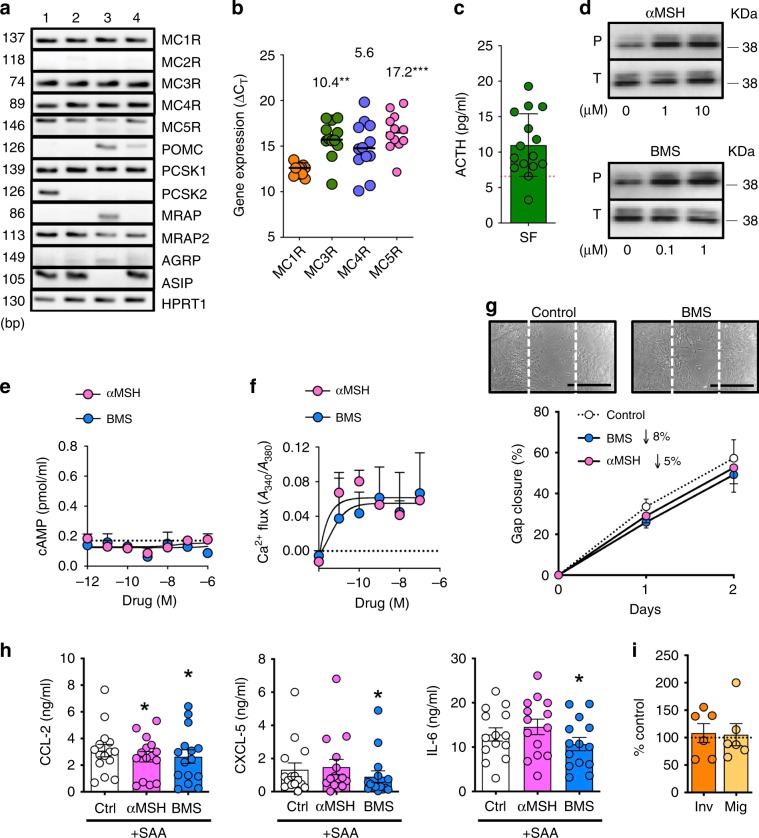
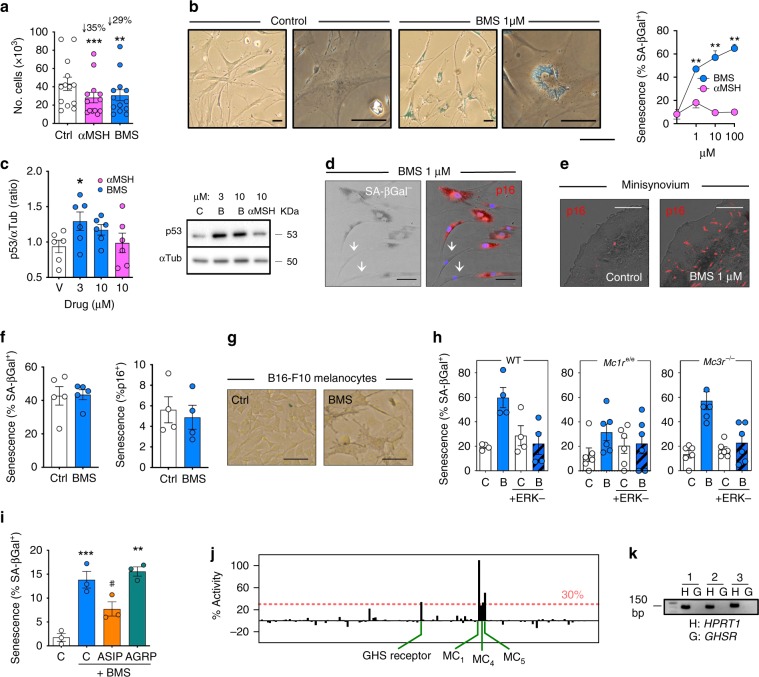
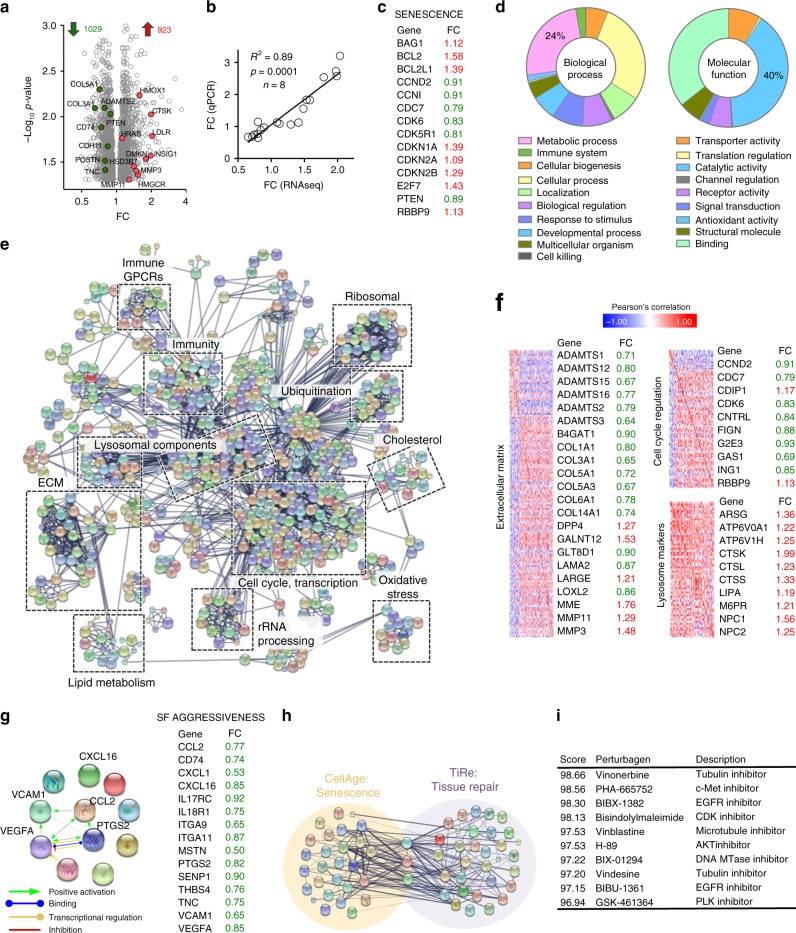
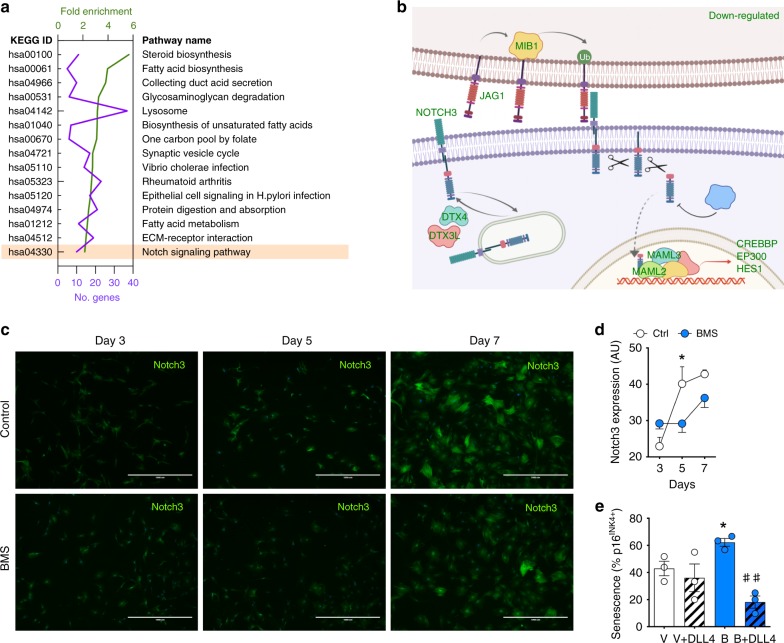
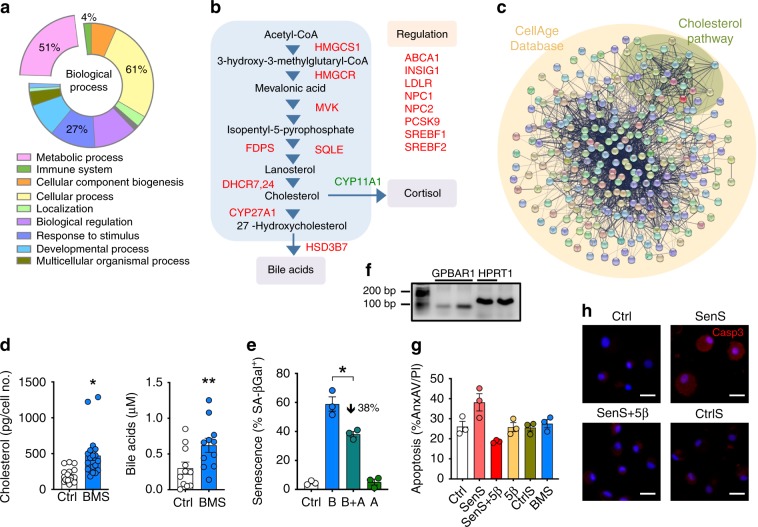
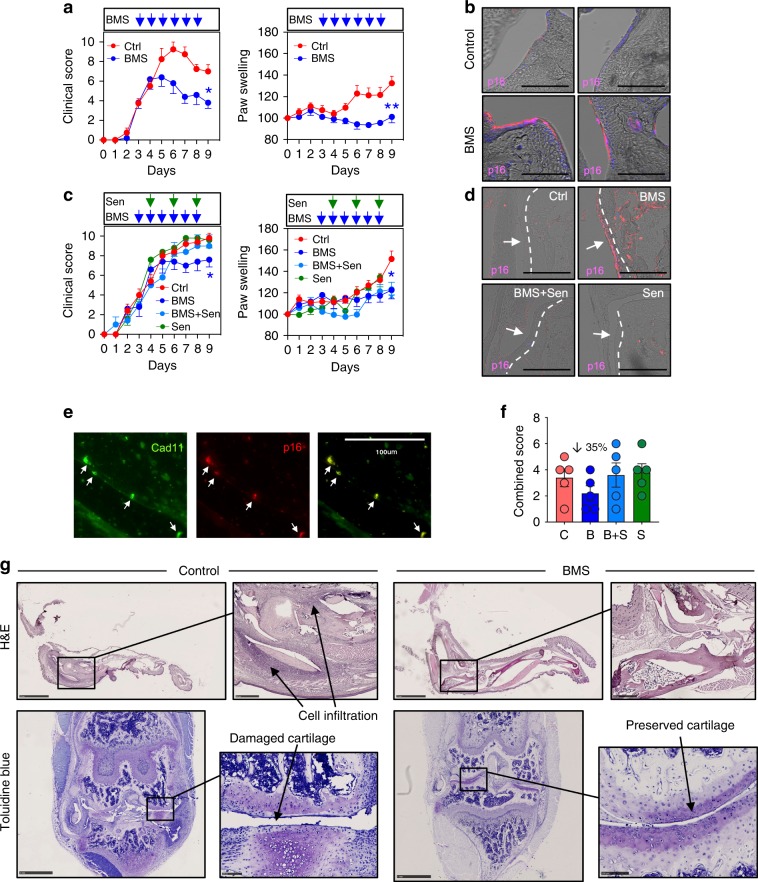
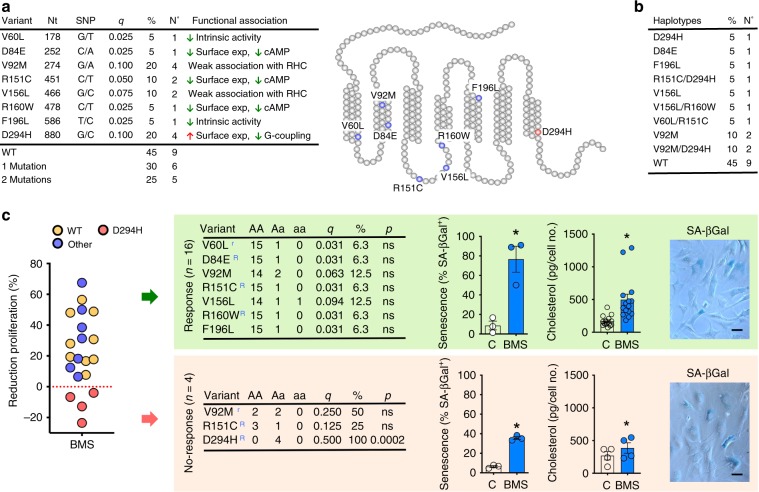
Rheumatoid arthritis affects individuals commonly during the most productive years of adulthood. Poor response rates and high costs associated with treatment mandate the search for new therapies. Here we show that targeting a specific G-protein coupled receptor promotes senescence in synovial fibroblasts, enabling amelioration of joint inflammation. Following activation of the melanocortin type 1 receptor (MC 1 ), synovial fibroblasts acquire a senescence phenotype characterized by arrested proliferation, metabolic re-programming and marked gene alteration resembling the remodeling phase of wound healing, with increased matrix metalloproteinase expression and reduced collagen production. This biological response is attained by selective agonism of MC 1 , not shared by non-selective ligands, and dependent on downstream ERK1/2 phosphorylation. In vivo, activation of MC 1 leads to anti-arthritic effects associated with induction of senescence in the synovial tissue and cartilage protection. Altogether, selective activation of MC 1 is a viable strategy to induce cellular senescence, affording a distinct way to control joint inflammation and arthritis.
Overview
The claims and statistics of this paper haven’t been checked yet.
Free: it reads the open-access text and checks the first 5 claims that cite a source we can check. Create a free account to check every claim.
Integrity signals
Registry
Cites
Statistics
Figures
Verification
Claims the paper makes
The claims and statistics of this paper haven’t been checked yet.
Free: it reads the open-access text and checks the first 5 claims that cite a source we can check. Create a free account to check every claim.
Claims other papers make about this one
Each is checked against this paper’s own text: does it say what the citing paper says it does?
The check wasn’t confident either way, so it gives no verdict — never disputed.
In the citing paper
“In addition, a remarkable inter-lineage plasticity between myofibroblasts and other cell types during fibrosis exists.”
From Fibrosis: from mechanisms to medicines (2020) · cites this paper as [38]
Experimental — accuracy not yet measuredIn the citing paper
“During cutaneous wound healing in mice, adipocytes were regenerated from myofibroblasts.”
From Fibrosis: from mechanisms to medicines (2020) · cites this paper as [38]
In the citing paper
“Furthermore, adipocytes were generated from human keloid fibroblasts when treated with BMP in vitro, or when placed with human hair follicles38.”
From Fibrosis: from mechanisms to medicines (2020) · cites this paper as [38]
In the citing paper
“This reprogramming required neogenic hair follicles, which triggered bone morphogenetic protein (BMP) signaling and activation of adipocyte transcription factors expressed during development38.”
From Fibrosis: from mechanisms to medicines (2020) · cites this paper as [38]
Self-check
Percentages, sums and reported differences re-computed from the paper’s own numbers.
The self-check needs the paper’s full text.
Citations
Cites
Analysis of Relative Gene Expression Data Using Real-Time Quantitative PCR and the 2−ΔΔCT Method
Livak, K. J., & Schmittgen, T. D. (2001) · Methods · doi:10.1006/meth.2001.1262 · Cited by 180,860
Smolen, J. S., Aletaha, D., & McInnes, I. B. (2016) · The Lancet · doi:10.1016/s0140-6736(16)30173-8 · Cited by 4,870
Hopkins, A. L., & Groom, C. R. (2002) · Nature Reviews Drug Discovery · doi:10.1038/nrd892 · Cited by 3,305
The Achilles' heel of senescent cells: from transcriptome to senolytic drugs
Zhu, Y., Tchkonia, T., Pirtskhalava, T., Gower, A. C., Ding, H., Giorgadze, N., Palmer, A. K., Ikeno, Y., Hubbard, G. B., Lenburg, M., et al. (2015) · Aging Cell · doi:10.1111/acel.12344 · Cited by 2,584
Resolution of inflammation: the beginning programs the end
Serhan, C. N., & Savill, J. (2005) · Nature Immunology · doi:10.1038/ni1276 · Cited by 2,552
Four faces of cellular senescence
Rodier, F., & Campisi, J. (2011) · Journal of Cell Biology · doi:10.1083/jcb.201009094 · Cited by 2,070
An Essential Role for Senescent Cells in Optimal Wound Healing through Secretion of PDGF-AA
Demaria, M., Ohtani, N., Youssef, S. A., Rodier, F., Toussaint, W., Mitchell, J. R., Laberge, R.-M., Vijg, J., Van Steeg, H., Dollé, M. E. T., et al. (2014) · Developmental Cell · doi:10.1016/j.devcel.2014.11.012 · Cited by 2,045
Senescence of Activated Stellate Cells Limits Liver Fibrosis
Krizhanovsky, V., Yon, M., Dickins, R. A., Hearn, S., Simon, J., Miething, C., Yee, H., Zender, L., & Lowe, S. W. (2008) · Cell · doi:10.1016/j.cell.2008.09.015 · Cited by 2,027
The cloning of a family of genes that encode the melanocortin receptors
Mountjoy, K. G., Robbins, L. S., Mortrud, M. T., & Cone, R. D. (1992) · Science · doi:10.1126/science.1325670 · Cited by 1,635
Jeon, O. H., Kim, C., Laberge, R.-M., Demaria, M., Rathod, S., Vasserot, A. P., Chung, J. W., Kim, D. H., Poon, Y., David, N., et al. (2017) · Nature Medicine · doi:10.1038/nm.4324 · Cited by 1,515
Cited by
Fibrosis: from mechanisms to medicines
Henderson, N. C., Rieder, F., & Wynn, T. A. (2020) · Nature · doi:10.1038/s41586-020-2938-9 · Cited by 1,868
The mesenchymal context in inflammation, immunity and cancer
Koliaraki, V., Prados, A., Armaka, M., & Kollias, G. (2020) · Nature Immunology · doi:10.1038/s41590-020-0741-2 · Cited by 253
Friščić, J., Böttcher, M., Reinwald, C., Bruns, H., Wirth, B., Popp, S.-J., Walker, K. I., Ackermann, J. A., Chen, X., Turner, J., et al. (2021) · Immunity · doi:10.1016/j.immuni.2021.03.003 · Cited by 238
Self-citationFibrosis in IBD: from pathogenesis to therapeutic targets
Rieder, F., Mukherjee, P. K., Massey, W. J., Wang, Y., & Fiocchi, C. (2024) · Gut · doi:10.1136/gutjnl-2023-329963 · Cited by 185
Cheng, L., Wang, Y., Wu, R., Ding, T., Xue, H., Gao, C., Li, X., & Wang, C. (2021) · Frontiers in Immunology · doi:10.3389/fimmu.2021.709178 · Cited by 109
“Another study showed, specific small molecule agonist can activate melanocortin type 1 receptor (MC11), make synovial fibroblasts activate GPCR and aging, so as to promote the regression of arthritis (82).”
BackgroundFibroblast heterogeneity: Keystone of tissue homeostasis and pathology in inflammation and ageing
Gauthier, V., Kyriazi, M., Nefla, M., Pucino, V., Raza, K., Buckley, C. D., & Alsaleh, G. (2023) · Frontiers in Immunology · doi:10.3389/fimmu.2023.1137659 · Cited by 70
“However, a recent study introduced fibroblast senescence induction as a new way to control joint inflammation through the selective activation of G-protein coupled receptor, MC1R, that inhibits FLS proliferation and promotes the acquisition of a pro-reparative phenotype with anti-arthritic effects in K/BxN arthritis m…”
BackgroundSelf-citationDeng, Y., Zhou, Y., Liang, Q., Ge, C., Yang, J., Shan, B., Liu, Y., Zhou, X., & Yin, L. (2021) · Advanced Functional Materials · doi:10.1002/adfm.202101033 · Cited by 62
Ring, N. A. R., Valdivieso, K., Grillari, J., Redl, H., & Ogrodnik, M. (2022) · Developmental Cell · doi:10.1016/j.devcel.2022.04.005 · Cited by 60
Senescence under appraisal: hopes and challenges revisited
Davan-Wetton, C. S. A., Pessolano, E., Perretti, M., & Montero‐Melendez, T. (2021) · Cellular and Molecular Life Sciences · doi:10.1007/s00018-020-03746-x · Cited by 64
“Several and diverse types of stimuli can induce senescence, including telomere attrition [5], oncogenic transformation [21], PTEN loss [96], mitochondrial dysfunction [97], cytosolic DNA [98], chemicals and genotoxic drugs [99, 100], disturbed blood flow [101], ultraviolet radiation [102], cell fusion [103], proteasom…”
BackgroundSelf-citationAtherosclerosis is a major human killer and non-resolving inflammation is a prime suspect
Fredman, G., & MacNamara, K. C. (2021) · Cardiovascular Research · doi:10.1093/cvr/cvab309 · Cited by 64
“Transient emergence of senescent cells upon injury is important for wound healing and can promote healing in arthritis.(128) However, in the context of ageing senescent cells are associated with ongoing inflammation or inflammaging.”
BackgroundSadhu, S., Decker, C., Sansbury, B. E., Marinello, M., Seyfried, A. N., Howard, J. E., Mori, M., Hosseini, Z., Arunachalam, T., Finn, A. V., et al. (2021) · The Journal of Immunology · doi:10.4049/jimmunol.2100284 · Cited by 54
Balakrishnan, B., Luckey, D. H., Wright, K., Davis, J. M., Chen, J., & Taneja, V. (2023) · Science Advances · doi:10.1126/sciadv.adg1129 · Cited by 48
Sulfasalazine promotes ferroptosis through AKT-ERK1/2 and P53-SLC7A11 in rheumatoid arthritis
Zhao, C., Yu, Y., Yin, G., Xu, C., Wang, J., Wang, L., Zhao, G., Ni, S., Zhang, H., Zhou, B., et al. (2024) · Inflammopharmacology · doi:10.1007/s10787-024-01439-6 · Cited by 40
“Consequently, the cartilage degenerates, which ultimately leads to bone destruction (Montero-Melendez et al. 2020).”
BackgroundEgr1 regulates regenerative senescence and cardiac repair
Zhang, L., Elkahal, J., Wang, T., Rimmer, R., Genzelinakh, A., Bassat, E., Wang, J., Perez, D. E., Kain, D., Lendengolts, D., et al. (2024) · Nature Cardiovascular Research · doi:10.1038/s44161-024-00493-1 · Cited by 40
Age-related self-DNA accumulation may accelerate arthritis in rats and in human rheumatoid arthritis
Luo, W. D., Wang, Y., Lu, J. J., Liu, Y., Qu, Y. Q., Xu, X., Yang, L., Lin, Z., Wang, L., Chen, R., et al. (2023) · Nature Communications · doi:10.1038/s41467-023-40113-3 · Cited by 35
“Although RA showed a global prevalence of approximately 1% 7 , more than 50% of middle-aged and elderly adults were reported to develop RA in the United States between 2004 and 2014 8 .”
Translational advances of melanocortin drugs: Integrating biology, chemistry and genetics
Montero‐Melendez, T., Boesen, T. P., & Jonassen, T. E. N. (2022) · Seminars in Immunology · doi:10.1016/j.smim.2022.101603 · Cited by 38
Self-citationAntifibrotic and Anti-Inflammatory Actions of α-Melanocytic Hormone: New Roles for an Old Player
Dinparastisaleh, R., & Mirsaeidi, M. S. (2021) · Pharmaceuticals · doi:10.3390/ph14010045 · Cited by 33
New potential therapeutic approaches targeting synovial fibroblasts in rheumatoid arthritis
Alcaraz, M. J. (2021) · Biochemical Pharmacology · doi:10.1016/j.bcp.2021.114815 · Cited by 32
Friščić, J., Dürholz, K., Chen, X., Engdahl, C., Möller, L., Schett, G. A., Zaiss, M. M., & Hoffmann, M. H. (2021) · Nutrients · doi:10.3390/nu13051643 · Cited by 34
“Mechanistically, our data suggest that PA reduces arthritogenic fibroblast function by interfering with complement-mediated metabolic activation of SFs and thus by channeling them towards a senescent, regulatory phenotype upon activation with inflammatory stimulants [21,24].”
BackgroundAging microenvironment in osteoarthritis focusing on early-stage alterations and targeted therapies
Dang, Y., Liu, Y., Zhang, B., & Zhang, X. (2025) · Bone Research · doi:10.1038/s41413-025-00465-6 · Cited by 32
“150 Unsatisfactorily, fewer researchers directly eliminated senescent immune cells in OA due to a lack of acknowledgment of related mechanisms, suggesting the need to treat OA senescence in a broader aspect.”
Highlights of Strategies Targeting Fibroblasts for Novel Therapies for Rheumatoid Arthritis
Chu, C. (2022) · Frontiers in Medicine · doi:10.3389/fmed.2022.846300 · Cited by 30
“The therapeutic effect of BMS-470539 was countered by senolytic drugs (91).”
BackgroundHoffmann, M. H., Kirchner, H., Krönke, G., Riemekasten, G., & Bonelli, M. M. (2024) · Annals of the Rheumatic Diseases · doi:10.1136/ard-2023-224092 · Cited by 31
“327 Notch signalling was also recently implicated in disease-associated SF function in both mouse arthritis and human RA, and a neutralising anti-Notch3 antibody attenuated experimental arthritis by preventing the pathological expansion of Thy1 + SFs. 41 Another candidate, CD34, is widely distributed on lining and sub…”
BackgroundInfluentialZhao, J., Wei, K., Jiang, P., Chang, C., Xu, L., Xu, L., Shi, Y., Guo, S., & He, D. (2022) · Frontiers in Immunology · doi:10.3389/fimmu.2022.907733 · Cited by 31
Gut microbiota as a sensor of autoimmune response and treatment for rheumatoid arthritis
Lamba, A., & Taneja, V. (2024) · Immunological Reviews · doi:10.1111/imr.13359 · Cited by 26
“142 These microbial/metabolic alterations along with increased autoantibody production after E. lenta gavage suggest dysbiosis associated with RA mimics microbial/immune senescence.”
Oxysterol Sensing Through GPR183 Triggers Endothelial Senescence in Hypertension
Chu, Q., Li, Y., Wu, J., Gao, Y., Xiangyun, G., Li, J., Lv, H., Liu, M., Tang, W., Zhan, P., et al. (2024) · Circulation Research · doi:10.1161/circresaha.124.324722 · Cited by 29
“23 Ang II promotes vascular senescence via angiotensin type 1 receptor–coupled signaling mechanisms.”
Friščić, J., Reinwald, C., Böttcher, M., Houtman, M., Euler, M., Chen, X., Walker, K., Kirchner, P., Zhu, H., Wirth, B., et al. (2023) · Arthritis & Rheumatology · doi:10.1002/art.42378 · Cited by 23
“fail to be primed and instead adopt a senescent immunoregulatory phenotype (32).”
BackgroundBaker, L. A., Momen, M. M., McNally, R. M., Berres, M. E., Binversie, E. E., Sample, S. J., & Muir, P. (2021) · Frontiers in Genetics · doi:10.3389/fgene.2021.593515 · Cited by 22
Yoon, S.-S., & Moon, E. (2021) · International Journal of Molecular Sciences · doi:10.3390/ijms22137166 · Cited by 18
“The second is that senescence in FLSs could lead to one life-saving or another detrimental outcome [50] such as joint inflammation by the increased”
BackgroundNikolova‐Ganeva, K., Mihaylova, N., Kechidzhieva, L., Ivanova, K. I., Zarkov, A. S., Parzhanov, D. L., Ivanov, M. M., & Marchev, A. S. (2025) · International Journal of Molecular Sciences · doi:10.3390/ijms26146813 · Cited by 20
Applications of single-cell RNA sequencing in rheumatoid arthritis
Figueiredo, M. L. (2024) · Frontiers in Immunology · doi:10.3389/fimmu.2024.1491318 · Cited by 17
Stromal cell regulation of inflammatory responses
Friščić, J., & Hoffmann, M. H. (2021) · Current Opinion in Immunology · doi:10.1016/j.coi.2021.10.006 · Cited by 14
Genomics of soil depth niche partitioning in the Thaumarchaeota family Gagatemarchaeaceae
Sheridan, P. O., Meng, Y., Williams, T. A., & Gubry‐Rangin, C. (2023) · Nature Communications · doi:10.1038/s41467-023-43196-0 · Cited by 17
Resolution Pharmacology: State-of-the-art and therapeutic landscape
Perretti, M., & Montero‐Melendez, T. (2025) · Pharmacological Reviews · doi:10.1016/j.pharmr.2025.100097 · Cited by 16
Self-citationAntibody binding reports spatial heterogeneities in cell membrane organization
Arnold, D. P., Xu, Y., & Takatori, S. C. (2023) · Nature Communications · doi:10.1038/s41467-023-38525-2 · Cited by 12
Biased agonism of G protein-coupled receptors as a novel strategy for osteoarthritis therapy
Meng, X., Qin, L., & Wang, X. (2025) · Bone Research · doi:10.1038/s41413-025-00435-y · Cited by 13
Guan, R., Luan, F., Li, N., Qiu, Z., Liu, W., Cui, Z., Zhao, C., & Li, X. (2022) · Chemosphere · doi:10.1016/j.chemosphere.2022.135881 · Cited by 16
Pro-resolving and anti-arthritic properties of the MC1 selective agonist PL8177
Garrido‐Mesa, J., Thomas, B. L., Dodd, J. H., Spana, C., Perretti, M., & Montero‐Melendez, T. (2022) · Frontiers in Immunology · doi:10.3389/fimmu.2022.1078678 · Cited by 11
“02 lung inflammation (16), improvement of membranous nephropathy (21) and reduction of joint inflammation using the K/BxN serum induced transfer arthritis (STIA) model (22).”
MethodSelf-citationThe iron-dopamine D1 coupling modulates neural signatures of working memory across adult lifespan
Gustavsson, J., Johansson, J. J., Falahati, F., Andersson, M., Papenberg, G., Avelar‐Pereira, B., Bäckman, L., Kalpouzos, G., & Salami, A. (2023) · NeuroImage · doi:10.1016/j.neuroimage.2023.120323 · Cited by 11
Cellular senescence in kidney diseases
Wang, X., Li, Y., Chu, Q., Lv, H., Li, J., & Yi, F. (2025) · Chinese Medical Journal · doi:10.1097/cm9.0000000000003746 · Cited by 13
“[59] In addition, the activation of GPR101, a class A orphan GPCR with constitutive Gs and Gq activity, is emerging as an antiaging therapy.”
Melanocortin therapies to resolve fibroblast-mediated diseases
Khodeneva, N., Sugimoto, M. A., Davan-Wetton, C. S. A., & Montero‐Melendez, T. (2023) · Frontiers in Immunology · doi:10.3389/fimmu.2022.1084394 · Cited by 12
“Frontiers in Immunology 13 translated into anti-arthritic actions in vivo, using the model of K/BxN serum transfer induced arthritis in mice (16).”
BackgroundMethodInfluentialSelf-citationThe Resolution Approach to Cystic Fibrosis Inflammation
Recchiuti, A., Patruno, S., Plebani, R., & Romano, M. (2020) · Frontiers in Pharmacology · doi:10.3389/fphar.2020.01129 · Cited by 10
“, 1995), induce fibroblast senescence (Montero-Melendez et al., 2020) and reverse pulmonary fibrosis (Xu et al.”
BackgroundWan, J., He, X., Jian, Q.-C., Zhi-Feng, F., Shi, Y., & Luo, L. (2021) · PubMed · doi:10.14670/hh-18-372 · Cited by 9
G Protein-Coupled Receptors in Osteoarthritis: A Novel Perspective on Pathogenesis and Treatment
Wen, Z., Liu, D., Zhang, Y., Cai, Z., Xiao, W., & Li, Y. (2021) · Frontiers in Cell and Developmental Biology · doi:10.3389/fcell.2021.758220 · Cited by 8
“A study reported that the activation of MC1R leads to antiarthritic effects by inducing synovial tissue aging and cartilage protection in vivo (Montero-Melendez et al., 2020).”
BackgroundGut Microbes as the Major Drivers of Rheumatoid Arthritis: Our Microbes Are Our Fortune!
Taneja, V. (2025) · Microorganisms · doi:10.3390/microorganisms13020255 · Cited by 9
“E. lenta expansion caused a significant increase in secondary bile acids and their receptor, sphingosine 1 phosphate receptor 1 (S1PR1), which has been linked to gut inflammation and the regulation of lipid metabolism, as well as the senescence of fibroblasts [67–70].”
Fibroblast-Like Synovial Cell Subsets in Rheumatoid Arthritis
Lomholt, S., Nielsen, M. A., Aspari, M., Jørgensen, P. L., Croft, A. P., Buckley, C. D., & Kragstrup, T. W. (2021) · Biochemistry · doi:10.5772/intechopen.99240 · Cited by 8
“Taken together, the in vitro studies on NOTCH3, including its connection to spatial distribution of FLS and the above-mentioned animal study underline NOTCH3 as a promising therapeutical target in RA [106, 107].”
BackgroundSelf-citationThe Role of Fibroblasts Across Inflammation and Immunity
Cowan, M. J. B., Davidson, S., Coles, M. C., & Buckley, C. D. (2025) · Annual Review of Pathology Mechanisms of Disease · doi:10.1146/annurev-pathmechdis-080624-105114 · Cited by 14
Self-citationMusculoskeletal imaging of senescence
Daldrup-Link, H. E., Suryadevara, V., Tanyildizi, Y., Nernekli, K., Tang, J., & Meade, T. J. (2024) · Skeletal Radiology · doi:10.1007/s00256-024-04585-8 · Cited by 7
“Similarly, in rheumatoid arthritis (RA), SASP perpetuated joint damage, and removal of SASP with senolytic drugs induced long-term remission of joint inflammations [6, 31].”
Ghaderi, A., Wang, H., & Protzner, A. B. (2026) · Neural Computation · doi:10.1162/neco.a.1488 · Cited by 5
Hayes, K., Panaccio, M. P., Goel, N., & Fahim, M. (2021) · Rheumatology and Therapy · doi:10.1007/s40744-020-00272-x · Cited by 6
Zhang, J., Li, X., Wang, P., Liu, X., Guo, W., Si, J., Huo, Q., Xu, M., Liu, Y., & Niu, Y. (2026) · ACS Nano · doi:10.1021/acsnano.5c15543 · Cited by 5
Lee, B. T., Baker, L., Momen, M. M., Terhaar, H. M., Binversie, E. E., Sample, S. J., & Muir, P. (2023) · BMC Genomic Data · doi:10.1186/s12863-023-01164-z · Cited by 8
“MC1R is also known to be expressed within articular cartilage [44], and melanocortins promote anti-inflammatory states within joints [26, 28].”
BackgroundMC1R determines healing outcomes in acute and chronic cutaneous wounds
Nawilaijaroen, Y., Rocliffe, H. R., Austin‐Williams, S., Krilis, G., Dawson, C. A., Harijanto, P., Pellicoro, A., Zhou, K., Yu-bo, J., Bain, C. A., et al. (2025) · Proceedings of the National Academy of Sciences · doi:10.1073/pnas.2503308122 · Cited by 6
Laragione, T., Harris, C. L., & Gulko, P. S. (2024) · Nutrients · doi:10.3390/nu16234247 · Cited by 9
New insights into the role of cellular senescence and rheumatic diseases
Wen, J., Li, J., Wan, L., & Wang, F. (2025) · Frontiers in Immunology · doi:10.3389/fimmu.2025.1557402 · Cited by 8
Switching on resolution to treat RA moves closer to reality
Perretti, M. (2020) · Nature Reviews Rheumatology · doi:10.1038/s41584-020-00549-z · Cited by 4
Self-citationTargeting CCNE2 to alleviate rheumatoid arthritis through inducing senescence and apoptosis
Xu, R. F., Mei, Y., Liu, H., Yi, H., Deng, H., Yu, Z., & Liu, W. (2025) · Modern Rheumatology · doi:10.1093/mr/roaf077 · Cited by 3
Davan-Wetton, C. S. A., Khodeneva, N., Denton, C. P., Abraham, D., Perretti, M., & Montero‐Melendez, T. (2025) · Arthritis Research & Therapy · doi:10.1186/s13075-025-03635-3 · Cited by 2
“While senescence in chondrocytes (i.e. parenchymal cells) in a condition strongly associated with ageing like osteoarthritis may result in detrimental effects [31], senescence in aggressive synovial fibroblasts present in rheumatoid arthritis seems beneficial [12, 32].”
InfluentialSelf-citationNetwork-level control of G protein-coupled receptors: a panacea for chronic diseases?
Boeringer, T., Pardo, M., Craig, C. J., Pozo, A. D., Ladds, G., Hébert, T. E., Dodel, S., Prentice, H., Bejanyan, R., & Maudsley, S. (2026) · Frontiers in Science · doi:10.3389/fsci.2026.1891819 · Cited by 2
“…MC 1 receptor (MC 1 R; Class A), which induces a reparative senescent state in synovial fi broblasts to resolve rheumatoid arthritis in fl ammation (173); CXCR2/CXCR4 (Class A), which promote p53-independent senescence via CXCL1-mediated mitochondrial dysfunction and cell cycle arrest post-DNA…”
Graue, J., Timmen, M., Schmitz, K., Kronenberg, D., Böhm, M., Sivaraj, K. K., Bixel, M. G., & Stange, R. (2025) · BMC Musculoskeletal Disorders · doi:10.1186/s12891-025-08374-9 · Cited by 2
“The impact of α-MSH and MCR on chondrocytes was already investigated in the course of RA and OA in vivo and in vitro [13, 14, 27–30] and is not in the focus of this study.”
Haitao, L. I. U., Gong, Y., Nakagawa, M., Tanimoto, H., Yoshikawa, K., Honda, Y., & Yamamoto, K. (2023) · Dental Materials Journal · doi:10.4012/dmj.2022-245 · Cited by 2
Novel determinants of NOTCH1 trafficking and signaling in breast epithelial cells
Kobia, F., Almeida, L. C. E., Paganoni, A. J. J., Carminati, F., Andronache, A., Lavezzari, F., Wade, M. R., & Vaccari, T. (2024) · Life Science Alliance · doi:10.26508/lsa.202403122 · Cited by 2
“…associated with the lysosomal mTOR pathway in the context of Notch or EGFR signaling CIB2 , MASTL , MC1R , SGK3 , ZNRF1 , ZNRF2 (Hoxhaj et al, 2016; Montero-Melendez et al, 2020; Fatima et al, 2021; Sethna et al, 2021; Shen et al, 2021; Sanz-Castillo et al, 2023), con fi rming that the…”
Senescent-like activated naive B cells contribute to progression to clinical rheumatoid arthritis
Wu, X., Zhang, M., Moon, J., Song, E. K., Abrams, J. C., van Dam, L. S., Sharpe, O., Wang, Z., Feser, M. L., Moss, L., et al. (2026) · Nature Aging · doi:10.1038/s43587-026-01236-6 · Cited by 6
“A previous study showed that inducing a senescent-like phenotype through selective activation of melanocortin receptor MC1 in proliferative synovial fibroblasts limited IA progression 33 .”
Identification of critical genes and biological signaling for metformin treated liver cancerPreprint
Zhang, T., Guo, H., Wang, L., Wang, M., & Gu, H. (2021) · bioRxiv (Cold Spring Harbor Laboratory) · doi:10.1101/2021.12.29.474467 · Cited by 1
Njunge, L. W., Liu, K., Xiong, C., Chen, L., He, Q., Wang, P., Huang, G., Li, Y., Abhulimen, P. O., Cheng, W., et al. (2024) · medRxiv · doi:10.1101/2024.10.27.24316032 · Cited by 1
Pro-senescence therapy reduces joint inflammation
Onuora, S. (2020) · Nature Reviews Rheumatology · doi:10.1038/s41584-020-0408-2
PERSONALITY PROFILE AND TENDINOPATHIES IN SOCCER PLAYERS
Vago, P., Casolo, F., & Gatti, M. (2013)
ELITE: Expression deconvoLution using lInear optimizaTion in bulk transcriptomics mixturEsPreprint
Antoranz, A., Mackintosh, C., Ortiz, M., & Pey, J. (2023) · bioRxiv (Cold Spring Harbor Laboratory) · doi:10.1101/2023.03.06.531002
Lee, B. T., Baker, L., Momen, M. M., Terhaar, H. M., Binversie, E. E., Sample, S., & Muir, P. (2023) · Figshare · doi:10.6084/m9.figshare.24447551
Macrophages and the musculoskeletal system
Gallo, J., & Goodman, S. B. (2024) · Elsevier eBooks · doi:10.1016/b978-0-12-821754-2.00002-3 · Cited by 1
Lee, B. T., Baker, L., Momen, M., Terhaar, H. M., Binversie, E., Sample, S., & Muir, P. (2024) · Figshare · doi:10.6084/m9.figshare.24447667
Resolution Pharmacology Targeting the Melanocortin System
Day, N., Davan-Wetton, C. S. A., Khodeneva, N., Hussain, M. T., & Montero‐Melendez, T. (2026) · Current topics in microbiology and immunology · doi:10.1007/82_2026_343
Self-citationLi, Y., Bai, M., Zhou, Z., Wu, W., Wu, H., Ling, S., Wang, L., & Zheng, Y. (2026) · GeroScience · doi:10.1007/s11357-026-02343-3 · Cited by 2
“During tumor progression, however, senescent cells can also remodel the tumor microenvironment (TME) through persistent secretion of pro-inflammatory factors via the senescence-associated secretory phenotype (SASP), thereby contributing to immune evasion and therapeutic resistance [6].”
Son, Y. G., Keller, M., Williamson, P., & Taylor, R. M. (2026) · Veterinary Medicine and Science · doi:10.1002/vms3.71026
Yu, Z., Liu, Z., Fan, J., Li, Y., He, J., Zhang, J., Fu, P., Gao, D., Xia, F., Mei, Y., et al. (2026) · Immunity & Ageing · doi:10.1186/s12979-026-00575-7
“In vivo activation of MC1 leads to anti-arthritic effects and cartilage protection associated with synovial tissue senescence [19].”
Multidimensional Regulatory Network of Cellular Senescence: From Mechanisms to Theranostics
Lv, Z., Liu, Y., Liu, Y., Tan, Y., Man, Y., Shuqing, D., Zhang, Z., Lee, L. P., Chen, Q., & Liu, Z. (2026) · ACS Biomaterials Science & Engineering · doi:10.1021/acsbiomaterials.6c00849
Yazdi, R. F., Tan, S. I., Bu, W., FRANCO, B. B., Ng, A. J. K., Peh, H. Y., & Chen, J. (2026) · Pharmacological Research · doi:10.1016/j.phrs.2026.109655 · Cited by 1
The GPCR-ome as a central regulator of human healthspan
Sakmar, T. P. (2026) · Frontiers in Science · doi:10.3389/fsci.2026.2026340
Metadata
- Authors
- Montero-Melendez, T., Nagano, A., Chelala, C., Filer, A., Buckley, C. D., & Perretti, M.
- Affiliations
- Queen Mary University of London (GB)
- University Hospitals Birmingham NHS Foundation Trust (GB)
- Corresponding author
- Perretti, Mauro
- ORCID
- Venue
- Nature Communications
- Published
- 2020-02-06
- Volume
- 11
- Issue
- 1
- Pages
- 745-745
- ISSN
- 2041-1723 (ISSN-L)
- PMC
- PMC7005314
- OpenAlex
- W3004610131
- Cited by
- 75
- References
- 54
- Citations by year
- 2026: 11 · 2025: 12 · 2024: 12 · 2023: 10 · 2022: 7 · 2021: 17 · 2020: 5
- FWCI
- 7.53
- Type
- journal article
- Language
- en
- Open access
- gold
- doi.org
- Licence
- cc-by
- creativecommons.org/licenses/by/4.0 (tdm)
- creativecommons.org/licenses/by/4.0 (vor)
- Locations
- Nature Communications (publishedVersion, cc-by)
- PubMed Central (publishedVersion, cc-by)
- PubMed (publishedVersion)
- RePEc: Research Papers in Economics (submittedVersion)
- DOAJ (DOAJ: Directory of Open Access Journals) (submittedVersion, cc-by-sa)
- DOAJ (DOAJ: Directory of Open Access Journals) (submittedVersion)
- University of Birmingham Research Portal (University of Birmingham) (submittedVersion, cc-by)
- Queen Mary Research Online (Queen Mary University of London) (submittedVersion, cc-by)
- Funders
- RCUK | Medical Research Council (MR/K013068/1)
- Arthritis Research UK (21274)
- William Harvey Research Foundation
- Topics
- Health Sciences › Medicine › Rheumatology › Rheumatoid Arthritis Research and Therapies
- Health Sciences › Medicine › Rheumatology › Osteoarthritis Treatment and Mechanisms
- Life Sciences › Biochemistry, Genetics and Molecular Biology › Cell Biology › Telomeres, Telomerase, and Senescence
- Keywords
- rheumatoid arthritis, cellular senescence, synovial fibroblasts, MC1R, ERK1/2 phosphorylation, joint inflammation, chondroprotection, matrix metalloproteinases, collagen synthesis, metabolic reprogramming
- MeSH terms
- alpha-MSH, Animals, Arthritis, Experimental, Arthritis, Rheumatoid, Cells, Cultured, Fibroblasts, Humans, Imidazoles, Male, Mice, Inbred C57BL, Synovial Membrane, Genetic Variation, Cellular Senescence, Mice, Knockout, Receptor, Melanocortin, Type 1, Mice, Receptors, Notch, Metabolic Networks and Pathways
About these checks
Registry, retraction, Cites and statistics results are computed, not judged, with one exception: a printed reference that no index lists is read once by a model before it counts as a citation error. Claims are extracted by a model and kept only when their quote appears verbatim in the text; each cited source is then checked, with a model’s help, for whether it says what the claim relies on. Those verdicts can be wrong — read the claim’s quote and the cited source before relying on one.
Statistics and arithmetic are recomputed, not judged.
Confidence bands are shown only for fields calibrated on our annotated test set. None is calibrated yet, so no band is shown.
What counts as a claim ›How we measure confidence ›How we check this ›
Are you an author, or do you see a problem with this page? Request a review
Data sources
Bibliographic data: Semantic Scholar, OpenAlex, Crossref.
Contains information from the Semantic Scholar Academic Graph Datasets, made available under the ODC Attribution License (ODC-BY 1.0).
Semantic Scholar’s data is described in: Kinney, R., et al. (2023). The Semantic Scholar Open Data Platform. arXiv:2301.10140.
