

The DOI matches its Crossref record; 72 of the 72 references it cites were found in a registry or an index.
Exercise enhances skeletal muscle regeneration by promoting senescence in fibro-adipogenic progenitors
Open accessAbstract
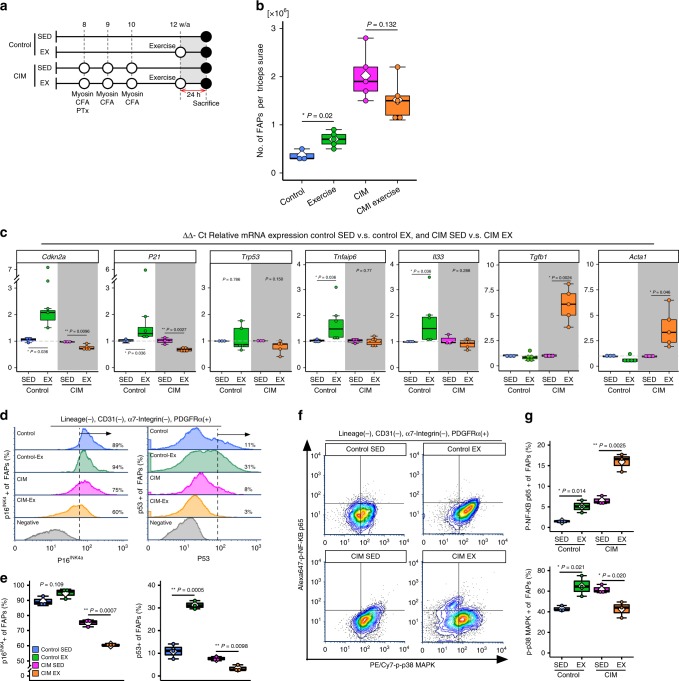
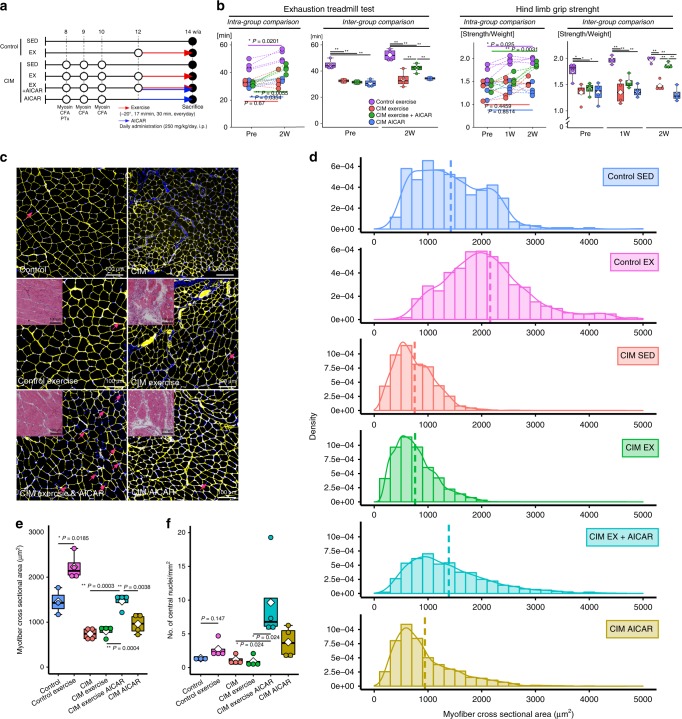
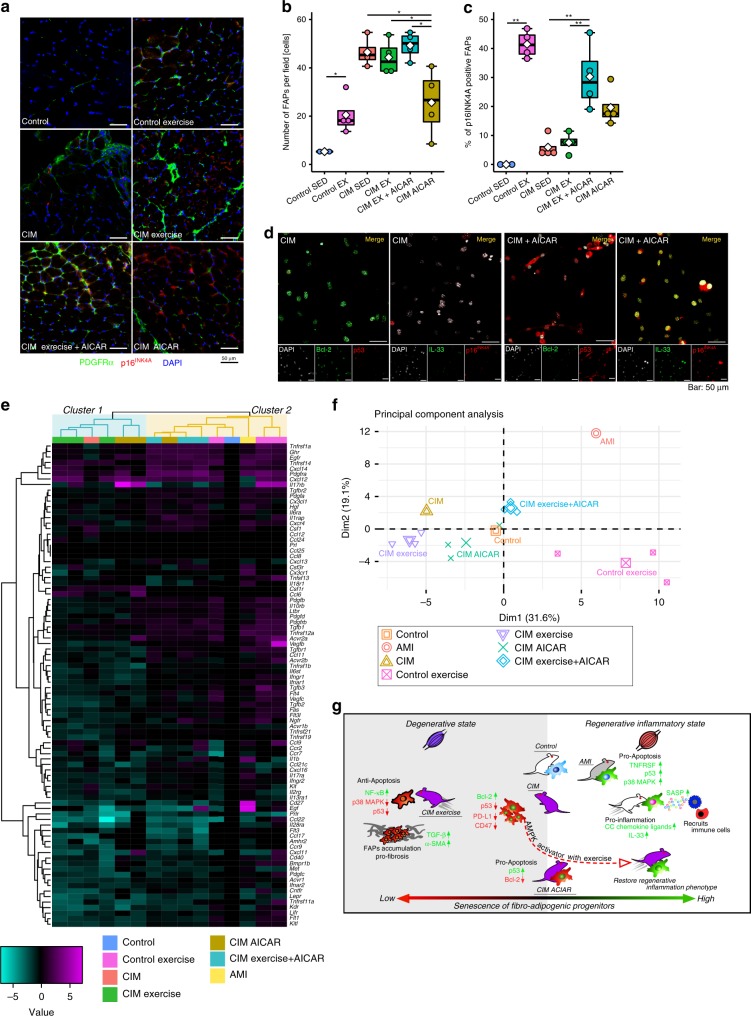
Idiopathic inflammatory myopathies cause progressive muscle weakness and degeneration. Since high-dose glucocorticoids might not lead to full recovery of muscle function, physical exercise is also an important intervention, but some exercises exacerbate chronic inflammation and muscle fibrosis. It is unknown how physical exercise can have both beneficial and detrimental effects in chronic myopathy. Here we show that senescence of fibro-adipogenic progenitors (FAPs) in response to exercise-induced muscle damage is needed to establish a state of regenerative inflammation that induces muscle regeneration. In chronic inflammatory myopathy model mice, exercise does not promote FAP senescence or resistance against tumor necrosis factor-mediated apoptosis. Pro-senescent intervention combining exercise and pharmacological AMPK activation reverses FAP apoptosis resistance and improves muscle function and regeneration. Our results demonstrate that the absence of FAP senescence after exercise leads to muscle degeneration with FAP accumulation. FAP-targeted pro-senescent interventions with exercise and pharmacological AMPK activation may constitute a therapeutic strategy for chronic inflammatory myopathy.
Overview
The claims and statistics of this paper haven’t been checked yet.
Run the check — free, no account needed. It reads the open-access text and checks the sources it cites.
Integrity signals
Registry
Cites
Statistics
Figures
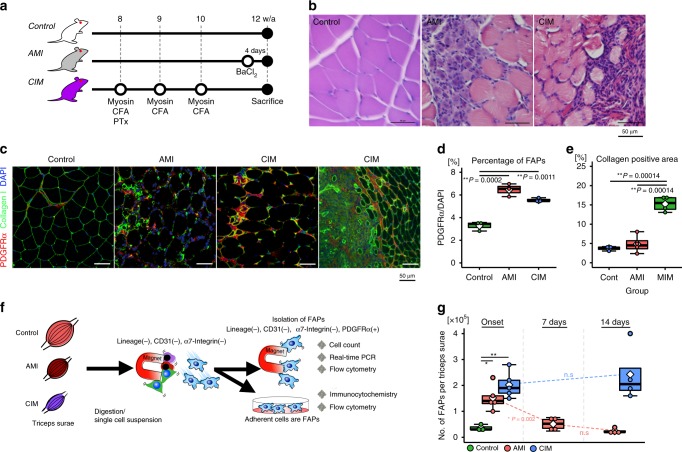
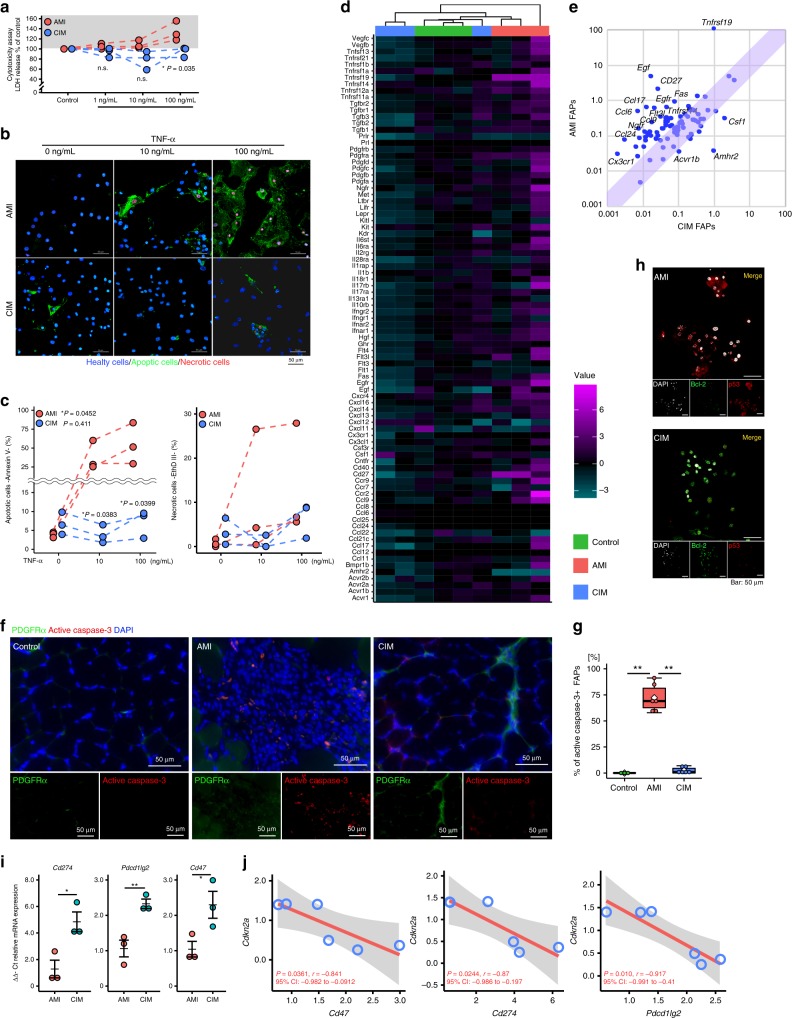
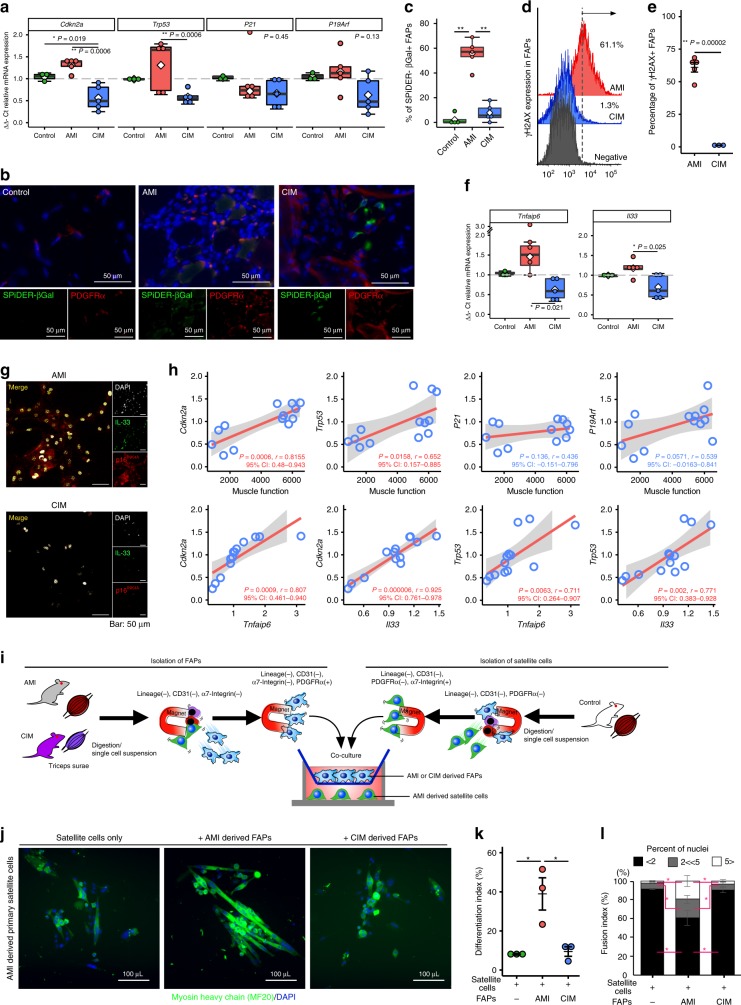
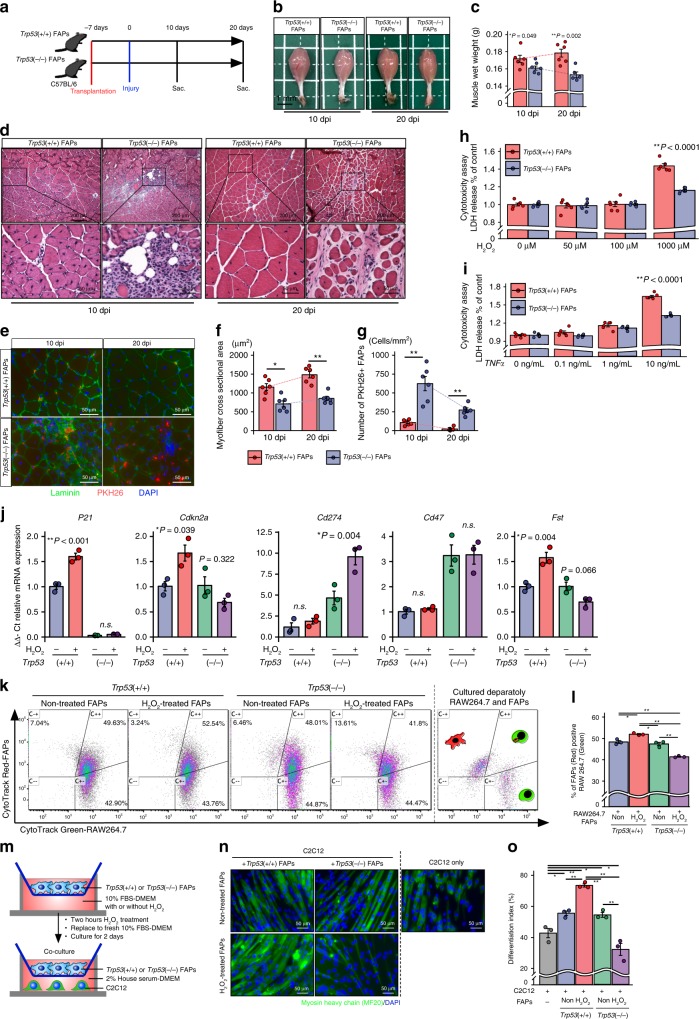
Verification
Claims the paper makes
The claims and statistics of this paper haven’t been checked yet.
Run the check — free, no account needed. It reads the open-access text and checks the sources it cites.
Claims other papers make about this one
Each is checked against this paper’s own text: does it say what the citing paper says it does?
In the citing paper
“In a recent study, an acute bout of 14 d of downhill running promoted a senescent phenotype in skeletal muscle fibroadipogenic progenitors from young wild-type mice but not from mice with chronic inflammatory myopathy (58).”
From Exercise Counters the Age-Related Accumulation of Senescent Cells (2022) · cites this paper as [58]
In the citing paper
“Induction of senescence with exercise and pharmacological activation of AMPK using 5-aminoimidazole-4-carboxamide ribonucleotide improved muscle function, cross-sectional area, and regeneration in the chronic inflammatory myopathy model.”
From Exercise Counters the Age-Related Accumulation of Senescent Cells (2022) · cites this paper as [58]
In the citing paper
“senescent FAPs improved skeletal muscle fiber size and performance on treadmill and grip strength tests”
From Skeletal muscle aging, cellular senescence, and senotherapeutics: current knowledge and future directions (2021) · cites this paper as Saito et al., 2020
In the citing paper
“in young (3-months) mice muscle damage caused by downhill treadmill running activated the expression of senescence markers, including p16 and p21 in FAPs”
From Skeletal muscle aging, cellular senescence, and senotherapeutics: current knowledge and future directions (2021) · cites this paper as Saito et al., 2020
In the citing paper
“possibly through the pro-inflammatory expression profile of FAPs which facilitates muscle regeneration”
From Skeletal muscle aging, cellular senescence, and senotherapeutics: current knowledge and future directions (2021) · cites this paper as Saito et al., 2020
Self-check
Percentages, sums and reported differences re-computed from the paper’s own numbers.
The self-check needs the paper’s full text.
Citations
Cites
Investigation of the freely available easy-to-use software ‘EZR’ for medical statistics
Kanda, Y. (2012) · Bone Marrow Transplantation · doi:10.1038/bmt.2012.244 · Cited by 18,876
Macrophage plasticity and polarization: in vivo veritas
Sica, A., & Mantovani, A. (2012) · Journal of Clinical Investigation · doi:10.1172/jci59643 · Cited by 6,335
AMPK: a nutrient and energy sensor that maintains energy homeostasis
Hardie, D. G., Ross, F. A., & Hawley, S. A. (2012) · Nature Reviews Molecular Cell Biology · doi:10.1038/nrm3311 · Cited by 4,602
The AMPK signalling pathway coordinates cell growth, autophagy and metabolism
Mihaylova, M. M., & Shaw, R. J. (2011) · Nature Cell Biology · doi:10.1038/ncb2329 · Cited by 2,923
A DNA damage checkpoint response in telomere-initiated senescence
Fagagna, F. D. D., Reaper, P. M., Clay-Farrace, L., Fiegler, H., Carr, P., von Zglinicki, T., Saretzki, G., Carter, N. P., & Jackson, S. P. (2003) · Nature · doi:10.1038/nature02118 · Cited by 2,917
Cellular senescence: from physiology to pathology
Muñoz-Espín, D., & Serrano, M. (2014) · Nature Reviews Molecular Cell Biology · doi:10.1038/nrm3823 · Cited by 2,818
Zou, W., Wolchok, J. D., & Chen, L. (2016) · Science Translational Medicine · doi:10.1126/scitranslmed.aad7118 · Cited by 2,400
PD-1 expression by tumour-associated macrophages inhibits phagocytosis and tumour immunity
Gordon, S. R., Maute, R. L., Dulken, B. W., Hutter, G., George, B. M., McCracken, M. N., Gupta, R., Tsai, J. M., Sinha, R., Corey, D., et al. (2017) · Nature · doi:10.1038/nature22396 · Cited by 2,247
Senescence of Activated Stellate Cells Limits Liver Fibrosis
Krizhanovsky, V., Yon, M., Dickins, R. A., Hearn, S., Simon, J., Miething, C., Yee, H., Zender, L., & Lowe, S. W. (2008) · Cell · doi:10.1016/j.cell.2008.09.015 · Cited by 2,027
Arnold, L., Henry, A., Poron, F., Baba-Amer, Y., van Rooijen, N., Plonquet, A., Gherardi, R. K., & Chazaud, B. (2007) · The Journal of Experimental Medicine · doi:10.1084/jem.20070075 · Cited by 2,002
Muscle injury activates resident fibro/adipogenic progenitors that facilitate myogenesis
Joe, A. W. B., Yi, L., Natarajan, A., Le Grand, F., So, L., Wang, J., Rudnicki, M. A., & Rossi, F. M. V. (2010) · Nature Cell Biology · doi:10.1038/ncb2015 · Cited by 1,690
CD47 Is Upregulated on Circulating Hematopoietic Stem Cells and Leukemia Cells to Avoid Phagocytosis
Jaiswal, S., Jamieson, C. H. M., Pang, W. W., Park, C. Y., Chao, M. P., Majeti, R., Traver, D. J., van Rooijen, N., & Weissman, I. L. (2009) · Cell · doi:10.1016/j.cell.2009.05.046 · Cited by 1,578
γH2AX: a sensitive molecular marker of DNA damage and repair
Mah, L.-J., El-Osta, A., & Karagiannis, T. C. (2010) · Leukemia · doi:10.1038/leu.2010.6 · Cited by 1,557
MYC regulates the antitumor immune response through CD47 and PD-L1
Casey, S. C., Tong, L., Li, Y., Do, R., Walz, S., Fitzgerald, K. N., Gouw, A. M., Baylot, V., Gütgemann, I., Eilers, M., et al. (2016) · Science · doi:10.1126/science.aac9935 · Cited by 1,403
Inflammation and metabolism in tissue repair and regeneration
Eming, S. A., Wynn, T. A., & Martin, P. (2017) · Science · doi:10.1126/science.aam7928 · Cited by 1,369
Uezumi, A., Fukada, S., Yamamoto, N., Takeda, S., & Tsuchida, K. (2010) · Nature Cell Biology · doi:10.1038/ncb2014 · Cited by 1,315
Disease-associated functions of IL-33: the new kid in the IL-1 family
Liew, F. Y., Pitman, N. I., & McInnes, I. B. (2010) · Nature reviews. Immunology · doi:10.1038/nri2692 · Cited by 1,020
Senescence and apoptosis: dueling or complementary cell fates?
Childs, B. G., Baker, D. J., Kirkland, J. L., Campisi, J., & van Deursen, J. M. (2014) · The EMBO Reports · doi:10.15252/embr.201439245 · Cited by 915
Dalakas, M. C. (2015) · New England Journal of Medicine · doi:10.1056/nejmra1402225 · Cited by 792
Lastwika, K. J., Wilson, W., Li, Q. K., Norris, J., Xu, H., Ghazarian, S. R., Kitagawa, H., Kawabata, S., Taube, J. M., Yao, S., et al. (2016) · Cancer Research · doi:10.1158/0008-5472.can-14-3362 · Cited by 785
Salminen, A., Kauppinen, A., & Kaarniranta, K. (2012) · Cellular Signalling · doi:10.1016/j.cellsig.2011.12.006 · Cited by 763
Lemos, D. R., Babaeijandaghi, F., Low, M., Chang, C.-K., Lee, S. T., Fiore, D., Zhang, R.-H., Natarajan, A., Nedospasov, S. A., & Rossi, F. M. V. (2015) · Nature Medicine · doi:10.1038/nm.3869 · Cited by 740
Regulation of Muscle Growth and Regeneration by the Immune System
Tidball, J. G. (2017) · Nature Reviews Immunology · doi:10.1038/nri.2016.150 · Cited by 740
DNA damage response and cellular senescence in tissues of aging mice
Wang, C., Jurk, D., Maddick, M., Nelson, G., Martin‐Ruiz, C., & Von Zglinicki, T. (2009) · Aging Cell · doi:10.1111/j.1474-9726.2009.00481.x · Cited by 696
Forkhead box proteins: tuning forks for transcriptional harmony.
Lam, E. W.-F., Brosens, J. J., Gomes, A. R., & Koo, C.-Y. (2013) · Nature Reviews Cancer · doi:10.1038/nrc3539 · Cited by 684
CD47-blocking antibodies restore phagocytosis and prevent atherosclerosis
Kojima, Y., Volkmer, J.-P., McKenna, K., Civelek, M., Lusis, A. J., Miller, C. L., Direnzo, D., Nanda, V., Ye, J., Connolly, A. J., et al. (2016) · Nature · doi:10.1038/nature18935 · Cited by 683
Fibrosis and adipogenesis originate from a common mesenchymal progenitor in skeletal muscle
Uezumi, A., Ito, T., Morikawa, D., Shimizu, N., Yoneda, T., Segawa, M., Yamaguchi, M., Ogawa, R., Matev, M. M., Miyagoe-Suzuki, Y., et al. (2011) · Journal of Cell Science · doi:10.1242/jcs.086629 · Cited by 680
Rejuvenation of the muscle stem cell population restores strength to injured aged muscles
Cosgrove, B. D., Gilbert, P. M., Porpiglia, E., Mourkioti, F., Lee, S. P., Corbel, S. Y., Llewellyn, M. E., Delp, S. L., & Blau, H. M. (2014) · Nature Medicine · doi:10.1038/nm.3464 · Cited by 677
The CD47–SIRPα pathway in cancer immune evasion and potential therapeutic implications
Chao, M. P., Weissman, I. L., & Majeti, R. (2012) · Current Opinion in Immunology · doi:10.1016/j.coi.2012.01.010 · Cited by 667
Kuswanto, W. F., Burzyn, D., Panduro, M., Wang, K. K., Jang, Y. C., Wagers, A. J., Benoist, C. O., & Mathis, D. J. (2016) · Immunity · doi:10.1016/j.immuni.2016.01.009 · Cited by 529
Mounier, R., Théret, M., Arnold, L., Cuvellier, S., Bultot, L., Göransson, O., Sanz, N., Ferry, A., Sakamoto, K., Foretz, M., et al. (2013) · Cell Metabolism · doi:10.1016/j.cmet.2013.06.017 · Cited by 464
Circuit Design Features of a Stable Two-Cell System
Zhou, X., Franklin, R. A., Adler, M., Jacox, J. B., Bailis, W., Shyer, J. A., Flavell, R. A., Mayo, A., Alon, U., & Medzhitov, R. (2018) · Cell · doi:10.1016/j.cell.2018.01.015 · Cited by 430
Exercise, MAPK, and NF-κB signaling in skeletal muscle
Kramer, H. F., & Goodyear, L. J. (2007) · Journal of Applied Physiology · doi:10.1152/japplphysiol.00085.2007 · Cited by 375
Alimonti, A., Nardella, C., Chen, Z., Clohessy, J. G., Carracedo, A., Trotman, L. C., Cheng, K., Varmeh, S., Kozma, S. C., Thomas, G., et al. (2010) · Journal of Clinical Investigation · doi:10.1172/jci40535 · Cited by 374
Enhanced proliferative potential in culture of cells from p53-deficient mice.
Tsukada, T., Tomooka, Y., Takai, S., Ueda, Y., Nishikawa, S.-I., Yagi, T., Tokunaga, T., Takeda, N., Suda, Y., & Abe, S. (1993) · PubMed · Cited by 341
Kozakowska, M., Pietraszek‐Gremplewicz, K., Józkowicz, A., & Dulak, J. (2015) · Journal of Muscle Research and Cell Motility · doi:10.1007/s10974-015-9438-9 · Cited by 332
Fibrosis—a lethal component of systemic sclerosis
Ho, Y. Y., Lagares, D., Tager, A. M., & Kapoor, M. (2014) · Nature Reviews Rheumatology · doi:10.1038/nrrheum.2014.53 · Cited by 316
Beyond TNF: TNF superfamily cytokines as targets for the treatment of rheumatic diseases
Croft, M., & Siegel, R. M. (2017) · Nature Reviews Rheumatology · doi:10.1038/nrrheum.2017.22 · Cited by 293
Chen, Q. M., Juping, L. I. U., & MERRETT, J. B. (2000) · Biochemical Journal · doi:10.1042/0264-6021:3470543 · Cited by 280
CHEN, Q. M., LIU, J., & MERRETT, J. B. (2000) · Biochemical Journal · doi:10.1042/bj3470543 · Cited by 280
Mozzetta, C., Consalvi, S., Saccone, V., Tierney, M. T., Diamantini, A., Mitchell, K. J., Marazzi, G., Borsellino, G., Battistini, L., Sassoon, D. A., et al. (2013) · EMBO Molecular Medicine · doi:10.1002/emmm.201202096 · Cited by 261
Wang, W., Yang, X., López de Silanes, I., Carling, D., & Gorospe, M. (2003) · Journal of Biological Chemistry · doi:10.1074/jbc.m300318200 · Cited by 243
p38 MAP Kinase Mediates Apoptosis through Phosphorylation of BimEL at Ser-65
Cai, B., Chang, S. H., Becker, E. B. E., Bonni, A., & Xia, Z. (2006) · Journal of Biological Chemistry · doi:10.1074/jbc.m512627200 · Cited by 210
Obesity Impairs Skeletal Muscle Regeneration Through Inhibition of AMPK
Fu, X., Zhu, M., Zhang, S., Foretz, M., Viollet, B., & Du, M. (2016) · Diabetes · doi:10.2337/db15-0647 · Cited by 155
Cellular senescence impact on immune cell fate and function
Vicente, R., Mausset-Bonnefont, A.-L., Jorgensen, C., Louis-Plence, P., & Brondello, J.-M. (2016) · Aging Cell · doi:10.1111/acel.12455 · Cited by 151
Ho, K.-K., McGuire, V. A., Koo, C.-Y., Muir, K., de Olano, N., Maifoshie, E., Kelly, D. J., McGovern, U., Monteiro, L. J., Gomes, A., et al. (2011) · Journal of Biological Chemistry · doi:10.1074/jbc.m111.284224 · Cited by 142
Mitochondrial redox signaling enables repair of injured skeletal muscle cells
Horn, A. J., der Meulen, J. H. V., Defour, A., Hogarth, M. W., Sreetama, S. C., Reed, A., Scheffer, L., Chandel, N. S., & Jaiswal, J. K. (2017) · Science Signaling · doi:10.1126/scisignal.aaj1978 · Cited by 141
Cell fate decisions: emerging roles for metabolic signals and cell morphology
Tatapudy, S., Aloisio, F. M., Barber, D. L., & Nystul, T. G. (2017) · EMBO Reports · doi:10.15252/embr.201744816 · Cited by 129
Dingal, P. C. D. P., Bradshaw, A. M., Cho, S., Raab, M., Buxboim, A., Swift, J., & Discher, D. E. (2015) · Nature Materials · doi:10.1038/nmat4350 · Cited by 127
Exercise-induced rhabdomyolysis mechanisms and prevention: A literature review
Kim, J., Lee, J., Kim, S., Ryu, H. Y., Cha, K. S., & Sung, D. J. (2015) · Journal of sport and health science/Journal of Sport and Health Science · doi:10.1016/j.jshs.2015.01.012 · Cited by 113
Anti‐apoptotic activity of low levels of wild‐type p53.
Lassus, P., Ferlin, M., Piette, J., & Hibner, U. (1996) · The EMBO Journal · doi:10.1002/j.1460-2075.1996.tb00834.x · Cited by 108
Novel and optimized strategies for inducing fibrosis in vivo: focus on Duchenne Muscular Dystrophy
Pessina, P., Cabrera, D., Morales, M. G., Riquelme, C. A., Gutiérrez, J., Serrano, A. L., Brandan, E., & Muñoz‐Cánoves, P. (2014) · Skeletal Muscle · doi:10.1186/2044-5040-4-7 · Cited by 100
Role of Regulatory T Cells in a New Mouse Model of Experimental Autoimmune Myositis
Allenbach, Y., Solly, S. K., Grégoire, S., Dubourg, O., Salomon, B. L., Butler-Browne, G. S., Musset, L., Herson, S., Klatzmann, D., & Benvéniste, O. (2009) · American Journal Of Pathology · doi:10.2353/ajpath.2009.080422 · Cited by 92
The Emerging Role of p53 in Exercise Metabolism
Bartlett, J. D., Close, G. L., Drust, B., & Morton, J. P. (2013) · Sports Medicine · doi:10.1007/s40279-013-0127-9 · Cited by 91
INK4 cell cycle inhibitors direct transcriptional inactivation of NF-κB
Wolff, B., & Naumann, M. (1999) · Oncogene · doi:10.1038/sj.onc.1202617 · Cited by 85
NF-κB–driven suppression of FOXO3a contributes to EGFR mutation-independent gefitinib resistance
Chiu, C., Chang, Y.-W., Kuo, K.-T., Shen, Y.-S., Liu, C., Yu, Y., Cheng, C.-C., Lee, K., Chen, F., Hsu, M.-K., et al. (2016) · Proceedings of the National Academy of Sciences · doi:10.1073/pnas.1522612113 · Cited by 82
Numb is required to prevent p53-dependent senescence following skeletal muscle injury
Le Roux, I., Konge, J., Le Cam, L., Flamant, P., & Tajbakhsh, S. (2015) · Nature Communications · doi:10.1038/ncomms9528 · Cited by 81
Ablation of the p16INK4a tumour suppressor reverses ageing phenotypes of klotho mice
Sato, S., Kawamata, Y., Takahashi, A., Imai, Y., Hanyu, A., Okuma, A., Takasugi, M., Yamakoshi, K., Sorimachi, H., Kanda, H., et al. (2015) · Nature Communications · doi:10.1038/ncomms8035 · Cited by 77
Saleem, A., Carter, H. N., & Hood, D. A. (2013) · American Journal of Physiology-Cell Physiology · doi:10.1152/ajpcell.00270.2013 · Cited by 73
Anti-Müllerian Hormone Signaling Regulates Epithelial Plasticity and Chemoresistance in Lung Cancer
Beck, T. N., Korben, V. A., Kudinov, A. E., Georgopoulos, R., Solanki-Patel, N., Andrews-Hoke, M., Kistner, T. M., Pépin, D., Donahoe, P. K., Nicolas, É., et al. (2016) · Cell Reports · doi:10.1016/j.celrep.2016.06.043 · Cited by 69
Tavana, O., Benjamin, C. L., Puebla‐Osorio, N., Sang, M., Ullrich, S. E., Ananthaswamy, H. N., & Zhu, C. (2010) · Cell Cycle · doi:10.4161/cc.9.16.12688 · Cited by 62
Physical exercise as a treatment for adult and juvenile myositis
Alexanderson, H. (2016) · Journal of Internal Medicine · doi:10.1111/joim.12481 · Cited by 61
Camerino, G. M., Cannone, M., Giustino, A., Massari, A. M., Capogrosso, R. F., Cozzoli, A., & Luca, A. D. (2014) · Human Molecular Genetics · doi:10.1093/hmg/ddu287 · Cited by 59
Defining a role for non-satellite stem cells in the regulation of muscle repair following exercise
Boppart, M. D., Lisio, M. D., Zou, K., & Huntsman, H. D. (2013) · Frontiers in Physiology · doi:10.3389/fphys.2013.00310 · Cited by 56
Kataoka, M., Wiehle, S., Spitz, F. J., Schumacher, G., Roth, J. A., & Cristiano, R. J. (2000) · Oncogene · doi:10.1038/sj.onc.1203466 · Cited by 56
Involvement of adiponectin in the pathogenesis of dystrophinopathy
Abou-Samra, M., Lecompte, S., Schakman, O., Noel, L., Many, M. C., Gailly, P., & Brichard, S. M. (2015) · Skeletal Muscle · doi:10.1186/s13395-015-0051-9 · Cited by 55
Boukhari, A., Alhosin, M., Bronner, C., Sagini, K., Truchot, C., Sick, É., Schini‐Kerth, V. B., André, P., Mély, Y., Mousli, M., et al. (2015) · PubMed · Cited by 54
Hu, H., Li, Z., Chen, J., Wang, D., Ma, J., Wang, W., Li, J., Wu, H., Li, L., Wu, M., et al. (2010) · Gut · doi:10.1136/gut.2010.220020 · Cited by 49
Effects of skeletal muscle energy availability on protein turnover responses to exercise
Smiles, W. J., Hawley, J. A., & Camera, D. M. (2016) · Journal of Experimental Biology · doi:10.1242/jeb.125104 · Cited by 48
Controversies in the Treatment of Early-Stage Hodgkin’s Lymphoma
Longo, D. L., & Armitage, J. O. (2015) · New England Journal of Medicine · doi:10.1056/nejme1502888 · Cited by 26
Fujita, R., Tamai, K., Aikawa, E., Nimura, K., Ishino, S., Kikuchi, Y., & Kaneda, Y. (2014) · Stem Cells · doi:10.1002/stem.1900 · Cited by 25
Phelps, M., Stuelsatz, P., & Yablonka‐Reuveni, Z. (2016) · FEBS Journal · doi:10.1111/febs.13682 · Cited by 17
Cited by
Sorted by citations
Senolytic drugs: from discovery to translation
Kirkland, J. L., & Tchkonia, T. (2020) · Journal of Internal Medicine · doi:10.1111/joim.13141 · Cited by 1,227
Kidney fibrosis: from mechanisms to therapeutic medicines
Huang, R., Fu, P., & Ma, L. (2023) · Signal Transduction and Targeted Therapy · doi:10.1038/s41392-023-01379-7 · Cited by 876
Senescence atlas reveals an aged-like inflamed niche that blunts muscle regeneration
Moiseeva, V., Cisneros, A., Sica, V., Deryagin, O., Lai, Y., Jung, S., Andrés, E., An, J., Segalés, J., Ortet, L., et al. (2023) · Nature · doi:10.1038/s41586-022-05535-x · Cited by 423
Exercise sustains the hallmarks of health
Qiu, Y., Fernández-García, B., Lehmann, H. I., Li, G., Kroemer, G., López-Otín, C., & Xiao, J. (2023) · Journal of Sport and Health Science · doi:10.1016/j.jshs.2022.10.003 · Cited by 270
A Senescence-Centric View of Aging: Implications for Longevity and Disease
Borghesan, M., Hoogaars, W. M. H., Varela-Eirin, M., Talma, N., & Demaria, M. (2020) · Trends in Cell Biology · doi:10.1016/j.tcb.2020.07.002 · Cited by 267
Metadata
- Authors
- Saito, Y., Chikenji, T. S., Matsumura, T., Nakano, M., & Fujimiya, M.
- Affiliations
- Sapporo Medical University (JP)
- Corresponding author
- Chikenji, Takako S.
- Venue
- Nature Communications
- Published
- 2020-02-14
- Volume
- 11
- Issue
- 1
- Pages
- 889-889
- ISSN
- 2041-1723 (ISSN-L)
- PMC
- PMC7021787
- OpenAlex
- W3005549618
- Cited by
- 196
- References
- 72
- Citations by year
- 2026: 35 · 2025: 29 · 2024: 36 · 2023: 28 · 2022: 32 · 2021: 26 · 2020: 10
- FWCI
- 7.79
- Type
- journal article
- Language
- en
- Open access
- gold
- doi.org
- Locations
- Nature Communications (publishedVersion, cc-by)
- PubMed Central (publishedVersion, cc-by)
- PubMed (publishedVersion)
- Institutional Repositories DataBase (IRDB) (publishedVersion)
- RePEc: Research Papers in Economics (submittedVersion)
- DOAJ (DOAJ: Directory of Open Access Journals) (submittedVersion, cc-by-sa)
- Hokkaido University Collection of Scholarly and Academic Papers (Hokkaido University) (submittedVersion, cc-by)
- Institutional Repositories DataBase (IRDB) (submittedVersion, cc-by)
- Funders
- Japan Society for the Promotion of Science (18K16668, 18K17722, 16K16430)
- Topics
- Life Sciences › Biochemistry, Genetics and Molecular Biology › Molecular Biology › Muscle Physiology and Disorders
- Health Sciences › Medicine › Rheumatology › Inflammatory Myopathies and Dermatomyositis
- Health Sciences › Medicine › Physiology (medical) › Exercise and Physiological Responses
- Keywords
- physical activity, skeletal muscle regeneration, fibro-adipogenic progenitors, cellular senescence, exercise-induced muscle damage, AMPK activation, TNF-α, apoptosis resistance, muscle fibrosis, muscle degeneration
- MeSH terms
- Aging, Animals, Exercise Therapy, Female, Humans, Mice, Inbred BALB C, Mice, Inbred C57BL, Muscular Diseases, Regeneration, Apoptosis, Muscle, Skeletal, Mice, Mesenchymal Stem Cells
About these checks
Registry, retraction, Cites and statistics results are computed, not judged, with one exception: a printed reference that no index lists is read once by a model before it counts as a citation error. Claims are extracted by a model and kept only when their quote appears verbatim in the text; each cited source is then checked, with a model’s help, for whether it says what the claim relies on. Those verdicts can be wrong — read the claim’s quote and the cited source before relying on one.
Statistics and arithmetic are recomputed, not judged.
Confidence bands are shown only for fields calibrated on our annotated test set. None is calibrated yet, so no band is shown.
What counts as a claim ›How we measure confidence ›How we check this ›
Are you an author, or do you see a problem with this page? Request a review
