

Spiking neurons with spatiotemporal dynamics and gain modulation for monolithically integrated memristive neural networks
Open accessThe DOI matches its Crossref record; 51 of the 51 references it cites were found in a registry or an index.
Abstract
As a key building block of biological cortex, neurons are powerful information processing units and can achieve highly complex nonlinear computations even in individual cells. Hardware implementation of artificial neurons with similar capability is of great significance for the construction of intelligent, neuromorphic systems. Here, we demonstrate an artificial neuron based on NbO x volatile memristor that not only realizes traditional all-or-nothing, threshold-driven spiking and spatiotemporal integration, but also enables dynamic logic including XOR function that is not linearly separable and multiplicative gain modulation among different dendritic inputs, therefore surpassing neuronal functions described by a simple point neuron model. A monolithically integrated 4 × 4 fully memristive neural network consisting of volatile NbO x memristor based neurons and nonvolatile TaO x memristor based synapses in a single crossbar array is experimentally demonstrated, showing capability in pattern recognition through online learning using a simplified δ-rule and coincidence detection, which paves the way for bio-inspired intelligent systems.
Overview
The claims and statistics of this paper haven’t been checked yet.
Free: it reads the open-access text and checks the first 5 claims that cite a source we can check. Create a free account to check every claim.
Integrity signals
Registry
Cites
Statistics
Figures
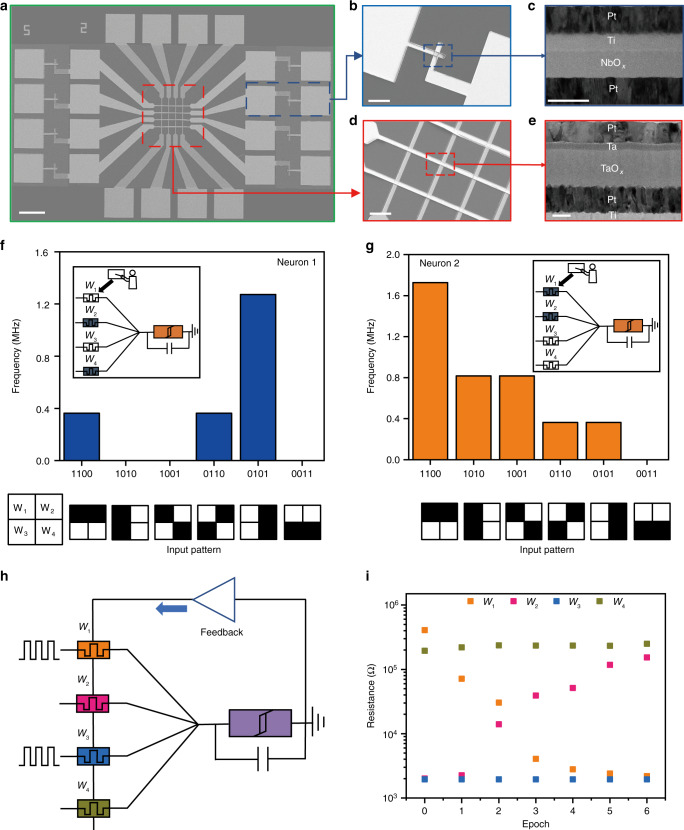
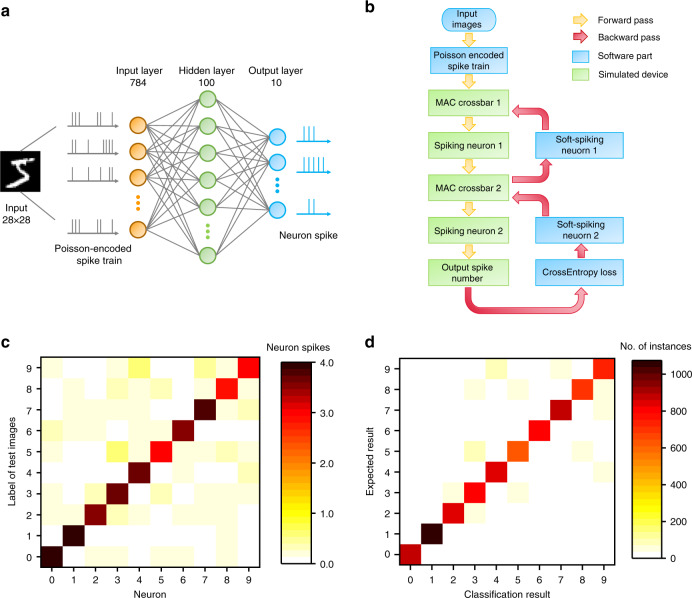
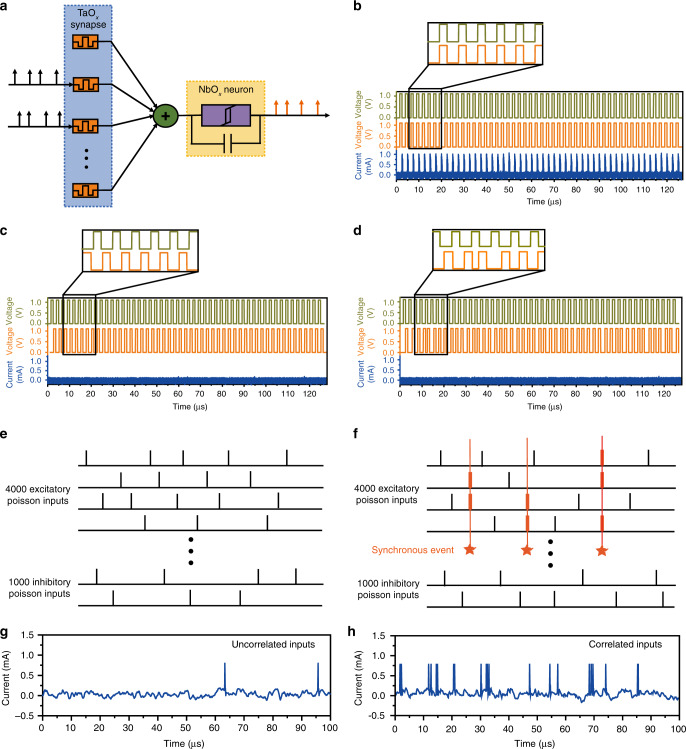
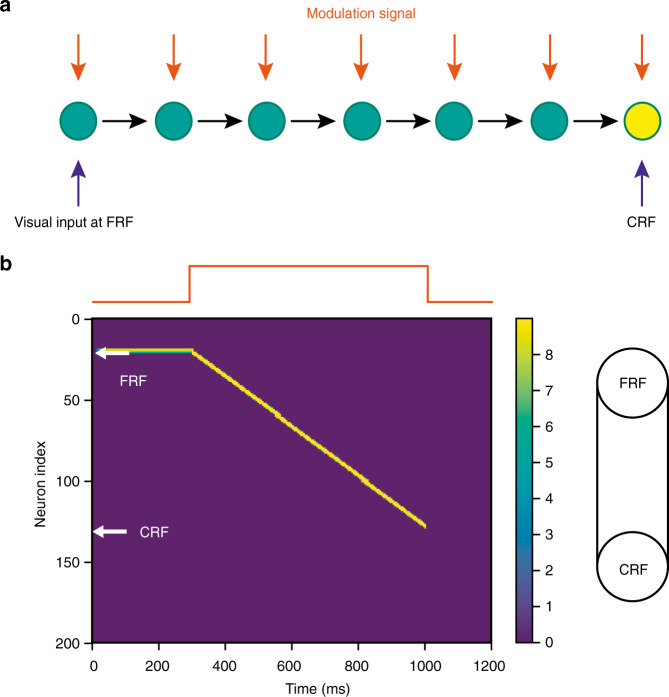
Verification
Claims the paper makes
The claims and statistics of this paper haven’t been checked yet.
Free: it reads the open-access text and checks the first 5 claims that cite a source we can check. Create a free account to check every claim.
Self-check
Percentages, sums and reported differences re-computed from the paper’s own numbers.
The self-check needs the paper’s full text.
Citations
Cites
(1982) · Trends in Neurosciences · doi:10.1016/0166-2236(82)90076-5 · Cited by 9,089
Nanoscale Memristor Device as Synapse in Neuromorphic Systems
Jo, S. H., Chang, T., Ebong, I., Bhadviya, B. B., Mazumder, P., & Lu, W. (2010) · Nano Letters · doi:10.1021/nl904092h · Cited by 4,174
Dynamic predictions: Oscillations and synchrony in top–down processing
Engel, A. K., Fries, P., & Singer, W. (2001) · Nature Reviews Neuroscience · doi:10.1038/35094565 · Cited by 3,454
Memristors with diffusive dynamics as synaptic emulators for neuromorphic computing
Wang, Z., Joshi, S., Savel’ev, S. E., Jiang, H., Midya, R., Lin, P., Hu, M., Ge, N., Strachan, J. P., Li, Z., et al. (2017) · Nature Materials · doi:10.1038/nmat4756 · Cited by 2,358
Neuromorphic Silicon Neuron Circuits
Indiveri, G., Linares-Barranco, B., Hamilton, T. J., Schaik, A. V., Etienne-Cummings, R., Delbruck, T., Liu, S.-C., Dudek, P., Häfliger, P., Renaud, S., et al. (2011) · Frontiers in Neuroscience · doi:10.3389/fnins.2011.00073 · Cited by 1,821
Self-citationEncoding of Spatial Location by Posterior Parietal Neurons
Andersen, R. A., Essick, G. K., & Siegel, R. M. (1985) · Science · doi:10.1126/science.4048942 · Cited by 1,402
A Review of the Integrate-and-fire Neuron Model: I. Homogeneous Synaptic Input
Burkitt, A. N. (2006) · Biological Cybernetics · doi:10.1007/s00422-006-0068-6 · Cited by 1,208
Neuromorphic computing using non-volatile memory
Burr, G. W., Shelby, R. M., Sebastian, A., Kim, S., Kim, S., Sidler, S., Virwani, K., Ishii, M., Narayanan, P., Fumarola, A., et al. (2017) · Advances in Physics: X · doi:10.1080/23746149.2016.1259585 · Cited by 1,107
Fully memristive neural networks for pattern classification with unsupervised learning
Wang, Z., Joshi, S., Savel’ev, S., Song, W., Midya, R., Li, Y., Rao, M., Yan, P., Asapu, S., Zhuo, Y., et al. (2018) · Nature Electronics · doi:10.1038/s41928-018-0023-2 · Cited by 1,106
A scalable neuristor built with Mott memristors
Pickett, M. D., Medeiros-Ribeiro, G., & Williams, R. S. (2013) · Nature Materials · doi:10.1038/nmat3510 · Cited by 1,033
Research works printed but not linked: 1
- Minsky, M. L. & Papert, S. A. Perceptrons. (MIT Press, Cambridge, MA, USA, 1969).
Cited by
Items 301–339 of 339
2D materials for neuromorphic devices
Jiang, J., & Su, J. (2023) · Elsevier eBooks · doi:10.1016/b978-0-12-821505-0.00007-1 · Cited by 1
Oxide Neuron Devices and Their Applications in Artificial Neural Networks
Li, Z.-X., Hu, L., Wang, J., & Zhuge, F. (2023) · Journal of Inorganic Materials · doi:10.15541/jim20230405 · Cited by 1
Resistive switching devices empower the AI era
Jie, Y. U., Li, C., Zhang, X., Liu, Q., & Liu, M. (2025) · Scientia Sinica Informationis · doi:10.1360/ssi-2024-0349 · Cited by 1
Chen, S.-M., Shih, L., Gao, J.-C., You, S., Chen, K., Lin, P.-L., Hsu, K., Chen, C. L. P., Chen, W.-L., & Chen, J. (2025) · Nanoscale Horizons · doi:10.1039/d5nh00268k · Cited by 2
TaOx-based bifunctional memristor for compact leaky integrate-and-fire neuron
Cao, L., Luo, Y., Cheng, X., & Miao, X. (2025) · Applied Physics Letters · doi:10.1063/5.0277028 · Cited by 1
Transient Response and Firing Behaviors of Memristive Neuron Circuit
Fang, X., Tan, Y., Zhang, F., Duan, S., & Wang, L. (2022) · Frontiers in Neuroscience · doi:10.3389/fnins.2022.922086 · Cited by 2
Spiking Neural Network with Memristive Based Computing-In-Memory Circuits and Architecture
Nowshin, F. (2021) · VTechWorks (Virginia Tech) · Cited by 3
Carbon nanomaterials as platforms for biosensors and atomic switch network devices
Nguyen, H. P. (2023) · Open Access Victoria University of Wellington | Te Herenga Waka (Figshare) · doi:10.26686/wgtn.24062589 · Cited by 2
Optimization and Application of Niobium Oxide based Memristive NDR devices
Mikolajick, T., Herzig, M., Slesazeck, S., Weiher, M., Ascoli, A., & Tetzlaff, R. (2021) · International Workshop on Cellular Nanoscale Networks and their Applications (CNNA) · doi:10.1109/cnna49188.2021.9610782
Sasikumar, R., & Padmanabhan, R. (2023) · Conference on Ph.D. Research in Microelectronics and Electronics · doi:10.1109/prime58259.2023.10161791
Reinforcement Learning Circuit Based on Memristive Neural Network
Yue, Y., Chen, B., Zhai, Y., Sun, J., & Wang, Y. (2023) · IEEE International Conference on Memristive Computing and Applications (ICMCA) · doi:10.1109/icmca59770.2023.10481062
Self-citationPiezoelectric neuron for neuromorphic computingPreprint
Fan, Z. H., Li, W., Shan, T., Chen, Z., Ou, J., Liu, K., Tao, R., Tian, G., Qin, M., Zeng, M., et al. (2024) · Research Square · doi:10.21203/rs.3.rs-3989574/v1
Brief Review of Neuron Typology and Analysis of the Use of Memristor Crossbars
Tokarev, A. A., & Khorin, I. A. (2024) · Russian Microelectronics · doi:10.1134/s1063739724600766
Energy-efficient artificial pyramidal neuron dendrites for visual information inferencePreprint
Zhu, B., Wang, R., Liu, G., Wang, S., Jing, X., Sun, J. W., Li, D., Qiu, M., & Wang, H. (2025) · Research Square · doi:10.21203/rs.3.rs-6504526/v1
Chuanchen, D. U., ZHENG, Y., Qianqian, G. U. O., & Guoxiong, L. I. U. (2025) · Advances in Psychological Science · doi:10.3724/sp.j.1042.2025.2027 · Cited by 3
Fabricating Elements of Slow Electronics with Functional Materials
Inoue, H., & Yajima, T. (2025) · Springer eBooks · doi:10.1007/978-981-96-8383-3_3
Busygin, A. N., Udovichenko, S. Y., & Ebrahim, A. H. A. (2026) · Integration · doi:10.1016/j.vlsi.2026.102670
Artificial Perception System Based on Artificial Neuron and Triboelectric Nanogenerator
Liu, W. Y., Zhu, Z., & Xie, W. (2025) · IEEE International Conference on Control, Electronics and Computer Technology (ICCECT) · doi:10.1109/iccect64621.2025.11339542
Zhu, Y., Xie, C., Ye, Z., Jiang, T., Zhang, Y., Wang, K., Wu, X., Tang, H., Zhang, J., Hu, Y., et al. (2026) · Materials Horizons · doi:10.1039/d5mh01754h
Memristive Dynamical Spiking Neural Networks with Spatiotemporal Heterogeneity
Shi, X., Zhou, P., McTaggart, C., & Xin, Y. (2025) · International Conference on Machine Intelligence and Nature-Inspired Computing (MIND) · doi:10.1109/mind67540.2025.11351539
Three-terminal quantum dot LEDs with integrate-and-fire neuron for on-device encryption
Zhou, G., Pan, Y., Hu, H., Guo, T., & Li, F. (2026) · Chemical Engineering Journal · doi:10.1016/j.cej.2026.175035
Artificial neural networks with radio-frequency spintronic nano-devices
Leroux, N. (2022) · theses.fr (ABES) · doi:10.70675/acc48b6dzf6c5z436dzbb4az611c0b52d106 · Cited by 1
Physics-Grounded Neuromorphic Computing : From Spiking Neurons to Learning Algorithms
Drouhin, M. (2023) · theses.fr (ABES) · doi:10.70675/f8687efbz8f22z4022zb65czb59d11e98482 · Cited by 1
Towards neuromorphic computing on quantum many-body architectures : VO2 transition dynamics
Banguero, M. A. (2024) · theses.fr (ABES) · doi:10.70675/7b80cab9z6fabz4d43zbbd6z892a29b30429
Wang, Y., Chen, H., Tang, Z., Lan, W., Huang, J., Chen, W. Q., & Zheng, Y. (2026) · APL Materials · doi:10.1063/5.0325477
Self-citationSong, K., Bonnin, M., Ascoli, A., & Corinto, F. (2026) · IEEE Transactions on Circuits and Systems I Regular Papers · doi:10.1109/tcsi.2026.3685449
Ion-modulated oxide-based neuromorphic transistors for spatiotemporal information processing
Qiu, G., Li, R., Jin, C., Ma, L., Shi, X., Xu, Y., Yang, Y., Liu, W., & Sun, J. (2026) · Materials Horizons · doi:10.1039/d6mh00693k
Self-citationGate-Engineered Tunnel FET Based LIF Neuron for Scalable and Energy-Efficient AI Systems
Bashir, F. I., Alzahrani, A., Bature, U. I., Abbas, H., & Zahoor, F. (2026) · IEEE International Conference on Computing and Machine Intelligence (ICMI) · doi:10.1109/icmi68585.2026.11539791
Wang, J., Zong, J., Wu, R., Liu, B., Chen, X. S., Chen, G., & Zhao, D. M. (2026) · Chinese Journal of Electronics · doi:10.23919/cje.2024.00.309
Artificial sparse neuron dendrites for visual information inference
Wang, R., Liu, G., Wang, S., Jing, X., Sun, J., Li, D., Ge, K., Shen, X., Qiu, M., Wang, H., et al. (2026) · Science Advances · doi:10.1126/sciadv.aec9948 · Cited by 1
Feng, B., Liu, Z., Feng, J., & Chen, G. (2026) · Neural Networks · doi:10.1016/j.neunet.2026.109326 · Cited by 2
Bifurcation Analysis Framework of Spiking Neuron Models
Li, Z., Zhang, S., & Wen, C. (2026) · IEEE Transactions on Circuits and Systems I Regular Papers · doi:10.1109/tcsi.2026.3710811
Ko, Y., Han, S. S., Kaium, M. G., Song, Y. D., Lee, S., Tariq, S., You, J., Kim, B. H., Bae, J., Wi, S. H., et al. (2026) · SSRN Electronic Journal · doi:10.2139/ssrn.7180696
SpikeFormer: A Spiking Transformer-Based Cancer Detection Model
Imrana, Y., Liu, D.-N., Chen, H.-Y., Cai, P.-L., Liu, F., Zhang, L.-Q., & Zhang, Z.-Y. (2026) · Current Genomics · doi:10.1016/j.curgen.2026.08.002
Analysis and Applications of Neuromorphic Memristors in Artificial Intelligence Computing
Wang, J., Chen, Q., Zhang, J., Meng, J., & Wang, T. (2026) · Nano-Micro Letters · doi:10.1007/s40820-026-02322-5
Probabilistic Threshold-Switching Memristor for LIF Spiking and RBM Sampling
Park, S., Kim, S., Park, G., Kim, S., Kim, S., & Lee, J. (2026) · ACS Applied Electronic Materials · doi:10.1021/acsaelm.6c01458
A Bio-Inspired Visual System With Single-Spike Coding Based on VO 2 Memristors
Jin, B., Wang, F., Chen, A., Ma, K., Wu, J., Duan, S., Wang, L., Zhang, T., Lu, Y., & Yuan, R. (2026) · IEEE Electron Device Letters · doi:10.1109/led.2026.3723903
Self-citationYang, J., Lee, B., Lee, H., Kim, M., Choi, C., Lim, J. A., Kim, Y., & Im, S. G. (2026) · Advanced Science · doi:10.1002/advs.77167
Alzahrani, A., & Bashir, F. I. (2026) · International Journal of Numerical Modelling Electronic Networks Devices and Fields · doi:10.1002/jnm.70214
Metadata
- Authors
- Duan, Q., Jing, Z., Zou, X., Wang, Y., Yang, K., Zhang, T., Wu, S., Huang, R., & Yang, Y.
- Affiliations
- Peking University (CN)
- Corresponding author
- Huang, Ru
- Yang, Yuchao
- Venue
- Nature Communications
- Published
- 2020-07-07
- Volume
- 11
- Issue
- 1
- Pages
- 3399-3399
- ISSN
- 2041-1723 (ISSN-L)
- PMC
- PMC7341810
- OpenAlex
- W3039560462
- Semantic Scholar
- 4343c3a396aa98c9fb0ad48b7a48e15664c69c90
- Cited by
- 339
- References
- 49
- Citations by year
- 2026: 35 · 2025: 63 · 2024: 71 · 2023: 62 · 2022: 71 · 2021: 37
- FWCI
- 14.60
- Type
- journal article
- Language
- en
- Open access
- gold
- doi.org
- Licence
- cc-by
- creativecommons.org/licenses/by/4.0 (tdm)
- creativecommons.org/licenses/by/4.0 (vor)
- Locations
- Nature Communications (publishedVersion, cc-by)
- PubMed Central (publishedVersion, cc-by)
- PubMed (publishedVersion)
- RePEc: Research Papers in Economics (submittedVersion)
- DOAJ (DOAJ: Directory of Open Access Journals) (submittedVersion, cc-by-sa)
- Greater South Information System
- Funders
- National Natural Science Foundation of China (61927901, 61421005, 61674006)
- National Outstanding Youth Foundation of China (61925401)
- Topics
- Physical Sciences › Engineering › Electrical and Electronic Engineering › Advanced Memory and Neural Computing
- Physical Sciences › Engineering › Electrical and Electronic Engineering › Ferroelectric and Negative Capacitance Devices
- Physical Sciences › Computer Science › Artificial Intelligence › Neural Networks and Applications
- Keywords
- spiking neurons, memristive neural networks, spatiotemporal integration, gain modulation, XOR function, monolithic integration, crossbar arrays, coincidence detection, pattern recognition, online learning, neuromorphic hardware, artificial neurons
About these checks
Registry, retraction, Cites and statistics results are computed, not judged, with one exception: a printed reference that no index lists is read once by a model before it counts as a citation error. Claims are extracted by a model and kept only when their quote appears verbatim in the text; each cited source is then checked, with a model’s help, for whether it says what the claim relies on. Those verdicts can be wrong — read the claim’s quote and the cited source before relying on one.
Statistics and arithmetic are recomputed, not judged.
Confidence bands are shown only for fields calibrated on our annotated test set. None is calibrated yet, so no band is shown.
What counts as a claim ›How we measure confidence ›How we check this ›
Are you an author, or do you see a problem with this page? Request a review
Data sources
Bibliographic data: Semantic Scholar, OpenAlex, Crossref.
Contains information from the Semantic Scholar Academic Graph Datasets, made available under the ODC Attribution License (ODC-BY 1.0).
Semantic Scholar’s data is described in: Kinney, R., et al. (2023). The Semantic Scholar Open Data Platform. arXiv:2301.10140.
