

Causality matters in medical imaging
Open accessThe DOI matches its Crossref record; 54 of the 54 references it cites were found in a registry or an index.
Abstract
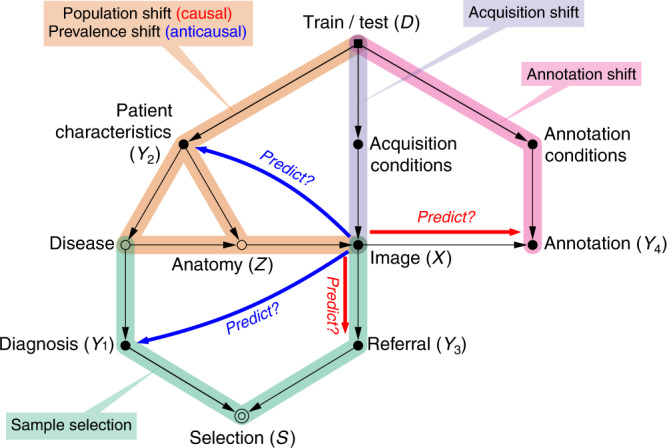
Causal reasoning can shed new light on the major challenges in machine learning for medical imaging: scarcity of high-quality annotated data and mismatch between the development dataset and the target environment. A causal perspective on these issues allows decisions about data collection, annotation, preprocessing, and learning strategies to be made and scrutinized more transparently, while providing a detailed categorisation of potential biases and mitigation techniques. Along with worked clinical examples, we highlight the importance of establishing the causal relationship between images and their annotations, and offer step-by-step recommendations for future studies.
Overview
The claims and statistics of this paper haven’t been checked yet.
Free: it reads the open-access text and checks the first 5 claims that cite a source we can check. Create a free account to check every claim.
Integrity signals
Registry
Cites
Statistics
Figures
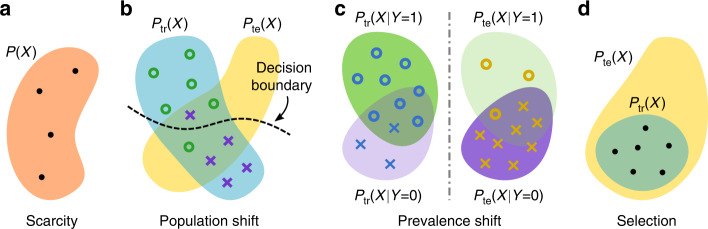
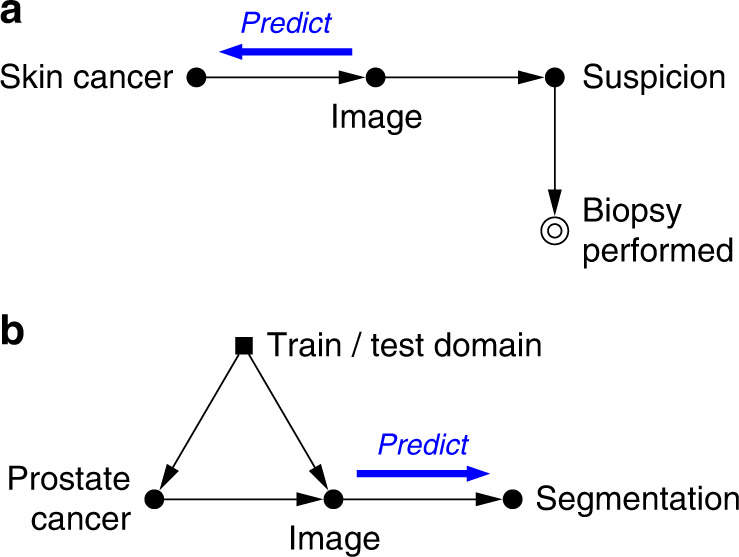
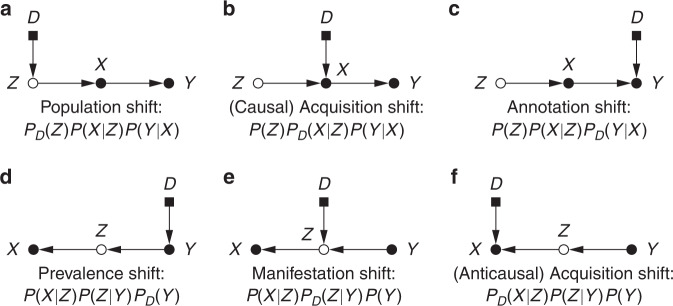
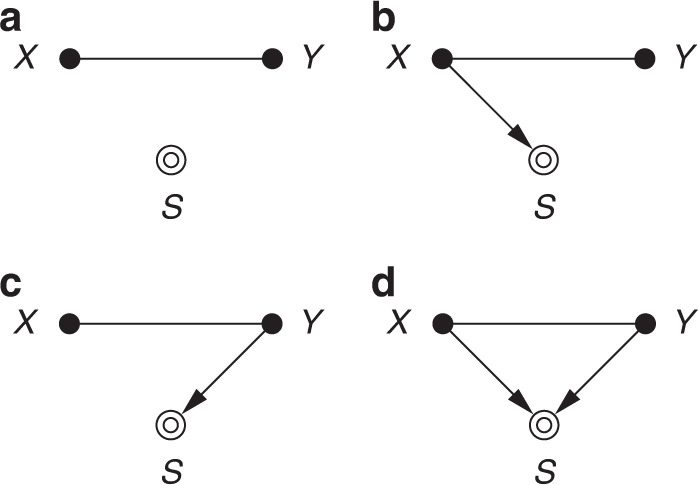
Verification
Claims the paper makes
The claims and statistics of this paper haven’t been checked yet.
Free: it reads the open-access text and checks the first 5 claims that cite a source we can check. Create a free account to check every claim.
Claims other papers make about this one
Each is checked against this paper’s own text: does it say what the citing paper says it does?
The cited source says what the claim attributes to it.
In the citing paper
“In radiology, for example, imaging hardware manufacturer, model, software versions and acquisition parameters all meaningfully alter the characteristics of diagnostic images40.”
From Bias recognition and mitigation strategies in artificial intelligence healthcare applications (2025) · cites this paper as [40]
The cited source says what the claim attributes to it.
In the citing paper
“Nevertheless, causality has recently enjoyed increasing attention again, with discussion about causality in deep learning68 and medical imaging69,70.”
From Orchestrating explainable artificial intelligence for multimodal and longitudinal data in medical imaging (2024) · cites this paper as [70]
The check wasn’t confident either way, so it gives no verdict — never disputed.
In the citing paper
“In the hip fracture detection audit, 20 the risk of false positives in cases of femoral deformities was found to require further monitoring, with a potential modification of the intended use (to exclude cases with deformities) as an appropriate mitigation action, if they were confirmed to cause a failure mode.”
From The medical algorithmic audit (2022) · cites this paper as [20]
Experimental — accuracy not yet measuredThe check wasn’t confident either way, so it gives no verdict — never disputed.
In the citing paper
“In the hip fracture detection audit, 20 the discovery of algorithmic errors in cases with abnormal bones prompted an additional labelling exercise of all hips with abnormal bones and joints to find that the error rate in those cases was 50%, compared with 2•5% in the overall dataset (figure 2).”
From The medical algorithmic audit (2022) · cites this paper as [20]
Experimental — accuracy not yet measured
Self-check
Percentages, sums and reported differences re-computed from the paper’s own numbers.
The self-check needs the paper’s full text.
Citations
Cites
Dermatologist-level classification of skin cancer with deep neural networks
Esteva, A., Kuprel, B., Novoa, R. A., Ko, J., Swetter, S. M., Blau, H. M., & Thrun, S. (2017) · Nature · doi:10.1038/nature21056 · Cited by 14,362
Causality: Models, Reasoning, and Inference
Pearl, J. (2009) · doi:10.1017/cbo9780511803161 · Cited by 11,653
RUBIN, D. B. (1976) · Biometrika · doi:10.1093/biomet/63.3.581 · Cited by 9,925
Domain-Adversarial Training of Neural Networks
Ganin, Y., Ustinova, E., Ajakan, H., Germain, P., Larochelle, H., Laviolette, F., Marchand, M., & Lempitsky, V. (2017) · Advances in Computer Vision and Pattern Recognition · doi:10.1007/978-3-319-58347-1_10 · Cited by 8,318 · cited 1×
“In addition, the increasingly active research area of domain adaptation investigates data harmonization by means of more complex transformations, such as extracting domain-invariant representations 25,26 or translating between imaging modalities 27 (e.g. synthesizing MRI volumes from CT scans 28 ).”
BackgroundThe multimodal brain tumor image segmentation benchmark (BRATS)
Menze, B. H., Jakab, A., Bauer, S., Kalpathy-Cramer, J., Farahani, K., Kirby, J., Burren, Y., Porz, N., Slotboom, J., Wiest, R., et al. (2015) · IEEE Transactions on Medical Imaging · doi:10.1109/tmi.2014.2377694 · Cited by 6,781
Self-citation(2006) · The MIT Press eBooks · doi:10.7551/mitpress/9780262033589.001.0001 · Cited by 4,280
Collins, G. S., Reitsma, J. B., Altman, D. G., & Moons, K. G. M. (2015) · Annals of Internal Medicine · doi:10.7326/m14-0697 · Cited by 3,267
A structural approach to selection bias
Hernán, M. A., Hernández-Díaz, S., & Robins, J. M. (2004) · Epidemiology · doi:10.1097/01.ede.0000135174.63482.43 · Cited by 2,844
Model Cards for Model Reporting
Mitchell, M., Wu, S., Zaldivar, A., Barnes, P., Vasserman, L., Hutchinson, B., Spitzer, E., Raji, I. D., & Gebru, T. (2019) · Proceedings of the Conference on Fairness, Accountability, and Transparency · doi:10.1145/3287560.3287596 · Cited by 2,681 · cited 1×
“Scholars in FAT have proposed checklist-style guidelines for reporting datasets 59 and models 60 , for example, and have been investigating sources of failure for machine-learning models, among which is poor reporting 61 .”
MethodGebru, T., Morgenstern, J., Vecchione, B., Vaughan, J. W., Wallach, H., Daumé, H., & Crawford, K. (2018) · arXiv · doi:10.48550/arxiv.1803.09010 · Cited by 2,474 · cited 1×
“Scholars in FAT have proposed checklist-style guidelines for reporting datasets 59 and models 60 , for example, and have been investigating sources of failure for machine-learning models, among which is poor reporting 61 .”
MethodGebru, T., Morgenstern, J., Vecchione, B., Vaughan, J. W., Wallach, H., III, H. D., & Crawford, K. (2021) · Communications of the ACM · doi:10.1145/3458723 · Cited by 2,469 · cited 1×
“Scholars in FAT have proposed checklist-style guidelines for reporting datasets 59 and models 60 , for example, and have been investigating sources of failure for machine-learning models, among which is poor reporting 61 .”
MethodMultimodal population brain imaging in the UK Biobank prospective epidemiological study
Miller, K. L., Alfaro-Almagro, F., Bangerter, N. K., Thomas, D. L., Yacoub, E., Xu, J., Bartsch, A. J., Jbabdi, S., Sotiropoulos, S. N., Andersson, J. L. R., et al. (2016) · Nature Neuroscience · doi:10.1038/nn.4393 · Cited by 2,020
Dataset Shift in Machine Learning
(2008) · doi:10.7551/mitpress/9780262170055.001.0001 · Cited by 1,553
Do no harm: a roadmap for responsible machine learning for health care
Wiens, J., Saria, S., Sendak, M., Ghassemi, M., Liu, V. X., Doshi-Velez, F., Jung, K., Heller, K., Kale, D., Saeed, M., et al. (2019) · Nature Medicine · doi:10.1038/s41591-019-0548-6 · Cited by 1,266
A unifying view on dataset shift in classification
Moreno-Torres, J. G., Raeder, T., Alaiz-Rodríguez, R., Chawla, N. V., & Herrera, F. (2012) · Pattern Recognition · doi:10.1016/j.patcog.2011.06.019 · Cited by 1,029
Arjovsky, M., Bottou, L., Gulrajani, I., & Lopez-Paz, D. (2019) · arXiv · doi:10.48550/arxiv.1907.02893 · Cited by 927
Realistic Evaluation of Deep Semi-Supervised Learning Algorithms
Oliver, A., Odena, A., Raffel, C., Cubuk, E. D., & Goodfellow, I. J. (2018) · arXiv · doi:10.48550/arxiv.1804.09170 · Cited by 772
Reporting of artificial intelligence prediction models
Collins, G. S., & Moons, K. G. M. (2019) · The Lancet · doi:10.1016/s0140-6736(19)30037-6 · Cited by 701
Good practices for quantitative bias analysis
Lash, T. L., Fox, M. P., MacLehose, R. F., Maldonado, G., McCandless, L. C., & Greenland, S. (2014) · International Journal of Epidemiology · doi:10.1093/ije/dyu149 · Cited by 646
Causal inference and the data-fusion problem
Bareinboim, E., & Pearl, J. (2016) · Proceedings of the National Academy of Sciences · doi:10.1073/pnas.1510507113 · Cited by 621
Unsupervised Domain Adaptation in Brain Lesion Segmentation with Adversarial Networks
Kamnitsas, K., Baumgartner, C., Ledig, C., Newcombe, V., Simpson, J., Kane, A., Menon, D., Nori, A., Criminisi, A., Rueckert, D., et al. (2017) · Lecture Notes in Computer Science · doi:10.1007/978-3-319-59050-9_47 · Cited by 468
Self-citationWhy rankings of biomedical image analysis competitions should be interpreted with care
Maier-Hein, L., Eisenmann, M., Reinke, A., Onogur, S., Stankovic, M., Scholz, P., Arbel, T., Bogunovic, H., Bradley, A. P., Carass, A., et al. (2018) · Nature Communications · doi:10.1038/s41467-018-07619-7 · Cited by 380 · cited 1×
“Based on a comprehensive ontology of medical imaging meta-information 11 , we have compiled in Table 1 a list of attributes that are meaningful for characterizing the predictive causal direction and detecting signs of dataset mismatch.”
MethodLanglotz, C. P., Allen, B., Erickson, B. J., Kalpathy-Cramer, J., Bigelow, K., Cook, T. S., Flanders, A. E., Lungren, M. P., Mendelson, D. S., Rudie, J. D., et al. (2019) · Radiology · doi:10.1148/radiol.2019190613 · Cited by 368
External Validity: From Do-Calculus to Transportability Across Populations
Pearl, J., & Bareinboim, E. (2014) · Statistical Science · doi:10.1214/14-sts486 · Cited by 345
Bayesian networks in biomedicine and health-care
Lucas, P. J. F., van der Gaag, L. C., & Abu-Hanna, A. (2004) · Artificial Intelligence in Medicine · doi:10.1016/j.artmed.2003.11.001 · Cited by 334
The reusable holdout: Preserving validity in adaptive data analysis
Dwork, C., Feldman, V., Hardt, M., Pitassi, T., Reingold, O., & Roth, A. (2015) · Science · doi:10.1126/science.aaa9375 · Cited by 307
Making Machine Learning Models Clinically Useful
Shah, N. H., Milstein, A., & Bagley, P. (2019) · JAMA · doi:10.1001/jama.2019.10306 · Cited by 294
Big Data and Predictive Analytics: Recalibrating Expectations
Shah, N. D., Steyerberg, E. W., & Kent, D. M. (2018) · JAMA · doi:10.1001/jama.2018.5602 · Cited by 241
SynSeg-Net: Synthetic Segmentation Without Target Modality Ground Truth
Huo, Y., Xu, Z., Moon, H., Bao, S., Assad, A., Moyo, T. K., Savona, M. R., Abramson, R. G., & Landman, B. A. (2019) · IEEE Transactions on Medical Imaging · doi:10.1109/tmi.2018.2876633 · Cited by 237
Regulation of predictive analytics in medicine
Parikh, R. B., Obermeyer, Z., & Navathe, A. S. (2019) · Science · doi:10.1126/science.aaw0029 · Cited by 223
Predictive analytics in health care: how can we know it works?
Van Calster, B., Wynants, L., Timmerman, D., Steyerberg, E. W., & Collins, G. S. (2019) · Journal of the American Medical Informatics Association · doi:10.1093/jamia/ocz130 · Cited by 223
Invited Commentary: Causal Diagrams and Measurement Bias
Hernan, M. A., & Cole, S. R. (2009) · American Journal of Epidemiology · doi:10.1093/aje/kwp293 · Cited by 220
Prevedello, L. M., Halabi, S. S., Shih, G., Wu, C. C., Kohli, M. D., Chokshi, F. H., Erickson, B. J., Kalpathy-Cramer, J., Andriole, K. P., & Flanders, A. E. (2019) · Radiology: Artificial Intelligence · doi:10.1148/ryai.2019180031 · Cited by 169
Practical guidance on artificial intelligence for health-care data
Ghassemi, M., Naumann, T., Schulam, P., Beam, A. L., Chen, I. Y., & Ranganath, R. (2019) · The Lancet Digital Health · doi:10.1016/s2589-7500(19)30084-6 · Cited by 158
Using causal diagrams to guide analysis in missing data problems
Daniel, R. M., Kenward, M. G., Cousens, S. N., & De Stavola, B. L. (2012) · Statistical Methods in Medical Research · doi:10.1177/0962280210394469 · Cited by 155
Reporting guidelines for clinical trials evaluating artificial intelligence interventions are needed
The CONSORT-AI and SPIRIT-AI Steering Group (2019) · Nature Medicine · doi:10.1038/s41591-019-0603-3 · Cited by 143
Multi-Source Domain Adaptation: A Causal View
Zhang, K., Gong, M., & Schoelkopf, B. (2015) · Proceedings of the AAAI Conference on Artificial Intelligence · doi:10.1609/aaai.v29i1.9542 · Cited by 138 · cited 2×
“An underfitted model (‘too simple’) may however introduce spurious dependencies, for which importance reweighting with p te ( x ) / p tr ( x ) is a common mitigation strategy 20,21 .”
BackgroundThe advantages of UK Biobank's open‐access strategy for health research
Conroy, M., Sellors, J., Effingham, M., Littlejohns, T. J., Boultwood, C., Gillions, L., Sudlow, C. L. M., Collins, R., & Allen, N. E. (2019) · Journal of Internal Medicine · doi:10.1111/joim.12955 · Cited by 133
Simulation and Synthesis in Medical Imaging
Frangi, A. F., Tsaftaris, S. A., & Prince, J. L. (2018) · IEEE Transactions on Medical Imaging · doi:10.1109/tmi.2018.2800298 · Cited by 117
Tutorial: Safe and Reliable Machine LearningPreprint
Saria, S., & Subbaswamy, A. (2019) · arXiv (Cornell University) · doi:10.48550/arxiv.1904.07204 · Cited by 107 · cited 1×
“Scholars in FAT have proposed checklist-style guidelines for reporting datasets 59 and models 60 , for example, and have been investigating sources of failure for machine-learning models, among which is poor reporting 61 .”
MethodInferring deterministic causal relations
Daniušis, P., Janzing, D., Mooij, J. M., Jakob Zscheischler, A., Steudel, B., Zhang, K., & Schölkopf, B. (2012) · arXiv (Cornell University) · doi:10.48550/arxiv.1203.3475 · Cited by 105
A Causal Bayesian Networks Viewpoint on Fairness
Chiappa, S., & Isaac, W. S. (2019) · IFIP advances in information and communication technology · doi:10.1007/978-3-030-16744-8_1 · Cited by 95 · cited 1×
“Interestingly, the same formalism of causal reasoning explored here was also shown to be especially well-suited for expressing and addressing issues of unfairness (e.g. social biases) 62 and dataset shift 63 in other contexts.”
BackgroundRecovering from Selection Bias in Causal and Statistical Inference
Bareinboim, E., Tian, J., & Pearl, J. (2014) · Proceedings of the AAAI Conference on Artificial Intelligence · doi:10.1609/aaai.v28i1.9074 · Cited by 92
Machine Learning with Multi-Site Imaging Data: An Empirical Study on the Impact of Scanner Effects
Glocker, B., Robinson, R., Castro, D. C., Dou, Q., & Konukoglu, E. (2019) · arXiv · doi:10.48550/arxiv.1910.04597 · Cited by 74 · cited 1×
“We lastly discuss acquisition shift , resulting from the use of different scanners or imaging protocols, which is one of the most notorious and well-studied sources of dataset shift in medical imaging 24 .”
BackgroundSelf-citationWHO and ITU establish benchmarking process for artificial intelligence in health
Wiegand, T., Krishnamurthy, R., Kuglitsch, M., Lee, N., Pujari, S., Salathé, M., Wenzel, M., & Xu, S. (2019) · The Lancet · doi:10.1016/s0140-6736(19)30762-7 · Cited by 66
The Use and Misuse of Biomedical Data: Is Bigger Really Better?
Hoffman, S., & Podgurski, A. (2013) · American Journal of Law & Medicine · doi:10.1177/009885881303900401 · Cited by 55
Cypko, M. A., Stoehr, M., Koźniewski, M., Drużdżel, M. J., Dietz, A., Berliner, L., & Lemke, H. U. (2017) · International Journal of Computer Assisted Radiology and Surgery · doi:10.1007/s11548-017-1531-7 · Cited by 49
An Augmented PAC Model for Semi-Supervised Learning
Balcan, M.-F., & Blum, A. L. (2006) · The MIT Press eBooks · doi:10.7551/mitpress/6173.003.0030 · Cited by 36
Causal diagrams for encoding and evaluation of information bias
Shahar, E. (2009) · Journal of Evaluation in Clinical Practice · doi:10.1111/j.1365-2753.2008.01031.x · Cited by 32
Walking the tightrope of artificial intelligence guidelines in clinical practice
Health, T. L. D. (2019) · The Lancet Digital Health · doi:10.1016/s2589-7500(19)30063-9 · Cited by 30
Cozman, F. G., & Cohen, I. (2006) · The MIT Press eBooks · doi:10.7551/mitpress/6173.003.0007 · Cited by 28
Semi-supervised Learning in Causal and Anticausal Settings
Schölkopf, B., Janzing, D., Peters, J., Sgouritsa, E., Zhang, K., & Mooij, J. M. (2013) · Springer eBooks · doi:10.1007/978-3-642-41136-6_13 · Cited by 23
Greenland, S., & Pearl, J. (2011) · Springer eBooks · doi:10.1007/978-3-642-04898-2_162 · Cited by 16 · cited 3×
“In addition, the granularity of ‘direct effects’ is only relative to the chosen level of abstraction 66 .”
BackgroundDiscriminative and Generative Models in Causal and Anticausal Settings
Blöbaum, P., Shimizu, S., & Washio, T. (2015) · Lecture notes in computer science · doi:10.1007/978-3-319-28379-1_15 · Cited by 6
Research works printed but not linked: 9
- Schölkopf, B. et al. On causal and anticausal learning. In Proc. 29th International Conference on Machine Learning (ICML 2012) 459–466 (2012).
- Oliver, A., Odena, A., Raffel, C. A., Cubuk, E. D. & Goodfellow, I. in Advances in Neural Information Processing Systems Vol. 31 (NeurIPS 2018), 3235–3246 (2018).
- Singh, A., Nowak, R. & Zhu, X. in Advances in Neural Information Processing Systems Vol. 21 (NIPS 2008), 1513–1520 (2008).
- Storkey, A. J. in Dataset Shift in Machine Learning (eds Quiñonero-Candela, J. et al.), Ch. 1, 3–28 (MIT Press, Cambridge, MA, 2009).
- Zhang, K., Schölkopf, B., Muandet, K. & Wang, Z. Domain adaptation under target and conditional shift. In Proc. 30th International Conference on Machine Learning (ICML 2013), Vol. 28, 819–827 (PMLR, 2013).
- Lipton, Z. C., Wang, Y.-X. & Smola, A. J. Detecting and correcting for label shift with black box predictors. In Proc. 35th International Conference on Machine Learning (ICML 2018), Vol. 80, 3122–3130 (PMLR, 2018).
- Mohan, K., Pearl, J. & Tian, J. in Advances in Neural Information Processing Systems Vol. 26 (NIPS 2013), 1277–1285 (2013).
- Subbaswamy, A., Schulam, P. & Saria, S. Preventing failures due to dataset shift: Learning predictive models that transport. In Proc. Twenty-Second International Conference on Artificial Intelligence and Statistics (AISTATS 2019), Vol. 89, 3118–3127 (PMLR, 2019).
- Peters J Janzing D Schölkopf B Elements of Causal Inference: Foundations and Learning Algorithms 2017 Cambridge, MA MIT Press
Cited by
The Liver Tumor Segmentation Benchmark (LiTS)
Bilic, P., Christ, P., Li, H. B., Vorontsov, E., Ben-Cohen, A., Kaissis, G., Szeskin, A., Jacobs, C., Mamani, G. E. H., Chartrand, G., et al. (2023) · Medical Image Analysis · doi:10.1016/j.media.2022.102680 · Cited by 1,412
The Liver Tumor Segmentation Benchmark (LiTS)
Bilic, P., Christ, P., Li, H. B., Vorontsov, E., Ben-Cohen, A., Kaissis, G., Szeskin, A., Jacobs, C., Mamani, G. E. H., Chartrand, G., et al. (2019) · arXiv · doi:10.48550/arxiv.1901.04056 · Cited by 1,412
Explainable artificial intelligence (XAI) in deep learning-based medical image analysis
van der Velden, B. H. M., Kuijf, H. J., Gilhuijs, K. G. A., & Viergever, M. A. (2022) · Medical Image Analysis · doi:10.1016/j.media.2022.102470 · Cited by 1,328
“Castro et al. (2020) describe how causal reasoning may be useful to assess such as biases in the data. van Amsterdam et al. (2019) show an example of eliminating bias using causality, yielding unbiased prediction of prognosis for patients with lung cancer.”
BackgroundInfluentialAI applications to medical images: From machine learning to deep learning
Castiglioni, I., Rundo, L., Codari, M., Di Leo, G., Salvatore, C., Interlenghi, M., Gallivanone, F., Cozzi, A., D'Amico, N. C., & Sardanelli, F. (2021) · Physica Medica · doi:10.1016/j.ejmp.2021.02.006 · Cited by 710
Algorithmic fairness in artificial intelligence for medicine and healthcare
Chen, R. J., Wang, J. J., Williamson, D. F. K., Chen, T. Y., Lipkova, J., Lu, M. Y., Sahai, S., & Mahmood, F. (2023) · Nature Biomedical Engineering · doi:10.1038/s41551-023-01056-8 · Cited by 750
“116,129.”
BackgroundMethod
Metadata
- Authors
- Castro, D. C., Walker, I., & Glocker, B.
- Affiliations
- Imperial College London (GB)
- Corresponding author
- Castro, Daniel C.
- Glocker, Ben
- Venue
- Nature Communications
- Published
- 2020-07-22
- Volume
- 11
- Issue
- 1
- Pages
- 3673-3673
- ISSN
- 2041-1723 (ISSN-L)
- PMC
- PMC7376027
- OpenAlex
- W2995750307
- Semantic Scholar
- 57397cd298fb8e8a827cf5b51bc009a503d9c489
- Cited by
- 364
- References
- 49
- Citations by year
- 2026: 70 · 2025: 77 · 2024: 59 · 2023: 72 · 2022: 52 · 2021: 33 · 2020: 1
- FWCI
- 3.02
- Type
- journal article
- Language
- en
- Open access
- gold
- doi.org
- Licence
- cc-by
- creativecommons.org/licenses/by/4.0 (tdm)
- creativecommons.org/licenses/by/4.0 (vor)
- Locations
- Nature Communications (publishedVersion, cc-by)
- PubMed Central (publishedVersion, cc-by)
- PubMed (publishedVersion)
- arXiv (Cornell University) (submittedVersion)
- DOAJ (DOAJ: Directory of Open Access Journals) (submittedVersion, cc-by-sa)
- Spiral (Imperial College London) (submittedVersion, other-oa)
- Spiral (Imperial College London) (submittedVersion, cc-by)
- arXiv (Cornell University)
- Funders
- European Commission (ERC-2017, 757173, HORIZON2020)
- Coordenação de Aperfeiçoamento de Pessoal de Nível Superior
- Natural Environment Research Council (NE/L002515/1)
- Topics
- Health Sciences › Medicine › Health Informatics › Artificial Intelligence in Healthcare and Education
- Physical Sciences › Computer Science › Artificial Intelligence › Explainable Artificial Intelligence (XAI)
- Physical Sciences › Computer Science › Computer Vision and Pattern Recognition › Medical Image Segmentation Techniques
- Keywords
- causal reasoning, diagnostic imaging, annotated data scarcity, domain shift, annotation bias, image annotation, bias mitigation, data collection, image preprocessing, learning strategies
- MeSH terms
- Machine Learning, Diagnostic Imaging, Humans, Image Interpretation, Computer-Assisted, Causality
About these checks
Registry, retraction, Cites and statistics results are computed, not judged, with one exception: a printed reference that no index lists is read once by a model before it counts as a citation error. Claims are extracted by a model and kept only when their quote appears verbatim in the text; each cited source is then checked, with a model’s help, for whether it says what the claim relies on. Those verdicts can be wrong — read the claim’s quote and the cited source before relying on one.
Statistics and arithmetic are recomputed, not judged.
Confidence bands are shown only for fields calibrated on our annotated test set. None is calibrated yet, so no band is shown.
What counts as a claim ›How we measure confidence ›How we check this ›
Are you an author, or do you see a problem with this page? Request a review
Data sources
Bibliographic data: Semantic Scholar, OpenAlex, Crossref.
Contains information from the Semantic Scholar Academic Graph Datasets, made available under the ODC Attribution License (ODC-BY 1.0).
Semantic Scholar’s data is described in: Kinney, R., et al. (2023). The Semantic Scholar Open Data Platform. arXiv:2301.10140.
