

Causality matters in medical imaging
Open accessThe DOI matches its Crossref record; 54 of the 54 references it cites were found in a registry or an index.
Abstract
Causal reasoning can shed new light on the major challenges in machine learning for medical imaging: scarcity of high-quality annotated data and mismatch between the development dataset and the target environment. A causal perspective on these issues allows decisions about data collection, annotation, preprocessing, and learning strategies to be made and scrutinized more transparently, while providing a detailed categorisation of potential biases and mitigation techniques. Along with worked clinical examples, we highlight the importance of establishing the causal relationship between images and their annotations, and offer step-by-step recommendations for future studies.
Overview
The claims and statistics of this paper haven’t been checked yet.
Free: it reads the open-access text and checks the first 5 claims that cite a source we can check. Create a free account to check every claim.
Integrity signals
Registry
Cites
Statistics
Figures
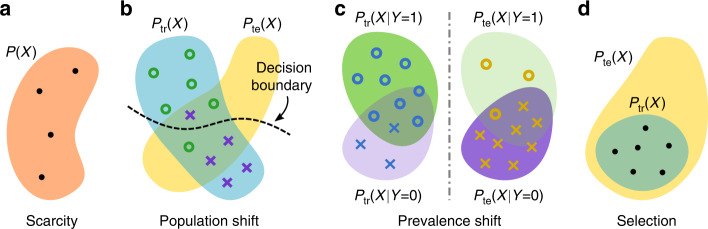
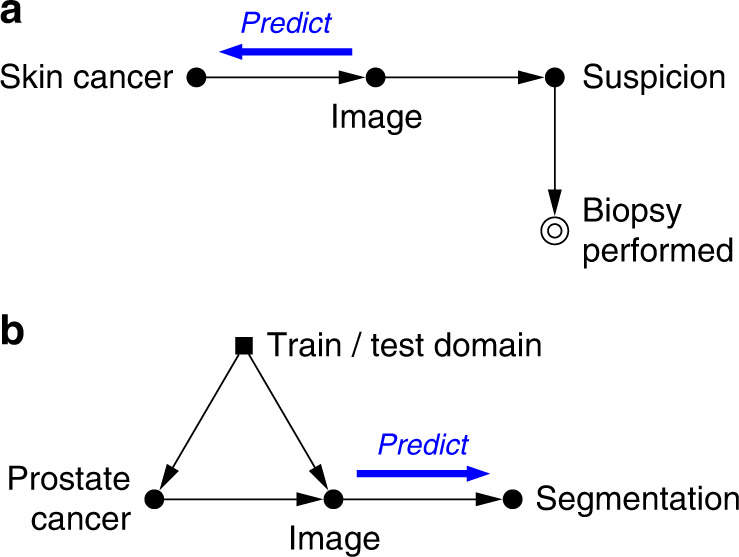
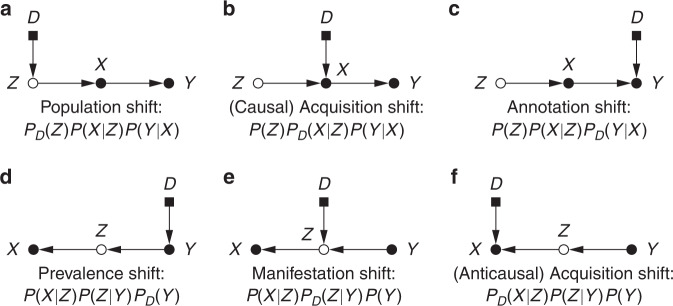
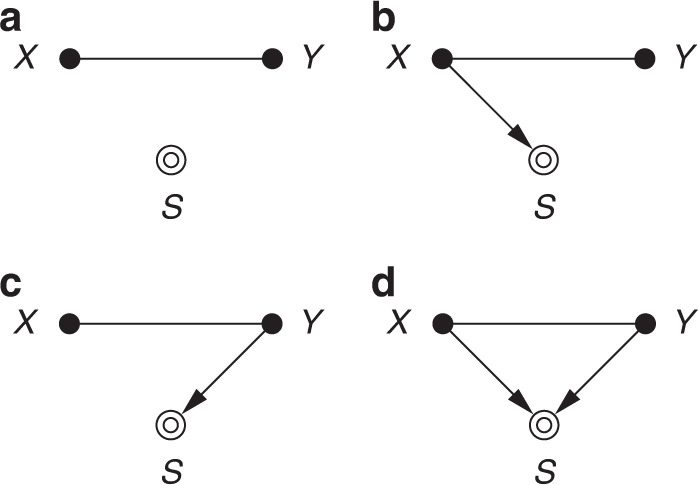
Verification
Claims the paper makes
The claims and statistics of this paper haven’t been checked yet.
Free: it reads the open-access text and checks the first 5 claims that cite a source we can check. Create a free account to check every claim.
Claims other papers make about this one
Each is checked against this paper’s own text: does it say what the citing paper says it does?
The cited source says what the claim attributes to it.
In the citing paper
“In radiology, for example, imaging hardware manufacturer, model, software versions and acquisition parameters all meaningfully alter the characteristics of diagnostic images40.”
From Bias recognition and mitigation strategies in artificial intelligence healthcare applications (2025) · cites this paper as [40]
The cited source says what the claim attributes to it.
In the citing paper
“Nevertheless, causality has recently enjoyed increasing attention again, with discussion about causality in deep learning68 and medical imaging69,70.”
From Orchestrating explainable artificial intelligence for multimodal and longitudinal data in medical imaging (2024) · cites this paper as [70]
The check wasn’t confident either way, so it gives no verdict — never disputed.
In the citing paper
“In the hip fracture detection audit, 20 the risk of false positives in cases of femoral deformities was found to require further monitoring, with a potential modification of the intended use (to exclude cases with deformities) as an appropriate mitigation action, if they were confirmed to cause a failure mode.”
From The medical algorithmic audit (2022) · cites this paper as [20]
Experimental — accuracy not yet measuredThe check wasn’t confident either way, so it gives no verdict — never disputed.
In the citing paper
“In the hip fracture detection audit, 20 the discovery of algorithmic errors in cases with abnormal bones prompted an additional labelling exercise of all hips with abnormal bones and joints to find that the error rate in those cases was 50%, compared with 2•5% in the overall dataset (figure 2).”
From The medical algorithmic audit (2022) · cites this paper as [20]
Experimental — accuracy not yet measured
Self-check
Percentages, sums and reported differences re-computed from the paper’s own numbers.
The self-check needs the paper’s full text.
Citations
Cites
Dermatologist-level classification of skin cancer with deep neural networks
Esteva, A., Kuprel, B., Novoa, R. A., Ko, J., Swetter, S. M., Blau, H. M., & Thrun, S. (2017) · Nature · doi:10.1038/nature21056 · Cited by 14,362
Causality: Models, Reasoning, and Inference
Pearl, J. (2009) · doi:10.1017/cbo9780511803161 · Cited by 11,653
RUBIN, D. B. (1976) · Biometrika · doi:10.1093/biomet/63.3.581 · Cited by 9,925
Domain-Adversarial Training of Neural Networks
Ganin, Y., Ustinova, E., Ajakan, H., Germain, P., Larochelle, H., Laviolette, F., Marchand, M., & Lempitsky, V. (2017) · Advances in Computer Vision and Pattern Recognition · doi:10.1007/978-3-319-58347-1_10 · Cited by 8,318 · cited 1×
“In addition, the increasingly active research area of domain adaptation investigates data harmonization by means of more complex transformations, such as extracting domain-invariant representations 25,26 or translating between imaging modalities 27 (e.g. synthesizing MRI volumes from CT scans 28 ).”
BackgroundThe multimodal brain tumor image segmentation benchmark (BRATS)
Menze, B. H., Jakab, A., Bauer, S., Kalpathy-Cramer, J., Farahani, K., Kirby, J., Burren, Y., Porz, N., Slotboom, J., Wiest, R., et al. (2015) · IEEE Transactions on Medical Imaging · doi:10.1109/tmi.2014.2377694 · Cited by 6,781
Self-citation(2006) · The MIT Press eBooks · doi:10.7551/mitpress/9780262033589.001.0001 · Cited by 4,280
Collins, G. S., Reitsma, J. B., Altman, D. G., & Moons, K. G. M. (2015) · Annals of Internal Medicine · doi:10.7326/m14-0697 · Cited by 3,267
A structural approach to selection bias
Hernán, M. A., Hernández-Díaz, S., & Robins, J. M. (2004) · Epidemiology · doi:10.1097/01.ede.0000135174.63482.43 · Cited by 2,844
Model Cards for Model Reporting
Mitchell, M., Wu, S., Zaldivar, A., Barnes, P., Vasserman, L., Hutchinson, B., Spitzer, E., Raji, I. D., & Gebru, T. (2019) · Proceedings of the Conference on Fairness, Accountability, and Transparency · doi:10.1145/3287560.3287596 · Cited by 2,681 · cited 1×
“Scholars in FAT have proposed checklist-style guidelines for reporting datasets 59 and models 60 , for example, and have been investigating sources of failure for machine-learning models, among which is poor reporting 61 .”
MethodGebru, T., Morgenstern, J., Vecchione, B., Vaughan, J. W., Wallach, H., Daumé, H., & Crawford, K. (2018) · arXiv · doi:10.48550/arxiv.1803.09010 · Cited by 2,474 · cited 1×
“Scholars in FAT have proposed checklist-style guidelines for reporting datasets 59 and models 60 , for example, and have been investigating sources of failure for machine-learning models, among which is poor reporting 61 .”
Method
Research works printed but not linked: 9
- Schölkopf, B. et al. On causal and anticausal learning. In Proc. 29th International Conference on Machine Learning (ICML 2012) 459–466 (2012).
- Oliver, A., Odena, A., Raffel, C. A., Cubuk, E. D. & Goodfellow, I. in Advances in Neural Information Processing Systems Vol. 31 (NeurIPS 2018), 3235–3246 (2018).
- Singh, A., Nowak, R. & Zhu, X. in Advances in Neural Information Processing Systems Vol. 21 (NIPS 2008), 1513–1520 (2008).
- Storkey, A. J. in Dataset Shift in Machine Learning (eds Quiñonero-Candela, J. et al.), Ch. 1, 3–28 (MIT Press, Cambridge, MA, 2009).
- Zhang, K., Schölkopf, B., Muandet, K. & Wang, Z. Domain adaptation under target and conditional shift. In Proc. 30th International Conference on Machine Learning (ICML 2013), Vol. 28, 819–827 (PMLR, 2013).
- Lipton, Z. C., Wang, Y.-X. & Smola, A. J. Detecting and correcting for label shift with black box predictors. In Proc. 35th International Conference on Machine Learning (ICML 2018), Vol. 80, 3122–3130 (PMLR, 2018).
- Mohan, K., Pearl, J. & Tian, J. in Advances in Neural Information Processing Systems Vol. 26 (NIPS 2013), 1277–1285 (2013).
- Subbaswamy, A., Schulam, P. & Saria, S. Preventing failures due to dataset shift: Learning predictive models that transport. In Proc. Twenty-Second International Conference on Artificial Intelligence and Statistics (AISTATS 2019), Vol. 89, 3118–3127 (PMLR, 2019).
- Peters J Janzing D Schölkopf B Elements of Causal Inference: Foundations and Learning Algorithms 2017 Cambridge, MA MIT Press
Cited by
The Liver Tumor Segmentation Benchmark (LiTS)
Bilic, P., Christ, P., Li, H. B., Vorontsov, E., Ben-Cohen, A., Kaissis, G., Szeskin, A., Jacobs, C., Mamani, G. E. H., Chartrand, G., et al. (2023) · Medical Image Analysis · doi:10.1016/j.media.2022.102680 · Cited by 1,412
The Liver Tumor Segmentation Benchmark (LiTS)
Bilic, P., Christ, P., Li, H. B., Vorontsov, E., Ben-Cohen, A., Kaissis, G., Szeskin, A., Jacobs, C., Mamani, G. E. H., Chartrand, G., et al. (2019) · arXiv · doi:10.48550/arxiv.1901.04056 · Cited by 1,412
Explainable artificial intelligence (XAI) in deep learning-based medical image analysis
van der Velden, B. H. M., Kuijf, H. J., Gilhuijs, K. G. A., & Viergever, M. A. (2022) · Medical Image Analysis · doi:10.1016/j.media.2022.102470 · Cited by 1,328
“Castro et al. (2020) describe how causal reasoning may be useful to assess such as biases in the data. van Amsterdam et al. (2019) show an example of eliminating bias using causality, yielding unbiased prediction of prognosis for patients with lung cancer.”
BackgroundInfluentialAI applications to medical images: From machine learning to deep learning
Castiglioni, I., Rundo, L., Codari, M., Di Leo, G., Salvatore, C., Interlenghi, M., Gallivanone, F., Cozzi, A., D'Amico, N. C., & Sardanelli, F. (2021) · Physica Medica · doi:10.1016/j.ejmp.2021.02.006 · Cited by 710
Algorithmic fairness in artificial intelligence for medicine and healthcare
Chen, R. J., Wang, J. J., Williamson, D. F. K., Chen, T. Y., Lipkova, J., Lu, M. Y., Sahai, S., & Mahmood, F. (2023) · Nature Biomedical Engineering · doi:10.1038/s41551-023-01056-8 · Cited by 750
“116,129.”
BackgroundMethodHarnessing multimodal data integration to advance precision oncology
Boehm, K. M., Khosravi, P., Vanguri, R., Gao, J., & Shah, S. P. (2022) · Nature Reviews Cancer · doi:10.1038/s41568-021-00408-3 · Cited by 662
“Truly causal models are a frontier of AI research, and in the future such models will be highly valuable in this field 141 .”
BackgroundAI for radiographic COVID-19 detection selects shortcuts over signal
DeGrave, A. J., Janizek, J. D., & Lee, S.-I. (2021) · Nature Machine Intelligence · doi:10.1038/s42256-021-00338-7 · Cited by 631
Deep Learning for Medical Anomaly Detection – A Survey
Fernando, T., Gammulle, H., Denman, S., Sridharan, S., & Fookes, C. (2022) · ACM Computing Surveys · doi:10.1145/3464423 · Cited by 399
“is often confused with association [125], [126], [127].”
BackgroundThe current and future state of AI interpretation of medical images
Rajpurkar, P., & Lungren, M. P. (2023) · New England Journal of Medicine · doi:10.1056/nejmra2301725 · Cited by 443
In Search of Lost Domain Generalization
Gulrajani, I., & Lopez-Paz, D. (2020) · arXiv · doi:10.48550/arxiv.2007.01434 · Cited by 440
“As another example, systems trained on medical data collected in one hospital do not generalize to other health centers [Castro et al., 2019, AlBadawy et al., 2018, Perone et al., 2019, Heaven, 2020].”
ResultSurgical data science – from concepts toward clinical translation
Maier‐Hein, L., Eisenmann, M., Sarıkaya, D., März, K., Collins, T., Malpani, A., Fallert, J., Feußner, H., Giannarou, S., Mascagni, P., et al. (2021) · Medical Image Analysis · doi:10.1016/j.media.2021.102306 · Cited by 516
“This situation poses a challenge particularly for healthcare applications, as real-world test data, after the model is deployed for clinical use, will typically not have ground-truth annotation, making its assessment difficult (Castro et al., 2020).”
BackgroundFeng, J., Phillips, R. V., Malenica, I., Bishara, A., Hubbard, A. E., Celi, L. A., & Pirracchio, R. (2022) · npj Digital Medicine · doi:10.1038/s41746-022-00611-y · Cited by 423
Multimodal data fusion for cancer biomarker discovery with deep learning
Steyaert, S., Pizurica, M., Nagaraj, D., Khandelwal, P., Hernandez-Boussard, T., Gentles, A. J., & Gevaert, O. (2023) · Nature Machine Intelligence · doi:10.1038/s42256-023-00633-5 · Cited by 402
“But, owing to ethical restrictions and the labour intensity to annotate clinical images, most studies have only limited access to large cohorts that contain ground-truth-labelled data 27 .”
BackgroundExplainable, trustworthy, and ethical machine learning for healthcare: A survey
Rasheed, K., Qayyum, A., Ghaly, M., Al-Fuqaha, A., Razi, A., & Qadir, J. (2022) · Computers in Biology and Medicine · doi:10.1016/j.compbiomed.2022.106043 · Cited by 372
Artificial intelligence for digital and computational pathology
Song, A. H., Jaume, G., Williamson, D. F. K., Lu, M. Y., Vaidya, A., Miller, T. R., & Mahmood, F. (2023) · Nature Reviews Bioengineering · doi:10.1038/s44222-023-00096-8 · Cited by 356
Artificial intelligence and machine learning in cancer imaging
Koh, D.-M., Papanikolaou, N., Bick, U., Illing, R., Kahn, C. E., Kalpathi-Cramer, J., Matos, C., Martí-Bonmatí, L., Miles, A., Mun, S. K., et al. (2022) · Communications Medicine · doi:10.1038/s43856-022-00199-0 · Cited by 311
Bias recognition and mitigation strategies in artificial intelligence healthcare applications
Hasanzadeh, F., Josephson, C. B., Waters, G., Adedinsewo, D., Azizi, Z., & White, J. A. (2025) · npj Digital Medicine · doi:10.1038/s41746-025-01503-7 · Cited by 320
“In radiology, for example, imaging hardware manufacturer, model, software versions and acquisition parameters all meaningfully alter the characteristics of diagnostic images 40 .”
Causality-Inspired Single-Source Domain Generalization for Medical Image Segmentation
Ouyang, C., Chen, C., Li, S., Li, Z., Qin, C., Bai, W., & Rueckert, D. (2023) · IEEE Transactions on Medical Imaging · doi:10.1109/tmi.2022.3224067 · Cited by 260
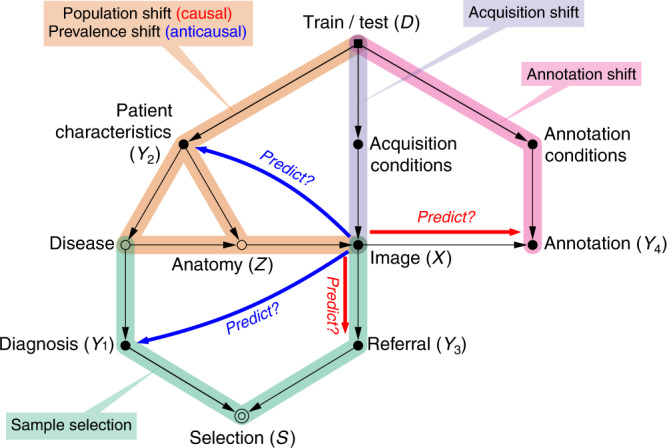
“This type of domain shift is therefore termed as the acquisition shift [11].”
BackgroundData drift in medical machine learning: implications and potential remedies
Sahiner, B., Chen, W., Samala, R. K., & Petrick, N. (2023) · The British Journal of Radiology · doi:10.1259/bjr.20220878 · Cited by 279
Liu, X., Glocker, B., McCradden, M. M., Ghassemi, M., Denniston, A. K., & Oakden-Rayner, L. (2022) · The Lancet Digital Health · doi:10.1016/s2589-7500(22)00003-6 · Cited by 266
Self-citationCausal machine learning for healthcare and precision medicine
Sanchez, P., Voisey, J. P., Xia, T., Watson, H. I., O’Neil, A. Q., & Tsaftaris, S. A. (2022) · Royal Society Open Science · doi:10.1098/rsos.220638 · Cited by 211
D’ya Like DAGs? A Survey on Structure Learning and Causal Discovery
Vowels, M. J., Camgoz, N. C., & Bowden, R. (2023) · ACM Computing Surveys · doi:10.1145/3527154 · Cited by 237
“It is important for a broad range of applications, including policy making [136], medical imaging [30], advertisement [22], the development of medical treatments [191], the evaluation of evidence within legal frameworks [184, 223], social science [81, 94, 254], biology [242], and many others.”
BackgroundComputer vision in surgery: from potential to clinical value
Mascagni, P., Alapatt, D., Sestini, L., Altieri, M. S., Madani, A., Watanabe, Y., Alseidi, A., Redan, J. A., Alfieri, S., Costamagna, G., et al. (2022) · npj Digital Medicine · doi:10.1038/s41746-022-00707-5 · Cited by 228
“Here, establishing, formalizing, and communicating causal relationships between features of the input and the model output could help mitigate dangerous model failures and potentially inform model design 71 .”
BackgroundHolzinger, A., Dehmer, M., Emmert-Streib, F., Cucchiara, R., Augenstein, I., Ser, J. D., Samek, W., Jurisica, I., & Díaz-Rodríguez, N. (2022) · Information Fusion · doi:10.1016/j.inffus.2021.10.007 · Cited by 213
“Recent progress has been done on causal signal extraction from images [121,122].”
BackgroundFederated benchmarking of medical artificial intelligence with MedPerf
Karargyris, A., Umeton, R., Sheller, M. J., Aristizabal, A., George, J., Wuest, A., Pati, S., Kassem, H., Zenk, M., Baid, U., et al. (2023) · Nature Machine Intelligence · doi:10.1038/s42256-023-00652-2 · Cited by 188
“Despite its promising features, federated evaluation requires submitting AI models to evaluation sites, which may pose a different type of risk 27,28 .”
Current and Emerging Trends in Medical Image Segmentation With Deep Learning
Conze, P.-H., Andrade-Miranda, G. X., Singh, V. K., Jaouen, V., & Visvikis, D. (2023) · IEEE Transactions on Radiation and Plasma Medical Sciences · doi:10.1109/trpms.2023.3265863 · Cited by 194
“Image-space heteroscedastic uncertainty can be, for instance, due to dataset shifts in multicenter studies, while label-space heteroscedastic uncertainty may be due to heterogeneity in annotation quality [151].”
BackgroundWhere Medical Statistics Meets Artificial Intelligence
Hunter, D. J., & Holmes, C. (2023) · New England Journal of Medicine · doi:10.1056/nejmra2212850 · Cited by 160
Generative models improve fairness of medical classifiers under distribution shifts
Ktena, I., Wiles, O., Albuquerque, I., Rebuffi, S.-A., Tanno, R., Roy, A. G., Azizi, S., Belgrave, D., Kohli, P., Cemgil, T., et al. (2024) · Nature Medicine · doi:10.1038/s41591-024-02838-6 · Cited by 165
“This is because of data scarcity 16 , challenges in the acquisition strategies of evaluation datasets (for example, different imaging or screening protocols 10,17,18 ) and the limitations of evaluation metrics 10 .”
Generative models improve fairness of medical classifiers under distribution shifts
Wiles, O., Albuquerque, I., Rebuffi, S.-A., Tanno, R., Roy, A. G., Azizi, S., Belgrave, D., Kohli, P., Cemgil, T., Karthikesalingam, A., et al. (2023) · doi:10.21203/rs.3.rs-2976332/v1 · Cited by 165
A Fine-Grained Analysis on Distribution ShiftPreprint
Wiles, O., Gowal, S., Stimberg, F., Rebuffi, S.-A., Ktena, S. I., Dvijotham, K., & Cemgil, A. T. (2021) · arXiv (Cornell University) · doi:10.48550/arxiv.2110.11328 · Cited by 197
“This can arise when there are disagreements and errors among the labellers (e.g. in medical imaging (Castro et al., 2020)).”
BackgroundDemographic bias in misdiagnosis by computational pathology models
Vaidya, A. J., Chen, R. J., Williamson, D. F. K., Song, A. H., Jaume, G., Yang, Y., Hartvigsen, T., Dyer, E. C., Lu, M. Y., Lipková, J., et al. (2024) · Nature Medicine · doi:10.1038/s41591-024-02885-z · Cited by 180
C-CAM: Causal CAM for Weakly Supervised Semantic Segmentation on Medical Image
Chen, Z., Tian, Z., Zhu, J., Li, C., & Du, S. (2022) · IEEE Computer Society Conference on Computer Vision and Pattern Recognition/Proceedings - IEEE Computer Society Conference on Computer Vision and Pattern Recognition/Proceedings · doi:10.1109/cvpr52688.2022.01138 · Cited by 200
“Castro et al. [6] highlight the importance of causality between medical images and their annotations.”
BackgroundOoD-Bench: Quantifying and Understanding Two Dimensions of Out-of-Distribution Generalization
Ye, N., Li, K., Bai, H., Yu, R., Hong, L., Zhou, F., Li, Z., & Zhu, J. (2022) · IEEE Computer Society Conference on Computer Vision and Pattern Recognition/Proceedings - IEEE Computer Society Conference on Computer Vision and Pattern Recognition/Proceedings · doi:10.1109/cvpr52688.2022.00779 · Cited by 215
“As a result, the reliability of current learning systems is substantially undermined in critical applications such as medical imaging [4, 20], autonomous driving [7, 22, 56, 80, 92], and security systems [37].”
BackgroundLinardos, A., Kushibar, K., Walsh, S., Gkontra, P., & Lekadir, K. (2022) · Scientific Reports · doi:10.1038/s41598-022-07186-4 · Cited by 130
Learning disentangled representations in the imaging domain
Liu, X., Sanchez, P., Thermos, S., O’Neil, A. Q., & Tsaftaris, S. A. (2022) · Medical Image Analysis · doi:10.1016/j.media.2022.102516 · Cited by 172
CauSSL: Causality-inspired Semi-supervised Learning for Medical Image Segmentation
Miao, J., Chen, C., Liu, F., Hao, W., & Heng, P. (2023) · IEEE/CVF International Conference on Computer Vision (ICCV) · doi:10.1109/iccv51070.2023.01959 · Cited by 169
“1 depicts the causal diagram of the annotation generation process for medical image segmentation following [9].”
BackgroundInfluentialData-driven modelling of neurodegenerative disease progression: thinking outside the black box
Young, A. L., Oxtoby, N. P., Garbarino, S., Fox, N. C., Barkhof, F., Schott, J. M., & Alexander, D. C. (2024) · Nature reviews. Neuroscience · doi:10.1038/s41583-023-00779-6 · Cited by 148
“This can be achieved by using phenomenological disease progression models as the observed timelines that pathophysiological models aim to capture 141,144 .”
Artificial intelligence-enabled decision support in nephrology
Loftus, T. J., Shickel, B., Ozrazgat‐Baslanti, T., Ren, Y., Glicksberg, B. S., Cao, J., Singh, K., Chan, L., Nadkarni, G. N., & Bihorac, A. (2022) · Nature Reviews Nephrology · doi:10.1038/s41581-022-00562-3 · Cited by 129
“We note that further exploration of these approaches is required to establish efficacy for medical applications 103,104 .”
BackgroundA causal perspective on dataset bias in machine learning for medical imaging
Jones, C., Castro, D. C., Ribeiro, F. D. S., Oktay, O., McCradden, M. D., & Glocker, B. (2024) · Nature Machine Intelligence · doi:10.1038/s42256-024-00797-8 · Cited by 151
“We may view this set-up as generalizing the common assumption of anticausal classification (predicting cause from effect) 27,39 .”
Self-citationRisk of Bias in Chest Radiography Deep Learning Foundation Models
Glocker, B., Jones, C., Roschewitz, M., & Winzeck, S. (2023) · Radiology Artificial Intelligence · doi:10.1148/ryai.230060 · Cited by 143
“Training on limited data makes models susceptible to failure whenever the data characteristics change, often caused by differences in the patient demographics (i.e. population shift) and/or imaging technique (i.e. acquisition shift) (3,4).”
BackgroundSelf-citationHadjiiski, L. M., Cha, K., Chan, H., Drukker, K., Morra, L., Näppi, J. J., Sahiner, B., Yoshida, H., Chen, Q., Deserno, T. M., et al. (2023) · Medical Physics · doi:10.1002/mp.16188 · Cited by 122
Dynamic Memory to Alleviate Catastrophic Forgetting in Continual Learning with Medical Imaging
Perkonigg, M., Hofmanninger, J., Herold, C. J., Brink, J. A., Pianykh, O., Prosch, H., & Langs, G. (2021) · Nature Communications · doi:10.1038/s41467-021-25858-z · Cited by 106
“Dataset shifts occur when the training data distribution differs from the distribution of data at model inference 8,9 .”
MethodData synthesis and adversarial networks: A review and meta-analysis in cancer imaging
Osuala, R. O., Kushibar, K., Garrucho, L., Linardos, A., Szafranowska, Z., Klein, S., Glocker, B., Díaz, O., & Lekadir, K. (2022) · Medical Image Analysis · doi:10.1016/j.media.2022.102704 · Cited by 132
“From a causality perspective, dataset shift can be split into several distinct scenarios (Castro et al., 2020):”
BackgroundSelf-citationOvercoming data scarcity in biomedical imaging with a foundational multi-task model
Schäfer, R., Nicke, T., Höfener, H., Lange, A., Merhof, D., Feuerhake, F., Schulz, V., Lotz, J., & Kiessling, F. M. (2024) · Nature Computational Science · doi:10.1038/s43588-024-00662-z · Cited by 139
“However, recent literature suggests that label-supervised pretraining for imaging typically outperforms self-supervised pretraining, empirically 11,25 and theoretically 26 .”
Going deep into schizophrenia with artificial intelligence
Cortes-Briones, J., Tapia, N. I., D’Souza, D. C., & Estévez, P. A. (2021) · Schizophrenia Research · doi:10.1016/j.schres.2021.05.018 · Cited by 113
“Finally, causal models are the only ones capable of pursuing what is arguably the main goal of science, to find the reason why , i.e. the causal mechanisms underlying statistical associations (Castro et al., 2020; Pearl and Mackenzie, 2018).”
Algorithmic encoding of protected characteristics in chest X-ray disease detection models
Glocker, B., Jones, C., Bernhardt, M., & Winzeck, S. (2023) · eBioMedicine · doi:10.1016/j.ebiom.2023.104467 · Cited by 77
Self-citationNICO++: Towards Better Benchmarking for Domain Generalization
Zhang, X., He, Y., Xu, R., Han, Y., Shen, Z., & Cui, P. (2023) · IEEE Computer Society Conference on Computer Vision and Pattern Recognition/Proceedings - IEEE Computer Society Conference on Computer Vision and Pattern Recognition/Proceedings · doi:10.1109/cvpr52729.2023.01539 · Cited by 136
“However, this ideal hypothesis is hardly satisfied in real applications, especially those high-stake applications such as healthcare [10, 49], autonomous driving [1, 13, 39] and security systems [6], owing to the limitation of data collection and intricacy of the scenarios.”
BackgroundPahud de Mortanges, A., Luo, H., Shu, S. Z., Kamath, A., Suter, Y., Shelan, M., Pöllinger, A., & Reyes, M. (2024) · npj Digital Medicine · doi:10.1038/s41746-024-01190-w · Cited by 93
“Never-theless, causality has recently enjoyed increasing attention again, with discussion about causality in deep learning 68 and medical imaging 69,70 .”
Petersen, E., Potdevin, Y., Mohammadi, E., Zidowitz, S., Breyer, S., Nowotka, D., Henn, S., Pechmann, L., Leucker, M., Rostalski, P., et al. (2022) · IEEE Access · doi:10.1109/access.2022.3178382 · Cited by 113
“The utility of using additional unlabeled images in the context of medical imaging has recently been questioned [138] because additional unlabeled examples can only provide further information about the input data distribution but not about the mapping between input data and their target labels.”
BackgroundMethodInfluentialMeta-learning with implicit gradients in a few-shot setting for medical image segmentation
Khadka, R., Jha, D., Hicks, S. A., Thambawita, V. L., Riegler, M. A., Ali, S., & Halvorsen, P. (2022) · Computers in Biology and Medicine · doi:10.1016/j.compbiomed.2022.105227 · Cited by 100
Barragán-Montero, A., Bibal, A., Dastarac, M. H., Draguet, C., Valdés, G., Nguyen, D., Willems, S., Vandewinckele, L., Holmström, M., Löfman, F., et al. (2022) · Physics in Medicine & Biology · doi:10.1088/1361-6560/ac678a · Cited by 84
Garcia Santa Cruz, B., Bossa, M. N., Sölter, J., & Husch, A. D. (2021) · Medical Image Analysis · doi:10.1016/j.media.2021.102225 · Cited by 89
Machine learning in computational histopathology: Challenges and opportunities
Cooper, M., Ji, Z., & Krishnan, R. G. (2023) · Genes, Chromosomes and Cancer · doi:10.1002/gcc.23177 · Cited by 79
“Reference 243 provides an overview of the different kinds of biases that can arise in medical imaging, highlight their statistical implications for building predictive models and provide insights into how tools from causal inference can prove valuable in bias mitigation.”
BackgroundBrain Tumor Characterization Using Radiogenomics in Artificial Intelligence Framework
Jena, B., Saxena, S., Nayak, G. K., Balestrieri, A., Gupta, N., Khanna, N. N., Laird, J. R., Kalra, M. K., Fouda, M. M., Saba, L., et al. (2022) · Cancers · doi:10.3390/cancers14164052 · Cited by 90
Cruz, B. G. S., Husch, A., & Hertel, F. (2023) · Frontiers in Aging Neuroscience · doi:10.3389/fnagi.2023.1216163 · Cited by 92
“For brain imaging studies, it is important to maintain consistent imaging protocols and analysis methods to reduce the risk of acquisition bias (Castro et al., 2020).”
BackgroundMethodZhao, X., Chen, K., Wu, G., Zhang, G., Zhou, X., Lv, C., Wu, S., Chen, Y., Xie, G., & Yao, Z. (2021) · European Radiology · doi:10.1007/s00330-020-07558-2 · Cited by 73
“may disturb deep learning models and lead to unstable performance [47].”
BackgroundLearning Causal Semantic Representation for Out-of-Distribution Prediction
Liu, C., Sun, X., Wang, J., Hx, T., Qin, T., Qin, T., Chen, W., & Liu, T.-Y. (2020) · neural information processing systems · doi:10.48550/arxiv.2011.01681 · Cited by 86
“Other works instead introduce domain index [18, 49, 48, 19] or manipulation variables [121, 57, 58] to model distribution change explicitly.”
BackgroundResultQuantitative Molecular Positron Emission Tomography Imaging Using Advanced Deep Learning Techniques
Zaidi, H., & Naqa, I. E. (2021) · Annual Review of Biomedical Engineering · doi:10.1146/annurev-bioeng-082420-020343 · Cited by 73
Translating AI to Clinical Practice: Overcoming Data Shift with Explainability
Choi, Y., Yu, W., Nagarajan, M. B., Teng, P., Goldin, J. G., Raman, S. S., Enzmann, D. R., Kim, G. H. J., & Brown, M. S. (2023) · RadioGraphics · doi:10.1148/rg.220105 · Cited by 65
Self-eXplainable AI for medical image analysis: A survey and new outlooks
Hou, J., Liu, S., Bie, Y., Wang, H., Tan, A., Luo, L., & Chen, H. (2026) · Information Fusion · doi:10.1016/j.inffus.2026.104791 · Cited by 66
Artificial intelligence in cancer: applications, challenges, and future perspectives
Cheng, H., & Shi, S.-S. (2025) · Molecular Cancer · doi:10.1186/s12943-025-02450-3 · Cited by 78
“…fairness can degrade under dataset shift when models encounter distributions not represented during training, including genetic variation, differences in imaging protocols, changes in disease prevalence, and evolving taxonomies, which can disproportionately affect underrepresented groups [269–272].”
Population heterogeneity in clinical cohorts affects the predictive accuracy of brain imaging
Benkarim, O. M., Paquola, C., Park, B., Kebets, V., Hong, S., de Wael, R. V., Zhang, S., Yeo, B. T. T., Eickenberg, M., Ge, T., et al. (2022) · PLoS Biology · doi:10.1371/journal.pbio.3001627 · Cited by 70
The pitfalls of negative data bias for the T-cell epitope specificity challenge
Dens, C., Laukens, K., Bittremieux, W., & Meysman, P. (2023) · Nature Machine Intelligence · doi:10.1038/s42256-023-00727-0 · Cited by 65
“https://doi.org/10.1038/s42256-023-00727-0 drawn from a different background distribution, irrespective of the target epitope 4,5 .”
BackgroundInfluentialLekadir, K., Osuala, R., Gallin, C., Lazrak, N., Kushibar, K., Tsakou, G., Aussó, S., Alberich, L. C., Marias, K., Tsiknakis, M., et al. (2021) · arXiv · doi:10.48550/arxiv.2109.09658 · Cited by 58
“There are several sources for this data heterogeneity, which, alongside their causal reasons and relationships [24], need to be closely taken into consideration when developing, evaluating, and deploying new imaging AI algorithms for the real-world, including: i Equipment-related heterogeneity :…”
BackgroundCausal knowledge fusion for 3D cross-modality cardiac image segmentation
Guo, S., Liu, X., Zhang, H., Lin, Q., Xu, L., Shi, C., Gao, Z., Guzzo, A., & Fortino, G. (2023) · Information Fusion · doi:10.1016/j.inffus.2023.101864 · Cited by 59
Zheng, S., Wang, C., Zio, E., & Liu, J. (2023) · Reliability Engineering & System Safety · doi:10.1016/j.ress.2023.109872 · Cited by 63
Harfouche, A. L., Nakhle, F., Harfouche, A., Sardella, O. G., Dart, E., & Jacobson, D. (2022) · Trends in Plant Science · doi:10.1016/j.tplants.2022.08.021 · Cited by 60
Machine Learning for Causal Inference in Biological Networks: Perspectives of This Challenge
Lecca, P. (2021) · Frontiers in Bioinformatics · doi:10.3389/fbinf.2021.746712 · Cited by 46
“, 2003; Yin and Yao, 2016)) have recently paved the way for the improvement of machine learning models, especially in biology, biomedicine, and recently in epidemiology (Triantafillou et al., 2017; Glymour et al., 2019; Castro et al., 2020; Rivas-Barragan et al., 2020; Rose, 2020; Wilkinson et al., 2020; Raita et al.,…”
BackgroundClinical validation of saliency maps for understanding deep neural networks in ophthalmology
Ayhan, M. S., Kuemmerle, L. B., Kuehlewein, L., INHOFFEN, W., Aliyeva, G., Ziemssen, F., & Berens, P. (2022) · Medical Image Analysis · doi:10.1016/j.media.2022.102364 · Cited by 71
MaxStyle: Adversarial Style Composition for Robust Medical Image Segmentation
Chen, C., Li, Z., Ouyang, C., Sinclair, M. D., Bai, W., & Rueckert, D. (2022) · Lecture notes in computer science · doi:10.1007/978-3-031-16443-9_15 · Cited by 83
Deep Learning for Detection and Localization of B-Lines in Lung Ultrasound
Lucassen, R. T., Jafari, M. H., Duggan, N. M., Jowkar, N., Mehrtash, A., Fischetti, C. E., Bernier, D., Prentice, K., Duhaime, E., Jin, M., et al. (2023) · IEEE Journal of Biomedical and Health Informatics · doi:10.1109/jbhi.2023.3282596 · Cited by 59
“was used for training and a future deployment environment [53].”
MethodGupta, S., Kumar, S., Chang, K., Lu, C., Singh, P., & Kalpathy–Cramer, J. (2023) · Radiographics · doi:10.1148/rg.220107 · Cited by 63
Applications of statistical causal inference in software engineering
Siebert, J. (2023) · Information and Software Technology · doi:10.1016/j.infsof.2023.107198 · Cited by 67
“These reviews mention the other advantages, such as dealing with data drift or explainability [24, 25].”
BackgroundAn empirical framework for domain generalization in clinical settings
Zhang, H., Dullerud, N., Seyyed-Kalantari, L., Morris, Q., Joshi, S., & Ghassemi, M. (2021) · Proceedings of the Conference on Health, Inference, and Learning · doi:10.1145/3450439.3451878 · Cited by 39
“As machine learning models become more prevalent in clinical settings, it is important to consider how well models can generalize to environments external to their training environment [16, 17, 42, 75].”
BackgroundAutomatic correction of performance drift under acquisition shift in medical image classification
Roschewitz, M., Khara, G. S., Yearsley, J., Sharma, N., James, J. J., Ambrózay, É., Heroux, A., Kecskemethy, P. D., Rijken, T. M., & Glocker, B. (2023) · Nature Communications · doi:10.1038/s41467-023-42396-y · Cited by 67
“However, what is important here is that UPA can recover the desired sensitivity/specificity trade-off in all tested cases despite these (unknown) differences.”
Self-citationArtificial intelligence in clinical decision support and the prediction of adverse events
Oei, S. P., Bakkes, T. H. G. F., Mischi, M., Bouwman, R. A., van Sloun, R. J. G., & Turco, S. (2025) · Frontiers in Digital Health · doi:10.3389/fdgth.2025.1403047 · Cited by 57
“If this ratio is different compared to the targeted population this is called a population or prevalence shift (17).”
The Open Kidney Ultrasound Data Set
Singla, R., Ringstrom, C., Hu, G., Lessoway, V. A., Reid, J., Nguan, C. Y. C., & Rohling, R. N. (2023) · Lecture notes in computer science · doi:10.1007/978-3-031-44521-7_15 · Cited by 68
Challenges in ensuring the generalizability of image quantitation methods for MRI
Keenan, K. E., Delfino, J. G., Jordanova, K. V., Poorman, M. E., Chirra, P. V., Chaudhari, A. S., Baeßler, B., Winfield, J. M., Viswanath, S. E., & deSouza, N. M. (2021) · Medical Physics · doi:10.1002/mp.15195 · Cited by 50
Artificial intelligence in cancer research: learning at different levels of data granularity
Cirillo, D., Núñez‐Carpintero, I., & Valencia, A. (2021) · Molecular Oncology · doi:10.1002/1878-0261.12920 · Cited by 52
“However, it has been shown that causal tasks, such as semantic segmentation in cancer imaging analysis, do not comply with these assumptions [93] and high-quality supervised baselines are crucial to assess the added value of unlabeled data in semi-supervised learning settings.”
BackgroundPhysical imaging parameter variation drives domain shift
Kilim, O., Olar, A., Joó, T., Palicz, T., Pollner, P., & Csabai, I. (2022) · Scientific Reports · doi:10.1038/s41598-022-23990-4 · Cited by 39
Beyond Supervised Learning for Pervasive Healthcare
Gu, X., Deligianni, F., Han, J., Liu, X., Chen, W., Yang, G., & Lo, B. P. L. (2023) · IEEE Reviews in Biomedical Engineering · doi:10.1109/rbme.2023.3296938 · Cited by 52
“C. Heterogeneity - Mismatch of P te ( X, Y ) and P tr ( X, Y ) Another reason for failing to successfully deploy a model pretrained on X × Y following P tr ( X, Y ) to P te ( X, Y ) is due to their mismatch [46], [47].”
BackgroundA scoping review of robustness concepts for machine learning in healthcare
Balendran, A., Beji, C., Bouvier, F., Khalifa, O., Evgeniou, T., Ravaud, P., & Porcher, R. (2025) · npj Digital Medicine · doi:10.1038/s41746-024-01420-1 · Cited by 43
“It ’ s important to note that different choices in our approach could have resulted in a different classi fi cation 48 .”
One-Shot Weakly-Supervised Segmentation in 3D Medical Images
Lei, W., Su, Q., Jiang, T., Gu, R., Wang, N., Liu, X., Wang, G., Zhang, X., & Zhang, S. (2023) · IEEE Transactions on Medical Imaging · doi:10.1109/tmi.2023.3294975 · Cited by 48
McCrindle, B. W., Zukotynski, K., Doyle, T. E., & Noseworthy, M. D. (2021) · Radiology Artificial Intelligence · doi:10.1148/ryai.2021210031 · Cited by 56
A Framework for Interpretability in Machine Learning for Medical Imaging
Wang, A. Q., Karaman, B. K., Kim, H., Rosenthal, J., Saluja, R., Young, S. I., & Sabuncu, M. R. (2024) · IEEE Access · doi:10.1109/access.2024.3387702 · Cited by 49
“Another line of research seeks to apply causal inference to various contexts in MLMI [14], [96], [128].”
BackgroundCausal reasoning in typical computer vision tasks
Zhang, K., Sun, Q., Zhao, C., & Tang, Y. S. (2023) · Science China Technological Sciences · doi:10.1007/s11431-023-2502-9 · Cited by 45
“To infer the e ff ect of X on M as P ( M = m | do ( X )), the path [37].”
Fairness in Agreement With European Values: An Interdisciplinary Perspective on AI Regulation
Colmenarejo, A. B., Nannini, L., Rieger, A., Scott, K. M., Zhao, X., Patro, G. K., Kasneci, G., & Kinder-Kurlanda, K. E. (2022) · Proceedings of the AAAI/ACM Conference on AI Ethics and Society · doi:10.1145/3514094.3534158 · Cited by 42
“, addressing unfair causal effects of sensitive attributes in the decisionmaking process [17, 55].”
BackgroundVakli, P., Weiss, B., Szalma, J., Barsi, P., Gyuricza, I., Kemenczky, P., Somogyi, E., Nárai, Á., Gál, V., Hermann, P., et al. (2023) · Medical Image Analysis · doi:10.1016/j.media.2023.102850 · Cited by 47
Selecting Data Augmentation for Simulating InterventionsPreprint
Ilse, M., Tomczak, J. M., & Forré, P. D. (2020) · arXiv (Cornell University) · doi:10.48550/arxiv.2005.01856 · Cited by 37
“The presented DAG is similar to the ones constructed in Subbaswamy & Saria (2019); Castro et al. (2019); Heinze-Deml & Meinshausen (2019).”
MethodResultReproducibility of Machine Learning: Terminology, Recommendations and Open IssuesPreprint
Albertoni, R., Colantonio, S., Skrzypczyński, P., & Stefanowski, J. (2023) · arXiv (Cornell University) · doi:10.48550/arxiv.2302.12691 · Cited by 50
“As explained for instance for the medical imaging data [22], variability may be caused by the heterogeneity and differences among clinical institutions, in terms of different patient population, clinical protocols implementation, operators’ practices as well as the data acquisition procedures and…”
Computer-aided diagnosis through medical image retrieval in radiology
Silva, W., Gonçalves, T., Härmä, K., Schröder, E., Obmann, V. C., Barroso, M. C., Poellinger, A., Reyes, M., & Cardoso, J. S. (2022) · Scientific Reports · doi:10.1038/s41598-022-25027-2 · Cited by 40
“Regarding the technical side, there are several open problems or investigation opportunities, namely, the use of multimodal data, the introduction of causal knowledge 68 , privacy-preserving image retrieval 69 , and also exploring federated learning settings 70 .”
BackgroundApplications of interpretable deep learning in neuroimaging: A comprehensive review
Munroe, L., da Silva, M., Heidari, F., Grigorescu, I., Dahan, S., Robinson, E. C., Deprez, M., & So, P. (2024) · Imaging Neuroscience · doi:10.1162/imag_a_00214 · Cited by 42
“…do X = a ( Deep Structural Causal Models (DSCMs) employ neural networks to learn at least one of the structural assignments in the SCM, and applying them to medical imaging data is an emerging research topic ( Castro et al., 2020; Pawlowski et al., 2020; Rasal et al., 2022; Reinhold et al., 2021).”
BackgroundExploring Causal Learning Through Graph Neural Networks: An In‐Depth Review
Job, S., Tao, X., Cai, T., Xie, H., Li, L., Li, Q., & Yong, J. (2025) · Wiley Interdisciplinary Reviews Data Mining and Knowledge Discovery · doi:10.1002/widm.70024 · Cited by 62
CARes‐UNet: Content‐aware residual UNet for lesion segmentation of COVID‐19 from chest CT images
Xu, X., Wen, Y., Zhao, L., Zhang, Y., Zhao, Y., Tang, Z., Yang, Z., & Chen, C. Y. (2021) · Medical Physics · doi:10.1002/mp.15231 · Cited by 35
Luo, L., Chen, H., Xiao, Y., Zhou, Y., Wang, X., Vardhanabhuti, V., Wu, M., Han, C., Liu, Z., Fang, B., et al. (2022) · Radiology Artificial Intelligence · doi:10.1148/ryai.210299 · Cited by 36
“Mean (SD) 49 (19) 49 (18) 489 (18) 61 (18) 47 (167) 59 (18) 49 (21)”
MethodCurriculum-Based Augmented Fourier Domain Adaptation for Robust Medical Image Segmentation
Wang, A., Islam, M., Xu, M., & Ren, H. (2023) · IEEE Transactions on Automation Science and Engineering · doi:10.1109/tase.2023.3295600 · Cited by 40
“population shift, covariate shift, and acquisition shift [4], [5],”
BackgroundHow Transferable Are Self-supervised Features in Medical Image Classification Tasks?Preprint
Truong, T., Mohammadi, S., & Lenga, M. (2021) · arXiv (Cornell University) · doi:10.48550/arxiv.2108.10048 · Cited by 68
“The scarcity of high-quality annotated data remains a notorious challenge in medical image analysis due to the high cost of acquiring expert annotations [1].”
BackgroundA Structural Causal Model for MR Images of Multiple Sclerosis
Reinhold, J. C., Carass, A., & Prince, J. L. (2021) · Lecture notes in computer science · doi:10.1007/978-3-030-87240-3_75 · Cited by 41
DBSegment: Fast and robust segmentation of deep brain structures considering domain generalization
Baniasadi, M., Petersen, M. S., Gonçalves, J. M., Horn, A., Vlasov, V., Hertel, F., & Husch, A. (2022) · Human Brain Mapping · doi:10.1002/hbm.26097 · Cited by 36
“This diagram is inspired by the scaffold causal diagram suggested by (Castro et al., 2020) for medical imaging workflows.”
MethodOvercoming data scarcity in radiomics/radiogenomics using synthetic radiomic features
Ahmadian, M., Bodalal, Z., van der Hulst, H. J., Vens, C., Karssemakers, L. H. E., Bogveradze, N., Castagnoli, F., Landolfi, F., Hong, E. K., Gennaro, N., et al. (2024) · Computers in Biology and Medicine · doi:10.1016/j.compbiomed.2024.108389 · Cited by 33
Metadata
- Authors
- Castro, D. C., Walker, I., & Glocker, B.
- Affiliations
- Imperial College London (GB)
- Corresponding author
- Castro, Daniel C.
- Glocker, Ben
- Venue
- Nature Communications
- Published
- 2020-07-22
- Volume
- 11
- Issue
- 1
- Pages
- 3673-3673
- ISSN
- 2041-1723 (ISSN-L)
- PMC
- PMC7376027
- OpenAlex
- W2995750307
- Semantic Scholar
- 57397cd298fb8e8a827cf5b51bc009a503d9c489
- Cited by
- 364
- References
- 49
- Citations by year
- 2026: 70 · 2025: 77 · 2024: 59 · 2023: 72 · 2022: 52 · 2021: 33 · 2020: 1
- FWCI
- 3.02
- Type
- journal article
- Language
- en
- Open access
- gold
- doi.org
- Licence
- cc-by
- creativecommons.org/licenses/by/4.0 (tdm)
- creativecommons.org/licenses/by/4.0 (vor)
- Locations
- Nature Communications (publishedVersion, cc-by)
- PubMed Central (publishedVersion, cc-by)
- PubMed (publishedVersion)
- arXiv (Cornell University) (submittedVersion)
- DOAJ (DOAJ: Directory of Open Access Journals) (submittedVersion, cc-by-sa)
- Spiral (Imperial College London) (submittedVersion, other-oa)
- Spiral (Imperial College London) (submittedVersion, cc-by)
- arXiv (Cornell University)
- Funders
- European Commission (ERC-2017, 757173, HORIZON2020)
- Coordenação de Aperfeiçoamento de Pessoal de Nível Superior
- Natural Environment Research Council (NE/L002515/1)
- Topics
- Health Sciences › Medicine › Health Informatics › Artificial Intelligence in Healthcare and Education
- Physical Sciences › Computer Science › Artificial Intelligence › Explainable Artificial Intelligence (XAI)
- Physical Sciences › Computer Science › Computer Vision and Pattern Recognition › Medical Image Segmentation Techniques
- Keywords
- causal reasoning, diagnostic imaging, annotated data scarcity, domain shift, annotation bias, image annotation, bias mitigation, data collection, image preprocessing, learning strategies
- MeSH terms
- Machine Learning, Diagnostic Imaging, Humans, Image Interpretation, Computer-Assisted, Causality
About these checks
Registry, retraction, Cites and statistics results are computed, not judged, with one exception: a printed reference that no index lists is read once by a model before it counts as a citation error. Claims are extracted by a model and kept only when their quote appears verbatim in the text; each cited source is then checked, with a model’s help, for whether it says what the claim relies on. Those verdicts can be wrong — read the claim’s quote and the cited source before relying on one.
Statistics and arithmetic are recomputed, not judged.
Confidence bands are shown only for fields calibrated on our annotated test set. None is calibrated yet, so no band is shown.
What counts as a claim ›How we measure confidence ›How we check this ›
Are you an author, or do you see a problem with this page? Request a review
Data sources
Bibliographic data: Semantic Scholar, OpenAlex, Crossref.
Contains information from the Semantic Scholar Academic Graph Datasets, made available under the ODC Attribution License (ODC-BY 1.0).
Semantic Scholar’s data is described in: Kinney, R., et al. (2023). The Semantic Scholar Open Data Platform. arXiv:2301.10140.
