

Repurposing anti-inflammasome NRTIs for improving insulin sensitivity and reducing type 2 diabetes development
Open accessThe DOI matches its Crossref record; 91 of the 91 references it cites were found in a registry or an index.
Abstract
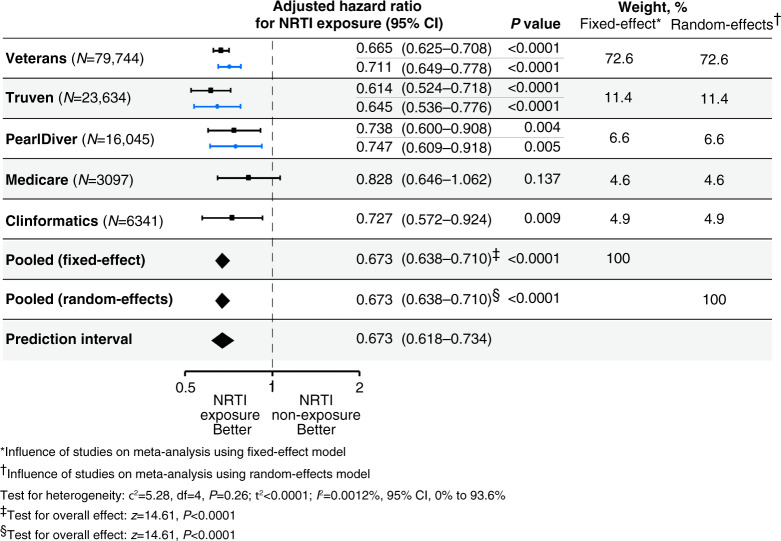
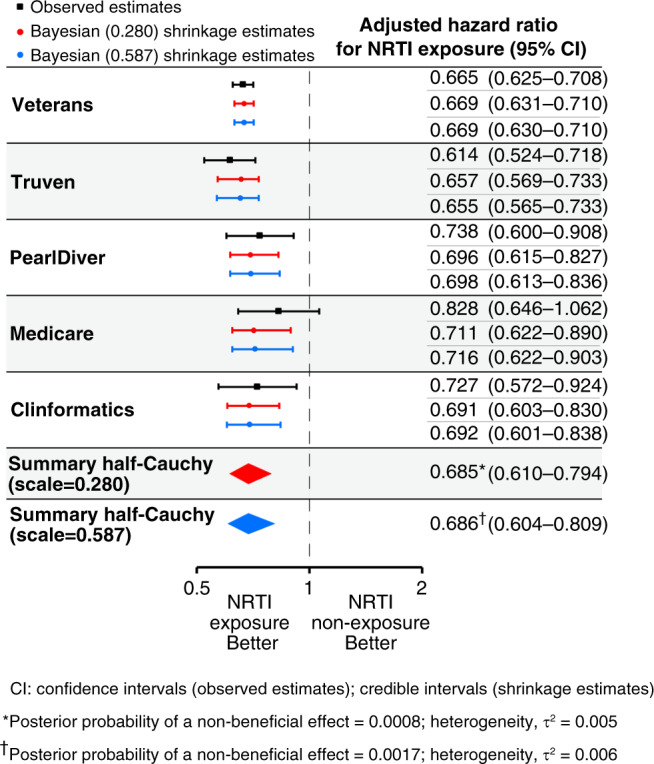
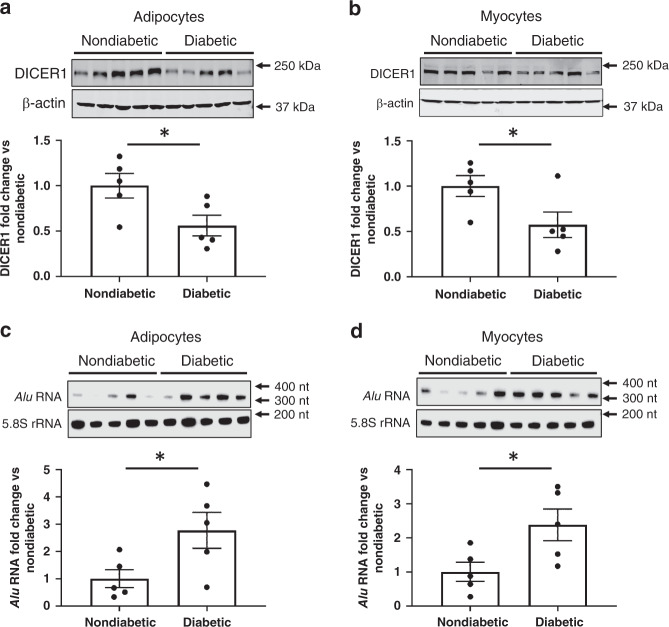
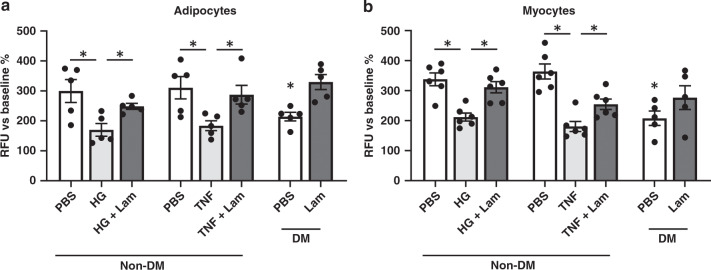
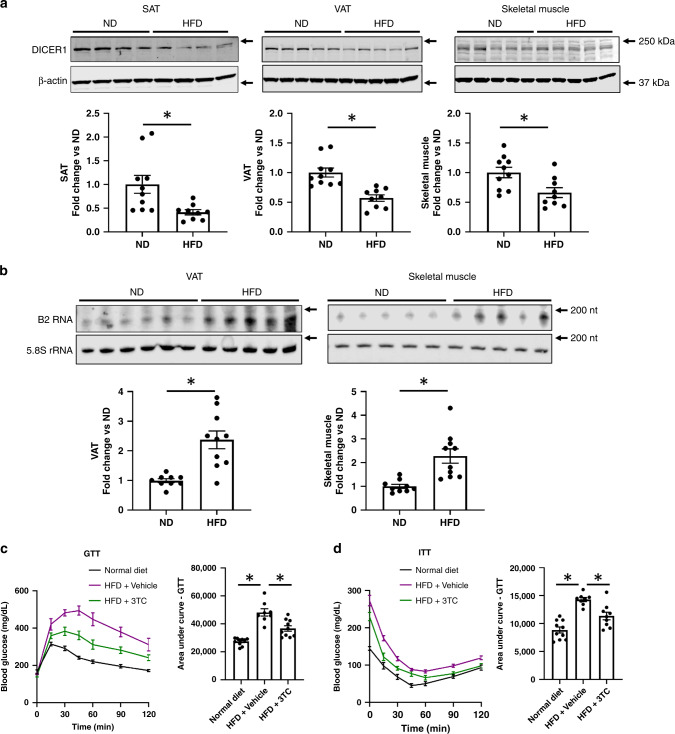
Innate immune signaling through the NLRP3 inflammasome is activated by multiple diabetes-related stressors, but whether targeting the inflammasome is beneficial for diabetes is still unclear. Nucleoside reverse-transcriptase inhibitors (NRTI), drugs approved to treat HIV-1 and hepatitis B infections, also block inflammasome activation. Here, we show, by analyzing five health insurance databases, that the adjusted risk of incident diabetes is 33% lower in patients with NRTI exposure among 128,861 patients with HIV-1 or hepatitis B (adjusted hazard ratio for NRTI exposure, 0.673; 95% confidence interval, 0.638 to 0.710; P < 0.0001; 95% prediction interval, 0.618 to 0.734). Meanwhile, an NRTI, lamivudine, improves insulin sensitivity and reduces inflammasome activation in diabetic and insulin resistance-induced human cells, as well as in mice fed with high-fat chow; mechanistically, inflammasome-activating short interspersed nuclear element (SINE) transcripts are elevated, whereas SINE-catabolizing DICER1 is reduced, in diabetic cells and mice. These data suggest the possibility of repurposing an approved class of drugs for prevention of diabetes.
Overview
The claims and statistics of this paper haven’t been checked yet.
Free: it reads the open-access text and checks the first 5 claims that cite a source we can check. Create a free account to check every claim.
Integrity signals
Registry
Cites
Statistics
Figures
Verification
Claims the paper makes
The claims and statistics of this paper haven’t been checked yet.
Free: it reads the open-access text and checks the first 5 claims that cite a source we can check. Create a free account to check every claim.
Claims other papers make about this one
Each is checked against this paper’s own text: does it say what the citing paper says it does?
The cited source says what the claim attributes to it.
In the citing paper
“As an example, epidemiological evidence suggests that NRTIs reduce the incidence of type 2 diabetes112.”
From The role of retrotransposable elements in ageing and age-associated diseases (2021) · cites this paper as [112]
Self-check
Percentages, sums and reported differences re-computed from the paper’s own numbers.
The self-check needs the paper’s full text.
Citations
Cites
Meta-analysis in clinical trials
DerSimonian, R., & Laird, N. (1986) · Controlled Clinical Trials · doi:10.1016/0197-2456(86)90046-2 · Cited by 39,552
Quantifying heterogeneity in a meta‐analysis
Higgins, J. P. T., & Thompson, S. G. (2002) · Statistics in Medicine · doi:10.1002/sim.1186 · Cited by 36,763
The central role of the propensity score in observational studies for causal effects
ROSENBAUM, P. R., & RUBIN, D. B. (1983) · Biometrika · doi:10.1093/biomet/70.1.41 · Cited by 31,241
International Diabetes Federation 2017
Carracher, A. M., Marathe, P. H., & Close, K. L. (2018) · Journal of Diabetes · doi:10.1111/1753-0407.12644 · Cited by 13,418
Martinon, F., Burns, K., & Tschopp, J. (2002) · Molecular Cell · doi:10.1016/s1097-2765(02)00599-3 · Cited by 6,066
Preexposure chemoprophylaxis for HIV prevention in men who have sex with men.
Grant, R. M., Lama, J. R., Anderson, P. L., McMahan, V., Liu, A. Y., Vargas, L., Goicochea, P., Casapía, M., Guanira-Carranza, J. V., Ramirez-Cardich, M. E., et al. (2010) · New England Journal of Medicine · doi:10.1056/nejmoa1011205 · Cited by 5,096
Gelman, A. (2006) · Bayesian Analysis · doi:10.1214/06-ba117a · Cited by 4,050
Type 2 diabetes as an inflammatory disease
Donath, M. Y., & Shoelson, S. E. (2011) · Nature Reviews Immunology · doi:10.1038/nri2925 · Cited by 3,737
Antiretroviral prophylaxis for HIV prevention in heterosexual men and women.
Baeten, J. M., Donnell, D., Ndase, P., Mugo, N. R., Campbell, J. D., Wangisi, J., Tappero, J. W., Bukusi, E. A., Cohen, C. R., Katabira, E., et al. (2012) · New England Journal of Medicine · doi:10.1056/nejmoa1108524 · Cited by 3,256
Thioredoxin-interacting protein links oxidative stress to inflammasome activation
Zhou, R., Tardivel, A., Thorens, B., Choi, I., & Tschopp, J. (2010) · Nature Immunology · doi:10.1038/ni.1831 · Cited by 2,708
Research works printed but not linked: 1
- National Institute of Diabetes and Digestive and Kidney Diseases (NIDDK). Risk Factors for Type 2 Diabetes, https://www.niddk.nih.gov/health-information/diabetes/overview/risk-factors-type-2-diabetes. 38117928
Cited by
The role of retrotransposable elements in ageing and age-associated diseases
Gorbunova, V., Seluanov, A., Mita, P., McKerrow, W., Fenyö, D., Boeke, J. D., Linker, S. B., Gage, F. H., Kreiling, J. A., Petrashen, A. P., et al. (2021) · Nature · doi:10.1038/s41586-021-03542-y · Cited by 446
Inflammasomes as therapeutic targets in human diseases
Li, Y., Huang, H., Liu, B., Zhang, Y., Pan, X., Yu, X.-Y., Shen, Z., & Song, Y.-H. (2021) · Signal Transduction and Targeted Therapy · doi:10.1038/s41392-021-00650-z · Cited by 223
Approved HIV reverse transcriptase inhibitors in the past decade
Li, G., Wang, Y., & Clercq, E. D. (2021) · Acta Pharmaceutica Sinica B · doi:10.1016/j.apsb.2021.11.009 · Cited by 147
NLRP3 inflammasome and IL-1β pathway in type 2 diabetes and atherosclerosis: Friend or foe?
Chen, X., Zhang, D., Li, Y., Wang, W., Bei, W., & Guo, J. (2021) · Pharmacological Research · doi:10.1016/j.phrs.2021.105885 · Cited by 86
The Immunological Conundrum of Endogenous Retroelements
Kassiotis, G. (2023) · Annual Review of Immunology · doi:10.1146/annurev-immunol-101721-033341 · Cited by 91
Huang, Q., Liu, Z., Yang, Y., Yang, Y., Huang, T., Hong, Y. C., Zhang, J., Chen, Q., Zhao, T., Xiao, Z., et al. (2023) · Advanced Science · doi:10.1002/advs.202300880 · Cited by 75
Fukuda, S., Varshney, A., Fowler, B. J., Wang, S.-B., Narendran, S., Ambati, K., Yasuma, T., Magagnoli, J., Leung, H., Hirahara, S., et al. (2021) · Proceedings of the National Academy of Sciences · doi:10.1073/pnas.2022751118 · Cited by 65
“Recently, we demonstrated NRTI use is associated with reduced development of type 2 diabetes (58).”
BackgroundSelf-citationDDX17 is an essential mediator of sterile NLRC4 inflammasome activation by retrotransposon RNAs
Wang, S.-B., Narendran, S., Hirahara, S., Varshney, A., Pereira, F., Apicella, I., Ambati, M., Ambati, V. L., Yerramothu, P., Ambati, K., et al. (2021) · Science Immunology · doi:10.1126/sciimmunol.abi4493 · Cited by 76
“Abnormal accumulation of SINE transcripts is increasingly recognized as a culprit in human diseases such as atrophic macular degeneration (AMD) (8), Alzheimer’s disease (9, 10), multiple sclerosis (11), type 2 diabetes (12), and systemic lupus erythematosus (SLE) (13).”
BackgroundSelf-citationFukuda, S., Narendran, S., Varshney, A., Nagasaka, Y., Wang, S.-B., Ambati, K., Apicella, I., Pereira, F., Fowler, B. J., Yasuma, T. R., et al. (2021) · Science Advances · doi:10.1126/sciadv.abj3658 · Cited by 57
“Repurposing NRTIs for inflammasome-driven diseases such as AMD has been supported by extensive preclinical data and large observational studies in humans ( 11 , 21 , 29 ).”
Self-citationLi, Y., Yu, P., Kessler, A. L., Shu, J., Liu, X., Liang, Z., Liu, J., Li, Y., Li, P., Wang, L., et al. (2021) · Hepatology · doi:10.1002/hep.32114 · Cited by 46
“A recent study has discovered that nucleoside reversetranscriptase inhibitors, which are widely used for treating HIV1 or hepatitis B, have anti- inflammasome properties.[41] Several biologicals and many small molecules targeting the inflammasome are at preclinical and clinical evaluation.”
Transposable elements and their role in aging
Yushkova, E., & Moskalev, A. (2023) · Ageing Research Reviews · doi:10.1016/j.arr.2023.101881 · Cited by 41
Narendran, S., Pereira, F., Yerramothu, P., Apicella, I., Wang, S.-B., Ambati, K., Hirahara, S., Kim, Y., Ambati, M., Ambati, V. L., et al. (2021) · Signal Transduction and Targeted Therapy · doi:10.1038/s41392-021-00537-z · Cited by 33
“In addition, clinical evidence has recently emerged that the use of NRTIs reduces the development of type 2 diabetes, which is inflammasome-driven.(58) The efficacy of NRTIs and their non-toxic modifications, Kamuvudines, has been established in SINE RNA-induced RPE degeneration, a wellcharacterized model of GA.”
BackgroundSelf-citationChronic Viral Mimicry Induction following p53 Loss Promotes Immune Evasion
Ishak, C. A., Marhon, S. A., Tchrakian, N., Hodgson, A., Yau, H. L., Gonzaga, I. M., Peralta, M., Lungu, I. M., Gomez, S., Liang, S., et al. (2025) · Cancer Discovery · doi:10.1158/2159-8290.cd-24-0094 · Cited by 36
Repurposing nucleoside reverse transcriptase inhibitors (NRTIs) to slow aging
Brochard, T., McIntyre, R. L., Houtkooper, R. H., Seluanov, A., Gorbunova, V. A., & Janssens, G. E. (2023) · Ageing Research Reviews · doi:10.1016/j.arr.2023.102132 · Cited by 28
Qian, J., Huang, C., Wang, M., Liu, Y., Zhao, Y., Li, M., Zhang, X., Gao, X., Zhang, Y., Wang, Y., et al. (2024) · Redox Biology · doi:10.1016/j.redox.2024.103103 · Cited by 28
“Referring to the relevant reports on diabetes [68,69], 5.5 mM (NG), 11 mM (MG), and 25 mM (HG) of glucose concentrations were employed to simulate normal, moderate, and high glucose conditions.”
MethodInfluentialMagagnoli, J., Ambati, M., Cummings, T. H., Nguyen, J. D. K., Thomas, C. C., Ambati, V. L., Sutton, S. S., Gelfand, B. D., & Ambati, J. (2025) · Alzheimer s & Dementia · doi:10.1002/alz.70180 · Cited by 23
Self-citationDrug repurposing in cardiovascular inflammation: Successes, failures, and future opportunities
Chaffey, L., Roberti, A., & Greaves, D. R. (2022) · Frontiers in Pharmacology · doi:10.3389/fphar.2022.1046406 · Cited by 25
Koufakis, T., Dimitriadis, G., Metallidis, S., Zebekakis, P. E., & Kotsa, K. (2021) · Obesity Reviews · doi:10.1111/obr.13231 · Cited by 22
“Abatacept is a fusion protein (CTLA4 immunoglobulin) that has the ability to modulate the T-cell costimulatory signal mediated through the CD28-CD80/86 pathway.122 Finally, in a very recent publication, Ambati et al.123 demonstrated that lamivudine, a nucleo- side reverse-transcriptase inhibitor (NRTI) used to treat h…”
BackgroundMagagnoli, J., Narendran, S., Pereira, F., Cummings, T. H., Hardin, J. W., Sutton, S. S., & Ambati, J. (2023) · Pharmaceuticals · doi:10.3390/ph16050640 · Cited by 16
Self-citationT-cell immunity against senescence: potential role and perspectives
Matveeva, K. S., Vasilieva, M., Minskaia, E., Александрович, Р. С., & Shevyrev, D. (2024) · Frontiers in Immunology · doi:10.3389/fimmu.2024.1360109 · Cited by 18
Cancer-derived exosomal Alu RNA promotes colorectal cancer progression
Trotta, S. M., Adinolfi, A., D’Orsi, L., Panico, S., Mercadante, G., Mehlen, P., Ambati, J., Falco, S. D., & Tarallo, V. (2024) · Experimental & Molecular Medicine · doi:10.1038/s12276-024-01166-6 · Cited by 16
“Since this discovery, speci fi c roles of Alu elements have been described in other human disorders, such as systemic lupus erythematosus 7 , type II diabetes 8 and Alzheimer ’ s disease 9 ; however, their roles in cancer have remained the subject of debate.”
Self-citationModern computational intelligence based drug repurposing for diabetes epidemic
Mohanty, S., Rashid, M. H. A., Mohanty, C., & Swayamsiddha, S. (2021) · Diabetes & Metabolic Syndrome Clinical Research & Reviews · doi:10.1016/j.dsx.2021.06.017 · Cited by 15
Huang, P., Thomas, C. C., Ambati, K., Dholkawala, R., Nagasaka, A., Yerramothu, P., Narendran, S., Pereira, F., Nagasaka, Y., Apicella, I., et al. (2023) · Investigative Ophthalmology & Visual Science · doi:10.1167/iovs.64.5.3 · Cited by 13
Self-citationChen, D., Plott, T., Wiest, M., Trump, W. V., Komalo, B., Nguyen, D., Marsh, C., Heinrich, J., Fuller, C. J., Nicolaisen, L., et al. (2024) · iScience · doi:10.1016/j.isci.2024.111404 · Cited by 10
Olivieri, F., Giuliani, A., & Bonafè, M. (2025) · Ageing Research Reviews · doi:10.1016/j.arr.2025.102878 · Cited by 10
Ruiz, F. X., Hoang, A., Dilmore, C. R., DeStefano, J. J., & Arnold, E. (2022) · Drug Discovery Today · doi:10.1016/j.drudis.2022.02.016 · Cited by 11
Magagnoli, J., Yerramothu, P., Ambati, K., Cummings, T. H., Nguyen, J. D. K., Thomas, C. C., Wang, S.-B., Cheng, K., Juraev, M., Dholkawala, R., et al. (2023) · medRxiv · doi:10.1101/2023.03.17.23287375 · Cited by 9
Self-citationMa, J., He, D., Zhang, M., Zhou, Z., Cheng, J., Huang, A., Lian, Y., Shi, Y., Xie, C., Guan, Z., et al. (2025) · Signal Transduction and Targeted Therapy · doi:10.1038/s41392-025-02396-4 · Cited by 9
“69 Furthermore, an analysis of 72,193 HIV or hepatitis B patients without a history of Alzheimer ’ s disease indicated that NRTIs exposure demonstrated an association with decreased Alzheimer ’ s disease risk, alongside improved survival probabilities, as evidenced by Kaplan ‒ Meier survival…”
Fu, W., Zhao, J., Cheng, G., Xu, L.-B., Lyu, L., & Ding, Y. (2025) · BMC Gastroenterology · doi:10.1186/s12876-024-03585-1 · Cited by 11
“Chronic inflammation significantly contributes to the onset of various chronic noncommunicable diseases, such as cardiovascular ailments, type 2 diabetes, and cancer [8–10].”
Chen, F., Gu, Z., & Guo, X. (2025) · BMC Cardiovascular Disorders · doi:10.1186/s12872-025-05091-y · Cited by 9
“Systemic inflammation is increasingly recognized as a central mechanism underlying the development and progression of chronic conditions, including CVD, CKD, and diabetes [6–8].”
Moameri, H., Norouzi, M., Valizadeh, Z., Akbarzade, Z., Rahmati, S., Khaleghi, S., & Abbasian, L. (2025) · BMC Infectious Diseases · doi:10.1186/s12879-025-12222-5 · Cited by 8
Magagnoli, J., Cummings, T. H., Hardin, J. W., Ambati, J., & Sutton, S. S. (2024) · Diabetes Obesity and Metabolism · doi:10.1111/dom.16060 · Cited by 6
“6 11 This reflex sys-tem regulates the production of inflammatory cytokines through efferent vagus nerve signalling.”
Self-citationLi, Y., Wang, Y., Li, Y., de Vries, A. C., Li, P., Peppelenbosch, M. P., & Pan, Q. (2023) · Antiviral Research · doi:10.1016/j.antiviral.2023.105674 · Cited by 7
Population attributable fractions of a wide range of peripheral diseases for the burden of dementia
Deng, Z., Yang, Y., Lin, Q., Xiao, S., Zuo, Y., Wang, J., Xu, Y., Li, H., Xie, D., Dai, Q., et al. (2026) · Nature Human Behaviour · doi:10.1038/s41562-025-02392-2 · Cited by 6
Inflammasome activation aggravates choroidal neovascularization
Makin, R. D., Apicella, I., Dholkawala, R., Fukuda, S., Hirahara, S., Hirano, Y., Kim, Y., Nagasaka, A., Nagasaka, Y., Narendran, S., et al. (2024) · Angiogenesis · doi:10.1007/s10456-024-09949-1 · Cited by 5
Self-citationWebb, G. M., Sauter, K. A. D., Takahashi, D. L., Kirigiti, M. A., Bader, L., Lindsley, S. R., Blomenkamp, H., Zaro, C., Shallman, M., McGuire, C. M., et al. (2024) · JCI Insight · doi:10.1172/jci.insight.181968 · Cited by 7
“A second aspect of the standard non-human primate ART regimen that may have reduced the extent of metabolic comorbidities is the potential antiinflammasome activity of cytosine analog nucleoside reverse transcriptase inhibitors such as lamivu-dine and FTC (88, 89), particularly with respect to WAT function and overall…”
BackgroundInfluentialOkano, T., Ashida, H., Tsukasaki, M., Iida, T., Yamamoto, M., Takayanagi, H., Sakamoto, T., & Suzuki, T. (2025) · Cell Death Discovery · doi:10.1038/s41420-025-02548-z · Cited by 5
Sermet, S., Finn, B. M., Crawford, R. B., & Kaminski, N. E. (2025) · Journal of Pharmacology and Experimental Therapeutics · doi:10.1016/j.jpet.2025.103615 · Cited by 5
Magagnoli, J., Pereira, F., Narendran, S., Huang, P., Cummings, T. H., Hardin, J. W., Nguyen, J. D. K., Sutton, S. S., & Ambati, J. (2023) · MedComm – Future Medicine · doi:10.1002/mef2.37 · Cited by 5
Self-citationSui, Y., & Peng, S. (2021) · Frontiers in Cell and Developmental Biology · doi:10.3389/fcell.2021.618113 · Cited by 6
“Moreover, the result of a recent study that nucleotide reverse transcriptase inhibitors can improve insulin sensitivity and reduce the development of type 2 diabetes supports the relationship between the development of type II diabetes mellitus and CNVs extension as well (Ambati et al., 2020).”
ResultShort-term effects of tetracycline use in patients with diabetic retinopathy
Alshaikhsalama, A. M., Alsoudi, A. F., Wai, K. M., Koo, E. B., Mruthyunjaya, P., Weng, C. Y., & Rahimy, E. (2025) · Canadian Journal of Ophthalmology · doi:10.1016/j.jcjo.2025.04.009 · Cited by 3
Pereira, F., Magagnoli, J., Ambati, M., de Oliveira, T., de Oliveira, J. A. E., Pesquero, V. O., Ribeiro, L. Z., Kuroiwa, D. A. K., Malerbi, F. K., Dib, S. A., et al. (2025) · Med · doi:10.1016/j.medj.2025.100747 · Cited by 6
Self-citationWu, Y., Xing, Y.-H., Tao, S., Jiao, M., Zhu, M., Han, Y., Guo, W., & Tao, X. (2023) · Medicine · doi:10.1097/md.0000000000036019 · Cited by 3
“[6] 9] As research continues, a bidirectional relationship between diabetes and periodontitis has been established, namely that diabetes increases the risk of periodontitis, which has a negative impact on glycemic control.”
BackgroundLi, Y., Li, P., de Man, R. A., Peppelenbosch, M. P., & Pan, Q. (2022) · Liver International · doi:10.1111/liv.15168 · Cited by 3
Zhao, J., Guo, M.-Z., Zhang, Y., Zhu, S.-H., Wang, Y., Zhang, Y.-P., Liu, X. Z., Cheng, S., Wang, F., Xu, Q., et al. (2025) · World Journal of Diabetes · doi:10.4239/wjd.v16.i7.105219 · Cited by 2
Evaluation of genotoxic and mitotoxic effects of TAF-loaded chitosan nanoparticles in HepG2 cells
Sezer, S. K., Yüksel, Ş., Koç, A., Ulu, A., & Ateş, B. (2024) · Drug and Chemical Toxicology · doi:10.1080/01480545.2024.2349663 · Cited by 1
Xu, J., Huang, X., Pei, F., Chen, Y., Zhang, C., Zhao, L., Zhang, H., Zhang, J., & Duan, L. (2025) · Frontiers in Microbiology · doi:10.3389/fmicb.2025.1622818 · Cited by 5
Xu, S., Danzeng, Q., Guo, B., Xu, P., Gu, L., Zhao, Y., Guo, X., Tang, Y., Chang, Y. Y., Wu, G., et al. (2025) · The Lancet Regional Health - Western Pacific · doi:10.1016/j.lanwpc.2025.101738 · Cited by 2
Yerramothu, P., Ambati, K., Magagnoli, J., Ambati, M., Velmurugan, T., Yu, D., Zhang, J., Zhang, J., Cummings, T. H., Nguyen, J. D. K., et al. (2026) · Science Translational Medicine · doi:10.1126/scitranslmed.aei2870 · Cited by 1
Self-citationChen, D., Plott, T., Wiest, M., Trump, W. V., Komalo, B., Nguyen, D., Marsh, C., Heinrich, J., Fuller, C. J., Nicolaisen, L., et al. (2024) · SSRN Electronic Journal · doi:10.2139/ssrn.4834780 · Cited by 1
Drug Repurposing Patent Applications January–March 2021
Mucke, H. A. (2021) · Assay and Drug Development Technologies · doi:10.1089/adt.2021.051
Wan, T., Wang, H., Wang, C., Wang, Y., Li, X., & Li, Y. (2026) · Endokrynologia Polska · doi:10.5603/ep.113080
The Implication of Alu cDNA in the Pathogenesis of ARMD
Nouraeinejad, A. (2023) · Current Aging Science · doi:10.2174/1874609816666230530095410
Acetylcholinesterase Inhibitors, AMD, and Alzheimer Disease—Reply
Magagnoli, J., Sutton, S. S., & Ambati, J. (2024) · JAMA Ophthalmology · doi:10.1001/jamaophthalmol.2024.1204
Self-citationComparative Analysis of Therapeutic Methods for Type 2 Diabetes Mellitus
Lei, Z. (2024) · MedScien · doi:10.61173/zy1sfx41
Карасева, Е. А., Мартынов, В. А., Abalenikhina, Y. V., & Muravlyannikov, N. S. (2024) · Journal Infectology · doi:10.22625/2072-6732-2024-16-2-17-27
Гуляев, А. Е., Sergazy, S., Urazbayeva, A., Shulgau, Z., & Бенберин, В. В. (2024) · Farmaciâ Kazahstana · doi:10.53511/pharmkaz.2024.93.64.013
Novel effects of reverse transcriptase inhibitor supplementation in skeletal muscle of old mice
Osburn, S. C., Smith, M., Wahl, D., & LaRocca, T. J. (2025) · Physiological Genomics · doi:10.1152/physiolgenomics.00115.2024
Impact of viruses and retrotransposons on genetic instability and aging
Lysakova, E. V., Burak, M. Y., Navrotsky, M., & Александрович, Р. С. (2025) · Russian Journal of Infection and Immunity · doi:10.15789/2220-7619-iov-17834
Le métabolisme de l'inflammation dans les maladies microcristallines
Pham, C. N. (2024) · theses.fr (ABES) · doi:10.70675/f0753276z83c0z49a8zaacfz19b5d72e5627
Unveiling GDF-15: a new frontier in combating diabetic osteoporosis
Wang, N., Gao, Y., & Bai, N. (2026) · Frontiers in Medicine · doi:10.3389/fmed.2026.1819289
“Chronic low-grade inflammation significantly contributes to DM pathogenesis and its related complications (60).”
Dose Optimization and the Implementation of Project Optimus
Bennett, C. L., Taylor, M., & Magagnoli, J. (2026) · JCO Oncology Practice · doi:10.1200/op-26-00508
Self-citationAhn, S., Suh, J., Jang, Y., Choi, G., Han, K., Lee, Y., Lee, D., Song, C., Go, J., Kim, M., et al. (2026) · Biomaterials Research · doi:10.34133/bmr.0403
Sarma, A. D., Devi, M., Kumar, D., & Choudhary, N. (2026) · International Immunopharmacology · doi:10.1016/j.intimp.2026.117240
Nigro, A. (2026) · Immunopharmacology and Immunotoxicology · doi:10.1080/08923973.2026.2725840
The therapeutic potential of transposable element activity modulation
Morelli, G., D’Onghia, M., Mangiavacchi, A., & Orlando, V. (2026) · EMBO Molecular Medicine · doi:10.1038/s44321-026-00528-z
Metadata
- Authors
- Ambati, J., Magagnoli, J., Leung, H., Wang, S.-B., Andrews, C. A., Fu, D., Pandey, A., Sahu, S., Narendran, S., Hirahara, S., Fukuda, S., Sun, J., Pandya, L., Ambati, M., Pereira, F., Varshney, A., Cummings, T., Hardin, J. W., Edun, B., Bennett, C. L., Ambati, K., Fowler, B. J., Kerur, N., Röver, C., Leitinger, N., Werner, B. C., Stein, J. D., Sutton, S. S., & Gelfand, B. D.
- Affiliations
- University of Virginia Medical Center (US)
- University of South Carolina (US)
- University of Virginia (US)
- University of Michigan (US)
- University of Tsukuba (JP)
- Baystate Medical Center (US)
- University of Kentucky (US)
- Universitätsmedizin Göttingen (DE)
- Corresponding author
- Ambati, Jayakrishna
- ORCID
- Ambati, Jayakrishna
- Magagnoli, Joseph
- Wang, Shao-bin
- Andrews, Chris A.
- Pandey, Akshat
- Sahu, Srabani
- Narendran, Siddharth
- Fukuda, Shinichi
- Sun, Jian
- Ambati, Meenakshi
- Pereira, Felipe
- Varshney, Akhil
- Cummings, Tammy
- Hardin, James W.
- Bennett, Charles L.
- Fowler, Benjamin J.
- Kerur, Nagaraj
- Röver, Christian
- Leitinger, Norbert
- Werner, Brian C.
- Stein, Joshua D.
- Sutton, S. Scott
- Gelfand, Bradley D.
- Venue
- Nature Communications
- Published
- 2020-09-23
- Volume
- 11
- Issue
- 1
- Pages
- 4737-4737
- ISSN
- 2041-1723 (ISSN-L)
- PMC
- PMC7511405
- OpenAlex
- W3089058753
- Cited by
- 66
- References
- 91
- Citations by year
- 2026: 9 · 2025: 16 · 2024: 14 · 2023: 11 · 2022: 3 · 2021: 13
- FWCI
- 0.65
- Type
- journal article
- Language
- en
- Open access
- gold
- doi.org
- Licence
- cc-by
- creativecommons.org/licenses/by/4.0 (tdm)
- creativecommons.org/licenses/by/4.0 (vor)
- Locations
- Nature Communications (publishedVersion, cc-by)
- PubMed Central (publishedVersion, cc-by)
- PubMed (publishedVersion)
- GoeScholar The Publication Server of the Georg-August-Universität Göttingen (Georg-August-Universität Göttingen) (publishedVersion)
- UKnowledge (University of Kentucky) (submittedVersion, cc-by)
- RePEc: Research Papers in Economics (submittedVersion)
- DOAJ (DOAJ: Directory of Open Access Journals) (submittedVersion, cc-by-sa)
- GoeScholar The Publication Server of the Georg-August-Universität Göttingen (Georg-August-Universität Göttingen) (submittedVersion, cc-by)
- Institutional Repositories DataBase (IRDB) (submittedVersion)
- Terrestrial Environment Research Center (University of Tsukuba) (submittedVersion, cc-by)
- Funders
- U.S. Department of Health & Human Services | NIH | National Eye Institute (R01EY028027)
- Topics
- Life Sciences › Biochemistry, Genetics and Molecular Biology › Molecular Biology › Inflammasome and immune disorders
- Health Sciences › Medicine › Endocrinology, Diabetes and Metabolism › Adipokines, Inflammation, and Metabolic Diseases
- Life Sciences › Biochemistry, Genetics and Molecular Biology › Molecular Biology › Metabolism, Diabetes, and Cancer
- Keywords
- nucleoside reverse transcriptase inhibitors, NLRP3 inflammasome, type 2 diabetes prevention, insulin sensitivity, drug repurposing, lamivudine, HIV-1, hepatitis B, DICER1, insulin resistance, high-fat diet, innate immune signaling
- MeSH terms
- Animals, Cell Survival, Diabetes Mellitus, Type 2, Hepatitis B, Humans, Insulin Resistance, Male, Mice, Inbred C57BL, HIV-1, Adipocytes, Reverse Transcriptase Inhibitors, Muscle Cells, Ribonuclease III, Mice, DEAD-box RNA Helicases, Drug Repositioning, Inflammasomes, Diet, High-Fat
About these checks
Registry, retraction, Cites and statistics results are computed, not judged, with one exception: a printed reference that no index lists is read once by a model before it counts as a citation error. Claims are extracted by a model and kept only when their quote appears verbatim in the text; each cited source is then checked, with a model’s help, for whether it says what the claim relies on. Those verdicts can be wrong — read the claim’s quote and the cited source before relying on one.
Statistics and arithmetic are recomputed, not judged.
Confidence bands are shown only for fields calibrated on our annotated test set. None is calibrated yet, so no band is shown.
What counts as a claim ›How we measure confidence ›How we check this ›
Are you an author, or do you see a problem with this page? Request a review
Data sources
Bibliographic data: Semantic Scholar, OpenAlex, Crossref.
Contains information from the Semantic Scholar Academic Graph Datasets, made available under the ODC Attribution License (ODC-BY 1.0).
Semantic Scholar’s data is described in: Kinney, R., et al. (2023). The Semantic Scholar Open Data Platform. arXiv:2301.10140.
